Google Android Data Misleads

Google data on Android activations is now getting scrutiny for excluding devices and entire regions, and therefore skewing downward the actual install-base for the Android operating system. Android-powered devices have seen great success in the past few years, growing to 900 million devices worldwide. This is especially true outside of the United States, where countries like China have overwhelmingly turned to Android smartphones. But not all of them are counted by Google’s regularly updated Android growth charts. Android devices that aren’t licensed to run apps sold through Google’s Android app store aren’t included in data used by Google. With Google’s latest sales data showing that daily Android activations have barely grown since last September, tech site GigaOM has raised the red flag as to how this is skewing Android market data.
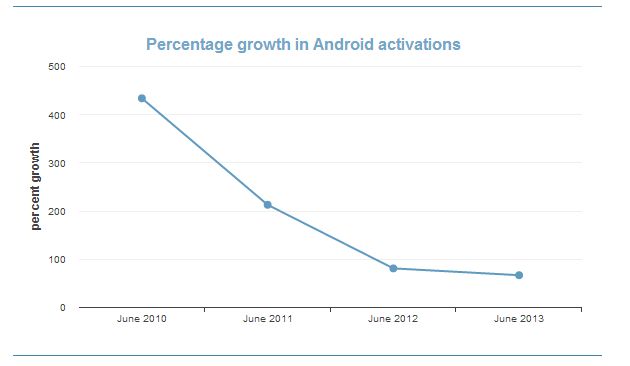
In countries such as China and India where smartphone penetration is big and growing, many devices run Android without licensing from Google. On the device front, Amazon’s popular Kindle Fire, which is now available in 200 countries, also doesn’t count in Google’s numbers. Google-licensed Android devices and its Android app store are huge forces in the smartphone market, but GigaOM has rightly turned attention to how its reports can be misread to underestimate just how much Android is penetrating that market worldwide.

Source: GigaOm

IPhone Is The Most Social Device

According to a new study from ShareThis, the iPhone is the most social device in the world. The study looked at billions of social actions from both desktop and mobile devices to see which ones did most of the sharing. The results showed that iPhone users were three times more likely to share something on their phone than they would on a desktop computer. They were also 1.5 times more likely to share something from an iPhone than they would from an Android device or a Blackberry. The study also showed that Facebook accounted for 60 percent of sharing on mobile devices, and that Pinterest is three times more popular on mobile than on the desktop.

The ShareThis study isn’t perfect.  It’s only representative of sites that utilize their platform, which does not include apps such as Pinterest. Pinterest enjoys an overwhelming domination on the iPad; the study showed that 50 percent of the social activity on iPad came from Pinterest. This information still falls in line with trends of social network’s popularity on mobile devices. The study reinforces that people are more inclined to tap the share button on their iPhone than they are on the computer.

Source: TechCrunch

Vivarin TV Spot Targets Gamers

Anyone who has stayed up through the night to build that life-size replica of Star Fleet’s Enterprise in Minecraft knows that caffeine can be a valuable tool. Caffeine pill maker Vivarin knows that, too.  That’s why they took to PAX East for their latest commercial. The ad shows gamers praising the Vivarin Caffeine “alertness aid” for staying awake when gaming.

The ad aired this morning on G4 and last night on Cartoon Network’s Adult Swim block, showing PAX attendees playing games and talking about the benefits of the product.


LEGO Clicking With Cartoon Network

Cartoon Network and LEGO have joined forces on a number of TV series and projects, including the recently released Legends of Chima TV series. They are now teaming up again for a new original IP, called LEGO Mixels, combining programming, games, and toys in a transmedia powerhouse.

The animations will be short-form videos on the air and on Cartoon Network’s website. An online mobile game will be made to converge with the TV series, and of course both will be supplemented by LEGO’s famous buildable toys. Cartoon Network and LEGO are hoping to create a multi-faceted experience for children by combining games with television in a way similar to Trion Worlds’ Defiance. By uniting games, TV, and toys, LEGO and Cartoon Network are looking to engage their fans and make them feel like they are part of the universe across platforms.

Source: Promaxbda

My Little Pony Comes To Xbox Live

My Little Pony: Friendship Is Magic is a cartoon targeted toward young girls, yet it’s gained a surprisingly huge following in the 18-24 year old demographic among both men and women. Hasbro is fully aware of this, and over the last two years has released a vast range of merchandise (from “Pinkie Pie” hoodies to trading cards) to reach both audiences.

Now Hasbro is bringing the magic to Xbox Live users with a new line of avatar accessories. You can deck out your virtual persona with a line of My Little Pony sweatshirts featuring the six main characters (for both men and women), a virtual backpack, and a Rainbow Dash pet that accompanies your avatar. Items range in price from 160 Microsoft points to 320 Microsoft points, and are available now from the Xbox Live marketplace.

Source: MCV

Flipboard Jumps To Browsers

More than 2.5 million user-made magazines have been created since Flipboard 2.0 was launched in March of this year.  Now Flipboard is moving from mobile devices to the web by launching full HTML 5.0 versions of its magazines. Unlike Flipboard 2.0’s magazines, the newest version will work on any browser connected to the Internet. Whether on mobile or desktop, users will have full access to select Flipboard magazines.

The interface will feel familiar to Flipboard’s established users, as the app’s tried-and-true card flipping translates well to large computer screens. Magazines will also automatically resize based on the size of the screen and window, showing either a full page or a single article based on whatever fits. The site lets users flip through pages using the spacebar or arrow keys, the way users would use a finger on an iPad screen. For now, only a small editorially curated list of magazines is available online.

Source: The Verge

Soul Calibur II Returns In HD

When classic 3D fighters come to mind, there are few more beloved than Namco’s Soul Calibur II. At San Diego Comic Con last weekend, Namco Bandai announced that they would be bringing the classic fighting game to the current generation in the form of Soul Calibur II HD Online. The game offers classic gameplay, but gives it an HD facelift and introduces online play. The game will come to current gen consoles sometime this fall.

Attack Of The Friday Monsters

The final game in Level 5’s Guild 02 initiative has come to market in the form of Attack of the Friday Monsters! A Tokyo Tale. The game puts players in the shoes of a 10-year-old boy who lives in 1970s Tokyo, where every Friday gigantic monsters (kaiju) do battle against heroes in the style of Ultraman or Godzilla. The trailer shows gorgeous backgrounds and an idyllic small-town setting, where the boy deals with living in a world of heroes and monsters. The game is available now on Nintendo’s eShop for the 3DS.

Nvidia Shield Launching (Again)

Nvidia’s Android-powered handheld console Shield was supposed to be in consumers’ hands at the end of June. It finally has an official launch date, with Nvidia announcing that it will hit shelves on July 31.

Nvidia delayed the original launch days before the console was scheduled for release, citing in a statement that it was due to “a mechanical issue that relates to a third-party component.”

“We want Shield to be perfect, so we have elected to shift the launch date to July,” the company said in the same statement.

Now, Nvidia has announced that the issue has been taken care of, with the first Shield units rolling off the production line.  When it hits stores next week, the handheld will be available for the reduced price of $299 as an introductory price.  The Shield is available through NewEgg and the Nvidia website as well as GameStop, Canada Computers and Micro Center stores.

Source: IGN

Developer: Used Games A Broken System

Ready at Dawn co-founder Ru Weerasuriya has said that the used games business model is not good for the industry, saying the ‘flawed’ system where revenues bypass the people who make the games needs to be fixed.

“I think the problem is right now, there are retail outlets that are really taking everybody for a ride,” Weerasuriya told GamesIndustry.biz. “You can’t make a living at the expense of everybody else. Unfortunately they’re not just making a living at the expense of developers but also the consumers.”

Game retail giant GameStop, which makes a good chunk of its profit from used games, regularly argues that the ability to sell back and trade games helps sales of new games.  Weerasuriya doesn’t see it that way.  He says used game sales equate to losing revenue for developers and publishers, which affects how much they’re willing to reinvest in making new games. The result is that they’re forced to put out fewer releases.  He also questioned the priority GameStop puts on pushing used games, which have higher profit margins.

“I walked into a GameStop, asked for a new copy of a game and without telling me he tried to slip me a used copy and wanted to sell it to me for $5 less,” said Weerasuriya. “I flipped out in front of the guy. There are developers out there who are making games for [years], and some of them will go down purely because the revenue stream is basically flawed and creating this place where developers don’t see even a little part of it.”

Weerasuriya doesn’t think ridding the market of used games altogether is the answer. He says that a system should be put in place where the developer gets a portion of used game sales.

Ready at Dawn is currently developing the new PS4 game The Order: 1886.

Source: GamesIndustry.biz