How Fantasy Sports Could Help eSports Become Mainstream

With the Super Bowl around the corner, a huge audience of gamers is more interested in the new season of League of Legends. It’s fitting then that start-up AlphaDraft is betting, literally, that diehard eSports fans will dig daily Fantasy ESports. Taking a page from FanDuel, AlphaDraft is adding a new layer of interest to the real season just as the NFL, NBA, MLB and other “real” sports leagues have done in recent years. Focusing exclusively on Riot Games’ League of Legends, at least for now, gamers will be able to strategize with fantasy teams. Matt Reilly, co-founder and director of marketing at AlphaDraft, explains how Fantasy eSports will open up new opportunities for brands and game makers in this exclusive interview.

Matt Reilly, Co-Founder and Director of Marketing at AlphaDraftMatt Reilly, Co-Founder and Director of Marketing at AlphaDraft

How are you working with leagues (ESL, MLG) and game companies (you mentioned Riot in the pitch) in adding real-money fantasy contests to eSports?

Until this point, we’ve focused on the development of AlphaDraft and creating an impeccable player experience. We look forward to partnering with ESL and MLG in the future and contributing to their communities. Having said that, our platform was built with these types of partnerships in mind, and can handle many different types of games from MOBAs to FPS’s to even games like HearthStone or Super Smash Bros.

Will there be the ability to play for free like on FanDuel?

Yes, from day one.

How are you age gating this given the younger demographic that follows eSports?

There are several 3rd-party verification services that help us ensure the highest level of compliance with contest laws.

What types of prizes will be available at first and how do you see winnings increasing over time?

We will start small to test the system giving away $500 to $1,000 in free contests per week. However, based on feedback we see this growing fast and believe we could potentially see several million in prizes paid this year.

Why do you think now is the right time to add Fantasy eSports?

Every other major component of traditional sports exists in eSports. There are leagues, teams, franchises, broadcasters, player agencies, and a huge viewing audience. The only two pieces we see that are missing are a players’ union and daily fantasy sports.

How big is Fantasy Sports in real sports today and what potential do you see for eSports?

Fanduel has stated recently that they will pay out over $540 million in prizes in 2014. That’s a significant number. With viewership for the world championship of League of Legends surpassing total viewers of traditional championships of the NBA and MLB, and with over 50 million viewers on Twitch monthly, we believe we are right on the cusp of something big. Sparks and Honey, an ad agency out of New York, published a presentation recently on slideshare that summarizes my thoughts on eSports — “It’s the biggest sport you’ve probably never heard of.” That is about to change.

Why do you see that changing now?

“We see other companies investing the same types of resources and think eSports has the potential to grow beyond even traditional sports.”

The reason why it is different this time is because of both Twitch and Riot Games. In the past, there was no way to easily broadcast to a large audience. Twitch changed all that. In addition, no company or organization had put together such a regimented and organized schedule into an eSport. Riot Games created the NFL of eSports. The money, time, and overall production quality of all their leagues has allowed for this growth to occur. We see other companies investing the same types of resources and think eSports has the potential to grow beyond even traditional sports.
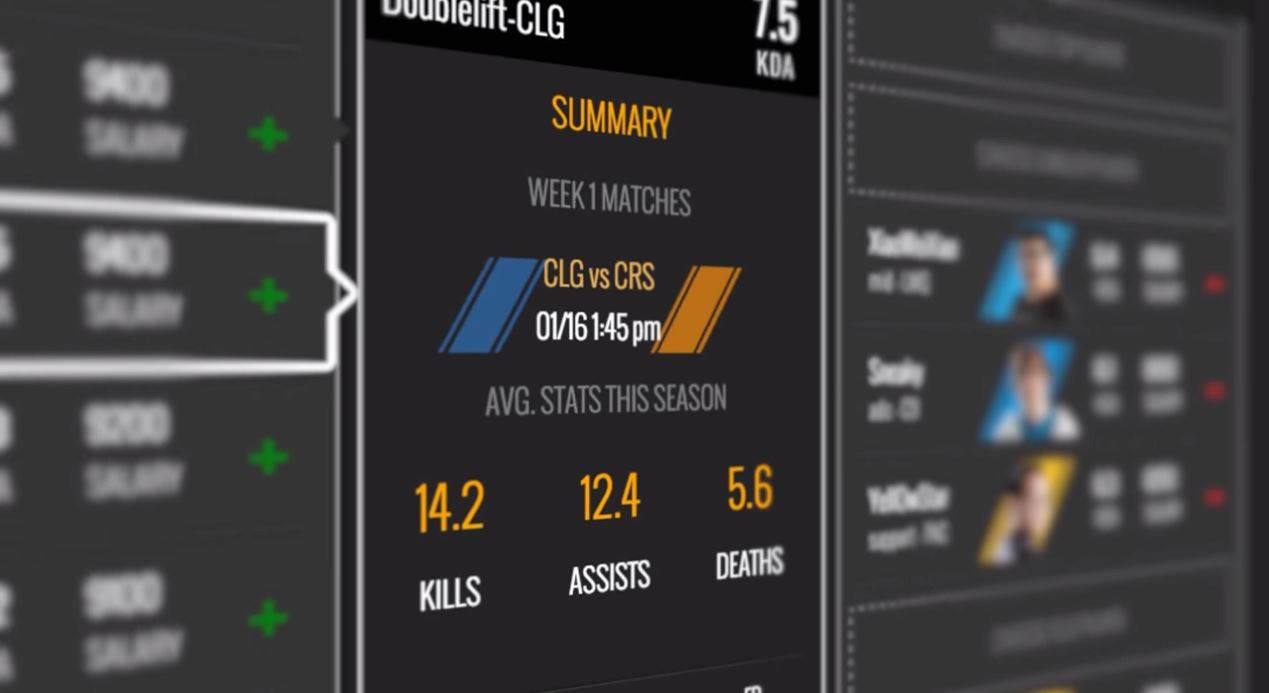
AlphaDraft Screenshot

How will you be marketing this endeavor?

We will approach marketing the same way you would for traditional sports. If we were promoting a product for the NFL, you would run ads on the major television networks like ESPN, FOX, or ABC. In eSports that is Twitch, Youtube, and Azubu. So both display ads and streamers are a great way to market to the eSports community.

What role will Twitch and livestreaming play in this business?

Certainly, Twitch will be a big part of the marketing, and there will be new content created that specifically focuses on our game. There will be streamers who are out there talking about who are the best bargains, or who are the most overpriced stars to choose from week-to-week.

What has the feedback been from teams and pros?

We went to teams and pros early. One of the first was Michael “Odee” O’dell from Team Dignitas. We showed him an early demo and he gave us a very positive review. He is based in the UK and plays fantasy soccer and thought the platform would be a huge success. He gave his feedback on what we should and should not do to appeal to gamers. We took his opinion and others very seriously. You will see that in the design and flow of the game. Design is a critical component of our platform. Gamers expect high quality. You can’t just throw a site up and expect them to only play for money, so our focus has been on player experience first above all else. A simple, clean interface with familiar design elements to other gaming-related content was important.

“Design is a critical component of our platform. Gamers expect high quality.”

What opportunities do you see for sponsors and advertisers?

Because of the game we offer and the audience we attract we can directly market to a very focused market segment — our typical demographic is 18-34 yr old males who love playing games and buying downloadable content — we see us being one of the many ways advertisers reach this audience. One example of how we will bring sponsors and advertisers on board is one of the things we do that is unique to the fantasy eSports community which is provide live stat updates while simultaneously streaming the game for free. You won’t see this in traditional sports as broadcasters limit free streaming of sports contests. This live update screen keeps users coming back and is a great place for a sponsor to reach out to their audience.
Why Tabletop Games Thrive And The Lesson for Video Games

Tabletop games have an ancient history, going back thousands of years to Egyptian board games and Roman polyhedral dice. Card games and dice games have been popular for centuries. Miniatures games date back to H.G. Wells’ Little Wars over a century ago, and the tabletop roleplaying game grew out of miniatures in the 1970’s with Gygax and Arneson’s seminal Dungeons & Dragons. The industry reached a high point in the early 1990’s as the first collectible card game, Magic: The Gathering, became a smash hit that continues strongly to this day.

Some may have thought tabletop gaming would dwindle as electronic games became more popular, higher quality, and less expensive. Indeed, we’ve now reached a point where most adults in the United States carry around with them a highly capable, well-connected gameplaying device, and most of the games you find for that device are free to play. How could tabletop games, which now are often priced in excess of $50, possibly compete Are they even relevant any more

The opposite is true, as tabletop games now exert a greater influence over video games than ever before. It’s easy to see the influence of tabletop roleplaying games on the multi-billion dollar RPG business, as almost all MMORPGs still rely on the basic game mechanics of D&D (classes, levels, hit points, and so on). Magic: the Gathering is the inspiration for hundreds of millions of dollars in digital collectible card games and their variants. Hearthstone is just the latest, most successful version of basic CCG mechanics in an electronic form.

One thing to note here: Sadly, the original tabletop games that have catalyzed billions of dollars in revenue for electronic games remain unable to come up with a popular version of their game in an electronic form. Wizards of the Coast has an online version of Magic: The Gathering, but it’s never done anywhere near as well as Hearthstone. Dungeons & Dragons has had multiple electronic versions, but none of them have come close to the success of World of Warcraft. Perhaps the difficulty there lies in being to tied to to the original version of the game, in much the same way the author of a novel would struggle to create an effective movie version of the property.

Why have tabletop games remained popular in an age of inexpensive, ubiquitous electronic games? The most important reason is the social aspect, the sheer pleasure that these social primates take in physically gathering to play in a shared space. Game nights are a great excuse to get together with friends, enjoy good food and drink and their company while competing (or cooperating, in the case of RPGs) in an evening of escapist fun.

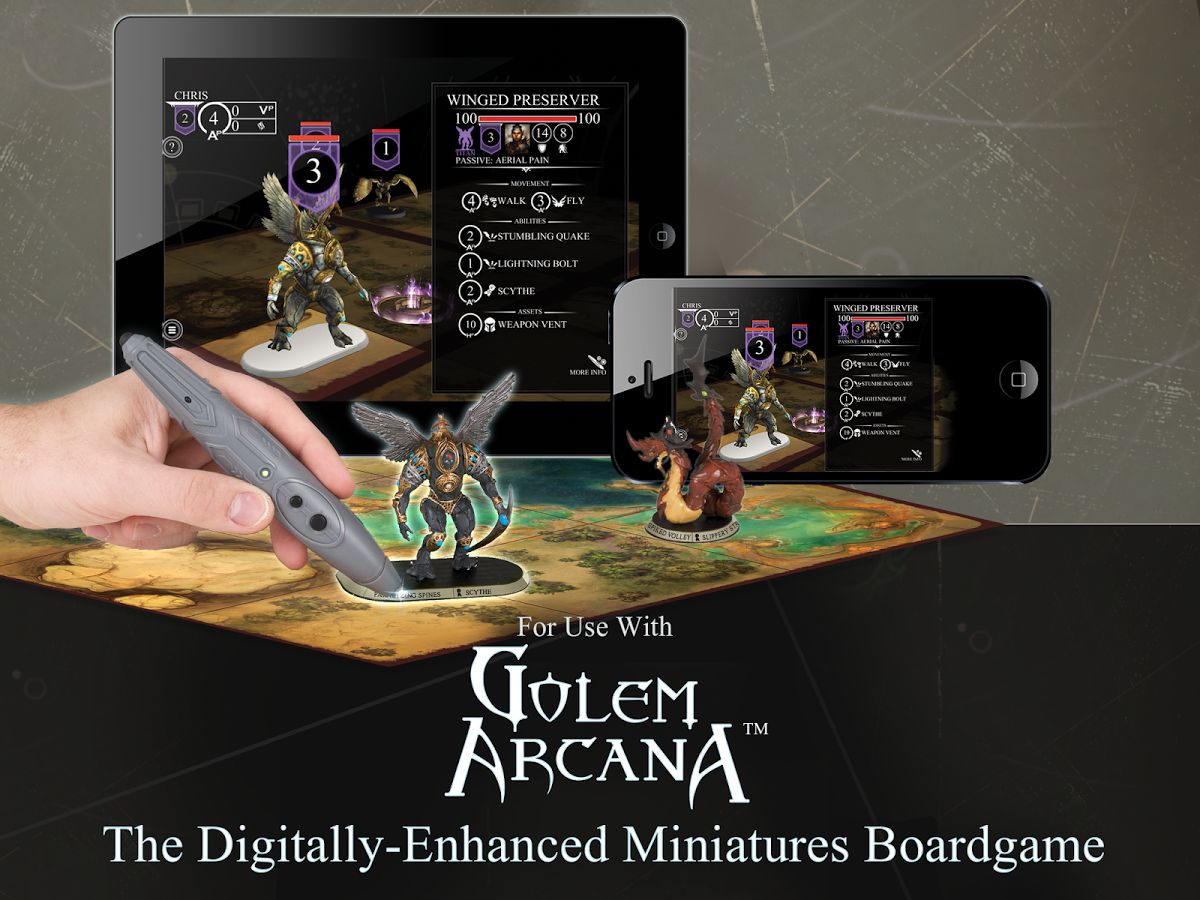
The electronic tools that occupy our daily lives have, in fact, helped to keep tabletop gaming active. It’s now easier than ever to coordinate a game night among friends, since everyone can check in on Facebook or some other social tool. There’s a number of tools for smartphones designed to make gaming easier, and some forward thinking games like the hit Golem Arcana are even integrating electronics into a classic miniatures battle, making it easier and more accessible.

Another factor in the continuing popularity of tabletop games has been better production values in tabletop products, from board games to RPG books to card games. This has been vastly aided by the spread of low-cost printing of short or even individual product runs. While you still can get the best unit prices by printing thousands of copies, small publishers find it saves vast amounts of capital to print to order.

One of the key things that tabletop games do well is create motivated, fanatical audiences who can be terrific evangelists. This is something that’s encouraged by web sites and Facebook pages, but even more by the physical conventions that bring thousands of gamers together. It’s no accident at all that PAX shows place tabletop gaming on par with all other forms of gaming, or maybe even ahead of it. The PAX organizers know full well that tabletop gamers are some of the most dedicated gamers of all, and they are usually dedicated electronic gamers as well. And they are terrific evangelists, because they want to bring their friends into this addictive form of gaming.

The current discoverability crisis for mobile games is because you have games being developed without an audience, and then the game developers have to go and find an audience — or create one. When you can start with an audience, it’s far easier to be successful. Look no further than the Exploding Kittens Kickstarter to see how a fairly simple game can have an explosive success, because it’s building on an existing audience already predisposed to like that sort of game. The game has already blown past its $10,000 goal, and it’s raked in over $3.5 million with 27 days left to raise money. Note well the huge popularity of tabletop games on Kickstarter, where they far outdrew video games in crowd-funding.

What’s the lessons to be learned from tabletop games for electronic game publishers? First of all, remember the importance of social interaction in building a fanatic audience that will become terrific evangelists. That is a byproduct of a fun, in-person experience around a tablet, and then countless hours of demos in retail stores and at conventions. Electronic games need to find ways to bring gamers together and want to share their experiences, and many of the most successful mobile games have done just that.

Marketers need to understand the importance of the in-person experience when it comes to showing off games. Sure, videos are great, but there’s a reason we see thousands (or even hundreds of thousands) of people crowding into convention centers to experience games firsthand. Shows like Gamescom, GenCon, PAX, Origins, and the myriad local game conventions held year-round are terrific venues to get attention and start building an audience. Yes, it’s not something that can be done sitting at your desk with the click of a button. It’s hard work creating, managing and executing a single successful convention appearance, let alone dozens. But once you’ve been to those shows, and you see how infectious the fun becomes when it occurs in massive groups, you’ll see the marketing value.

A product like Vainglory, for instance, would be an ideal game to take to tabletop conventions. It’s great fun played with a group sitting around a table, and it’s plenty of fun for spectators, too. Game spectating is a legitimate thing these days, as any glance at eSports audience numbers will tell you. Start tailgating at gamer gatherings with electronic games, and you’ll be building an audience from the ground up.

There’s one more important thing about tabletop games: They are still popular because they have something you can’t get in an online experiece. The shared story creation of tabletop roleplaying has yet to be found in MMORPGs. The feel of an ultra rare Magic card in your hand just doesn’t have an electronic equivalent. The fun of painting your miniatures and pushing your units across a table is still much cooler than pointing and clicking on units on a screen. Look into what parts of tabletop gaming have yet to be replicated electronically, and you may find some ideas worth marketing.

Why You Should Care About The Podcast Resurgence

With the overwhelming success of Serial, and new studies suggesting a steady rise in popularity, there is talk about the possibility of podcasts becoming the next big medium for advertisers.

Numbers were released in November revealing that the podcast Serial was the fastest podcast to reach 5 million downloads in iTunes history – not including downloads from other websites and radio broadcasts.

If that wasn’t enough to reflect a growth in popularity, Edison released a research study soon after that found that over 39 million Americans listened to a podcast in the last month – an all time high.

According to a statement provided by The News Hub, half of all podcast listeners are age 12-34. More so, four in 10 podcast listeners have a household income of at least $75,000 – meaning most listeners are rather affluent. These demographics are more likely than the average American to have consumed media in a non-traditional way (i.e. watching via computer, cell phone or tablet) and are more likely to be social media users (78 percent compared to 56 percent of the U.S. population).

Considering these numbers, it would seem advantageous for advertisers to look toward podcasts as a new, and possibly high-grossing medium, especially while it’s still in its adolescent stage.

This being said, direct-response marketers have been aware of the power of podcasts for quite some time. According to AdAge, podcast advertising companies such as Midroll Media (a podcast advertising network) first attracted the interest of direct-response brands like Stamps.com and Warby Parker several years ago.

However, direct-response success is just part of the equation when it comes to podcasts. The medium has only just recently gained mainstream attention and, after many years of steady growth, podcasting is finally able to offer opportunities at scale to advertisers.

The powerful thing about a podcast is that listeners are able to find their “niche” to consume relevant, targeted content (via BusinessDayLive), no matter how bizarre or popular- there is a show tailored for just about any interest out there. Advertisers can hone in on these niches, allowing for better targeting and more effective advertising.

All in all, if brands are sitting back and weighing their options, hesitating to jump in on the action, they should really analyze the opportunities for non-radio media (other than being an additional platform for advertising, and sponsorship). First off, this new environment genuinely allows advertisers to create an audio product that can attract significant audience and revenue at a low cost – which spells out further competition with radio. The only challenge is the ability to produce compelling audio in media companies with no audio tradition. Additionally, these podcasts can act as an opportunity to explore an endless number of these said niche shows.

Podcasts no longer consist of the stereotypical lonely guy in his basement ranting about the world; they have become a mainstream form of media that could become a valuable option for advertisers eager to get a head start on the next big thing.

Sony Music Entertainment Publishes Mobile Game

If you needed any more evidence that games have become entrenched as a part of mainstream popular culture, look no further than this news item: Sony Music Entertainment today announced the launch of Rockin’ Goat, which is, as the company styles it, “a raucous new mobile adventure game set against the backdrop of Rock and Roll that sends players on an off-the-wall quest blending elements of fantasy, explosive action and music.” Yes, that’s correct – this game is coming from Sony Music Entertainment, not Sony Computer Entertainment or Sony Online Entertainment.

What’s the game all about It’s essentially a 2D platformer, and Sony’s press release provides the details: “Gamers ram and jam through nine levels and three different environments of vast landscapes and raging concert venues, and recruit other band members in challenging mini-games. Full of fun, unpredictable challenges and exciting mini-games, Rockin’ Goat follows the wild exploits of Elwood the goat, a barnyard bandleader who has just escaped the family farm in order to pursue his music dreams. But making it big as a rock star is anything but easy. Players must collect gold records and tear up the stage all the while watching out for dangerous enemies and obstacles, including flocks of seagulls, angry cacti, toxic boxes, and earth-shattering meteors.”

You didn’t think that was all there was to it, did you Not hardly. The game’s marketing mission becomes clear when you find out what else it includes: “The game also features tracks from artists distributed through RED, a division of Sony Music, including Sister Sin (Victory Records), New Device (Four Worlds), Hark, Menace, Wildlights (Season Of Mist), and Adrenaline Mob (Century Media Records).” The Rockin’ Goat is available for free from iTunes and Google Play.

The [a]listdaily spoke exclusively with Brad Spahr, Vice President, Product Development, Global Digital Business at Sony Music Entertainment, about the game.

Why did Sony Music choose to get into the mobile game business?

We view games as a platform to promote artists – that’s core to the strategy. We like the idea of games that are fun that can also be used to find out about new artists.

Using some of Sony Music’s artists to provide the music is a great promotional opportunity. Will there be direct ways for players of the game to acquire the music tracks they play with, and other music from those artists?

Users have the ability to buy the tracks featured in the game through iTunes on iOS or Google Play for Android.

Do you plan to add more music to the game in the future, from the same or different artists?

We’ll expand the soundtrack as we move further out from launch. We want to keep the songs fresh in the game to allow for continued music discovery. We’ve used a similar approach with our Pinball Rocks game, where we rotate featured music in the app to keep it fresh and engaging.

Do you see other opportunities in the future for games based on or in collaboration with Sony Music artists?

We anticipate putting out additional titles over time. We’ll look to do a mix of artist-focused apps and original IP apps that feature music from our artists like Pinball Rocks and Rockin’ Goat.

Can we ever expect to see this game on a PS Vita, PS4 or a PS TV Are there opportunities to work with Sony Computer Entertainment for cross-promotion?

Our focus with Rockin’ Goat is on the mobile platform.

App Annie’s December 2014 Mobile Games Report

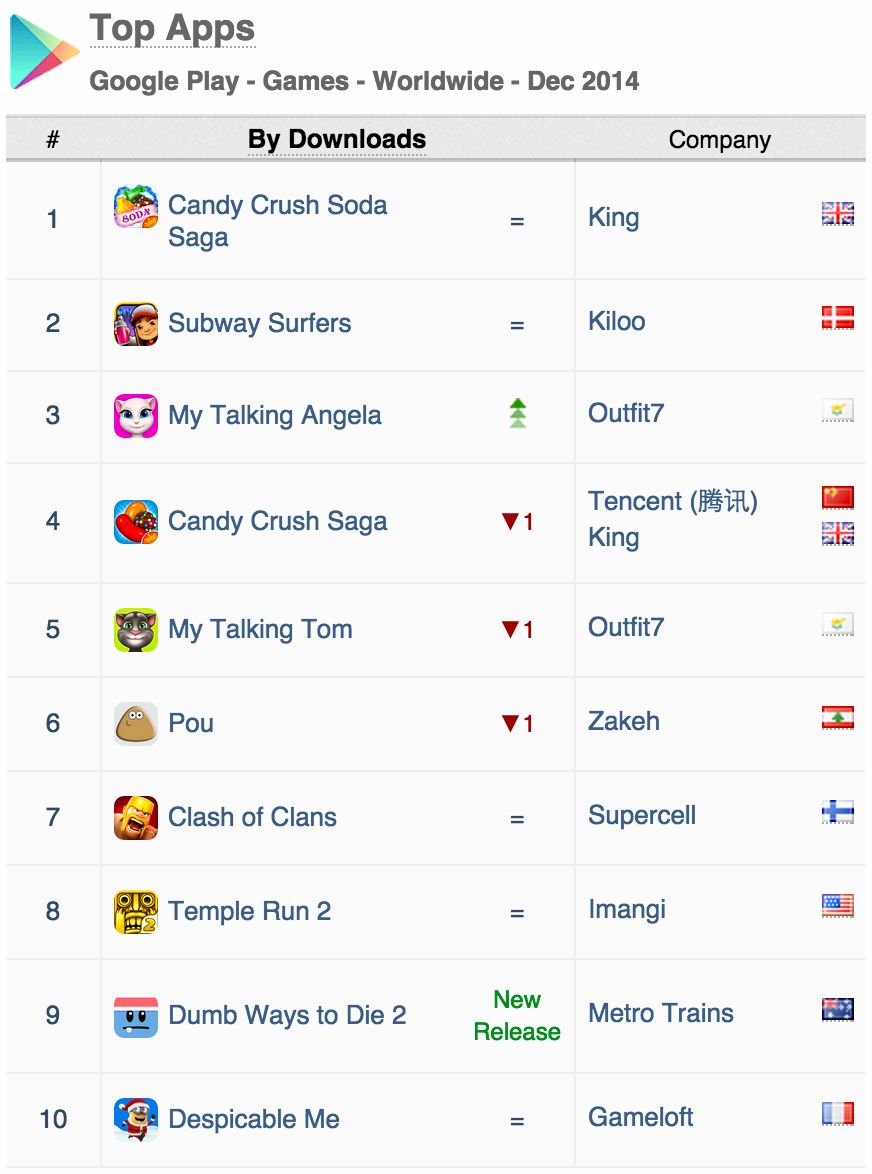
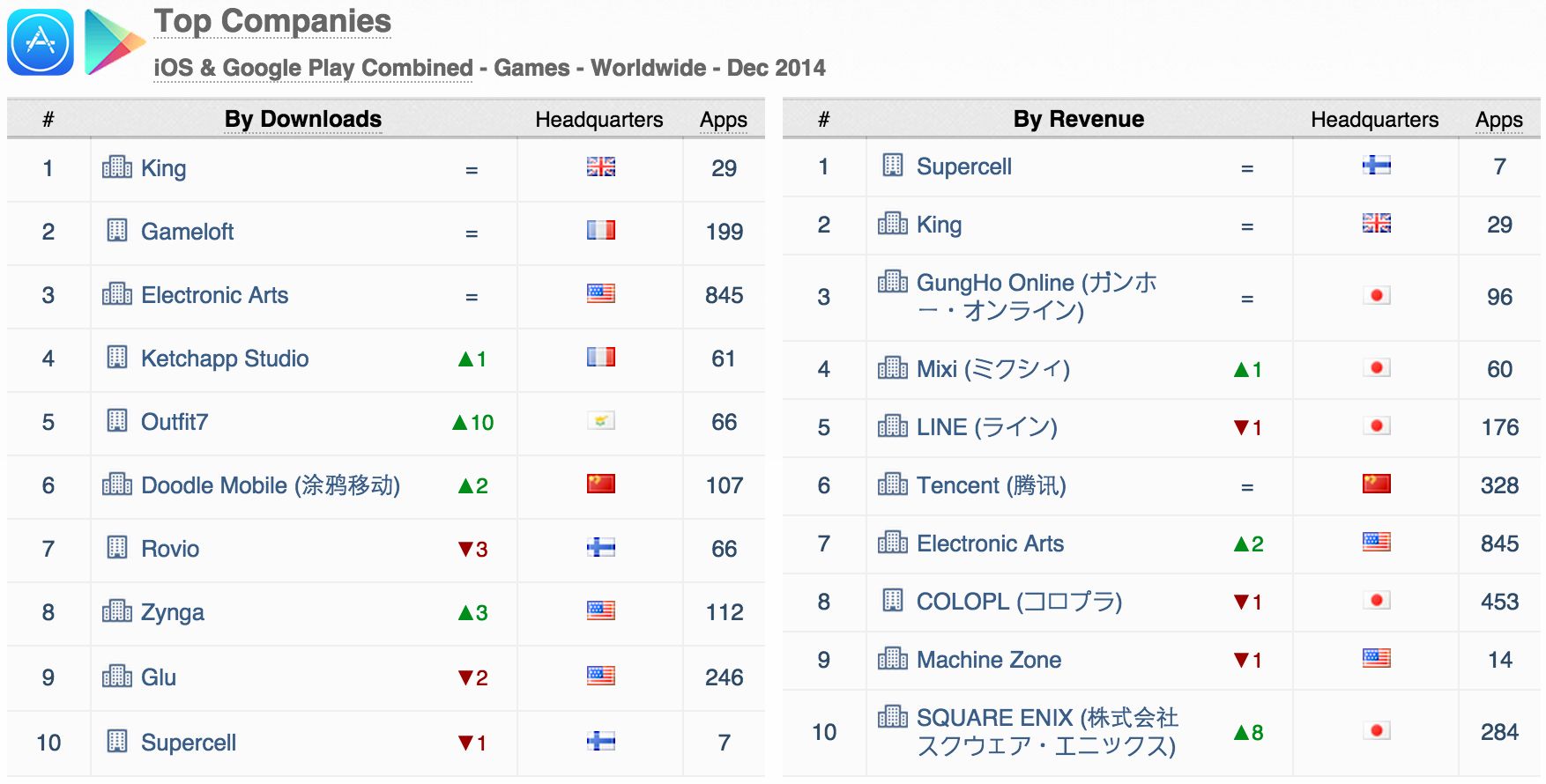
December is always an interesting month for the game industry. Traditionally that’s been because of gift-giving, and packaged games quite naturally found their best sales in the fourth quarter of the year. With mobile games, especially free-to-play ones, you’d think seasonality wasn’t as much of an issue. However, the holidays do mean more new hardware purchases, and gift cards, and consequently the biggest download day of the year is typically Christmas Day.

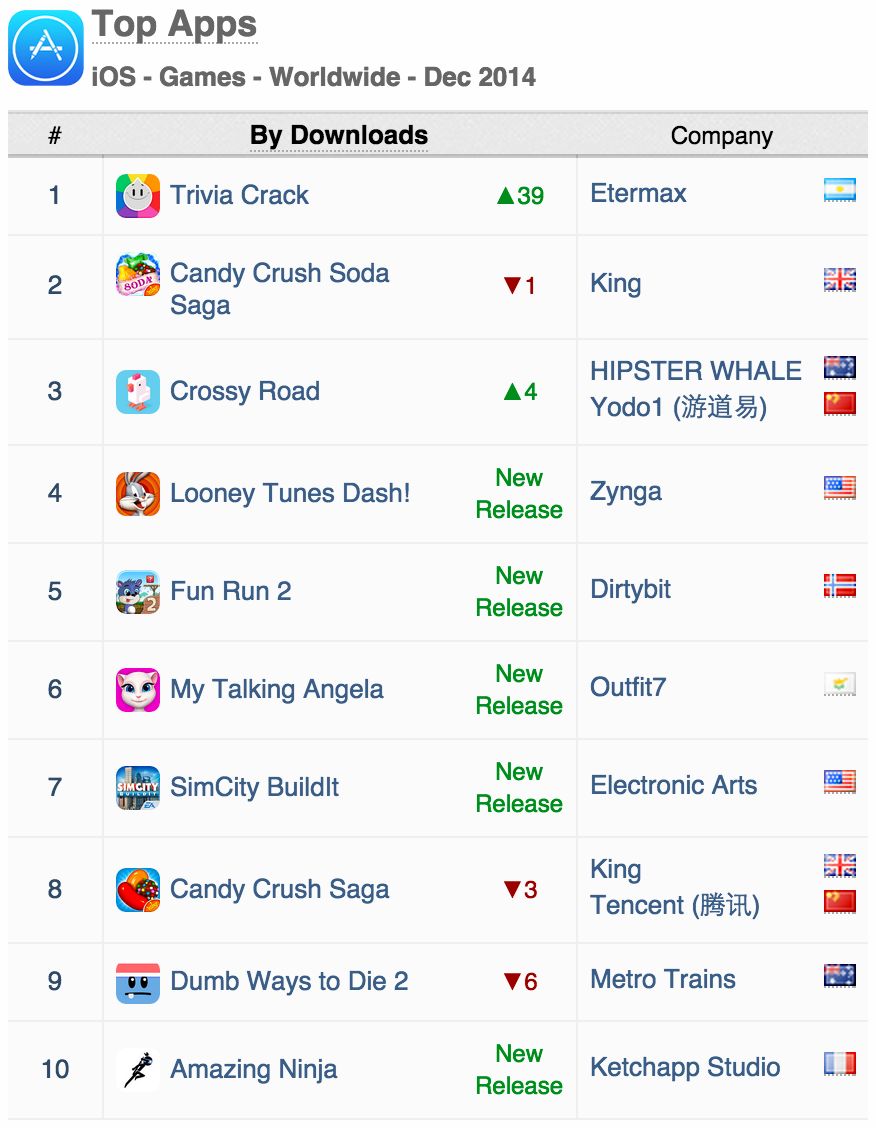
App Annie’s index of games for December 2014 shows some influence, perhaps, of the gift-giving trend. We see a couple of publishers appearing in the Top 10 downloads that weren’t there before, on the strength of new titles released during this time frame. Those titles don’t immediately monetize, of course, so those publishers aren’t shown on the list of the Top Ten by revenue. . .  yet. Notably jumping into the Top Ten by downloads are Outfit 7 and Zynga, and perhaps we may seem them in the top revenue list in a month or two.

App Annie noted some of the top performers, and the reasons for their performance, in the notes accompanying the data.

Trivia Crack Rides the Social Wave

Trivia Crack, developed by independent studio Etermax, soared to the top of the iOS download rankings in December. The app deeply integrates social elements as gameplay relies on challenging friends from connected social networks. Inspired by the popular board game Trivial Pursuit, players begin by spinning a wheel (named Willy) to answer questions in one of six categories (Science, Entertainment, Art, Geography, Sports and History). When a category is won, the associated character is unlocked and the first player to acquire all six characters wins. The combination of social integration and engaging gameplay helped Trivia Crack surge on the iOS App Store in December, particularly in the US. Etermax claims that Trivia Crack saw 700,000 daily downloads in the US across all platforms.

The app’s popularity did not go unnoticed by platform owners as Trivia Crack made an appearance on the “Best of 2014” lists on both the iOS App Store and Google Play. The increased visibility contributed to Trivia Crack‘s exceptionally strong December and helped Etermax reach the milestone of 100 million worldwide users on New Years’ Eve.

My Talking Angela Charms Her Way to the Top

Last year, Outfit7 expanded their popular Talking Tom franchise to the virtual pet genre with My Talking Tom. The game, focused on children, let players adopt Tom as a kitten and care for him as he grew into an adult cat. With the launch of My Talking Angela, Outfit7 seems to be doubling down on the female demographic. This strategy seems to be working as the title immediately shot into Google Play’s top download charts for December.

The app allows players to care for their kitten as she progresses through nine stages of growth, including baby, toddler, tween and adult. A significant portion of app’s gameplay and monetization are focused on dressing Angela in the latest fashions and decorating her room. This synergy between the app’s demographic focus and gameplay has helped My Talking Angela receive strong reviews on Google Play.

Crossy Road’s Characters Drive Its Growth

Crossy Road, an endless arcade hopper with gameplay reminiscent of Frogger, continued to climb the app store charts in December. The goal of the game is to get as far as possible while randomly generated obstacles, such as cars, trains, eagles and rivers, impede your progress. However, the most interesting aspect of Crossy Road is the focus on in-game characters that can be unlocked or purchased. Each character changes the game in subtle ways, which allows for a consistently novel experience. The game also received a boost when PewDiePie, a popular YouTube celebrity, featured it. This has helped Crossy Road reach the top of the app store charts in developed markets like the United States, United Kingdom and Canada.

Crossy Road’s monetization strategy is also somewhat unique. While it relies on in-app purchases, there are no restrictions on lives, play attempts or time. Instead of catering to these use cases with in-app “consumablesâ€, the app monetizes purely through the sale of in-game characters. Since new characters have an impact on gameplay, this also has the secondary benefit of increased engagement. We are interested to see if this spin on the in-app purchase revenue model finds more takers.

Microsoft Adds New Dimensions in Gaming

Microsoft held a press event today that may be its most important event in years, especially for gaming — and that includes the Xbox One introduction. The event was billed as an introduction to Windows 10, but it turned out to be much more than that, and with special importance to gamers, the game industry, and marketers.

So what is Windows 10 and why is it important First of all, it’s the successor to Windows 8.1 . . . which begs the question of what happened to Windows 9, but it’s probably best not to ask. Perhaps that version is living in a cupboard under some stairs somewhere in the vast Microsoft campus . . . or maybe some marketer just wanted to keep up, version-number-wise, with Apple operating systems.

Windows 10 apparently took pretty seriously many of the complaints that greeted Windows 8, and sought to fix them — making the operating system as useful and friendly as possible on both touch screens and keyboard-and-mouse environments, and making it easy to move back and forth between the two if you have a hybrid system. (It’s also very voice-friendly, with Cortana appearing in all Windows 100 devices to help you out.) The operating system will be appearing not just on desktops, but all across the Windows ecosystem: desktops, notebooks, tablets, and smartphones. Microsoft is also making it as easy as possible to develop a single app that can work across all those platforms, and easily share data and sync up across those platforms, too.

Perhaps even more important than these somewhat technical details is the marketing side of things. Microsoft has had the lion’s share of the desktop market for decades, but the rapid shift to mobile left the company behind. Sure, most of the world still does business on Windows desktops, but the mobile landscape is all Android and iOS with barely a smidgin of Windows Phone, and Microsoft hasn’t been able to change that after several years (and billions of dollars) worth of trying.

Now, though, Microsoft is getting serious about establishing a place on mobile. Finally, Microsoft is leveraging is desktop installed base to try and grab some mobile market share by having one operating system work across all different hardware. Spurring that adoption will be the pricing of Windows 10: Free. Any Windows 8 user can upgrade for free, as can any Windows Phone user — and especially important, any Windows 7 user. That’s right, no more $100 plus upgrade cost and fragmented user base. Microsoft is damn serious about moving all those Windows 7 diehards into its latest OS, and thus attracting more developers.

You can definitely see tablets and smartphones being adopted as extensions of your work computer, especially when Office is included with the OS on mobile platforms, and all data and work is synced via the cloud. Microsoft showed Windows 10 working smoothly on large tablets, small tablets, desktops, and phones. It’s an attractive vision, especially if we can see attractively priced hardware to go along with it. Microsoft promised new “flagship” Windows phones coming soon, too. This is important for gamers and game developers, as we can expected rapid adoption of Windows 10 across hundreds of millions of devices with its power, functionality, and pricing.

Holographic Minecraft

The gaming aspect of Windows was not neglected in this presentation — in fact, it was a significant part of the event, with Xbox head Phil Spencer walking the assembled journalists through some impressive new features. “Games are incredibly personal… gaming has always been inherently personal,” Spencer said. Spencer noted the 50 million Xbox Live users and how this will be leveraged into Windows 10. “We’ve identified several ways to make PC gaming even more incredible than it is today,” Spencer said. “Gaming on Windows 10 will be more social and interactive. All this comes together with the Xbox app on Windows 10.”

Every Windows 10 installation, on all devices, will have an Xbox app. You can use that to connect with your Xbox Live account, your friends list, messages, and activity feed. There’s also voice chat and text chat across platforms with all of your friends on Xbox Live. Spencer also noted how Windows 10 integrates with Steam, and we could see Steam on the taskbar of the demo computer. “Steam runs incredibly well on Windows 10,” Spencer said. More than that, though, you get Game DVR functionality, the ability to record and share gameplay across social platforms. “We think this will create incredible viralness,” Spencer said.

Spencer also noted the improvements of DirectX12, offering more fine control of CPUs and GPUs, and better performance by up to 50 percent for CPU-bound games. Power consumption is also cut in half from DirectX11, an important win for mobile devices. “None of this is possible if we’re not getting the adoption from the studios out there,” Spencer noted, announcing that Unity is adopting DirectX12, and of course Epic is already on board with Unreal Engine.

The big news came during a demo of Fable Legends, which had already been announced for the Xbox One. Now it’s also going to be on Windows 10 PC’s as well as Xbox One. Get this: you’ll be able to play multiplayer real-time action across console and PC. But Spencer took it a step further. “Wouldn’t it be great if we could play those games from anywhere in the house ” he asked. And there it is: Windows 10 will enable streaming of any Xbox One game to any Windows 10 device. Spencer played Forza Horizon 2 on a Surface tablet, streaming from his Xbox One at home. Of course, he was using a controller, and he did not address any of the inevitable questions about control issues. However, the streaming was smooth, and Spencer also noted that he can turn off the Xbox One console at home remotely when he’s done.

Oh, and Windows 10 is also coming to Xbox One, Spencer said. “Wait to hear from us as those features make their way to Xbox One,” he said, with obviously more details to announce at a later time.

If that wasn’t enough to get gamers excited, Microsoft save some new hardware reveals for the end of the event. The Surface Hub is an 84″ 4K screen packed with cameras, sensors and computing power, intended for businesses It looks pretty cool for whiteboarding, collaboration, and general business functions, though no doubt you could play some wicked games on it since it is a regular Windows machine. The price and ship date Not announced yet, but if you have to ask you probably can’t afford it.

https://youtube.com/watch?v=FRLDRQePY1o

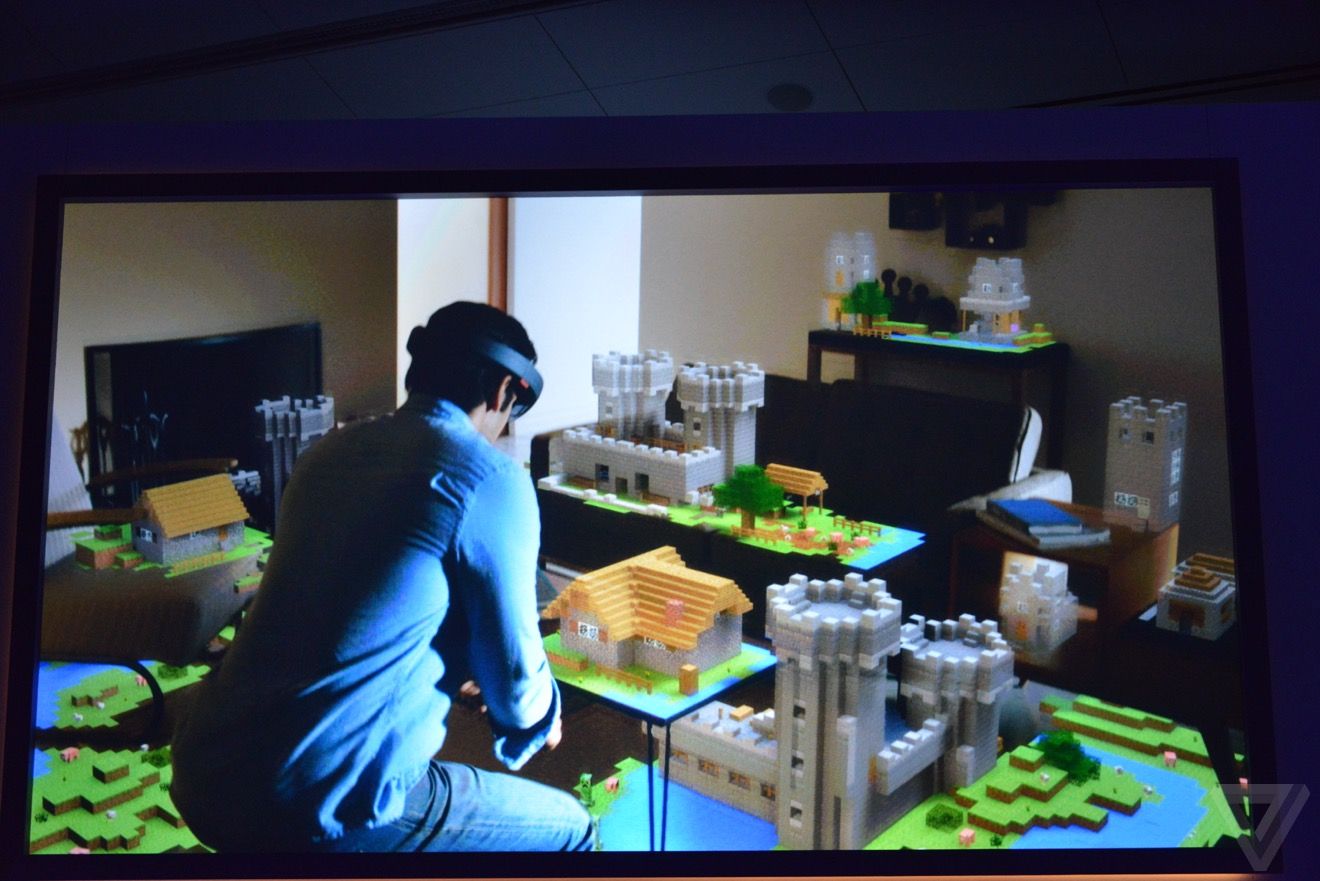
The big hardware reveal is Microsoft’s entry into what they deem the next stage of computing, unveiling the Microsoft HoloLens, their take on augmented reality. It’s a fascinating take on VR/AR with a sleek, light headset that Microsoft bills as afully untethered holographic computer, available in “the Windows 10 time frame” (which sounds like 2015). There are see-through holographic hi-definition lenses so you can see holograms added to the real world, yet you’re never cut off from what’s around you like the Oculus Rift experience. No markers, no external cameras, no wires, no connection to a PC needed.

https://youtube.com/watch?v=aThCr0PsyuA

The gaming implications are obvious, and were shown off during the spiffy videos illustrating the things you can do with HoloLens. Holographic Minecraft will have children everywhere begging for this device when it comes out… but we’re not sure when, or more crucially, how much this will be.

With these reveals for Windows 10 and the HoloLens, Microsoft is taking a big step forward in multiple markets. Broadening its user base substantially for both desktops and touch-screen environments, this can lead to a bigger, more unified market for game developers — and ignite new interest in making games for Windows smartphones and tablets. The connection with Xbox One should help move more consoles, and help generate more Xbox Live signups, too. Particularly when people realize they can liberate their Xbox One games onto mobile devices and play them anywhere, using the new game streaming technology. Whither the Steam Machine, under assault from Razer and Nvidia and now Microsoft We’ll have to see what Valve shows at GDC, but this streaming game battle is getting a lot more interesting very quickly.

Then there’s the HoloLens… now we have the Oculus Rift, Sony’s Project Morpheus, Magic Leap’s unknown entry (which from rumors and patent applications may be similar in many ways to Microsoft’s HoloLens) and the Microsoft HoloLens (and who knows, maybe a Google Glass 2.0) all vying to get right in your face and get you into the next level of gaming. Microsoft’s vision and implementation is interesting here, and potentially a winner. But we have yet to hear of a ship date or a retail price from any of these devices, and that’s hugely important. A $200 headset that comes out before everyone else could do very well… and a $500 clunky headset that ships a year later than the competition will probably sink swiftly.

This year promises to be a very interesting battle in the gaming space. Stay tuned!

CREATIVE: Here’s Your Survival Guide To ‘Evolve’

Evolve takes place on a dangerous, terrifying planet named Shear, a location poised to become one of the biggest tourist attractions in the gaming community. But what exactly is there to do once you’re enjoying the harsh weather and unstable terrain that this world has to offer Never fear, because Ayzenberg is here with a glorious seven minute survival guide with everything you could possibly want to know about the game.

No detail is spared during this deep dive into what exactly Evolve is going to be. Focusing on the specifics of each class, monster, and game mode, even the newest of the noobs can (base)jump into Evolve feeling like a pro. The team at Ayzenberg wrote, edited, and captured all gameplay for the trailer.

AppsFlyer: Creating The Mobile Ad Measurement Standard

The rapid growth of mobile advertising, projected by market research firm eMarketer to hit $64 billion globally this year and reach $158 billion by 2018, has attracted a great number of firms seeking to help advertisers reach mobile users. The array of ad networks, numbering in the hundreds, is daunting enough. Of course, just placing a mobile ad is only the beginning — you need to measure its effectiveness and analyze the results. Trying to do that across dozens or hundreds of ad networks, then adding in the complexities of different ad formats, social media, analytics tools and much more . . . it’s mind-numbingly complicated.

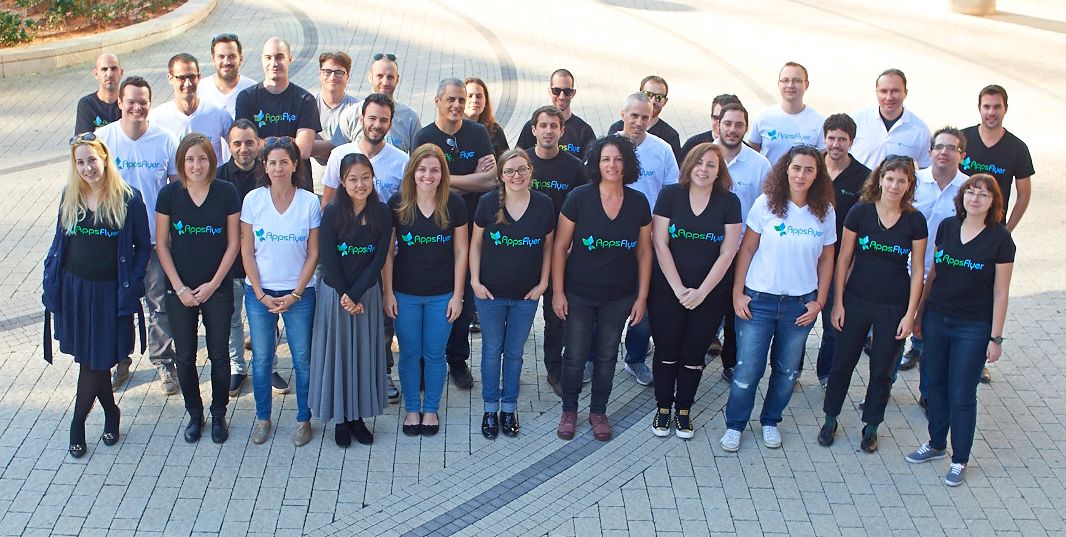
So it’s not surprising that many advertisers remain cautious with mobile advertising. Who wants to spend a lot of money if you’re not able to truly measure the effectiveness of the spend . Enter mobile ad tech firm AppsFlyer, seeking to alleviate this problem by providing a complete suite of software tools enabling advertisers to measure, analyze and optimize mobile advertising across all media sources, including paid, organic, viral and social.

AppsFlyer announced today it has raised $20 million in Series B funding, in a round led by Fidelity Growth Partners Europe (FGPE), with participation from AppsFlyer’s existing investors, Magma Venture Partners and Pitango Venture Capital. With this funding, the company has raised $28 million to date.

AppsFlyer’s NativeTrack technology provides app marketers, brands and agencies with unbiased, independent measurement of campaigns across more than 800 mobile ad networks and media sources. The company has racked up some impressive statistics since its launch in 2011: Its universal software development kit (SDK) has been installed over 4 billion times and can be found in 9 out of every 10 smartphone devices; more than 4,000 advertisers currently use AppsFlyer software to measure and analyze over $1 billion in annual mobile ad spend; and the company tracked more than 2 billion app installations in 2014.

The company’s technology is being adopted by many companies, and it’s working with leading platforms such as Facebook, Twitter and Google as an official Mobile Measurement Partner. AppsFlyer also provides direct integration to many of the leading third-party analytics, automation and delivery providers, including Mixpanel, Swrve, Game Analytics, deltaDNA and many others. In December, AppsFlyer launched OneLink, a unique, all-in-one smart deeplinking solution to help marketers simplify app marketing across all platforms and mediums, including email, web, search, mobile and all other paid media sources.

AppsFlyer plans to invest the funds in R&D to accelerate development of its product offerings, including new tools to help marketers measure the impact of their advertising, marketing and retargeting campaigns. The company will also expand its international growth by opening new offices throughout the world to complement existing offices in San Francisco, Tel Aviv and Beijing. Additionally, the company will invest in its knowledge center to provide key insights and education that help the industry understand the rapidly evolving mobile advertising landscape.

“Our mission is to empower advertisers with unbiased information and to give them the marketing toolbox they need to conduct smarter, more effective mobile marketing,” said Oren Kaniel, AppsFlyer CEO and co-founder. “We are thrilled with this investment from Fidelity because it will allow us to maintain our platform neutrality and to further develop the mobile advertising SaaS platform the industry is waiting for.”

Oren Kaniel and Reshef Mann

The [a]listdaily spoke exclusively with Kaniel about the company’s ad technology and the future of mobile advertising.

The complexity of ad and marketing tech, and the number of ad networks out there, continues to grow. How does AppsFlyer help marketers cope with this increasingly complex market?

Simplifying the complexity is our mission. The AppsFlyer universal SDK supports 800 different ad-networks; additional ad-networks and functionalities are added without the need to update our SDK. Everything is available to our clients automatically from our dashboard. The AppsFlyer SDK also support retargeting with all the ad-networks that supports that without the need to add more SDK’s and in-app events/pixels. Users segmentation and targeting is set once, and can be streamed to Facebook, Twitter, Google and others for retargeting. AppsFlyer’s OneLink, smart deeplinking solution simplifies marketers work across any device, any platform and any scenario whether the required app is installed or not.

How hard is it for marketers to get up and running with AppsFlyer? How well does it integrate with existing technologies that they may already be using?

It is super simple. They need to drop our SDK and few lines of code. We also offer a great way to integrate with other 3rd party in-app analytics providers such as Mixpanel directly from our dashboard.

How well does AppsFlyer work for game publishers, and does it help track not just installs but longer term engagement and monetization of games, as well as cross-promotion of game titles?

AppsFlyer tracks installs and every user action that follows these installs, such as, engagement, in-app purchases etc. In addition, we offer retention and cohort reports. AppsFlyer’s NativeTrack can track any type of media sources: Paid, social, cross promo and user referrals. The OneLink solution is leveraged for user referral programs by utilizing the attribution capabilities.

Where do you see the mobile ad market growing the fastest, both geographically and in terms of brand types ? (consumer products, retail, services, games, etc.)

We see a hyper growth all around. We expect to see faster growth for apps that generates some kind of return/revenue. By leveraging the AppsFlyer’s measurement tools, marketers can identify their profitable campaigns and increase their budgets indefinitely.

What types of mobile ads are performing best these days, and what changes do you see ahead in mobile ad types? Will we see more video, interstitials, banners, other types of mobile ads?

Ad type is usually a sales pitch. In the end of the day, marketers are looking for ROI. Better ROI is usually achieved by better targeting. We expect ad-networks to improve their targeting and overall performance. We expect to see more CPA campaigns where the marketers are paying only for valuable actions.

NATPE 2015: FremantleMedia’s Hayley Dickson On The Current State Of The Digital Content Market

By: Sahil Patel

Hayley Dickson, VP Acquisitions and Development at FremantleMediaHayley Dickson, VP Acquisitions and Development at FremantleMedia

For the next three days, many executives in the TV and digital entertainment industries will gather in South Beach to discuss the challenges and opportunities that they face in creating, distributing, and monetizing their content.

To be fair, a few deals will also be signed — NATPE is as much a marketplace as it is a conference for people to discuss the issues that plague their businesses — but for those interested in the future of video content, NATPE continues to be a must-attend event on the annual calendar.

Before the madness begins, we took a few minutes to sit down with Hayley Dickson, VP of acquisitions and development at FremantleMedia International, and asked her to share her thoughts on where the current TV and digital entertainment market is and what might be in store in the coming months.

Read the interview…

This article was originally posted on VideoInk and is reposted on [a]listdaily via a partnership with the news publication, which is the online video industry’s go-to source for breaking news, features, and industry analysis. Follow VideoInk on Twitter @VideoInkNews, or subscribe via thevideoink.com for the latest news and stories, delivered right to your inbox.

GameDevHacker: Where Indies Can Get Real

The incredible rise of the indie game developers over the last decade has been a tremendous story, of how small teams or even individuals can craft a vision into a game that can be enjoyed by thousands or even millions. In many ways we’re truly in a golden age for indie game developers, but at the same time it’s also getting more and more difficult to make a living at developing games on your own or in a small team. That’s where events like GameDevHacker, being held on Jan. 28, 2015 in New York City, can help by providing a place to learn more about bringing games to market successfully.

As the conference web site notes: “Making games is hard! Gather with GameDevHackers all star lineup to hear, mingle, and discuss topics that drive serious growth. This is a no joke collection of topics that confront game developers and business people alike. See how the industry attacks some of the toughest challenges of the past, and the future bets they’ll be making.”

Eric Yohay, who’s organizing GameDevHacker, spoke with [a]listdaily recently about the one-day event and how to get the most out of it.

Eric Yohay

How did GameDevHacker get started?

I used to run a company that’s now called Playcrafting. We were really good at teaching people how to make games, and how to pump them out. Consistently, what I saw was we’d have 50, 100 or 200 making games every month, new people who’d never made them before, and they’d all come back to me with the same question: “Eric, I spent all my time and energy making this games and that was what I had in my sights, but now that I’ve launched it I’m clueless. How do I make it a business, how do I get downloads, how do I attract partners What should I be doing now that I’ve made this game ”

So I spun this out separately, and the lens is how do you succeed in gaming and competing in today’s market. We’ve divided the conference into two different things: The past trends, and future bets. With past trends, what’s worked in the past — let’s talk actual hard numbers and data and discuss that. Then, tell us about future bets. Where are we going to spend our time, money, and energy moving forward.

Creating the audience is just as important as creating the product these days, isn’t it?

Exactly! I compare it to entrepreneurs who their whole game plan is to raise money, and that’s where all their time and energy is. They raise money, and then they’re clueless — they have no idea what to do after. You need to execute.

Are there certain key topics that are being addressed at the conference? What do you really hope attendees get some insight into and some help with at GameDevHacker?

The major goal is: How do you make money How do you succeed, how do you keep it moving Some core things we’re having that no one else has really done is we have Mikko Setala from Rovio coming in [executive vice president at Rovio], talking about Angry Birds from the start to where it is now. He’s talking about when you do have something take off, how to capitalize on it. Now they’re not even a gaming company, they’re more of a brand with stuffed animals and merchandise, and he’s talking about really outside-of-the-box things when you have momentum.

Another thing we’re really excited about is we have Brandon Quartararo from Digital Capital Advisors, he’s our keynote. We wanted someone to come in who wasn’t from the game space but knows a lot about it. He comes from the VC world, and he’s talking about the state of gaming: Who was the biggest M&A transactions, why are companies buying other companies, where are the exits. We really wanted to put a different perspective on this. We’re going to spend a whole day diving into details, but before we do that, let’s talk high level. Here’s how the space looks, here’s how it’s changed over time, here’s where we think it’s going.

Who should be attending GameDevHacker?

It’s the business person. In the indie world, it’s typically the engineer who is the business person, because they really understand and have a lot invested. The audience we cater to is the person who’s in charge of growing the company, whoever has a vested interest in making the company succeed. Engineers, if they’re also the business owners. It’s business development people if they’re looking to cut deals. CEOs and founders if they want to see what other CEOs are doing. It’s about really good content from the speakers, and really good people in the audience who can talk with other people.

We have two types of people, and we separate them by very strong lines. We have the indie developers, and they are coming because they want to hear what the large studios are doing. If you have unlimited time and energy and money, what are you doing Then we have the large companies coming in to see what you’re doing if you don’t have any resources and you’re real creative. We shwcase both and let them share, and create an environment where there’s very easy information flow.

For people who are attending, how can they get the most out of the event?

The first thing is have a game plan in want you want to learn from the show. ‘I just launched the game, and I want to grow to a million users.’ Everything you hear, put that lens on it so you know the right question to ask, you know how to frame everything, and you walk away with takeaways. Step #2, don’t be afraid to ask questions — and if you did step #1, it’s much easier. If you’re in a monetization panel, or you’re in a panel on how to get into emerging markets you can frame the question in a way that leads back to your goals and what your game plan and takeaway strategy is.

Finally, network. At the end of the day, everyone’s a real person. We’ll have speakers who will give precise answers in a public forum, but behind closed doors they may have other ideas. They may not want to share to a large audience, but one on one, I think they will. That’s why we have lunch as kind of an open forum, and coffee breaks, and at the end of the day it’s happy hour. At that point it’s a way to socialize and talk real with people who are in the same space.