Seven Steps To Make New Gaming Hardware Successful

This year promises to be a banner one for interesting new gaming hardware, both accessories and platforms. There’s everything from Razer’s Forge TV box and other Android TV devices, various flavors of VR and AR including Oculus Rift, Sony’s Project Morpheus, Microsoft HoloLens, and Magic Leap; possible new hardware from Alibaba, an Apple TV with games, Steam Boxes, and a whole array of wearables, controllers, and other hardware that promises to revolutionize gaming to a greater or lesser degree.

One thing we can count on is that each of these devices will find varying degrees of success, despite the fact that each represents a non-trivial investment and time and effort — not to mention the opportunity costs of what else those companies could have spent their time creating.

You’d think that with so many examples of new gaming hardware, both successful and unsuccessful, from past years and decades, that companies would have figured out what makes some new hardware soar and what makes some crater. Apparently not, though, or perhaps it’s that hubris overwhelms rational analysis and planning far more often than it should.

Don’t rely on outside developers
Whatever it is that you think your new gaming hardware can do that’s exciting and worthy of the time and money of a vast audience, you have to be the company that delivers it — and it has to come with the hardware, or be available right at the same time. More than that, while it may seem like new hardware could enable some cool games, you have to demonstrate that.

The Kinect and the Move are perfect examples of this principle. Sure, the Wii had demonstrated that motion control was pretty cool and could attract tens of millions of new gamers — when the price was right, and the timing was right, and the games were easy and new. No doubt it seemed clear to Sony and Microsoft that they needed their own motion control hardware to jump in on this new style of gaming. But as it turned out, the Wii had already captured the casual gamers, and the more hardcore gamers weren’t interested in motion control unless it made a difference to the games they liked. It turned out that the Kinect and the Move couldn’t be used with more hardcore games for a variety of reasons. The overhead that hardware took was just too much, and even more important was the fact that no one really came up with a good reason to use that hardware in a hardcore game, anyway.

The problem continued with Kinect 2.0, which was a substantially better piece of hardware in every way (except cost). So Microsoft included it with the Xbox One, hoping that developers would seize upon it and build its capabilities into all kinds of games, and that it would lead to much more fun games as a result. But designers never really figured out a way to use it in most games, and no one wanted to go to the extra time and trouble to do that. Ultimately the Kinect never delivered a better gaming experience, and so Microsoft dropped it in order to make the Xbox One competitive — and sales soared.

Maybe there is a really cool game waiting to be delivered for the Kinect, but if Microsoft doesn’t it create it, no one will. It seems like Oculus understands this, because they’ve gone to the effort of setting up a publishing operation under veteran Jason Rubin. So does Magic Leap, hiring veteran Graeme Devine to get some games developed.
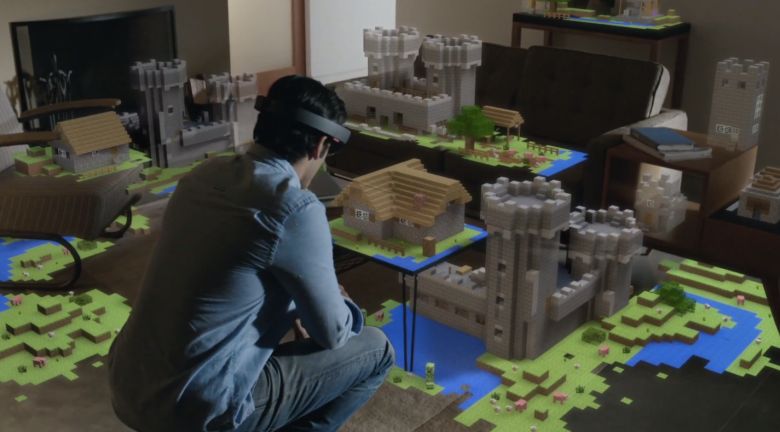
Holocraft demo

Don’t shut out outside developers
On the other hand, you can’t have a really successful piece of gaming hardware these days without third-party support. That’s why console developers have made it a priority to attract developers, even reaching out (with this new generation of consoles) to the formerly despised indie developers. Where you used to have to spend six figures to get development systems for consoles, now it’s cheap, and the bureaucratic nightmares you once had to navigate are substantially improved. The tools are a damn sight better, and cheaper, too.

It seems like most manufacturers have figured this one out, but it’s still not easy. Developers have plenty of platforms that they can target, so you have to convince them to make an effort for yours. That’s a long-term courtship, and you’re going to have to kiss a lot of frogs to generate a prince or two. Better stock up on flies to hand out at trade shows, too, to bring the frogs over to your booth. Good luck!

Don’t undercapitalize
While you’re planning this world-changing piece of hardware, don’t do it on a shoestring. You need plenty of capital to not only design and manufacture the hardware, and build sufficient inventory, you have to fund software development, developer relations, and you’d better have a strong marketing operation planned as well. Don’t forget to build and sustain your community, and have a creative and ongoing PR team, too.

Why go to all this effort Won’t all that show up just because you built a really cool widget Once upon a time, perhaps. But we’re in a world where new, cool widgets are arriving all the time. There’s plenty of competition for attention, even in the category of exciting new hardware that can play games. You’ve got to be ready to succeed for the long term, and that means piles of cash when you’re talking about hardware.

Deliver an experience, not just hardware
It’s not the door that’s important, it’s what you get when you walk through the door. Any piece of gaming hardware is an expensive paperweight without an impressive experience that it delivers. When you hear some hardware company proclaim “We can’t wait to see what happens when developers get their hands on this!” it’s a code for “We’re not really sure what people are going to like about this, but it gives great demo.”
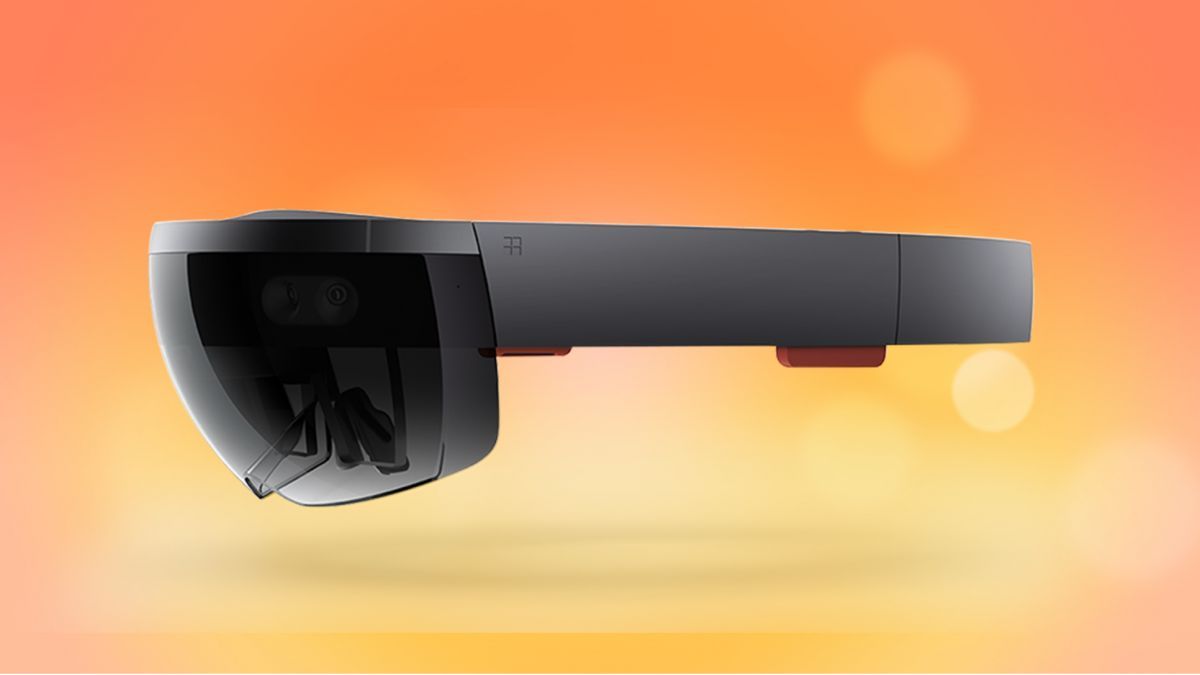
Microsoft HoloLens

Snazzy videos showing beautiful people in rendered visualizations of supposedly fun gaming experiences are one thing; actually playing a game yourself and having fun is quite another. The correct response when you see a trailer for a new game or a new piece of gaming hardware is “Looks great, I’ll be interested to try it out for myself.” So hardware companies need to make sure they have something fun before the hardware ships, and confirm that by getting a lot of people to go hands on with it. And not just with a demo, but an actual game.

Don’t forget price is a critical feature
Price does more than many other features in defining an audience and sales figures. Just ask Microsoft about Xbox One sales at $499 and Xbox One sales at $349. Yes, it’s crass and crude, and not elegant like the beautifully machined casing or the gorgeous screen resolution, but when customers are in the store the price tag has a huge effect on whether or not they will take something home. An Oculus Rift at $199 is a whole different thing than an Oculus Rift at $399, or at $999. Analyze your intended market carefully, and how much they have to spend on your type of device. Yes, your hardware may be unlike anything else… but customers have other entertainment options at a variety of price points. Be competitive from the start, or you may never reach flight speed, much less orbital velocity.

Build a platform, not just a device
New gaming hardware, to reach high levels of success, needs to be a platform – someplace where a lot of people can stand and create more excitement and reasons to buy the hardware. That’s why console makers are so concerned about courting developers, and why those console sales figures are so important to them. Developers decide on platforms based on how big the installed base is, and yours is half the size of the other hardware, you just moved down the list.

It’s also about ease of development, share of revenue, quality of tools, and just how difficult it is to deal with your company. If you can’t attract the third-party developers, your success is determined by how much software you can develop and ship. This is Nintendo’s biggest problem right now – the Wii U is pretty much abandoned by major game publishers, and so its sales are largely tied to how often Nintendo can ship major new games for the Wii U. That turns out to be no more than a few times a year, which is not enough to generate great sales… and so third-party publishers continue to stay away. Breaking that cycle is difficult.

Timing is critical
Finally, while you want the hardware to be great, you can’t wait forever. Your competition may come out far enough in advance of you to steal your market, even if your product is ultimately better. Oculus may be the best VR helmet, but if Project Morpheus beats it to market by a year and does a pretty good job, that may leave the Oculus too far behind to catch up. You also have to make sure your software is ready at the same time as the hardware. Nintendo’s Wii U would have had a far better launch if titles like Mario Kart 8 and Super Smash Bros. had been available its first Christmas, rather than its second.Â

Hardware companies should in fact know all of these things already, yet they will probably go on making mistakes in launching new hardware for a wide variety of reasons. Pass the popcorn, because this year promises to have some very interesting launches for gaming hardware. Let’s hope most of them are successful.

Sundance’s Curator Explains Why Virtual Has Become Reality

This year will likely be etched in history as the birth of virtual reality beyond gaming. At the 2015 Sundance Film Festival (which just wrapped up Feb. 1), the majority of the New Frontier technology projects focused on VR. Everywhere you turned there was someone immersed in a short story being told through an Oculus Rift, Google Cardboard or Samsung Gear VR. Indie developers have embraced the technology that was literally born at this very festival three years ago, when Lucky Palmer debuted his Oculus VR prototype to attendees in collaboration with journalist Nonny de la Peña for the VR experience, Hunger in Los Angeles.

Shari FrilotShari Frilot

Shari Frilot, who’s been curator of the New Frontier showcase since 2007, watched as Luckey’s technology first wowed gamers through Kickstarter, then enticed Mark Zuckerberg to pay $2 billion for Oculus VR, opened up new gaming experiences like CCP Games’ EVE Valkyrie (which was on display at last year’s New Frontier), and now has given independent filmmakers a brand new medium to explore storytelling. Frilot explains why Hollywood is mesmerized by VR and why storytellers are experimenting with gamification in this exclusive interview from the festival.

What impact do you see companies like Facebook, Samsung and Sony getting behind VR having on it as a medium for filmmakers of all types?

There’s a certain validating quality to it, but there’s also the resources, experience and the financial power and infrastructure that these companies can provide to something that’s quite experimental at this stage. It paves the way for others to make the leap to this medium. It’s important that Facebook bought Oculus because people know what Facebook is. They maybe didn’t know what virtual reality was, but Facebook buying Oculus creates an awareness of what virtual reality even is. So on the basic level of pop culture awareness, it really helps. Companies like Sony, Samsung and Fox have infrastructures that they’re invested in bringing things to market. So they can be there to work with the content creators to get things finished, and to pick up the slack financially to make sure that works get made and advertised. Remember, anything that you’re trying to put out there that’s telling a story also has to be marketed, so all that experience of marketing and distribution will be tapped to grow this field of virtual reality.

“It’s important that Facebook bought Oculus because people know what Facebook is. They maybe didn’t know what virtual reality was, but Facebook buying Oculus creates an awareness of what virtual reality even is.”

How have you seen Fox embrace VR?

They have the Fox Innovation Lab and they’re presently engaged in learning how to tell stories. They produced Felix & Paul’s experience, Wild, which is at New Frontier. And you can really see the distinction when a big studio gets involved with creating an experience that is separate from just repurposing footage from the set. This is an original production with the stars of Wild, but that experience doesn’t happen anywhere in the movie and it was shot in a different place. It was made independent of the film, almost like a DVD extra or a documentary about the movie. Fox can do this and they can do it really fast, faster than filmmakers who are making this work on their own dime.

What do you see virtual reality opening up for filmmakers as we see these types of short films and experiences here at Sundance?

For filmmakers, this is a whole new way to do special narrative that is only going to become more and more robust, whether they do these in chapters or whether they do these in longer formats. There can be room for both, and it’s been proved quite clearly in the success of a number of pieces that you can have a linear narrative that people really enjoy. They don’t necessarily have to have a fully branching interactive piece.

“For filmmakers, this is a whole new way to do special narrative that is only going to become more and more robust, whether they do these in chapters or whether they do these in longer formats.”

How have you seen video games blend into New Frontier this year?

There are a lot of interesting intersections with gaming and storytelling here. There’s 1979 Revolution, which tells the story of the Iranian Revolution and is also being developed for Oculus. There’s Possibilia, which was funded by Xbox Originals and is an example of gaming your way through a film experience, because you’re actually putting together a way to tell the story by selecting scenes through iPads. You’re experimenting and learning something about the nature of breaking up through this film. So it’s like gaming to the truth of breaking up.  Way to Go is more like a traditional game, but it’s also going through a cinematic filmic experience that’s more abstract. It’s a beautiful work with hand-painted animation and 360-degree controls both on a big screen and through VR. Derive, to a certain extent, engages you a little bit like a micro game as you play and interact with the city that you’re descending upon. Even Assent, the VR experience by artist Oscar Raby, isn’t necessarily a game, but there’s an interaction that you find in games that you don’t find in traditional cinema. You can explore any given scene in that experience for as long as you want until you decide that you want to move on, and you choose how you move on. You have some choices, and when I think about telling stories through gaming, I think about making choices. That’s really the mechanism of storytelling through the gaming process. So there’s a lot of that here.


‘Clash of Clans’ Dominates Super Bowl Game Ads

This year was a pretty busy one for Super Bowl advertising, and also among the first where mobile games made a huge impact. uCool spent a whopping $4.5 million for a 15-second spot for Heroes Charge; and Machine Zone spent a good amount of cash on a lucrative new ad for Game of War: Fire Age, once again featuring model Kate Upton.

However, it was Supercell making the biggest move with its latest advertisement for Clash of Clans. Not only did the company invest $9 million in a 60-second ad featuring its warriors at play, but it also employed a top-notch actor to take part in the proceedings – Liam Neeson, the star of the Taken series, amongst other action fare.

In the trailer, Neeson finds his army defeated by a random online player, and vows revenge – all while waiting on his latte. The ad can be viewed below.

Mobile Dev Memo explained the logistics behind going with a big-budget ad such as this one. With a large audience tuned in to the game (approximately 112.2 million watched last year’s), it’s an easy opportunity to get newcomers interested in a property – and adding a personality like Neeson makes it a little simpler to accept the content, rather than uCool’s “quickie” ad that says very little about the game, outside of some quick animatics.

Said Mobile Dev Memo in the article, “If just one percent of those viewers converted – a fairly reasonable rate for in-app advertising – then a cost-per-install of $16.04 was paid for 281k new users. While high, this CPI isn’t outside of a reasonable range that a developer might expect to pay for a game as old as Clash of Clans through in-app ads in the US, especially in such a large-scale campaign. These figures also don’t take into account the hundreds of thousands to millions of free commercial impressions that will likely be delivered via YouTube over the course of the next few months.

So the move pays off in spades. While Heroes Charge was considered by many to be a quick, forgettable ad (but still probably effective with a certain audience), Neeson’s Clash of Clans ad will likely make a bigger impact in the long run, especially with the actor still being quite popular in most circles. (His latest release, Taken 3, is still circulating in theaters.


“The aim of this strategy seems to be to target groups of people (likely men) that have come together to watch a sporting event and might discuss the mobile game after viewing the commercial,” the article continues. “This is a different tactic, serving a different type of game, than buying airtime to promote a single-player title. So if Supercell’s goal with its Super Bowl commercial was acquisition, it was likely a very specific type of acquisition: of a player that can download the game and instantly join an existing clan.

One thing’s for sure – Supercell is likely to continue such an angle with future campaigns, especially considering the effectiveness of Neeson’s appearance. Sure, the ads may cost a bit, but it seems like the payoff from new and existing consumers will certainly be worth it


Adjust: ‘The App Store Will Be Dead’

As everyone knows by now, the massive number of apps available on both iOS and Android has lead to a discoverability problem for new apps, and games are suffering as much or more than any other category. Now we’ve got some numbers to help gauge the problem, as app analytics firm adjust has just released their “App Competition Retrospective Report” on the subject. Adjust says that app competition toughened in 2014, and that 82.8 percent of all apps in the App Store are what they term “zombie apps”: Apps that do not rank in the top lists and are effectively invisible in the app stores. This is up from 74 percent at the beginning of the year, a worrying trend.

“If this trend continues — and nothing indicates it wouldn’t — we’ll see less than a tenth of apps attracting any kind of organic user attention by the end of the year, and those that do gain attention will be apps that already have significant traction,” says Christian Henschel, CEO and Co-Founder of adjust. “The app store, as a source of organic acquisition, has finite capacity. When that’s reached, the app store will be dead.”

The number of Zombie Apps — those that are not visible in the app store — has almost doubled in 2014 from 657,778 in January to 1,136,501 in December. During this time, the App Store grew by 54.3 percent, increasing from 889,231 to 1,372,371 apps. The report also notes that the Chinese app market has seen 77 percent growth in 2014, while the Japanese market has seen 54.4 percent growth.

The [a]listdaily spoke exclusively with adjust CEO Christian Henschel about the issue of zombie apps, and specifically how it applies to games.

Christian Henschel

Does the discoverability situation for games appear better or worse than for other apps?

Games, as a category, is bigger and tougher to compete in than other categories – no question about it. It’s also highly diverse, with many developers large and small doing great work and placing a lot of attention on high-quality apps. At the same time, the ecosystem is much larger and there are more opportunities outside the Store than for other verticals.

Should game developers list their games only in subgenres, or also in the main game category? Is there a drawback to listing a game in multiple categories?

Our data indicates that the sub-genres, in terms of competition, provide lower thresholds to be listed. Counter this with the perhaps lower “foot traffic” passing through these lists. Where to list your games is something to carefully deliberate about, and this is something we’ve looked at particularly for this report.

Is there anything that Apple can do to make this situation better in the App Store? Do you think Apple is likely to make any major changes to help apps get discovered?

Yes, we believe this situation can be improved, and there are definitely some very promising initiatives and developments on Apple’s side. For instance, better and more increased curation for more categories, and improved discovery features in iOS8 will all improve the store to provide more for the end user and better conditions for the developer.

The App Store still is only one format and one place though. It’s great for distribution, but discovery can really benefit from more different formats, contexts and conversations outside the Store.

How does the zombie situation in the App Store compare to the Google Play store, and the Amazon appstore? Is it similar, better, or worse?

This is in many ways difficult to compare directly as the metrics vary considerably between Stores, and the data provided is sometimes low quality. Generally, we have seen trends toward a higher flux on Android than on iOS — the top listed apps vary more often over time.

For third party stores on Android, like the Amazon Store, the rule is that the smaller, the easier it is to get a good spotlight in the Store. Again, you have to counter this with a more limited audience. We’ve not yet seen really innovative approaches to discovery in the third party stores, but this is sure to be a topic going forward. Top lists don’t work for discovery — they didn’t for web in the long run, why should they for mobile

What’s your advice to a game developer seeking to avoid their game becoming a zombie?

One area we recommend developers carefully look at is the right categories for their game. The better you can categorize your game to hit an audience, the more eyeballs you’ll attract.

All the same, even with the exact right categories, App Store organic discovery is a multiplier. It’s not a very good source for discovery in and of itself. If you don’t have users, you won’t get more.

Looking at the data in our report, it’s hard to entirely believe “organic-only” acquisition strategies. We must think that paid acquisition is requisite to some extent to find an audience for every app. Ads don’t have to be terrible drivers of traffic, and they shouldn’t. Shop around, educate yourself — especially in games, where there are countless options to achieve a high bang for your buck in marketing.

DeNA West CEO: How Mobile Games Succeed

Mobile games are a difficult business that’s been changing rapidly for many years now, with rapid hardware evolution, changing business models, new and fast-growing markets appearing, and numerous other changes. So it’s a significant thing indeed when a company has not only survived through many such changes, but thrived in the face of this shifting business. DeNA is one such company, a Japanese mobile game giant established in 1999 that has reached well over $1 billion in annual sales with mobile games first on feature phones, and now on smartphones and tablets.

Keeping a mobile game company at the top ranks of the business for years is a difficult task, especially as the market expands worldwide. DeNA has been successful not only in Japan but in other regions as well, snagging major licenses like Marvel and Transformers. DeNA West is led by CEO Shintaro Asako, who spoke with [a]listdaily about how to succeed in the mobile games business today, and some of the key factors that DeNA looks for in evaluating mobile games.

Shintaro Asako

It’s so difficult now to get a mobile game to the top ranks of apps, with the huge numbers of games on the market and new ones entering constantly. What are the key factors in making a mobile game successful?

For free-to-play games to be successful, that three important things have to be there. I call them the three mountains. Because it’s free, and so many games are out there, the first mountain is that the game has to be really attractive to make sure that people find this game and think that it might be fun, so that they decide to download it. This has nothing to do with the actual game play — the game has to be really attractive so people find the game and when they see it they say ‘This looks cool, I want to play it.’

The second mountain is the game has to be so easy and fun you come back and play it for maybe two to three days. Once people download the game, they don’t have any instructions or manual, and they don’t have any investment into the game. Therefore you have to make sure the game is very easy to understand and fun to play. Instead of going through detailed long tutorials, the easiest thing to do is let the player play the game right away, and the control has to be intuitive instead of having to be explained in detail. Some piece of interaction has to come in to grab people’s attention and hold it for one day to three days. Anything beyond three days, people usually have to have a different reason to play that game. You can maybe have filet mignon for two days in a row, but you can’t have it for seven days in a row.

The third mountain is that now you are getting into the core of the game. Perhaps, if it’s a racing game, you think “Instead of just racing I need to get a better car. I need better parts, or I probably need to get tuning done.” People start thinking abut how to win this racing game — I need a better team, I need a better car — so people are now getting into a deeper game, the metagame, not just winning a race. That’s the piece that really dictates the super-successful games that have high lifetime values (LTV’s) versus low LTV games that people might decide to play for a few days then move on to another game. All the really successful games today have really long retention. People not only download it because it looks fun, play it because it’s so fun, but people also have a deeper reason why they continue to play that game. The last piece is usually linked to some game mechanic like an RPG. Talking about a racing game, instead of just doing a race, you’re now buying a car, optimizing a car, practicing, tuning up the car — that’s more like an RPG, or team management in a sports game.

What sort of monetization works best for free-to-play games?

When that cycle starts, people have to feel that it’s positive purchases, not negative purchases. Positive purchases means that it’s not that you run out of energy and you have to pay to continue to play the game. For instance, I have a Toyota Camry but I need a Porsche to be able to win my game, so I have to play more and gain more points so I can get a new car. That’s a really positive experience, so users are invested into the game. They are now getting the free game and playing a quick mini-game, and they are getting into a long-term investment phase, a growing aspect of the game, so people will play the game for a long time.

On the top-grossing charts, you can see Clash of Clans where you are buying additional buildings and making your empire strong, that’s really investment. Game of War is the same thing. Those successful games have that RPG aspect. Whether it’s a racing game or a sports game or a tower defense game, people buy additional things and grow it, that’s the really fundamental aspect of those game and it’s the only way you can engage users to play for a long time. But if there’s no fun, crisp minigame, people feel like they’re constantly studying and don’t get to practice with what they have gained in the game. The minigame could be a puzzle, or a race, or a sports game, but usually the successful game has two aspects, the RPG aspect where you do something day to day to improve your character, and there is a place to exercise what you have gained.

What do see in the years ahead for China, Japan, and the West for mobile games? How are those markets alike, and how are they different?

The Japanese market is about a $7 billion market, and I expect that market to grow in single digits over the next couple of years. I predict it will go up a billion dollars or so in the next couple of years; it will grow but not as fast as other markets. The Chinese market today is somewhere around a $4 billion market, and I expect it to go to $8 billion in the next two to three years if not earlier. I expect the Chinese mobile gaming market will be the largest mobile gaming market in the world. The Western market, which is mainly North America and Western Europe, is around $3.5 to $4 billion, maybe slightly smaller than China. I think this market will be $5 to $6 billion in the next few years. This is DeNA’s prediction, and the good thing is that all three markets are huge, and all three are growing. Our strategy is to be successful in all three markets.

The second thing is that all three markets are very distinctive from each other. The type of game, the type of minigame that people like to play, the type of metagame, and the genre of game that people like is all quite different for all three regions. If you look at the top ten-grossing charts, eight to nine out of the top ten games are created by local developers for all three markets. Some people look at Candy Crush and say all you need to do is create the right game and localize it for each market, but that’s not true. You have to really think global but also be local — some people say “glocal.” You have to really understand what attracts each local audience.

What’s the best advice you can give a mobile game developer to help them be successful in 2015?

Unless you have a local team targeting for a local audience, which is China, the West, and Japan, people should seek partnerships to make their game successful globally. If you don’t have people or a studio in other markets, the easy thing to do is either licensing the game to other people with experience in that market or find a partner who wants to work with you to be successful in that market. The second thing is, people are playing successful games for a longer time, even twelve months or longer. A new game that’s slightly better will not necessarily attract people. The quality bar to convince people to switch from an existing game to a new game is higher. It doesn’t mean people aren’t going to try, because it’s easy to check out a game.

People have a invested a long time and a lot of money into an existing game, so for you to convince them to stop playing and shift over to a new game is tough. For anyone to be successful in today’s market, the game has to be really high quality. You probably have to convince Apple and Google to feature your game. You probably need IP to convince people to at least download your game, and your game it has to have that minigame concept and RPG concept to be successful afterward. If someone has an excellent minigame, it’s probably better to have a larger company as a partner so the larger company can either guide the company to create that RPG element or perhaps get something like the Star Wars IP and attach that to the game. The market getting more difficult for small to medium size companies. People are already playing an existing game… you’ve already seen this happening in the console market. It is happening in the mobile gaming market. It’s not any more some guy in a garage making a minigame and making millions of dollars.

‘Madden’ Bowl Kicks Off Super Bowl XLIX

Electronic Arts, now officially the top publisher in the world, is celebrating another successful year of Madden. The video game giant has partnered with the NFL for the first time to bring Madden Bowl XXI to fans in Scottsdale and around the globe (through Twitch). Randy Chase, senior director of North American Marketing at EA Sports, talks about the new four-man Ultimate Team tournament that officially kicks off Super Bowl XLIX in this exclusive interview.
Randy Chase, senior director of North American Marketing at EA SportsRandy Chase, Senior Director of North American Marketing at EA Sports
What’s new with Madden Bowl XXI?

The format will be different this year. We’re hosting a 4-player tournament featuring Colin Kaepernick, Patrick Peterson, Alfred Morris and defending champion, LeSean McCoy. Each player will be designing his own custom Madden Ultimate Team for the competition. It levels the playing field.

Why only four players this year?

Having to play online games takes a bit longer and it’s easier to do with less guys.

Where will the event be held?

We’re partnering with the NFL for the first time and the venue is in the Scottsdale entertainment district at Bottled Blonde & Livewire. It’s a block party, so there will also be a street component to the event. There will be three stages, including one in the street, a Pepsi Stage and one in Livewire.

Will fans be able to view the outside stage?

The entire party is invite only. The street will be closed off and once you’re in the party, the street serves as the party itself. We’re also doing the Gamer Bowl. Chevy and Xbox are bringing winners from an online Madden tournament that ran throughout the year. Twitch will be livestreaming that one-on-one match earlier on Thursday.

How do you pick the contestants?

We’re looking for guys who play the game a lot. We’ve had guys reach out to us who want to play in the tournament. If we were filling more slots, we wouldn’t have a problem broadening the tournament. 

What has working with the NFL opened up compared to the past few years where Madden Bowl was part of the Bud Light Hotel?

Working with NFL is great because they do these types of things all the time. We can leverage their knowledge of doing events like this. We worked with them in the past on the Madden Pigskin Pro Am, so we know what they can do when they put on an event. We’re also going to livestream Madden Bowl because we want to bring something like this to the fans. We’re working with Twitch. The NFL will produce the stream, which will livestream on Xbox Live, EA’s Twitch channel and Android and iOS on the Twitch app. The NFL is going to produce the event on site and handle the livestream.

How is Pepsi being integrated into this event?

After the first round there will be a Pepsi Half-Time Show featuring singers Nico & Vinz.

What will the post-championship concert be?

Nelly and Florida Georgia Line are the musical performers, and there will be a DJing and a feature performance by Lil Jon. We leaned toward a variety of music with this year’s show. We put together something that pays tribute to EA’s mantra of putting gamers first. Our fans enjoy lots of different genres of music.

What does Ultimate Team open up for the competition this year?

We’re going to have some talent from different sports networks that will talk about how they put together their teams. In the past they just chose a team they liked to play with. Now these players have to bring a different level of strategy: what type of style of play do they run It brings new level of strategy and thinking to how they construct their team.They’ll give us their Ultimate Team in advance and then we’ll talk to them on site about their picks. The thought process going into it was that you can’t pick the hot team you play with online. You need to marry your stick skills with the ability to build a great team.

Why do you think Madden Ultimate Team is so popular with gamers?

It’s Fantasy Football in video game form because you need to put together the best team possible. There’s a lot of strategy in it on both offense and defense. It’s a lot different than opening up the box and playing with your team.

Who will the emcees be?

We’ll have Michelle Beadle from ESPN returning and Kevin Hart — who’s the face of Madden creative and a big fan of the brand and a great personality – will be offering commentary during the tournament. We’ll also have some analyst type talent to work with during the tournament.

How long with the video game portion of the night last?

The livestream will be 60 to 90 minutes long. The Madden Bowl starts at 8:30pm MT and it’ll wrap around 10 or 10:30pm, depending on how long the games take.

How popular is the Madden Bowl for NFL players?

We always have a great number of players and we can’t get every single player in. We get a lot of interest from current players, as well as past players. It’s always been a hot ticket.

The Madden Super Bowl XLIX simulation has the Patriots beating the Seahawks 28-24. How accurate is this?

Lifetime the Madden engine is 8-3. The engine will take into consideration everything from the probabilities of onside kicks to situations like the fake field goal. The chances are slim in the game to pull these off, just like they are in the NFL. It’s all in the engine and all the plays are in the playbooks.

Electronic Arts Becomes World’s #1 Console Game Publisher

Electronic Arts turned in a great performance for the last quarter of 2014 (its FY Q3), beating analyst expectations with a record-breaking $1.428 billion in non-GAAP net revenue ($1.126 billion by GAAP), with income of $388 million non-GAAP ($142 million GAAP), with free cash flow of $682 million. The company now has nearly $3 billion in cash on hand, and its stock is up over 13 percent today. The company raised its guidance for the full year as well. You just don’t see quarters much better than that in the game business.

This is really the point that EA has been trying to reach for several years, transforming its business into a much more digitally focused one. The success has been elusive in the past, but it’s now undeniable: EA is deriving more than half of its revenue from digital sales. “The trailing 12-month digital net revenue was also a record, up 17 percent to $2.18 billion. This is the first time digital sales have generated more than half our revenue in a 12-month period,” said CFO Blake Jorgenson.

The digital revenue is a mix of DLC, subscriptions, mobile games, and digital full game sales, all of which are strong across the board. “Extra content and freemium contributed $314 million, up 47 percent over the prior year, with Ultimate Team continuing its strong performance across our FIFA, Madden NFL and NHL franchises, up 82 percent year-over-year in total,” Jorgenson noted. “FIFA Online 3 in Korea continues to grow year-over-year and the early indications from our partner in China, Tencent, are that it is already performing extremely well.”

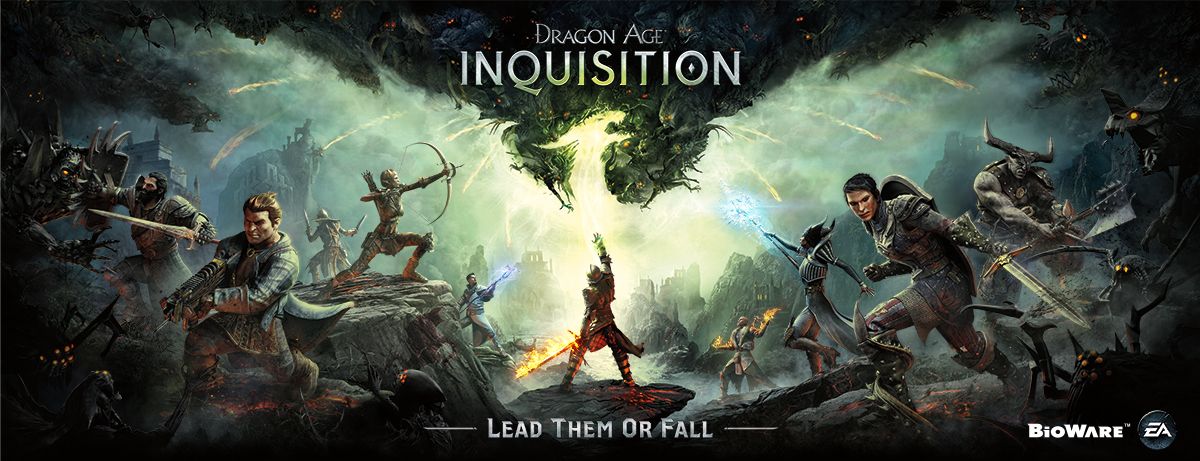
The big hit for EA last quarter was Dragon Age: Inquisition, which was “by far the most successful launch in Bioware’s history,” noted Jorgenson. As usual, FIFA 15 and Madden NFL 15 were strong sellers. CEO Andrew Wilson noted proudly that EA finished the calendar year as the world’s leading console games publisher. That’s a great spot to be in, but as mobile games are now the largest segment of the games business, it’s less impressive than it might once have been.

The mobile game front is an interesting area for Electronic Arts. The company has seen success in the past with The Simpsons: Tapped Out, but the last quarter its strong points were driven by the success of SimCity BuildIt, Madden NFL Mobile and FIFA 15 Ultimate Team Mobile. “Leveraging proven IP like this reduces the cost of player acquisition and drives the long-term profitability of our mobile business,” said Jorgenson. “SimCity BuildIt has proven to be a highly engaging title that has been a top-10 grossing one on iPhones in 85 countries and on iPad in more than 100.”

So it looks like EA has learned how to capitalize on its brands to create solid performance on mobile titles, ones that not only generate good revenues on their own but also serve to promote other titles as well as engage fans of various EA brands. Still, the part that EA still hasn’t been able to do on a regular basis is introduce new IP on mobile and generate a significant hit with long-term potential. Activision’s got Hearthstone to point to (though that looks to be generating more on PC than on mobile, it’s still a solid mobile title). Can EA, Activision, and other traditional electronic game publishers ever become top competitors in mobile games with new IPs That will be an interesting area to keep an eye on for the long term, as the larger part of the industry’s revenue continues to shift to mobile.

Tucked away in the presentation was the fact that marketing is contributing to EA’s strong performance — but not in the usual way. EA has been cutting back on its usual marketing spend, leveraging its growing direct engagement with its players to drive sales instead. Thus, the company saw its gross margins increase (on a non-GAAP basis) to 72.8 percent , up from last year’s 68.1 percent . Of course, much of that is due to higher-margin digital sales taking a larger share of overall revenue, but EA did not its decreased marketing spend.

EA’s COO, Peter Moore, noted that EA’s “ability to track our consumers on a day-to-day basis rather than simply launch with big TV campaigns, which may have been what we’ve done many years ago,” was an important factor in the margin increases. “You are seeing the resulting efficiencies as a result in our marketing spend as a percentage in that revenue and that will continue,” Moore said.

It’s an interesting dynamic to watch, as EA and other traditional game publishers pull back from the big TV ad campaigns that they used to fund, while mobile publishers like King, Supercell, and Machine Zone are spending heavily on TV advertising to bring people to mobile games. But it makes sense, and it points out in a very concrete way the difference in the audiences of the mobile-centric publishers and the traditional publishers.

Other interesting points to watch from the presentation included the fact that EA Access, the subscription program on the Xbox One that EA hopes to grow into “the Netflix of games” was performing well, and execs seemed bullish on its future. Battlefield Premium also did well, and the whole category of subs was up over 52 percent for EA on the year. Overseas, the FIFA Online game appeared to be doing well, and the partnership with Tencent looks to be paying off. Don’t be surprised to see other EA titles going a similar route as the company figures out how to extract revenue from one of the world’s largest game markets.

One more thing of interest: Blake Jorgenson sounded a cautionary note about using NPD data to figure out how well EA is doing in a quarter. “You guys have heard me say this before, but I’ll say it again, and that is, be really careful using NPD data, it’s becoming less and less valuable, as more and more of the business is going digital,” Jorgenson warned. “And there is obviously not a digital comparison to it. But both in volume and in pricing, it can be sometimes a very large distraction, and then when you add in that there is no international piece to it. It really underestimates the strength of our business, I think as you can see in this quarter.”

The future looks bright for EA once again, with a new Star Wars film hitting theaters soon to (hopefully) boost Star Wars: The Old Republic and the upcoming Star Wars Battlefront game. Battlefield Hardline looks like a strong performer, and EA’s got a good lineup of mobile titles ahead, including Need for Speed BuildIt. EA Sports has its two stars, FIFA and Madden, which should continue to be strong and give the company the chance to make its other sports titles into similar star performers.

The long-term question for EA is how the company manages as online and mobile games continue to do better, and free-to-play games come to represent more of the market. EA’s placing some bets in those areas, but the company has to keep evolving as market conditions change and competition heats up even further.

How Facebook Is Ushering In The Post-Click Era

Facebook is beginning to make some moves that could very well shift digital media past the post-click era, into something that utilizes the company’s new conversion lift measurement system.

Per a recent announcement, the new system would allow more advertisers to put aside current ad measurement systems in favor of “conversion lift,” which has only been available to a select few as of this point. However, anyone with a Facebook account team will now be able to use the program, according to Digiday.

Facebook believes that ad measurement systems these days can be flawed, since they account for ads only receive credit for clicks, rather than showing how a certain ad attributes to a campaign and the effectiveness of sales. With conversion lift, testing can be utilized to see how ads can play an effect on an ad.

“Building on existing Facebook measurement offerings, conversion lift allows advertisers to accurately determine the additional business driven by Facebook ads and make future marketing decisions based on this information,” said the company in its recent statement.

Consumers often have an effect on ads they view on the site, according to Facebook, although they aren’t always clicked on – thus leading to possible inaccurate results when it comes to the effectiveness of a campaign. The site believes that these ads should be given credit for awareness, increasing the overall value to marketers and allowing media sellers to increase their CPM’s accordingly.

Land of Nod, a furniture retailer, was one of the companies that began using the program back in August 2014, and reported that the results were immense, with its ads showing 20 times more improvement than originally expected.

“We saw that the mobile impact of our ads was higher than we anticipated,” said Joe Orlando, marketing director for the company. As a result, it expects to increase its Facebook ad spending by ten percent over the next few months.

Still, not everyone is on board, as some wonder if Facebook’s new program can make a difference. “Facebook obviously has an advantage here with their reach, audience data and Datalogix partnership, so it’s self-serving to that extent,” said Eric Franchi, co-founder for ad tech company Undertone. “But any effort to help property value the impact of display advertising is positive for the industry and publishers. Facebook’s size and clout helps give them as good a shot at shifting the conversation as anyone.”

The big thing to get over may be trying to get new clients on board with the program. “The methodology is as sound as Facebook says,” said Jeanne Bright, vice president and director for digital agency DigitasLBi. “But it does require a full buy-in to the tech requirements, which can be quite overwhelming. Facebook alone will not have the clout to change the industry by itself, although it’s going down the right path.”

For now, it’s just a matter of time to see just how effective “conversion lift” can be. But there’s no question that some companies might just be willing to take the gamble.

Non-Gaming Brands Invest in eSports

The rise in eSports has been significant enough to attract the interest of non-gaming brands in recent years. We’ve seen Coca-Cola and American Express sponsoring League of Legends in various ways, but the corporate connection doesn’t stop there. As the eSports audience grows, brands are attracted more than ever to the demographic of the eSports audience: young sports fans who aren’t followers of classic sports, where the brands reach them through television. This is a worldwide audience, too, and it’s getting significant attention from global brands who are forward-looking enough to see the opportunity.

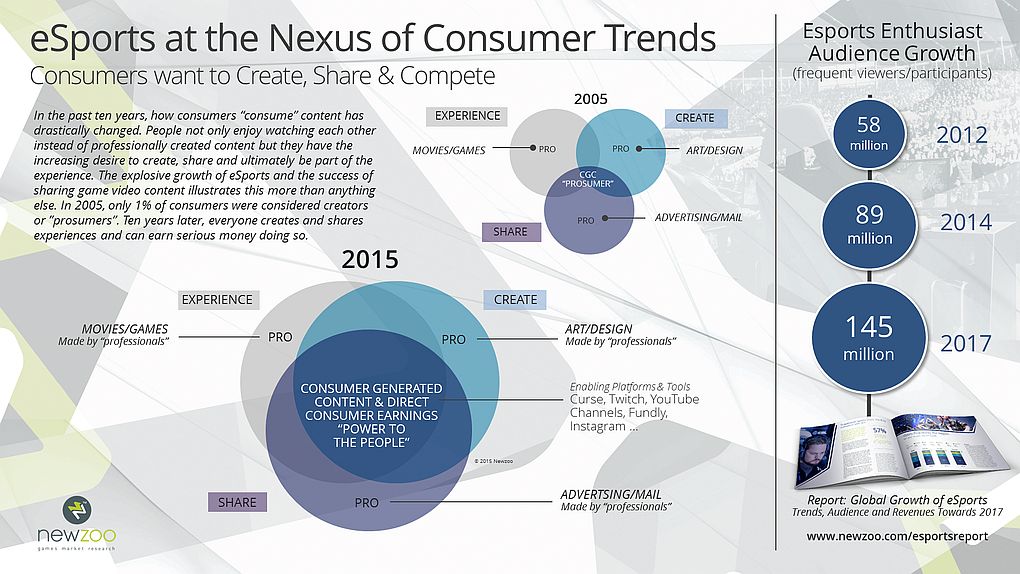
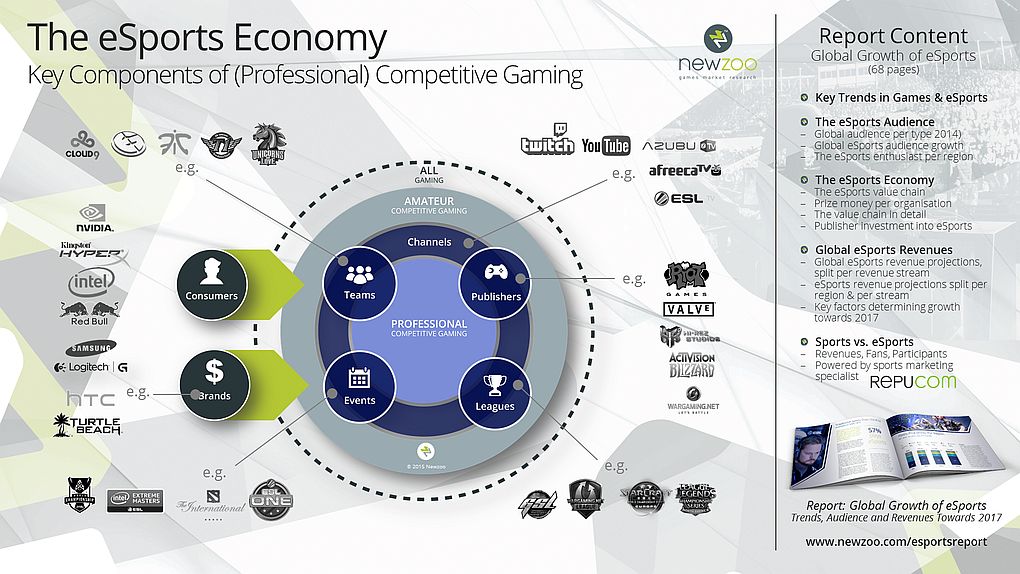
Analytics firm Newzoo has just made available a new report on The Global Growth of eSports: Trends, Revenues and Audience Towards 2017. The company spent the past six months developing Newzoo’s Global eSports Audience & Revenue Model to create an exclusive 68-page report, which it bills as “the first of its kind in the industry.”

Newzoo’s taken a comprehensive look at the eSports market, looking to provide exactly the sort of data and insights a brand would need to evaluate whether or not to use this as part of its marketing strategy. In Newzoo’s words, “The report provides a much-needed overview of the eSports economy and a realistic estimate of its future potential in terms of viewers, participants and revenue streams. It contains a mixture of trends, proprietary data from our models, primary consumer research and input from key players within the eSports space. Global sports marketing research company Repucom assisted in setting up an extensive comparison with traditional sports on revenues and consumer engagement. This comparison, which has revealed valuable new insights on the potential future of eSports in terms of revenues, also highlights the factors that will determine the future of what once was a ‘niche pastime.'”

The eSports Ecosystem
Newzoo’s model incorporates five key components: Channels, Publishers, Leagues, Events and Teams. These components are not mutually exclusive with many companies taking on more than one role. ESL for example owns a channel (ESL.TV), organizes events for publishers and sponsors and owns its own leagues and events. Money from both Brands and Consumers are feeding this thriving ecosystem, Newzoo notes.

“Over the past few years we have seen a large number of global brands entering and investing heavily in this space,” Newzoo said. “This is not surprising as the report clearly indicates that the eSports audience is far more likely to spend big money on games, digital media subscriptions, hardware and peripherals, making it impossible for gaming hardware manufacturers to stay away. Brands outside of the games industry such as Coca-Cola, RedBull, Nissan and Samsung seemingly cannot resist the lure of eSports and the valuable young male audience it appeals to.”

“eSports provides us the perfect platform to engage and celebrate gamers, competitive gameplay and the gaming community,” said James Grunke, Director of Global eSports, NVIDIA.

The latest big brands to leap onto the eSports bandwagon include Duracell and Taiwanese mobile phone maker HTC, who has just been announced as the sponsor for team Liquid, Team SoloMid, and Cloud9.

HTC doesn’t want to be known just as a smartphone maker any more, notes The Verge in its report on HTC’s eSports sponsorship. Cloud9, Team Liquid, and Team SoloMid have all warmly welcomed HTC into the realm of e-sports, promising to produce “a top-notch video series with players” from each team and HTC’s support. There’ll be giveaways as well, giving e-sport fans “opportunities to snag some amazing new HTC devices.” This comes at a time when HTC is preparing to introduce its newest Android smartphone, the HTC One M9.

HTC’s participation in e-sports is not unusual for tech companies that have a gaming interest, but HTC doesn’t — at least, not so far, though that may change in the future. In the gaming arena, Asus is sponsoring a DOTA 2 team, while Polar, Gigabyte and Alienware run small-scale tournaments, and hardware brands like Astro, Kingston, Logitech, Eizo, and Razer are associated with either individual players or teams.

“eSports is a major part of Intel’s marketing strategy with regard to gaming enthusiasts,” said George Woo, Worldwide Event Marketing Manager, Intel. “They are web-savvy people who know exactly how to avoid traditional marketing, do not watch TV, use ad block in their web browser and consume their entertainment almost entirely on-demand. Our answer to this was to partner with ESL to create the Intel Extreme Masters, a series of competitions that visits every corner of the world and has become one of the primary sources of entertainment for millennial’s everywhere. The Intel Extreme Masters has proven more than worth the spend for Intel.”

Newzoo sees eSports as “the nexus where a variety of powerful global industry and consumer trends converge,” the company said. “This is why we will see 145 million enthusiasts by 2017, up from 89 million last year. The fact that there are another 100 million people across the globe who view eSports content occasionally only increases this potential. The free-to-play business model has demolished entry barriers to multiplayer gaming services and is a key component in the ranking domination of competitive games such as League of Legends, DOTA2, World of Tanks, Counter Strike and Smite. The cross-screen distribution of game video content by consumers themselves and the brand interaction this creates are other factors contributing to the success of eSports. Consumers interact with and participate in their favorite brands through a variety of digital media, consumer-generated content and real-life events.”

“eSports gives teams like FNATIC a fantastic opportunity to have high quality engagements with their audience through a variety of rich digital mediums, i.e. Social media and live streaming, that traditional sport teams just haven’t got a grasp of yet,” said Saad Sarwar, Sales Director, Fnatic.

We Shouldn’t Worry About Mobile Games

Dan Porter, founder of OMGPop (creators of Draw Something) and now head of Digital William Morris and Digital IMG, posted an article on Medium recently titled “Should we be worried about mobile games ” Porter noted that he had seen only five games in the top 25 apps on the App Store list recently. (More precisely, he was referring to the Top Free Apps list on the App Store.)

Porter’s thesis is that “social was the new fun” due to the large number of social apps in the top 25. He offered five reasons why we’re seeing fewer games in the top of the free charts: Everyone is spending more time on social; social is also open to a younger audience. Mature games take up our time (meaning, games we already have, so we don’t need to download them); continued focus on single player games; and saturation of the App Store.

“Yes we should be worried,” Porter concludes. “My iPhone is no longer a game device. It’s a social network, chat, texting, Netflix watching, sports streaming, photo editing powerhouse and that leaves me less time for gaming.”

From this corner, it looks like Porter is precisely wrong in what he’s worried about — he should be worrying about the future of social apps. Check out the list on the App Store that Porter didn’t look at, the Top Grossing iPhone Apps. You’ll notice that of the top 25 grossing apps in the App Store, precisely 4 of those are not games. Of those four, two are music apps (Pandora and Spotify) and two are dating apps (Match and Zoosk). The social apps are nowhere to be seen, at least in terms of making money directly. Shouldn’t we be more worried about companies that aren’t profitable, but that are living off of investment while searching for a revenue model

Time spent playing games is only one way to measure the health of a business, and it’s less important than revenue (at least, to companies interested in surviving for the long term). Game playing as a leisure activity is thriving, and it’s across multiple devices: Smartphones, tablets, consoles, PCs. Often it’s the same game being played on multiple platforms. What matters to publishers is the length and depth of engagement of players, with the actual platform becoming less important. As Rumble Entertainment CEO Greg Richardson noted, games should strive to be where the players want them: “I want it to be with me wherever I am, I want it to work correctly, and I want it to be incredibly engaging and fun.”

Now, this is not to say that launching mobile games is easy. No, as we’ve noted before, it’s tougher than ever. Getting noticed is difficult, and engaging customers for the long term and monetizing games are difficult tasks indeed. It’s also true that time spent playing games on mobile devices didn’t grow as much last year as other mobile device usage categories did. But smartphones are still selling strongly, and game usage did increase by 30 percent over 2013. It’s not that mobile games are going away, it’s that people are finally discovering other thins they can do with their mobile phones besides play games and send messages.

Game developers and publishers should instead be worried about how their game is going to find an audience and make money, not that mobile games overall are in a downturn. If anything, it seems that the top mobile games are capable of making more money than ever. As the number of smartphones in use around the world grows by another billion or two over the next few years, there should be more potential than ever for mobile games.

It’s up to game makers to figure out how to reach this expanded audience. Porter’s points about social apps taking more time, and social apps appealing to younger demographics are worth noting as things games should try to address. As the total potential gaming audience expands, there will be opportunities for games of types we never envisioned — Kim Kardashian: Hollywood is a perfect example of this, reaching a very large audience of people who were never in the past much of a target for game developers.

Let’s worry about how to make better mobile games that reach more people and engage them longer, not about whether mobile games are fading away. Not when the vast majority of App Store revenue is generated by games.