2014 Game Industry In Review

It’s the traditional time to look back over the year and identify the major trends that shaped the gaming industry in 2014. Those trends will continue to have a strong impact on the game industry of 2015 and beyond, as growth and change continue strongly.

The growth of gaming continues
Mobile gaming continued to grow, as did gaming around the world. Free-to-play games took more share in online gaming, and digital sales continued their inexorable rise over physical retail sales of games. China’s growth in gaming continued strongly, as it becomes the second largest market for mobile games after Japan, and strong Western games like League of Legends, Call of Duty Online and FIFA Online look poised to grab a significant market presence.

The biggest traditional game publishers like Activision, Electronic Arts, Ubisoft and TakeTwo all posted good numbers this year, with solid profits and respectable growth. The hottest mobile games were getting bigger than ever in 2014, with top performers like Supercell’s Clash of Clans exceeding $1 billion in revenue.

Meanwhile, the online PC game business showed strong growth as well, with free-to-play games like League of Legends, World of Tanks, DotA 2, and Hearthstone posting strong numbers. Even the venerable World of Warcraft with the almost-vanished subscription model showed strong growth at the close of the year, as the new Warlords of Draenor expansion proved popular enough to create a large surge in new subscribers.

Console gaming stays strong
This was the first year of the true new generation of consoles with the PlayStation 4 and the Xbox One defining a new level of power and performance for consoles. Both new consoles outsold their predecessors in the first year of sales, yet AAA software sales didn’t keep pace. It looks like this generation of consoles will not exceed the total installed base of last generation, but

The Wii U is just not in the same category, as Nintendo forges its own path — the Wii U held to a clear third place finish in the total installed base of new consoles from the three major manufacturers, despite having a year’s head start. Nintendo returned to profitability last quarter, but overall the company has yet to establish a clear path to solid profits and growth.

The Continuing Rise of eSports
The phenomenon of eSports has become a major force in gaming, and that was amply demonstrated in 2014. We saw an amazing prize pool of over $10 million for DotA 2‘s The International torunbament, putting it in a class with traditional professional sports like the PGA Tour. Professional eSports arenas are under construction, and viewership is on the rise worldwide for eSports. Newzoo projects continued growth in eSports fans, with 205 million current fans with a growth rate of over 20 percent annually for the next few years. Some 1.2 billion people will be aware of eSports by 2017 — that’s a cultural force to be reckoned with.

Yet there are cautionary notes that not all eSports may be rising forever. The League of Legends World Championships this year attracted some 15 percent fewer viewers than last year (27 million compared to 34 million), though those viewers spent more time watching (and the event attracted 40,000 fans in person). Still, we’re seeing promising signs that eSports enthusiasm is spreading to new games — Smite has gathered more than a $2 million prize pool {link no longer active} for its upcoming world championships in January, for instance. And new entrants like Vainglory are attempting to create an eSports audience on mobile platforms as well.

Indie power grows
While it’s certainly tough to be an indie developer — and make a living at it — 2014 saw the influence of indie developers expand. Both Sony and Microsoft have taken great pains to feature indie developers and their titles at multiple venues. It’s clear that indie games are important to the new consoles, particularly as they can fill the gaps between major AAA releases. Indies are also making waves on mobile and on places like Kongregate, where it’s possible for a small development group to make a decent living with the right games.

It’s truly a golden age for small developers, at least in terms of being able to bring your product to market without a lot of capital. Finding an audience, and making money from them, is another problem entirely, and one that’s seen many companies step into the role of independent publishers for mobile games in order to help make that happen. Big companies see value in indies as a way to try out interesting and offbeat ideas without risking that big-company capital. If an indie finds a big audience, there will be companies coming around with a buyout offer. The payoff can be enormous, as the $2.5 billion acquisition of Mojang by Microsoft amply demonstrated.

Mobile games exert more influence
Mobile games have not only become the biggest segment of the gaming market, they are increasingly influencing the design and monetization of all areas of the game market. It’s easy to see how mobile games are changing the way companies approach the market, and changing customer perceptions of what games are or can be. This influence will continue and strengthen as the growth of mobile continues to outpace all other ares of the game industry in 2015.

The size and scope of the gaming market increases
Gaming is becoming a part of mainstream culture, not just something that teenage boys do. Witness the major brands like Coca-Cola and American Express pouring money into eSports, or massive television ad campaigns for mobile games like Candy Crush Saga and Game of War: Fire Age. The worldwide audience of people who played games this last year is estimated at 1.5 billion people, and that’s still growing.

That growth and change has not been without its problems, though. The GamerGate social media storm that arose this year, ostensibly about game journalism, exposed a nasty undercurrent of misogyny and hatred among a small group of gamers, some of whom sent appalling threats to a number of women in the game industry. Fortunately the industry rallied against such behavior, but it’s clear that as the gaming market expands to include billions of people, not all of them will be good citizens. Hopefully next year will see growth in the industry on an ethical, emotional, and social level as well as financial and demographic growth.

How Game Marketing Will Change In 2015

The rapid changes in the game industry have been obvious for over thirty years, as we’ve progressed from graphics created by a few pixels to photo-realistic 3D movement, from a few thousand bytes of storage to dozens of gigabytes, from unconnected devices to a global high-speed Internet. Yet for most of that time period, game marketing stayed pretty much the same. For the late 20th Century, game marketing meant you had an art director create some box art, you wrote some box copy and took a few screen shots, then created an ad which you placed in the handful of leading game magazines timed to appear when the game would surface in retail stores. The next game is ready for the process by this time… Lather, rinse, repeat.

All that has changed as we entered the era of online games, digital distribution, games-as-a-service, social and mobile games. A vast array of new capabilities became available to marketers as games became liberated from the boundaries of the retail box. Social media, easy video sharing, massive amounts of data about customers and game usage and sales… and new business models fundamentally different from the game-in-a-box model all drove incredible changes in marketing.

Now marketing has begun to evolve rapidly, faced with the pressures of competing against not just a handful of games but hundreds of thousands of games, all readily available and most of the free to take for a spin. The competition is no longer making predictable moves, and it’s not always clear whether your competition is another game or some other activity like watching a video or spending time on social media. Marketers are now faced with an overwhelming array of choices, tools, media, methods and goals. Is it better to maximize the number of users or the revenue per user, or the long-term engagement How does the game design influence the marketing, and vice-versa How do you engage with the community, and is that more important than deciding on your acquisition techniques?

The [a]listdaily takes a look at some of the trends in game marketing to keep an eye on for 2015. Fasten your seat belts — we may encounter some turbulence ahead.

The Only Constant is Change
As the game market continues to expand, globally and demographically and technologically, the marketing strategies that worked best in the past will inevitably get less effective. For that matter, the more successful marketing tactics may become less effective through their sheer success — when getting into the top 100 list proved to be an effective way to kickstart viral uptake of a title, companies started spending heavily on app installs to make that happen. That drove up the price of paid installs to the point where it became too expensive for many games to make a profit, so now fewer companies try that strategy.

New types of ads will keep appearing, as will new technologies that help potential players get into a game. Interesting and creative tactics will be tried, and some will succeed, whereupon others will begin using those tactics as well. The only thing you can be pretty sure of is that sticking with the same marketing playbook month after month will sooner or later become less effective. Marketing is now surfing on the wave of technological change, and that means constant adjustments to stay on top of the wave. And you’d better be looking ahead, too, to make sure you don’t run into a rock or another surfer or a great white shark. If you expect to sit back and relax, you’d better be on vacation, because marketing will demand constant effort just to stay even.

The New Meaning of CMO: Community Marketing Officer
Marketing is no longer fully under your control in the gaming industry, not with the massive social media network and direct connections with every single customer not only possible, but expected. Marketing is not just about sending messages any more — it’s about engaging in a conversation, if you’re lucky. But it’s going further than that — your customers are becoming marketers of your products, and in some cases they are more influential than the marketing driven by the company.

Now there are YouTubers with millions of followers who can make a video extolling your game — or trashing it. The surprise hit game Flappy Bird had been languishing in obscurity until star YouTuber PewDiePie ranted about how terrible it was… whereupon his millions of followers downloaded it to see for themselves, and a phenomenon was born.

When your game has millions of fans, there are millions of potential voices talking about your game. Some of them will get amplified and have an outsized effect, and it’s impossible to tell when and where that will happen. Marketers are just beginning to grapple with this phenomenon, which will continue to strengthen in 2015. It’s time to figure out how to turn this to your advantage in the future, before it becomes a problem rather than an opportunity.

Master Chief, Marketer

Content is Conquering
Those days when you could craft a few messages for a product and then spend your time figuring out how to repeat them as much as possible within your budget are over. The customers want more information, more connection, more everything if they love your product — or if you want to convince them to love your product.

That means articles, stories, videos, music, artwork… either created in-house, or coming from the community and shared with them. This will become increasingly important in 2015, as companies strive to create lasting brands that can engage an audience for years. Releases of a game and its DLC can’t be frequent enough to satisfy the desire of fans to embrace the experience of the game endlessly. You’ve got to slake their thirst with more information somehow.

Creativity Gets More Valuable
Each marketing plan will be a snowflake, unique and beautiful… if it wants to have a chance of lasting longer than a typical snowflake, or having more of an impact than one. Marketing should be interwoven with every aspect of a game company, from the game design and development to the customer service and community relations, from finance to HR. Ideas can come from all parts of the company, and should resonate with all parts of the company.

Look at some of the very successful marketing tactics that are happening these days. BlizzCon, for instance, was a terrific way to connect to fans and excite them about products new and old, but it’s not a typical marketing technique. Events both physical and virtual are becoming a very interesting way to connect with fans, and we’ve only just begun to see the possibilities.

As the competition gets more intense at all levels, creativity will become even more valuable as a way to compete against companies with massive audiences or massive warchests. The opportunities for creative marketing have never been greater — witness the millions of views that videos can get on little or no budget, if the subject matter is interesting enough. We’re going to see some newer game companies get noticed in 2015, and it won’t always be due just to the creativity of the games. Creative marketing has its chance to make a huge difference in 2015 and beyond.

Mobile Game Marketing In 2015

By Glenn Kiladis
SVP, New Media Solutions & Games Evangelist at Fiksu

Apple recently released its top grossing apps for 2014, and the top three are all, not surprisingly, games. Gaming represents the largest percentage of time spent on mobile devices, and we don’t see that changing anytime soon. However, there are some things we do expect to change in 2015 that will impact mobile marketing strategies for games companies.

Those factors include:


  • Increased spend from big brands
  • Focus on audience targeting
  • Retargeting & deep linking
  • Programmatic buying
  • Cross-platform gaming
  • Rise of phablets & advancements in OS

We’ll look at each of these in more detail.

CPI Trends
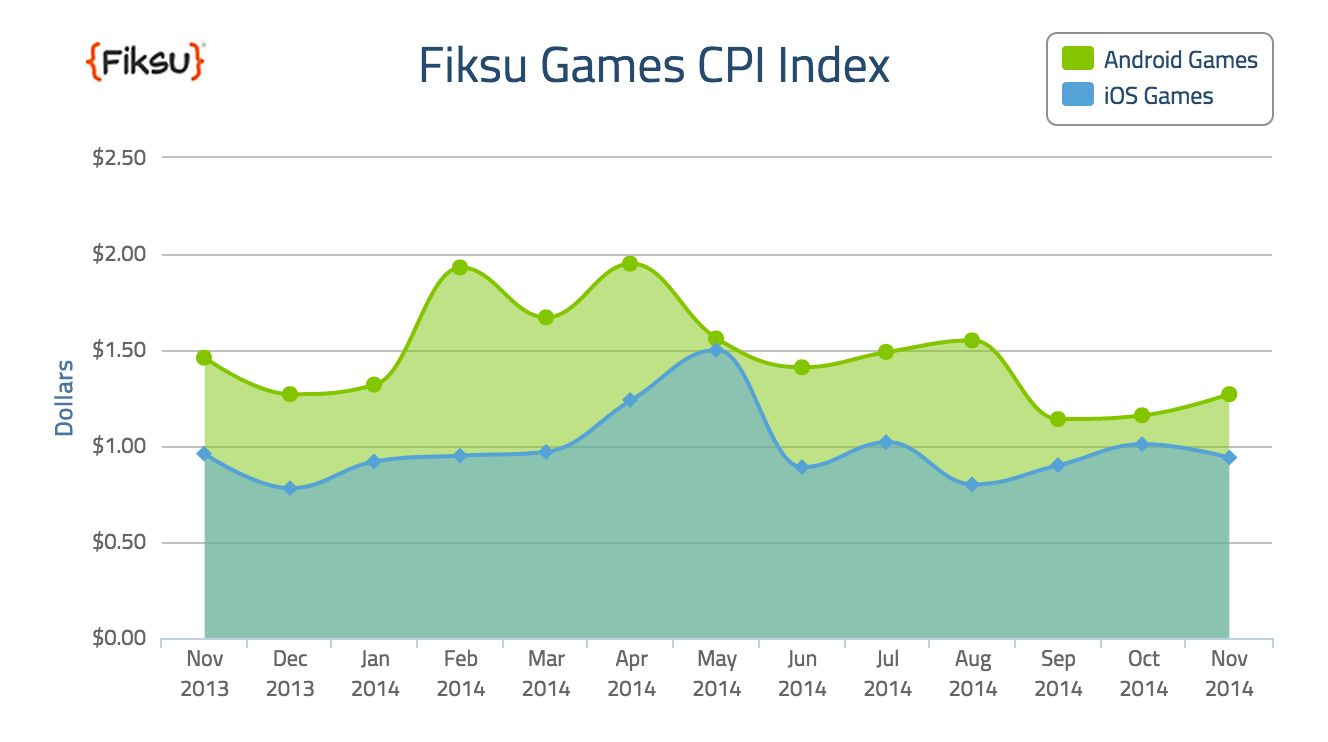
Fiksu’s Cost Per Install (CPI) Index measures the cost per app install directly attributed to advertising. As you can see in the chart below, for much of the last year, Android games costs have remained consistently higher than iOS games costs – primarily due to significant spending on lower-cost incentivized networks for iOS games, which has a different impact on Android. We expect this trend to continue into 2015.

However, we also expect games CPIs on both platforms to be impacted by some key factors looming for 2015. For starters, as we’ll discuss later, big brands are finally putting more money into mobile. These brands have big budgets, and they’re not as price sensitive as other marketers. This increased pressure from brands is expected to drive up costs for everyone on mobile, including game marketers.

At the same time, however, marketers are increasingly focused on leveraging Programmatic Real-Time Bidding (RTB), which offers access to a large scale of display and video ad inventory with greater efficiency through the use of machine learning optimization. Marketers can focus the optimization technology around in-app monetization events like social shares, subscriptions or in app purchases to find the “traffic that matters”. This “Rise of the Machines” could put downward pressure on overall costs and increase the performance of a mobile marketing dollar.

In either case, the important thing to remember is that CPI is not the most important metric for mobile marketers. As our past research has shown, low CPIs don’t mean anything if those users don’t deliver a positive ROI. Alternatively, high CPIs can result in large returns if they produce high-quality users. More and more, we’re seeing ROI-driven marketing become the norm, and we expect that to continue into 2015.

Pressure from Brands
As mentioned, brands are finally beginning to embrace mobile as a part of their digital strategy. For instance, Taco Bell recently had a big push to promote its new mobile app, and they’re not alone. As this trend continues into 2015, increased mobile spending from brands will gobble up more inventory and increase user acquisition costs for everyone else, including games.

In addition, as traditional and digital first brands begin to strengthen their presence on mobile, this will also increase competitiveness in iOS App Store rank for everyone on mobile, including game marketers.

“As a result of this growing trend, ‘ok’ UA strategies that have worked in the past won’t cut it anymore.”

As a result of this growing trend, “ok” UA strategies that have worked in the past won’t cut it anymore. Brands and games will be competing for the same inventory, and ultimately, something’s going to have to give. Game companies do however, have a head start over brands and could maintain their edge leveraging data, smarter audience buying, retargeting and all the mobile ad-tech tools available.

Audience Targeting
As more robust mobile data becomes available, marketers across the board are increasingly gaining opportunities to reach highly specific audiences at scale. While this strategy has been most intriguing to brand marketers, the capabilities will undoubtedly prove highly beneficial to game marketers as well.

Previously, many mobile game marketers were most interested in acquiring low cost loyal users, with less focus on and visibility into the characteristics of those users. While that may still be the primary goal, now, mobile game marketers will really be able to hone in on the characteristics of the specific audience that monetizes best for them, and go after those highly targeted users.

To make this possible, there will be an increased emphasis on the value of both 1st and 3rd party mobile data. Combined, they create an extremely rich dataset which can allow game marketers to refine their mobile marketing spend. With this capability, game marketers can identify, target and programmatically buy against an audience as specific as males, 18-24, with at least 3 mid-core games downloaded on their device-instead of just trying to display ads where that audience tends to be. While it will cost more initially to reach these highly targeted segments, the users will be more likely to monetize, therefore driving increases in ROI.

Retargeting
“In fact, for one popular social casino game, retargeting was able to more than double the number of purchasers acquired purely through user acquisition strategies.”

2015 is likely to be the year of retargeting, particularly when it comes to gaming. Retargeting was recently characterized as being “where the puck is headed” by Marc Hale, Re-engagement Sales Lead at Twitter. In fact, Hale noted that “The majority of the money being spent on mobile retargeting is coming from the mobile gaming community…gaming companies are ‘mobile first’ and they know the lifetime spend of their customers, and they can see the whole customer sales funnel.”

Through our own experience at Fiksu, we’ve seen gaming companies as early adopters of mobile retargeting-and they’ve been seeing success. In fact, for one popular social casino game, retargeting was able to more than double the number of purchasers acquired purely through user acquisition strategies.

Using the latest in deep linking technology, future retargeting ads will feel less like advertisements, as they drive users to a specific location within the game. As mobile game marketers become more familiar with this strategy, many will realize that it should play an ongoing role in their marketing campaigns. There are so many instances where retargeting can be beneficial: from reminding a user to open the app after installing it, to encouraging them to register, to trying to get them to make in-app purchases. Retargeting is definitely where the puck is headed, and it’s travelling fast.

Programmatic Buying
As mobile advertising costs rise, it will continue to become more important to make sure that every penny spent is being done so wisely. Through programmatic buying, which incorporates closed-loop feedback (within milliseconds) into an automated decision-making process, marketers can leverage machine learning to be sure that their dollars are being spent as efficiently as possible.

“While not purely specific to the gaming industry, programmatic buying, and in particular real-time bidding, will be increasingly popular if recent trends are any indication”

While not purely specific to the gaming industry, programmatic buying, and in particular real-time bidding, will be increasingly popular if recent trends are any indication. According to Smaato, global mobile real time bidding (RTB) spend increased 140 percent year-over-year from Q3 2013 to Q3 2014. And that growth isn’t expected to slow. According to eMarketer, RTB (on desktop and mobile) is predicted to grow from $4.16 billion in 2013 to $11.84 billion in 2016, a 185 percent increase.

Cross-platform Gaming
One growing trend that will be unique to gaming is a growing emphasis on a cross-platform experience and marketing strategy. One great example of this is Activision, which recently released an iPad version of its game Skylanders: Trap Team that is identical to the console version.

For Activision, a cross-channel marketing strategy has been key to driving the success of this game in a time when player habits are shifting rapidly. They’ve been among the first to take advantage of the full capabilities of mobile gaming, but they won’t be the last. According to Newzoo, mobile gaming revenue is expected to surpass that of console games next year, as it tops $30 billion in 2015. As this happens, game publishers will need to be able to truly extend their reach across multiple platforms, and have a mobile marketing strategy to compliment that increased emphasis on the mobile gaming experience.

“Despite the potential it seems to offer, Metal has not yet had a major impact on the industry: per Apple, only 12 of the hundreds of thousands of games in the App Store are currently incorporating it”

We expect more of these console-quality gaming experiences to come to iOS thanks to Apple’s iOS 8 feature “Metal.” Metal is a new technology that helps developers create console-like gaming experiences by enabling them to maximize the graphics and computing potential of their iOS app. Despite the potential it seems to offer, Metal has not yet had a major impact on the industry: per Apple, only 12 of the hundreds of thousands of games in the App Store are currently incorporating it. Look for that number to change dramatically over 2015.

The Rise of Phablets & Advancements in Operating Systems
Larger smartphones, aka “phablets”, like the new iPhone, Nexus, and Samsung devices, along with the continued evolution of mobile operating systems like iOS 8, will likely fuel monetization improvements in the coming year. While better gameplay probably isn’t the primary driver behind the size increases and new technologies, anyone who’s played a high-end game on an iPhone 6 Plus or a Samsung Galaxy S5 knows that they really do improve the gaming experience.

The enhanced experiences these devices offer are likely to result in users spending more time, and consequently more money, playing mobile games. With UA costs potentially rising as previously mentioned, these potential monetization improvements could help lessen the blow of the higher UA costs.

What This All Means to You
Now that you know what to expect in the year ahead, how can you take that knowledge to make sure you have the best mobile marketing strategies in place for 2015 The most important thing to be prepared for is fluctuations in costs: don’t depend on costs staying where they are today.

“you should know what these costs mean to you. If you have to pay $2 or even $4 for an install, but that user spends $10 in your game, it’s worth it”

That said, you should know what these costs mean to you. If you have to pay $2 or even $4 for an install, but that user spends $10 in your game, it’s worth it. As we said, the key to remember is that CPI doesn’t tell the whole story and shouldn’t be the only metric you’re using to measure success in your campaigns.

After that, you want to be sure you’re embracing the use of data and maximizing some of the newer mobile ad-tech capabilities that will help you drive increases in revenue, namely audience targeting and retargeting. Generally, you need an established mobile gamer base before getting started (or massive desktop gamer base for cross-screen retargeting), but as long as you have that, you should be trying to drive increased engagement with your game. As mentioned, this could mean reminding users who have downloaded your app to come play, or encouraging users who have registered to make their first in-app purchase.

You also want to be sure you’re buying as much media as possible programmatically, and maximizing the technology, use of audience targeting, reach and low costs available through RTB. Also, as you look to amplify your gamer acquisition or retargeting using Twitter and Facebook, look for companies like Fiksu that apply programmatic buying to social.

And finally, larger smartphones are changing the game, both literally and figuratively. You should be making sure your game is capitalizing on the increased functionality, and that you’re upping your marketing efforts to make sure users are aware of these enhancements.

You should also be on the lookout for other upcoming trends, including a stronger focus on video, as well as App Store chart inflation.

2015 promises to be an excited year for advancements in mobile game marketing. While marketing strategies, costs, and mobile ad inventory could be impacted by pressure from big brands and massive digital first companies, there’s a lot to look forward to on the horizon. I wish all of you a happy, healthy and prosperous 2015. It’s going to be a fun ride.Â

Glen Kiladis is SVP, New Media Solutions & Games Evangelist at Fiksu

Republished from GamesIndustry International. For more, read GamesIndustry International for the latest in game industry news, opinions, interviews, and key information about the global games industry.

Sean ‘Day9’ Plott Talks What Brands Can Learn From Red Bull’s eSports Marketing

Sean “Day9” Plott has made a living around eSports. The former pro StarCraft: Brood War gamer has built a mini broadcast empire through Day9.tv, including the popular “Day[9] Daily.”  Plott wears many hats. He’s a professional StarCraft II caster at eSports events around the world like DreamHack, BlizzCon and Major League Gaming (MLG), he heads up the After Hours Gaming League (AHGL) and he’s co-founder of game company Artillery, which is working on a new strategy game called Project Atlas.

Plott has been a caster at all of Red Bull eSports events over the past two years.  Since Red Bull doesn’t comment on its own marketing efforts as a rule, Plott fills us in on what the energy drink is doing right in eSports, and explains how his own After Hours Gaming League has grown over the years, in this exclusive interview.

Where do you see Red Bull when it comes to eSports today?

What we saw before the last two years was treating eSports like traditional advertising.  It was just a numbers thing.  If you got a lot of numbers, maybe you can sell ads on that the same way you would sell on YouTube.  What we’ve seen in the last two years is the publishers themselves getting into the space because it translates in a direct dollar way to the company.  It’s not like paying a few thousands dollars to put a logo or a different brand on the game.  You’re watching the game, and the people who watch it then want to go immediately spend money on the game.  Red Bull is a really interesting in-between, where it’s a company that is taking charge and putting on the events themselves.  This allows them to generate the views and make money off of advertising dollars, but also gives Red Bull an actual product in the form the Red Bull can, which has first class presence at the events.  It’s an interesting model that I think other companies can look at, where instead of just passively handing out a few thousand bucks to put up an overlay; the company is running the event, participating in the scene and really getting involved. And that’s what I think is super cool about Red Bull.

Red Bull has a background in traditional sports.  What do you feel like they have learned from that space and applied to eSports?

The biggest thing that I see is they are immersing themselves in the culture.  It’s increasingly not enough to just have some smart people who are organized trying to do a good job.  You have to get really passionate community members who are sharp and are really hard working to make sure that the event has the right tone to it.  There are a number of things that Red Bull has done this past year that only makes sense if you understand the StarCraft community — like giving pros three lives and having them get knocked out and then having a little 8-bit animation of the player falling over.  That’s something that the gaming community gets and I really credit the guys who are spearheading all of that awesome stuff over at Red Bull.  The guys at the top at Red Bull are super hardcore gamers.  Hogan Carter has been doing gaming events since 2002.  These are people are from this community and that’s a real secret to Red Bull’s success; they are part of the communities that they’re building for.

“You have to get really passionate community members who are sharp and are really hard working to make sure that the event has the right tone to it.”

What role do you see the StarCraft II events that Red Bull held this year play overall in the community?

What Red Bull put on for StarCraft this year was insane.  Those were some of the highlight events of the entire year outside of BlizzCon.  I would not be surprised to continue to see more investment from Red Bull in the space.

How have you seen your After Hours Gaming League grow over the years?

We started Season 1 with eight teams and we’re at 200 this season.  It’s just insane how much it has grown.  The biggest thing that the After Hours Gaming League shows is that all the competition in eSports is at the absolute highest end, but there are still tons of people that love just hanging out playing against each other.  We have teams that have built reputations for not taking the game very seriously when they’re playing, and they’re just trying to do the most wild, out-of-control stuff.  And when they win, their whole teams goes insane and they upload photos of the win.  It’s been a blast to show how many non-pros there are who just love to compete.  It’s becoming almost like a replacement for watching traditional sports.  You actually get to play.  Instead of sitting down for Monday Night Football, you sit down for your Monday Night After Hours Gaming League match or your Sunday Afternoon match and hang out with your friends and have a blast for a few hours.  It’s one of my absolutely favorite things ever.

“Instead of sitting down for Monday Night Football, you sit down for your Monday Night After Hours Gaming League match or your Sunday Afternoon match and hang out with your friends and have a blast for a few hours.  It’s one of my absolutely favorite things ever.”

With real eSports filling stadiums, do you see an opportunity for bigger venues for After Hours Gaming League in the near future?

I think possibly, but what’s interesting is that at the highest level of pro play people want to watch that.  The spectating aspect is a huge component.  There are only like 100, 200 people playing at the top pro level.  The After Hours Gaming League is the opposite.  People are showing that they really want to participate, so I think that we’ll have huge leagues.  Will people want to watch at the end   We’ve had big live events at the end of AHGL, and it’s always most successful when it’s focused on the socialization and the fun.  Where we have the after party for the AHGL is just as important as the event itself because people love to hang out and play.  So spectating wise maybe not.  Participation-wise it just makes me so happy because I grew up doing this stuff and it’s a full time professional job that I’m still doing.  It gives me hope that I’ll be able to play video games forever.

When it comes to the companies involved in AHGL like Intel, Google, Facebook and EA, how do you see them support the players that are representing them in this league?

It’s been great.  You have companies that provide funding for some team members to get shirts for the club and some travel expenses get paid for people who are heavily involved.  I remember when IBM was in the Finals and every single person was there in an IBM shirt showing company spirit.  It’s really nice because that first season was probably the scariest for us because there’s always that fear of will this company be comfortable with them being referenced as a company in the video game   But now that we’re at 200 teams, we have seen more and more and more support.  We want to make sure that each team gets approval from their company, so we have a handbook of ways to do that, things to say to pitch it.  There’s just less and less friction.  It’s really starting to show that eSports and competitive gaming is becoming almost so ingrained that it’s weird not to know about eSports.


Analyzing Mobile Game Spenders

Newzoo continues to provide detailed reports on the game market, and its latest data report, “Spotting the Mobile Spenders,” is replete with interesting data on the most important part of the mobile game market — the people who spend money. After all, it does little good if your game attracts millions of players but only a handful actually pay you something, unless you’re making money from advertising or through sales of some other product.

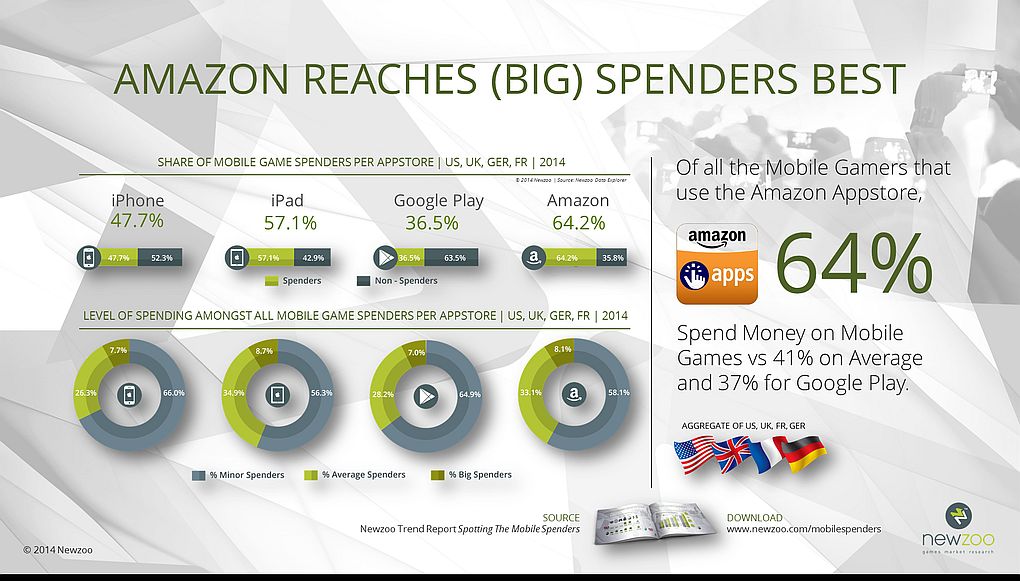
Newzoo starts by outlining the size and shape of the mobile game market, noting that by the end of 2014 1.5 billion people worldwide will have played a game on a smartphone or a tablet. That’s 51 percent of the global online population, an impressive achievement for an entertainment medium once confined to a small number of enthusiasts. Perhaps even more impressive is the fact that almost one third of these gamers (32 percent) have spent money on (or in, via in-app transactions) mobile games, which is 485 million consumers worldwide. The numbers for North America are just as impressive: Some 151 million people have played a mobile game this year, 49 percent of the online population, and 64 million of the (42 percent) have spent money.

That population of spenders averages $4.30 per month (on average, worldwide), which provides a total of some $25 billion in revenue generated by mobile games worldwide in 2014. In North America, the average spending per paying player is higher at a monthly average of $7.68, providing $5.9 billion in revenue this year. One need look no further than these numbers to understand why investment in mobile games continues to be strong. Newzoo interprets these numbers as a positive sign for the future. “It illustrates that global growth is still, for a large part, fuelled by mature markets contrary to some recent reports about a saturated mobile games market,” said Newzoo’s Emma McDonald.

Newzoo’s report is careful to point out that mobile game spending patterns are not that dissimilar from console and PC game spending. “The share of spenders on smartphone and tablet games are steadily growing closer to that of console and PC games,” noted McDonald. “This comes as a surprise to some due to the common misunderstanding that a pay-upfront business model gives a 100 percent player/spender ratio. In the case of console gamers in the US, UK, Germany and France for instance, 67 percent of all Console gamers and 59 percent of all MMO/MOBA gamers spend money on games. For mobile games, this share has increased from 36 percent to 46 percent when comparing 2012 and 2014. Monthly single digit conversion rates of individual games are often misinterpreted as share of mobile gamers that spends money.”

This is a key revelation, showing that the revenue potential from mobile games has yet to be fully realized. That’s not surprising, really considering the relative youth of the mobile game market (really, only the last 7 years as a significant segment) and the newness of the business models being used. While can take a year or more to build a top mobile game these days, it can take years to refine and test new business models — and new business models with variations are still being created. When 95 percent of your audience isn’t making you any money, that should be seen as an opportunity of enormous proportions.

Newzoo’s report showcases an often overlooked competitor in the mobile game market: Amazon. Amazon has its own app store that’s separate from Google’s, and thus it’s sometimes overlooked when people are reviewing the market. Amazon also makes a habit of not announcing its hardware sales, so we have no precise numbers directly from the company as to the number of Kindle Fire tablets that have been sold, or Amazon Fire TV consoles (and now the Fire Stick). “While the world focuses on the battle between iOS and Google Play, the report shows that it is Amazon that reaches the most valuable gamer,” McDonald said. “A closer look at spending behaviour per app store in the US, UK, Germany & France, not only reveals large absolute gamer numbers but, more importantly, shows that gamers using the Amazon Appstore are the most likely to spend money.”

That’s a highly desirable audience to attract, and it’s particularly interesting that Amazon device owners are more likely to spend money, given that Amazon devices are sold at a very low cost compared to leading tablets like the Samsung Galaxy. This is perhaps due to the efficiency at which Amazon uses its control of the platform to market games, which is of course one of the key reasons Amazon has entered the hardware market. The company isn’t making a big profit from tablets, but it’s intent on getting those tablets into as many hands as possible because they are a wonderful shopping platform for everything else Amazon sells.

McDonald notes the “These gamers also have a high share of big spenders, characteristic for tablets such as Amazon’s most popular devices: the Fire Tablets. Combined with its more family-oriented demographics, the opportunity presented by Amazon might be largely underestimated. This suggests that developers should shift marketing resources towards the Amazon Appstore.” If you are already creating an Android version of your game, it seems like an obvious move to add the Amazon app store to your development targets.

Newzoo also profiled the average game spender, which is critical to maximizing the revenue potentital of your mobile game. “The majority of (big) spenders on mobile in the US and Western Europe are male and have kids,” said McDonald. “For men, the share of spenders rises with age, while for women it drops. On average one in five mobile spenders is a man older than 35 and spenders are most likely to have a full-time job and a large income.” That part shouldn’t be surprising, since people with more money are more likely to spend it.

The report showed the influence of children on mobile game spending. “More than a third of mobile spenders play together with their children regularly and spend a large share of their game budget on their kids,” McDonald said. “Mobile spenders do a lot more shopping, are more active on Twitter and Google+ and have a distinct preference for certain mobile service providers. In-depth profiling of spenders illustrates that this is a valuable target audience also outside of their game spending behaviour.” That’s excellent news for game developers seeking to bring advertisers into their revenue mix.

The Newzoo report provides some interesting details to help flesh out a picture of the mobile gaming market. This next year looks to be another solid year of growth, change and opportunity in the mobile game market, and it’s important to keep up with the latest information about the market to make the most of what lies ahead.

Five Console Gaming Trends To Watch In 2015

Console gaming has entered a new generation of devices, the eighth according to NPD. We enter 2015 with more than a year’s availability for the PlayStation 4 and the Xbox One, and the Wii U has been out for more than two years. So far, the launch of a new generation of consoles has seen a complete shuffling of roles. For the last generation, Nintendo was the clear leader with the Wii, with over 100 million consoles sold; the Xbox 360 and the PS3 ended up in roughly a tie after the Xbox 360’s early lead (83.7 million Xbox 360 consoles, 80 million PS3 consoles). This time, Sony is clearly leading with 13.5 million PlayStation 4 consoles sold, with Microsoft in second place at 10.5 million Xbox Ones and the Wii U trailing with 7.6 million consoles sold.

Still, NPD noted in its most recent report that the Xbox One and PS4 together are well ahead of the last generation of consoles at the same point in their lifecycle. What’s lagging behind is retail sales of the software, and while digital sales are helping, there’s still a nagging deficit. One good indivator of what’s going on this year is to note that for the third straight year in a row, the latest Call of Duty title has sold fewer units than the previous year — and yet it’s still the best-selling console title of the year.

So it’s with this landscape in mind that console game publishers and industry observers are looking at 2015 to see what the new year will bring. The [a]listdaily offers some insight into the important trends in the console game business for 2015, and what you can expect to see. Many decisions will have to be made in the new year, and these are the important trends to keep in mind as you help shape the game industry’s future.

More Downloadable Content Than Ever Before
When the last generation of consoles became the first to expect an Internet connection, the concept of downloadable content for console games really began to take off. It seemed like a natural idea: Add a few maps, or some levels, or some other form of content to an existing game as a simple download for a low price. Best of all, the cost of goods was gone, and no pesky retail discount need get in the way of reaping maximum profits. So a few games began to get the occasional piece of downloadable content or DLC.

Now the situation has changed. It’s a rare game, at least for Sony and Microsoft platforms, that doesn’t have DLC of some kind. Most major titles ship with additional DLC available, either as a free exclusive for a retailer, or even some additional content you can buy right away. DLC is planned for years advance, and you can expect new content to drop at least quarterly, perhaps bimonthly – and monthly in some cases.

We’ll see this trend accelerate as publishers look to extract more money from fans without raising the retail price of the basic game. Expect more different types of DLC, and a variety of price points. We’re now seeing “season passes” being sold to the DLC for the next year, and there will probably be more experimentation with pricing, content, and marketing to find the optimum mix.

This will have an effect on hard drive space, though. While 500 GB may have seemed like a lot, it’s quickly going to fill up. Microsoft has already introduced a 1 TB Xbox One, and we can expect to see other models of consoles appear with higher storage. Add-on drives may get a major push by console makers in order to make more DLC sales possible.

More Price Erosion
GameStop president Tony Bartel was right to warn that bundling games with consoles may negatively impact customer’s willingness to pay full retail for games. But that’s not the only factor at play. PlayStation Plus gave away over $1300 worth of games last year for a $50 subscription, and Xbox Live Gold gave away over $500 worth of games. More and more terrific indie games are appearing on consoles with price points in the $10 to $20 range. All of this has the effect of making gamers wary of paying $60 for a new game – why spend top dollar when there are plenty of fun alternatives for far less, or even for free

That’s not the only source for price erosion in console gaming. Many top PC online games are free with terrific quality, like League of Legends. Free-to-play games already have a beachhead on consoles (like Warframe) and we’ll see more of those appear. The vast and growing array of mobile games are amost all free-to-play, and they have the added advantage of being portable as well. All of this makes it harder to justify the $60 price point for new console games, forcing them to be higher quality with better marketing or risk lower sales.

More Mobile Influence On Console Games
Now that mobile games have become the industry’s largest sector, it’s not hard to understand why this fact will influence console games. This influence has already been happening. For instance, mobile games have to get you playing quickly and engage you rapidly, otherwise you’re onto the next game with a quick tap. This is influencing console games to get you up and playing faster – those lengthy 15 or 20 minute intro videos and hour-long tutorial levels are looking pretty slow and dated. Expect console games to strive harder to get players into the action as quickly as possible.

We’re also going to see more mobile companion apps that link into console games, at least on the PlayStation 4 and Xbox One. Other than sheer graphics horsepower, that’s a key differentiating feature of the new consoles that designers have yet to fully explore. Expect that some sort of mobile companion app will become standard for any major console game release, and possibly stand-alone games that connect with the console games in some way.

More Digital Sales
It’s not just DLC that publishers will be pushing in their quest for more revenue and profits. Full digital game downloads are now not only possible, they are being marketed with increasing frequency for the newest consoles. Publishers are already reporting digital full game sales at anywhere from 10 percent to 20 percent of the retail sales, and we can expect that number to rise. This will tie in with other trends, as the temptation to discount becomes stronger (why not There’s no cost of goods, and what matters is overall revenue, right ) and continues the atmosphere of price erosion and the pressure to add more storage space.

The Continuing AAA Struggle
All of these trends continue to put pressure on the top AAA console games to perform. Budgets are rising, and the time it takes to create these games is still two to three years despite the increasing power of the tools available. That’s partly because publishers feel the need to put ever more content into these games, and expand the range of what players can do in the games, in order to make sure each game is going to be a hit.

Thus investment in each AAA title climbs, and so does the risk. When you extend the trend lines, the end result isn’t pretty. At some point something has to give. What seems logical is that, like blockbuster movies, some brands will be able to carry a huge investment of time and money and make it back with a high level of assurance. Smaller brands, and new IP, will get even riskier if they are expected to have the same sort of budget. Publishers may start looking at smaller size projects, sold only digitally for $20 to $30, than can be created with far lower investment. Then, if it succeeds, produce more content. If it fails, shrug and move on to the next title.

The console market hay not get any larger than the last generation, but publishers are certainly looking to make it at least as profitable as the last generation. When we get the results in from this holiday quarter, we will have some idea of how well publishers are succeeding in reaching that goal.

Five Mobile Gaming Trends To Watch In 2015

As we get ready to bid a fond farewell to 2014, it’s time to prepare for what lies ahead in 2015. Prophecy is a chancy business at best – and as Cassandra found out, it can be especially frustrating when you’re correct in your visions but nobody listens. Still, the [a]listdaily is ready to take a risk and make some educated guesses about what will be the major trends in mobile gaming for 2015.

What follows are some of the important trends that are sweeping the fast-growing mobile gaming market.

Strong Growth of Mobile Gaming Continues
This predictions not much of a stretch. The analysts who study the gaming market may disagree about the precise numbers, but there’s one common thing they all agree on: Mobile gaming is growing strongly. Mobile gaming has already become the largest segment of the gaming industry, and with an annual growth rate for next year predicted to be somewhere in the neighborhood of 20% that will be even more true at the end of 2015.

What’s propelling this growth Several factors, but the most important one is continued strong sales of smartphones and tablets. While Apple’s iPad sale may have leveled off this year, the company still sells more iPads in one quarter than the total number of PlayStation 4 consoles sold in a year. Android tablets are gaining share, and with more power and lower prices, the latest generation of Android tablets will be used more and more for game playing. Smartphones continue to get more powerful and more popular around the world. While the Western markets are becoming more of a replacement market for smartphones rather than new users, there is still substantial growth in countries like India and China. This year saw the sales of 1.2 billion smartphones worldwide, and that’s an amazing number of game-playing devices.

The revenue possible from the top mobile games continues to grow. Supercell is predicted to generate $1.8 billion in revenue this year, the majority of that from Clash of Clans – making that game comparable to the leading game moneymakers on any platform. We’ll likely be seeing mobile games that make $5 million a day or more in 2015.

Console and PC Games Come to Mobile
That means more than just a mobile game based on the same brand as a successful console or PC game – we’ll be seeing the same gameplay as the console or PC version on a mobile platform. Yes, we’ve seen most major new console titles accompanied by mobile games that act to extend the gammeplay experience, or even give you a separate experience from the console game. FIFA Ultimate Team, for example, has been a huge success for Electronic Arts, and certainly helps sell more copies of the conole and PC versions of FIFA as well as generating substantial revenue in its own right.

What we’ll see more of in 2015 are mobile games that are nearly pure ports of PC or console games. One of the first ones this year is Skylanders: Trap Team, which has taken the unprecedented step of including a Bluetooth console-like controller with the basic set for tablets – at the exact same price as the console version of the base set. “Brilliant,” said analyst Michael Pachter about this move by Activision. This effectively makes a family’s tablet into a console as far as the Skylander’s player is concerned, and not incidentally freeing up the TV for other uses.

That’s not the only move to take PC and console games more directly to tablets. Blizzard has had remarkable success with Hearthstone, its digital card game, which plays exactly the same way on a tablet as it does on a PC. That, in turn, is helping hardcore gamers see tablets as a useful, inexpensive portable gaming device – especially when compared to a laptop. Wargaming has also done a very creditable job of taking World of Tanks to tablets with World of Tanks Blitz, bringing the essence of the PC gameplay to the tablet environment. Expect to see more console and PC titles heading to mobile in 2015, bringing the same gameplay along.

Core Gaming on Mobile Grows
Up until now casual games have dominated mobile game revenues, but this is beginning to change. We’re already seeing deeper strategy and RPG games appearing in the Top Ten lists, like Clash of Clans, Game of War: Fire Age, and Puzzle & Dragons. Publishers realize that while a purely casual game like Candy Crush Saga can reach an amazingly large audience, it tends to do so without much monetization. Deeper games tend to bring higher monetization rates as players get more engaged for a longer period of time.

Even Apple is noticing this, featuring the unabashedly hardcore MOBA Vainglory in its latest iPhone ads. Publishers are going to be bringing other genres to mobile devices, and generally deeper gameplay, in the hopes of keeping players engaged longer and spending more. The real trick will be to attract the broadest possible audience into a game that has the depth of the best core games. We’ll see some attempts by major publishers to do just that in 2015.

The Return of Premium
Mobile games were initially sold for prices ranging upwards of $10 or more in some cases, but as the market became more crowded we saw prices driven downwards. Many games had a free Light version that served to entice you into buying the Premium version that cos a few dollars. When in-app purchases were enabled, the free-to-play games started to take off, and now dominate mobile gaming.

But that’s not the only way to make money on mobile games, nor even the best one for types of games. Many indie developers have done much beter with paid games, such as Monument Valley. Certain game types, such as strongly story-based games, don’t make sense as a free-to-play game, but are perfectly suited to a small up-front fee.

In 2015 we’ll see more games with an up-front cost, and more experimentation by publishers with variations on monetization schemes. Free-to-play games are great moneymakers when they work properly, but it seems odd to leave 95 percent or more of your audience paying nothing whatsoever to play your game. Advertising, subscriptions, sponsorships and other methods of monetization will get more chances in 2015 to see if there’s more than one path into a gamer’s wallet.

More Creativity
Finally, this trend is an important one in the ever more competitive mobile game market. There are more than enough me-too games out there, and it’s very hard to connect with an audience and keep it engaged when there are so many other games to play. The biggest players can do all right without being too creative, because they already have a huge audience or a huge warchest – they can coast along on those advantages for a while without the need to be too creative. But publishers and developers, especially smaller ones, are realizing that creativity is an inexpensive way to be successful, though risky.

Creativity in game design is where it starts, but for real success you need creativity in marketing, monetization, community, and every aspect of the business. This is a golden age for games, but the gold is going to go to the most creative developers and publishers in the long run as the global compatitions heats up. Why is a tiny developer like Supercell generating more revenue from a handful of mobile games than massive Electronic Arts with hundreds of mobile games Perhaps there’s some luck in there, but there’s certainly a lot of creativity.

Look for the interesting, unusual, and creative ideas in game design, marketing, and other parts of the mobile game business to see more success in 2015. That’s where you’ll find the new entries in the top-grossing game lists.

Biggest Marketing Moves: December 12

Here are some of the top personnel moves in marketing last week. Our congratulations to these people taking on new challenges!

Discovery Digital Networks Nabs Jeremy Azevedo From Machinima: Azevedo was previously Machinima’s creative director of original programming and will now head Discovery Digital Networks in Los Angeles.

Former Apple Executive Richard Kerris Heads To Mobile App Ad Starup: Former marketing exec at Apple, Richard Kerris is heading to Get It Mobile.

Fullscreen’s Justin Danko Resigns, Takes Post At Fuisz Media; Jay Veraldi Also Out: Danko was previously in charge of brand strategy for Fullsreen East Coast and will be taking on a similar rolet Fuisz Media.

HBO CTO Otto Berkes Resigns After Network Enlists MLB TO Build OTT Platform: As HBO decides to build its over-the-top streaming service with the MLB, Otto Berkes, HBO’s chief tech officer exits.

Tubular Labs Hires Marc Schraer To Lead Sales: Marc Schraer will now be Tubular’s SVP of sales and customer success.


If you have a submission for this weekly feature, send info to pr@ayzenberg.com or fill out our Suggest a Story form.

November Retail Sales: Xbox Triumphant, Retail Down

This has been an interesting year at retail for the console business, as month after month the PlayStation 4 and the Xbox One kept hardware sales well above last year’s sales levels for hardware, while software lagged far behind last year. Now, we’ve finally reached the one year mark for the next-generation consoles, so we can compare hardware sales with the same lineup of consoles available from 2013 and 2014. The news wasn’t good overall, as retail sales dropped 11 percent from last year’s $2.71 billion to $2.41 billion.

For the first time this year, hardware sales were down much more than software; hardware sales dropped 23 percent to $1.01 billion from last year’s $1.31 billion. Meanwhile, software was down only 2 percent to $1.06 billion from last year’s $1.08 billion. Some of this may have been due to the substantially lower pricing for most of the Xbox One consoles sold, as Microsoft dropped the price to $349 (less with some of the Black Friday deals).

NPD’s Liam Callahan did his best to present the positive side of the numbers. “For the most part throughout 2014, we have seen software declines that were offset by year-over-year increases in hardware spending,” said Callahan. “This November, however, hardware declines totaled $294 million while software declined $17 million or 2 percent. Accessory sales increased by a modest $5 million.”

“Currently, year-to-date sales across hardware, software, and accessories through November 2014 are up 2 percent,” said Callahan. That’s a tribute to the strong sales of expensive new consoles at retail, not to retail sales of software. In particular, the sales of software for last-generation consoles have been a significant disappointment to publishers, coming in well below expectations in general.

Though there were solid promotional deals for Black Friday, sales of the latest consoles were disappointing. “While the majority of the decrease in dollar sales of hardware stemmed from an expected drop of seventh generation console sales, eighth generation sales also decreased and represented 38 percent of the total declines in hardware sales from November 2013 to November 2014,” Callahan said. “Despite a decline in dollar sales, hardware unit sales for eighth generation consoles increased by 3 percent over November 2013.”

Still, the promotional efforts of the console makers were important. “Hardware bundles were a major factor in the sales of hardware this November, with a number of new bundles ranking as the highest selling hardware bundles so far this year with one bundle ranking as the highest selling hardware bundle ever based on dollar sales,” Callahan said. Overall, though, the new consoles are off to a much better start than the last generation. “Cumulative PS4 and Xbox One sales are now almost 80 percent higher than the combined total of PS3 and Xbox 360 sales after 13 months on the market.”

The software side of the retail game business was a mixed bag. “Software declines stemmed from losses from console software as portable software and PC Games software increased over November 2013,” Callahan said. “Portable software increased by 25 percent due to the combined performance Pokemon Alpha Sapphire, Pokemon Omega Ruby, and Super Smash Bros. for the 3DS. PC game sales increased by 34 percent over November 2013 due to The Sims 4 and the launch of World of Warcraft expansion, Warlords Of Draenor.”

Callahan provided more detail between sales of last-gen console software and the current consoles. “Seventh generation console sales combined to decrease by 49 percent or $361 million from November 2013,” he said. “Eighth generation console software sales and portable software sales increased by $342 million and could not offset the losses stemming from seventh generation console.”

One title that you won’t see in the top ten list this month is Minecraft, which has been a fixture in the best-selling list for over a year. Is interest finally waning, or is it just that newer software commanded much more attention It will be interesting to see if Minecraft returns to the bestseller list once the holidays have passed.

While NPD didn’t mention which console sold the most in November, Microsoft was quick to rectify that omission. “We are committed to making Xbox the best place to play, with this year’s best games, the best community of gamers to play with, and terrific value,” said Mike Nichols, the corporate vice president of Xbox marketing, in a statement. “And we are amazed by the excitement Xbox fans have shown to start off this holiday. November set a new record for sales of Xbox One, and Xbox One was the best-selling console in the U.S. and U.K.”

“Response to the holiday lineup of games on Xbox One was incredible, with Xbox One fans buying more games in November in the U.S. than any other gen eight platform and enjoying over 357 million hours of gameplay globally. In fact, more fans logged into Xbox Live across Xbox One and Xbox 360, and enjoyed more entertainment, than any other month in the history of Xbox. We love to see the excitement from our fans and are grateful for their passion, support and contributions to the Xbox community.”

Sony also issued a statement, highlighting the fact that while the Xbox One may have sold well in November, the PS4 is still well in the lead in terms of overall units sold. “We are thrilled with the incredible momentum seen at retail heading into the holiday shopping season,” a Sony spokesperson said. “PS4 is the cumulative leader in hardware sales and was No. 1 on the Amazon Video Games Bestseller list on Black Friday. On the network side, November was the biggest month ever in PlayStation Store history with a nearly 50 percent increase in unique visitors compared to last year.”

Nintendo also posted a statement about its November sales successes. “Sales of Wii U hardware and software increased by more than 10% and more than 90 percent, respectively, over the same period in 2013. In fact, the week of Nov. 23 was the biggest single week of Wii U hardware sales since the system launched in November 2012,” Nintendo’s statement noted. The company also pointed out that Super Smash Bros. for Wii U has sold nearly 710,000 combined units since launching on Nov. 21. By “combined units,” Nintendo means sales of both the physical and the digital version of the software. (Interestingly, that gives you a data point to guess the unit sales of other titles on the NPD best-seller list, as only Call of Duty: Advanced Warfare and Grand Theft Auto V sold more units.)

While Super Smash Bros. has done quite well so far, it doesn’t appear to have had a huge boost on Wii U sales — a mere 10 percent boost in console sales over last year isn’t going to give the Wii U the momentum it needs to catch up to the Xbox One and the PS4. Still, Nintendo has some excellent sales from the new Pokemon games and the Amiibo line, and with a new Zelda title in the wings for next year interest should pick up for the Wii U.

November 2014 Top 10 Games Publisher
1. Call of Duty: Advanced Warfare (360, XBO, PS4, PS3, PC)** Activision Blizzard
2. Grand Theft Auto V (PS4, XBO, 360, PS3)** Take 2 Interactive
3. Super Smash Bros. (NWU, 3DS)** Nintendo
4. Madden NFL 15 (360, XBO, PS4, PS3)** Electronic Arts
5. Pokemon Alpha Sapphire (3DS) Nintendo
6. Far Cry 4 (PS4, XBO, 360, PS3, PC)** Ubisoft
7. Pokemon Omega Ruby (3DS) Nintendo
8. NBA 2K15 (PS4, 360, XBO, PS3, PC) Take 2 Interactive
9. Assassin’s Creed: Unity (PS4, XBO, PC)** Ubisoft
10. Halo: The Master Chief Collection (XBO) Microsoft

**(includes CE, GOTY editions, bundles, etc. but not those bundled with hardware)

What Instagram’s Growth Means For Marketers

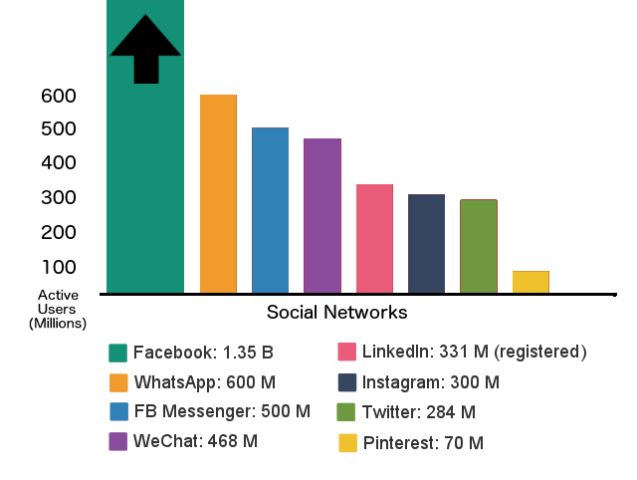
Instagram has notched up 300 million users, making the social network larger than Twitter. That’s a surprise to some observers, given that Instagram came from far behind Twitter to reach that goal. But it’s indicative of the strong hold that visual media has on people. Pictures and videos are inherently more attractive to the eye than text, and that’s something that marketers and social media are well aware of these days. This milestone is a solid indicator of this trend, and the implications are both numerous and important for marketers.

Instagram has been growing strongly for four years now, though many feared that its acquisition by Facebook might derail it. Instead, Facebook kept its hgands off, and Instagram has added another 100 million users in the last nine months to reach its 300 million total. Impressively, some 70 perfect  of those users are outside of the United States, and 70 million photos are shared every day. Over 30 billion photos have been shared over Instagram.

Let’s not forget that this is indeed a part of Facebook’s social media empire, and that the social network has been very successful in its strategy of pursuing growth through individual apps rather than trying to fold every possible feature into one app. Facebook has 1.35 billion users, with its Messenger app notching up 500 million users. Then there’s WhatsApp with 600 million users in addition to Instagram’s 300 million. Sure, there’s plenty of overlap between those apps, but the key point is that Facebook is janging onto all of those folks by offering different apps. The company is far and away the leader in social media, well ahead of WeChat’s 468 million users.

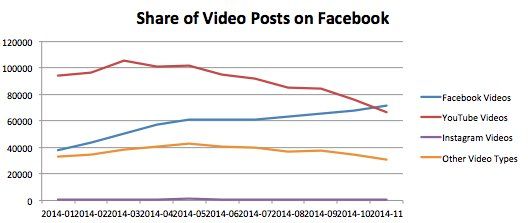
Instagram’s success has been influential on Facebook, too. Facebook has been increasingly featuring photos and videos in its News Feed, reshaping the algorithms to make the whole site more visual. It’s to the point where, for the first time, Facebook Page owners uploaded more video directly to Facebook than they did sharing from YouTube, according to data from Socialbakers. Why According to Business Insider, “Marketers and content creators are starting to realize there is more value in publishing a video directly to Facebook than there is uploading it to YouTube alone.”

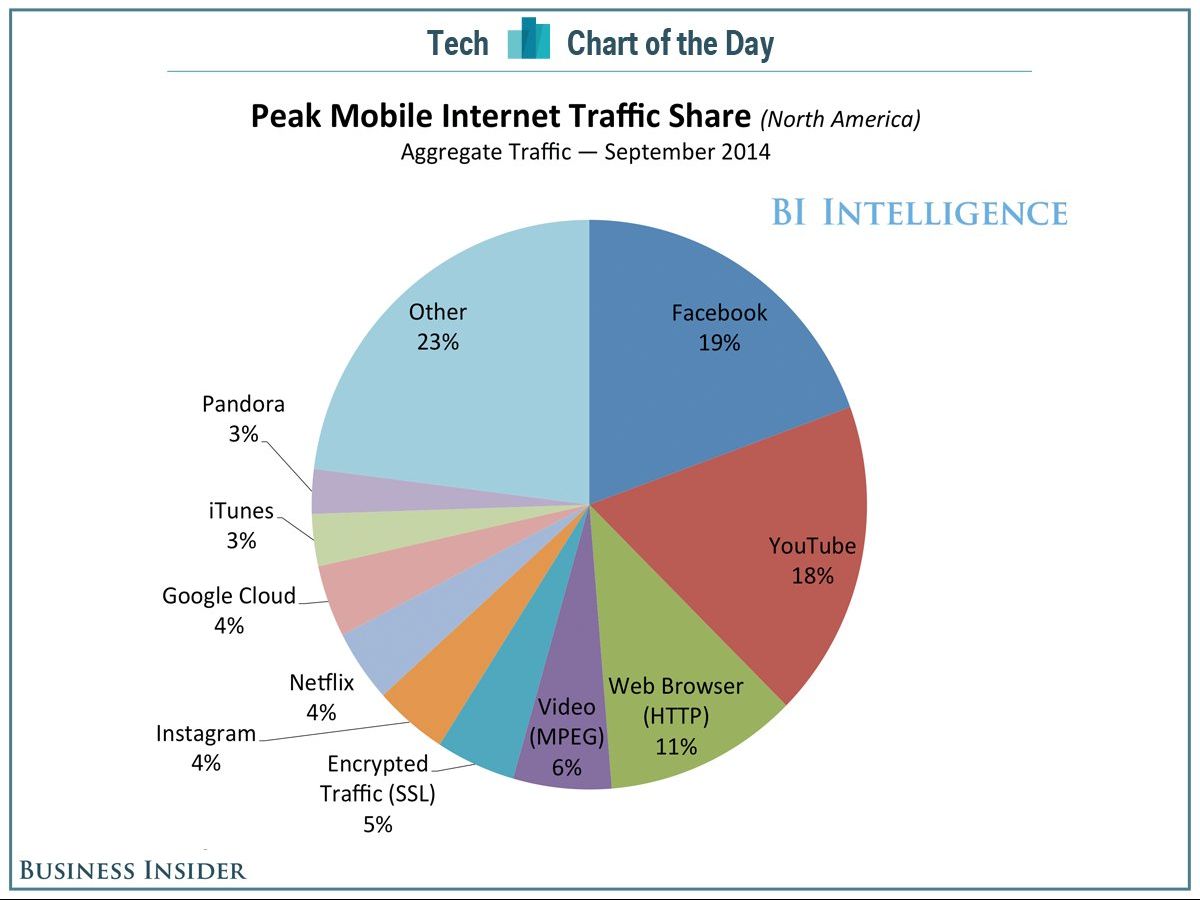
A key difference is that Facebook is surfacing videos to users in the news feed, while users have to seek out videos on YouTube. Requiring a search is an extra step that that keeps videos from reaching a wider audience, apparently. Video is still king though, in terms of traffic volume. Facebook and YouTube combined accounted for nearly 40 percent of all mobile web traffic in North America in September. As BI Intelligence’s Mark Hoelzel points out, “Ads make up a big percentage of Facebook’s and YouTube’s mobile traffic, since autoplay video ads increase the mobile data demands on those social networks.”

Instagram is taking the occasion of this news to announce that it’s going to start handing out verified accounts, the kind that Twitter users love to get. The verified badges will be for public figures and brands, Instagram said. Verified badges, coming within the week, “will make it easier for people to identify and follow the authentic brands they care about,” Instagram told Adweek. “When an account is verified, a blue badge will appear next to its name in its profile as well as in search.”

Verfying users has been a benefit to Twitter, and Facebook started verifying profiles in May of 2013. This is going to keep out the plethora of fake celebrities, parody, or look-alike accounts that make life more difficult for brand marketers. In addition, Instagram said it’s moved from deactivating spammer and fake accounts to simply deleting them, so they will no longer appear in follower counts.

The rise of Instagram shows the power of visual marketing. “Instagram users are highly engaged with the service, with users interacting with posts at 18 times the rate they do with Facebook posts, according to a report issued last month by the research firm L2,” noted The New York Times.

What does this mean for marketers It’s a massive shift in the overall thought process that goes into creating a marketing campaign. Yes, you have to decide on a product’s position and conceptualize every aspect of how you will get your marketing messages across to the target audience. That used to be done primarily with words, and then images or videos would be created later to help bring that message across.

Now, though, it may be helpful to start by conceptualizing the images first, and come up with the words later. Find or imagine that snippet of video that gets across the essence of the brand, then figure out how to describe it in words. Why? Because those images and videos will be the most effective tools to reach the visually-oriented customers that comprise today’s market. Expect to see more moves by social media to focus on video and images as a key way to grab and hold attention.