Yahoo: Native Ads Helping With Branded Search

Creating a new revenue base for advertising can be a tricky business, as sometimes companies have to bet on new techniques in favor of effective ones to increase its audience. In this case, Yahoo has taken such an approach with native ads, with its Gemini platform using both mobile search and in-stream/native display ads as a way to reach out to marketers. However, this appears to have paid off, according to a report from Marketing Land.

During a recent IAB event based in Phoenix, Arizona, Yahoo provided details on consumer research regarding native ad consumer claims. The company stated that 60 percent of consumers who use Yahoo services “feel positive about native ads.”

Through the chart above, it’s easy to see what marketers are effectively buying into for the year, and display continues to lead the charge with 87 percent, followed by social with 85 percent. However, the big notable change is with the native part of the chart, as it shows an increase from last year, going up from 70 percent to 79 percent.

The 614 Group recently found that 69 percent of marketers see native ads as a valued asset, and a following July 2014 study of “Advertiser Perceptions” indicated that 80 percent of advertisers were intending to use some form of native advertising within its program.

Another chart, pictured above, indicates that Yahoo saw an impressive 3.6 times increase in branded search activity through native ads, up from 56 percent to 204 percent. In addition, advertiser site viewthrough also saw a boost, nearly four times to 181 percent.

Fully integrated native ads appear to be the most effective, as Yahoo estimated that four seconds is the average time spent per article, and 3.2 seconds are spent per ad. That indicates 83 percent of time spent looking at a native ad, along with the article.

In addition, eMarketer has noted that the market for native ads in general will see a healthy boost, as it will be worth nearly $5 billion in just a couple years’ time, by the end of 2017.

More findings on the report can be found here.

NPD February 2015 US Retail: All Rise

For once, every segment of the retail video games market in the US has something to cheer, as all segments improved sales over last February. “All three categories of hardware, new physical software, and accessories experienced sales increases in February 2015 with combined sales of $956 million, up 8 percent over last February,” said NPD’s Liam Callahan. Last February saw a total of $884 million in sales.

The new consoles did well this month, led by a strong launch of Nintendo’s New 3DS XL, which took the top sales spot for all consoles, not just handhelds, with 395,000 sold during February. “The great majority of these sales were New Nintendo 3DS XL systems, which sold 130 percent more units in its initial frame than Nintendo 3DS XL did when it launched on Aug. 19, 2012,” Nintendo said. The number one software title for February, Majora’s Mask 3D for the 3DS, helped fuel some of those purchases with 515,000 combined physical and digital copies sold. Nintendo said that it’s become the fastest-selling Legend of Zelda hand-held title in U.S. History.

Microsoft noted that the Xbox One had “record February sales in the U.S.” as it sold 84 percent more consoles compared to January 2015.

Sony claimed a sales victory for the month. “Demand for PlayStation 4 remains incredibly strong in the U.S. as it was #1 in hardware and software sales in February according to the latest NPD report. PS4 remains the cumulative leader in hardware sales with more than 20.2 million units sold to consumers worldwide demonstrating the fastest growth in PlayStation hardware history.”

The one area that performed poorly were the last-generation consoles, which dropped 41 percent in sales according to NPD. While the price is lower than the latest consoles, none of the last-gen consoles are getting any marketing love from their manufacturers, and without a significant price cut and/or a significant marketing effort we can expect sales to continue to decline.

The focus is clearly on the latest and greatest consoles, which (at least for Sony and Microsoft) have performed very well compared to the last generation. “The first 15 months the PS4 and the XBO combined unit sales have outsold the PS3 and the Xbox 360 combined 15 month totals by close to 60 percent,” noted Callahan.

Software, meanwhile, was up by only 7 percent. “New Physical Video Game Software sales rose by 7 percent due to the 84 percent growth in eighth generation software, which offset declines in seventh generation software; portables sales were boosted 30 percent by the launch of The Legend of Zelda: Majora’s Mask 3D, and Monster Hunter 4 Ultimate,” Callahan said. “This is the first time since the launch of the PS4 and Xbox One that the top 10 console software SKUs were all from eighth generation consoles, a sign of consumer’s further transition away from seventh generation consoles towards the new console generation.”

February 2015 Top 10 Games (New Physical Retail only)
1.
The Legend of Zelda: Majora’s Mask 3D (3DS)** Nintendo
2. Evolve (XBO, PS4, PC) Take 2 Interactive
3. Dying Light (PS4, XBO, PC) Warner Bros. Interactive
4. Call of Duty: Advanced Warfare (XBO, PS4, 360, PS3, PC)** Activision Blizzard
5. Grand Theft Auto V (PS4, XBO, 360, PS3)** Take 2 Interactive
6. NBA 2K15 (PS4, XBO, 360, PS3, PC) Take 2 Interactive
7. Dragon Ball: Xenoverse (PS4, XBO, PS3, 360) Bandai Namco Games
8. Minecraft (360, PS3, XBO, PS4) Microsoft / Sony
9. The Order: 1886 (PS4)** Sony
10. Monster Hunter 4 Ultimate (3DS)** Capcom USA
**(includes CE, GOTY editions, bundles, etc. but not those bundled with hardware)

Newzoo/Overwolf: February 2015 PC Game Rankings

For the first time in five months, the Top 3 of the Top 20 core PC Game Rankings have been disrupted: Minecraft (Mojang) has moved up a place to Rank 2 with Wargaming’s World of Tanks falling to Rank 3. Riot’s League of Legends remains at Rank 1, having dominated in this position since we began publishing the Rankings in April 2014.

Content Drives Session Times

The biggest change in the February Rankings was the phenomenal rise of Blizzard’s Diablo III, climbing an impressive seven spots to Rank 9. This is doubly surprising since the title has not been in the Top 10 for more than three months. A major reason for the dramatic increase in unique sessions lies in the release of Diablo III’s Season 2 on February 13th. With a host of new items, challenges and ranked rewards, players have been returning in ever growing numbers. Blizzard’s other title Hearthstone: Heroes of Warcraft dropped one place to Rank 10, the first decline in two months following the release of the ‘Goblins vs. Gnomes’ expansion in December 2014. With the next content patch ‘Blackrock Mountain’ set for imminent release in April 2015, we may see a slight increase in session numbers as players return to accrue in-game currency to purchase the expansion on release day.

An Indie Anomaly

We first pointed out Freejam Game’s indie title Robocraft back in November 2014. A unique mix of Minecraft mechanics, sci-fi overtones and plenty of guns, Robocraft is a F2P title where players design and deploy robots to competitively battle each other out. In December 2014, the game won ‘Indie Game of the Year’ on Indie DB, climbing the ranks driven by media coverage and positive reviews on Steam. Although it dropped six places in January 2015, the title has moved up four spots to Rank 16, spurred on by the release of its ‘Dawn of the Megabots’ expansion on the February 18th. Though it’s not surprising to see an indie title in the Core PC Game Rankings, Robocraft‘s tenacity in the Top 20 these past four months is truly impressive. Freejam’s success is not only due to the growing attraction to voxel-based creative titles with competitive mechanics, but also the reduced barriers to entry offered by Robocraft‘s F2P monetization model and Steam accessibility.

Zero Point MMOs

Overall, February was not an impressive month for big MMOs. Blizzard’s World of Warcraft and NCSoft’s Guild Wars 2 were stable at Rank 5 and Rank 6 respectively. Although Gaijin Entertainment’s War Thunder moved up two places to Rank 12 (with new content having been introduced on February 12th), February was not great for the remaining MMOs in the Rankings. EA’s Star Wars: The Old Republic fell three spots to Rank 14, due perhaps to the diminishing returns on the expansion ‘Shadow of Revan’ released in December. The release also divided the game’s highly vocal community, causing strife in some community segments due to the large number of bugs affecting game play.

Trion World’s ArcheAge had similar problems, falling four places to Rank 17. The once highly popular MMO has been afflicted with a large number of bots and hackers, causing a large outcry and community backlash. The problem was exacerbated by Trion World’s inclusion of HackShield, a program designed to stop cheating in games that has a negative reputation in the MMO community. The success or failure of online titles are very often decided by the online community (especially when potential players research a title before playing) and it remains to be seen if ArcheAge can move past its current mixed reputation.

MOBA Mechanics

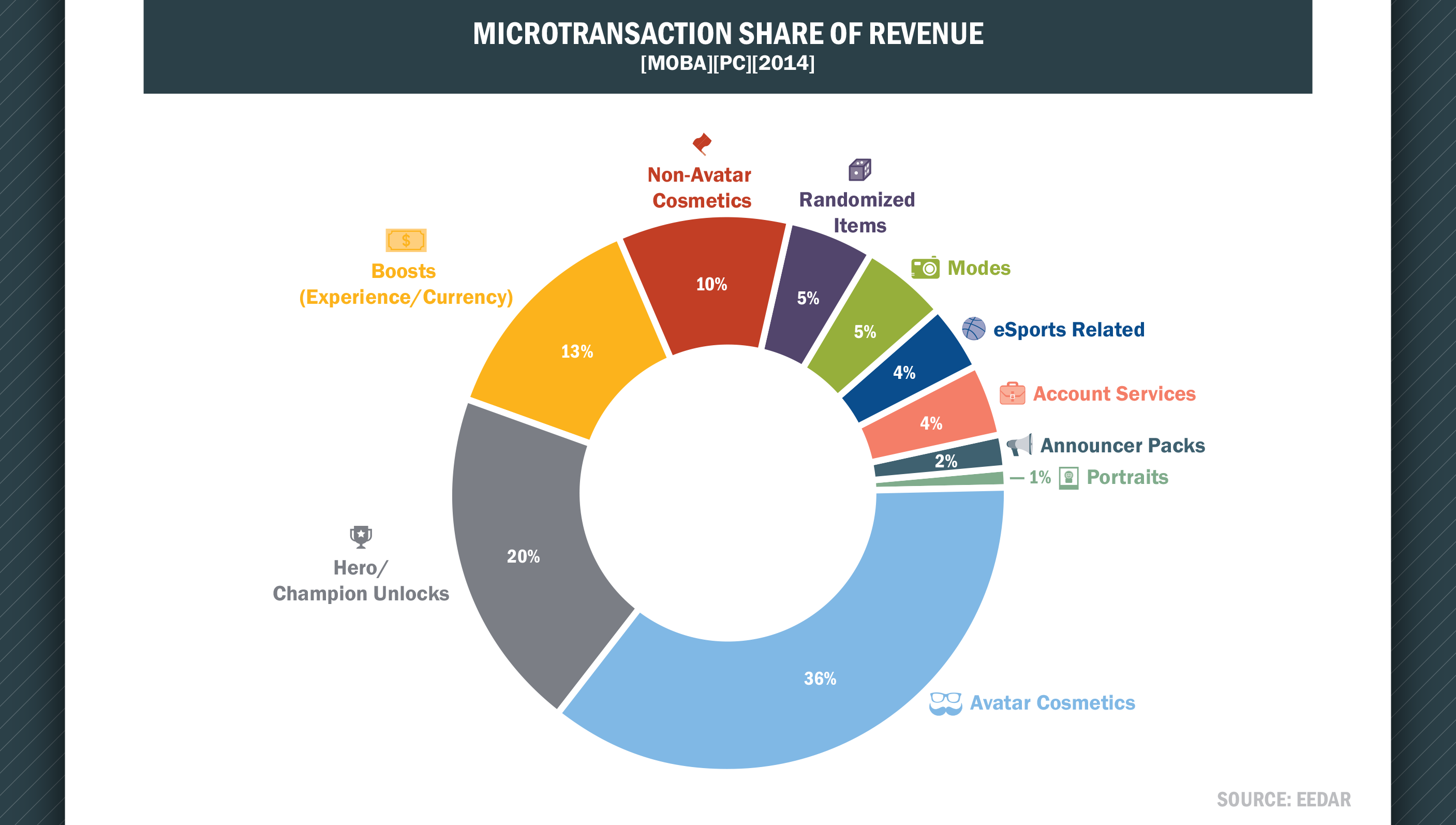
Of the three MOBAs in the Top 20 Core PC Rankings, two are in the Top 10: Riot’s League of Legends and Valve’s DotA 2. HiRez Studio’s Smite, despite moving up one place in February to Rank 11, is not. The only month Smite moved into the Top 10 was December 2014, driven by the massive interest in its World Championship and registration for its Xbox release. Smite is, in some ways, a vastly different game than DotA 2 and LoL. For one thing, Smite trades the traditional MOBA ‘top down’ perspective for a third person view associated more with first person shooters. Core mechanics like ‘last hit‘ are absent from Smite and the punishment/reward for individual player performance is less severe when compared to the other two games. MOBAs are built on the core idea of competition: LoL and DotA 2, with mechanics focused on rewarding or heavily penalizing individual player performance, have generated higher session times than Smite since the Ranking began. The fact that both titles are top down versus Smite‘s third person perspective might play a significant role too. Blizzard’s MOBA Heroes of the Storm (currently in Beta) has been criticized by some communities for the lack of penalization for individual performance, emphasizing team effort instead. It remains to be seen over the coming months if session numbers remain high for traditional, highly competitive MOBAs or if newer, more casual titles can gain serious session time traction.Â

Find more information on the eSports market and audience here.

Phablet Mobile App Sessions On the Rise

When someone doesn’t want something as large as a tablet or as small as a smartphone, they usually go for a “phablet,” a middle-of-the-road device that provides both convenience and moderate size so that they get the best of both worlds. It sounds weird, but, in fact, the device has picked up quite a bit in sales over the last year.

eMarketer reports that, from sales numbers provided by Flurry, global mobile app sessions for “phablet” devices have managed to increase nearly 150 percent from the previous year’s usage for January. Meanwhile, the growth of the mobile industry as a whole was only at 78 percent — nearly half that number.

Devices like the iPhone 6 Plus and Samsung Galaxy Note 4 provide larger sizes, but also convenience with usage. These two led that charge of popularity, while medium-based smartphones only showed a 38 percent increase, and small tablets followed way behind with 14 percent. Meanwhile, full size tablets and smaller phone models decreased, by 20 and 16 percent, respectively.

In addition to the popularity of mobile apps, mobile websites are also generating big audience numbers on “phablets.” Research company Chitika reported that the percentage of website traffic for North America coming from bigger smartphones (with a 5-plus inch screen) picked up around 160 percent between September 2013 and September 2014 — almost the same amount of growth as the numbers reported above.

The average size of a screen on a “phablet” has seen an increase on newer models. Previously, phablet screens clocked in at around 4.6 inches back in 2013. Currently, however, the popular norm is around 5.1 inches, and it’s likely it could grow even a bit more in 2015 with new models that are introduced (probably not to the point of tablet sizes, though).

More information on this report can be found here.

Publishers Buy In To Snapchat’s Discover Platform

Earlier this year, we ran an article discussing the ridiculously high amount Snapchat was asking for in terms of advertising on its popular mobile application. However, it appears that isn’t stopping some companies from hopping on board with Snapchat’s latest program, Discover.

Re/code has reported that the ad pricing for the program is running somewhere in the vicinity of $100 for every thousand views – something that can pick up incredibly quickly considering the popularity of Discover. Still, some companies have bought in due to the popularity, like mobile company Alibaba, who invested $200 million into the service.

Other partners have hopped on board as well, including CNN, Vice and ESPN, despite the high asking price for advertising. But with the deal, Snapchat seems to pay off with a guaranteed view count to ad buyers based on traffic patterns established over the previous few weeks. Publishers can demand anywhere from $50,000 to $100,000 a day for content as a result, but with the 500,000 to one million views per day, it seems pay off in the long run, with so many eyes on advertising.

The program is experimental thus far, since Discover is still a new property. But there’s still a safety margin put in place for companies and marketers to try it out. For example, if the publisher gets fewer views than what was initially guaranteed, they will run the ads for longer than the 24-hour time frame that was originally paid for, until the number count is reached.

There’s quite an audience with the Discover app, between teens and millennials that can’t usually be reached through other apps or social networks, and even without the ability to create referral traffic (linking back to a company’s original website), there’s still plenty of buzz behind a product.

Yes, the pricing remains higher than usual, but it appears Snapchat is going all out to assure companies that it’s worth it. We’ll see how the Discover program fares as it rolls along through 2015.

Image source

Advertising Questions For Apple Watch

Advertising on a mobile device is a growing venue for ads, since mobile devices can easily show images and run videos, even let you install apps from an ad. Smart watches, on the other hand, are much more limited, and the Apple Watch is starting out with some significant drawbacks for advertisers, with no video playback, for instance. It’s not even clear what sort of advertising Apple may allow or disallow.

That’s not to say some people haven’t tried, though. AdAge reports that, before the launch of the Apple Watch next month, some companies have tackled advertising on werables on other devices such as Pebble Time and Android Wear. That’s not to say that the sales have always hit their mark, however, as Google’s product is still trying to find a key audience amidst a poor debut.

A few videos of such wearable ads can be found here, providing examples of how advertising can be effective on such a small device.

Even with some predicting wild sales (JP Morgan estimates 26 million units of the Apple Watch sold for this year alone), many companies are still on the fence just yet – and, again, it’s due to the limited format. VentureBeat reports that some of the ideas for the device will be “too niche to be significant,” such as with coupons popping up while passing by a particular store. Such an idea is “clever in theory, but will be complicated to scale.”

“New apps need sizable audiences to generate revenue,” says the article. “When experimenting with a new product and platform, developers nearly always avoid cluttering the experience with unproven ads. Only when adoption and retention levels are healthy and well-understood will developers integrate ad-based monetization.”

While many developers will be familiar with Apple’s iOS ecosystem when the Watch launches, however, there should be no problem finding interactive programs that work at launch, with “clean and thoughtful” ad implementations and a few “novel games and social applications” expected to be popular around launch. However, developers need to “find creative ways to carefully introduce ‘native’ ads into their experience,” according to the article.

One thing that Apple needs to ensure, however, is full disclosure on what advertising terms come with the device. “Guidelines on this have not been released, and given Apple’s lack of enthusiasm about advertising-based revenue, I would not be surprised to see Apple forbid some or all obvious forms of ads, at least until it feels the platform is off to a successful launch with consumers,” the author stated.

We’ll see how things fare when the Apple Watch hits retail next month.

Bianca Anderson: Struggles For Women In the Video Game Industry

A few weeks ago, the [a]listdaily ran an article explaining how involvement of women in the video game industry was growing, with a 52 percent chunk of overall gamers consisting of women. We also briefly talked about prominent women in the industry, including Jade Raymond and Amy Hennig.

What we didn’t elaborate on, however, was the struggle that many women face finding such a place in said industry. GamerGate (which continues to be an ongoing — and very ugly — issue), along with acceptance in eSports and development circles, are incredible hurdles — and a few industry peers stated that the previous article didn’t go nearly in depth on these issues.

So, to follow up, the [a]listdaily spoke in-depth to a couple of women in the industry to get their take on particular issues, including finding a place within it.

Bianca Anderson, Global Programs Specialist of Talent Acquisitions for Electronic Arts, gave her take on these issues. This is the first of two interviews, the second of which will be with #INeedDiverseGames creator Tanya D.

Some eSports-based male gamers have expressed disinterest in seeing women in their hobby (and even went as far as saying they would “rape” them, as one player said a few weeks ago), while some companies feel that having separate tournaments for the groups is the answer. What’s your take on this?

Separate tournaments are the lazy solution — you make the “safety” argument while refusing to correct the bad behavior that creates an unsafe and uncomfortable environment for women and other marginalized groups. eSports are still fairly new and working to be taken seriously, so I think it behooves them to make dealing with harassment and sexism a major priority. I’ve seen arguments about trash talk vs. actual threats, and my take there is — rape is not a joke, don’t include it in your trash talk, and you should be penalized if you do. Trash talk may work in small settings with friends, but it doesn’t belong in a professional event, which is why the NFL and other pro sports leagues fine people for unsportsmanlike conduct.

Personally, I find it pretty damn ludicrous to gender segregate eSports. Video games are all too often presented as a male dominated hobby, despite the fact that 48 percent of gamers are female — allowing this perception helps contribute to male gamers feeling that they should be able to exclude women. eSports are a perfect opportunity to combat that perception. You don’t even have the argument of different physical abilities based on sex as you do with traditional sports. The ability to sit in a chair for hours pressing buttons while drinking Mountain Dew is pretty sex and gender neutral.

Do you feel that certain male gamers are intimidated by the strength of female gamers, or do you think they just refuse to shake the notion that it’s a “man’s world” when it comes to their approach to games?

I personally think that the fear of change is a bigger issue than being intimidated by strong women. Others have said it better than me, but there’s this consistent thread of power/fantasy fulfillment that some of these gamers are afraid will change. Geeks, nerds, gamers, whatever you want to call us, a lot of us were the weird, social outcast kids who got picked on for having weird hobbies, being socially awkward, or un-athletic, etc. So along come video games where you get to play bad-ass heroes and rescue damsels and you are basically the center of the universe and everything is awesome. That is an INCREDIBLY heady fantasy — but the problem is everyone likes fantasy, and the focus on the sexually exploitative, violent fantasy aimed at the male gaze of white, straight, cis-gendered males age 18-24 leaves a LOT of people out in the cold. What if I want to be the mighty warrior who rescues a Prince instead of a Princess What if I want my wish fulfillment fantasy to look like me, but more bad-ass Red Sonja aside, I don’t think I’d feel bad-ass in a metal bikini, I think I’d feel cold and possibly chafed in uncomfortable places.
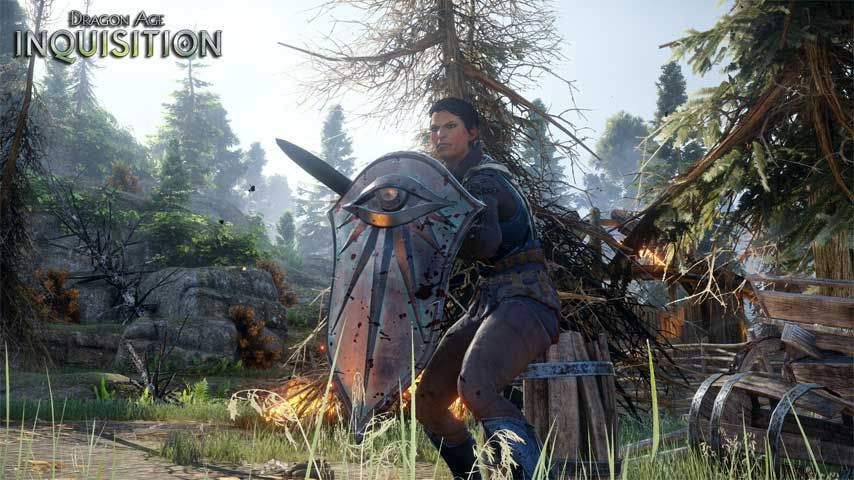
Once women and other marginalized groups started speaking up and asking for games that appeal to more people, some of the core gamers feared that all their wish fulfillment and power would be taken away, which is not what most of us want. You can play GTA V, or The Witcher, or CoD, or Battlefield and it doesn’t concern me in the least, even if those aren’t my games of choice. What I personally see most from women and others is that we want MORE games. You don’t have to get rid of games to make more, but you have to expand your horizons, and that’s what we’re looking for. Additionally I expect that if you ARE playing a game where you can murder a sex worker and take your money back, you need to have the mental faculties to look at the game critically and understand how it’s problematic. You can like problematic things — I like plenty of them, but just because I like something doesn’t mean it’s above criticism.

I think this is the big problem some gamers have with Anita Sarkeesian — they don’t understand that critique is necessary to art, and critique and censorship are two extremely different things. If games want to be taken seriously as art, critique is necessary. Art without critique is just propaganda. They want to have their hobby taken seriously, but they also don’t want to have to examine what certain games and their desire to play them may say about them, our culture, and issues of social inequality.

Do you think companies should just let loose and have tournaments where all players are welcome?

100 percent absolutely, yes. And they 100 percent need to have very specific rules about appropriate behavior. Many cons these days have anti-harassment policies clearly placed, and that’s what I think we probably need for eSports tournaments.

GamerGate is a rather ugly subject — and it’s exploded beyond the original argument over ethics in gamer journalism. As a result, certain women in the industry were affected, such as Zoe Quinn and Brianna Wu. Why do you think things have gotten so far out of hand with the death threats and what not?

“Rather ugly” is the sweater your Aunt Myrtle gives you for Christmas, GamerGate is a whole new level of horrifying. I think it’s important to realize though, that the behavior associated with Gamergate is not new, and it isn’t specific to just them. Anytime women choose to publicly express opinions online (or in person) especially about “geek” topics, they receive backlash from a group of “men” (and I use that term REALLY loosely) who want to shut them down and are willing to do so in a way that’s basically an embarrassment to the entire human race.

GamerGate was a perfect storm — you had Zoe Quinn, who had already faced previous harassment for reasons I honestly have trouble even wrapping my brain around, her seriously terrible ex who decided to take a personal experience and make it extremely public, in hopes of hurting her, and a lot of people already pissed by the idea of “Social Justice Warriors” coming in and “ruining” their “identity” as gamers. Add some D-list celebrities who decided to cash in on a group of people who lacked the ability to critically examine the way they were being manipulated, and you just get a shit-storm of epic proportions. They topped it all off with a catchy hashtag and suddenly you have a harassment campaign/hate group masquerading as a “consumer revolt,” complete with a name, a logo, and a whole lot of terrible behavior.

I think in the beginning there were probably some really earnest, well-meaning people who were actually concerned about ethics in journalism. There may still be some left — but the GamerGate name has been so hopelessly besmirched by hateful, disgusting people who have turned it into something reprehensible, that I think it’s just totally beyond redemption. I just can’t imagine the kind of person who thinks that harassment, threats, “doxxing”, “SWATting”, and stalking is an acceptable response to someone doing something you don’t like in your hobby space. The presence of rapidly changing technology bringing people closer together and a justice system that has no idea how to deal with the online world just makes it a dangerous new frontier.

Do you think social media makes it too easy for certain male gamers to lash out It seems like Twitter’s lack of punishment for certain threats may not be helping, especially where Zoe and Brianna are concerned?

This is a complicated one — I’d say it’s less social media itself and more that the world isn’t ready to deal with the weaponization of social media. The US justice system in particular is WOEFULLY, almost criminally, inadequate when it comes to dealing with electronic crimes and harassment. Let’s face it, police have trouble dealing with threats of sexual assault, harassment, or violence against women terribly well in “meat space” let alone cyberspace. Technology is outpacing our laws at a rate that’s more than a little terrifying, and our national fear of science and technology doesn’t help us create policies and practices that can help stem the tide of problems. I’m not qualified to advise, but it’s a serious issue that really needs to be addressed. I believe, in the long run, the positives of social media seriously outweigh the negatives, but that doesn’t mean we shouldn’t be focusing on those problems and figuring out ways to address them.

Do you have any advice for those that want to take a crack at entering the video game industry?

I get this question a lot, and I think my answer might surprise people — personally I recommend that you stop focusing on the industry and instead focus on your skills. There’s nothing wrong with having an end point in mind, but gaming companies will recruit people from an amazing range of other industries; the key is to make yourself a valuable commodity. Want to do art Focus on your art, building your portfolio, etc. Same for programmers, analysts, etc. — concentrate on building your skills and experience. I think people get really hung up on getting into the industry, but plenty of people transition into games from other industries after they’ve become more established in their specialty. I personally fell into the gaming industry almost completely by accident because I had administrative and communication skills that were valuable to my employer — at the time in didn’t even occur to me to think of working in gaming, even though I love games.

That being said, there’s nothing wrong, and everything right, with keeping up with the industry, with trends in gaming, and working on building a network and creating opportunities for meeting people in the industry. Twitter is actually a great place to network, and of course LinkedIn. Go to conventions and conferences if you can, talk to people. Be respectful and don’t make it all about you — and don’t expect them to help you get a job just because you said hi, no one really wants to feel like they’re being used. Be genuine and engaged, no matter who you’re dealing with, and learn to talk to strangers, it is probably the most useful skill you will ever develop!

You can follow Bianca on Twitter at @biancajand.
Social Media Influence Is Changing Brands

For many years, advertising on television has been the effective medium when it comes to convincing consumers what to buy and what products to check out. However, there could be an interesting changing of the guard, according to new statistics from CivicScience.

As reported by AdAge, a new chart from the survey team shows that social media has been providing more of an influence over product advertising than television, almost running neck-and-neck with the popularity of ads on television. The closest point, according to the chart above, came during May-June 2014, when they actually inter-lapped with one another around the 43rd percentile. TV has since regained a little ground, but there’s no question that social media isn’t far behind.

Meanwhile, Internet advertising is a little less well-received, dwelling around the 10th to 17th percentile over the past year. That’s not to say it couldn’t pick up, but there’s no question that social media channels are far more effective.

CivicScience also reported the following findings:

“In 2014, the dominance of TV’s influence shrunk significantly over the prior year. In fact, at times during the year, TV and social media were on par.”

“There appears to be some seasonality to TV ads vs. social media: Warmer-weather months correlated with a rise in social media selection, and the fall TV season with greater TV ad influence.”

“Internet advertising sees a very gradual increase, but far less volatility than TV or social media.”

Social media chatter seems to be playing a much stronger influence, especially when ads have a certain amount of relevance.

While the report doesn’t indicate that TV advertising is finished – the buzz from the ads in the Super Bowl clearly show they aren’t, not by a longshot — they do indicate that advertisers need to have a better understanding of just how powerful social media is affecting perceptions for brands Advertisers who take this into account can develop creative campaigns to help support social media, and generate even more interest in their brands.

More details on the report can be found here.

‘Cards Against Humanity’ Goes Mobile

Admittedly, Cards Against Humanity isn’t for everyone. It’s an adult-oriented card game in which the answers can range from Auschwitz to Robocop to Adolf Hitler (and those are the clean ones). The game has become an enormous hit over the past few years, thanks to the offering of various expansion packs as well as holiday promotions – even if that meant avid users buying a piece of cow poop (again, that’s the clean term for what they sold) after it was clearly advertised by the company as being cow poop.

But now, Cards Against Humanity could be making its biggest shift to date into the mobile and online world. The company has announced that, starting this weekend, a version of the game titled Cards Against Originality will launch for smartphone, tablets and PCs through a browser-friendly app.

The mobile and browser app features all the original cards that came with the initial game, as well as its subsequent five expansion packs. With it, players can challenge one another online in match-ups, all without the need of shuffling cards or paying extra for pricey expansion packs. Best of all, it’s being offered for no charge, as part of the company’s agreement with the Creative Commons license.

Sharing match-ups is easy with the web browser, as a special URL will be provided that enables users to invite their friends – and not strangers that use the worst kind of cards – to play. Early tests of the game have been positive, although the service is currently down in favor of a full launch this weekend.

Cards Against Humanity has been a big hit on the board game front, with thousands of cards sold in both their original and expansion packs. And with each convention the team attends (mainly Penny Arcade Expo events), hundreds of thousands purchase new goods, including exclusive card decks and “bigger, blacker boxes” that can contain all the cards in one convenient spot.

Cards Against Originality will likely boost the game’s popularity even further, introducing new players to how it works and prompting them to pick up their own special card decks, in the hopes of playing along with their friends. It’s a brilliant idea that will generate a bigger audience – no matter how ridiculously profane it may get.

To learn more about Cards Against Humanity, visit the official page.

Nielsen: 40% Of US Households Have SVOD Access And They Watch It More

By: Jessica Klein

Nielsen just came out with its Total Audience Report for the fourth quarter of 2014, which revealed that over 40 percent of US homes use an SVOD service (as of November that year). That’s up from 36 percent of US homes in Q4 of 2013.


40% of US Households have SVOD access in Q4 of 2014 says Nielsen

Not only are these homes connected, they’re maximizing the use of their connected devices. According to Nielsen’s report, people in these homes watch almost 50 more minutes TV than a “typical TV home.”

Here are some other important stats you should know from the report…

This article was originally posted on VideoInk and is reposted on [a]listdaily via a partnership with the news publication, which is the online video industry’s go-to source for breaking news, features, and industry analysis. Follow VideoInk on Twitter @VideoInkNews, or subscribe via thevideoink.com for the latest news and stories, delivered right to your inbox.