Wearable Tech Market Could Grow Fast

A report from Berg Insight is betting that wearable tech will continue to proliferate in the coming years. They are forecasting that by 2017, 64 million units will be sold worldwide, making wearable tech on track for the next tech boom.

The report shows that between 2011 and 2012, devices like smart glasses, watches and wearable fitness trackers like the Fitbit and Nike’s FuelBand were snatched up, with sales growing by almost 168 percent.

While sales of these smart devices are growing at breakneck speed, so do the concerns over privacy and it’s easy to see why. When these watches can monitor your heart rate, the caloric content of your food and act as your windows for everyday life, the fusion of oneself to so many computers can be approached with caution.


A poll in September of this year from Survey Sampling International showed that about one in three Internet users in certain countries were trepidatious about the invasion of privacy that wearable tech could pose. Australia is the most concerned of these countries, with 46 percent wary of the wearable tech invasion, with France and the UK a little bit more open to the idea.

Source: eMarketer

[Sponsored] How ‘New Influencers’ Are Changing Online Marketing

This sponsored post is produced by Ayzenberg Group and was originally published on Venture Beat on December 2, 2013.

As advertisers struggle to increase engagement with their online and digital campaigns, a solution is needed, which may involve a new approach to social and earned media.

Heavy social users are gravitating towards niche nets and have become selective about what they post and share. Brands are also placing greater importance on the content they create, making sure it’s entertaining, timely, useful, and easy to share – but still that’s not enough to drive up engagement.

The key lies in how digital natives, especially millennials, increasingly seek out product information from online experts with common interests. Online bloggers/vloggers, commentators, product reviewers, social media gurus, and even bona fide celebrities have gained online clout and have increasing reach and authority on the Internet.

They’re the new influencers.

For many, these influencers have become celebrity product endorsers, speaking directly to an audience through the various channels they’ve come to trust for information, often playing a pivotal role in their purchase decisions.

We’ve seen proof that harnessing digital influencers can propel campaigns to far exceed expectations.

We recently ran a digital campaign for Warner Bros.’ Injustice: Gods Among Us, a fighting game based on the DC Comics universe. We mixed digital influencers with comic book experts and celebrities to promote a virtual tournament dubbed “Injustice Battle Arena,” where the game’s superheroes and villains squared off in face-to-face battles and fans voted on the outcomes. The campaign garnered nearly 19 million views over 10 weeks and more than 850 percent ROI in earned media value.

For another campaign we ran for a large interactive entertainment company, we supported the launch of four of their products with an online video and social media program built around four YouTube stars. Each ‘YouTuber’ delivered a live cast show featuring one of the products, with promotions targeting their subscriber base and social networks.  Engagement was through the roof, and two of the games set launch sales records for the company.

As a result of these and other campaigns, we’ve charged up a new weapon aimed at the new influencers – the Influencers Outreach Network, or [ion]. It’s the product of three years of experience running these types of programs, but it’s more than a wrapper on proven methodology. It’s a proprietary platform designed to first connect brands with the right influencers, then accurately measure results.

There are currently more than 7,000 affiliate influencers who are part of the [ion] program – and this number is growing daily.  These are YouTubers, bloggers, industry professionals, theatrical, television, and other social media influencers. Their reach is staggering, with audiences in the hundreds of millions and engagement metrics measured in billions.

To support our growing network, we’ve expanded our technology platform to include content curation, sharing, gamification and analytics – resulting in an online media exchange for our premium inventory of influencers to amplify results.

We know how fast targets move when it comes to digital and social media. Influencer outreach isn’t a silver bullet, but it’s a powerful way to engage consumers. It’s a system that sets the community up to not only generate significant awareness but to engage and grow through its own volition.

Spike VGX Award Winners Revealed

This past Saturday, Spike aired its yearly Spike VGX Awards show online, with hosts Joel McHale and Geoff Keighley revealing new projects and exclusives, while also handing out a number of awards to 2013’s most noteworthy games.

The full list of winners is as follows:

Game of the Year: Grand Theft Auto V

Studio of the Year: Naughty Dog (The Last of Us)

Best Shooter: Bioshock Infinite 

Best Action/Adventure Game: Assassin’s Creed IV: Black Flag

Best Sports Game: NBA 2K14

Best Independent Game: Gone Home

Best Role-Playing Game: Ni No Kuni: Wrath of the White Witch

Best Fighting Game: Injustice: Gods Among Us

Best Driving Game: Forza Motorsport 5

Best Downloadable Content: Far Cry 3: Blood Dragon

Best Xbox Game: Brothers: A Tale of Two Sons

Best PlayStation Game: The Last of Us

Best Nintendo Game: Super Mario 3D World

Best PC Game: Gone Home

Best Handheld Game: The Legend of Zelda: A Link Between Worlds

Best Casual Game: Animal Crossing: New Leaf

Best Voice Actor: Troy Baker (The Last of Us)

Best Voice Actress: Ashley Johnson (The Last of Us)

Best Soundtrack: Grand Theft Auto V

Best Song In a Game: “Will the Circle Be Unbroken” by Courtnee Draper and Troy Baker (Bioshock Infinite)

Most Anticipated Game: Titanfall

Character of the Year: The Lutece Twins (Bioshock Infinite)

Best Mobile Game: Plants vs. Zombies 2: It’s About Time

Congrats to all the winners!

Source: Shacknews

Activision Finds ‘Destiny’ In September 2014

It’s been a long wait for Activision/Bungie’s huge sci-fi project Destiny, but this past weekend, the companies announced an official release date for the game.

Destiny will make its way to store shelves on September 9, 2014 for Xbox One, Xbox 360, PlayStation 4, PlayStation 3 and PC. A pre-announced beta will go live for PlayStation 4 and PlayStation 3 during the summer of next year.

“We first shared the design pillars of Destiny less than one year ago. We promised to redefine what players should expect from a Bungie game. We said we waned to change the way people play games together. We set our bar high. For us, Destiny represents a once in a lifetime opportunity,” said Bungie in a blog update.

“Since then, Destiny has continued to reveal its promise. Every new build brings us closer to our original vision. With those goals in sight, we intend to use every moment from now until the release of the game to ensure that Destiny lives up to your expectations, and our own.”

Source: GamesIndustry International


EA Donates Funds For Cancer Research

Coming off sales of $10.5 million from its recently released package of downloadable games via Humble Bundle, Electronic Arts has donated $1.65 million to the American Cancer Society.

“So proud of Team EA in raising $10.5 million from the Humble Bundle, $1.65 million of which goes to the American Cancer Society,” tweeted EA COO Peter Moore.

The Humble Bundle for EA Origin games included quite a number of hit titles for dirt cheap, including a trio of Dead Space games, as well as Mirror’s Edge, Crysis 2: Maximum Edition, Medal of Honor and Burnout Paradise: The Ultimate Box.

In addition, EA has also donated to other charities with the proceeds, including the Human Rights Campaign, Watsi, San Francisco AIDS Foundation and the American Red Cross. No specific amounts were given for these groups.

Source: GameSpot

iPhone 5s, 5c Growing Fast

Ever since its launch just a few weeks ago, the fancy yet efficient iPhone 5s has managed to gain quite the foothold in unit sales. The iPhone 5s now accounts for over 10 percent of iPhone usage.

A report from the team at Mixpanel indicates that the number of adopters for the device is approximately two to three times that of those who picked up the iPhone 5 at launch. The iPhone 5c, while not as high in sales, is doing quite well, too.

Growth for the iPhone 5 progressed at about .25 to .5 percent per week, while the iPhone 5s, by comparison, sits at about .75 to 1 percent increase per week. Mixpanel CEO Suhail Doshi stated that Apple’s new device is “doing a reasonable job of taking over the mid-end part of the smartphone market.”

Source: TechCrunch

Nissan’s Virtual Pitch

It’s not often you see a car manufacturer go outside the box when it comes to marketing its products – but that’s exactly what Nissan is doing in an effort to attract a younger audience.

At the Tokyo Motor Show this past week, the company handed out virtual reality goggles for people to check out their vehicle through California start-up Oculus VR, which successfully launched a KickStarter last year for the Oculus VR headset. Using the goggles, the participants checked out a virtual 3D world, one in which they could create their own concept car. It’s part of a co-creation process that the company is considering for future marketing terms.

“We want to engage digital natives, people who would maybe not be interested in cars, or who expressed less passion for cars going forward, and co-creation allows us to engage them in a unique way, to bring them inside the process of vehicle development,” said DeLu Jackson, Nissan’s global head of digital strategy.

No word yet how the design process will move forward, but considering that this process was met with great success, you can bet that Nissan is definitely keeping it in mind.

Source: Adage

Smartphone? Try Smarty Ring

We’ve seen gadgets that provide updates from your phone, your tablet…even a watch, from what Samsung is currently offering. But now a company wants to offer information through a ring.

A new device called the Smarty Ring enables digital updates to an electronically enabled ring that fits around your finger. This Bluetooth-enabled device lets you check smartphone alerts, as well as incoming falls, without needing to look at your phone or tablet.


Using a mobile app that coordinates with the ring, users can utilize the Smarty Ring as a watch, timer or even a phone finder if the device somehow manages to get lost. It comes with an automatic detection system that beeps if it’s 30 feet out of range of a phone – a perfect way to keep from losing it.The Smarty Ring also has a 24-hour battery life, and is compatible with both Android and iOS devices, provided that Bluetooth 4.0 is enabled. There’s still time to get one at the pre-release discount, but it’s still going to set you back a fair amount depending on the features you want.Source: IndieGogo


Pachter Predicts $50 Games On iTunes

At the Game Monetization Summit last week Wedbush Securities analyst Michael Pachter made some bold statements about the state of the game industry and what lies ahead. He see the future of games as one that’s broader than ever before. “More people play on a greater number of devices than ever before,” Pachter noted. This device proliferation is a key reason why he believes that non-traditional games are augmenting the core gaming market, and that “The console installed base has peaked,” Pachter said. “I don’t think you’re ever going to see 500 million consoles out there” which some people have predicted.

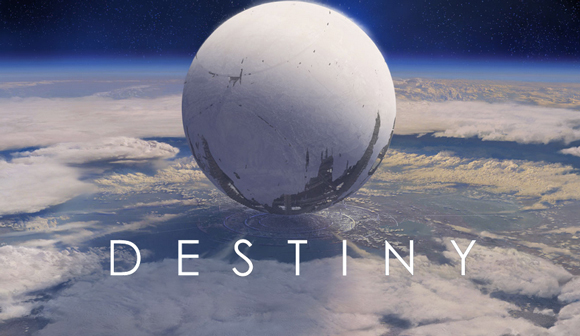
Pachter sees the future of console games as looking to expand beyond the standard retail mechanism and some DLC sales. “Destiny will have a recurring revenue model,” Pachter said, referring to the upcoming title being developed by Bungie and published by Activision. “I’m not sure what it is, but they’ll have it.” Later, Pachter made a guess as to the nature of Destiny‘s recurring business model: “I think Destiny‘s going to be weekly installments for a dollar. I think that’s a smart model,” he said.
The digital market is the future for games, but Pachter believes not all game businesses see it that way. “Publishers should embrace new business models, not fear them,” Pachter opined. “The migration to digital is an opportunity, not a threat.” While downloadable content is only 15 percent of packaged goods revenue for console games now, that will change, Pachter believes. He feels publishers should learn from the successes and failures of others, looking at why Activision didn’t succeed with the subscription price for Call of Duty while people continue to pay for a World of Warcraft subscription, though that revenue is declining.

The casual and social game areas are still attracting new entrants, and “There have been some phenomenal success stories,” said Pachter. “But most publishers only have one or two hits.” It’s imperative that publishers learn how to generate new hit titles in those areas. Part of the difficulty in that market is the sheer number of casual games appearing on mobile. “The low barriers to entry keep some players away, like Activision,” noted Pachter. “And free-to-play is free, making profits elusive for most.”

Pachter’s vision of the future for business models is a broad one. “There will be $50 games as downloads on the iTunes store, and people will be fine with that,” said Pachter. He sees a variety of payment methods, including installment options. “Microtransactions and subscriptions will become ubiquitous,” Pachter noted. While packaged goods will still exist for traditional gamers, every game will have a digital component. The non-traditional game audience will continue to grow, and advertising is likely to proliferate. “Look at Pandora, where about 4 million people pay $3 per month to avoid ads,” Pachter said. The rest of Pandora’s audience accepts the ads in return for getting free music, and Pachter thinks that will happen more and more with games as well.

The platform picture continues to evolve. “Smartphones are cannibalizing the dedicated handheld market,” Pachter said. “Tablets are the new laptop, and the games are getting more sophisticated.” Other avenues are being exploired, too and Pachter sees cloud gaming as becoming more important. “Onlive flamed out, but Sony’s Gaikai acquisition may reinvigorate cloud gaming eventually,” Pachter said. “Storage will become less essential if the cloud works.”

“The next generation of consoles is probably the last,” Pachter said. “We expect frequent model updates instead of new consoles.” Moreover, there’s going to be renewed interest in the PC, he predicted. “I think the PC is going to make a comeback, the PC will be the hub of all this stuff,” Pachter stated. He feels Smart TVs are a dumb idea, noting that you don’t have a smart monitor connected to your computer. He envisions there will be a number of screens around the home, perhaps controlled by a tablet, being driven by a supercomputer in your pocket that we call a smartphone.

You can read more about Pachter’s view of the game market, and his thoughts about consoles, at GamesIndustry International.

‘Puzzle & Dragons’ Introduces Spending Cap

Puzzle & Dragons from GungHo Online Entertainment is easily one of the most popular mobile games in the world, raking in approximately $3.75 million daily. Still, some folks are concerned the spending on the game, especially where younger players are concerned.

To assist with this, the studio has introduced a new limit (in Japan only, so far) on how much players can spend, as detailed in this Tumblr blog. Gamers under the age of 16 will be only able to spend 5,000 yen (approximately $50) per month, while those in the 16-19 age bracket can spend 20,000 yen ($200) on a monthly basis. As for adults 20 and older, they’ll still be able to pay whatever they prefer for monthly play.

Still, all it takes is a savvy player to lie about their age to get over this “age gate” and continue playing to their heart’s desire, even though the game asks for an honest answer about their age. Parents may want to keep an eye out. Could this sort of restriction spread to other games and other territories

Puzzle & Dragons is available for download now on iOS and Android devices.

Source: VentureBeat