Marketing Trends from CES 2016

CES is famous for its vast showcase of diverse gadgets (some stranger than others), but there are certain technologies that set tone for what’s to come. It will be up to brands to take advantage of these growing trends as they emerge to make the most out of them.

Autonomous Cars Make More Free Time

If there is dominant theme to this year’s show, it’s in the future of automotive technology especially self-driving cars, as the show was kicked off with Nvidia’s announcement of the Drive PX 2 autonomous vehicle technology.

Big announcements, such as how Volvo will have a fully autonomous fleet of XC90 luxury SUVs driving around the city of Gothenburg next year, and that its S90 sedan will be the first car sold in the US with semi-autonomous technology as a standard feature, means that the vision of city streets filled with self-driving cars may be realized in relatively short time.

Passengers who don’t have to keep their eyes on the road or their hands on the wheel are free to engage in watching entertainment, which means marketers will need to find ways to take advantage of a captive audience that’s on the move. It’s likely we’ll seeing partnerships grow between companies and location based or navigation apps, so that passengers can set their cars to find the nearest restaurants, hotels, shopping centers or other services as needed. Especially if all passengers end up watching video on mobile devices instead of looking out the windows at billboards.

Similarly, video streaming apps like FOX NOW can be designed to track a viewer’s changing location and adjust its ads accordingly. Furthermore, the shows themselves may be specially created and queued up to fit in the expected length of the car ride, which will impact how brands will reach audiences. 

A Different Direction for VR

Last year ended with high hopes that devices like the Oculus Rift would usher in an era of VR, where users could fully immerse themselves in different locations and experiences. Those hopes were largely deflated when Oculus VR announced the $600 price tag for its Rift headset, which doesn’t take into consideration the $1,000 computer needed to get it to work, putting high-end virtual reality out of reach for a great many consumers.

However, there is still a great deal of potential for virtual reality to take off in other ways, particularly with mobile devices like the Samsung Gear VR. Companies have already been experimenting with 360-degree videos and games, which is bound to continue. Given the high accessibility of smartphones, it’s becoming increasingly likely that mobile devices will lead the charge in the VR revolution. It will be up to brands to create memorable experiences that will stand out when viewed through low cost headsets like Google Cardboard.

A possible alternative on the horizon is AR (augmented reality), which superimposes digital information onto the real world. Smartphone games like Ingress have already taken advantage of the concept, and upcoming devices like the Microsoft HoloLens are looking to bring it to an all new level. The beauty of AR is that users won’t have disengage from the real world, and can offer users incentives to visit physical locations.

CES 2016 Highlights, Told Through Tweets

The Consumer Electronics Show continues to be in full swing this week in Las Vegas, with hundreds of companies and thousands of attendees taking in all the technical sights and sounds. Various products have been introduced, and a number of worthwhile trends have emerged as well, from virtual reality to new advances in laptop, smartphone and smart watch design.

So what have we learned from the event, based on those in attendance and quotes across social media As it turns out, quite a bit. Here a sample of some noteworthy quotes and observations from this year’s event.

During the Turner Sports Conference, Mark Cuban, Brian Krzanich, Joe Ravitch and Shaquille O’Neal discussed the potential and draw for eSports. Of course, we already know how well it’s thriving, but it was great to hear Shaq make the point as clear as day: “eSports is a sport.”

During her panel at the Consumer Electronics Show this week, Facebook vice president of global marketing solutions Carolyn Everson brought up several points about the popularity of apps, indicating the quote above, shared by Jeff Cohn. The quote is very powerful, and reminds developers that user engagement should be a priority.

Even though it’s a random quote, the phrase does have some reflection when it comes to the technology presented at CES. Some companies work hard on creating ideal hardware for consumers to enjoy, but without the software to support it, it can be a struggle. Just ask anyone waiting on a firmware update for something Internet of Things-related.

Technology is a great thing, but it’s only as good as those who create it, and Intel CEO Brian Krzanich made this point during the opening keynote, explaining that behind every great technological feat is a person who drives it.

Automotive technology played a big part in this year’s CES event, with a focus on customer convenience using state-of-the-art items, like cameras in place of traditional mirrors. Volvo’s VP of interior design, Robin Page, summed it up best with her simple but effective quote, where time really does play a part with luxury.

ESports Kicked Things Up At CES

The growth of eSports competitions over the past few years has been tremendous, between multi-million dollar prize offerings, various partners emerging to sponsor events, and exposure on television. However, in order to see just how successful it’s become, one simply needs to roam the floor at the Consumer Electronics Show in Las Vegas this week, where competition got a push in more ways than one.

Virtual Competition 

Virtuix jumped into the fray by hosting an eSports tournament using virtual reality technology. Utilizing the game Omni Arena, the company put together four different HTC Vive units, enabling players to pick up a replica gun and battle for supremacy in multiplayer match-ups. It believes that is unique treadmill technology will put the “sports” factor into eSports.

Now players will need to be physically fit and trained in addition to being a strong gamer, said Jan Goetgeluk, CEO of Virtuix. We feel that bringing eSports and VR gaming out of the chair and adding an active physical component creates an extra layer of excitement for both competitors and spectators. The faster you run on the Omni, the faster you will move in the game.

The competition has drawn over 100 players across various 30 minute sessions. It will continue to explore options, including talking to eSports leagues, such as ESL, Major League Gaming (which was purchased by Activision this past week) and the ESWC.

New Gear For a New Age

New peripherals also took focus at CES this week, with a number of companies introducing headphones, keyboards and other items with an emphasis on eSports. Thermaltake introduced its new Tt eSports gear line-up, including the impressive Challenger Prime RGB Membrane Gaming Combo.

Not to be outdone, Monster partnered with eSports veteran Jonathan “Fatal1ity” Wendel to introduce a new line of devices specifically tailor made for e-athletes, including the FXM 100 and FXM 200 headsets, which retail for $70 to $100 respectively. It should go on sale sometime this year.

Monster

Media Exposure

Social media also got an eSports push this week, with a number of e-athletes attending CES and reporting on technical marvels, as well as taking part in discussions regarding eSports. Miss Harvey, an established pro in the Counter-Strike: Global Offensive arena, has been reporting all week from the show floor, posting pictures and videos to keep fans informed.

Inside the NBA Teams Up With eSports

Perhaps the biggest eSports related news that came from the Consumer Electronics Show involves Turner Broadcasting. The company is no stranger to the world of eSports, since it will be airing a Counter-Strike based competition show on TBS later this year. However, it decided to go the extra mile, bringing its entire crew from Inside the NBA to discuss eSports.

The discussion was very lighthearted, although former basketball player (and Inside the NBA host) Shaquille O’Neal already spoke supportively for eSports before the showcase. “I heard the top guy say that the eLeague is the second biggest sport in the world today,” he said.

He also made it clear that, despite what some at ESPN may have thought in the past, “eSports is a sport.” Highlights from that conference, including Joe Ravitch and Dallas Mavericks owner (and eSports investor) Mark Cuban, can be found here.

ESports has already found tremendous growth in its own right, but it’s great to see it get exposure at CES. Between the introduction of new gadgets, a brave new idea for eSports competition (some involving virtual reality) and even a few celebs join in to support its exposure. Now the only question is how much bigger that exposure will get with forthcoming events, such as the Electronic Entertainment Expo in June.

5 Takeaways from Digital Hollywood at CES

The annual Consumer Electronics Show (CES) is becoming an increasingly important place for ad agencies and brand marketers to go to find out what s next. It has escaped few that consumers are spending more and more time with digital and mobile devices. Optimizing content experiences for consumption on these devices and the services they are running is key.

Here are five take-aways from Digital Hollywood’s industry track:

Brands Are Shifting Budgets from Renting to Owning IP and Creating Franchise Content

Brands are starting to realize that they can move from renting to owning IP (Intellectual Property). This means that the brands will fund more original content rather than advertising in and around existing content. Forty-five million Americans have installed ad-blockers today, according to AOL Digital Prophet David Shing on panel about the future of advertising. The trend is to go direct to the audience with that ad blocker-proof content on their social channels.  

We are doing a lot of things with brands this year that will support that, said David Freeman, Co-Head of Digital Talent and Packaging, Creative Artists Agency.

If you add up how much brands are spending on branded content in all it s different forms, it adds up to more than what they spend on traditional (interruption) advertising, Mark Howard, Chief Revenue Officer, Forbes Media.

Brands Should Seriously Consider Experimenting with AR/VR Content

The most well-attended conference sessions at Digital Hollywood’s CES track were related to AR and VR. Questions from the audience alluded to skepticism towards it becoming a mass phenomenon, because the user experience still leaves room for improvement. However, with massive bets from Microsoft HoloLens, Facebook’s Oculus and Google Cardboard, this is the technology to watch in 2016.

We are fully aware of that Virtual Reality might fail to take off. It s a real possibility. Which is why AMD is very interested in talking to content creators. We need more really good VR content, said Roy Taylor, Corporate Vice President and Head of Alliances, AMD.

Traditional Media Is Building New Forms of Content Studios

Scripps, the parent company of cable channels like HGTV and Food Network, recently launched Scripps Lifestyle Studios. It s just one example of traditional media companies getting serious about video content for social media channels (and opportunities for brands to get involved).

Scripps Lifestyle Studios now employs around 100 people, mostly millennial women, and it produces content for new platforms like Snapchat for example, says Chris McCown, VP, Video Product Management, Scripps Network Interactive.  Millennials are a huge focus for us in the coming year.

Marketers Across the Board Should Target Micro-Communities

It s the opposite of mass-marketing, whether you are using influencers to create communities like Under Armour is doing with their connected fitness group or Fortune creating an exclusive mobile app for the list of people who are 30 under 30 so Fortune can connect with them and they can connect with each other.

We target people who care about health and fitness and create communities that adds value to the users lives, says Warren Kay, VP, Advertising, Under Armour.

Going from AdTech to MarTech

An interesting discussion speakers engaged in at the speakers lounge concerned the difference between AdTech (Advertising Technology) and MarTech (Marketing Technology). As digital media advertising (and venture capitalists) shift their focus away from banners and other forms of low-engagement marketing, the term AdTech is losing its allure. The new industry buzzword is instead “MarTech,’ which is more inclusive of new forms of digital marketing. Expect to see MarTech used a lot in 2016.


CES 2016’s Biggest Trends

This year’s CES offers a huge variety of  technologies and gadgets that may make their way into homes, cars, and streets all around the world. Here are the top trending announcements and technologies seen at the show that are sure to dominate tech conversations in the coming months.

Self-driving cars go into high gear

Nvidia kicked off CES this year by debuting its DRIVE PX 2 technology, which has the processing equivalence of  150 MacBook Pros, packed into a device the size of a lunchbox. Its size and power gives the device a significant advantage over competing self-driving technologies, which can take up the entire trunk of a mid-sized sedan. Volvo will be the first auto maker to employ the technology next year in an autonomous fleet of XC90 luxury SUVs, which will drive themselves around the company’s hometown of Gothenburg, and semi-autonomously in other locations.

Furthermore, the Volvo S90 sedan will be the first car in the US to include the semi-autonomous Pilot Assist system as standard equipment. The newest version of Pilot Assist can stop and steer, given clear lane markings, up to 80 mph – an marked improvement from the 30 mph limitation of its predecessor.

Rival car manufactures are also looking toward an autonomous future. Google continues to work in partnership with Ford to develop self-driving cars. After extensive testing, with 53 autonomous vehicles logging in over 1.3 million miles, Ford has announced that it will be tripling it autonomous fleet. GM, Delphi, Kia and others also have plans for self-driving vehicles, which is bound to define the future of automotive technology.

Never stop watching Netflix

With a vast library of TV shows and movies, in addition to a number of popular and award-winning originals, all streamed straight to a variety of devices, Netflix has become one of the most disruptive services of the past ten years. Now it has gone global.

Co-founder and Chief Executive Reed Hastings announced at CES that Netflix has become a global Internet TV network, servicing 130 new countries, which brings the total count to 190 around the world (but does not include China). That means, for one monthly fee, subscribers can enjoy streaming entertainment whenever and wherever they happen to be, using practically any device they please.

Becoming a fully globalized Internet TV network compliments last year’s launch of Netflix streaming over free in-flight WiFi on Virgin America airlines. With all its availability, binge watching can reach all new heights. At least it can until March, when the complimentary in-flight WiFi deal expires.

Razer makes a sharp impression

Razer, maker of high-end electronics for gamers, unveiled some truly spectacular devices this year. In addition to the Nabu Watch, which features fitness tracking and connects to smartphones for alerts, the company announced a direct-to-consumer ultrabook called the Razer Blade Stealth. The 12.5-inch notebook will feature a 4K touch display, and offers desktop-level gaming performance when hooked to an optional Razer Core accessory, which fits in a full desktop video card. By selling directly to consumers through Razer retail stores and online, the Razer Blade Stealth can sell for significantly less than many of its competitors. The base model will go for $999, and the highest end version will cost $1,599.

Perhaps one of the most impressive reveals is the Razer Stargazer webcam, which captures video at a high frame rate and features Intel RealSense technology. With its 3D scanning capabilities, users can scan objects or their faces into games. Furthermore, the camera recognizes both facial and hand gestures, which could bring computer interaction to a new level, especially given the launch of consumer level virtual reality technology this year.

Oculus Rift pricing shifts VR conversation

Last year’s launch of the Samsung Gear VR (developed in partnership with Oculus VR) may have put us on the road to the virtual reality era, but the pricing announcement for the high-end Oculus Rift headset has certainly set the pace. Although Oculus founder Palmer Luckey stated in 2014 that the company wanted the Oculus Rift to “stay in that $200-400 price range,” that clearly didn’t turn out to be the case.

The $600 price tag for an Oculus Rift headset bundle, which includes an Xbox One controller and two games, but not the Oculus Touch interactive hardware (which is sold separately and releases later in the year), came as a surprise to many. Taken together with how consumers will need a $1,000 PC and a high degree of technical know-how to make it work, and it seems like the VR generation is further off than many thought it would be.

Still, while some see the high price point as an obstacle, others view it as a big opportunity for less expensive mobile headsets like Google Cardboard of the Samsung Gear VR to take the lead. Sony, which has not yet revealed pricing for the PlayStation VR (formerly Project Morpheus), also has a huge opportunity to become a market leader, given of how the extremely popular PlayStation 4 console features standardized hardware that most consumers find accessible.

Internet of Things take over the world

Self-driving cars, endless video streaming, and smart cities may be dominating conversations at this year’s CES, but you can’t have any of those without the Internet of Things (IoT)- three words that describe the ubiquity of internet-connected devices, sensors and apps. Ralph de la Vega, CEO and president for AT&T’s mobile and business units, sees IoT as the new Industrial Revolution as the company works to build the infrastructure needed to make fully realized smart cities possible.

Furthering the trend is Samsung announcement that it is partnering with Microsoft to develop IoT devices that use Windows 10 as a foundation. To kick off the partnership, Samsung debuted the Galaxy TabPro S 2-in-1 tablet at CES. However some questions remain about how deep the partnership will go, given the device manufacturer’s longstanding relationship with Google and the Android platform.

Other partnerships announced at CES include the development of Microsoft powered smart cars. Office 365 productivity and collaboration tools are coming to Harman infotainment systems, so you can still collaborate and work with the office, even when stuck in traffic. Microsoft is also working with Volvo to create a voice control system inspired by the 80s television show Knight Rider. Users will be able to use a Microsoft Band 2 to set navigation, start the heater, lock the doors or sound the horn.

Ready for the future yet It’ll probably head your way in a self-driven smart car that you can talk to while watching a movie.

CES: Everything You Need To Know About Virtual Reality In 2016

We’ve tackled the topic of virtual reality on more than one occasion, like how it’s expected to become a six billion dollar in market in 2016, and how a number of developers and companies are already taking advantage of the format, whether it’s with movie-based promotions or being used through the convenience of a hotel room.

However, this week’s Consumer Electronics Show has taught us a bit more about the market as we’ve come to expect it, whether it’s with key announcements over the release of long-awaited devices, the introduction of new features, or the expansion of compatibility with said virtual reality gear. Here’s a quick wrap-up of what we’ve learned over the past few days regarding VR-related technology.

Compatibility Is On the Rise

Although the current set-up for certain devices like the Oculus Rift require a high-powered PC in order to run properly, virtual reality could soon see even bigger compatibility down the road.

Mobile has already played a big part with the VR market, with Google Cardboard and Samsung VR already showing easy compatibility with a number of smartphones and tablets. As 2016 goes along, though, we’ll see this open up with a number of new applications that take advantage of the format, all through the convenience of devices people already own.

As the Oculus Rift makes its way to market, the team at Oculus could also make adjustments to make it compatible with other devices, including gaming laptops and, considering its partnership with Microsoft, maybe even the Xbox One console or Windows 10-related devices, like the Surface Pro line. That’s not confirmed just yet, but opening the door to more consumers would be better for the Oculus Rift overall.

Moving forward, virtual reality will not just be about immersion, but also ease of use and as the year goes on, we’ll see options open up to make it more acceptable to the market. It’ll take a little time, though.

Everyone Is Getting On Board

A number of developers have already begun working on games and applications for virtual reality-related tech, and by 2016, the field will be wide open in terms of possibilities.

Along with Netflix compatibility (through a living room-based app) and gaming partners signed on with Oculus (like Insomniac Games with its survival-based Edge of Nowhere), Sony also has plenty of games in the works for its PlayStation VR-related tech. Per this report from the BBC, CEO Kaz Hirai confirmed that there are already over 100 titles in development for Sony’s forthcoming device, including entertaining games like Rez Infinite and 100 Foot Robot Golf, as well as third-party sequels like Ace Combat 7.

We are working on over 100 titles that will play on PlayStation VR, he said. This is a testament to the kind of support we are getting from the content creation community. So we have a lot of support and I think it will be great product when it comes out later this year.

That’s a lot of titles to play, indicating there will be something for everyone in the market, from the hardcore fans to casual players looking to relax after a stressful day at work. That could make all the difference in accessibility for virtual reality on the market.

Immersion, But Not Too Much

While the immersion of virtual reality is promising, there are some companies that feel that convenience should be a part of its design.

That’s exactly what HTC did this week with an upgraded version of the Vive. The new design not only promises to be affordable to the market when it releases in April, but also convenient, as the new design features a front-facing camera, so a viewer can check on something in the real world should the situation call for it. This could help avoid collisions or accidents.

Comfort is also a big focus on some of these designs. The Vive promises to have interchangeable foam inserts and “nose gaskets” to make the wearing of the headset more convenient. The Oculus and PlayStation VR will have similar designs as well, so they don’t create headaches for those that are wearing them.

It’s Here But Are Consumers Ready To Adopt

2016 marks the year that virtual reality will finally be ready for the consumer market. Oculus has already made the big move with CES this week, announcing that the consumer version of its headset will initially ship in March for $599. While some customers have balked at the high price point, it’s been a best-seller in the pre-order front, with shipments delaying as far as June based on high demand.

The HTC Vive won’t be far behind, set to ship in April for an unspecified price point, while the PlayStation VR will follow sometime in 2016, with full details expected to be announced at Sony’s pre-E3 press conference in June and perhaps even sooner, based on demand.

It appears virtual reality is finally ready to happen, with the “big guns” coming out and promising a new experience that will certainly be worth the wait. Now it’s just a matter of seeing what developers do with the tech, and how much consumers are willing to accept it.

The Gadgets and Gizmos From CES 2016’s Show Floor

This year’s Consumer Electronics Show is in full swing in Las Vegas, and while we have reporters providing daily recaps and other stories from the event, we decided to take a look at some of the best (and strangest) tech gadgets being shown. 

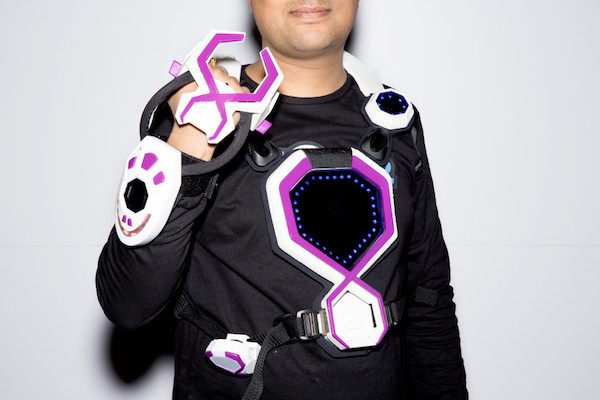
Madrat Games SuperSuit

Alist Supersuit

Laser tag comes roaring back with this interactive suit, although its ability to control other devices like Sphero and remote control cars could provide a new level of interactivity in kids.

Image source

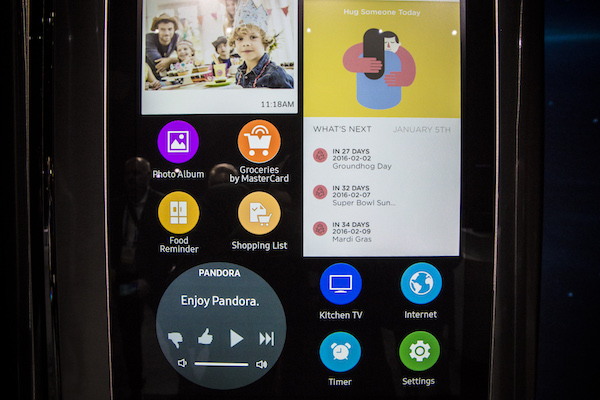
The Smart Fridge

Alist Fridge

Why have a plain, boring, fridge when you can have one that plays music and run apps from a built-in touchscreen This will help expand the market of the Internet of Things, even though not everyone will feel the need to get a “smart fridge.”

Image source

Goodbye, Rear-View and Side Mirrors

Alist BMW

As if self-driving cars weren’t changing the dynamic of vehicle technology, BMW’s i8 does away with mirrors entirely in favor of static camera systems. These could be marketable when it comes to promoting vehicle safety, providing a larger range than most vehicles are capable of.

Image source

A More Rugged Smartwatch

The smart watch market could really take off with Casio’s Smart Outdoor Watch, which is perfect for rugged outdoor types, with its built-in microphone, water-resistant build and built-in features, including a compass. It’s sure to last longer than the Apple Watch on a camping trip.

Alist Watch

The smart watch market could really take off with Casio’s Smart Outdoor Watch, which is perfect for rugged types, with its built-in microphone, water-resistant build and features like the included compass. It’s sure to last longer than the Apple Watch on a camping trip.

Image source

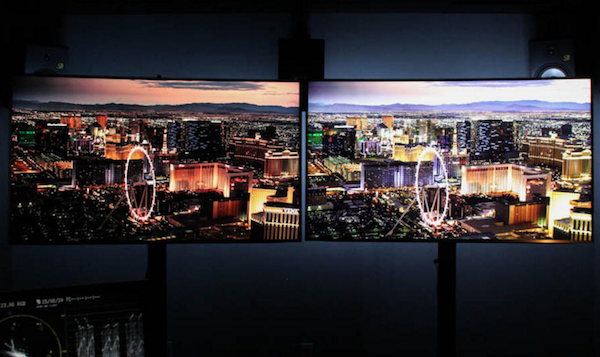
TV’s Are Becoming More Dynamic

Alist TV

While 4K is still a technology being looked at for televisions, some manufacturers, like Samsung and LG, are looking into HDR (high dynamic range) to give the best picture possible to consumers. A final cost has yet to be determined, so marketing to this audience could be an interesting challenge.

Image source

Roomba Here’s the Powerbot Turbo

Alist Vacuum

Vacuuming is stepping up to a new level with Samsung’s Powerbot Turbo VR9350, which is capable of cleaning up messes via commands through a smartphone. It’s expensive at $1,200, but should be a neat gadget for those tired of pushing around a Hoover. 

Image source

PicoBrew To the Future

Alist Pico

Considering how big the home beer brewing market is right now, the PicoBrew couldn’t come at a better time. It offers a simplified system, can download recipes via WiFi, and has an affordable price of $599. We’ll drink to that.

Image source

Pinball Returns

Alist Pinball

Good ol’ gaming is on the CES show floor, with Stern Pinball showing off a trio of hit tables, featuring the band Kiss, the HBO show Game of Thrones, and a table inspired by the classic Spider-Man comics. They certainly provide a quick relief from all the high-tech action on the floor.

Image source

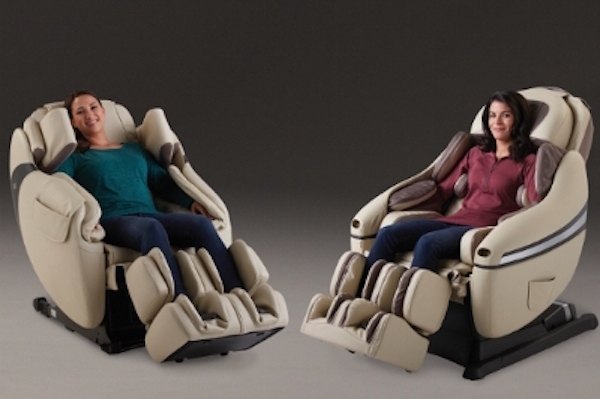
High Tech Chairs That Don’t Go Out of Style

Alist Inada

Last but certainly not least, Inada has returned to CES with its massage chair line-up, for the 13th year in a row. Not only do they represent a new field of comfortable technology, but they provide a relaxing break from the hustle and bustle of the show floor.

Brands Showing Preference For Facebook Native Video Over YouTube

Facebook Video has become quite the competitor to YouTube over the past few months, not only in overall views, but also with other features and ROI. Not only have brands taken notice, they’re taking full advantage.

A report from quintly indicates that a number of brands are showing preference to Facebook’s video format over YouTube. The study shows that YouTube videos only make up about one quarter of all videos posted on the Facebook site, showing that the rest comes mostly from Facebook native.

According to the data, it’s clear that Facebook’s video has a bigger outreach with brands, with 65 percent showing preference over YouTube, which sits at 24 percent. Meanwhile, only one percent of companies still use the Vimeo format, while ten percent utilize some other video service.

Chart 010615

In a separate study, Locowise noted that Facebook video has better native reach than YouTube. Facebook native videos manage to attain about 13.2 percent organic reach, while YouTube is a little less with 7.9 percent. Facebook also has a notably higher engagement rate, by 6.3 percent, compared to YouTube’s 3.2 percent. Even Instagram has a higher rate than YouTube, at 3.6 percent.

Out of all the posted videos, 96.4 percent are reported from Facebook native, compared to just 3.5 percent from YouTube.

quintly noted a few reasons why Facebook is more popular. The first involved the EdgeRank service, which utilizes its own algorithm that provides updates right in the user’s timeline, allowing the company to determine which reaches more people. Native video features were also pointed out, as they can increase interactions with users, especially on auto-play, since they would notice them while looking through their timeline. Even disabled, quintly believes it’s “greatly beneficial for marketing” on the site. quintly also noted that Facebook videos are sponsored more frequently because of this.


Auto Makers Offer Glimpse Into Future at CES

If there s a more perfect setting for brand matrimony than the CES show in Las Vegas, we d love to hear your argument preferably at one of the 1,574 hosted parties. Just like Britney Spears 2004 New Year s Eve Sin City nuptials that lasted a whopping 55 hours, when brands unite to work happily ever after at the year s biggest electronics show, there s plenty of mutual lust, infatuation and love for one another. One specific marriage that s as common as a Kardashian alpha union these days are cars connecting with tech brands to merge expertise in their respective fields. They just so happen to last longer and actually yield results for the betterment of Mankind.  

Ford 

The CES proceedings got off to a promising start at the end of last year when Google partnered with Ford to build self-driving cars. Google already has 53 test vehicles on the road with 1.3 million miles logged in autonomous driving. Ford came to CES to say it ll be tripling its autonomous car fleet; the expansion will make it the largest in the auto industry, Raj Nair announced. The car manufacturing company will have 30 fully autonomous Ford Fusion Hybrid test cars hitting the road for 2016 in California, Arizona and Michigan. The pairing of the car and tech titans undoubtedly combines strengths and resources, and lays out the framework for the future of driving.

Ford didn t stop there. They also announced they re working with Amazon and Internet of Things platform Wink toward granting their car owners access to their connected-home devices from their cars, and vice versa. Soon, you ll be able to ask Alexa through Sync Connect to start your car, open a garage door, turn on home lighting, check a thermostat setting and inquire on the estimated time of arrival for your vehicle from inside your home. The people unhappiest about this development Teenaged children borrowing their parents car Saturday night.  

General Motors

Lyft announced that General Motors invested $500 million in the company. The partnership, announced Monday previous to CES, will build a fleet of self-driving cars that can work on the Lyft platform, and where Lyft drivers can also rent GM vehicles from. 

We see the future of personal mobility as connected, seamless and autonomous, said GM president Dan Ammann. With GM and Lyft working together, we believe we can successfully implement this vision more rapidly.  

John Zimmer, president and co-founder of Lyft, said: Working with GM, Lyft will continue to unlock new transportation experiences that bring positive change to our daily lives. Together we will build a better future by redefining traditional car ownership.  

This is an interesting development because the autonomous vehicle trend is now married to the I don t want to buy a car / let s Lyft, instead culture and crowd. 

Delphi

Delphi introduced the automated vehicle at CES 2015, and this year, it took active safety and automated driving to the next level by incorporating vehicle-to-everything capabilities by using advanced software and hardware to communicate with streets, signs, traffic lights, other cars and even pedestrians.

We imagine a world with zero traffic accidents, said Jeff Owens, Delphi chief technology officer. To get there we will need a convergence of active safety, sensor fusion, connectivity platforms and advanced software. Delphi has proven we are the only company that has the right mix of all of these.

Toyota 

Toyota announced it will be adding cellular data connections to a broader range of vehicles by adopting Ford SmartDeviceLink Software the car makers open-source smartphone app interface software. The app allows Spotify, Glympse, iHeartRadio and other smartphone apps to be easily accessed by drivers using voice recognition and dashboard controls. PSA Peugeot Citroën, Honda, Subaru and Mazda are also now thinking about adopting this technology for their cars, Ford announced.

The true benefit of a common smartphone app communications interface is that it creates an industry standard enabling great experiences for customers while allowing different companies the freedom to differentiate their individual brands, said Don Butler, Ford executive director, Connected Vehicle and Services. Ford is making the software available as open-source, because customers throughout the industry benefit if everybody speaks one language.  

Kia

Kia recently announced plans to manufacturer partially-autonomous cars by 2020, and aims to bring its first fully-autonomous vehicle to market by 2030. At CES, they introduced the launch of a new sub-brand drive wise to encompass its future Advanced Driver Assistance Systems (ADAS) a $2 billion investment program over the next two years. Drive Wise will enable Kia to introduce intelligent safety technologies to its future model range, helping to eliminate potential dangers and, for many, the boredom of driving, while changing the ways in which owners interact with their vehicles. 

Kia is undergoing a very promising and gradual process of introducing partially and fully autonomous technologies to its vehicles, said Tae-Won Lim, Hyundai Motor Group s senior vice president of central advanced research and engineering institute. Although the first marketable fully-autonomous car from Kia will not be available in the immediate future, the work our R&D teams are currently doing to develop our range of Drive Wise technologies is already improving on-road safety and driver assistance. The innovations presented at this year s show demonstrate the future direction we are taking.  

Fiat

Fiat announced new fourth-generation Uconnect Systems in which Apple CarPlay and Android Auto will be available globally in select Chrystler and Dodge models during 2016.

“The Uconnect team is evolving Uconnect and making it even better,” said Joni Christensen, head of Uconnect Marketing, Fiat. “With the launch of the fourth generation of Uconnect systems, we are continuing to minimize the everyday stresses of busy lifestyles by providing drivers with a variety of ways to stay conveniently connected to their vehicles, while making every drive exceptionally informative, entertaining and unique.” 

Volkswagen

Dr. Herbert Diess, chairman of the Volkswagen passenger cars brand, held a keynote discussing the latest developments in electromobility as well as the next generation of connectivity. 

“The new world will be defined by automated driving, Diess said shortly after unveiling the brand s newelectric Microbus dubbed Budd-e and the e-Golf Touch.

Nvidia 

Nvidia unveiled new self-driving car tech at CES that has the power of 100 MacBook Pros.The Nvidia Drive OX 2 allows the automotive industry to use artificial intelligence to tackle the complexities inherent in autonomous driving. It utilizes deep learning on Nvidia s most advanced GPUs for 360-degree situational awareness around the car, to determine precisely where the car is and to compute a safe, comfortable trajectory.

“Drivers deal with an infinitely complex world,” said Jen-Hsun Huang, co-founder and CEO, Nvidia. “Modern artificial intelligence and GPU breakthroughs enable us to finally tackle the daunting challenges of self-driving cars.

“Nvidia s GPU is central to advances in deep learning and supercomputing. We are leveraging these to create the brain of future autonomous vehicles that will be continuously alert, and eventually achieve superhuman levels of situational awareness. Autonomous cars will bring increased safety, new convenient mobility services and even beautiful urban designs providing a powerful force for a better future.”

Panasonic

Panasonic is bringing the studio to the 2017 Acura NSX via ELS Studio. The electronics company collaborated with multiple Grammy Award winning producer and engineer Elliot Scheiner and luxury vehicle manufacturer Acura to bring studio quality sound to the vehicle. 

Panasonic also partnered with Lincoln for the 2017 MKZ Hybrid to provide Sync 3 communications and entertainment system along with lithium-ion battery. 

The Sync 3 infotainment, developed in collaboration with Panasonic, features improved user responsiveness, enhanced voice recognition, hands-free calling, and capacitive touch screen with swipe capability. “Luxury consumers have high expectations that their infotainment systems will provide an experience that is as responsive and elegant as their mobile devices,” said Tom Gebhardt, president of Panasonic Automotive. “Despite the fact that vehicles are infinitely more complicated than tablets and smartphone, with Panasonic’s history in both consumer electronics and automotive, we have been able to expertly marry the two worlds and create a vehicle experience that is smart and sophisticated.” 

The Impact of Oculus Rift’s Official Price Point

Over the past few months, there’s been a lot of talk about how virtual reality will shake up the consumer market this year, estimated to take in $6.7 billion for 2016 alone. But some customers have been taking a “wait and see” approach, wondering what the upfront cost would be, and now Oculus VR has given them a clear idea.

The company has launched pre-orders for its long-awaited Rift headset, with the first order set to ship out sometime in March. However, it comes at a larger-than-expected price of $599 for a package that includes a carrying case, an Xbox One controller, a remote control for use with the headset, and a pair of games: Lucky’s Tale and EVE: Valkyrie. The bundle does not include the motion tracking device, Oculus Touch, which is expected to release later in the year.


The $600 price point has been the subject of discussion all over social media today, with some obviously opposing a high cost in favor of cheaper alternatives, like the Samsung Gear VR and Google Cardboard.

GamesRadar‘s Susan Arendt spoke about the price point for the Oculus, stating that “All of the above might be ignored if the Rift were relatively cheap – say, $200 or so. Now, I m not suggesting for a second that the current $599 is outrageous. Given where we are in the Rift timeline, that s a reasonable asking price. But that is not ordinary consumer price, especially considering that the Rift s primary use at this point is playing games, something many other things do already. That is not ‘Oh, hey, this looks nifty!’ price. That is laser disc, 3DO, Neo Geo, Betamax, only-super-technofans-with-deep-pockets-need-apply price.”

Even with the higher-than-expected price, pre-orders for the device have sold very well. The initial March shipment sold out in just under 15 minutes, and current pre-orders are estimated to ship at a later date in May, and the timetable could move even further as the day goes on.

SuperData‘s Joost van Dreunen spoke to [a]listdaily about the Oculus Rift’s price point. “It’s on the high end, especially since we’re looking at the introduction of a new platform,” he explained. “Historically, a new device enters with a substantial subsidy in order to capture market share early on. The first Xbox lost $250 per unit, for instance.

“Combined with the additional expense of necessary PC hardware, I suspect that initially it will be mostly affluent, early adopters and industry folks that will buy this. Which means that the first wave of sales gives us no real sense of whether average consumers will care enough for this to become a household device.”

Cheaper alternatives may be the way for some consumers to go until the Oculus Rift can prove itself, even with the fast-selling pre-orders. There is great potential for mobile to lead the virtual reality market, and Sony’s PlayStation VR could end up having a significantly lower price point.

It’s too soon to tell just how successful Oculus will be in the long run, but we should get a better idea after it officially launches.