Brands That Made a Huge Social Media Impact At the Grammys

The 2016 Grammys have come and gone, and a number of noteworthy artists walked away with the coveted trophy, including Taylor Swift, Meghan Trainor and Kendrick Lamar. However, they weren’t the only ones that benefited from the spectacular music show, as various brands got in on the action.

Here’s a rundown of brands that took part in the Grammy action, either in collaboration with a partner or through its own social means.

Aflac

The insurance company found a huge audience by hosting its own Grammy-based channel on Pandora, featuring a number of performers honored with nominations at this year’s event. AdWeek, reported that the company gained a spike on social media, with the “highest responsiveness” through eValue with a score of 76.16.

Intel

The computer hardware company paired up with Lady Gaga to put together a wonderful tribute to the late David Bowie, featuring a medley of his greatest hits, including “Space Oddity,” “Suffragette City” and “Heroes.” While Gaga brought her own ferocity to the performance, Intel provided the technology to help bring it even more to life. As a result, Intel saw a spike across all its social channels, including Facebook, Twitter and Instagram.

https://www.youtube.com/watch?v=3fGBZhsa4VU

People Magazine

The Time Inc. based publication kept news going throughout the Grammys show, including news leading up to the event and live updates. As a result, it managed to earn the highest eValue score with 92.66. It also was the top ranked brand for Grammys coverage across both Facebook and Instagram.

Hyundai

The automotive company got in on the Grammy action by hosting its own up-and-coming artist competition, known as Grammy Amplifier. Visitors are able to give a variety of these artists a listen, and then vote for their favorites. Right now, the competition is down to ten finalists, with a winner likely to be chosen over the next week. As a result, Hyundai saw a huge spike during the actual show, scoring the number one overall brand rating on Twitter and earning a close second on the eValue score list, right behind People Magazine.

Hilton Hotels and Resorts

Acting as an official partner with the Grammy Awards, the hotel chain scored big with its promotions leading up to the show, including an opportunity for a lucky fan to attend in person. It made quite a presence throughout the evening, gaining nearly 1,000 new followers on Facebook.

Gucci

The high-end fashion and accessory company had no trouble showing off its love for the Grammys, creating special edition timepieces that pay tribute to the show. It saw its own spike of followers as a result, with over 5,000 new followers on Twitter, and over 11,650 new fans on Instagram.

Apple May Finally Tackle Original Programming

There have been rumors of Apple introducing original programs swirling for some time now. Today, The Hollywood Reporter learned that it’s just about ready to take that step with and Beats co-founder and rapper, Dr. Dre, is kicking it off.

Dr. Dre is said to be involved with a new show called Vital Signs, in which he will appear and executive produce. The series will reportedly span six episodes, and will serve as a dramatic semi-autobiographical piece, with each episode focusing on a specific emotion and how the lead character, Dre, deals with it. The report also notes that other actors, like Sam Rockwell and Mo McCrae, have been added to the cast. Director Paul Hunter, who previously worked on a variety of music videos, is reportedly helming the project.

Neither Dre nor Apple would provide any official comment on the project, but it’s likely that the company may be saving the original programming news for its next presentation. Original programming is a move that makes sense, especially considering how popular the likes of Hulu and Netflix have become by focusing on more original TV shows and movies.

Now the only question is what service Vital Signs would benefit the most from. Apple’s new line of TV devices, which hit shelves just months ago, would obviously see a boost from broadcasting original content in HD, although desktop, laptop and mobile owners of Apple tech could also benefit from downloading it. It could also be tied in with Apple’s Music service, something that Dre has a good amount of involvement in when it comes to DJ lists and artist highlights.

While Vital Signs is the currently the only project being discussed, Apple’s programming could easily diversify this in the future. Considering Dr. Dre’s contribution to last summer’s blockbuster hit Straight Outta Compton, which drew in over $200 million worldwide, he could play a huge part in helping get new programs off the ground.

For now, fans will just have to keep an eye open for the official Signs.

Oxent CEO Discusses ESWC Brand Change And ESports Expansion

After 13 years of running the Electronic Sports World Cup (ESWC), French parent company Oxent has re-positioned its brand to become an eSports convention rather than a stand-alone league. The move comes as major companies such as Electronic Arts and Activision Blizzard bring eSports internally. ESWC is working with Activision Blizzard on the Call of Duty World League for the Paris tour stop May 6-8.

The company is also expanding its competition to Korea with ESWC Korea June 24-26 on Jeju Island. And it will return for its sixth Paris Games Week event in October. Matthieu Dallon, co-founder and CEO of Oxent and creator of the ESWC, explains what the corporate change opens up for game makers, sponsors, and brands in this exclusive interview.
matthieu-dallon-portraitHow have you seen eSports evolve in the 13 years since ESWC launched?

ESports values haven’t changed. What motivates the champions, their coaches, and the spectators hasn’t moved an inch. All the intensity you see today was already there in the competitions in the 2000s.

The professional ecosystem has developed, though. It started from nothing, and now it’s the most fantastic segment in entertainment, involving the biggest players in tech, IP management, media, and sports from around the world. Now we have to engage institutions and schools on a local level to have complete vertical coverage, just like with traditional sports.

The rise of eSports is undeniably part of the digital revolution that society is going through today. I’m actually convinced that eSports is the logical outcome of the digital revolution.

What has been the key to your organization’s longevity in the eSports market over time?

That’s a tough question, because looking into the keys to longevity means having to figure out what both the successes and the failures have in common. By way of example, I’ll say that today I still work with the same people I hired 16 years ago. We’re an agile team, very close, and driven by some ideals for electronic sports. We’ve been able to adapt to each period by trying to avoid resistance to change.

You can see that in the range of games we’ve chosen. Today we can produce the best competition in the world for both Call of Duty and Just Dance. We took risks with innovative event set-ups and stages that made eSports history, like 10 years ago at Paris Bercy, in 2006.

We’ve always had a policy of being genuinely open and international. Offline, we’ve brought together players from the US, Europe, and countries like Iran, South Africa, and Mongolia for example, mixing men and women as much as possible.

What opportunities has the recent integration of eSports internally at publishers such as Electronic Arts and Activision Blizzard opened up for your company?

The integration of eSports value creation by the rights-holders means, first of all, that we are going to enter a cycle where independent competition brands will disappear. And our branding as a “Convention’”is a clear consequence.

It also means that companies that generate billions of dollars each year are going to be competing with each other trying to provide the best eSports experience possible, for both the players and the spectators. The eSports market is going to get a lot bigger and more dynamic. There’s going to be an incredible increase in innovation in games and production value in eSports, which will propel the entire ecosystem upwards.

What opportunities has the sale of MLG assets to Activision Blizzard opened up to your company?

I think that Activision Blizzard will do excellent work, and I hope that the former MLG team will fully accomplish their vision, now that they’re at the core-level of things. I’m proud to be working with them on our next event.

How do you see your company evolving this year with the new name?

The main business for our company, Oxent, is developing the Toornament.com eSports platform, which involves 70 percent of our resources. At the same time we produce ESWC events with the objective of becoming the “Comic-Con” of eSports, open to all IPs and competitions. This new approach is letting us organize an event for Call of Duty fans in Paris in May as part of the COD World League. We also have other projects in the pipeline with Blizzard and Ubisoft.

This new positioning of the ESWC brand, and the new approach to the market, converges with our policy of developing Toornament, which is a platform open to all competitions and games.
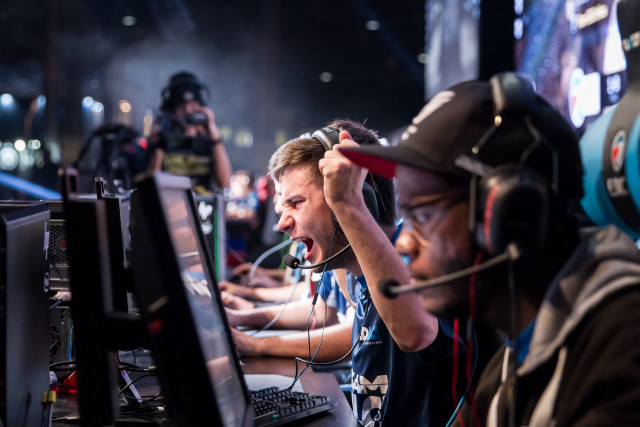
eswc-2015-samedi-dj-ph--510_22975171334_o

What do you feel you offer that an ESL or Gfinity doesn’t when it comes to reach and specialties?

As far as the ESWC is concerned, I think that one of the important differences lies in our being open to teams and players from around the world, who get then the opportunity to challenge the famous top pro-teams.

But the main difference is in our Toornament project. We publish an open platform that can be accessed as SaaS and through APIs by the entire industry, which ESL and Gfinity could also use, by the way. We finished the beta phase six months ago and we already federate over 20,000 tournament organizers in more than 100 countries.

We’ve seen your company put a focus on female eSports that stands out. What role do you see female eSports playing for your company moving forward?

The decision to open up competitions to women, or to encourage a mix in tournaments and events, is not a corporate strategy. First of all, it’s an ethical question that plays a role in our vision of eSports, and it’s also a social question that motivates us every day. ESports cannot be men-only. Today, most games are designed by men for a male market. I think that will change. And if we can contribute to that change, we will be proud to do so.

How have you seen the Paris eSports community specifically grow?

The ESWC has led the way in helping the French public learn about eSports. The mainstream media have largely covered the phenomenon for years, from every possible angle. We have two TV channels dedicated to gaming and the Paris Games Week, which is today the third biggest trade show for video games in the world with over 300,000 visitors each year; where ESWC plays a major role. So in France, there are a lot of fans eager for eSports, and it guarantees a unique atmosphere.

https://vimeo.com/148469773

What opportunities do you see for your brand in Korea, the Mecca of eSports?

First of all, it’s a symbol. One of the reasons I became a committed eSports professional was the first WCG in Korea in 2001, where I was managing the French team and a certain ElkY, who was beaten in the final by SlayerS_Boxer on StarCraft.

Today, organizing international tournaments in Korea in partnership with Blizzard will enable the ESWC to spread throughout Asia. In Korea we’ve been working with a partner for quite some time, ESGames (http://esgames.co.kr/), who is also active in the Chinese market. We have a lot to learn from their maturity and the way eSports can contribute to culture and education.

Are there plans to expand into other countries as well?

Yes. In 2017 we should be in a position to announce events on every continent. Now that we are no longer restricted to the calendar of only one world cup per year, it’s easier for us to adapt to local markets, with different games and at different times of the year. For 13 years we built up a network of ESWC affiliates in over 70 countries, limited to national operations. The most ambitious of them, and there are a lot, now hope to develop international productions with the best players in the world, and the ESWC brand will help them.

Where do you see your company five years from now?

Pipedream scenario: thanks to the Toornament project, sometime in the next two years Oxent is acquired by Disney, in order to develop the new eSports ESPN using data from hundreds of thousands of tournaments. The ESWC becomes the leading annual convention, which no IP holder can afford not to take part in. I stay at the helm for two more years to ensure the objectives of the acquisition are fully achieved. Then, free of any non-competition commitment, in 2020 I join the Paris 2024 Olympic Organizing Committee to supervise the integration of the new eSports disciplines.

James Harden’s Beard Is The Big Appeal For Taco Bell

NBA stars like Michael Jordan and LeBron James both have reputations that promote brands like Nike, but James Harden’s offbeat style is making for some interesting advertising – and that could be just the thing to catch the eye of millennials.

AdWeek recently reported on how the Houston Rockets guard’s appeal  is finding a way to attract the usually hard-to-reach audience, through both Taco Bell’s highly effective Super Bowl spot and his various appearances in commercials for Trolli’s gummi candies.

Though Howard’s appearance in the Taco Bell ad is brief, it’s quite noteworthy, especially with his beard getting a specific mention.

https://youtu.be/cGZbHYSrR60

No matter how small the appearance, however, his presence is quite effective in this advertising, especially with Trolli’s ads. “The core Trolli target is millennials and Gen Z consumers,” said Jill Manchester, senior vice president of marketing and brand strategy for Ferrara. “We know these consumers like to keep it real and be authentic to their true self. This same spirit is what rives Trolli and drives James.”

It helps that Harden has a huge outreach on the social front, with over seven million fans following him on Twitter and plenty of memorable appearances on the basketball court, including his infamous “eye fade” look he gave following a game back in November.

It’s a campaign that’s not only effective with creativity, but also giving Harden something he enjoys working with. One Trolli ad features his head practically turning into a fortress with various defenses, while another has his beard being interviewed while “taking a break from his face.” It even poked a small jab at his Adidas endorsement deal, but obviously bleeped out the name of the company.

Trolli also took advantage of the advertising by changing its “Weirdly Awesome” logo to “#BeardlyAwesome,” and with strong results on the social media front. That’s just the beginning, though, as the superstar will soon have his own line of Trolli candies – featuring Weird Beards.

That’s something that the millennial audience is sure to eat up.

Deadpool’s Insanely Effective Marketing

As you may have learned by now, the Deadpool movie is nothing sort of a colossal success, generating over $150 million in box office revenue over the President’s Day weekend. Part of that success owes credit to an insane marketing strategy.

While the film stays true to the ridiculous, over-the-top, tone that the comic book series, Deadpool marketing also mirrored that effort. Usually, superhero films consist of big-budget commercials and promotional pushes through toys and other fare. However, that wasn’t the case with Deadpool, considering his R-rated antics.

Advertising for the film went all over the place in terms of creativity. Along with featuring images of the masked assassin appear in a number of advertisements, there were also more creative means to promoting the film, like utilizing emojis to spell out his name on a billboard, as seen in the image below.

Deadpool

It also took an off-beat approach, with one particular advertisement noting that Deadpool was, in fact, a love story, similar to previous films starring actor Ryan Reynolds. In fact, Reynolds tweeted out the image below the month before the film’s release, featuring no mention of superhero antics, and instead making it look like a typical romance film.

Deadpool‘s appearances weren’t just limited to advertisements, suggestive posters and a standee where visitors could sit in his lap through a cardboard seat. He also made several viral appearances leading up to the film’s release, including a profile on Tinder, an active YouTube channel featuring a number of topics, like addressing the film’s lack of a PG-13 rating on a fake episode of Extra and a Halloween visit with children that goes insanely wrong. All in addition to an appearance on TBS’ Conan show, where he gives host Conan O’Brien a curious massage.

Deadpool Tinder

Deadpool also made an impact on the social front with the introduction of various emoji, featuring different expressions of the assassin’s face. By downloading a free app, fans could implement the emoji into their messages, in turn spreading word about the film while celebrating their irreverent hero.

Deadpool Emoji

The hero also got busy during the holidays, releasing a number of YouTube videos to celebrate his take on the holidays, ranging from clips from the film to original content, like the debut of the “Pool Log,” a humorous take on the fireplace videos that had been popular with viewers over the years.

Perhaps where Deadpool‘s promotion was most effective was Fox’s involvement with pre-Super Bowl shenanigans. The studio was out in full force in San Francisco before the event to hype the film, alongside Independence Day: Resurgence and X-Men Apocalypse, but Deadpool got primary treatment. Ryan Reynolds made the journey to the city to promote the film, alongside co-star T.J. Miller. In addition to “taking over a bar” and renaming it after a location from the movie, the star also served up chimichangas – a favorite delicacy of Deadpool‘s – and took part in the film’s world premiere. On top of that, several videos emerged from the takeover, including this interactive 360-degree video on Facebook featuring several Deadpools getting in on the action.

See Deadpool everywhere (especially in theaters)Deadpool: 24/7, 360º a year. See Deadpool, now in theaters.

Posted by Deadpool Movie on Saturday, February 13, 2016

It wasn’t just one specific factor of advertising that made Deadpool work so well – it was pretty much all of it, tying in with the hero’s not-so-subtle style of jabs and R-rated humor. Perhaps we’ll see other superhero films take this sort of approach with advertising, considering how effective this campaign was.

Not bad for a movie that got its start as a leaked test video.

Deadpool is in theaters now.

Deadpool Poster

The DICE Summit and Awards: Major Impact on the Games Industry

The DICE Summit, presented by the Academy of Interactive Arts and Sciences (AIAS) is the annual gathering of the games industry’s top creative people and executives, taking place this year February 16 through 18th at the Mandalay Bay and Delano Hotel in Las Vegas. During the Summit, the DICE Awards are presented, honoring the top games of the year in a variety of categories.

These awards are seen as the premiere game awards because they are awarded by the members of the industry, in the same way the Motion Picture Academy Awards (the Oscars) are awarded. Because of this, the marketing impact of these awards is huge. You can bet every game that wins a DICE award will be spreading that news far and wide, because this sort of independent judgement of a game’s quality is very influential in getting the attention of game players and ultimately, sales.

The [a]listdaily caught up with AIAS president Martin Rae to talk about the DICE Summit, the DICE Awards, and the impact they have on the games industry.

MARTIN RAE - Headshot 2015 LO RESHow has the DICE show changed over time?

Let me start with why DICE is important, and I think it’s really important on a couple of fronts. The awards show was born out of a desire by industry players that  here we are, an incredibly important big industry, that doesn’t necessarily do a great job of recognizing the creative talent of their peers. They used the Motion Picture Academy as their model. They said let’s have a professionally vetted membership base, that every year can look at the historical year at great creative accomplishments and let’s publicly recognize them. We have over 30,000 members, all professionals in the industry, they’re the people involved with creating the games. They select from the nominations what they consider the best of the best for the finalists, and it’s peer-voted. I don’t think there’s a greater honor than being recognized as the best by your peers.

On the summit side I think we do a pretty good job of getting really bright people on stage. What we try to do is have forward-looking and inspirational talks. I always like to think that if you attend the sessions and pay attention, there will be things that you bring home to your team, to your company, to your personal life that really improves how you create things or how you go about your life.

This year we have a great mix of people, great game creators and designers, really interesting entertainers in their own right. We have Guillermo del Toro, Todd Howard, the Glu folks who have redefined the celebrity model for putting games out. We’ll have film folks up their talking about how you take care of properties cross-media. We have Penn Jillette, very talented and successful entertainer, author, and magician, and he’s doing some interesting game stuff with Randy Pitchford and the Gearbox folks. He’s a unique creative mind that other people can learn from. We’re lucky to have people like that who say “this industry is important, and we want to hit the stage and talk to your folks.” Many of these are not game designers or developers, they’re just great creative minds.

Automobiles have become a platform, not just a user platform but an experience platform. It’s almost gamelike. We’ll have some folks that are intimately involved with technology and things that we’ve learned from the game business about how they’re designing platforms within an automobile.

We had a very good experience at our conference in Barcelona, we did some roundtables. A moderator kicks it off with nine other people at the table, then it’s a freeform discussion for sixty minutes. We don’t stream it, there’s no pres sin the room, so it can be very candid. People said there was unbelievable energy in the room, and we’ve brought it to Las Vegas.

How has the impact of the DICE awards changed in this, the 19th year of the awards?

The stature has grown. People at the awards tell me the DICE award is the one award they want to win most. As the industry has evolved, the awards have evolved. Early on there were console-specific awards, and it’s much different now. As an example from four or five years ago, Angry Birds ended up as finalist for game of the year, and at the time people said “it’s just a little mobile game, how can you even look at that?” And our peers said this, in their opinion, was one of the top five games of the year. It had that big of an impact on them from a consumption and gameplay perspective. Something like that would have been unheard of early on. Anything now that breaks a boundary from a design perspective or an engagement perspective can get recognized. It’s much more wide open from that perspective.

As a recent example, we honored the Apple App Store last year with our technical impact award. Why would that be honored? When you really look at, when our board considered that, it has had a fundamental impact on distribution, accessibility, and recognition for independent developers that has been really profound. It spread the demographic for games immediately. That’s another example of how our awards have evolved.

You have VR and AR being represented in the events area at DICE. What’s ahead for designers and developers in the coming year with those technologies? What other important trends do you see?

They’re already looking hard at VR and AR. VR has been around for quite some time, it always had some interest in the technology. Back when I had a game studio we were working on some stuff for the Virtual Boy for Nintendo. Back then the promise was there, but the reality wasn’t. Now from a technical perspective we’re to the point where you can really do something with VR now. That’s really exciting. We have FaceIT there with a celebrity eSports tournament. I think eSports is just the tip of the iceberg now – you’ve got a whole generation growing up with ganes , appreciate them from a competitive perspective, and that’s an area that will only get bigger. Every game designer now sits down and thinks “What can I do with  AR and VR? What can I do from an eSports perspective to get my community engaged in things that have value?” Games are becoming a longer term service and a piece of someone’s life. In many respects, the thirty-hour experience, while valuable , becomes even more valuable if they can continue to play with their friends over the long term. People are social creatures and they want to play with each other, they want to have social relationships, and we get to do all of that – you can play any time, any where, with someone across the globe. It’s much different than an other entertainment medium.

How do you promote the awards, and let the world of gamers at large know about the awards?

We’re streaming on multiple channels, YouTube, Twitch, Hitbox, a number of channels. They’re all promoting out to the broader game community. The nice thing about today, versus nineteen years ago when we started, is that with social media and almost instant communication, the ability to hit Internet streams, a lot of people can get involved. Some will watch the whole thing, some will watch pieces, many will just communicate socially about it. Who won, who didn’t win, what they say on stage – they’ll experience it in a lot of different ways. It will be promoted heavily through all our stream partners and through press and social media channels.

The live stream for DICE can be found at:

YouTube: http://www.youtube.com/OfficialAIAS/live

Hitbox: 

http://hitbox.tv/DICE

http://hitbox.tv/DICEAwards

Twitch: http://www.twitch.tv/DICE

How Google, Sony and Oculus Are Leading VR’s Future

Some estimate that the virtual reality industry could bring in $6.7 billion this year, feeding the incredible enthusiasm surrounding the coming launch of VR headsets like the Oculus Rift, HTC Vive and PlayStation VR.

That excitement was strongly felt this week at the Vision VR/AR Summit, where industry leaders spoke about the future of virtual reality technology. At the conference’s keynote address, John Riccitiello (CEO of Unity Technologies) stated in the keynote address that he expected over 1 billion consumers worldwide to own head mounted displays within the next 5 to 10 years.

However, the emerging technology still challenges to face to reach mass adoption, and there are many approaches to overcoming them.

Getting VR to Everyone

Practically every software and hardware developer agrees that the biggest challenge in promoting VR is in getting people to try it out. The experiences are so impressive that many are hooked after trying them out. To this end, companies have been working to make VR technology more available, like how Nvidia is looking to have 130 million VR-ready PCs on the market by 2020. Most other companies bring the VR experience to conventions and shows to get as many people to try it out as possible. Starbreeze plans on opening a VR arcade in Los Angeles to promote its experiences and hardware, but the fact still remains that the cost of VR may be out of reach for many.

Google took a slightly different route with VR by promoting Google Cardboard as an effort to bring “VR for everyone.” It, along with similar efforts like the Samsung Gear VR (developed in partnership with Oculus) offers an affordable VR experience to consumers, which could act lead them to seek out more immersive experiences from high-end headsets. Cardboard has already seen great success, with over 5 million viewers shipped and 30 million related apps downloaded from the Google Play Store.

Not only is Google reportedly preparing to develop its own VR headset, but Clay Bavor (VP of VR at Google) announced at the Vision Summit that the first Project Tango augmented reality device — a consumer phone developed in partnership with Lenovo — will be hitting the market this summer. We draw closer to the “VR for everyone” era as mobile devices become more powerful and are built with VR/AR experiences in mind.

project-tango

Still, others are looking to the Sony to bridge the gap between experience and accessibility with the PlayStation VR. There are 36 million PlayStation 4 owners worldwide, and each console is “VR-ready” according to Richard Marks, Director of Sony PlayStation Magic Lab. Although the price and release date have not been revealed  yet, there are millions of eager fans hoping to “push the boundaries of play” using Sony’s hardware.

Bring On the Content

When Palmer Luckey, founder of Oculus VR, was asked how he defined success with VR, he replied that it will either be defined by “Dollars spent on content, or hours viewed in content.” The key word is, of course, content. Luckey does not consider selling a ton of headsets, only to have them collect dust somewhere, a success. He wants head mounted displays to be used every day, and everyone from hardware manufacturers to software developers, to make it.

“Everybody needs to be successful for VR to take off,” Luckey said.

Coincidentally, Valve hosted a SteamVR developer showcase recently, where 12 games were shown using the HTC Vive. At around the same time, the Sundance Film Festival featured a variety of fantastic VR/AR exhibits, and so will the upcoming Tribeca Film Festival.

In order for consumers to be interested in a VR experience, there have to be experiences worth having, which is why Google has made open source Card development kit available. Similarly, every Oculus Rift purchase comes with a 4-month subscription to Unity Pro, so users can become developers.

But judging from the impressive collection of virtual reality games, which features everything from CCP’s EVE Valkyrie to experiences like Crytek’s The Climb, users can already look forward to very bright virtual future.

Activision Expects ESports Revenues to Rival NFL

Activision Blizzard has already made it clear that it’s taking eSports seriously, between the introduction of a Media Network Division expressing interest in competition and the Call of Duty World League going full steam. But CEO Bobby Kotick believes its potential could be even greater than realized, especially when it comes to revenue.

During the company’s fourth quarter earnings call earlier this week, Kotick noted how eSports could very well reach the point of making billions of dollars, putting it on the level of other sports leagues like the NFL, the NBA and Major League Baseball.

He pointed out how spectators tuned in to approximately 1.5 billion hours of video content based around Activision Blizzard’s games last year – a portion of the seven billion spectators that tuned in to the NFL’s 2014/2015 season. “Those televised games generated approximately $7 billion of broadcast rights fees for the NFL and another $4 billion on other revenues including sponsorships, merchandise and ticket sales,” explained Kotick. “When we think about our franchises, we view our responsibilities to our fans and the associated business opportunity through the lens of these leagues like the NFL, the Premier League, the NBA, Major League Baseball or NHL.”

While grosses may not be as “meaningful” as they can be, Kotick did note the small investment, “really less than a couple of pennies.” However, the investment is expected to increase over the next few years, leading to higher revenue, and that could give the other sports leagues some serious competition.

“What we step back and look at is ESPN,” he explained. “And when you look at ESPN with 80 million subscribers and you see the flight of some of the subscribers. The opportunities that we see there is roughly $5 billion of operating profit, $4 billion of league payments for the broadcast rights. We have 80 million of our own players.”

ESports is expected to jump even further in popularity this year. Along with regularly broadcasted tournaments, it’s expected to get greater exposure on television, between ESPN forming its own eSports group, TBS preparing a Counter-Strike series this summer, and the CW preparing a Mortal Kombat X tournament for next week.

ESports aren’t quite on the level of the NFL, but at the rate it’s going, it could definitely bring competition sooner rather than later.

Image source

How ‘Deadpool’ Grew Out of a Viral Video Leak

Sometimes, it can take quite a while for a movie project to get off the ground. It requires waiting for the right actor to come along for a role, getting the script rewritten so that it’s “perfect,” or finding the right production team to make it magic. Or, sometimes it takes an act so crazy, a studio can’t help wondering if it’ll succeed.

That was the case with Deadpool, a project based on the popular Marvel Comics character co-created by Rob Liefeld and Fabian Nicieza. The smarmy “hero” had been looked at for years to star in his own film, following his appearance in the popular X-Men Origins: Wolverine, but the studio opted to keep it on hold due to its mature (or in the case of Deadpool, not so mature) content – until a curious thing happened.

20th Century Fox funded test footage to get an idea of how a Deadpool movie would work, but it was never meant for public consumption. It was eventually shown during a San Diego Comic-Con panel, but soon after, it made its way onto the Internet through an illegal leak [shown above]. As a result, the footage went viral, and fans went crazy over the idea of seeing a Deadpool movie. The concept was so successful that much of the scene made it into the movie and has been featured in numerous promotional trailers (like the one below).

Ryan Reynolds, the actor portraying the character, spoke about the leak during an appearance on Late Night With Jimmy Fallon. “I’ve been trying to get (the movie) made for 11 years, which is crazy,” he explained. “We developed the script six years ago, wrote this fantastic script, it leaked online, Deadpool fans went nuts for it.”

He explained how the studio funded the footage and its leak, and the effect that followed. “Here’s the thing, the fans freaked out and overwhelmed Fox, and Fox basically had to greenlight the movie. The problem is the footage was owned by Fox, so it was kind of illegal…I know that one of us did it.” He then joked he was “70 percent sure” it wasn’t him.

Still, it’s wild regarding the effect the viral footage has had, as Fox granted a $58 million budget for the film (smaller than most of the $200+ million films that Marvel Studios produces) and backed it with a viral marketing campaign, ranging from appearances in commercials (like the eSurance Super Bowl ad) to massive online pushes, including one that indicates that Deadpool is a love story – similar to some of the fare Reynolds has made in the past.

Deadpool 2

It’s a move that’s certainly paying off for the company. The film has already grossed $47.5 million for Friday, and is expected to reach around $120+ million for the overall weekend – a high number for an R-rated film. And Fox, anticipating its success, has already laid the groundwork for a potential sequel.

One thing’s for sure, Deadpool is an example of how something viral can lead to a bigger success in the film industry – even if it wasn’t entirely by legal means.

Deadpool is in theaters now.

NPD: January Video Game Sales Slump, But Holiday Releases Hold Strong

The NPD Group recently reported its overall numbers for the game industry for January, with combined video game sales for the month declining by a slight five percent for the month. Consider it the dust settling after the big holiday releases from the previous months.

Hardware sales, specifically the Xbox One and PlayStation 4, saw a decline of eight percent, but did show a 96 share of console hardware growth for the start of the year. Chances are, both consoles, along with Nintendo’s planned NX console, will see even greater exposure as the months roll on.

It was a slow month for game releases, with only a couple, like the Nintendo 3DS adventure Mario and Luigi: Paper Jam and WB Games’ Lego Marvel’s Avengers, getting major exposure. That led to a decline of ten percent in physical software sales versus the previous month, when the first-person action game Dying Light was all the rage. Things will likely pick up in February, with major releases like Far Cry: Primal and Plants vs. Zombies: Garden Warfare 2 set to arrive.

Call of Duty: Black Ops III held onto its firm lead as the top seller for the month, and following close behind in second place was Grand Theft Auto V, which continued to be a huge draw. NBA 2K16, Star Wars: Battlefront and Fallout 4 round out the top five.

While most of the report noted slight drop-offs, there is one area that saw an increase for the month: accessories. Video game point and subscription cards, along with headsets and controllers, managed to see a jump by 14 percent for the month. Cards alone jumped six percent, indicating that digital sales were still of great interest to the gaming audience, while controllers jumped by 26 percent and headphones rose 44 percent.

So, the numbers as a whole show a small drop-off that comes from the post-holidays, but that’s not entirely unexpected. The year is just getting started, and we’re bound to see things pick up again over the next few months.