How the HTC Vive Became An Overnight VR Sensation

It can be argued that virtual reality became something to be taken seriously when Facebook purchased Oculus VR in 2014 for $2 billion. However, the field didn’t really become a race until the HTC Vive was announced at the 2015 Mobile World Congress, eclipsing most other news and announcements that came from the event. Developed in partnership with Valve, creators of the Steam gaming platform, this premium headset would give the Oculus Rift some genuine competition, and soon after, you rarely heard one mentioned without the other.

This is how a virtual reality device from a phone manufacturer leapt into the spotlight a year ago go head-to-head against the Oculus Rift.

Steam Powered

Although the games on Steam don’t necessarily favor the HTC Vive (in fact, many of them are developed for the Oculus Rift), being associated with Valve goes a long way. Valve has long been a highly respected company that has developed incredibly successful games like the Half-life series, Counter-Strike: Global Offensive, and DOTA 2. Partnering with HTC to develop a headset alongside the SteamVR platform gave the Vive instant credibility, and it soon grabbed as much attention as the Oculus Rift, which had been covered by tech media for months, even before the Facebook purchase.

That credibility was later backed by hands-on demonstrations which took place a week after its announcement, at GDC 2015. Everyone who tried the device was blown away, and it seemed like the Vive might overtake the Oculus Rift in popularity. Especially since it announced the Lighthouse interactive motion tracking technology, which relies on sensors that can be installed into a wall, months before Oculus Touch was revealed.
htc vive

Perhaps the most compelling news to come from the announcement was that the consumer version was expected to release in the fall of 2015, giving it an early lead over Oculus. Even though the device quietly missed that release window, and got delayed to April 2016, consumers were quick to forgive. The partnership continued to pay off, with Valve hosting a SteamVR Showcase in January, which included 12 games for attendees to play. This helped to strengthen the future of VR, since its success will be rely heavily on content. Furthermore, a link to pre-purchase the HTC Vive is prominently displayed on Steam, exposing it to millions of users.

Premium Hardware

With a $800 price tag ($200 more than the Oculus Rift), it’s clear that the HTC Vive is at the top of premium VR headsets. However, that hasn’t stopped the first 15,000 pre-order units from selling out within 10 minutes, according to an HTC employee.

However, early adopters will be getting quite a bit for their money. The HTC Vive boasts a better screen, and it almost stole the Oculus Rift’s thunder when it demonstrated how Lighthouse could track more than head movements. It could track a person’s whole body, which allowed users to stand up and walk around a 15×15 foot space. The sensors could also detect walls and objects, and helped prevent people from bumping into them.

HTC revealed in January that the headset would include a front-facing camera, which lets users see real world objects without having to leave the virtual one. While that might seem like a minor feature, it turned out to be a major innovation that allows users to walk freely and interact with others without being cut-off from the real world.

The company also announced partnerships with hardware manufacturers like HP, Alienware (Dell), and MSI to promote their brands of “Vive Optimized” systems to take some the guesswork out of finding the right computer to power the headset.

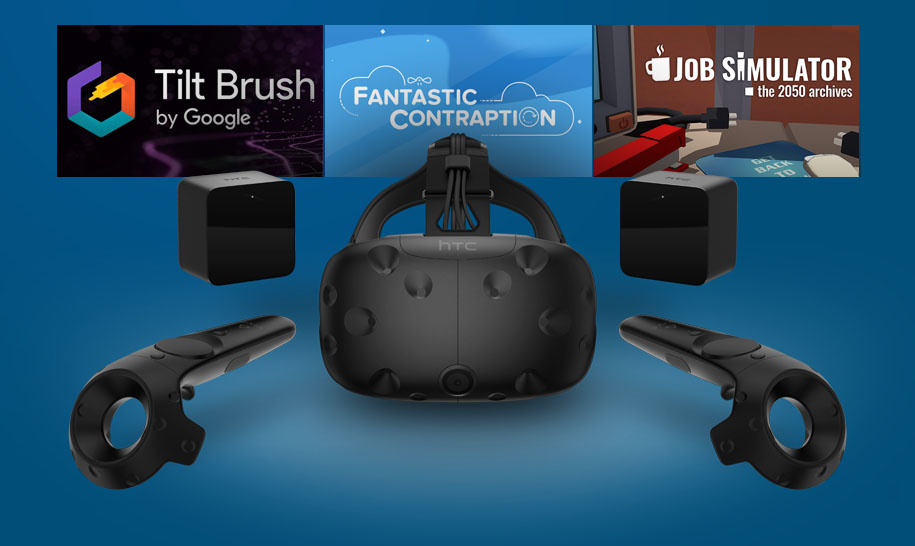
In addition to being bundled with wireless VR controllers, the HTC Vive will also include three games: Job Simulator, Fantastic Contraption and Tilt Brush by Google. Although the Oculus might initially offer a broader library of games, which includes EVE Valkyrie, many experiences may work on either device. Plus, the partnership with Valve will continue to make the Vive a premiere device for developers to consider.

So, despite the higher price tag, and the Oculus Rift became available for purchase first, the HTC Vive manages to keep a tight race going through strategic partnerships and incredible presentations.
Marketing Technology Getting More Focus In 2016

Marketing technology finally appears to be getting attention from a majority of marketers, according to a new eMarketer report.

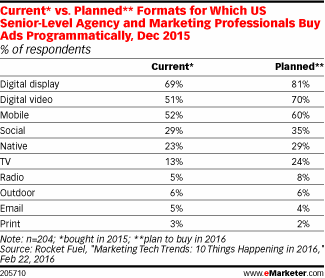
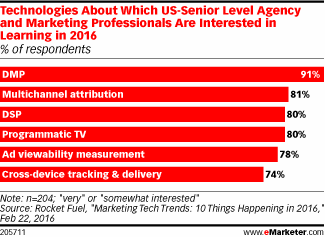
Compiled from a December 2015 study conducted by Rocket Fuel, the report indicates that two marketing trends will see increased focus in 2016: the programmatic buying of television and data management platforms (DMPs).

Out of formats that get the most attention from senior level and marketing professionals, digital display continues to be king, with 69 percent of marketers currently using it, and up to 81 percent planning on using it in some capacity. However, TV also plays a big part on the chart. Thus far, 13 percent utilize programmatic ads for it, but 24 percent indicated they would soon be on board. Meanwhile, print continues to dwell at the bottom of the list, and interest appears to be waning.

Marketing

As for DMPs, which assist with aggregate marketing information across various channels, it was of great interest to marketers. Of those polled, 91 percent stated that they’re interested in learning more about it – even more than multichannel attribution (81 percent) and programmatic TV (80 percent).

Marketing 2

A higher emphasis on programmatic means reaching more of a high-tech audience. Considering how programmatic ads reached an all-time high last year, and how video plays a huge part, its continued growth shouldn’t be too much of a surprise. Additionally, there’s always potential for programmatic advertising to reach beyond television, like with wearables.

Image source

How Brands Are Exploring Livestreaming For True Engagement

Whether it’s on Twitch or popular apps like Twitter’s Periscope, some executives feel that livestreams are a genuine way for brands to reach out to audiences.

A new study by Brandlive (via AdWeek) indicates that livestreaming is gaining as much interest as pre-recorded video clips when it comes to brand engagement. Out of those polled, 20 percent plan to test livestreaming to some extent with their marketing plans this year.

According to the poll, pre-recorded video clips still have great interest, but livestreaming is definitely on the rise, with over 25 percent feeling that it’s important. This number could change even more next year, as livestreaming’s popularity continues to rise.

Chart

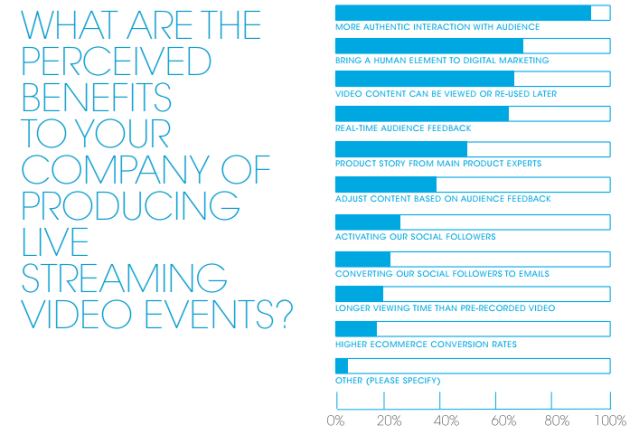
Why do so many prefer this format? Those polled indicated that the most important reason for considering livestreaming has to do with a more authentic interaction with audience, compared to pre-planned and filmed content, like commercials and ad placements. Some also feel that this brings a human element to digital marketing, whether it’s with a popular Twitch star or a streamer that knows how to engage an audience. Furthermore, broadcasts can be viewed again on sites like YouTube.

Chart 2

Steve Gehlen, vice president of Brandlive, had this to say about the report: “Based on the survey results, it’s clear that many consumer product brands and retailers are exploring livestreaming video as a new digital communication channel. With live video, they are interacting with their employees, partners and consumers in a new way that is authentic, engaging and scalable.”

Some companies have already proven how effective livestreaming advertising can be. Last year, Old Spice teamed up with Twitch for a “Nature Adventure” promotion, where users could command an on-screen hero to do wacky things in the environment. The Pokémon Company also took part in live-streaming engagement, airing a marathon of movies and other content to celebrate the recent anniversary of the franchise.

Wargaming Returns To Its Roots To Conquer The Galaxy With ‘Master of Orion’

Master of Orion released in 1993 and gave the world a chance to both explore and conquer the galaxy through force and diplomacy, epitomizing the 4X (eXplore, eXpand, eXploit and eXterminate) style of gameplay. The addictive “one more turn” nature of the sci-fi game and its sequel impressed a generation of gamers who still regard the strategy series in high esteem. The formula has led to a number of imitators, but few managed to capture the magic in the same way.

In 2013, Wargaming (famous for games like World of Tanks) purchased the rights to Master of Orion at an auction and immediately went to work on developing an all-new game featuring the voice acting talents of Mark Hamill (Star Wars), John de Lancie (Star Trek: The Next Generation), Robert Englund (Nightmare on Elm Street), and others. The game is available now on Early Access, and buying into it nets the recently revealed Collector’s Edition, which includes all three original games, a digital art book, soundtrack, an extra playable race and the ability to transform the modern aesthetics into retro pixel art.

Chris Keeling, director of vision at Wargaming, talked to [a]listdaily about bringing Master of Orion back for a new generation of gamers, and how the classic franchise stands the test of time.

Chris KeelingGiven the success of games like World of Tanks, what convinced Wargaming to develop Master of Orion — a game that is different in so many ways?


While we’re best known for our ‘World of…’ series of fast-paced, free-to-play multiplayer vehicle combat games, for more than a dozen years before launching World of Tanks, we were known for our turn-based and real-time strategy games, like Massive Assault and Order of War. Making strategy games is part of our core DNA, and our CEO, Victor Kislyi, was so highly influenced by Master of Orion and other 4X strategy games when he was younger that when he had the opportunity to purchase the intellectual property, he went for it. His goal was to bring the same feeling of ‘just one more turn’ gameplay to a new generation of fans.

How did you come up with the Collector’s Edition content?

We looked for things that set this version of the game apart from the originals, but which would also appeal to the die-hard fans of the franchise. The pixel ships, for example, are reminiscent of the ships from the earlier 8-bit games, while the musical score is based on the music from the first Master of Orion game, and even created by the original composer. The Terrans were a bonus that we developed to bring something new to the story, while reflected some great science fiction traditions. And of course, the Art Book will let players directly compare the original art to the new art, with an introduction by the art director from the original game, who also helped us keep the artistic flavor of the original in our version of the game.

How did you decide on which actors to include as voices for the game, and what was the process of matching the voices with the characters?

We had a long list of actors we wanted to showcase from iconic science fiction, horror and video-game franchises, and we were excited that we were able to bring so many on board. We matched their role according to their experience, range of voice acting and the general tone and pitch of their voice. In fact, some of the actors ended up doing more than one voice because of the range of their capabilities and their fit with the roles.

It seems like some of the actors knew about the original game. Were you surprised by that?

No, many of them are the right age to have played the original series, and working on science-fiction movies and TV shows, it’s not all that surprising that they might be gamers. However, a lot of them were unfamiliar with the games, so we showed them what it was about before recording and we had the opportunity to share our version of Master of Orion, to give them a better idea what to focus of the game was. Even back in that early stage, they were already excited by what they saw in the game.

https://www.youtube.com/watch?v=KhzlgohX2SM

There are a number of strategy games out now that lets players explore and conquer the galaxy. How will Master of Orion stand out in a genre it helped pioneer?

First and foremost, this is the original. Let’s face it, the genre has changed and grown, and so have the expectations of the players and the supporting technologies. Lots of games have tried to copy the original, but have left things out or changed them to be different. We’ve focused on the legendary story and setting in all of its glory – the often humorous races, the snarky GNN news, and so forth. But we have also scoured the series and the best of the 4X games to be released in the past 20 years to ensure we had a top-notch set of features that would appeal to this new generation of players.

What is it about Master of Orion that makes it such an enduring franchise?

I think the original Master of Orion caught players off-guard with its blend of strategy and humor and the incredibly deep gameplay that led to long hours of playing. That set it apart from other games of its time, and created a new genre of 4X space strategy games that of course spawned many imitations over the years. Our vision is to bring back those same feelings of fun, depth, humor and variety to new and old players alike.

What do you try to keep in mind when working with a classic franchise like Master of Orion?

The main thing is to respect the franchise. This is why we design it so carefully, gather members of the original team to help us keep it on track, and polish it off with amazing voice acting, music and visuals to support the story of the game. So the player can keep on exploring, expanding, exploiting and exterminating their way across a galaxy that’s not so far away after all.

‘Ghostbusters’ Begins New, Nostalgic Promotion

When the original Ghostbusters released in 1984, it became a hit with a generation of viewers, and ushered in a wave of mega-promotions with everything from video games to TV shows. Over 30 years later, it still continues to be a favorite, showing up in games like Lego Dimensions, as well as other products.

It looks like that nostalgia is in full swing, as Sony has begun promoting the new Ghostbusters film from director Paul Feig. The company released a new trailer for the follow-up today, where four female scientists (Kristen Wiig, Melissa McCarthy, Leslie Jones and Kate McKinnon) band together to battle a new paranormal evil, years following the events that unfolded in the original.

The trailer has created buzz on social media, and Sony intends to ride that into the film’s summer release, alongside various promotions. Here’s what we know so far that’s coming down the Ghostbusters pipe.

Toys

Diamond Select Toys, a company that has been producing Ghostbusters figures for years, will return to do the same for its 2016 lineup, set to coincide with the film. Along with its signature Minimates mini-figures and vehicles, it will also produce vinyl banks, kitchenware and glassware based on the new movie.

“Ghostbusters is one of our favorite film franchises here at DST,” said Diamond Select Toys president Chuck Terceira, per Action Figure Insider. “So we’re excited to be part of the first new film in decades, and we look forward to adding a new cast of character to our previous Ghostbusters product lines, as well as continuing to release products based on the classic films.”

Nostalgia will also likely play a factor with other products as well, including shirts and other clothing featuring the familiar “no ghost” logo, along with other yet-to-be-announced items.

Return of the Ecto Cooler

Back in the ’80s and ’90s, the Coca-Cola Company, under the Hi-C label, produced a popular fruit drink called Ecto Cooler, based on the Ghostbusters franchise. Fans went wild a few months ago when the company renewed its trademark for the drink, indicating that it could be making a comeback to the market.

On top of that, a listing for one of the drinks recently went up on eBay, managing to sell for $400. Of course, the relaunched final product will be much cheaper.

Considering that we’re seeing a lot more “classic” drinks make a comeback, including the New York Seltzer line and whispers that Crystal Pepsi might even return, it’s not a surprise to see the Ecto Cooler come around again. An official announcement should come within a few months, probably closer to the film’s release.

Screen Shot 2016-03-03 at 11.53.50 AM

A new video game?

The Ghostbusters franchise has been synonymous with video games for years, first appearing on consoles like the NES in the ’80s, and more recent games developed by Atari. That said, it appears that Activision could be bringing it around once more to coincide with the new film.

Retail Merchandiser recently reported that the publisher is hard at work on a new title set to debut on Xbox One and PlayStation 4 in time for the film. There hasn’t been an official announcement yet, but Activision is known for developing licensed games. The company recently revealed that a new Teenage Mutant Ninja Turtles game, Mutants In Manhattan, is in the works, and will launch around the same time that Out of the Shadows hits theaters in June.

Whatever the case may be, Sony is set to give the Ghostbusters franchise a big boost in marketing when the film makes its way to theaters on July 15. Now it’s a question of whether Ray Parker Jr.’s classic “Ghostbusters” theme will make a return.

Apple Gets Consumer Friendly On Twitter

While Apple is great at promoting its products and style, it hasn’t really done much with social media. However, that changed this week when the company launched a new Twitter account, based around Apple Support.

The account, which launched just a few hours ago, is an effort to “provide tips, tricks and helpful information when you need it most.” It will obviously focus on helping new users become accustomed to their Apple devices, along with veterans who are running into technical difficulties. The account has already been giving Apple users tricks for hidden features.

So far, the account has gotten a great deal of attention from social media users, attracting over 65,000 followers and has provided quick responses to inquiries across a number of areas.

While most of Apple’s responses will be on the direct messaging front, something brands have been slowly utilizing since its introduction to the service last year, a stronger social media presence is still a smart move. It creates a new way to reach customer service without waiting on the phone call or having to visit an Apple store, although both of these remain perfectly good options.

Apple has dabbled with Twitter before, but mainly as a promotional tool, with accounts made to highlight iTunes and Apple Music features. With Apple Support, it seems to be turning a corner when it comes to interactivity, and keeping consumers happy with its products.

‘Song Of The Deep’ Dives Under The Sea, But Inspires New Heights

With digital game purchases fast on the rise, retail stores like GameStop need to find ways to diversify, or at least offer games that can’t be found elsewhere. That’s where the partnership between GameStop and Insomniac Games (creators of Ratchet & Clank and Sunset Overdrive) comes in. The independent developer made an all-new game called Song of the Deep with GameStop as the publisher, which premiered at PAX South in January, and will release for PC and consoles this summer as an in-store exclusive before becoming available digitally.

[a]listdaily talked to Insomniac Games’ chief brand officer, Ryan Schneider, about working with the retailer-turned-game-publisher, and how GameStop’s marketing power could turn Song of the Deep into a huge hit.

Ryan SchneiderTell us about Song of the Deep.

Song of the Deep is a Metroidvania-style game about a young girl who will stop at nothing to find her father, who’s lost at sea. The story is inspired by Insomniac chief creative officer Brian Hastings’ desire to share a lesson with his young daughter about the nature of heroism, and how far we will go to help those we love.

How did this partnership between Insomniac and GameStop come together?

The partnership organically evolved through an existing relationship between (Insomniac Games CEO and founder) Ted Price and Mark Stanley (global lead, internal development and diversification at GameStop). The two were meeting informally last year, and when Mark mentioned GameStop’s desire to explore non-traditional ways to reach more customers, Ted explained that Insomniac had a game idea we were really excited about – and the partnership was born.

What was the general response to Song of the Deep‘s premiere at PAX South?

The general response has been and continues to be positive. The sheer volume of interest has exceeded our expectations, and we’re encouraged that many people have commented specifically on the heartfelt story, music and beautiful yet haunting visual aesthetic.

As the first game published by GameStop, were there any early expectations about what it should be?

GameStop has been incredibly supportive of our creative process. Mark and his entire team have empowered Insomniac to exercise complete creative control and make all final creative decisions since the project’s first moments.

Has working with GameStop, which is best known as a retailer, been different than working with a more traditional publisher?

Many facets of GameStop’s day-to-day support for Song of the Deep feel similar to how a traditional publisher would work with us. But perhaps since this is a new role for GameStop, their team members approach our partnership with a level of enthusiasm and freshness that has invigorated both the production and marketing teams here in the studio. Collectively, there’s a lot of positive, creative energy flowing back and forth, and that manifests itself in the quality of our work at all levels.

SOTD_BoneVault

In what ways is GameStop working to promote the game?

GameStop has been fantastic about promoting Song of the Deep so far, whether in its thousands of stores worldwide, in person at events like PAX South, through creative partnerships like our forthcoming novel with Barnes & Noble (written by Brian Hastings), and a variety of merchandise coming soon. But the most important aspect for us though is how much GameStop’s employees believe in Song of the Deep, and in Insomniac. We’ve been very excited by the passion GameStop employees exhibit when we visit local stores and ask about the game. It inspires us further to make the greatest game we possibly can.

How does Song of the Deep stand out among Insomniac’s other games like Ratchet & Clank, Sunset Overdrive, and the Resistance series?

We hope that all our games, no matter how big or small, feel like they’re handcrafted and made by passionate gamers, for passionate gamers. Song of the Deep is no different from our other titles in that regard. As far as how it will stand out amidst a sea of Metroidvania-style games (couldn’t resist the ocean pun), we believe the underwater theme, varied exploration and combat, and mesmerizing visual detail will offer players an extra layer of sophistication and polish.

Since GameStop purchased ThinkGeek last year, do you think we’ll soon see a line of Song of the Deep-themed toys and figures following the game’s release?

I think that’s entirely possible.

The Globalization Of Ad-Tech: Mobvista Acquires NativeX

Mobile advertising is growing rapidly, and so has the investment in this sector. Ad-tech companies have proliferated over the past few years, and now we are entering the period of consolidation. Companies with complementary technology and markets often realize that the best way forward lies in mergers and acquisitions. This was demonstrated today when Mobvista, Asia’s largest mobile advertising company, announced that it has acquired NativeX, which specializes in successful monetization and advertising through their innovative native ad technology for mobile games and apps.

The NativeX technology includes Lightning Play video, offer walls, interstitials and other rich media formats. NativeX, which has been around for 12 years, has an audience reach of over 1 billion mobile users and works with more than 1,000 publishers including Yodo1, Square Enix, Fingersoft, Outfit 7, and others, as well as hundreds of top advertisers including Disney, King, Zynga, Rovio, IGG, and Machine Zone.

Mobvista specializes in global mobile advertising and overseas game publishing, with over 300 employees spread across offices in Hong Kong, Guangzhou, Beijing, San Francisco, New Delhi, and Singapore. As one of the leading mobile advertising platforms, Mobvista covers users from more than 240 countries and regions, reaching over 10 billion daily impressions. Mobvista ranked #3, following Facebook and Google AdWords, in the Global Android Power Ranking released in 2016 by AppsFlyer, a leading mobile analytics platform. In AppsFlyer’s gaming and non-gaming performance index released in April and October in 2015, Mobvista also ranked top 3 for both.

The $25 million all-cash deal will see NativeX become a subsidiary of Mobvista, Rob Weber will continue as CEO of NativeX and serve as Vice President of the Mobvista Group. “NativeX is a solid, sustainable business and our technology focus and values are perfectly aligned to deliver rich growth opportunities to the mobile market and to further secure Mobvista’s international goals and success, especially to speed up our ability to supply substantial audiences in Western markets,” said Wei Duan, founder & CEO of Mobvista. “Acquiring NativeX is another key step in realizing our global ad-tech vision to develop a multi-dimensional global ecosystem of mobile traffic.”

Mobvista’s worldwide mobile ad network receives more than 10 billion daily impressions from integrated ad spots and websites across more than 196 countries. “We look forward to a successful future as part of the Mobvista family and are exceptionally pleased with the many benefits this acquisition will bring to both our publisher and advertising partners as well as to our employees,” said Robert Weber, CEO and co-founder of NativeX. “The Mobvista acquisition of NativeX allows us to expand the distribution of our native ad technology throughout the world for an even greater international presence. We are excited to bring Mobvista’s leading global demand to NativeX’s monetization partners and its strong global supply, especially in APAC, to our advertising partners. As part of our merger with Mobvista, we will also be expanding our team to take advantage of the large opportunity in front of us.”

One of the important lessons of this acquisition is not just that consolidation is occurring in the ad-tech space, it’s that the marketplace has become truly global. A large part of the value here was in the geographic expansion for Mobvista, not just the technology. Mobile advertising is more global than ever, and leading companies need a presence and a strategy for success in more than just one part of the globe.

[a]listdaily spoke with NativeX CEO Robert Weber about the state of mobile advertising and where it’s headed.

How has the market for mobile video ads been changing over the past year?

2015 was the year of viewability for web video ads, and 2016 is looking like the year of viewability for mobile video. Buyers are becoming more sophisticated in how they evaluate their digital ad campaigns’ performance. Ad companies like NativeX that rely on SDKs that control ad inventory are in a better position than server-based methods of distribution which tend to have a greater risk of quality issues. NativeX also focuses on dynamically optimizing the video creative such as with end cards to improve the performance of an advertiser’s campaign. This video interview with the CEO of MachineZone provides some great context for where the ad market is at right now.

Do you think ads are becoming a more important part of the monetization strategy for mobile games? Why?

There seems to be two types of successful business models for games in mobile – those games with strong in-game economies that are very good at monetizing their user base and those games that are able to acquire users virtually for free because they have a high degree of organic appeal but often with a poor virtual economy. For the vast majority of games, it will be very clear which business model they are focused on. Zynga recently said that they expect a large part of their growth to come from ad revenue growth inside of games like Words With Friends. As viewability and performance become better understood by ad buyers, the prices for ad placement inside games should increase.

What are some of the key things an advertiser should do in their mobile video ads for games to make them effective?

Ask your ad providers for examples of their highest converting video ads. Study their creative and try to infuse some of what’s working into your own ad design. The secret to getting a high performing video campaign for your game isn’t usually by just outbidding everyone else on Cost Per Install rates, but ensuring you have high-converting creative.

What do you see ahead in the next year for mobile advertising?

The number-one most overlooked trend in mobile advertising is mobile search. The display ad market in mobile is becoming more mature, but using search to drive app installs is still very new. With 67 percent of all app installs coming from search according to recent research released by TUNE, you can’t ignore mobile search. Google has been releasing enhancements to AdWords to help app publishers acquire installs more effectively via Google Play. Also, the iOS9 update includes stronger deep-linking search integration which should start to help Apple make their search function more like Google’s. These improvements by Google and Apple aren’t enough, though. This is why we recently launched our Search Spike offering, which helps app publishers acquire top search rankings for their iOS apps. For a free report on how to improve your app’s search ranking, check out the free App Store Optimization white paper we recently released.

What’s the biggest challenge facing mobile game marketers when considering mobile video ads?

Creating high-converting creative for their game.

Image of co-founders Robert and Ryan Weber courtesy of NativeX


Yahoo Expands With ESports Vertical

Considering how much eSports have grown in popularity over the years, it’s no surprise that mainstream outlets like ESPN are covering events like the Intel Extreme Masters. Now Yahoo is officially the latest company to include eSports coverage.

The web giant has announced a new vertical called Yahoo eSports, under the Sports Media umbrella, which will focus on programming devoted to competitive gaming.

“The eSports industry is growing at a tremendous rate, with a global audience reach of more than 226 million (in 2015),” Bob Condor, vice president of Yahoo Sports Media, said in the announcement. “With that in mind, we identified an incredible opportunity to build a premier destination for eSports on Yahoo Sports. We are committed to providing the best sports content and experiences 24/7 on Yahoo Sports, so it makes sense that Yahoo eSports is aligned with our Sports Media group.”

Programming for the new service will span various features, including reports, blogs, video commentary, match pages, team rosters, statistics, schedules for forthcoming tournaments and more. Users will be able to connect with their teams quickly through the site, as well as particular games like League of Legends, Street Fighter V and Counter-Strike: Global Offensive.

A number of talents have signed on to help hone coverage. Andrea Rene from GameStop TV will work alongside Travis Gafford, Taylor Cocke and Dylan Walker for content. Yahoo has stated that it will pay close attention to feedback so that it can cater to those that live and breathe eSports.

“We’re approaching our coverage of eSports with the same tenacity and professionalism we always have with Yahoo Sports,” Condor said.

5 Reasons Why Pinterest Is Big For Marketers

Pinterest has gone through a lot of changes lately in the hopes of attracting marketers, including embracing native video advertising and finding better engagement through influencers. On that note, a WebPageFX infographic nails down several points when it comes why marketers should take pins seriously.

1. In just five years, Pinterest has become the third most popular social network in the United States, just behind Twitter and Facebook. The site has over 100 million users to its credit (with double the users over the past 18 months), and 80 percent of its overall audience comes from mobile devices. In that time frame, the site has generated more than 1.5 trillion recommendations, and managed to retain and engage with users two-to-three times better than Twitter.

2. Seventy percent of Pinterest’s overall users are between the ages of 16-to-34, and 56 percent of those are currently employed. Meanwhile, only 12 percent are unemployed, and 10 percent make up a student base. The big statistic is that 82 percent of Pinterest’s users are female. A majority of those users also share branded content nearly 150 percent more than those that are non-branded.

3. Pinterest has over one billion boards on its site, with 300 million – almost a third – devoted to fashion. Meanwhile, food and drink based board total 180 million; home décor has 130 million; and 30 million are devoted to education.

4. Purchasing is popular on Pinterest, as 89 percent of daily users said they bought something on the site , while 86 percent have used the site in stores to find specific products. Sixty-four percent of all users utilize Pinterest to see items they’ve pinned previously from store visits, and 33 percent of the overall user base follow some form of brand or business.

5. The hours between 8 p.m. and 1 a.m. seem to be a peak time for reaching a core audience. The hours between 2 p.m. and 4 p.m. is also a good time, considering most folks are either getting off work or relaxing at home. However, 5-to-7 p.m. is the worst time. There’s also a schedule as to when certain items should be posted on Pinterest, including food-and-crafts-related posts (Sunday), technology (Tuesday) and GIFs and humor on Friday.

Pinterest

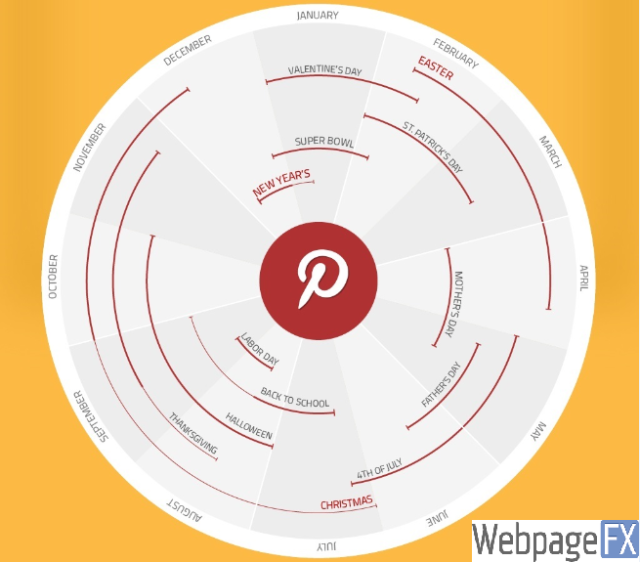
The optimal posting time for holidays vary, but Christmas and Easter have the longest windows. Even smaller holidays like Mother’s Day and Father’s Day have about six weeks span in terms of advertising.

Info