How Nexon M Makes Mobile Games For the Long Haul

Founded in 2013, Nexon M is the mobile division of Nexon — a company with a strong reputation for popular free-to-play online games on the PC like MapleStory and partnering with Cliff Bleszinski’s studio, Boss Key Productions, to publish BlueStreak. However, the successes on the PC don’t overshadow what’s being done on mobile.

Last year, Nexon M partnered with Big Huge Games to release DomiNations, a history-themed construction and strategy game for mobile devices. It is also working with Respawn Entertainment and Particle City to develop several all-original games based on the popular PC and console exclusive, Titanfall.

What’s more striking is Nexon M’s ongoing strategy of releasing games with a service cycle expected to last 10 years or longer. This is in stark contrast to how many companies are looking to put as many games on the market as possible in hopes of fast success.

[a]listdaily speaks to Nexon M’s General Manager, John Robinson, about the long expectancy for its games and a philosophy that seems run contrary to how many regard the mobile games industry.

John RobinsonWhat is the thought process behind developing mobile games with a 10 year life cycle

Nexon put out the first free-to-play games and had a tremendous amount of success. Even before the industry moved to mobile, Nexon had experience running live games with massive, multi-million, user communities for long periods of time. A number of those games just crossed their 10-year operation threshold, including MapleStory and KartRider. So, the precedent is set on the PC side.

We think less about what platform games are on, and more about how we can make great experiences for gamers. When Nexon moved into the mobile space over the last few years, our goals as a company didn’t change.

How do long-term service games fit-in when mobile devices have such a high turnover on both hardware and OS

In the same there are a lot of updates on Android and iOS, you see similar updates on the PC side. Evolving technology shouldn’t hold us back from achieving our goals. Some games, both by Nexon and others (like World of Warcraft), have made it through platform and technology transitions because the gameplay and communities are so strong. Those are what we focus on because we believe they really transcend technology and platforms.

It’s commonly thought that mobile games are popular because they provide quick experiences. Does this mentality contradict the 10 year life cycle plan

No, I think the difference is that our developers are thinking about things a little differently. A lot of developers are making games for today’s market. In today’s market, people are consuming games quickly. They’ll play them for a month or two and then move on.

The developers we work with and want to partner with have bigger goals than that. When they’re developing a game, they’re thinking about a much bigger time horizon. For example, I’ve been playing DomiNations for almost two years, and I’m still only 60 or 70 percent through the content… and that’s just the content that’s available today.

From that perspective, you can see that Big Huge Games is taking a much broader view, or a much longer view, of how long people should be playing these games for. They’re not thinking about it in terms of months. They’re thinking in terms of years.

How do you market a game with such a long life cycle

It’s actually something that really benefits us. Certainly, when we launch games, we take that as an opportunity to introduce high-quality and innovative games into the market. But at the same time, we’re not under the pressure that a lot of other publishers or developers feel to have their games rise to the Top 25 grossing overnight.

We believe that people are going to love playing our games for a long time, and they’re going to continue to grow. Again, we don’t judge our games as successes or failures after one month, or even six months. It’s more of something we’ll evaluate on a yearly basis, as we think about what the future opportunity is.

DomiNations has been out for nine months, and we’re expecting a bigger 2016 than 2015. Our hope is that 2017 will be even bigger.

Every game, no matter the platform, struggles to keep players interested. How does Nexon tackle the problem of user retention over that period of time

I think it’s two things. Number one is that you have to make unique games. If your game isn’t unique, there are going to be a lot of clones similar to it, and nothing that will keep your fans and players from moving on to something similar. I think if you provide something unique, you give more reason to stick around, play and love the game.

The second part is, the thing we prioritize above anything else is the ability to retain our players. That’s how we judge fun. If people play our game and continue coming back after six months — or even a year or two — that’s how we judge a successful game. We don’t really think a lot about early term retention or monetization of games. It’s all about long term retention and people loving our games for the course of years.

Does this mean Nexon M will release fewer games annually

Absolutely. For example, last year, we only launched one game and that was DomiNations. I would say that we’ve talked to over 300 developers, so you can see we’re being very selective, and we want to make a statement to the market and to gamers. When Nexon puts out a game, it’s going to be something that they should feel comfortable investing in, because they know it’s going to be around for a long time.

Many believe the best way to handle the coming consolidation of the mobile games industry is to acquire studios and have a high output of games. What are your thoughts on this, and how Nexon using the opposite strategy

I would not be surprised to see some consolidation over the next few years. Our strategy is certainly counter to that, in that we’re actually looking to help the small guys. We’re looking to help independent game developers. We want to help studios that aren’t owned by massive game companies have a lot of success. That’s what we’ve done with Big Huge Games, and that’s what we hope to do with a number of titles we’re launching this year.

There are always going to be great independent developers out there, and our goal is to help them make the best games possible, and help them succeed over a long period of time. We can do that because we have the resources to help them in publishing and development.

What goes into choosing the games that will be developed

I’ll give you a great example. We recently announced our partnership with Respawn Entertainment [Titanfall] and Particle City. We had a number of long conversations with Respawn, who is working as a creative adviser, and Particle City as the developer. What we found is that we shared the same philosophical values.

Respawn had built a tremendous community of passionate Titanfall gamers. When we talked to the developer, they made it very clear that they did not want to make a game that just succeeded on the Titanfall IP for a few months, but they would rather build something that people could play for years. So, it was an easy decision to want to work with them.
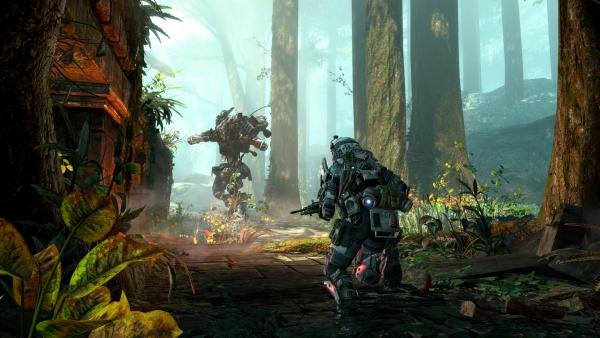
DLC1screenSwampland02

Nexon M intends to launch several Titanfall themed games, each with an expected service cycle of 10 years or more

That’s our goal. With every game that we work on, our goal is to make something that will last for 10 years. It’s certainly ambitious, and not all of our games will get there, but we’re absolutely OK saying that that is our goal.

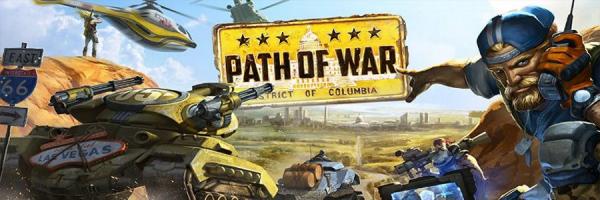
If you look at the developers that we’ve worked with, like Big Huge Games, they’ve made high-quality strategy games that people love for a long time. So, we know they have the talent and ability to make games that will last that long. This year, we’re working with the studio Envision Entertainment [comprised of former EA Phenomic employees], which is working on a mobile RTS game [Path of War] coming out very soon. Historically, they’ve worked on a number of games including BattleForge and the Command & Conquer franchise. So, they know how to make great strategy games, and they know how to make MMOs [Massively-Multiplayer Online games], and now we’re trying to bring those to mobile.

The group of studios we’re working with all share the same kind of pedigree of making great games that can last a really long time. We’re really trying to do something different here, and we think that we have the talent to make that happen.
Path of War Banner

What will it take to remain competitive in mobile gaming in the coming year

I think it’s no longer just about the dollar amount you spend on a game. There are plenty of companies with huge budgets and can do a great job of marketing a game really big. But I think what will matter is how well you do in terms of marketing after your game is launched. That’s all about the experience you provide your users.

Are you providing them with regular updates, both in terms of new content, features, and ways to engage in the game both and outside of it, so that they feel like this is something that is meaningful to them Again, a big focus for us is building great communities and supporting them. 

Jace Hall Explains His ESports Vision For Twin Galaxies

Former game developer Jace Hall has some big names helping him on his eSports vision for Twin Galaxies, which he recently acquired. He’s partnered with leading game companies such as Warner Bros. Games and Ubisoft, and Hollywood celebrities like Jamie Lee Curtis and Rick Fox, to raise $250,000 through Indiegogo to build the ESPN of eSports and help promote the positive elements of video games (#Right2Game) and eSports competition through an online and mobile platform that will handle everything from record-keeping to livestreams. Hall details his plans in this exclusive interview.

Why did you decide to buy Twin Galaxies?  

jacehall

Twin Galaxies was acquired because I knew it to be one of the few founding entities of the concept of eSports, and it was specifically focused on video game players as the primary point of interest in the equation and not the video games themselves.

Twin Galaxies was founded in 1981 and is the world’s most preeminent professional organization that is solely dedicated to the recognition, promotion, support and elevation of all video game players throughout the world.

I immediately identified that with some modernization and refinement, Twin Galaxies stood poised to position itself uniquely in the eSports world, and could expand itself much further into a critical area of need in the video game industry as the rise and popularity of eSports continued.

That need is to create and support a sustainable quantifiable environment that solely works to provide video game players a greater path to recognition, value and economic longevity throughout their careers regardless of specific game or platform.

What impact has the rise of eSports had on this brand?

ESports has been around since the beginning of video games. Competition among players has been a very present and essential theme. Twin Galaxies came into existence more than 30 years ago to not only help facilitate electronic gaming competition by establishing rules and procedures, but to also elevate and promote the player’s achievements in such a way that mass-society could understand and appreciate. That was critical. The promotion and significance of the players themselves is what was important. The purpose of elevating the players was for the benefit of the players themselves, whether that be greater economic opportunity or cultural recognition.

As eSports continued to evolve, a dramatic shift took place. Video game companies began to recognize that competition could be used to promote the sale of more video game product. This realization began to be leveraged heavily. This is essentially where we are today, with eSports events essentially being elaborate marketing tools to sell more copies of games, prize pools coming from sales of add-on game packs, and a tremendous amount of revenue generated for video game companies and their supporting partners. The players in this equation are essentially just consumers, last on the food chain both economically and from a longevity point-of-view.

The impact of this on the Twin Galaxies brand has been a clear purpose and greater pressure and need for Twin Galaxies to grow faster to fill the enormous opportunity vacuum being created due to everything in the industry being about the game and not about the player.

How important are the players in eSports today?

In sports like basketball or football, the players are the content, not the game. In modern eSports, the ecosystem is not designed to support that. Games are first, individual players a distant second. When the focus is selling game copies, how can the player be regarded as anything but a tool to promote that ultimate goal I make no criticism here of game companies – they are doing what they are supposed to do, sell games – but what about the players. Where is the long term career path for them?

So the impact on Twin Galaxies is that it makes it more relevant than ever before. The industry needs an organization that is only focused on video game players and their interests. That is Twin Galaxies.

What role do you see Twin Galaxies playing in this ecosystem?

There needs to be a place where video game players of all gaming categories can essentially “bank” their accomplishments and retain value and build on them across their whole career. Twin Galaxies is not a game company. It is not selling video game product. It does not have a conflict of interest in this matter. Twin Galaxies’ function is to provide official structure and parameter to video game playing achievement across all electronic gaming platforms. It is where competitive video game rules are officially set, player performances are objectively measured/adjudicated, and the complete statistical data of official records/rankings are logged, maintained and updated for all video game platforms and types. Twin Galaxies is about quantification. Twin Galaxies translates all player achievement taking place into messaging that the non-gaming mass audiences worldwide can understand and appreciate.

What’s your vision for Twin Galaxies?

The vision is to help to lay a consistent, data-driven, bankable foundation that sponsors can trust and understand and use to provide opportunities directly to players regardless of specific game. This is a critical need in eSports today. No other organization is focused on this – every other effort is focused on the game as the primary importance.

This foundation of data that Twin Galaxies collects and refines, also works to provide evidentiary proof of the intrinsic value of the activity of playing video games to the mainstream. This is also critical for video game player longevity in the eyes of the mainstream.

What are your eSports plans since you have a physical eSports center?

There are many ideas, and thematically our goal is to have player-promotion events there, as opposed to game-promotion events. For instance, we have plans of producing essentially the equivalent of a “Video Game Olympics” where there are many simultaneous tournaments and contests for various platforms and genres taking place and that player achievement is measured and stored during the event both specifically and holistically (like the Olympics.)

How have you used this center in the past?

The center is new and we are still working things out with it, however we did recently hold a series of classic decathlons there as an exploratory format for competition.

A lot of eSports has focused on the pros. What opportunities do you see with the amateur level to get more gamers involved?

This is part of the opportunity that Twin Galaxies will be working to address. In modern eSports, “pros” are being defined by specific games and the companies that produce them. It is very insular. Essentially, it is difficult to be a recognized “pro” unless you happen to play one of the few games that happens to be incredibly popular at the moment and has a large marketing budget behind it. This is limiting for video game players worldwide because the vast majority of video game playing activity is taking place outside of these few games. Areas like handheld and mobile gaming are essentially ignored, as are almost all games that are not specifically formatted for tournament play.

So, unless a player happens to be playing one of the “hot” games of the day, they are potentially regulated by default to being an “amateur” or “hobbyist,” with no mechanism of elevation — which for millions of game players out there is quite insulting and discouraging. There is a tremendous amount of skill out there that is not being properly valued or recognized.

Twin Galaxies now has systems and the experience in place to receive, analyze, recognize and promote video game achievement outside of the closed system of video game publishers and one specific game title. This facilitates the creation and recognition of “pros” across all video gaming categories and platforms. These “pros” are promoted and elevated to the world and are backed by actual verified player statistic data that Twin Galaxies has collected about them and their performances. It’s a legitimizer, and it opens up much greater opportunity for video game players worldwide to not be confined to just a few “high profile” game titles.

With all games and platforms suddenly now becoming recognized possible areas to achieve in, the scope of opportunity really opens up to enormity, and Twin Galaxies is working to get the word out and encourage more and more participation. From mobile to retro to modern day consoles, there is a lot of video game talent out there — “pros” by every measure.

As a former game developer, what are your thoughts on how eSports has grown?

I am very excited about all of the growth. I am a huge video game player myself and to see all of the participation taking place out there is very heartening. However I am definitely concerned about some of the shape that certain areas are taking. All one has to do is follow the money and see where it goes to quickly see how lopsided some things are. The industry is working itself up into a frenzy, with video game publishers essentially trying to build all their own “silos” — which of course are all designed to ultimately do one thing, own their community and sell games to it. It reminds me a lot of the whole MMO industry frenzy that took place once World of Warcraft demonstrated so much success. Everyone started to build their own “silos” then, too. We saw where that went . . .

I believe that the future of eSports is bright, but it should be managed carefully. I feel it would likely be beneficial to the whole category if there was more cooperation between publishers on the matter. Of course, this will be hard to achieve because publishers specifically do not want their players to transition from game to game (unless they own both games.) So that is where an organization like Twin Galaxies can be very effective, and can work agnostically with all interested parties so that the player achievement taking place within a particular “silo” can be captured and officially stored for the benefit of the player.

That way the time investment made by players into mastering a game in any “silo” is not suddenly lost when the game eventually loses the limelight, and then they have to “start over” with an all new game in a different “silo” and build again to be regarded as a champion or “pro” once more.

Livestreaming has been a key factor in that growth. What opportunities do you see with that distribution method through Twin Galaxies moving forward?

Twin Galaxies has been livestreaming for nearly two years and we feel that it is a very important aspect of growth for eSports. The desire to watch people play video games well is nothing new. From the very first arcade game, people were always intrigued by a solid display of a player’s skill and on-looking crowds would regularly form around a player as he/she put on a great performance.

As arcade locations became more rare, and the rise of gaming at home with consoles or computers took over, there simply was no practical way for large groups of people to watch the activity. So there were many years of this until broadband network connections made it into homes. Now that the ability to broadcast video gameplay from nearly any device exists, the audience that was always there waiting has been able to make its return.

At its core, livestreaming is about an event that is taking place — both big and small and bringing audience interactivity into it. While the concept of big events for things like sports and music are well understood, I think the real growth opportunity is in the small event and what it can be evolved toward. That’s really what the average twitch broadcaster is, a small event taking place, and you get to participate! Ultimately this means more content options for people, which is always a good thing.

Twin Galaxies will leverage its experience and knowledge in livestreaming to take advantage of the livestream opportunity and use it to better facilitate the positive promotion and understanding of the activity of playing video games through the voices and interests of the players that it promotes. It will create live content that emphasizes audience interactivity, and while it will certainly create and broadcast big events, it will also put an emphasis on the small event as well — allowing individual players to receive focus and attention. This is key because it is only through the recognition of an individual’s achievements and the personalization of those accomplishments can the mainstream fully emotionally invest itself and learn, understand and respect the time investment value made by people into playing video games.

How do you see your scoring and ranking system connecting across various eSports titles?

Twin Galaxies keeps an enormous amount of records and score rankings (over 30 years’ worth) and is accruing more every single day through user submissions.  There are multiple ways (or variations) to measure achievement within any particular video game. We call these variations “tracks.”

While a game can have many tracks, and within each of those tracks there are player rankings, not all achievements within tracks are viewed equally in terms of the perception of the needed skills, artistry, strategy, or effort that individual tracks may require.

Keeping this in mind, every ranking that a TG member has on an individual leaderboard produces a calculated point value. The cumulative point values for every rank position held by individual TG members across multiple leaderboards covering multiple platforms and game categories are then algorithmically computed to produce each member’s Player Skill Index (PSI).

This PSI ranking idea is a powerful part of a logical holistic measurement system that can analyze achievement across all video games, platforms and categories for an individual person over any period of time. This is an important gateway to conversation with non-gamer audiences as well as sponsors and will begin to allow many more people to appreciate and understand the great talent being expressed by video game players worldwide.

A similar context is an Olympic Gold Medal. We all understand that when someone has earned a Gold Medal, that we should value their achievement. We don’t even need to know what the sport was where the achievement took place to understand the value. The specific Olympic “game” has been separated from the “achievement recognition.” This helps the mainstream understand and appreciate. Twin Galaxies’ PSI system creates a similar abstraction.

Every PSI has 100 percent all the data behind it that can show and demonstrate how it was computed. This is a huge difference from someone merely claiming that they are good at video games, or the insular vertical landscape of a video game publisher’s anointed tournament champions that work to self-serve. Twin Galaxies’ view is that third party objective adjudication data and multi-user comparative systemic data is what can legitimately validate skill and justify formal recognition. Actual “video game champions” are revealed through this data.

Twin Galaxies’ ranking system has a tremendous upside for video game players worldwide. It allows the player value to be separated from the games they play and creates a context for outside parties to understand and invest in. It effectively shifts the focus of content/interest from the Game to the Player, and it is a very meaningful shift. This is the future of eSports.

It also allows a video game player to accrue and “bank” their achievements as a lifelong third party computed value that is based on data and statistical analysis of their various performances across all games and all platforms they’ve ever played and submitted into the system. No longer does a player’s video game career have to end when the popular game they play falls out of favor. Their accomplishments are recorded and value is accrued and preserved while they move on to a different game to play to build even more career value. The importance of this cannot be overstated.

Crytek Reaches For New Heights With ‘The Climb’

After a spectacular trailer showing Robinson: The Journey, Crytek (Crysis, CryEngine) continues to push the virtual reality envelope. The Climb will take players on a grand rock climbing experience where they can enjoy breathtaking vistas without all the sweat and pain of actually climbing. It might even help you get over your fear of heights.

[a]listdaily speaks to Crytek’s Executive Producer, Elijah Freeman, about where the climb might take you.

ResizedImage300450 Elijah Freeman 1Tell us about what The Climb is and what inspired it.

The Climb is a free solo rock climbing experience in VR. The game was inspired by a sense of exploration, our exploration of a new medium and our desire to explore new exciting environments.

How are you promoting The Climb  

VR is all about the experience; the best promotion is to allow the gamer to play the game. Recently we have invited press to Frankfurt to try The Climb directly.

Is it OK to look down while playing The Climb

The Climb is built on the premise of sense of scale and verticality, your immersion would only be amplified by “looking down†In addition, this would allow you to experience more of the incredible environment.

Between The Climb and Robinson: The Journey, it looks like Crytek will be a big part of VR. What is your approach to making a stand experiences on emerging technology

At Crytek Innovation is in our DNA, we thrive on emerging technologies. The games that we are currently building emerged organically from our exploration of the VR tech available today. As long as we can build fun comfortable gaming experiences, Crytek will continue to push the envelope on VR technology. 

In what ways do you think VR will impact gaming in the coming years

As with all new mediums, virtual reality is providing new and interesting challenges for game developers. I believe that the demand for visual fidelity will continue to increase; developers will need to evaluate their engine and hardware choices.

What do you think are the most important things to keep in mind as VR technology continues to grow

As developers, we need to keep in mind that technology is only half of the solution and that we need to make responsible decisions that take advantage of any technical advancement available to provide the most comfortable and fun experience possible.

Space Ape Talks About Asia’s Mobile Game Expansion

Space Ape Games, known for mobile titles like Rival Kingdoms and Samurai Siege, isn’t afraid to mix up friendly competition with hard statistics, as evidenced by the office’s heavily modified Foosball Table. That creative drive and enthusiasm is needed for the company to thrive, especially since many expect the mobile games industry to go through a major consolidation period in the near future. The market is likely to see a large number of investments and acquisitions, making it the opportune time for Asian companies, especially large ones like the China-based Tencent, to expand globally.

[a]listdaily speaks to Simon Hade, Co-Founder and COO of Space Ape Games about the Asian (especially China’s) expansion into global markets, and what it might look like.

space ape simon hade r225xIn what ways do you think Asian mobile game companies will look to expand internationally

Generally the expansion strategy of the top Chinese games companies falls into three types: 1) Publish: bring Western content to China; 2) Partner: acquire or invest in a company that will win in the West; and 3) Beach head: establish presence in the West.

Publishing has been the main model until recently. Tencent has been making big moves in the West for a while on acquisition, including stakes in Riot, Miniclip and many others. Increasingly, Chinese player’s expectations regarding production values are approaching that of the West, while Western monetization models and genres are looking more like China. We will continue to see Chinese games companies investing in the West.

 What are some of the challenges Asian game companies face when breaking into Western markets

Mobile game companies cannot just localize language and launch their game in the West successfully. While features like Gacha [collectible characters] are becoming more widely adopted in the West, games from Asia generally do not directly translate. In order to successfully bring a game to the West, you must invest resources, which takes time and money. The companies and games that invest well will have a better chance to create a top 20 game.

There is a clear trend in China right now towards high production games. It was most important to optimize for performance, and given the large number of low spec devices in China, this meant lowering the bar for fidelity. But with companies like Xiomi and others really driving down the cost of high spec devices, player’s expectations are changing, and as a result you see the top Chinese developers capitalizing. By next year most successful mobile games will have production values on par with the West.

Is it more challenging to expand into or out from Chinese mobile game markets

Whether you’re a Western company looking to make it big in China, or a Chinese company looking to expand to Western markets, you’re going to face challenges. I can tell you as a Western game company we have a great respect for the Asian market and closely watch China for trends and learnings. The biggest challenge in China is on the technical side, trying to manage the huge range of devices, platforms, and connectivity issues for always online games.

How fast do you think Asian game companies will expand internationally

Asian game companies have already begun to expand quickly, and it’s likely we’ll see at least one Chinese game and one Chinese developer break into the top 20 in the West in 2016. While Chinese investment in Western game companies will continue to rise quickly next year, it’s unlikely we’ll see much expansion from Japanese or Korean companies in that time.

Some say that the majority of Chinese games are incompatible with Western tastes, and vice versa. What is your response to that

We’re seeing more and more Chinese game mechanics translating to the West. It’s still the case that China, Korea and Japan are each very different markets and a lot of the charts are dominated by local players addressing local tastes. However, it’s feeling more and more like the concepts that work in China are easier to adapt for the West (e.g. Game of War). One big difference is around the pace of content. Chinese players consume content very quickly, and your monetisation needs to reflect that behavior in order to make a game viable.

How do you see mobile gaming in general growing and changing in 2016

Thanks to the dominance of the RPG genre in the East in 2014-2015, we’re going to see lots of RPGs  [role-playing games] — action RPGs, turn-based RPGs, and even RPG RPGs. It will be very hard to differentiate in this genre and only those with massive, well-known IPs are likely to succeed.

This year, the rising cost of CPIs was due in large part to the big game developers, but in 2016 the rising costs will be driven at least equally by big brands moving more of their digital brand budget to channels previously owned by performance marketers. Subsequently, a majority of new entrants on the charts will be well executed games with well known IPs.

Funding for companies who have yet to establish themselves will diminish will diminish due to player’s increasing expectations for high production values and the rising cost to acquire users. Those companies are more likely to seek publishing deals or acqui-hires as they are unable to raise the capital needed to break out. This is good news for those who have already had a hit, or have the ability to acquire small studios, but bad for new startups.

Min-Liang Tan Discusses Razer’s ESports Play

Video game hardware and accessories company Razer recently expanded its Razer Arena offering to include Riot Games League of Legends. It s part of an expanded eSports push by the company, which was formed in the early days of professional gaming.

Razer is also upping its tournament game. The company is investing $50,000 in Q1 2016, making it the largest amateur league prize pool to-date. MinLiang Tan, co-founder, CEO, and creative director of Razer, explains his company s eSports strategy in this exclusive interview.

What does League of Legends bring to Razer Arena

League of Legends is the largest eSports title in the world today. With Razer Arena now supporting this game, we re able to help gamers play in competitive-style tournaments with professional organizing tools. We aim to support the dreams of average tournament organizer as well as provide young budding teams with a completely automated platform to train and grow through Razer Arena.

Why is Razer sponsoring League of Legends tournaments

This is a way for us to improve the gaming experience. ESports is a huge part of our company s history and it will continue to be a big focus, whether that s monetary sponsorships, product support or platforms like Razer Arena that help players compete against each other at a pro level.

How does sponsoring tournaments fit into Razer’s overall eSports investment  

Basketball players and other athletes will have companies design specific gear like shoes to help them compete at the highest level possible. That s very similar to how we develop cutting-edge products for gamers. There isn t a better way to validate the merits of a product than having a pro gamer approve of it, so we test our concepts closely with our eSports teams. We once had a gamer that could tell the difference between a response time in a mouse down to the millisecond, and that s why all of our mice have the lowest latency possible one millisecond.

What are the advantages of building tournaments and how does it complement the traditional sponsorship of players and teams

With the ability to create more tournaments, players have more opportunities to practice teamwork and hone communicationskills, along with developing individual abilities. For those who enjoy watching eSports matches, it will also benefit them with more content to watch. This is a way to make eSports-type events more accessible to anyone.

How many players or teams does Razer sponsor in League of Legends And overall eSports  

Razer currently sponsors 17 separate League of Legends teams as part of our 24 sponsored eSports organizations.

How has Razer Arena grown since launch in terms of users and titles

Razer Arena was launched into beta early January 2015. In the space of a single calendar year, we ve grown by leaps and bounds, to improve and constantly polish the platform to what you see today. We ve more than double the number of titles we support, and with the introduction of World of Tanks as well as League of Legends, we re poised to service some of the largest gaming communities in the world. All of these would not have been possible without the unwavering support from our users, who struck with us as we worked out the kinks and continuously seek to improve the platform.

Razer Arena services thousands of players and full-fledged teams who have joined and formed to compete on Arena. Furthermore, we ve successfully ploughed through countless events, matches and late nights in an effort to work with our initial adopters to refine the platform. The solution you see today was born of the blood and sweat of everyone involved, and we re extremely confident that we can take Arena to even greater heights.

What does Razer Arena bring to the eSports ecosystem

Razer Arena is a fully automated tournament platform that covers a tournament lifecycle, end-to-end. This significantly improves the lives of event organizers by making processes easier for them, while providing a powerful platform for players and teams to demonstrate their skills. Being an online or offline platform means that we greatly extend the reach of organizers and, at the same time, provide an avenue for the casual player, regardless of where you are, to live your dream. Gamers are inherently competitive, and competition pushes boundaries. Going online breaks all physical barriers, and with the help of all gamers around the world, Razer Arena aims to be the best online tournament platform in the world.

What s more, game developers can work with platforms like Razer Arena to empower the community to create their own competitive scene from the ground up.

How big an eSports fan base does Razer have today and how do you see that growing

Razer s eSports fan base is in the millions figure, we have more than 10 million fans, friends and followers on our social media platforms alone. As long as we make the most advanced products in the world for gamers, and as long as eSports grows as a global phenomenon, Razer s eSports fan base will grow. Our products are the most prevalent gateway to eSports fandom people buy a Razer mouse, keyboard or system based on product merit and they re drawn to tournaments as expositions of what their Razer gear can do when pushed to the limit.

It s like a Porsche owner watching the Rolex Sports Car Series, or someone who owns a Big Bertha watching The Masters to see what his club can do in the hands of one of the world s great golfers. People are drawn to Razer from the other direction, as well, becoming fans of our products by virtue of our support of tournaments and the achievements of the players who we sponsor. Our logo is synonymous with high-performance gaming at every level on the eSports continuum.

What role do you feel eSports has played in making Razer what it is today

The vision for Razer from the very beginning was to be the world’s greatest gaming brand and to achieve that by designing the best products possible for gamers. As part of staying true to our ambitions, we systematically imagined, developed and produced some of the greatest tools known to professional gamers over the years. As the bar for professional gamers began to rise higher and higher, supporting the accomplishments of these athletes became a primary focus for us, and in many ways drove innovation time and time again. Just like we d like to think that eSports would not be where it is today if we had not taken the leap that we did in the early days with sponsorships of some of the world s leading gamers, like Jonathan Fatal1ty Wendel or Jaeho Moon Jang, Razer would not be where it is today if eSports had not been there to set new standards for gaming components and their relation to human performance.

MobilityWare Discusses the Future of Mobile Gaming

With the explosive growth of mobile gaming, and the introduction of new devices like the Apple Watch and Apple TV, the struggle to succeed is greater than ever. Among companies that are reaching forward is MobilityWare, known for popular iPhone games like Solitaire and Blackjack. It also recently released Solitaire for the Apple watch and Android wearables.

[a]listdaily speaks to MobilityWare CEO, Jeff Erle, about the future growth of mobile gaming and how to get ahead.

Jeff Erle headshotMany predict that the mobile games industry will consolidate until only a handful of big companies are in control. What will it take to compete in mobile gaming’s future

Right now in this space, it’s “innovate or die†and the corollary to that is “grow or dieâ€. One way that you can see this is through the rapid power consolidation at the top whereby small and mid-tier players are being squeezed out. That means to compete, this do or die mindset needs to be built into and made part of everything the company does (e.g. strategy, corporate culture). If you aren’t innovating and growing, there are consequences.

Conversely, there is great opportunity because companies in this space are at the nexus of three growing ecosystems: 1) growth of mobile devices, 2) growth of mobile gaming, and 3) growth of mobile monetization (via IAP and advertising). So there’s a lot of opportunity there for a company to ride this tide. This opportunity is so compelling and the timing of it isn’t going to last. 

What do you keep an eye out for when acquiring new talent, IPs, and other assets

This idea of innovate or die forms our growth and acquisition strategy. It’s not just about throwing bodies at the opportunity. We have a strategic goal to build enterprise value and the way to do that is to invest in people (human capital) and acquisitions that help us do this. 

For example, we want to continue to make data something that we can leverage so a lot of hiring new talent has been in this area. We want to buy companies/assets to help us get faster to market (again, comes back to the idea of a grow or die mentality). In order for us to continue to have the next phase of growth we have to do 1 of 2 things (build more aggressively or buy and we’re actually doing both). We have to do both because you can’t plan for or guarantee a hit.

 What will be some of the most important factors to promoting new mobile games

UA will continue to play a big part but new avenues e.g. TV commercials will start to play a bigger part (it already has). As UA costs continue to rise, it’s becoming more important to explore alternative, outside-the-box approaches to promoting mobile games. We’re lucky in that we can cross promote our new titles to a huge existing user base of players currently playing our Solitaire game. Building communities via social media outlets will always be something we will do.

What are some of your marketing goals for 2016

Our key marketing goals for next year are related to the launch of our new games: efficiently acquiring quality new users. However, lots of pieces need to work together to make that happen, for example: Live Ops and Analytics. We recognize that in order for us to aggressively grow in the F2P space, our technology, product and marketing expertise needs to evolve. Too many developers don’t recognize this and release a F2P game without thinking about the proper tools and strategy. We recognized this early on and been working hard to evolve the team and platform in 2015, and we are excited to see it come to fruition in 2016.

Tell us how do you think VR technology might impact mobile gaming

There is no doubt that VR will enable and empower content creators to conceive new, immersive ways to delight mobile gamers. However, content creators will have to think differently about how they engage their players. VR games will likely take on a different shape from how we experience mobile games today. Players will not necessarily be able to ‘play on the go’ or casually consume content with a few minutes to spare. Instead, VR will create engaging experiences that influence most of what we see and we feel. We’ll see premium VR content specifically designed and built for the mobile gamer that craves that immersive experience. As a result, we’ll find ourselves playing games modeled after the ‘real’ world, reimagined for the ‘virtual’.

Ultimately VR will create wonderful new opportunities for content creators to dream big while giving mobile players the ability to experience something new without necessarily giving up what they currently love about mobile gaming today.

How do you think games for wearable devices like the Apple Watch will grow and develop

As Robert Jackson [MobilityWare VP] previously stated in the interview with Re/code, “The mobile game market is about filling your day with quick gameplay sessions. The watch is an even more extreme version of that.”

I think we will see the types of games and apps evolve as platform capabilities also evolve. Currently, gameplay is limited by a number of performance restrictions around memory and asset management. However, Apple is exceptional at continuing to iterate on their platforms I expect the “wow factor†in games will increase as the watch capabilities (and screen dimensions) advance.

With devices like the Apple TV, mobile games are finding themselves in the living room. What are your thoughts about mobile games competing for living room space against traditional consoles and entertainment devices

One of the great things about the Apple eco-system is the connection between devices (desktop > phone > tablet > watch and now TV!) across one OS. Each of these platforms has their own unique strengths and I look at each of them as a challenge for game developers.

Apple TV is an obvious extension of the Phone & Tablet and it’s easy to see someone starting a game on their iPhone and continuing that same game on the TV, or vice-versa. What really excites me about the TV is the ability to make the game experience more social. Imagine cooperative gameplay! Families challenging each other on teams sitting around the living room! Head-to-head gameplay! All of these things were available previously on console, but set-top console boxes can be intimidating to the casual player. Apple TV has the ability to take huge amounts of casual gamers and bring them to the big screen in a way that traditional console devices simply couldn’t before.

In what ways do you think mobile games will continue to grow and change in 2016

Most of the good ideas have been taken, so it’s much harder to deliver little true innovation. It’s no longer good enough to find a better mouse trap you have to figure out a whole new way to trap a mouse. 

Mobcrush Discusses the Future of Mobile Livestreaming

Although Mobcrush is still in beta, it’s already looking to take on established streaming services like Twitch and the more recently launched YouTube Gaming channel by offering a platform dedicated to mobile gaming. While some might consider it a daunting challenge, the fact that the service secured $11 million in funding from a variety of investors goes a long way toward meeting it. As mobile gaming continues to grow, with titles like Vainglory and Hearthstone fast rising as eSports, an increasing number of players will want a convenient way to stream and watch directly from mobile devices.

[a]listdaily talks to Koh Kim, Co-Head of Business Development at Mobcrush, to learn more about what’s ahead for mobile game streaming.

Koh KimIn what ways do you see mobile game streaming differing from traditional console and PC game streams

Streaming a game on PC and console requires capture cards and complicated equipment setups that are intimidating for the mainstream user. Mobile game streaming should be easy, accessible and seamless in any situation a user wants to create content.

Streaming a mobile game unlocks different opportunities and use cases. Streaming from a console or PC means that you’re likely tied to your living room or bedroom. Streaming from mobile means freedom. You can take it anywhere or anytime, and it opens up more interactions with players in real life or online.

How fast do you think mobile games will be adopted as eSports in the coming year

It’s already happening right now. Communities and players make games into eSports. Vainglory is already making strides as teams are already forming around the world to compete in various tournaments with cash prizes.

Mobile game developers are already thinking about how to design and develop games to be watched by players, so we will see the first generation of mobile games specifically for the streaming audience in mind.

How you think that emerging technologies like VR will help shape streaming on mobile

Mobile devices are getting more powerful with faster processors and GPUs with every new model. In addition, mobile broadband penetration and bandwidth are expanding at exponential rates, especially in regions where people are coming online for the first time.

Mobile devices have the potential to take VR mainstream. VR is currently limited by the fact that you need incredibly expensive equipment and a cord, and you are often limited to a single location due to the PC attached to the head gear. Eventually Moore’s law will allow mobile devices to stream high fidelity content and audio for immersive VR experiences.

In what ways do you think streaming will continue to grow and change in 2016

As I mentioned, more games will be designed and developed with streaming in mind. We will see more game mechanics and experiences that allow audiences to participate like what you see in the Hunger Games.

Why Coors Light Embraced Retro Gaming

With the average age of a gamer now 35, according to the Entertainment Software Association, there are more opportunities for brands to connect with older gamers. The stigma of games being for kids has virtually evaporated in recent years, thanks to the explosion of mobile and free-to-play games. That’s all played into the marketing plans of Coors Light, which has expanded its video game footprint in 2015 through its Refresh-Men retro game.

Erin Mulligan, associate brand manager for Coors Light, explains how the beer company is connecting with Xbox and mobile gamers 21 and older through its ad-based game in this exclusive interview.

Erin Mulligan

Erin Mulligan

Why did Coors Light decide to develop a video game

In 2014 we launched Coors Light Refresh-Men, an ad-based video game that lived on the Xbox 360 platform. This 8-bit, brawler style video game garnered more than 50 million impressions, 300,000+ game starts, and more than a 12-minute average playtime. We wanted to build on the success and approach taken in 2014 by adding new characters, moves, storylines and bad guys to keep our audience engaged and excited by the Refresh-Men.

Do you have any market info on how big a crossover there is between your customers and gamers today

A significant percentage of our core consumer base also plays console video games frequently each week, so this is an effective way for us to strengthen their connection with Coors Light.

What studio did you work with to develop the game and what were the goals for this game

The goal of the game was to drive engagement with the brand, and it was a collaborative effort between the Coors Light team with various agencies and studios.

How do you see the retro gameplay connecting with the older gaming demographic

The graphical style of these “8-bit†games has seen a resurgence and become more culturally relevant in recent years. We want our game to embrace the retro qualities of this 8-bit look, from colors and font style to moves and gameplay strategy. Our audience grew up with these games, so they relate to the style.

How many levels and how deep is this game

There is an intro to the game, five levels and an outro.

Can you detail the release of this game across platforms

The original Coors Light Refresh-Men from 2014 was available only on Xbox 360. With the release of Super Refresh-Men, it is now on Xbox One, Xbox 360 and for download on Apple and Android mobile devices. Our Xbox effort will now encompass both current-gen systems, for maximum exposures to gamers.

What are the advantages of having a game living out there for people to play over other social media or marketing efforts

We felt this was a fun, unique way of bringing our brand to life and of paying homage to our brewing roots. We know that embracing the platforms consumers are on is critical for creating emotional connections with beer drinkers, and we’re proud that Coors Light has been leading the charge on this among alcohol and beverage brands.

What’s the messaging behind this game for Coors Light

Coors Light Super Refresh-Men is perfect for people 21 and older who remember and celebrate classic games, and who like to enjoy an ice-cold Coors Light while playing with friends.

What does the huge smartphone audience open up for brands today

We know our audience continues to play console-based games, but we wanted to give them a way to take the Super Refresh-Men on the go, knowing smartphones are glued to the palms of today’s consumers. This always-on-demand reality inspires us to reach our consumers in innovative and engaging ways – in this case, evolving a fan favorite with unique, new elements and on expanded channels. Smartphones also make everyone a broadcaster, which encourages us to engage our consumers with rich experience they can’t help but share instantly with their friends and social networks.

Is this game an experiment or do you see further exploration of gaming for this brand

We will continue to explore gaming as a means to engage consumers.


Ronald ?Rambo? Kim Explains BenQ?s ESports Game

BenQ, which is best known for PC gaming monitors, has expanded its eSports focus by acquiring Zowie Gear. Beginning at CES 2016, BenQ will showcase its new line of gaming monitors alongside Zowie Gear s 2015 line-up of keyboards, gaming mice, and mouse pads. BenQ is using the Zowie brand across all of its eSports products, and the company will be marketing that brand through eSports sponsorships and other avenues.

Former Counter-Strike pro gamer Ronald Rambo Kim, product marketing communications coordinator for eSports at BenQ, explains what this move means for eSports in this exclusive interview.

How did the relationship with Zowie come about

We ve worked with Zowie since 2010. They helped us design our gaming monitor. They re based near our headquarters in Taiwan. We re bringing all their gaming peripherals into our product line. At CES 2016, we ll have five or six different Zowie mouses, keyboards, and mouse pads from their 2015 line. Even though they re from 2015, they re new for us.

All future BenQ gaming-related merchandise will be introduced under the Zowie name. The new eSports devices will focus on ergonomics and personalization to enhance player performance and enjoyment.

Can you talk about the role eSports has played for BenQ over the years

We sponsor a lot of leagues internationally, including EVO, MLG, UMG, ESEA, and various ESL tournaments across the globe. We re in negotiation with all of them to extend into peripheral sponsorship with the Zowie brand.

How have you seen these types of league sponsorships impact sales of BenQ monitors

Over the last three or four years we ve seen eSports growing at such a rapid pace. There are so many more gamers. And now with Twitch and YouTube Gaming, the fan base is growing even larger. ESports has been phenomenal for our monitor sales. Our pro players love to use them as well. It s been a great partnership.

What pro teams do you sponsor

We sponsor 12 teams in all regions, including Evil Geniuses, Cloud9, VirtusPro, Flash Wolves, Fnatic, Mousesports, TeamNxl, Grubby, MiTH, TCM, and Orange ESports.

What role does eSports play in your overall marketing plans for BenQ monitors

ESports and our gaming monitors is a huge part of our business, and we recognize how important it is. We do a lot of R&D into our gaming products. And we ve seen rapid growth in sales and in customer satisfaction.

How do you see your Zowie acquisition impacting that brand

Zowie has been around for five years, but they haven t had the budget to market their products. We worked with them for five years before deciding to acquire them.

How do you work with pro gamers in developing new products

We fly in top pros to our headquarters to get direct feedback on what features they like. That s our foundation on how we build products. It s a process Zowie also used and we re continuing that.

What do you feel differentiates Zowie from other eSports brands

Whether you re a professional gamer or an avid gamer, you need equipment that will stand up under pressure. We get a lot of feedback from our customers and community, and we have a good basis of how to meet that demand.

Zowie really focuses our gaming products for the top professionals. It s not your generic office or work mouse. And its features translate to the highest level of play.

Can you detail what s being shown at CES

We ll have seven or eight different mouse shells that will fit any hand out there for right-handed, left-handed, or ambidextrous gamers. There s also new laser technology that involves the lift-off distance of the mouse from the mouse pad, which means you don t have to lift your mouse as high. We also have two different mouse pads. One has more friction. Zowie has developed a foundation of the mouse pad where they ve eliminated the air bubbles and gaps. So you won t feel any minor bumps that might be caused by some of the other brands.

When will new Zowie products be released

Our goal is to create a full product line from monitors to keyboards, to mouse and mouse pads. We re currently researching headsets and we re working to ship on one before Q2.

How do you plan on differentiating Zowie headsets from the competition out there

Comfort will be the main focus. And the electronic system has to be 100% accurate, so you can positional hear sound in the game based on the electronics in the headset. We know the market is crowded, but we have a strong R&D team and we can fine-tune and make a final product that will deliver a highly satisfactory experience.

What platforms are you targeting with your headset

Our headset should work on any console or PC gaming system.

As a former Counter-Strike pro, what are your thoughts on how popular CS:GO is today

It doesn t surprise me. It s always been such a classic first-person shooter game. I played on Team 3D seven years.

What impact do you feel Turner Sports eSports televised play will have on CS:GO and brands involved in 2016 and beyond

The Turner ELeague is exciting. We ve tried to publicly televise gaming through the Champions Gaming Series on DirecTV a few years back. Now with the community being so big, it doesn t surprise me that there s a new movement into televised eSports. It s great for sponsors and products to reach a televised audience.

What are your thoughts on how much eSports prize pools have risen over the last few years

It s great because it s a way pros can make a living doing what they love. Being a gamer, it s entertaining to watch gamers play at a high level. There are star players that are fun to watch.

What has eSports opened up for former pro gamers like yourself

There are more career opportunities today than ever before. Instead of playing competitively, you can become a full-time streamer and play online, you can work with leagues or tournaments, you can become game designers. A surprising number of pros I used to play with have gone on to professional poker.

What s the correlation with poker and eSports

When you compete at the highest level of gaming, you have to be able to process information at the highest speed and see the scenario unfold in a few seconds. It also involves math, good instincts, and making the right call.

How important is gaming equipment to pro gamers

Being a pro gamer, I realize how important equipment is. I ve tried over 50 different keyboards, mouses, and mouse pads to get the right combo. I went to Zowie in Taiwan and with the different shells we re able to get that perfect fit for any gmer, and then two different fictions on the pads. I feel like I have a good understanding of what gamers want and what gamers need.

BenQ is promoting its new curved screen monitor. Why doesn t that work for eSports

The curved screen is designed for those looking for the most immersive PC gaming experience. It envelopes your peripheral vision. It enhances the gaming experiences. We found for pros that 24-inch is the optimum screen size that they can process visually. The curved screen is 35 inches.


3D Sunshine Reimagines ‘Minecraft’ Through Virtual Reality

Building Legos is one of the most primitive forms of teaching children spatial intelligence, all while allowing them to dream and create. Steven Schkolne, a computer science PhD from Caltech, is taking that simple concept to revolutionize how people master such skills through 3D Sunshine, a transdisciplinary computer program that reimagines Minecraft through virtual reality.

Schkolne s sophisticated and innovative technology creates and manipulates objects in 3D, essentially giving creators in the digital motion graphics and compositing software sphere a new cutting-edge augmented reality tool to toil with in the platform.

People go absolutely nuts when they see it. The reception has been really positive, Schkolne tells [a]listdaily from his no-frills loft in downtown Los Angeles as he duplicates blocks, drags out walls and creates expansive models on his computer. When kids and adults try it, they re taken aback and excited about the possibilities for building holograms in new ways.

The idea for 3D Sunshine manifested while Schkolne was taking a 3D modeling class at the Art Center in the late 90s. It was here that the artist realized the black-and-white world of what he was able to accomplish with a pencil as opposed to a computer. Drawing digitally should be much easier, he thought.

Enter his years-in-the-making idea for Minecraft, where gamers spend hundreds of hours building complex fortresses with unforgiving digital tools. Now, in short order, users can construct using their TV, laptop or Oculus Touch and export straight into the game.

You have to see Schkolne s creation for yourself to appreciate his patent-pending idea; words don t do it much justice. That s exactly why he s built a YouTube channel for newbies to easily understand that all you do to build these structures is push a button, grab a block and move it.

Where virtual reality is about presence, depth and expansiveness, Schkolne s 3D user-interface incorporates hands and imagination. He believes the handheld-controller experience proposes a compelling opportunity for a crème de le crème brand like HoloLens and their internal developers to connect with third-party minds like him to enhance their products.

3D Sunshine challenges you to think, and has the potential to teach people how to navigate in space to build and construct. Educators love its fluid and fast potential. he says. We believe its going to educate our next generation of architects and designers and help them to express themselves creatively. We re trying to take that and add a layer to it by amplifying with the already-existing physical building process. It s very complementary to hardware that s coming out for VR.

The sensory technology is getting better and more accessible. We have a broad ability outside of VR. There s no one that s developed the algorithms and data structures that allow free building.

Schkolne, 39, who looks like a hybrid between Russell Brand and Pau Gasol he s that tall, too has a background that s just as unique as his idea. His parents were born in South Africa and moved from Cape Town to North Carolina when he was only 2 years-old. Although his father and grandfather were both anesthesiologists, Steven had the freedom to pursue other interests. He gravitated toward art and music, but eventually settled on a computer science bachelor s degree at Pittsburgh s Carnegie Mellon University.

While earning both his masters and PhD at Caltech, he says he developed a system that blended computation with art, building a machine that allowed him to draw digital light sculptures by tracing shapes in free air with his hands.

As wired as Schkolne s PhD brain is for computer science s creative and complex constructs, as a startup, he wears the business man hat, too.

Minecraft is just the beginning of our vision, he says. I have quite an ambitious plan for our growth, but the details will have to be played out in the future. Minecraft is a proof of concept, and not a final destination. We don t want to make this an art project. This is a serious business.”