Hyatt Creates Comedic Hijinks With Iliza Shlesinger Campaign

Hyatt Regency recently joined forces with Comedy Central and funny girl Iliza Shlesinger to launch the custom content series “It’s Good Not to Be Home” to celebrate the simple human truths about traveling.

“Travelers told us that they enjoy the freedom travel provides to break from routine, meet new people and find new inspiration,” Stacey Snyder, director of brand experience for Hyatt Regency, told [a]listdaily. “Comedy felt like a natural way to bring this insight to life, whether that was highlighting how, on the road, you can sleep sideways, steal all the toiletries, or eat dessert first.”

Pegging Shlesinger’s with influencer marketing duties seemed like a natural fit for Hyatt as the always-travelling comedian brought her own experiences to the series.

“Comedians are road warriors so teaming up with Hyatt Regency on the ‘Good Not to Be Home’ campaign was a natural fit,” Chris Ficarra, senior vice president of integrated marketing for Comedy Central, said in a statement. “Working with Iliza and her cute dog Blanche, we developed custom shareable funny content to engage fans on CC.com, on air and across Comedy Central’s social-media platforms.”

Snyder joined [a]listdaily to discuss the hospitality company’s upcoming marketing strategies, and to offer a sneak peak into forthcoming campaigns.

Screen Shot 2015 12 22 at 11.36.39 AM

What went into Hyatt merging comedy into its marketing campaigns How did that serve as the right collaboration for the company’s integrated global marketing campaign?

Hyatt is in the business of caring for people so they can be their best. That’s our purpose as a company. Caring for people is sometimes as simple as making them laugh, so for Hyatt Regency — the largest brand in the Hyatt portfolio — this is a way to demonstrate care that fits with the brand. The collaboration with Comedy Central stemmed from an insight we heard from travelers: the simple human truth that, sometimes, it’s good not to be home.

How did choosing comedian Iliza Shlesinger come about, and how did her personality fit the campaign?

We found Iliza Schlesinger with the help of Comedy Central. She is the perfect comedian to bring to life the experiences we all feel when we are traveling. And as a comedian, she spends a lot of her time on the road and was able to bring her own personality to the series.

How does a robust custom content series like this enhance brand awareness and marketing power for Hyatt than traditional methods of year’s past?

In today’s world, we know that people are seeking experiences. Making people laugh is an experience we can offer even when people are outside our hotels by teaming with Comedy Central on this content series. It extends from TV across social channels and even into Comedy Central’s Snapchat Discover stream, which is exciting for us.

Why was it imperative to incorporate Snapchat? What does it do for the brand that other social media can not?

We know many of our guests use Snapchat, so we made the platform part of the Hyatt Regency brand’s largest-ever integrated marketing campaign. Not only did we feature custom content featuring Iliza on the Comedy Central Snapchat Discover feed, but we are also among the first hotel brands to offer branded Snapchat filters when you stay at any of the more than 80 Hyatt Regency hotels across the U.S. and Canada. These filters just offer another opportunity for Hyatt Regency to engage with guests while they’re staying with us. And because we are among the first hotel brands to offer this, we look forward to seeing how our guests like it.

What are some of Hyatt’s chief marketing initiatives for 2016?

In 2016, travelers can expect to see Hyatt continue to focus on delivering clear, distinct brand experiences across each brand in our portfolio. It’s an exciting time as the entire company is focused on building long-term relationships with our guests by caring for each individual so they can be their best.

How ‘Dying Light’ Kept Zombie Fans Hydrated

It may have started off as a joke, spoofing Destiny‘s cross-promotional campaign with Red Bull, but Dying Light‘s #DrinkForDLC campaign exploded into a social media phenomenon over the summer. At its conclusion, over 15,000 fans showed their support for the game by Tweeting a picture of themselves drinking water using the #DrinkForDLC hashtag. The developers rewarded this showing of support, and the benefits of staying hydrated, with free water-themed content pack that will release on February 9th along with the recently announced Dying Light: The Following – Enhanced Edition.

As an added bonus, the Enhanced Edition will feature a number of graphical and gameplay upgrades (free for current Dying Light owners), along with all the add-on content and updates.

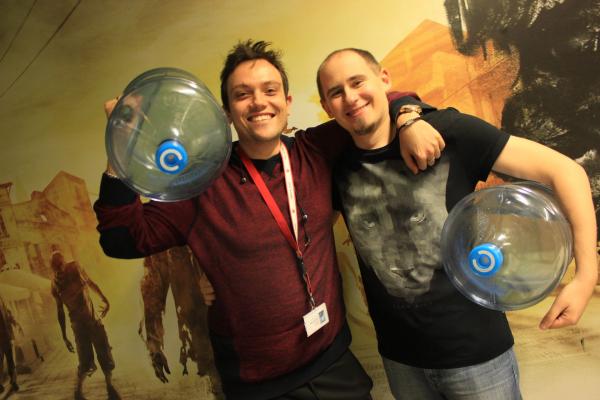
1 8[a]listdaily talks to Techland’s Social Media Manager, Michal Napora (left) and Creative Copy Writer, Krzysiek Janicki (right) — the minds behind the campaign — to discuss the campaign’s success and the importance of staying hydrated during a zombie outbreak.

Tell us about how the #DrinkForDLC campaign started and grew.

Krzysiek: It probably won’t surprise you when I say it all started as an internal joke about a certain video game campaign. You know which one specifically… We realized most gamers shared our sentiment, so we talked about it a bit with the team and then decided to go public with it.

Despite it being a joke, it was thought out really well. We took a blatantly commercial idea and made it about every one’s gain. After all, there’s nothing more obviously good for you than drinking water.

Then it all went better than expected. Our Twitter was flooded (*wink wink*) with pictures of our fans drinking water in most bizarre situations and disguises. We had hours of fun at the office just scrolling through them all.


How did you promote #DrinkForDLC

Michal: When we launched our first post with that poster, it got picked up organically – no paid boosting. It was just a single tweet that spread like wildfire. The press got notified and then some social influencers, and most importantly our fans, all jumped on it. As soon as the photos of people drinking water started coming through, we started retweeting them, filling our Twitter profile with hilarious snaps. We went a bit silly with it, and people saw that we are having as much fun as they are. It helped to boost our fans engagement with the campaign.

What were some of the most memorable #DrinkForDLC photos

Michal: There was tons of awesome photos that came through! Some of the most memorable ones included a guy going nuts in a morphsuit, heaps photos of people drinking from their toilet bowls (not advisable), someone giving water to their cats, and Major Nelson sending through his Vine. It was awesome to see those entries coming through!  


Do you think there will be similar social campaigns in the future

Michal: Most definitely! We’re always looking at trying to break the internet. We’re actually working on something now that we will show in January. Hope our fans will like what we have in store for them.

What prompted you to develop an Enhanced Edition of Dying Light, instead of a straightforward Game of the Year Edition

Krzysiek: A Game of the Year Edition is often just the old DLC of a game that gets slapped onto a new box and resold. What we’ve created here is a lot more than just that, especially since a big part of it is being developed right now. It’s not just about reselling what’s already out there. The expansion pack plus the enhancements are almost a year in the making alone. It’s mainly there to get new players on-board with a cool one-stop package. As for our existing fans we’ve  made it that the enhancements update is free for all existing fans while the expansion is free to all season pass holders.

Twitch Discusses the Growing Influence of Livestreaming

Purchased by Amazon last year in a $970 million cash deal, Twitch continues to grow as the premiere platform for livestream broadcasts like eSports tournaments and live event coverage, averaging over 100 million unique viewers per month. It has been an amazing year for Twitch, marked by major events like a 9-day continuous broadcast of all the Joy of Painting episodes.

[a]listdaily talks to Twitch COO Kevin Lin, and the company’s Chief Revenue Officer, Jonathan Simpson-Bint, about some of the changes Twitch has seen in 2015 and what might be in store for the future.

Kevin LinIn what ways has video game streaming grown and changed over the last year

[Kevin] Video game streaming has continued to reach larger and larger audiences in more places. People are consuming more on a daily basis and interacting at higher levels than last year.

In terms of eSports, every major event that took place last year has boasted significantly better viewership numbers than last year, illustrating the movement’s momentum.

Lastly, more game companies and brands than ever before are using live streaming to make major announcements directly to their audience. Twitch has allowed game companies to speak directly to their audience in a medium they really embraces, and we’re seeing a lot of games built from the ground up with streaming in mind.

Have mobile game streams been on the rise, and have they made a significant impact among eSports streams

[Kevin] We haven’t seen too many mobile titles that have built effective streaming communities so far, although some games, such as Vainglory, have shown a lot of promise both in general streaming and eSports potential.

In what ways do you think Twitch streaming will continue to grow in 2016

[Kevin] Audience engagement is at an all-time high, and we believe that we’ll continue to reach more and more people across the globe.

jonathan simpsonbintIn 2015, we saw TV shows like Mr. Robot premiere on Twitch, and a Joy of Painting marathon. Can viewers expect a lot of similar television promotional broadcasts in the future
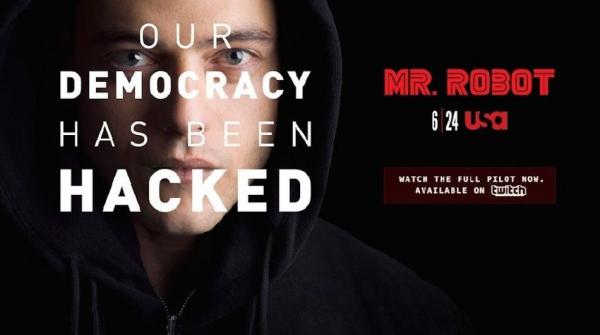
[Jonathan] The two broadcasts that you highlight are actually very different in terms of how they arrived on Twitch and how we think of them. Mr. Robot and any other promotional TV show partnerships were marketing activations brought in through our media sales team. Entertainment companies are excited about reaching the Twitch audience, and we plan to work with entertainment companies through our Twitch Specials program.

The Bob Ross marathon was a program developed by our internal Twitch Creative team. Since they were launching the category on Bob Ross’ birthday, what better way to celebrate than with a Joy of Painting marathon!

Twitch has become a fantastic place to introduce TV and movie IP to a huge audience that, by the definition of game culture, is already pre-self-selected to have a very high level of interest. We will continue to explore opportunities with brands and programming that fits well with our audience.

How has Twitch worked with advertisers to ensure they’re reaching the right audience

[Jonathan] For most of our advertisers, Twitch is already the right audience. Advertisers come to Twitch because we have a vast and hugely engaged millennial audience. Beyond that, we work really hard with our advertisers to make sure that their campaigns and their creative resonates with the audience and within the social video. Authenticity is critically important, and our creative services team works tirelessly to educate advertisers and deliver compelling and relevant creative.

mr robot

Evolve Labs Enters ESports Arena With BlackFlag

Evolve Labs is expanding beyond its PC gaming social media platform, Evolve. The company is entering the eSports arena for the first time with BlackFlag, a new paid service that will charge League of Legends teams of five a $5 entry fee to compete with other teams of similar skills for cash prizes. 

Evolve Labs is working with Riot Games and will use the League of Legends Tournament API to facilitate fair matches through BlackFlag. For now, this new service is a standalone product, but still affiliated with the Evolve collaboration platform. League of Legends players from Evolve’s 2 million users have been part of early testing and BlackFlag arenas will eventually be natively supported within Evolve.

The service will first be available to players 18 and older in 45 out of the 50 States and all of Canada, with plans to roll out globally wherever permitted by law. Adam Selke, co-founder and CEO of Evolve, talks about this entry into eSports in this exclusive interview.

adamselkeWhat did Evolve launch as originally back in 2010

Evolve was launched in 2010 with a mission to make gaming more simple, more social, and more fun. We started as a sort of Facebook for gamers that combined an in-game instant messaging app with an easy-to-use virtual private network that enabled gamers to connect and play videogames together over the internet.

How did Evolve amass this audience of 1.8 million gamers

Evolve has grown mostly through word of mouth. In January 2013 we had less than 100,000 members. Twenty-four months later we hit our first million. This year we’re doubling that.

Why did you decide to enter the eSports arena now

ESports is one of the most exciting things happening in gaming today. It’s been a huge contributing factor in the resurgence of the PC as gaming platform, and in Evolve’s growth in general. We witnessed first-hand its influence through our affiliation with Twitch and the popularity of eSports titles like League of Legends and DoTA on Evolve. We wanted to find a more immediate way to engage this market.

How did you devise BlackFlag

When we started building Evolve 2.0 we were looking for ways to incorporate eSports directly into the platform, but the costs and timelines to fully integrate the experience conflicted with other priorities. That’s when part of our team went rogue and developed BlackFlag as a more focused, standalone MVP in order to test the concept and bring it to market sooner than later. It’s been a true labor of love.

How have you worked with Riot Games in bringing League of Legends into the fold

We’ve been working with Whalen Rozelle, director of eSports at Riot and J. Eckert, their developer relations guy, on their new Tournament API. Gaining reliable access to game data direct from the source helps add to our commitment to building a high-integrity product.

What are your rollout plans for other eSports titles

There are a few titles on our radar, but there are no immediate plans to support specific titles. In short, any game with a way to ensure fair matches and honest outcomes could be supported.

Fantasy Sports has come under a lot of heat of late in multiple states. How does this offering circumvent those issues

Daily Fantasy is taking some heat, but it is also vigorously defending its legitimacy as a game of skill. That said, head-to-head competitive arenas are even further to the right of the game of chance versus game of skill debate, so even if something were to change in the Fantasy space, BlackFlag has its own relative position on it.

How much money can be won by playing a League of Legends match with this service

We’ll be testing different fee and prize structures as we roll out, but initially, prizes will be $8.50 per team, per match. There is no maximum limit.

How big an audience do you see for this service

The market is still somewhat new, and compared with Daily Fantasy Sports, still relatively small. However there are 67M LoL players, playing an estimated 30M matches a month. We thought it was a sizable enough to explore.  

How are you marketing BlackFlag

To start, we’re engaging the 250,000 members of Evolve who play League of Legends to be early testers on BlackFlag. Beyond the Evolve community we’ll be reaching out to various game-related and LoL-specific media partners, bloggers, and streamers to help us get the word out.

What are your long-term goals with this technology

We’re definitely excited about adding native instant competitive match support to Evolve. We think it will add a whole new level of excitement and engagement to the platform.

‘The Incorruptibles’ Takes on the Mobile Gaming World

With development led by industry veteran Bruce Shelley, along with other creative minds at BonusXP who are behind popular strategy games like Age of Empires and Halo Wars, The Incorruptibles is a newly released real-time strategy game for mobile devices and tablets. With it, players control the action and manage resources while taking part in lightning fast battles.

BCS cropped[a]listdaily speaks with Bruce Shelley [pictured right], Chief Designer at BonusXP, and MaxPlay’s Head of Marketing, Chip Blundell, to get a look behind The Incorruptibles‘ marketing campaign, and find out what it takes to compete in an increasingly crowded mobile market.

Tell us about The Incorruptibles, and how it stands apart from other mobile games.

[Bruce] We believe it is a true real-time strategy game, which we have not seen much of on mobile devices. A player in The Incorruptibles controls the battles, directing all unit movement and attacks. That is the big difference from other popular mobile strategy games where the battles are run by the device while the player just watches. Incorruptibles gives the player more control which, in our experience, is more gratifying. We also have an overarching story and deep crafting, both of which encourage players to upgrade heroes to handle the tougher battles as the game progresses.

In what ways are you promoting The Incorruptibles

chip blundell[Chip] Working with a quality developer like BonusXP and their game pedigree (Age of Empires, Halo Wars, Civilization, etc), team talent and design expertise gives us so much to work with to promote the game. We have been promoting The Incorruptibles on the merits of the game’s quality, the BonusXP team experience, and the product’s core positioning.
It’s very difficult to get consumers’ attention or the folks at Apple or Google if you don’t have a quality game with a hook and unique selling proposition. The Incorruptibles positioning as a “true RTS game built for the mobile player” has helped us get featured as one of the Best New Games in the App Store as well as continue to receive media coverage by gaming sources like Pocket Gamer, TouchArcade & Slide to Play to name just a few.

Bruce Shelley has been doing media interviews and other two-way conversations with gamers such as his Reddit AMA event. We also created a humorous video series that has fun with the current competitive landscape and the exorbitant amount of money being spent on mobile advertising and how that makes it tough on the indie developers. The video campaign and all of our activities and coverage are being pushed heavily within our social networks. We are also of course, promoting the product through paid media advertising on Facebook, Google Adwords and other top tier mobile ad networks. We will continue to promote the game with significant app store updates and in-game events to keep the players engaged.

Tell us a little about the making of the “Game of Ads” Video Series

[Chip] The underlying concept of the campaign, “we spent all of our resources making a badass real-time strategy game, and had nothing left over for advertising,” was primarily inspired by two things:

The first relates to strategy. It was simply the reality that as small independent developers, we would be unable to compete head-to-head on pure media dollars being spent by the big mega publishers; especially in the strategy genre. Not only are the these publishers spending tens of millions on television advertising, we are seeing their impact via traditional user acquisition, where their unprecedented spending is driving up cost per installs (CPI) on literally all of the mobile networks. Spending at those levels was not a model that made sense for an independent developer like us who has to prioritize our budgets on optimizing the game quality over a massive marketing spend. Especially when initially launching a new product. We knew we had to do something different to get gamers attention, it had to be sharable to drive down eCPI costs and had to make the game the star.

Inspiration also came from the over-the-top creative itself, that mega publishers unleashed with ubiquity upon the world. Super high-gloss video ads for various games, including Game of War (featuring Kate Upton), had the sustained presence that only FanDuel and DraftKings have achieved. If you can’t go toe-to-toe with regard to media spend, what do you do We needed to create a story that gamers would relate to, and be willing to share. 

MaxPlay’s Bill Young came up with the idea of spoofing those campaigns, developed some concepts, and sourced the right director who could pull this type of humor off. Over the months between concept and execution, it was quite common for a bunch of us to riff and joke around about it – like, what would a low-budget version of those incredibly expensive ads look like This ultimately helped frame the idea in a context that made sense for The Incorruptibles. 

The best ideas came through the use of parody and gamer humor, which allowed us to have some fun with the shoot in the process. The juxtaposition for the creative is that the video ads themselves are super lo-fi, but the game is awesome. We knew that The Incorruptibles was going to be a great game – potentially the best RTS ever for mobile; it just needed a platform to be heard. 

What is the most important thing to keep in mind when promoting a new mobile game

[Chip] Stay true to the game and target audience. Use soft launch long enough to optimize key retention and monetization goals while fine tuning target audience, paid user acquisition costs and channels. Start conversations with the App Store early and stay in touch over the course of soft launch and planning periods. Find a creative hook that helps the game stand out and as always have fun promoting it. 

How do you see the mobile games industry growing and changing in the coming year

[Bruce] It is difficult to predict, but my best guess is to look at what has been particularly successful recently and assume people are looking to compete in those areas. I would expect more collectible card games to compete with Hearthstone, for example. New games coming should be positive for gamers. Smaller studios have difficulty competing with massive advertising campaigns, so we have to compete by making better games and better experiences. I would anticipate a number of quality games to appear, but you may have to look carefully to find them.

What are your thoughts on virtual reality and how it might impact mobile gaming

[Bruce] I don’t see VR being a competitive platform in the near term. It will take one or two years (or more) to gain traction. It is one thing to whip out your phone or pad to play a quick fifteen minute game; it’s another thing to get geared up.

I believe it’s a significantly different experience to put on the headset and any other gear required for VR. I think form factor and content will play a role in the successful VR companies. If VR gets to the point of being not much more than a large set of glasses, then maybe the market changes faster. But will people being wearing those as they commute on a train, or while they eat lunch, watch TV with one eye, etc Then there is the issue of how many popular game genres will translate to VR orwill VR create new game genres that will be incredibly compelling Certainly exciting times and will be fun to see how it unfolds.

The Telltale Games Method for Success

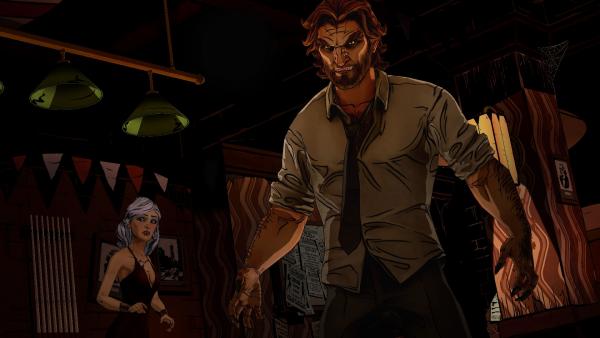
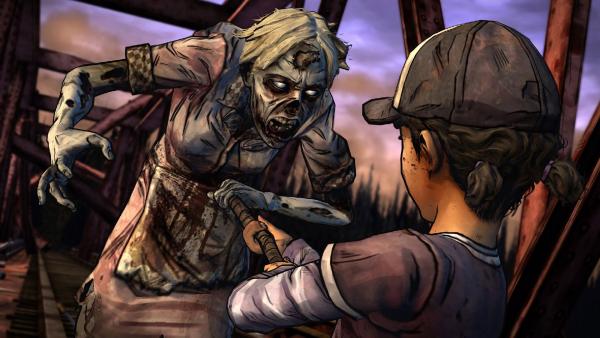
Telltale games has a reputation for creating compelling, character-driven, adventure games based on popular comic book and television series, such as the award-winning The Walking Dead: Season 1. Each game season is comprised a number of episodes, which release at regular intervals, with story outcomes that are guided by critical decisions players make throughout. Telltale’s other breakthrough hits include The Wolf Among Us (based on the Fables comic books), Game of Thrones, and Tales from the Borderlands (based on the Borderlands video game franchise) along with many others.

The company shows no sign of slowing down, with the recent release of Minecraft: Story Mode, an adventure set in the best-selling Minecraft game universe, along with another game set in The Walking Dead universe, and the announcement of an upcoming series based on the Batman comic books.

[a]listdaily speaks to Steve Allison, Senior Vice President of Publishing at Telltale Games, to talk about how these partnerships have grown, what it takes to promote an adventure game in today’s market, and what gaming might look like in the coming year.

Telltale recently announced an upcoming game based on the Batman comic books. Tell us a little about how this partnership came about.

We’re huge fans of Batman here at Telltale and have had an established working relationship with Warner & DC Comics now for a few years that started with The Wolf Among Us.  It’s pretty safe to say we earned a great deal of their trust with the work we did on their Fables IP with Wolf and we’d been expressing our interest on Batman for quite some time. It all worked out and were super excited with what we’re going to bring to fans next year.

screenshot bigbywolfoutTelltale has partnered to create adventure games based in diverse worlds such as Game of Thrones, The Walking Dead, Borderlands and Minecraft. How do you decide which projects to pursue
When we decide on a license there’s a bit of science on the front end about the size of the potential addressable audience for a Telltale game based on the size of the IP and in combination that can mean book sales, box office grosses, games sold, WW TV ratings or a combination of some/all those things depending on the IP. We also look at intangible passion for franchises which shows up more in pop culture or things like Google Trends and that points us at a pretty short list. After that bit of work it matters if we as a team have passion for the things on that list and if they are available to us and then we take things from there as far as trying to partner up with folks. In all cases to date have initiated every conversation that led to a product based on this internal process. It’s also important to note that demographics for franchises are also an important part of working through the potential of an IP as a Telltale Games series. We are really focused on the 17-35 year old demographic here and what that IP that group is passionate about.

How do you make single-player adventure games stand out in a market dominated by fast-paced action games

People love narrative. It’s what drives TV, books and film – and it’s what drives our products.  We make interactive scripted entertainment that works on devices that have large 17-35 year old audiences and we seek to work on franchises that those people are passionate about. The difference that makes a Telltale Game Series different than TV/Books/Film is that we give folks “a lean in” scripted entertainment experience in which they can participate and influence the narrative based on what they choose to say, or do – to jump into a story rather than sit back and consume it. In that sense we compliment fast paced action games and live in harmony with them. Hardcore gamers, casual gamers and all players in between can enjoy what we do because it is about the crafted story experience we provide based on an IP people are passionate about, and our teams are passionate about making.

What are the challenges in promoting an episodic game series, especially ones that release for console, PC and mobile platforms

What makes us different in terms of how we stand out from other game genres is also our biggest challenge. We aren’t a twitch based action experience, we make stories that you get to play and influence which gives you a tailored experience based on what you say and do. It’s a heady thing and challenging to explain that to the broad market and we constantly are working on optimizing how we do that. Also cadence in the delivery of our episodes is critical, especially once you get people who are really into what you’re doing, they want their episodes on a reasonable schedule. We have struggled with that at times in the post Walking Dead Season 1 era and there is nothing more important to us than giving great episodes on a nice cadence at the moment. We’ve been able to do this on Minecraft: Story Mode and we’re working hard to maintain that on the things that follow.

zombiepoleWhat would you say players love most about Telltale Games’ adventures, and how do you grow that audience
When we deliver a good story and within that story a good role playing experience that hits an emotional chord, it’s in those moments that we make fans for life. Whether it’s a shocking dramatic moment or making someone cry when we craft those right and they hit we really hook a large group of people who keep coming back for more. We grow our audiences by expanding our demographics.

Minecraft: Story Mode appeals to a large group of 10-17 year old players that is pretty new for us in addition to the very large 17-35 year old audience and we’re likely going to explore some projects that can appeal to this 10-17 year old group in the future if it makes sense. We also have a strong pattern of cross franchise buying that has grown over the years that transcends the vertical nature of having a range of licenses and appealing just to each core audience, we now have real Telltale fans that do buy and play everything we make and that has really grown year over year.

What are your thoughts on virtual reality technology, and how do you think it will impact video gaming

We are very interested in VR. In the abstract telling a crafted story in the VR space is an exciting problem to try and solve and we talk about it often. There’s also the idea of adding extended VR experiences to our game series that are affected and influenced by playing one of our regular game series enhancing the overall experience for someone who has a VR setup. We’ll definitely be talking about our plans for VR publicly attached to a project of ours in the next year.

How do you see video games continuing to grow and change in the coming year

The range of interactive content that’s available that have successfully defied traditional gaming conventions has grown exponentially in the last few years in terms of what people are playing in mobile, home console and PC.

The range of successful new types of games that are mega hits is astounding; from Clash of Clans on mobile, or the types of content we’ve been able to bring out very successfully across all platforms, to the types of games we see coming out of Steam Early Access that are legitimate multi-million unit sellers that will go on to even bigger things on console born from the approach games like Minecraft created not that long ago. It’s just an amazing time for our industry.

These pathways to success defy the traditional publishing model and we’re going to continue to see big products born by companies who leverage the evolution of our business in the coming 1-2 years. VR is going to be an interesting catalyst as well.

Adblock Is Trying To Change the Future of Advertising

Ad blocking is a power player commanding serious attention in the digital media industry table. It’a changing how ads are sold, presenting marketers with new worries and challenges by the day. Some are even wondering if the obstruction of intrusive, distracting and irrelevant ads is the end of Internet advertising as we’ve known it.

Over 198 million people globally run ad blockers each month, according to anti-ad blocking firm PageFair, per Digiday. The permeating hot topic has even penetrated its way through pop culture as South Park and Howard Stern have provided satire on the subject.

Browser extensions like Adblock Plus eat a sizable part of European and American publishers’ business. It’s forcing brands, agencies and publishers to re-think strategies to put the user experience first.

Ben Williams, operations manager for German-based Eyeo GmbH — the parent company of Adblock Plus, which operates under the “surf the web without annoying ads” modus operandi — tells [a]listdaily that a marketer’s solution to the increasing use of ad blocking is simple: Make ads that users accept.

ben 23

Ben Williams

How did we get here?
It’s been an incredible few years for ad blocking — and by extension for user control and innovation in the ad industry. Ad blocking began in 2006 when our co-founder Wladimir Palant made Adblock Plus. It quickly skyrocketed to the number one browser extension ever.

But that presented Wladimir with a problem: the free Internet depends on ad revenue, so wasn’t ad blocking merely destructive Well, he thought it didn’t have to be. So he tried a few solutions to responsibly block ads before coming upon the Acceptable Ads initiative, which is a certification process for better ads based upon user-generated criteria for ‘acceptable’ advertising. That was in 2011. Since then, both Acceptable Ads and ad blocking in general have once again exploded. Since around 2013, we’ve been averaging three million downloads per week. And the train doesn’t seem to want to stop. In that time ad blocking has become more than just popular. It’s now an innovative force in online ads: with every one of those downloads it is a vote for better ads.

Eyeo GmbH was founded to “pursue a different vision of online advertising.” What is that vision? 
That vision is finding ads that ad blockers find acceptable and thereby encouraging better ad formats and innovation. This is how it works:

  • Advertisers and publishers apply to have certain — not all — of their ads whitelisted.
  • We check to see if they fit our criteria.
  • If they do, we whitelist them. If they don’t we either work with the advertiser in question to help get them in line or we have to reject them.
  • The ads are whitelisted.

Whitelisting does two important things: it provides us with a way to monetize. Our product is free, so we ask that approximately the top 10 percent of the companies on the whitelist pay a licensing fee after they agree to meet the criteria. Second, it encourages better ad formats. This is our vision for a better Internet — ads that monetize free content effectively and that even ad blockers can live with. We’re not there yet, but the discussion happening within advertising right now — which acknowledges the need to improve ads (see the IAB’s Lean initiative, for instance) — is encouraging.

How scared should marketers be of AdBlockers? 
Not at all. We want to work with marketers to develop better ad formats. In fact, up until this point we’ve ran Acceptable Ads, basing many of our decisions on user feedback, surveys and studies. But starting in mid-2016 we will hand over full control of the criteria for acceptability to an independent committee — and we of course want marketers to be part of that committee.

Is there a typical AdBlock user? Who is using it What about mobile? 
We don’t collect information on our users, so we don’t really know. But from some of the other studies that have been conducted, the typical ad blocker would seem to be younger, male, educated and tech-savvy. Regarding mobile, I don’t think enough people know they can block ads on their iPhones yet — which is why they should check out Adblock Plus for iOS of course.

How’s native advertising impacting the industry? 
If it is labeled clearly and correctly, for example as “advertisement” or “sponsored content,” and it is differentiated from the editorial content, it’s a great development in advertising. Native advertising done right is contextual, nonintrusive and creative.

‘Cookie Jam’ Developer On How They Will Stay On Top of Mobile Gaming

Famous for popular games like Cookie Jam (trailer featuring comedian Ken Jeong above), Panda Pop, and Juice Jam – all three listed as Best of 2015 games ­across iTunes and Google Play — SGN (which stands for Social Gaming Network) is looking to keep that incredible momentum going. It continues to expand with the recent acquisition of Fat Rascal Games and Kiwi studios, with the goal cranking even more hits in the coming years.

[a]listdaily talks to SGN Senior Vice President Brand Strategy & Marketing, Josh Brooks, to discuss what it will take to stay ahead in the ever-growing world of mobile gaming.

Josh Wall 0009How has mobile gaming changed in the past year  
The volume of gamers has continued to expand, as well as the demographics of those gamers. If multiple Super Bowl commercials for mobile games isn’t an indicator, then I don’t know what is. 

What is the key to having your games stand out against the competition  

Customers are highly critical of the nuances that games offer, and as a result, developers need to be receptive to the feedback given. We make the best possible games not only through our creativity, but by giving the consumers what they’ve asked for. If a level is too hard or too easy, if there’s a mechanic that no one likes, etc. Our games are fun to play and we provide a ton of content per title.

How do you think virtual reality technology will impact mobile gaming  

VR will take mobile gaming into a new stratosphere and is beyond exciting. Gameplay, game narrative and social interaction will be turned upside down as the experience is working on a new dimension. Hopefully someone figures out a way to not make me nauseous, though…

What are some of your marketing goals in the coming year  

2016 feels like a year where taking risks on acquisition techniques is going to be a must. The competitive landscape in mobile gaming is putting pressure on marketers to find customers where they haven’t done so before. SGN’s heavily populated network of gamers across multiple titles will be a significant asset to market and build awareness for our new slate of games. 

In what ways do you think mobile gaming will grow and change in the next year  

I think game developers and studios will need to be more mindful of the games they are creating and marketing outside of their own locales. Going global means paying attention to the cultural trends and buying habits across the globe, not just where they live. Similar to console games and even movies, we will continue to see the growth of mobile game franchises extending the breath of successful IP.


‘Everest VR’ Takes Immersive Experiences To New Heights

The last time I climbed a mountain in sub-zero temperature as snow flurries flew by face and my vital organs felt like it was seconds away from giving out was never, but there I was at the summit of Mt. Everest anyway, mere minutes after driving through the gridlock traffic in Los Angeles.

I’d ascended the world’s-highest mountain faster than it took me to find parking in the building where Kjartan Pierre Emilsson, the mind behind Sólfar Studios Everest VR experience, waits in an empty room.

With my expedition essentials still conveniently stocked at a sporting goods store, I embark on my pilgrimage equipped with slacks, dress shoes and an HTC Vive strapped to head. This is when I’m immediately transplanted from a calibrated room the size of a wrestling ring to the borders of Tibet and Nepal.

I begin to control my view of the jaw-dropping peaks by simply moving my head as soft-music plays in my headphones; the panoramic views are vivid; looking down brings butterflies; climbing a ladder feels weird, yet fun as you hear the creaks; tip-toeing the mountain’s edges triggers fear; the emotions are real; I respect the mountain. But everything is OK once I aimlessly approach the room’s wall, a green grid appears in my goggles, and I remember this is all fake.

If you’re big on fantasy worlds, then virtual reality is right up your range thanks to people like Emilsson, who’s made the trek from Iceland to L.A. to showcase his latest project.

Much like the expected coming-out party for the industry, Everest VR is due in 2016 on all major platforms. Emilsson believes Everest VR checks a lot of boxes in the virtual reality gamut. It’s educational, experiential, and from a brand recognition point of view, Mt. Everest is something everyone can identify with, making it easy to explain the product. “It attracts a large demographic group, and not only hardcore gamers. Your mom and dad will even understand it because it’s a known entity.”

Sólfar Studios is currently building out the capability with key moments in the scripted experience, which is expected to elapse anywhere from 90-to-120 minutes. The company teamed up with Icelandic special effects company RVX, who already holds credits in the movie “Everest“ that debuted in September. Leaning on RVX’s expertise with the mountain allowed for the acquisition of more photo-realistic models and data.

“An important part of VR is feeling immersion and being able to affect the world that you’re in,” Emilsson says. “Virtual tourism is going to be a powerful aspect of VR. We always try to make the environment the interface in VR where action triggers the experience,” he says.

Emilsson is a physicist who has a PhD in chaos theory and started dabbling in gaming 20 years ago with multi-user virtual experiences on the Internet. He’s now going all-in with VR.

Another project for Sólfar is Godling, scheduled for release in 2016. In this experience, you’re a toddler god born into a natural environment and begin to explore a world where flowers are as big as trees and snails are as big as houses. It was presented at E3 this year.

“Since nobody really knows where the virtual reality market is going, it’s important not to wager everything on a single type of product or experience. The jury is still out on what will be the killer app for VR. The evolution will lead to a more mobile experience likely in the headset alone. There’s still a long way to go to make this perfectly accessible.”

For a small company in an emerging market, Emilsson is taking a step in the right direction in his quest to reach the top of the summit.

Hitbox CEO Explains Why 4K Is The Future Of ESports

Hitbox has focused on its technology since launching two years ago. The company has attracted over 50 million uniques to date, and has just surpassed 1 billion views. On Dec. 6, Hitbox held a 4K Heroes of the Storm exhibition match at KaoS Industries Studios in the Netherlands featuring G2 eSports, TCM Gaming, Team Liquid, and Virtus Pro with $4,000 in prizes. The livestream of the event can be viewed here.

Martin Klimscha, CEO and co-founder of Hitbox, talks about the platform’s success and explains why technology will play an important role in future growth in this exclusive interview.

How many viewers have you grown to since launch

It’s a perfect time to ask about that, as we’ve just reached 50 million unique users on the platform since we launched two years ago. We’re also celebrating that we’ve hit more than 1 billion views this month. Being first to bring new technology and features to our broadcasters, as well as our focus on games, has helped us grow.

hitbox Martin Klimscha 1

Martin Klimscha, CEO, Hitbox

What type of 4K gaming audience is there out there on the PC side

Hardware adoption is still growing, but shipments grew 600 percent last year and today you can grab a great 4K monitor for less than $400. More and more PC games are getting released with 4K level graphics, including recent AAA titles Star Wars Battlefront, Fallout, FIFA, Tomb Raider, Witcher 3, and Black Ops 3. These games look stunning in 4K, and we will see more games with a focus on 4K that push the boundaries of game textures.

How important is 4K to gamers, especially with no consoles supporting 4K at the moment

Exactly, “at the moment” PC gamers have a long tradition of leading consoles in tomorrow’s gaming technology so it’s only a matter of time before consoles catch up. Every major consumer tech company is investing in 4K, and I can’t imagine Sony and Microsoft not considering it for consoles in the near term. Our development team has always pushed forward to be the first in key technologies that make watching games and interacting with friends more fun.  We know our community will want 4K soon, and now we are ready.

Which PC eSports games support 4K today

All of the top eSports games look best in 4K. Given the need to showcase games on big screens and show all of the intricate, blazing fast action, we’ll soon see more titles built from the ground up with 4K in mind.

How important is 4K for developers and leagues that show events on huge screens

ESports events are exploding, and just like in traditional sports, fans want to gather to cheer on their favorite teams. Huge screens make them feel like they are sitting right next to their favorite players, and 4K will give them a much better experience.

Azubu recently told me all streaming companies will have 4K at some point soon. What do you feel differentiates Hitbox outside of 4K

We are absolutely convinced that 4k is the future, and in contrast to other streaming companies, we have been driving technological innovation since day one and see it as an accomplishment that others are following us. And unlike others in this space, we are building our own tech front to back – to offer all the things we ourselves want to experience as gamers and eSports players.

Our advantage has always been in our technology. We’ve never been a company satisfied with our current offering. If there is a new feature or a technology that could make watching games more fun or engaging, we’re going after it, whether the mass market is ready yet or not. Our fans love that about us. We were the first to offer HTML5 chat and video, 1080p 60fps, game integrations, and now 4K at 60fps. Striving to innovate enables us to implement new features that excite our users, including the lowest chat delay in the industry, more opportunities for fans to be expressive with embedded videos and gifs within chat, integrated polls and contests for a more interactive experience, and game integrations to learn more about what they’re watching. And, there’s more to come. 

What does 4K add to eSports

The game publishers, players, and fans who grew up constantly upgrading their PC to play the latest game with the best experience understand why 4K matters. They always drive adoption for new technology in the industry. 4K offers the best viewing experience available; it makes everything you see on the screen better, so we had to have it.

What opportunities does 4K open up with all of the Consumer Electronics companies marketing 4K TVs and monitors this holiday and beyond

With more 4K monitors in the market, consumers have more options and costs come down. But content will drive further adoption, and any of those companies will tell you we need much more content. We want to be a leader in 4K content.  

How did your initial 4K livestream go from an audience perspective

It went great! Heroes of the Storm looked gorgeous in 4K 60fps and we were excited to have some of the best teams compete: G2 Esports, Team Liquid, TCM Gaming, and the 4K Heroes champions: Fnatic. Thousands of viewers tuned in, many were following the results on Twitter, and the crowd grew throughout the event. The chat window was filled with activity and we also got the opportunity to answer a lot of questions about 4K.

How often do you plan on hosting these moving forward

This event was a proof-of-concept test of our 4K infrastructure and we’re in talks with many developers and publishers about the future.

Â