Game Veteran American McGee Discusses Challenges in the Mobile Space

American McGee has been making games for 23 years now, having been part of id Software’s early first-person shooter PC glory days. The developer has succeeded in making a name for himself outside of his early work on games like Doom and Quake. McGee left the console and PC market behind seven years ago after developing games like American McGee’s Alice,Scrapland, Bad Day LA, Alice: Madness Returns, and American McGee’s Grimm.

After releasing free-to-play mobile games such as BigHead Bash, Akaneiro, and Crazy Fairiesthrough his Shanghai-based Spicy Horse studio, McGee has a new mobile game available for Android and iOS. Critter Academy blends tower defense and role-playing with deck building tournaments. McGee talks about the evolving mobile games industry and what the challenges are to succeed as a indie studio in the growing mobile video game market in this exclusive interview.

How have you seen the mobile video game space evolve since you first entered it?

At the end of the last console cycle we saw many studios, like Spicy Horse, make the pivot from AAA PC/console development to mobile/web development. At the same time, 3D art content and multiplayer game play became more common in mobile apps. F2P design combined with traditional game mechanics across a dizzying array of new game apps. A handful of big hits helped transform indie developers into publishing powerhouses – while at the same time driving existing publishers (who made the transition to mobile) to greater and greater profits.

Early on, developers in this space had reason to believe they could successfully self-publish. They could also choose to partner with existing publishers to larger, reach pre-existing audience networks. Over time, the cost for small studios to self publish increased, pushing more developers to chase a shrinking number of third party publishing options. In recent years the cost of User Acquisition and development have skyrocketed to the point where third party publishing deals are no longer viable options for either developers or publishers.

Smaller studios working to self-fund development and self-publish original games are facing serious difficulty in an environment where UA costs continue to rise. This is driven by war of attrition strategy among the industry giants, many of whom are spending millions of dollars a month on marketing/promotion with little chance of recouping their costs. In my view, the model isn’t sustainable — not for the indies, and not for many of the current giants.

What are the biggest challenges today for an indie studio like Spicy Horse? 

Visibility, plain and simple. A game can’t be successful if people aren’t aware of it. The cost of acquiring users outstrips the profit potential of all but a select few users. The limited pool of valuable users is being oversold. And, as much as “mobile use” might increase month by month, I doubt whether the pool is being replenished with the kind of quality users the industry needs in order to sustain the current cost structure.

Beyond that, we’re pretty happy with our setup — we’ve proven our ability to efficiently convert cash into content. Our 35 person team has repeatedly out-produced 100 person teams in terms of quality/amount of content in similar mobile game genres. If speed to market and quality were all it took…

So many mobile games are just copies of other games. What role has originality played in Spicy Horse’s longevity?

We have to balance risk with creativity. Players are comfortable with certain mechanics and interfaces on mobile devices – there are things we know work, things we know don’t work, and lots of things we’d like to experiment on, but don’t for fear of innovating ourselves out of existence. Where we work hardest on originality is in our art, story, and presentation. But then, this is nothing new for our team — the same is true when you look at a AAA title from our studio, like Alice: Madness Returns. The innovation is in the art.

Where do you draw inspiration from for mobile games?

When it comes to the stories, I look to the classic foundations of drama. Some of our recent games have explored themes related to the human condition, using hell as a backdrop for the narrative. In Chains of Darkness, the player was thrown into an environment that looked like hell, surrounded by a cast of damned characters. As the story unfolds, a theme of competition and survival emerges; it’s a long form exploration of “hell is other people.”

How is bad free to play impacting mobile games for everyone?

I think F2P is the ultimate expression of consumer driven enterprise. There’s no chance you’re going to be fooled by a multi-million dollar, months-long marketing campaign for a $60 game, then purchase it only to realize it wasn’t what you’d hoped for. F2P is like walking into a retail shop at the mall — it costs you nothing to open the door, and take a look around. If you like what’s on offer, you engage. If you don’t, you check out the shop next door. What’s more, if you do engage, then decide you’re unhappy about the way the shop is being managed, then you have multiple ways in which to express your dissatisfaction – stop spending, tell the developers, and write a negative review.

F2P isn’t going away. Bad F2P is punished. And good F2P still has a lot of innovation and improvement it can make. Players, through their choices, can drive that positive innovation in real-time.

Ultimately, it’s just one of many choices consumers have on mobile devices. Don’t like the F2P model? Purchase a premium game. If consumers en masse really dislike F2P, they can help the model die through their choices.

How is the sheer amount of free-to-play choice in the overcrowded mobile marketplace impacted the development of Critters Academy

It all goes back to the question of visibility and user acquisition costs. There are a lot of major publishers of F2P games out there who, by virtue of their existing player networks, spend very little on user acquisition. As a small indie studio with limited marketing budget, that’s very difficult for us to compete against. We have to be better where we can — through our 24/7 customer support channels, through art and story, and through implementing better mechanics, through listening to our customers.

What do you feel differentiates Critters Academy in the mobile market?

At its core is a unique story which explores the politics of power in a universe of magic. The art style has been described as “creepy cute,” and combines Asian anime style with Western character themes. The game play, while not completely unique, is presented in a fast-paced, low friction style. I’m biased, but I feel confident in saying it’s the best mobile title we’ve produced to date.

We’re seeing more Hollywood actors appearing in expensive TV commercials for mobile games in the U.S. like Arnold Schwarzenegger and Liam Neeson. Where does that leave the smaller game studios in finding an audience? 

Trampled under food on the battlefield of giants! These huge celebrity deals, license IPs, and massive marketing budgets all echo trends that emerged with PC/console publishers a few cycles back. It seems this is a natural pattern that appears as new platforms are transformed by success. If the past is any indicator, smaller studios won’t have much chance in the emerging publishing environment. Many small studios are pivoting to VR/AR. One of the more ominous pivots, in my opinion, are the huge number of game devs who are moving into the User Acquisition space. Again, I think the value of the space is dangerously oversold. And I wouldn’t be surprised if we’re start seeing some spectacular blowups of major players as the bottom falls out of the market.

How are you marketing Critters Academy?

The traditional routes — Facebook, Google, and through a variety of ad network partners. I’m also leveraging my personal social networks and reaching out to traditional media. But I’m honest with myself and my team about the challenges we’re facing. This might be our last original title in the mobile/F2P space. At this point, a lot is riding on support from Google and Apple. They can make or break an indie these days.

What have you learned from being immersed in Shanghai culture for over a decade that has helped with mobile game development?

What I’ve learned is really only applicable to development here. With so many years behind me, it’s going to require a book in order to properly tell the story.

How do you feel your PC and hardcore gaming background has influenced your mobile games?

I’ve been making games for 23 years now — and everything’s an influence, one way or another. Difficult to pinpoint it on a day to day basis.

What are your thoughts on the transition of mobile games to the big screen with devices like Amazon TV, Apple TV and Android TV? 

I could be wrong, but I feel like it’s a solution looking for a problem. Here in Asia, people just aren’t interested in sitting around a TV and playing games. Everyone’s out on their mobile phones, playing games, watching movies, and engaging with social media. My perspective is limited to Asia, but if the rest of the world is at all similar, then I would expect the focus on mobile only to increase.

GDC’s State of the Industry Sees Increased Support for VR and ESports

Results from the fourth annual Games Developers Conference (GDC) State of the Industry Survey have been released, showing the top trends of the video game industry based on feedback from over 2,000 developers. Some of the biggest takeaways include how virtual reality development has more than doubled to 16 percent, compared to 7 percent of studios working on VR projects last year. Alongside that figure is an ever growing emphasis on eSports, with nearly 90 percent of respondents believing that eSports is a sustainable long-term business.

Simon CarlessSimon Carless, Executive Vice President of The Game Developers Conference (taking place March 14-18 in San Francisco), talks to [a]listdaily in-depth about the survey findings and how this year’s conference will heavily feature VR and eSports themes.
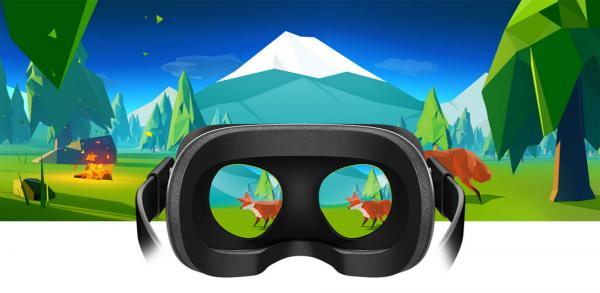
As it turns out, even with the rising popularity of VR, PC and mobile game development remains dominant, but both are showing slightly lower numbers compared to the previous year. Furthermore, development for both the PlayStation 4 and Xbox One rose by one percent, while projects for Nintendo’s Wii U and 3DS saw a drop of one percent.

Although VR development is still at its infancy, enthusiasm for the technology remains relatively high. Carless notes that, “We asked developers if VR/AR is a sustainable business, and exactly 75 percent said yes, while 25 percent of people said no.”

When asked whether or not they believe these devices would exceed the (roughly) 40 percent adoption rate of game consoles, “27 percent of respondents said they didn’t believe VR/AR hardware would ever surpass that level of adoption.” One percent believed that it could happen by 2018, while 44 percent expected it to happen by 2026, and 54 percent didn’t think VR would surpass consoles until at least 2030.

“I think developers expect that VR will be a gradually growing market, partly because the first generation VR devices – at least the higher end ones — are going to be quite expensive,” Carless explains. “But that’s something that games development is used to. If you look back at some of the early consoles, I think some of them were as expensive as $600. So, it’s certainly not abnormal for early game hardware to be expensive.”

Hardware adoption will be the chief challenge for developers looking to make virtual reality games, and it could be a long uphill climb. According to the survey, “38 percent of respondents predicted that VR/AR hardware would be in 10 percent of U.S. households by 2020. 86 percent figure it’ll happen by 2030, and roughly 9 percent figure it will never happen.” It should be noted that the survey was taken before the Oculus Rift’s price announcement, so while some views may have changed with the news, Carless explains that many of the questions were geared for the long term.

Currently, it looks like the Oculus Rift is the most favored device among developers, with 20 percent of respondents stating that they anticipating they will develop their next VR game for it. In comparison, only 9 percent said the PlayStation VR. “Part of that is because the Rift is much more open and available dev kit,” said Carless. “So, just because developers think they’re going to make more games for Oculus VR, that doesn’t necessarily mean it will be the most popular device.” He also notes that, “Things like PlayStation VR may be helpful, because there are already a lot of core gamers who are interested in VR.”

Oculus GamesWhen asked which VR/AR devices interested developers most, the survey results broke down as follows:
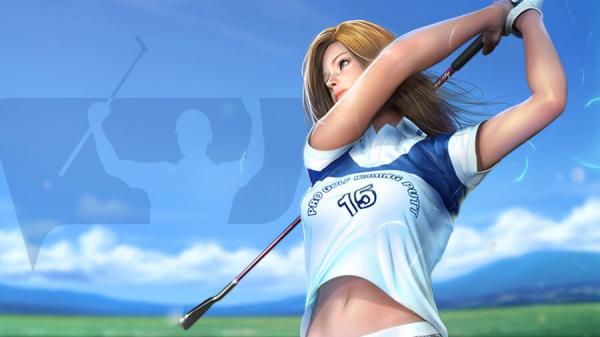


  • 40 percent said they were interested in Oculus Rift
  • 25.9 percent said the HTC Vive
  • 25.6 percent were interested in the PlayStation VR
  • 25.3 percent responded HoloLens
  • 15 percent showed interest in the Samsung Gear VR

Another major focus at GDC will be on eSports. Carless explains that eSports are a big deal at the conference, even though it may be a difficult goal for many developers to reach, since it requires quite a bit of investment and infrastructure. “Only 15 percent of developers surveyed said that they’re working on a game they consider to be an eSport.” At the same time, “88 percent of respondents said that eSports is a long-term sustainable business,” an 8 percent increase from the 79 percent of respondents who affirmed the same position last year.

The survey findings conclude with mobile game development numbers that indicate that support between the leading mobile platforms is closer than ever, with 55.1 percent of respondents developing games for Android, and 56.3 percent for iOS. While the competition is close, they represent a drop from the 2015 survey, which showed a Android and iOS support at 59.1 percent and 56.3 percent respectively, indicating that some may have dropped out of mobile development in the past year.

How ‘Winning Putt’ Scores With Golfers and Gamers

Golf fans were given a treat when Winning Putt, a free-to-play online golfing game where players can personalize characters to compete with each other, recently entered into Open Beta. Winning Putt combines sports elements with those of massively-multiplayer online role-playing games (MMORPG) for an experience unlike any other.

[a]listdaily talks to Ed Chang, Namco Bandai’s Global Brand Director of Digital Games, to find out more about how Winning Putt stands out and gets an ace.

Winning Putt Full

Tell us about Winning Putt and how it stands out from other golf games.

Winning Putt is a unique combination of two things: 1) A solidly detailed and enjoyable golf game with all the nuances and rules of real golf. 2) Gameplay features from proven genres such as action games, RPGs, and MMOs which allows players to go beyond mere golf  — such as instanced speed runs with 20 simultaneous players, enchanting clubs for greater stats, golf gear with stats. More to be revealed in the near future.

We believe this combination offers something to both gamers who are looking for that extra something in all games they play, and the golfer who is looking for the familiar, but who will be pleasantly surprised and engaged with all of new additions to golf in Winning Putt.

In what ways can friends play and compete with each other online?

Currently the game allows up to foursomes in normal play. 1v1 matches are also possible. The instanced speed runs will allow up to 20 players to play through a course, much like instanced dungeons in MMOs, and win based on score & speed.

How does the character leveling system work, and how deep are the customization options?

Leveling is fairly standard in that you gain experience by playing the game, and in every stroke in a round of golf. In addition, you can accelerate your progression with items from the store.

As for customization, there are many levels to this:

  • First, your character can be deeply customized in the character creator where you can create a stunning beauty or the opposite.
  • Second, there are many items of clothing you can earn and buy that give your golfer a unique look.
  • Third, golf identity is based on gear, and here is where Winning Putt really shines. There are thousands of clubs to discover in the game as well as other types of gear that give you skill or stats such as rings, shoes, visors, glasses as well as clothing. Even if your character and clothing are generic looking, the identity from your performance on the golf course will make you stand out.=

wputt 008

What can players expect to get out of the Open Beta?

Winning Putt at this point is a highly polished product. We’re making tweaks to players as we get feedback but they can expect a game that has been customized to the Western marketplace as well as a stable product. We’re listening to feedback from all our players as well s trying out new things in the game so be prepared for an experience that will change over time. We feel this is the best long term way to keep the players happy.

Give us feedback, though… that’s what this phase is for!

Is there any chance that Winning Putt will have VR support someday?

We can see the growing popularity of VR very plainly. We love this technology as well. At this point in time the development team is busy with all of the existing tweaks that we are proposing. If the community feels strongly about it then there’s no reason we wouldn’t do this.

What would you say is the best reason to play Winning Putt?

Winning Putt breaks new ground with the combination of solid golf and reality bending gameplay features. Other games are great but none have this combination. Gamers and golfers alike all have something they will love in this game: the gameplay features from non-golf genres, the ability to play golf at any time alone or with friends and the stupendous graphics made possible by CryEngine. There’s definitely something for everybody, and what players don’t expect from their golfing experience will make them play even more.

wputt 016

This is the sixth game that the Bandai Namco Free-to-Play division has launched. What can we expect from you guys in the future?

Free-to-Play is like is something that is growing in popularity by leaps and bounds. A very large segment of video games has gone to, or plans to embrace, a F2P business in some form or another. As this segment grows, so do our plans.

Also, the business model in many ways allows development teams to more freely explore other types of gameplay and also to mix and match them. A golf game with RPG elements would probably seem risky with a more traditional pay to play model since it’s untried. But in F2P we can experiment with those configurations until they work. That’s the freedom to both players and publishers. And that’s just the beginning…

We see that Console also has a substantial F2P presence as well. While we’re focused on PC currently the business model has gained major traction on consoles and we follow the business model.

Lastly, Bandai Namco has a substantial portfolio of IP that has major popularity in both East and West. The combination of this IP and the expanding F2P business model has already happened. Expect it to continue into the future.

wputt 177c01dd40

John Smedley Details His New Studio Pixelmage Games

Former Sony Online Entertainment and Daybreak Games president John Smedley has emerged from stealth mode with his latest game studio, Pixelmage Games. Smedley has assembled a team of 14 developers, including Bill Trost, lead designer and co-creator of the EverQuest franchise.

The studio, which was established last October, is set in San Diego just down the street from Daybreak Games. Smedley, who serves as CEO of the new company, has raised $1 million from private investors and is using Kickstarter to generate another $800,000 to complete the first game.

The action role-playing game, Hero’s Song, will launch this October. The open world rogue-like fantasy game is being developed with a 2D pixel art style, hence the name of the company. It’s the first title in what Smedley hopes will be many games from his studio. He talks about returning to the games industry in this exclusive interview.

smed

What were your goals in opening this new studio?

I’ve been in the games business for 26 years and spent a lot of time at Sony Online Entertainment and more recently Daybreak Games. I’ve been yearning to run my own company again, and make the kinds of games I want to make without worrying about a big corporation or others.

Are there companies you looked at for inspiration?

We’re an indie studio. We idolize Pixar. We want to work on one game at a time and be crazy about it, and then move on to another game. We don’t want to do five games at once. We want to focus all of our attention on creating Hero’s Song.

How would you summarize Hero’s Song?

Pixelmage is dedicated to making insanely deep games with a multiplayer component. Hero’s Song is Dwarf Fortress meets Ultima Online meets Terraria meets Diablo. We build this procedurally generated world starting with this pantheon of gods. We worked with Patrick Patrick Rothfuss, New York Times No.1 best-selling author of The Name of the Wind, on the back story. As you log into the game and create the world – you decide which gods will inhabit it, so the world is different each time you play. We simulate the entire population genealogically all the way up to the year the game takes place. You’re living in a world where deep history matters. You can live in a world where dwarves have been killed by elves, for example. And which gods are chosen impacts the environments of the world. It really feels like a living breathing world.

Can you explain what the multiplayer component is for this game?

We let people host their own MMO. You can have thousands of players, but only a couple hundred at any given time can play. This is a first in the industry. It’s the big game changer. We’re moving towards a world where people will want to build their own communities and run them themselves. They can control all the rules and customize the experience.

What’s the business model for this game?

It’s “buy to play.” $20 gets you the basic game and $50 gets you the deluxe edition. There’s no difference in gameplay, but the deluxe edition includes a strategy guide and the entire soundtrack.

Why did you decide to leave the free to play space that your previous companies had adopted?

I’m tired of micro-transactions. I simply want to have a different relationship with the players.

How will you continue the crowd development process that SOE and Daybreak have embraced?

You’ll see an open development process with me talking to fans. We’ll be doing live Twitch development with CohhCarnage. He has a big Twitch following, but the main reason I went with him is because we worked with him on H1Z1 and his audience is exactly the audience who I think will like our game.

Why did you decide to use Kickstarter instead of just raising the entire $1.8 million?

We want to build a community of support for this game and for this company. Reaching out to the community is how we want to run things. We think the Kickstarter is going to be very successful. It keeps us in control of our own destiny.

How will you be using the additional $800,000?

We’re not trying to make a AAA game. We want to make a new indie game. We won’t need additional people, but the money will help fund the people we already have and also help us get additional art.

What type of crossover do you see Hero’s Song will having with fans of SOE and Daybreak?

The kind of game we’re making is a deep old school game that has a big crossover with fans of Daybreak and many other companies. People who have played the games I’ve made before will like this game. And I think multiplayer will be a big gamechanger.

Why did you decide to go this route with the online gameplay?

The content race that MMO games face is an unsustainable business model if your players can’t create their own content. Because of the web infrastructure we built around ourselves, if you play World of Warcraft there are already guides out there that detail where everything is. There’s no mystery. With Hero’s Song we wanted to create a world where we reforge it and it’s different every time. Choosing the different gods creates different landscapes and different civilizations, which all creates a ton of replay.

How will you be marketing this game?

We’re an indie developer. We’ll start small and build a core audience and communicate with them and build through Twitch. We’ll have some traditional marketing channels, but want to focus on the community.

How will the game expand and the studio continue forward?

It is a traditional retail game, but we’ll do expansion packs if there’s a want for that. We’ll add additional content over the next year. Meanwhile, we would be developing our second game in conjunction. We’d have a small group of designers working on content for the first game. We’re not trying to do two games at once time.

Will this be a PC-only game?

We’ll lead with PC, but we do plan on bringing Hero’s Song to consoles and mobile later on.

MLB Commissioner Rob Manfred Continues to Grow Baseball Through Technology

Almost one year to the day Commissioner Rob Manfred took office as the leader of baseball, he celebrated another technological breakthrough when he brought baseball to the Chinese market earlier this month.

The advancement was another feather in the cap for the sport and their long line of tech-savvy innovations. The 57-year-old Manfred made embracing technology and youth outreach one of his top-five priorities when he replaced Bud Selig as the tenth commissioner of baseball last January. Another tall task is to be a torch-bearer for the next generation of fans.

“I think it’s crucial for the future of the game for the sport to cater to the millennial demographic,” Manfred told [a]listdaily in an interview. “Baseball has always been generational. Appropriate use of technology is important to making sure the game gets passed on to the next generation.”

Manfred continued baseball’s decades-long expansion overseas by announcing a three-year strategic partnership between MLB and Le Sports this month to live stream 125 games a season in China, Hong Kong and Macau.

The first mass-market MLB media agreement in China adds another layer to a lasting global foundation Manfred is building. The marketing move should be a big boon for China as they make millions of dollars, and new fans. It’ll also help the country develop a future pool of pros, and perhaps push a flurry of Asian-born players stateside much like Japan and South Korea have done since the mid-90s. It’s already gotten off to a promising start. Last year the Baltimore Orioles signed 19-year-old Xu “Itchy” Guiyuan, making him the first player from one of MLB’s China Development Centers to sign a pro contract.

19317407741_1fe18f242c_b

Manfred, a Harvard Law School graduate, knows that globalizing the game will help unearth the next great talent from borders outside the United States. Adopting to technology – a concept the sport has notoriously been criticized for not fully embracing – only puts that process on the fast track.

MLB Advanced Media, the league’s digital company, is no stranger to success in the tech arena – they even have rights to NHL’s digital platforms. At the conclusion of the 2015 season, MLB.TV enjoyed a 20-to-25 percent growth in the number of subscribers for its Internet and mobile services, bringing the total to about 3.5 million, per the L.A. Times. Another way baseball is trying to appeal to its stats-starved, fantasy-playing youth is through sabermetrics. MLB made media waves last season with the debut of Statcast, a state-of-the-art advanced metrics tracking technology. The “At Bat” app is also must-have for any fan.

“Baseball is a game of history and tradition. Things like the Hall of Fame are important milestones in our annual calendar. We never want to lose track of what has been accomplished by great players,” Manfred continued. “On the other hand, we have a great generation of young players like Kris Bryant and Bryce Harper, to name just a couple. It’s really important for us to focus on those young players and technology as we try and appeal to younger fans.”

Manfred’s mission remains to grow the game both on an international and domestic level. In November, he announced a three-year agreement with FOX that will allow fans in the U.S. to watch live in-market streaming on any mobile device in 2016. The deal covers only the 15 markets in which FOX is the regional sports network.

“We’re working with the other distributors and expect to have agreements to allow in-market streaming with those distributors as well,” Manfred said.

The commissioner didn’t comment on a recent court filing that contests some of MLB’s broadcasting practices under antitrust law, but according to the nine-page document, it appears that MLB will be following in the footsteps of the NBA and NHL by offering a single-team streaming option for 2016.

MLB became the first sports league to offer live-streamed games in 2003.

By Opening Day, fans will be enjoying more tech firsts.

Follow Manouk Akopyan on Twitter @Manouk_Akopyan.

How Teevox Was Resurrected For New Age Of ESports

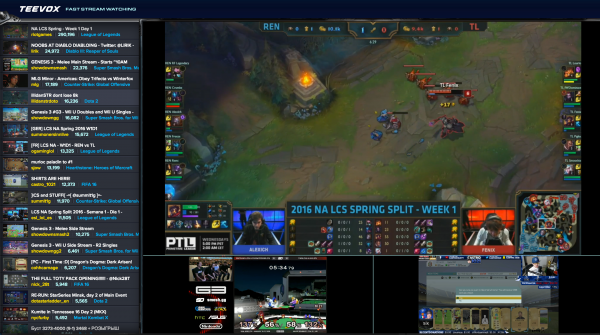
Jong-Moon Kim, founder of Teevox, has resurrected his technology for Twitch. The programmer initially developed Teevox in 2011 to watch multiple eSports livecasts on Twitch, something that wasn’t available anywhere else. But that was still early days of the livestreaming explosion, and now Kim has brought a new version of Teevox to Twitch. He explains what this opens up for pro gamers and eSports in this exclusive interview.

What’s your eSports background?

I’ve been an avid gamer since my dad brought home a NES system when I was four. To my dad’s dismay, this escalated to a great deal of Starcraft playing during my high school years as any self-respecting full-blooded Korean gamer can attest to. When I discovered people were playing Starcraft professionally, it was an incredible moment—the thrill of watching someone using blinding dexterity to accomplish impossible feats had me hooked for life.

 Why did you initially launch Teevox in 2011?

2011 was the year of Starcraft streaming. It was the Woodstock of eSports. A perfect brew of talent, audience and technology came together to make the industry explode. At that time, I had been working on a video transcoding startup (where Teevox got its namesake) and after long hours of coding, I would relax by pulling up Starcraft streams. What I loved aboutStarcraft streams was the fact that you still got the thrill without the draining mental workout.

The problem was there would be huge Starcraft tournaments running simultaneously. At the time, the largest tournaments were IPL (IGN Pro League) and NASL (North American Starcraft League). I remember juggling four different tabs and manually muting and unmuting streams until I realized this was rather stupid.

The project started off as a side curiosity, seeing if there was a way to control streams programmatically. Once I realized that was possible, I spent a month polishing the product into something usable. I decided to name the site after a Starcraft unit called the Warp Prism. I thought it was appropriate considering it was a unit that would teleport useful units to the frontline of battle.

It became an instant hit, reaching the front page of Reddit. That was the start of this strange journey. Through the months I released updates. I changed the name to Teevox to help adapt it across other games as well. An Android app was released to wide acclaim and I developed a novel remote control for your phone to control Teevox on your computer.

What differentiates this new product from anything else out there?

In a word, it’s fast. Unlike sites belonging to eSports organizations or other gaming destinations, it just has one focus — deliver what you want to watch in the shortest amount of time possible.

The uniqueness stems from the novel technology that was developed to carry out that mission. Teevox was a pioneer in techniques of stream preloading and variable bitrate control to provide a seamless experience.

Now on the surface, the product seems as simple as ever. I remember it was nearly every day someone on Reddit would write, “Isn’t this just embedding with copying and pasting?” And then someone would always jump in, “Just try it man.”

Teevox went to great lengths to hide the complexity underneath, presenting a simple, intuitive product.

What type of user base did you have back then? 

At its peak, Teevox had 700,000 monthly users. Teevox grew substantially during the summer months as Starcraft tournaments were lined up back to back.

Why did you decide to shutter the product in 2012?

After strong growth through 2011 and the beginning of 2012, the product started faltering. I had tried to launch other product lines and created partnerships to increase viewership, but it was coming up short. It had gone through seven months of stagnation and I wasn’t sure how to make it grow further. It was very demoralizing to see your graph start trending downwards.

The scene had become very crowded since Teevox’s first release. A number of other organizations had launched Teevox-like products under their own brands and we were all competing for a fraction of the tiny viewership back then.

After hemorrhaging money for an extended period of time, I felt the future looked bleak for Teevox to ever become something self-sustainable. I still regret having let go of the product and letting down its fans.

Why did you decide to relaunch this year? 

After attempting two dozen different startup ideas since then, none of which worked out, I was about to close up shop and start looking for gainful employment. I started shuttering the corporate accounts. When I opened up Teevox’s Facebook and Twitter accounts, years worth of old messages poured out from fans missing Teevox. These messages were from 2013 through 2015.

How many products do you really remember after it’s gone away for three years? That made me realize the product was something really special. The fans didn’t just like the product, but loved it in a way I didn’t realize before.

That gave me the energy to do a final push before giving up on startups entirely. I’ve spent the past few months polishing the new Teevox to be something worthy to be called its successor. I’ll have to admit, my development skills had improved dramatically over the past three years. The 2016 Teevox is sleeker, faster, and more powerful than I could’ve imagined possible in 2012.

What’s changed in terms of business opportunities for Teevox today? 

The eSports world today is vastly different from the 2011 world. Back then, we were lucky to hit 15 million viewers each month across the industry. Today, that number is over 200 million. Just this past year Twitch recorded 1.5 million streamers. If you can imagine having 1.5 million channels to watch on TV, that’s not a challenge for the feint-hearted.

I remember being annoyed in 2011 with having to deal with a single tournament and one other streamer. Today, it’s not uncommon to see five or six simultaneous tournaments happening across the world on a weekend with a few dozen streamers you’d like to tune into.

The problem has magnified into something intolerable, pushing the upper limits of viewer content overload. I believe this is a crucial issue for the industry as it will look for solutions to bolster its meteoric growth. Teevox aims to be the technological partner in blunting this pain, allowing eSports organizations and players to focus on what they do best: capturing exhilarating moments you can’t get anywhere else.

One of the most dramatic shifts is the fact that Twitch is no longer the tiny upstart. After its $1 billion acquisition by Amazon, it heralded a new era, becoming the bedrock platform for new businesses to be built on top.

As a foundational pillar of eSports, Twitch is rapidly becoming the new Hollywood. Teevox aims to be the Samsung to Twitch’s Hollywood, providing viewing technology to further enhance the inimitable content from Twitch.

It’s not every day you get a brand new multi-billion dollar industry with pristine opportunities for the picking.

teevox

What’s your business model? 

The Teevox viewing engine will be licensed out to tournaments, eSports organizations, and individual streamers, bringing the incredible experience you get at https://teevox.com to their personal and corporate domains. I believe this model fits very well with Teevox’s core competency and novel technologies that were developed in-house.

How big an audience do you see for this product today with the rise of live streaming? 

With eSports having a global audience of 200 million, Teevox has a lot of headspace to grow if it can make its mark as a powerful viewing platform. One advantage in this industry is the fact that the platform is globalized from Day 1. Surprisingly, gaming is one of the most uniting forces across national lines. A Starcraft game has no language other than the action happening on the screen. This has led to tournaments being able to be spread widely across the world, giving a massive store of entertainment as a (mixed) blessing. The industry as a whole is going through a growth spurt, making this a key window to make things happen.

Do you work directly with Twitch in any way? 

They had tried to hire me back in 2012. I admit, that would’ve been the smart decision. I remain friends with them, and it also helps that we are both Y Combinator companies. We are not collaborating on Teevox in a formal capacity.

Will this app work with other live streaming services like Azubu or YouTube?

The current focus is to build out the complete product on top of a single platform. Twitch happens to be the most established and with our ties going way back to 2011, I believe it made the most sense to start with them. Once the core has been established, I’ll take stock of what the community would like as next steps. If there is great demand, Azubu and YouTube can be integrated.

Are you working with any established eSports leagues, and if not what opportunities do you see there?

For eSports organizations, I believe investment in viewing technologies constitute some of their most highly leveraged dollars. I see event organizers spending inordinate amounts of effort creating a beautiful physical stage and in-person experiences. But online, they use a copy-pasted embed that’s unremarkable, replaceable, and forgettable. With the bulk of their audience coming remotely, I believe improving the online branded experience can do wonders for their events.

What does this app open up for advertisers or sponsors?

For Teevox-licensed players, organizations can develop a powerful solution that presents their content in a compelling way, as well as ensuring their sponsors deliver their message.

For the Teevox.com player for fans, I don’t foresee having outside advertisers. There may be in-house opportunities to help streamers increase viewership, but that would be a hypothetical way down the line.

How will Teevox be marketing this relaunch?

The challenge will be to let the original Teevox fans know that it’s coming back. Three years is a long time, as most communities dissipate after a while. Efforts will be made to reconnect with them through Reddit, Twitter, and Facebook.

What It’s Like to Have Super Powers in ‘Gemini: Heroes Reborn’

Many have dreamed suddenly waking up with amazing super powers, but how would they be used, and what would be society’s reaction to these gifted individuals? These are some of the themes that are covered in the NBC television miniseries Heroes Reborn, created by Tim Kring, and continues from where the original 2006-2010 show Heroes left off.

Although the TV series is approaching its epic finale, the fantastic world continues in the video game Gemini: Heroes Reborn, developed by Phosphor Games in partnership with Imperative Entertainment (co-founded by Kring himself). The game comes complete with a stand-alone story and all original characters, giving both fans and those unfamiliar with the series a chance to leap into the world of heroes and villains.

Brad Santos, Producer of Gemini: Heroes Reborn, speaks to [a]listdaily about being super powered and bringing gamers into the world of Heroes Reborn.

Tell us a little about what Gemini: Heroes Reborn is all about.

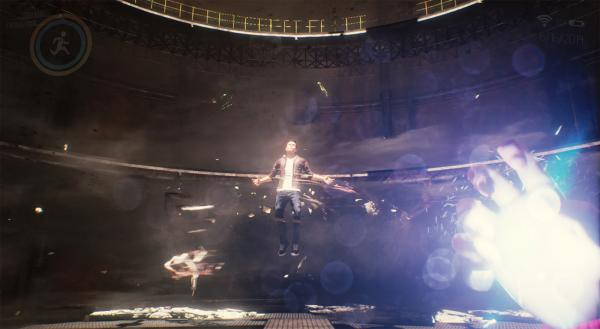
It is a first-person, action-adventure in which players assume the role of Cassandra, an ordinary college student who through a series of circumstances discovers a number of super powers within her. There are 7 powers in all, and what makes the game really unique and fun is the ability to combine your powers and use them simultaneously. This offers the player tremendous freedom in combat and puzzle solving.

In what ways is Gemini related to the Heroes Reborn television show?

Gemini was inspired by the Heroes universe, but it is a standalone story. The stories betweenGemini and our mobile game called Enigma are intertwined, and show different sides of the same story. Also, one of our main characters did make a brief appearance in one of the Heroes Reborn Webisodes.

What was Tim Kring’s role in the creation of the game?

Tim and his team from the show wrote the story and script for the game, and were involved throughout to ensure the game stayed true to the Heroes universe.

Gemini Core Gameplay Screens 28

Are there any cross over events and/or characters between the show and game?

None are planned at this time, but for fans of the show, there are a wealth of Easter eggs throughout the game which pay homage to both the original Heroes series and Heroes Reborn. We were very careful to design the game so that even if a player had never seen a single episode, their game experience would not be impacted.

In what ways will playing the game enhance the show’s experience and vice versa?

I think for fans of the show who have wondered what it would be like to discover you had powers, this is a chance to explore that notion. What would I do with them? How would I react when confronted by a bad guy? What would do with time traveling abilities? For players who have not seen the show, it a chance to see how the team of writers created layered stories with a lot of intrigue and surprises.

How will Gemini help grow the Heroes Reborn audience?

The game was designed primarily to appeal to gamers rather than fans of the show. When we started this project our mission was simply to create a great game, while at the same time knowing that with Tim and his team involved we’d also have a great story. So I do feel that players who love the game will find the urge to go back and check out the show, if they haven’t already.

Mark Cuban Isn’t Done Investing in ESports and DFS

Mark Cuban is walking through the halls of The Venetian hotel in Las Vegas and every passerby wants a minute with the man of the hour. He’s just wrapped up a conference where he, Shaquille O’Neal, the CEO of Intel and others talk about tech investing in sports and share how technology will shape future sports experiences. Bystanders begin to recognize the most colorful sports franchise owner of the 21st century, and immediately want to have a word, a picture, or offer a proposition.

One suggestion particularly catches the business-minded Cuban’s attention, and he casually fires off his email on the fly as he walks off to another meeting.

Screen Shot 2016 01 12 at 1.42.03 PM

Over 170,000 people were in town for CES, the world’s largest technology trade show, and the last thing a man who sold Broadcast.com to Yahoo! for $5.7 billion is going to do is call a timeout on a potentially good deal. Shark Tank mode never ends.

It’s the first week of January, and Cuban’s enjoying his sixteenth year as owner of the Dallas Mavericks. Thirty-six hours before our meeting, he was in a dog pile celebrating a buzzer-beating, double-overtime game winner. As much as he’s revered for his past successes, he’s always looking toward sprinkling some of his special pixie dust on the next big undertaking, which is also part of the reason why he’s in town.

***

In recent years Cuban has turned business investments and entrepreneurship into somewhat of a sport, dishing out money like Steve Nash in his heyday. Today is no different. He uses the stage to announce his investment into Fantasy Labs, a platform offering daily fantasy sports (DFS) subscribers with data, analytics, Las Vegas odds and player trends to develop and test models for creating lineups.

Most of Cuban’s ventures have been a slam dunk. Some have turned out worse than a Brendan Haywood signing. How does he measure success for his investments? “By how much money I made from them,” he tells [a]listdaily.

The ebullient Cuban is especially excited about Fantasy Labs because he believes it further champions the progress of eSports, which he thinks is the next frontier of sports. Never a fan of playing from behind, Cuban invested $7 million into Unikrn last year. Unikrn lets consumers bet real money on the outcomes of video game competitions. Welcome to the future.

“I think it can be huge,” he says. “Like all of my businesses I look for leverage points. Unikrn and Fantasy Labs won’t be my last investments in the space.”

Startups like Unikrn and Fantasy Labs could someday signal the start of a seismic shift in the sports landscape: legalizing professional sports gambling in the United States. NBA Commissioner Adam Silver even penned an op-ed in The New York Times in 2014 calling for the legalization and regulation of sports betting. Cuban, whose Mavs won a championship over LeBron James and the Heat in 2011, has long supported that notion and thinks sports betting is inevitable.

2843844125 3957cbbea9 b

He took the CES stage and discussed DFS, and how multiple states are banning companies like FanDuel and DraftKings. “You have to be an idiot,” Cuban said, to think playing DFS games is like sports betting, or poker. “It’s not gambling, it’s not gambling, it’s not gambling,” he repeated. “The only people who think it’s gambling, as opposed to skill, are people who haven’t played or people who have other political agendas, because that’s also very important these days.”

According to Eilers Research, eSports wagering is estimated to hit $23.5 billion by 2020, generating revenues of $1.81 billion worldwide. Cuban discovered Unikrn when it’s company CEO Rahul Sood appeared on a TV interview on CNBC. Two minutes later, Cuban called. “I’ve known Rahul for a while and respected the work he has done,” Cuban says. “When he came to me with Unikrn I liked what they had accomplished to that point, the upside opportunity and the industry. That’s a trifecta that was the selling point.”

The man who’s witnessed mostly every minute of Dirk Nowitzki’s Hall of Fame-bound career classifies eSports as a “sport,” and even likens it to playing five-dimensional chess against the world. “It is accepted by a mainstream audience. You can’t find a kid 14-to-21 (years old) that doesn’t know about it. It’s just new to a lot of people outside that age bracket.”

Utah Jazz forward Gordon Hayward is a big-time League of Legends gamer, as is former Lakers three-time champion Rick Fox with his latest investment in a LOL team. So are owners of the Sacramento Kings. How can professional sports athletes further help legitimize eSports to its detractors?

“I think they make people ask what they’re doing. Just like they ask why I’m involved,” Cuban continues. “There is no reason to try to legitimize eSports to anyone. ESports is a real industry. People can choose whether to connect to it themselves. The participation numbers and the online viewership numbers speak for themselves. What matters is that people who love eSports really get into it. They watch clips and matches. They play the game. There is no need to try to convince those on the outside.”

When Cuban is briefed that the eSports market was estimated at $747 million in 2015, and it’s expected to grow 150 percent by 2018, he warns that those numbers mean nothing for brands looking for marketing and partnership opportunities. “It’s a sucker’s game to look at industry size and think it means anything,” he says.

What he is excited about though is the NBA working with partners to extend its games into the eSports world by turning titles like the NBA2K franchise into active competitive online platforms. He even has an open-door policy for hosting such events at the American Airlines Center in Dallas just like the ones that take place at Staples Center in Los Angeles.

***

Hours after he unveils Fantasy Labs and lays a verbal smackdown on anyone condemning DFS, Cuban is at a swanky Vegas nightclub at the Cosmopolitan, joined by rapper T.I. and fellow Dallas icon Tony Romo, among others. Cuban remains easily accessible just as he was earlier in the day. Allowing unfiltered access has long been his persona.

Screen Shot 2016 01 12 at 1.08.41 PM

Fans walk up to casually greet him. There’s nothing flashy or pretentious about his garb. He’s donned in his customary and casual courtside attire: jeans and a polo. The fitted shirt shows off that at 57, his physique is just as defined as his shrewd business acumen.

The outspoken Cuban is a contrarian and the antithesis of the archetypal boss. He’s served ice cream at a Dairy Queen, been slammed through a table at a WWE event, drew cats and sold them for $1,000 a piece, sold Mavs merchandise with an image of his likeness using a urinal, starred as the president of the United States in the movie Sharknado 3 and been suspended and fined close to $2 million for his cantankerous behavior toward NBA officials. In short, he does whatever the heck he wants and puts his money where his mouth is.

Aside from the du jour of headline-grabbing material, Cuban presides over a pool of projects – specifically at the helm of AXS TV – but there’s way too many to list from his $3 billion portfolio.

One multifold notion that rings true for the self-made man: You’re only as good as the company you keep.

Follow Manouk Akopyan on Twitter @Manouk_Akopyan.

How Twitch Is Embracing the ‘Twitch Plays’ Community

Although Twitch is primarily used for broadcasters to show off their gaming skills and special events, it has also become a place for its community to come together and interact. Nothing demonstrates the communal sense of joy and frustration more than the “Twitch Plays” sessions like TwitchPlaysPokemon, in which thousands of fans enter commands into the chat room, which then translate into movements in the game. Since that time, more games have challenged the community, including Dark Souls and The Legend of Zelda, and now the channel has introduced a new directory devoted entirely to it.

The “Twitch Plays” directory makes it easier for viewers to find and discover community-based sessions with a number of games, including new entries like City Stream,TwitchPlaysZombidle, Kid Mech and TwitchVersusZombies, all with one goal in mind: letting the audience take control of the action. Of course, the Pokemon and Dark Souls channels are still running, along with ones devoted to the TinyBuild mobile game Punch Club.This indicates that the “Twitch Plays” format could be wide open for new games and partners looking to interact with the channel’s vast community.

“The Twitch community has consistently rallied behind organically created Twitch Plays games, with the trend growing rather than subsiding,” said Kathy Astromoff, VP of Developer Success, Twitch. “Making it easier for prospective players to find Twitch Plays games drives developer success, and encourages new developers to begin experimenting. Twitch Plays are just one of the myriad ways developers can discover new users and build stronger engagement with the Twitch community.”

To get further insight on the new directory, we sat down with Twitch’s PR director, Chase, speaking exclusively with [a]listdaily.

What do you think is the biggest driving factor behind the “Twitch Plays” sessions? Is it just how the community comes together for a singular purpose, or perhaps something deeper than that?

People enjoy playing “Twitch Plays” games for the same reason they enjoy multiplayer or co-op games – playing with other people is fun. On top of that, “Twitch Plays” have a live entertainment benefit: each big moment is unique, and that experience is shared among all the individuals who are present. The emotions you feel when you’re experiencing something live, in the moment, are much more powerful when shared with your peers.

The “Twitch Plays” sessions have grown quite a bit since the original Pokemon broadcast. What do you think is the biggest factor to consider when it comes to creating these sessions?

Like all games, “Twitch Plays” games are about building experiences.  We know it’s hard enough to build a compelling experience for one person – building them for thousands of people to play and interact at the same time is difficult indeed!

It’s incredible how other games have been able to factor into the “Twitch Plays” program, including Dark Souls, of all things. How does someone decide what would make a great community-driven game?

Our hope is that developers move beyond adapting existing games to creating brand new experiences specifically for Twitch, like City Stream and Twitch Versus Zombies have done.  Time will tell what makes a great community-driven game in this context.

Do you feel that the program will be a huge draw for potential new partners?

Our goal is for “Twitch Plays” to provide a venue for developers to share and monetize their “Twitch Plays” creations, just like streamers do on their channels today.  So yes, we certainly hope so.

Highlights from TwitchPlaysPokemon, as well as how users can get involved with it, can be found below.

Disruptor Beam Boldly Goes Into ‘Star Trek: Timelines’

With Star Trek reaching its 50th anniversary this year, companies are already looking to join in the rising enthusiasm around the franchise.

Disruptor Beam has wasted no time in providing an experience for fans of all ages to enjoy with its mobile release, Star Trek: Timelines, which is available on iOS and Android today.

The game takes place across numerous eras in the Star Trek franchise, including the original series, Generations, Deep Space Nine, Voyager and a number of classic films. Players can pick and choose characters and ships from each era, creating an immersive experience that draws them in like no Star Trek-licensed game before it.

[a]listdaily recently sat down with the founder and CEO of Disruptor Beam, Jon Radoff, aboutTimelines, including its creation and how big a draw the license continues to be after all these years.

How did the Star Trek Timelines project come to light? 

We shipped our first major title Game of Thrones Ascent in 2013, after which we started to actively pursue our next IP. We really needed to figure out what might be a good fit for Disruptor Beam and our model of creating games based around worlds with communities of passionate, dedicated fans. Star Trek was always high on our list, first and foremost because we are all huge fans of the IP. I mean, c’mon – it’s Star Trek!

Star Trek also happens to have millions of fans around the globe and there was an opportunity to create a great mobile game for those fans. We also recognized the sheer amount of content that exists in the Star Trek universe and also saw opportunity in translating that content into a rich, story- and character-driven game. There are hundreds of Star Trek characters — many whom fans adore, and even some that they don’t. We realized how great it would be to leverage those characters, the ships, the storylines and the entire universe that Gene Roddenberry created within a Disruptor Beam game. It was the fit we were looking for.

So, we reached out to CBS and they too recognized the potential for a great game that would bring together all eras of Star Trek. They saw the success of Game of Thrones Ascent and the potential to bring that same level of IP authenticity and depth-of-storytelling to a mobile game. And, here we are today!

How were the developers able to intertwine all these different Star Trek timelines into one product? We’re talking all the way from the original series to Star Trek Nemesis.

You got it: fifty years of Star Trek in one game. Well, it wasn’t easy, and it is something that we will continue to expand upon for months to come. But, the foundation of it all is in the opening storyline within Star Trek Timelines. I don’t want to spoil too much, but Q (a well-known character from the Next Generation series) is your guide. He informs you of a temporal anomaly in the universe that has merged time-and-space bringing together characters, ships, and locations from across all eras. It is that anomaly that provides the basis for players being able to assemble their dream crew of characters from The Original Series, The Next Generation, Deep Space Nine, Voyager, and Enterprise, plus the first ten Star Trek films.

Jon Radoff Headshot

How closely did you work with CBS and Star Trek alumni to capture authenticity?

We have worked very closely with CBS. They are the stewards of the Star Trek IP and so we’ve been in lockstep with them throughout development. It was actually through discussions with CBS, and by talking to fans, that the idea for the temporal crisis storyline came to fruition. And, it was then that the opportunity to work with John de Lancie (who played Q inThe Next Generation and other series) came about. We’ve been in touch with some other Star Trek actors, but have worked most closely with John. He has been involved in story development, working with our narrative team, and has lent his voice throughout. John has even helped us to promote the game during his convention appearances and on Twitter.

Star Trek continues to be a hot property after all these years, including the Star Trek Beyond movie coming this summer. What do you think the biggest draw for the license is?

It really goes back to Gene Roddenberry’s original vision for Star Trek and the message of optimism for humanity’s destiny within the universe. Star Trek is different than many other science fiction shows and movies throughout the years in that optimism, as well as in its complex storytelling that involves not just conflict, but science, engineering, diplomacy, and more. That complexity is what I believe has appealed to fans of Star Trek for 50 years now and will continue to for many more years to come.

If successful, could we see more additions to the Star Trek Timelines universe in the future?

Of course! We’ll continue to add to the game over time, just as we have done with Game of Thrones Ascent. There are many, many hours of gameplay in the launch version of the game, but it’s still only a small portion of what we hope the product will become over the next several years. One of the most exciting things about having a passionate fanbase is that they have strong opinions and can help us make the game even better. We’re listening to the community and will continue to expand the game for those Star Trek fans!