SXSW Exec Explains How The Festival Is Upping Its Game

South by Southwest (SXSW) Gaming, presented by Razer and Twitch, is back with three event-filled days, March 17-19. Among the highlights is a $25,000 Nintendo Super Smash Bros. Melee tournament that Twitch will livestream to the world. ESports panels and pro gamers will also be attending the event. The annual SXSW Gaming Awards will be hosted by YouTube personality Seán “Jacksepticeye” William McLoughlin and popular eSports icon Rachel “Seltzer” Quirico on March 19.

Over these three days, all of the panels, video games, concerts and events will be available for free and accessible without a SXSW badge. Topics range from virtual reality and augmented reality to eSports and indie games.

Over 56,000 gamers attended last year’s event, which continues to attract larger audiences each year. Justin Burnham, producer of SXSW Gaming, talks about the role eSports plays at this event in this exclusive interview.

How has the role of eSports grown at SXSW over the years?

ESports has grown as quickly as the rest of our show. We started featuring an eSports tournament at our show in 2012 with League of Legends. From there, we’ve produced even greater events for Dota 2 and Street Fighter IV, and now we’re set on having an exceptional year with Super Smash Bros. Melee. ESports has now become a staple of the SXSW Gaming event.

How big is eSports at this year’s convention across panels and this Nintendo event?

A tenth of our panels involve eSports, and when you consider how large the scope of our panels actually is, you’ll realize how huge an indicator this is for how quickly eSports will grow in the coming years. Some of our key speakers who are heading up eSports in both major and startup companies are Ujesh Desai of Logitech, James Grunke of Nvidia, Rahul Sood of Unikrn, Chris Puckett of Activision-Blizzard and many more.

How does eSports connect with the SXSW audience?

Austin is actually a hotbed for eSports. We’ve had so many great things start and come out of Austin, including the former collegiate-club-turned-national-organization TeSPA, leading eSports publication The Daily Dot, and now we can include the world’s largest eSports LAN event, Dreamhack, making its U.S. premiere right here at home.

We also have a diverse crowd of almost every eSports fan base, which allows us the flexibility of showcasing new and great games every year. With the convergence of mediums and interests that we bring at SXSW, we’re even creating a new wave of eSports enthusiasts year after year.

How big of an attraction have these types of live eSports tournaments been over the years for attendees?

Each year our show has grown greatly from 30,000 attendees only a few years ago to over 56,000 attendees just last year. ESports has been instrumental in driving large crowds full of energy and action to our show, and each year both our eSports fan base and our general gaming attendees grow hand-in-hand. It’s become so great that we’re even giving eSports the star treatment by using the famous Vimeo Theater at SXSW to host our tournament this year.

How are you working with Nintendo on this year’s Super Smash Bros. Melee tournament?

Nintendo is looking for more ways to become involved in the eSports scene, and with our history of hosting special events together in the past, we decided to use this year as a way to capitalize on the bustling Super Smash Bros. community found here in Texas. The feedback for our tournament thus far has been overwhelmingly positive, and we feel like we’ve struck gold going forward.

What’s the prize breakdown for the $25,000?

A full breakdown of prizes is: $13,000 for 1st place, $5,000 for 2nd place, $3,000 for 3rd place, $1,500 for 4th place, $750 for 5th and 6th place and $500 for 7th and 8th place.

How were the 20 players for this invitational selected?

We invited the best players from around the world based on a mixture of tournament results, online ranking statistics and availability. Although we wanted to ensure that we had every best player from around the world, we had to factor in their availability and how easily it would be to travel internationally. Even though the public may not see a perfect Top 20 ranking in our roster, we assure you that this is going to be a clash of champions throughout the tournament.

Is this tournament an experiment to add more live eSports to SXSW in the future?

We wouldn’t call this tournament an experiment, as we’ve been heavily involved in growing eSports at our show for the past few years. If anything, this is just another way of proving why eSports deserves the recognition it receives at one of the largest festivals in the world. We’ll continue to grow our panels and events relating to eSports as the eSports industry continues to grow itself.

PAX has become synonymous with eSports events over the years. Do you feel SXSW could become a part of established eSports league or competition stops in the future?

We wouldn’t consider PAX as synonymous with eSports as say, Dreamhack, but we have noticed the increase in interest for eSports at shows like PAX. For now, SXSW will continue to host exceptional events and tournaments for eSports and welcome new opportunities for tournament tours in the future as well.

What’s your big picture goal with eSports at SXSW?

Like with anything gaming-related, we’re looking to be on the cusp of innovative trends and be a leading event for every field we possibly can. We want to give eSports more recognition, not just within the gaming industry, but all over the world and across different industries. This is something that fits really well within SXSW as a whole, and we’re excited to continue building and supporting eSports in the years to come.

What opportunities does eSports open up for the convention in terms of new sponsorships?

It gives an opportunity for brands outside of the normal games industry to be able to participate that want to be involved in gaming in some way, but wouldn’t make sense otherwise. In most cases, these are general consumer brands such as automobile companies, energy drink companies, etc. The possibilities only continue to grow as we continue to diversify our portfolio of events at SXSW.

How do you see the Twitch broadcast connecting the SXSW brand to the gaming audience?

It first raises the awareness of what SXSW actually is, which a lot of gamers aren’t completely aware of. The benefit to this is that once audiences become familiar with SXSW, they’ll then already know we’re a brand that caters to them with our fully fleshed-out SXSW Gaming event. On the other hand, working with Twitch is another key example of how SXSW can help the games industry begin to branch out beyond the usual clientele that everyone works with event after event, year after year. Twitch’s broadcasting provides a highly valuable experience for all parties involved, and we’re proud to be working with them this year.
Google, VR Make Waves at GDC

The first day of the Game Developers Conference this year began with something unusual–dense crowds. Normally the opening days are lighter, with various summits and tutorials, and most attendees swarm the show on the final three days for the sessions and the Expo along with other events. What’s different about this year? The Virtual Reality Developers Conference, which is being held the first two days of GDC.

In fact, the VRDC has proven to be so immensely popular with attendees that it’s being moved for Tuesday from Moscone West to Moscone North, purely because the rooms are twice as large and thus hundreds of people won’t be left standing outside sessions. “In response to overwhelming demand for VRDC, we are moving Tuesday’s program to rooms with double the capacity,” said the official notice from GDC. Is there interest in VR from game developers? Absolutely.

The presence of VR at GDC in general can’t be ignored or overlooked. In this year where VR is finally getting into the hands of consumers in large numbers, there are dozens of VR games with a formal or informal presence at GDC. A short walk around the show and you can see plenty of Gear VR units in use, and long lines to try out the VR experiences on display. It’s easy to believe there are hundreds of VR games in development, and it seems that this level of investment and effort should yield a good market, although that may take time.

Meanwhile, there was plenty of activity and excitement in more established realms of gaming–specifically in mobile games, where Google had its full Google Developer Day, announcing a number of new tools and services for Android game developers. Important announcements included tools for managing virtual goods and currencies, as well as the launch of a Video Recording API. This will bring game streaming to Android games with a much greater ease of use by building it right into the mobile OS (rather than needing an external app), as well as making it easy to share videos to YouTube. These features may not seem all that important to game play, but they are absolutely critical to marketing. Streaming games has propelled billions of dollars in revenue across game sales and eSports, and the primacy of YouTube videos for propelling game sales is undisputed–just look at the billions of minutes of Minecraft videos viewed every month.

The most important part of Google’s announcements, though, is the new ad type: “Search Trial Run Ads.” These new ads, scheduled to be available in a few weeks, will allows players to try out a game for 10 minutes directly from the mobile search results page. No installation is necessary because the game is streamed; after the 10-minute trial, the player is prompted to install the game from Google Play (which, of course, may involve paying for the game at that point). Because of the difficulties involved with streaming such data, though, the feature will only be available when you are connected through Wi-Fi, rather than through your cell connection.

That’s not all the good news for mobile game marketers, though. Google’s making portrait videos available for ads, which is a big deal. According to Google, more than 80 percent of video ad views in mobile apps on the Google Display Network are from devices held vertically. If your ad is constructed this way, users won’t have to re-orient their device. “We’ve seen significant improvement in both click-through and conversion rates from game developers using Portrait Video, resulting in much lower cost per install and a larger number of downloads,” said Google’s blog post.

Google’s also adding additional controls to let marketers target high-quality users with Active User Targeting for Games, which again will be rolled out in a few weeks. “This new type of targeting for Android apps can show ads to users who have spent more than 30 minutes playing games, or who have played a Google Play Games integrated game in the last 30 days,” noted Google. “Game developers can show their ads to game lovers, and combined with other types of targeting, such as a particular game category (e.g., Adventure), they can reach a very precise audience.”

Finally, Google is stepping up another part of its advertising toolbox with AdMob Mediation, where developers can easily monetize apps with rewarded video ads from a number of ad providers in AdMob Mediation. “Supported networks and platforms include AdColony, AppLovin, Chartboost, Fyber, Upsight, and Vungle, with more being added all the time,” said Google. “So if you’re a developer monetizing with these providers, you can easily manage and optimize them through the AdMob interface.”

Google’s also working to help indie developers, adding a new Indie Corner to Google Play. According to Google, the intent of this new area is to showcase “amazing games built by indie developers.” This is not automatic, though – indie developers will have to submit games to Google for approval to be put into the Indie Corner, and Google will be careful to select only games they consider “awesome.” Still, any additional opportunity that can help your game get discovered is something that will be welcomed by indie developers.

What criteria will Google be using to allow developers into the Indie Corner? “It has to be a relatively small company,” Google Play spokesperson Joshua Cruz told GamesBeat. “We think 11 to 15 employees — something along those lines. And then it’s the type of game. Is trying to do something creative or different stylistically.” Unusually for Google, the process will be moderated by people, not by an algorithm. “Ultimately, it’s going to be assessed by humans,” said Cruz. “They’ll make the call.” It will be interesting to see what games make the cut, and how much this new Indie Corner ends up helping small developers find an audience. Certainly, they can use whatever help they can get.

How ‘Rocket League’ Could Make Video Game History

Rocket League has remained on the fast track of success since it first launched last July on the PlayStation 4 and PC. The toy car-based soccer game has gone on to inspire a huge following of dedicated fans as it released for Xbox One in February, and it is showing no signs of slowing down. In the past few weeks, the game has made the Batmobile, as seen in the upcoming Batman v Superman: Dawn of Justice movie, available for players to purchase and use. It also announced a cross partnership with the zombie game, Dying Light, so fans of both games can show their support. Then there’s the partnership with Twitch to host a Rocket League Championship Series (RLCS) eSports league, which begins its first season later this month.

As if all that weren’t enough, it was announced yesterday that Rocket League is poised to make video game history as the first cross-network game. Microsoft has made it possible for players on the Xbox One, PC, and PlayStation 4 to all play against each other. If Sony accepts the offer, then Rocket League will accomplish what many developers wished for, but thought impossible.

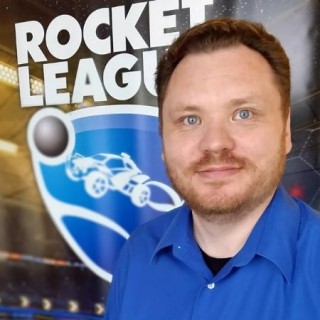
Jeremy Dunham, VP of Psyonix, talks to [a]listdaily about Rocket League‘s meteoric success, its place in eSports, and how it could be the game that breaks down the walls separating platforms.

Jeremy DunhamHow did Psyonix convince Microsoft to open up cross-network play?

I don’t think that it’s just us. I think it was a combination of things. Definitely, the success of our game has helped a lot. We bugged Microsoft a lot about how cross platform is a feature that we’d like to see eventually, and our community is asking for it all the time. But I don’t think that it was just because our game came along that Microsoft decided to do this. I think it was many years with many different games and communities wanting to see this feature. They were listening for so long and weighing it heavily for so long that I think they finally decided to go forward with it. We were lucky enough to be in the right place at the right time to become the first one selected.

I like to hope that we had a positive impact on how that went, but whether or not we were the sole reason is really a question for them. I’m just happy that we’re getting to do it, and we’ve been bursting at the seams to talk about it for weeks. [Now] It really comes down to what Sony decides to do. To be fair to them, they’ve only just heard that this is a possibility, so we understand that they need time to process it and how it impacts their platform. We understand that there won’t be an immediate “yes” or “no” from them, but we like to remain optimistic.

What does it mean to Psyonix that these garden walls may be coming down?

It means a lot to us. Just to think that it’s us over other games is a really big deal. We can’t really compare it to any other accomplishment. We’ve had a surprising amount of success, our community has been fantastic, and we’ve won awards. But to be held in this kind of historical context is something else entirely. I remember clearly, coming out of our call with Microsoft and then letting everybody on the team know that it was approved and it was something we were going to do. Everyone stood up and started applauding each other. It was a great moment as a team, and everyone felt fantastic. Every team meeting since then has been about when the public is going to find out. Now that it’s not a secret anymore, the fun part starts… we have to start building it.

How did the Batman v Superman: Dawn of Justice Batmobile come to be included in the game?

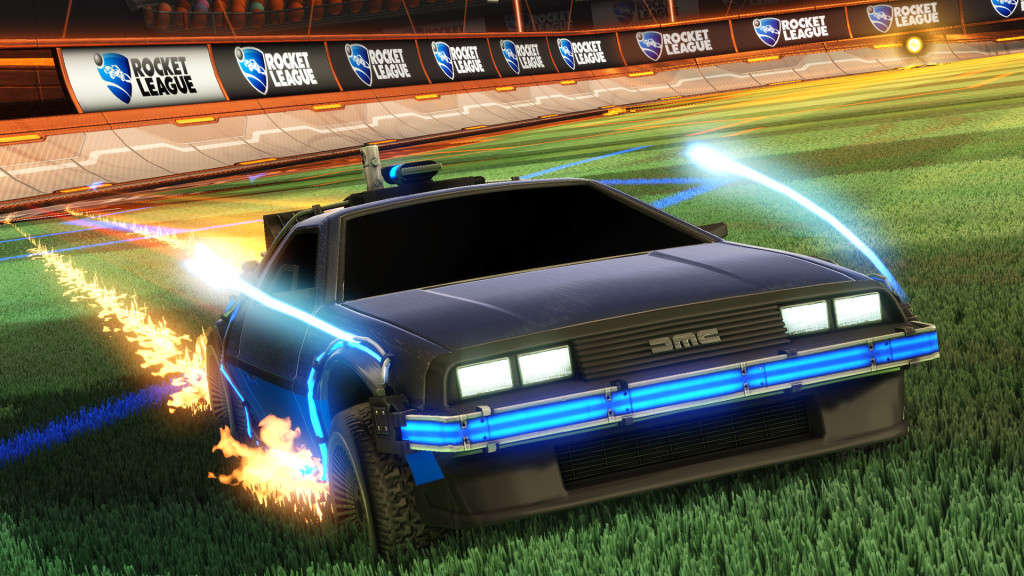
We have some great contacts at Warner Bros. They’re fans of the game, and we’re fans of theirs. We were talking about potential partnerships, and for us, the Batmobile made a lot of sense with the movie coming out. A lot of our were asking for the Batmobile, especially post-DeLorean [from Back to the Future], and it didn’t take long at all.

Rocket League DeLorean

They said that it was a great fit and we worked directly with them to make sure it was as accurate as possible. Usually, when it comes to having iconic vehicles, there’s a complicated backstory or challenge. But in this case, we just like Batman and Superman a lot, and they liked Rocket League. We asked, they said yes, and that was it. Seeing how well the DeLorean was received also helped assure them that we would do their vehicle justice. I think how we approach the game like a true sport, and no vehicle has an advantage over another, also helped smooth the path into the game. We’re not trying to create an environment where it has an advantage over other vehicles, or vice versa.

Will other Batmobile models be included someday?

One of the things we struggle against is that the way you select cars gets confusing if you have five or six different versions of the Batmobile. Also, does that muddy the value of having the Batmobile by itself, the way it is now? It something that we’ve definitely batted around for not only the Batmobile, but some of our other cars. So far, we’ve stuck to the idea that it’s better to have only one, because that makes each car more unique and interesting, instead of having umpteen version of Octane. It lets you take the vehicle and feel some kind of ownership over it, over it just being another car. Plus, we have such an emphasis on customization for our [non-licensed] vehicles that you can kind of make it whatever you want.

Other than the Dawn of Justice version, what is your favorite Batmobile?

It would have to be the 1989 version, because that was the Batman movie that got me when I was a kid. I think it has a great, iconic, shape that a lot of the movies that came after it tried to emulate. I really like the Tumbler too, and the Arkham Knight Batmobile. I think they did a really good job with the vehicle in that game. What’s really cool about Batman vehicles over the years is that they keep finding ways to reinvent it so that it makes sense for the era that it’s in.

How did Psyonix come together with Twitch to form a Rocket League Championship Series?

That was sort of a progression of our relationship with them. In the beginning, we were doing very well on Twitch. We were a very popular game, especially during pre-launch, launch week, and the launch month on PlayStation 4. Twitch recognized that we were a fun sport to watch, and we got into discussions about what we could do to make the game more compatible with Twitch and find more ways for casters and players to do cooler things.

At the same time, they asked us what our long-term plans were for the game as a sport. So, it became this sort of mutual realization over time that we should partner up and go all-in on a league together. They  had plenty of time to understand their audience, and have both official and unofficial tournaments airing on Twitch all the time, so they deal with plenty of vendors of leagues all the time to know what works and what doesn’t. Our game is really well-versed in terms of watchability as an eSport, in that it doesn’t have any special abilities or killer vehicles that are better than others, so it’s a true skill-based game.

There’s a lot of mutual attraction, and it took many months to hash out the details, but it was worth it and we’re excited to see where it goes. Registration opens on the 25th of this month, then we’re going to start to talk about when the games themselves are going to be played.

Are there challenges in promoting a game like Rocket League as an eSport?

Normally, I would say yes, but in this case we lucked out and had a community that embraced it as an eSport before it actually became a true one. That’s one of the key moments of any game that’s chosen as an eSport—the community has to deem it worthy. A lot folks just want to come out and say, “let’s get into eSports.” They throw a lot of money at something, get tournaments together, and try to make people get involved. In our opinion, it’s a much more effective eSports strategy to make the most fun and balanced game that you can and let the community decide if they want to watch it and play competitively.

Our community has been so passionate, competitive, and (in many respects) has taken it upon themselves to create a eSports scene. That was enough validation for us to acknowledge that this is worthy of an eSport. We always hoped that it would be, but the missing link was the fans and whether they thought it was worth it, and they have. So, it was an easy transition for us.

The Championship Series was announced for the PlayStation 4 and Windows PC. Will there be a separate Xbox One league?

PC and PS4 RLCS will be happening at the same time. The game is cross-compatible, and they’ll be able to play with each other. When we made the RLCS announcement, we said, “Xbox details coming later.” The reason we said that is because we know that we’d be going cross-platform between the Xbox One and PC, but were not yet sure if PS4, PC, and Xbox would be a viable option.

We still don’t know. As I mentioned before, we have to find out what Sony’s position is. Once we know more about that, we’ll know whether we need a separate league or if we can reach a fantastic milestone for eSports, and that’s to allow all players on all platforms to compete against each other in a single league. That would get rid of the notion of just being the best player on PlayStation or Xbox and make so that you are the best player period.

That’s what we’re hoping for, but we’re going to see where season one takes us and adjust season two accordingly.

What do you think it is about Rocket League that inspires such a passionate fan base across three different platforms?

I don’t think it’s any one thing, and I also think it depends on who you ask here at the studio. Everyone has their own answer, and I think the actual answer is all of them. It’s a combination of how Rocket League is really watchable and easy to understand. You’re hitting a goal from one end to the other, and it’s completely skill-based, so you’re viewing the strategy and talent of the player first-hand. It [winning] isn’t some pre-conceived ability, animation, or special power. It’s completely on the player, which adds a real level of tension and excitement.

We also have a lot of customization options so that you can make your car look any way you want and take ownership over it. There are also a lot of different ways to play the game, with single player, multiplayer, and even four-player splitscreen mode. There’s no major violence—it’s all cartoon explosions—and there are no guns. All these different elements have helped make the game what it is.

I also like to think that the fact that we’ve shown our community how much they mean to us, and our aggressive support of the game with the continued goal of making it better, is proving itself to people. We don’t have any plans of slowing down anytime soon, and we hope that that’s rubbing off in a positive way.

[a]list summit Announces Keynote And New Speakers

With the event just over a month away, [a]listdaily is pleased to announce the first batch of speakers for [a]list summit: Frontline Marketing. The event will be taking place at the W Hotel in Seattle, Washington on April 20.

Brand owner of AT&T Foundry, Ruth Yomtoubian will be giving a keynote on “How Innovation Creates Brand Value.” AT&T Foundry is AT&T’s network of “innovation centers” for the purpose of exploring new technology with partners like Ericsson, Cisco, Intel and Amdocs. Yomtoubian will be discussing how AT&T approaches innovation through the Foundry model.

In addition to the keynote, two presentations have been announced. Brent Bushnell and Eric Gradman, founders of Two Bit Circus, will be on hand for a presentation about “Blending Physical and Digital Play” with immersive entertainment.

Blending data science with marketing, ION.co’s CTO Kai Mildenberger and Dr. Galen Buckwalter, data scientist behind eHarmony and Payoff.com, and scientific advisor to [a]insights, will discuss “How Predictive Analytics Can Help Find Your Brand Soulmates.” 

Other speakers include:

  • Jim Louderback, Entrepreneur and Business Strategist
  • Sahand Barati, President, IDRA
  • Chris Younger, Principal and Director of Strategy, Ayzenberg
  • Stu Pope, Principal and Creative Director, Ayzenberg
  • Rebecca Markarian, SVP, Social and Digital Media, Ayzenberg
  • Steven Lai, Head of Talent, ION
  • Vincent Juarez, Principal, Ayzenberg & ION
  • Robin Boytos, Director, Analytics, Ayzenberg & [a]insights
  • Joey Jones, VP and Creative Director, Ayzenberg
  • Jon Simon, VP, Integrated Marketing, Ayzenberg
  • Andy Swanson, VP, eSports, Twitch
  • Dan Ciccone, MD, rEVXP, Manager, OpTic Gaming
  • Michael Cai, SVP, Research, Video Games and Technology

Past speakers include:

  • Morgan Neville, Academy Award-winning Documentary Filmmaker
  • Jonathan Murtaugh, US Head of Industry for Film and Television, Facebook & Instagram
  • Stephanie Horbaczewski, CEO, StyleHaul
  • Michelle Phan, YouTube Superstar and Founder ipsy
  • Andy Swanson, VP, eSports, Twitch
  • LeAnne Hackmann, Sr. Director, Global Content Strategy & Activation, Mattel
  • Allison Stern, Co-Founder & VP Marketing and Business Development, Tubular
  • JC Cangilla, SVP of Business Development, New Form Digital
  • Seamus Blackley, Xbox Co-Creator
  • Lorenzo Di Bonaventura, Producer, Transformers Franchise
  • Shay Carl, Co-Founding Talent of Maker Studios
  • Peter Levin, President, Interactive Ventures and Games, Lionsgate
  • Terry City, Head of West Coast Operations, Buzzfeed
  • David Hayes, Head of Creative Strategy, Tumblr
  • T.J.Marchetti, CMO, Awesomeness TV
  • Maria Pacheco, Sr. Director, Mobile Marketing, Dreamworks Animation
  • Mary Healey, Global Lead, YouTube Brand Partner Program
  • Elaine Chase, Senior Director, Global Brand Strategy and Marketing, Hasbro
  • Scott Carlis, VP of digital and social media, AEG (LA Kings)
  • Jack and Jack, Influencers
  • Zach King, Influencer
  • Olga Kay, Influencer
  • Nolan Bushnell, Founder of Atari of Chuck E Cheese
  • Ed Lin, Director of Brand Marketing, Warner Bros
  • Jordan Weisman, CEO, Harebrained Schemes
  • Min Kim, CEO, Nexon America
  • Jeanette Liang, Executive Director, Global Digital Marketing, Estee Lauder
  • Mike Webster, Director of Marketing, Capcom
  • Kristian Segerstale, COO, Super Evil MegaCorp
  • Leo Oleb, Director of Marketing, Kabam
  • Ryan Weiner, Director of Marketing, Activision
  • Phil Marineau, Director of Marketing, Electronic Arts
  • Ryan Cameron, Xbox Director of Marketing Communications, Microsoft

For the latest updates and agenda, check out alistsummit.com

What People Are Talking About At SXSW 2016

The South By Southwest Festival (SXSW) has grown even bigger with each passing year, and 2016 promises to be the biggest year yet for the interactive music/film festival. Several new venues are being added to this year’s event, and networking will play a key part, as clients will be able to meet and discuss upcoming projects.

There are several hot topics making the rounds at this year’s show, including the following:

Big Talent

Stars usually come out to SXSW in spades to hype their forthcoming products, ranging from AAA superstars to Internet sensations like Grumpy Cat. President Barack Obama recently hosted the opening keynote (to a huge online audience), and others stars like comedian duo Keegan Michael-Key and Jordan Peele (advertising their new movie Keanu, which screened at the event), Pee-Wee Herman (who is promoting a new Netflix film) and more are in attendance this week.

It’s a who’s who of superstars that will be at the event, and that’ll be good news for social media, as names like Obama and Herman will create tremendous online buzz for the show. Plus, surprise appearances from new stars could emerge from forthcoming shows like Preacher, which debuts on AMC this May behind the season premiere of Fear the Walking Dead–which should be big news for the channel.

The Stream Is the Thing

For those that can’t attend the event, various panels and activities are being livestreamed from the event, including keynotes and particular panels. This is a great way for the community to get involved in what’s happening with the festival. Social media has also seen a tremendous boost from this, with more people talking about what’s happening at the event.

Twitch also has a tremendous showing, partnering with the team at Razer for a variety of activities, including an eSports tournament stage, a free-play Arcade Bunker and an Indie Corner Geek Stage. A good portion of its activities will be streamed as well, so its vast community of gamers can take part.

Popular “Nerd” Channels Are Thriving

SXSW has seen greater exposure across more areas than film and music over the last few years, thanks to big-name partners that stage their own events during the festival.

This year is no exception, as Nerdist is hosting a number of activities based around its TV shows and programming. Other channels following suit are Geek & Sundry, along with other partners like Rooster Teeth and AMC. These showcases also provide an alternate place for attendees to go if they can’t get into the SXSW venue itself, giving great exposure from outside the main event and creating buzz for particular programs, like the highly anticipated Preacher.

Tech Has Major Appeal At SXSW

While CES, which took place earlier this year, was a haven for new technology (like the Internet of Things-related devices and televisions), SXSW is carving its own niche with technological breakthroughs. For instance, Sony is on hand to showcase its new headset technology, which takes away the traditional cup-over-ear design in favor of something more sleek and effective. Other companies at the event include Samsung (showcasing a new app where songs can be identified by humming them), and Paypal (with its interactive app, which synchs up with car service Lyft).

But the show is also an opportunity for up-and-comers to gain buzz with crowds, like the four students from Stanford Center for Design Research who have managed to make one of the show’s hottest draws, a mobile trash can with built-in cameras to record interactions with people. The team showcased its recordings with consumers who see the trash can, with surprisingly positive results.

Virtual Reality Reigns Supreme

With virtual reality ready to make a killing in the market this year between launches of the HTC Vive, Oculus Rift, PlayStation VR and other headsets, it should be no surprise that it’s managed to gain popularity during this week’s SXSW event. A number of companies are showing interest in the technology, demonstrating its potential across various categories, including music, sports and even adult entertainment.

Fortune recently noted a number of examples that include the following:

  • Music companies. A lot of companies are looking into recreating the concert experience for those that are unable to attend, as well as innovation with music videos, creating a new way for artists to share with their fanbase, while at the same time remaining profitable.
  • Professional athletes. Sports are starting to play a big part in VR, with former Washington Redskins quarterback Robert Griffin III talking this week about how the technology can help with sports training, as well as improving player performance on the field with simulated activities.
  • Advertising and marketing. Of course, a number of companies are looking into ways to innovate advertising with virtual reality, with several panels this week focusing on how to effectively make that happen. This includes creating virtual shopping experiences or seeing potential vacation spots to visit – something Marriott has already heavily invested in. Even McDonald’s is getting in on the action.
  • Video games. Of course, video games are the “big one” when it comes to virtual reality investment, since they create immersive experiences that players won’t be able to get enough of. A number of games are dominating SXSW’s Gaming section.

How VR Shines As Marketing Tool

While millions of consumers await the arrival of affordable high-end VR equipment, there’s one group that’s not waiting to take advantage of the technology: marketers. The use of VR in marketing has been going on for years now, as they seek to capitalize on consumer excitement for the technology. We’ve seen movie studios using VR to promote films, and Marriott using VR to promote its hotel experience, and now we’re seeing McDonald’s use VR as a Happy Meal promotion.

The concept is simple: use a Happy Meal box as a VR viewer, in the manner of Google Cardboard. A few perforations let you convert it into Happy Goggles, where you slide in your smartphone and play a game McDonald’s had created for the promotion. Plus you get a Happy Meal along with it. What kid wouldn’t like this?

Don’t rush out to your local McDonald’s just yet, though. This promotion is courtesy of McDonald’s Sweden, and right now they’re just giving it a trial run at 14 restaurants over two weekends. The game included with the promotion is a ski-themed app called Slope Stars, which of course you can still play without the Happy Goggles. Equally, you can use the Happy Goggles with other mobile VR titles, at least until the cardboard wears out and you need to buy a new Happy Meal.

Adweek spoke to Jeff Hackett, the marketing director of McDonald’s Sweden about the promotion. He believes it’s “a really exciting opportunity to connect families in digital times,” and continued, “Parents can learn more about their children’s knowledge and experience of the digital world. And purposeful gaming can also be a great joint activity that helps families interact on equal terms.” Right now it’s a very small test, but Hackett also said “this is the first trial run globally” for the Happy Goggles. It seem likely this promotion may well be rolled out elsewhere if it does well.

Marketing VR is already becoming a regular thing when you want to attract people and engage them with a certain flair. For marketers, VR offers a number of positive factors; it’s the very latest in technology, and it’s something that most people are (a) curious about and (b) interesting in experiencing for themselves. The actual experience of VR itself offers the benefits of being immersive (so you’re focused entirely on the message), it’s impactful (creating a more intense and there more memorable experience), and it’s novel, meaning you’re more likely to get social media uptake and even media coverage of your marketing efforts.

VR is finding a home in marketing across a wide variety of industries. Marriott has been getting rave reviews for its varied VR efforts, like this virtual honeymoon.

Merrell has used VR to support the launch of a new hiking boot, the Capra, by giving the user the experience of a dangerous mountain hike. Patrón took its signature tequila brand into VR with an adroit mix of live action and computer graphics to follow the entire production process. And it should be no surprise that a car company is using VR, where Volvo has done expertly in the launch of their XC90 SUV. Fashion, movies, food, soft drinks, and travel… the list of companies using VR in marketing efforts goes on.

The uses of VR in marketing go well beyond the value of the technology as a way of attracting attention. Companies are now exploring the direct revenue potential of VR in creating virtual showrooms for products, where you can immerse yourself in a product experience that’s an order of magnitude more compelling than looking at some pictures or reading some text. Yes, it’s a big ask to get someone to put on a VR headset, but that’s getting easier to do all the time.

Marketing seems like a natural fit for many of VR’s qualities, and the attraction is bound to get more powerful. While high-end VR systems are going to be fairly limited in numbers for a while, mobile VR is already widespread with Google Cardboard and efforts like McDonald’s are going to see that spread to millions more people very quickly. The next major effort to hit the market will be the mid-priced headsets, ranging from Mattel’s View-Master (a steal at only $29.99) to Samsung’s Gear VR at $99, and the rumored mid-range new Google device that might be a couple of hundred dollars (but would not require a smartphone, if the rumor is correct).

As VR catches on in popularity, the low cost and easy availability of reasonably priced VR gear will mean that marketing efforts can find a wide audience. As of right now, most VR marketing has been based around creating a special event at a location, because it relies on high-end hardware that’s difficult to transport. The creative thinking changes when you have millions of people with the capability to experience VR already in their possession; you start thinking about sponsoring experiences, creating special VR content for your brand, or perhaps even making VR commercials that get added to other VR experiences. Ad-sponsored VR? Why not? The business model for VR apps is completely open, and none of the parameters have been set.

This is a key time for marketers to think about putting VR into their strategic plans for the future. The technology is cutting-edge right now, it’s new and hot and attractive. The possibilities of what you can do both creatively and business-wise are just beginning to be explored. Bold marketers can seize the moment and get in on the ground floor of the VR revolution, helping to shape how VR impacts marketing and indeed the very business of VR apps. The time is not so distant when people will be asking what your VR strategy is as a standard question, and one of those people is likely to be your boss. It’s time to start coming up with some good answers to the VR marketing question.

Mazda Explains Its SXSW Sponsorship Strategy

South by Southwest (SXSW) is one of the year’s tentpole events for business professionals and tech, film and music buffs alike as they congregate in Austin, Texas for a 10-day networking and BBQ-palooza. The festival has turned into such a big deal that President Obama will speak at the keynote. It marks the first time in the conference’s 30-year history that a sitting president has participated.

For brands like Mazda, they’re celebrating their second year at the event in grand style by becoming one of the seven “super sponsors.”

The car manufacturer’s main activation for SXSW this year features the Mazda Express Shuttle System (no need to hail a cab!). The car company will transport around 6,000-to-8,000 people during the conference. A Mazda-and-Pandora-curated music playlist promoting emerging artists will complement the experience.

“Our goal is to connect with the people that go to SXSW and get them inspired around music, film and interactive. We’re bringing about 30 cars from our full lineup to SXSW and giving people an opportunity to ride around in those cars and get to various events and venues,” Eric Watson, Mazda’s marketing director, told [a]listdaily. “We really want people to see our new interiors for the Mazda 6, Mazda 3, CX-5, CX-3, connect with the driving experience you get with our cars and really be able to interact with the vehicle for a short period of time.”

Other Mazda models like the CX-9 and the MX-5 Miata will be on display for people to see, and Watson says they have VIP access and privileges lined up for people who already own a Mazda vehicle.

Mazda will also be participating in the usual panel discussions as well as partnering with Town Square Media around Hype Hotel, which is a big music component to SXSW. They merged forces with the Jalopnik Film Festival to bring movies to a different audience. They’re also holding court at the ACC Lounge to provide unique experiences, charging stations and giveaways—attendees can register for the Mazda Express shuttle service there, too.

[a]listdaily met with Watson, who’s worked a slew of positions for companies like Land Rover, Jaguar and Ford throughout his career, to discuss how Mazda plans on engaging consumers for the duration of the conference, and beyond.

What makes SXSW such a desirable event for Mazda to participate in?

SXSW is really a unique experience. It’s becoming part of the culture around technology, film and music, and really, it gives us an opportunity to be amongst thought leaders and people who are coming there to seek inspiration. That aligns really well with some of the passion points of our brand. … Mazda is a company that’s about innovation and always seeking a better way to be able to pursue our different technologies. 

What is Mazda’s main mission throughout the entire event?

We want to connect with people there to let them know what our company stands for—that we’re an innovative car company that really is about driving and putting the customer first, and that’s what we want to get out of that—connecting with people around those technologies. 

What are some ways Mazda is working toward connecting with the consumer?

It’s anything from participating in the different panels and forums to partnering with other people, bringing together technology, music and film and giving an experience to those who are there visiting.

How does Mazda use social media to educate and enhance the user experience with consumers in new ways? 

When we announce a new vehicle, or do something special at an auto show, we’ll create a hashtag strategy. A lot of times we invite influencers, bloggers and others that have social influence and reach. We give them access to see our vehicles and be able to report on those first-hand. We often use social strategies. [Influencer marketing] is a small piece of our plan, but every time we do an event or an activation, we use it … One thing we’ve been trying to do over the last year is engage our owners and our most loyal customers with the brand. In February, we went to Colorado and we engaged about 40 owners in something we call the “Mazda Ice Academy.” We gave them an opportunity to drive our new all-wheel drive vehicles in snow and show them against the competition. We also allowed for them to drive a sports car, the MX-5 Miata, on an ice track. 

The tech craze at events like SXSW range from automotive infotainment systems and connected cars. What is Mazda doing to be a leader in the pack with those two areas?

Mazda is really pursuing technologies that allow people to experience the drive, and to takeaway those distractions, and to have an experience where they’re connected with the road, and also able to have their technologies in the car as well.

As the usage of Uber and Lyft heightens, what is the hardest part of selling car ownership to millennials and digital natives?

I think people are in different life stages and needs. The vehicle industry has been very strong the last three-to-four years. The industry is up to almost 17 million cars a year. So people will go through different needs in the ownership cycle, but people still need cars.

How are you raising awareness for them to buy Mazda?  

A lot of that is through content and engaging with the customer, whether it’s through social media or finding a video on YouTube or connecting them with another owner who shares their same interests. We need to make those connections so they can engage with our brand.

Why Video Game Betas Are The Ultimate Promotional Tools

In the past, developers and publishers were often reluctant to release an open beta of a game, fearing that the public would get the wrong impression of a game that was still under development. That began to change after Blizzard discovered that, with World of Warcraft, testing periods helped promote the game through word-of-mouth while the developers steadily improved the experience. This is a formula that was repeated with hits like Heroes of the Storm and StarCraft II: Legacy of the Void, and is sure to be repeated with the upcoming release of Overwatch. Furthermore, with the rise of crowdfunded projects and Early Access, the gaming public is now relatively accustomed to playing games that are still in development, and are often eager to get a sneak peek of an upcoming game, and may overlook the flaws if it means that it will lead to a better game on release.

Recently, hosting closed and public betas for high-profile games is practically expected, especially if they feature multiplayer. The most recent example is today’s reveal of Doom‘s multiplayer gameplay and the announcement of its closed beta session running from March 31st to April 3rd, which will no doubt stoke fan fervor leading up to the May 13 release on Xbox One, PlayStation 4 and PC.

Hosting a beta, particularly an open one that anyone can participate in, is a win-win situation when promoting a game. Although participants are likely to run into flaws, the event gives developers a chance to identify and fix them. At the same time, participants freely promote the game through livestreams, social media, and discussions. Last fall’s Rainbow Six Siege closed beta was extended due to server issues, which helped make for a smoother experience with the open beta, which acted as a big lead-in to the game’s launch.

However, the power of using a beta period to stir up hype is clearly shown by how the Call of Duty: Black Ops III beta was clearly used as both a promotional and data gathering tool. The game went on to make over $550 million in the first three days of its launch.

https://twitter.com/CallofDuty/status/635861439371063296

Last fall, the Star Wars: Battlefront open beta broke records by drawing in over 9 million players worldwide, which turned the testing event into a barometer of interest. Similarly, the recently released Tom Clancy’s The Division drew in 6.4 million players during its 3-day (four for Xbox One players) open beta period. The game ended up selling “more copies in its first 24 hours of availability than any previous title in the company’s history,” according to an official statement from Ubisoft.

EA discovered the value of giving players an early look at games, since these trial periods not only lead to a better game while promoting it at the same time, but also project a sense of transparency regarding its development and its features. Last year’s Battlefield Hardline saw multiple preview and testing periods, starting with its reveal at E3 2014, which helped get the word out about the game. The final beta leading up the game’s launch saw 7 million players that couldn’t wait to play cops and robbers on a large urban scale. This transparency could lead to a greater sense of trust, as developers get valuable data and feedback from fans, and players learn first-hand what to expect from a game before it releases.

Although beta periods are primarily used for testing, they are spectacularly useful as promotional demos. Halo: The Master Chief Collection offered early buyers access to the first Halo 5: Guardians multiplayer beta. Similarly, those who purchased Uncharted: The Nathan Drake Collection were allowed access to Uncharted 4: A Thief’s End‘s multiplayer beta last December.

With high profile games like Doom, Homefront: The Revolution, Battleborn and more releasing this spring, it becomes ever more important to get them into the hands of players so that they can promote them through discussions and livestreams. It also doesn’t hurt that feedback improves the game.

Fnatic CEO Explains Their Approach To ESports

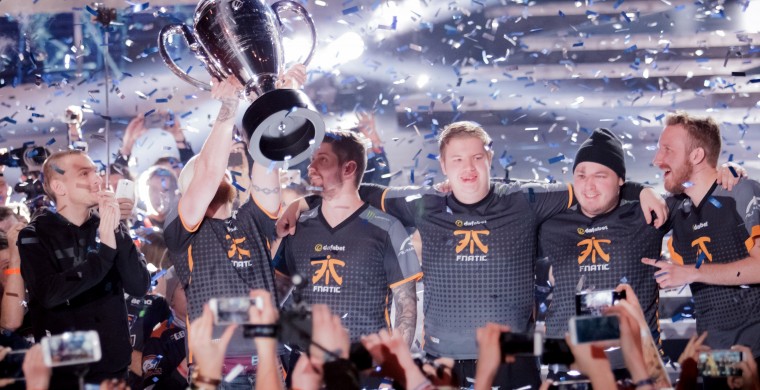
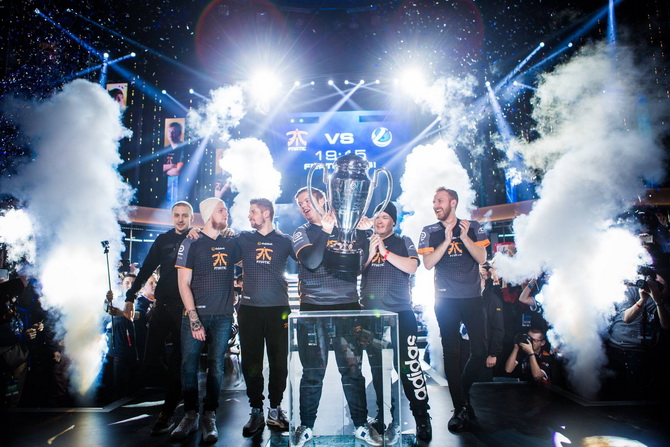
Fnatic is one of the most recognized eSports brands in the world today. The company, which is based in London, is riding high after its Counter-Strike: Global Offensive just beat Luminosity Gaming over the weekend to earn an Intel Extreme Masters (IEM) world championship.

Fnatic currently has over 5 million fans around the world, while tens of thousands of online viewers watching its players’ livestreams every day. That’s in addition to the more than 75 international events the teams compete in annually.

The company has worked with brands such as Monster Energy, MSI, AMD, and Zowie to connect with its worldwide audience. Wouter Sleijffers, CEO at Fnatic, talks about the company’s strategy in this exclusive interview.

WouterSleijffersHow did you end up in eSports?

I have an industrial design engineering degree and I worked in semiconductors on the machinery side of things, and then I moved into digital marketing. I came into eSports by accident because I was working for five years with Skrillm, which used to be MoneyBookers. It was an online payment method. The last few years I was doing all the global marketing, and it was actually Fnatic who came to us to present sponsorship opportunities in eSports. That was four years ago that I first learned about eSports and how it was growing in size. I stayed in touch with Fnatic and a year ago I connected with them. Even though I don’t have an eSports background, my role in the company is to build the Fnatic business and brand. Patrik Sättermon, who is our chief gaming officer, works on the competitive side and makes all the player decisions.

What does your job entail?

First and foremost we’re passionate about the Fnatic brand, so it’s one part about what we want Fnatic to be, and then looking at what others have done. I look at what others have done to become this brand and how did they manage it going forward. So, the Fnatic brand and business is a mixture of who we want to be and how does it fit within the eSports audience.

What does Fnatic want to be?

Fnatic wants to embody eSports as a brand that brings the excitement and also the lifestyle elements for eSports together. Fnatic gear is a concrete example of how we transition from a team brand and a lifestyle brand into eSports. That helps us to grow our business beyond being a team brand and working with sponsorships and merchandizing and in-game revenues.

How many sponsors do you work with?

We work with between six to eight sponsors, which is the ideal number because we don’t rely too much on one sponsor or two sponsors from a risk perspective. We can still put a lot of effort and time into these sponsors to make the sponsorships meaningful. Fnatic has a fairly decent number of staff of about 50. That includes paid volunteers as well as 20 or so full-time staff. These are people from the creative side and marketing side. We’re operating more like an agency where we’re servicing our sponsors beyond brand equity to do meaningful and engaging things.  The Fnatic brand, which has apparel and merchandizing, has grown very fast, but also the service side is really taking off.

Fnatic-iem-2016

Do your sponsorships work across the various competitive games?

To a large extent, yes, given certain limitations for some publishers. We work with Dafabet as one of our main sponsors. That obviously doesn’t work with Riot because Riot prohibits betting brands to be present in League of Legends, which is all fine. We have worked out a way with Riot and Dafabet on how we do that sponsorship.

But gradually as the titles and the teams themselves become big enough, they can go more towards team-specific sponsorships. Within a year’s time, we’ll back away from having global sponsorships and probably have more team-specific sponsorships. If you look at our Dota team, they’re based in Malaysia, so it could also be more for regional sponsorships for that specific team. While eSports is growing globally, it’s also divided into very strong regions and there are opportunities to work directly with regional partners.

Do you see the evolution of eSports teams becoming more like agencies?

To some extent, yes. It’s more the question for the business itself and how far do they want to bring it. We want to be an agency first for Fnatic. If you look at the Manchester United (soccer team), they’re not known as an agency. But what I’ve heard is they still have about 100 staff working in business development, account management, and there are a bunch of creative people working on campaigns and the brand equity. That’s probably bigger than a good bunch of agencies out there that do creative work.

How do you choose how to expand on the team side of what games you’re going to focus on, or even double down on games that are doing well and adding other teams from other regions?

The first dominating factor is audience. It’s important that we expand our reach and our fan base, and that includes the Fnatic fan base as well as the eSports fan base. So, the first question that usually comes up is “are we just attracting the same kind of audience with that title or not?” After that, there are a bunch of questions that we ask ourselves about the potential of that title and the team. Take Dota for example. That game still has a very good reach, and it’s extremely competitive. We want to be present in Dota, but we also look at the region and if it’s a competitive team.

If it’s a big title that we wouldn’t have the chance to be very competitive on the global level, then we might not go that direction. A big part of our Fnatic brand means we’re competitively successful. After that, there are a whole bunch of things that we look into, including monetization, investments in tournaments, and how good the tournament product is.

fnatic_final_2016

How do you target different eSports audiences?

From a business perspective we’re London-based, but from a brand perspective we’d borderless. We’re here for anyone who loves eSports. That’s also the beauty of eSports. It has an appeal across the Far East, the Middle East, Europe, Eastern Europe, Northern America, South America, and now people are talking about eSports gaining traction in Africa. That is one of the things that sets eSports apart from other more traditional sports is that it’s truly global. With Fnatic we’re looking for teams having presence in different parts of the world because that’s what makes up Fnatic, that’s what makes up eSports.

Where does the U.S. fit into Fnatic’s plans?

It’s definitely on the radar and it would absolutely make sense for us to be present there. The U.S. is a very important market for eSports. There’s still a lot to prove in the U.S. market in terms of how they’re going to monetize. The salaries have gone up there for players, etc., but with our twelve years of experience in eSports we’re looking to create a sustainable long-term business from a team perspective. And there’s still some proving to be done for the U.S. market to really make it sustainable and long-term. It’s very lucrative and very promising, no doubt about it. You want to be present there.

How do you differentiate Fnatic from the other brands or teams in eSports?

If you look at it from the sponsor perspective, they love winning teams. We’re still in a winning and losing business, and people love winning teams and winning persons. Secondly, I think it’s very important that we’ve had 12 years of continuous success. There might be successful teams out there, but the investment a sponsor is making with us today is more guaranteed to pay off over a longer period of time with Fnatic than maybe another team out there. Thirdly, is our brand. We would not want to have a sponsor that’s bigger than our own brand, and we’re always honest about that when we speak to sponsors. And then another thing that we focus on is the statistics and data, which is why we partnered with research firm Newzoo. That helps us figure out how to approach the market.

[a]list summit Hosts Session On Social And Influencer Marketing ROI

How do you track the ROI of social media, content and influencer marketing? Ayzenberg Group recently provided guidance on this frequently asked question by making their proprietary index of earned media values available to the industry. The result is the Ayzenberg Earned Media Value Index Report. The primary authors of this research will be on hand to discuss the Index during a session at [a]list summit on April 20 at Seattle’s W Hotel.

During this session hosted by Robin Boytos, director of analytics, and Vincent Juarez, principal at ION, the Influencer Orchestration Network, the speakers will discuss their methodology for researching and maintaining the Index, discuss its use for reporting, and lead a Q&A session with the audience.

“We report earned media value on these actions for clients like Microsoft, Amazon, Marriott and Mattel regularly, so we need accurate numbers,” Boytos said in a press release. “We could see a need in the marketplace for the kind of baseline values we already maintained through our internal experience and research, collaboration with key social networks and third-party reporting. To help set industry standards, we decided to make our Index available to the public.”

Boytos added, “I’m very much looking forward to showing off our newly released Ayzenberg Earned Media Value Index! It will be great to get feedback from those attending the [a]list summit on how the industry is already making use of this effective way to track the ROI of social, content and influencer marketing efforts.”