Two Bit Circus Transforms Classic Entertainment With Modern Technology

Eric Gradman is the co-founder and chief technology officer of the Two Bit Circus, a high-tech spectacle that has a fine eye on old-school showbiz paired with contemporary immersive experiences.

The experiential company is carrying the momentum from a strong 2015 highlighted by $6.5 in funding, being named as a top startup to watch, as well as an installation of their live-action, social immersion game Story Room at Dave & Busters.

Gradman will be speaking at the [a]list summit on April 20 in Seattle to give the audience a taste of what makes Two Bit Circus a trendsetter in entertainment. (Spoiler alert: He’s also beta testing a new way to give highly interactive presentations.)

The interactive artist joined [a]listdaily to discuss how they’re bringing novel forms of entertainment to the world, and innovating at the time.
Screen Shot 2016-04-14 at 12.43.00 PM

Can you tell us a little about what you do?

We’re a high-tech circus! What Ringling Bros. did with animals, and Cirque du Soleil did with human performers, we’re doing with technology. For over the last few decades, technology has transformed almost every aspect of our lives. But when you want to go out and have fun with friends on a Saturday night, you’re stuck with the same few options you’ve had for 50 years. We’re revolutionizing out-of-home entertainment with modern technology.

Story Room is an immersive in-real-life-installation that brings six-to-eight players together to experience something that’s a TV episode, video game and interactive theater experience all rolled together. There are plot twists, puzzles to solve and you’ll leave with the satisfaction of having saved the world.

Steam Carnival is a traveling carnival complete with high-tech games, engaging workshops for kids and mind-expanding stage performances. We get to blow the minds of people twice—once when they see classic carnival games reimagined with technology, and then again when we pull back the curtain and show them how we design and build those games. We also recognized early on that virtual is transforming the media landscape, and we’ve pioneered VR activations for top sports brands combining 360-degree video and haptic platforms for total immersion.

What is it like to be a venture-backed circus?

Running a high-tech circus is hard work, but a challenge we’re excited to take on. We’re glad to have funding and investors who believe in our vision. Our venture investment is allowing us to bring some truly novel forms of entertainment to the world while continuing to develop and innovate in immersive entertainment.

You guys are building a content studio for VR. Can you tell us more about that?

We’ve added an extreme sports director to the roster, Bo Bridges, to take what we’ve done so far with live-action sports to the next level. We’ve built out two new cameras that are highly cinematic, and polished. We’re shooting with them right now on projects we can’t yet disclose, but we’re excited about future consumer-focused projects, too. We are building considerable tech to support social interaction and activation within VR, including accompanying haptics and motion platforms. We have also expanded on our VR syncbox capabilities for clients to command a variety of playback sync functions.
Screen Shot 2016-04-14 at 12.44.29 PM

How have you worked with brands in the past?

Story Room, VR and Steam Carnival are all entertainment platforms, and we’ve never had trouble finding meaningful brand partnerships and integrations. For example, we built a Story Room to help the CW Network launch their show The Flash. This was a travelling, immersive experience full of interactive that gave every visitor The Flash’s superhuman speed, all stitched into a story and summed up with a social media takeaway. We built our VR studio by creating incredibly memorable activations for major sports brands like the NBA, NFL, the Olympics, Indycar, and more. We’ve become a leader in action-sports VR, and are excited to continue evolving within VR, augmented reality and mixed reality by creating unique storytelling content that reaches new genres and audiences. Our Steam Carnival is made possible with help from incredible sponsors and partners. For our most recent Carnival, we worked with title sponsors—Cisco and Cartoon Network—to create an amazing three-day experience for over 16,000 attendees. We love working with brands who’re as excited as we are about inspiring the next generation of inventors.

Branded entertainment is bound to be on the minds of attendees at the summit. What advice do you have for brands on engaging an audience?

Even when working with big brands, we always try to focus on what’s going to be fun for the customer. We’re limitless in our ability to craft game-changing experiences, so those that know our brands have come to understand that if it’s a Two Bit Circus production, it’s going to likely be something they’ve never seen. We’ve found that when we create products and experiences that keep customers engaged and excited, that we’re able to deliver a successful activation for both the brand and the user.

Follow Manouk Akopyan on Twitter @Manouk_Akopyan.

ESPN Brings Drone Racing To TV, Signs Deal With IDRA

Drone racing is coming to mainstream television.

The International Drone Racing Association has signed a multi-year, international media distribution deal with ESPN, Dr. Scot Refsland, chairman of the IDRA, told [a]listdaily on Wednesday.

Racing’s newest phenomenon, which features remote-controlled drones that can travel designed courses faster than 70 miles per hour, will debut on ESPN with the U.S. National Drone Racing Championships beginning August 5 in New York. Set to take place in Governors Island, it’s already shaping up to be a made-for-TV spectacle by offering views of both lower Manhattan and the Statue of Liberty. The races will be streamed live on ESPN3; following each event they’ll be televised as one-hour specials on an ESPN network.

Ken WDP 1

“IDRA is focused on creating live drone racing events on a global scale that drives a sustainable drone racing eco-system,” Refsland told [a]listdaily. “With our partnership with ESPN, IDRA is moving drone racing to tens of millions of spectators globally.”

Drone racing is currently seeing an unprecedented rise in popularity and is poised to become the next behemoth racing sport alongside NASCAR and Formula 1, ESPN said in a statement announcing deal. “We look forward to providing drone racing fans a larger platform to access this exciting world,” said Matthew Volk, ESPN’s director of programming and acquisitions. “Drone racing is an opportunity to reach and connect with a growing and passionate audience.”

In recent months, drone racing has gone from a cool hobby mirroring video games on steroids to becoming a scintillating racing sport—long gone are the days of drones being a novel Christmas gift. Earlier this month, Showtime’s 60 Minutes Sports covered the rising popularity of the virtual reality experience for pilots around the world. Even Miami Dolphins owner Stephen Ross sees potential for a new sport. Last year, he invested $1 million into the space. Pilots making money off their passion is no longer a pipedream.

The Berkeley, California-based IDRA, which prides itself on groundbreaking drone technology, racecourse design and advancing safety standards, will be producing the content for ESPN.

Refsland, a trailblazer in the sport who has a Ph.D. from Japan’s Gifu University in virtual reality and is also the CEO of RotorSports, considers himself “a serial entrepreneur who loves to be at the spear tip of any new and emerging technology.”

He joined [a]listdaily to talk about what could be very well be the next sports craze. Refsland will be discussing drone racing in detail at the [a]list summit on April 20.

1a24091

Drone racing is a relatively new sport—how is the landscape beginning to take shape? What’s it like being on the forefront of an entirely new sport?

Drone racing is the fastest sport and technology I’ve ever seen with an acceleration behind it that is currently unmeasurable. As an example, most sports take years to go from the backyard to major broadcast. It took drone racing eight months, and IDRA is the first company to sign a major, multi-year international distribution deal with ESPN.

What makes drone racing the next big thing?

Drone racing is the next-generation sport that takes the thrill and drama of human competition that we love about the NFL, Formula 1 and NASCAR, mixes it with eSports, and delivers it through next generation broadcast via virtual reality and augmented reality.

What is the culture of drone racing like? What are the demographics of the people going to the events?

Up to this point it’s been pretty much a bunch of nerds standing in a field racing each other. But what’s interesting is that almost everyone who puts on a pair of VR goggles and goes for a ride with a drone racer gets that immediate sensation that they’re really flying in the drone. Humans have embedded deep into their DNA the ‘dream of free flight’ and this is the first time that ‘free flying’ is accessible to just about everyone. So, while currently the sport is being driven by the early nerd and tech pioneers, mostly male 20-somethings, the IDRA’s plan is to move the sport into a highly entertaining and thrilling sport akin to any professional, large-scale extreme sporting event. And because the natural adrenalin, speed and ‘thrill of human competition’ mix is so intense with drone racing, it’s going to move the demographics quickly into a 15-to-30-year-old international audience and consumer base.

What kind of sponsorship opportunities do you envision happening in drone racing?

DN16_DroneRacers

Drone racing is opening up several big opportunities for new, compelling interactions between fans and brands. For example, because drone racing is perfect for a multi-screen experience, persistent broadcasts are now a very typical experience where there are a minimum of 30 commercial breaks. It also moves past the ‘on-screen product placement’ model and pushes brands into a highly contextual position. For example, we’re experimenting with ‘Racing Changing Moments’ where a brand would be associated with a very compelling event that happens at some point in the race.

What is your personal vision for drone racing? Where do you see this all going?

Drone racing is not only the sport of the future, but the precursor industry that will lead and educate our next generation of professionals who will live in a brave new world that utilize autonomous vehicles, intelligent machines, and the like.

How do you apply your experience to drone racing?

Like most original VR pioneers, I’ve been carrying around suitcases of technology and concepts for about 20 years searching for that right convergence moment. The barriers to VR have been incredibly high, including lack of computing power, consumer adoption and almost no compelling content. When I bumped into drone racing in early 2014, I instantly realized that it could be the very catalyst to drive both VR and eSports together to create a highly competitive and addictive new sport. It has all the ingredients for a recipe of explosive, yet sustainable growth.

Follow Manouk Akopyan on Twitter @Manouk_Akopyan.

The Mobile Midcore: What It Means And Why Developers Say It’s The Future

We’ve all heard of hardcore to describe someone, particularly in the world of video games—but the lesser-known midcore demographic may be the future of mobile game marketing, according to leading developers. Games that cater to this demographic include MMOs like Clash of Clans and Game of War, RPGs like Nuclear Farm and complex match-3 games like Kill Me Again: Infectors and Star Trek: Wrath of Gems. While many midcore games share similar visual styles with casual titles like Candy Crush and Angry Birds, the main differences lie in the ability to level up a character, the strategy required and a sense of competition.

Who makes up the midcore demographic?

The term midcore refers to those who enjoy video games, but make time to play around their busy schedule. Adults who grew up playing video games and wish they could play more often choose a midcore title to satisfy that craving. A midcore title is defined as being more challenging than the average casual game, requiring strategy and skill to level up your characters and rank among worldwide players. For this reason, this demographic is more invested in their gameplay progress than they would with a casual game, where the goal is simply to solve puzzles.

Session times range from short to mid-range, and male users outnumber female, according to recent estimates by NewZoo.

Midcore games are a growing market

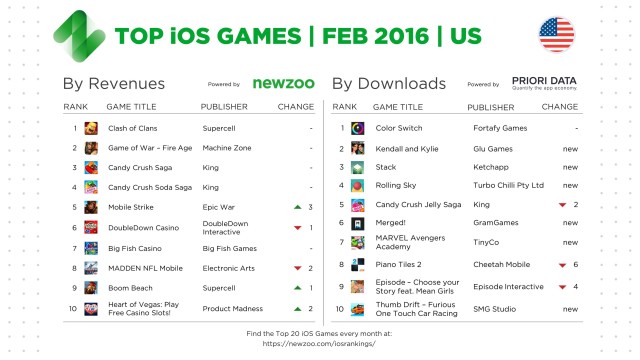
In 2016, U.S. mobile gaming revenue is expected to reach $3.31 billion, up from $2.03 billion in 2013. Candy Crush giant, King Digital, has expanded into the midcore market with its more strategically-challenging title, Candy Crush Jelly Saga and the move is literally paying off. Earning an estimated $125,000 per day, Jelly Saga earned the #12 top grossing spot in February’s iOS sales.

mobile midcore market

Kabam, a AAA free-to-play mobile game publisher agrees that when it comes to audiences, midcore is the way to go. “This audience is having a huge impact,” Aaron Loeb, Kabam’s president of studios told Develop. “If you look at the top grossing charts in China, U.S., South Korea and Japan, they’re dominated by mid-core. Many of the Japanese mid-core games look casual due to their play pattern and art styles, but they’re deep RPGs.”

Mobile MMO, Clash of Clans, rules the U.S. charts with an estimated $1.1 million in daily revenue. The game’s publisher, Supercell enjoyed an annual revenue of €2.11 billion (about $2.4 billion USD) in 2015 alone. With the growing number of television ads for mobile titles, user acquisition is on the rise. Machine Zone spent an estimated $40 million in advertisements for Game of War, including a highly-effective Super Bowl Ad in 2015.

As adult gamers find themselves caught up in the daily grind, but craving adventure, mobile developers are answering the call. Free-to-play models are obviously not hindering revenue streams, and it pays to market to those who enjoy strategy, but don’t have a lot of time on their hands.

Op-Ed: How Changes in Games Media Is Changing Marketing Strategy

We’ve seen massive growth and fundamental changes transform the games industry over the past decade or so. The mobile platform has gone from nowhere to the largest single segment of the games industry, and new business models for games appear, thrive, and dominate. China has become the leading games market on the planet, and Chinese company Tencent is now the largest games company in the world by far. So it should be no surprise that the media is also in the process of fundamentally changing, and so is the nature of games marketing.

Changes have gradually snuck up on games media, but we’re now in the acceleration phase of the curve. Once, games media meant a handful of monthly games magazines, which were the major source of information for games fans. They were also the most important places for game marketing and PR to focus on. As magazines and newspapers have faded in significance, the growth of websites and blogs as the primary purveyors of game news became critically important. Marketing followed, and the most important websites and blogs were places to advertise and support.

Now, as YouTubers and streamers are becoming the place where hundreds of millions of gamers are absorbing the latest info about games, the websites and blogs about games have declined in importance. We’re seeing the effects now in layoffs, restructurings, and shutdowns. Long-time games journalist Dean Takahashi outlined this on GamesBeat: “Layoffs recently hit the Durham, N.C. office of The Escapist, and the 11-year-old Game Politics web site is shutting down on April 18. Others that have or are shuttering include CVG, GameTrailers, Official Nintendo Magazine, Official PlayStation Magazine, Official Xbox Magazine, Edge Online, Xbox World, and PSM3. I would list more, but it’s starting to get a little depressing. I wouldn’t exaggerate the situation. This year isn’t necessarily worse than previous years, but it’s not a good trend.”

Adding to that list is the shutdown of Yahoo Games on May 13 (along with closing other verticals) and sites like Mashable moving more to TV and video. We’re seeing a sea change here, and it has people like Takahashi wondering where the future lies for games journalism.

Certainly, video is becoming far more important as a medium for people to get the latest news about games, but it’s more than news. It’s being able to see the games, watch people play them proficiently, and listen to people talking about them in an entertaining way. That’s a skill set many game journalists just don’t have, so transitioning to video is difficult. Which is why we’re seeing a whole new generation arising of people who are comfortable sharing their thoughts on games via social media and video.

See The Message

There are some important takeaways for marketers in this evolution of game media. First, is the move towards video. It’s imperative that games marketers have a video strategy that is comprehensive and long-term. It’s about much more than doing a killer trailer for a game. Although that is more important than ever, your video strategy either starts there or uses trailers as part of a bigger strategy.

Video has many important differences from text for marketers. Yes, it’s images, and action, but it’s also highly effective at transmitting tone, style, emotion, and personality. Marketers need to consider all of these facets in video creation, and employ talent capable of striking the right notes.

Video is a tool with utility for many aspects of marketing. Yes, snippets of gameplay can be shown, or backstory. But there’s also behind-the-scenes looks at the process of game development, or messages from various parts of the development team, conversations with developers and fans… the list is endless. True fans of a game want to engage deeply with all aspects of the game, its past, present and future, and video is a great way to accomplish that.

That’s not at all to say that video should be used to the exclusion of other tools, of course. Many times ideas are best conveyed by text, or still images. Discussions and conversations on forums or on social media can be terrific at communicating, though you must be ever-vigilant for trolls. While game media sites may be changing, they are still a very important way for millions of gamers to find out about games, and will continue to be for the foreseeable future.

User-Generated Marketing

The second key part of this media revolution for marketers to comprehend and embrace is the shift of marketing control. Marketers and companies once had absolute control over marketing message. Every part of the message that anyone ever saw was designed, executed, and overseen by the brand’s guardians.

Now, the control of your product’s message is largely in the hands the audience itself. This is the era of user-generated marketing. The audience is making videos, describing things in their own terms, praising or mocking it, and concentrating on whatever part of your game they deem important. Attempts to control the message can easily result in a backlash, or even the audience turning away to go engage with some other game that wants their input.

Marketers still have the ability to influence the conversation, and to highlight parts of the message of frame them in a desired way. If you do this well enough, the audience will pick up on that in their own communications. Fundamentally, the game you’re marketing has to live up to what you’re saying about it, because the fan base will quickly tear down any hyperbole. Worse, if you exaggerate some aspect of the game, that can result in a greater level of criticism than the game may warrant. It’s best to under-promise and over-deliver in the era of user-generated marketing.

Games journalism, is shifting from the purview of a small number of journalists to a media of expression for the audience. Your marketing efforts become the starting points for the efforts of the audience. You are providing seeds rather than complete gardens. Yes, you may help nurture and tend this garden of messages, but do it carefully, so as not to damage the plants or the harvest. The growth of the marketing is beyond your direct control in this day and age, but that also means that the possible scope can be much larger than you dreamed of in times past. Would Minecraft have ever had millions of videos created by a publisher if the game had appeared a decade ago? Of course not, nor would it have become the monster hit it is now without the efforts of thousands or perhaps millions of dedicated fans doing a lot of marketing for the game without even understanding that they’re doing it.

Azubu Brings Broadcasters And Brands New Monetization Model

Azubu, a global eSports broadcasting platform, announced today they’ve introduced Everest, the code name for their innovative HD, flash-free online media player that offers higher resolution than Twitch and gives broadcasters and brands a new revenue stream through an interactive clickable overlay product.

Everest’s other key features include a “flashless” HTML 5 player, 4K playback capability, full HD streaming with consistent frame-rate (1080p/60 fps), live DVR, pre-roll and live mid-roll support, and ad-free viewing for subscribers. But maximizing the on-screen real estate by introducing an innovative way to make eSports growth possible and sustainable through overlays takes the cake.

“We want to give the power to our broadcasters. One of the things that streamers have done in the past is try and bring in their advertisers and partners into the conversation or entertainment experience,” Reed Anderson, Azubu’s chief technology officer, told [a]listdaily. “I’m thrilled to say we’ve developed the most advanced eSports video player in the world.”

Bringing branded content into a livestream and attracting advertisers is a sizable step forward for the Sherman Oaks, California-based company that in December raised $60 million in new capital and now competes with rival juggernauts like Twitch and YouTube for a fair share of the eSports livestreaming market.

Chris Barnett, ‎director of product engineering for Azubu, offered the following example as a likely scenario with the broadcaster-controlled clickable overlays: The broadcaster is using a Razer Sabertooth controller during a livestream, and wants to promote it—along with his special discount code. So, a call to action then appears on the upper right hand corner of the page. Once it’s clicked on by the viewer, it goes into a more branded experience. A click-through after that takes the viewer to Razer’s page where they can make a purchase. Meanwhile, the broadcaster is getting real-time engagement statistics, as well as detailed analytics to share with his sponsor.

“While the content was on-screen, there was no way to track engagement and understand how successful a particular campaign may have been,” Barnett explained, adding that there will be a module showcasing the artillery of gear being used as well. “Our goal was to change that.”

Anderson joined [a]listdaily to explain how Azubu is enhancing the eSports streaming experience for viewers, broadcasters and brands, and how eSports could be setting the paradigm for how millennials will consume TV moving forward.

Reed Headshot

How is Azubu staying ahead of the curve as you compete with YouTube and Twitch? How is your livestreaming platform different?

One of the fundamental flaws of our previous generation, and all of our competitors, with the exception of YouTube, is they actually have to use Flash to transcode the video. We’re specifically leveraging ad-overlays, which allows us an entirely new concept of putting the control in the broadcaster’s hands. It’s a new idea, and a new revenue stream to make our broadcasters successful. We look at them as a ‘small business,’ where they can showcase their partner sponsorships with their gear. That was one of the foundational things we put in the player. As for the behind-the-scenes tech side, we’ve made it ‘CDN’ agnostic where we can leverage any content delivery network, which is good because from a business standpoint it allows us to manage cost. From a viewership side, we can find the best content delivery network because we want to be global. Also, for large events, we can do redundant streams. I would say the Internet is not designed for livestreaming, so we can actually send two streams into the networks and then the player can decide which stream comes down the best to avoid network congestion.

How can brands and broadcasters monetize through ad-overlays via endemic and non-endemic audiences? How will it become a reality?

To look at monetizing livestreaming, most of it is advertising, or subscriptions, or some sort of pay-per-play type of thing. This is exciting because it’s a brand-new revenue stream. At the same time, since it’s a brand new product, you have to spend a lot of time iterating with your customers.

Are you securing exclusive streaming rights?

We’re certainly controlling the scarcity of supply, and having exclusive content is a big part because it drives viewership to one location. That is absolutely the path we’ve been pursuing. We just signed a deal with ESL. Some of their stuff is exclusive, some of it is non-exclusive. But we certainly strive for exclusive content, which is why we signed folks like Keyd Stars and Pain Gaming from Brazil. We also have folks from Europe who stream exclusively on our system. We’re also an open broadcast model, so anybody can go download the software and begin broadcasting.

How is the platform conducive to mobile?

We have both iOS and Android award-winning mobile apps. A lot of the functionality you get on the platform is possible in the application on your phone, or tablet. The site is also optimized to run on the browser through your phone. But things like the overlay have yet to transfer over.

How would you describe your user base?

It’s still more predominantly desktop. I’d say roughly 70-30. But mobile is growing quite a bit. Some of that has to do with adoption in some countries. Korea, for example, is a lot higher for mobile, whereas Brazil is a lot lower, and some of that is a function of the way the data plans work in each of those countries. So people can tend to be conservative about streaming.

Brazil and India are key markets you’re pursuing. Why are those two countries important to growing your platform?  

For Brazil, it’s huge. We were able to sign a deal exclusively with UOL BoaCompra last year. They are like what AOL was in the ‘90s of Brazil. Seven out of 10 users go through that portal. I would say we are the de facto standard streaming platform in Brazil. ESports is a huge, up-and-coming market there. We look at emerging markets; we look at the competition. Twitch had done a great job in North America and Western Europe. We wouldn’t be here without them. We looked at markets that were underserved through technology and through recognition in the space.

Player_HomepageWithMenu

How are you building out capability to grow your business?

In looking at making money off of streaming, whether it be live, or video on demand, not many companies make money doing it. Even YouTube loses money because of the cost to run that. We’ve looked very hard at finding new revenue streams and opportunities, like the overlay. What we’re looking for as a business right now is advertising and subscriptions—which is fine. That is a totally normal thing that people have been doing for a very long time. Advertising is not there yet. People debate whether advertising will or won’t be part of the future. Maybe it will be much more targeted. But giving the broadcasters tools to monetize is a big thing. We’ll have to figure out what the commercial model looks like. We’ve started with our partners. It’s a brand-new idea, so starting with the new idea of figuring out we want the broadcaster to be successful in the business, we want the partner to experience the same, and we provide the service, and want some of it, too. So it will be a three-sided model, to a certain degree, with always an eye toward exclusive content.

In December, Azubu raised $60 million to bolster the platform and expand into new territories. How else do you plan on using the funds?

Most of the money is predominantly used to acquire great content, and to build a great product. Those are the areas where we’re focused at, aside from some overhead of running offices. We’ve been focused heavily on our streaming platform and building out things like players and overlays. We got a lot of great differentiators that we’re looking to put into market—all with an eye toward supporting the broadcaster. We have some more announcements lined up in the next couple of months.

Everyone is high on eSports right now, and its growth potential. What do you think is possible? How do you think broadcasts can change?

I think eSports is definitely at the tip of the spear. Timing is everything, and it’s a perfect time for eSports right now. It’s got the hype, it’s got the market, and the technology is finally there. What eSports is going to do for livestreaming is set a paradigm for how millennials consume television moving forward. Watching TV, or streams, is no longer going to be a passive thing. … One of the big thematic shifts we’ve been trying to make is designing for the customer first—specifically for our viewers and our broadcasters—and learn from them, iterate and make the product better. 

Follow Manouk Akopyan on Twitter @Manouk_Akopyan.

SteelSeries’ New Strategy Brings Fans Into the Life Of ESports Players

SteelSeries, the popular manufacturer of video game peripherals, is an active member of the competitive video game community; designing products with the feedback of professional eSports players, partnering with teams and even signing their own. It came as no surprise, then, that SteelSeries would partner with Virtus Pro, a Counter-Strike: Global Offensive (CS:GO) team out of Russia—but with the announcement came another—a new brand engagement strategy.

“Starting with the MLG CS:GO Major this week, our relationship goes far beyond using our products and wearing our logo,” Zach Hill, SteelSeries’ head of marketing stated in the press release. “We’re working together to develop unique high-performance products, and giving our fans a new level of exposure to the lives [of] eSports athletes.”

Virtus Pro player, "TaZ" evaulates SteelSeries mice in 2008.
Virtus Pro player, “TaZ” evaulates SteelSeries mice in 2008.

Travis Hezel, global director of sponsorships elaborates on what that exposure entails. “With Virtus Pro and all of our teams, we try to be their biggest fans,” Hezel told [a]listdaily. “We’ve built a company culture where knowing the basics about CS:GO, Dota 2, etc. is just not enough. We watch streams, talk to players and management on a daily basis, and really look to help the franchises we work with better connect to their fans. So yes, they represent SteelSeries by wearing our logo on their jersey and use our peripherals, but the players are our experts. They are the motivation and heart of our brand – nobody knows what is needed in a gaming peripheral more than these athletes.”

Virtus Pro will continue to help shape the future of SteelSeries products through hands-on testing and evaluation. Hezel explains why this particular team was the perfect choice:

“Having a top tier CS:GO team was a priority for us in 2016. We believe that with all games being equal, [Counter-Strike: Global Offensive] players are the most demanding performance-wise on our products. Some of the athletes on Virtus Pro have had more experience in the design process of gaming peripherals than most franchises (see attached photo of TaZ in 2008). Having their extremely valuable perspective starting at the conceptual level down to mass-production of our next-generation of products will culminate in our customers getting the best possible mouse, keyboard, mousepad or headset we can create.”

Wiktor “TaZ” Wojtas, Virtus Pro team captain, whole-heartedly believes in the strategic partnership. “We demand the best possible products while competing, and anything less than excellence isn’t enough by our standards,” TaZ explained in the press release. “With SteelSeries, we have a gear partnership that gives us everything we need to focus on our matches. The opportunity to work with the developers at SteelSeries to create their future devices is one I’m very eager to start.”

“We’re approaching the way we tell our brand and product stories differently in 2016-2017 and not just with Virtus Pro,” Hezel told [a]listdaily. “You will start to see more real and creative ways that we connect the athletes and influencers that we work directly to our customers and fans. It’s much more than wearing our logo and using our products. We’re really excited to be able to show that in the coming months and years.”

How Plays.tv Attracts 10 Million Users a Month On A Shoestring Budget

Plays.tv, the free video-sharing service for gamers, has garnered over ten million active monthly users in their first year—rivaling the popularity and engagement of photo-sharing site, Instagram.  This growing social platform attracts over four million content creators per month; from high-profile eSports champions to casual gamers playing with friends. The result is a staggering 1.6 billion minutes of gameplay footage recorded—per month.

Proof of concept

Launched in 2015, Plays.tv is owned and operated by Raptr, a PC-gaming service founded by Dennis “Thresh” Fong; recognized as the first professional gamer. One would presume that Raptr’s own community—ten million strong—would account for Plays.tv’s impressive first year, but in a phone interview with [a]listdaily, Fong revealed a surprising revelation. Not only did their small company spend less than $15,000 on marketing the new website, they decided to keep Raptr as separate as possible.

“In the first year, we did a pretty minimal amount of promotion within Raptr for Plays.tv.” Dennis Fong told [a]listdaily. “We’ve been stepping it up probably in the last maybe 30-45 days—but in the first year, one of the things that we really wanted to do was to prove that Plays.tv could be successful as a stand-alone service—that it could have viral and organic growth of its user base and viewership on its own. So actually we really didn’t do any promotion of Plays.tv, especially in the first, probably ten months. I definitely wouldn’t say that Plays.tv is successful because of Raptr, but obviously once we proved that it was a service that gamers loved, then we started promoting it into Raptr.”

Fulfilling a need

Plays.tv is a free service that allows PC video game players to capture and share memorable clips from their own gameplay or others’ on the internet through a Chrome plug-in. The software automatically detects and tags players featured in the clip, as well as other search-worthy criteria like playable characters, type of kill or map. Users on Plays.tv will automatically have these clips added to their profiles for all to see. The video clips, averaging 30 seconds in length, get right to the point for easy consumption. According to Dennis Fong, the site is “really a video storytelling platform that enables gamers to share their stories the way they want.”

Unexpected Applications

“Because we have [automatic player tagging],” Fong added, “A vast majority of eSports pros in League of Legends use Plays.tv.  We don’t sponsor them, but they use it for a reason that we didn’t quite intend, which is to actually analyse their play.”

Unlike other video recording software, each game recorded with Plays.tv is separated by session and automatically highlights play by plays for easy review. Fong adds, “A lot of top teams have told us, ‘this is actually our number one most important coaching and analysis tool.'”

What’s next

The Plays.tv platform has now been launched publicly, extending game share possibilities to developers.  The Game Events API lets any game provide real-time metadata to Plays.tv, enabling automated video highlights for players after every game. The Web API gives developers direct access to Plays.tv’s video library, enabling anyone to embed the videos or create entire applications around Plays.tv videos, with options to pull feeds filtered by game, characters, hashtags, usernames, and more.

While PC gamers take advantage of this thriving online community, console gamers will have to wait. “We’re pretty much squarely focused on PC at this time,” Fong explained, “I don’t see us moving toward consoles in the near future.”

How ESports Drives Twitch Viewing

Livestreaming games has gone from an odd curiosity to a major driving force in the game industry, propelling eSports and games alike to new heights. The initial driver of this technology was a minor offshoot of Justin.tv called Twitch, created in 2011, which focused on games so that the main Justin.tv site wouldn’t be overwhelmed by them. This proved to be an excellent idea, as livestreaming games exploded in popularity, leading to Twitch.tv being purchased by Amazon for nearly $1 billion in 2014.

It’s not at all a coincidence that the rise in eSports has happened along with the massive growth of livestreaming. The two have had a synergy, where rising interest in eSports propels viewing of livestreaming, and then the growth in livestreaming attracts more viewers to eSports. Market research and eSports analyst firm Newzoo has been following this closely, and new information from Newzoo shows clearly the relationship between Twitch and eSports. Of course, while Twitch is the object of this particular study, other livestreams and videos found on YouTube Gaming, Hitbox, and Azubu are also deeply intertwined with eSports.

Marketers are following this with a keen eye for a couple of reasons. First, the large and fast-growing eSports demographic is a prime one for many brand marketers, which is why you’re seeing national and international brands like Coca-Cola sponsoring eSports events. Second, game streams and videos are an important part of the marketing for all kinds of games, not just those that are eSports. When tens of millions of people regularly tune in to watch one person talk about games, this is something any game marketer needs to follow closely.

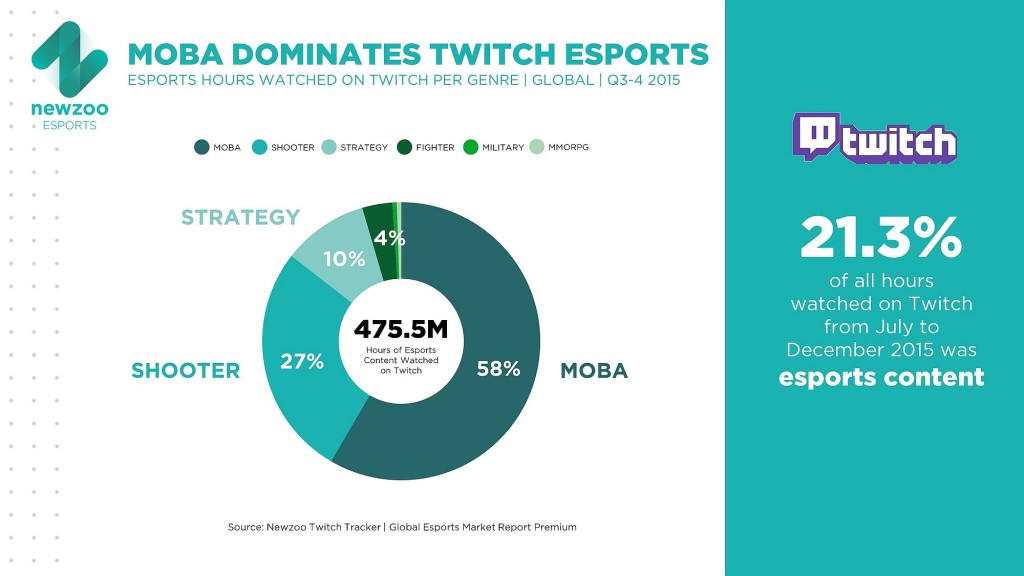
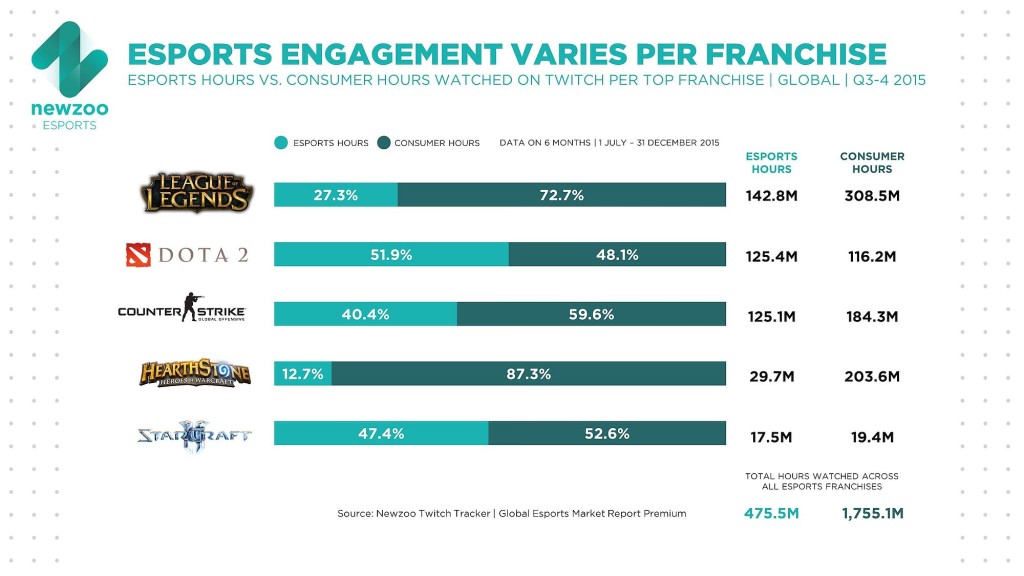
“According to the Newzoo Twitch Tracker, 21.3 percent of all hours watched on Twitch from July to December 2015 was eSports content,” noted Newzoo in a blog post. “This sums up to 475.5 million hours of eSports content watched across all eSports franchises, an average of over 79 million hours a month.” That’s a stunning amount of viewership, but it’s important to understand how that breaks down among the various eSports titles. “An analysis of viewing hours per franchise reveals that the share of eSports content compared to game content streamed by consumers varies widely from 12.7 percent for Hearthstone to 51.9 percent for DotA 2,” the post continued.

The game most closely associated with streaming and eSports are the multiplayer online battle arenas (MOBAs) such as League of Legends, DotA 2 and Heroes of the Storm. “MOBA’s account for 58 percent of the total eSports hours watched on Twitch, of which most hours come from Riot’s League of Legends and Valve’s DotA 2,” stated Newzoo. That correlates well with the popularity of those games in terms of revenue, where Riot Games is estimated to have pulled in more than $1.6 billion in 2015 from League of Legends.

While MOBAs have proven to be immensely popular over the last few years, the first-person shooter (FPS) genre of game has been a favorite for decades. The fast action of a typical FPS also proves to be quite popular with streamers. When you add FPS games to the 58 percent of Twitch eSports viewing, the two genres between them account for some 85 percent of the total eSports viewing on Twitch. Combined, the two genres were responsible for 406.7 million hours of eSports viewing in the second half of 2015.

Newzoo_Esports_Hours_on_Twitch_per_Genre_

That’s not to say that other genres were unpopular. “10 percent of hours watched went to streams in the strategy genre,” Newzoo pointed out. “These streams include Age of Empire II: The Conquerors, and the big players, StarCraft II and Hearthstone. Consumers watched a combined 47.3 million hours of Strategy eSports content in the last six months of 2015.” As publishers look to make more games into eSports in a variety of genres, the viewing time should begin to even out between game genres.

The balance between consumer and eSports content is revelatory. “Compared to the consumer content, DotA 2, Counter-Strike: Global Offensive, and StarCraft II generate a lot of eSports hours,” noted Newzoo. “More than half of the total DotA 2 hours watched is eSports content. These three games have a dedicated eSports community, whereas the League of Legends and Hearthstone communities have a relatively larger group of non-eSports viewers. This is reflected in the contrast between Hearthstone and StarCraft II. Just 13 percent of the total hours of Hearthstone is eSport centered, compared to the 47 percent of the total StarCraft II hours. In absolute terms, with 29.7 million hours watched, Hearthstone still triumphs the 17.5 million hours of StarCraft II because of the larger consumer inflow.”

The message for marketers is that not only does the eSports potential vary for different games, but so does the eSports appeal. Some games are just naturally suited to competitive play at a high level, while some are enjoyed by a broad audience with less regard for the high-level competitive play. It’s important to realize, that key competitive events can pull people away from watching consumer-level play—or even from playing the game themselves.

Newzoo_Esports_Engagement_on_Twitch_per_Franchise

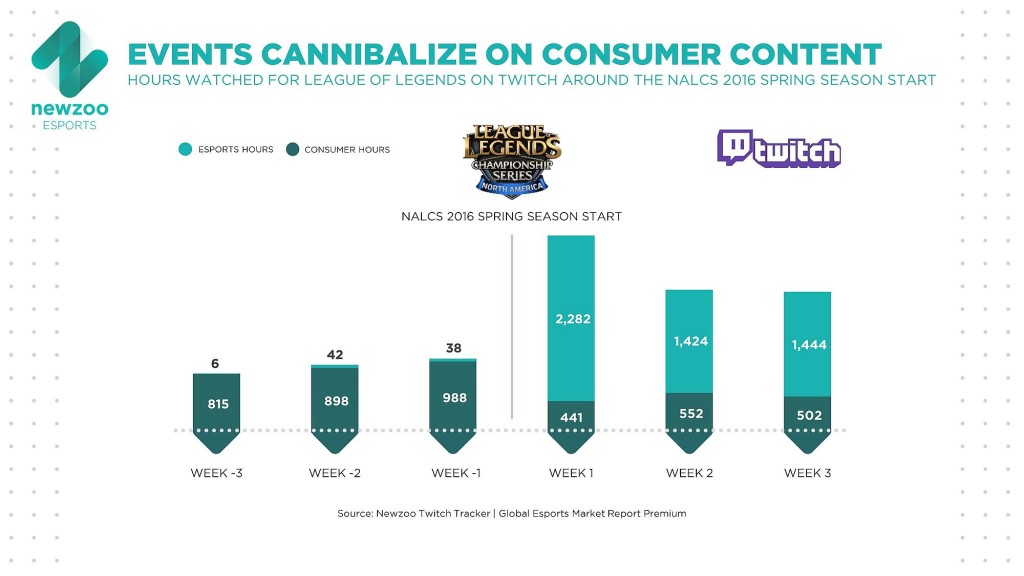
“While large eSports events drive high traffic on Twitch, they also take eyeballs away from the regular consumer generated content,” Newzoo pointed out. “The graph below shows the hours watched for League of Legends on the three Saturdays preceding the NALCS 2016 Spring Split and the first three Saturdays of the new season. During the first three days of the season, consumer generated content viewership hours of League of Legends were down 44 percent compared to the three weeks before the season started.”

Fans want to watch the game played at the highest level in preference to less skilled play. That’s true of eSports fans, but also for players who don’t care much about eSports. Watching highly-skilled players in action provides a valuable tutorial on what you can do to improve your own play. This is true both on the strategic level of figuring out the best champions to play, as well as on the tactical level of movement and positioning choices during the game. This provides an extra dimension to eSports viewing that’s not usually found in regular professional sports viewing. While a few amateur players can get useful info from watching professional play, games are mostly watched for the sheer fun of it.

Newzoo_Twitch_Hours_Around_NALCS_2016

These observations about Twitch, eSports and game streams lead to some important ideas for marketers. For one thing, if you’re looking to eSports for brand marketing, don’t neglect the role of the casual player who is not an eSports fan. You’ll manage to pull in a lot of views from the broader audience, not just the eSports enthusiasts. That makes a difference when you’re crafting your marketing message. Also, for games marketers, you can see the beneficial effect a successful eSport has on driving engagement with your game. It’s a continuum of interest, and marketing efforts should be taking place all along the spectrum.

KontrolFreek Explains Why It’s Offering ESports College Scholarships

KontrolFreek has relied on console eSports pros to help sell its controller peripherals for the past seven years. Now the company is investing in the next generation of pro gamers through a new Collegiate eSports Scholarship program. The company will distribute $20,000 across 10 recipients over the course of the 2016/17 academic year.

This program is the first of its kind, as it’s available to any player in the U.S. or Canada, at any school, competing on any game. KontrolFreek’s scholarship is not a prize that players can win in a tournament or a tuition grant given to players by the school. It’s a merit-based award available exclusively to competitors in the collegiate eSports space. In order to be considered, applicants must prove that they are members of a collegiate eSports team and plan to continue their education for another year. Other considerations include grade point average, extracurricular activities, awards and honors, and personal goals.

Ashish Mistry, president and CEO of KontrolFreek, discusses this new program and explains the company’s game plan for eSports in this exclusive interview.

Ashish_Mistry_kontrolfreekWhat impact have you seen college scholarships offered by universities and developers like Riot and Blizzard have on eSports to date?


Organized collegiate gaming and associated scholarships are relatively new, so what we’re seeing now is just the tip of the iceberg. Many of the scholarship programs are gaining a lot of attention, and there’s still a long way to go to create opportunities for players and brands. However, we are seeing some traction.

For instance, Heroes of the Dorm is a very well-known collegiate eSports competition because it is shown on ESPN. Broadcasting the competition on a mainstream sports network validates the industry and the competition itself, and also exposes the tournament to new audiences. Additionally, brands have a chance to sponsor and see real ROI from participation, because of these expanded audiences.

What were your goals in launching this eSports scholarship program?

Our main goal with the eSports scholarship program was to provide a truly merit-based and publisher-agnostic scholarship to student gamers. We saw that there wasn’t anything like it on the market, and the other scholarship offerings severely limited students’ chances at receiving financial support for gaming. To win a scholarship in a tournament, they have to beat out hundreds of other student gamers, and universities are only giving out scholarships for players of particular games, specifically League of Legends. We looked at existing programs and thought, “What about the DOTA 2 players? What about LoL players going to community colleges?” We saw a need, and we stepped up to fill it.

How does it differ from other scholarship options available through eSports?

Before our program, there were only two types of scholarships available: tournament prizes or university team grants. All of the competitions and scholarships available were game-specific. We wanted to create a scholarship that cast a broad net over gamers, so that virtually anyone playing college eSports could apply.

Our scholarship is purely based on merit, not off of how well you can beat other teams in one specific game or what university you go to. Students competitively gaming for any accredited university in North America are eligible to apply to our scholarship. This opens up the opportunity to a huge amount of students who previously couldn’t be recognized for their contributions to their school and to the industry.

What impact do you hope this program has on the greater eSports ecosystem?

We hope the KontolFreek scholarship draws more attention to the what’s happening en masse. It’s one thing for a game publisher to put up money for winners of a competition. But it says something about the opportunity and validity of the collegiate eSports industry that a brand is willing to award academic scholarships to any type of gamer.

We also know that the gaming industry tends to hire from within the gaming industry. Ex-pro gamers retire and work for gaming brands or publishers all the time. But the industry is growing almost faster than anyone can keep up. Our hope is to keep students active in the eSports space and focused on academics at the same time. It might open up doors for students to funnel into eSports businesses. Most of these players are sharp, smart and motivated. Those are the kinds of people we want to support, and those are the people we want with us in the trenches of the gaming industry.

How does investing money now in these players open up opportunities for your brand down the line?

Having spent the last seven years building authentic relationships with millions of gamers, KontrolFreek knows that providing gamers with opportunities and a voice can have a direct impact on our brand. And we hope this resonates with other large brands and pulls them into the sport.

Are you looking at this as a new annual investment or a one-off experiment?

We are committed to this program as part of our corporate giving strategy moving forward, and based on initial interest from applicants, we are also looking at options to expand internationally in the coming years.

How has KontrolFreek used eSports to market its brand over the years?

We’ve been involved in eSports since our inception in 2009, and have strong relationships with pro teams and individual players alike. The core of our involvement stems from our tournament-sanctioned performance gaming gear that truly helps gamers improve their results. Obviously, that’s been great for KontrolFreek from a marketing perspective, because top players use our products to compete and win.

What impact are the increased prize pools across games like Halo, Call of Duty, Street Fighter, and Mortal Kombat having on your business?

Increasing prize pools are a direct result of the greater awareness and attention that gaming communities are currently receiving. We know firsthand that the industry is growing, and that our budgets will increase as the opportunity increases. We also know our place in the gaming world, and intend to continue our partnerships with leading brands like Activision and Bungie to further grow these prize pools and opportunities.

What do you feel console eSports can learn from the much larger PC eSports community?

The console community can learn immensely from the groundwork and history in PC-centric eSports. While there are differences in how we compete, the “why” of competition is universal—and so too are many of the tactics required to scale. Specifically, I believe team and league structure are critical, as well as having a structured “farm system” and athlete management. I also firmly believe that the inclusion of large brands and their ability to effectively deploy marketing dollars at scale will be critical to a sustained eSports community.

Treyarch Studios Delivers ESports Drama With ‘Call of Duty’

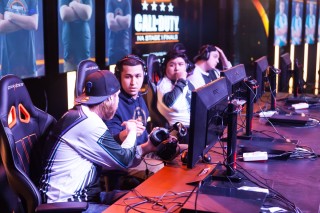
The Call of Duty World League Stage 1 finals are about to begin as the best teams in North America battle it out for their share of $250,000.

David Vonderhaar, Treyarch Studios’ designer director, is standing front and center at the ESL studios in Burbank, California, taking in all the action, navigating the intimate space with an infrared scope on determining next-level fixes with the production staff, and players alike.

Although his job since 2005 as designer for six COD installments is to make one of the most popular game franchises of all time consistently better than the previous version, he’s making mental notes on how to make the eSports experience just as great as the gameplay—where the players and caster desks are positioned, and how it affects the overall spectating experience both in person, and at home. Such is the life of a creative who makes more maps than Magellan.

12783541_1077846262277097_2367496965905905697_o

“I get fascinated by the process side, and turning it into one that’s cyclical, focusing on the next important thing we could be concentrating and improving on,” Vonderhaar tells [a]listdaily. “Having that direct feedback from the community is important. All you can really do as a developer, and as a human being, is just try really hard to make things better. … Even if it’s just one more thing you can do.”

Publisher Activision’s sci-fi military shooter Black Ops 3 has been the top-grossing console game since it was released in November—it generated over $550 million in worldwide sales in its first 72 hours. In recent months, they’ve taken dead aim on weekly live broadcasts, regional competitive events, and their largest prize pool yet with more than $3 million on the line.

They also launched Live Event Viewer this month on PlayStation 4 to let players watch COD World League matches from within the game; there’s also community-focused programming, like developer-hosted livestreams, that complements the first year of the league.

Jay Puryear, Treyarch’s director of brand development, says their three COD World League regions—Europe, North America, Australia/New Zealand—each have their own unique style.

“Looking at all of these regions, there’s really a growth potential for all of us from an eSports perspective,” Puryear said. “With the Live Event Viewer, we are noticing viewership growth from across the world. We’re all pushing each other. We see the potential. We see where we want to go. … For us, it’s about growing that engagement and giving eSports a platform through not only live events, but in-game to ultimately help grow the audience.”

The combination of production value and spectator tools, like seeing the silhouette of players through buildings, is delivering the drama, and really opening up viewership to non-traditional eSports players.

Vonderhaar, who’s largely responsible for the development of multiplayer in the COD franchise, joined [a]listdaily to discuss how eSports has impacted the franchise.


What is the best part about attending an eSports event in person? What do you learn?

For us on the development side, there’s a good consortium of people inside our building at Treyarch Studios that really are super in tune with what’s happening when we take the game, and it gets played on this level. It’s a lot of fun for us. It’s a lot of fun to see the game get exposed to lots of people. In general, you get this great swelling—like all the streams are on the TVs back at the office. There’s enthusiasm to see all this hard work over the last three years come to these moments.

What have been your chief takeaways from COD World League?

The business of eSports is a pretty fascinating thing, right? But at the end of the day, we have to work on the game. We have to make the game super competitive. We have to keep that playing field fair and balanced. We have to think about all of the things that go into letting the game become a spectator experience, with features like our COD Caster, which is a spectating view. The live-event viewer that lets you stream inside the game. Even the custom game setup, and how people can set up to play competitively in the first place. So all of our energy from the business side is translated into the development side, because that’s what we do. There’s really impassioned conversations about ‘where this could go, where you need to be, and what that the roadmap looks like.’ From a practical point of view, on a day-to-day basis, you can get caught up and overwhelmed in sort of the fun, business side of things. But you’re making a game. You have to be focused on the game, and that’s what we do on our side of the fence.

There’s so much competition in the market. As a designer, how are you differentiating yourself from the pack to own a large share of the gaming audience?

Call of Duty is a really big, popular franchise with a heavy, passionate install base. Right off the bat, we have a great opportunity to take that audience and bring them into the eSports world, and show them what the eSports side can look like. And as big as the eSports side of it is for Call of Duty, there are still a lot of people who perhaps are not familiar with it. Over the years, we’ve been able to do things to help grow that audience, and build awareness, and exposure to it. But as developers, you’re really focused on just making a great, competitive game, and a great competitive game can be a really great eSport. That’s how we approach that problem. You can focus on how large numbers of people could enjoy a game competitively, and how the game services this broad, potential audience of players but also maintains its competitive nature. There’s a constant tendency, and a very healthy push-and-pull on the development side between things that are fun for everybody, and things that are fun for competitive. And they’re not always the same things, and I think that’s the design challenge. And that’s what makes things fun because design is about solving problems.

dreamteam

How crucial has eSports been to engaging with the Call of Duty audience?

What you get from eSports and engagement is this new opportunity to put new engagement loops inside the game. We’ve been doing different types of engagement loops from a game design point of view for a very long time: How you level up; who you pick to unlock; which types of abilities you select as a player to play as; what type of challenges are available; how we do double XP, double weapon XP, double crypto key. All of these things are engagement-driving loops, but eSports gives you this new thing because there’s this awesome cadence of stuff that happens on a routine basis when you’re doing an eSports season like the COD World League. It gives one more tool in your designer’s tool box. And now, we can say ‘OK, this is the eSports event driver, this is what we’re getting people to pay attention to this week.’ For us, it’s great because you can combine that with 10-plus years of experience working on the game franchise.

How has the development style changed from the first Call of Duty till today for this new generation of gamers?

The new generation of gamers, from one point of view, like a lot tighter gameplay loop. They like the game very, very fast. Over the years, on the development side, we’ve been trying to figure out how to keep the game as fast as you can to engage those players. But also, very fast games can be difficult to spectate. There’s this constant push-and-pull and balance trying to figure out ‘how to make a game that’s fun to watch that’s also fun to play.’ And that’s what you’ve been seeing over the years as the game gets faster, but also maintains the integrity about how to watch that experience. … Things happen in Call of Duty in microseconds, in some ways. Like the COD Caster feature: with eight players in the battle space, and only spectating one, you have to have this information so that the Casters have the spectator predict where the action is going to materialize. It’s been fun to think about that problem.

11875042_971748812886843_174606110496085253_o

What are the current challenges you’re trying to overcome? How are you improving gameplay?

As an eSport, there’s a desire to want to contain the available amount of content accessible. From a development challenge point of view, it’s ‘how do you build compelling content that can be usable and competitive,’ but also appeal to the rest of the population? One of the challenges for us has always been ‘what modes are we playing; what are the rules of those modes; what’s allowed to be played in those roles?’ … It’s created this whole new kind of meta that’s uniquely new for the COD World League and Black Ops 3 that didn’t exist.

Has eSports changed the landscape of the Call of Duty community?

It does change, and the players have changed. But I think of it in terms of maturity and growth. Everyone gets a little better every time we do this. There’s certainly a growth in the competitive community, how they’re approaching the game, what they’re playing. It’s impacted us on the development side in terms of what features we’ve prioritized to construct. … We’ve maintained a healthy relationship with direct contact with players. That growth has been challenging, too, because you can only take so many phone calls in a day and still make video games. But I love it.

11942198_974725429255848_6546944193533122050_o

How often do you get to play?

I actually am having a hard time getting to play. I’m not playing Black Ops 3 for fun, but I play everyday because we’re still developing, and we have DLCs we’re making. I joke that when the game comes out, it’s only halftime. We make as many maps after the game comes out as we made on the release. There is a tremendous amount of stuff going on.

What is your favorite part of the design process? 

Every single day we are updating the game. Being able to tell the community about the hot fix or the small patch that doesn’t require download is fun for me. I do it because I want to, and I like that part of it a lot. Having players be in the loop influences the next round of stuff. In a post-ship world, it’s the most fun part.

Follow Manouk Akopyan on Twitter @Manouk_Akopyan.