World Drone Prix Takes Drone Racing To The Next Level

The first World Drone Prix event will be held at Skydive Dubai this March 11-12 with the top 32 teams—out of the 100 flown to the Middle East for March 7-8 preliminaries—competing for $1 million in cash prizes. The inaugural event was organized by Sheikh Hamdan, crown prince of Dubai, UAE, and the World Organization of Racing Drones (WORD). Co-producers of this new league are the Aerial Grand Prix and the International Drone Racing Association (IDRA).

Sponsored by Skydive Dubai, X Dubai, Dubai Calendar and RTA, the World Drone Prix is the largest drone racing event ever held, many times larger than any previous race, and it’s the first drone racing event to feature a custom-built, physical track complete with wild turns and dips designed for spectators.

Sahand Barati, president of the IDRA, helped organize this first event. He talks about the future of drone racing and what it’s opening up to sponsors and spectators in this exclusive interview.

Why did you found the IDRA?

IDRA was founded on the belief that the passion for the sport of drone racing will usher a new era of innovation towards drone technology. In the same way that the early roots of Formula 1 grew the automobile industry, hobbyists and passionate tinkerers got together in garages all over the world and paved the way for the current technology that we have in our modern day cars. The IDRA loves the potential for a growing/learning community of people. Bringing together the hobbyists, professionals, and industry leaders through our competitive events is ingrained in our DNA.

How has the organization grown since launching?

IDRA has grown from a concept to an international body that is 50,000 strong within a matter of months. We started out with zero cash. Our passion and ambition partnered with our strategic marketing plans to grow the sport has been the fuel to our relatively fast success.

How big is drone racing today in the US, and in the world?

Drone racing is still a relatively small industry because it is so young. The first real race that got any publicity was the 2015 US Drone Nationals held in June at the California State Fair. The event was a first of its kind and attracted around 150 pilots from across the country. It had a relatively small spectator crowd because at the time no one knew what drone racing was. Fast-forward a few months to present-day and you can see that drone racing is experiencing hyper growth. You now have races popping up all over the world. The number of pilots has grown tremendously over the last few months, and is expected to grow faster in the coming years as the barrier to entry becomes less difficult through flight simulators and RTF aircraft.

Are there any comparisons with drone racing and other traditional racing sports based on where you see this heading?

Drone racing does have some elements of conventional racing within it but for the most part it is its own beast. No other form of racing combines the best of the virtual and physical worlds into a unique experience. Unlike auto, boat, airplane, or horse racing, the technology necessary for drone racing is accessible to anyone, and the initial monetary investment is relatively minimal.

How did the IDRA work with the World Drone Prix on this Dubai event?

The IDRA is one of the co-founding organizations that created the WDP along with the Aerial Grand Prix. One week before our IDRA California Cup Championship, we were flown out to Dubai to discuss the opportunities of expanding the sport. We were blown away by the generosity of Sheikh Hamdan, the crown prince of Dubai, in providing the necessary resources to really bring our dreams to life. The boost that the government of Dubai and Sheikh Hamdan gave our industry brings legitimacy to the industry and will take us over the hurdle of transitioning from a hobby to a full-fledged sport.

What role do you see this World Drone Prix playing in the drone racing landscape?

The World Drone Prix stakeholders believe that the drone racing community is made up of some the best innovators on the planet. They see the positive impact drones can have on society and want to support advancements within industry. Drones have become very popular recently, but the technology still has a long way to go in many areas like battery life, obstacle avoidance, situational awareness, etc. The stakeholders believe the best way to promote innovation is through competition.

Through racing and other various competitions like the Drones Are For Good Expo (which is also held in Dubai), they empower and support the best and brightest minds within this industry in the hopes that their breakthroughs in drone technology will benefit humanity. Given Dubai’s long history of racing, their goals are to turn the WDP into a full F1-style international series.

Can you explain what the racecourse is actually like and how it may differ from other venues (including any preliminary venues for this competition)?

The race course from Dubai was designed by Film Masters. They took our dream track and made it into reality. The course layout has hairpin turns, a 30-foot rise and vertical drop, and a lightshow that rivals the best concerts in the world. The biggest difference between a racetrack for cars and a drone racecourse is the ability to move on the z-axis; that dynamic is absolutely thrilling when you see it in person. 

What are typical IDRA racecourses like?

The typical IDRA racecourse, along with all the other racing leagues, consist mainly of feather flags outlining the turns, air gates that designate the drops, and exercise cones to outline the course. The track designed in Dubai ushers in a more professional and broadcast-ready track that is critical to growing the sport.

How will the IDRA continue to operate separately with its own league plans?

IDRA plans to move forward just as we have in the past. First, we believe that the community needs to be much larger. Inviting new adopters to the sport is paramount to the growth of the industry. Secondly, we are working with private investors that believe in the future of this technology. Bigger drones and high-definition transmission is key for broadcast and the only way we can develop those devices is by having investors and industry leaders partner with us. IDRA spends a considerable amount of effort on media. Exposure and coverage of our events is a keystone to our company.

How have you seen sponsors and prize money increase in this space?

The rapid exponential growth of sponsorship and prize money has been a big shock to the industry as a whole. From prizes ranging from $10,000 to now a purse totaling $1 million in just a matter of a few months is astounding! It just shows that there are key people that believe in the potential of this sport and industry.

What opportunities do you see 360-degree video opening up for drone racing in the future?

I believe 360-degree video and virtual reality goggles will be synonymous with drone racing. For the first time in the history of man, the spectator will be able to see and interact with a live view of the aircraft. They can move their head around as the drone races through the track and actually feel as if they themselves are piloting the aircraft, kind of like entering the mind of the pilot, if you will.

Where do you see drone racing five years from now?

Our hope is that by 2018, IDRA and the other leagues will have the capital to continue to grow the community of users. By 2020, we hope to have large-scale drones racing on full Formula One tracks, and by 2021 drone racing will be sought after on every sports broadcast outlet in the world. We hope to look back at Dubai and say that we’ve come a long way since then, and we are very grateful for the opportunity that Sheikh Hamdan has given the sport.

King Digital Discusses What Motivates In-Game Purchases

Even before its acquisition by Activision Blizzard, King Digital was the world’s largest mobile games developer, thanks to the phenomenal success of the Candy Crush franchise. So, it’s no surprise that the company knows what motivates players to purchase items from a free-to-play game. It’s down to a science.

Michele Airoldi, business manager at King Digital, will be speaking at this year’s GDC in a session titled, “To Buy or Not to Buy” — where he will discuss the factors that lead-up to purchasing in-game items so that developers can better build a successful game economy using “a new and simple purchase decision model based on the interplay of the product, the offer and the player.”

[a]listdaily talks to Airoldi about some of what will be covered at the GDC session and the nature of in-app purchasing decisions.

Michele ArioldiSpending money on a free-to-play game might sound like a contradiction to some people. What is your response to that?

All of our games at King are free to download and play, and they are designed to provide our players with some light entertainment when they have a few minutes’ spare.

I think that the huge growth and success of the free-to-play model shows that the vast majority of players accept and like it. In order for us to build and maintain a good relationship with our players, it’s essential that we continue to make games that are fun and engaging to play, and accessible to anyone, anywhere. It is not essential for our players to buy items in order to progress through the game.

What kinds of premium content do players generally prefer?

The types of content we offer our players generally depends on the genre of game but as the majority of our offering is casual puzzle games, we tend to sell boosters and gold bars, which players love as you can use them to buy lives and help you on some of our trickier levels.

We also released our first resource management game last year called Paradise Bay, and players can choose to spend to speed up tasks, as well as purchase cosmetic items to customize their island.

https://www.youtube.com/watch?v=tA0kq_IQ0vA

How do you present paid content without disrupting the game?

We always want to make sure that the player has the best possible experience every time they open and play one of our games. So that we don’t disrupt the game in any way, we only show players the items they need when they need them, separate from the game play.

For example, the player has to purposely click into the Gold Bar shop in order to see it. A player will also be given the option to use or buy gold bars if they have failed a level and need additional lives.

Does King have to invest heavily to promote paid content, or are dedicated players naturally drawn to it?

As I mentioned, the player experience is what is most important to us when we are thinking about designing or releasing a new game. Carefully thinking about the experience from start to finish and avoiding disrupting the player is key.

Promoting paid content aggressively would go against their preference and, ultimately, our interest and so we prefer to invest more in understanding what our players want and need. From this we can see that engaged and dedicated players understand our offers and are naturally drawn to them.

Does premium content have to be tailored to a specific game, or will an item that works well with Candy Crush Saga work equally well with a different game?

Before and after we release a game, our teams conduct a series of tests to find out what people like or dislike so that we can offer our players exactly what they want.

As I spoke about before, our premium content offering in the puzzle games tends to consist of boosters and gold bars, which have proved hugely popular with our players over the years. However, the type of booster or power-up we sell will change depending on the game.

We recently launched a new booster in Candy Crush Jelly Saga, the third game in the Candy Crush franchise, which was an evolution of the very popular lollipop hammer from Candy Crush Soda Saga.

We are very data-driven and we closely monitor our metrics to tune our offer to our player in the best possible way.

What is the most important thing to keep in mind when developing premium game content?

The most important thing to bear in mind when developing premium game content is thinking outside the obvious “functional product” categories and focusing more on how to integrate the content into the user experience. In our industry it’s not so much ‘what’ you sell that matters, but ‘how’ you do.

At King, we take into account that our player making a special and important decision when purchasing one of our products, and the context for doing so is very different from simply buying groceries in a supermarket or a book online.

[a]list summit is Heading to Seattle on April 20

We’re excited to announce the newest edition of the [a]list summit is coming on April 20. We’re bringing the event up to the Pacific Northwest city of Seattle. The last time the [a]list summit was held in the city was back in 2012 and at that time the theme was “evolve.” Since then, both [a]list summit as an event and the brands who have participated have indeed evolved. 

The theme for this year’s Seattle summit held at W hotel is Frontline Marketing. As usual you can expect to hear from progressive media companies and forward-thinking Fortune 500 companies which personify what it means to be frontline – going beyond looking at just engagement and adopting a synergistic approach to meeting consumers’ desires more effectively.

“Seattle is thrilled to welcome the 12th [a]list summit. This city is a natural for the event, with 10 Fortune-500 companies based throughout the region and a technology brain trust that influences innovation across the globe,” says David Blandford, V.P., Communications at Visit Seattle, Seattle and King County’s official marketing organization.

Some of the hottest topics of discussion so far this year on [a]listdaily is also making it’s way into the summit program. We’ll be tackling subjects like streaming, podcasting, eSports and augmented and virtual reality.

We’re excited that long-time [a]listdaily friend Jim Louderback has agreed to MC this year’s event. Many of you know him from VidCon, past [a]list summits, or his long career as a trailblazer in online video.

We’ll have many exciting speakers to announce in the coming weeks, but in the meantime, we want to hear from you. What topics are you the most curious hearing more about?

Who would you like to hear speak at the next [a]list summit? We’re all ears! Just shoot us an email. Of course, don’t forget to register now to secure your spot.

Player Engagement Through ESports, Virtual Reality and Crowdfunding

Yesterday, EEDAR‘s head of insights, Patrick Walker, discussed the rapidly growing and diverse nature of the gaming universe, which will be the focus of his session at GDC titled, “Understanding Engagement in the Rapidly Expanding Gaming Universe.”

[a]listdaily talks to Walker  about topics driving the video game market, such as eSports, the emergence of VR technology, how crowdfunding has helped extend player engagement, and of understanding the patterns that form a window into what consumers want.

PWalkerWhat do you think of Activision’s assertion that eSports can someday match or surpass revenues from traditional sports?

I think there is a roadmap for that, but it’s far away, and involves pieces falling into place, and it’s a far way off. Partly because you have to have buy-in from mainstream sponsorship at a higher level than it is currently at. When you think of the Super Bowl, the event is generating $5 million for a thirty second commercial.

This could happen with eSports, because you have a very lucrative target market that’s hard to reach through other sources, especially when it comes to live eyeballs. TV is seeing fewer live eyes with DVR, On Demand and online services.

As mainstream sponsors realize the power of this market and start to pump money into it, then we can see the value of that ecosystem start to rise. But traditional companies would need to wrap their head around a lot of  new things, like people watching others play games, understand the value of streaming services like Twitch, and come to terms with how a 17-year old kid can become an international superstar by professionally playing video games.

What about all these televised eSports shows?

TV is still an incredible network for advertising, and there’s a certain Halo effect that comes from TV that makes something legitimate. One of the really interesting trends over the past couple of years has been traditional companies that used to leverage television strongly, like Activision with its Call of Duty campaigns, have started to have a growing awareness of how valuable user acquisition campaigns can be through web advertising, social media, and YouTube. They’ve shifted a lot of money towards non-traditional media.

Then companies like Supercell, King, and Machine Zone — coming from the world of free-to-play, were all about user acquisition and performance marketing, which was entirely based on mobile or web — are starting to do brand marketing, because they realize that television is still an incredibly powerful tool. It establishes a brand and a certain level of validation as a part of mainstream culture.

So, television will be a big part of that mainstream growth, but I don’t think it’ll be a straight line where television companies will just add on more content. Television is experimenting with audiences in their own way to see how they react to eSports.

When eSports are shown on ESPN, are people buying it as a sport? When eSports becomes more mainstream, will it do so as a sport that’s covered on SportsCenter, or does it become a different thing entirely?

The one thing that you can’t deny is that there is a really important segment of the population that really likes eSports and has money to spend. And because of that, eSports is never going to become a fad. How big eSports gets, or what path it takes to going mainstream, might be up in the air, but it’s an absolutely viable business.

What potential do you see with emerging technologies like VR?

I think that it’ll take about five years [for mass adoption], and some of the best applications for virtual reality will be outside of gaming, and that will drive broad engagement.

Right now, we have three premium headsets coming out, and we have the Gear VR. What people like using the Gear VR to watch movies, but they also like showing off that initial sense of presence. You can also get it into the hands of a lot of people and you can take it to a party.

You can give people a sense of presence using Gear VR, and you can get it into the hands of a lot of people. I think there might be a limited market because it relies on a high end Samsung phone, instead of supporting Android or smartphones in general, but we’re going to see similar devices. Google is making its own [non Cardboard] headset, and you’d imagine that it work with all of Android, so you’ll see a broader penetration. Apple brought in people to work with VR on iPhone.

https://www.youtube.com/watch?v=hocIatxuddk

Then you look at the premium headsets that are coming out, and they’re creating great gaming experiences. The critical gaming community is going to be really excited by these experiences. I think early adopters are going to be really big fans, but there are barriers for getting broad mainstream penetration for these units — mostly around the price of the PC hardware and headsets.

PlayStation VR is well positioned because it has the PS4 install base [over 36 million worldwide]. But it also has challenges in that Sony has historically not supported its peripherals very well. So, you have a fan base that is wondering whether PlayStation VR will have better support than the Vita or Move. Sony also hasn’t shown all of its cards. A lot could change when more information about the experiences and price point are revealed.

I think that what both the Oculus Rift and HTC Vive have going for them is that companies with long term aspirations in VR are deep pockets are supporting them. Valve is supporting the Vive and Oculus has Facebook. Facebook in general has traditionally shown more of an interest in social connection that purely games, so its long-term goals for VR must be similar.

The good news is, even if adoption is slow, these are companies that are prepared for that and are playing the 5-year game.

How has crowdfunding and Early Access helped spread awareness of games and drive user engagement?

So, I talked about the diversity of people playing the expanding game universe, and all the ways people can play and engage, including playing but not playing. But I think another trend is that you can get involved with a game over a much longer period of time, which includes pre-launch, launch, and now with games as a service you can play for a very long time.  

Assuming that a product creates the perfect experience that you really want, developers can engage you with that product for an incredibly long period of time. With Kickstarter, you put money into something that you believe in, and there are a lot of genres where Kickstarter has been an amazing thing. Isometric RPGs like Baldur’s Gate had disappeared from the market, but Kickstarter was able to find these fans that appreciated this niche and helped revitalize the genre with games like Wasteland 2, Pillars of Eternity and Divinity: Original Sin.

With Early Access, you can access a game while it is in development and provide feedback. Then you move into where betas are becoming more common. Then, when the game launches, you can participate in the game continuously with microtransactions, online modes and competitive PvP.

There are some complications that arise, like games taking an extraordinarily long time to complete. With Kickstarter, you could end up with a game that doesn’t meet expectations, or reaches a funding goal but never gets made. But by and large, I think they have been a net positive for the gaming community to have more involvement.

What is the most important thing to keep in mind when looking for long-term engagement with audiences?

I think the tricky thing is not getting caught in the trap of thinking, “These things are so great that I should do all of them.”

Instead, they should ask themselves, “For the type of game that I’m making, and what the consumers want, what should I be providing?”

Does Early Access make sense for my game? Should I do a Kickstarter, or should I look for external funding? Should I do an eSport for my game? Should I build on mobile, or does it make more sense for my game to be on Steam? All of these things are levers for creating and driving engagement, but they are also opportunities strategic decisions that can be done poorly — making your game unsuccessful.

EEDAR Explores the Rapidly Expanding Video Game Universe

With the explosion of the mobile market, eSports, and the emergence of new technologies like Virtual Reality, the term “gamer” doesn’t mean what it used to. The size and scope of gaming is growing and shifting in unexpected ways, and the market research company EEDAR is there to track its changes and spot patterns from come from the staggering amounts of data.

[a]listdaily talks to Patrick Walker, head of insights at EEDAR, who will be sharing some of his insights on the ever evolving video game universe at GDC this year in a session titled, “Understanding Engagement in the Rapidly Expanding Gaming Universe.” He discusses how the gaming landscape is rapidly growing and changing, and how marketers and developers might be able to best take advantage of a wildly diverse audience.

PWalkerTell us about your GDC talk

It’s looking to understand the map of the video game engagement universe.  One of the things I’ve been interested in the past four years is rapid expansion of all the ways people can engage in video games. There’s also all the different types of people playing video games. The big theme over the past 4 years has been the growth of both of those things. We’ve seen mobile rise up, and it brought in a whole new type of gamer. These are not people who were playing games several years ago.

We’ve seen an explosion, in terms of diversity, of who is playing games and who is a gamer. We’re also seeing an explosion in the types of ways you play games. Being a gamer isn’t just playing games anymore. You can view games on Twitch; watch professional tournaments live; fund games on Kickstarter; create content and earn money through services like Steam Workshop; create and share content on YouTube; be a gaming celebrity and share your thoughts on YouTube, or be a professional video game player and make money at tournaments.

You have all of these ways to play games that aren’t the traditional ways of playing games. So, I see a rapid expansion of players and business models. It used to be that you just bought a game and played. Then there was DLC, the rise free-to-play, and episodic content. There are so many ways to consume gaming content, both in terms of how you pay for it and how it is distributed (i.e. retail box, digitally, and through the cloud).

The first goal of my talk is to recognize this rapid expansion, but that’s just the first step. The next step is to try to find patterns that help you understand it and help you to make better business decisions. That’s one of the things that EEDAR is in a unique position to do. Our company does two things: we collect tons of data sources, and we do tons of categorization of video games, measuring its features, branding, sessions lengths, etc.

We can put all that data together to come up with patterns, like how a shorter session length will appeal to a mobile audience, and how free-to-play works especially well because of these short sessions. That’s very different from developing League of Legends for PC, where players are willing to sit down for 45 minutes and invest heavily in the gaming hardware. So, catering to that audience is completely different.

Where it gets really interesting is how that map of gaming can be used to think about the new experiences coming out, how broad they’ll be, and how successful they’ll be.

Is it possible to develop a game that has it all? 

I don’t think it’s possible to have it all, because of the gaming market. You could have when the gaming market was a very small slice of people that all wanted the same thing, but we’re not there anymore. We now have 150 million people in the United States (almost half of our population) who are gamers. Some are on mobile, some are console only, but they’re playing games of some kind. That’s a big and diverse audience that all want different things from their gaming experience.

Having it all is really tough. A mid-core mobile game like Clash of Clans might hit the most points. It’s accessible, competitive, gets some streaming, and has a deeply invested core community along with high product awareness.

What kinds of challenges do developers face?

The challenge for developers is, when thinking within the kind of experience they’re creating, what the gamers want. There are a couple things that developers wrestle with the most. One is bias from things you’ve already made, like making traditional strategy games on consoles, then applying that knowledge to making a mobile game. They don’t target what the consumer wants as much as they target what they know how to make, and they bring that to a platform where it’s not as well suited.

The other big trap is following other types of success, and eSports is a great example of this. People are seeing the success certain titles like League of Legends, DOTA 2, or Counter-strike: Global Offensive are having with eSports. It keeps games viable for a long time, and its players are super loyal, and our game has competitive PvP [Player Vs Player], so we should develop an eSports title.

But you don’t think about the needs of that community. It’s much more complex than just having PvP. It needs to be a great viewing experience for audiences. Then there are the needs of the competitive players, such as an infrastructure for tournament support, and a well-balanced game where their abilities really shine. Balancing that with the amateur PvP gameplay is a huge undertaking, and is going to be less successful.

I think some games are hugely successful because they meet the needs of their audience, and you see this a lot with companies that run one game, like Riot with League of Legends.


Return for the second part of the interview, where Patrick Walker discusses eSports trends, the potential of virtual reality, and more.

Image source

How ‘Chivalry’ Grows With Partnerships, Not Rivalries

Torn Banner Studios lets players armor up and get medieval with games like Chivalry: Medieval Warfare. In it, players use swords, shields and longbows to siege castles, raid villages and fight each other for wealth and glory. Its popularity has grown, thanks to some key partnerships and cross-promotions with popular games like Payday 2 and Rocket League.

Alex Hayter, Torn Banner Studios Senior Brand Manager, will speak at this year’s GDC about creating and maintaining these cross-promotional partnerships in “Collaboration, Not Competition: Growing Your Community Through Studio Partnerships.” But first, he takes some time to talk to [a]listdaily about some of the past promotions, and the finer details of using medieval weaponry in the modern age.

alex hayterWhat have been some of the best cross-promotions?
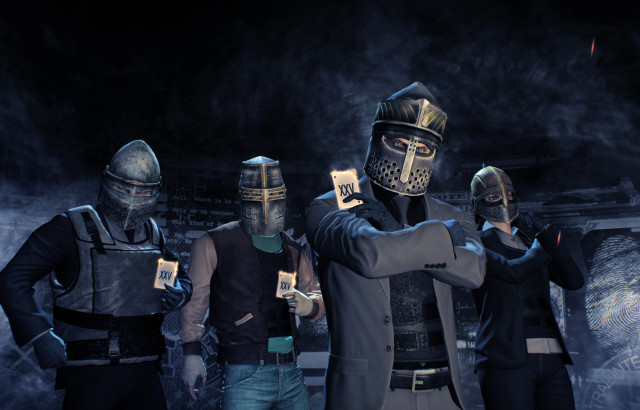
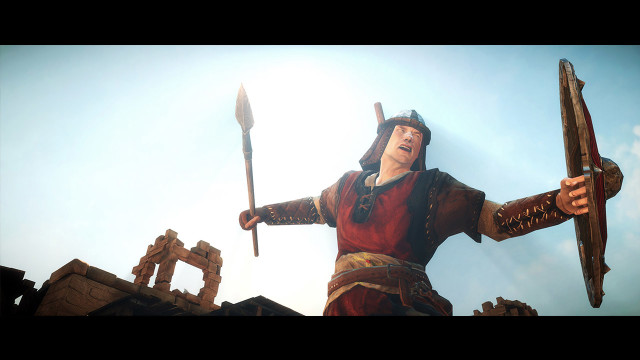
Torn Banner has done various kinds of cross-promotions between Chivalry: Medieval Warfare and other games such as Killing Floor 2, Payday 2, Rocket League, Depth, Natural Selection 2 and more! They’ve all been great in their own ways. The Killing Floor 2 and Payday 2 cross-promos are perhaps the most exciting because of the amount of new in-game content that both of those involved.

With Killing Floor 2, we added several new weapons and helmets to Chivalry that were inspired by Killing Floor‘s horrific zombie world; and to their game they added an entirely new playable character called Tom Banner (the Chivalry Knight). Likewise with Payday 2, we added some awesome Payday-inspired grinning masks to Chivalry and their studio created a full-blown DLC pack called The Chivalry Gage Pack. So, those really resonated with our players and we had a great time making the content.

Everything’s relative to the amount of work put in. Even the smaller cross-promotional activity we’ve engaged in with our fellow studios has been great. We’ve done fan art crossover contests, social media shout outs and really simple in-game content updates – like the Agatha and Mason team flags from Chivalry being put into Rocket League in exchange for similar decorations going into our game. Sometimes the simple stuff is just as much fun.

What are some of the other methods you’ve explored to promote your games?

A lot of our marketing is geared around major patches and/or sales. Last year we tied Chivalry‘s Free Weekends on Steam to special events. “Community Fest” in May 2015 patched in a ton of community-made content (maps, weapons, armor) and some unique community perks. The “Peasants’ Revolt” in October 2015 allowed players to temporarily dress up as a peasant and gain access to a selection of peasant-themed weapons, including a pick axe and wooden sword.

The Chivalry Steam Community has been another valuable resource for promoting additional Chivalry content to existing players, while building a community of Torn Banner fans that will be (hopefully) interested in whatever future games we make. This past year we grew our Steam Community from 40,000 to almost 200,000 members using a variety of in-game rewards to incentivize people to join it.

Video content creator relations have also been critical for Chivalry’s success and really form the backbone of our outreach. Every time a new YouTube video goes up of someone playing Chivalry (over a certain viewer count) I get in touch with the creator to thank them personally and try to build a relationship. That might lead to key giveaways, new content for the videos, etc. More often than not, this leads to more videos of our games from that person and builds a connection with someone who’s genuinely interested in talking to us about our games.

Gage Chivalry Pack

In what ways have you seen awareness of Torn Banner games grow thanks to these partnerships?

Our cross-promos have had the huge benefit of our games being exposed to the entire audience of another game. In some cases, hundreds of thousands of currently active players. We’ve seen the direct results of strong sales during the launch period of these cross-promotions, as well as the long term benefit of players of games like Killing Floor 2 buying Chivalry so that they can access new content. Likewise, our partners reap the same rewards and our communities get fun new content to play around with.

Do cross-over partnerships work as well for console releases as they do on PC?

We haven’t brought any in-game cross-promo content updates to Chivalry on Xbox 360, Xbox One, PS3 and PS4 because patching is separate to the Steam version of our game. However, when it comes to community the audiences have a lot of overlap thanks to social media and our forums – meaning that any of the smaller cross-promotions (community contests, etc.) we’ve done have helped generate excitement for those players on console too. I can see cross-promotions working well for any cross-platform titles because of this.

chivalry1

What is your approach toward finding a partner and finding a cross-promotion plan that fits?

I’ll be getting into the nitty gritty of this in the GDC talk. In a nutshell though… First we have a strategy for figuring out what partners to work with. This is based both on data (sales and player stats) and just generally looking at who we’d be excited to work with and would be a suitable fit for our game. Then we figure out what “weight” category of cross-promotion we’d like to pursue with them – into which we categorize types of cross-promotional activity (e.g. social media, contests, joint sales, in-game texture work, in-game 3D work, etc). Then we simply get in touch and try to go from there.

Have you found that developers are usually open to the idea of cross-promotion?

Definitely. In our case we have a successful game with a decent audience, so people we’ve reached out to have generally been interested. But I think developers of all sizes have much to offer one another in terms of getting their communities excited about each others’ games. A smaller, more “indie” title with a few thousand total sales might be attracting the exact audience that a game of a similar size and scope would love to appeal to grow their community.

What is the most important thing to keep in mind when forming a promotional partnership?

Make sure you can commit to what you’re offering your partners!

This is where, I hope, the advice in this GDC talk will come in handy. It’s important to put a lot of thought into what sorts of new content your team is able to create. Sometimes the only viable option for a given cross-promotion is for only one person at your studio to work on a lot of stuff themselves.

For a smaller studio with a limited amount of people and resources, this has meant we’ve had to take a careful approach to not overloading ourselves with the opportunities presented by a potential relationship with another studio, so that we still can retain our time (and sanity) to work on our primary game development. Cross-promotions can be an incredibly valuable initiative to complement your game’s typical content updates, and a way to excite your community and use another studio’s game as a marketing platform, but it’s important to know the limits of what’s possible.

Rovio Entertainment Investing Big for 2016

Since cutting one-third of its employees last August, Rovio Entertainment has been focusing more on expanding its Angry Birds brand of games and building out its Toons.TV network.

wilhelm-tahtWilhelm Taht, head of games at Rovio Entertainment, said at Casual Connect Amsterdam this week that the company wants to grow revenues significantly in 2016.
“We’ve grown revenue every year since Angry Birds was launched,” Taht said. “Our focus for 2016 and beyond is continued revenue growth, doubling down on performers, and increasing the speed of innovation.”

That believes two years from now new genres will break into the Top 10 mobile games list in the Western World. Rovio is already exploring new genres, including a “mystery mid-core game” that it’s testing that has had over a 60 percent retention rate.

Taht showed art for a new Angry Birds game coming out later this year that featured more detailed and less cartoony 3D characters, as well as an anime-inspired mid-core game art.

“We’re trying to age up the audience,” Taht said. “We have a fairly sizeable adult audience, but we’re actively trying to age up.”

The bulk of Rovio’s audience comes from Angry Birds. The company had successful launches for Angry Birds Fight! and Angry Birds 2 last year, and has continued to expand that brand across multiple cross-branded ventures from Angry Birds Star Wars to Angry Birds Transformers.

Taht said in 2015 Rovio had over 3 billion game downloads and over 5 billion views on its ToonTV service. The company has over 26 million fans on Facebook. Brand awareness for Angry Birds is above 90 percent brand awareness, which should help with the May 20th launch of the Sony Pictures’ Angry Birds feature film. Taht joked that the film is the most expensive mobile game trailer ever made.

“We have $100 million behind the production of the movie and much more on marketing, hopefully it’s going to succeed,” Taht said. “All of us feel happy about where it’s heading this spring. It’s the first blockbuster-level Hollywood movie originating from the mobile games industry.”
Keyvisual_Nibblers_landscape_1920x1080

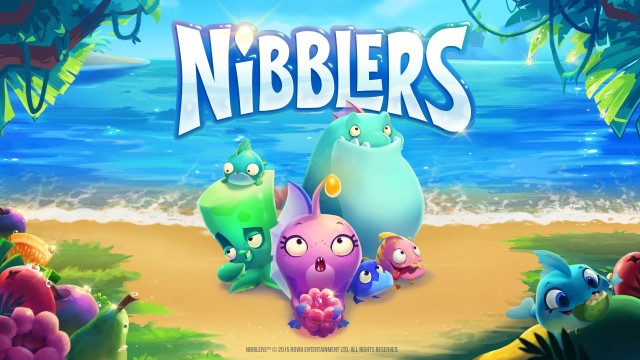
Taht said the goal moving forward is to grow new IP beyond Angry Birds. He said the company had had success with its Match-3 game, Nibblers, which launched last fall. Rovio is scaling the game up significantly and is seeing a daily conversion rate of over 2 percent.

The company continues to develop original games. Last fall it released the Drop-3 puzzle game, Love Rocks, in conjunction with singer Shakira. It was a continuation of what began as an Angry Birds marketing partnership.

Taht used a lot of recent mobile figures from Newzoo to show the opportunities that exist for Rovio and other developers in the evolving mobile games business. While Android is currently the leader in games when it comes to reach, iOS continues to generate more revenue.

“In the U.S., about 37 percent of the 1,000 game revenues is generated by the Top 10 games, so there’s more space to generate revenue at the top than there used to be,” Taht said. “You no longer have to focus on being in the top 10.”

The U.S. is also seeing movement in the top mobile game genres. The Battle genre remains on top, while the Puzzle genre has been fluctuating a lot as some mobile unicorns have leveled off. Casino games are growing significantly. And modern RPGs are starting to grow in the West. Simulation games are also growing. One area Taht said there’s room for success in is the Racing genre, which has yet to be cracked for mobile.

Taht referenced the $25 billion the mobile games industry generated last year, which eclipsed the $6.9 billion the digital music business made and the $11.1 billion the U.S. box office generated in 2015. Mobile is now a larger segment of the $91 billion video game industry than console games.

toonstv-rovionews-1920x1080_new_notext

“More time is spent on mobile devices than on browsers, and hence there’s billions to make,” Taht said. “It’s still a gold rush, but it’s become a really crowded place with 179 new games coming out every day and over 300,000 iOS games in the App Store.”

Rovio was one of the early mobile companies to expand its IP into merchandising. The company continues to market Angry Birds through licensing deals that range from clothing to plush toys. And the upcoming Hollywood movie launch will only open additional opportunities for the studio.

Rovio means “raging fire” in Finnish, and Taht said this name ties into the company’s culture.

The company hopes to keep its fire burning in 2016.

Wargaming Exec Explains Lessons Learned In ESports

When it comes to the growing eSports business, which research firm Newzoo forecasts will grow from $278 million today to over $1 billion by 2019, Wargaming is a growing player. And it’s not from a lack of investment.

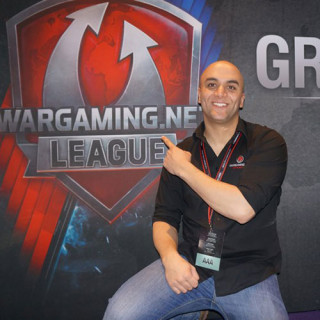
Mohamed Fadl, head of global competitive gaming at Wargaming, said at Casual Connect Europe this week that Wargaming has invested $32 million in top level eSports since 2012. The company spent $10 million in its first year, alone.

Wargaming has learned a lot about eSports, and the importance of entertainment value, as it developed its top-tier eSports strategy, as well as its video production capabilities to bring eSports to fans around the world.

mohamedfadl

“We come from the retail box business, we’re dinosaurs,” said Fadl. “So we adapted to Twitch. Last year we made a lot of changes and World of Tanks has become a bigger audience in the Twitch universe.”

Fadl said the key to Wargaming’s eSports success has come from understanding what is entertaining to its audience. And it’s also about looking beyond short-term profits from ticket sales or merchandising. Wargaming doesn’t charge fans to attend eSports events.

“ESports allows us to connect our brand to the players of tomorrow,” said Fadl. “ESports allows us to connect within a bigger ecosystem.”

Fadl outlined the circular Player Journey which includes and random and single player content, team content, clans, and Wargaming.net League (WGL).

“Our audience moves from single player to multiplayer,” Fadl said. “The average lifetime for our audience is eight months, but the more involved they get in competitive gaming the more money they spend and the more time they stay with the game. We don’t make money with eSports viewership. We monetize through the lifetime value of the player journey. The majority of our players will never get to the WGL, but they invest in this content and socialize around it.”

Last year, Wargaming made big changes in how it invests in eSports. In 2014, 81% of its investment went to partners and 19% went to players. Last year, 48% went to partners and 52% went to players.

This year, the company has $3.5 million in prize money, but that’s just part of the ecosystem funding.


Skullcandy Puts Athletes and Audio at the Forefront

“Music can change the world because it can change people.” Those are the words uttered by Bono, lead vocalist of the rock band U2. The saying also largely speaks to the mission behind Skullcandy’s Human Potential Labs program, launched last year to unlock sports and possibilities through music, science and technology.

“We are always interested in how to create innovation in the marketplace, as well as furthering our brand mission to inspire life at full volume,” Sam Paschel, Skullcandy’s chief commercial officer, told [a]listdaily. “(Human Potential Labs) is the best embodiment of these two interests.”

The headphone and audio lifestyle brand largely operates under the marketing slogan “living life at full volume” where music is the underlying driving force. Athletes like Kyrie Irving, Travis Rice and Robbie Maddison are foundational forces in their marketing efforts to understand and identify the typical customer profile.

700x400_0016

Paschel says their cross-section of ambassadors have been an inspiration for their sport performance products. “While competition day for athletes is incredibly varied, they all prepare in a similar fashion: high intensity interval training,” he says. “This inspired our in-house product team to make strides as it related to stability and durability of our sport performance line, knowing that if we could develop products to withstand the training demands of our pinnacle athletes, the recreational athlete would benefit.”

Pro athletes are inevitably helping Skullcandy reach markets outside of their Park City, Utah headquarters. “The larger idea that gets us excited is that our brand anthem isn’t just domestic, it’s a global mindset that applies to all cultures,” says Paschel. “The brand is well-received globally with steady and consistent growth – and we’re actively working toward the goal of growing international to be 50 percent of our business.”

Catering to consumers is one thing. But enabling athletes has always been engrained in Skullcandy’s DNA ever since action sports product enthusiast Rick Alden founded the company. The Human Potential Labs program – which is used to assess participants’ response to exercise stimuli and recovery methods – is an extension of that.

Skullcandy president Hoby Darling tabbed three-time U.S. Olympian skier Emily Cook to study what’s possible for human potential at the intersection of physical, mental and music. The headphone and audio brand first kicked off their program by partnering with former United States Navy Seal and skydiver Andy Stumpf, who broke the world record for a wingsuit jump (18 miles) and ended up raising nearly $120,000 for the Navy Seal Foundation. Cook and the Skullcandy crew travelled to Florida to learn more about the sport as well as Stumpf’s physiology by hooking him up to their performance lab. The sensors strapped to Stumpf measured his oxygen saturation and heart rate to target muscle groups that seemed to fatigue the most.

Cook, a five-time national champion in aerial skiing who spent 17 years on the U.S. team, leads Skullcandy’s team of in-house athletes and engineers to collaborate with research experts in the sports, medical, military and creative fields. She retired after the 2014 Sochi Games and went from eight hours of training to finding an office identity where she now works with athletes on an individual basis by “helping them narrow down their training.”

“It was important that when I completed my career in skiing, I was ready to transition into doing something that would make a difference afterward, as well as a culture that I was excited about,” Cook told [a]listdaily. “A lot of athletes struggle with that transition. It’s not easy.”

Paschel says Cook has forged partnerships with scientists in sports psychology and physiology as well as holding together a committee where these like minds can work together.

“I had an amazing career. I loved every second of it. It’s a huge honor to represent the United States as an athlete,” Cook continues. “Now, it’s about helping others. Everything we do in our lab is to obtain knowledge going forward toward innovation not just for athletes, but for everyone. We’re excited to share how music makes you better.”

Follow Manouk Akopyan on Twitter @Manouk_Akopyan.