AT&T Foundry Makes Innovation A Priority

Since 2011, AT&T has operated the AT&T Foundry as an innovation hub, engaging with numerous startups and innovators to develop applications and services. Ruth Yomtoubian, director of AT&T Foundry, will be at [a]list summit on April 20 to discuss how the brand is utilizing the Foundry model to not only support innovation, but to make it an intrinsic and core element of the AT&T brand.

[a]listdaily spoke with Yomtoubian about the Foundry, emerging technology and the newest location dedicated to connected health set to open this spring in Houston.

Tell us a little bit about AT&T Foundry.

AT&T Foundry is the company’s network of innovation centers, set up to take great ideas and bring them to life. We have teams working across five locations whose job it is to explore new technology for AT&T, both as internal cross-functional teams and in collaboration with partners and startups.

What function does AT&T Foundry serve for the AT&T brand? In what ways is it different?

Foundry is one of the ways that AT&T maintains a meaningful voice in the innovation conversation and that’s critical for a technology brand. Foundry is the front door for AT&T in the Silicon Valley and the global startup community—we meet with over 500 startups a year. It’s also one of the ways we discover technology that can help us run our business more efficiently and power new services we are offering to customers, like a project we launched that lets you get your texts on your smartwatch, using your mobile number without your phone.

How are you getting the word out about what AT&T Foundry does this year? Any big things in the works?

Foundry has a major role in organizing the Shape Challenge, happening this summer at AT&T Park in San Francisco. This is an open innovation contest where we’re inviting technologists, innovators and students to submit ideas that might be the next big thing in smart cities, the Internet of Things and augmented networks. We’re also looking to expand Foundry’s role in thought leadership through our Futurecast series and content development. The Foundry is exploring the potential of many groundbreaking new industries that are no longer discussed in terms of if, but when.

What kinds of technologies are you seeing emerge this year?

It’s incredible how quickly technology evolves. One of our big focuses lately has been connected “things”—from your drone, to your car, to your city, to connected healthcare technology, to connected equipment in a business. On the operations side of AT&T, Foundry is also at the forefront of a major transformation in our network as the way we all communicate and collaborate evolves. We’ve seen more than 150,000 percent growth in mobile data traffic since 2007 and that’s expected to grow ten times by 2020—this shift demands innovative solutions to some major challenges.  

You’re also partnering with other companies like Ericsson, Alcatel, Amdocs, Cisco and more. Can you tell us more about how these came about?

AT&T Foundry was established in partnership with Ericsson, Alcatel-Lucent, Amdocs, Cisco, Intel, and Microsoft, so collaboration is part of our DNA. Telco is going through a massive transformation. AT&T and our biggest partners decided to work together to disrupt the industry from the inside. We work together every day on projects that impact our business, as well as programs like Futurecast.

What was the impetus for the Futurecast with Ericsson?

Ericsson and AT&T share a vested interest in providing a platform for innovators to discuss the future of technology. The Futurecast Technology Innovation Series is a thought leader series designed to vet, debate and ultimately spark ideas that that will set the course of our collective technological future. Each event focuses on a single topic, such as navigating the innovation adoption curve, content in the Digital Age, or investing for inclusion. We established Futurecast as an opportunity to bring in smart thinkers—from entrepreneurs to government officials, investors, academics, authors and media—to help us to better understand these important issues and participate in conversations around how technology is shaping our world.

You’re opening up a new Foundry in Houston dedicated to connected health and health is an area people don’t typically associate with AT&T. What spurred this?

AT&T Foundry was built to accelerate innovation and nowhere is that more important than in health care. The Houston Foundry is an opportunity to apply our experience with connected devices toward health care, both in a clinical setting and the home. We’re looking forward to opening the AT&T Foundry for Connected Health this spring on Texas Medical Center’s campus, the largest medical center in the world.

Mobcrush Exec Discusses Rise Of Female Mobile ESports

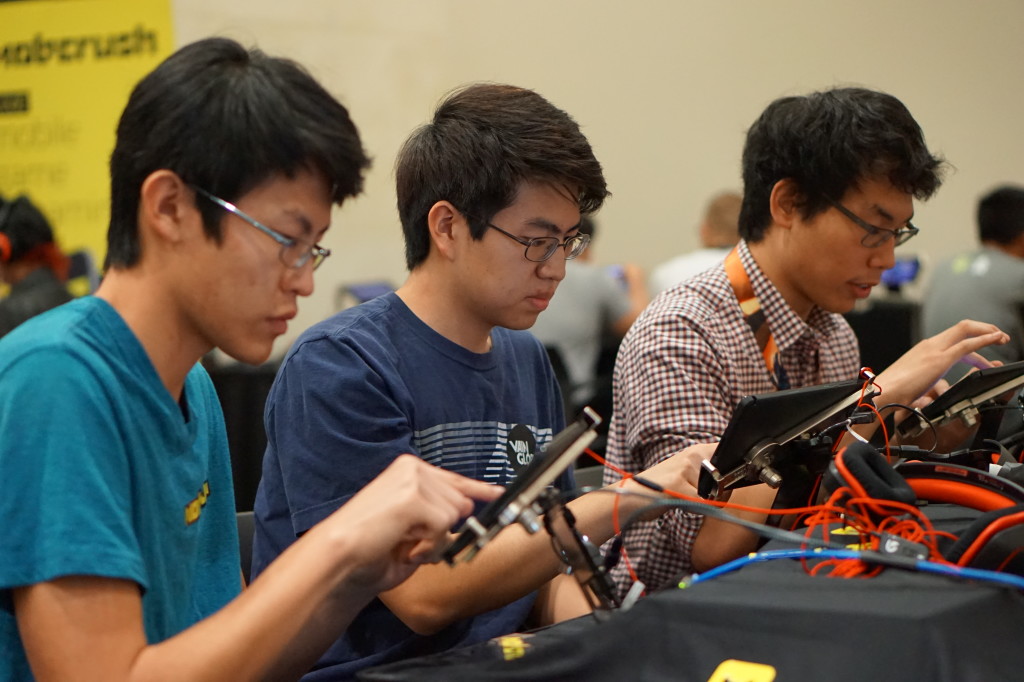
Livestreaming site Mobcrush focuses on mobile games and mobile eSports. The company hosted its first livestreamed mobile tournament back in March 2015—an eight-player Hearthstone match in Boston. At this year’s SXSW Gaming, Mobcrush hosted mobile eSports tournaments for five different games over three days in Austin, which marked the first mobile eSports tournament at the pop culture festival.

This past weekend, they sponsored the return of the all-female Vainglory tournament, Femme Fatale Winter Championship. Twenty-four all-female global teams competed for a winner-take-all prize of $1,000 and 7,200 ICE (Vainglory’s in-game currency). The entire event was livestreamed on Mobcrush, with popular streamer Holly “Lady Wabeesh” Carroll reprising her role as shoutcaster.

Koh Kim, co-head of business development at Mobcrush, discusses the opportunities mobile eSports is opening up for female pro gamers in this exclusive interview.

Koh-KimWhy did Mobcrush decide to focus on mobile eSports? 
Our overarching vision at Mobcrush is to connect the one billion-plus mobile gamers in the world. ESports is a part of that strategy for a couple of reasons. Without a doubt, our community has a lot of enthusiasm for the growing mobile eSports scene, thanks in part to more and more great competitive titles coming to market, like Vainglory, Clash Royale and Hearthstone. But the Mobcrush platform also enables key elements of the eSports ecosystem that are critical to the growth of the scene: a platform for easy viewing and broadcasting, passionate personalities to rally the community, and in-stream chat tools to keep everyone connected, active and excited.

How have you seen mobile eSports grow with Hearthstone and Vainglory in recent years?

We’re seeing the scene get more competitive, with more organizations coming to the scene. It’s really exciting to see long standing eSports organizations like Team Solomid bring mobile teams under their umbrellas. At Mobcrush, we’ve been working with GankStars for just about six months, and it’s been great to see them take a leadership role in the Vainglory scene, and set a high code of conduct and lay the groundwork for building an active, inclusive, competitive community for fans and players.

How did the SXSW Gaming mobile eSports tournament go?

It was phenomenal. We had tournaments for five different games over the course of three days: Vainglory, Hearthstone, Clash Royale, Minecraft, and a game still in development, Mayhem, from Chocolabs. The diversity of the players that participated—all ages, all genders, all types of gamers—was really exciting to see.

How do you see that event evolving at SXSW?

It’s only going to get bigger and better. The gaming expo has become massive, with over 55,000 attendees in 2015, which I’m sure was exceeded in 2016. With mobile continuing to gain recognition as the most prominent gaming platform, with the widest, most diverse audience, the demand is definitely there.

Since many fans watch all types of eSports coverage on mobile devices, how does this help growth potential for mobile eSports titles?

So much of our lives are now tied to our mobile devices … communications, our professional lives, entertainment. We’re growing accustomed to viewing content on mobile, including eSports programming, on the same device we connect with friends in Vainglory or Hearthstone. The experience is so intertwined. I think the mobile platform itself, with its ever-growing capabilities and uses, and how ingrained our devices are in our moment-to-moment lives, is a huge boon for the mobile eSports scene.

SXSW Mobcrush

Mobile gaming seems to have a very large female player audience. What does this open up for female pro eSports with Vainglory or Hearthstone?

It’s something of a “clean slate.” We’re seeing a better mix of male and female players in the top ranks, and many more mixed teams. That’s a great message for the community. There are more female players and personalities, giving other females the role models they’re looking for. That really puts out the message that any hardworking, talented player will have a platform to succeed, and the support of the community.

We haven’t seen a lot of growth with traditional PC and console female pro eSports. Do you feel that will evolve over time?

I think it will. There are certainly more opportunities in general in PC and console eSports, and for all the discussion this topic gets, I hope there will be more efforts and strides made in actually changing the course. I do think that the rise of mobile eSports, with a more balanced community, will help to pave the way for diversity in console and PC eSports.

Have you seen interest in the Femme Fatale Vainglory event grow from the first one to this second one?

Absolutely. Last year’s event went over really well, with fans congregating at live viewing parties, and a great showing from all the players. Many of the players from last year’s event went on to join competitive teams, and continue to rise through the ranks. This year’s event, we’re seeing a lot of interest, but also a bit of a different flavor. The competitive spirit is amped up, as we have top players coming to the tournament with rivalries and reputations to uphold. It’s going to be an awesome event.

What are your future plans with PAX and other public events with mobile eSports?

After the successes we’ve had at SXSW Gaming and the second Femme Fatale Tournament, we’re eager to continue giving mobile gaming fans the opportunity to play, connect and compete with one another. We’ll have more event news to share soon.

Do you feel like we’re past the hump of people not accepting mobile eSports as legitimate?

I think we’ve come a long, long way, but we have a ways to go. Same for PC and console eSports. For eSports to continue to grow, in both the mobile and PC/console space, it has to become more accessible. ESports content needs to be easy to find, follow and understand, with an inclusive, welcoming community to rally around it.

Despite the massive growth, high profile sponsors, prize pools, and TV broadcasting contracts, there’s still that underlying sentiment that can arise of, “Why would anyone want to watch someone else play video games?” At Mobcrush, we’re eager for people to jump on a stream and see that’s not what it is at all. It’s socializing, connecting, supporting and playing with other gamers.

BetaDwarf Wants Twitch Viewers To Determine The Price Of ‘Forced Showdown’

Developer BetaDwarf Entertainment has had a very unconventional history, to say the least. The team began as a group of squatters, living out of an unused university classroom for several months, to work on their dream game: an action role-playing game called Forced. However, they were caught and thrown out, forcing the struggling developers to pool their savings and rent a place to live and work from. Eventually, they took their game to Kickstarter, and the campaign almost didn’t make it, but supporters who told their story caused a sudden upsurge in funding.

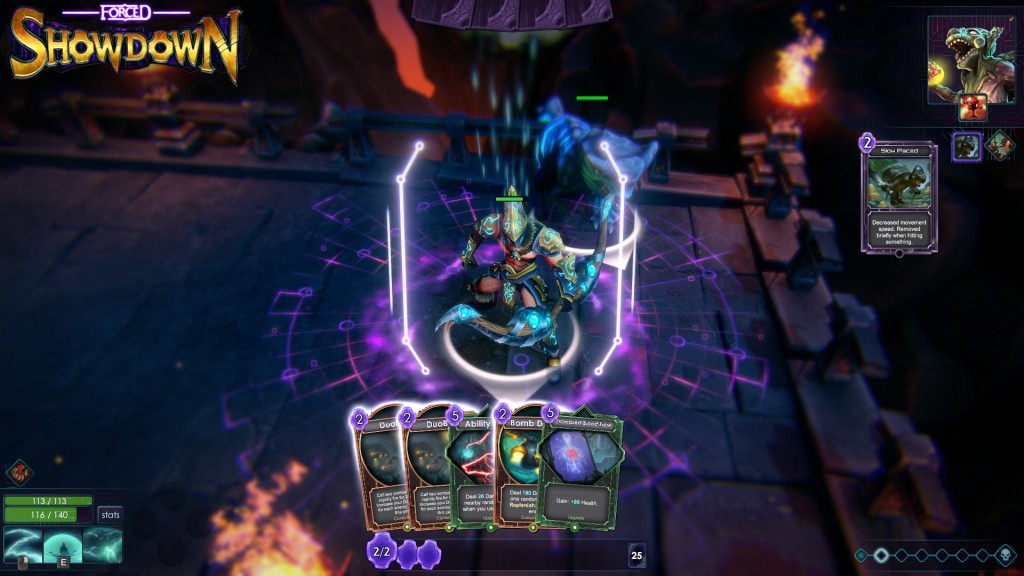
Despite a number of trials and setbacks, BetaDwarf was able to release its first game, and now works from an actual office in Copenhagen. It’s also preparing to launch Forced Showdown—a competitive battle-arena game, where players use collectible in-game cards to enhance their characters with special abilities and skills. In some ways, it’s like Diablo meets Hearthstone, with a combative sci-fi game show as the backdrop.

FS_Screen_LavaDungeon1_StormBringer

A team with such an unconventional start clearly needs to have equally unique methods of promoting its second game, so it has taken two things gamers loveTwitch streaming and discountsand combined them to create a week-long pre-launch campaign that inventively follows the game show theme.

BetaDwarf partnered with a number of Twitch streamers and gave them early access to the game. In turn, they’re livestreaming it on their channels for a week. The campaign, which started on March 23 and ends when Forced Showdown releases on Tuesday, discounts the game in accordance to how many cumulative minutes it’s watched. Viewers might get a reward for watching, including additional discounts and early access to the game.

SteffenProfileSteffen Kabbelgaard, CEO and game director at BetaDwarf, spoke with [a]listdaily about how the idea for the campaign came together. “We think our game is suited for streaming, and we wanted to kickstart that in some way. The more eyes there are on the game, the more potential sales. Since the community is helping us hype the game, we would like to return the favor by making it cheaper—[it’s a] win-win!”
So far, with hundreds of people watching, Forced Showdown has been viewed for over 93,000 minutes (about 1,550 hours or almost 65 days), earning a 4 percent discount on Steam. The time is tracked live on the official website, and viewership could spike higher over the weekend. Each milestone unlocks special prizes that can be redeemed once Forced Showdown launches. Kabbelgaard isn’t willing to reveal how low the price can possibly go, but said, “it’s very low for a new game,” and that the discount “will last for one week, like a standard launch discount.”

Forced Showdown, which has changed names twice from Forced 2 and Eternal Arenas, completed its Kickstarter campaign with an extra thousand dollars last fall. Additionally, the game has been in closed beta testing on Steam for over a year, which helped to promote the game. “We have a community from our first game, Forced, which has done really well so far,” notes Kabbelgaard. “Even though the games aren’t exactly equal, they still share a lot of similarities.”

There is still plenty of time to watch Forced Showdown and help drive down the price of the game when it launches next week.

Mark Cuban’s Insights On The Future Of Virtual Reality

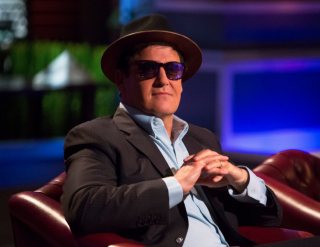
Mark Cuban has one of the best seats in the house every time he steps foot in an NBA arena—directly behind the bench of the basketball team he owns. 

He’s within shouting distance of the referees, within high-five distance of fans, and just close enough to his players to read a season’s worth of body language. His micro-level of involvement with the Dallas Mavericks has materialized into hardwood success that martini-sipping owners in the skybox should rival.

One way the NBA is trying to bring the entire world to the courtside seats Cuban and the well-off fans of his ilk own is through virtual reality.

At the start of the season, the league had a watershed moment when the Hornets-Warriors season opener was streamed over the Internet live in VR. It became the first such broadcast of any major U.S. sporting event, and in turn, established the NBA as the first major sport to lead the VR wagon.

Screen Shot 2016-03-24 at 1.35.11 PM

Cuban’s series of investments over the last handful of years prove he’s bullish on VR, but he immediately pumps the brakes when asked if the immersive experience can put fans in his seat, or even impact ticket sales.

“Not even a little bit. It has zero chance of impacting our business. The whole ‘front-row experience’ doesn’t work, and won’t.” Cuban told [a]listdaily in an exclusive interview. “I would rather be in the top row at a game than watching a live VR stream, and I don’t see that changing in many, many years.”

For the most part, Cuban is right. Although landing seats in an NBA arena could cost a pretty penny, physically being in a stadium is still a better experience than an incredibly isolated one with gear strapped to your head for three hours. How it’s great, for example, is for the Mavericks fans in Germany to immediately transplant themselves to a game in Dallas on a second’s notice to watch Dirk Nowitzki play. One could even argue VR experiences that make fans feel closer to their favorite teams actually make them go to games in person even more. Since VR for mass consumption is still very much in a nascent form, there are tech limitations and wrinkles that need to be ironed out. 

“The cameras are not close to ready,” says Cuban. “The cameras are a long way from being able to support live [programming] in a meaningful way. … Where [virtual reality] can be fun is enhancing the streaming video experience.”

The possibility of the NBA’s and TNT’s partnership with NextVR—the tech company that captured and delivered the Hornets-Warriors game—changing the future of sports broadcasts in a significant fashion is still “a few years away,” Cuban says.

The billionaire Shark Tank star says he’s most interested in non-entertainment and non-live VR content like medical, business and vertical applications, and is captivated by live 2D video integrated with complementary content. He brings up watching a Mavericks game while being able to turn to one side for fantasy stats, and to the other for live stats as an example. Cuban’s quick to encourage that the current VR flaws offer entrepreneurs an opportunity to master the media through innovation by creating unique experiences around such mediums as live 2D and 360-degree, on-demand video. 

Then there is the mobile component. Television networks can’t really give viewers exactly what they want, which is to do everything on their phones. As Samsung pioneers mobile VR—they partnered with the NBA to capture All-Star Weekend in 360 this year and are leveraging their sponsorship with LeBron James to create content—how can the league’s broadcast partners deliver with a VR experience that captivates a mainstream audience?

“I think the first step is to adapt existing steaming apps to work in [Samsung] Gear VR goggles,” Cuban says. “Watching your stream on what looks like a huge movie theater screen is the best first step. That will get people an incentive to experiment with basic VR. Watching Netflix on Gear VR is a great experience that all streamers should copy.”

Cuban’s vested interests in VR dates back to the iPad photo app Condition One of which he invested $500,000 in. In 2014, he invested $3 million in seed funding for Virtuix Omni. By CES in Las Vegas this year, the gaming treadmill was hosting a VR eSports tournament and attracting every eyeball on the convention floor.

Last year, he put VR on center stage yet again when he gifted $5 million to his alma mater Indiana University to further develop the technology; it yielded the “Mark Cuban Center for Sports Media and Technology.” In February, after collaborating with the Dallas-based company BigLook360, the school introduced VR and Hoosier Hysteria to IU basketball fans with Gear VR headsets. 

Like any of his investments, Cuban has personal preferences, and the so-called secret sauce; he’s definitely high on the advanced technology to further enhance the sports world and bring fans closer to their favorite teams. 

Screen Shot 2016-03-24 at 1.34.17 PM

The money he moves into industries—recently it’s been eSports and daily fantasy sites—can have an impact akin to a sizable sports bet shifting the lines in Vegas. Herds of opportunists usually follow.

His advice to anyone looking to invest and getting into the Olympic-sized pool that is virtual reality is a lot simpler: “Do your homework,” he says. “VR means different things to different people.” 

A magician never reveals his secrets.

Follow Manouk Akopyan on Twitter @Manouk_Akopyan.

Brisk Details OpTic Gaming ESports Strategy

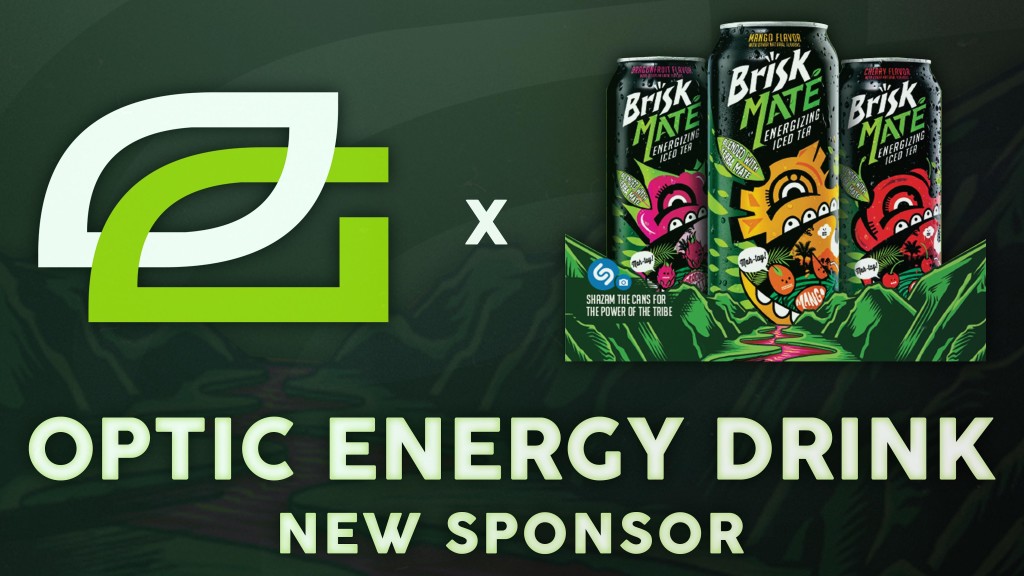
After watching rival Coca-Cola connect with eSports fans over the past two years, PepsiCo has officially entered the eSports arena through its Brisk Iced Tea brand. Brisk has partnered with top Call of Duty eSports team, OpTic Gaming to launch its new Brisk Mate line of drinks (available in Mango, Dragonfruit and Cherry). The 16-oz. cans are available in select cities, including Houston, Dallas, San Antonio, Phoenix, Portland, Las Vegas, and Denver.

Brisk teamed up with OpTic Gaming at SXSW in Austin, TX to announce the exclusive partnership and launch the new Brisk Mate line. OpTic Gaming was on hand for the Brisk sponsored HipHop DX concert featuring Def Jam Recordings artists Pusha T, Lil Durk, Desiigner, BiBi Bourelly and HXLT.

According to Gary So, senior director of marketing for Brisk, research shows that over 90 percent of the Gen Z and millennial male audience is highly involved in eSports, engaging with games on Twitch, and looking for game tips and tricks online.

By teaming with OpTic Gaming, So says Brisk is able to connect with eSports fans and gamers to promote the new Brisk Mate messaging, “Power of the Tribe.”

“Looking at this smooth and energizing iced tea, which gives our consumers a smooth and energizing boost with a blend of South American Yerba Mate, eSports was the perfect avenue,” So explained. “It helps our consumers who have a passion to play games with their friends and get excited about eSports.”

According to So, Brisk wanted to be credible and authentic with eSports fans. “ESports is going to become mainstream and we want to be a bit ahead of this curve.”

opticbrisk

OpTic Gaming can speak directly to its massive social media audience, which includes over 1.24 million Twitter followers.

Mandy Mazzeo, brand manager for Brisk, explained that Brisk Mate is all about community. “It’s about the power of the tribe; you and your friends pursuing your passions together. OpTic Gaming shares this same sense of community and energy.”

So says Brisk focused on the console eSports audience, rather than the larger PC-based eSports market, because of “the element of competition and the collaborative need to be a team.”

“OpTic Gaming is probably the most influential team out there today,” So says. “We’re looking for the best of breed; the synergies between our brands and how they act as a team. They’re going after every moment like there’s no tomorrow. And that’s very in-sync with our brand.”

So calls this partnership with OpTic Gaming a true collaboration. “We’ve been working with them and giving them a lot of creative license,” he states. “We’re leaning on them to guide our marketing. They’ve done a great job of creating social media content creation that makes our brand become part of pop culture.”

Mazzeo says Brisk had been collaborating with OpTic Gaming for several months prior to the announcement. “Hector Rodriguez (owner of OpTic Gaming) came to us and wanted to do this new competition series on how to integrate our brand into fun team-based events like go karting and paintball,” Mazzeo says. “We’re releasing new videos every Friday in collaboration with OpTic Gaming.”

The next part of this collaboration will be to deck out the OpTic Scuf House, where the team lives. “We went to their house and looked around at the outdoor patio and some of the wall spaces, and we can bring in influential artists of our campaign ideas,” Mazzeo says.

But this is just the beginning for OpTic Gaming, and eSports as a whole. “As we look ahead, this is our first jump into eSports as a brand and we want to make sure our brand is authentic,” So says. “We want to build and learn from that.”

How Marriott Captures Next-Generation Customers Through Entertainment And Content

Nothing says “get me home right now” faster than when travelling becomes reduced to room service and watching local celebrities thousands of miles away on a TV you just can’t seem to operate.

Marriott International realizes the modern-day traveler welcomes fun distractions—yes, even on business trips—and is consistently adding layers of entertainment that serve to be just as refreshing as a great meal and a hot shower.

The global hospitality company used the 30th annual SXSW in Austin, Texas last week to showcase secondary elements to a marketing strategy that is not just built around a hotel-based touch point.

6a0128763ee05d970c01bb08c67783970d-800wi

Marriott partnered with Universal Music Group to provide a fully immersive music experience by presenting daily artist showcases, performances and other special events in the first-ever takeover of a hotel at the JW Marriott Austin during the SXSW Music Festival. The hotel was transformed into a music venue throughout the course of the week. The best part for Marriott Rewards members? They didn’t need a SXSW festival badge to attend concerts at the hotel.

Understanding very well that travel is connected through visual-based experiences, the Marriott Content Studio—the company’s in-house media team that produces first-rate content—was on-hand to capture El Dusty, Prince Fox and Mayer Hawthorne’s groovy music sets last Tuesday at the snazzy rooftop poolside DJ bash.

Marriott’s content studio, launched in 2014 by vice president of global creative David Beebe, has quickly become the standard on how industry-leading brands should deliver captivating material for consumers. Among a wide variety of coolness, they’ve brought virtual reality to guest rooms, and even used their in-house studio to bring back the award-winning, 19-minute film “Two Bellmen,” just to name a few. Travel entertainment is their forte.

Catherine Leitner, the senior director of Buzz Marketing at Marriott International, has seen the evolution for Marriott in the marketing space over the course of the last 15 years first-hand with the company. She joined [a]listdaily to discuss how they’re capturing compelling content to attract next-generation customers.

How did the partnership with Universal Music Group come about? Why did it make sense to do it?

AAEAAQAAAAAAAAQ6AAAAJGE1NDI5YzRmLTE2NjEtNDQxMC1iZmM4LTVjMWRiMzQxMTM0MA

This is a great example of what the future, experiential space looks like for Marriott. I think you’ll be seeing more of Marriott International doing things in entertainment like this around the world. Something like music is really universal. It’s almost like a universal language—for anybody of any age—to connect to. When I think of Marriott, our aspiration is to be the world’s favorite travel company. When I think about UMG, arguably the most powerful music label in the world, it’s a great marriage because we’re bringing a universal language of music to our guests and consumers in a meaningful way. It goes hand-in-hand, when you think about it. In order to do that, you have to find ways to bring it to life for the traveler. … What we’re hoping to do with our partnership with UMG is really get in front of audiences that may not be as familiar with us, and that specifically is the next-generation traveler. They are the most important consumer for us as we look ahead. We want to introduce ourselves to them when they are young, and attention-seeking. What we’re hoping to gain from an activation like SXSW is a couple of things: We’re hoping to generate some real interest and awareness in our Marriott Rewards Program, and connect with them emotionally enough where they want to stay with us at some point.

Marriott is a legacy hotel and hospitality brand. What are the marketing challenges it’s currently facing? How are you trying to reach the next-generation traveler?

It’s an interesting question. I think we can agree that Marriott is a beloved and iconic American brand. Marriott International is not just one brand—it’s many different ones. Many people, from a brand recognition standpoint, are familiar with it. In many cases, we’ve traditionally been known as a brand for business travelers, or for frequent travelers. When we think about the next-generation traveler, we may almost think of it like ‘this is the hotel my dad stays in when he travels for business.’ What we’re trying to do is expand that customer base. As we’ve seen the traveler and travel landscape grow, it’s not just the business traveler searching for a hotel as a place to stay. They’re looking for something more meaningful, more experiential than just a hot shower and a clean bed. They’re travelling in a deeper way. What we’re trying to create in many of our different brand experiences is to connect with the consumer. In order to do that, you have to branch outside of traditional hotel marketing—which is a space that we are very comfortable with and do well in.

112-400x400

Airbnb is a common and sometimes much preferred travel option for millennials. How do you reach millennials with your message?

It’s a great question. Airbnb is an unbelievable platform for people looking for authentic experiences all over the world. Marriott is doing that in a different way by creating and introducing new brands that are specifically targeted to this consumer. The best example of that is our Moxy Hotels brand that was launched in Fall 2014. It’s a brand that was created strictly for the millennial traveler. It’s led by a young, fresh, female executive who really has her finger on the pulse of what that traveler’s looking for—from hotel and room designs to public spaces—and the price point makes it reasonable and attainable.

The Marriott Content Studio is the envy of a lot of brands. What are some innovative ways that you are delivering content? What kind of content best resonates with your audience?

On the Buzz Marketing side, we’re creating partnerships with interesting like-minded global partners like UMG. Through an activation like the one at SXSW, what we’re able to capture beyond just the performances is really the content. Whether it’s a moment with the artist behind the scenes, or a sit-down interview, you can do it with a variety of ways. You can create it on your own, like ‘Two Bellmen,’ which was entirely developed by the Marriott content team. Or, you can look at our partners, like the NFL or NBA to see where we can leverage their tremendous content and opportunities.

article_04-hero

Marriott used the Super Bowl to make a splash on Snapchat, joining an exclusive group of brands who experimented on the channel. What’s been the major takeaway from that trial?  

As we’re looking for platforms beyond Facebook, Twitter and other familiar social media channels, I think it was a great experiment for so many different brands. Snapchat was something that we went out on a limb for, I guess you can say, and tried something different. There’s a huge consumer base using Snapchat, so it made sense for us. The key is finding the right way to share real-time moments. I don’t know if anyone has mastered it yet, but it’s an exciting space and it’s constantly evolving. We need to be where our consumers are.

The travel industry is a very competitive one. How is Marriott separating itself from the pack?

What really sets us apart, at least this is my personal feeling, is our standard of service across all hotel brands around the world. There’s a certain level of standard and service that comes along that customers have come to expect. That’s always a key differentiator, and will continue to be as we grow around the world and introduce new brands.

Follow Manouk Akopyan on Twitter @Manouk_Akopyan.

343 Industries Discusses Lessons Learned From Halo World Championship

Microsoft has gone all-in with Halo eSports, after severing ties with Activision’s Call of Duty last year. Microsoft has been active in the eSports scene for years, and the company continues to offer new offerings through the recently announced Xbox One APIs that allow developers to build eSports functionality into their games.

Halo is Microsoft’s most successful brand, and its biggest eSports game. The company opened up its $1 million championship prize pool to crowdfunding last year. And now the top Halo teams are competing for a record $2.5 million. This entire tournament is just the beginning of Halo eSports. Che Chou, franchise media director and eSports lead at 343 Industries, explains the lessons learned and how Halo eSports will evolve with stadium events and even more global competition in this exclusive interview.

Why did you choose Hollywood for the finals?

With the Halo World Championship, our focus was on creating a world-class broadcast for the majority of viewers watching at home while still allowing for a limited studio audience for local fans. We chose to host the tournament at Raleigh Studios because it is a fantastic production stage that allows us to do both.

How many people can watch live in the venue?

Again, our focus was on creating a world-class broadcast for the majority of viewers watching at home, but we understand a live audience adds excitement and tension to the event and we’re pleased to host a limited studio audience for Halo eSports fans. As our first world championship program, we wanted to make sure and nail production quality and broadcast first. As Halo eSports continues to grow and evolve, we will definitely work with our tournament organizer partners on big arena events.

What type of livestreaming numbers has this tournament garnered thus far? 

I’m not sure of the exact figure, but I can say the response has been awesome from fans around the world. The weekend is really the culmination of months of build-up, and we look forward to bringing fans a world-class broadcast with all the action from Hollywood.

How are you working with sponsor Mega Bloks at the championship?

Mega Bloks has been a close partner with Halo and 343 Industries for years. Besides being a great construction sandbox, Mega Bloks has always been in-tuned to the Halo community and their involvement in the HaloWC has been really authentic. Besides a sponsorship, they also built a Halo 5 battle rifle as an MVP trophy for the HaloWC.

How are you integrating sponsor Legendary Pictures’ Warcraft into the championship?

Legendary Pictures saw an opportunity with the Halo World Championship to reach some very like-minded fans and I’m glad they’re involved with the sponsorship.

What’s the learning curve been like for this new World Championship format?

We’ve definitely learned a lot the past few months and I would say continue to be humble students of eSports. I wanted to work with the best tournament organizers in the world – so we hooked up with ESL, MLG, and Gfinity, each of which are the best at what they do. But working with multiple TO partners also presented unique challenges as different TOs bring different styles, formats and best practices.

How have you seen the competition level in other territories compare to the U.S.?

North America is definitely where the majority of the best Halo players are today. That said, the Halo World Championship 2016 was a great way to identify top teams from around the world, a few of which came out of nowhere and were very competitive. I think as the Halo 5 eSports meta evolves, we will start to see European and Latin America teams come into their own and pose a real challenge to North America’s dominance.

What are your thoughts on the crowdfunding support the community has put behind the prize pool?

It really is exciting to think about how the community is directly contributing to the growth of Halo eSports. We’re at $2.5 million for the total prize pool, with the winning team taking home $1 million.  That’s the biggest individual prize pool in console eSports history. Having run Halo eSports for a few years now, the scope and stakes of this tournament actually kind of blows my mind. It’s the biggest thing we’ve ever done, and so far, I’d say it’s also the most important thing we’ve ever done for Halo eSports.

What role do you see crowdfunding playing for Halo eSports moving forward?

With the success we’ve seen with the Halo World Championship prize pool, it’s certainly a concept we’ll continue to explore in the future, though we have nothing new to share at this time.

How soon will you gear up for a new tour?

We will have more to share this weekend during the Halo World Championship finals. Be sure to tune in.


How To Market Indie Games… And All Games

With the Game Developers Conference in full swing this week, there will be thousands of indie game developers at the event looking for ways to make their game a success. Generally, these indie game makers are long on game design, programming and art, and short on marketing and basic business knowledge. I’ve been mentoring game startups for years now, and the most crucial need for indie game makers is marketing.

What follows are the five top things I tell game startups about marketing their indie games. Not coincidentally, these are also important for game marketers at companies of all sizes.

Find the game’s hooks

This is essential for any marketing strategy to succeed, and indeed for any game to be successful. What’s interesting, special and attractive about the game? In other words, what’s the hook? It’s really best to think about this before you start working on your game idea to any great degree. What is a hook? It’s something about the game that is interesting enough to make you want to play it, or better still, tell someone else about it—and ideally is also different than other similar games.

Hooks can be an unusual game mechanic, an interesting setting, an impressive graphic style, a compelling story or subject matter, a well-known person is involved with creating the game—the list goes on and on. Some games even have multiple hooks, which is certainly useful. Of course, games from big publishers always start with a hook: the publisher has a large audience to begin with, so there are automatically a lot of people who will be interested in this game.

Why is a hook so important? It’s the foundation for creating your product platform, for deciding on the product position, for determining what it is you tell people about the game when you only have one sentence in which to describe it. Those hooks will be the foundation of your PR efforts, too, the best way to get people interested enough in your game to write about. The hooks are also what fuels your fans in using social media to promote your game. Make your hooks as sharp, pointed and compelling as you can.

Identify the target audience

As you begin to think about marketing a game (which ideally happens when you begin creating the game), the fundamental question for both the game designer and the marketer is this: who is the game for? Both your game design decisions and your marketing strategy decisions will depend on this, and for much the same reasons. Don’t wait until you’ve finished a game to try and figure out who might be interested in it. Sure, you can do that, and sometimes it works—even spectacularly, as with Minecraft. (It’s a good bet that Notch had no idea his game would end up being played by ten-year-olds all over the planet.) But this is too important to leave to chance and gut instinct if you’re trying to make a living selling your game.

You may create a game that is a thing of beauty, an absolute joy to play… and find out there’s only a thousand people who would pay to play it. That’s perfectly fine as an art project, but it’s terrible if you’re trying to make enough money to pay the rent. So to forestall this dire outcome, think about your game idea and try to create a portrait of who’s likely to pay for the game. How old are they? What gender are they? How much income do they have (or have access to if they’re a kid)? What other games do they like to play? What other activities do they like?

When you answered those questions, you have some guidance as to your game design decisions and your marketing decisions. How do you find the audience for your game? Well, if you know about the potential audience, you know where they like to hang out, what social media they use, how they communicate about games, who the influencers are for their communities.

Create the game’s position

Let’s face it, while you may be in love with all sorts of things about your game, at some point there will be a player of your game who is asked by someone else “What’s that game about?” Then your game’s player will say one sentence: “Oh, it’s about…” What is that sentence going to be? You should be utterly certain you know what will be in that sentence, because it will be one of your game’s hooks. Better still, you would be the one to craft that sentence, which is so memorable, compelling, and dead-on accurate that it would be used time and again to describe your game—and so compelling that the response to hearing it is “I’ve got to get that!”

Your position statement is a one-sentence—or one-phrase—description that neatly captures the essence of your game and does it in a way that’s so compelling and memorable that people will pass it on to others virtually unchanged. That’s the ideal, anyway, though it’s not often achieved. But you should strive for it, because every game will have one whether you create it or not. That game? Oh it’s the best first-person shooter on consoles. That one? That game is like electronic Legos, it lets you create your own worlds. What about that game? Wow, it’s the most incredible 5-v-5 online battle arena game with the biggest audience and the most incredible characters.

Are those position statements? Not very good ones, but that’s how people might end up describing your game. Wouldn’t it be better if you had a great phrase already in mind to describe your game? Create that phrase, then use it everywhere when you talk about your game.

Make the game eminently shareable

Wouldn’t it be great if everyone who played your game told two other people about it, or a hundred? Or if they could make a video about your game and share it, and then people who had never played your game thought it was so cool they would link to it? That’s what positioning your game for virality can do for you. Sure, that can happen by accident—Minecraft wasn’t created with the thought that one day billions of minutes of Minecraft videos would be watched every month. But there are plenty of games that owe at least part of their success to features in the game that helped encourage players to share with others. That may be pictures of the cool farm or horse or race car you created or customized, or a video of your creation, or an amazing kill you racked up in your favorite shooter.

These things can be integrated into the game design, which is another good reason for thinking about marketing early in the design process. Even if you’re late in the development process, though, you can usually add some sort of sharing functionality so that people can make a Facebook post or readily stream the game.

In any case, spend some time thinking about why people might want to share your game, and what they might want to share. A high score? A picture? A video? Advice on tactics? There are many things people do with games that encourage sharing, and you should look for that within your design. Then find a way to make it easier for players to share. That’s only the first level of sharing, though—you really want your game to go viral, which means people will be passing along what players have shared. That’s a more difficult challenge for both design and marketing, but if you can approach it your game will have much better odds of finding a large audience.

Be as creative with marketing as you are with game design

Finally, be creative! If you’ve made a game you’ve got plenty of creativity. Put that to work on your marketing—and don’t expect it to be easy, either. You should probably expect to put in a significant fraction of the effort you put into game design, and quite possibly ultimately more if your game has a long lifespan. Think of some events to put on, wear a costume to a trade show, make a funny video about creating your game. There are endless possibilities.

If you need inspiration, check out all of the things that are trending on the Internet each day. Can you do something compelling and interesting like that connected with your game? Just make sure you avoid anything dangerous or illegal, or something that might alienate potential customers. See what is being done with other games, other products, other media, and what gets people to pay attention. Look at your hooks, your product position, examine what’s shareable about your product, and find a creative way to bring all that together. And don’t be discouraged if your first attempt doesn’t get a lot of attention—keep trying! Your game didn’t work quite right on the first try, either, so don’t expect your marketing to do that. Try and try again. Good luck!


GDC: The Best Ways To Monetize Games And Promote Engagement

With the explosion of free-to-play games (especially on mobile), coupled with the incredible rise of eSports, it’s more important than ever to not only attract a big audience, but keep them as engaged and paying users. At GDC, developers and market analysts discuss how to monetize gamers and convert new players to paying ones.

Companies like Google are looking to help developers grow their audience and revenues from the 1.5 billion mobile gamers that are out there in the world with the “Grow Users, Earn Revenue: How to Build a Successful Games Business with Google” session, presented by two of Google’s product managers who were joined by Matt Casertano, SVP of game operations at SGN (famous for Cookie Jam). Attendees learned how to better use Google’s ad solutions, like the recently announced “Search Trial Run Ad” program, which lets users stream up to 10 minutes of a game straight from the browser search listing without having to download or install anything.

But building an audience is just the start. Games need engaging content to get them to stay. King Digital, makers of mega-hit games like Candy Crush Saga, talked about how compelling game experiences lead to a successful game economy in a session titled, “To Buy or Not to Buy.”

This is a strategy that is echoed by Joost van Dreunen, CEO of SuperData Research, who presented the “Best Practices: User Conversion, Payment Flows and In-Game Economy Management” session at GDC. When asked what the best incentive is for converting players, he responded, “Focusing on the player’s experience, and designing something that is larger than just the game, is key. Companies like Riot [League of Legends] keep a strict mantra of ‘player experience first, monetization second,’ and it is paying the dividends. But you have to be willing and able to control all aspects, which is usually much more than companies want to commit to.”

[a]listdaily also asked about how monetization strategies have changed with the explosive growth of free-to-play games. “Initially, monetization was more of an after-thought,” said van Dreunen. “Following a flawed logic of ‘If we build it, they will come,’ a lot of game companies discovered that having a lot of traffic doesn’t automatically translate into a sustainable business or worthwhile experience for the end-user. In a sense, game companies have matured around monetization as it is now part of the overall design strategy.”

At the same time, eSports have become a powerful means of prolonging both player engagement and a game’s lifespan. Counter-Strike: Global Offensive released in 2012, and has been a mainstay among eSports tournaments. The game’s life actually goes back further if you count the initial release of Counter-Strike in 2000. League of Legends first hit the scene in 2009. Topping both is StarCraft, the game credited for being the original eSport when it released in 1998, and is still being played almost twenty years later. This kind of long-term engagement made sessions like “Exploring Monetization in eSports: How to Extend Your Consumer Engagement,” where eSport executives discussed strategies for integrating eSports into a game’s ecosystem, all the more relevant.

Furthermore, Microsoft announced the Xbox Live Tournament Platform yesterday, which will be supported on both Xbox One and Windows 10. Created in partnership with companies FaceIT and ESL, and due to arrive at the end of the year, the platform lets developers set up small-scale tournaments and possibly help games grow in popularity as a competitive eSport. If successful, eSport promotion could become an integral part of a great many competitive games in the future.

When asked how this new platform could help game monetization, van Dreunen responded, “This is going to be a great way for small games to encourage engagement which will have an indirect return on investment. But monetizing matchmaking directly will alienate players, so as long as publishers are looking at this as a means of building their player community, it will prolong player lifetime and affinity with the title.”

There are a couple different monetization strategies, but what’s the most common mistake developers make when they try to get users to purchase premium content? “It varies, of course,” said van Dreunen. “But game makers often overlook the amount of available content today. Basic economics tell you that if there is an abundance of supply, prices tend to come down. In another time, you could write a book, and live off the proceeds for the rest of your life. Entertainment in general has become more abundant, easier to produce, and it is consequently more challenging to hold on to price points from the past.”

Image source

SGN Brings A Marketing Gem To The Streets of San Francisco For GDC

The Game Developers Conference is clearly the place for the games industry to get together and talk about all aspects of the business, but it can also be a place to actually market games. Yes, there are booths in the Expo designed to promote games to the assembled industry insiders, but in a bold move mobile/web game publisher SGN took to the streets to get some attention for its newest game, Genies & Gems.

SGN’s newest match-3 puzzle game, Genies & Gems, is available on iTunes, Google Play and Facebook. “Players will have their wishes granted as they play through magical worlds like Hideout Go Seek, Chilled to the Core and Heart of Golden Shadows. With hundreds of levels currently available, Genies & Gems will continue to release 20 spellbinding new levels per week where players can recover lost relics, collect gold bars and see where enchanted keys lead them,” said the company’s press release.

To celebrate the game’s launch, SGN will have a special surprise for San Franciscans and those attending the Game Developers Conference this week. People may get their wishes granted or score some precious metals and gems just walking about in downtown San Francisco.

[a]listdaily caught up with Josh Brooks, SVP of brand strategy and marketing for SGN, to find out more about this promotion.

What led you to decide on a promotional event to launch Genies & Gems?

GDC is an epicenter for the business of gaming. The conference brings talent from all parts of the games industry from around the world. Genies & Gems is our newest game launch, so we decided to celebrate by bringing the adventure to life in the real world. Treasure hunts, quests for jewels and the lore of genies granting wishes appeals to everyone. Deep down, everyone wishes they were a genie. And for a few hours on Wednesday, the magic becomes real.

How does the promotion work? What sort of prizes are you offering, and what’s the total value of the prizes?

The Genie of San Francisco has found his way to the Moscone Center and surrounding blocks for the afternoon. His “genie bottle” bag will be packed with gems, silver, rings, earrings, necklaces and even real silver bars! If you happen to find him—I suggest you make eye contact (unlike Medusa) and wave your arms frantically to get his attention before he floats on by. The “wishes” he’s granting are real and so are the carat weights!

How are you measuring the success of the promotion? Is there a certain number of impressions or people you’re trying to reach?

The promotion for SGN and Genies & Gems is about celebrating the game launch and sharing it with more people. As one of the few global publishers with four or more titles consistently on the top-grossing charts on any given day, we’re proud to be in most people’s pockets and wanted to take an extra step to surprise and delight people in real life.

For those not in San Francisco or at GDC, we’re also using our vast social network to broadcast the fun for everyone to experience. From the new Facebook Live Mentions and Periscope to Snapchat, Twitter and Instagram.

How does this promotion connect to other marketing efforts for Genies & Gems? What’s the overall marketing strategy?

Genies & Gems is a really well-developed and polished game. We have a lot of exciting things to share—from new levels and adventures to upcoming promotions—over the coming weeks and months. But, because the GDC audience is filled with such talented and passionate creators and game enthusiasts from all over, we wanted to kick off our strategy here with Jesse as our generous genie to celebrate the game’s initial launch.

Will you be doing similar promotions for titles like Cookie Jam?

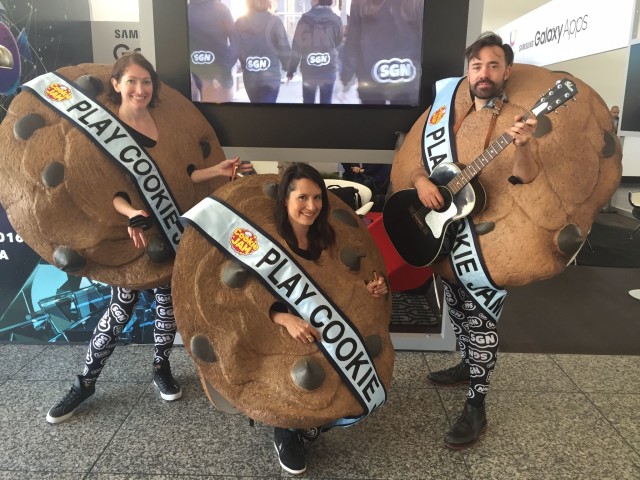
Games have become brands with real personality and attitude, with fan followings to match. We’ve had a lot of fun with Cookie Jam in the last year with Ken Jeong starring in a series of quirky TV ads that aired both in the US and internationally. Cookie Jam has amassed an audience of over 70 million downloads and this week, we’re treating the GDC audience to an awesome life-size Cookie Jam cover band taking requests outside of the conference and serving up (real) cookies to fuel attendees up on the way to the main hall.

Do you think this kind of promotion is a valuable marketing tool for mobile games in general, or just in certain cases?

Absolutely. The games space is highly competitive and it’s difficult to rise above the noise of what’s hot in-the-moment. These types of promotions really only work when you have a well-oiled marketing machine actively acquiring new users, a strong network of game titles to cross-pollinate to, and strict content cadence that keeps users engaged with new game content weekly. That’s the perfect storm of winning… along with a homepage feature in the App Store or Google Play!

Was this a difficult promotion to devise and execute?

We were all big fans of the Skating Genie in NYC, and were excited about the prospect of him coming to the West Coast to bring the Genies & Gems story to life as he cruised through the city sharing gems and granting wishes—it’s definitely not easy to fly a genie around a packed city during a game conference, but we knew Jesse could pull it off. Part of the fun in working with an uber-prankster like Jesse, is he has no shortage of crazy ideas! We also knew we wanted to make people laugh and have a light moment to enjoy a break during the hustle and bustle of GDC. That’s where the musical-singing Cookie Jammers came in, wearing the costumes that were such a hit in the Ken Jeong Cookie Jam ads.

Any time you come up with an offline promotion for a digital or online product, it becomes a challenge. SGN is a game studio and these things aren’t part of the norm for us. There is always a tendency to over-engineer an event or activity, but at the end of the day—a focus on simplicity and delight gets you where you need to be.

SGN's Cookie Jammers