‘Game of War’ and EA Dominate October Mobile Revenues

App Annie has posted its October 2015 mobile sales report, indicating the top money-making games for the month, and publisher Machine Zone continues to dominate with its hit strategy game Game of War: Fire Age.

The report indicates that the game has reached number one for the first time in worldwide iOS revenue for the month of October, seeing success across the U.S., United Kingdom and Japan markets. Japan in particular is a huge feat, according to App Annie, since “it is rare to see non-Japanese game publishers rank so highly.”

Game of War‘s success shouldn’t be too big a surprise, as the game has seen an illustrious advertising campaign first featuring the likes of Kate Upton, then switching over to singer Mariah Carey midway through the year.

The full list of worldwide top ten iOS games are as follows:

  1. Game of War: Fire Age
  2. Monster Strike
  3. Clash of Clans
  4. Fantasy Westward Journey
  5. Puzzle & Dragons
  6. Candy Crush Saga
  7. The White Cat Project
  8. Westward Journey Online
  9. The Legend of Mir 2
  10. Clash of Kings

Considering that a majority of these games are free-to-play, revenue comes from players continually buying in-game goods to enhance their experience.

Game of War‘s success in particular is quite noteworthy, as the game has maintained one of the top two spots in grossing ranks for the entire month of October, never dropping down to third, according to App Annie.

As for overall company success with key IP’s, Electronic Arts managed to rise three spots to take the top spot for October, due to the success to two new free-to-play games: Minions Paradise and Need For Speed: No Limits. Doodle Mobile, King, Gameloft and Outfit7 rounded out the rest of the top five.

Minions Paradise became the second most popular app for the month, with combined Google Play and iOS downloads. Considering the billion-dollar success of the recent film, they continue to remain quite relevant with audiences. The game also managed to reach the number one daily download rank for games in over 60 countries for both markets, and remained in the top download spot for well over a week past its debut.

Meanwhile, Need For Speed performed well in its own right, reaching number four in October’s overall rankings for both Google Play and iOS, and hitting the number one rank in overall downloads. This is just the latest success for the series on the mobile front, following the release of the well-received Most Wanted back in 2012.

The fact that EA has managed to give this one a fair share of marketing, alongside its new console release of Need For Speed earlier this month, is good news for mobile fans.

As far as the top games with monthly active users (on the iPhone front), Clash of Clans from Supercell continued to be a top draw, but all eyes are on Remco Kortenoever’s Smashy Road: Wanted, which found a surprise spot in the number two position. The high-speed action and well-organized user-centric ad monetization system made the game an instant hit. It also fared rather well on the Android front, sitting in a seventh place position. Other games on the iPhone top five list included Candy Crush Saga, Words With Friends and Trivia Crack.

https://youtube.com/watch?v=A9xNFxTOUkg

As for top companies overall, Electronic Arts may have nudged into a first place position with its new properties, but rounding out the top five are Gameloft, King, Doodle Mobile and Miniclip, continuing to be quite popular in the mobile circles. In fact, the list is unchanged from the previous month’s top five, although Outfit7 is slowly moving up in the ranks, shifting from number 13 to 6 over a month’s time. It could very well make its way into the top five for November, if its momentum keeps going.
How Black Friday Became the Marketing Event of the Year

The army of tents outside your local Best Buy should have been the dead giveaway, but Black Friday is coming. As soon as Thanksgiving dessert is over, retailers across the U.S. will put various items on sale, ranging from video games to movies to high-end electronics. With that, customers will flock to it like crazy, buying up bargains just in time for the holidays.

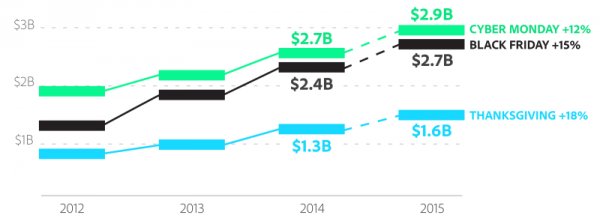
Adobe is already forecasting that sales for this year’s event will go through the roof, reaching even bigger heights than ever before.

Chart 1124

They also noted that 51 percent of online shopping visits on Thanksgiving/Black Friday will come from mobile devices, with 29 percent of total sales coming from said devices a 12 percent increase from the previous year.

With that, it’s time to take a closer look at where Black Friday actually came from, and how its managed to grow so much over the years.

The Origin of Black Friday

The term actually got its start in 1961, as part of a way to describe the heavy pedestrian and foot traffic that emerged from shopping around the holiday season, which officially kicked off the day after Thanksgiving (due to the three-day weekend, enabling extra time to shop). The term actually comes from retailers being “in the black”, as they see a sales boost around that time compared to slower times in the year, when they’re stated to being more “in the red.”

How Marketing Around Black Friday Evolved

For many years, Black Friday worked more along the lines of a three-day period, starting on Friday (of course) and going into the weekend. However, as the late 2000’s emerged, more retailers began to open their stores earlier to give shoppers a jump on potential sales, going as early as 5 or 4 a.m., allowing people to line up for bargains. In 2011, this was pushed even further ahead, with some retailers opening as soon as midnight the day after Thanksgiving. Deep promotions have now become commonplace among brands and retailers.

Black Friday has become so ingrained in our culture, Buy Nothing Day now exists in contrast to it. REI this year has decided this year to create a marketing effort that is decidedly anti-Black Friday with their Opt Outside campaign.

Black Friday Now and In The Future

Something that has become especially tangible in the past few years is that attitudes and spending habits around Black Friday has been changing.

Graph 2 1124

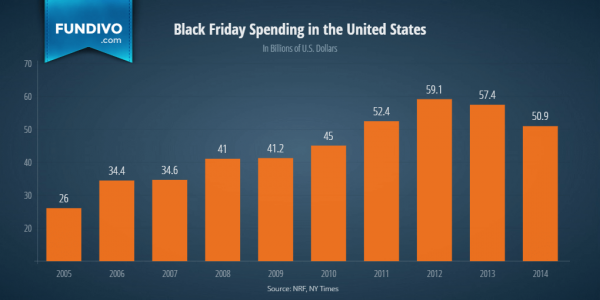
According to Fundivo, Black Friday spending has gained a critical amount of traction over the years, rising from $26 billion in 2005 to a peak of $59.1 billion in 2012. That same year also saw a peak in average spending.

Online 1124

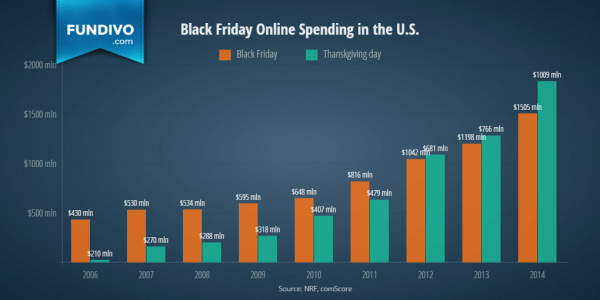
Of course, online spending has become a huge factor in Black Friday’s shopping scene. It may surprise you, however, that while many Americans are occupied with preparing turkey, a large number of them are shopping online. Online spending on Thanksgiving superseded Black Friday online spending in 2012 and only continues to grow.

Shopping 1124

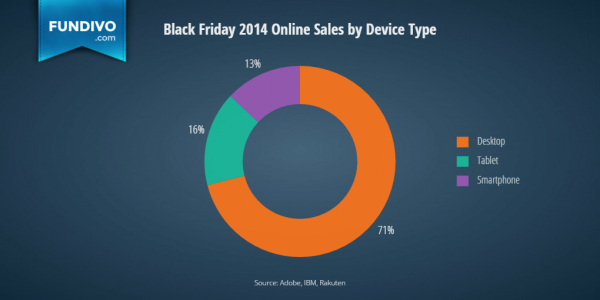
As online shopping gains steam, so does mobile, with 13 percent of overall consumers using smartphones and 16 percent using tablets. This year, Adobe expects an estimated 11 percent year-over-year growth is expected over 2014’s numbers, reaching a high of $83 billion. That’s also not taking into account the sales numbers that will come from the following Cyber Monday event, which is expected to reach a record $3 billion, a 12 percent year-over-year increase in its own right.

By spreading word about their sales through the likes of Facebook, Twitter and Pinterest, retailers can gain better interest from consumers over particular deals, as well as the spread word-of-mouth to bring in even more of them. Two particular social channels seem to be converting more purchases than others  Facebook and Pinterest. The numbers show that referrals from Facebook lead to an average of $109.94 spent per order, compared to just over $100 for Pinterest. Facebook showed twice the rate of converted online sales compared to Pinterest.

Email continues to be a big factor in marketing these deals, but marketers have eschewed frequency of these blasts in favor of increased targeting. Last year, brands and retailers averaged 5.3 emails during Black Friday a drop of more than 11 percent from 2014 to 2013.

Google Celebrates Star Wars With Site Immersion

With less than a month to go until the release of Star Wars: The Force Awakens, hype for the film is at an all-time high. Now, Google is getting in on the action, working alongside the brand to introduce a new level of immersion on its sites that fans will love.

By visiting the official Google Star Wars link, visitors can choose between the Light and Dark side, and then watch their changes take effect across a number of Google-oriented pages. For instance, on both the Gmail and YouTube pages, loading bars have been replaced with lightsabers, complete with sound effects if you roll over the volume bar. Other links can also be explored, including Google Calendar, the Chrome browser and Google Maps.

Google explained the changes, citing its partnership with both Lucasfilm and Disney, which will carry through the film’s official release on Dec. 18, and beyond. “It’s a place for fans, by fans, and starting today you can choose the light or the dark side, and then watch your favorite Google apps like Gmail, Google Maps, YouTube, Chrome and many more transform to reflect your path,” said Clay Bavor, vice president of product management for Google. “And that’s just the beginning. We’ve got more coming between now and opening night the Millennium Falcon in all its (virtual reality) glory included, so stay tuned.

“And we’ve hidden a few Easter eggs, too. So awaken the Force within, and be on the lookout for things from a long time ago in a galaxy far, far away ”

The trailer below provides a brief overview of choosing between sides, and also highlights some of the community members showing their own form of excitement over the Star Wars universe, through fan-produced clips and finding information on Google.

https://youtube.com/watch?v=HWNY57CAY5U

The promotion is likely to be a big boon for Google. It also comes at an ideal time, since hype for The Force Awakens is at an all-time high. Entertainment Weekly recently reported that the film has already made $50 million in pre-sales for tickets, setting a new record for a film that hasn’t been released.

This is just the latest move on the promotional front for the film. Various partners have some sort of Star Wars related program in the works, ranging from fast-food campaigns to beauty products to the best-selling toys. Other products have been performing significantly well also, including video games like Disney Infinity 3.0 and Star Wars: Battlefront, which arrived last week.

As for what Google has in mind with its current program, it’s likely to sprinkle more information and tidbits about The Force Awakens through its many sites, as well as numerous nods to the classic films fans grew up with.

Those interested in the promotion can take full advantage here. But don’t be afraid to see where both sides lead you. Do, or do not. There is no try.

Millennials? Hipsters? It’s All About ‘Yuccies’ For Scion

From a marketing perspective, Scion’s presence at the 2015 L.A. Auto Show was one of the most interesting ones. Toyota’s Scion’s brand is still very much operated as a living experiment for how one of the true titans in the car industry can reach a younger demographic than its parent company does.

In that perspective, Scion represents the future for Toyota. So what did they reveal about the future of marketing For one, it’s all about being creative. Scion showcased its newest concept car the C-HR, a clothing collaboration coupled with multiple creative projects.

With the C-HR Concept debut and collaborations with our incredible creative partners, it’s an exciting time for Scion, said Landy Joe, Scion’s auto shows and special events manager. Our goal was to interject this spirit in our L.A. Auto Show activations and demonstrate how Scion likes to do things outside of the box.

https://twitter.com/scion/status/667485029031936000

“C-HR” stands for compact size and high ride. With four side doors and a hatch, Scion says it’s the perfect vehicle for “yuccies,” or young urban creatives, a term the company is using.

“Scion is known for doing things differently, and maybe even being a little weird,” Andrew Gilleland, Scion’s vice president, said during the press reveal. “This C-HR Concept embraces that idea and wears it like a badge of honor.”

Scion’s style statement doesn’t end with the C-HR Concept. Chris Stamp, a creative partner and GQ Magazine’s “Best New Menswear Designer of 2015, will give Scion product specialists a fresh look for the auto show season. Exclusive to Scion, a collection of jackets, shirts and pants take styling cues from Chris’ Los Angeles-based ‘avantstreet’ lifestyle brand STAMPD. Two new commercials directed by Stamp feature mens-and-womens-wear that complement the sporty look of the 2016 iM and sleek aerodynamics of the 2016 iA.

“I wanted to keep the palette for the collection muted so the clothes complement the cars”, said Chris Stamp, creator and designer of STAMPD. “The details are understated, but looking closely you can see how intricate each piece is, adding a modern approach to conventional specialist wear.”

Screen Shot 2015 11 23 at 12.32.55 PM

Hipsters, yuppies, et al – the yuccies are gaining full steam as the next “it” market.

Netflix, Marvel’s Marriage Is The Perfect Case of Brand Synergy

There’s no question that Marvel Studios has been working hard over the past few years to work a number of its franchises into other mediums. Its movies, from Guardians of the Galaxy to its Avengers films, have been making big box-office bucks. Even Ant-Man, a franchise based on one of the comic giant’s lesser-known heroes, had no problem generating $518 million. But one other avenue that is paying off for the company is its partnership with Netflix, which dates back to late 2013. With it, other Marvel franchises would get their shot as a separate series available exclusively on the streaming network.

Daredevil, the first of the four to premiere from the deal, made its debut this April and fared well with audiences. Variety reports that based on numbers provided by the streaming service, an estimated 10.7 percent of subscribers tuned in to at least one episode in the first 11 days of its arrival. That’s bigger numbers that some of Netflix’s more popular series, including The Unbreakable Kimmy Schmidt and the award-nominated House of Cards.

With that, the second series of the deal ‘ Jessica Jones ‘  arrived to Netflix today. The series, featuring Krysten Ritter in the title role, focuses on a no-nonsense private investigator who maintains mysterious powers, and finds herself face-to-face with an evil presence (Doctor Who‘s David Tennant), who continues to torment her.

The series is arriving with a huge amount of buzz on social media, as well as mainstream advertising across both the Internet and regular television ads. Critics have also given the mature-rated series high remarks, indicating that it’s another asset in Netflix’s growing collection of original programming.

So what is the appeal behind this mega partnership between Netflix and Marvel Well, it certainly benefits both parties in certain ways.

On Netflix’s end, it has programs that appeal more to the comic book/”geek” viewer, a demographic that some networks don’t quite appeal to. ABC does have its own Marvel series, Agents of S.H.I.E.L.D., that appeals to such an audience, but one episode a week may not be enough to get their fill – which is where Netflix comes in handy for “binge” sessions.

As for Marvel, it allows for expansion of franchises that would have difficulty finding a venue elsewhere. For example, making a movie based on Daredevil might be a risky endeavor, especially considering 20th Century Fox released one years before, featuring Ben Affleck in the title role. (It received lukewarm response as a result, and also from its PG-13 rating.) Trying to maintain the maturity of that franchise on the big screen would result in an R-rating, shutting out potential box office as a result. Meanwhile, on Netflix, the series seems like a perfect fit, with no restraints as far as content is concerned.

Jessica Jones fits a similar mold, as the main “hero”, so to speak, does a lot of drinking and other violent acts, as part of her character. That’s not to say that’s unlikable, though – the comic book version had a similar nature, and with its deal with Netflix, Marvel and its producers can present a “no holds barred” approach to these characters, giving them the kind of gusto needed to appeal to die-hard comic book fans, as well as potential viewers tired of the same old kiddie fare.

Surprisingly enough, more mature-themed shows like Daredevil and Jessica Jones are highly marketable. The content may not be for all ages, but the approach Netflix has taken to advertising them is, whether it’s online, through television or other promotional means.

This will certainly benefit both partners as the deal goes on, since two more series – Luke Cage and a rumored Iron Fist series (though that may change), all of which will tie together into a mini-series titled The Defenders, which will air exclusively on Netflix once completed. There’s also potential of new characters being introduced as well, such as The Punisher, a gun-toting vigilante who will be the key focus for Season Two of Daredevil, which is already in production and set to premiere sometime next year.

This partnership with Netflix is allowing Marvel to expand in ways it couldn’t have imagined just a few years back, and it’s also benefitting fans by giving them more of an outlet aside from the big-screen efforts, allowing smaller characters within its sprawling universe to steal the spotlight. There’s no question Netflix is benefitting as well, gaining viewers that show heavy interest in seeing said programs, even if it is on a “binge” basis.

Here’s hoping it continues to endure for years to come – it’ll be interesting to see where Jessica Jones and company go from here.

Screen Shot 2015 11 20 at 12.12.57 PM

Image courtesy of Netflix

‘Innovation Marketing’ is a Growing Trend at L.A. Auto Show

The L.A. Auto Show will open its doors to car enthusiasts Friday at the Los Angeles Convention Center, marking the start of this season s U.S. auto shows. Around 50 vehicles will debut at the L.A. show this year in the performance, midsize crossover, electric and high-technology categories. Car companies like Ford, Volkswagen and Chevrolet spent over $100 million this year in advertising, and to reach the masses, these budgets are likely to remain the same through 2016.

However, over and above the traditional, well-proven ways of marketing cars through advertising, PR and product placement, we re also seeing a clear trend toward innovation marketing. What is innovation marketing  We picked three prime examples of how car manufacturers took advantage of the spotlight to highlight their vision for the future rather than the traditional route of highlighting the features of their current products.

Hyundai 

The U.S.-spec 2017 Hyundai Elantra sedan made its debut at the L.A. auto show, too. However, it s the Korean automaker s new smart phone app that stole the show in terms of PR. The company shows that it knows its customers well, and that almost no one ever looks at paper manuals anymore. So they announced its new augmented-reality digital owner’s manual. The Hyundai Car Care app for Android or iOS will be receiving the new augmented-reality features in an update coming soon.

The way it works is after the customer downloads the app and indicates what model Hyundai car they own and what options they’ve chosen (such as Tech package, Sport package), owners will be able to point their phone or tablet’s digital camera at the car and, after a few moments, have the app recognize the vehicle and overlay clickable information points onto the image of the car.

The augmented-reality points appear over the front and rear of the vehicle, in the engine bay, over the seat controls and on the dashboard. Considering millennials today spend hours every day glued to their screens, a car app like this doesn t just save paper and space in the glove compartment, but it s also indicative of what is to come in terms of marketing as the industry is thinking about how they can innovate in unexpected areas.

Audi

While the German premium brand has two performance vehicles making North American debuts the 2016 S8 Plus and 2017 R8 V10 Plus, and the 2016 RS7 making its world debut the company spent most of their time talking about something else: Electric cars.

In a challenging year for Audi and VW coming off the diesel emissions matters, Scott Keogh, President of Audi of America, focused on the future when addressing reporters. For Keogh, 2016 will be the year when electric cars finally become mainstream, and in addition to debuting its deeper jump into the hybrid category with the 2016 Audi A3 Sportback e-tron. Keogh also said that in 10 years, one out of four Audi cars sold in America will be fully electric.

How will this be achieved What’s key is Audi s e-tron quattro concept, an all-electric luxury-class SUV that will go into general production in early 2018. Another big goal in marketing going forward is educating consumers to change their perception about electric vehicles. This will do two things for Audi: show that the company is, in fact, a good company serious about the health of our planet, while showing their brand is innovative.

Volvo

https://youtube.com/watch?v=xYqtu39d3CU

The Scandinavian-turned-Chinese car company has always been at the forefront of safety, but this year it’s focusing on the self-driving car. Like Hyundai, Volvo has done a smart life hack here. According to Volvo’s research, the average American spends 26 minutes driving to work. So it s not an accident (pun intended) that Volvo chose to reveal its vision for how American s could better spend that time.

Volvo research indicates that most people will use autonomous drive on their way to work, during the boring parts of the commute like stop-and-go traffic on the highway. So they’re working on a self-driving car concept to take back that time stuck in a traffic jam. But this “time machine” won’t have a flux capacitor, but an auto-pilot that can be turned on-and-off just like your cruise control.

Without thoroughly detailing how it’s going to work, it’s safe to say that it’s still far away from becoming mainstream reality. The vision of what drivers will do when they don’t have to focus on driving will most likely be watched more than anything related to products and features currently on the market.

Pepsi Takes Brand Integration to New Levels with ‘Empire’

Pepsi has been a mainstay advertiser in music, often working with big-name acts Beyoncé, Bruno Mars, and the before them, Michael Jackson. Now, it’s taking a twist as subtle as opening one of their soft drink bottles by using a fictional character that’ll be featured in the TV series Empire, AdAge reports.

Pepsi will go beyond product placement by playing a focal part in a three-episode arc that began with last night’s episode and will conclude with the mid-season finale on Dec. 2.

The show involves turmoil and struggle with a powerful record company called Empire Entertainment and an up-and-coming musician named Jamal Lyon (who happens to be the son of CEO Lucious). In this story arc, Jamal competes with other musicians to become the new face for the Pepsi brand. Eventually, he’ll win the spot by recording the original ad song “Ready To Go.”

The ad itself, a 60-second commercial directed by Empire co-creator Lee Daniels, will debut on Dec. 2 as well during an awards nomination ceremony. But there’s a clever twist: Instead of simply featuring it in the program, Fox will cut away for commercial time, air the ad, and then return back to the show. There’s also potential for the ad to run elsewhere, but Jussie Smollett (the actor who plays Jamal) will be featured as himself instead of his on-screen persona.

Interestingly, Pepsi was the one pitched for the integration, instead of the other way around, according to Toby Byrne, president of ad sales for Fox Networks Group. It must have felt like an ideal fit, seeing as how celebrities are often asked to do endorsements. “The integration works because it works for the show,” he explained. “The storyline is true to the show. We made a great effort to make sure this particular storyline is natural and not overly commercial.”

Emily Silver, vice president of marketing for PepsiCo’s North American division, feels that it’s a “truly authentic integration of life imitating art,” which is “a breakthrough for us and for the industry.”

Byrne added, “This is taking a brand integration to a new, progressive execution. It shows what is possible when you engage the best creative minds and bring them all together.”

As for why Empire was a decisive choice, the answer was clear, according to Silver, since it is the “hottest show on TV, attractive to all demographics and music-focused, which is a very important plank for Pepsi.”

In an age where more companies try to find a way around ad-blocking services and “fast-forwarding” through commercials, it appears that Pepsi has found a way to feature its product in a natural and unobtrusive way. Don’t be surprised if other brands follow suit.

Social Media Users Favor Sponsored Posts on Periscope, Snapchat

A new survey based on numbers provided in July 2015 on eMarketer, indicates that social media users favor sponsored messages on some platforms than others, citing them as “most effective.” It may surprise you that at the very top of this list, respondents said that Periscope, Snapchat and Instagram were most effective, above TV commercials, search and more.

According to the results, nine out of the top ten most effective marketing tactics consisted of sponsored social messages, varying across several platforms. eMarketer‘s graph more detailed results from the top 25 most effective marketing tactics according to social media users in the United States.

Chart 1118

Twitter and Facebook, platforms that most Fortune 500 marketers have adopted are far below mobile-centric platforms. Users seem to prefer mobile ad formats.

As for usage and effectiveness of paid advertising methods (based on numbers provided by B2C content marketers in North America), search engine marketing saw an increase across both usage and effectiveness. Usage picked up from 63 percent to 76 percent over the past year, while effectiveness increased from 57 to 64 percent. Other methods, like promoted posts, social ads, print and other offline promotion, also saw growth in usage, but only the prior two showed increase in effectiveness, while print remained about even. Website banner ads seem to score the lowest in both regards.

An October 2015 survey conducted by the Content Marketing Institute (CMI), in conjunction with Marketing Profs and TrackMaven, points out that 61 percent of these marketers feel that promoted posts make an impact, with an increase in effectiveness over their usage last year.

EA: Engagement Before Economics for Microtransactions

Microtransactions have have become a tremendous part of games over the past few years, especially on mobile. For a small sum, players can purchase content that ranges from add-on expansions to boosters that saves time or provides an advantage, like card packs for Hearthstone, which either earns extra revenue over the initial price of the game or supplements free-to-play titles.

One company that has a lot of experience with microtransactions is Electronic Arts, publisher of popular games like Madden, FIFA and recently released Star Wars: Battlefront. Speaking at the UBS Global Technology Conference (via Gamespot), EA CFO Blake Jorgensen discusses how the best approach toward offering microtransactions involves keeping customers engaged with games.

The first thing he discussed was the general model for downloadable content, which a lot of games have. “Our game teams are all thinking through, ‘What’s the engagement model to keep the consumer, to really entertain the consumer for a long period of time ‘

“When you think about that, it’s not really the economics; the economics come afterward. There might be multiple models of ways to engage people.”

Jorgensen referred specifically to Madden NFL Ultimate Team, explaining, “The fundamental way that we as an organization think about [microtransactions and subscriptions] is all about engagement”

Ultimate Team is an interactive card game, included as a Madden NFL 16 mode, where players assemble a fantasy team, then pit them against other players online. Players can unlock or purchase additions to their decks to put together their dream team.

“How do we engage the consumer as long as possible ” he continued. “In the old days, people played Madden for a few months and then stopped playing. When the Super Bowl finished, they were completely gone. Today, with Ultimate Team, they engage for 12 months, all the way up until the time you start playing a new season.”

madden16 Ultimate team

When it comes to finding an ideal payment model, Jorgensen stated, “What we want to do is give the consumer a great value for their money and keep them deeply engaged in something they love to do.”

However, Jorgensen noted concern over flawed season passes and games that require payment to get the most enjoyment out of them, particularly on the mobile front. “And a lot of mobile games don’t allow you to have fun unless you’ve paid for it,” he said. “So we’re looking at new models of ways to try to alleviate some of that fatigue that’s going on. Some of those might come in the form of subscription-style, but some of them might simply come in different ways to play games over time so you don’t feel like you’re always getting nickel and dimed.”

Feedback on the Star Wars: Battlefront Season Pass, which varies in price depending on which version of the game was purchased, has been mixed. Some players are excited about the new maps and Star Cards (equipment and skill bonuses), while others think more content should have been offered in the main game. However, EA is still keeping its players in mind by offering the Force Awakens-specific Battle of Jakku map on December 8th free of charge.

It appears as though the key to a successful microtransaction or season pass program is to properly engage with players so that they get the most out of their money. Free stuff doesn’t hurt either. Two of EA’s bigger titles for the year, Need For Speed and Rory McIlroy’s PGA Tour, provide free downloadable content for its fans.

EA’s 2016 line-up includes Plants vs. Zombies: Garden Warfare 2, Mirror’s Edge Catalyst, and the highly anticipated Mass Effect: Andromeda in addition to its annual sports offerings.