Microsoft In Talks For Mojang Acquisition

The Wall Street Journal reported, “according to a person with knowledge of the matter,” that Microsoft is in serious discussions to buy Mojang AB, the Swedish developer of the hit Minecraft game, for more than $2 billion. “A Microsoft spokesman declined comment, as did Mojang Chief Executive Carl Manneh,” said the report.

This would be a surprising turn of events, as Minecraft creator Markus “Notch” Persson has been outspoken in his opinions about large companies (he’s not a fan) and he has shunned outside investment and other buyout offers. Many within the games industry and the games press have reacted with surprise at the possibility of Microsoft acquiring Mojang, not least because Persson has been openly critical of the company in the past. However, Bloomberg’s sources have claimed that Persson actually proposed the deal in the first place, largely due to a “positive working relationship” and a “close relationship” with Xbox boss Phil Spencer. According to Bloomberg, Persson will remain at Mojang to see the deal and subsequent merger through to completion, but will likely depart once that has happened.

Minecraft has sold more than 54 million copies on multiple platforms, including Windows PC, iOS, Android, Xbox 360 and PS3. New versions are coming soon for Xbox One, PS4 and PS Vita as well.

The reasons for the purchase aren’t really clear, at least from Microsoft’s side (who can argue with getting $2 billion for a company you created ). Certainly, 54 million fans (mostly kids) is a nice audience to have, but is that really worth $40 for each one Mojang has shown no ability to create a second game with anywhere near the appeal of Minecraft. The company is a one trick pony; it’s a very nice trick, but it’s still only one trick. If Microsoft is interested in expanding its gaming audience, there are plenty of small developers with a track record of multiple solid games that could be had for tens of millions of dollars, not billions of dollars.

A $2 billion investment would seem to require a strong strategic reason, and that’s not at all clear here. Even with Minecraft’s solid sales, paying back that investment would take a very, very long time. We’ll just have to wait and see what develops, though the fact that both companies declined to comment would indicate there is something going on between the two. What does Microsoft have up its sleeve

Source: The Wall Street Journal

Square Enix Introducing Smartphone Game Streaming

We’ve seen streaming gaming services among the likes of OnLive and PlayStation Now for the PlayStation 4, but are you ready to see such a service for mobile devices Because next month, Square Enix will present one.

The Tokyo-based game developer has announced the debut of a new cloud-based streaming service that will launch next month for both iOS and Android. With it, three games will be available for play – Final Fantasy VII International, Final Fantasy XIII and murder mystery Season of Mystery: The Cherry Blossom Murders.

The games will be set up on a rental basis, similar to that of PlayStation Now’s set-up, where games can be rented for around $1.50 to $2.50 for a period of three days, depending on the title. For instance, Final Fantasy XIII will be amongst the more expensive titles, while Final Fantasy VII will be on the lower end.

Other games will be introduced over the next few months as well, including Final Fantasy VIII and The Last Remnant, which will debut in November; Final Fantasy XIII-2 in December; and Lightning Returns: Final Fantasy XIII in 2015. There’s no word yet if the service will see more traditional action games from the company, such as Tomb Raider and Sleeping Dogs.

The service will be offered on October 9th in Japan, but there’s no word yet if it’ll find its way to the U.S. market. However, considering that Square Enix has a strong line of premium-priced games available in the iOS market, it probably won’t be too long before we’ll be able to Dive In here.

What do you think Would you pay to rent premium games for streaming on your iOS or Android device, or are you perfectly happy accessing a game that you’re able to play both offline and online Would you revisit the Final Fantasy games of old, or yearn for newer products

Source: Kotaku

‘Destiny’ is Activision’s $500 Million Game

Activision went to great lengths to get the word out about the just-released Bungie space sci-fi shooter Destiny, which is available now for PlayStation and Xbox consoles. In fact, it’s probably the most elaborate game marketing program to date. Activision Blizzard CEO Bobby Kotick said that the company is spending about $500 million on Destiny (which is a combined amount for development and marketing). Today the company announced it has sold more than $500 million of Destiny into retail stores and first parties worldwide as of day one, making the game the biggest new video game franchise launch in history.

“Based on extraordinary audience demand, retail and first party orders worldwide have exceeded $500 million for Destiny,” said Bobby Kotick, CEO of Activision Blizzard. “This industry milestone marks another blockbuster success for our company and demonstrates our unique ability to create some of the most successful entertainment franchises in the world.”

“Since the beginning, we’ve been confident that our investment and belief in Destiny would pay off. But not many people believed we’d be able to say it did so on day one,” said Eric Hirshberg, CEO of Activision Publishing. “Destiny is officially the biggest new franchise launch in our industry’s history. It’s also the highest-selling day one digital console release in history. We have more confidence than ever that Destiny will become one of the iconic franchises of this generation, and Activision’s next billion dollar brand.”

The publisher reportedly spent an estimated $500 million to develop and promote the new IP, across various betas for game consoles, a new live-action commercial directed by Tron Legacy‘s Joseph Kosinski, a special edition guide published in Newsweek Magazine (a publication not really known for covering video games), and a team-up with Google Street View that actually explores different planets, Destiny Planet View.

The trailer is the key focus for the latest wave of promotion, as its science fiction style and use of Led Zeppelin’s “Immigrant Song” is making it incredibly popular. “The live action trailer is the culmination of an ambitious marketing campaign befitting what we hope is our next blockbuster franchise,” said Tim Ellise, chief marketing officer at Activision. “Destiny is set in our known universe, with our solar system as the backdrop for people to explore. We chose to produce a live-action spot in order to ground the world of Destiny in the familiar: real people, real locations and true adventure.

Kosinski “channeled the epic look and feel of the game by shooting in locations here on Earth that mirror iconic interplanetary destinations in the game. The result is a story that captures the action, adventure, fun and exploration of the game itself.”

Bungie also spared no expense bringing big-name talent to the game. Peter Dinklage, known for his role in the HBO series Game of Thrones, plays the cybernetic assistant Ghost in the game, while Paul McCartney was brought in to help produce the soundtrack.

Now the only question is what kind of campaign Activision will have in mind for its forthcoming holiday blockbusters, including Skylanders Trap Team and Call of Duty: Advanced Warfare. We shall see.

Source: Mediapost

Bigger Phones Are Making An Impact

With the announcement of two new iPhone 6 models this week — including a larger-than-usual Plus model that is Apple’s biggest phone to date — the question of whether or not “bigger” phone devices can make that much of an impact is definitely being passed around. According to data from apps analytics company Flurry, however, it appears the demand could be greater than anticipated.

The bigger phones, also going under the name “phablets” (part phone, part tablet), indicate that the devices are already picking up in popularity. Nearly six percent of the 60,000 active devices examined by the company are at least 5 to 7 inches when it comes to display size. That’s double the rate of the 3 percent reported in the previous year, indicating significant growth. Of course, there’s a ways to go, but progress is progress.

Bigger devices also provide more usage than smaller ones, according to the company. Sessions show that 11 percent of devices are used more often when it comes to application sessions, compared to the less than 3 percent from the year before. This is particularly true when it comes to reading things, such as documents or eBooks.

Android “phablets” have shown impressive growth over the past year, rising up from 7 percent in the previous year to 18 percent for this year, with the numbers continuing to grow. That took a significant chunk out of “medium”-sized phones, which dropped from 70 percent the year before to this year’s 61 percent.

Availability — and accessibility — of larger devices are making them more popular as well, according to the report. The Samsung Galaxy S5 and Note were amongst the most noteworthy, although it’s likely that the iPhone 6 Plus will join that line-up when it releases next week.

This is a large turn-around from when larger devices were introduced back in 2011, when the original Samsung Galaxy Note wasn’t taken so seriously. It’ll be interesting to see where the era of larger phones, or “phablets,” takes us once the iPhone 6 Plus arrives.

Source: GigaOm

Spotify Rolls Into Video Ads

Spotify is still a good service when you want to listen up to some of the hottest music around, but it’s about to introduce an interesting new wrinkle in the video department.

The music service has debuted its first video ad products on its channel, which runs through both desktop browsers and mobile devices. These videos feature a number of advertisers, including Universal Pictures, Coca-Cola, Ford and McDonald’s, and will reach out to the website’s 30-plus million listeners who take part in its free services. Those who subscribe to the premium services on the site, however, won’t need to view said ads.

The U.S. division will focus particularly on Target, Kraft Foods, and Wells Fargo, as well as the above mentioned partners. “We like to be the first to try new products and Spotify Video Ads provide a great new way to connect with this valuable audience on desktop and mobile,” said Lindsay Dye, director of digital media for Universal.

There are two different formats that the ads will take when it comes to appearing on the service. The first, Video Takeover ads, appear in the Spotify app during routine ad breaks and are only played while the client is in the primary window. Meanwhile, Sponsored Sessions allows marketers to play 15 to 30 second ads following 30 minute mobile sessions.

This should be a campaign that pays off for the site, as users spend an average of 84 minutes per user per day streaming music, allowing ample opportunity to play at least one ad in the process. The time nearly doubles to 146 minutes when it comes to using the service on multiple devices.

“Our audience is incredibly engaged, so we are delivering an advertising experience that enhances their time spent on Spotify and connects them to the music and the brands they love,” said Spotify chief business officer Jeff Levick.

The video below highlights how the video ads work. However, it’s not that well-received just yet, as the YouTube channel shows more dislikes than likes for the commercial.

https://youtube.com/watch?v=z5yxijE3TuE


Viral Video Involves Your Instagram Pics

It’s not often you see music videos anymore, let alone ones that actually involve viewers in on the action. However, a sweet new program from French house music producer Etienne de Crecy allows users to get in on the booty-shaking action.

The viral video program is called “Hashtag My Ass”, and along with the ability to shake along to the beat of the song, users can get involved by actually customizing the video to include photos from their Instagram feeds. Even if they’re not entirely of their buttocks.

Previously hashtagged photos with terms used in the song can be used within the video, including the likes of “#selfie” and “#throwback”, and the video’s home page also allows for other unique customization options. Users can then upload the results via YouTube, and show off their custom booty-shaking videos to whoever wants to see them. Check out the sample video below for a better idea of how it works.

The video not only features a bunch of butts being shaken around, but takes the Instagram images and super-imposes them onto album covers in a rather creative fashion, making it seem like the people in the video are actually browsing through your personal selections in-between all the butt-shaking.

This is a personable new approach to marketing, not only for the band and its butt-shaking single, but also for Instagram, as it allows users to impose their own personal photo library in a creative fashion, without having to pay any sort of extra fees. As a result, the band gets more exposure, and more people get on board to see how their Instagram library would reflect in an actual music video. Now, if only more bands would get in on the action.

To customize your own video (or if you just feel like taking a dance break in the office), head over to the “Hashtag My Ass” page and get down with your bad self.

Source: Recode.net


Announcements From Today’s #AppleLive Event

Live from the Flint Center in Cupertino, California this morning, Apple is streaming their hotly anticipated September event online for everyone (with an Apple device) to see. You can watch the big event and the countdown leading up to it here, and we’ll be bringing you major announcments and updates throughout on this page.

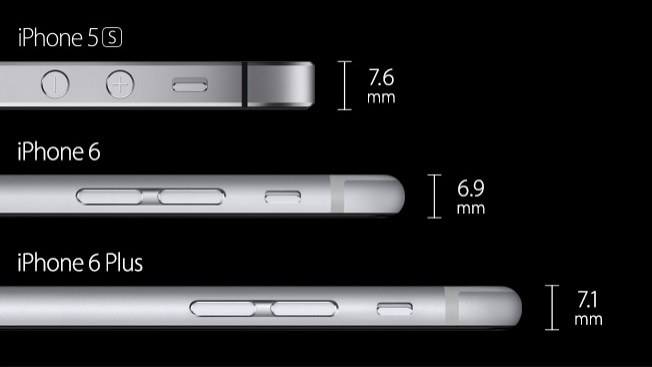
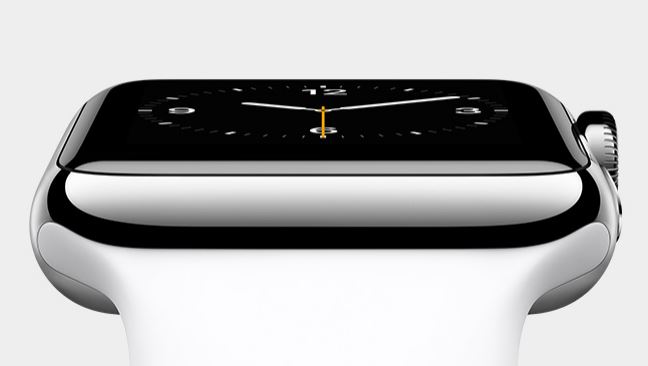
New iPhones and a wearable announcement is expected, so we’ll be following up with some analyses about the implications in the entertainment marketing sphere.Â

9:17 am PST

The stream is yet to go live, but we’ve been following and speculating on the rumor mill surrounding this day for some time. If you haven’t checked them out yet, there were thoughts around Apple gearing up for the mobile payments business, what a new iPhone, iPad and revamped Apple TV could do for gaming, strong rumors about an Apple iWatch, as well as the impact of iOS 8 on game development. That’s quite a lot of preliminary reading!

NPD: 37% In USA Play PC Games

PC gaming’s not a fringe activity anymore, according to the latest figures from NPD, based on a survey of over 6,000 people. The information firm’s latest report, Understanding PC Gaming: 2014, shows that 37 percent of the US population over the age of 8 plays PC games for an average of 6.4 hours per week. The report identifies three segments of gamers based on the types of games they play and the number of hours played: Heavy Core, Light Core, and Casual. Heavy Core gamers play core games for five or more hours per week, while Light Core gamers still enjoy core games, but do so for less than five hours a week, and Casual gamers only play non-core games. (In order to qualify as a core gamer, respondents had to currently play Action/Adventure, Fighting, Flight, Massively Multi-Player (MMO), Racing, Real Time Strategy, Role-Playing, Shooter, or Sport games on a PC/Mac.)

Casual gamers are the largest segment with 56 percent, while light core gamers are at 24 percent and core gamers are at 20 percent. As you might expect, the core gamers not only spend far more hours playing games, they also spend more money – roughly twice as much money in the past three months on games than the casual PC gamers.

“As with gaming consumers across all platforms, the PC Gamer is not a ubiquitous group, making it critical for anyone in the PC game space to understand the consumer segments and their respective behaviors,” said Liam Callahan, industry analyst, The NPD Group.

NPD reported that PC gamers are just as likely to be men (51 percent) as they are women (49 percent). They tend to be older, with an average age of 38 years, and affluent, with an average household income of $69k. Gender differences become apparent by type of gamer: Heavy Core and Light Core are comprised mainly of men while Casual PC gamers are overwhelmingly female.

Over the past year, 46 percent of PC gamers have visited a site to make a digital purchase. Interestingly, gamers buying digital games are far less likely than those buying physical games to pay full price for a title. In fact, half of all PC gamers have grown accustomed to waiting for a sale before making a purchase. Those Steam sales seem to be having a noticeable effect on what consumers are willing to pay for games.

“Consumers’ expectations may be the greatest barrier to maximizing spending in the PC gaming space,” said Callahan. “Since half of PC gamers who play digital and/or physical games on the computer are expecting there to always be a sale right around the corner, publishers and retailers alike need to better manage these expectations,” said Callahan.

Source: NPD

Warner Bros. Interactive May Compete With Steam

We know that Valve’s Steam digital distribution service is a huge success, and Electronic Arts has done very well with its own Origin digital distributiuon service. Both of those services distribute games from a wide range of publishers. In another variation, EA has already proven that an exclusive digital distribution system can be quite effective with the gaming community, as its recently launched EA Access service for the Xbox One console has drawn a pretty good crowd with the promise of accessible games and exclusive demos of forthcoming titles (but only EA titles, so far). Now, Warner Bros. Interactive could very well be getting into the act with its own service, but it’s not clear whether it will be a general storefront like Steam or an exclusive service like EA Access.

The evidence comes from a recent trademark filing. Warner Bros. Interactive, which has a full line-up over the next year with Lego Batman 3: Beyond Gotham, Mortal Kombat X and Shadow of Mordor, has filed a trademark for a new service called WB Play, according to a report from The Escapist.

With the trademark, WB Play is promising “online retail store services,” “audio and video broadcasting services” and “downloadable virtual goods,” meaning it could be offering exclusive titles through the service, or early access to forthcoming games, like this month’s release of Mordor.

Elaborating more on “downloadable virtual goods,” the description reads, “Downloadable electronic strategy and instructional guides for computer and video games; computer game software; video game software, audio and video recordings in the fields of computer and video games; downloadable multimedia files containing artwork, text, audio, video, games and internet web links relating to computer and video.”

The launch of such a service could be promising, provided that WB can get partners on board. Sony, for example, turned down EA Access because it didn’t believe it offered a significant value, despite having its own exclusive gaming service with PlayStation Plus. Of course, Warner Bros. also has a vast library of video and music to draw on beyond its games, so the service could be presenting a wide range of content.

WB Games hasn’t confirmed the trademark just yet, but a close look at the official Shadow of Mordor game page does show the WB Play logo in the upper left corner, indicating that an introduction could be right around the corner.

What do you think Would you subscribe to such a program as WB Play, or are you content with the number of services that are already available

Sources: MCV UK, The Escapist

Activision’s Elaborate and Effective ‘Destiny’ Campaign

Easily one of the most hyped games for this year is Activision’s Destiny, which was developed by the team at Bungie, the same crew that created Microsoft’s mammothly successful Halo franchise. Activision has put a reasonable amount of hype behind the game, investing more than $500 million in marketing and making a surefire bet that the franchise will be as successful as Call of Duty, if not more so.

So far, the hype is paying off, as Destiny has the highest amount of pre-orders for a new property in some time, surpassing even some of the company’s previous hits in the Call of Duty line-up. Throw in a lavish marketing campaign with a live-action trailer and pre-order incentives, and you have a game that simply cannot miss.

It’s been a long build-up with Destiny‘s hype. In fact, the initial reveal for the game took place back in February 2013, when Bungie revealed a behind-the-scenes demonstration of what it was working on.

Since then, bits and pieces of information leaked out to indicate that Bungie meant business when it came to the development of the game, from the involvement of former Beatle Paul McCartney working on the soundtrack to heralded actor Peter Dinklage joining the cast as one of the key characters, a secondary robot named Ghost.

After that, Activision has continued hyping the game with elaborate pre-order campaigns (which actually launched a year and a half before Destiny‘s release), an exclusive PlayStation 4 system bundle that features a white console and controller, pre-loading programs for both the PlayStation 4 and Xbox One, and plenty of revealing trailers with new information about the game, from its huge multiplayer capacity to its enthralling single-player content.

It’s easily one of the biggest advertising campaigns put into a video game, especially a new franchise that is just now getting its feet wet. However, it appears to be paying off, as the game could easily sell a million copies – or more – within the first 24 hours alone, and continue stretching onward into the holiday season as one of its “must-have” titles.

Destiny can be picked up now for PlayStation 3, PlayStation 4, Xbox One and Xbox 360. For a little extra fun, here’s that awesome live-action trailer again, directed by Tron Legacy‘s Joseph Kosinski.

https://youtube.com/watch?v=9ZyQK6kUdWQ