One Giant Leap

Squad is aptly named. The Mexico-based company was founded in 2008 as a marketing firm that wanted to be an employee-centric workplace, according to co-founder Adrian Goya. It had enough marketing acumen to draw regional business from global brands such as Coca-Cola and Samsung, but along the way something else bloomed at the firm. It transitioned into a kind of ideation lab, encouraging staff to take advantage of a program the company labels ‘make your dream come true with Squad’. Teams can pitch any new venture, and Squad will fund it as long as there is a potentially successful business case behind it. The program is what gave birth to Kerbal Space Program, a rocket science simulation game that’s long on originality and gaining a dedicated player following.
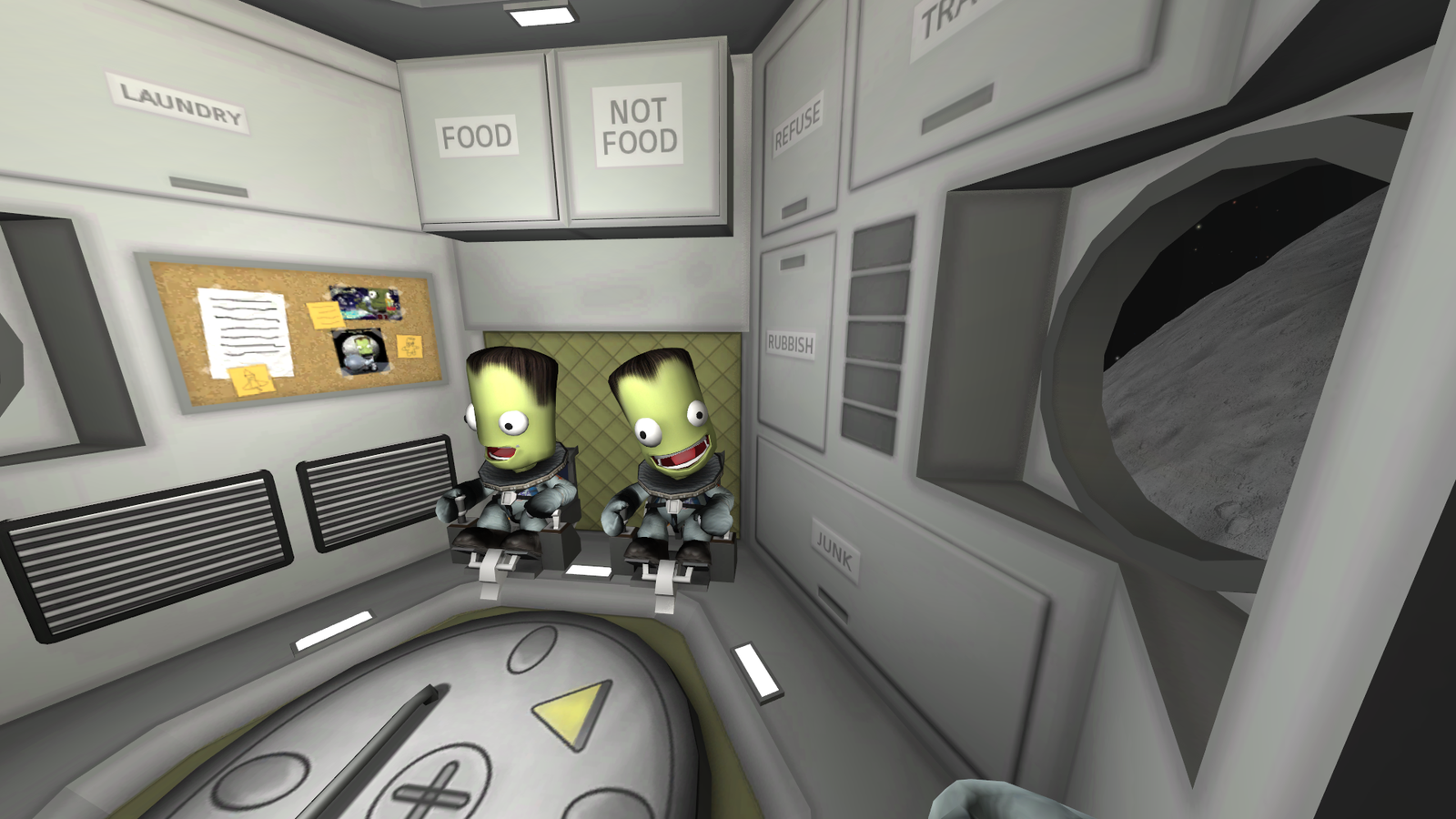
“Kerbal-nauts” on a mission

Some of the same tenets that seem to underpin Squad as a company also apply to Kerbal Space Program, or KSP, as a game. The brainchild of Squad’s Felipe Falanghe, KSP is one big adventure in courageous risk taking and learning on the go. There’s also much more to it than initially meets the eye. It’s a serious and solidly designed science-based simulator with physics rooted right here on earth. Yet it’s wrapped in the veneer of a quirky, otherworldly IP where the characters that populate it, called Kerbals, are something right out of a Nickelodeon cartoon. That hasn’t hindered the game from attracting a following among serious PC gamers, including loyalists in the game press like PC Gamer’s Ian Birnbaum , who has a running journal dedicated to his KSP exploits.

“Our lead developer, Felipe, played with fireworks as a kid and built little tin men to strap onto his bottle rockets,” says Bob Holtzman, who runs PR and marketing for KSP. “He called them Kerbals. The Kerbals are there for comedic relief. They’re pretty fearless, in a sort of stupid way. So they’re always good for a laugh and help you enjoy yourself, even when your rocket blows up. Felipe told me players come for the explosions and stay for the rocket science.”

Squad thinks the appeal of the IP helps overcome one of KSP’s biggest challenges from a game play standpoint. True to its source material, much of the experience is rooted in trial and error as players tinker with designing rockets, launch pads, space vehicles and everything else needed to build a space program from the ground up. When it comes to figuring out what works and doesn’t, the emphasis is on learning from failure, and lots of it.

“It’s not a casual experience and takes effort,” says Holtzman, adding, “The development team understood that attempting to realistically recreate a space agency was going to be a real challenge for most gamers, myself included! So one of the team’s major focuses is making sure failure is fun in Kerbal Space Program. The Kerbals make that happen. They’re like a running joke version of ‘did you see the look on his face ‘ while you’re blowing your latest rocket or spacecraft to smithereens.”
With KSP as its first foray into game making, Squad might have been impatient about quickly recouping what it invested. Instead, the company is taking a patient approach to marketing and monetizing the game that’s surprisingly cognizant of how gamers embrace a product. It’s using the freemium version of the free-to-play model, but it’s doing it in a much more calculated way compared to how many games come at free-to-play on a wing-and-a-prayer, essentially begging players to go ahead and play for free while hoping they’ll eventually buy something.

Goya explains, “After several months in development we made a free public release of the game on our website, just to test and see how people reacted and see if the idea was a good one worth keeping up developing. There was a very positive reaction so we decided to carry on with free updates. After a while, almost a year in development, we decided to start accepting pre-orders for the game, while still giving it for free. If you gave us seven dollars at the time, you would have the full version of the game forever. The pre-order price has increased over time and we eventually released a free demo version and a paid version you’d only have access if you made a pre-order.”

“It was a natural process for us and you can say it’s a sound marketing strategy,” adds Holtzman. “Developers who understand the market for their game can form a powerful community of word-of-mouth marketers while funding a longer runway for their team to develop the game. The important part, and this is where teams can’t slack off, is making sure the game is developed to the utmost of its potential with each new update. One bad update can ruin your relationship with your community. Their support is fueling your takeoff so you can’t let them down.”

“You have players who are in direct contact with you, who start loving your game, help you shape the game and talk about your game. And added to that, in our case, you get very talented people out there creating mods that make our game grow,” says Goya.

A big part of experiencing this game is getting exposed to that robust modding community around it. Modders are playing a critical part in helping lower the barrier for entry for new players. The game is all about building and testing parts that work within larger systems, and while failures that explode are fun not everything that fails explodes. Once a player is past the basics of building a rocket that flies into space, there’s room for all sorts of improvements. Ultimately the player moves from building rockets to the other fun aspect of KSP, space exploration. Thanks to mods, which in KSP‘s case could very well stand for ‘modules’, players can get past the time sink of testing every little component of their growingly complex enterprise by installing parts and systems developed by other players. As one example, the currently most popular mod for the game is a nifty looking, and presumably tried and tested, escape pod for players who are building space stations.
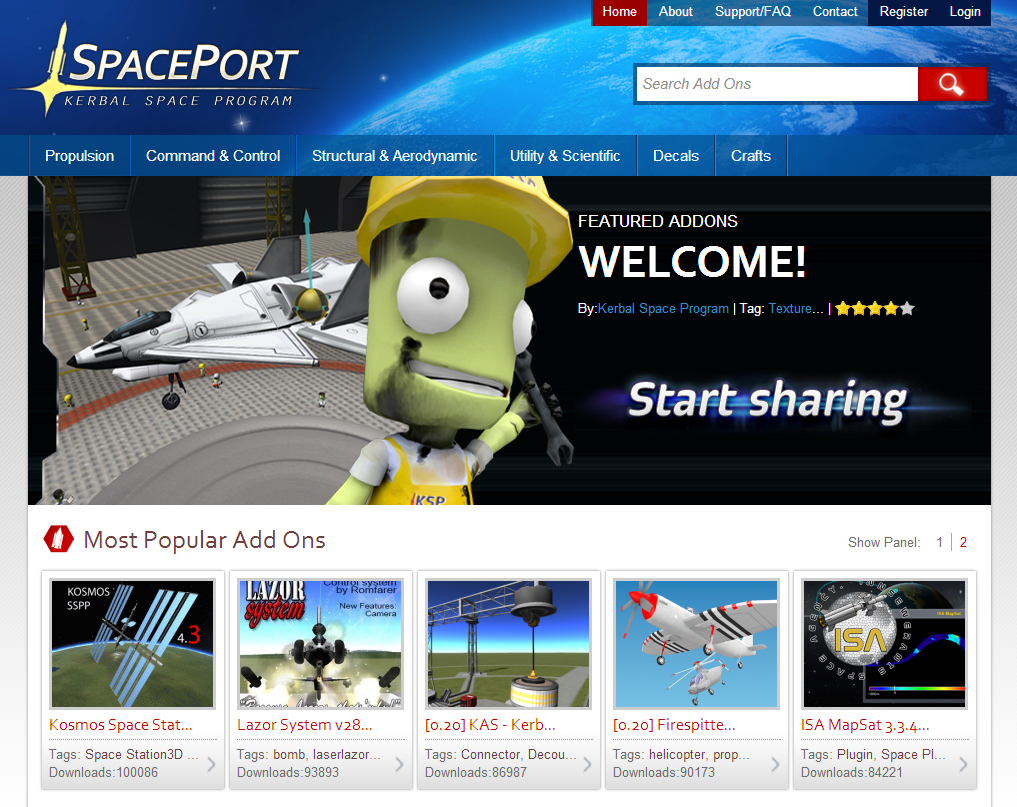
Shopping for mods almost adds a game within a game to KSP. Squad’s robust online hub for modders, Kerbal Spaceport, feels like an e-commerce site. Browsing through categories such as “Structural and Aerodynamic” or “Command and Control,” and considering items such as the aforementioned space pods, the site makes you feel as if you’re a NASA acquisition specialist sifting through a database of government contractors. Given the level of sophistication for some of the mods, it’s not surprising to hear Goya say that they’ve actually hired modders to the development team. There’s seemingly an opportunity to monetize this side of the game too, though Squad says they’re not ready to for that just yet.

“It’s definitely something we’ve considered,” says Goya. “One of the challenges is the legal side since our game is played globally and if you start to allow people to sell the mods, it opens up a number of legal issues. It’s something we’re working on but haven’t made any final decisions.”

From here out, the emphasis for Holtzman, Goya and the KSP team is to broaden appeal for a game that may not have mainstream hit written all over it, at least not at first blush. Overcoming that has a lot to do with how the product is communicated, and who’s doing the communicating. Here, Squad is still relying on the people who play the game and get what it’s all about.

“We’re trying to make sure the community has all the tools they need to share this game with their friends. We recently updated the website to make it more user friendly. We’re also looking to expand our social media options. Right now, our focus has been on our forums, Facebook, Twitter and Twitch.TV. We’re really making an effort to show people how much fun it is to stream KSP and had our social media manager, Miguel Pena, and one of our developers, Chad Jenkins, join the GamesRadar team on a stream the day we launched update 0.21. It was a chance for us to introduce the game to a new audience and some of our core audience members showed up to both tease and support some of the new players from the GR team.”

“Kerbal Space Program hasn’t approached its potential, both as a game and its brand,” Holtzman adds. “It’s going to be a lot of fun to see new players discover the game and see how future updates help it grow. We’re also working hard to strategically invest in the brand. We just want to make sure it makes sense with where the game is in development too.”

Oculus Rift Gets Competition

Virtual reality is making a proper comeback, first with the amazing 3D headset Oculus Rift and now with vrAse, a soon-to-be-launched device that is headed to Kickstarter soon.

With this device, users can make their smartphone into their own personal play device using virtual reality-powered 3D specs to take their game experiences into virtual reality. It’s essentially a fancified headset that sits with your eyes perched in the game experience, but it’s doing so at a budget as it’s expected to launch with a $75 price tag.

You can learn more about the vrAse and what it’s capable of on Kickstarter.

Source: TechCrunch

Sony Planning More PlayStation 4 Bundles

When the PlayStation 4 releases on November 15, you’ll be able to get the system by itself for $399.99. However, Sony states that this won’t be the only way to buy the hardware, as it’s planning console bundles similar to how it put together its PlayStation 3 ones. Amazon had several different bundles of the PS4 and various game titles, but all are sold out now. New bundles that will be available to all retailers are being planned, according to rumors.

A bundle packed in with Killzone: Shadow Fall, a second Dual Shock 4 controller and a PlayStation Camera have been spotted, with the bundle going for 499 in Europe. There’s no word on a U.S. release yet, but it looks very likely.

“We’re tremendously happy with our overall value proposition, whether that be the entry price point of the machine [or] the detailed bundles and combinations that we will put on shelf at retail which we haven’t fleshed out in detail as yet,” Sony Computer Entertainment UK chief Fergal Gara told VideoGamer.com during Gamescom.

A PlayStation 4/PS Vita bundle for $500 is also being considered, though nothing is official just yet. Sony may decide to leverage the tremendous early demand for the PS4 into some higher-priced bundles.

Source: VideoGamer

EA Going Second Screen

Second screen gaming through apps like Microsoft’s SmartGlass is quickly becoming a popular feature, and Electronic Arts is fully committed to the feature. Speaking with Polygon, EA games label head Patrick Soderlund said the experience was picking up in importance at the company, calling it a “meaningful extension.”

He believes that social media is a huge part of the outreach on a second screen, with more day-to-day interactions that tie in with game experiences.

“We’ve been on that train for awhile, I can’t say we’ve been perfect, but we’ve done a lot like the whole idea of autolog in Need for Speed was because of a behavioral change in consumer minds,” he said. “If you look at how [the smartphone] affected your life, how Facebook affected your life, I can’t watch TV without using [a smartphone] five times during a movie. It’s ridiculous, but that’s what it is, and everyone does that.”

“The social revolution we’ve seen because of technology and services, like Facebook and Twitter and those kind of things, has changed how games are played. And will continue to have an impact on how we will design games from the get go.”

“Today, this is one of the first things our game guys design when they start looking at Star Wars: Battlefront, which is going through design right now. One of the first things we talked about is these things, that tells you it’s in the minds of the people who make the games. What we are seeing is the start of it, and it’s just going to take a bigger part of games.”

Battlefield 4 will play a big part in this when it launches on October 29, with a second screen experience that lets players command actions in combat with their tablet or mobile device.

Source: VG247

Red Bull Sponsors Starcraft Competition

Starcraft II may have died down a little bit in popularity, but that isn’t stopping a few eSports professionals from getting together and battling it out for big bucks.

Red Bull has announced a new Battle Grounds New York competition, which will take place in the historic Hammerstein Ballroom on November 23 and 24. On those days, eight elite players, including Jang Min “MC” Chul and reigning WCS Season 2 champion Ji Sung “Bomber” Choi, will fight it out for a chance at $50,000 in prizes and the chance to be named champion.

The event will not only attract a huge crowd, but will also be live streamed, so people across the Internet can watch these pros in action.

Check out more details at the link below.

Source: Red Bull

Shop At Amazon Within Games

Amazon is just about ready to move the free-to-play monetization market to the next level.

A new program called Mobile App Associates API will tie in purchases through any given Android app store through the Amazon Marketplace. This will allow users to buy things without having to leave their game. These Associates would benefit from more sales of items, while earning a 6 percent referral fee as part of the transaction.

Though some may be bothered by in-game ads, others will take benefit of items tied in with the game, such as Minecraft goods from Minecraft: Pocket Edition. Additionally, could tie virtual item access to purchase of physical goods – for instance, if you buy a hat from Amazon using this program the game gives a digital version of that hat for your character.

Only Android developers can take advantage at the moment, but it’s possible Amazon could find a way to spread to different app servers in the future. The program does work across all Android markets, and not just Amazon’s app store.

Source: Wired

GameStick Android System Begins Shipment

OUYA is no longer the only Android-based game system in town. Today, the official GameStick blog reported that its Kickstarter-backed system has begun shipping, with the device expected to be in the hands of all backers by mid-September – not facing any shipping delays like the OUYA has.

The small system will enable gamers to hook up the device to a TV using an HDMI dongle, and features a controller that’s very easy to use.

“The controllers are fantastic – the changes we outlined in the previous post have all been incorporated and we’re confident you’re going to be really happy with the result,” stated the blog. “We are now poised to go into full production.”

Look for the GameStick to ship out regularly starting September 30 for $79.99. Check out the walkthrough in the video below.

{video link no longer active}

Source: IGN

Revving Up For ‘Racing Rivals’

If now defunct marketing firm Designers Republic had endured to this day, they might have followed the same path as Cie.  Designers Republic’s influence on the venerable racing game franchise WipEout is one of the game industry’s most well-known examples of how a marketing firm did more than just brand a game.  The way the story goes, the firm essentially helped build the WipEout IP by designing a look and feel that game maker Psygnosis adopted for much of the game universe, from UI and iconography for race teams to the game’s billboard-studded futuristic speedways.  If Designers Republic had digital chops and access to SDKs, like many marketing firms do today, they might have moved from there right into game making.

That’s what Cie has done.  The California-based ad firm turned digital playground is now also a bona fide game developer as it launches Racing Rivals, an iOS drag racing game that hits the App Store today {link no longer active}. Cie’s 15-year old legacy is working on marketing campaigns for car and auto parts brands. It made a series of successful branded racing games on Facebook for Nitto, a popular performance tire brand.  From there, Cie decided to try its hand at making its own game.  In 2010, it released Car Town on Facebook, which it published under its officially labeled game division Cie Games. Car Town became a hit, with millions of players drawn to its very Facebook-like treatment of a racing video game. It’s an isometric racer where the cars look like chubby, toy-like versions of themselves.

Part of Car Town’s success was attracting big name licenses. It wasn’t a branded game per se, but it became a playground to promote brands. No doubt leveraging the game’s impressive player base, Cie was able to secure licenses and occasional in-game promotions from auto makers, parts makers, major racing circuits, even car culture entertainment like the TV show Top Gear and the Fast and the Furious films. Cie Games leveraged Car Town’s success to make the move to iOS, releasing Car Town Streets. That paved the way for Racing Rivals.

Racing Rivals feels different than any of Cie’s previous games.  It looks and behaves like a real video game.  Visually, it draws an immediate comparison to NaturalMotion’s hit iOS drag racer, CSR Racing.  Yet there’s a lot going on in Racing Rivals that is solid from a core game standpoint. It looks as polished as a race car on race day. It’s also bringing features to an iOS drag racing game that are very much geared towards a hardcore racer fan.  Most notably, Racing Rivals has live head-to-head racing.  Matches are made in real-time in a live lobby where there can be plenty of chatter and trash talk, and where players can watch others race. The game is also introducing in-game betting.  Players can bet their in-game currency, and go all-in if they like.  If that’s not enough, they can put up their most prized in-game possession — their pink slip.

We talked with Matt Nutt, who heads up business develoment and brings serious game industry chops to Cie, coming from Blizzard and Square Enix, and Pauline Hwa, who heads up Cie Games’ marketing, to learn more about Racing Rivals and how they’re planning to promote it.

[a]list: At first blush people are going to see this game and say it’s just like CSR Racing.  What differentiates it?

Matt Nutt: We really love those games that are out right now.  They did a lot to bring console quality especially in graphics to mobile games.  We thought there are certain key features that were missing.  We’re coming from Flash and PC client games, the drag racing games that we built over 10 years ago, where we had game lobbies and chat and in-game betting.  As much as we love those games, and as much as we think they’ve made leaps and bounds in terms of bringing triple-A console quality to mobile, we thought we could add these features and bring it even close to triple-A console quality.  We’ve got live multiplayer racing.  We’re not simply doing a one-to-one match with another person on our servers on the back end, we drop you into the game lobby with up to 50 other people.  You can just hang out and watch other guys race in spectator mode.  You can chat.  There are messages that are automatically generated when people race for pink slips or go all-in with the cash that they have in their accounts.  It makes for a much livelier play experience when you feel like you’re part of an active room and there’s a lot going on.  The ability to race, put your money where your mouth is by betting in-game currency or even your pink slips.  That adds a lot of emotion and excitement to the game.

We think the live multiplayer racing part is super-important.  In other games you can race someone else, but you’re really racing their data in the cloud, so you’re racing the best possible time that they put up.  But just like in real sports, even the best athletes have off days.  The live racing component allows you to race the ballers in the room, but there is skill in playing the game.  You might not have the fastest twitch skills on that day, and you could lose.

[a]list: Cie obviously still has a strong relationship with Nitto, which is the most prominent car brand in Racing Rivals and seems to be involved with helping you launch it.  How are you leveraging your relationship with them?

Matt Nutt: We’re really fortunate.  Not only are they a sponsor, but we’re leveraging all of their marketing channels to get the word out about this game.  Their marketing plan as a company in this particular timeframe is centered around the game.  All of their media buying, all of their PR, all of their community outreach is going to be anchored around this game that we’ve developed with them. Essentially we have a dual-pronged approach to marketing this game.  We’re focused on the video game industry, obviously.  They’re focused on the auto industry.  We’re going after gamers, people who like to play racing games and the gaming industry from a B2B perspective.  They’re doing all the same going after car enthusiasts, automotive industry press, blogs and so on.

[a]list: Tell me about how you’re planning on monetizing this game.

Matt Nutt: The game is free to play, and we’ve designed it so that anyone can play without having to pay.  Our game’s fun is really anchored around live multiplayer racing, hanging out in lobbies, talking smack, challenging other racers for in-game currency and pink slips.  Community is very, very important.  We need to make sure that there are a lot of people playing this game in order for it to be fun.

In terms of monetization for us, there are always ballers who want every car that we make available in the game in their garage, they want all of the best-looking aftermarket parts, the carbon fiber hood, the really awesome looking spoiler on the back of their car, the neon-looking rims.  There are ways for us to make money through vanity items and unlocking cars.  We also make money when customers want to upgrade their cars.  Just like in the real world, where you’re sending your car to the shop and you’re having your engine tuned or upgraded, you’ve got to wait for the mechanic to finish his job.  If you want to avoid that wait, you can spend in-game currency or premium currency to bypass that.

For late stage players of the game who’ve got fully upgraded cars…they’ve got those upgraded with ‘pro parts’.  Like in the real world, if you add pro parts to you car and race, it’s going to damage your car, it’s going to damage your engine. Engine damage is a mechanic that we use in the game where if you race your fully upgraded car with pro parts a lot, it’s going to damage the engine.  There’s a cool down timer so you can just wait or choose another car out of your garage to keep playing.  But if you want to fix your engine right away and get right back into the action, you can spend money to do that as well.

[a]list: Considering engine damage is geared towards the most hardcore player, do you see this feature alone as your key moneymaker?

Matt Nutt: That’s a good question.  We’re not sure.  We’ve built a monetization mechanic in the game where in order to work your way towards the best cars in the game, you can play and earn them or you can take shortcuts and buy.  In the early and mid-stage part of the game, we can make money from people who don’t have the patience.  In the later part of the game, yeah I think we’re mostly going to make money off of engine damage.  I’m not sure from which of those two buckets we’re going to make the most money, but we’re guessing it’s going to be the latter.

Our game has an endgame that’s simply a campaign PvE experience.  [But] it’s PvE and PvP.  We think the game has a long life cycle because of the PvP.  From that perspective we think the engine damage is going to be perhaps the biggest revenue driver for us.

[a]list: You have two sizable communities under your belt between your previous games and Nitto’s community.  What are you doing to cross-pollinate, especially to get players to give up the time, cars and items they’ve racked up in the Car Town games and adopt this new one?

Pauline Hwa: We actually have built-in integration for that.  We have pop-ups already in our games to alert people that we have a new game launch.  Beyond that, for Car Town we have a feature mini-game called “Adventure,” and we built that game specifically for Racing Rivals.  In addition to that, for Car Town Streets we have  our regular racing series, one of our series is going to aimed towards Racing Rivals.  It’s not just about telling our players that this game is coming, we have ways to drive brand integration.

[a]list: What else are you planning for social?

Pauline Hwa: There are going to be contests for our community, both offline and online.  We do have leaderboard competitions as a roadmap.  We’ll be promoting this both in-game and out-of-game across our media channels.  We’ll be doing a lot of giveaways.

[a]list: Are you planning any live tournaments, is the game set up for live streaming competitions?

Matt Nutt: We definitely want to do those things.  There are technologies that you can build into the game, build SDKs that allow people to stream out, we think that’s really cool.  Those are all things that we want to definitely incorporate into the game for our fans. They’re on our product roadmap.

[a]list: You were telling me how Cie play tested Racing Rivals incognito style, releasing alpha and beta versions as Ultimate Racing in Canada and Southeast Asia.  Tell me about what you learned.

Matt Nutt: For Racing Rivals, one of the most challenging features for us to build was the live multiplayer racing where we drop a player into a game lobby with 50 other people. They can chat, watch others race in spectator mode, and challenge or be challenged in races. For something like that, latency becomes a big concern.  It was nice for us to build that functionality into the core mechanics of the game, release that in a very geo-limited capacity to collect feedback from consumers, and really refine that and make the game better.  We did that for Car Town Streets.  We did it for Racing Rivals.  It’s a great benefit.

[a]list: Tell me about the difference you noticed in player behavior in the two territories.

Matt Nutt: This is somewhat subjective, but we found that in Southeast Asia we’re getting pretty aggressive feedback from players there.  Theyre not shy about telling you that the game’s broken, or it sucks, or that they’d like to see a feature.  We beta-test in Canada because those consumers behave a lot like U.S. consumers do in terms of game play and monetization, so it’s a really nice test market for us.  I think Canadians tend to be nicer than Americans, so we may not get as aggressive feedback as we want.  Those have been good experiences for us.

[a]list: Tell me about your launch plans.

Pauline Hwa: We do have advertising that is in place. We have big reveals leading up to official launch through our social media channels as well. We have a great community manager who is actively talking to our players, so they’re starting to get excited. We’re continuing to release all sorts of information to our players.

Matt Nutt: We’re doing Facebook and Twitter and all the standard things you would expect in terms of social media.  But when we think about social media for our mobile games and our live multiplayer games with game lobbies, we’re spending disproportionate mindshare on how do we do community in the game.  We have a [feature] that won’t be built into the game at launch, but that we have on our product roadmap [to] allow our community manager to project presence not just for us as a game company and as a moderator of those communities, but ways to engage consumers in the game.  We’re going to engage consumers as much as possible outside of the game, but we really want to focus on people who are playing the game and interact with them in the game.

[a]list: Where are you advertising, is it all on mobile?

Matt Nutt: 100 percent mobile.

Pauline Hwa: We’ll be doing interstitials and banner advertising with some partners who we tested with during the beta period, like Millennium Media and PlayHaven, and we’ll continue to work with them.  We do have amazing trailers out so we’ll be running that with some partners that did very well for us previously with our other mobile title, Car Town Streets.

[a]list: So you have a bona fide press junket planned for this game, which is unusual for an iOS game.  Since we’ll be covering it (assuming we survive it), can you tease it?

Matt Nut: The game comes out on August 29 and Nitto our sponsor is holding a VIP event at Irwindale Speedway [in California].  We’re going to have up to 50 guests there, and we’re going to allow those guests to compete with each other in Racing Rivals.  We’re also going to have real drag racing cars on the track there.  So we want them to compete playing the game.  We’re also going to put them in these 11 second cars and let them race and test their reaction time on a real track, and we’ll have prizes for the best scores.

Pauline Hwa: For the grand prize, there is going to be an amazing, amazing prize for the winner.

[a]list: So you’ll just tease that amazing prize and leave it at that?

Pauline Hwa: You asked for a teaser, so the prize is the teaser.

It’s Christmas Again For GameStop Managers

Sony created enormous good will with the thousands of GameStop managers assembled at the GameStop Expo when the company announced that each manager would get a free PlayStation 4 and seven games. Microsoft was quick to respond the following day, announcing to astonished cheers that each GameStop store manager would also get an Xbox One and 9 free games.

GameStop managers probably will not get these consoles until the general release date, and even then they aren’t likely to have much time to play – they’ll be busy fulfilling pre-orders and dealing with customers looking to snag one of the few consoles the stores will get that aren’t already allocated to pre-orders.

Nintendo has stayed out of this giveaway contest, though the company did use the GameStop Expo to announce the price drop on the Wii U and the new Nintendo 2DS console.

Console Gamers Are Mobile Whales

Think the console and mobile gaming markets are divided You might be surprised to learn they may not be.

A report from EEDAR states that gamers who spend money on mobile purchases are also dropping a good amount of funds on console games. Through an infographic that discusses mobile “whales,” it’s revealed that some people spend $10 a month or more on mobile games, comprising the top five percent of spenders overall. The report also indicates that those who do so also invest an equal amount of time and money on PC and console games.

Source: IGN