Brands Clamor To Instagram

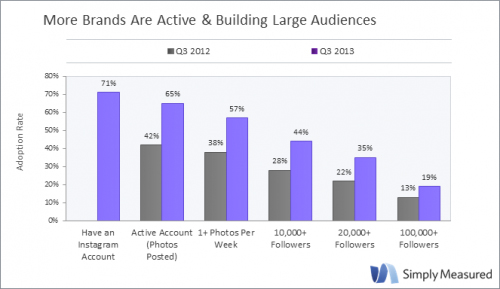
A new report from Simply Measured shows that if you aren’t on Instagram yet, you’re behind. According to their findings, 71 percent of the world’s largest brands have gotten on board with Instagram, and for good reason. Brand engagement on the platform has increased year over year by an incredible 350 percent, effectively overtaking Google + and Pinterest as preferred social platforms for brands.


The report also gets into the details of what makes brands successful on the platform. The majority of brands are posting at least once a week, with posting frequency increasing by 19 percent over last quarter. Video use is increasing on Instagram and the top brands are using it to their advantage although Simply Measured notes that engagement on photo posts is still higher than on microvideo. Brand posts also include fewer hashtags than individual posts usually do.

Instagram has become increasingly tantalizing to marketers as ads have begun to roll out. Though automotive and luxury brands have been top players on Instagram, the seamless and organic integration of ads may broaden the prospects of Instagram’s ad buys.

Instagram is currently an ideal platform for brands looking to repurpose content from other social sites, but Simply Measured has released some tips to prepare for Instagram ads on the heels of their enlightening report. They recommend planning and creating content specifically catered to Instagram while being aware that Instagram will not perform similarly to other social platforms. They also recommend that you not shy away from experimentation with call-to-actions and identify the goal of each post.
Source: Inside Facebook

Snapchat’s Monetizing Ways

For most adults, Snapchat sounds like so many cautionary tales waiting to happen. The app first came to light as something of a sexting service. As more users have signed on to it, the taboo-ness of Snapchat’s concept has waned considerably. We now know this isn’t just a sexting service and that in itself is not its appeal. The real reason why kids love Snapchat is because of its ephemerality.

Snapchat is eager to monetize the service and has the ability to experiment because the core idea behind the product appeals so much to how we naturally converse in real life. Brands should amenable to this growing phase so they can flourish right alongside the network.

Snapchat’s founders have begun to unveil their plans for how they plan to enact native ads on an app that remarkably lacks a feed. Snapchat co-founder and CEO, Evan Spiegel had some interesting ideas about monetization. Looking to Chinese company Tencent as a role model, users of Snapchat may soon being seeing product updates in a new kind of feed.

“The feed was probably the biggest innovation in social media of late. But the interesting thing about a feed is that the more content you consume, the farther in time you go,” said Spiegel at Disrupt SF in September.

With any potential mistakes erased in a matter of seconds and the current pool of brands utilizing the service being so small in number at the moment, it’s a wonder why more brands aren’t experimenting with Snapchat right now.

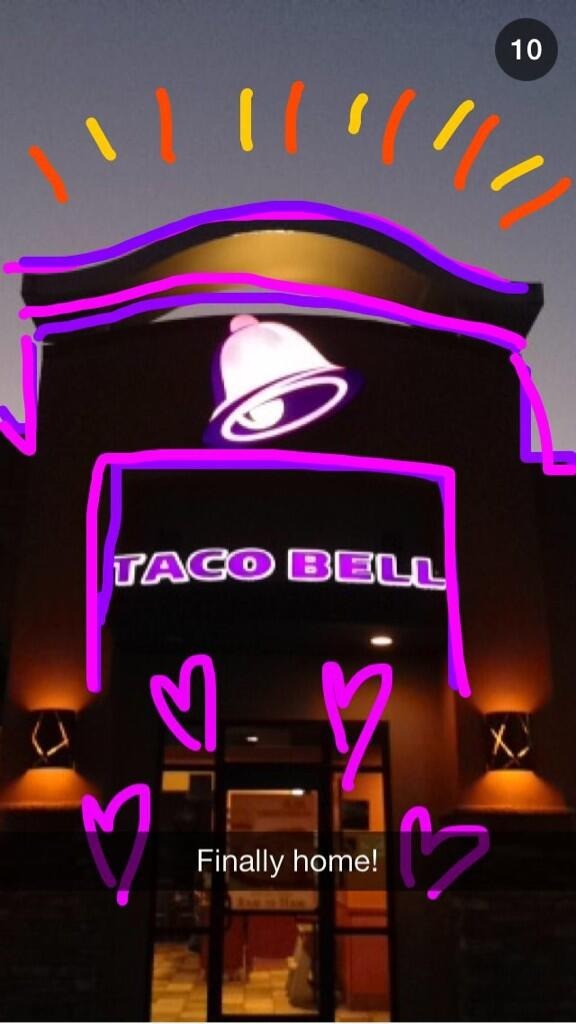
Karmaloop is a notable brand whose identity more closely resembles the ethos of Snapchat. They are unafraid to use the service in a saucy and risqué way. Taco Bell has been on board, using Snapchat’s new stories feature in cute and refreshing ways. The brand obviously sees ways to develop with consumers an affinity with the fast food brand in a place to market to teens almost exclusively.

Source: TechCrunch

Facebook: A Teenage Wasteland?

Facebook has been getting some fantastic news lately. Ad sales are up, mobile revenue has increased by 49 percent and referral traffic is steadily increasing. Even though Facebook has been performing well by these pivotal measures, the hard fact of the matter is that daily use by young teens has been decreasing quarter over quarter as Facebook increases the uncool factor by no fault of its own. With so many different social networks these days, built around mobile and increasingly visual, young teens are fickle about where they roost online.

There are a wide array of reasons this could be happening and it could very well be a conglomeration of these issues. For one, Facebook’s age verification is a little more strict than Instagram’s. The barrier to entry is higher when you have to provide your birth date and kids may be entering in phony ages so as not to be on the radar. This self-reported data is inherently unreliable.

Another issue is that while Facebook has grown to be a top dog on mobile, it was traditionally a desktop experience, and as such does not have the simple allure that makes things like Snapchat and Instagram so attractive to younger users. These newer social networks might help users to say more but with less effort.

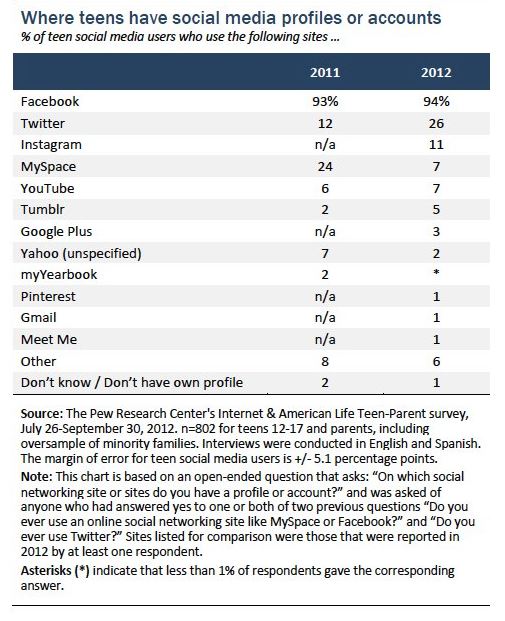
Even though Facebook may be less relevant to younger users, the adoption rate is still much, much higher than any other social network. A study from the Pew Research Center shows that 94 percent of teens have a profile on Facebook while only 26 percent are on the second most popular network, Twitter.

Scroll through the newsfeed on Facebook these days and you may notice another trend. Facebook is acting as the hub of social networking, a place to syndicate your social activities elsewhere, and warranting less and less daily visits. Being on Facebook may just be a compulsory act of existing online.

While this news has ruffled the feathers of Facebook’s investors, it doesn’t seem to be affecting marketers with much due alarm. “Find me a better network. You take half of what Facebook has, and it’s still more than anyone else has. It’s not like I can advertise on Snapchat,” said Paypal’s head of social media Dave Peck.

On the contrary, marketers need to be increasing their agility and fluidity of their campaigns and experimenting with near reckless abandon on social networks like Snapchat. While adoption rates of these new networks aren’t as high as Facebook’s, marketers have a chance to be early adopters in the next new thing. Brands like Taco Bell and Karmaloop have poised themselves to be key players on Snapchat, just by being on it.

Facebook may not entirely be on its way out. After all, they did buy Instagram in that controversial $1 billion purchase last year. In retrospect, the purchase of then revenue-less Instagram may soon be Facebook’s key to maintaining itself.

Source: AdAge

Twitter Infuses Stream With Photos

Twitter’s new makeover will certainly make a big difference in how brands and users utilize the service, but there’s nothing too revolutionary about it. Why It looks like a Facebook news feed.

This is a radical new Twitter. Images are getting prime real estate as we scroll through our Twitterfeeds, interrupting what would normally be a stream of text and hyperlinked content.

Brands who have not made use of Vine yet, establishing a presence in the hordes of micro-video, may want to. With the new “rich tweet” feel, Vine videos are automatically displayed in users’ streams. Marketers can push out the display ads typically reserved for Facebook content as well.

This is what it looks like on mobile:

“These rich tweets can bring your followers closer to what’s happening and make them feel like they are right there with you,” said Twitter’s vice president of product, Michael Sippey.

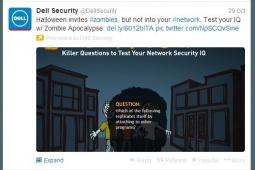
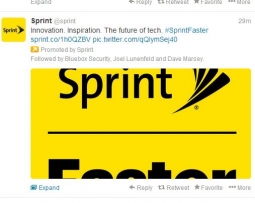
The redesign has already proved to be problematic for pioneer brands who ran into some trouble with sizing issues. Badly cropped images have appeared from the likes of Sprint and Dell Security. To rectify this, Twitter will have to move to educate brands on how best to utilize the stream, just like Facebook has actively done.


Twitter is banking on their new redesign making their ads a more desirable product. It is noteworthy that unlike Facebook, advertisers are only charged when users engage with a promoted tweet. The question now is: will users still engage with Twitter now that it has lost its text-only appeal? Time will tell.

Source: AdAge {link no longer active}

Top Games On Social Media: October Edition

By: Starcount

October: the month that the clocks go back, darkness descends upon us, and we celebrate the night of all things macabre, Halloween. It makes sense that this sense of gloom has infected the gaming world. As the days draw shorter, gamers took to social media to discuss the scarier aspects of the gaming world. The somber mood heralded the arrival of Gotham City’s Dark Knight into the charts, while the zombified Resident Evil rose a place on its position from last month.

10. Batman: Arkham Origins The latest in the Arkham series {link no longer active} following Asylum and City, Batman’s adopted an ‘if it ain’t broke don’t fix it’ attitude for this look into his past – and it’s clearly a popular decision. The Dark Knight continues to be far and away your favourite superhero in the gaming world, Gotham’s finest gaining over 75,000 new fans on Facebook {link no longer active} this week following the release of Arkham Origins this month.

9. WWE 2K14 The WWE {link no longer active} franchise has changed hands in the gaming world, with 2K Sports publishing their first entry in the series. Speculation as to what changes they will make have been fuelling online discussion about the newest game, and YouTube videos showing updated gameplay have seen the WWE franchise gain over 10 million YouTube  views.

8. Pokémon The sixth generation of Pokémon {link no longer active} games is finally upon us, introducing fully-rendered 3D graphics for the first time as well as new species of Pokémon to add to the existing favourites. Almost 100,000 people across the globe were discussing the series on Facebook.

7. Resident Evil With no recent release to get you talking, it appears the changing of the season and the horror-themed celebrations and awakened the web’s interest in Resident Evil {link no longer active}. The gory survival series gained 213,000 Facebook fans as over as an impressive 168,000 people discussed its dark goings-on.

6. Pro Evolution Soccer Pro Evo {link no longer active} may be the second most popular football game overall following last month’s release of its 2014 edition, but it scored a major victory over rival FIFA on Facebook – gaining 240,000 more new fans than EA Sports’ competitor.

5. FIFA The victor once again when it comes to favourite football simulations, the contest is nevertheless as close as ever. FIFA managed to claim a win over its main rival by way of hugely impressive Google+ stats – the game was added to 69,000 circles – as well as 7 million YouTube views as gamers get used to 2014’s new gaming dynamics.

4. Battlefield 4 Trailers for the latest Battlefield {link no longer active} game have been everywhere this month, and it shows – the series’ YouTube channel has been viewed an astonishing 26 million times in this month alone. With Halloween battle about to commence between this and Call of Duty, it will be interesting to see who is left for dead next month.

3. Grand Theft Auto Last month’s most popular game – and the fastest selling of all time – drops two places as the internet at large looks forward to two of the other biggest imminent releases for 2014. But GTA {link no longer active} has remained hugely popular, gaining over 495,000 new fans on Facebook.

2. Call of Duty It’s back. As the series celebrates its 10th anniversary, developers Infinity Ward are set to unleash their sixth  – and the 10th overall – installment in the Call of Duty  {link no longer active} behemoth. With new features – you can play as a dog this time – expect this to be near the top of the charts as the game heads everyone’s Christmas wish lists. COD’s main victory over rival Battlefield this month was on Instagram, where they gained 14,000 new fans.

1. Assassin’s Creed Over 1.3 million new fans on Facebook {link no longer active}, over 3.3 million YouTube views, over 40,000 new Twitter followers – social media has gone Assassin’s Creed crazy ahead of the release of Black Flag. Taking to the high seas is a new feature for the series and it would appear that the world is very excited indeed to test the waters. Perhaps next month we will see a slight lightening in the mood as we move into the festive season. An ability to jump on board with the new generation of consoles will undoubtedly have a role to play in which games get the social media world talking next month as the gaming world turns its attentions to the future.
Is Facebook Letting Marketers Down?

Who has access to the largest audience in media history, to the largest amount of volunteered data from users and yet has made little headway in using these resources to revolutionize marketing According to Forrester Research, Facebook fits this bill.

This past year has already been a banner year for Facebook advertising with $4 billion in advertising revenue. According to reports from Adobe and Kenshoo Social {link no longer active}, Facebook ads were clicked 29 percent more often, cost-per-click is lower than ever before and ROI is increasing by estimates of at least 40 percent. With such stellar numbers as these, it is also interesting to note that of the 131 billion Facebook ad impressions and ensuing 4.3 billion engagements, Facebook probably isn’t even getting the credit for all the purchases. Facebook has remained top dog when it comes to referral traffic to retail sites, although Twitter and Pinterest have been gaining some ground.

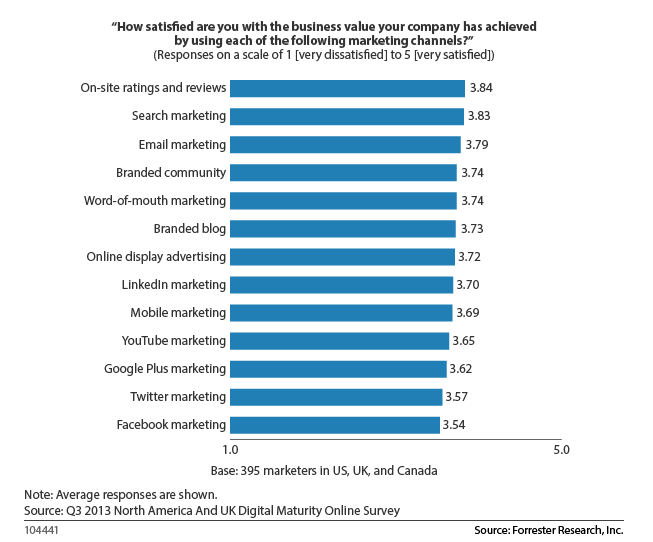
Nevermind all of this, however. A report from Forrester Research’s vice president and principal analyst, Nate Elliott, surveyed 395 marketers and executives in the United States, Canada and and United Kingdom and showed that when it comes to satisfaction and the creation of business value, Facebook ranks the lowest of all digital marketing opportunities.

How can this be Forrester posits that although marketers continue to flock to the advertising gold rush that Facebook claims to offer, only a small number of them actually find success. The reasons they provide in coming to this conclusion are particularly troublesome. It all boils down to Facebook “abandoning its promise” to revolutionize marketing and becoming overly reliant on traditional advertising. Facebook is simply not leveraging its goldmine of social affinity data.

Forrester claims that Facebook is no longer focused on driving genuine engagement. “Everyone who clicks the like button on a brand’s Facebook page volunteers to receive that brand’s messages — but on average, you only show each brand’s posts to 16 percent of its fans,” said Elliott.

Although Facebook makes updates to its advertising tools frequently, the branded page format remains unchanged as do the tools to manage and measure those pages. Of the tens of billions of daily page views on the site, a meager 15 percent are actually leveraging the social data.

Make no mistake, Facebook has immense potential for increasing marketers’ satisfaction. With such a compendium of data on consumers worldwide, the ability to make bigger, stronger, more data-driven ads is there. With more marketers signing on, Facebook appears to be improving their ad delivery by leaps and bounds.

Source: Forrester Research

Starbucks’ Tweet-A-Coffee

Today marks the beginning of a new relationship between caffeine and social networking. Twitter and Starbucks have partnered on an ecommerce effort that will allow you to Tweet-a-Coffee to a friend (or even strangers). If this sounds familiar, it is because Starbucks and Facebook have had a similar program since 2011.

Tweet-a-Coffee works by tagging @tweetacoffee and the Twitter handle of your choice after linking your Starbucks account to Twitter with a credit card. To lend this new partnership some hype, they are giving away free $5 gift cards to the first 100,000 individuals to link their accounts.

What about retweeting and @replies, or in other words, potential for abuse Luckily, the system is savvy enough to know the difference. The $5 gift cards will be sent to the recipient of your choice only, provided you follow the rules.

“We view it as the first step toward many things we can do with Twitter that are commerce related,” said Adam Brotman, Starbucks’ Chief Digital Officer in a statement to Fast Company. “It just feels more conversational [than traditional ecommerce]; it feels more authentic; and it feels more in the flow of how we’re actually using digital.”

{video link marked “private”}

Real-Time Social Gets Personal

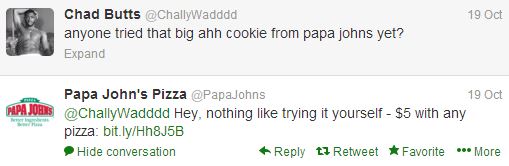
When it comes to Twitter, we all let our hair down from time to time, for instance tweeting about how weak-kneed we are in the face of pizza. Now wouldn’t it come as a surprise if you tweeted about Papa John’s and got an answer? It seems brands are catching on to how easy it is to track down potential customers and catch them when they’re in the mood for their products on Twitter.


It’s not just food brands that are capitalizing on reaching out to us when we make our desires public. Real estate franchise Coldwell Banker is doing just the same thing when it comes to users tweeting about important life events. Companies like LocalResponse {link no longer active} and Hiplogiq have known about the power of exclusivity and making users feel special for some time now. However, you don’t need to be a huge brand to utilise this idea for yourself. This outreach might prove effective for both large and small local business, but the execution might differ. The system requires some hands at the keyboard for some real-time interaction and does not suit automated responses.

Using social tools like Hootsuite and Tweetdeck, brands are filtering through the morass to find both keywords and influencers that could prove important to them. When these influencers are compelled to post about the brand on their own network, this compounds the outreach effort by increasing social views from the influencer’s network. The system is a great vehicle for promotions and to get users to provide their emails so marketers have a direct line to consumers.

This new method of brand outreach is the culmination of research {link no longer active} that shows that brand tweets drive site visitations and are more likely to inspire users to consider actually purchasing the product, especially when a promotion is involved. When you do get a previously out-of-network user to follow your brand, the likelihood that they will recommend your product to someone else is 60 percent.

It might be time to do more than just tweeting about products and promotions. The future of social marketing may require getting one-on-one with the public in a way that humanizes brands and creates a relationship with consumers.

Source: MediaPost

Facebook’s New ‘Stories To Share’

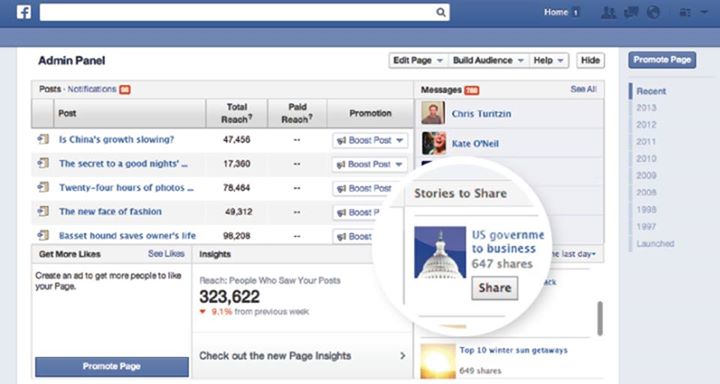
Facebook knows that the social networking site isn’t just about connecting with friends and relatives, but also about staying up-to-date on the world around us. They had this in mind when working with 29 media sites to develop “Stories to Share,” a new feature they hope will increase outbound clicks to media sites.

The tool works by recommending articles not yet shared that have the potential to be most engaging. Since only a small percentage of content to drive the most traffic, Facebook’s assistance in picking out what works best on their network will seek to grow that percentage. The “Stories to Share” tool is accessed through the Insight’s dashboard, but is currently available to a limited number of media pages.

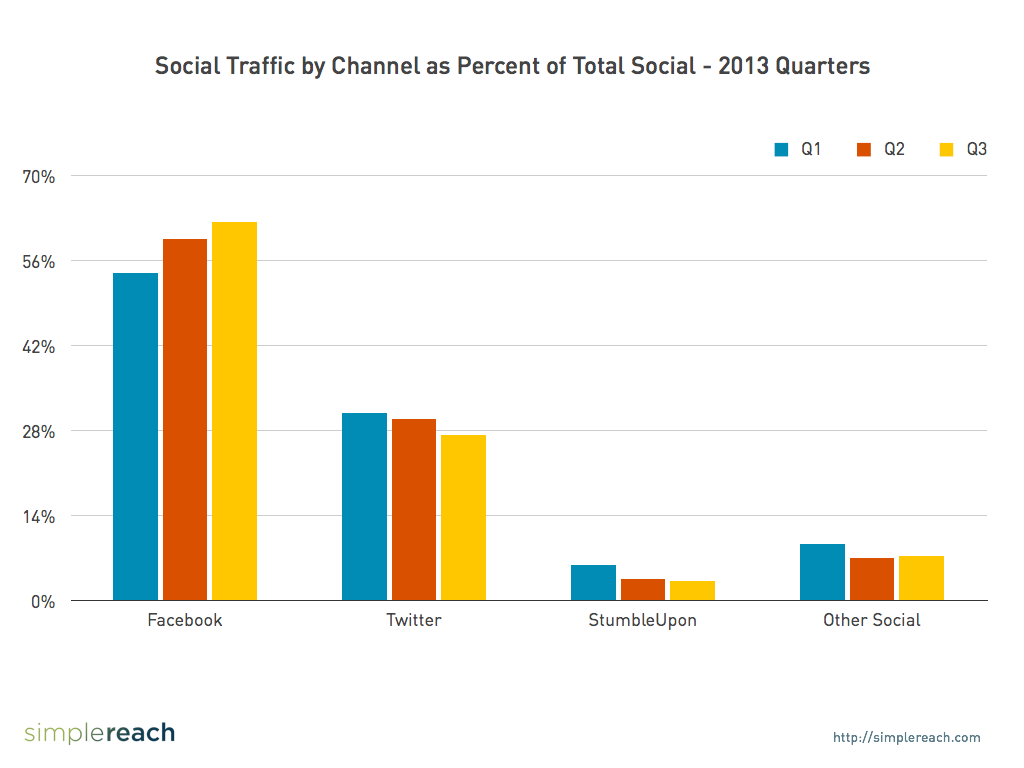
A recent study from the Pew Research Center found that 30 percent of adults in the U.S. consume their news via Facebook. It makes sense that when Facebook develops ways to maximize what media outlets receive from them, Facebook will stand to get more ad clicks, too. Already on top of the social game when it comes to driving traffic than any other network, Facebook has increased referral traffic by 170 percent in the past year alone. Some sites have seen much more than that in referral traffic increases over the past year. Traffic to sites like TIME have increased by 208 percent and Buzzfeed has increased by 855 percent. If all goes according to plan, Facebook is currently on a path to drive three-quarters of all social traffic.

“When, people find Facebook more engaging, people spend more time on Facebook and see more ads, so one of our goals is to get people to use Facebook more. It’s important to make Facebook more engaging first and foremost because it creates a great user experience, but that also help our business,” said Facebook’s head of platform Justin Osofsky in a recent chat with Techcrunch.

In order to develop the tool, Facebook worked alongside a small group of  media sites over a seven day period during which Facebook shared best practices and advised media sites to increase the number of posts they put out each day. On average, the sites increased their posts by 57 percent and from which sites saw an increase of outbound clicks by 89 percent. Other Facebook measurements like “Likes” and “Fans” saw double digit increases as well.

Source: Facebook

New ‘Like’ For Facebook

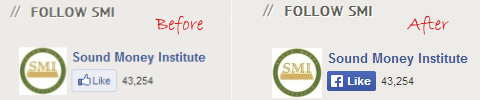
Facebook has officially exchanged their old clear button for a bold blue button with a slightly more elongated shape. The new button removes the iconic thumb’s up icon and replaces it with a favicon-esque Facebook logo.


In addition to the bright blue button getting more attention than its flat and unobtrusive precursor, the new button streamlines Facebook’s image by looking a lot more like the social network’s site.

Source: TheNextWeb