Millennial Viewing Habits Are A ‘Sea Change’

DEFY Media’s Nichole Becker, vice president of research, and Zach Smith, senior vice president of branded content, discuss DEFY Media s 2015 Acumen Report: Constant Content. The report explores the role of social media in content discovery and how thumbstoppers are crucial to getting youths attention, with a deep-dive into the thematic elements that appeal to youth. The phenomenon of YouTube celebrities and their role influencing youths content choices is also explored. The discussion is moderated by Variety co-editor-in-chief Andrew Wallenstein.

“There is a lot of aggravation in the industry right now as the TV business is under a lot of pressure. Companies like DEFY are doing some amazing things with programming for a younger demographic.,” said Wallenstein. He asked what DEFY Media was looking to do with this study.

Becker led off with a short video showing millennials talking about how they consume videos these days. “YouTube is like one of the biggest things,” said one teen. “it’s a real sea-change,” Wallenstein said. The facts and figures DEFY found backed this up. “Something that really came out strongly in this study was this notion of offline,” said Becker. “we asked them what they do when they’re offline, and they gave us this blank look. There is no offline. Their whole day is online, their whole night is online. It’s a completely different mindset, and even the notion of a video is completely different. They are defining things completely differently than even a 25-year-old is.”

“Who knows what the real limits are on how much content they are willing and able to watch in a day ” asked Smith. The amount of video is heading over 12 hours per week, on average, for YouTube and social media. “They’re telling us they’re not watching it live, they’re not even DVRing it, they’re going to Netflix or YouTube and binge-watching it,” said Becker.

“What gets those thumbs stopping ” asked Wallenstein. “What made you stop Through discussion, there were a few things,” said Becker. “If a lot of people liked it, it might be good. Or it was sent by someone I liked or someone I respect, like online celebrities. They don’t view them as someone outside, they see them as one of them.” Becker also noted that things that happened to someone they knew or something that could have happened in their life was really important for teens to watch.

Wallenstein noted that a survey they did showed a new breed of celebrities coming up, cannibalizing the existing celebrities. YouTubers are relatable as well as aspirational, Variety’s survey showed. “While there were characteristics that both YouTubers and traditional celeverities shared, the area where YouTubers won out is the notion of relatability,” said Becker. “People trust them. I t really speaks to the influence they have over people, and it’s not to be underestimated.”

“Today audiences are craving relatability and authenticity,” noted Smith. “It’s about being honest and open with your audience. Celebrities might be dealing with those same things, but they aren’t as open about sharing them.”

Creating effective digital content can be a tricky business, but it can be done with the right initiative. To get further insight on it, we sat down with Defy Media s vice president of research, Nichole Becker, right before her panel today at the [a]list daily Video Summit.

What do you think is a key factor when it comes to effectively building digital content for brands?

One of the things that s really important these days is understanding the perspective of youth, and that they are not necessarily seeing a static ad anymore. Video s so important for them. So part of building a brand is really being in that millennial space and making sure your brand is well represented. Not that traditional advertising is not useful, but you really need to have that as a major part of your advertising strategy.

Do you believe it s more personality driven, would you say?

Yes, something we ve been working with is that personalities are so strong with youth and our research shows that they really identify with them, they find them very relatable, and that can really help a brand. It can make a partnership with a YouTuber or one of those similar personalities . It really helps give a face to the brand, relatability, and that s something that a brand can t get from just having a logo or advertisement.

What trends have grown the most with digital content over the past few years Or does it really depend on what s provided in terms of programming?

I really think it depends on what they provide with programming, and what audience they re targeting. At Defy Media, we have different audiences that are served, the only thing that really unifies them is their youth. You have large female segments that are really very interested in how-to videos and the beauty aspects and what s going on in Hollywood with celebrities, clothing all that traditional area. But then you also have, say like, Smosh, or what you could call goofy videos or more of an entertainment thing that appeals to both genders. It really depends on the audience that you re reaching out to, to talk to.

In terms of mobile broadcasting, do you think more people could find the means to create digital content Or do more of the traditional channels we ve come to know apply?

The first thing that comes to mind when you talk about mobile is Vine, and several people have built up their brand and personality through it. But if you look at the content , it s not necessarily where they ve created a skit or doing some sort of how-to. It s more about showing themselves. Something we re exploring with one of our brands, Screen Junkies, is they have a program called Movie Fights, where they have panels that talk about movies. We talk to fans about, Would you like to have that live so that they can participate And the only way that fans said they could do that is if it was on mobile, to have it be where they are, because having to sit down and be scheduled, that really doesn t work for them. So mobile could definitely work as a content creation platform as long as it keeps its mobileness , so to speak. As long as it doesn t become a time slot that people have to be in kind of thing.

YouTube has always been the go-to channel for many creators of content, but Facebook has become quite the competitor as of late. Do you feel it can open similar doors to those that create content, or do you feel that YouTube is still the strongest?

I think YouTube is still the strongest. One thing that s happened with YouTube is that certain brands have created a parent brand like Smosh and created a lot of channels around it that people are exposed to and could go, and those channels could gain an audience. So whatever show is gonna run after, say, Modern Family, it ll get some viewership, because people are watching it. Right now, the way Facebook is set up, it s rather difficult to get that sort of ecosystem going, and people may not be as easily to create that following or success. A lot of YouTubers have these huge followings already on social media. They already, in essence, have their videos there. I think YouTube is still going to be all to them.

Where do you see creative content going over the next few years? More personal talents Trends?

I think we will still see YouTube talent. Our research, from what we ve found, s that with youth, they re identifying with personality, that person who s like they re like me or they say the things that I think . Older people are like, How can you sit and watch a video of somebody playing video games And it s like, it s not about watching video games, it s that person. There s still room for personality where a person can put him or her out there and be palatable to an audience. In terms of what that person creates is secondary, it s really the personality behind it.

Tubular Shows How Testing Performance Increased New Form Digital’s Viewership

A new case study from Tubular shows how using the platform to identify relevant influencers, create a content strategy and test performance, has benefitted New Form Digital (NFD). The study looked at the period of time between October 2014 and July 2015, during which NFD’s shorts increased viewership by 1.65 times on average.

Of note, engagement and reach also increased for the digital studio’s content, by 33 percent and 65 percent respectively. Below is a breakdown of how some of New Form Digital’s channels performed with the assistance of Tubular’s platform.

Take a look at the discussion between Tubular’s Allison Stern and New Form Digital’s JC Cangilla at [a]list Video summit here.


Compilation Channels Are On The Rise, News Is Ruling Facebook Video

YouTube. Facebook. Snapchat. Vine. Meerkat. Periscope. Twitch. Has your brand mastered them all Get the insights and knowledge you need to succeed at [a]list Video Summit Aug. 19. Get tix: http://alist.ly/1EVLyyz

Tubular has released its July rankings that showcase all the top video creators on the various social networks, including Facebook, YouTube, Vine and Instagram.

Out of all these reports, the company feels that the biggest thing of interest is the rise in Facebook compilation channels, and how well news organizations are doing when it comes to Facebook exposure. This includes outlets like NBC Nightly News, Fox News and Now This News (among others), all of which are in the top 25.

Here’s the most pertinent information from each of the reports

First up is the Most Watched Overall Creators, and leading the charge is Buzzfeed Video, which has nearly double the lead over its competitors with 946 million views in July. In second place is Buzzfeed’s food channel with 467 million, and entertainment group WWE with 453 million. Both Lele Pons and Baby Big Mouth show improvement over the previous month, with around 430 to 448 million views for the month.

On the Facebook front, Buzzfeed leads the charge again with 587 million views, followed by its Food channel with 466 million and Now This News with 319 million. Other news outlets like AJ+ (269 million) and Fox News (95 million) have pretty hefty numbers as well, while more social creators like Cupcake Addiction and TasteMade are also in the top ten.

As for Compilation creators, Funniest and Craziest Videos took the top spot with 858 million views, followed by Unilad with 838 million and Addiktion with 827 million.

Moving on to YouTube, Baby Big Mouth took the top spot with ease, showing 430 million views for the month of July and nearly 185,000 new subscribers. In second place was The Diamond Minecart with 385 million views, and Little Baby Bum in third with 382 million. WWE made a return to the list, sneaking into the top five with 379 million views.

On the Vine front, Lele Pons ruled the short-format roost with 431 million views, while King Back (310 million), Thomas Sanders (270 million), Lance Stewart (258 million) and Logan Paul (225 million) rounded out the top five.

Finally, over on Instagram, superstar artist Nicky Minaj led the charge with 42 million views and over three million new subscribers. Black Jaguar followed closely behind with 41 million, while the actor Dwayne “The Rock” Johnson sat in third with 38 million. Soccer team FC Barcelona (37 million) and the NBA (36 million) rounded out the top five.

So, as you can see, business is still alive and well for video creators out there, with millions of views across a whole span of networks, and news outlets seem to be on the rise. Now the only question is if they can keep up consistency throughout the remainder of the year.

Casual Connect: The Challenges Ahead For VR

The Casual Connect conference has multiple tracks, all packed with information — and today’s sessions on virtual reality (VR) gave some insight from the leaders in VR as to where the field is going and what challenges it faces along the way.

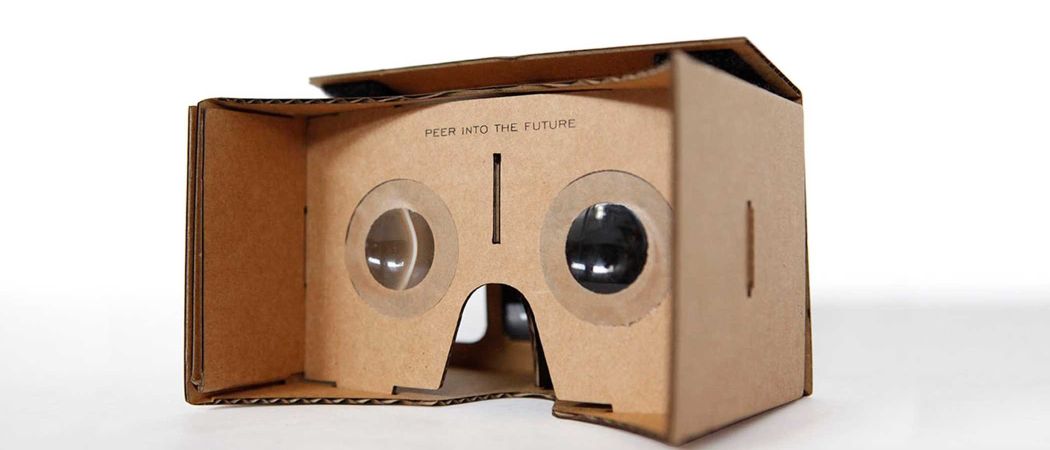
Google’s chief game designer is Noah Falstein, a veteran designer with an amazing background in games beginning with arcade games at Williams through many years of game design at Lucasfilm Games (later LucasArts), and many years consulting on games for a variety of clients. Now,as Google’s chief game designer, Falstein is helping many people at Google move forward on things like Google Cardboard (the world’s leading VR platform right now) and Project Tango, which is a smartphone that can bring your environment directly into 3D and connect with VR.

“What we’re trying to do with VR is let you see inside someone else’s head,” Falstein said. Google is making good progress at getting the technology out there for designers to experiment with; about 3000 Tango development systems out there, although Falstein noted “it’s more of an AR unit but it can do VR with a headset.” On the VR side, there are 1 million Google Cardboard copies and over 1 million downloads of Google Cardboard installed on smartphones, and it’s now available for iOS. “Google Cardboard is now the biggest installed base of VR systems out there,” Falstein noted. “VR is a big step forward. It’s ready for prime time. Over 1 million is a blue Great Lake, but not necessarily an ocean. Can oceanhood be far behind?”

Falstein gave a talk on VR design principles, noting a number of things that designers have been agreeing on about VR as many hundreds of design projects are under way. Issues like viewing angles may vary from one set of VR hardware to another, but in general it’s pretty clear that you should keep interesting stuff in front of the viewer and not to far off to the side.

Design for VR is complicated, though, since so many things game designers or media designers are used to need to be re-examined. Depth cues and physical cues are critical, since getting even one of them wrong can reduce a VR user’s sense of immersion; get too many wrong and you risk causing motion sickness. Falstein had some suggestions for VR designers: “Put the UI into the 3D world — it’s the easiest solution but not the most satisfactory,” he said. Designers will continue to look for better answers.

“There are quite a few things developers have learned,” Falstein said. “I love the fact we’re all going out and sharing it with each other. There’s a lot of excitement with these new frontiers. It’s on a level with film and photography so we need to work together on this.” He closed out his talk by recommending that designers keep it simple, and be willing to experiment — there is so much left to discover.

The Future of VR
This panel discussion brought together for the first time a group of some of the leading companies in VR to talk about the future of the technology. The panel included (in the photo, from left to right) Aaron Davies, head of partner relations at Oculus VR; Carl Callewaert, Americas director and global leader of evangelism for Unity; Ray Davis, the general manager of Unreal Engine 4 for Epic Games; Google’s chief game designer Noah Falstein, with M2 Research’s Wanda Meloni as the moderator.

Meloni asked about the key obstacles to the future of VR for developers, and the panel had some interesting points to make. Davis noted that “just getting your hands on stuff has been difficult” but that phase is pretty much over as hardware is getting out to thousands of developers. “It’s a blessing and a curse,” Davis said about VR. “With game development we were getting close to figuring it all out, and for me personally it was getting a bit dull because there wasn’t the same challenge. So VR has been really invigorating for me.” Still, despite the excitement, there are problems aplenty to solve. “Control of the camera in games is a very important thing, and now that’s gone,” Davis pointed out as one example.

“This is more fundamental a shift than previous ones like going from 2D to 3D,” Falstein said. “It’s very challenging and very exciting at the same time.” Callewaert agreed, noting that “We are all immigrants to this territory. In ten years there will be natives, people who have grown up in VR” and then the products they develop will be much more sophisticated.

Patience is indicated before anyone gets too excited about VR. “I think expecations are dramatically higher than what the market can deliver,” Davies cautioned. There’s plenty of technological advancements we still need to see. “The evolution goes from true opaque VR to pass-through experiences (AR/VR) and eventually get to AR, the golden goal,” Davies said. Falstein agreed there’s much more left to do. “It feels clear we are moving towards a world where we can mix in graphics with the real world and not see the seams,” he said.

Meloni asked the panel for some words of wisdom for VR developers, and they obliged. “A lot of your assumptions are just different with VR,” said Falstein. “It requires a lot of experimentation, you have to be humble, you have to fail. It’s true in game design but it’s really true with this.”

“Failure is part of it,” Callewaert said. “If you don’t embrace failure, you won’t get there.” And Epic’s Ray Davis said, “Go in with open eyes. Take a step back and think of novel approaches.”

The future for VR is exciting, but it’s going to take time to build into a substantive market — and we don’t yet know what the shape of that market will be, or when it will arrive.

Vine: A Sleeping Giant?

It’s funny how competition looks like it’s ready to destroy a certain aspect of the market, but often that market somehow manages to thrive. Even in the face of the more popular Snapchat, the video format Vine is still finding a way to hold on to an audience.

A report from Quartz explains that Vine, which originally launched in early 2013, has had some of its buzz wear off since its release, but it’s still managed to emerge as an “Instagram-for-video” format that consumers continue to turn to, despite growing competition from other companies.

Vine continues to hold an audience of more than 100 million people monthly across the web, with more than 1.5 billion “loops” (video views) created on a daily basis. It continues to be in the top 100 free iPhone apps across 13 countries (per details from App Annie), and holds well over Tinder and Shazam in U.S. rankings.

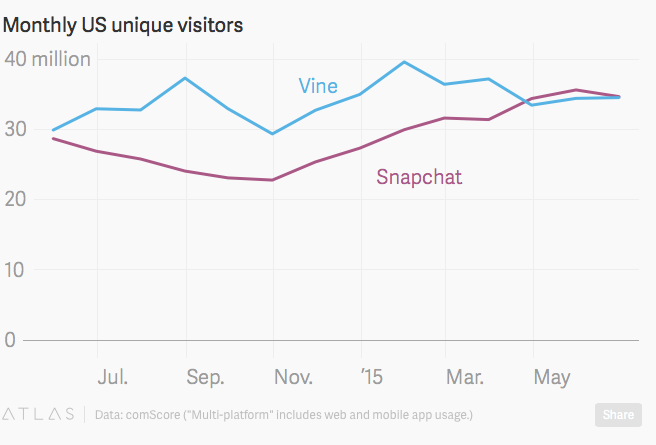
The app draws unique visitors as well. comScore indicates that the video service gained 34.5 million unique visitors in the US for June across both desktop and mobile devices — that’s on the same level as Snapchat, which has grown immensely since its introduction some time back.

As you can see from the chart, Vine thrived for months with around 35 to 40 million viewers, only to drop back a bit in April and allow Snapchat to catch up. However, for June, you can see they’re running neck-and-neck, indicating that the buzz behind Vine could be building again, despite its limited six-second format.

Most of Vine’s success comes from its simplicity, since it works well across the board on Twitter and other social media outlets. Vine also has a fair share of partners, including MLB.com, which consistently posts clips from baseball games that it considers highlights. For instance, this recent clip shows that a fan will go to any extent to chase after a fly ball.

Vines also seem to fit some audience tastes when it comes to being mobile-native, as people can easily watch the videos on a smartphone or equally small-screen device, like the Apple Watch.

Viners, or video creators for the service, have also thrived with a number of creative clips, including micro-skits (comedy) and quick musical clips. This humorous clip shows a woman getting used to a roller board, only to find others have mastered it well before her. Lele Pons, the submitter of said clip, manages to see six billion cumulative loops on a regular basis. Other creators like Logan Paul and KingBach have thrived as well.

While Vine doesn’t create a payable network along the same lines as YouTube and Twitch, it still becomes a fun playground for these users, and enables them to generate millions of views through buzz and sharing. There’s also a big outpour of community as well, with thousands of commenters talking about the clips.

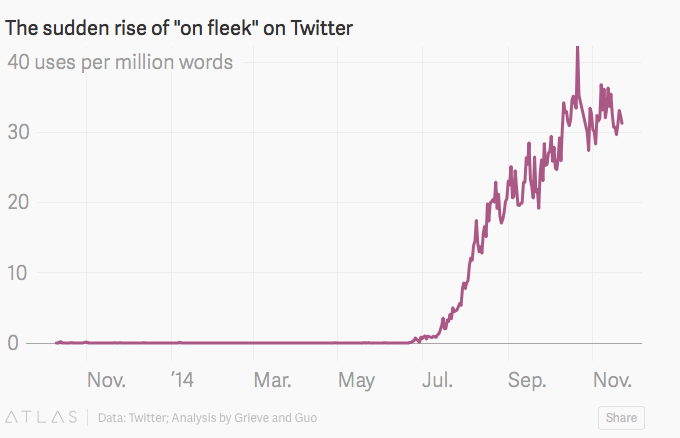
Vine can also be a good place for a trend to emerge, like with Kayla “Peaches Monroee” Newman’s clip that indicated that her eyebrows were “on fleek.” As you can see from the chart below, that clip’s popularity has taken off like a rocket.

“It’s not just about shouting into a dark hole,” said Jason Mante, Vine’s head of user experience. “People are putting themselves on Vine — and putting content and ideas and stories onto Vine — knowing that there’s so much potential for millions of people to see this thing.”

More information about Vine’s return to success (well, it never really left, but it’s thriving) can be found here.

‘Straight Outta Compton’ Scores With Meme Success

It’s not easy to create a viral ad campaign that can catch on instantly — but it can be done, as Beats By Dre has proven over the weekend.

The audio accessory maker has launched a new online program that ties in with the forthcoming movie Straight Outta Compton, which launches in theaters this Friday. The film focuses on the rise and fall of the N.W.A., one of the most notorious rap groups of the early 90’s — including Dr. Dre, founder of Beats By Dre.

Visitors can stop by the official “Straight Outta” site and create their own “Straight Outta” images. The site suggests that the campaign was made to help people exhibit their personality with a self-image. Several fans, however, have found more creative means for the “Straight Outta” imagery.

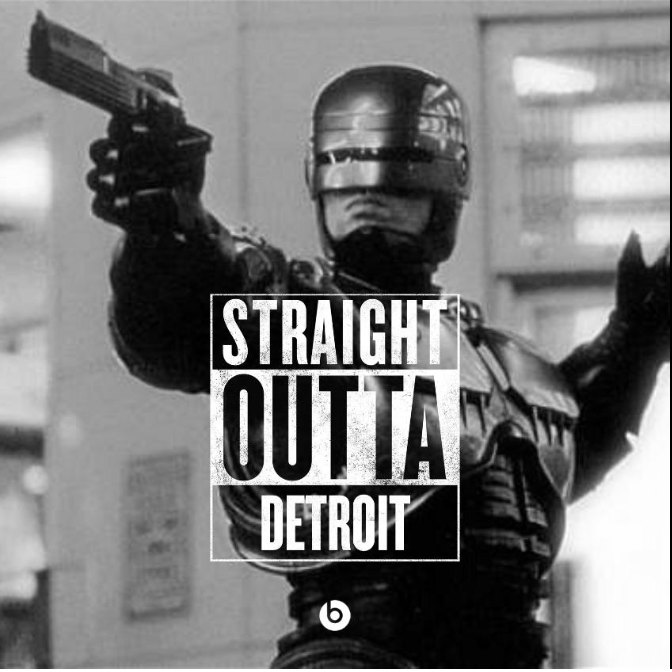
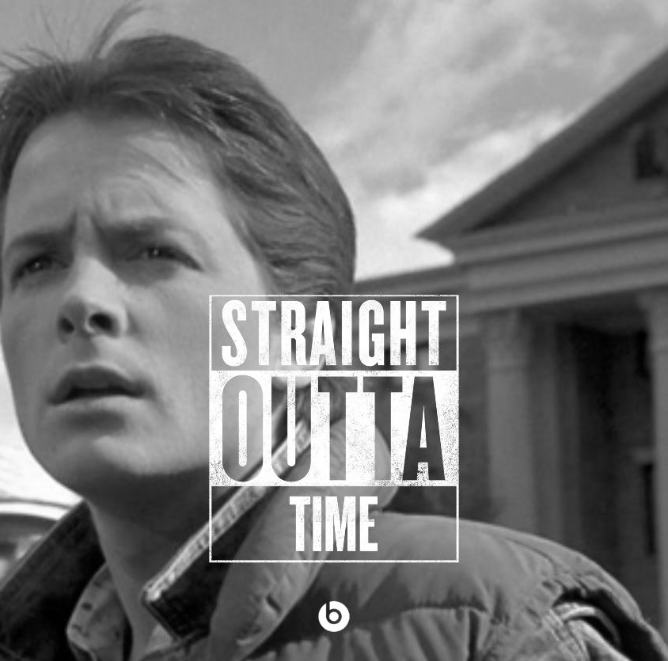
A couple of examples are below, to give you a better idea of how the “Straight Outta” message was cleverly paired with said images…

This one depicts the classic Robocop character, indicating that he’s “straight outta Detroit.”

Marty McFly is the focus of this image, indicating that, yes, thanks to the DeLorean from Back To the Future, he’s “straight outta time.”

This is just the tip of the iceberg, as brands have been getting in on the “Straight Outta” phenomenon as well, according to DigiDay.

This image from the official Sonic the Hedgehog Twitter account indicates the troubles of “Hedgehog life”, as Sonic runs “Straight Outta Rings” in an image from the original Genesis game.

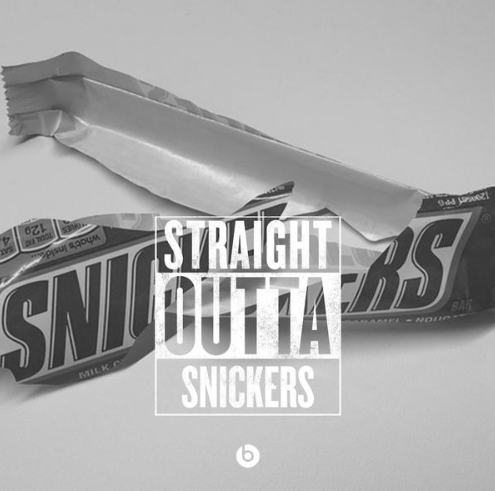
The official account for the candy bar Snickers also got into the “straight outta” fun, suggesting to consumers the plight of being “straight outta Snickers.”

This campaign has been a huge success, and is still rolling strong into Compton‘s release in theaters on Friday. Those interested in seeing more of these types of images can do so by searching under the hashtag #straightoutta on social media accounts.

They’re not all pretty…some even indicate that Bill Cosby is “straight outta Quaaludes.” Regardless, it’s a big hit for Beats By Dre, and an indicator that Straight Outta Compton should have a fairly successful run in the theaters. The trailer is below.


Top 10: Vine Musicians

Anyone out there who still defines that time spent in the limelight by 15 seconds should take a look at Vine’s biggest music-makers. These talented folks are doing a whole lot with a whole little and are managing to keep their audiences rapt, loop after loop.