Last year, Meerkat hoped to rise to success with its livestreaming video app. However, when facing major competition from juggernauts like Twitter’s Periscope, it just couldn’t keep up. So, now, the app is changing course.
Re/Code reported that Meerkat CEO Ben Rubin has acknowledged the failure of the app when it came to its livestreaming focus, and intends to take it in a whole new direction, where “everybody is always live.”
“It was a fucking hard decision to say ‘it’s not going to work, thank you everyone for the support,'” said Rubin. “One-too-many (broadcasting) is not more than a feature on top of a platform, and if we want to be independent, we have to change the course.”
Meerkat later pointed out these changes on an official blog post, with Rubin explaining, “The distribution advantages of Twitter/Periscope and Facebook Live drew more early users to them away from us and we were not able to grow as quickly alongside as we had planned.”
Despite this, Rubin did note a “bright spot” with the Meerkat business model before the changes. “We found the best Meerkat moments happened when people who knew each other (either in person or online) came together live and interacted in real-time. We saw this in the conversations when the threads would go on and on. We especially saw this in cameo when broadcasters were able to see their audience and interact in a more human way, people passed around the camera for a campfire chat session. And we saw many of these groups have the best repeat behavior of everyone.
“With the support of our board and the enthusiasm of the entire team, we began building a new product in October around this concept and are feeling good about its potential. At the same time, we’ve kept Meerkat running and stable and plan to monitor the network for anything that begins to draw new attention,” Rubin added.
While the business model hasn’t been fully revealed as of yet, these are likely to be changes for the better overall for the company – though it’s still unknown how well it’ll be able to keep up with Periscope’s surging success. Only time will tell.
Editor’s Note: [a]listdaily is the editorial arm of Ayzenberg Group.
Unveiled in a live webinar this morning, the Ayzenberg Group released the Ayzenberg Earned Media Value Index (AEMVI) to shed light on the value of metrics like cost per click (CPC), cost per view (CPV) and more across major social networks. These types of values are key reporting metrics for marketers to understand the overall effectiveness of a campaign. The index puts this critical information in one place for platforms like Facebook, YouTube, Snapchat, Instagram and more.
“We report on these factors for clients like Microsoft, Amazon, Marriott and Mattel regularly so we need accurate numbers. Values are set by working with the social platforms and tracking industry reporting,” Robin Boytos, director of analytics at Ayzenberg Group, said in a press release. “We could see that there was a need in the marketplace for baseline values that we were already creating so we decided to make our Ayzenberg Earned Media Value Index available to the industry to help others evaluate their social, content and influencer marketing campaign ROI.”
The webinar, which was hosted by Boytos as well as Ayzenberg’s Francesca Forgach and Vincent Juarez, is being rebroadcast on March 9 at 11:00 a.m. PT. It delves into the methodology behind the Earned Media Value Index, citing some real-world examples of its application. A full report is also available for download and a regularly updated chart of values is available on [a]listdaily.
“EMVs describe the extended value of paid, organic and influencer social activity. More importantly, EMVs validate the increasing use of high-engagement influencer use and content marketing tactics,” said Vincent Juarez, Principal of Ayzenberg’s ION and media.
Boytos noted that availability of these metrics was previously scant, with sources having questionable methodology or outdated numbers. With platforms like Snapchat and Instagram gaining more steam with marketers, it was a necessity for Boytos to begin to develop an industry-standard index.
The power of emoji images has increased quite a bit over the past few years. What started as a fad with smiley faces and hearts has grown into a potential business enterprise, whether it’s Star Wars-related images to promote The Force Awakens, or the introduction of new emojis that allow fans to choose a side between Batman or Superman for the upcoming movie, Dawn of Justice.
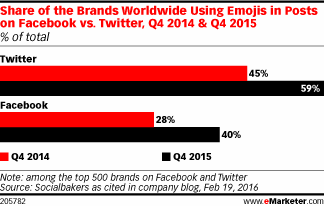
Emoji use is on the rise when it comes to social media, with more companies utilizing the little images on Facebook and Twitter in 2015 than they did in the previous year, eMarketer reports.
The study, conducted by Socialbakers, shows that 45 percent of top brands worldwide used emojis with their Twitter posts by the end of 2014. That number grew to 59 percent in 2015.
The growth wasn’t quite as big on Facebook but still showed an increase, going from 28 percent to 40 percent.
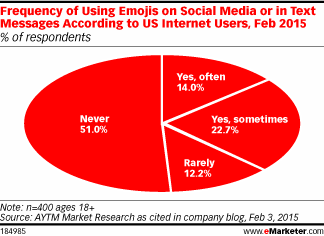
In addition, the study took a closer look at how often users take advantage of the emoji format. The February 2015 study, conducted by AYTM Market Research, shows that 48.9 percent of consumers used emojis in social media, while 51 percent had never used them. Keep in mind that the report is a year old, and numbers could have changed since then, especially when brands like Star Wars or the Academy Awards release emojis that catch on with users.
It just goes to show that the power of imagery can go a long way on social media, especially when it’s the adorable shrunken down version of The Force Awakens’ BB-8 droid.
Expect more companies to effectively introduce emojis for social media in the months ahead.
While YouTube continues to thrive with a strong audience, and Facebook has managed to keep up with billions of views per day, it appears that Snapchat has finally caught up with its own level of viewership.
The social media platform, with its growing number of users and promotional partners, now gets eight billion video views a day, CEO Evan Spiegel told an audience at the Morgan Stanley technology conference. It’s a sizable increase over the six billion reported last year between May and November.
The company’s investment in heightened video content has paid off, attracting not only new consumers, but also brands and advertisers like Discovery, Story Explorer, and the recently announced Live Stories. They’re also looking to attract more desktop users. Those that do watch video don’t just engage for a few minutes. The audience, which now has over 100 million users, spend around 25-to-30 minutes using the service for views on a daily basis.
Viewership numbers have managed to increase five times over a 12-month basis, indicating that Snapchat has longevity to spare, despite earlier doubts about its advertising model.
Partners are also hard at work on new web content, including proposed film content from Fox and Dominos, although the format hasn’t been finalized yet.
These numbers put Snapchat in direct competition with Facebook and YouTube, and now it’s a matter of seeing what these companies do to stay competitive. Facebook recently debuted a new ad format called Canvas, which enables a mini-hub based around video content, like a website that caters to a particular product. Its effectiveness hasn’t been reported yet.
The next installment of the [a]list summit is just around the corner on April 20. This year’s event heads to Seattle and focuses on the concept of Frontline Marketing and how listening, creating and sharing can lead to successful marketing campaigns. Set to attract marketing professionals from numerous brands, the event is being hosted by media and tech personality (and longtime friend of [a]listdaily), Jim Louderback.
We sat down with Jim right after he shot this video with us to chat about his involvement with [a]list summit and how Facebook is different than YouTube.
How excited are you to host [a]list summit this year?
The summit’s going to be a blast. I’m super excited because I’ve been to a bunch of them, I’ve moderated them and the audiences you bring together are so powerful that it’s great to be involved on an even deeper level.
What makes the event a unique one to you?
I think it’s the way you bring in such high quality people and real decision-makers and people who are really changing the world of marketing, advertising, technology and influencers. There’s just a sense that there’s a higher quality of conversation that happens at your events than at many others.
What does “Frontline Marketing” mean to you?
For me, “Frontline” means you’re out there, not just pushing things to consumers you think they’re going to want and messages that you think are going to resonate with them, but being out there actually interacting with them and listening to them and creating things that will be relevant to them, and then figuring out how to get to the right people with those relevant messages.
We used to do a show at Revision 3 called Diggnation and Diggnation was two guys sitting on a couch talking about the tech news of the day. We had this great audience — it was a video podcast — and we would constantly be talking to them. The topics came from Digg, so they were coming out of this groundswell of an audience and what they thought was most important. We would do a live Diggnation at SXSW and other places and there would be 3,000 people and everyone would get in, but there would be a line around the corner for hours to wait to get in, in part because they want to be with and interact with each other.
Some of the things I found most valuable was just walking around that line and talking to people and saying ‘Who are you? Why are you here? How far did you come? What is it about Diggnation that’s really interesting? What do you want to see?’ Getting immersed with people that are your fans and in your community was the best intelligence we could get about how to do new things.
You’re also curating the industry track at VidCon again this year. What can attendees expect from that?
It’s going to be a great mix of future technologies that are coming out in the online video space, influencers who are doing amazing things, brands that are doing amazing things — a lot of help and how-to about how to build bigger audience, drive retention and build your subscribers and how to work a lot of different platforms.
VidCon started out as YouTube-only, but there’s so many different platforms out there, from social streaming, Periscope, Meerkat, Facebook, Instagram and Snapchat. There’s all these different places where you can build and grow audiences and create value and really create deep connections with people. We’ll be exploring that at the industry track and VidCon this year.
Do you have a favorite video platform that you like to use?
I love my GoPro and my drone. I go out and shoot stuff and I put it on YouTube and I’m playing around with YouNow a lot, just because I am fascinated by the audiences and communities that are there. I’m also doing a lot of stuff on Facebook — Facebook is really interesting — it’s shorter, no voiceover, text overlays, the ability to do that surreptitious video autoplay. It’s a very different format than YouTube.
Last night’s telecast of The Academy Awards was a huge hit, with millions of viewers tuning in. Spotlight got the big win as Best Picture, Leonardo DiCaprio finally won Best Actor for his performance in The Revenant and Mad Max: Fury Road scored six of the golden statuettes. But they weren’t the only big winners from Sunday’s show, as several brands got big boosts from the event, too.
Twitter
In 2014, Ellen DeGeneres earned a huge social media victory when her star-filled selfie reached 255,00 tweets per minute, setting a new record. However, Leonardo DiCaprio winning a Best Actor award for The Revenant made short work of it, as his acceptance speech managed to draw a whopping 444,000 tweets per minute.
Thousands of fans tweeted out support for DiCaprio, as well as various memes and GIFs paying tribute to the actor. His glass-raising gesture from The Great Gatsby was an oft-seen highlight.
Android
Not everything surrounding the Oscars was about the show itself. Android debuted a powerful (yet adorable) new advertisement that took the issue of bullying head-on. Featuring characters based on a rock, paper and scissors (like in the old childhood game), the ad has the three befriending one another as others attempt to push them around. It’s set to the tune of John Parr’s ’80s classic “Man In Motion (St. Elmo’s Fire).”
The ad saw a ton of responses on Twitter, with many viewers applauding its approach and its message: “Be together. Not the same.”
https://www.youtube.com/watch?v=UYxpX3N20qU
The Girl Scouts
The Girl Scouts took center stage at one point, as Chris Rock brought out a bunch of girls to sell cookies to the guests in attendance. It was a sweet moment, and it made for even better ones on social media when stars Christian Bale and Matt Damon shared a box.
Even though it wasn’t an official sponsor of the show, Honda got some considerable love from comedian Louis C.K., who gave the Civic a little nod during his presentation of the Best Documentary Short Subject.
“This is the one Academy Award that has the opportunity to change a life,” he notes. “I’m happy for all of you, but you came here winners and you’re leaving millionaires.
“These people – this is documentary short film. It’s not even documentary feature,” he continued. “You cannot make a dime on this. These people will never be rich for as long as they live. So, this Oscar means something. All they do is tell stories that are important.”
He then joked that, “This Oscar is going home in a Honda Civic,” to much delight of the audience.
Even though there were no new reveals shown during the telecast, Warner Bros. hyped the forthcoming Batman v Superman: Dawn of Justice film (in theaters on March 25) on Jimmy Kimmel Live following the Academy Awards.
Along with an appearance by Batman himself, Ben Affleck smuggled his Academy Award-nominated buddy Matt Damon, Jimmy’s “sworn nemesis,” in his coat. The show also featured a humorous clip based around the film. The short features Affleck, Henry Cavill and Jesse Eisenberg having a discussion while Kimmel attempts to intervene, realizing that he’s in the presence of Batman and Superman. Meanwhile, everyone else pays no mind. The clip ends with Kimmel being knocked straight into Mars … where Damon’s character from The Martian is waiting.
It’s hard to believe that the Pokémon franchise is celebrating its 20th anniversary. The series initially got its start in 1996 with the release of Pokémon Red and Pokémon Blue for the Game Boy, which led to more game releases, a popular television series that vastly expanded the brand, big-screen films and trading cards that would become a hot commodity for millions of fans around the world.
The 20th anniversary of a franchise this significant deserves a grand celebration—Feb. 27 was the official birthday. These are some highlights.
Devoted fan page
Accompanying the social media push and the #Pokemon20 hashtag, the Pokémon Company also launched a dedicated website where they showcased the love of all things Pokémon. These included pictures and videos that talked about the first time fans played the game, favorite memories and delicious looking food.
The company also promised that particular posts that made their way to Instagram with the hashtag could receive “something special” — perhaps a memento to celebrate the franchise’s 20th anniversary.
Twitch takeover
Throughout the entire weekend, the team at Twitch streamed a marathon of Pokémon-based programming, which drew a large community of viewers. At one point, the marathon even managed to attract 72,000 concurrent fans watching its programming, and it also became a huge draw on social media with thousands of #Pokemon20 tweets.
Considering that Twitch gained huge popularity with “Twitch Plays Pokémon,” where multiple users entered chat messages that translated into game commands, it makes sense that the streaming would take part in the immense celebration for the franchise.
Pokémon‘sspecial day
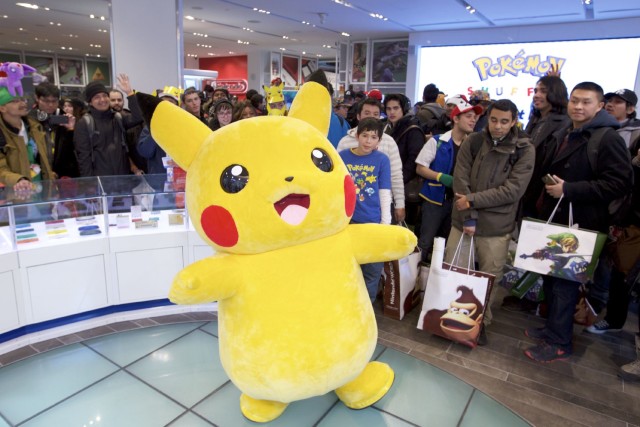
To celebrate the anniversary of the series, the Pokémon Company hosted a special event with various stores, including GameStop and Toys“R”Us, which offered various goodies for fans to collect. These included a special mythical Pokémon poster with the purchase of any product, and special foil cards featuring familiar Pokémon characters such as Pikachu and Magikarp. Special events also took place at a special pop-up shop at JapanLA, as well as Nintendo’s New York store, with fun activities for all ages.
Super exposure
The Super Bowl was center stage for Pokémon this year, as a commercial celebrated the 20-year legacy of the franchise. Looking to inspire with the catch phrase “I can do that,” the commercial transitions to an up-and-coming Pokémon trainer preparing for battle, while a hopeful parent looks on and encourages his kid to give it a try.
Afternoon soirée
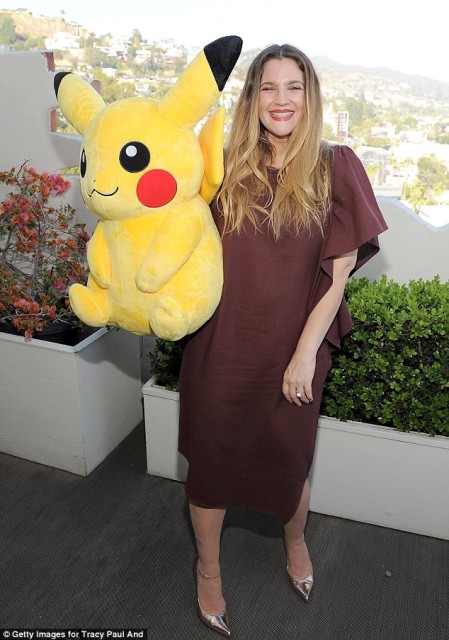
Who says the Pokémon franchise is just for kids? On Saturday in West Hollywood, actress Drew Barrymore hosted a special Pokémon event, working as brand ambassador in the hopes of introducing the franchise to a new medium: fashion.
“I like the fact that I’ve been around forever and Pokémon has been around forever,” she told the The Daily Beast. “I think what they’re doing with fashion is very current with what Moschino and Opening Ceremony and Rodarte are doing. There’s a playfulness that we’re now allowed to have in fashion again, for the first time in years.”
It wouldn’t be a proper celebration of Pokémon if there weren’t any games coming out this year. Fortunately, both Nintendo and the Pokémon Company have plenty lined up.
Nintendo got the anniversary weekend started off on the right foot with the re-release of Pokémon Red Version, Pokémon Blue Version and Pokémon Yellow Version: Special Pikachu Edition for its Nintendo 3DS handhelds through its eShop. So far, the games are selling well with the nostalgic Pokémon community.
Those looking for on-the-go Pokémon action, but don’t own a 3DS, are in luck. Last year, Niantic announced an augmented reality game for mobile devices, Pokémon GO!, which is set to release for iOS and Android. Anticipation is very high, and fans can’t wait to “catch ’em all” in real-world environments.
On March 18, consumers will see the release of Pokken Tournament for Wii U, a Pokémon-themed fighting game that also includes elements from Tekken (thus the name). The game will feature a variety of characters battling in 3D fighting action. Given the collaboration with Bandai Namco, the game is gaining big buzz leading into its release, and will be included in the forthcoming EVO tournament, which will take place in Las Vegas this July.
Nintendo has also announced Pokémon Sun and Pokémon Moon, the first new games in the franchise since Pokémon X and Y came out in 2013. It’s expected to arrive during the holidays for the Nintendo 3DS, as detailed in the latest episode of Nintendo Direct.
https://www.youtube.com/watch?v=4qBHfd2NtJs
No matter what fans are into on the Pokémon front, there’s something for everyone as the celebration for its 20th anniversary continues.
The social media channel will see steady traffic from consumers, with 89.4 million Americans logging into the site at least once a month, about a third of all mobile phone users. That will grow even further next year, as it’s expected to jump up to 51.8 percent of all social network users, pushing it past the 50 percent mark for the first time.
Instagram is expected to grow just over 15 percent in 2016. That will end up being nearly 27 million users in four years, which is double the users expected for Twitter and bigger than most social media sites available.
Millennials are still flocking to the service like crazy, with 48.2 million expected to join Instagram this year. However, the number will blossom even more by 2019, as two-thirds of all millennial smartphone users are likely to use the platform in one form or another.
“Instagram and its parent company, Facebook, know that mobile has changed the way people — especially millennials and Gen X-ers — communicate, share and get information,” said eMarketer principal analyst Debra Aho Williamson. “That’s why they are leading the way in helping marketers reach this audience.”
A good chunk of that business will come from mobile. Around 9.5 percent of Facebook’s worldwide mobile ad revenues (20.1 percent for the U.S.) will come from Instagram alone, which will grow to 14 percent worldwide (and 28 percent in the U.S.) by next year.
“Instagram has a lot of momentum with advertisers, and its revenue is increasing rapidly,” said Williamson. “For marketers that want to target mobile millennials, Instagram is an attractive option.”
A recent report from eMarketer, titled “Social Listening for U.S. Brands: Deriving Actionable Insights from Conversations,” discusses the key points of gaining insight from consumers through social media.
Listening goes beyond monitoring; extending attention to social media conversations can be relevant, even if they don’t always include direct mention of the brand. (There are specifically designed webinars, like the “Learn the Earned Media Values for Social and Digital Endorsements” that help with that.)
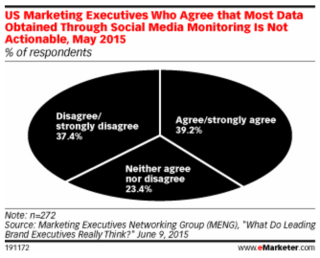
However, a June 2015 poll shows that 39.2 percent of marketing executives agree that most data obtained through social media monitoring isn’t actionable, while 37.4 percent disagree.
This brings up the point of how “social listening is looking at conversations that are happening outside of owned channels,” according to James Cooper, director of solutions development and social media intelligence for ICUC. “You can mine all of that data, all of those conversations that are happening on a plethora of social networks and blog sites online” for “actionable insights and information.”
According to a June 2015 Wayin report, the biggest reasons why companies aren’t mining deep into social data are:
Limited budget or resources, which makes up 47 percent of responses
Lack of quick staff response (43 percent)
Lack of search analytic tools (41 percent)
Lengthy content creation process (38 percent)
Sometimes it’s about finding the right question to ask, according to Erik Huddleston, CEO of public relations analytics software provider TrendKite. “Instead of saying, tell me everything every time the word X appears on any social networks … companies who employ social listening need to be micro in their ask.” Sometimes, looking at conversations that involve business cases or trends can make all the difference.
Real-time marketing can play a huge part, and the response window is pretty solid, according to the report. Of those polled, 49 percent usually respond within minutes, while only 8 percent can take a matter of days.
Expediency can go a long way. A January 2015 poll conducted by AYTM Market Research indicates that, when it comes to customer service:
Nearly 20 percent of respondents feel that 30 minutes to respond via social media is a quick time.
16.9 percent feel that five minutes is far better.
A select few, 3.9 percent, said that over seven hours is an acceptable time.
The success of a social media campaign can also come down to select targets, like engagement, audience, website traffic and customer satisfaction. It also depends on the size of the employment group, as 81 percent of small companies believe engagement is a big factor, compared to 85 percent of those with over a thousand employees.
Between its high user count and its partnerships with companies like Sony, Snapchat has turned into a major force over the last few months. The company continues to find new ways to reel-in revenue, as it has introduced a new geofilter system that could generate big bucks.
Snapchat recently introduced the ability to put geofilters into users’ pictures, providing an opportunity for brands and marketers to submit imagery into the app. Creating temporary geofilters for the service could cost as little as $5 a shot.
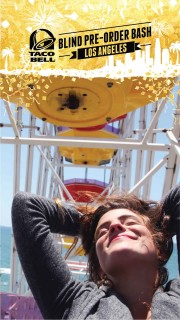
Geofilters create locations and symbolic drawings that can be embedded with user images to create a “you were there” sort of illusion. Companies have experimented with such images in the past, with McDonald’s, for example, showcasing just how its food products could be thrown into the fray.
Snapchat can set up these geofilters in an on-demand fashion so that they can be used for parties, weddings or business events, the company noted. They’re being offered for use anywhere between an hour, or up to 30 days, with space ranging anywhere from 20,000 square feet to five million square feet. Of course, the price for such geofilters increases depending on how much square footage is used, and how long they remain in place.
However, it’s also opening up the option to its users, suggesting that they submit ideas in terms of geofilters that could become permanent on the service. So far, nearly 500,000 ideas have already poured in, including suggestions based on Los Angeles and Santa Monica.
The company is taking its time in reviewing “on-demand” submissions, but the fact that it’s already getting such a massive response is good news for Snapchat, adding a significant personalization to its service while, at the same time, opening the door for even more potential business partners and hundreds of millions of dollars in revenue. Companies will also be able to keep track of how many times a geofilter is used in the app, so it can see which ones are effective compared to others.
We’ll see just how effective this plan is, and how many companies are willing to cover “a few city blocks” in the months ahead.

 Geofilters create locations and symbolic drawings that can be embedded with user images to create a “you were there” sort of illusion. Companies have experimented with such images in the past, with McDonald’s, for example, showcasing just how its food products could be thrown into the fray.
