Coca-Cola Enlists Snapchat And Influencers For ‘Civil War’ Promo

Marvel Studios’ Captain America: Civil War has already kickstarted the summer movie season in a big way, clearing nearly $180 million domestically in its opening weekend. Coca-Cola decided to take part in the superhero action, using Snapchat and calling upon a few social influencers to spread the word about the film.

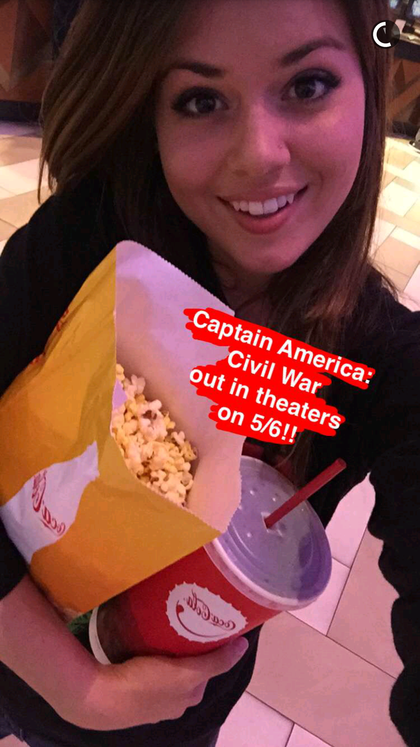
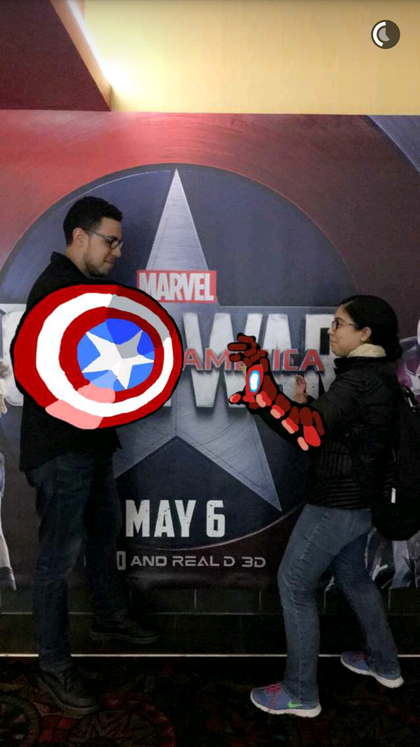
The soft drink company hosted fan screenings across the United States this week, while utilizing a few social influencers to host live reports from the screening through Snapchat. Tristan Yates and CJ OperAmericano took part in the event, where they asked moviegoers which side they were on–Team Cap or Team Iron Man. If this promotion sounds familiar, it’s because choosing a side has been the theme for most Civil War promotional campaigns.

Snapchat

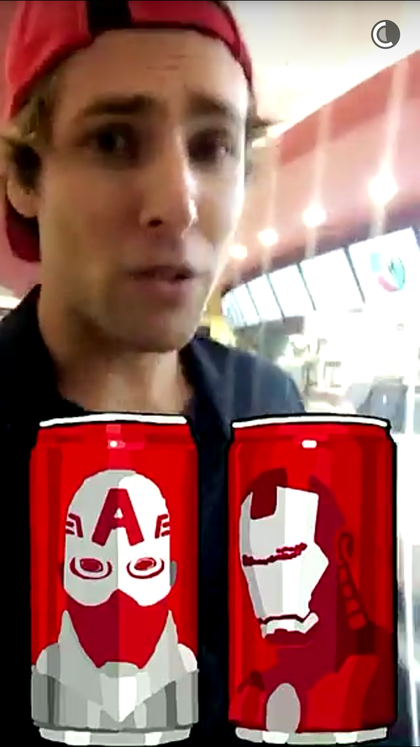
The two sides were introduced before the Snapchat campaign kicked off, and then hosts proceeded to talk to moviegoers about their choices. Coca-Cola played a part by having specially made cans inspired by Captain America and Iron Mean featured in the presentation. The campaign turned out to be a huge success, reaching out to both millennials and younger viewers, and providing healthy promotion for both Coca-Cola products and Civil War, which was a hit with fans of all ages.

Snapchat 2

“Coca-Cola choosing to raise brand awareness of its products by using influencers reporting live before the blockbuster movie premiere of Captain America: Civil War and asking fans which team they are on (Iron Man or Captain America) is such an impactful way to promote the brand to the millennials and younger generations and to the 100+ million Snapchat users,” said Marci Troutman, CEO for mobile web company Siteminis. “Who doesn’t love a Coke mixed with Marvel? This is just another way Coca-Cola shows off its commitment to digital.”

Movie studios are utilizing Snapchat to promote films as well. Last year, Sony Pictures teamed with the social app to provide a devoted channel to the James Bond film Spectre; and this past March, Warner Bros. showcased a teaser trailer for the buddy comedy Central Intelligence on the app, featuring stars Kevin Hart and Dwayne “The Rock” Johnson.

Snapchat 3

“Other food and beverage brands should pay attention to the strategy Coca-Cola uses to engage millennials and the younger generations, who are and will become their up-and-coming consumers,” said Troutman.

Civil War is in theaters now, and is already a huge success for Marvel’s movie studio.

Why Twitch’s Founder Is Using Snapchat To Fund Entrepreneurs

Serial entrepreneur Justin Kan has launched and sold several companies over the years, including Twitch, which Amazon purchased for $970 million in 2014. Although he’s only 33 years old, the partner at venture capital firm Y Combinator is seeking “young” entrepreneurs by connecting with them directly through their app of choice: Snapchat.

According to digital intelligence firm SimilarWeb, Snapchat Android installs (22.7 percent) have overtaken Twitter (21.8 percent) for the first time in the U.S.

Kan is launching the first ever Snapchat Pitch Competition on May 10. Startup founders will log in and pitch Kan and the audience on his Snapchat Story. The winner will get an interview to be funded by the YC Fellowship program this summer, which awards $20,000 in equity financing.

Kan explains why Snapchat is the new Twitch in this exclusive interview.

When did you get into Snapchat?

I hadn’t used Snapchat until December last year, and I quickly started understanding why it’s so popular. It reminds me of Twitch. It’s a low-friction way to create a lot of content. One guy can create a lot of content on Snapchat with a front-facing camera on his smartphone at a low cost. As a platform, it’s like content arbitrage. You can create cheap content that appeals to a lot of people, and you can find your niche of your specific take on a specific game or any topic.

How have you been using Snapchat?

People are following me primarily to get my advice on how to start a company, what to do after you graduate college, and other topics for young entrepreneurs. So, I’ve refined the Justin.tv concept around that. I’ve been continuously producing a daily content feed of Snapchat content.

How big is your Snapchat audience?

I have 6,500 views right now on Snapchat. They don’t tell you how many people follow you. I figure 10-20 percent of viewers actually watch my Stories.

What is the audience you’re reaching to through Snapchat?

It’s a great broadcast medium for people 18 to 25 who want to become entrepreneurs. A younger demo is attracted to this. There are some older people on Snapchat, and I think my audience is older than the average. But Snapchat is much younger than other social media platforms. People send me videos and pictures of themselves, and it’s college-aged people—freshmen and sophomores in college.

Are you surprised that college kids are thinking about startups at that age?

I remember thinking about companies when I was that age. Now I look back and they’re so young. We’re embracing them in the platform they’re already using. People appreciate the authenticity of Snapchat. You’re not uploading a prerecorded video that you heavily edited. It’s authentic content.

How did this Snapchat contest come about?

Over the past couple of months, I’ve gotten a great response from younger entrepreneurs on my Snapchat by doing Snapstorms on various startup and life advice-related topics. In fact, at least three of the YC companies we just funded for the upcoming Summer 2016 batch were in touch with me over Snapchat before they interviewed. Because of the interest, we’ve decided to take it to the next level and do a pitch competition where we will potentially fund a startup through Snapchat.

How will the contest work?

First, you need to apply by May 19. The most promising entries will be asked to take over my Snapchat channel between May 23 and May 26. Each finalist will take over my Snapchat for one hour to pitch me, Kevin Hale, and the Y Combinator Fellowship team on why we should invest in them. The top startup will get an interview for YCF for a potential $20,000 investment. The winner will be announced on June 3.

How will the community be involved?

Each company will pitch us and my Snapfam through a series of Stories. We will give feedback on the pitches, and once all of the takeovers are complete, we will ask the community to vote for their favorite startup. Since we are investing our money, we will be making the final decision on the winner, but it’s always good to know what people are thinking. Pitches will be posted online to refresh viewers’ memories before voting.

What do you like about Snapchat?

So many more young entrepreneurs are using Snapchat. Older people are starting to get it—I’m part of that wave. But the real interesting thing is it’s a great message for broadcast with the Story feature. It’s like a combination of a blog post and a series of 10-second clips covering topics. A lot of people have been reaching back to me and saying they went to a Coding Boot Camp or started their company because of my Snapchat Stories.

How much do you interact with fans?

Like Twitter, it’s a way that anyone can directly access anybody else. Anyone can send you a Facebook or WhatsApp message. I like to take time out of my day to respond to the questions I get from people all over the world on Snapchat.

Why do you find Snapchat appealing for reaching entrepreneurs?

It’s where people are. I can make a two-minute YouTube video, but people aren’t really using YouTube in the same way. It’s more for looking up a video about something. It’s like a Google for video. Snapchat is more like TV. Users are opening it 20 times a day and looking at different people’s Stories. It’s an easy way to do native content. It’s more compelling than Twitter, which is good for one-line witticisms. Blogging is information-dense and takes a lot of time. Most people out there aren’t writing that much content. Snapchat is a balance between YouTube, blogging, and Twitter. It’s easy to produce informational content quickly, but it doesn’t feel like a job. Until you spend a lot of time with it, it’s hard to understand its appeal.
Twitter Exec Explains Why ‘The Voice’ AR Activation Is Just The Beginning

Twitter has officially entered the augmented reality market. The social media company partnered with NBC and The Voice judges Blake Shelton, Adam Levine, Christina Aguilera and Pharrell Williams to introduce 3D animated hashtags and stickers to both Vine and Twitter.

This experience came in the form of a custom augmented reality booth backstage, where coaches and talent tweeted six-second videos from @TheVoice handle. This activation introduced new technology to The Voice, which has over four million Twitter followers and is one of the most tweeted broadcast shows according to Nielsen. It also debuted a creative experience that weaves the Twitter and TV experience more closely together.

The AR booth included animated Twitter emojis for each coach. The four emojis can be unlocked with the following hashtags (#TeamBlake, #TeamXtina, #TeamPharrell, #TeamAdam). In addition to animated 3D versions of the coach emojis, the booth had several animated stickers for the coaches and contestants to play with.

This AR activation is the latest in a string of new technology, including the “Voice Save” which started in 2013 and gives Twitter fans the opportunity to save contestants through tweets. The show was also an early adopter to Periscope when it launched in 2015, offering fans interactive Q&As and backstage tours. The four coaches bring their signature banter to their combined 48 million followers, adding another layer of engagement and interaction with their fans on Twitter.

Matthew Moroz, who leads Twitter’s creative, strategy & innovations for the TV partnerships team, explains what augmented reality technology opens up in this exclusive interview.

Why did you decide to explore augmented reality? 

We are always looking for new ways to bring a unique TV experience to Twitter fans and AR felt like a natural next step.

How does this technology work across Twitter and Vine? 

The AR Booth is like an amped-up Twitter Mirror. It involves simply walking up to the monitor, picking up an object, holding it up to the screen and watching the object animate while a short video starts to record the action. The videos can then be shared with fans across Twitter and Vine.

What do you feel AR opens up to the Twitter audience? 

Twitter fans and partners have embraced innovations like the Twitter Mirror and the Vine 360 booth. This AR integration takes another step in bringing the experience from behind the scenes to fans in a new way.

How popular are emojis and stickers with Twitter and Vine and what do you see AR adding to this popularity? 

Emojis, which are so concise and expressive, go hand in hand with Twitter, especially for TV conversation. We now create custom Twitter emojis for various occasions and TV events, from the Oscars to the Olympics, to The Voice. AR is another way that programs can include fans in the show and bring excitement to live experiences on Twitter.

What did you learn from The Voice activation with NBC? 

We have worked with NBC as a partner on many innovative projects, like Voice Savewhich allows Twitter fans to rescue a contestant on the brink of elimination through tweets. We are constantly in a dialogue with them to push the envelope and bring new elements to Twitter, especially since The Voice fans are already so savvy on Twitter.

How does AR further connect the television watching experience with the social media engagement? 

Augmented reality is a novel and fun experience that rewards fans with interesting content.

How did you work with NBC on this initial activation?  

This activation is the result of collaboration on both sides. We consider it a creative partnership because we are constantly exchanging ideas and brainstorming new ways to include our fans into the live show experience.

Now that you’ve proven it works, what role do you see this AR technology playing for TV networks and even brands moving forward? 

There are so many creative ways AR can be employed on Twitter. This is only the first step.

Nintendo Begins Massive Promotional Push For New ‘Pokémon’ Games

It’s hard to believe that the Pokémon franchise is 20 years old, yet is still as relevant as ever. Between an amazing Super Bowl commercial, the forthcoming Pokémon GO! mobile game experience, and the critically acclaimed Pokken Tournament battling rounds on Wii U, it has continued to win over millions of fans. But now, an even bigger evolution of the franchise is on the horizon.

This morning, Nintendo revealed a new trailer for its two forthcoming Pokémon games for the 3DS, Pokémon Sun and Pokémon Moon. First revealed a few months ago, the games will feature new Pokémon characters for players to interact with, as well as bold new adventures that will be the biggest for the series to date. Both games are slated to arrive on November 18, just in time for the holiday season.

The trailer focuses on the three new main Pokémon characters—the owlish Rowlet, the cat-like Litten, and the dog and seal combination, Popplio—to provide players with a quick look at what abilities they bring to the game. It also indicates a new visual push for the series, which goes beyond the highly popular Pokémon X and Pokémon Y, which released in 2013 and became instant best-sellers.

A completely different trailer was also released on the official Pokémon Japanese channel, showing players anticipating the forthcoming release of both games.

https://youtu.be/2r0_F-_ClcQ

The push for these games has been tremendous so far, with social media buzzing over the new trailers. Fans have been chatting on Twitter about the new Pokémon characters, as well as what new challenges are around the corner. This will likely continue next month at E3, when more details about both Sun and Moon are expected to be revealed.


https://twitter.com/GAMEepsom/status/730087571687149568

https://twitter.com/Ing97B/status/730087532650696704

Both games will likely be big sellers for both The Pokémon Company and Nintendo, and promotions are likely to ramp up closer to the games’ release, including limited edition character giveaways and other goodies. Look for more information on these promotions in the months ahead, and as devoted Pokémon players always say, “Gotta catch ’em all!”


Tunisia’s First Game Developer Is Giving Away Real Cows

In the mobile game, Bagra (Arabic for “cow”), players must keep a herd of virtual cows safe from UFOs, while attempting to steal cattle from other players using flying saucers. While most free-to-play games offer prizes of in-game currency or extra play time, Tunisian game developer Digital Mania held an unusual contest recently, awarding the highest score-earner with a real cow.

The winners, an unnamed couple from the region, are now the proud owners of Pamela, a black and white bovine who has been living at the game studio for the last two weeks. Since Bagra is only available in the African country of Tunisia, exporting the large, living prize isn’t a problem. The winners had the choice of claiming the live cow, donating it to charity or having it butchered. Luckily for Pamela, the couple opted for the live option and she was driven to her new home in Beja on the back of a pick-up truck. The couple who won her is obviously skilled in the fine art of protecting and stealing cows, so Pamela should be safe with them.

Bagra is a new game to hit the mobile market, with an official launch trailer posted on YouTube just two weeks ago. According to Google Play, the app has been downloaded between 5,000 and 10,000 times.

Digital Mania is Tunisia’s first video game studio, founded in 2011 by Walid Sultan Midani, who dreams of becoming an industry giant. “I don’t just want to survive,” he told BBC in a 2014 interview. “I want us to come up with the next Angry Birds [or] Farmville.” The small team of developers, using the slogan, “in video games we trust,” numbers just 17 as of this posting, but they are planning 12 additional games for the near future, according to their site.

Tunisia is an export-fueled economy, with agriculture accounting for 11.6 percent of the gross domestic product. Seven percent of the country’s income comes from tourism, particularly in the sandy city of Tataouine—shooting location for the planet Tatooine in Star Wars. On the Digital Mania website, they refer to their employees as “young padawans,” the Star Wars term for a Jedi in training.

Although winning a live cow may seem strange in the U.S., the milk-producing prize could quite possibly improve the lives of those who win it or receive it through charity. Lower-tiered winners of the competition walked away with home phones and computers, according to a report by French-language news site, Tuniscope. Considering the game is free-to-play with optional paid add-ons, it will be interesting to see how the game profits have been affected by the competition.

The popularity of the contest continues, with another cow named Brigitte up for grabs.

Snapchat Raises Prices For Interactive Video Ads

Snapchat has been one of the bigger success stories in social media, drawing a number of big brand names and garnering eight billion daily video views from users. So it shouldn’t be a surprise that the company is revising its video ad model at a slightly higher rate.

DigiDay recently reported that the company has doubled its price for its interactive video system, charging a minimum of four cents a view for 3Vi (vertical video views and interactive) ads. With these ads, users can swipe up to watch a longer video, install a separate app onto their phone, or visit a separate site. Meanwhile, non-interactive videos will continue to be two cents a view.

What does this add up to? Advertisers are now paying an upward of $40 CPM for interactive ads, even if users don’t follow them to view longer videos. This is twice what the usual $20 CPM comes out to.

“That was a big hike for the 3Vi ads, where you swipe up to interact, that increase for us was too high relative to the engagement rates we see,” said one Snapchat advertiser, speaking anonymously.

However, it’s worth noting that the system is currently in testing phase and only has a few advertisers, so the price could change. However, given the app’s robust daily view count, it’s just as likely to stick around.

This is the latest change to the company’s advertising model, as it also launched an ad system with a price tag that ranges between $500,000 and $700,000, and it can even be higher in some cases.

The only question now is how effective these new advertising prices can be, especially with Facebook growing its own video services. “This is going to be tricky for Snapchat in that they are up against very robust video products like Facebook, Twitter and Instagram, and it is likely hoping that post-campaign attitudinal studies will prove out the validity of the pricing model,” said Jill Sherman, senior vice president of social strategy for DigitasLBi. “Snapchat recognizes it is in a power position and that this is a shiny object that brands want to try.”

Chase Highlights Small Businesses With ‘Morning Bell’ Campaign

The New York Stock Exchange rings in each day literally with the opening bell, celebrating the power of big business. Meanwhile, small businesses like Gregory’s Coffee, just a few blocks away on Wall Street, receives no such fan fare—until this morning. The coffee shop’s founder, Gregory Zamfotis, in partnership with Chase for Business, rang the iconic Stock Exchange Bell with a message: “Small business also has a voice on Wall Street.”

“The Morning Bell for Small Businesses” is a new campaign that celebrates those hard-working individuals who dare to build their own companies from the ground up. Chase is asking business owners to submit videos of them ringing their own bells to start the day, some of which will be featured on the Chase billboard in Times Square, Chase’s website and shared on social media. Highlighted bell-ringers on Chase’s website include Moomers Ice Cream in Traverse City, Michigan and Seaside Deli & Convenience in Boynton Beach, Florida.

Chase for Business offers credit to start-up and small business owners like Zamfotis, who gave up practicing law to open his first Gregory’s Coffee in 2006. He now has 17 locations in New York City. “Telling stories like his helps bring Chase’s initiatives to life,” said Allison Bennett, the chief marketing officer for Chase for Business. “It’s such a pleasure to talk to Gregory, and it’s so much fun to talk about how, in 10 years, he’s gone from zero to 17 stores. It’s more about him than it is about us, but his vision and our sponsorship helped get him there.”

The ringing of bells has been associated with celebrations since ancient times, from weddings to new calendar years and even death. In this way, Chase is using the same storytelling method that our ancestors used to find explanation, meaning and ritual, a simple, yet powerful way to engage their target demographic.

While The New York Stock Exchange bell rings at 9:30 a.m. ET, many small business owners have been up before dawn. “Some of them start at four or five in the morning,” Bennett said. “So these stories are inspirational, and they make the small-business community unique.”

https://youtu.be/n5E4VmzkuW8

Netflix’s Latest Ads Introduce Snapchat Face-Swapping

One trend that’s picking up quite a bit on social media is face-swapping—the process of taking two faces from a photo and trading them. The effect can be very humorous, or a little disturbing at times, but there’s no denying that it’s a growing trend. And now, Netflix is completely on board with it.

The company recently launched a promotion in France, where fans can use Snapchat to take pictures with characters from the streaming channel’s TV shows, then perform a face-swap with them. They can simply stop by a Netflix billboard and take a picture next to the character of choice, like Frank Underwood from House of Cards or Kimmy Schmidt from The Unbreakable Kimmy Schmidt, then Snap their photos with the face-swap.

One user on Twitter posted his results from trying out the face-swap feature, and as you can see, it’s quite effective.

Considering Snapchat’s recent boom with users (getting over 10 billion video views a day), it’s no wonder that more companies are hopping on board with its “Snapping” services for promotions. National Geographic tried a similar promotion the previous week, with a face-swapping campaign that pointed towards the understanding of culture.

No word yet if Netflix is considering bringing the promotion to the U.S., but since face-swapping has gotten quite popular, don’t be surprised if a similar campaign shows up. After all, who doesn’t want a face like Frank Underwood’s?

IBM’s Met Gala Dress Reacts To Twitter Posts In Real-Time

Every first Monday in May, New York’s Metropolitan Museum of Art (aka the Met) hosts a red carpet event that attracts the world’s biggest stars, wearing the latest gowns from the world of high fashion. Last night’s Met Gala was themed, Manus x Machina: Fashion in an Age of Technology, inspiring IBM and fashion house Marchesa to create a literal link between “man and machine.” The IBM dress is covered in LED lights that change color based on the emotional tone of Twitter users discussing it.

Craig and Chapman, the designers behind Marchesa, fed more than 150 images of their dresses and more than 100 red carpet photos into IBM’s Watson Color Theory Tool, which helped them pick the most appropriate colors to simulate audience emotions. Using the Tone Analyzer API to detect emotional tone of tweets about their dress throughout the evening, the Watson Color Theory Tool changed the color of the dress based on what people were saying.

The IBM dress was modeled by Karolina Kurkova, who encouraged her Twitter followers to interact with her gown throughout the night.

“This is an opportunity to show how technology can help us push the boundaries of creativity and have an interactive dress that’s a piece of art and a conversational piece as well—something that’s almost living and breathing,” says designer, Georgina Chapman. “And to us, that was just a magical idea.”

The IBM Cognitive Couture gown is the first of its kind to be worn at the Met Gala, although not the first dress to incorporate real-time Twitter reactions. In 2012, CuteCircuit debuted their Twitter Dress, worn by Nicole Scherzinger at the launch event at Battersea Power Station in London. Rather than change color, Scherzinger’s gown scrolled real-time Twitter posts across the fabric whenever someone used their designated hashtag.

As the market of wearable technology continues to gain popularity, brands are finding new ways to connect with their audiences.

“It’s a partnership between man and machine,” says Jeffrey Arn, IBM Watson strategist. “What cognitive means for fashion, unlocking new considerations and sharing expertise, breaks us out of our bias. There are implications all across the industry.”

‘Dancing with The Stars’ Tangos Into Virtual Reality

ABC has been dabbling with virtual reality lately, having previously teamed up with Lexus to produce a special VR-related experience for the hit drama Quantico. But this time, the broadcast channel is stepping in a completely different direction.

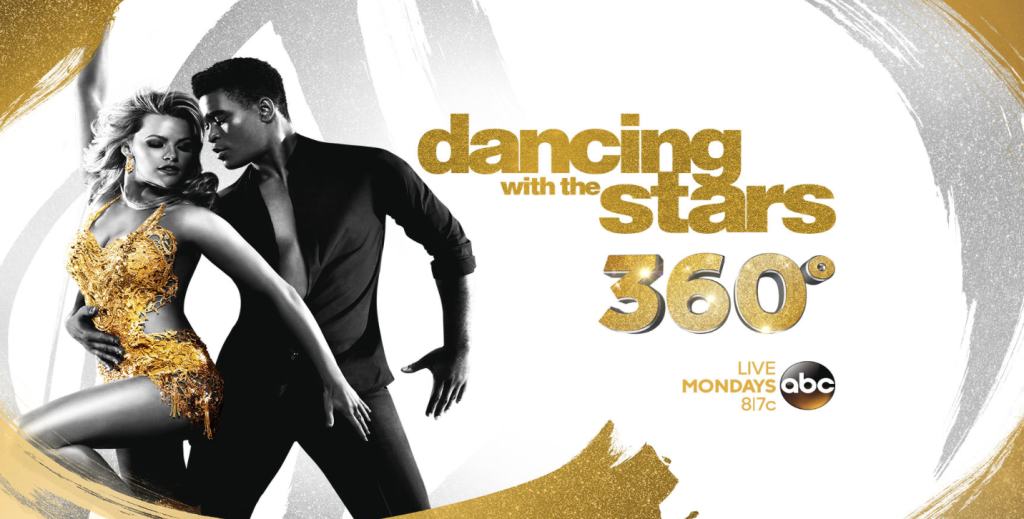
Variety reports that a new 360-degree video that ties in with the immensely popular competition show, Dancing with the Stars, is available on both its main website, as well as its Facebook and YouTube channels.

Set to the tune of Donna Summer’s “Last Dance,” the video surrounds viewers with professional performers as they dance along to the beat. The experience is compatible with web browsers, and it can be viewed through virtual reality headsets using Littlstar’s virtual reality app.

Screen Shot 2016-05-03 at 12.02.28 PM

This is just the beginning of ABC’s virtual reality experiments, as the company is hard at work on a number of new programs centered around the technology. A VR experience based around the hit show, Nashville, is set to arrive later this month, and more could be planned as the company’s fall season prepares to launch.

This all ties in with Disney’s (ABC’s parent company) bigger picture, as it released a Disneyland VR experience earlier this year (produced by VR camera maker Jaunt), as well as a Star Wars VR experience that could lead to bigger things down the road.