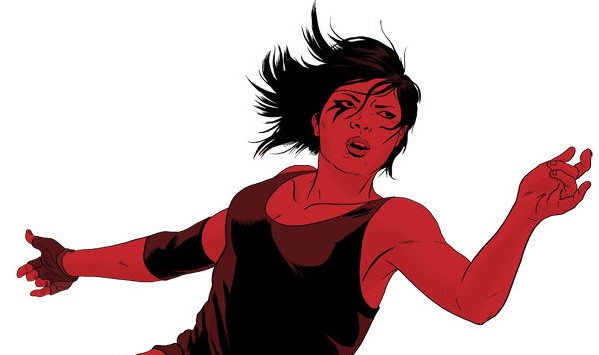
Candidate Crunch Is The New Mobile Game That Is Rocking The Vote

Just because Hillary Clinton and Donald Trump have locked up their presidential nominations doesn’t mean mobile gamers can’t have some fun with the 2016 presidential election. The new Urthworx game, Candidate Crunch, lets players save (or not) candidates Bernie Sanders, Trump and Clinton. But there’s a lot more going on with this title, which is the brainchild of former entertainment lawyer Michael Fox. Fox explains why mobile gaming is ripe for raising money and awareness for causes and charities in this exclusive interview.

Candidate Crunch

Why did you decide to leave the world of entertainment law?

I actually never wanted to be in it!  I went to law school to be a human rights lawyer, but when I discovered that the law often has little to do with humans (much less their rights), I realized law was not the career for me. I started writing screenplays (often in lieu of going to class) and knew that storytelling was the path I wanted to pursue. But I stuck it out and graduated. Then, during my first year as an entertainment lawyer, I had a fateful encounter with a homeless man that changed my life. That led me to start a nonprofit where I produced an innovative benefit event for the homeless headlined by Kanye West and Common. That was my first foray into what we call “impact entertainment”—the fusion of entertainment and social impact.

What opportunities has mobile gaming opened up for raising awareness and money for good causes?

The former head of public policy at Facebook (Adam Conner) said “Gaming is the single-most underutilized tool for advancing the common good.” We very much believe that to be the case. We’re still figuring out the best ways to do it, but our first app NBA Escape (which is still in soft launch) raises awareness about fitness and nutrition through a trivia feature and, when players hit certain milestones, donations get triggered. Urthworx commits to donating 10 percent of its revenues to various causes.

Why did you decide to focus on voting and the election?

We had been working on a game called Celebrity Crush, where crazy things fell from the sky and you have to save the celebrities and raise money for their favorite causes. When we saw what was happening in the election and how high the stakes are for the future of the country, we transformed the game into Candidate Crunch. This is really an experiment to see if you can use a mobile game to drive participation in the election. So far, we’re seeing pretty high engagement in the civic elements of the app. Out of the first 85,000 downloads, more than 5,000 people have accessed the voter registration tools.

Who did you work with to develop this game and how involved were you with the creative process?

The game was built entirely in-house. We have a fantastic team who came from Gameloft, one of the top game developers in the world. Previously, our guys were the core team on Spider-Man Unlimited and The Oregon Trail. I’m the producer/creative director and am involved in developing all areas of the game.

How does Candidate Crunch encourage people to vote?

The app has a feature called Election Central, which is powered by Rock the Vote. It has everything you need for the election (online voter registration, a polling place locator, deadline reminders and more). Throughout the game, there are fun trivia sequences featuring interesting election-related facts and quotes from great American leaders along with cool and informative, shareable graphics.

Candidate Crunch

What are the challenges of getting a game like Candidate Crunch out into the world with such a crowded mobile market?

Where do we start?!? It’s a very competitive landscape. Right now there are a ton of “do terrible things to Donald Trump” games. Because Urthworx is focused on “impact entertainment” it has enabled us to secure great partners like the NBA (for our previous project NBA Escape) and Rock the Vote and DoSomething.org for Candidate Crunch. Having partners like that can help break through the clutter from both a promotional and reputational standpoint.

How has the non-stop election coverage helped your game?

We just released on June 2nd, so we have to wait and see about the effect.

Why is this election year especially important for people to get out and vote?

I think it’s important that people vote in every election. Personally, I would love it if voting were mandatory as it is in 32 other countries. As a country and a planet, we are at a crossroads and the Democrats and Republicans have some important distinctions with respect to some important issues.

What have you learned from previous digital endeavors like Baracky and The Empire Strikes Barack that you applied to this latest project?

Our motto is “pop culture with a purpose.” Back in ’08, when I created those viral videos for Obama, we were able to reach people who weren’t traditionally involved in the political process by conveying important information by re-mixing iconic movies like Rocky and The Empire Strikes Back. Using entertainment for social impact, when done correctly, can be very powerful.

What has the early reaction been to your game and who’s playing it?

So far the reaction has been largely positive with the vast majority of our ratings being five-stars.  However, we do get a bunch of one-stars because so-and-so hates Trump or Hillary (which doesn’t have much to do with the game). The comments in the app stores run the gamut from political rants to people who really like the civic engagement elements to people who just think it’s a fun silly game.

As for demographics, we aren’t able to get information about all users from the app stores, but from the information we do have, more than half are under 35 with the majority being between 19 and 25. The gender split is 75/25 (male/female).

Given your experience with this project, how open are you to exploring mobile games in the future for your causes?

Urthworx is committed to using mobile entertainment as a medium for social impact. Casual games can be a difficult market and you’re constantly having to build a new audience with each new game. Going forward, we are primarily focused on developing an interactive storytelling system that will allow us to deliver engaging entertainment on an on-going basis—think an interactive TV show.


‘Deus Ex’ Expands Across Both Real And Virtual Worlds

In preparation for E3 next week, Eidos Montreal streamed its presentation for Deus Ex: Mankind Divided a few days ahead of time. The video included a first look at the city of Prague in the sci-fi world’s future, where an event called The Mechanical Apartheid causes governments and authorities to treat cybernetically augmented individuals as second-class citizens.

Prague’s aesthetics, vertical design, and characters (that include corrupt police officials) were shown, along with gameplay footage of navigating the city using augmentation abilities and hacking. The gameplay presentation concluded with a combat demonstration that took place in a ruined bookstore, which juxtaposed the lethal approach with a non-lethal one—appealing to the player’s sense of choice and emphasizing the open world gameplay.

Although the gameplay video was the main highlight of the presentation, Eidos Montreal announced plans to take the Deus Ex Universe to a whole new level by bringing elements from the game into the real world and presenting viewers with the future of Mankind Divided.

Expanding The Deus Ex Universe

As Jean-François Dugas, executive game director of Deus Ex franchise, explains in the introduction, part of the goal is to “bridge the gap between fiction and reality.” The studio wants the style of Deus Ex to become part of the real world. To that end, there is a prequel graphic novel titled Deus Ex Universe: Children’s Crusade that tells the story of how the main protagonist, Adam Jensen became involved with a division of Interpol called Task Force 29. Additionally, the plain prose novel Deus Ex: Black Light fills in the events that occur after the previous game, Human Revolution.

The Deus Ex Universe also has a real-world fashion line, so that fans can dress like the sci-fi characters from the game. Then fans can explore the real world using an app that scans different transmedia products to unlock exclusive behind-the-scenes content and interviews with the game developers.

Deus Ex Re-imagined

Today saw the official announcement of Deus Ex GO—a mobile game that’s set to release later this summer. Using the stylized graphics and strategic gameplay established by the hit games Hitman GO and Lara Croft GO, the newest addition distills the Deus Ex experience down to its primary roots of using cybernetic augmentation, combat and hacking so that players can navigate through challenging puzzles.

Fans will be able to take the Deus Ex GO experience even further with an editor that lets them construct their own challenges and thereby extend the life of the game by establishing a community of puzzle makers.

Deus Ex: Mankind Divided — Breach Announcement

Eidos Montreal producer, Fleur Marty, referred to an April Fools’ Day video the studio produced earlier this year, where the executive art director Jonathan Jacques-BelletĂŞte announced that he was sick of the black and gold look of Deus Ex. Instead, they would pursue a new art direction using almost all pink and white. As it turns out, there was a lot more truth to the video than anyone suspected. The video was actually a preview of what the new challenge mode, Breach would look like.

Deus Ex: Mankind Divided — Breach is a challenge mode that will launch alongside the main Mankind Divided campaign. Players take the role of Rippers (hackers) who use virtual reality environments to infiltrate data servers and uncover information. Of course, the information is protected by aggressive defensive measures, so players will have to outfit themselves with augmentation abilities and customized weaponry to complete challenges and compete against each other for greater rewards.

The mode was announced with a commercial for the fictional data security company, Palisade Property Bank, which is hijacked by a mysterious figure who is calling for all other Rippers to take action and uncover the truth. Breach is similar in many ways to the main game, except with an arcade twist, and has its own art, story arc and characters.

Deus Ex Gets Real

The Deus Ex developers always strive for a sense of realism and believability when creating the science fiction world. However, they might have done their jobs a little too well with some of the Human Revolution promotional trailers that featured fashionable cybernetic prosthetic limbs. The studio was contacted with inquiries about where these prosthetics could be purchased, and they had to inform them that they didn’t exist in real life. At least, they didn’t until now.

In the ultimate move to bring the Deus Ex Universe into the real world, the game developer has partnered with Open Bionics to change the prosthetics industry with “affordable, functional and beautiful prosthetic devices.”

AndrĂ© Vu, the executive brand director for the Deus Ex Universe, outlined the inspiration for what might be the first video game-inspired prosthetic device line. Joel Gibard, CEO of Open Bionics, explained the process of turning Adam Jensen’s bionic arm into a real world piece of technology, and the video demonstrates a very impressive semi-functional prototype. The design files will be open-source, so that anyone with a 3D printer can download them and make themselves a robotic arm.

Fans with two arms can also enjoy use of the robotic limb, thanks to a third partnership—this one with Razer and its Stargazer camera, which uses Intel RealSense depth-sensing motion tracking technology. As Razer CEO Min-Liang Tan explains, the Stargazer captures in real-time, enabling “one-to-one mirroring between the user’s hand and the bionic hand.”

With that, Deus Ex gives fans a look at how the franchise is shaping both fiction and reality.

Ultimate Media Ventures Founder Details ULT ESports Clothing Line

It’s likely that during E3, attendees will be wearing Golden State Warriors jerseys or shirts, while NFL, MLB, NHL, and soccer teams will likely be represented in some fashion at the show. However, that’s not yet the case with eSports in the mainstream, especially with jerseys.

Ultimate Media Ventures (UMV) hopes to change that. UMV is using the global audience of E3 to debut its new ULT line of eSports clothing. The Kills Collection line, which will range in price from $28-$78, will be available exclusively on ULTeSports.com on June 13.

It’s the first of a new push into clothing, which will expand to include jerseys for pro gaming teams and a line of suits for casters.

Nate Eckman, co-founder of UMV and lead designer for ULT has been designing custom products for publishers for years, and he explains how his inspiration for the new ULT line is of a more personal nature in this exclusive interview.

What is Ultimate Media Ventures?

UMV is a VC-backed gaming and eSports innovation company. We have initiatives that are designed to enhance and advance the eSports community in the areas of content, products, and experiences.

Why did you decide to launch an eSports clothing line?

We decided to create ULT, the eSports lifestyle apparel brand, to offer modern design sensibilities and premium aesthetics to the eSports clothing ecosystem because we saw a desperate need for it. We intend to elevate the quality of the items designed for fans to purchase in support of their favorite teams, as well as the technical garments worn by the players.

What separates your clothing line from anything else in eSports?

We bring a contemporary art and design aesthetic with a uniquely modern LA streetwear influence to ULT products. Our first collection is called “Kills” and we separate our line through a modern minimalist design philosophy, extreme attention to detail in custom sewn elements, woven labels, and subtle nuance in how we approach the clothing. We offer something premium and limited edition. We design and print locally in small quantities where we apply hand-touched custom elements. We are the opposite of the mass-produced and poor quality items often seen in the arenas.

What was your inspiration for ULT?

I stopped an eSports fan from wearing his favorite team jersey, an all-over printed nylon baby blue shirt. He said he would be embarrassed to wear it at school or out with his friends. That sucks. With ULT we want to change that feeling through modern and minimal design, with streetwear sensibilities. We want the fans and players who wear our line to look and feel awesome because the eSports community is amazing and that is what we deserve.

What are you unveiling at E3?

We are unveiling our ULT eSports lifestyle apparel line called the “Kills Collection.” This line includes everyday wearables like short- and long-sleeve tees, hats, hoodies, and jackets. The line is designed for the eSports community to feel badass in the ULT gear and never embarrassed.

What professional teams are you working with and when will we see them wearing the clothes?

We are not revealing information about specific teams at this time.

Who is your target audience for these clothes?

We are targeting the great eSports community of fans. We are targeting the players who train, stream and compete at the highest level. We are also able to have our premium designed items cross over into the streetwear boutique shop culture through artist collaborations.

What kind of impact will lifestyle clothes have on the broader eSports demographic we’re seeing with ESPN and TBS television coverage?

Overall, lifestyle clothing will have a huge impact on the growing eSports demographic as ESPN and TBS enable more mainstream awareness and exposure. The work we do with the ULT brand will also serve to elevate the perception of eSports from the apparel standpoint. With ULT, we will show the greater community that their “gaming” apparel doesn’t have to be “nerdy” and overly niche. We have evolved past that point, and now appreciate premium design and modern applications for our garments. This demographic does not have to compromise; they deserve better products.

How are you marketing these clothes?

Our marketing strategy touches on collaborations with other established designers and premium product brands. At our E3 showcase private reception for ULT, you will see collaborations and promotions with The Seventh Letter, as well as Astro Gaming. Also, we are very engaged in digital marketing and how we seed product to streamers around the world. Influencer marketing across the eSports industry is important tactically in how we embrace not only the fans and players, but also the developers and publishers with custom product.

How do you see this line expanding this year and beyond?

ULT will continue to collaborate with some of the most influential contemporary artists and streetwear brands in the culture today. We will continue to expand our ULT line to offer technical gear for players to train and compete and look awesome at the same time. We will strategically align with select teams from each region. We will support the streamers and publishers who love eSports as much as we do.

We are also very excited about the partnerships around our “Caster Couture” collection. These limited edition premium items include custom suits, ties, and accessories for shoutcasters and team owners. ULT will also continue to offer new lifestyle collections for each season, featuring collaborations with emerging and established teams.

6 Magical ‘Now You See Me 2’ Promotions

“The closer you look, the less you see.”

That’s the famous tagline for the 2013’s Now You See Me, a movie featuring a group of magician Robin Hood-style thieves called The Four Horsemen as they execute elaborate international heists while in front of a live audience half a world away. The sequel, Now You See Me 2, stars Jesse Eisenberg, Woody Harrelson, Lizzy Caplan, Dave Franco, and Mark Ruffalo hits US theaters on June 10, with Daniel Radcliffe making his first appearance in the movie series. Set three years after the events of the last film, The Four Horsemen come together once again to perform amazing feats of magic and illusion while pulling off their most impossible heist yet.

But the magic isn’t limited to the film. The movie’s promotional efforts pull off plenty of magical illusions of their own, to get fans rushing to theaters for more.

Take A Closer Look

The #LookCloser campaign is perhaps the biggest promotion the movie has to offer. In it, The Eye (the movie’s magical secret society) has hidden riddles and clues throughout the film’s promotional materials as part of a recruitment effort. Fans need to look closely at posters, trailers and social media posts to spot clues. Once a clue has been solved, the answer can be entered on the campaign’s website to unlock exclusive content like cast shout-outs and behind-the-scenes 360-degree videos. Perceptive and clever participants were also entered into a sweepstakes to win a BMW F800R motorcycle, just like the one in the movie.

That Magic App

If you want to impress your friends and family with a few illusions of your own, then you can start with the free Now You See Me 2 Mobile Magic app. Fun tricks include “Magic Money,” an augmented reality illusion that scans any $1, $5, $20 or $100 bill and can make it float, transform and multiply in your hands. Similarly, “Mind Reading Sugar Packet” picks out your friend’s favorite number and uses augmented reality to have it float out in the air from any regular sugar packet.

Non-augmented reality tricks include detailed instructions on how to flick and catch playing cards like a pro, predict which cards will be picked from a shuffled deck, and a 3-Card Monte game that challenges players to keep track of the queen. Lastly, the app allows you to access an online scavenger hunt.

IMG_0356

Hall Of Mirrors

The movie is supported by an interactive website that pulls you into a world of online illusion when you scroll down the page. Magical effects include a funhouse mirror sequence that features characters from the movie. The mirrors rotate as viewers scroll the mouse wheel. Next is the London rain scene, as seen in the trailer, where thousands of 3D water droplets suddenly freeze in place, then start “falling up” as users continue to scroll. The experience concludes in a Chinese magic shop (which is probably a location from the movie), where old-time-style magic posters featuring the main actors float in mid-air.

Now You See Me 2

A Magical Trip To China

Magic doesn’t have to be limited to what’s on the screen. Actor Mark Ruffalo is an activist with Water Defense, a non-profit organization that’s out to protect drinking water and raise awareness of water contamination issues around the world. Ruffalo held a fundraising contest, where a lucky winner (and a friend) who donated to the cause could win a chance to fly to Beijing and attend the red carpet Now You See Me 2 premiere with him. Also included in the package was three-night hotel stay, car service, and a livestream with Mark Ruffalo. The premiere was yesterday, and whether or not the winner also got to hang out with attendees like magician David Copperfield is unknown.

Fun With Fans

Regal Cinemas decided to have a little fun of its own by offering unsuspecting customers a trick Now You See Me 2 bag of popcorn. The bag, which is supposedly empty, fills with popcorn after customers say the name of the movie and the magician shakes it. If only fans really could pick up an endless bag of popcorn.

Now You See The Sale

In a recent partnership with Steam, Lionsgate Entertainment offers its movies for purchase on the digital gaming platform. There’s no better way to get in the mood for the sequel than to watch the original Now You See Me, which can be picked up for a steal. The movie is also on sale across other digital platforms, but (presumably) few of them will allow you to watch the movie in a giant virtual movie theater using the HTC Vive VR headset.

EA Play Plans Revealed

It wasn’t too long ago that Electronic Arts announced that it would not take part in this year’s Electronic Entertainment Expo (E3) event, and instead opted to host its own independent events in Los Angeles and London, titled EA Play. However, the events were shrouded in a great deal of mystery until today, when it revealed what’s store for attendees.

The publisher begins by confirming that it will be hosting a press conference on Sunday, June 12 at 1:00 PM PDT, where it should reveal details about upcoming releases, including Madden NFL 17, Mass Effect: Andromeda and more. There could also be a few surprises in store, such as new details on one of the numerous Star Wars projects the publisher has in development across a variety of studios.

Following the press conference, the company will host a special multiplayer livestream of Battlefield 1, in which 64 players will make up Battlefield Squads and go up against one another. These include a number of YouTube and Twitch streaming celebrities such as Zedd, Wiz Khalifa and Marshawn Lynch.

EA then listed some the games that will be on hand for EA Play, as well as various events that will take place over the course of the three-day event.

Battlefield 1, Titanfall 2, Madden NFL 17, NHL 17 and FIFA 17 will be available for play, along with mobile releases such as Bejeweled Stars and Madden NFL Mobile. Additionally, special activities will engage attendees, including the ability to create special Battlefield 1 dog tags; the chance to collect a Titanfall 2 poster designed by Todd McFarlane (who will be on hand for autographs); and being able to watch live competitive gaming events, including the Madden Championship—an ideal opportunity for eSports fans.

One of the biggest draws is expected to be Battlefield 1, which has become YouTube’s most popular game trailer for the spring 2016 season, accumulating more than 37 million views and 1.8 million likes since it debuted on May 6.

The Los Angeles event will take place from Sunday, June 12 through Tuesday June 14 in the Novo, across the street from the convention center in L.A. Live. Meanwhile, the London event will host its own one-day event on Sunday evening.

This is the first time EA is hosting a public event instead of presenting on the E3 show floor, but if it sees strong attendance, there will surely be more EA Play events in the years to come.

Spaces Founder Discusses VR Opportunities In Chinese Theme Parks

On the heels of its $3 million seed funding led by Comcast Ventures alongside Boost VC, Canyon Creek Capital, Colopl VR Fund, and GREE—virtual reality (VR) startup company, Spaces, has entered into a $30 million joint venture with China’s Songcheng Performance Development, one of the world’s biggest theme park operators.

Utilizing creative tools and technology, Spaces is developing specifically for theme parks. The joint venture will bring new virtual reality and mixed reality (MxR) attractions to Songcheng’s theme parks, which drew nearly 23 million guests in 2015, according to Themed Entertainment Association data.

In Songcheng’s theme parks, VR and MxR elements will be added to existing attractions, including elaborate stage shows that, on their own, attract more than 7 million people annually. Songcheng-Spaces also plans to build unique, standalone virtual reality attractions and parks throughout China.

Spaces will also work with Songcheng to bring its popular livestreaming video site 6Rooms (6.cn), which has more than 33 million unique users a month, to VR and MxR platforms. Spaces will create VR experiences that further enhance China’s largest online platform for performing arts. With 6Rooms, users create and watch more than 50,000 live broadcast hours each day.

Shiraz Akmal, CEO of Spaces, is a former game developer and studio head, as well as the co-founder of DreamWorks Animation’s virtual reality DreamLab. Akmal explains the opportunities Spaces opens up for Chinese theme parks, as well as brands and game publishers in the US.

What was the initial goal of Spaces?

Our goal is to be a company that enables brands and companies to have spaces in virtual reality and mixed reality, with a heavy focus on entertainment companies. We began from the idea of developing tools and technology that can enable companies we partner with to enter the world of virtual reality—and to keep up with it as it grows and changes.

How does this deal with Songcheng expand what Spaces can now accomplish with virtual reality and mixed reality?

We are not only building technology, content and VR experiences, but we’re also creating distribution channels for VR and MxR. Working with Songcheng allows us to play a role in every step of VR and MxR, from start to finish.

From an industry perspective, these technologies will take time to mature in the home market. Theme parks and location-based entertainment venues are a natural place to give millions of people their first and best VR experience very quickly.

How has your experience with DreamWorks in AR and VR prepared you for the Chinese theme park world?

While Spaces is only a few months old, our VR and MxR efforts really started more than three years ago, when my co-founder Brad Herman and I set up the DreamLab at DreamWorks Animation. We started working on VR for location-based entertainment attractions large and small with the idea we could deploy them in any theme park location or LBE venue that was already underway or being planned. Location-based VR is part of the DNA that makes up our company, it’s really part of our “origin story.”

How do you see the initial concept of Spaces connecting with this theme park audience through 6rooms?

6rooms is an incredibly advanced business—we were blown away by the leadership team and the level of cross-functional interaction between Songcheng’s offline businesses, like theme parks, and its online initiatives. Both within and outside of the parks, they already have a great interaction set up, and our real challenge and opportunity is to bring that onto virtual and mixed reality platforms.

What does VR open up for livestreaming?

We’ve had significant experience working with MxR, VR and video capture. What struck us about VR more than three years ago was how close you can feel to animated or live characters. We believe VR will bring people closer to each other, which is also part of what livestreaming does, so VR opens up a really amazing opportunity to feel like you are there in the room with someone, in real-time, even though they are halfway across the world.

VR and livestreaming are enormously complementary. Our technology will give the 6rooms performers and viewers a more personal and rich experience through VR. There is a tremendous power in one-on-one interactions in VR. We have seen this with scripted digital characters, live avatars, and real-time presence capture.

Will smartphones be used to enhance the theme park mixed reality experiences?

Clearly, we are positioned to directly promote VR across any platform to millions of park goers. Smartphone AR is a stepping-stone to true MxR. The power of headsets like HoloLens, ODG and others will be truly felt when they replace our phones as our primary connected device. That’s what excites us for the future. Our partnership with Songcheng gives us the ability show people what this accelerated future can look like.

We’ve seen early experimentation with Samsung Gear VR across select US theme parks with roller coasters. What impact do you see VR having on Chinese parks?

Chinese parks are similar to US parks in many ways with traditional rides and attractions, but they are also quite different. Chinese park goers love having immersive experiences, they enjoy the experience of just being in a theme park—of being somewhere that is very different than reality. Culturally, Chinese audiences are even more open to the addition of VR and mixed reality than anywhere else in the world. Plus, the importance of live stage shows to Chinese theme parks, especially to Songcheng’s parks, gives us some amazing existing attractions to enhance and re-imagine by using VR and MxR.

How soon will existing shows and attractions begin adding AR and VR content?

We haven’t announced specific dates, but it’s going to happen within the foreseeable future, for sure. We are really eager to get these experiences in front of people. Songcheng and Spaces are both used to working at a quick pace.

Will VR-exclusive theme parks impact smaller VR spaces in China, and will they have the ability to constantly change the experience?

This is an area ripe for rapid innovation—fortunately our history at Spaces, and prior, is about rapid innovation, testing and deployment to learn what works. Having a frequently changing attraction may lead to greater attendance and greater marketability, so that is going to be an enormously exciting new development in this area.

One of the great things about working in China is the large amount of space you can use for things. Small things, you can do at home. We are aiming for big experiences.

What backend game engine technology will you be building out these VR and AR experiences with?

We use the best tools for the job. That includes game engines, cloud rendering, light fields, and much more. Virtual and mixed reality are new media and there is no one-size-fits-all approach quite yet. That is something that’s really intriguing and exciting about the future of VR.

What role will E3 play for Spaces next week?

We’ll be spending our time meeting with developers, content creators, brands and hardware technology partners. For us, E3 is about meeting others who are as excited about the future of VR as we are, and who see all the opportunities that lie ahead to use VR in ways that develop personal connections with brands, and that really explore all the possibilities inherent in VR.

Skybound President Discusses ‘Outcast,’ Power Of Virtual Reality

The Walking Dead is one of the rare independently created intellectual properties that has succeeded across graphic novels, television, video games, and virtual reality (at least in demo form). The Walking Dead creator, Robert Kirkman, co-founded Skybound Entertainment with David Alpert, who serves as president of the transmedia company that has found success with The Walking Dead and Fear the Walking Dead.

The new Cinemax series, Outcast, is the latest comic book adaptation based on a Kirkman creation. The show debuted June 3, but Cinemax had already greenlit a second season of the demon-hunting series starring Patrick Fugit (Gone Girl) as Kyle Barnes.

Alpert talks to [a]listdaily about Outcast, the lessons learned from filming Gone in virtual reality with Samsung VR, and video games.

How did producing The Walking Dead and Fear the Walking Dead help with turning Skybound comic book Outcast into a show?

What we’ve really learned from both those shows is that having great character moments allows us to do some interesting horror moments. We have to lead with character and story first and foremost, and then we can always go from there into doing cool genre stuff. But whenever we lead with the genre stuff and then come with character later, that’s when we feel like we don’t connect with the audience.

In what ways, creatively speaking, did working with Cinemax enable you to push things further than other channels?

On the one hand, it’s not all that different because we’re still doing long-form narrative, we’re telling the story. We still structure the script in the same way. The biggest difference is that we got a chance to work with an amazing team over at Cinemax and HBO, and seeing the way that they approach certain things was really great for us. We weren’t like, “Oh great, we have to do something that’s more gory or more sexy,” although we do both of those things. We still let the story drive the narrative as much as possible, so from a nuts and bolts process, it really wasn’t that different. The biggest thing that was different for us was just the personalities and people involved. We got to work with some really amazing execs over there, but it wasn’t all that different on the day-to-day.

What are the challenges of keeping things consistently scary throughout the show?

That’s honestly a giant challenge for us because when you have someone in a movie theater, you know they’re locked in there in the dark. When someone is watching on TV you don’t know if they’re watching on their cell phone, you don’t know if they’re watching it in a dormitory, you don’t know if they’re watching it with the lights on or with a computer. You’re not exactly sure how you’re catching your viewer. So you have to really make sure that there’s a build and a mood that’s layered into your storytelling. What we try to do is make it out of a cohesive piece, where everything from the cinematography, to the score, the acting, and the writing are all building towards this one overall sense of mood. And that mood should hopefully be a slow pull that draws you into the story. And then, just when you’re lulled into a little bit of a relaxed state, that’s when we try to jump out and get you. Not from a “boo scare” perspective, but with a narrative twist that you don’t see coming.

What is the challenge of converting The Walking Dead audience into Outcast fans?

The biggest challenge is really just how successful The Walking Dead has been. Outcast—as far as the writing, acting, directing and all the technical performances that we have—is at the same level as we’ve done on The Walking Dead. And Outcast is a show that we’re truly proud of. With The Walking Dead, we really captured lightning in a bottle. When we came on the air nobody was doing serialized horror. No one really thought you could that on television. There had been shows that indulged in horrific moments for certain, but the idea of a serialized horror story just hadn’t really existed on television. We really felt like we captured something special, and obviously the ratings have been huge, so to become a cultural phenomenon is amazing.

Looking at it from Outcast’s perspective, it’s a much more crowded landscape with The Walking Dead, Fear The Walking Dead, and things like American Horror Story out there. The challenge for us is that people seem to really love The Walking Dead. We hope that they love Outcast the same. It’s a story that we’re incredibly proud of. Patrick Fugit is an actor that I’ve always wanted to work with. He’s done an amazing job in bringing Kyle Barnes to life. I really think that there’s something unique and special here, and we hope that audiences just give it a chance.

When it comes to The Walking Dead you have also had success in the video game market with Telltale Games and mobile games. What potential do you see for Outcast in gaming?

The thing that makes the Telltale game work so well, and the thing that works on our mobile game, is that we’re always driven by narrative. You always hope you get success. You always hope that it looks cool. You always hope that the music sounds great, but ultimately we’re a story-driven company and we want to tell great stories. We hope that they resonate with our audience, but the goal for us is to tell great and compelling stories. Everything we do with The Walking Dead—whether it’s the series we did for YouTube or virtual reality or gaming—we always try to come at it from a narrative storytelling perspective. Outcast is one of the best stories we’ve ever told, but it’s not like we went, “Oh, we did zombies, now let’s do demons.” It’s more like here’s a great story that happens to be set in this particular world.

TWD_Michonne_No_Logo

Are there stories to be told in the video game space with Outcast?

The world of shooting zombies is an obvious one for video games, and there’s tons of different franchises that work there. Demons and possession are a little bit more internal, so it’s trying to figure out the way in which to externalize that for a game and to make it more active. That’s something we’re working on right now and trying to figure out what is the mechanic, and how does that work from a storytelling perspective. We’re really trying to work on that, but we don’t have anything yet ready to announce.

What do you see virtual reality opening up creatively for Skybound as storytellers?

One of the things that’s amazing about VR has just been the notion of full immersion, just the idea that this world is all around you has been exciting. I remember we did on Gone—as we do with every production that we do—we send in camera tests to the studio to show them what you’re thinking. The first camera test that we did on Gone, we were shooting in the Sequoia National Forest. We basically just put out the camera in the Sequoias and sent them footage, and we got a call from the studio—and you never get calls on the camera test—saying, “This is the best thing ever, just keep doing that.” I’m like, “Doing what? It’s just a camera test.” That was the power of VR because you put the goggles on and you’re transported to the Sequoias from the Samsung office in New Jersey. So just the idea that you can then tell stories in that medium is really exciting for us.

IMAX and Nokia are now in the VR space. How is all that technology impacting how you can tell stories in VR, especially since you had to create custom rigs to shoot Gone last year?

A lot of things that we were trying to accomplish when we shot Gone last year have now become a little bit more standardized. Even getting quick stitches done on your video is now possible. We had to wait a few hours before we could see what we had just shot, so you never knew if you actually got something. That said, the ambitions of what we want to be able to accomplish in the next shoot that we do are so much higher, so we’d want to be stitching in real-time. But we also want to be doing much more advanced camera moves and much more dynamic immersion, so hopefully we’d still be teetering on the razor’s edge of what’s possible inside technology because that was a big part of what made that a lot of fun.

HBO has been very active in the VR space with Game of Thrones shorts and other examples. Do you see an opportunity for Outcast in VR?

We would love to. Yeah, we’ve talked a lot about that. We haven’t settled on what that would be, or how we would do it. We’re about to start shooting the second season, which by the way as an aside, is pretty remarkable. It’s rare that you get a second season pick-up before you’ve aired your first episode. We took that as a big sign of confidence.

But, yes, we’re having a lot of ideas and conversations about what could we do from a perspective of shooting a unique piece of VR. And the conversations are about: Is it part of canon? Is it inside one of our stories? Is it using your main actors? Is it something like what we did with Fear the Walking Dead where you’re telling the airline flight story and then that intersects with the main story? Is it a standalone? We’re trying to figure out what narratively makes the most sense for our world.

Does heading into that second season open up a new scale and budget for you guys to explore?

Absolutely. Knowing that we have a second season gives us time to really figure that thing out.

ESL Pro League Viewership Sees Double-Digit Growth Across All Metrics

It’s official—a whole lot of people are watching eSports, especially the first-person shooter game, Counter-Strike: Global Offensive (CS:GO). In fact, Electronic Sports League (ESL) saw double-digit growth across all viewership metrics during its third season of the ESL Pro League.

Offering competitors a $750,000 prize pool, the 2016 ESL Pro League for Valve’s CS:GO was the first league to implement the new standardized regulations of the World ESports Association (WESA). As the most-watched event of ESL history, the nine-week competition saw a peak year-over-year growth of over 44 percent for online content consumption. During the season finals in London, content shared through Facebook garnered a total of 5.3 million views. A combined total of over 39 million impressions were recorded on ESL-owned social media, with 5.7 million engagements over Twitter and Facebook.

An average of 180,000 people tuned in for each match throughout the 2016 ESL CS:GO Pro League. When combined with the sold-out London arena, this year marks the largest UK viewership of a first-person shooter event in the eSports industry.

Not surprisingly, the most interactions were reached when the stakes were highest: during the closing games of the tournament. Globally, season viewership saw a 40 percent increase, reaching more than 61 million online sessions with over 1.2 million unique viewers tuning in for the final day of the tournament alone, an increase of over 30 percent. With ESL strategic partnerships like Twitch, Yahoo and Nvidia, that’s some serious brand awareness.

ESL Pro League Winners 2016
Luminosity Gaming took home $200,000 as the 2016 ESL Pro League champions. (Source: ESL)

Fans watched and posted their thoughts online as Brazilian team, Luminosity Gaming, took on G2 Esports, ultimately winning to take home $200,000. The takeaway for these metrics? Interactions for the beginning of a competition are made by dedicated fans cheering on a specific team or eSports in general, while the majority of audience participation begins as the pressure builds toward a finale.

ESL launched a 24/7 eSports TV channel in the Baltic and Nordic regions last month, with the intention of growing its 100 million digital viewership. “We have always dreamt of making eSports the world’s most popular sport, and it’s the opportunities like this one that bring us one step closer to making that dream come true,” said ESL’s managing director, Ralf Reichert when the new channel was announced. “Bringing new and existing content to more screens worldwide is key to further accelerating the growth and popularity of eSports, and we’re on a mission to reach every gamer in the world.”

2K Sports’ Debut ESports Event Is A Slam Dunk Success

Earlier this year, details were announced regarding the Road To the Finals tournament for NBA 2K16, 2K Sports’ debut onto the eSports scene in which players could compete for a $250,000 prize. The tournament concluded last week, officially marking the NBA 2K franchise’s position in the eSports world.

Road to the Finals took place at the Imperial Art Studios in Los Angeles, drawing in both a live audience and online viewers as teams took part in the $250,000 NBA 2K16 competition. In the end, The Drewkerbockers came up big, beating Team GFG to take the top prize, as well as the commemorative ring pictured below.

https://twitter.com/NBA2K/status/738185969107488768

A lot of build-up went into the tournament, but senior vice president of basketball operations for 2K, Jason Argent, explained (via Fox Sports) that it was all about consumers wanting an eSports-related event for the NBA franchise.

“It’s something that our development team, and, frankly, our publishing and marketing teams probably wanted to do for the same reason that everyone has. You know, we tend to take things a little more deliberate. We wanted to make sure that the fans wanted it, which they seemingly certainly did. So we were taking it a little step-by-step — there’s a lot of momentum from our company and particularly our development team to continue to put resources behind this. And you can see that hopefully in the game.

“The exciting thing for us is what’s coming up, so having something like this is a big deal for us. Going on-stage with something that could sort of happen just online is really big. Yes. We intend to continue to build this. We’re kind of wanting to deliver what the fans want, so we’re excited.”

This could mean the return of the Pro-Am mode that made its debut in NBA 2K16 for the new edition, with more emphasis on competitive play that could mean more possible eSports events in the future. The custom multiplayer mode is a popular feature in the NBA series, where players start in the Jordan Rec Center and move up to setting up five-on-five online contests. Players can even edit the appearance of their courts and jerseys.

As for the connection between eSports and the NBA, Argent noted, “Our userbase is small compared to some of the games you noted (such as League of Legends). But I think we look at eSports as a potential to build that ceiling.

“There’s a lot of things about eSports as it relates to the NBA that I think are very aligned with the NBA game. Just the five-on-five, the fast pace — this lends itself well. So much of eSports happened organically. It grew from the bottom up. Is there a place, do fans want to follow that? Yeah, we think so.”

Finally, as far as how eSports will expand with NBA 2K, Argent notes, “Right now, I think it’s fair to say there’s a bit more of a hardcore following for (Pro-Am) mode. But our goal as it always is to make this open and to engage a bigger, more mass audience–to the extent that it makes sense. We would never dumb down the game or anything like that. But the idea is to bring as many people into the fold as we possibly can and to give them what they want.”

It’ll certainly be great to see 2K become more prominent on the actual sports side of eSports. For the time being, fans can relive the Road To the Finals Championship in full below.

To drum up excitement for the next installment, it was revealed (during the course of the tournament) that Indiana Pacers forward Paul George and retired NBA star Kobe Bryant would be cover stars for NBA 2K17, which will release on September 20th for Xbox One, PlayStation 4 and PC.

6 ‘Mirror’s Edge Catalyst’ Promotions That Got Players Ready To Run

In Mirror’s Edge Catalyst, the sequel to 2008’s Mirror’s Edge, players take the role of a female protagonist named Faith as she uses both free-running skills and gadgets to make her way across a dystopian city called Glass. Featuring amazing graphics, dizzying heights, and a beautiful soundtrack, the original Mirror’s Edge gained an extensive fan base. Now it’s time for Faith’s big return as she speeds across Glass and uses a combination of fast thinking and martial arts to avoid the authorities chasing after her.

The game is set to release tomorrow (June 7), and the developer DICE and publisher EA are both ready for players to come crashing into Glass. The billboard above DICE’s headquarters has been decked out to prepare for the launch, and here are some of the best ways the developer has gotten more fans to join the underground resistance movement.

A Preview To Plan Your Course

The best way to take advantage of the global excitement for Mirror’s Edge Catalyst, and to get people pre-ordering, is to get an early gameplay preview in the hands of fans. To this end, EA and DICE hosted a closed beta of the game, which showed off much of the open world free running and combat. Codes were given away through social media channels like Twitter, and most importantly, participants were allowed to livestream their experiences so that those who couldn’t participate could play vicariously.

Things were stepped up quite a bit on June 2, when Mirror’s Edge Catalyst became available on EA Access (Origin Access on PC). Subscribers had a chance to experience up to 6 hours of the game, across two large districts and 10 missions, one week before the game officially released. Catalyst was cleverly used to promote both the EA Access subscription program and the game itself.

Mirror's Edge Catalyst Wallpaper

Explore The City Of Glass

A wonderfully impressive tool that the developers often refer to in social media posts and update announcements is an interactive 3D map of the city of Glass, where the game takes place. Fans can use it for a bird’s-eye view of the city’s layout, or they can zoom in on the model for better detail. Starting with one small district, the developers added new districts to it over time, until there was a full representation of the city. There are also points of interest to click on to learn more about the city’s political factions, locations, characters and more. Information is critical when running from the law and for your life, and this tool has plenty to offer.

Getting Runner’s Vision

Mirror’s Edge features something called “Runner’s Vision,” where the otherwise pristine white world is marked with red to highlight running paths and objects. The developers invited people to see the real world in a different light in a social media campaign called #RunnersVisionIRL. In it, fans posted pictures to Twitter using the hashtag illustrating real-world locations that look suspiciously like they could pass for free-running challenges taken straight from the game.

The idea was taken to a new level at PAX East this year, where at least one Mirror’s Edge fan found a way to navigate the crowds.

CHVRCHES Issues The “Warning Call”

One of the key highlights of the original Mirror’s Edge was a song called “Still Alive,” performed by the Swedish rock musician Lisa Miskovsky. It looks like EA wants to keep to having an unforgettable soundtrack associated with the game, and it turned to the critically-acclaimed Scottish synthpop band, CHVRCHES (pronounced “Churches”), to fit the bill. The band composed an original song titled “Warning Call,” which is featured at the start of the game and in a secret location players are challenged to find as they explore the city of Glass. Alternatively, fans can either purchase the single from iTunes or listen to it on YouTube.

Explore Life On The Mirror’s Edge

EA and DICE partnered with Dark Horse Comics so that the Mirror’s Edge story could make the leap onto comic books. Fans are encouraged to learn more about what happened to Faith in the time between the first game and Catalyst with a six-issue prequel miniseries titled, Mirror’s Edge: Exordium. Scripted by the writer of Mirror’s Edge Catalyst, the comic book makes for the perfect way for fans to familiarize themselves with the futuristic world, the city of Glass, and some of the characters Faith will meet.

Mirror's Edge Exordium

No Excuse For Not Playing

In case there are any reservations about getting into Mirror’s Edge Catalyst, DICE provided 64 reasons to play. Reasons include everything from exploring the gorgeous city of Glass, to meeting new characters, to beating up new enemies. There is also mention of the amazing soundtrack featuring an original song by CHVRCHES. Most fans probably don’t need more than one reason to, but now they have 63 more to get them psyched for the game’s release.

rendition1.img (1)