‘The Bunker’ Takes You To The Depths Of A Nuclear Shelter

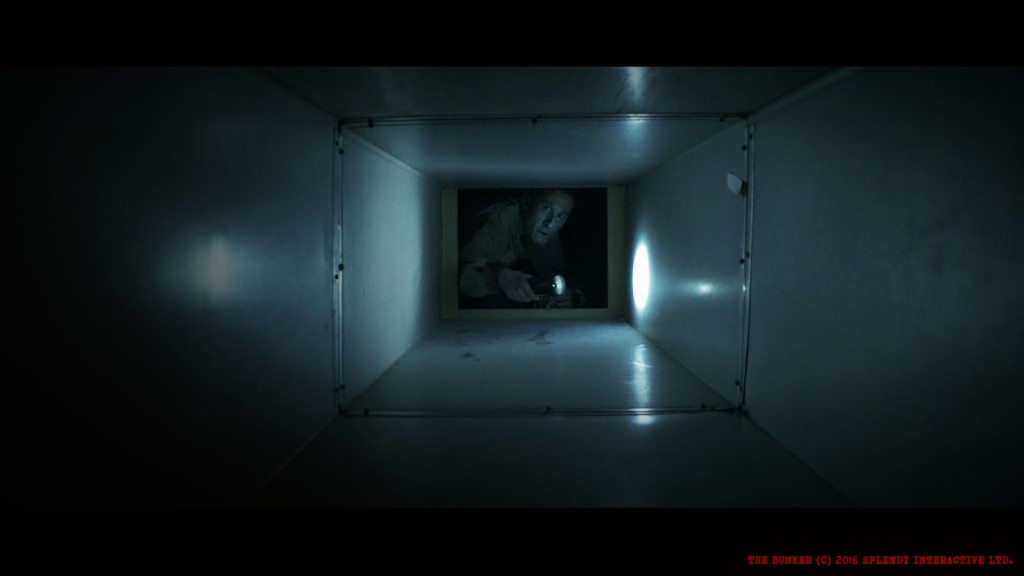
The Bunker, which comes out this year for PC, console and mobile devices, blends filmmaking with interactive gaming for a completely unique experience. Filmed entirely inside a real-life decommissioned nuclear bunker, and starring Adam Brown (The Hobbit trilogy) and Sarah Greene (Penny Dreadful; Assassin’s Creed IV: Black Flag), the horror-suspense game features all live-action footage with no CGI. It’s something that blurs the line between watching a movie and playing a game, which makes it quite the project for developer Splendy Interactive to take on.

Simon Sparks, co-founder of Splendy and producer on The Bunker, sits down with [a]listdaily to talk about the challenges in making and promoting an interactive movie that takes you to the depths of the unknown.
DSC00457
Simon Sparks

What is The Bunker about?

The story is about a boy named John, who was born in the bunker on the day England was wiped out through nuclear war. It’s 1986, and nuclear war has happened, and the day that the bombs hit, his mother, who worked for the government, was rushed down into the bunker and the trauma kickstarted the childbirth. So, as the world ends, he is born.

He lives his whole life in the bunker and we join him 30 years later, and he’s alone. All he knows is his routine (checking radiation levels, inventory stocks, etc.) which is keeping him alive, and he’s very stringent about it. But when something goes wrong, he’s forced to venture deeper into the bowels of the bunker, which his mother told him not to go into. Before her death, she warned him to stay on the level of the bunker, and to never leave. As John goes into the bowels, it awakens suppressed memories and uncovers the dark and hidden past of the bunker.

Through these repressed memories, he is faced with the true reason he is down in the bunker.

Why was The Bunker developed using only live-action footage instead of computer graphics?

Our first game was a live-action survival horror called The Hunting, which is only available on iOS. We filmed the whole thing using an iPhone 4s, which my business partner Allan still has. We basically did a vigilante film with no budget. We had enthusiasm and duct tape, and Allan wanted to explore whether we could make a movie that you could play as an app.

After we released it, we found out that there was a real appetite for something different, and we wanted to do something different as well—bigger and more ambitious. With live-action, you can really capture genuine performances from actors, which will move you in a way that even the best mocap and CG rendering can’t quite capture—the performance of an actor on film. It’s that kind of connection with the characters that we really wanted to explore. The reason we use live-action is for the emotional connection, rather than a kind of gimmick.

We wanted to explore how to connect with players on a different level while using the storytelling and immersiveness that comes with that.

Is The Bunker inspired by FMV games from the ’90s?

It wasn’t intentional. It’s not like we woke up one morning and said, “we’re going to reinvent FMV.” We started off making apps, and for us, it was more that it was more entertainment than a game. But we quickly started to make a kind of noise in the games industry, and it was just through contacting publishers and by sheer chance that we learned whether this kind of thing existed and whether people would buy it. It was from that that we decided to bring the game to PC and consoles, rather than just sticking with apps. That is where more of our real market is.

So, making a sort of homage to FMV was never a consideration, but it just happens that articles are throwing that acronym around. But look at games like Quantum Break replicating their actors as best as possible, while saying, “hey look, we have a Hollywood actor in here.” That’s the CGI version of him, and here he is in the live-action episodes. Then there’s Her Story, which featured Viva Seifert. For me, it’s hard to say that this is FMV. It’s its own sub-genre that’s hard to place.

BUNKER_002 SCREENSHOT

How did Adam Brown and Sarah Greene become involved with The Bunker?

Allan, the director and writer, is a big fan of fantasy and games. He’s the guy who watches the director’s commentary and behind-the-scenes stuff, because he’s fascinated by the whole process. He became aware of Adam through watching a behind-the-scenes bit for The Hobbit. He came across as a really smart guy who was passionate about what he did. Then you start to pay more attention to him in the films, and he’s got a lot of screen time in The Hobbit—way more than we thought he did, and he is a great actor.

We spoke to his agent and did all the normal stuff. When we finally met him, he had this kind of vulnerability that lent itself to the role. We wanted the player to feel protective of the character, John, and he brought it. He was excited about the project and was open to something new.

As for Sarah, she’s just one of those up-and-coming, great new actresses. If you see any of her stuff, she’s just fantastic. It was one of those things where we knew what we wanted, but didn’t know what it was, and it wasn’t until we saw her and look at her varied performances that we realized it. She was also the voice of Anne Bonny in Assassin’s Creed, so she was open to all sorts of different roles.

It also turned out that Adam and Sarah are great friends. They’ve known each other for years, and it was very exciting, because it added to this great atmosphere on set.

All the filming was done in a decommissioned nuclear bunker. What’s the story behind that?

The UK has a number of secret nuclear bunkers, and in 1992, it was deemed that there was no longer a nuclear threat. So, they kind of just left them. Everything that was in The Bunker was left by the UK government in 1992, and it’s a real mixture of the kind of fear during that time.

It took them several months to dig out the side of this hill in the 1950s. They [the government] just turned up at this farm and told them, “We’re having this farm. And if you tell anyone, you’ll be done for treason and go to prison.” So, they took the farm off them and pretended to have a farm while they dug out a bunker that could house 600 people.

Through the ages, it was upgraded with new technologies, like Teletext. There are all sorts of analog stuff there, along with some digital stuff up to the Commodores. It’s amazing, and then you find things like toe-tags. Someone actually had to sit down and think about the stationary needed in the apocalypse.

It’s currently a privately run museum. We were looking for a location to shoot a demo, and didn’t have a story in mind until we found this bunker in Essex. The guy who owned it took us on a tour off the beaten track, so we got to see behind locked doors. Then we just started writing and coming up with stories after we left. That’s when we started talking to publishers, like our friends at Green Man Gaming. We wanted to do a TellTale game, but with movie footage.

The story began to evolve and change as we got writers on board who had worked on Soma, Broken Sword, and The Witcher. They added a different level to it and looked at it from a game point of view. The story became way more grown-up, and we really rammed home the emotional connection. We would not have made this game if we hadn’t found that nuclear bunker. The bunker is very much a character in it.

How will you be getting the word out about The Bunker when it releases?

We’re in an interesting position because this hasn’t been done before. It should be relatively easy to get some attention. When we released the trailer on April 4, it was the number-one marketing asset in the whole of the games industry for that week, above Doom. That’s just awesome.

But we’re now in a position where one would traditionally give people a demo and give streamers half or the entire game so that they can tell everyone about it. However, if you’re watching someone watching a movie, you can’t do that ten minutes into it. You have to be very careful and considered about how you do it. Green Man has a strong streaming community, and it looks like we’re going to give them a demo that’s about 30 to 45 minutes long. We’re trying to make it more of an event so that people will join in from the start.

We’re getting the word out about The Bunker by removing all the “gimmicks,” like how it’s live-action, and getting to the core of what it is. It’s getting people to understand what the game is in one sentence. As long as we can translate that, then I think the guys will have done a really good job. We don’t want to be the game that’s live-action. We want to be the game with a really good story that makes people think. We’re relying closely on Green Man on the initial launch.
BUNKER_003 SCREENSHOT

What are the challenges in promoting a game across PC, console and mobile platforms?

They all have their nuances, and it’s making sure that they don’t conflict that counts more than anything. It goes back to getting to the core message of what the game is. After we get our message across, then it will be up to the consumer to decide where they want it. We don’t want the messages to conflict, so that everybody feels like they’re getting a fair deal, and no platform is particularly better.

The challenges come down to when we release them over the next year. We’re only a small team of people, and there’s only so much we can do at once. So, we’re focusing on PC first, then console, and mobile afterward. We’re hoping to get the mobile version out before Thanksgiving. We’ve got three publishers as well, one for each platform, and so far they’ve all been great and respect one another.

Have you given any thoughts to using VR technology with games like The Bunker?

Yes, we have. It’s very hard to be in the games industry and not have this crop up. It’s so hot right now. Everybody is asking, and everybody wants VR, and it’s great… but really expensive.

VR has its own set of challenges. I’m confident that VR will one day be awesome, but you’ve got to be realistic. The games industry has taken a lot of time and talented people to get it where it is, and I think the same will be true for VR. It’s very delicate at the moment, and I’m worried for it because there’s a lot of hype and expectations are high. Luckily, there’s some really good content and a number of different platforms available. But we need to give it time to find its own way and not judge it too much. There is the worry that VR might go the way of 3D TV.

If VR were a friend, I’d be taking it down to the pub right now and saying, “You’ve got to be really careful. There are a lot of people out there expecting big things of you.”

As for doing what we do, there are so many challenges. How do you direct a story in 360? How do you get across an emotional connection, and how do you know if they’re watching a bit of dialogue? Where does the crew go when filming in 360? You basically have to hide in another room, and hide all the cables everywhere.

VR is on our radar, but it requires patience, time and more people. It can’t be a gimmick. It has to be a driving force in the story.

McDonald’s Goes Virtual With ‘Angry Birds’

McDonald’s has been dabbling with virtual and augmented reality for quite some time now, but its latest experiment will tie it together with the forthcoming Sony film The Angry Birds Movie.

The company has announced a new promotion that ties in with its Happy Meal line, where consumers can buy specially designed boxes based on characters from the film. In addition, inside each box will be a BirdCode that they can redeem to unlock augmented reality-based mini-games, along with select Angry Birds toys.

“Kids today are born into a highly digital world–hence the term, digital natives,” said Omaid Hiwaizi, president of global marketing for Blippar. “We’re seeing younger and younger consumers owning smartphones and expertly navigating them.

“For The Angry Birds Movie, it makes sense that this AR mini-game would resonate well with the expected, younger target audience because of the engaging content, but moreover, because the content is delivered on a smart vehicle that has become second nature to younger generations,” he said. “The challenge for brands in engaging kids, however, is in providing quality content that can compete for the attention on established and powerful game and movie franchises. Nevertheless, just like The Angry Birds Movie brings the popular mobile game to life, this AR experience offers a new way for fans to play.”

This is the latest move by the company into the field of virtual reality. Earlier this year, it tried to bring virtual reality to consumers in Sweden by introducing virtual reality headsets made out of Happy Meal boxes. Most recently, at South By Southwest 2016, the company created a virtual experience, where users could recreate the ability to actually be part of a Happy Meal, stepping inside a box and being able to design it however they please. From what attendees have seen from the presentation, it’s a bit unique—although strange—compared to most other virtual reality experiences. This latest virtual reality experiment will be more for a good cause, and less focused on the Happy Meal.

In addition, it introduced a tour in Europe to help promote its farming practices, in an effort to bolster its hiring of farming assistance, hoping to increase the work force exponentially by 2022. It’s not likely the tour will make its way to the U.S., but McDonald’s could introduce something down the road, depending on its farming needs.

Image Source

How ‘Ghostbusters’ Will Kick Off At Madame Tussauds New York With Hyper-Reality Experience

Located in the heart of Times Square, Madame Tussauds New York brings entertainment experiences to life unlike any other, using wax sculptures to represent prominent figures in music, film, TV, sports and politics. But it’s not all about wax statues, as exhibits like the Marvel 4D Experience (a sensory 3D movie featuring Marvel superhero characters) take the experience to all-new levels using the latest in technology. Attendees can look forward to an even bigger show this summer, as the museum is expected to be haunted by ghosts. So, who you gonna call? Ghostbusters, of course.

In a partnership with Sony Pictures Entertainment, Madame Tussauds New York will be launching the Ghostbusters Experience on July 1 to celebrate and promote the upcoming Ghostbusters movie (releasing July 15) starring Kristen Wiig, Melissa McCarthy, Kate McKinnon and Leslie Jones. Created with the help of the movie producers Ivan Reitman and Paul Feig, the Ghostbusters Experience promises to immerse visitors in the movie world like never before, but it will likely be the Ghostbusters: Dimension “hyper-reality” experience, developed in partnership with The Void, that will steal much of the attention. In this mixed-reality experience, visitors will be able to put on proton packs and sing, “I ain’t afraid of no ghost,” as they zap virtual specters.

Eric Fluet, head of marketing and sales for Madame Tussauds New York, talks to [a]listdaily about the Ghostbusters exhibits, how “busting” makes fans feel good, and why (after 30 years) people still know who to call for all their supernatural elimination needs.

https://vimeo.com/165834238

How did the partnership to create a “hyper-reality” experience come together?

At Madame Tussauds New York, we are always looking for ways to deliver an immersive experience to our guests using new and emerging technologies. Ultimately, we were seeking an extraordinary entertainment experience for our guests to not just see but participate in.

We know that many of our visitors are fans of the Ghostbusters film and many are counting down the days until the new film is released. By working in partnership with Sony Pictures, not only are we able to bring the film to life, but we are also offering a completely unique way for our visitors to immerse themselves into the world of Ghostbusters. In order to make Ghostbusters Experience truly come to life, Sony introduced us to The Void, a company they trusted to be able to create the “hyper-reality” technology needed to round out the experience.

What can audiences expect from the Ghostbusters: Dimension?

Visitors will be given the opportunity to become a true Ghostbuster—they will suit up in an authentically designed Ghostbuster jumpsuit, helmet and proton pack and be invited to enter a NYC apartment to save it from the paranormal. Guests will interact and engage with the physical environment through the lenses of a digital world.

Is there movie content that was created exclusively for the experience?

No, Ghostbusters: Dimension was created independently of the film. Each participant becomes the cast to their very own version of Ghostbusters!

Is the experience focused exclusively on the new Ghostbusters movie, or will here also be content from the original ones?

The Ghostbusters Experience and Ghostbusters: Dimension were both created based on the current 2016 film.

In what ways did Ivan Reitman, Paul Feig and Sony Pictures help create the Ghostbusters Experience?

In order to create a truly authentic Ghostbusters Experience in Madame Tussauds New York, we worked closely with the team at Sony. Everything from costumes, set-design and the creation and styling of figures was discussed in detail as a way to offer a truly one-of-a-kind experience.

What do you think makes Ghostbusters such an enduring franchise, having been around for over 30 years?

At Madame Tussauds, we always try to identify the most culturally relevant people, characters and events to immortalize within our attractions. For over 30 years people have loved the original film, and “who you gonna call” has become a part of American pop culture since the film’s release. We are excited to see the new wave of Ghostbusters enthusiasm with the release of Sony’s 2016 film and look forward to the millions of new Ghostbusters fans that will surely love the film as much as the original!

6 ‘Overwatch’ Promotions That Went Into Overdrive

Fans have been obsessed with Overwatch since it was first announced in 2014. Finally set for release May 24, the game is unique in that it’s the first franchise Blizzard has announced in almost two decades. In order for Blizzard to convince players to buy the game, it had to appeal to both long-time Blizzard fans and an audience that might not otherwise be interested in a competitive shooter. Here are some of the ways Overwatch became a game to keep a close eye on.

The Origin Story

Overwatch was announced at BlizzCon 2014, and not only did it immediately gain attention as Blizzard’s first new franchise in 17 years, but it was also its first entry into the first-person shooter genre. However, this wasn’t the first time Blizzard has broken through into an established field to reinvent it, since it had already done it with the hit MMO World of Warcraft, the collectible card game Hearthstone, and (most recently) the action MOBA Heroes of the Storm. Fans were eager to see how Blizzard would take on the hugely popular competitive shooter genre.

Its cartoon-like graphics (similar to that of Team Fortress 2) and sci-fi superhero setting got people talking, and Blizzard initially described Overwatch as a “pick-up-and-play first-person shooter.” Clearly, the developer was looking to repeat the same success it had with previous games by taking a genre and making it accessible to a wide audience of players, all while maintaining enough challenge for the game to potentially become an eSport.

Then the company mostly went silent about the game until about a year later at BlizzCon 2015, when pricing for the standard “Origins” and limited editions were revealed, along with gameplay for newly revealed characters, and how that game would release either “on or before” June 21. Although additional gameplay trailers and a closed beta were hosted in the following month, Overwatch promotion didn’t hit overdrive until around the start of spring this year.

Rivaling Pixar

Longtime Blizzard fans have long known that the company excels at creating cinematic trailers, as which was further evidenced by the Overwatch “theatrical trailer” that released in December. Little did audiences realize that the trailer really was the prelude to a cinematic experience. The full scope wasn’t revealed until March when the animated short Recall was released with the scripted quality and action one might expect from a Pixar movie. A month later, it was followed with another short called Alive.

Not only did the animations catch the attention of fans, but they worked to draw in players that might not otherwise be interested in learning about a competitive first-person shooter. But fans weren’t the only ones who saw the movie potential for these shorts. Coca-Cola partnered to host a one-night launch celebration event, where all the Overwatch videos could be seen together at select movie theaters across the United States. But fans will have to put the call out to assemble before they have a chance to see the cinematic adventure play out on the big screen. A theater needs at least 100 ticket reservations before the movie will be shown at that location on May 22. Those fortunate enough to get a showing in their area will get to see the superhero characters in the movies before jumping into the action themselves when the game releases on May 24.

Ride With Uberwatch

tracer-blog-900x600

One of the most prominent promotions at PAX East this year was a partnership with the on-demand car service Uber to put Overwatch branded cars on the road to ferry attendees around. Vehicles included a Lamborghini Aventador to represent the character Tracer, a giant four-passenger Ford F650 Supertruck for Soldier: 76, and a pink Polaris Slingshot for the character D.Va. The high-end cars and the Overwatch booth grabbed a ton of attention at the event and helped get the word out about the game in style.

Creating The Perfect Combo

overwatch-002

Blizzard, Taco Bell and Razer launched a promotional partnership in April to help thirsty and hungry gamers get their Overwatch on. The contest gives away prizes that include a free copy of the Overwatch Origin Edition (for any platform of choice) and an Overwatch-themed Kraken Pro gaming headset by Razer. To enter, all players have to do is order a combo or large drink from any Taco Bell in the United States to receive a special cup featuring one of four Overwatch heroes. Then they need to locate the unique entry code on the cup and text to see if they’ve won. Digital codes are also available for free, and drawings for prizes occur every ten minutes. The contest ends on May 18.

Who Is Your Hero?

The real stars of the show are the 21 different playable characters, each with unique abilities and roles. Much of the fun is in figuring out which hero you identify with most. To this end, there is a personality quiz that can be found on Buzzfeed, which helps you choose which playable character best suits you based on your replies to a handful of questions that includes the song that best gets you psyched. So, you should give it a try if you’re having trouble figuring out which character best suits you.

Once that’s done, you can show your support by downloading a set of “Cute But Deadly” avatars, which recently became available, to show off the heroes in your social media profile.

Assembling The Overwatch

As proven time and time again by numerous games, there’s no better promotion than letting players try the game out for free. Overwatch hosted an open beta over the past weekend on the PlayStation 4, Xbox One and PC. However, unlike many other betas, this one includes all the content the full retail release of the game will include, providing full transparency before the game officially comes out. The event, which was supposed to conclude today, was such a success that Blizzard decided to extend the open beta period an extra 24 hours. However, that’s just the start of the pre-launch excitement.

The audio technology giant Dolby recently announced that it’s hosting a $10,000 eSports tournament to be held at the eSports Arena in Santa Ana, California. The Agent’s Rising Tournament, as it is called, will run from May 28 to May 29, and spectator entrance free. The event is Dolby’s first entry into the world of eSports, and firmly answers the question of whether or not Overwatch will be treated as an eSport with a big “yes.”

National Geographic Preps Instagram And VR Video Series

With over 49 million followers, National Geographic has found quite a following on Instagram. It’s managed to become the top media brand as a result, and the No. 13 brand overall for the social media site. So it should come as no surprise that it wants to now increase that exposure with original programming.

As reported by AdWeek, the company confirmed through its NewFronts presentation this morning that it will launch 10 digital series this year, including its first one for Instagram, as well as regular digital channels, and virtual reality.

This expands on the company’s growing social footprint, following its pairing with 21st Century Fox last November. The newly announced move will help it expand even greater than it did last year, where it managed to garner 1.6 billion engagements, according to Claudia Malley, chief marketing and brand officer for National Geographic Partners.

In regard to expanding its reach on Instagram with original programming, Malley noted, “We get super-excited by the potential of social and the ability it gives us to connect with consumers and bring them along for the journey. … Now that Instagram is tracking views, it’s crazy. We have 15-second video clips getting three million views.”

The Instagram series is called MoviNG Pictures, following photographers around the world as they capture experiences for fans to be thrilled by. “You’ll travel the world with our photographers and have an intimate experience with them,” said Malley. It will make its debut this August during the National Parks’ centennial.

Other series are also in the works, via digital short-form, which will focus on science, travel and adventure, including a series called Before Mars, which will air on National Geographic Channel in November; Wild_Life, a series focusing on wildlife filmmaker Bertie Gregory as he seeks out coastal rain wolves in the Pacific Northwest; Get Out: A Guide To Adventure, which follows adventure experts as they explore the outdoors; and NG Gold, a series that focuses on “incredible moments” from nature, including a shark in an underwater volcano.

Virtual reality will eventually play a part with the company’s programming as well with NG VR Studios. “There’s a lot of folks launching VR, but what makes National Geographic VR different is that this is going to be in the hands of folks in the field,” noted Malley. “So we’ll be able to put our global community literally in the field with our explorers and scientists and storytellers. They’ll be on expedition with us: in King Tut’s tomb, or underwater, or looking into a volcano.”

So far, the company’s Facebook VR videos have gained a huge audience with over 30 million views.

Look for more details on National Geographic’s slate, as well as official launch details on its many series, in the months ahead.

6 ‘Captain America: Civil War’ Promotions That Blew Fans Away

This is the year for epic showdowns, as Captain America: Civil War hit theaters this weekend. In it, the iconic superheroes Captain America (Chris Evans) and Iron Man (Robert Downey Jr.) gather their forces and battle it out in a war over ideologies. With characters that span multiple franchises from the Marvel film universe, this is one superhero throwdown that cannot be missed. Here is how both sides won support for the movie.

Trailers Win Hearts and Minds

You could argue that Captain America: Civil War won fans over with its first trailer when it hit the scene last November. Although the movie is technically a follow-up to Captain America: The Winter Soldier, this was actually a culmination of three different Marvel franchises that was years in the making: Captain America, Iron Man, and The Avengers. were coming together to battle each other over what happened in previous films, with friends becoming foes, and it wasn’t clear that everyone would come out alive. The trailer, which showed a gravely wounded War Machine (Don Cheadle) sparked a fierce internet debate over the fate of the character. It was the kind of speculation that the movie studio and actors were happy to stoke at talk shows and interviews, even if they couldn’t comment directly about it.

Although the Super Bowl 50 trailer was impressive, the one that really caught the attention of Marvel fans came out a month later, when Spider-man was shown for the first time. It was long speculated that Disney and Marvel were in talks with Sony (which currently owns the Spider-man license) to “borrow” the wall-crawler for Civil War, but having the trailer confirm that it was happening got fans cheering.

It turned out that Spider-man wouldn’t be the last big character reveal, as the inclusion of Ant-Man (Paul Rudd) was revealed at the MTV Movie Awards in April, where a scene showing him as the “new recruit” was shown. Fans were wondering whether the character would appear as an Avenger, especially given how the Ant-Man movie concluded, and they were not disappointed.

Dueling Twitter Accounts

Captain America and Iron Man use more than their fists to fight. The conflict was taken to social media, where the characters used their Twitter accounts to win fans and supporters over to their side. Although both accounts share many of the same content, they’re individually geared to show support for one of the characters before they head out to theaters to see who the ultimate winner will be.

Adding to the fun are sets of emoji, so that fans can show their support (or simply enhance their posts) with individual characters from the film.

Fans Take Sides

One of the most impressive social media promotions done for Captain America: Civil War also comes via Twitter. Actors from the movie pre-recorded personal messages to fans who showed support for their favorite team using either the #TeamCap or #TeamIronMan hashtags. These messages used popular names so that the messages, which either congratulated them or showed disappointment in their choice, had a personalized feel to them.

Civil War Goes Global

Although the movie features Captain America, the popularity of the Marvel superhero universe spans the globe. In an apparent battle of one-upmanship, actor Robert Downey Jr. paid a visit to Paris, France. There, he used his Iron Man decorated smartphone to manipulate the lights of the Eiffel Tower so that they changed color and position to show what side the “Iron Lady” stood on.

Not to be outdone, Team Cap fired back with a light show of its own. Chris Evans, Anthony Mackie and Sebastian Stan attended an event hosted in Singapore and it was complete with a fireworks display and massive projections of the superhero team shown on the tower and structures of the Marina Bay Sands Hotel, as a crowd cheered Team Cap on.

Pizza Hut Feeds Fandom

Pizza-Hut-launches-Captain-America-Civil-War-themed-promotion-678x381

Supporting a side is hunger-inducing work, but an order from Pizza Hut should be enough to fix that. In a promotional partnership between the fast food chain and Captain America: Civil War, pizza boxes will be adorned with artwork featuring either Captain America or Iron Man, which coincides with the inclusion of Stuffed Garlic Knots on the $5 Flavor Menu. Although it’s unclear whether you can request a specific box cover, you can’t go wrong with either one.

Additionally, Pizza launched a Civil War themed digital hub, which features exclusive behind-the-scenes content, a quiz game sweepstakes, and (of course) a chance to choose your favorite side.

A Patriotic Sing-Along

One of the stranger promotions for Civil War comes from Chris Evans’ YouTube account yesterday. Working with Mashable, the actor begins by talking about his character, Captain America. He is then joined by fellow actors from the movie, including Robert Downey Jr. (Iron Man), Anthony Mackie (Falcon), and Elizabeth Olsen (Scarlet Witch), who hum a battle hymn while Sebastian Stan (Winter Soldier) wanders across the background. It’s off-the-wall, patriotic, and sure to get fans psyched for the movie, which is out in theaters now, and pre-orders for the digital home release are already available on the Microsoft Store.

Creative Mobile Revs Up With ‘Fetty Wap Nitro Nation Stories’

Adding superstars to mobile games seems to be a key to success, evidenced by the millions of dollars generated by hits like Kim Kardashian: Hollywood. Creative Mobile decided to try to catch the same kind of fame when it released Fetty Wap: Nitro Nation Stories this week, working alongside the developers at MOOR Games to connect the fast-paced street racing experience with an award-winning hip-hop artist.

“Fetty Wap has great taste in cars, that’s what makes him so perfect for this game,” said Creative Mobile co-founder Vladimir Funtikov in the press release earlier this week. “We’re really excited to have such a stellar hip-hop star partnering with us, he’s got talent and a great team behind him.”

To gain more insight on Fetty Wap’s involvement with the game, and what players can expect from the racing experience, we chatted with Artur Grigorjan, Creative Mobile’s head of marketing.

Grigorjan

What is the game about, and how did Fetty Wap got involved with the project?

Fetty Wap: Nitro Nation Stories is a story-driven racing adventure game that features hip hop sensation Fetty Wap, his partner Monty and the RGF Productions team. We were approached by Moor Games, who was searching for a studio with experience in the mobile market, to help bring their vision of a branded Fetty Wap game to life. We’ve fit the entire game around Fetty Wap, with the soundtrack featuring songs like “Jugg (feat. Monty),” “Trap Luv,” “My Way (feat. Monty),” “Boomin,” and “Monty-Overnight (feat. Fetty Wap),” and the ability to use Zoo cash as in-game currency, and the chance to win real rewards signed by Fetty Wap and Monty.

You’re offering rewards to players who take part in the game. How does that work?

In order to give the game a personal touch, we’re giving away real-world merchandise autographed by Fetty Wap and Monty, including T-shirts, concert tickets and other paraphernalia. Each week a top player in the Underground Tournament is eligible to receive a unique promo code. All they have to do is fill in their shipping information and send it to us. Players even have a chance to win a personal meet and greet with the guys. There isn’t any other celebrity game doing these kinds of things.

How do players interact with Fetty Wap in the game?

Fetty Wap is the best friend of the player, he helps to drive the game’s plot and assists you throughout the game. Monty runs the “black market” where players can upgrade their cars with after-market parts. Later in the year we’ll have seasonal tournaments where players can race against Fetty Wap, Monty and the guys from RGF Productions.

How many cars will players be able to interact with? 

In total there are over 30 street and race cars to choose from (Alfa Romeo, BMW, Cadillac, and so on). All models are licensed from real-world brands. Players will start with the starter pack of cars, and as they progress, they will be able to win or buy new cars and upgrades.

Do you think the presence of celebrities in mobile games help give them the proper push they need to be popular?

It’s an ideal situation for both sides. The mobile games market is fiercely competitive these days, so brands and celebrities are bringing their audiences to games who are hungry for players. At the same time, mobile games offer celebrities and brands a new medium to reach their audiences and target demographics worldwide. Fetty Wap and his team are rising stars in the hip-hop world, and we’re bringing them to an international platform in 13 languages. At the same time, we’re gaining major exposure in the U.S. markets and building partnerships for future projects.

What kind of updates can we expect from the game in the weeks ahead?

We’ve got lots of planned promotions, weekly events and seasonal tournaments coming up later this year with some huge prize giveaways.

Wistia Launches 360 Video Platform For Businesses

Wistia has added 360-degree video support to its business video platform, as well as a Wistia 360 iOS app. The company works with clients such as Amway, HubSpot, MailChimp, Sephora and Tiffany & Co. to help them connect with customers and employees. Wistia has also introduced new heatmap technology designed for analyzing how consumers view 360-degree video.

Chris Savage, CEO and co-founder of Wistia, explains what 360-degree video is already opening up for businesses across various verticals.

How does Wistia currently work with the 200,000 businesses across 50 countries with its current video platform?

Wistia is a video hosting solution and marketing tool for companies that want to share content on their websites and grow their audiences. We share detailed video analytics to improve their production and content strategy.

How much demand was there from these companies to create and host 360-degree content?

This is a relatively new space for our typical customers, but we heard rumblings here and there. More than anything, we saw the potential for businesses to have a completely different type of conversation using 360. We felt empowered to create this type of content, and believed our customers could too.

We’ve also had early interest from video production agencies. They’re getting requests from their clients that are ready to push the envelope with 360 content. There is the expectation that more and more businesses will want to take advantage of 360 because of its ability to engage with viewers in a way that sets them apart from their competitors.

How easy is it to integrate 360-degree video through Wistia?

Three-sixty videos are treated the same way as any other videos that a business uploads to Wistia. It’s a simple file upload and a single checkbox to indicate that you’re sharing a 360 video. Once the video is in Wistia all of the branding and lead generating customizations can be applied.

There’s been early research that 360-degree video content is currently more engaging than traditional video. How will your app and platform allow companies to track and analyze this engagement?

Our 360 video player is recording individual viewing sessions and will provide companies with a heatmap that indicates the parts of the video each viewer watches, skips, etc. Since 360 video allows the viewer to navigate around a space, we needed to track an additional dimension. Our 360 video analytics also allow companies to retrace their individual viewer’s path throughout the video and overlay an infrared-style heatmap over the video to see areas of the video that the entire audience found most interesting.

How do you see this technology impacting the way 360-degree video and marketing content is created moving forward?

With a medium as new as 360 video, analytics are critical to understanding if your message is resonating and if your audience is actually paying attention to the parts of the video you’re trying to highlight.

Wistia’s spatial heatmaps give marketers the insight into which parts of the video are attracting the most attention and the parts that viewers miss entirely. That information should be used to inform future video production and content strategy.

What separates your platform from more consumer-focused platforms such as Facebook 360 and YouTube 360?

Wistia’s offering is really focused on helping businesses share 360 content securely and providing an excellent experience for viewers. Unlike with YouTube and Facebook, Wistia allows you to control where your videos can be embedded, customize the video player to match your brand, and then measure every interaction with the video right down to the user level. Wistia’s 360 heatmaps provide tracking at a far more detailed and actionable level than any consumer platform, meaning businesses can determine exactly where people are looking throughout their 360 videos, and use this data to make smarter marketing decisions.

Are there any examples of businesses already using your 360 platform or app?

Automotive Advertising Group in Florida created 360 walkthroughs of available cars at dealerships and the specific features in cars.

Bottle Rocket Media in Chicago created interactive 360 content for clients, like a 360 cocktail walkthrough with a bartender.

Are there particular industries or sectors that are early adopters of 360-degree video?

We’re definitely seeing real estate, live action events (NBA, surfing, etc.), journalism (interactive storytelling), and the travel industry (tours of monuments) adopt 360-degree video first.

What impact are all of these new consumer-friendly 360-degree cameras having on marketing in this new space?

The impact that the consumer-friendly 360 cameras are having is huge. Expectations are starting to change and businesses are realizing they have an opportunity to get in front of early adopters if they jump on 360 now.

How big a role do you believe 360-degree videos will play in marketing and the way businesses interact over the next five years?

We’re already seeing the huge investments that companies like Google and Facebook are making to support 360 video and virtual reality content. They’re betting big on this technology, and we feel just as confident that it is going to play a huge role in marketing in the next five years. There is a lot of potential for companies to connect with their audience in a more tangible way with 360 video. We created the 360 video player to support those types of experiences. By inviting viewers into a story or experience, they’re having a more memorable interaction with a company. Businesses increase their brand’s recognition by building a more engaged audience.

How has the influx of smartphones and mobile VR headsets such as Google Cardboard and Samsung Gear VR impacted the decisions for companies to enter this 360 space?

360 video is an entirely new medium. Consumers are walking around with smartphones and laptops that let them easily watch 360 videos. We’re just a few years away from a time when people also walk around with the headsets their phones will attach to, which will make 360 truly immersive. As this shift occurs, marketers that don’t think about and invest in communicating through 360 videos will be missing an opportunity to find their core audiences at their most engaged moments.


Turtle Beach Talks About OpTic Gaming ESports Partnership

Earlier this week, headset manufacturer Turtle Beach announced a major new eSports partnership with the popular competitive team OpTic Gaming to promote its new Elite Pro Headset and gear at upcoming events. It’s a major partnership that showed how Turtle Beach was more than ready for the next level of pro gamer support.

To get a better idea of what led to the partnership, [a]listdaily talked with Turtle Beach’s communication director, Maclean Marshall, about what it meant for the company, and what it could mean for future eSports partnerships down the road.

Did the growing popularity of eSports prompt Turtle Beach to make a more advanced line of products?

Absolutely. A few years back, as eSports was gaining more and more momentum and popularity, Turtle Beach took a hard look at the audio gear the teams and players were using at the time, with the goal of creating something more uniquely tailored to this specific audience of pro gamers. We spent three years developing the Elite Pro headset, Tactical Audio Controller and accessories, including deeply researching how to build a better headset in terms of both design and performance, garnering feedback from pro players on what they’d like to see in an eSports focused headset. And then we spent nearly the last year refining everything to make sure the Elite Pro delivered on that goal.

What does your partnership with OpTic Gaming mean for eSports partnerships down the road?

Yeah, we’re really excited about our new partnership with OpTic Gaming, and it certainly speaks volumes about the Elite Pro. Hector and the OpTic guys wouldn’t have jumped on board with us if the Elite Pro didn’t meet or exceed their desires. As for more partnerships down the road, it’s something we’re definitely continuing to look at, as well as many other companies (gaming or non-gaming). ESports is big, and as this space continues to grow and become more mainstream, I think we’ll continue to see more teams and players looking for strong partnerships like the one we announced today.

Maclean

Will Turtle Beach products continue to be featured with tournaments?

I sure hope so! One of the things that a lot of people don’t know or sometimes forget is that Turtle Beach has been around for a long time. Last year was our 40th year in business. A decade ago, Turtle Beach was the first to create console gaming headsets which allowed gamers to start talking to one another when playing multiplayer, and today multiplayer has evolved into the world of competitive gaming. Turtle Beach has always been a part of the competitive gaming space, and now with the Elite Pro our hope is that we will see even more teams and players wearing Turtle Beach when they compete.

What are the expected prices and release dates for the Elite Pro gear?

Our expected release timing for the Elite Pro headset and accessories is this summer. We’ll announce more specific availability details in the coming weeks. Price-wise, the Elite Pro Tournament Gaming Headset is $199.99, the Elite Pro Tactical Audio Controller is $199.99, the Elite Pro Tournament Noise-Cancelling Mic is $39.99, and the Elite Pro A.M.P for PS4 and Elite Pro Tactical Audio Adaptor for Xbox One are $39.99 and $59.99 respectively.

The headset can be pre-ordered on the official Turtle Beach page, starting May 24.

6 ‘Doom’ Promotions That Raised Hell

No game is has made as deep of an impression on the gaming world as Doom. Originally released in 1993, the game that famously popularized first-person shooters and PC gaming with its gore and over-the-top violence, which practically made id Software a household name. Now Doom is ready to make a big comeback, this time published by Bethesda Softworks, known for wildly successful games like Fallout 4 and the Elder Scrolls series.

Doom, which will launch on May 13, returns to the original roots of the game with extreme violence, a variety of weapons that range from chainsaws to giant energy guns (the BFG), fearsome demons, and intense multiplayer action. But it would take more than the name alone to get fans ready for the carnage. These are some of the main ways Bethesda got players ready for an all-new blood-soaked battle.

Wolfenstein Leads The Way

Bethesda and id Software played early promotion of Doom very close to the chest during its early promotion. Doom‘s first details were revealed when the publisher announced that entry into the closed beta would be included with every pre-order of Wolfenstein: The New Order, which was fitting, considering how Wolfenstein 3D helped establish id’s reputation in the ’90s before the original Doom released. Confirmation that a new Doom was just on the horizon was enough to stir early excitement, and it likely helped boost sales for The New Order, but there was no information on when the closed beta would take place. Players might have been left with more questions than answers, but this would work to the game’s benefit.

Lurking In The Shadows

Fans were given a small taste of what to expect with a short-but-sweet E3 trailer in 2014, which actually showed very little, but was enough to generate a great deal of excitement. As it turned out, the trailer was an appetizer, with the main course to be served at QuakeCon a month later. However, Bethesda announced that the QuakeCon reveal of Doom would be exclusive to those attending the convention, and it was true to its word.

Attendees were treated to a first-look at the gory game, while those viewing via livestream were blacked out. They were expressly forbidden to record the Doom reveal, so everything that people outside the convention would learn anything about the video, including how it featured a demon ripping a character’s arms off, until attendees took to social media to talk about how they were comletely blown away. Keeping Doom exclusive to attendees, comprised mainly of fervent fans, did wonders to generate hype for the game through word-of-mouth.

Doom Steals The Show

Doom shed its mystery in 2015, when Bethesda hosted its first pre-E3 briefing to showcase its upcoming games. Although there were many surprise announcements and reveals, none matched the same kind of energy Doom had when it took the stage. Bethesda had teased the gameplay reveal with a 12-second trailer released weeks before, but it did little to prepare fans for the all-out action that would be seen.

To be sure, Doom would feature plenty of violence, signature weapons like the chainsaw and double-barreled shotgun, along plenty of demons to shoot or tear apart with your bare hands. Fans were clearly ready to get in on the action, which is why pre-orders had already begun on Steam and at other retailers, even though it would be almost a year before the game’s released.

Day Of Doom

In March, in the days leading up to the Doom closed beta, Rooster Teeth worked with Bethesda to host Day of Doom, an event where the popular YouTube stars teamed up with real athletes to go head-to-head in an all-out live 6v6 competition.

The four teams were led by:

  • Antonio Brown and Justine Ezarik (iJustine)
  • Thierry Henry and Alia Shelesh (SSSniperWolf)
  • Rob Gronkowski and Michael Jones (Achievement Hunter)
  • Chad “OchoCinco” Johnson and Adam Kovic (Funhaus)

Some of the world’s greatest athletes had a chance to show-off their gaming prowess while showcasing Doom‘s multiplayer features. It was the perfect event to get fans psyched for the game.

Fight Like Hell

Nothing makes a bigger impression than letting players try a game for free. The Doom open beta took place on April 15-17 for the Xbox One, PlayStation 4 and PC, giving players everywhere a chance to jump in and get a taste of the multiplayer action. Although the open beta weekend was limited to multiplayer matches, it included all the modes and many of the maps. Players interested in the single player content could learn about it through livestreaming events and trailers. This would be one of the final big pushes to win fans over before the game was set to release less than a month later. To sweeten the deal even more, Bethesda recently announced that a free copy of

To sweeten the deal even more, Bethesda recently announced that a free copy of Wolfenstein: The Old Blood (a prequel to The New Order) would be included with the pre-orders of Doom on Steam, further stengthening the connection between the two franchises.

Speed Demon

It’s a well-known fact that you need excellent speed and reflexes to win a competitive Doom match, but Bethesda (in partnership with Schmidt Peterson Motorsports) will be taking that concept to a new level. A Doom care will premiere at the Angie’s List Grand Prix of Indianapolis on May 14, which is the day after the game’s release. The No. 7 car is being driven by SMP Racing driver, Mikhail Aleshin, and will also compete in the 100th Running of the Indianapolis 500 on May 29.

“We couldn’t imagine a more perfect sponsorship fit,” said Pete Hines, vice president of PR and Marketing for Bethesda Softworks, said in a press release. “Doom is all about pushing forward with incredible speed. We’ll all be cheering on Mikhail and the Schmidt Peterson Motorsports team as we celebrate the game’s launch.”

The Doom IndyCar certainly gives the term, “hell on wheels” a whole new meaning.