‘Angry Birds Movie’ Director On How To Translate Games To The Big Screen

First-time director Fergal Reilly, who teamed up with co-director Clay Kaytis on The Angry Birds Movie, is a self-proclaimed gamer. He believes that experience helped in transitioning the popular video game characters into a Hollywood animated feature film.

The Angry Birds Movie is already a hit for Rovio Entertainment and Sony Pictures Entertainment, which distributed the $73 million CGI movie. After opening with $38 million domestically, beating out Captain America: Civil War, the movie earned $18 million over the Memorial Day Weekend and has made over $223 million worldwide. Rovio also has a new hit Angry Birds Action! mobile game, new movie merchandise, and a slew of tie-ins helping to cross-promote the big screen and interactive adventures.

Reilly talks about the synergies Rovio brought to the table, including a 360-degree video from McDonald’s, and explains how his own background as a gamer impacted the Hollywood adaptation in this exclusive interview.

What are the challenges of turning a video game into a movie? It’s something Hollywood has been doing for a long time, but hasn’t had the success that we just saw with The Angry Birds Movie at the box office.

It’s about audiences’ expectations. The original source material, if it’s a video game, has a very enthusiastic and knowledgeable fan base, whatever property that might be. It’s a big challenge for any studio to adapt something that’s a translation of a property from one form into another. It’s more of a transformation than it is a translation, and every filmmaker who has to do that, be it Duncan Jones on Warcraft or myself and Clay on Angry Birds, has to set themselves free of the source material a little bit and allow it to be a transformation rather than just a translation. We were lucky on the Angry Birds Movie because there is so little narrative with the actual app that Rovio gave us a huge amount of freedom to create the type of comedy that we were trying to create and blue sky all the characters in that world from the game and create comedic personalities for those characters. The characters in the game don’t have any personality. They’re just icons, whereas our job—and I think any animation director’s job—is to create really funny, appealing characters that the audience is going to root for.

Rovio has done a lot of short Angry Birds Toons over the years. Did that help with the film in any way?

There were a lot of toons that they’d done, like the Piggy Tails, but they’re very simple and short. For the movie, we needed to create personalities with a lot more definition and a much more sophisticated type of comedic personality. It was a huge relief when I saw that John Vitti was writing the script because I knew that he was going to certainly elevate the type of comedic personality that you might have expected from something as simple as a video game app.

Hollywood has done a lot of live action adaptations of games. Does going the CGI route like with The Angry Birds Movie seem a better avenue for success?

It’s a graphics familiarity to the characters that the audience really likes. It’s not a big jump for the audience to recognize the characters that they love and with Angry Birds that’s because they were cartoon characters. They’re really particularly suited to animation because when you actually play the game, it’s almost like a little cartoon game that you’re playing. Other video game properties have a more difficult time with that because there’s such amazing graphic reality to games like Assassin’s Creed and The Last of Us. The audience is very familiar—and they have a relationship with—those characters in the games. But the trick is, like with any adaptation, to allow it to become something else. With Angry Birds it was easier in that sense because, in the original game, the characters live in an animated environment, so it’s not as big a jump to take it into an animated forum.

The Angry Birds Movie also has the tie-in Angry Birds Action! game. What do you think of that kind of synergy?

The great thing about our movie was that it was made entirely by Rovio, which is very unsual. So from very early on there was this internal synergy between what we were doing on the movie and the game creators. Rovio knew from very early on that it was a great advantage to be able to bring the movie to the world, and also create a game property that is almost a partner to the movie.

McDonald’s has released an Angry Birds Movie 360-degree video and we’re seeing a lot of VR out there. What do you see that medium opening up creatively for directors like yourself?

We’ve only scratched the surface. Being a big game player myself and loving games, it’s interesting because when you play games you’re automatically—as a player—part of the narrative of the concept of the game. With virtual reality, it’s going to be a really interesting challenge to filmmakers, but also to the audience, as to how to insert yourself as a viewer into the VR narrative. The trick to figuring this stuff out is that, with VR filmmaking, the audience isn’t a passive component. Just like in games, you’re an active participant in the narrative. The challenge is how to crack the code on what the audiences’ participation in that new VR environment will be because it can’t be passive. It has to be active.

https://youtu.be/UdlMzR5vXtU

What impact do you feel your own gaming background has had in being able to bring a film like The Angry Birds Movie to life?

Lots of different things, like the way you think about creating the experience for the audience, the way you think about making it immersive so that the characters feel like they really belong in that world, and how you block scenes in that world. That’s all been influenced by how we block the action in Act III. That was all influenced by my video game experience. We were very conscious of making it a really immersive experience for the viewer. We wanted to create the best possible idea of what the game could translate to in terms of the action of the game translating into the action of the movie. We wanted it to be a really immersive experience for the audience. We even brought our 3D supervisor Todd Napier on very early in the process to discuss and explore how to make that happen.

Even as a game player, audiences who play games have a much more sophisticated awareness of how scenes can be blocked and they’re not as limited in the way a narrative can unfold visually. If I’m playing Assassin’s Creed I love playing around with the camera to try and add different perspectives, even though it’s one focal lens, basically. I love the fact that you can really play with your perception of what’s happening in the narrative.

How ‘Galaxy On Fire 3: Manticore’ Will Set The Mobile Gaming Universe Ablaze

With the Galaxy on Fire series, mobile gamers take to the reaches of deep space to trade or combat other ships in the name of fame, fortune and adventure. Featuring beautiful, high-end graphics, and an open world where players are free to pursue the life of a mercenary, trader, smuggler and more, it’s little wonder why the series has so many fans. The series will soon offer an all-new adventure with Galaxy on Fire 3: Manticore, which will put players into the roles of hard-hitting bounty hunters going after the galaxy’s most wanted criminals in a hazardous fringe world called the Neox Sector. The game is expected to release later this summer and is currently taking closed beta sign-ups.

A prequel called Galaxy on Fire 3: Manticore Rising, which introduces players to the story, setting and characters, launched exclusively for Apple TV last year. Fans can also get a taste of what Manticore will have to offer mobile gamers by checking out the recently released a 360-degree trailer that spectacularly details what it’s like to play the game.

Michael Krach, head of studio at Deep Silver FISHLABS, talks to [a]listdaily about what it takes to navigate through the mobile gaming space.

GOF3_by_DeepSilverFISHLABS_(Headshot_MichaelKrach)
Michael Krach, Deep Silver FISHLABS head of studio

What is Galaxy on Fire 3: Manticore about?

Galaxy on Fire 3: Manticore is a mobile space shooter with high-end 3D graphics and intense action gameplay. It takes place in the Neox Sector, a newfound El Dorado on the outskirts of known space. There, the players take over the roles of hard-hitting bounty hunters dead-set to take down the galaxy’s most wanted criminals.

By establishing a connected online space that is constantly in flux, Galaxy on Fire 3: Manticore puts an entire universe in your pocket. And although that universe will already be huge by the time the game launches, it will be constantly expanded in the months and years to come. We really have big plans for this game!

What inspired the creation of the 360-degree video trailer?

One aspect of Galaxy on fire 3: Manticore that we are particularly proud of is the complexity and vastness of the levels. The space stations and other structures are not only gigantic in size, but also organic parts of the orbits they are located in. You can approach them, traverse them and even dash through their ramifications. And while you do so, you discover a heap of details.

For us, 360 videos are the perfect medium to put our opulent level designs on display—since the viewers can change the camera angle at whim, they can explore the surroundings meticulously.

How close is the trailer to playing the actual game?

So far, all 360-videos we have seen of video games showed “artificial” pre-rendered scenes. They are fun to watch, but they do not give you an authentic impression of the actual gameplay. Our video is different. Nothing in there is staged—we maneuvered the spaceship by hand and the enemies behaved as they would in a normal play session.

Okay, we used an emulator on the PC and not a smartphone to record the video’s source footage. But still, everything you see in it is 100 percent as it is in the mobile game—the graphics, the physics, the sounds, the level, the mission and so on.

Galaxy on Fire: Manticore Rising is currently an Apple TV exclusive. Will it eventually come to other platforms?

As the prequel to Galaxy on Fire 3: Manticore, the Apple exclusive Manticore Rising introduces the new game world and gives its players a first impression of what the “main game” will look like. But in terms of scope and depth it is much, much smaller than the upcoming mobile app. We are very proud that Manticore Rising made it onto an all-new gaming platform as a day-one title. But we do currently not have plans to port it to additional systems. Our focus lies on the release of Galaxy on Fire 3: Manticore.

GOF3_by_DeepSilverFISHLABS_(Screenshot02_HomingMissiles)

What are the challenges in promoting a game in the increasingly crowded mobile market, even one that’s as expansive as Galaxy on Fire?

You said it yourself: The mobile market is incredibly crowded and getting your app seen by a significant amount of people is a tough nut. With Galaxy on Fire 3: Manticore we have an established IP that stands out, and after more than 10 years in the business, we know our trade very well. These factors help a little, but they are no guarantee that the app will take off.

Since we cannot compete with heavyweights like Supercell or Machine Zone [MZ] on the paid UA market, we constantly have to challenge ourselves to find alternate ways to create buzz and eyeballs for our titles: Tap into new channels, show exceptional assets, offer genuinely new gameplay, interact closely with our community and always give 120 percent rather than 95.

Have you given any thought to developing Galaxy on Fire for mobile VR devices such as the Samsung Gear VR or the recently announced Daydream platform?

Of course, we keep a keen eye on the market and follow new developments, such as VR, with great interest. VR definitely has tremendous potential, but at the moment we have no concrete plans to use it in the next Galaxy on Fire game.

Lucid VR Founder Explains How New Studio Is Helping Brands Navigate VR

Lucid VR has a $400 consumer 180-degree 4K camera launching this December, but the company is already working with brands such as Sephora and schools like UC Berkeley through its new Lucid Studios. The new commercial virtual reality production service arm of Lucid VR was announced today at Computex in Taipei. The studio is filming 180-degree and 360-degree video content with the pocket-sized LucidCam, which made its debut recently at the NAB (National Association of Broadcasters) trade show in Las Vegas.

Lucid VR recently raised $2.1 million to ramp up its manufacturing and shipment operations, advance its computer vision technology, and build distribution partnerships. The company also signed a partnership agreement with Wistron Corporation, a top five global ODM (original design manufacturer) based in Taiwan.

Han Jin, CEO of Lucid VR, explains how his new company is helping brands navigate the new virtual reality marketplace in this exclusive interview.

How does this camera differ from the wave of affordably priced 360-degree cameras we’ve seen announced since CES this year (once you add the two cameras together for 360)?

All the 360-degree pocket-sized VR cameras are all 2D and 30 frames per second, which means in VR you will be looking only at a flat screen. Also 30 frames per second sets you far from what your mobile phone runs (60 frames per second) with Google Cardboard and VR headsets run (up to 120 frames per second). The frame difference can cause delays in frame updates on the screen and make videos look choppy.

The main challenge for anyone shooting in 360-degrees today is post-production editing and stitching. What’s that process like for this camera?

360 3D’s challenge is post production, whereas LucidCam processes in real-time. No post, but instantly capture, process and view.

Why did you choose to focus on 180-degrees as a base instead of 360-degrees?

Stereoscopic 3D has the best depth in 180-degrees because lenses are perfectly aligned like the human eyes. And due to not having stitching seams, the viewing experience is smoother.

Why did you decide to launch Lucid Studios?

Lucid Studios gives us a great way to work with partners and beta testers early on, since hardware takes lots of time to manufacture. By staying continuously engaged with the content creation side, we can identify challenges early, improve our technology faster, and educate the market for LucidCam.

What does this company open up for brands interested in virtual reality?

Lucid Studios opens up opportunities for partners and brands to experiment fast in VR content creation. Easy content creation and faster turnaround times lead to more content, more iterations, more learning, and ultimately allows them to identify what resonates with their audience and generate more value for them.

How are you working with Sephora and other brands through Lucid Studios?

Some of this work is confidential so we can’t go into details about all of our clients, but we worked with Sephora for their store launch in San Franciso and we’re working with other retailers on product placements, store outlays, and training scenarios.

Since some of these VR projects are directed for internal and some for external audiences, we provide the experiences either through our app—but locked from public view—or through the brands’ websites, or on YouTube with our web plug-in.

We even brainstormed about use cases for users to capture their room and place IKEA furniture into it to see the fit and size before going to buy the actual furniture.

How do you see things evolving in this space?

We’ve thought about game development applications. Instead of developing a 3D environment using code, you could capture real 3D environment and use it for rapid game development within minutes.

There are way more opportunities and valuable applications than what we can imagine, but the depth and peripheral spatial caption does not only provide distances, object sizes, and position, but also a representation of how we humans see the world—moving away from the flat images and videos of the past.

How big a focus will retailers and brands be for Lucid Studios?

Brands and retailers occupy a higher percentage of our focus as of now, but we also work with universities, individual producers, and many other content creators. As long as we are aligned and create real tangible value together through VR, we are open to working together.

How big a market do you see VR becoming for brands?

Right now brands have been one of the early adopters of VR for marketing and promotional content. However, there is so much more value to capture through VR content. If content production takes so much time and resources, then it will take forever until the market becomes big. With Lucid Studios, we believe in accelerating that learning and taking the market to the next level.

How are you working with UC Berkeley?

The UC Berkeley Department of Recreational Sports is using Lucid Studios to create five or six sports team videos using the VR from a first-person perspective. Lucid Studios is also creating a UC Berkeley campus tour in immersive VR for the department. These videos will all be introduced at Caltopia event at Cal in August.

What impact do you see LucidCam having on the Hollywood and television industries?

It can become a low-end disruption for expensive Hollywood productions, making it way more agile to film and produce content for VR. Last year, we won the Lumiere’s Award from the Advanced Imaging Society at Paramount Studios for new technologies to disrupt the entertainment industry. We were right next to Nokia and JauntVR.

We’ve seen Hollywood studios work with Nokia Ozo and now IMAX in the VR space early on. What opportunities does Lucid open up for filmmakers?

“Found footage” is a great way for filmmakers to tell a story from a first-person perspective and build up tension in a movie, since they can frame and keep things out of the viewers eyesight.

With 180-degree 3D, you can enable a totally different way of VR content storytelling, similar to what previous filmmakers have done in movies such as Hardcore Henry and Project Almanac.

Hollywood has stuck with short format content to date. What length of content is Lucid Studios aiming for and is there feature-length storytelling on the docket?

Lucid Studios supports any length of content, but as we help the industry experiment and create previews, a large amount of our content is short form.


[a]listdaily Weekly: PepsiCo Goes Direct-To-Influencer, Video Game Movies Are Back

This week on [a]listdaily Weekly, we’re talking fizzy entertainment, ad interruptions and the return of video games to the big screen.

PepsiCo is injecting some caffeine into the media world, introducing their own in-house content development arm and launching the first-ever brand-owned multi-channel network. The new, high-fructose network was designed to attract partnerships with influencers who will create YouTube Dew-related content such as gaming and action sports—basically anything involving simulated danger… or actual danger.

Add all this carbonated joy to the other ridiculous announcements of late—Mountain Dew inventing the sport of drone hunting, AMP Energy partnering with Twitch and Brisk Iced Tea entering the eSports arena alongside OpTic Gaming. I’m pretty sure at this point, all they have to do is create zero-calorie Doritos and PepsiCo will have arrived at the edge of the universe.

While many viewers demand less commercial interruption, video ads aren’t going away any time soon. Facebook expects mobile video to be 75 percent of all mobile data traffic by 2020. As a result, video ad budgets continue to rise. According to eMarketer, 72 percent of brands are looking to invest in YouTube ads over the coming months and 46 percent are looking to Facebook. As for whether or not video ads are effective, 60 percent of all impressions on Instagram came from video ads in Q4 2015 and 18-24 year-olds are 112 percent more likely to share online videos. So, yes, it’s effective. (Is 112 percent even a possible percentage?)

Video game movies are on the rise, much to the delight or despair of hardcore fans. Remember the Mario Brothers movie? Nintendo is reportedly trying again with feature films based on those famous plumbers and The Legend of Zelda. The Angry Birds Movie sling-shotted its way into North America with an estimated marketing push nearing $400 million—making it one of the biggest campaigns ever for a Sony-original animated film. Not to be outdone by anthropomorphic avian projectiles, Warcraft is set to hit theaters June 10th, buoyed by a campaign offering moviegoers at participating cinemas a free digital copy of World of Warcraft. 

Kellogg’s Captain America VR Game Is A Heroic Effort

A lot of advertisers are on board with Marvel Studios’ Captain America: Civil War, and for good reason—it’s already made $1.05 billion at the box office, with more money set to arrive over Memorial Day weekend. But one promotion that’s winning fans over is with Kellogg Co. and its Civil War-themed virtual reality game.

The cereal maker partnered with Marvel to present not only the VR game, but also a separate viewer, either designed with Captain America or Iron Man, letting fans choose a side as they’ve done in previous Civil War promotions. Fans simply need to join Kellogg’s Family Rewards free of charge, buy three participating products (Cheez-It, Keebler, Kellogg’s or Pringles), and then register for the viewer.

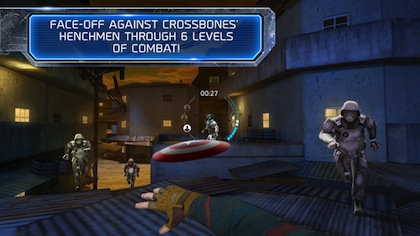
Captain 3 Captain 4

The general goal of the game is to defeat Crossbones and his crew of mercenaries using characters that include Captain America, Iron Man and an unlockable Black Panther. However, unlike most VR apps, this can be played with a standard phone in a traditional mode without the need of a headset.

“The Kellogg’s Marvel’s Captain American: Civil War VR game is one of the most compelling brand implementations of VR I have seen thus far,” said Michael Becker, mCordis managing partner, speaking with Mobile Marketer. “They have reached new heights in putting the fun back into the functional of branded apps.

Captain

“The great thing about this initiative is that they have produced a connected marketing program that can connect, engage and influence individuals, at scale,” he said. “To enjoy the experience all someone needs is a smartphone, which most of us have, and a VR Viewer, which is easily obtainable by purchasing a participating Kellogg’s product and submitting the receipt to receive a free viewer (or you can use a variety of viewers, like Google Cardboard).

“Once you have the viewer in hand, the fun comes alive. You enter the world of Captain America and with your Capital America, Iron Man or other superhero powers are immersed into a 360-degree virtual gaming experience, including relevant Kellogg’s branding.”

It’s a step in the right direction for marketable PR, as well as introducing fans to a more casual version of VR, complete with access to an affordable yet still effective viewer. And having Marvel imagery certainly doesn’t hurt, considering millions of fans still appreciate the Marvel franchise, and are a big reason why the Civil War film is such a smash hit.

Captain 2

Could we be seeing more VR-related promotions from companies in the future? Considering the effectiveness of the Civil War campaign, it’s very likely. It’s just a matter of what experiences can be presented, as well as the franchise that they’re tied in with.

The 5 Most Epic ‘Warcraft’ Movie Promotions

The World of Warcraft movie has been ten years in the making, and it has reached epic scale hype. Inspired by the hit massively-multiplayer online role-playing game, World of Warcraft, the movie tells the story of how the orc forces of the Horde and the human-led armies of the Alliance first clashed in the fantasy world of Azeroth. Starring Travis Fimmel (Vikings), Paula Patton (Mission Impossible: Ghost Protocol), and Dominic Cooper (Captain America: The First Avenger; Agent Carter) the magic and might-filled movie hits theaters in the UK (where it’s known as Warcraft: The Beginning) on May 30, and June 10 in the US.

An Epic movie needs some equally epic promotions, so here are some of the top ways Warcraft is getting fans to theaters.

Virtual Gryphon Rides

If there is one Warcraft promotion that still resonates, it’s certainly the Warcraft: Skies of Azeroth VR experience. In this video experience, users get to fly over the fantasy world of Azeroth, where the movie takes place, riding on the back of a giant gryphon. Legendary Entertainment helped kick-off the 2015 San Diego Comic-Con last July by giving away 50,000 Google Cardboard viewers, and the lucky attendees were among the first download the Legendary app and take to the virtual skies. The experience was later turned into a 360-degree video, which can still be watched on YouTube, with our without Cardboard.

Additionally, a few lucky Comic-Con attendees who had their pictures taken next to a giant Orgrim statue were allowed to take home some actual movie props. No word on whether one of the props was Orgrim’s massive hammer, and if it was allowed as a carry-on aboard a plane.

Bringing The World To Life

warcraft-side-by-side-slice-600x200

The Warcraft movie relies heavily on special effects to bring its fantastic spells, flying gryphons, and hulking orcs to life. To let audiences see what goes into creating a 7-foot-tall warchief, the movie released a series of behind-the-scenes videos that help put a human face to the orc one. The work done to make the actors look different, yet familiar, is nothing short of stunning.

Getting To Know The Characters

Although names like Lothar, Blackhand, Durotan, and Orgrim may be instantly recognizable to many World of Warcraft players, they don’t mean much outside of the gaming world. That’s why the movie released a number for character-focused trailers, with extended featurettes that started coming out this week. They include characters like Anduin Lothar, played by Travis Fimmel. The actor gives viewers some background about the character, what motivates him, and some thoughts about the movie itself.

The movie also has a fully themed page on IMDB, which organizes the character videos, photos, and shows a countdown timer to the movie’s premiere. Additionally, fans can click on a link to be purchase tickets.

An Epic Screen For An Epic Movie

Warcraft fans had a chance to be rewarded for their dedication. IMAX partnered for a contest to bring one winner and a friend to see Warcraft a day early at the IMAX headquarters in LA. As if that weren’t enough, winners could ask the movie’s director, Duncan Jo, whatever burning questions they have and he promised to answer them in a personalized video message.

Experience World Of Warcraft For Yourself

Let’s not forget the game that started the worldwide phenomenon in the first place: World of Warcraft. Blizzard is helping to launch the movie with its own promotion. Anyone who purchases a ticket from a participating Regal Cinemas will receive a free digital copy of World of Warcraft, so that they can set off on their own adventures after seeing the film. Members of the Royal Crown Club will also have the opportunity to win two tickets to BlizzCon 2016.

Existing players won’t be left out in the cold. Special movie-inspired items are now available in the game, and players have until August 1 to log in and claim them.

Reddit Launches Its Own Native Image Sharing Utility

After seven years working alongside Imgur to host videos and photos, Reddit has decided to bring its work in-house with a native image sharing tool.

The company announced the new service last night, introducing it as a beta and providing information on how users can put it to good use.

“We’re super excited to begin rolling out in-house image hosting on Reddit.com to select communities this week,” said Andy, a Reddit product team member, with the announcement. “For a long time, other image hosting services have been an integral part of how content is shared on Reddit—we’re grateful to those teams, but are looking forward to bringing you a more seamless experience with this new feature. Starting today, you’ll be able to:

  • Upload images (up to 20MB) and gifs (100MB) directly to Reddit when submitting a link.
  • Click on a Reddit-hosted image from any listing (such as the front page, a subreddit, or userpage) and be taken directly to the conversation and comments about that image.
  • View gifs within Reddit’s native apps with less taps and without leaving the app.”

The tool is said to introduce a “more seamless experience” with posting, according to a Reddit manager, although users can still utilize Imgur and Photobucket if they prefer. The only question is what will happen with the Imgur now that Reddit is moving on, considering how important it was to its growth.

In response, Imgur stated that the change “wasn’t a surprise” and that it will move forward with its own advertising plans. “We’re super focused on our mission to surface up the world’s most entertaining content and making Imgur the best visual community in the world,” Imgur said in a statement to Techcrunch.

NetEase Talks About Developing ‘Twilight Pioneers’ For Daydream VR

The internet technology company NetEase has found great success in China developing PC and mobile games, and operating some of the world’s most popular online games in partnership with Blizzard. It also recently signed a five-year deal with Microsoft, making it the exclusive distributor of a special Chinese edition of Minecraft. With that success, the company is looking to expand both globally and technologically to further grow its audience, which is one of the reasons it became one of the first developers to sign on with Google and its recently revealed Daydream VR platform.

Its debut VR game is called Twilight Pioneers—an action fantasy role-playing game that is expected to release in November, coinciding with the launch of Daydream. Daydream itself is a mobile Android-based VR platform developed by Google to support both a headset viewer and a motion controller. It will be included in the next version of Android (currently called Android N), with supporting devices ready to launch later this year.

Simon Zhu, senior director for NetEase Games, talks to [a]listdaily about being one of Daydream’s first developers, working with VR, and using the technology to expand NetEase’s presence across global markets.

Can you give us an idea of what Twilight Pioneers will be about?

It is a very big universe in the far future; a fantasy world where heroes team up to prevent an evil force’s plan to destroy the world.

What convinced NetEase to begin VR development and become one of the first Daydream partners?

A few years ago, we had some experiences with an early VR device and immediately knew that it would be the future for many things, especially entertainment and gaming. We are very pleased to be one of the first few developers to get to work on Daydream platform.

In what ways will VR help NetEase expand its global presence?

Players always look for the best content on the best platforms and NetEase is committed to providing top quality content for the platforms that players will love. We make games for passionate gamers, that why we do it. And in return, we hope that players around the world will see us as a preferred brand.

NetEase has already had great success in China. Do you think a mobile VR game like Twilight Pioneers has the potential to appeal to both Eastern and Western markets?

Yes, we are working to carefully craft the story and art to delight players worldwide.

How crucial do you think Daydream is to accelerating adoption of VR?

Considering Google’s resources and its technology, Daydream could be the biggest driving force in VR. As a developer, we have confidence in the overall market trend of both VR and Daydream as a key platform.

With Daydream months away from launching, what is the most important thing to keep in mind while developing Twilight Pioneers?

Always keep in mind that this is VR, a new platform with a new user interaction, and we need to think through every detail to make sure that it is a VR-native experience and not something copied from a 2D screen mobile game.


Sacramento Kings Owner Andy Miller Explains Why ESports Is NBA’s Future

Andy Miller is the latest traditional sportsman to invest in eSports. He and fellow Sacramento Kings co-owner Mark Mastrov even brought along co-owners Shaquille O’Neal, Alex Rodriguez, and Jimmy Rollins to help Team NRG compete in League of Legends and Counter-Strike: Global Offensive.

Miller, who previously served as vice president of mobile advertising for Apple, has gone all-in with eSports. With his background in technology and sports (he also is co-owner of the Modesto Nuts minor league baseball team), professional video gaming blends both of his specialties.

He discusses the future opportunities eSports opens up, and how pro gaming may influence traditional sports in the [a]listdaily exclusive.

andy miller
Andy Miller

We’re starting to see an explosion on the college level eSports, even seeing some schools giving scholarships for them. On the other side, like the NBA’s D League, you have amateur leagues like League of Legends has set up with Coca-Cola. What role do you see those two avenues playing as the eSports ecosystem grows?

I think that’s huge. If you don’t play Little League Baseball, you’re probably not going to be a Major League Baseball fan. It’s a known fact. So the fact that we have so many people playing, whether they’re getting a college scholarship to play, whether they’re playing on their own, whether they’ve got their own group of five guys that they get together, that’s how you grow a giant fan base over the years. And this is the sport that people are playing—and it’s not just kids. Our fan base is probably a lot older than I think most marketers think.

How do you go about choosing which games you’re going to focus on?

We wanted League of Legends right off the bat. I researched it and loved the energy. And you can’t deny the size of the audience. It’s massive. We play in front of so many people every week, whether on our own streaming with our guys or on the weekend at Twitch. And then you stack those numbers up against the NBA and NHL and other sports and it’s worth it. So that was a no-brainer for us. We also added a CS:GO team, which is probably the second biggest eSport, where it has a massive following and a huge amount of people playing.

What are your thoughts on mobile eSports, where Vainglory and Hearthstone have proven the model works?

I think it’s natural. Someone asked would the future be an eSports television network. I think it’s amazing that Turner’s going to have a live prime time program, but the reality is it doesn’t really matter anymore. Television is yesterday. If you’re playing the game on your mobile device, you’re probably going to be watching it on that device as well because that device is going to be capable of broadcasting the matches. That’s key; that you spread out across all different devices, all different platforms, and all different games. That’s been our goal. We want to take it slowly enough that we don’t overextend ourselves, but we would like to be a brand where people recognize NRG like they recognize Manchester United or the Yankees, where it stands for something. And that whatever the sport is, we have our positive message.

There are small eSports arenas building up in Irvine and Austin. What role do you feel that will play, or will traditional NBA and NHL type stadiums be the future home for eSports as it grows?

I think it’s going to be both. There’s no doubt that we’re going to see traditional stadiums; NBA’s the best fit. You have an arena like Golen 1 Center and we should be having a home base there for whatever this eSport is. That’s where you see the interest from the Warriors and the Kings ownerships and other folks getting into this space.

But these smaller venues are just as important. Right now, it’s movie theaters. People don’t have access physically to the players. They have unprecedented access digitally, socially to the players in eSports, but physically they don’t. So they never really get to see GBM, one of our most popular players, play. When we go to the mall in LA they literally get a bunch of people stopping them for autographs. They’ve got to stop wearing their shirts. But in other professional sports, the players are visibly accessible, physically accessible, but not really digitally, so eSports is kind of on its head.

It’s also different that these guys are practicing with their chats on and livestreaming. It’s like you can talk to Shaq while he’s practicing for the game. You can ask [eSports pros] what champion they’re going to play this weekend, why did they do this—and they respond, and they stay up all night doing it. That’s an unprecedented level of accessibility, but that’s what this generation expects. And that’s why they don’t connect as well to some of the other [traditional] sports athletes.

What impact do you see kids growing up with eSports having on the NBA and other sports 10 or 20 years down the road?

That’s a good question. It’s a big initiative for every league to get younger. Social media has been fantastic. The NBA is the clear leader in social, digital, and technology across the board. Major League Baseball Advanced Media is wonderful, but I think as far as being early on social and understanding it, and the players totally grabbing onto it and running with it has made the NBA the hippest sport. These players know how to interact with their fans. They have their own brands, and it’s wonderful. It’s wonderful for us to have big stars in every city. It’s not just the big cities anymore, so it’s a big deal.

NRG co-owners Shaq, Alex Rodriguez, and Jimmy Rollins have huge social media followings. The eSports audience is all about social media. How do you see these two connecting?

Shaq does all of his own social media. He’s posting NRG stuff on Twitter and Instagram and everywhere. Having guys like Jimmy Rollins and Alex Rodriguez, who have been in the league for so long, is great. Our guys were beyond ‘over the moon’ for Shaquille to be involved because they love him and they think he’s hilarious. It’s wonderful to have that attention, but they’re very interested in having Jimmy and A-Rod come to see them when they go play the Angels or the Dodgers, to talk to them about how they handled the pressure and how they were able to thrive under it. There’s a lot of pressure in eSports just like there’s a lot of pressure in traditional sports.

Reggie Watts Will Perform Live Comedy Act In Virtual Reality

Funnyman Reggie Watts is combining his passion for music, comedy and virtual reality with an unprecedented show that will give fans an opportunity to livestream his stand-up act in VR through AltspaceVR’s social platform.

Set to take place on May 26 at 8 p.m., Watts and his ubiquitous afro will be performing in the flesh from AltspaceVR’s studio in San Francisco. Bay Area denizens interested in attending in person can sign up here, or livestream the hijinks through YouTube in 2D.

reggie-watts-8

“I’ve always been a fan of virtual reality, or at least the idea of creating another reality with technology that’s relatively believable,” Watts told the Voices of VR podcast. “I got into VR because I like being immersed into other realities, and having the ability to create those realities.”

Watts experimented with VR in the short-form 360 comedy Waves, a project that made the circuits at Sundance and Tribeca Film Festival earlier this year

The comedian’s shenanigans will be made possible Thursday through Perception Neuron’s motion capture technology.

[a]listdaily caught up with Susy Ferrer, Noitom’s public relations director, to discuss how they’re ushering in technology that mirrors the one used in Hollywood.

How did the collaboration between Reggie Watts come about? Why is a stand-up comedy show a great way to promote Perception Neuron and the motion capture technology system?

We work often with AltspaceVR and they have been using our system for some time and are familiar with it. When the opportunity came up to do a live-in-VR show with Reggie, Perception Neuron was their go-to product to track Reggie’s movement within the VR environment that AltspaceVR will provide. Perception Neuron is a very flexible and versatile system and there are many people who have found a multitude of creative ways of working with it. The chance for Perception Neuron to be used in such a unique show featuring one of the most exciting comedy talents of today is a terrific way to get some exposure in the entertainment realm (as we typically attract people who work in gaming and virtual reality). Plus, we just thought it was a very cool concept and we can’t wait to see what Reggie does.

What kind of an experience can viewers expect?

The cool thing about a show like this is that you can be anywhere and experience it. Since the show will take place in a virtual environment, audiences can log-in from anywhere in the world and enjoy. They can expect to feel they’re sharing the same space as Reggie and seeing him perform right before their eyes just as in a regular venue, except that it will all be virtual. Also, anyone who has ever seen one of Reggie’s improvisational performances knows to always expect the unexpected. 

10603985_979495198798220_6827576015472478122_o

How do you explain Perception Neuron for the first time to those who are unfamiliar with it?

Have you ever seen Planet of the Apes? Lord of the Rings? Avatar? All of these movies—and many more—use motion capture technology to create the life-like movements of the animated creatures and characters in the story. Hollywood uses very expensive systems in which the actor wears a special suit with trackers that connect to cameras in order to record the movement, and later transfer it into the CGI or animation creating a realistic, human-like effect. Perception Neuron offers a similar technology except that the system works with a tiny IMU (inertial measurement unit) that is housed within a ‘Neuron’ and the IMU is able to capture and record the body’s movement without the use of dozens of cameras, or even a cumbersome suit. The Neurons are placed on a series of straps that are then put on various parts of the body (arms, legs, head, torso, hands) and the movement is then easily captured and can then be transferred to an animation, special effects, video games, used for analysis, training and many other uses. Perception Neuron is the most adaptive, versatile and affordable system of its kind. Where the Hollywood motion capture systems run well into the hundreds of thousands, Perception Neuron can be purchased for $1,500 or under, making it accessible for anyone with an interest in motion capture. Though Perception Neuron may not readily compare to the costly Hollywood systems, it is a robust and highly accurate system that produces professional results right out of the box.

How is Perception Neuron different from any other virtual reality experience on the market?

Perception Neuron is the most affordable and adaptable system of its kind in the world. We have made it possible for any gamer, small studio, school, researcher or hobbyist to use motion capture in their projects. Our versatility also means that we can be used with a variety of platforms from Maya Motion Builder, to Reallusion, Unreal Engine, Unity, and more.

Perception Neuron is under the Noitom umbrella, which features other experiences like Project Alice. What is the vision company founders Dr. Haoyang Liu and CEO and Dr. Tristan Dai have implemented?

It’s always been to make motion capture [technology] accessible to anyone, anywhere, and to eventually seeing it used in some way in every home. They and their team of engineers remain committed to making motion capture a universal technology.

Where is the future of motion capture technology and application development headed? What can consumers expect from Noitom moving forward?

As VR continues to expand, and as video games become more elaborate, we will see much more of a need for motion capture technology. Beyond that, we also see a need for this technology in the fields of medicine, sports, government projects, corporate training … there are many foreseeable uses for motion capture. As we now continue to focus more on the consumer market, people can expect to see more innovative products that can help them in their creative and professional endeavors. We will begin rolling out new products later this year, including a motion capture glove that can be used in virtual reality.

What are some of the ways brands can use VR activations in their integrated marketing campaigns?

VR is the next big movement in technology, and now that companies like Oculus and Samsung are developing consumer products, we can see it becoming more and more a part of everyday life. Soon Facebook will be adopting VR in their social network and people will now have the chance to experience things they could have only imagined right from their living room. This will give brands the opportunity to get really creative with immersive marketing campaigns that can take audiences right into the action of what they want to share.

Follow Manouk Akopyan on Twitter @Manouk_Akopyan