How Diversity Is Impacting ‘LawBreakers’ Game

Tramell Isaac is the art director at Cliff Bleszinski’s Boss Key Productions. He’s been developing games for 22 years, having worked on Planetside 1 and 2 and Fallout 1 and 2 over the years. He’s now one of the elder statesmen at Boss Key overseeing LawBreakers’ look and feel. The new shooter, which Nexon America will publish, is coming to Steam. He talks about the new game, which was playable at PAX East, and how the Raleigh, NC studio’s make-up is impacting the characters gamers will play.

BK_team_profile_0003_TramellCan you talk about the diversity in LawBreakers’ cast of characters?

It starts from Cliff himself. One of the things that he wanted to do was build a diverse game and develop a diverse workforce. If you look around, you’ll see a bunch of people that we have working here are minorities and females. We have a little bit of everything, and that’s going into the game. So my opinion, Ned’s (Gasorntip’s) opinion, Lee (Hind’s) opinion—all of these people are minorities or people of color. They all have input into these characters that we are making, so that we don’t make stereotypes. And it’s going to make this a more solid game. It’s going to make it a more well-rounded game. It’s going to give different perspectives on Latinos and African Americans and Asians that aren’t necessarily just your typical stereotypical African American or Latino or Asian characters.

How do you see this impacting the players you can reach?

We’re trying to build a brand that is acceptable for many, many people and not something that’s exclusive to one group or another. It’s an all-inclusive type game that actually includes all different types of people from all different walks of life, so people can identify with one character or another in some way. It’s not filled with your typical Army dude with no females in this world, because that’s not the real world that we live in. Cliff wants to make sure that we make games that stand the test of time, mainly because they include everybody. Hopefully, we can get to the point where we have a class that fits pretty much every ethnicity out there, transgender, who knows? We can make whatever we want, but it comes from the top to the bottom, saying, “Okay, we need to make sure that we include these types of people and make sure that they have something that represents them accurately.”

You’ve been making games for 22 years now. What’s it like being an elder statesman at Boss Key?

It’s been great, man, because it’s been really good to learn from everybody. Just because we’ve been doing this for 20 something years, even Cliff himself, we’re all learning new things every day. It’s great to be in a situation where we can use what we’ve learned to teach other people, and at the same time, learn from the people that we’re bringing in. It’s been a blessing because I get to learn new things and I get to pass on some information to these youngins and give them a little bit of something from the old days.

Can you break down the four new characters on display at PAX East?

We have Kintaro, who is on the Breakers side, and Bomchelle, who is on the Law side. We have Hellion on the Law side, and Toska-9 on the Breakers side.

What are their abilities?

We’re symmetrical on the ability side, so we have the Titan class, which has a rocket launcher and the crisper (an electricity gun). We have the Mavericks, which is basically our flying stealth jet class. We have got the Assassin class with the dual wielding swords. And we have the Enforcer, which has shoulder rockets and the traditional aim-down-the-sites rifle.

What influences the art direction in LawBreakers?

We really wanted to give the players something different, something they hadn’t seen before. A lot of the ideas came from Cliff himself, so we’re consolidating them to something that’s a little bit more believable. Cliff comes up with these wild ideas, and it can come from left field, but at the essence of it is basically what we’re trying to achieve. Right now, what we have on the screen with these eight different characters is the boiled-down essence of what this is. This space is a more vibrant, different take on what reality could be if this cataclysmic event (The Shattering) actually happened.

How have these characters evolved from the switch to a paid game from free-to-play?

What you see is where we want to end up. Before what we were talking about was basically adjusting the characters so that they weren’t as over-the-top and exaggerated. We were going a little bit more exaggerated for visuals sake, and it’s more to identify what things were in the distance. But we quickly realized that we didn’t actually need that, so we brought things back to more realistic proportions to keep it more within the fiction of what we were trying to go for. This is a Mature rated game. We want it to feel a little more realistic, a little bit more gritty, and what we had before didn’t really fit that paradigm.

Can you talk about this first playable level you’re showcasing in the Grand Canyon?

The game takes place after a cataclysmic event, but everything has been rebuilt. It’s a little bit different from a lot of games where the world is destroyed and then it stays that way. That doesn’t happen in real life, so we wanted to ground these things in reality. You’ll have multiple locations that are familiar to you. Grandview happens in the Grand Canyon, so you’ll see landmarks within the game, but then we take that and put a twist on it. You have these gravity wells and things floating in space, but then you also have a giant base that’s in the middle of the Grand Canyon that’s sitting on a rock that’s been tethered down so it doesn’t float away. You have this anti-gravity, but how do you make that world feel realistic with those rules? So we changed the rules, and then we built a world around those rules, and that’s basically how Grand View came to play.

Can you talk a little about the verticality of these levels and how that’s been designed to take advantage of anti-gravity?

All the maps have been designed for 360-degree combat. You can get attacked from any direction. It’s not like the linear flow that you’re used to in most first-person shooters. You can basically swing from one end of the map to the next end of the map, go up over the top of buildings, go through the buildings. You can fly up and down and go in and around and all these things. You can blind fire. You can propel yourself through the space. There are a lot of different paradigms that LawBreakers has that you won’t ever see in any other game.

Bud Light Looking For ESports All-Stars

With all sorts of companies getting into eSports these days, including ESPN, TBS and Yahoo, its mainstream appeal is becoming increasingly evident as it continues to draw in millions of viewers. Now one of the biggest brewing companies in the country wants to get in on the action.

Bud Light has announced (via USA Today) that it’s heading into eSports, and will announce a list of competitors for various games at the forthcoming DreamHack event in Austin, which takes place from May 6-8.

During the event, and running through to June 4, fans can vote for their favorite gamers, and the top five will be named as the Bud Light All-Stars at the Electronic Entertainment Expo (E3). From there, the team will be featured in both a behind-the-scenes eSports series for Machinima and online game match-ups through Twitch.

The big face-off for the All-Stars will come at TwitchCon later this year, where they will take part in a three-round elimination tournament. For those who can’t attend the event, the competition will likely be streamed online.

“This is such an exciting area for us,” said Jesse Wofford, Bud Light’s digital sports marketing manager. “The growth in (eSports) is huge and this is really the right time for us to get in. We have identified it as a great space because, similar to how we identify in the NFL with fans, eSports fans have that same passion.”

Considering how more than 134 million gamers watch eSports on a regular basis, with a market value near $750 million, this move shouldn’t be a shock. But it does introduce yet another big non-gaming brand into the picture, and others could easily follow suit as a result.

Wargaming And Dark Horse Bringing ‘World Of Tanks’ To Comics

Wargaming had a huge weekend at PAX East (held in Boston), where it showcased the return of the classic space empire building game, Master of Orion, as well as giving plenty of appreciation to its avid World of Tanks fan base. But the history-themed competitive tank game will soon have new stories to tell, and Dark Horse Comics is along for the ride.

The game publisher has announced that it has partnered with the comic book publisher to create a new limited edition series called World of Tanks: Roll Out!, which will focus on tank battles that took place during the summer of 1944, when the British Cromwells battled against German Panthers armored units in post D-Day Normandy.

WOT1CVRSOL.100958

The series will be written by Garth Ennis (Preacher; War Stories; The Punisher), while Carlos Ezquerra (Judge Dredd; War Stories Vol. 2) and cover artist Isaac Hannaford (Halo: Reach; The Punisher) are contributing to the project.

The five-issue series is set to release on both in physical and digital formats for fans to enjoy, and will be available in both U.S. and European territories this fall.

Considering the massive success World of Tanks has seen on both PC and console platforms (it released for PlayStation 4 earlier this year), this gives the franchise ample opportunity to spread out into a new medium—the ever-growing field of comic books—to tell character-driven stories. As a result, a new audience could pick up the free-to-play game.

World of Tanks Roll Out comic book Preview page

It looks like a solid partnership for Wargaming and Dark Horse Comics, and one that could give the strategy game maker a greater presence at other upcoming events, especially the insanely popular San Diego Comic-Con.

If successful, there’s a possibility that this deal could grow to include Wargaming’s other franchises, which include World of Warplanes and World of Warships.

Subscriptions Reborn For Gaming

One of the factors that has propelled the games industry to massive growth in the last two decades has been the growing diversity of business models. Once almost all game revenue was derived from selling games in retail stores, but now we see games supported by advertising, in-app purchases and subscriptions.

Subscriptions were really the first business model to have a major impact on games other than the retail sales model—and it was the rise of the massively multiplayer online roleplaying game (MMORPG) that drove this model into popularity, reaching its height with World of Warcraft —MMORPGs have delivered massive revenues and outsized profits for years. It seemed like subscriptions as a business model have been dying off in the past few years, though, as World of Warcraft is about the only MMORPG left that still uses it. Most other MMORPGs have moved to a free-to-play model, and even WoW allows you to play for free for the first 20 levels. With the new Legion expansion this year, WoW will likely see a boost in its subscription numbers once again.

Subscriptions have seemed to be out of step with the fast-moving pace of the Internet and games in particular over the last decade. Yet subscriptions are becoming increasingly popular for other media like movies and music, and that acceptance is leading to a growing use of subscriptions in the games industry. The model is changing, though, and the changes are important ones. Variations are being tried out and the increasing popularity of mobile games means there’s plenty of untapped potential there for this business model, too.

Marketers nowadays not only have responsibility for communicating and shaping brand messages, but also shaping how products are monetized. The variety of monetization options available to content creators means that understanding the market and the audience is critical to deciding on the optimal monetization methods. Marketers must do their best to help content creators shape content to optimize revenue, and that means staying on top of the latest trends in monetization. Subscriptions are gaining popularity for media businesses, and games are currently underrepresented in that business model—yet the potential is enormous.

The Power Of Media Subscriptions

Two of the biggest media businesses, movies and music, have moved in a big way from the retail business to the subscription business model. Streaming video from Netflix, Amazon, Hulu and others are generating huge numbers (Netflix has over 80 million subscribers now) and while DVDs and Blu-Rays are still a good business, it’s clear that the market has shifted to paying a regular monthly fee for access to a large number of videos, a mix of movies, TV shows and original content.

The strength of video subscriptions can be seen by the movement of HBO, Showtime, Starz and others from being purely an add-on package for a cable provider (a subscription plan in itself) to a stand-alone subscription being offered for a variety of devices. You can still rent or purchase individual videos from iTunes or other places, but the biggest audience is for paying monthly to access a large variety of video.Subscriptions

Similarly, music has moved from selling discs in stores to buying audio files through iTunes to the fast-growing streaming music subscription, which is being offered by Apple Music, Spotify, Pandora, Tidal and others. Again, paying a monthly fee for access to a large variety of content has been growing rapidly.

The Game Subscription Reborn

The new life of game subscriptions is not coming from MMORPGs, but from a variety of places. The biggest of these subscriptions are Xbox Live and PlayStation Network, where Microsoft and Sony charge a subscription fee (which can be paid monthly, quarterly or annually) for access to multiplayer online gaming and new, free games delivered every month. These services have tens of millions signed up, and form a reliable income stream for these console gaming companies. Microsoft was the pioneer in this area, using Xbox Live Gold back in the Xbox 360 era, but Sony has joined in with the advent of the PlayStation 4. While Nintendo hasn’t yet offered such a subscription service, that’s something we may see after Nintendo introduces its NX console.

The Microsoft and Sony subscriptions were initially marketed primarily as ways to engage in multiplayer experiences, but now the monthly free games being offered by both services are an important part of the value proposition. Moreover, the new games being offered for free every month provide a great marketing opportunity to gain new members for the services.

Continuing in this style of subscription model are PlayStation Now from Sony and Electronic Art’s Origin Access subscription service for PC games. The EA service provides access to a number of games for $4.99 a month, along with early access to new EA games and a discount on EA game purchases. EA also offers EA Access for the Xbox One through Microsoft, which of course gives you access to EA games for the Xbox One. PlayStation Now offers hundreds of PlayStation 3 games through a streaming connection on PS4, PS3, PS Vita and selected Sony and Samsung TVs. The service is $19.95 for one month or $44.95 for three months.PSN

Beyond these “groups of games for a single subscription” offerings we also see a growing trend in offering downloadable content (DLC) for console games (and some PC games). The “season pass” is in effect a year’s subscription to all DLC that’s coming out for a game during a year, and it’s become an increasingly popular purchase for gamers because there’s usually a discount over buying each piece of content separately.

The Future Of Game Subscriptions

One area where subscriptions have yet to make much of an in-road is in mobile games, which is due to the restrictions imposed by the App Store even though Google Play allows in-app subscriptions.

“Considering that free-to-play is the number one form of monetization on mobile, it will be challenging to sell mobile gamers on committing to a monthly fee,” said SuperData CEO Joost van Dreunen in an interview with Re/code. “Unless, of course, Apple rolls out a buffet-style offering (‘Best of App Store, every month for $4.99!’), but I don’t see any upside for them in that.” It would also be hard to get a group of publishers to offer access to multiple games under one subscription, even if you could convince Apple it was a good idea.

Since the Google Play store allows subscriptions, this is probably where we will see the concept appear first. Episodic content, such as we see from Telltale Games, would seem to be ideally suited to this. On mobile, subscriptions would seem to be something that a single publisher would implement, perhaps even within a single title, if there was a reliable stream of new content to offer.

Beyond mobile, we may well see expanded use of the subscription model among PC and console games (and perhaps eventually, VR) where there’s a steady flow of new material. Especially in certain free-to-play games, where new skins and other content appears with regularity, a subscription mode to in-game content might make sense if there’s a substantial bargain for players in the offering.

Game marketers and game designers should be examining subscriptions closely to see if it makes sense for their games, as consumers in general are getting very comfortable with the concept of a regular fee in return for regular access to new content or a large enough body of existing content. As always, consumers will respond well if you can provide a great value to them.

ESports Sees Stronger Involvement From Women

Earlier this month, Nielsen released a report indicating that the current eSports audience is over 80 percent male. However, that’s not to say women aren’t making their impact on the scene. In fact, a new report suggests that their demographic is far bigger than anyone realizes.

The research company PwC recently published a new report in its Consumer Intelligence Series, indicating that (per a survey) 22 percent of women say they’re involved with eSports. That may seem like a small number, except only 18 percent of men surveyed said they were involved.

“While the difference is relatively small, it indicates an early trend that women may be just as, if not more, engaged with eSports than males,” PwC noted in the report. “For viewing versus playing, men are playing slightly more than women, and men appear to watch from a competitive lens, while women appear to watch for enjoyment and for the social aspect of the viewing experience.”

PwC also found that a majority of eSports viewers (around 68 percent) are under the age of 35, which indicates a strong appeal to a younger audience. That said, there are a good amount of older viewers. “The increasing popularity of eSports has attracted the attention of companies industry-wide, and they are trying to reach the coveted millennial audience…” the company wrote. “As it becomes harder to reach millennials on traditional platforms, such as linear TV, companies are seeing an opportunity with eSports as its viewers tend to be highly engaged.”

While the report also shows that only 15 percent of those surveyed had awareness of eSports activities to begin with, the scene is growing, and those that tune in to one event tend to come back for a lot more.

“Viewers are just as much a part of the overall competitive gaming experience as the players itself,” said the company. “Among total viewers, PwC’s survey says one in five watch weekly, with the general eSports consumer averaging 19 days of viewing per year. Asian (27 days) and Hispanic (23 days) viewers tend to watch more frequently, with self-identified hardcore gamers watching the most at an average of 32 days a year. As for the device of choice, 57 percent of respondents who have watched a competition have done so on a laptop or desktop computer. The most favorable genre of game to watch is first-person shooter games at 63 percent, followed by multiplayer online battle arena (MOBA) at 37 percent.”

Image Source

3 Upcoming 2016 Games That Could Be Tremendous ESports Hits

Millions of fans tune in to eSports competitions for a variety of games that include League of Legends, DOTA 2 and Call of Duty. But the industry still has plenty of room for new games to join, such as the current eSports darling, Rocket League.

With that, there are a lot of releases coming this year that have plenty of eSports potential. Here are the top examples of what we could see show up in highly publicized tournaments and online broadcasts over the months ahead:

Doom

Bethesda’s reboot of the iconic id Software franchise, which popularized first-person shooters in the ’90s, is less than a month away from release. Last month, the publisher hosted a Day of Doom event, featuring well-known online personalities who teamed up with real-world athletes in an all-out competition. This helped lead in to the open beta on consoles and PC, which showed the world just how addictive the multiplayer can be. The fast and furious gameplay includes weapons that can shred opponents instantly, and a rune that temporarily transforms a player into a powerful demon, which can often turn the tide of a competition.

What’s the eSports potential? The multiplayer is a throwback to the classic days of the Doom franchise, when the game was one of the biggest multiplayer shooters on the planet. Doom‘s fast gameplay and relatively short matches make it an ideal choice for the eSports scene, and with Battlecry rumored to be put on hold, it’s an ideal opportunity for Bethesda—which is famous for publishing immensely popular single-player games like Fallout 4—to get into the eSports scene.

Uncharted 4: A Thief’s End

Although Sony’s marketing of the game focuses primarily on its single-player campaign, which caps off Nathan Drake’s long adventure, the game also includes a multiplayer mode where thieves and gold hunters compete on a series of maps. Using up-close attacks and an array of powerful weapons, each team tries to keep the treasures for themselves.

What’s the eSports potential? While Uncharted isn’t necessarily regarded as a competition-based franchise, the multiplayer beta got a lot of attention from PlayStation 4 owners, and the game is expected to be updated with plenty of fresh content in the months ahead. This could mean potential livestreams that show off multiplayer content once players have completed the main story, and perhaps some will become pro players. The game is expected to be one of the popular games to release for the PlayStation 4, so having it be adopted into eSports is very possible.

Gears of War 4

As Microsoft did last year with Halo 5: Guardians, players can expect a big eSports push with the newest chapter of its Gears of War franchise. Developed by The Coalition, the game takes place several years after the events of the original trilogy, with Marcus Fenix’s son and company battling a devastating new enemy.

What’s the eSports potential?

Immense, considering how Gears of War 3 is already an eSports hit. The fact that the game, in partnership with ESL, is premiering the Gears of War 4 competitive mode at PAX East this weekend alongside the Gears of War pro league season two finals, all but guarantees a future in eSports. Microsoft recently launched an open beta for Xbox Live Gold subscribers on Xbox One, which introduced a number of new modes such as Dodgeball mode where players can be recalled even after they’re killed. The response to the beta has been huge, indicating that Microsoft could have another hit on its hands. Pro Gears players are also likely to get involved in the mix, and while competitions may not be as popular as Halo tournaments right now, the franchise still has plenty of time to grow and catch on.

How The ‘War Dragons’ Ad Destroyed A Fake TV Show To Launch On Android

In the mobile game War Dragons, players collect and breed (as the title suggests) dragons to fly in and wreck opponents in real-time battles. Developed by Pocket Gems, the game released a year ago on iOS, and has since been climbing Apple’s top-grossing charts with its vibrant community fighting over 183 million battles and raising more than 13 million dragons so far. The game recently debuted on Android, and it has a very special TV commercial and related promotional campaign to mark the occasion.

Created by renowned animator, J.J. Sedelmaier (the mind behind Beavis and Butt-head; Harvey Birdman, Attorney at Law; and the Saturday TV Funhouse bits on Saturday Night Live), the humorous tongue-in-cheek commercial pokes fun at the Saturday morning cartoon style from the ’90s era by introducing a fake children’s show called Dragon Days. The show ends up having a very short run, as the peaceful land and its happy inhabitants are attacked by ferocious 3D creatures from War Dragons.

“Who wouldn’t jump at the chance to contrast the children’s programming we all grew up watching with the intensity of the gaming realm?!” said Sedelmaier in a press release. “On top of that, this was a wonderful chance to combine two animation techniques that have been fighting each other for decades anyway.”

The joke goes even further with an official Dragon Days website, which showcases the cancelled episodes and fates of the fictional characters. It even has a link to the show’s theme song, written by Grammy Award winners Adam Schlesinger and Steven Gold, which is almost sure to get stuck in people’s heads.

Chris Luhur, director of performance marketing at Pocket Gems, talks to [a]listdaily about having a little fun with the War Dragons promotion at the expense of many cartoon dragons.

Chris LuhurHow did J.J. Sedelmaier become involved with creating the War Dragons ad?
Our agency, Wexley School for Girls, were the ones who facilitated that. Once we had nailed down the creative concept of having our 3D dragons obliterating these cute cartoon characters, we knew that it would mesh perfectly with J.J.’s style. Luckily, he was available and interested in working with us.

What inspired the idea to match up ’90s era cartoons with 3D fire-breathing dragons?

One of the reasons people love playing War Dragons is that they get to be in control of this massive army of savage-looking dragons. The game has everything from three-headed monsters to undead wyverns. We thought a great way to showcase how cool and brutal our dragons were was to contrast them against fluffier, happy dragons that you’d probably find in a ’90s cartoon. We knew the hypothetical meeting of these dragons probably wouldn’t go great, and thus the commercial idea was born.

How did you come up with the inclusion of Watchdragondays.com?

A fun part of creatives like this is looking at ways you can expand the universe that you’ve created. J.J. and Wexley did such an awesome job making the Dragon Days characters that we knew it would be a huge missed opportunity not to have some more fun with it. Along with the site, we also made an Instagram account for the show, a fake wiki and sent out a fake press release about the Dragon Days massacre.

Any advice for War Dragons players picking the game up for the first time on Android?

The War Dragons community is really awesome and welcoming. New players should definitely join a guild to learn from their team members. Our forums, social media and Twitch channel are also great resources for newer players.

The [a]list summit In 10 Minutes

The [a]list summit may be over, but it certainly delivered a wallop, with dozens of speakers delivering great presentations on a number of topics.

You can always catch the full coverage of the summit right here, but here are some of our favorite quotes from the event:

  • Mike Sepso, head of Activision Blizzard Media Networks and co-founder of Major League Gaming: “In the simplest terms, eSports is just competitive gameplay. It’s me playing you in Call of Duty, Counter-strike, or whatever your favorite game is. And just like football or basketball, there are professionals who do this, with professional broadcasts and professional broadcasters announcing the games. There are lots of amateurs trying to make it into the big leagues, and most importantly, there are millions of passionate fans who really love and engage with this as a sport and are really focused on the personalities behind the sport and drive it forward.” (His full recap can be found here.)
  • Andy Swanson, vice president of eSports for Twitch: “You can’t say ‘I want to market to eSports.’ You have to be more focused. What is the demographic you want to reach? What level of penetration do you want to have? You have to understand the content. You’re going to want to look for titles and communities that are similar.” (His panel can be found here.)
  • Dan Ciccone, managing director for rEvXP and agent for OpTic Gaming: “Don’t get hung up with a particular game. It’s the ‘typical geek culture’ aspect and lifestyle that’s appealing. Some of it is stereotypical, but their social lifestyle revolves around it. But don’t get too hung up on it.”
  • Rahul Sood, CEO of UNIKRN: “Brands have to be creative on how to leverage social as a platform. You have to get in front of this audience in a relevant way that is authentic because the gamers are very fickle.”
  • Matt West, director of content strategy for Ayzenberg: “How do we reach bigger people? Investment, structure, organization and align everything.”
  • Paula Batson, vice president of public relations and communication for YouNow: “The audience is demanding participation media. This is a new kind of media where viewers are contributing to the media, as well as the broadcaster. It’s not just a push medium. It’s a great way brands can get involved because 70 percent of users can interact. It’s ‘one to many’ that feels like ‘one to one.’” (Her presentation can be found here.)
  • Eric Gradman, co-founder and chief technology officer for Two Bit Circus: “Consumers now want to have an experience unlike anything they’ve seen, or had before. They want new and novel experiences. And they want to have a social media takeaway to share with their friends.” (His presentation can be found here.)

Be sure to check out all our coverage of the [a]list summit in the coming days!

YouTube Adds 360-Degree Livestreaming

The next-best thing to virtual reality (VR) is 360-degree video, and now YouTube is bringing that capability to livestreams. It’s instant immersion without the need for expensive or inexpensive VR hardware, and marketers are already using it to attract and engage consumers. What’s up with this technology, and why is it important for social media and marketing? Let’s take a look at what 360-degree livestreams are doing now, and what they can do in the future.

YouTube is going all-in with livestreaming, eSports and VR in a big way with its new service: 360-degree video livestreaming. Google launched support for recorded 360-degree YouTube videos a year ago, which was quickly taken advantage of by brands like Nike, Gatorade, GoPro and Lionsgate. We’ve seen some interesting experiments from these brands, such as Lionsgate’s 360-degree video for The Hunger Games: Mockingjay, Part 2.

Now the cool factor has been boosted by making 360-degree livestreaming available, so that events can capture audiences with an even more exciting and immersive way to experience the event without actually being there—or having expensive VR hardware. This required some technical wizardry on YouTube’s part, and as part of this unveiling YouTube also announced support for 1440p, 60fps streaming for livestreams. That’s 70 percent more pixels than HD, which required some significant improvements in algorithms. That increase in resolution an, more importantly, frame rate, is perfect for gaming, which you can bet is part of the plan. YouTube Gaming is looking to cut into Twitch’s huge audience for livestreaming, and one way to accomplish that is by improving the visuals you can get.

As a splashy way of introducing 360-degree livestreaming, YouTube will be streaming some performances in the format from Coachella from April 22 to April 24, with T-Mobile sponsoring the stream. (Google has been livestreaming the music festival since 2011.) This should draw plenty of interest in a key demographic.

According to Adweek, YouTube is planning on equipping its YouTube Space locations with 360-degree and spatial audio technology in order to more rapidly disseminate this cutting-edge technology. YouTube is deadly serious about getting 360-degree live streaming out there, and it’s not at all a coincidence that this announcement comes right after Facebook announced a 360-degree camera spec at its F8 developer conference. YouTube, though, is looking to democratize this technology as much as possible, and that’s great news for marketers looking to grab a piece of this excitement.

“This will work with the kind of high-end cameras that folks like Next VR make, but the cool thing is, this will also work with low-end stuff like a Theta [which runs for $350],” said senior YouTube product manager Kurt Wilms, speaking to The Verge. “You can livestream 360 of your kid’s concert, or set up a camera next to the sideline of a soccer game and stream it 180.”

Google’s intense interest in virtual reality (VR) and augmented reality (AR) is being supported by YouTube with the concept of 360-degree streaming. Of course, the real attraction for 360-degree video is that it’s the closest thing marketers have to giving people a VR experience without VR hardware of some kind. That’s important for Google as it tries to move forward with VR and AR for a mass audience.

The other attraction of 360-degree video livestreaming is the sense of immediacy and presence it gives you. “Now anyone, with just their phone, can have that front row experience without having to be there,” said Google’s Neal Mohan, the chief product officer for YouTube. Google and YouTube’s motivation is clearly to get this experience into the hands of as many people as possible, without the barrier of expensive hardware in the way. “There is no fancy technology to purchase or integrate,” Mohan points out, letting you fill in the missing part of that sentence—’without the need to buy an Oculus Rift or an HTC Vive.’

Google has also introduced spatial audio for on-demand videos on Android. Simply put, that means the audio changes dynamically depending on the way you’re facing. That’s not implemented in livestreams yet, but that’s probably in the future. “Right now live 360 doesn’t support directional audio or stereoscopic (3D) video,” noted The Verge. “But you can see how adding these two features would be the next logical step. YouTube announced 360 video in March of 2015 and support for 3D 360 eight months later. It took another six months to get support for Live 360 now, and as the technology becomes cheaper and more powerful it will almost certainly move to support Live 360 video with 3D depth and directional sound—the kind of high-end broadcast that NextVR is bringing to live basketball and boxing for Fox Sports.” The point is to increase the immersion of viewers in the subject matter, much the same way that VR does—but without requiring any purchases.

“What excites me most about 360-degree storytelling is that it lets us open up the world’s experiences to everyone,” writes Neal Mohan, chief product officer at YouTube. “Students can now experience news events in the classroom as they unfold. Travelers can experience faraway sites and explorers can deep-sea dive, all without the physical constraints of the real world. And today’s kids dreaming of going to a basketball game or a concert can access those experiences firsthand, even if they’re far away from the court. What were once limited experiences are now available to anyone, anywhere, at any time.”

“I think 360 video is good to fill the VR content gap,” wrote Alban Denoyel, co-founder & CEO of the 3D-imaging startup Sketchfab, in an email to The Verge. “But in its essence, 360 video is a format of today (flat video) stretched to fit platforms of tomorrow (VR).”

The combination of immediacy, intense media interest, and high engagement should make it clear the 360-degree livestreaming video is something marketers should be paying attention to as part of their strategy. It’s a natural fit for expanding interest in live events like concerts or conventions, and any time you’re creating an event you should consider the utility of 360-degree livestreaming. This is a great way to capitalize on the desire of fans to share experiences. Not everyone can be at Coachella, or a movie premiere, or an eSports competition. But everyone can get close to that presence with a 360-degree video livestream, and without having to invest in VR gear. Of course, VR gear could make the experience even better—and that’s sure to be a selling point VR marketers will make in the future.

For now, 360-degree livestreams are going mainstream, and marketers are going with it. When will you jump in?

What Brands Need To Know About Marketing With VR

SPACES is an independent virtual- and mixed-reality company founded by members of DreamLab, a creative division of DreamWorks Animation. After three years of creating solutions in the rising world of virtual and mixed reality, the team received DreamWorks’ blessing and became its own company. Shiraz Akmal, CEO and co-founder of SPACES shared his insight into the lessons learned and his advice for creating or expanding your brand within this new medium.

“Over those three years,” Akmal said, “In all the dozens and dozens of different hardware we got to touch, we were busy working, and building, and trying to figure out how we actually leverage VR in a way to tell our stories to leverage the technology in a way that can bring new experiences to our fans and audiences around the world.”

Look Around The Mountain

“One of the important things we realized early on when we found ourselves talking about VR was the idea that it’s three-dimensional. This is a really important thing, especially for those of you who haven’t had a chance to try it or build a project. But if you think about VR, we kind of think about it as a space. Our definition is, it’s a unit of virtual or mixed reality. A space is a unit of virtual or mixed reality. The idea of a space is the building block for VR. Design spaces rather than pages.”

Akmal compares the challenge of designing for virtual reality to a scene in the film, Close Encounters of the Third Kind. After a group of people each expressed their vision of Devil’s Tower through art, climbing it in real life proved to be a challenge. While most of their group failed to imagine the mountain outside of their flat drawings, Roy was able to see the best route because he had sculpted it in three dimensions. “Maybe you should try sculpting,” Roy famously suggests.

“What we thought about a lot at DreamWorks, and what we think about at SPACES, is the idea that you need to look around the mountain, because that’s the first step in designing for VR.” explained Akmal.

Design Spaces, Not Pages

Theme parks are designed in a way that they encourage certain behavior, and Akmal stresses the importance of mapping your virtual reality space in a similar fashion. He compares a creative space to the layout of Disneyland, which was meticulously designed to direct visitors along paths—interacting with characters, visiting attractions and ultimately ending up at the central castle.

“Virtual reality is kind of a fun thing,” he said. “The simple definition we like to say is, ‘it can take you anywhere’ and part of that is a challenge of figuring out where you start. With the myriad of choices and decisions, we think it’s important, at least for 2016 and on, to think about a publishing strategy, if you will. Part of that strategy is deciding what you’re going to make.”

For the DreamLab team at DreamWorks, one such publishing strategy was a virtual reality app that allowed users to interact with upcoming trailers in a unique way. One scenario allowed people to watch trailers alongside the Madagascar penguins, who will turn to look at you and wave if you face them individually. Internal studies showed that 7 out of 10 people waved back, which was an important realization for the team when designing VR experiences.

Location-based VR Brings Marketing Campaigns To The Audience

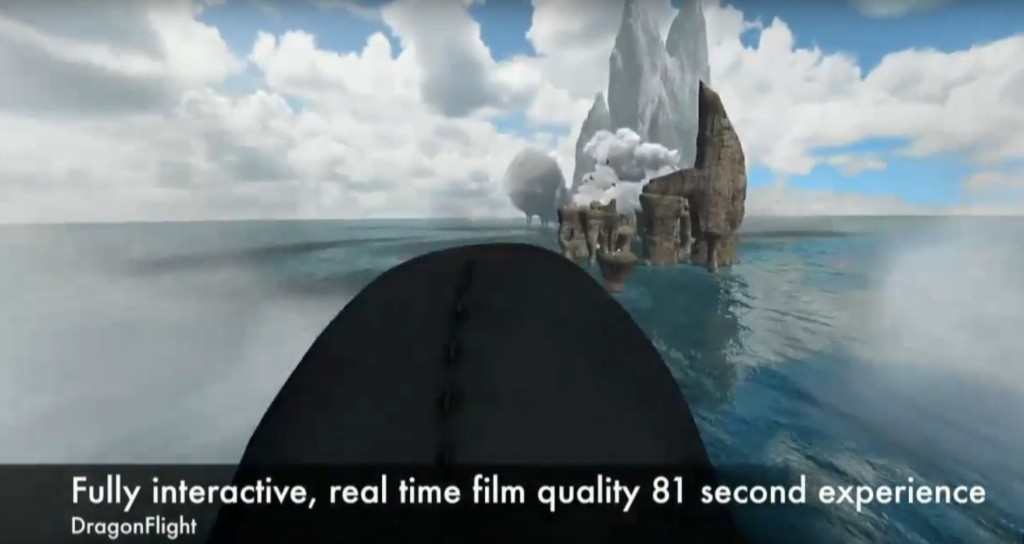
To promote the launch of DreamWorks’ How To Train Your Dragon 2, DreamLab designed a location-based virtual reality experience in which users could actually fly on a dragon for 81 seconds. The attraction was made to look like a viking ship and in itself, made an instant photo opportunity. The DragonFlight simulator was a big hit at movie premieres and conventions around the country, attracting over 14,000 flight sessions since 2014.

Although virtual reality may be popular in Seattle or Los Angeles, Akmal reminds us that bringing your marketing campaign to the rest of the country without regular exposure to VR is vital to your strategy.

Utilize Social Media Influencers To Spread Awareness

Although the DreamLab team initially decided never to release video of the DragonFlight simulator, they found that social media influencers were an efficient and amusing way to spread the word. During his presentation, Akmal showed a video clip in which a young YouTube influencer named Josh Carlon took DragonFlight for a spin, much to the entertainment of his followers.

Your Best Partners Are Your Competition

“For content creators and brands, one of the best partners you have today, especially over the next few years really, are the hardware manufacturers, who have every interest in promoting your content in order to help sell the hardware itself.”

DreamWorks partnered with Gear VR for its hardware launch in a mutually beneficial strategy to promote the hardware and Kung Fu Panda 3. As a result, the large television ad campaign marketed for both companies simultaneously.

Although partnering with hardware manufacturers may seem obvious, seeing other content creators as allies may not come naturally. Since the audience for VR and mixed reality is still growing, Akmal recommends reaching out to other software manufacturers as peers and not seeing them as competition. “Today we look at all our partners and allies in the VR space as partners rather than competitors, because there’s so much more that has to be done to create an audience and a market.”

Push Yourself To See What’s Possible

Mixed reality has the power to bring anything into a space, and Akmal is especially excited about a recent partnership with Blue Bubble’s My Singing Monsters game. Also called augmented reality, this form of combining real and virtual elements is a new and promising way to reach audiences.

“What’s real exciting is pushing yourselves from a creative perspective to see what’s possible,” Akmal concluded. “I’m really excited to be at the forefront along with any of you in figuring that out.”