Microsoft’s Xbox One Marketing Battle

The results of the first few months of next-gen consoles are in, and the PlayStation 4 has a sales lead over the Xbox One, at least going in to March. Somewhere over 6 million PlayStation 4 consoles have been sold, while the Xbox One is somewhere over 4 million (at least, prior to to the launch of Titanfall). This was not a surprise to many observers given the $100 price difference between the two consoles, but this was not good enough for Microsoft.

New Xbox head Phil Spencer underscored the importance of the Xbox One to Microsoft in a recent interview. “I go back and I look at Apple and they, on the back of music, became a very relevant consumer brand. Their investment in music early with the iPod and iTunes and everything that they did was an incredible growth opportunity for them and they really sparked consumer delight and innovation in the product, both the industrial design and just the way the whole service worked and I think we’ve got the same opportunity with Xbox here at Microsoft.”

“I think we have that opportunity. I don’t think it’s a lay-up; and I think there’s a lot of work. A lot of things that have to be done, but it would be great to be a part of that. If people look back and said ‘this is when Microsoft committed to gaming across everything that we did led with what we do on Xbox One and that was an important part in their history,'” Spencer added.

Larry ‘Major Nelson’ Hyrb and Phil Spencer

How has Microsoft been working to this end, and how has it responded to the sales differential with the PS4 On a number of fronts, but the most important is pricing. Certainly Microsoft wants to avoid a permanent, obvious cut in the Xbox One price, and that’s understandable. If you can boost sales to the desired point without a price cut, your bottom line will thank you. Perhaps the sales picture will look better with a few key releases and some marketing, so don’t give up margin in case you don’t really have to for the long term.

Cue the bundled software promotion, which adds significant value to the Xbox One by bundling in a digital copy of Titanfall or Forza Motorsport 5 for free. That’s a $60 game, effectively reducing the price of the Xbox One by $60, making up more than half of the price gap with the PS4. Best of all, that promotion can be ended at any time,returning the Xbox One to its original margins.

That promotion (which is still going on, with no particular end announced) was good, but Microsoft wasn’t finished there. Major retailers Best Buy and Walmart have the Xbox One at $449 with the bundled game, which effectively makes the Xbox One even cheaper than the PS4. At Costco, the Xbox One bundle with Forza Motorsport 5 is also at $449. Those are promotions offered by the retailer, not Microsoft, yet Microsoft is certainly watching the results carefully.

Microsoft isn’t relying on pricing and promotions to boost the Xbox One. We’ve seen a number of stories coming out of Microsoft’s Build conference, where the Xbox One featured prominently. One of the criticisms leveled against the Xbox One has been that it doesn’t have quite the same graphics horsepower as the PS4, so Microsoft is working to overcome that. At the Build conference Microsoft showed off the benefits of cloud computing for improving Xbox One game performacne, and trumpeted the introduction of DX12 that could significantly boost the Xbox One’s graphics power. In other words, Microsoft is not conceding this point at all to Sony.

The Xbox One is more than just games, though Microsoft is careful to keep the focus on gaming front and center (after the negative response to the initial unveiling that was focused on the console’s media capabilities). The recent announcement of a full slate of original programming for the Xbox One shows Microsoft’s desire to make the Xbox One a significant media machine. It’s important to notice that Microsoft is planning for each show to have interactive features to take advantage of the Xbox One and to differentiate this programming from other shows.

Microsoft continues to provide system updates and tweaks on a faster pace than Sony, bringing new functionality (like YouTube uploads) to the Xbox One and hinting at future capabilities. This is leading up to E3, where Microsoft will be attempting to reset market perceptions and recapture the leading position in the console wars. It’s an ambitious goal, especially when Sony won’t be standing still either. Still, Microsoft has the advantage of greater financial resources, and if the company really is determined they can easily outspend Sony on marketing or anything else.

Microsoft knows it’s under pressure from multiple fronts, on the low end from Amazon Fire TV and the rumored Android TV and revised Apple TV as well as Sony at the high end. Microsoft has staked out a claim on the premium end of the living room market, and it looks like the company is striving to be the leader. Only one thing’s for sure right now: E3 is going to be interesting.

The Reality Of Virtual Reality

We’ve seen a lot of excitement and buzz building around the Oculus Rift and VR in general over the last year, increasing as Sony introduced Project Morpheus and several other companies showed VR technology at GDC. The buzz hit a high point when Facebook shelled out $2 billion to acquire Oculus, and Epic’s Tim Sweeney declared “It’s technology that I think will completely change the world. I think it’s going to be a bigger phenomenon than smartphones.”

Let’s just pause here and stop hyperventilating, before we pass out. It’s time to take a look at reality, and not the virtual kind. The game industry regularly sees new hardware introduced, often with predictions of massive impact or amazing games, and all too often the reality falls far short of the early promises. How do we sort through these predictions and promises in the excitement of the moment?

The Doorway
It’s important to remember that game hardware per se is meaningless. It’s a rather expensive paperweight or doorstop or objet d’art that does nothing in itself but demonstrate how much free cash you have. Game hardware only becomes meaningful when you turn it on and it delivers a game, and the quality of the game is what matters. Now, game hardware that helps games deliver better experiences is a good thing, but we can’t get too excited over raw hardware speeds and feeds.

Game hardware is like a door. There are many types of doors, with different compositions, types of hinges and locks, and so forth. Generally, though, it’s what the door leads to that’s important, not the door itself. Sometimes many doors lead to the same place, which lessens the importance of each door. That’s the non-exclusive game, where many types of game hardware deliver the same (or similar) game experiences.

Therefore, look at what experiences game hardware brings you. Are they exclusive to that hardware? That’s a plus. Is the experience worth enough to justify the hardware price? Sometimes it’s not, and sometimes you have to look at the total value a device delivers to you (such as streaming video, or in the case of smartphones a whole array of capabilities beyond games). 

Barriers to customers
Another way to evaluate the market potential for game hardware is to look at the barriers to customers that are presented, and determine if the value is sufficient to get customers past those barriers. A good example is the original iPhone: It was expensive, and very different. The iPhone lacked a physical keyboard, the battery life was pathetic compared to standard cellphones, and it was pretty poor at making phone calls, with lousy voice quality and terrible signal acquisition. There was no App Store or any thought of one, and the device was expensive. Yet, with all those drawbacks, the iPhone sold well and went on to spark a revolution. Why? Because of all the things it could do, like maps and calendars and email, were all pretty cool, much better than a standard cellphone and easy to access. People put up with the annoyances because of the iPhone’s unique abilities and the quality of the experience.

Game hardware has several barriers in its journey to market. Pricing is an important one; game devices costing hundreds of dollars are a tougher sell than cheaper ones. Look at the PS4 and the Xbox One, which are more alike than any two new consoles have ever been, separated by $100… and so far the PS4 has been outselling the Xbox One by roughly 50 percent. No wonder Microsoft has been bundling games and encouraging sales at major retailers to eliminate that price differential.

VR hardware is going to cost hundreds of dollars, and it will require (at least for Oculus Rift and Project Morpheus) an additional external box (a PC or a console) to drive it, which is hundreds of dollars more. Another barrier is the fact that you have to put this on your head, blocking out your local environment. (A big part of the reason 3D TV fizzled is that you had to put on glasses, and even without blocking out the rest of the world people found that annoying.) Let’s not forget motion sickness potential (another killer for 3D TV), and the possibility VR may never work well for half the population.

The experiences that VR can provide will have to be sufficiently amazing to not just barely clear those barriers, but leap over them, in order for VR to become a major market for games.

Clear path to delivery
Finally, let’s not underestimate the value of a clear path to delivery of promised game hardware benefits. When Nvidia tells me I can buy a graphics card and get a better frame rate at max settings with my favorite game, that’s easy to believe. When you tell me that the PS4 or the Xbox One will give me prettier games at higher resolution than a PS3 or an Xbox 360, that doesn’t seem unlikely. The hardware is straightforward, and asking game developers to add more polygons and higher resolution textures to existing game designs may require a lot of work by artists, but it’s not a technical breakthrough.

However, go back to the PlayStation 2 and the Emotion Engine promises that were made at that launch. Sony said the new chips in their console would enable game developers to really put emotions into the games, and usher in a whole new era of gaming. Sure, we all love the deep emotional interactive stories we get in games now because of that, right Not hardly. Game designers still struggle with how to program emotion into game designs, and just because a press release said they can doesn’t make it so.

The Wii U promised unique and compelling game experiences with the GamePad controller, but even Nintendo’s CEO acknowledges that they have yet to really deliver on that. Nintendo is working to come up with some games that really deliver a compelling enough experience with the Gamepad to justify purchase of the Wii U in large numbers. They may yet accomplish that, but so far it hasn’t happened. It’s not easy, if it’s at all possible.

So when VR hardware promises to deliver incredible new experiences, some skepticism is justified. They are talking about something that hasn’t really been delivered before, requiring new variations of games and new game mechanics and control schemes. Certainly, this could be delivered in time, but it’s not straightforward at all.

VR hardware does have great potential, particularly in specific vertical markets like imaging or military simulations or training. VR may yet become a gaming phenomenon, and may eventually reach broad acceptance and become a significant platform for games. That’s still not anywhere close to fruition, and it’s not at all certain it can ever be the case. Enjoy the buzz, but be careful about investing too much into VR (whether it’s money, time, or your enthusiasm) at this point.

The NFLPI Tackles Mobile Video Games

NFL Players Inc. (NFLPI), the marketing arm of the NFLPA, is serious about video games. Once just an afterthought to the business world, or at least second fiddle to the NFL when it comes to the lucrative Madden deal with Electronic Arts; the NFL players are more vocal about gaming this year. Representatives from the NFLPI made the trek to San Francisco for the Game Developers Conference to announce a new contest that will reward the winning mobile game with a free NFLPI license and $10,000 in social media marketing and player endorsement. The NFLPI Mobile Madness Challenge runs through April 20 and is open to anyone from garage developers to large publishers.

“As we grow our licensing business we’re looking to affiliate ourselves and align ourselves with great mobile game developers,” said Ricky Medina, Senior Manager of Business Development at NFL Players Inc. “Clearly our business has done very well on console and working alongside of the Madden product for a number of years, but we’re looking to expand our business into the mobile gaming space.”

By opening its license to anyone, this sets up the perfect wild card scenario, giving a small developer the opportunity to go up against giants like EA in the competitive mobile gaming space. Three finalists will be chosen to pitch their concept to NFLPI’s executive team in the Big Apple. The winner will be granted a license issued by NFLPI for the 2014-15 NFL season, which would include various rights to NFLPI trademarks, as well as names, likenesses, uniform numbers, photographs, voices, replica signatures, and biographical information of active players. All the stuff EA paid huge licensing fees for as part of the Madden franchise.

NFLPI also will award $10,000 in credit toward marketing the game via Activate, the group’s social media endorsement platform that allows active NFL players to promote the licensed product directly to their followers. Given the Twitter followings of star players and the power of social media, this will make it easier for the new game to score with NFL fans. So just what kind of games are NFL players looking for

“I would like to see any games that can use NFL players in the most creative way and not necessarily have the game be about football,” said Shane Vereen, running back for the New England Patriots. “I’m interested in seeing football players in games that have nothing to do with football, to see how creative things can get.”

Other leagues like the NBA have been creative in the mobile space, releasing games like NBA Rush that pits NBA players against invading aliens in an “endless runner” format. And everyone remembers console classics like NFL Blitz, which added an arcade slant to the football format.

“Our fans have been playing Madden for a number of years and this is going to give them a little bit of a change of pace,”said Medina. “It’s going to give them a different way to connect with NFL players. When we think as fans and players interact through their social media platforms, there is an affinity for these folks to be playing different variations of games that might not be football-centered, but still allows you to align yourself with your favorite players.”

The field is wide open for new ideas. In fact, it’s likely those developers who think outside the gridiron that will have the best chance of impressing the committee. Competition entries will be judged on entertainment value, visual design, technology, controls, originality, and ability to effectively market the game, among other factors. Participants can download the submission form at nflplayers.com/thechallenge and all materials should be e-mailed to thechallenge@nflplayers.com.

“The Mobile Madness Challenge as a way to incentivize and create some friendly competition within the game developers’ community to really bring great ideas of NFL players within mobile gaming environments with an untraditional type of fit,” said Medina.

Vereen, who serves as an NFLPI brand ambassador, is — like most NFL players these days — a big gamer. “I grew up playing games and never stopped,” said Vereen. “I would say that my top three games right now are Call of Duty, FIFA and Madden. I play them probably every day. I try to get better and have fun with it.”

Shane Vereen

Vereen made his first visit to GDC and participated in a panel at Moscone Center that announced the contest to attending developers. “GDC is awesome,” said Vereen. “Being a gamer myself, I’ve really felt at home at this event. It’s really cool to see the behind-the-scenes of how games are made, the production side of it and how games are sold.”

One of the big trends at GDC 2014 was virtual reality — something that’s taken on a life of its own after Facebook forked over $2 billion for Oculus VR. Companies like Sulon Technology, Seebright and Oculus VR are developing VR for mobile devices. “I think VR is awesome,” said Vereen, who was able to get hands-on with the technology. “I loved it. I hope it catches on because there’s literally nothing like it. I’ve never tried anything quite like that.”

Virtual reality opens up new opportunities for mobile games, including football. “I think it could make football games much more realistic than ever before,” said Vereen. “You’re not going to feel the hit, thank God, but you will be able to see things from a player’s perspective, what we see.”

Madden NFL 25, which is available across mobile devices, opens up football to fans on the go. Vereen said it’s cool to see himself in the Madden games. “It’s interesting, but I just take it with a grain of salt and just play the game to hopefully win.”

Speaking of winning, Vereen offers some advice for those who pick his Patriots on the virtual gridiron. “Give me the ball as much as possible if you want to win,” said Vereen, laughing. “No, I’m kidding, but honestly spread the ball around, use our weapons. New England has a lot of weapons, so use them wisely.”

Vereen is already looking forward to the new Madden game, especially when it comes to the in-game player ratings. “Before the season (last year) I wasn’t too happy, but by the end of the season I was much more pleased with my ratings,” said Vereen. “Throughout the season I was able to get them up. Hopefully, next year I’ll be able to do the same.”

Given the speed at which mobile games can be made, the new NFLPI game will be available for fans to play during the upcoming season of football — giving Madden some virtual competition. And this first attempt at new games could be just the beginning for the biggest names in the NFL to control their own video game destiny.

Navigating Global Payments For Games

As the gaming industry expands globally, getting paid for your game or virtual goods becomes a vastly more important issue. The preferred payment methods and payment infrastructure vary wildly from country to country, not to mention the legal requirements. If your game is a hit in the U.S., making money from it in another country requires more than just getting a good translation — you’ve got to have a strategy for financial transactions in that country.

This is where a number of firms step in to provide an array of services. One of the key players in the gaming industry is Live Gamer, whose mission is (as they style it) “to stretch the boundaries of what’s possible and profitable in the ever-evolving economy for digital goods, content and services on a global basis.” Live Gamer delivers a broad set of e-commerce solutions to clients across industries including games, media and entertainment and finance and technology, all around the world.

Recently Live Gamer announced its partnership with Wargaming to handle microtransactions and payments for World of Tanks in Japan and Southeast Asia. The [a]list daily caught up with Andrew Schneider, president of Live Gamer, to talk about the company’s role in the global game industry.

Live Gamer has more than 120 enterprise clients transacting in more than 180 countries, but they handle both large and small customers. “We work with both large and small companies,” said Schneider. “We’ve worked with 2K Games, TakeTwo, EA, Facebook is a customer. We do work with large customers but also with independent developers who are just starting out and need a very robust tool set because they want to get into global self-publishing. Rumble Entertainment is a good example.”

Live Gamer president Andrew Schneider
Wargaming turned to Live Gamer in part because of the company’s expertise in Japan, which is a complex market for financial transactions. “Japan is a highly regulated market,” said Schneider. “They have specific compliance obligations around virtual currency and stored value systems. They’ve made some interesting distinctions around who’s made virtual currency and who’s selling virtual currency. Live Gamer has made its mark on solving tough problems and being aggressive on opening new markets for its customer base. We acquired a company in 2009 that was providing billing and payment services to Korea and Japan, so we’ve been focused on that market for a while.”

Along with its payment services, Live Gamer also offers GamerDNA. “GamerDNA has been the second largest advertising network in games, news and information services, according to comsvore. It reaches over 50 million 18-34 core gamers. As a stand-alone advertising business, it reaches a true gamer demographic, which is valuable to game companies and endemic advertisers, but also to other companies that have a hard time reaching core gamers,” Schneider explained. “For Live Gamer, it’s proven as a way to help our game e-commerce clients also have a way to acquire customers, to reach the right customers, advertise, promote and draw in the right type of player to their games. A full end-to-end proposition really does start with acquisition of players, , engagement, conversion from free to pay, then optimization and retention. Those are the main drivers of a developer’s free-to-play business, and we try to map our offering to those key drivers.”

While the issues around global financial transactions are complex, Schneider finds it comes down to some simple things for game publishers. “It sounds pretty basic, but when a publisher or developer is looking to drive their revenue model they have to look at whether they have a great game and an acquisition model. Those are fundamental,” said Schneider. “When it comes to global payments, it’s a simple rule: Allow people to pay in the method that is most convenient and familiar to them. A lot of game developers and publishers may take a U.S.-centric point of view because they might be located here, and it is the largest game market. But the U.S. market is 95 percent credit cards and PayPal.”

Schenider continued, “You can get away in the U.S. with that strategy, but as soon as you get into Europe, as soon as you go to Latin America, or Korea or Japan or Southeast Asia or Easter Europe or Turkey or MENA (Middle East/North Africa), you really need to be informed on what players are paying with, make sure you’re balancing your conversion rate goals with your anti-fraud and risk mitigation goals, and then you worry about your margin optimization. Not all payment methods cost the same amount of money — mobile payment methods, for instance, are usually more expensive than a bank transfer method. That’s a lot to cover, but those are the fundamentals of how to optimize your global payments business. Having trusted partners who know how to do this is ultimately why we’re here.”

The Data On eSports’ Rapid Rise

It’s no secret that eSports has been growing rapidly in the last few years, propelled by free-to-play games like League of Legends and World of Tanks along with the spread of streaming game videos. Research firms Newzoo and SuperData have joined forces on a new free report, Sizing and Profiling eSports’ Popularity {link no longer active}, that provides some detailed numbers about the expansion of eSports.

The report features high-level findings from brand new research across multiple countries profiling 31.4 million eSports viewers and participants in the U.S., and another 16.3 million in key Western European territories.

“Long established in Asia, eSports and free-to-play have now broken out of their niche and into Western markets. Does this prove there is a direct relationship between the two phenomena At Newzoo, we believe so,” said Peter Warman, Newzoo CEO. “It is not surprising that free-to-play titles such as League of Legends, DOTA 2 and World of Tanks are currently leading the West in eSports. Time spent and engagement have become equally important KPIs as money spent, and that is essentially what eSports delivers.”

Newzoo Free Report: Sizing & Profiling eSports from Newzoo

The report showed that some 56 percent of U.S. gamers (and 50 percent of Western European gamers) are aware of eSports. That’s substantial, but there’s still room for significant growth. The size of the market is impress, with some 47.7 million people in th U.S. and Western Europe combined who either play or participate in eSports. It’s important to remember that leading Western eSports titles also have huge audiences elsewhere in the world, particularly in Asia, usually exceed the size of the Western audience.

While that 47.7 million number is large, the report notes that only 40 percent of eSports viewers are strongly engaged, either playing in amateur contests or watching regularly. That leaves the majority of eSports viewers to still be engaged at a deeper level, which explains the continuing investment of publishers like Riot Games in efforts to expand competitions and encourage more teams to form at different levels.

The eSports viewer is, not surprisingly, a pretty hard-core gamer according to the stats compiled by the report. Some 22 percent of them are big spenders, compared to 8 percent for all gamers. They are also havey console gamers, at least in the U.S., and are early adopters of next-gen consoles – 23 percent own an Xbox One compared to 7 percent of all console gamers. These eSports viewers are usually male (about 45 percent are males aged 21-35), and they’re more likely to be married (52 percent versus 39 percent for all gamers) and have a full-time job (71 percent versus 50 percent).

“Large companies like Riot Games, Valve, Wargaming and Ubisoft are placing bets on the growing success of eSports worldwide,” said SuperData CEO Joost van Dreunen. “And with the booming popularity of streaming services like Twitch.tv and MLG.tv, it is becoming easier than ever for gamers to connect with other players and form communities that culminate in competitive gaming.”

Newzoo believes eSports growth will continue. “eSports has been extremely popular in Asia for a long time. Growth in that region will continue through organic growth of economy and connected population. The biggest change of which we have only witnessed the beginning, is in the West,” noted Warman. “As more game companies get involved in eSports on a professional level or by facilitating amateur leagues and championships, the involvement of Western gamers will continue to increase. The fact that the free-to-play model incentives and justifies the investment in eSports will only accelerate this as more titles move to a free-to-play or at least a business model that gives them continuous revenues, e.g. through add-on content or in-game spending.”

That means an expanding opportunity for publishers in eSports. “More time spent engaged with a game franchise will in the end translate into more money,” said Warman. “Our data shows that 60 percent of the 31.4 million Americans only watches eSports sometimes. The other 40 percent , or 13 million Americans, can already be considered eSports enthousiasts. The 60 percent represent the direct potential that will get more involved and ensure viewing time and participation will probably double in the coming year. The fact that companies like Twitch lower all thresholds to broadcast your game from your PC, console or mobile game will add to this.”

Warman predicts publishers will increase investment into eSports over the next year or two. “Wargaming invested $8 million in 2013 in their eSports effort. This year they expect to spend in excess of $10M,” Warman said. “The current players will up their investment and other companies are coming in. Activision is clearly accelerating their effort illustrated by the recent $1 million dollar Call of Duty Championship. I expect others, such as Ubisoft and EA to join. And let’s not forget about Valve and its DOTA 2. This year they will make a serious attempt to threaten League of Legends position as number 1 with DOTA 2. Publishers will also be able to recoup a growing share of their investment through sponsorships and media deals. ‘Innovative’ consumer brands such as RedBull, Coke, Intel, American Express, HBO as well as all hardware (peripheral) companies are already investing good money. More brands will follow.”

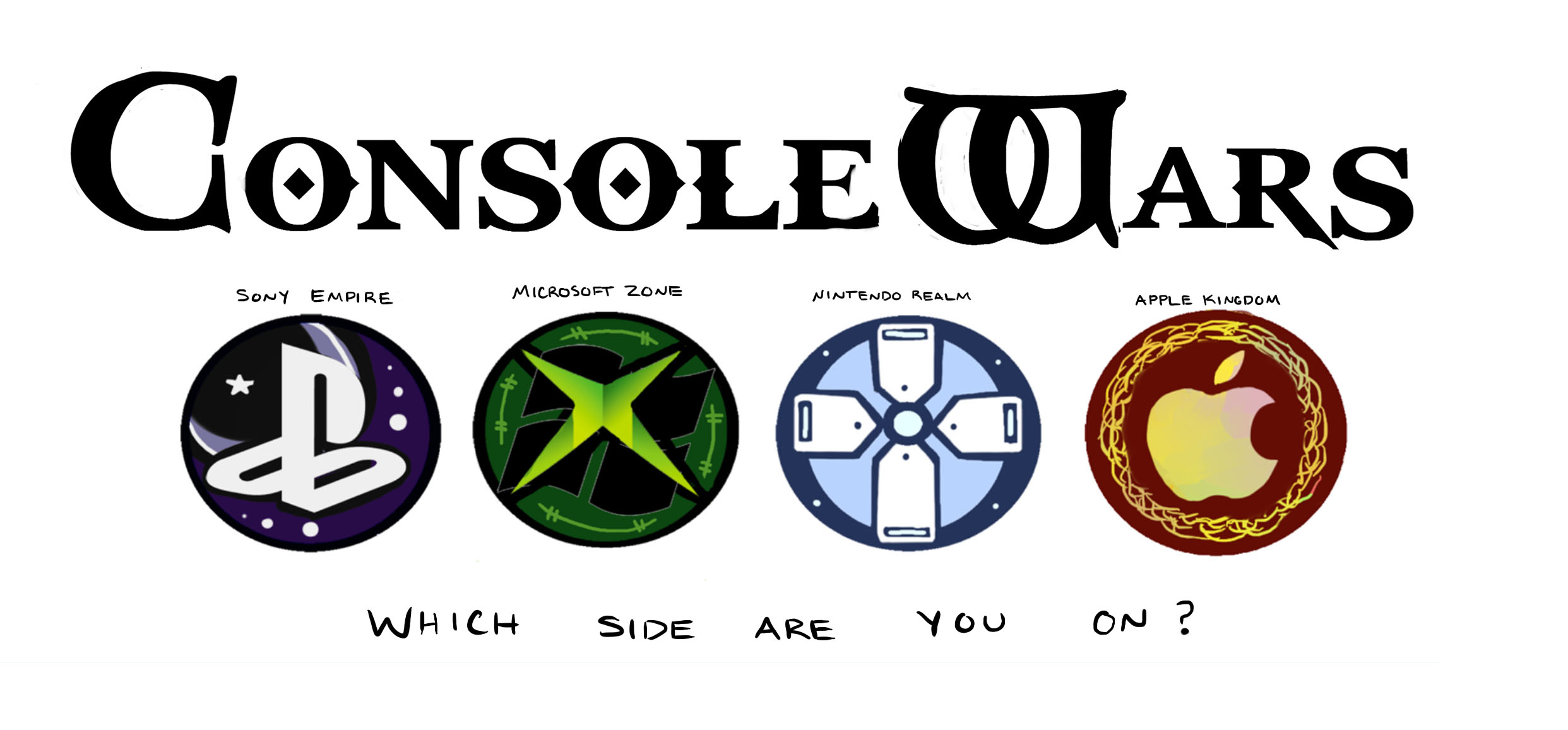
Console Wars Status Report

We’ve gotten past the initial rush of enthusiasm for the Xbox One and the PlayStation 4, and the next major event will be the E3 show in June. What’s the state of the console market It’s definitely mixed, with some high points and low points. TechCrunch had an article pointing out the reduction in console sales in 2014 versus 2007, with less than half the number of consoles being sold this year so far. While the overall market is lower, Microsoft and Sony seem to be doing pretty well so far with next-gen consoles.

Sony’s taken an early lead with the PS4, selling over 6 million units so far with over 13.7 million software units as of March 2. The PS4 will soon have more units installed than the Wii U, if it doesn’t already. The PS4’s sales triumph has been marred with availability problems, which Sony believes will be mostly solved by the summer. That sounds like an E3 announcement they’d love to make: “We have plenty of PS4’s available for all countries.” Meanwhile, the company is trying to meet demand as fast as possible — while still keeping demand high.

Sony’s also been very successful at selling PlayStation Plus memberships, with over half of PS4 owners signing up, which should help boost the console’s profits. Coming later this year is PlayStation Now, the streaming game service that may bring an additional revenue boost to the PlayStation along with backwards compatibility with older titles.

There are difficulties ahead for Sony, with PS Vita sales still not catching fire and a thin lineup of compelling exclusives for the PS4, as well as PS3 sales that haven’t continued as strongly as the company would want. Still, the company has kept in the top sales position for next-gen consoles, and with the unveiling of the Project Morpheus VR headset Sony is placing a bet on the future that may bring in even more buzz.

Microsoft has had a more interesting time with the Xbox One, handicapped by by the system’s $100 price premium over the PS4. While sales of the Xbox One have apparently not topped the PS4 (Microsoft reported 3.9 million sold through the end of January), that situation may be changing with the introduction of Titanfall, easily the most acclaimed next-gen exclusive title so far. Microsoft has has also improved the value of the Xbox One by bundling in Titanfall (or Forza Motorsport 5) at no extra price, which is (effectively) a $60 price cut if you were planning on buying one of those titles. Walmart and Best Buy are doing their best to help by cutting an additional $50 off the Xbox One price, leading to a better value than the PS4 (if you add in the value of software bundles).

It’s too early yet to tell what effect Microsoft’s moves have had on Xbox One sales, but the results will probably help guide Microsoft’s Xbox One strategy for the remainder of the year. Clearly Microsoft is not content to trail PS4 sales and is fighting hard to keep sales high or even pass up the PS4, knowing the value this has in acquiring and keeping developer support.

Microsoft, like Sony, has a thin lineup of exclusive announced so far for the next few months. We will probably see some announcements at E3, but until then Microsoft is probably looking for Titanfall to keep excitement high. There’s still the possibility of more value being added to the Xbox One through bundling of software or services, and the option of an actual price cut is always on the table. We’ll probably get a clearer picture of Microsoft’s strategy at E3, but in the meantime keep an eye on these bundle deals and sales. If they continue for the next couple of months, it’s likely we’ll see some more permanent move on value or pricing by Microsoft at E3.

It should be noted that the main reason behind the Xbox One’s higher price, at least in the eyes of most observers, is the Kinect. While the Kinect has some showy interface features and has enabled some interesting things (like Xbox Fitness), the device has yet to realize its full potential. If there’s a game or two or out there with awesome Kinect-powered features, that would be a competitive advantage difficult for Sony to match, the Move notwithstanding.

Meanwhile, Nintendo continues to push out more 3DS titles and work diligently on Wii U software, without a sign yet of a major sales revival. Perhaps E3 will be the place where Nintendo reveals more of its strategy going forward, and demonstrates how it will boost flagging sales and return to profitability. Based on what the company has said so far, though, its plans appear to be longer term – which means we shouldn’t expect any major new hardware initiative to be announced at E3.

Overall, the sales picture for Xbox 360, PS3, and Wii software has been grimmer than expected. Despite bright spots like Grand Theft Auto V, sales have been disappointing for most publishers on their current-gen software titles. At this point there doesn’t seem to be much publishers can do about that; it’s really up to the hardware manufacturers to cut prices on older consoles in order to goose sales. Perhaps what’s holding back hardware makers is they’re not sure a price cut will really mean much a sales boost, instead just cutting into profit margins.

The NPD retail sales reports for the next few months will provide important clues to the momentum of new consoles. One should expect sales to slow in this season, but both Sony and Microsoft will be trying to keep things from getting too slow. If they are content with current sales, major marketing and product announcements will be held until E3 to generate excitement for the fall. If the sales picture isn’t quite as rosy, we may see some major announcements slip out prior to E3 to help boost excitement and sales.

Image credit: Dorkly

Wil Wheaton Not A Fan of Facebook’s Oculus Acquisition

It used to be the magic of Hollywood special effects that transported actors like Wil Wheaton to other lands when they entered the holodeck in Star Trek: The Next Generation. But video game technology is catching up to science fiction. Wheaton, who’s a big video game — and tabletop game — fan, talks about the near future of holodecks in your home and explains why he’s not a fan of Oculus Rift’s decision to join Facebook in this exclusive [a]list daily interview.

The big theme at the Game Developers Conference was virtual reality. One company even touted a holodeck for your home. Having worked on Star Trek: The Next Generation, what are your thoughts on yet another science fiction technology becoming a reality?

It’s something that everyone has wanted as far back as the Golden Age of science fiction in the early 20th Century — the opportunity to immerse ourselves in a virtual world that brings our imagination quite literally to life. It doesn’t surprise me at all that as computing power has increased and hardware costs have decreased, that more and more people have gone to develop those things and make those dreams a reality. I’m not surprised that there are comparisons to the holodeck. Star Trek is very forward-thinking and has actually inspired a ton of technology from the MRI to the flip phone, so those comparisons are really natural. Even though I didn’t have anything to do with creating the holodeck that’s part of the Star Trek canon, it’s pretty cool to know that this imagined thing is potentially finding its way into reality.

What impact do you feel Facebook’s acquisition of Oculus Rift will have on the future of VR?

For what it’s worth, I’m super disappointed that Oculus sold to Facebook. I really liked that the Oculus devs were making on a passion project and they were making something that a lot of people were really excited about and really believed in and the opportunity for them was limitless. The reality is Facebook is not that. Facebook is not a bunch of passionate idealists working to create something really great. Facebook’s an advertising and data mining company. It’s looking more and more like this was a defensive acquisition, which is a super bummer. But maybe we could all be proved wrong. Maybe Facebook’s going to completely get out of the way and let these guys do what they were already doing, and just let them be independent developers under that big Facebook umbrella. But if you look at all of Facebook’s acquisitions and the things that they’ve done, that probably isn’t the way it’s going to go.

When you look at Sony’s Project Morpheus and the Virtuix Omni and what Seebright and Sulon Technologies are doing with virtual reality, it looks like we’re getting closer to the Oasis from the book, Ready Player One, which you did the audio book reading for.

It’s not a question of if, it’s a question of when something like the Oasis is real. You have seen people working really hard to build virtual worlds like Second Life and all of the dozens that have come and gone over the last decade or so. When you can put people in them, it creates a really fantastic opportunity to have an entire new world exist. It’s going to be great for people with disabilities and it’s going to be really wonderful for creating an environment where people can really feel like they are together, regardless of where they are in the physical world. It’s going to be fun to go in there and participate in a version of Tabletop gaming, but maybe we’re actually dropping ourselves into virtual power armor and becoming Space Marines or we’re playing Battle Lore and we’re becoming spellcasters and actually seeing those things that have really only existed in our imagination, existing in a way that feels much more real. For so long, so much of science fiction has been dystopian, and with good reason, but I do think it is cool that there is the possibility for a world to exist — even if it’s only virtual — where there’s these limitless opportunities for all kinds of people.

At the same time, as more and more people broadcast on YouTube, it becomes more challenging to find content through that. What role has your success in Star Trek and The Big Bang Theory played in finding an audience out there for TableTop?

I’m not really sure what the correlation is between the work I do on big mainstream programs like Big Bang Theory and the audience that comes to TableTop. Even before I was doing this recurring role on Big Bang Theory people were really coming to see the things that we did on Geek & Sundry. Those audiences kind of parallel each other and occasionally overlap. Maybe somebody sees me on Big Bang Theory or they see me on Leverage or Eureka and then look me up on the Internet and see links to my blog and TableTop stuff, but that’s honestly not something I spend a lot of time thinking about.

How easy is it to get celebrities to come and play board games with you?

We have some unique challenges. We’re a little show and for the number of episodes we make and the quality of our production we’re actually a pretty low budget show. So we have a lot of shooting constraints. Primarily, we shoot 10 episodes in five days and because of that we have to build this really complicated logic puzzle, where we match up players with games that are appropriate to their experience level and then we have to get three players for that game plus me. Then we have to figure out a time when all three of those players can play, whether they’re going to be in the morning episode or the afternoon episode. And then we have to be prepared for them to be maybe they have to drop out at the last minute because an acting job comes up. But even with all of those constraints and all of those challenges, it has always been pretty easy to get people to come and play on the show. They think it’s a really cool idea.

Welcome To The New Chicago

While some have complained about the graphical fidelity of Watch_Dogs in the most recent trailers, Ubisoft is here to push back against those impressions. Starting out with scenes of the city that look like a virtual recreation of The Wire, it moves to high tech portions of Chicago and show how alive Chicago is in Watch_Dogs.


Turtles Come Out Of Their Shells

https://www.youtube.com/watch?v=Bu8JXkDJ_XM

Teenage Mutant Ninja Turtles are a cultural force that have remained popular for decades, thanks in part to continued revisions of the core characters in different media. This movie is the latest incarnation of the turtles, and it appears to have all the freewheeling action and humor that the series is generally known for.


Aussie Builders Yell Empowering Statements

This amusing ad involved actors and not actual construction workers, but the women on the street were members of the public that took a shine to the experiment. While one could question of the underlying implications of the ad (do men have to be hungry to be polite ) the message is clearly intended to be lighthearted and the intentions are clearly good.

Source: AdWeek.com