Anime and manga community Crunchyroll has partnered with Twitch to host a five-day marathon featuring more than 15 different anime series. This event will be the first anime marathon on Twitch—not counting the Pokémon animated series—adding to a growing list of TV programming streamed across the site.
The anime marathon will run July 27 to August 1 on the TwitchPresents channel. While the full programming schedule won’t be revealed until July 21, the slate of anime series confirmed include: Yuri on Ice, Mob Psycho 100, Miss Kobayashi’s Dragon Maid and Rokka: Braves of the Six Flowers.
Twitch was originally founded to stream games, but it has become a thriving community that gathers for whatever passions they share. For fans, this means more access to their favorite animated shows. For marketers, this means access to an engaged fan base in a market that fetched ¥1.8 trillion ($15.9 billion) in 2016.
“Anime content on Twitch always sparks a lot of positive feedback from our community given how gaming and anime cultures have borrowed a lot from each other,” Annie Berrones, director of emerging content marketing at Twitch, said in a statement. “By partnering with Crunchyroll for our first ever anime marathon . . . we will be able to tap into this passion of our community in a much more robust fashion than ever before.”
Subscribers to the TwitchPresents channel will receive access to new, exclusive emotes themed after some of the featured shows.
“We’re bringing two powerful fandoms together around our shared passions, and we look forward to introducing new viewers to some of our favorite anime series starting next weekend,” Kun Gao, Crunchyroll’s co-founder and general manager, said in a statement.
The Japanese animation industry is experiencing its fourth “Anime Boom,” according to The Association of Japanese Animations, especially in the United States. This boom can be attributed to increases in market channels including internet distribution like Amazon, Netflix and Crunchyroll. You’d think that Amazon-owned Twitch would partner with AnimeStrike for its first anime marathon, but a mutual love of the animation transcends competition.
“Crunchyroll and Twitch have had a close relationship for some time, including featuring some of their talent on our shows and audiences that are very adjacent,” Michael Aragon, Twitch SVP of content told AlistDaily. “Because we already knew their team and content, we proposed Twitch as an ideal platform to highlight their shows via a marathon since it would ultimately drive a new audience to their paid subscription service.”
Crunchyroll partnered with LootCrate last year to further its brand outreach and encourage subscriptions to its anime streaming service. For the first time, Crunchyroll will have its own booth at this year’s San Diego Comic-Con.
“Anime has been a fundamental part of Japanese culture for several decades, and it’s been an increasing part of worldwide culture over the past 25-plus years,” Dallas Middaugh, head of brand and community at Crunchyroll, told AlistDaily in an interview last year “You can make several arguments as to why ranging from the coolness factor to the accessibility of the art. But in the end, I believe it comes down to compelling stories and characters.”
With Madefire, digital comic book readers have a chance to delve into stories like never before. In addition to standard comics and graphic novels, Madefire offers a series of titles that use its signature Motion Books. These comics are enhanced with animations, music and sound in addition to letting users pan around certain scenes. It’s almost like a cross between an animated movie and a comic book with a little bit of a game-like interaction added as users tap through a motion comic. Furthermore, Madefire’s motion comics have been brought to the Samsung Gear VR, making it the first comic book platform to step into virtual reality with 3D scenes, and the company said that will support additional VR headsets in the future.
All taken together, Madefire is becoming the perfect platform for cross media comic book titles, particularly those from video game IPs—which was underscored by the recent hiring of Jon Middleton, who became Madefire’s chief revenue officer in July. Middleton is a longtime video game industry veteran who has handled everything from development to in-game advertising. Now he is working to broaden the relationship between the video game industry and Madefire by bringing more IPs on board with the motion comics platform.
Jon Middleton, chief revenue officer at Madefire
There is a deep connection between video game audiences and comic books, evidenced by how 2K Games owns an in-house comic book publisher Double Take and how Wargaming partnered with Dark Horse Comics to create a comic book series based on World of Tanks. Media giant Warner Bros. owns DC Comics, which publishes the Injustice: Gods Among Us series to complement the hit fighting game that launched its sequel in May. Telltale Games hit new heights by making adventure titles based on comic book IPs like The Walking Dead, Batman and Guardians of the Galaxy and the list goes on.
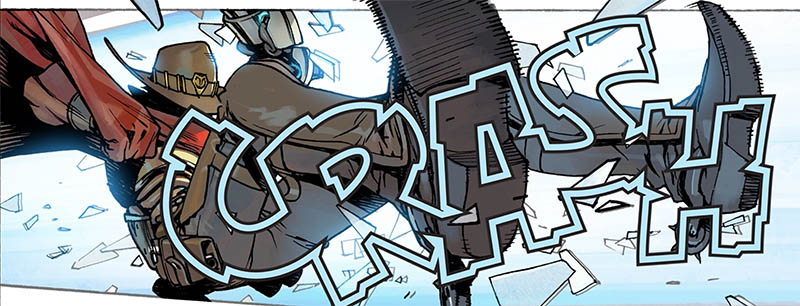
Injustice has motion comics on Madefire, but another series that has gotten some serious attention in recent months is Overwatch, based on the best-selling first-person shooter from Blizzard entertainment. Although fans can read the standard comics almost anywhere physically or digitally to learn more about the game world, they can turn to Madefire for one that is fully enhanced through motion comics.
AListDaily sat down with Middleton to talk in-depth about Madefire’s Motion Books, the relationship between games and comics, and how Overwatch could help attract more video game IPs to the platform.
What prompted the move from the video game industry to comics?
I don’t look at the work I do as being based in two different industries. The world of entertainment is converging and you’re seeing media crossing over into adjacent industries every day. It’s simply a natural extension for me. Comics and games have always been a closely-knit fandom and the industries work in a not too dissimilar way. In the past, I’ve worked across film, TV and music. For me, comics and games are culturally very similar.
That being said, I’ve watched for some time as Madefire tackled the challenge of bringing comics into the digital age with innovative tech and original IP and strongly believed that I could add value to the brand through strategic partnerships. The potential for comics to thrive on digital platforms has yet to be realized. It’s not simply alternative distribution, we believe digital can and should offer so much more to the consumer. It needs to make a case to exist in such a format and offer a totally different experience to what has come before.
There appear to be a lot of video game IPs getting involved with comic books. What is the relationship between games and comics?
I think it’s a symbiotic relationship. There’s a lot of crossover, and popularity on comics has never been higher, thanks in part to the high quality of comic book movies and TV currently being delivered to audiences. These days, it’s a safe bet to assume that if you love comics you also love games. This fact hasn’t been lost on the gaming publishers and bringing their product to comics allows them to build deeper storytelling into their IP creation arc and forge a closer relationship with the fans by giving their communities more of what they love. In turn, the comic book world gets to expose its art form to a huge gaming audience and open up obvious new revenue streams.
How do digital comics in particular and Madefire’s platform strengthen that relationship?
Madefire has set out to build the definitive storytelling platform for the new millennia. Our Motion Books add animation and sound into the experience, and the end result is something very unique and not easily replicated elsewhere. It’s more than a great read, it’s a new way to consume media, and our audience loves it. We’ve seen impressive success with our gaming partners, and Blizzard in particular has done a superb job enriching the Overwatch story with comics and Motion Books which adds depth and flavor to the universe.
Why focus on video game IPs specifically compared to media such as movies, television, books etc.?
That’s a great question and to be clear, we’re working on all manner of content partnerships. We’ve got some very cool projects across film, TV, books—even music, and we’re truly excited to be working with some of the most prestigious names in pop culture. Madefire’s platform is an ideal fit with gaming communities, and we’ve had some very positive meetings, exploring the use of our original IP in gaming and partnering with developers and publishers to make it happen. A couple of decades in the gaming industry allows me to explore a lot of interesting avenues for Madefire in this space, resulting in an invigorated focus towards gaming.
What led to Overwatch being featured on the Madefire platform and do the comics cross over with game releases and events?
Blizzard is really doing a phenomenal job in expanding the Overwatch universe and delivering great content to the community. Beyond delivering a world class successful new IP—no easy feat in today’s gaming climate—they’ve embraced story as a core element of the game. The comics, Motion Books and animated shorts released post launch of the game were anything but an afterthought, and they were delivered with intelligence and passion for the franchise. It’s part of their ongoing effort to build the fiction and universe of Overwatch and it has worked.
It’s helped that they’ve hired talented staff with a long history in comics to create the books and bring the universe to life. Our relationship with Blizzard has certainly been a high point for Madefire and we look forward to continuing to work with them for many years ahead.
How have fans been reacting to the Overwatch motion comic?
In the case of Overwatch, fans are devouring the books as fast as we can deliver them. It’s incredible to track and witness first-hand the passion and enthusiasm the community has for this series. They love the story Blizzard is telling and watching the story unfold. It’s also exciting to see the overwhelmingly positive feedback for Madefire and our platform. We’re seeing the community embrace our Motion Book concept and one of the coolest things we have stumbled upon are fans recording their own voiceovers for Motion Books and releasing them on social media as videos. It validates the hard work we’re doing and shows we are on the right track. Best of all, it’s all grass roots activity, led by the fans themselves. Madefire supply the tools to make it happen and the community runs with the idea.
Does Overwatch make it easier to bring other video game IPs on board with Madefire?
Sure! It’s always a pleasure working with a company like Blizzard. They make some of the finest software in the world and wrote the book on being a leader in building gamer communities. It certainly helps lend credibility when you have proven success with a partner. Other game developers are looking at using our platform in their own unique ways. I can’t share more at this point, but suffice to say, there will be more to come. Madefire’s Motion Books and gamers are match made in heaven.
In addition to bringing more video game IPs on board, what is the key to continuing Madefire’s growth as a platform?
From a tech perspective, we’re investing a lot of time and energy into expanding the platform to VR and AR. It’s an exciting area of growth and the community are responding well to what we’re delivering so far. In addition, we continue to work with leading partners in media as third party creative companies, but our original IP catalog is the growth path forward.
Madefire was founded to tell stories in a new and unique way, delivering a seamless and unique experience not easily replicated on other platforms. Our Motion Book tools, app, marketplace and back-end technology were built specifically to deliver myths and heroes to the digital generation and we’re excited to where the future is taking us. We have lots of wide-open room to grow; it’s going to be an exciting ride!
In conjunction with Warner Bros. and alongside Christopher Nolan’s WWII action thriller Dunkirk, Wargaming is kicking off a commemoration of the historic event with a series of history-based activities and bundles. The “Remember Dunkirk” content will be available across World of Tanks, World of Warships and World of Warplanes beginning July 14.
Erik Whiteford, head of marketing at Wargaming America, told AListDaily that the game maker’s previous partnership with Sony Pictures on Fury helped reinforce the audience’s connection with the World War II genre and games.
“This not only helped with our existing player-base, which have a very strong identification with World War II-themed properties, but it also exposes World of Tanks to a broader audience who may not have heard of World of Tanks through other channels,” Whiteford explained. “Fury was perfect, given the nature of the story, wherein the tank itself was one of the lead characters. The tank battle footage is very engaging, and it was in many ways indicative of the kind of action a player experiences in World of Tanks. It also never hurts to be associated with global icons such as star Brad Pitt and acclaimed director David Ayer.”
Wargaming also learned that its brand and gaming audience is very attractive to Hollywood filmmakers and marketers.
“We have a daily relationship with millions of players globally, which provides an incredibly effective platform for filmmakers and marketers who want to tap into the core World War II audience,” Whiteford said. “The filmmakers were also able to leverage our knowledge about tanks and battles tactics to ensure accuracy when making the film. We’re also able to incorporate elements from the film into our game, which provides another relevant and timely touch point for our players and a unique way for the film to connect with our audience.”
Wargaming is launching a full series of “Remember Dunkirk” themed missions on July 14 that will take over the battlefields of World of Tanks and the combat-filled skies of World of Warplanes. Players can compete to earn “Remember Dunkirk”-themed vehicles and accumulate experience points that are redeemable for in-game gear, including special camouflage and more.
The battles will expand in the coming weeks with a series of World of Warships missions that will give commanders the opportunity to earn Dunkirk-themed containers and flags, as well as a Dunkirk themed ship commander.
“Dunkirk is an epic WWII action-thriller film,” Whiteford said. “Our games are epic WWII action games in which we are able to provide compelling land, sea and air WWII experiences. Partnering with Dunkirk allows us to talk about all of our games and the experiences they offer. It has become a perfect platform to promote the Wargaming Battle Trilogy, versus focusing on one property or the other.”
Whiteford explained that Wargaming’s in-game experiences are not so much “play the movie,” than they are about extending the film experience through its games.
“Dunkirk was one of the pivotal points of WWII, one that, had it turned out differently, would have altered the course of the war significantly,” said Whiteford. “Christopher Nolan’s Dunkirkwill bring these events to the big screen in a way that underscores the human drama and the thousands of individual stories that were a part of this harrowing event. While our games are not story-driven per se, they do deliver the intensity and drama of WWII battles.
Whiteford said films like Fury and Dunkirk reignite people’s interest in WWII. These films allow Wargaming to tap into a wave of renewed interest in the genre.
“We are able to communicate to potential players in the context of a shared passion for this era,” Whiteford added. “Wargaming is obsessed with WWII and we welcome any mass market property that joins the party.”
Wargaming is supporting the entire trilogy with a Dunkirk-themed, cross-media marketing campaign that will run on TV, online video, social, and digital platforms. Most of the creative will contain assets from both the Dunkirk film and Wargaming online games.
“We’ll be running community events that will allow our players to see pre-release screenings of the film,” Whiteford said. “Our games will also be featured on Dunkirk’s web portal and social media sites.”
Wargaming also produced a series of documentaries that tell the story of The Miracle of Dunkirk from the perspective of tanks, warships, and warplanes. The game maker also created two 360-degree videos that take the viewer into the cockpit of the iconic RAF Spitfire, an aircraft that played a key role in the evacuation. The videos emulate the path of the evacuation, flying from the southern coast of England to the northern coast of France toward Dunkirk. More installments will be released episodically in the coming weeks.
“Our players index heavily in World War II interest, so films focused on this period in history are high on their priority list,” Whiteford said. “These films bring back to life the stories and the era that mean a lot to our players. We look at these films as an extension of what our games provide and our games are extensions of the films. Either way, they help reinforce the impact and importance of this era which we at Wargaming are so passionate about.”
Chief marketing officers have indicated major industry challenges when it comes to adapting and serving local audiences with timely, localized content and campaigns, and too few are investing in the necessary tools, teams and processes needed to deliver tailored quality creative.
According to a joint study from CMO Council and HH Global, a meager 33 percent of respondents said that their companies were advanced or doing well in adapting brand content for different markets, partners and geographies.
Thirty-four percent of respondents, however, said they were at least improving, and just 20 percent are satisfied with their creative delivery process and marketing supply chain effectiveness.
The report, titled “The Age of the Adaptive Marketer,” polled 150 senior marketing executives from global industries that demand an omnichannel presence in Q2.
“At a time when the customer has higher expectations than ever for relevance and personalization of content and brand interaction, marketing organizations will need to step up their game when it comes to brand content adaptation to address geographic, cultural, customer and other differences,” said Donovan Neale-May, executive director of the CMO Council. “Past research has shown that adaptation of marketing strategies and content can be a major enabler of sales and brand success. Yet most companies have a long way to go in order to get it right.”
Executives who were surveyed also indicated the top five process challenges they face:
Shortening turnaround times
Ensuring quality and uniformity with brand guidelines
End-to-end workflow management
Delivering creative on time and measuring the creative appeal
Impact of content
“The findings—that marketers are struggling with finding efficient ways to adapt creative content for local markets at scale—expose a gap in the market that is quantitatively consistent with our qualitative experiences,” said Robert MacMillan, group CEO at HH Global. “We have seen marketers trying to expand into new regional markets with localized content, but, as demonstrated in the research, they have neither the time nor processes and tools to execute at scale.”
The study also found that brands are not taking the necessary steps to advance their capacity to adapt and modify branded content.
18 percent have completed a formal assessment of their creative delivery process and marketing supply chain effectiveness
24 percent say they have begun one
20 percent use online approval and proofing systems to accelerate modifications
49 percent of respondents say they spend less than 5 percent of their marketing budget for creative adaptation and cross-cultural localization
Twitch has hired Kate Jhaveri as their senior vice president of marketing, the social video platform announced Tuesday.
Kate Jhaveri
Jhaveri will report to CEO Emmett Shear and be tasked with leading global marketing and communications and grow the community with unique content experiences.
“Twitch has already done a great job leveraging owned and earned media, in-product messaging and of course with its own weekly show introducing new features and content to our community,” Jhaveri told AListDaily. “I’m looking forward to building on this great foundation and deepening our storytelling about the power and richness of our community across more platforms. . . . Twitch has grown exponentially over the last couple of years, and a key focus for us this year is to bring more visibility to new broadcasters and content categories that have emerged recently thanks to our deeply engaged community.”
Before joining Twitch, Jhaveri led global consumer marketing for Twitter, where she was responsible for end-to-end marketing, including brand and product marketing, paid acquisition and lifecycle, and all consumer touchpoints. Prior to Twitter, she led mobile marketing at Facebook and was responsible for launching and growing new mobile products. Jhaveri previously has worked at Microsoft for seven years as well, leading global consumer marketing and communications teams for products like Windows and Office.
“Having spent a good part of my career working with social platforms, I’m thrilled to be a part of the Twitch team and to bring the excitement and energy of this brand that is so beloved to a larger audience,” Jhaveri said.
Michael Mendenhall has been appointed CMO for IBM Watson and Cloud Platform.
Mendenhall, a former Hewlett-Packard and Disney marcom executive who most recently worked for electronics solutions company Flex, will be based in San Francisco and be tasked with global marketing, branding and communications.
Online loan marketplace company LendingTree named former Travelocity executive Brad Wilson as their new CMO to oversee brand strategy, marketing operations and consumer engagement.
“As we continue to improve our market position, expand into new categories and scale our business, it’s imperative to bolster our leadership team with executives of this caliber to support future growth,” said Doug Lebda, founder and CEO of LendingTree. “Brad’s unique leadership experience and strategic omni-channel marketing approach will undoubtedly support our growing portfolio of consumer-centric products and services.”
“I have always been inspired by the mission of the company and its pro-consumer focus,” said Wilson. “I am even more impressed with the culture that LendingTree has cultivated to support the company’s growth.”
Scott Hudler has been named CMO and senior vice president for Dick’s Sporting Goods to oversee the brand’s overall marketing and consumer engagement strategy and implementation. He will report to company president Lauren Hobart.
“Scott will play a pivotal role in driving our continued digital transformation across all consumer touch points and optimizing all of our marketing channels,” said Hobart. “His experience will make an immediate impact on our team, and we are thrilled to welcome him to the DICK’S family.”
For the last 11 years, Hudler worked at Dunkin’ Brands, most recently as senior vice president, chief digital officer. Previous to that, he was at Mars Inc., holding a variety of marketing roles in brand, sponsorship and marketing communications.
“I have always admired the Dick’s Sporting Goods brand as both a marketer and as a consumer. I am incredibly excited to align my personal and professional passions and lead the digital transformation for such a strong consumer brand,” said Hudler.
Warner Bros. Digital Networks is making moves within their management teams by naming Eric Besner, senior vice president, business development, Greg Salter, senior vice president, business, strategic planning; Katie Soo, senior vice president, marketing.
“We’re excited to be growing the Digital Networks team with the addition of Katie, Greg and Eric,” said Jay Levine, executive vice president of Warner Bros. “They each bring broad experience and a digital-native perspective to their respective areas of expertise and will be key in helping us ramp up our operations as we continue to grow both our digital short-form production and OTT offerings. Combined, these executives have worked at some of the industry’s most successful and respected digital innovators—including Netflix, Hulu, Spotify, Warner Bros., and Fullscreen—and I look forward to working with each of them.”
Twitter has tapped Ned Segal as chief financial officer. Segal most recently served as a senior finance executive at Intuit. He previously was an investment banker at Goldman Sachs, too.
“Ned’s experience in financial operations as a public company and business unit CFO, along with his background serving technology companies and investors, are an ideal fit for Twitter as we work to extend our positive momentum, continue growing our audience and achieve greater operating efficiency,” Twitter CEO Jack Dorsey said in a statement. “He brings a principled, engaging and rigorous approach to the CFO role, with a track record of driving profitable growth.”
Andrew Ip has joined Charter Communications as the company’s senior vice president of emerging technology and innovation. Ip will be tasked with “introducing, developing and commercializing new technology that will enable enhanced customer experiences and help the company expand into new marketplaces.” Ip most recently served as senior vice president and managing director at Madison Square Garden Ventures.
“We are very pleased to welcome Andrew to the engineering team at Charter,” said Jim Blackley, executive vice president, engineering and IT for Charter Communications. “Andrew brings a wealth of technical expertise and a unique vision that will enable Charter to further drive the adoption and roll-out of emerging technologies.”
Personalized photo products and services brand Shutterfly announced the hiring of Scott Arnold as president of Shutterfly Enterprise to oversee the organization’s emerging division.
“Scott’s proven track record and leadership experience make him the right leader to take on the important work of developing a long-term enterprise strategy and continuing to grow the division by leveraging our core technological and manufacturing capabilities,” said Christopher North, president and CEO of Shutterfly.
Legend 3D, a 3D conversion, VFX and VR studio, has made eight additions to their executive management team with the hirings of: Richard Baker (chief creative officer), Barry Stagg (CMO), Scott Willman (CIO), Crys Forsyth-Smith (vice president of production), Prasanna Kodipadi (vice president of international operations), Chris McClintock (senior producer), Lisa Sepp-Wilson (head of VFX production, Toronto) and Simon Kern (stereo supervisor)
“These key roles reflect Legend’s ongoing commitment to provide clients with the most experienced and accomplished professionals in our business,” said CEO Aidan Foley. “As an industry leader, Legend takes serious our obligation to engage world class talent in all facets of our operations. We’re very pleased to welcome these respected and skilled new members to the Legend family.”
Augie Renna is joining northeast vacation destination Foxwoods Resort Casino as vice president of national marketing. Renna recently was the president of national marketing for Tropicana Las Vegas and has over 30 years of casino marketing and leadership experience.
“[Augie] is an invaluable asset who will help drive the growth of our brand nationally while spearheading player development strategies and strengthening communication with the most important part of our business, our customers,” said Felix Rappaport, president and CEO of Foxwoods.
TriHealth has a new vice president of marketing communications in Rob Whitehouse.
The Las Vegas Golden Nights, the NHL’s latest expansion team, have parted ways with Nehme Abouzeid, their senior vice president and CMO.
Abouzeid, a Sin City marketing veteran with stops at Wynn Las Vegas and Las Vegas Sands Corp, announced his departure on Facebook. “Pro hockey effectively launched in Vegas. City excited. Team drafted. Brand rolled out. Flagship store opened. Fan base engaged and growing. Looking forward to the next journey helping other companies and brands do the same. Look for my own firm launching soon in Vegas.”
Jason VandenBerghe, formerly a Ubisoft Montreal creative director and widely known as the yelling Viking man behind the video game For Honor, is joining ArenaNet as its new director of design.
VandenBerghe, who also worked on such titles like Far Cry 3, Ghost Recon Future Soldier and Red Steel 2, released the following statement on his Facebook page.
“I won’t be making games directly any more – I’ll be studio level, shepherding teams and growing people. I’m… sort of thrilled about how difficult that sounds,” VandenBerghe said.
Jennifer Chasteen has been promoted to the newly created position of vice president of brand strategy and activation for Church’s Chicken.
“Jennifer has been instrumental in defining marketing strategies that amplify Church’s purpose of creating great chicken experiences that guests love,” said Hector Munoz, executive vice president and global CMO at Church’s. “Paired with her deep activation expertise, that vision will now carry all the way through to the local marketplace.”
J.C. Penney CFO Edward Record has stepped down from his position at the retailer.
“I’ve had a very rewarding experience at J.C. Penney, and am proud of the work we have undertaken to strengthen the company’s financial condition,” Record said. “J.C. Penney is well positioned for the future, and I will continue to follow the company closely as the team builds on the positive momentum it has experienced over the last few years.”
Univision ad-sales chief Keith Turnerwill retire from his post as president of ad sales and marketing at the end of the year. Prior to joining the Spanish-language broadcaster, Turner served as the senior vice president of media sales and sponsorship for the NFL, where he oversaw the NFL sponsorship business, as well as advertising sales for all NFL media platforms.
Norman Pearlstine, Time Inc.’s vice chairman, executive vice president and chief content officer, is retiring from the company.
Microsoft will cut 3,000-to-4,000 jobs in its sales and marketing divisions, which employs about 50,000 people worldwide. The move follows their recent announcement that the tech giant would be realigning the two divisions, moving the company’s focus toward cloud services, data analysis, artificial intelligence and digital business opportunities. The cuts will “enable [Microsoft] to align the right resources for the right customer at the right time,” said Judson Althoff, executive vice president for worldwide commercial business for Microsoft, perThe Wall Street Journal.
(Editor’s Note: This post will be updated daily until Friday, July 14. Have a new hire tip? Let us know at editorial@alistdaily.com.)
Since the days when families gathered together around the radio, brands have played a vital role in audio entertainment—a tradition that continues with podcasts. While host-read ads or pre-recorded commercials are common, an increasing amount of brands are creating their own podcasts as well.
US podcast advertising revenues are forecasted to skyrocket to more than $220 million this year, according to the Interactive Advertising Bureau—an impressive 85 percent over the $119 million recorded in 2016. Branded content made its revenue-earning debut in 2016, earning two percent of total podcast advertising revenue. While that doesn’t seem like much compared to 73 percent from direct response ads, branded content still accounted for nearly $2.4 million.
Those branded podcasts tended to focus on the spirit of the product or service, such as entrepreneurship (eBay: Open For Business) or money management (Umqua Bank: Open Account).
The Message is an eight-part science-fiction thriller series by General Electric (GE) about cryptographers who try to decipher a message from an alien. GE’s two shows, The Message and LifeAfter, combined, have had their episodes downloaded over six million times. “That’s a big audience that is saying, ‘I elect to listen to 20 minutes of branded entertainment.’ That’s a huge opportunity for a brand,” Alexa Christon, the head of media innovation at GE told Digiday. “This is one of the most direct ways of reaching a consumer.”
Other shows go deeper into a television program like Investigation Discovery: Detective or the just-added TNT’s Will Podcast.
Approximately 46 million Americans ages 12 and over are now listening to podcasts each month, according to a report by Edison Research and Triton Digital. Thanks to voice assistants like Amazon Echo, listening to podcasts is as easy as requesting it aloud. That’s a massive audience that brands are hoping to reach, and traditional advertising won’t go away anytime soon—but podcasts have a way of speaking to millennials in a way that other mediums do not.
According to podcast advertising platform Midroll Media, the best podcast ads are voiced live by hosts in their own words.
“Because podcasts rely on the intimacy of the medium, and the long-cultivated relationship between hosts and their listeners, the ad impact is significant,” Midroll Media’s chief revenue officer Lex Friedman told AListDaily. “We are especially good at reaching the unreachables—millennials who fast-forward through ads on their DVR, run ad blockers, jab at the radio preset buttons in their cars when an ad comes on. When they listen to podcasts, the host-reads feel like a natural extension of the show, so listeners remain attentive.”
This statement is backed by IAB’s study, which revealed that host-read ads accounted for 60 percent of podcast revenue in 2016, compared to pre-produced ads at 40 percent.
In a study from Westwood One in partnership with Advertiser Perceptions, 21 percent of marketers and agencies surveyed reported advertising in podcasts, up from 15 percent in a similar study conducted 9 months earlier. Not far from IAB’s predictions, Bridge Ratings forecasts $207 million in podcast ad revenue for 2017. One thing is for certain—regardless of the subject matter or method of advertising, brands clearly like the sound of podcast marketing.
In 2014, Crytek first announced Hunt: Horrors of the Gilded Age as a four-person cooperative shooter set in the 1880s where players come together to hunt monsters. But the company suffered financial difficulties, and the project was moved from Crytek Austin to the main studio in Frankfurt, Germany where it appeared to be forgotten.
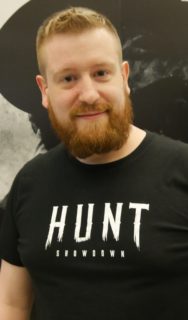
Dennis Schwarz, lead designer for Hunt: Showdown; Crytek
However, looks are deceiving. In May, Crytek revealed that it was reviving the game, but renamed to Hunt: Showdown, and it would no longer be a cooperative third-person shooter. Instead, two players band together in an arena-like competition with other teams (up to 10 players per match) to track down a monster, defeat it, and escape with its loot. Alternatively, players can decide to skip the monster altogether and either hunt other players or interfere with their plans to steal the loot for themselves.
It’s a major departure from the original concept, but one that fits in nicely with the current trend of battle royale survival games such as Playerunknown’s Battlegrounds. Hunt: Showdown mixes genres by being both a horror game and a survival game.
“Hunt leans toward different genres,” Dennis Schwarz, lead designer for Hunt: Showdown, told AListDaily. “We tried to marry the feeling of an open world survival sandbox game with the match-based structure of other titles. We brought these two worlds together to bring you the sensation of 360-degrees of danger, but there’s also directional focus as you go out and find the clues that will lead you to the target.”
Crytek showcased early gameplay to select members of the press during E3, which was the first major debut for the revamped game. The giant map is comprised of one square kilometer, set in the swamps of Louisiana. Target creatures can be found almost anywhere in this space, and a contract might even include multiple targets. However, players need to be careful with their actions, because the sound of gunfire might give away your location, attracting both rival hunters and nearby monsters. Players that die will lose their gear, but they will pass on genetic traits that will benefit successive characters.
Schwarz pointed out that although players can attack each other, they won’t be able to loot each other for gear, since the emphasis should be on hunting monsters and not necessarily each other. That being the case, new players will encounter veteran ones while exploring the swamps so that they can aspire to become great hunters themselves. Furthermore, players can strategically follow other teams around and steal the bounty after they’ve done all the work.
While discussing the radical shift from being a cooperative game to a competitive one, Schwarz said, “Originally, the game started in our Austin studio as a third-person four-player co-op game. We’ve taken it to the Frankfurt studio, where all the veterans of the Crysis series is located, and we thought it would help tremendously to put it into the first-person. It’s more engaging and puts you down in the action. Also, we thought that putting in PvP (Player-vs-Player) would add the thrill of survival games with an unpredictable element. By combining the PvP with the monsters, we end up with some really interesting gameplay. In our testing, very few matches play out in the same way because of the unpredictability that the players bring.”
Schwarz added that the sense of permanent death (permadeath) in a match is essential to the new format because it keeps players on their toes. “There needs to be a fear of loss because you play very differently if you’re about to lose something, and you have to gamble with your character,” he said.
According to Schwarz, the reception to the new gameplay format has been very good. The press was given a detailed presentation about how Hunt has evolved and Crytek made sure people understood how the game was unique. It also helps that battle royale-style survival games are very popular right now.
“Survival games are kind of in vogue right now, with a lot of great games out there,” Schwarz observed. “It seems like we’re hitting a nerve there. We’re positioning ourselves very closely to some of these games, which wasn’t planned, but it’s great to see that there’s strong potential for these types of games.”
No launch window has been announced for Hunt: Showdown, as Crytek is working to iron out the gameplay. However, Schwarz did confirm that the game would be releasing for the PC platform first and it won’t be a free-to-play game.
Crytek is already working to build up a community for Hunt, which will play a critical role in developing the game. “We want to work closely with the community in order to drive this game forward,” said Schwarz. “We want to see how people respond to it, and it will be a very open and active relationship with our community.”
Ticketing company StubHub has namedOlivier Ropars as their new vice president and CMO. Ropars previously was the head of global performance marketing for eBay.
“As a seasoned retail and e-commerce expert, Olivier will be key to building a global marketing engine to power StubHub’s continued growth and reach throughout the world,” said StubHub president Scott Cutler. “With extensive international experience and a proven ability to drive results, Olivier is the perfect fit . . . in our mission to connect fans to inspiring live event experiences across any screen—anytime, anywhere—worldwide.”
Actor George Takei is joining the mobile gaming business as a creative director for Fifth Journey. Takei will help create new content and promote the mobile game based on Kubo and the Two Strings, while also reprising his role from the movie.
“Kubo is the story of a young samurai’s magical quest to save his family,” said Takei. “It’s a beautifully crafted film and I’m thrilled to be working with Fifth Journey on the game.”
“George is an amazing storyteller and one of the first in Hollywood to bridge east and west,” said Fifth Journey co-founder Eric Tan. “We couldn’t have asked for a more inspired individual to join our company, and to help bring Kubo’s magic to game audiences on both sides of the Pacific.”
Volkswagen Group of America namedWerner Eichhorn as head of sales and marketing in North America. Eichhorn was previously an executive for Volkswagen’s European operations and has worked for the car manufacturer more than 35 years.
Formula One tappedEllie Norman as head of marketing for the worldwide auto racing company. Norman previously worked at Virgin Media and was responsible for the 9.58 seconds campaign featuring renowned track and field star Usain Bolt.
“Ellie’s appointment represents the latest addition to our expanding management team, aimed at increasing engagement with Formula One fans globally,” said Sean Bratches, Formula One’s managing director of commercial operations.
Millennium Hotels and Resorts has a new global chief marketing officer in Franck Kermarrec. He will oversee globally integrated marketing and review the brand portfolio. Previously, Kermarrec led commercial strategy for Hertz International.
“We are thrilled to have Franck on board and believe that his extensive knowledge and experience of the travel and hospitality sector will be invaluable in developing the global brand portfolio further” said Clive Harrington, chief commercial officer for Millennium Hotels.
Warner Bros. Records added two former Universal Music executives, Chris Atlas and MarkFlaherty, to its marketing department. Atlas will serve as senior vice president of urban marketing; Flaherty will be senior vice president of marketing at the Warner Music imprint.
“Chris and Mark have a wealth of experience creating bold and original marketing campaigns that excite global audiences and help build long careers for artists,” said Warner Music general manager Larry Mattera. “They are both inspiring leaders who will strengthen our expertise around specific genres of music, at a time when our approach to artist development must be more inventive and fan-focused than ever before.”
BET Networks appointed Michael D. Armstrong to the newly created position of general manager. The television network also promoted Jeanine Liburd to the newly created role of CMO and Donna Blackman to senior vice president of business operations.
“[The] announcement outlines key changes to our operating structure that further solidify our position as a thriving global brand,” said Debra Lee, chairman and CEO of BET Networks. “Michael exemplifies the values of strong, dynamic leadership—and his vast knowledge of our industry and how our audiences connect with content is unmatched. Known for their passion for our business and their strong experience in the industry, Jeanine and Donna have a proven track record of developing dynamic strategies that have accelerated growth, elevated brand awareness for BET and engaged consumers worldwide. These appointments will strengthen our ability to drive growth in ratings and digital metrics, achieve strategic goals and deliver strong financial performance.”
Digital comics publisher Madefire announced Jon Middleton as their new chief revenue officer. Middleton has held executive roles in the gaming industry for over 20 years. In a corresponding announcement, Madefire announced an initiative to expand its portfolio of content, targeting gaming for its platform.
Katherine Barna, the former head of communications for Tumblr, will now be vice president of communications for Awesomeness. Barna will oversee PR strategy for various branches of the media and entertainment company, including DreamWorks TV and Awesomeness Films.
“Katherine’s success working at Tumblr, a platform beloved by its community and respected in the industry, makes her a great fit for our company as we continue to embrace the global Gen Z audience,” said Awesomeness CMO T.J. Marchetti.
Actor George Takei is joining the mobile gaming business as a creative director for Fifth Journey. Takei will help create new content and promote the mobile game based on Kubo and the Two Strings, while also reprising his role from the film.
“George is an amazing storyteller and one of the first in Hollywood to bridge east and west,” said Fifth Journey co-founder Eric Tan. “We couldn’t have asked for a more inspired individual to join our company, and to help bring Kubo’s magic to game audiences on both sides of the Pacific.”
Julien Noble has been promoted to executive vice president of worldwide digital marketing at 20th Century Fox. Noble previously spent seven years at Walt Disney Studios, climbing his way up to vice president of digital marketing and publicity.
Rob Owen has been named vice president of creative, catalog and marketing for Warner/Chappell Music’s United Kingdom division
Mid-Atlantic food retailer Weis Markets namedRon Bonacci as vice president of marketing and advertising. Previously, Bonacci was senior director of marketing at Texas-based supermarket Lubbock.
“Ron Bonacci has extensive experience in managing cross-functional teams in developing and implementing strategies for customer relationship management, marketing and advertising,” said Weis senior vice president of merchandising Richard Gunn.
Digital comics publisher Madefire announced Jon Middleton as chief revenue officer. Middleton has held executive roles in the gaming industry for over 20 years.
“We’re very excited to have Jon lead the business team here at Madefire,” said Madefire CEO Ben Wolstenholme. “He’s a very senior hire and comes to us with a stellar network and unique experience in building content and technology companies.”
Shinola CMO Bridget Russo is leaving the luxury-goods maker after five years. Russo oversaw the marketing for Shinola as it grew from a Detroit-based watchmaker to a global upscale brand.
(Editor’s Note: This post will be updated daily until Friday, July 7. Have a new hire tip? Let us know at editorial@alistdaily.com.)
Under Armour has named Patrik Frisk as COO and president of the athletic wear company. Frisk will oversee go-to-market strategy and long-term growth plans for Under Armour.
Frisk was previously the CEO of the Aldo Group, a footwear and accessories brand, and he has over 30 years of experience in the apparel industry.
“Patrik’s global experience in brand building, including a proven and disciplined record of driving growth, while enhancing profitability and efficiency, will be instrumental as we work to transform our business model to deliver long-term value for our consumers, customers and shareholders,” said Under Armour CEO and chairman Kevin Plank.
Frisk’s appointment will allow Under Armour to better leverage digital business and help with operational efficiency, which is needed after months of sluggish growth for the company.
In April, Under Armour reported its first ever quarterly loss since going public in 2006. The previous quarter, the company reported revenue growth of under 20 percent, the first time in over six years.
Under Armour also made two other executive moves by appointing Paul Fipps as chief technology officer and Colin Browne as chief supply chain officer.
“Today’s leadership appointments and the streamlining of our organizational structure are transformative steps focused on a sharper, consumer-led approach and go-to-market strategy through our category management lens,” said Plank. “With the stated goals of accelerating our innovation agenda, optimizing our product assortment and creating a merchandising center of excellence, this underscores our work toward evolving from a great brand with good operations—to a great brand with great operations.”
Pandora founder Tim Westergren has resigned as CEO and board member for the internet radio company. Chief financial officer Naveen Chopra will be interim CEO while Jason Hirschhorn will fill Westergren’s seat on the board.
In corresponding moves, Pandora announced that president Mike Herring and CMO Nick Bartle were leaving the company.
“I am incredibly proud of the company we have built,” said Westergren. “We invented a whole new way of enjoying and discovering music and in doing so, forever changed the listening experience for millions . . . I believe Pandora is perfectly poised for its next chapter.”
Westergren took over as CEO last March. His departure adds to the company’s already turbulent year. Pandora’s share price dropped by more than a third since the beginning of the year, following Westergren introduction of Pandora Premium, a premium service akin to competitors Spotify and Apple Music.
In June, the company announced it sold Ticketfly for $200 million to Eventbrite—Pandora paid $335 million for the ticketing service company in 2015.
Twitter has hiredCandi Castleberry-Singleton as vice president of inclusion and diversity, replacing Jeffrey Siminoff, who stepped down in February. Previously, she was vice president of global inclusion and diversity at Motorola.
Twitter took criticism in 2015 for the lack of diversity in high-ranking positions, and the hiring of Castleberry-Singleton aims to make Twitter a better reflection of its users’ demographics.
E! Entertainment has promotedJen Neal to executive producer of live events, making her responsible for E!’s featured franchise “Live from the Red Carpet” as well as “People’s Choice Awards.” Neal will also continue to serve as the entertainment company’s executive vice president of marketing.
“Live events have been the heart of the E! brand for over two decades, and with Jen’s appointment we are continuing to bolster our strategy to supercharge E!‘s unparalleled red carpet coverage and re-imagine People’s Choice Awards for the next generation,” said E! president Adam Stotsky. “Jen is a dynamic executive who has helped propel the network, and I’m thrilled that she will bring her creative vision and innovative approach to this new post as Executive Producer of Live Events.”
Former BitTorrent marketing executive Brian Davi is now CMO for GameMine. Davi will oversee the development of marketing initiatives and company growth strategies for the US-based mobile game publisher.
“Brian holds the exact blend of professional expertise needed for GameMine’s CMO position,” said GameMine CEO Daniel Starr. “As GameMine’s global reach continues to develop, we have been searching for a talented marketer with strong breadth and depth of experiential knowledge of subscription-based mobile markets, with a specific focus on mobile gaming. Brian’s skillset is exactly what we’ve been looking for and we feel he is the perfect fit for GameMine.”
Comedy Central hiredWhitney Baxter as vice president of strategy and business development. Baxter previously worked for Goldman Sachs, with his focus on the banking firm’s entertainment, media and internet clients.
“We’ve leaned upon Goldman Sachs’ long-standing reputation for having the best sense of humor in the financial sector and have hired one of its best and brightest,” said Comedy Central general manager Tanya Giles. “Whitney brings valuable experience in our evolving industry and a keen strategic mind to Comedy Central, and we’re very excited to have him join the team.”
The Player’s Tribune, the sports publishing platform founded by New York Yankees great Derek Jeter, has its first CEO in Jeff Levick. Levick was formally the chief revenue officer at Spotify and has also worked in sales at AOL and Google. At The Player’s Tribune, he will be tasked with creating new revenue strategies for the startup such as international expansion and subscription services.
Topps, known for their sports trading cards and confectionery treats, promotedDeniz Gezgin to vice president and general manager of digital. Gezgin will focus on the digital apps division of the company. He was previously the director of user acquisition and marketing for Topps Digital since last March.
“Deniz has advanced Topps Digital’s product strategy by applying years of industry knowledge and valuable user base experience,” said Topps president and CEO Michael Brandstaedter. “We’re committed to shaping the digital apps category through quality, creativity and innovation with Deniz at the helm.”
IGN host Naomi Kyle is now on the roster for Everyday Influencers (EI), an agency representing talent in the esports, music and lifestyle industries. Kyle was previously the writer, producer and host for IGN’s Daily Fix show. She will now work on The IGN Show for EI.
“We couldn’t be more excited to have our team represent her on all fronts,” said Darren Yan, EI’s head of talent. “As an established personality in the gaming and digital space, we can’t wait to put our efforts and resources behind her to continue to expand her career and brand.”
Live! Casino & Hotel promotedJennifer Kearns to executive director of relationship marketing. She is now responsible for enhancing the VIP guest experience at the Live! Hotel, which is set to open in 2018. Kearns previously worked at SugarHouse Casino in VIP guest services and casino host management.
Arkane Studios, the company responsible for games like Prey and Dishonored, announced president and co-founder Raphael Colantonio is stepping down. Harvey Smith, the director of Dishonored 2, will take over the Austin, Texas-based Arkane team.
Nokia Technologies has appointedGregory Lee as president and as a member of the group leadership team. Lee joins Nokia after 13 years serving as president and CEO of Samsung Electronics, North America.
Kate Edwards is stepping down as executive director of The International Game Developers Association (IGDA) after almost five years in the position. Trent Oster, who is chair of the board of directors and CEO of Beamdog, will serve as the interim executive director until a replacement is found.
(Editor’s Note: This post will be updated daily until Friday, June 30. Have a new hire tip? Let us know at editorial@alistdaily.com.)
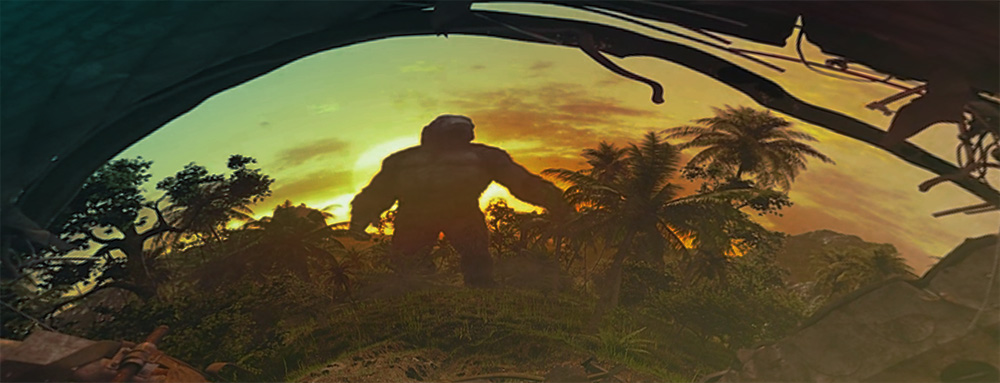
Legend 3D launched its VR division over two years ago and has worked with numerous brands such as Mastercard, Patrón and Stubhub on different projects. Additionally, the company has made VR experiences for movies, including Suicide Squad, Crimson Peak and Kong: Skull Island. On the video game side, Legend 3D created the Rift Walk VR experience for Riot Games’ League of Legends, filmed during the 2016 League of Legends Worlds match in New York City, giving fans a tour through the game world. In short, the company knows how to put together high-quality VR experiences.
Will Maurer, VP of VR & VFX at Legend 3D
“The universal question we ask, no matter what space they’re in, is: why VR?” said Will Maurer, VP of VR & VFX at Legend 3D, talking with AListDaily. “You’d be surprised at the blank stares you usually get when you ask that question. Or they’ll say, ‘we need to do something in VR, so that’s why,’ instead of considering what’s important about the medium that lends itself to capturing an experience for the brand.
“The other question we ask is: what are the goals and initiatives of the experience or campaign? Once we have those, we work with the brands to fine-tune the experience. Sometimes it will be pre-rendered 360-degree video, so someone can just sit back and immerse themselves in a story made around the brand. Or it could be more interactive, such as picking up a can of Pepsi off a shelf. But it all starts with why they want to do something in VR.”
So, we turned the question back to Maurer and asked why brands should consider VR for its promotions.
“One reason is the engagement with the customer,” Maurer replied. “What typically happens with traditional advertisements is that there are a million distractions around you. You could check your phone, talk to somebody, or just look away. Most people will do something else once an advertisement comes on, but that’s impossible to do when in a VR headset. You’re fully engaged—there are no distractions—and that means a higher level of engagement with the potential consumer. Then it comes down to making it interesting and compelling for users to be part of that experience.”
Acting, along with sound and camera cues, will help draw the user’s attention to specific objects or areas featuring the brand. But Maurer explained that the most important thing to keep in mind is creating an experience that won’t make people sick, which was at the forefront of their minds when making The Art of Patrón, which features the perspective of a bee flying through fields and a production facility. “I liken it to the 3D boom 10 years ago, where a lot of people had bad experiences putting on glasses gave up on it,” said Maurer. “I see that happening a lot in VR, where people will try it say it’s not fun.”
He went on to say that location-based experiences being created by companies such as IMAX or The Void, which guarantee high-quality experiences, are a key part of further elevating VR technology. Maurer also stated that there’s longer engagement with experiences that involve some kind interaction compared to more passive video experiences
That being the case, we asked Maurer what separated a promotional VR experience from a video game. “Those lines are becoming more blurred because it’s not traditional content,” he said. “You’re not telling a story all the time—you’re placing them in the middle of an experience. That experience can be narrative driven, product driven, game based or it can be a mix of all three.”
With that in mind, what went into creating the League of Legends Rift Walk experience? “The first Rift Walk was at New York’s Penn Station during the League of Legends semifinals,” Maurer explained, “and Riot wanted to experiment with 360 video to give fans all over the world a chance to go through it. A quick turnaround was important, so they chose time over having everything stitched perfectly. We had to give the experience to fans a week after filming it.”
We then asked Maurer how Rift Walk compared to making virtual reality movie promotions. “League of Legends was more experiential,” said Maurer. “They wanted users to engage with other players in the game. With Kong: Skull Island, it was to sell tickets for a movie. At its core—whether it’s for a game, a product like Patrón, or a movie—it comes down to using VR as a vehicle to drive engagement to the core product. But the way you craft an experience for each of those is different.”
With so many VR movie promotions appearing in recent months, we asked Maurer if they were becoming more sophisticated with the way they were engaging audiences.
“For movie tie-ins, I’ve been a proponent of creating less of a promotional advertising piece and more of the writers, actors and producers involved early on to create VR side stories,” he replied. “For example, in if there’s a scene in a Star Wars movie where one ship is firing on another, the VR experience could put users in the opposite perspective. So, it’s not just promotional—it actually ties in so that audiences will want to experience what it was like to be in that scene after watching the movie. With a lot of movie promotions right now, we do something that’s after the fact, but I think things are headed for more cross-platform story tie-ins.”
Although it seems like the overall enthusiasm for virtual reality has quieted down, Maurer believes that there is still a strong future for the technology as it continues to progress, leading to richer experiences and more realistic immersion. “With the technology continuing to evolve, I think it will lead to different types of content, all the way up to what The Void is doing by letting people walk through entire buildings with a headset on,” said Maurer. “That will change the way content is created.”
Maurer then explained how the prevalence of low-quality content was one of the big challenges VR had to overcome.
“The market has been flooded with poor quality content and headsets like Cardboard, which aren’t the best,” said Maurer. “Imagine watching YouTube content on a phone from five years ago that has no production quality or standards. That’s where the industry is at right now. The poor quality content is scaring off consumers and brands. Brands don’t have a lot of analytics to track how long people are staying inside the headset, so things can get complicated if you’re not working with an experienced company like Legend to guide you through the process. But that is changing with technology and as more content creators that understand the medium jump in. Also, brands are getting more educated in working with VR, instead of saying ‘we need to do something in VR’ and spending money haphazardly.
“Our goal and passion is to make sure that any money spent on VR experiences are kept on the screen and will showcase the brand or IP at the highest level.”
So, what goes into making a memorable VR experience? “The key to a memorable experience is using the medium for what it’s good for: empathy and engagement,” said Maurer. “If you get someone to empathize with your brand or product, then that’s the best form of engagement. That’s what VR is great for—putting someone in a different world, environment or somebody else’s shoes.”
When asked what brands should keep in mind as they enter the VR space, Maurer emphasized how they should look to work with experienced companies. “There are a lot of traditional companies jumping in now to offer VR services to brands they’ve worked with in the past, but that doesn’t mean that they understand the complexities and nuances that are inherent with this type of content creation,” said Maurer. “This is not traditional media, there are a lot of differences, and you shouldn’t look at it from a traditional viewpoint.”


 “Survival games are kind of in vogue right now, with a lot of great games out there,” Schwarz observed. “It seems like we’re hitting a nerve there. We’re positioning ourselves very closely to some of these games, which wasn’t planned, but it’s great to see that there’s strong potential for these types of games.”