Facebook Finds Young Users Flocking Elsewhere

Facebook’s last monthly report has found that some of its youngest users are starting to engage more heavily with other social sites. The company is finding heavy competition for Gen Now users from sites such as SnapChat, Vine, and its own photo-sharing site Instagram.

One recent sobering moment for Facebook was when it lost Blake Ross, director of product, who announced she was leaving the company last year with this odd (if perhaps tongue-in-cheek) statement: “I’m leaving because a Forbes writer asked his son’s best friend Todd if Facebook was still cool and the friend said no, and plus none of HIS friends think so either even Leila who used to love it, and this journalism made me reconsider the long-term viability of the company.”

More worrisome for Facebook might be how the exodus of youth could be fueled less by a lack of “cool” and rather indifference towards what the site offers. Web-expert Laura Portwood-Stacer has theorized that Facebook losing its luster goes beyond teens on the hunt for constant newness.

“I think it has less to do with kids consciously looking for ‘the next big thing’ than Facebook just no longer being a space that serves them,” she said.

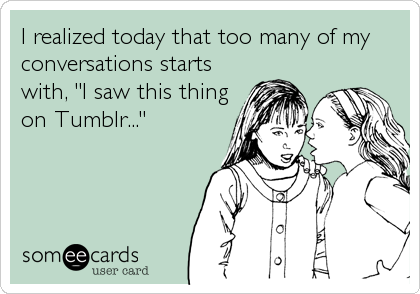
According to its own report, Facebook’s main competition is dispersed among more niche social nets and micro-blogging sites, especially those that are more savvy on mobile. Teens are turning to sites such as Tumblr, which has more than 150 million users, and apps like Snapchat and Instagram that give them specific social networking and communication tools.

The Verge published a telling comment from 15-year-old Collin Wisniewski, who shared this view: “Tumblr is mainly my obsession as of now. It just seems more intimate and it’s not really a place of bragging, but more of a place of sharing.”

Facebook releasing an internal report on how users might be less engaged with it could be seen as a preemptive strike, showing that the company is aware of other studies such as Pew Research finding that people are using it less. Yet its own report might be the scariest yet, where it’s not just a cross-section of users finding other ways to spend their time online but a generational shift towards other social sites.

What do you think is driving users to rely less and less on Facebook Share your comments below! 

Source Online Mail

Exclusive: Stratego – Making Online Social Games Symmetrical Again

By: David Radd

For a long time, what people thought of board games occupied some casual realm of entities like Monopoly, Life, and Clue with war games being played by much more dedicated individuals, and in the middle the two halves rarely met. Splitting the difference, however, was Stratego, a classic strategy board game approachable by most people but complex enough to attract strategy buffs. Dennis Maas of Keesing Games is looking to bring the game to a larger, cross-platform audience online and he talked about his experience.

What drew you to do Stratego?

Well, there are a lot of good board titles out there: Risk, Monopoly, so on. It’s a bit of a coincidence, really. The license holder is based where we are [in the Neatherlands], and we talked to them about making this game. We discussed how to push it forward in a way that players can compete on a high level online.

You really have to make a connection between players. The strengths are people sitting around a table, joshing each other . . . and someone gets all the glory at the end. You’re playing against your friends or parents, and at a certain stage, you find out who is best. If you play someone else, it will suss out the same way.

Stratego is a good game to connect with the world. You will be matched with someone of your own strength – you don’t know them personally, but you won’t have the problem of getting to know them. Afterward, when you make their acquaintance, you can connect with them if you want and challenge them in the future rather than a random opponent. It’s not like visiting a friend’s farm and seeing how big your crops are. *laughs*

What attracts you to doing something that is essentially the new, digital family room?

It’s expanding. What we try to do now is listen to all users. We try to put out the bare minimum of what Stratego is. The core of the game is the friendship thing, being able to challenge other people you know. Now we’re looking to make that bigger, add in new features. Something we’re considering is planetary conquest mode or even a mode you play up the ranks regionally. Here in the Netherlands, when there’s a World Cup, offices make their own pool to see who is going to win — we’re thinking about it in that fashion. We’re trying to touch base with our user group of 200k players and see where they want to move. We wanted to bring out a good game first and from there on and go step by step — after all, it used to be played on a board exclusively and not on the internet.

You keep emphasizing getting the basic game right . . .

I was with a company that works with some of the Hasbro titles and you notice when the game acts differently in the digital environment. So we thought it was important to just take the game and recreate the experience as closely as possible.

That said, the digital environment allows you to do things the base Stratego game is not able to, like say allowing players to have custom games with their own selection of pieces.

That’s something we want to experiment with. What we were thinking of is letting the player choose 2 or 3 variant pieces, or maybe you can get more bombs. Ideas include a Spotter that would have a battle power to turn three pieces around, or maybe there’d be a Marine that can walk over the water. It’s a very delicate matter on how we do this without unbalancing the game – it’s a very delicate thing.

Tell me about the importance of coming to multiple platforms, like Facebook, iPad and the web.

We believe that if you make a family game, recreate the “around a table” atmosphere digitally, the place should not matter. Stratego is played by fathers and their sons – it’s a common combination. What we want is a father who is out on business but has an iPad to be able to spend some time with his son, who has a computer, playing Stratego. Key to that is cross platform. Each platform strengthens the other – it’s hard to reach critical match on iPad alone, but if you link them all together, you can hit a much bigger audience. A third thing is that it is easier to test things on web; if you want to test the game on iOS, you have to deal with a lot of issues. On the web you can roll it out easier. There are multiple good reasons to look at making a cross-platform game if you can.

Why do you feel like synchronous play is the new asynchronous play?

I think Stratego has too many moves to be made to be asynchronous. You have to pay too much attention to the game to go one piece at a time, drawn out maybe over days. While paying attention to the game, you have to think about the enemy, positioning of your marshal, etc. The best scenario in my mind is you’re either doing it with multiple games at one time or focusing on one game. I think with the complication of Stratego, I think it’s impossible to draw out one game like that; if you just focused on one game you’d have to wait a long time to see the conclusion

I think asynchronous works for some games, but a 40 on 40 piece game s would not be a good way to go with it. If we see users are looking for it, we might make a 10 on 10 game.

What sort of reception have you gotten to the beta so far?

Different feedback from different places. On the web, everyone loves it. There are a few country specific things. In Europe, you have different ratings you have to contend with on each of the different App Stores. It’s pissing us off because it costs us business!

A lot of the negative feedback we got, it’s when people are running around the board, trying to annoy the other. They also might be trying to avoid loss, taunting them. We’re trying to balance it — like after 10 moves you have to be in a fight. We have a price of $6.99 on iPad and on iPhone we’ll have $.99

Out of curiosity, if you were one Stratego piece, which would you choose?

The General, because the Marshal always has to look around for the Spy, while the General has the more straight forward role. The Marshal is more easy to recognize and is more likely to get taken down.

Anything to add in conclusion?

Again, in the future we’ll look to add battle powers. So we’re looking on how to expand the game and bring more elements of luck into it. We will experiment on it. A lot will happen in the coming months!

Dennis, thanks.
Digital And Social Collide With Hot Wheels

Mattel launched a unique social media effort that tripled Twitter followers at the Canada International Auto Show in Toronto. To showcase its Hot Wheels brand, it set up a vending machine filled with 1968 Chevrolet Camaro models. Attendees could get the machine to vend them a toy car by sending a tweet to Hot Wheels Canada’s Twitter stream and including the #ChevyCIAS hashtag. How the machine worked is captured in this video.

https://youtube.com/watch?v=gDMQ9HUcuvk

Mark Stewart at TrojanOne, the company that made the machine said, “I think the best part was seeing the physical and digital worlds come together with a social action causing a physical world action to take place — when the car dropped after people sent the Tweet, the smile on their face was priceless.”

Over the course of the 10-day event, Mattel’s @HotWheelsCanada Twitter account more than tripled in followers from 1,200 to 3,800. It could be major marketing milestone, as digital to in-store campaigns become more deeply integrated and embedded into the advertising landscape. Move over QR codes.

Have you seen a similar approach Share your experience in the comment below.

Source: Adweek

Facebook Offers Off-Network Targeting

Facebook has turned to outside ad targeting networks Datalogix, Epsilon, Acxiom, and BlueKai to boost targeting and reach for advertisers. It says the move will deliver better results and more effective campaigns.

It also means Facebook is moving beyond the ‘user likes’ approach for targeting. Partnering with these networks will help it expand beyond its own graph of strictly social media behavior, for example reaching users based on shopping habits on and off the internet.  The expectation is better ROI for its advertisers.

To prove it, Facebook is circulating a couple of examples. Kingnet, a Hong Kong-based game developer, claims it reduced cost-per-install for its apps by 40 percent using Facebook’s enhanced targeting. A car dealership in Chicago says it had 24 times better ROI on its ad spend by building a Facebook campaign around the new service.

Facebook spelled out one way to take advantage of the new service in its blog, “For example, an auto dealer may want to customize an offer to people who are looking to buy a new car. To do this today, many businesses work with third parties to better understand how to identify and reach that audience. With today’s updates businesses can now do this same thing by showing ads to people on Facebook who may be in the market for a new car.”

Source Facebook


Oreo Dunks Into YouTube

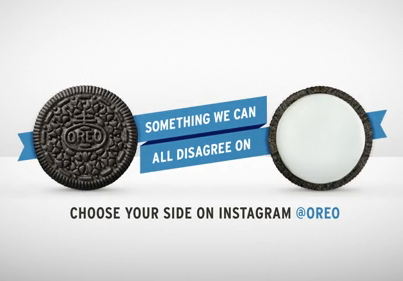
As part of Oreo’s Cookie vs. Creme campaign, {link no longer active} Nabisco is expanding its cookie line’s social media presence with a high profile effort on YouTube.

The brand deemed the “darling of social media” after recent successes, including a winning Super Bowl effort, has shown its marketing team understands social and how to keep consumers engaged online. Oreo has an impressive 32 million fans on Facebook spanning across 200 countries, and more than 76,000 Twitter followers.

Even more impressive is Oreo’s Instagram presence.  It launched a brand page on the photo sharing site less than a month ago with the campaign, Are you cookie? Or are you creme?”, asking people to vote their favorite by Super Bowl Sunday.  The campaign, along with a quick-witted, agile approach to posts relevant to real-time events at the Super Bowl, spiked its Instagram followers from 2,200 to 87,000 people.  Now it’s using that same cookie or creme theme to spearhead a new YouTube video series.

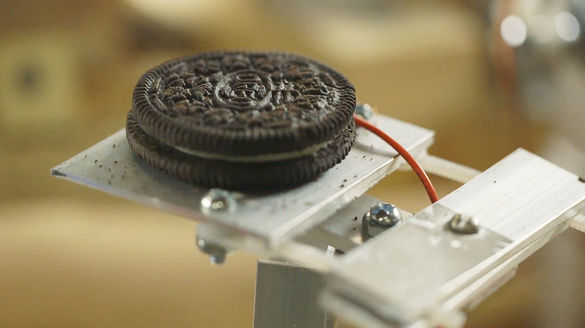
Oreo will feature videos on YouTube over the next two weeks showing different ways to snack on the cookies. The first video {link no longer active} sets a high bar.  Physicist David Neevel, who apparently prefers the cookie to the creme, highlights how he has a motorized wood-and-aluminum robot that can use a hatchet blade to slices off his least favorite part.

Speaking to Mashable, Oreo Brand Director Janda Lukin commented on the campaign, “We know Oreo fans use their hands to separate the cookie from the creme, but wanted to take this ritual one step further by creating a device that does it for you.”

Is Oreo poised for another social media win with this YouTube campaign  Share your comments below!

Source: Mashable

VFX Artists Want A Piece Of The Pi

About 400 protestors gathered outside the Dolby Theatre on Hollywood’s biggest night in movies, to bring awareness to Rhythm & Hues’ financial woes, the digital effects company now best known for the impressive animated tiger in Life of Pi. The company has laid off 254 people despite its Academy Award winning work on the massively successful film, which has raked in more than $110 million at the box office to-date.

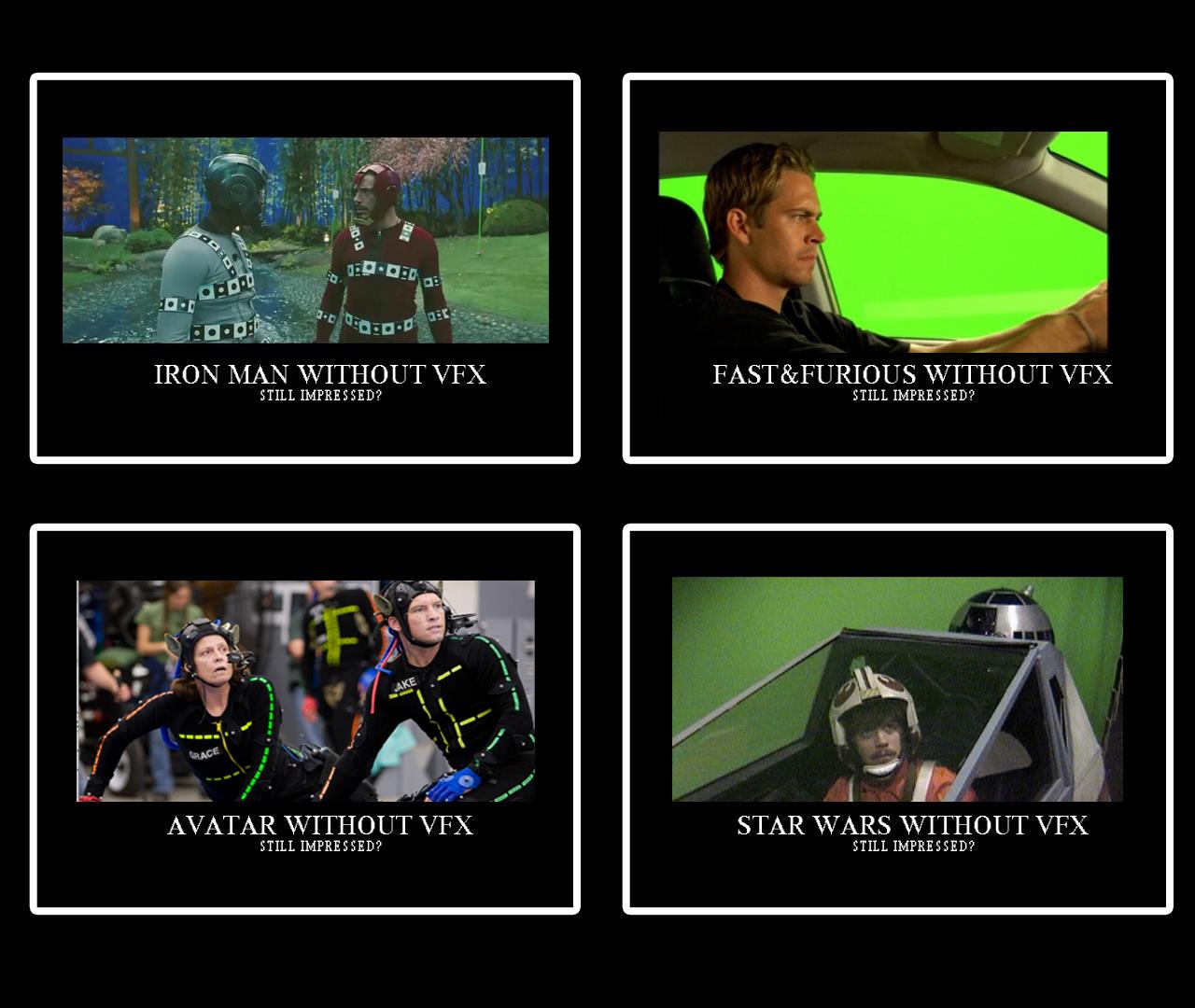
The onsite protest at the Oscars came from online act of unity on Facebook, where the page VFX Solidarity International was set up a couple of weeks before the show. Now, protest organizers are looking to use Facebook to further broaden support for a call for unionization of the visual effects industry. They’ve asked colleagues and other supporters to replace their profile photos with a solid bright green image. The image symbolizes what movies would look like without special effects by mimicking a green screen.

On Twitter, congratulatory tweets directed at Life of Pi’s visual effects award have been quickly met with acerbic messages about the protest, and spawning the hashtag #VFXprotest.

Even the Wall Street Journal has joined the ruckus, creating an interactive microsite depicting scenes from serveral films as they would appear without the work of visual effects by artists.


The movement may have received its best call to arms from the way the Academy Awards treated winning effects supervisor Bill Westenhofer.  His acceptance speech was cut short with the theme music from Jaws as soon as he attempted to remind the audience of Rhythm & Hues’ financial difficulties. Afterwards, cameras caught actress Nicole Kidman mouthing “poor thing.” Almost immediately, appalled users on Twitter took to the hashtag #VFXprotest to comment on the snub.

Source Thinking Animantion

Enter The Giants

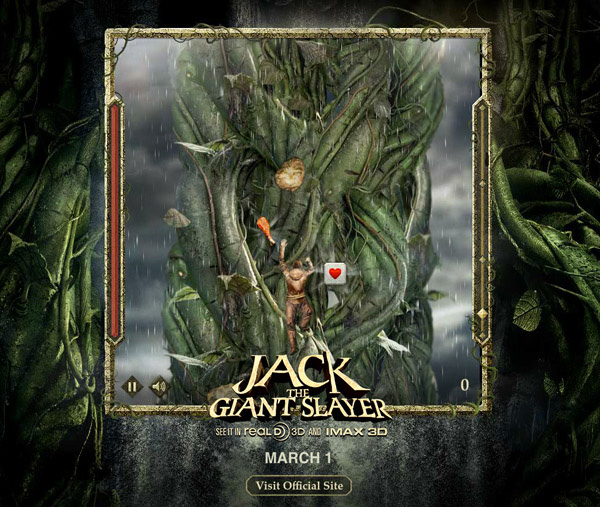
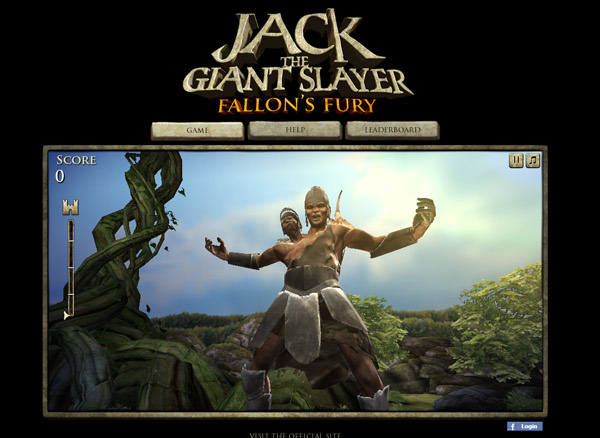
Directed by Bryan Singer, Jack the Giant Slayer tells the story of how an ancient war between humans and a race of giants is reignited when Jack, a young farmhand fighting for a kingdom and the love of a princess, opens a gateway between the two worlds.  The official website is the host of a suite of engagements designed to engage and entertain.

Giant Height

Find out how tall you would be if you were a giant and share with friends!


Giant Race

Climb up the beanstalk and try and stay alive!


Fallon’s Fury

Play as Fallon, the two headed giant, and try and reach the castle.  Make sure to destroy as much as you can along the way!


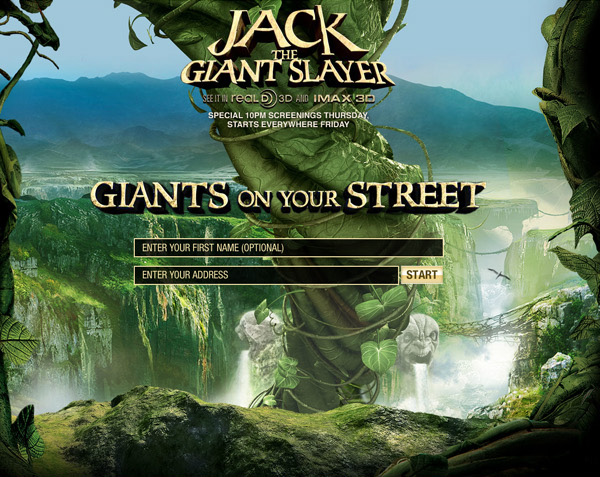
Giants On Your Street

Find out what happens when a Giant shows up on your street in this Google Maps / 3D mash up.


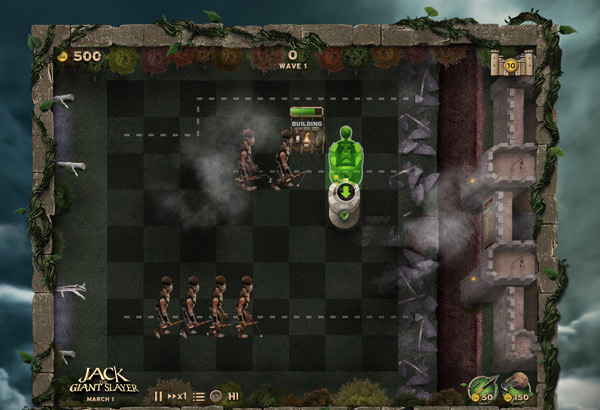
Jack the Giant Slayer: Cloister Defense

Description: The giant’s are attacking the castle and you must build defense towers to defeat them before they tear down the castle walls. The towers that you build will wear down after awhile of use so you must keep an eye on them to repair them from time to time during battle. When you place towers on the grid you cannot place them directly on the path that the giants will take you will have to place them along side their path so that they can attack them. Enjoy and bring down the giants!


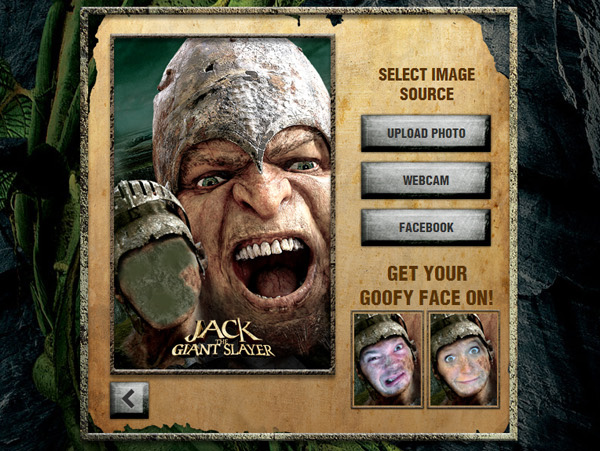
Fallon Photo

Become one of the heads of the two headed Giant!  Choose the big head or the little head and upload a photo or use your webcam and share with your friends.


Make It Harder For Hackers

In another attack {link no longer available} directed at social media sites, Twitter, Pinterest and Tumblr have been affected by a security breach at their customer service software provider Zendesk.  Zendesk said the attackers went directly after these three clients to access information such as email addresses and subject lines of messages sent by users, but reported no passwords stolen.

Zendesk, along with Twitter and Tumblr, have sent out warning emails to potentially affected users, but no further information on the severity of the hacking has yet surfaced. The sudden surfeit of security breaches has prompted Google and Twitter to speak up and remind users about safe practices.

Twitter gave everyone what it called a “friendly reminder,” its first advice being, “Use a strong password.” It also urged users not to stick to the same password across their social media accounts.

Google spelled it out in their blog: “While we do our best to keep spammers at bay, you can help protect your account by making sure you’re using a strong, unique password for your Google Account, upgrading your account to use 2-step verification, and updating the recovery options on your account such as your secondary email address and your phone number. Following these three steps can help prevent your account from being hijacked – this means less spam for your friends and contacts, and improved security and privacy for you.”

Google has also released an update to its “war against hijacking” report. The report tries to give insight into how hackers work and what internet users can do to protect themselves.

Do you have a hacking story, whether it was you getting hacked or doing the hacking?  Share in the comments below! Keep in mind it’s coming from your Facebook account.

Source: Venture Beat and Google

What’s Your PlayStation Memory?

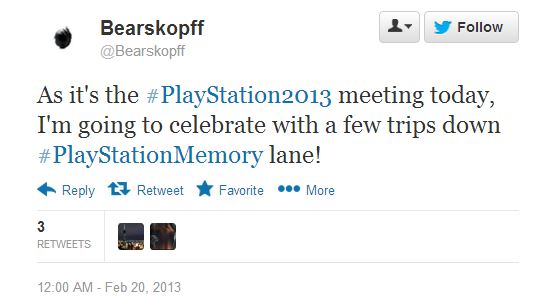
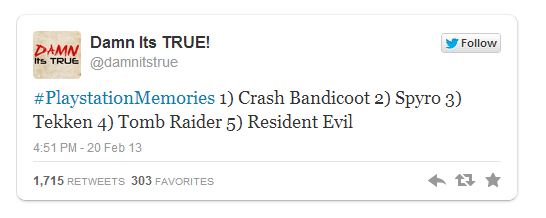
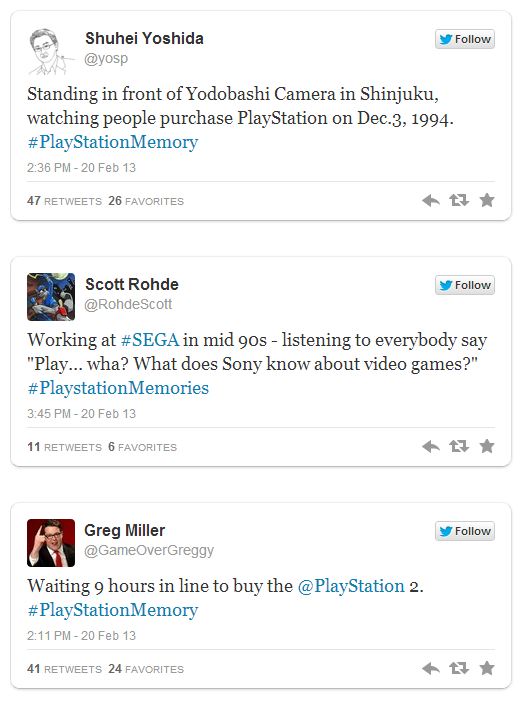
In the buildup to the PlayStation 4 announcement yesterday, Sony released a series of videos looking back at each previous console. That ignited a stream of nostalgic tweets and the hashtag #Playstationmemory.

The reminiscing started with a tweet by PlayStation Community Moderator Bear Parker in the UK. By yesterday morning it was trending globally.

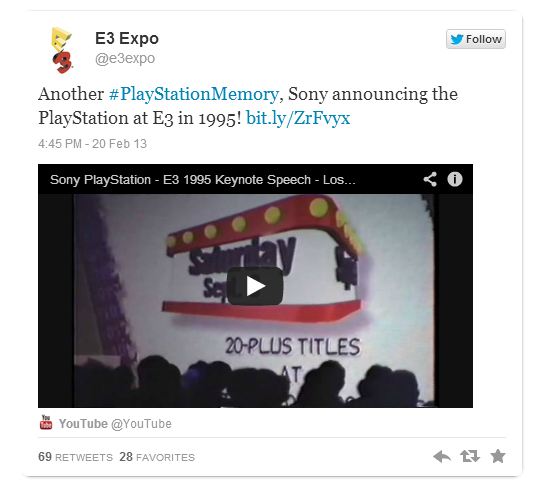
The Twitter community burst with nods to earlier PlayStation systems, especially the mighty PS2. Even Sony’s now dormant mascot Crash Bandicoot got some love. Organizers at E3 stepped into it, and stepped things up, surfacing footage of the original PlayStation debut at the 1995 expo.

So far it seems Sony’s nostalgia marketing to mark the launch of PS4 is a brilliant move. Fond memories {Twitter content no longer active} have definitely drowned out the snarky gamers and even a few unflattering parody Twitter accounts. It has been a reminder that despite the PS3’s third place finish in this last console generation, Sony did command the lion’s share of time and money from many a console gamer for nearly a decade.


Source ABC News