Apple Watch’s Chances for Success

Apple ended 2014 with a bang as its iPhone 6 line-up delivered record revenues of $74.6 billion in sales. Apple isn’t slowing down for 2015, however, as CEO Tim Cook has revealed that the previously announced Apple Watch will ship sometime in April. The month was revealed during the company’s quarterly earnings report earlier this week, with Cook saying that development for the device is “right on schedule.”

“My expectations are very high on (Apple Watch),” said Cook during the call. “I’m using it every day and love it and can’t live without it.”

The device boasts a number of features, including health sensors, notifications, messaging, and tops that off with a decent battery life (up to 19 hours for “mixed use” or 2.5 hours for “active use”) and accessibility to different apps. The base model is set to sell for $349, while more deluxe models, like the Sports edition, will sell for a higher price (as yet unknown, though the gold version could retail for over a thousand dollars, according to rumors).

Now that we know when the device is arriving, the next important question is this: How well with the Apple Watch sell Its functionality will be much more limited than the iPhone or iPad, due to its smaller display and lessened battery life, and there are other issues that could come into question.

Business Insider brought up a few of these concerns, with the biggest question being, “How the heck does Apple plan on selling this thing ” After all, more people prefer the usability of a larger device than one that’s on their wrist, although it is likely to have some appeal to fans of wearable tech.

There are other factors to consider, according to the article. The first is being able to try on the Apple Watch first to see if it even provides a snug-enough fit, without being uncomfortable. There’s also a question of seeing which Apple Watch variations are available, and which one may be right for a user’s needs, whether they’re actively into fitness or simply looking for something that ties in with iCloud functionality. Apple has already shown a wide variety of bands, though, so it would seem that there’s a band to suit nearly everyone. As well, the Apple Watch will come in two sizes, something that will no doubt appeal to people who want a smaller device on their wrist.

Lasting appeal is also a question, according to the article. “We already know the build quality and design aesthetic of the Apple Watch are high-quality; we just don’t know if the entire experience will be worth buying into, especially since it costs at least $350, it requires an iPhone to work, and battery life is apparently not so great,” the article reads. “With each customer trying on at least one watch and testing out its various features and functions, maybe some apps that could influence their buying decision, wait times for this first-generation product could increase exponentially.”

There’s also the question of what kind of improvements the next model of Apple Watch could bring, just as Apple’s proven with its previous iPhone and iPad devices. The second time around, the company could have a model that utilizes improved battery life, a larger face, and more accessibility to apps and features – even games. Will customers prefer to wait for improved future versions If the Apple Watch is (at least partly) a fashion item, and the higher-end versions owe their greater cost to fashion rather than improved tech, will buyers be annoyed if their $1,000 gold Apple Watch is outmoded in a year Or will Apple offer someway to upgrade for earlier buyers

There should be enough Apple fans eager to be the first ones to sport a new Apple device that initial sales of the Apple Watch will be good. We still don’t really know the full feature set of the Apple Watch, nor what apps will be available. The iPhone and the iPad had plenty of skeptics when they first shipped, and both devices had weaknesses and drawbacks that weren’t fully addressed for a year or more after the initial launch. Yet sales were strong in both cases, and got even stronger as time went on (though the iPad seems to have hit a plateau now, and it remains to be seen if Apple can breathe new life into its sales). The Apple Watch may well follow the same trajectory as the iPhone, with fair initial sales that grow stronger over time as new functionality emerges, and especially as the number of third-party apps grows.

We’ll see how it all goes down when the Apple Watch debuts this April.
Qantas Flies The Digital Skies With Gear VR Partnership

In an age of ever-increasing in-flight entertainment options, Qantas is looking to soar above its competitors with a little help from Samsung’s Gear VR headset.

The headsets, touted as “an industry first” by Qantas marketing executive Olivia Wirth, will be rolled out on a three-month trial at Qantas-operated lounges in Sydney and Melbourne in February. Headsets for first-class passengers on select long-haul Airbus A380 flights are expected to premiere in March.

Qantas’ usage of Gear VR tech, planned to begin with previews of Qantas-served destinations and their new First Lounge at LAX, opens up a world of possibilities seemingly as endless as virtual reality’s promises.

Passengers nervous about their flight could immerse themselves in a grounded virtual environment; others could play games, watch original interactive programming, or even experience their flight from the pilot’s point of view. The Sundance Film Festival is currently engaging in a large-scale embrace of virtual reality, while Oculus is promoting the medium as the future of storytelling.

Content partnerships with brands — like American Airlines’ in-flight programming deal with NBC Universal — will doubtlessly follow, making Qantas’ move a golden opportunity for both bored passengers and enterprising marketers looking to take advantage of entertainment and technology’s latest leap forward.

Goodbye Google Glass; Hello, Google Glass 2

Upon its launch three years ago, Google Glass, a headset that enabled the user to record their day-to-day actions while also playing with a handful of games and apps, met with a great deal of controversy, mainly due to its accessibility and the fact that, well, some folks just didn’t want to be filmed. (The high price didn’t help, either.)

Alas, the time for Google Glass has come – at least, in its current form. The company has confirmed that it will stop selling the glasses set, although current models will continue to work. However, that doesn’t mean that it’s set to give up its futuristic vision, as it will soon be released as a standalone project, instead of as part of the Google-X program. Former Apple executive and Nest founder Tony Fadell has been assigned the project, according to TechCrunch.

The company hasn’t wasted any time beefing up the potential of what is essentially Google Glass 2, as a post in its Google Plus page confirmed that “you will start to see future visions of Glass when they are ready.”

“As we look to the road ahead, we realize that we’ve outgrown the lab and so we’re officially ‘graduating’ from Google-X to be our own team here at Google,” the post continued. “We’re thrilled to be moving even more from concept to reality.”

“As part of this transition, we’re closing the Explorer Program so we can focus on what’s coming next. January 19th will be the last day to get the Glass Explorer Edition. In the meantime, we’re continuing to build for the future,” it concluded.

When can we expect Google Glass 2, however The company insists that development isn’t too far off, and we can expect the new consumer-friendly build of the headset to arrive in 2015. “It is not clear what Intel chip Google will use in the new version of Glass, but there will be an emphasis on power conservation,” the company insisted.

So, no, Glass isn’t going away. It’s simply evolving.

App Annie Raises Funds, Launches App Tracking

App Annie is no stranger to fundraising, as the app-based tracking site has gone through three rounds before where it’s raised significant funds. This time around, however, it’s raised its biggest funds to date.

The site has managed to raise $55 million through a round of Series D funding, secured by existing investors like Sequoia Capital, Greycroft Partners and IDG Capital Partners, as well as Institutional Venture Partners (IVP), according to TechCrunch.

In addition to raising a record amount of funds, the site has also introduced a new product that will assist in tracking data for applications. Called “Usage Intelligence,” the program is in beta now, enabling app publishers, marketers, investors and other industry types to learn more about usage patterns within applications. This is one through data on active users, as well as time spent in applications, usage frequency and user retention.

With this program, App Annie allows for research on individual apps, rather than data shared simply through app stores and top games and other applications.

“Usage Intelligence” has been in development for two years, and is being aimed at enterprise customers in general.

Data collection is done through the distribution of high-quality free applications, including VPN software, according to VentureBeat. With the combination of several of these apps, massive reach is gained, enabling the access of data collected – by those who allow their data to be shared, of course.

Regarding the funding, CEO Bertrand Schmitt told VentureBeat, “We have been very fast-growing, and to keep climbing that fast, you need gas.” He speaks, of course, about the site’s fast-paced success, as it now employs 300 people and has shown an increase in revenue by triple.

“We probably have the engineering capacity of our next five or 10 competitors combined,” explained Schmitt. “This product has been two years in the making…and we plan to keep releasing new products.”

Here’s hoping that the new project brings a number of companies on board – though it helps to have a little cash in hand, since the typical App Annie contract goes for $80,000 yearly.

‘Flappy Bird’ To Become An Arcade Game


If you thought the Flappy Bird craze, that consumed the lives of almost all mobile gamers (at least at some point) was finally coming to an end, you were wrong. Arcade Company Bay Tek Games has now decided to allow gamers to play on a giant display by introducing the first coin-operated Flappy Bird arcade cabinet.

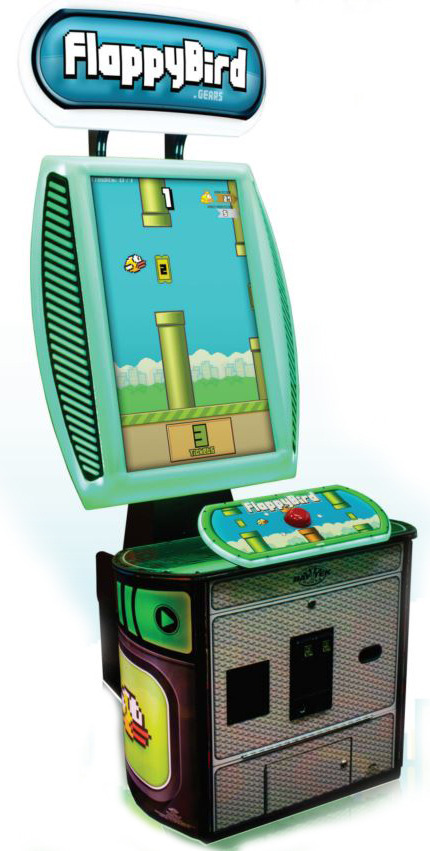
According to Mashable, the arcade cabinet is 300 pounds, 91 inches tall and features a 42-inch portrait screen along with a big red button that players use to keep the Flappy Bird flapping. The cabinet is coin-operated and will dispense a certain number of tickets depending on how far you get. The game will also keep track of daily high scores and all-time high scores

Bay Tek Games’ website makes clear that this is a licensed game and that all trademarks were used with permission; the arcade cabinet includes Dong Nguyen’s (the developer of Flappy Bird) company name, Gears, on the Flappy Bird sign, which sits above the giant screen.

Bay Tek has no listed price for the Flappy Bird arcade cabinet as of yet.

It’s Apps—Not Brands—That Are Behind Mobile Advertising’s Surge

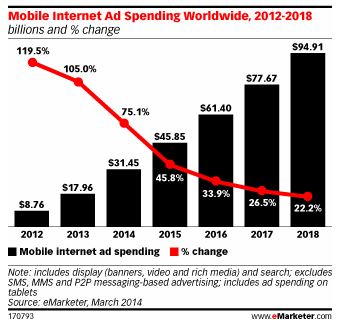
—It’s safe to say that the consensus amongst most people today would be that everything is taking a turn towards mobile, which isn’t an unruly conception. It is 2015, after all. However, I’m sure you would be surprised to hear that mobile is, in fact, an untested channel for most Fortune 500 brands. eMarketer has projected that mobile advertising was set to hit $31.45 billion in 2014 and expected to grow by 34 percent this year.

However independent technology and market research company Forrester Research recently found that, contrary to popular belief, only five percent of brands’ total advertising budget is represented by mobile. This shows that the majority of these brands are not being exceedingly proactive on making significant increases in their mobile investment year-over-year.

If this is really the case, one wonders how the mobile advertising market is growing so quickly According to VentureBeat, the answer is that a majority of the mobile advertising market is comprised of, not brands, but app developers, rather.

Fueled by the massive success of multimillion-dollar brands such as Candy Crush or Kim Kardashian Hollywood, there is a rush amongst app developers to elicit downloads and cash in on the casual gaming market. These app-install ads consume almost every form of mobile advertising.

These ads have been the most prominent cause of mobile advertising growth over the past few years; however the mobile advertising marketplace could be set up for a rather rude awakening. Since a majority of mobile app developers are funded with venture capital, if the dynamics of the VC marketplace change, the amount of capital given to back the industry could contract dramatically.

Yes, the mobile advertising market seems to be on the up-and-up as of today, however these numbers could be artificially inflated. This being said, it could still represent an amazing opportunity for brands. According to VentureBeat, Flurry Analytics released a story revealing that consumers now spend more minutes staring at mobile screens than they do watching TV. I know what you’re thinking, hearing that statistic should cause almost all brands looking to capture consumer attention to join mobile as soon as possible — considering mobile screens are projected to become an essential part of the marketing mix. However, brand marketers must first overcome their apprehension with mobile.

According to Forrester’s research, 57 percent of brands say their primary business objective for mobile advertising is brand awareness, which could account for why marketers are only “somewhat confident” in their ability to measure the impact of mobile campaigns. However, mobile success is frequently measured by acquisition metrics like click-throughs and website hits.

In order to evaluate awareness, rather than judging mobile ads on performance measures, marketers and agencies must buy into the right metrics. Sure enough, it seems that this shift may have already begun. According to Jun Group research, the number of advertisers asking for brand studies has raised 69 percent over the past two years — however this is still only a quarter of national advertising campaigns.

In order for mobile to become a true alternative (or even a complement) to TV, VentureBeat suggests brands adopt the idea that the medium is a tool for brand awareness, rather than an acquisition or performance channel.

The app install era will come to an end eventually, but brands must always connect with their customers in efficient and quantifiable ways. The true growth in the mobile ad market will rest in the hands of agencies, tech providers, and publishers. If they are able to find a way to educate brands on the unique value of mobile advertising, then growth will come naturally.

PlayStation Now Gets Subscription Service

Sony’s PlayStation Now game streaming service has been up and running for a few months now, but has had trouble gaining traction, mainly due to the ludicrously high rental prices of most games. However, this morning, Sony announced a new subscription plan that makes it easier to access the service’s enormous game library.

The subscription program will kick off on January 13, with a seven-day trial period that will allow players to see what it has to offer without any given charge. After that, fans can either pay $19.99 on a monthly basis to access the games, or fork over $44.99 for a three-month plan.

https://youtube.com/watch?v=QmXfKa22PZg

As of right now, the program is only for the PlayStation 4 console, but a rollout to other platforms, such as PlayStation 3, PS Vita and some Sony and Samsung television models, is expected over the next few months.

From the picture above, you can see the 100+ games that will be available through the service, including popular favorites such as The Last of Us, God of War: Ascension and the Ratchet & Clank games, as well as more obscure favorites like Darksiders II, El Shaddai and Red Faction: Guerrilla. The rotation is expected to change on a monthly basis, similar to what Sony does with its PlayStation Plus game program.

There may be concerns from those wondering why the service isn’t being integrated into the PlayStation Plus program, which requires its own monthly (or yearly) subscription. However, this is a big step forward for the service, and it should no doubt pick up circulation with the PlayStation Now program as it moves into a new year.

Sony is expected to provide more details – and possibly a demonstration – later today during its press conference at the Consumer Electronics Show. For now, though, players should definitely look forward to the official launch of the subscription service next week.


Facebook Emerges As Surprise Competitor To YouTube

Look out, YouTube: There’s a new kid in town, and its name is Facebook.

Facebook, the enduring social network known for its “Like” button more than its video capabilities, has emerged as a viable challenger to YouTube’s dominance in the world of online video.

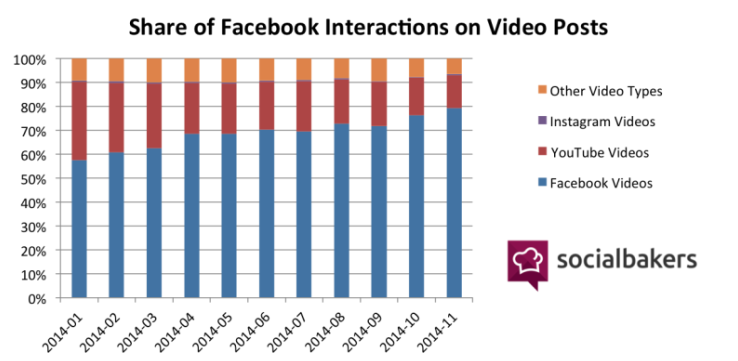
The numbers pointing to Facebook‘s entrance into the ring speak for themselves; native videos posted to the site have enjoyed increasingly desirable engagement rates for brands, while rates for videos originally posted to YouTube and similar sites continue to decline. A recent Socialbakers study gave native Facebook videos an 80 percent share of total interaction across all video posts.


Brands appear to be taking note of Facebook videos’ steadily rising engagement rates, embracing the social network for posting original content like never before; the same Socialbakers study noted that November marked the first-ever month in which Facebook page owners uploaded more videos directly to the site than they’d shared from YouTube.

Apple was among the brands benefitting from this tectonic social shift, as their recent Facebook-focused ad campaign greatly outpaced its engagement figures on YouTube.

Greg Hounslow, emerging media advisor for WestJet — a company that recently courted its own Facebook success with their Christmas Miracle: Spirit of Giving video — sees the news as a mixed bag. “Where Facebook benefits over YouTube is that everybody has an account, whereas not everyone is logged into their YouTube account. That’s a key piece of where Facebook’s advantage is on engagement right now.”

On the other hand, Hounslow is quick to point out differences in the ways Facebook and YouTube count their “views;” autoplay-enabled Facebook notches a “view” after three seconds spent watching a video, while YouTube requires that users actually click on a video. “The YouTube view is more valuable for now […] A huge percentage of people are dropping off after a very short amount of time as they scroll through their feed. Meanwhile, if you arrive at a YouTube video, you’re probably in a dedicated video-watching area, so retention tends to be a lot higher.”

Though Facebook obviously won’t become the kind of one-stop shop for original programming, organic videos, and branded content YouTube is famous for being overnight, it is clear that the Google-owned media property no longer dominates its realm to the point of exclusivity. “YouTube is still a massive, massive part of our video strategy,” Hounslow noted, “but you can’t ignore the native Facebook player.”


Apple’s iPad Could Be Saved By The Stylus

Styluses, once the bane of late Apple Inc. CEO Steve Jobs’s existence, could soon be coming along to save the day for the iPad is a recent patent is any indicator.

A new patent for a “communicating stylus” shows Apple is apparently serious about building their own stylus for mobile devices just a month removed from a likely related patent {link no longer active} for a “touch input device configured to synchronize a stylus acquisition process with both a touch data acquisition process and a display refresh process”.

The news is just yet another marked departure from the ship Jobs ran for current CEO Tim Cook, as Jobs famously announced that “nobody wants a stylus” while launching the iPhone at Macworld in 2007.

Apple’s apparent willingness to embrace a peripheral they’d once avoided could be tied to a push for iPads in business environments. A partnership with IBM hasn’t done enough to revive stagnant sales on its own, perhaps compelling the tech giant to listen more closely to the concerns of business professionals seeking a more “eloquent” means to create documents on their iPads.

Of course, it’s also possible that Apple’s latest patent filing is just a red herring. Apple is notorious for filing large numbers of patents for gadgets and functionalities that never see the light of day. Still, with their newfound embrace of social media well in hand, it is not unreasonable to think Tim Cook’s Apple might be more flexible to market demand than in years past, even if that “flexibility” means creating a stylus.

The Year’s Best Movie Trailers

Over the past few months, we’ve shown you some great trailers for forthcoming movies that have gotten a great deal of attention. Some have even gone into double-digit million views, with heavy anticipation behind them. These include new entries in the ongoing Avengers and Star Wars franchises, as well as the film adaptation of the popular novel Fifty Shades of Grey.

Without further ado, here are six trailers that truly capped off 2014.

Fifty Shades of Grey


Star Wars: The Force Awakens


Even though the movie is still just under a year away from release (it’s due to hit theaters on December 18), the latest chapter in the Star Wars franchise still has plenty to get excited about. Most notable is the return of the classic Millennium Falcon, which hasn’t been seen on the big-screen since 1983. In addition, new droids and characters were also introduced, not to mention an interesting new lightsaber model that should be a hit in toy form. The Force will truly awaken come next Christmas.


Marvel’s The Avengers: Age of Ultron

The 2012 release of The Avengers generated big money for Marvel Studios, to the tune of $1.5 billion worldwide. The sequel, Age of Ultron, which releases next May, should have no trouble matching that number, with the likes of Robert Downey Jr., Chris Evans and others returning to their roles as they combat the deadly Ultron, with the voice of James Spader. Directed by Joss Whedon (the man who helmed the first film), Ultron should have no trouble setting the pace for the next set of Marvel films.


Jurassic World

It’s hard to believe that we’ve been without a chapter in the Jurassic Park series for all these years, but Universal will rectify the matter next summer with the release of Jurassic World. Starring Chris Pratt and Bryce Dallas Howard, this new entry, directed by Colin Trevorrow, will focus on an even bigger, consumer-ready park this time around, with an all-new danger ready to be introduced. The film will hit theaters on June 12.


Furious 7

The latest Fast and Furious film has gone through its fair share of speed bumps in development – notably with the departure of franchise director Justin Lin and the passing of co-star Paul Walker – but this July, it will go back to full throttle with Furious 7. The film will reintroduce several characters from the series, as well as a new villain played by Jason Statham. Expect plenty of high-octane thrills and action with this entry when it arrives on April 3.


Mad Max: Fury Road

We haven’t seen a new Mad Max movie since entering the Thunderdome more than two decades ago. But that isn’t stopping director George Miller from returning to the action-packed franchise he made so famous, with Tom Hardy stepping into the role that Mel Gibson first started. In Fury Road, a whole new post-nuclear war emerges, with enemies coming out of the woodword and Max, alongside a new compatriot (Charlize Theron) doing whatever it takes to survive. This one hits theaters on May 15.