‘The Unspoken’ Adds Magic Of VR To World Of ESports

Oculus is preparing to take virtual reality to the next level: eSports, and it is partnering with ESL to showcase the potential of VR eSports at competitions such as ESL One in New York last month and the recently concluded IEM Oakland. The game featured as a potential eSports contender is The Unspoken, a competitive urban fantasy game developed by Insomniac Games exclusively for the Oculus Rift.

The Unspoken pits two players against each other in head-to-head competition—each using Oculus Touch controllers to summon spells to throw at their opponents or defend against them. Although the game is still in development and doesn’t officially launch until December, it is the ideal demonstration for how VR can be brought into the world of eSports.

Ryan Schneider
Ryan Schneider, Insomniac Games chief brand officer

Insomniac Games’ chief brand officer, Ryan Schneider, recently spoke to [a]listdaily about The Unspoken and how it could pave the way for virtual reality to become an integral part of the eSports industry.

The Unspoken has enjoyed critical praise and excitement from all who have seen or experienced it since it was first revealed earlier this year,” said Schneider, detailing how the game came to be featured at events such as ESL One. “That has led to opportunities from many sectors—including the ESL—to showcase The Unspoken at ESL One and now IEM Oakland as a benchmark for the future of competitive VR games.”

Schneider explains how player reactions to the game have been strong. “They enjoy The Unspoken’s depth and strategic choices, but really it’s the sense of immersion that gets them the most excited. It’s one thing to experience a competitive game from a top-down or limited FPS (first-person shooter) view. It’s entirely different when the fast-paced action literally surrounds you. We think it’s the first game that really delivers on the fantasy of being an all-powerful mage who can physically cast spells.”

When asked what opportunities VR opened for eSports, Schneider said that “there are opportunities from all perspectives. Players can become the first to master the fastest-growing segment of the games industry. How exciting would it be to not just be a pioneer of the VR eSports movement but also its greatest player? Spectators can find a way to be closer to the action than ever before. Imagine seeing critical gameplay decisions from an entirely different perspective, which in turn can make spectators more knowledgeable and even better players themselves. Brands will find a way to connect with the community in deeper ways by virtue of the medium’s immersive nature. Every day, we learn about how brands are innovating within the world of VR. The opportunities just continue to multiply.”

Schneider also thinks that eSports could lead to faster adoption of VR technology as long as it’s done well. “If eSports players and fans feel like they’re getting something crammed down their collective throat for the sake of novelty, it could de-position VR as nothing more than a fad,” he said. “That’s why we’re approaching this from a very grassroots level, seeking game feedback from experts and the most passionate players. Certainly though, the potential is there to grow VR adoption because you have a huge base of PC players hungry for fresh, competitive experiences. On the surface, nothing in gaming is hotter at the moment than VR/AR and eSports. Marrying the two is inevitable.”

If marrying VR and eSports is inevitable, we asked if Insomniac was developing The Unspoken with an emphasis on eSports in mind. “We’re primarily focused on making The Unspoken a great competitive game, period,” Schneider replied. “One of the better ways to do that is to demo The Unspoken at events like ESL One and IEM Oakland. Go to where the most passionate players already live. We can absorb and incorporate valuable player feedback there for future versions of the game. So, we’re not attending to push an eSports agenda—we’re legitimately there as part of a broader plan to make the best competitive game possible.”

That being said, The Unspoken still has high potential as aSport. “The things that make The Unspoken a stand-out competitive game could help it resonate as an eSport,” said Schneider. “The Unspoken offers variety in its character classes, multiple and unique spell types, and the complexities associated with when to summon each spell along with critical gesture-based movements.

“What’s especially exciting to me is that the potential here for players is to be on the ground floor of a new way to play sport altogether—kind of like learning to play basketball at the time it was first invented. From a spectator perspective, we’d be able to offer fans a center court, front-row seat to the wonder and danger inherent in an urban magic fight club.”

unspoken_oc3_cobrasGiven how The Unspoken is a modern urban fantasy, we asked if there were opportunities for brands to be integrated into the arenas if the game were to be adopted as an eSport.

“That’s a tricky topic,” Schneider replied. “We’ll never do anything that either detracts from or doesn’t add to the player’s experience. That said, we are already working with trusted partners like Intel and Nvidia to ensure we’re delivering game content that can be fully optimized on the most sophisticated of gaming PC rigs.”

With the incredible success of movies such as Doctor Strange, the timing is perfect for a game like The Unspoken to reveal itself. We asked if the movie’s popularity could indirectly promote the VR game. Although Schneider hasn’t seen it yet, he does believe that a paranormally themed movie set in an urban locale could help The Unspoken. “The same can probably be said even for Fantastic Beasts and Where to Find Them,” said Schneider. “It just goes to show that there’s still a healthy appetite for the world of arcane magic, and that kind of fantasy can play out in many different forms.”


Learn everything you need to know to invest in today’s fastest-growing media channel—Competitive Gaming and eSports on 2.16.17 in Los Angeles. Go to alistsummit.com for more info.
Grasshopper Manufacture And GungHo Entertainment Bring ‘Let It Die’ To Life

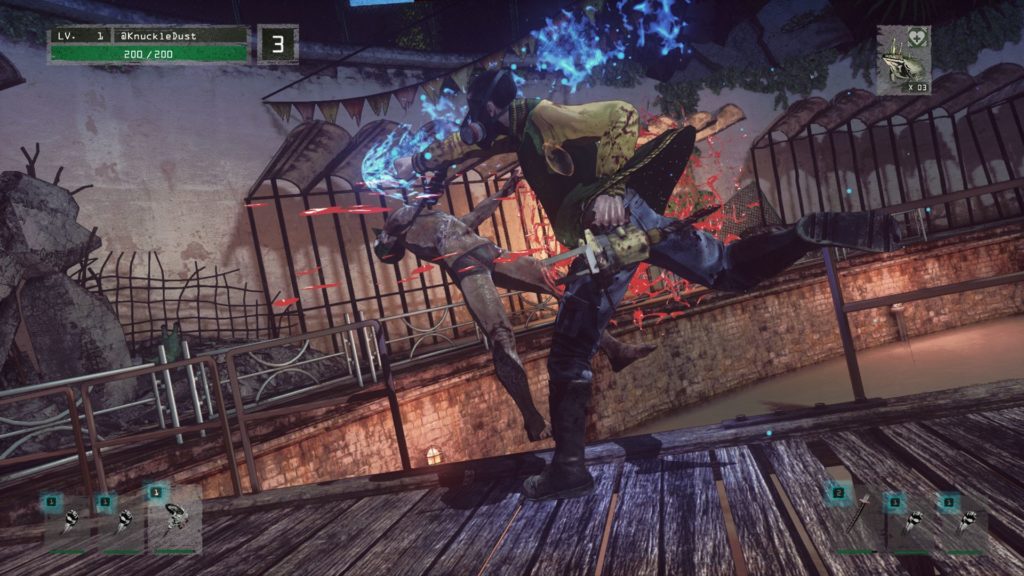
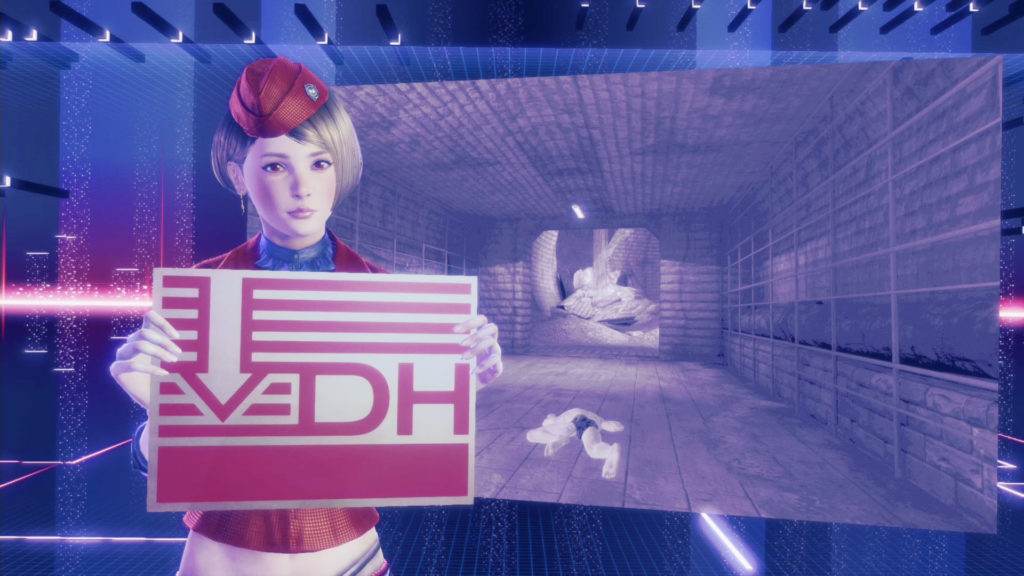
Let It Die is an over-the-top, free-to-play, online hack-and-slash roguelike action game releasing exclusively for the PlayStation 4 later this year. It features a crazy post-apocalyptic Tokyo setting where players battle both monsters and each other to the death to ascend the Tower of Barbs floor-by-floor until they reach the promise of treasure at the top. Along the way, players acquire weapons and skills needed to take on bigger challenges. The catch is that if you die while making your way through the Tower, you’ll lose all the equipment you picked up since the last time you visited your home base, and you’ll have to start from the beginning with a new or alternate character.

Although the title might suggest otherwise, Let It Die is not completely about dying in fantastically gory ways. The game monetizes through “insurance” sales, which are essentially resurrection opportunities that can be purchased by players using either in-game or real currency. Additionally, dead characters are revived at the spot where they perished as computer controlled characters called Haters, which will also appear in other people’s games. Therefore, players have a chance to reclaim their fallen characters and equipment by battling these Haters. Alternatively, Haters can be left wandering the tower to take on other players in the game and earning special rewards.

2_kiwako

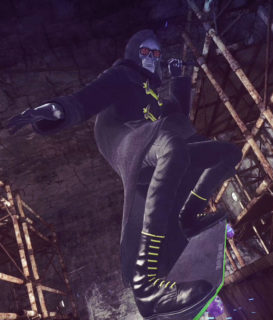
There are also the zany and unique characters, which are practically a hallmark of games made by Japanese developer Grasshopper Manufacture (which also made Killer Is Dead and Lollipop Chainsaw) and its CEO, Goichi Suda (aka Suda51). One of the most prominent characters is a skateboard-riding grim reaper named Uncle Death, who wears novelty glasses and acts as a kind of guide. Ironically, Uncle Death helps bring the story to life by adding a sense of humor to a survival game that features a ton of gore and menacing creatures.

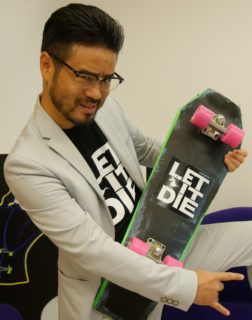
Hideyuki Shin, Let It Die director at Grasshopper Manufacture

Let It Die’s director, Hideyuki Shin, recently spoke to [a]listdaily through a translator about working on its first project with Puzzle & Dragons creator, GungHo Online Entertainment, which acquired Grasshopper Manufacture in 2013.

After working with GungHo on Let It Die for three years, we asked about how it stood out from previous Grasshopper games and how GungHo was helping to develop and promote it. Shin responded by saying that the biggest difference from previous games is online and PvP (player-vs-player) elements. Grasshopper had not had any titles with online capabilities before. Furthermore, Grasshopper had only made packaged titles before working with the GungHo group.

“With this new initiative, not only has GungHo provided information and know-how for making online games, but they’ve also had GungHo members come into Grasshopper to create the game together—as opposed to saying, as a publisher, we want these things,” said Shin. “They actually came in to be very direct and hands-on with the development process, which is something completely new.”

Given Grasshopper’s history, we asked why the developer decided on a free-to-play model. Shin said that “it wasn’t necessarily the case that, during the development process, we said ‘this would be better free-to-play.’ It was decided from the very beginning, before anything was put together, that the first initiative that Grasshopper would do with GungHo was to make a free-to-play action game.”

When discussing how he kept a roguelike game, where players must start from the beginning if they die, interesting and motivating for its players, Shin explained that players don’t necessarily have to start with nothing after they perish. Several factors, including the character’s skill mastery and experience level, remain unchanged and players have a chance to go back and reclaim them. Additionally, crafted equipment is available when players restart, and they can purchase new items from the in-game shop.

1_uncledeathThen, of course, we asked about how Grasshopper came up with the crazy characters that often show up in its games. “We get asked that a lot,” said Shin. “It’s not necessarily, at Grasshopper, we say ‘oh, we need to make unique characters.’ Making new characters starts with Suda51 and the scenario creation with the story.” The studio starts with the world setting, then the characters come from it. “It turns into a whole creative process where everything starts influencing each other.”

Let It Die features an online competitive mode where players battle each other, or they can raid another player’s base with all of his or her computer-controlled alternate characters defending it. When asked if there were any plans to include a cooperative mode, Shin said that there currently weren’t any plans to include one and that the world of Let It Die is a kill or be killed free-for-all. As for social features to connect its global players, Shin talked about the revenge list that is populated each time another player kills you, “so, you know who got you, and you can go and return the favor if you’d like to.” In the world of Let It Die, getting revenge is considered to be a kind of social event.

When asked if it was difficult to design games that are for a global audience, Shin said that “we certainly try to make games that are appealing to a global audience. A lot of times, when you think about Japanese developers, you have this image of them making games mostly for Japan and maybe the world will enjoy them. Grasshopper tries to have a more global mindset by thinking about what will appeal worldwide. It’s quite difficult because we are a Japanese studio, but we do have a lot of fun, and I think we seem to have gotten it this time.”

In discussing his thoughts about why so many players found roguelike games attractive, Shin said that “the roguelike style of games can be quite challenging and difficult, but I think people are drawn to it—not just because it’s challenging—but because there are story elements that usually follow. It drives players to continuously follow through the game to figure out what’s going on with the story. Let It Die is not entirely a roguelike because you don’t lose everything you can lose, but we do have story elements for players to enjoy. I hope that players find the pairing of the story elements with some roguelike elements to be enjoyable.”

rage_punch

We also asked if there was any interest in using new technology such as the PlayStation VR to help enhance or promote the game. “There are no current plans to have things like VR to add on to the experience, but I think the biggest game changer is that Let It Die is free-to-play,” said Shin. “That means anyone with a PlayStation 4 can download and play it, so we can get to a wider audience of people. With such a low barrier to entry, I think that makes it quite an interesting experience.”

Let It Die is also unique in that it features over 100 Japanese music artists, assembled by Akira Yamaoka, who is famous for making the soundtracks for horror games such as Silent Hill, Shadows of the Damned and many more. For this project, he told the bands that Grasshopper was making a game called Let It Die and asked each of them to make a song using the title as inspiration. “All of the songs in the game are titled ‘Let It Die,’” said Shin. “To get their originality, they had complete creative control, as long as it had to do with the title, Let It Die. Whatever they felt Let It Die meant is what they used their creativity to make for the game. You can unlock songs from the bands for your radio and choose the song that plays in your base. There’s also a radio station that takes the top five songs that other people are playing on their radios around the world, which can also be set to be the background music for your base.”

Finally, we asked Shin what his favorite weapon and gore finish (aka goretastic finish) move was. “My favorite goretastic finish scene is with the Magnum,” he said laughing. “If you’re able to trigger the goretastic finish move, it’s like a short scene from a movie. You bring the Magnum to their face, and they’re like, ‘No, no, no… don’t shoot me.’ Then you say ok and shoot them in the head anyway.”

Andrew And Luke Wilson Explain The Power Of VR Marketing

American brand Shinola teamed up with Reel FX and Hollywood brothers Andrew and Luke Wilson to take fans behind-the-scenes of the company’s massive Detroit factory. The Wilsons served as co-directors for the four-and-a-half-minute 360-degree experience, which shows the company’s watches, bicycles and leather goods. Luke Wilson had previously worked with Reel FX on a project, and after seeing the brothers’ short film on the Los Angeles transfer of the Space Shuttle Endeavor, the VR company reached out to them to work on the Shinola short VR experience.

“The brand is something that we have a lot of respect for and it’s a great company,” Andrew Wilson told [a]listdaily. “We know the people involved with the company and have a lot respect for those people, so it was a natural fit for us.”

Andrew Wilson explained how virtual reality gives brands a chance to stand out from the crowd. “It’s a way to differentiate yourself,” he said. “We’ve seen it with past technologies. We’ve seen brands affiliating themselves with cutting-edge technology throughout the history of marketing and this is just the latest example of that.”

“VR could help brands make their products more accessible,” said Luke Wilson, telling [a]listdaily how virtual reality is opening up new opportunities for brands that want to stay ahead of the curve. “You could see yourself riding a Shinola bike around their factory, or in their stores in Detroit or on Abbot Kinney. It’s hard for me to push my brain to think of just how far it will go; it’s beyond what you can ever imagine. There are some truly technical visionaries that will think of not only how great a Shinola watch would look on your hand, but what it would look like with, say, a Filson jacket!”

Luke Wilson referenced a recent Charlie Rose episode where Tommy Hilfiger talked about a new flagship store that won’t even have actual clothes. “You will go up to a screen, see how something fits and how it will look on you and what color looks best—it’s unbelievable,” he said.

https://www.youtube.com/watch?v=wraJppF0kyg

During the two-day shoot, the brothers worked with Nokia’s Ozo 360 camera. Andrew Wilson said that in wanting to utilize the technology and the most effective form, they didn’t want the 360 technology to take over the message. “Because we did you the classic ‘man on the street’ interview style, that naturally holds people’s attention if it’s a short thing,” Wilson explained. “And Luke is doing a real (David) Letterman-esque gift of gab, fast talking and chatting with people and joking around. So that helps to generally hold people’s attention, and then you’re free to look around. We wanted people to look around. Obviously, that’s a great feature of the technology.”

Virtual reality also gives early brands that are exploring the technology the ability to capture consumers’ attention through multiple views, since they can look in different directions and control the action. “It helped me a lot to watch it multiple times, and I saw things that I’m sure that people that watch it once or twice won’t see,” Andrew Wilson said. “That’s a thrilling aspect of the technology. It’s like a theater where one audience member might be looking at one part of the set and somebody else might be looking at something else. So you take very different experiences away from watching it because of the freedom that you have as a viewer.”

The Wilson brothers are the latest Hollywood names to jump into the VR game, following directors like Jon Favreau, Robert Stromberg and Doug Liman. The brothers both are game to further experiment with 360 filmmaking.

“I’m just like everyone else in Hollywood right now, learning about the medium as it’s developing,” Luke Wilson said. “In the past 20 years or so that I’ve been in Hollywood, I’ve seen it go from 33mm to digital. VR seems like the next step in technology, though not necessarily for everything.”

Luke Wilson added that VR opens the opportunity to take a short length and make something a little more fun and interesting to watch. “The first time I put on a headset, I couldn’t believe what I was watching,” he said. “It really does seem like the future.”

ESports Steps Into Virtual Reality At Intel Extreme Masters Oakland

ESL and Intel, the title sponsor of the global Intel Extreme Masters (IEM) eSports tournament, are bringing virtual reality to IEM Oakland at Oracle Arena November 19-20. It’s the first time the traveling tournament is setting up shop in the home of the Golden State Warriors, having used the San Jose Sharks’ SAP Center in recent years. One of the key focuses for Intel at the Counter-Strike: Global Offensive (CS:GO) event is virtual reality, according to Intel’s worldwide event marketing manager, George Woo.

“We’re always looking to push the envelope and trying to get some good experiences at the tournaments,” Woo told [a]listdaily. “We’re hosting a VR celebrity match between Navin “NS” Shenoy and Jason “Moses” O’Toole playing The Unspoken to drive home the VR messaging and show Intel’s leadership position and where we want to take the technology.”

The winner of the celebrity match will donate $10,000 to Iridescent, an organization whose mission it is to open up the fields of science, technology, engineering and math (STEM) to youth in disenfranchised communities with a special emphasis on girls. Woo added that VR is a big marketing focus for Intel. That’s one reason why IEM 2016 will also be the first Intel tournament to be livestreamed in VR through a partnership between ESL and Sliver.tv. Augmented live stats will be integrated into the 360-degree livestreams across CS:GO and League of Legends matches.

Intel will have 8-to-10 VR stations around the arena spread across all three levels, so the approximately 10,000 anticipated attendees can watch the Sliver.tv broadcast. There will be multiple VR headsets inside the Intel Showcase, which will showcase different VR experiences as well as local desktop gaming. Oculus VR is a new partner this year and will have VR games on display, including Insomniac Games’ The Unspoken.

Woo said one of the key marketing messages Intel is explaining to people is needing a Core i7 processor to get a truly immersive VR experience on the highest settings, as well as features like multitasking, 4K content and streaming. “We want to target the early adopters and help take VR more mainstream,” Woo said. “ESports will help continue that drive.”

Intel has a multiyear approach when it comes to the future integration of eSports with virtual reality. “The first step is to offer this spectator view in eSports, and then a few years down the line when more headsets are in the marketplace, we’ll evolve VR into eSports,” Woo said. “We’ll have teams competing in VR games with headsets and the ability for fans to spectate both in the arena and on the gameplay field. That’s the end goal. We want to be at the forefront of VR and eSports.”

Although there aren’t as many VR headsets out in the world today, Woo explained that Sliver.tv supports a 360 view on mobile devices. “It’s not as immersive an experience as with goggles, but you can use the accelerometer to get a 2D view of both the stadium and as a spectator in the game world,” he said.

Since Intel doesn’t have a direct marketing partnership with Sliver.tv (that relationship is with ESL), Woo said Intel is trying to tell its VR story through the on-site VR Celebrity Match.

“Viewers might not have a headset, but they should think about it,” Woo said. “We’re starting this journey and hope it will continue to evolve.”

Outside of virtual reality, Intel is also showcasing its support of the growing collegiate eSports outreach. IEM 2016 is hosting a League of Legends college match between Stanford and Cal Berkeley, which mirrors the college football match-up that same weekend. “ESports is going to college campuses and a lot of universities are getting into it, and we want to continue to keep that moving forward and get more involved,” said Woo.

This is the third year of IEM in the San Francisco Bay Area. Woo said Intel has secured a lot more partners to participate in the exhibit space, including Oculus Rift, iBUYPOWER, HyperX, Xfinity, Acer and Totino’s. Over the past 11 seasons, Intel has used over 10 different games. In fact, Counter-Strike 1.6 was one of the tournament’s first titles. Last year, IEM welcomed CS:GO into its competition.

“One reason a lot of leagues are using CS:GO is because of how easy Valve makes it to license and run the game,” Woo said. “There aren’t the restrictions like what Riot would do with LCS. The only challenge is that there are so many leagues and companies using CS:GO and many believe they can dump money into it and it just works, which isn’t the way to build a successful eSports business.”

Intel works with ESL, which uses its grass roots pro league platforms to test new potential eSports titles out. “Once it warrants to be on the level of IEM, they give us recommendations,” Woo said. “We’re looking at some games right now, but we still need to work with the publishers. We know Overwatch is a big title and growing fast, and we’re keeping an eye on that. And we’re also looking at Quake Champions, which has a 1-vs-1 first-person shooter competition that would be simple to add. We continue to look at both of these titles. Between the two, Overwatch would probably be first.”

Woo called IEM the Wimbledon of eSports and said “we may not have the biggest prize pool, but people know what to expect”


Learn everything you need to know to invest in today’s fastest-growing media channel—Competitive Gaming and eSports on 2.16.17 in Los Angeles. Go to alistsummit.com for more info.
Inside This Fall’s Best Branded Virtual Reality Experiences

When it comes to experiencing a story in virtual reality, brands are learning that story and interactivity are key. It’s not enough to let someone turn their heads and look around with a headset over their face—and today we’re highlighting some exceptional examples of what branded VR content can be.

The Martian VR Experience

Following the plot of Ridley Scott’s Oscar-nominated film, users can interact with the surface of Mars, steer at zero gravity through space, drive a rover across the red planet and play basketball with potatoes in a variety of mini-games as a virtual Mark Watney. The experience uses footage from the film starring Matt Damon to connect these interactive elements.

The 360-degree teaser below became one of the most watched VR experiences for the Samsung Gear VR. “For future products, we’d like to have a mobile experience that could be played untethered,” Twentieth Century Fox Home Entertainment and Fox Innovation Lab president, Mike Dunn, told [a]listdaily. “We’re very bullish on the expansion of mobile VR.”

Star Wars Battlefront: Rogue One X-Wing VR Mission

In anticipation of Star Wars: Rogue One, EA will soon release a special VR mission inside Battlefront. Just as the name implies, this immersive experience, made for PlayStation VR, will place users right in the cockpit of a rebel X-Wing in the Star Wars universe. Coming this holiday season, the VR mission will be free to anyone who owns Star Wars Battlefront for PlayStation 4.

https://youtu.be/-R1kOWgBxW4

In addition to carrying out “an important mission for the Rebellion,” Star Wars fans can take in a bit of virtual reality with two new Rogue One-themed Google Cardboard viewers from WOW! Stuff, available in designs for either K-2SO or an Imperial Death Trooper. The viewers can be used with the Star Wars mobile app for a special VR experience and to watch the recently released a 360-degree experience called Rogue One: Recon on the official Star Wars YouTube channel.

Ghostbusters VR – Now Hiring

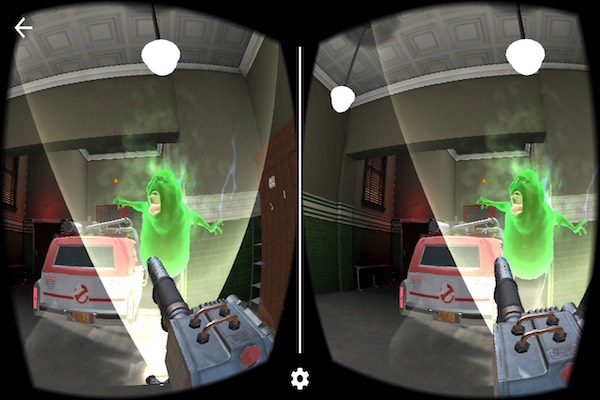
If you’ve ever wanted to explore the infamous firehouse headquarters of the Ghostbusters reboot, Sony continues its big VR promotion push with a free interactive mobile app that’s designed to help promote the digital and Blu-ray editions of the movie. The game allows players to re-assemble proton packs, hunt ghosts and trap them in containment units and even touch ecotoplasm.

ghostbusters-vr-now-hiring

John Wick Chronicles: An Eye For An Eye

This HTC Vive game lets players explore the world of renowned assassin, John Wick in anticipation of the upcoming sequel, John Wick: Chapter Two. In addition to exploring iconic locations from the franchise like the Continental Hotel, players are given challenges like defending a rooftop from waves of attackers. The episodic game series will debut in February to match with the film’s premiere, but fans got to try out the first chapter at New York Comic-Con in October.

john-wick-chronicles-and-eye-for-an-eye

Emotional Impact

A recent study conducted by YuMe, Inc. and Nielsen proved that immersive, story-driven VR experiences work better because SCIENCE. Through eye tracking and biometric measurements, researchers found that consumers elicited 27 percent higher emotional engagement in the branded content when viewed in VR compared to 2D, and 17 percent higher emotional engagement than a 360-degree video on a flat screen. VR viewers are emotionally engaged 34 percent longer than when they view the same content in 2D and 16 percent longer than when they view the same content in 360-degree video on a flat screen.

How Fitbit And ‘NBA 2K17’ Are Partnering To ‘Gamify’ Fitness

Fitbit was originally conceived by CEO James Park after he played Nintendo Wii for the first time, following a long early morning of waiting in line to be one of the first to pick up the motion sensor-based console. Park assembled a team of top technologists and gamers to build Fitbit into the top wearable brand in the world today. Now Fitbit is coming full circle and working with 2K to integrate real-world exercise into the gameplay experience for 2K Sports’ NBA 2K17.

Beginning November 25, gamers around the world who achieve 10,000 steps in a day tracked with any Fitbit device will receive a temporary attribute boost to their MyPlayer in NBA 2K17, on Xbox One and PlayStation 4, enhancing their MyPlayer’s performance on the court. After users reach the steps milestone, the game will prompt them to apply temporary +5 attribute boosts and success rate to their MyPlayer in categories like agility, layups and dunks, and more that will significantly improve performance for the next five games played that day.

This deal is the result of two years of conversations between Tim Rosa, senior vice president of global marketing at Fitbit, and NBA 2K developer Visual Concepts president Greg Thomas. Rosa spent five years as director of marketing at 2K Sports and he still plays on a San Francisco Bay Area hockey team with friends from the company.

“This is the gamification of health and fitness,” Rosa said. “I helped put people on the couch for a decade working at 2K and Electronic Arts, and now I’m taking them off the couch with this 2K game integration.”

Over the past nine months, Rosa worked with Thomas and the marketing and business units of 2K to launch this first-of-its-kind integration before Christmas. Rosa knew many Fitbit consumers were already looking for this type of virtual and real-world connectivity.

“We saw through our research that parents are concerned with kids spending too much time playing video games and they were requiring them to do homework and hit a step goal before they could play Xbox or PlayStation,” Rosa said. “They were tying homework and physical activity to gaming already. We’re the first company to attempt this and hope to change some of the perceptions about gaming by encouraging kids to get off the couch and giving them in-game rewards.”

Fitbit Flex 2
Fitbit Flex 2

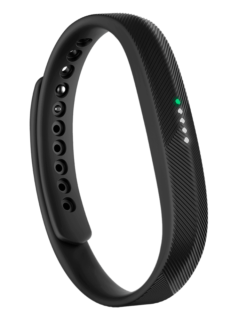
Rosa has spent the past four years building the Fitbit brand across a variety of devices. Sales are expected to reach 60 million devices by year’s end. He’s seen millennials gravitate towards the Fitbit Flex, and with the recent launch of the Fitbit Flex 2, Rosa is finalizing a soft bundle for retailers Best Buy and Target that will include a copy of NBA 2K17 with the fitness device. Pricing is still being finalized, but consumers will get a discount by purchasing the bundle.

Rosa said Best Buy and Target are also working with 2K and Fitbit in a New
Year’s health initiative for consumers to get in shape for the new year. Separately, there will be cross-marketing and promotions across Fitbit and 2K, including in-game promotions.

This is just the beginning of the partnership, which Rosa said could expand beyond the NBA 2K game franchise. 2K also publishes WWE games, based on another physical sport.

“Our devices track things like heart rate and activity minutes, and you could see down the road we’ve talked about possibly tracking VO2 max (maximal oxygen uptake) and heart rate so you could apply bonus levels if you reach a certain heart rate zone that could improve your cardio in the game,” Rosa said. “There are interesting things you could play with.”

Rosa also tossed out a scenario where they could work with a 2K cover athlete or Fitbit athlete Harrison Barnes on a whole real-world training program that could help kids trying to increase their endurance or lose weight. That same gameplay would apply to game telemetry in the video game.

“We’re not doing any of that for this implementation, but Greg (Thomas’) vision is to expand and iterate on this in the game,” Rosa said. “He has a road map with software releases and updates. He’s passionate about doing things that are legit and authentic. The conversation has been to continue iterating on that and potentially other games in the future.”

Rosa also sees other game publishers taking advantage of Fitbit technology at some point down the road, but he also wanted to make sure 2K was the company to debut this feature. “The idea of gamifying physical activity is a huge opportunity,” Rosa said. “Pokémon GO got people excited about going out and playing in the real world, and we’re applying that physical concept to a console-based game.”

Additionally, Rosa said a first-person shooter game franchise publisher did approach him for integration, but he turned them down because it didn’t align with the brand and health and fitness.

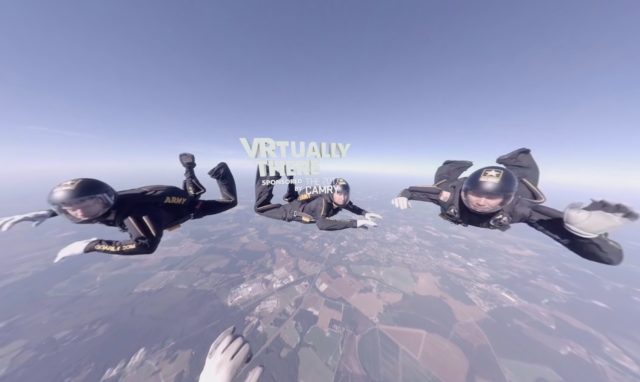
Brands Have A New Advertising Avenue With USA Today’s ‘VRtually There’

USA Today Network has partnered with YouTube and flagship sponsor Toyota for the debut of VRtually There, a new weekly show billed as the first-ever branded news experience presented in virtual reality.

The innovative show will allow journalists from the Gannett-owned USA Today Network— which currently is headlined by USA Today and 109 other local media brands like the Arizona Republic and Indianapolis Starto dive deep into their stories to deliver immersive and original VR content.

The USA Today Network joins other news organizations like The New York Times, ABC News, Getty Images and Reuters as old-guard media institutions that are pushing the limits of journalism and storytelling in VR.

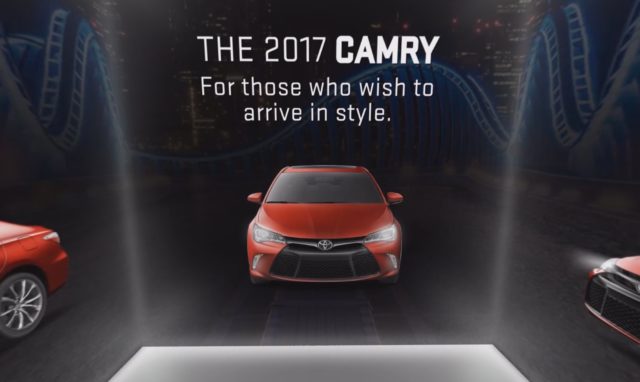
VRtually There should be of particular interest for brands who are seeking to connect with VR-hungry consumers in the digital publishing landscape. The “cubemercial” is being touted as the industry’s first VR ad unit created specifically for the medium.
cube2

Toyota is featured in the first cubemercial by promoting the 2017 Camry with 60 seconds of branded VR content through the Australian wilderness. “We believe in creating amazing experiences for our guests, so we’re excited to help launch USA Today Network’s innovative VR show, bringing incredible virtual reality experiences to its audience,” said Lisa McQueen, media manager for Toyota. “The Network’s approach to bold storytelling and use of new mediums aligns with our brand and our creative approach.”

Emmy Award winning director David Hamlin will serve as executive producer VRtually There and will attempt to pioneer new ways to reach USA Today Network’s 110 million unique monthly users.

Niko Chauls, director of emerging technology at USA Today Network, joined [a]listdaily to discuss why their new VR vertical is an enticing fit for brands.

Why was it critical for USA Today to deepen its commitment to VR with VRtually There?

USA Today Network is setting the standard of innovation, allowing its journalists to have a new opportunity to tell their stories, share news and information and deliver engaging content to its audience through VR with the launch of the first weekly VR news shows. We’ve been a leader in VR as a publisher and with its increase in adoption, we felt the time was right to launch a weekly show for our audience. For instance, we’ve been able to bring stories to life through VR such as our Des Moines Register’s story “Harvest of Change,” or showing viewers what it’s like to be a “Blue Angel.” This is something we’ll continue to encourage our writers to do, and bring to life across the Network.

How does VR change journalism for storytellers across the world in the digital publishing landscape?

VR is giving our journalists across the entire USA Today Network a new way to tell their stories, and we will see this in the industry as well. We feel VR has allowed our journalists to be more creative with the stories they choose to tell. For instance, in one episode, a journalist stitched together photographs and audio from man’s last exploration on the moon during Apollo 17. Our journalist decided to bring historic photos back to life and tell this story in a new way with VR, which is just one new way storytellers can use VR. We can expect to see several new ways as VR continues to evolve.

open5411

How will you measure success of VRtually There?

We will be looking at several metrics—specially on consumer engagement—but we also see this as an experiment for us in VR. We want to make sure we tailor what we’re creating in VR makes sense for the medium and brings new and innovative experiences for our readership. We’ll of course look at things such as a viewer, new viewers and completion views. For advertisers, we will provide various consumption metrics and information about whether their ads were viewed with sound and in full ‘VR’ as opposed to ‘360-degree video’ mode on non-VR devices.

VRtually There provides new advertising opportunities for brand partners with the introduction of your “cubemercial.” How will you be marketing the cubemercial?

When we launched VRtually There, we touted that we launched the first ad unit native to VR and we hope brands recognize our innovation in the advertising industry. We’re bringing brands a new way to share their stories and join us on this exploration into VR which is something we aren’t taking lightly, but rather, being very thoughtful about.

Why should advertisers and marketers begin incorporating 360-degree video and VR into their business strategy?

360-degree video and VR has been on the uptick over the last year, with new headsets and devices allowing consumers to view content in 360 across devices. While it’s important for brands to be where the consumers are, it’s more important that they incorporate 360 and VR into their marketing strategies when the story makes sense to be told in 360 or VR, and not because they feel they should or need to.

Follow Manouk Akopyan on Twitter @Manouk_Akopyan

‘Invisible’ Brings Supernatural Action To VR

The Tribeca Virtual Reality Arcade opened at the Westfield World Trade Center in New York City on November 4, giving visitors free access to four different immersive experiences. The arcade will be showing for one last time this weekend from November 18-20, giving shoppers and tourists a chance to try out VR, perhaps for the first time, using Samsung Gear VR viewers.

One of the stand-out experiences is an episodic VR series called Invisible, a supernatural drama created by director Doug Liman (The Bourne IdentityEdge of Tomorrow), Oscar-nominated screenwriter Melisa Wallack (Dallas Buyers Club), and Emmy-nominated Julina Tatlock at the 30 Ninjas film studio. Invisible is also produced in partnership with Jaunt VR, Samsung VR, and Condé Nast Entertainment and is presented by Lexus.

Both Doug Liman and executive producer and director for Invisible, Julina Tatlock, spoke on a panel about creating VR content. One challenge was a list of “rules” for VR, which Liman, Tatlock and others at 30 Ninjas decided to cast aside. As a result, Invisible has a look that is distinct from other VR experiences, with different camera cuts and out-of-body camera positioning.

During the panel, Liman explained that after working to bring audiences close-up into the action in his movies, “The first time I put on VR equipment, I thought ‘this is even more immersive than anything I’ve been able to accomplish.’” That experience helped inspire the director to bring the action from his 2D films into the VR world.

Julina Tatlock also discussed the technical challenges, adding that “the fact that things were hard just made us want to crack it more.”

Tatlock and Lewis Smithingham, director of photography and editor for the show, spoke to [a]listdaily from the Tribeca VR Arcade premiere. They are joined by Jaunt VR executive producer, Tom Vance, and the three discuss how virtual reality technology is impacting filmmaking and how it could influence the future of moviegoing entertainment.

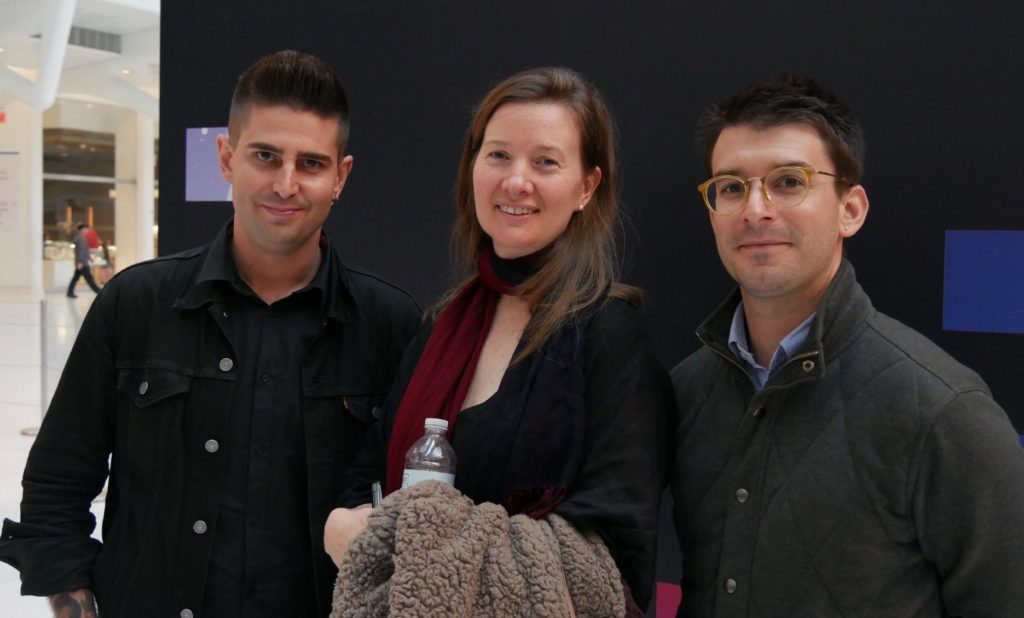
From left: Lewis Smithingham, Julina Tatlock and Tom Vance, Invisible
From left: Lewis Smithingham (30 Ninjas director of photography), Julina Tatlock (30 Ninjas executive producer) and Tom Vance (Jaunt VR executive producer), for Invisible

How did the idea to create Invisible come together?

[Tatlock]: Doug [Liman] and I started 30 Ninjas about seven or eight years ago, and we were talking about creating Invisible in some form—TV, movie or graphic novel. At the same time, I was looking into VR and started to get excited about it. So, the creative development and creative interest in VR came together, and it was about in the early spring of 2015 that we had a script and started talking to partners. I was talking to Samsung, Jaunt and Condé Nast separately as a VR project when it occurred to everybody that all three were interested, and maybe the project would be better if everybody pooled both their financial and creative resources.

What made you decide on an episodic format instead of a single film?

[Tatlock]: The expectation, when we wrote this in 2015, was that people would not want to wear a headset for very long, so you needed to build in Acts because people wouldn’t be comfortable or they would have a short attention span. What we found, as we were making it through the year, was that we wanted fewer and fewer Act breaks. It was initially conceived of as a six-episode series, and we broke it down into five episodes. I think we’ll be discussing, when we do the next thing, that longer is probably better. It gives you more runway for the story and time to invest in the characters and experience.

[Vance]: For us, releasing all the episodes at once—allowing for a bingeable experience—gives the viewer the option of sitting and watching the show in one fell swoop or watching episode-by-episode. We were certainly interested in seeing how the user experienced the episodes, and when we made the determination to release them all at one time, we all felt that if one single person sat through the entire show that we did our jobs really well. What’s great is that, more often than not, people are sitting through the entire experience.

From your experience working on Invisible, how far are we from having a full-length VR film?

[Smithingham]: We could do it. It’s just a matter of funds.

[Vance]: Not far away at all. There are feature-length projects happening around town and at Jaunt. So, it’s around the corner.

How is Invisible being distributed?

[Tatlock]: You can find Invisible on Samsung VR as well as through the Jaunt VR player.

[Vance]: In our partnership with Samsung and CNE (Condé Nast Entertainment), Samsung was an exclusive distribution partner. It is now being widely distributed both on the Samsung VR store and the Jaunt VR app.

On the panel, you spoke about following or breaking the rules of VR content creation. Do you feel that you’re writing the rules as you go?

[Tatlock]: We did think we were making it up. I like to say making up, Doug likes to say, “break the rules and create new ones.” We looked creatively at what the right thing to do was. Sometimes we did shots that were covered a couple of ways because we weren’t quite sure how well they would work. But we went in knowing a couple of different things:

  1. We knew that we were cutting; you’re not a person—you’re inside a story, but sometimes you’re on the floor and sometimes you’re hanging off a building. We’re not really concerned with what you, the audience member, thinks of where your feet are.
  2. We weren’t writing to any kind of audience role, because as an action-thriller, we wanted to tell a compulsive story and we were not stopping.
  3. We knew that we were going to be moving the camera. We didn’t quite know how much, but we certainly knew we were going to.

But there were rules that we weren’t going to break. [For example] we pretty much knew that we were always going to be stabilizing the camera. But even some of the rules we thought we were never going to break, we ended up breaking.

[Smithingham]: What’s truly amazing was that essentially, we had shots that were safety shots and then we had shots we were calling experimental. They were experimental because we had never tried them before. Almost every single one of those shots made it into the show.

[Tatlock]: Every day we had a first on set. You could not go through a day without asking, “Will that work? I don’t know, let’s try it.”

[Smithingham]: The idea of us making up rules feels so final. The one rule we did have was: “Don’t make it boring. Ever.” I think we followed that.

With different location-based VR experiences, particularly how IMAX plans to create VR movie theaters, how do you think the technology will impact Hollywood filmmaking?

[Vance]: What I think you’ll end up seeing is that there will be a VR theater within a larger Cineplex, and that will be a draw that will eventize the filmgoing experience. Already, you’re seeing VR being used to market and promote feature films. There are things happening within the film industry today where VR is part of the theatrical experience. I absolutely believe that VR is going to change the world and I think it’s going to affect every aspect of the moviegoing experience, but I don’t mean to suggest that VR will replace film. I see it as something that is totally distinct.

Has any consideration been given to adding more interactivity to experiences like Invisible?

[Smithingham]: Absolutely. This piece doesn’t have interactive, but I think there’s couch VR and not-couch VR. We’re developing a project right now that has some heavy-duty interactivity in it. But Invisible is interactive in the sense that you can pick where you’re going. There is a path, but you can sort of choose to not follow it, adding a level of interactivity. I think there is thought to developing interactive storytelling, and a lot of it has to do with technological constraints, such as the lack of a universal control set, which is hampering experiences right now. But as things get better and VR evolves and becomes more universal, interactivity will progress further.

I also think there’s always going to be a place for passive viewing.

Nokia’s Deal With Sony Pictures Further Immerses Hollywood In VR

Nokia Technologies continues to connect Hollywood studios with its Ozo 360-degree camera. The tech company signed Sony Pictures to a multi-year worldwide agreement that allows it to use Ozo hardware and software tools to create filmed and livestreamed content for the growing number of virtual reality platforms, including HTC Vive, Oculus Rift, Google Daydream and PlayStation VR.

ghostbusters-now-hiring
Ghostbusters Is Hiring mobile VR game

Sony Pictures Entertainment has released a variety of VR experiences, including the Ghostbusters Dimension at Madame Tussauds live-action experience and the Ghostbusters Is Hiring virtual reality game. Sony also created live-action 360 experiences based on theatrical releases Goosebumps and The Walk.

Nokia will collaborate with Sony Pictures and provide equipment and VR technology to support the creation of special VR content. Sony Pictures will also leverage Ozo Live to transport fans to special events that they can’t otherwise attend. Ozo Live allows content creators to produce fully immersive live experiences through 3D 360-degree video and audio playback technologies.

“Partnerships with cutting-edge technology companies like Nokia are critical as we develop the market for VR experiences and build scale in our production and distribution efforts,” said Pete Wood, SVP of digital sales at Sony Pictures Home Entertainment.

Scot Barbour, vice president, production technology at Sony Pictures said, “Nokia’s Ozo camera and its suite of professional tools are an excellent solution for content creators because they seamlessly integrate into established production processes and workflows, and enable the real-time capture and broadcast of VR content.”

Moving forward, Sony Pictures could use Ozo to market directly to consumers by livestreaming events or capturing 360-degree footage on-set and create behind-the-scenes featurettes.

“The 360 possibilities are endless,” Paul Melin, vice president of digital media at Nokia Technologies, told [a]listdaily. “From the obvious promotion of the movie in 2D to a fully-immersive interactive experience inside the movie. How about things like—after the movie theater experience, what if we can see best scenes of the movie from the eyes of your favorite character? What if we can walk around in the same environment of the movie while it is playing? These are the types of creative possibilities that make VR so exciting.”

Melin said creating VR short films based on the story and characters of a movie introduces a myriad of new opportunities for a franchise. “VR can also deliver a different ending or an element of the story that wasn’t unfolded in the movie originally,” Melin said. “It can bring people into the story in from the point of view of one of the characters, allowing viewers to be fully immersed in the movie—an experience that can never be achieved in a frame.”

VR also brings fans closer to the Hollywood experience, as Nokia has done with Disney Pictures.

“We’ve livestreamed from the red carpet at movie premieres like Disney’s Alice Through the Looking Glass as well as the Pink concert on YouTube,” Melin said. “We are currently deploying and testing this with the over-the-top broadcasters as well as the larger broadcast community and hope to share more on these efforts in the near future.”

Sony Pictures will also integrate the Ozo Player SDK into Sony Pictures Home Entertainment’s Privilege Plus app, available through Google Play. Privilege Plus is an Android application that allows customers to redeem and watch content included with the purchase of selected Sony Mobile devices and accessories like bundled movies or VR experiences.

Melin said the company is collaborating very closely with Hollywood studios to exploit the full potential of its VR technologies.

“Together, we are pushing the limits of VR—both from a creative/storytelling perspective and from a technology perspective and we incorporate their feedback in our product roadmap,” Melin said.

Nokia Technologies has partnerships with Disney and Sony, and works with many of the leading VR studios like Here be Dragons, Magnopus, MPC and Reel FX.

“We recently won the Proto award for best live-action with Argos, which we produced with Magnopus,” Melin said. “We also created one of the best VR experiences to date with Universal Music Group and OneRepublic: a music video for the new hit ‘Kids.’”

Melin said Ozo not only supports 360, but it also enables the delivery of 3D immersive experience for multiple platforms and hardware including Oculus, HTC, PlayStation VR as well as newer and emerging ones such as Lenovo, Microsoft and others.

“This emerging audience is growing exponentially as more and more users are buying devices, including Daydream,” Melin added.

Melin said Nokia is learning through its partnerships with the Hollywood studios that storytelling doesn’t have to be limited to one take and fixed camera positions.

“New shooting techniques are being created and used as a result of Ozo’s form factor and on-board recording capability,” Melin said. “A great example is OneRepublic’s ‘Kids video. The story unfolded as the camera was moved on a cable cam from the boy’s room to the girl’s room and then to the street—allowing the director to guide the viewer in 360 by moving them to different locations, yet still able to have the freedom to look wherever they like.”

Other techniques include using Ozo in very remote areas that require battery-operated solutions, as well compositing special effects like Oscar-winner Magnopus employed with the Argos video. In the Argos video, the viewer becomes the murder victim and relives his memory in point-of-view. Ozo also operates as stand-alone, fully-contained device that can be flown on a drone.

“The full potential of VR will be best realized by providing the most creative minds, storytellers and production teams the professional tools to explore the medium,” Melin said. “Others are providing production-for-hire platforms that enable content creation but are not necessarily giving the creative community the opportunity to fully explore what VR can bring to their content.”

In addition, Melin said Ozo provides a real-time VR preview that enables live use with multiple cameras like at Austin City Limits, where up to 10 cameras streaming live at the same time enabled the viewer to instantly go to all those locations.

ESL And Sliver.tv Partner To Broadcast Intel ESports Event In Virtual Reality

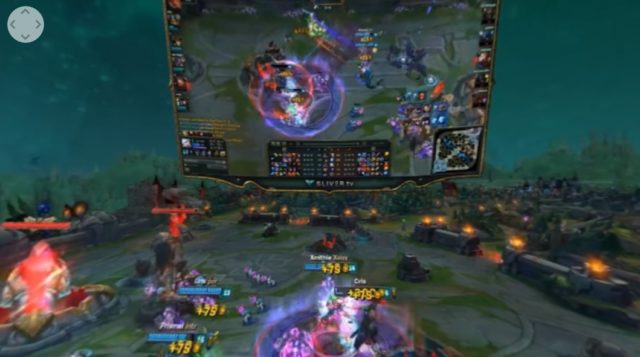
ESports fans will be able to watch the Intel Extreme Masters in a whole new way thanks to a partnership between ESL and Sliver.tv, a 360-degree virtual reality platform. On Nov. 19 and 20, spectators can immerse themselves into livestreams of Counter-Strike: Global Offensive (CS:GO) and League of Legends through VR and 360-degree video, enhanced with live stats, for the first time.

Intel Extreme Masters Oakland will be broadcast in VR through Sliver.tv’s platform that is viewable through a website, mobile device or VR headset. The stream will be viewable on the company’s website and for those who download and install the Sliver.tv Android and iOS apps. Those watching via website, app or Google Cardboard will experience the stream in a 360-degree format. For those who really want to step into the action, the Sliver.tv GearVR, Oculus Rift and HTC Vive apps will stream in full VR.

“Our vision is to transform the eSports spectator landscape forever,” said Mitch Liu, co-founder and CEO of Sliver.tv, “and incorporating augmented live stats into our VR 360 livestreams of CS:GO and LoL is a big step towards this vision.”

lol-360

Viewers around the world will get access to real-time stats including player KDAs (kill-deaths-assists), event timeline with bomb plants, defuses, kills with various weapons and “key moment” stats such as 2K, 3K, and multi-kill streaks by players in the round.

“Having a real-time, in-depth look at everything that happens in a CS:GO match is something unique to a VR broadcast,” Stuart Ewen, product manager for ESL, said in a statement. “Now, viewers not only have a bird’s eye view of all the action and a first-person feed, but also all of the statistics to put together a high level view of how a round or match unfolds. All of this is only possible in a VR environment.”

Nielsen reports that 14 percent of all Americans 13 and over are eSports fans—a major increase from eight percent last year. Superdata, meanwhile, forecasts a total market for virtual, augmented and mixed reality gaming to reach $8.8 billion globally, which will lead to applications in other fields.