Lumyer App Makes Selfies Sing

Millennials never grow tired of taking selfies to commemorate the moment. . . any moment. Los Angeles tech startup, Lumyer has banked on consumers’ never-ending infatuation with themselves through its app, which allows users to augment reality by adding video and audio effects to both selfies and videos on Android and iOS devices. Lumyer placed second in Google Play’s recent “Top Trending Apps of 2016” list.

In its first year, consumers have downloaded the Lumyer app more than 10 million times and created over 30 million Lumys. The app has 2.5 million monthly unique users creating over 5 million Lumys each month. Once created, users can share these Lumys across all existing social media channels and messaging platforms.

Those numbers have caught the attention of Universal Pictures, which first partnered with the company to promote the Halloween theatrical release of Ouija: Origin of Evil and has reteamed with Lumyer for Illumination Entertainment’s newsest computer-animated movie, Sing.

Lumyer co-founder Diego Mortillaro told [a]listdaily that more than 95 percent of Lumys created using the Ouija effect, which allowed users to place themselves inside a scene from the horror film, were shared by users during the Halloween campaign.

“We saw a high interaction time with the five Ouija effects of one to two minutes on average,” Mortillaro said. “Our format seems to work really well. People can find something that’s a digital experience but connects with them on a very emotional level.”

The Sing campaign, which runs through January 2, allows users to incorporate special video and audio effects of characters like Buster Moon, Rosita, Gunter and Meena into photos and videos as if the characters are right in the photo or video.

Founded in 2015, Lumyer began as a tool for users to bring characters to their images through a variety of fun effects. The app has quickly become one of the most popular photo and video enhancement tools available and is now grabbing the attention of brand marketers thanks to its interactive capabilities.

While users can purchase an assortment of effects from the app’s store, Hollywood marketing campaigns offer access to exclusive limited-time effects that are free. And once downloaded, those effects can be used long after the movie or brand campaign has completed. “Working with Hollywood is quite natural in our promotional activities because we do video effects and they produce videos,” Mortillaro said.

One opportunity that hasn’t been explored yet is the home video release of these films. “Our users are very loyal and still today we’re receiving emails asking us to put Ouija back into the application,” Mortillaro said. “Marketing a recall campaign could be very successful.”

Lumyer also collects a lot of data on its customers and can provide its partners with useful information for marketing campaigns and future events. “We’re now entering the beauty industry because Lumys are used on your face, and the larger beauty companies are asking us to create specific effects. We’re also getting requests from the car industry. We don’t see any specific industry that couldn’t benefit from what we do.”

Mortillaro points to the music industry as a great potential avenue of exploration, which could bring the interaction between the singer and the user to the next level. “There are apps that people use to play back specific songs,” Mortillaro said. “Think about being closer to the singer and singing with him or her in augmented reality. That increases the engagement.”

Nearly 70 percent of Lumyer’s audience are millennials with slightly more female than male users. The app has a six-minute average session length, compared to Instagram’s two minute and Snapchat’s 84 seconds. “People perceive Lumyer as a tool to have fun with and entertain themselves,” Mortillaro said. “We see a lot of comments where people take a break from work and relax and play with Lumyer.”

Lumyer has risen at the same time that traditional advertising formats are having a hard time connecting with young users.

“They’re used to skipping ads, especially when the ads come out of the blue and aren’t perceived as an added value,” Mortillaro said. “We realize that people are using AR in an active and practical way. They’re becoming active distributors in the ad message. It’s simple to use and people see our effects as an added value because they’re consistent with the message they want to provide to their social content.”
2016 In Review: Mobile Gaming Reaches New Heights

This has been an exceptional year for mobile gaming, as it brought in $41 billion in revenue, surpassing both PC and console earnings for the year. We asked industry insiders and analysts about what they thought were some of the year’s biggest mobile gaming events that helped the industry soar. Hint: everyone is wild about Pokémon GO and can’t get enough Clash Royale.


“Mobile games had another great year in 2016. Analysts projected mobile game revenues at nearly $40 billion in revenue to surpass PC and console earnings for the first time, marking a new milestone in market strength and potential. The release of several consumer VR headsets sparked growth in VR gaming and made mass adoption not just possible, but inevitable. Supercell showed their magic once again by launching the megahit Clash Royale. Pokémon GO broke through and became a global cultural phenomenon that catapulted mobile games back into the spotlight as a massive market opportunity. And finally, we saw a rewind in history with Facebook experimenting with HTML5 games on its Messenger platform.” – Terence Fung, chief strategy officer, Storm8


“As I look back on 2016, two mobile games stand out as particularly groundbreaking: Clash Royale and Pokémon GO.

Clash Royale showed the world that eSports can work on mobile in a meaningful way. In addition, the title illustrated for the first time that real-time PVP (player-vs-player) can drive a #1 top-grossing hit. Prior to Clash Royale‘s launch, the mobile ecosystem was largely ignoring the viability of eSports and defaulting to asynchronous PVP as the go-to structure for social competition in mobile gaming.

“There’s no denying Pokémon GO was a tremendous phenomenon, and groundbreaking in various ways. Like Clash Royale, it established a mega hit in a space that was largely being ignored: location-based gaming. Many studios had previously tried to deliver a location-based mobile game and failed. This led the industry to move away from exploring real world locations in game design.

“Although Pokémon GO‘s success is unlikely to be replicated by future location-based titles due to how perfectly the IP fit the concept and captured the cultural zeitgeist, I believe it played an important role in introducing a completely new form of interactive entertainment that lays a foundation for future location-based titles to succeed now that consumers are familiar with the mechanics involved.” – Chris Akhavan, chief revenue officer, Glu Mobile


“It has to be Pokémon GO and the wide consumer adoption of a data-driven game. Just looking at the revenues, it would be hard to cite anything that has had nearly as much impact.” – Stuart Duncan, CEO and founder, icejam


“A lot has happened in mobile gaming, as one can imagine. Mobile gaming has become a lot more focused on midcore, hardcore and strategy games than the Candy Crushes of the world. From a customer affinity standpoint and taste perspective, we have moved on from Candy Crush to more sophisticated games.

“From a user acquisition standpoint, mobile video is at the center stage for how gaming companies are acquiring the right kinds of users. That has happened a lot more this year, and I’m sure we’re going to see a lot more going forward.” – Piyush Shah, chief product officer, InMobi


“After years of stagnation, the smart implementation of megabrands provided a jolt to mobile in 2016. Pokémon GO smartly integrated a broadly appealing brand into location-based gaming, the power of the Clash IP helped turn Clash Royale into an instant hit, and Super Mario Run is already at the top of the free and grossing charts. Next year will see even more companies trying to use their brands in mobile.” – Patrick WalkerVP of insights and analyticsEEDAR


“China overtook the US as the world’s largest mobile game market, reaching $10.0 billion in 2016. In the first 80 days after its launch, Pokémon GO had already made over $470 million in gross revenues. This was one of the only new entries in the top 10 grossing game rankings all year. Mobile game developer, Supercell was valued at $10.2 billion following its investment by Tencent. Super Mario Run, Nintendo’s first true mobile game, released on iOS.” Peter Warman, CEO, Newzoo


Pokémon GO earned $788 million, just under the top-5-titles despite launching mid-year. Its success showed the persistent potential of mobile games as promotional tools: sales of older Pokémon titles and 3Ds hardware picked up, and new 3DS titles Pokémon Sun and Moon enjoyed record-breaking sales at launch in November. Additionally, the mobile game helped Nintendo see the potential for mobile, and the company’s first true mobile game, Super Mario Run, features its flagship character.

Clash Royale’s addictive gameplay borrows from both MOBAs and collectible card games and cementing Supercell’s reputation as the premiere mobile hitmaker. Shortly after the game’s launch, Tencent purchased a controlling stake in Supercell from former owner SoftBank. The deal gave Supercell greater access to the Chinese mobile market, where it is virtually impossible for even the largest Western publishers to succeed without a local partner. The investment helped it become the second title in 2016 to earn over $1 billion for Supercell.” – Joost van Dreunen, CEO, SuperData Research

2016 In Review: Virtual Reality’s Big Debut

With the launch of the Oculus Rift, HTC Vive, PlayStation VR (PSVR) and Google Daydream, 2016 has been a landmark year for virtual reality technology. But how well has VR taken off, really? We ask industry insiders and analysts their thoughts on how the first year of VR has gone.


“2016 was an exciting year for VR as the launches of PSVR, Vive and Oculus have created a huge demand for content. With device penetration growing and a user base that is eager to engage, developers now have an opportunity to produce VR games and experiences profitably. For those that are championing VR, the existence of a viable business model is huge. It means that Lionsgate and others can start to bring more and more premium content into the marketplace, a key step in broadening the user base of VR beyond the core enthusiasts. John Wick Chronicles is a great example of this. You have a AAA developer/publisher in Starbreeze confidently investing in a high-quality game based on a movie that appeals to the larger gaming community.” – Daniel Engelhardt, vice president of interactive ventures, games and virtual reality, Lionsgate Entertainment


“The media business in general has moved really far over the last 50 years with the transition from print to radio to television and the introduction of mobile devices. Now with virtual reality, we have the ability to take things on the go and it’s a game changer for the industry. Taking live events with you on the road with you changes the consumption of the content. Companies all over the world are launching mobile VR experiences because mobile VR allows you to take the largest screen in your house with you. You are looking at a 180-to-360-degree world with a mobile phone and it becomes the best place to consume content.

“Live virtual reality will forever change how fans experience live events. The next 12 months will mark the first time where fans will be able watch live sports in VR on a consistent basis thanks to our partnership with the NBA. It is undoubtedly the most immersive way ever to experience sports and it will become the de facto sports watching medium of the future. In 2017, you will see the biggest electronics companies all of the world continue to make headsets and groundbreaking technology to support VR.  Mobile manufacturers are making screens with higher resolutions and better processors which will improve the quality of the VR experience. With all of those changes happening, VR is going to become mass market and people will spend more and more time immersed in the technology.” – Danny Keens, vice president of content, NextVR


“The VR industry has made great progress in 2016, but faced some of the common challenges of a transformative new medium. The biggest challenge has been and continues to be reach. We all know the VR market is small but growing fast. At Vertebrae, we look to maximize and expand the reach of content as far as possible across the VR ecosystem, and even into mobile/web with 360 video. Further, the growth of VR in 2016 has highlighted the lack of interactive/VR production experience, and we have found VR advertising to be a great testing/proving ground to explore different concepts and production ideas, as these are shorter experiences and do not require the time/investment of a full VR experience.” – Vince Cacace, founder and CEO, Vertebrae


“I think there has been outstanding growth [in VR]. You’re starting to see games that were launched later in the year starting to perform really well. There’s some great content out there, with Sony and PSVR being adopted. There has been a lot of groundwork in the VR space, a lot of great developers bringing content to the market, and there’s going to be a lot of innovation in finding new ways to do things. [For example], we’ve got to solve the issues of locomotion and frame rates, and we’ve got to figure out how to market [games]. There are a lot of things that have happened in a very short time frame—starting in January—with how much more polished the content is and how many more developers are out there. It’s been a lot of progress, and it’s very exciting.” Matt Candler, chief revenue officer, First Contact Entertainment


“I like to say that 2016 was the year that VR hype became VR reality. This year, VR wowed the press but struggled to find mass market appeal. The VR hype cycle started shortly after the announcement of the PSVR and led to a stream of wildly optimistic forecasts in the press, only to finally burst after a disappointing holiday. Still, I do think that despite the barriers to mainstream VR, 2016 showed us that the systems have a real ability to transport and wow people.” Patrick Walker, VP of insights and analytics, EEDAR


“The first year has gone as we expected. Contrary to some other analysts, we have been relatively silent on VR because we foresaw a slow uptake this year. In general, we see VR video as the most important with the most revenue potential.” Peter Warman, CEO, Newzoo


“As expected, which is to say it’s done well. Considering how new the technology is, and how skeptical and unaware general consumers have been, it’s impressive to see more than 4M high-end devices ship in its first full year, especially at their price points. It also says a lot to see the kind of tech leadership that is buying in (Google, Samsung, Sony, Facebook, HTC, etc.). That kind of support is on par with the initial development of smartphones, which shows the kind of promise these heavy-hitters see for VR’s future—and that says a lot.” – Stephanie Llamas, director of research and insights, SuperData Research

3 Ways Brands Made Facebook Live The New TV In 2016

Is livestreaming video the new TV? The medium has taken a major leap, in part thanks to the launch of Facebook Live this year as users and brands alike turn on their cameras and share experiences with the world. With more outlets like Instagram becoming available as streaming platforms, it’s easier than ever to broadcast from anywhere in the world. From newscasters to entertainment, tutorials and just plain weird, here are how some companies used Facebook Live to reach a global audience.

Interactive Journalism

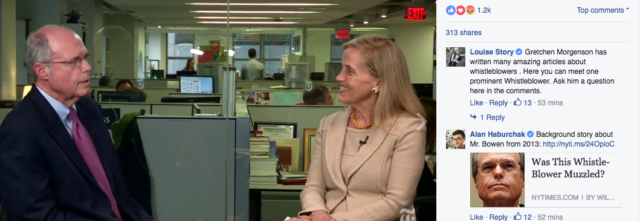
Until recently, if your local newscaster addressed you directly during a broadcast, then some strong medication was prescribed. Now, with the help of Facebook Live, interacting with a news broadcast as it happens has become a reality. The New York Times invites its audience to share their views or ask questions through comments, which in turn, affects the action on-screen.

“We’re calling this live interactive journalism,” Louise Story, New York Times executive producer of live interactive journalism, told WAN-IFRA. “We’re not calling it video, because it’s inherently different from a produced video. In live interactive journalism what’s happening onscreen is affected by the audience in real-time. This is as much about the audience as it is about journalism.”

The 2016 US Presidential Election had the whole world watching, debating and just turning against each other in general. Facebook Live became a hub for information and opinions—so much so that four out of the top 10 most-viewed Facebook Live videos of 2016 were centered around the election. Coming in at number three on the list was BuzzFeed‘s Countdown to the Next Presidential Election coverage garnered over 51 million views alone.

ny-times-facebook-live

Entertaining The Masses

E! News recently launched a new live video series on Facebook called “Freestyle,” sponsored by Ulta Beauty. Hosted by E! News correspondent, Zuri Hall and senior beauty editor, Cinya Burton, the show focuses on beauty and fashion. Each episode features different guest experts, products and trends over eight 30-minute episodes running through January. In addition, the entertainment news site takes to Facebook Live several times a week to discuss other topics, and each episode averages around 300,000 views each, according to John Najarian, EVP and GM of E! News.

TMZ streams daily gossip updates and goes live for breaking news, entertaining while inviting conversation in real-time. “Social platforms, in general, whether it’s YouTube or Facebook, are becoming another screen where people are looking for regularly scheduled programming,” said Donald Alexander, director of social media and audience development at TMZ. “With Facebook Live, we can also extend beyond what we do on the TV show and finish that conversation on social.”

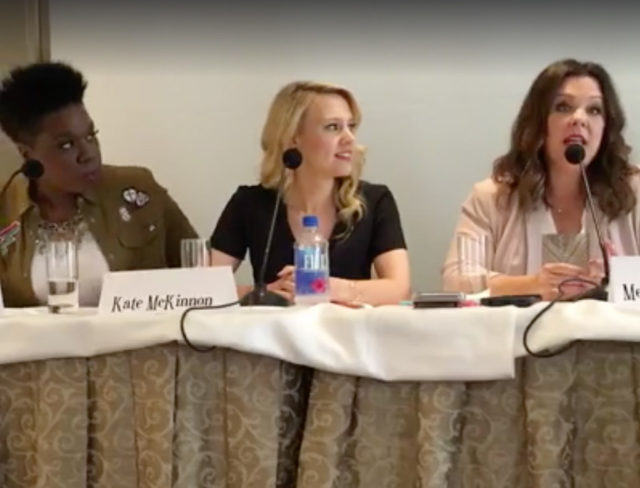
E! News hosted a live Q&A session with the cast and crew of Ghostbusters on Facebook. (Source: E!)

Making Us Hungry

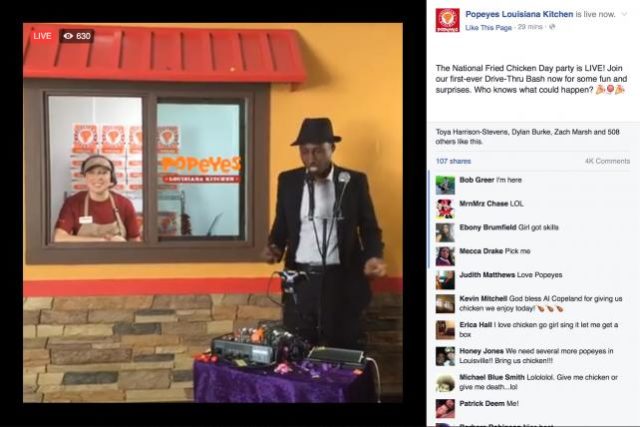
Food brands like McDonald’s, Popeyes, Nescafé and more took to Facebook Live this year to inform, entertain and bring people together. Over 3.8 million people watched Tastemade prepare tiny food being cooked in a tiny kitchen. For International Coffee Day, Nescafé took to Facebook Live, Periscope and YouTube to bring coffee fans together while also supporting global farmers. “Livestreaming was the perfect way to bring people together in an innovative, and very real, way,” Michael Chrisment, Nescafé’s global head of integrated marketing, told [a]listdaily. “When you wake up, you grab your phone and a coffee. Nescafé and social media go hand-in-hand, which is why Facebook livestream was a great way to reach our fans.”

FacebookLivePopeyes

The Future Of Entertainment

Still in its infancy, Facebook Live has already displayed enormous potential for brands, particularly when it comes to engagement. This upcoming summer, Roker Media will launch the first-ever Facebook Live talk show, The Never Settle Show with Mario Armstrong. The show will be about helping people find their passions and setting them on the path to make their dreams a reality. Audience members will become guests via Facebook Live—physically displayed on a screen on set—and the format will be determined by its audience.

“We’ll have a live, interactive video wall on the set so people will be able to see themselves actually on the show which I think is really different—really compelling.” Armstrong told [a]listdaily. “The authenticity, the transparency . . . these are things that connect to millennials as well as content that can actually make an impact.”

Lionsgate Leverages VR To Market ‘Deepwater Horizon’ Movie Home Release And More

Lionsgate is diving into virtual reality by launching a dedicated VR app for the home entertainment release of Summit Entertainment’s Deepwater Horizon. The 4K Blu-ray, Blu-ray, DVD and Digital HD versions of the film can connect with the Deepwater VR app that’s available for iOS and Android devices. The Digital HD version is available today and the disc-based releases will be available on January 10.

The free app, which works with mobile VR goggles like Google Cardboard, adds another layer of immersion to the traditional director’s commentary track that Peter Berg provided for his film. The film’s editor, Colby Parker Jr. also provides insight into the three 360-degree scenes.

The mobile Deepwater VR experience includes three scenes with commentary and is free to download through the Apple App Store or Google Play. The first scene is fully accessible when the app is downloaded and the additional scenes are unlocked using audio recognition while viewing the film. Created by SubVRssive in partnership with Lionsgate, viewers will also be able to see renderings and sketches of the various special effects used in the film.

Michael Rathauser, senior vice president of marketing for Lionsgate Home Entertainment, told [a]listdaily that virtual reality opens up a variety of creative and marketing opportunities. “One of the things that struck me most when I watched our VR app is that we’re just scratching the surface,” Rathauser said. “When you take the director’s commentary and put it in the world of VR, it’s a more immersive and more personal way to communicate and get information from the director.”

Lionsgate captured 360-degree footage of the production on location while Berg was directing Mark Wahlberg, Kurt Russell, John Malkovich and the cast of the film. “The Deepwater commentary was done in post, but we captured footage during the shooting of the film with the idea that it could be a VR experience as well,” said Rathauser.

In addition to working on Cardboard, Rathauser said anyone with a smartphone or tablet can still get a 360-degree video experience through the app without a viewer. “360 is terrific, but when you put on a headset, it is a completely different and more immersive experience,” explained Rathauser. “The jump to VR is similar to what the home entertainment industry saw when it went from VHS to DVD. You have to see it to believe it. Once people try VR for the first time, and it’s a sea change for them. That’s what it takes to understand the power of this new medium.”

Rathauser said he’s looking forward to how other creative teams embrace this technology to expand the home entertainment experience. “This is an opportunity to create more engaging experiences for consumers,” he said. On the marketing side of the equation, Rathauser said VR opens up the ability to reach consumers on app stores in addition to the digital storefront. It also introduces additional PR stories about the titles.

Deepwater Horizon isn’t the only film getting the VR treatment from Lionsgate. The movie company has partnered with Qualcomm to debut a new Power Rangers VR Experience at CES 2017 in Las Vegas, ahead of the March 27 theatrical release of the film. “We’re excited about Power Rangers,” Rathauser said. “We’ve done a few other VR experiences like Blair Witch. From a marketing standpoint, we’re using that to help market the January 3 home entertainment release of the film. VR helps us market to a broader group of people.”

According to Rathauser, home entertainment provides a great platform for Hollywood creatives to dip their toes into the new medium. “We’re seeing great interest from creatives that it’s a whole new way of storytelling,” he said.

Moving forward, Rathauser believes there are a lot of opportunities to go beyond these first Deepwater Horizon VR offerings. As more releases add VR, there’s also the potential for a dedicated Lionsgate home entertainment app. “We like the idea of an app that can be used for multiple films because there are efficiencies to that,” Rathauser said. “And from a marketing standpoint, we can build a relationship with the customer.”

While the focus today is on mobile, Rathauser is tracking Sony’s recent release of PlayStation VR, which plugs into the over 50 million PlayStation 4s in homes around the world. “With PlayStation VR the more penetration and more ways there are to experience VR, it becomes a viable alternative for home entertainment,” Rathauser said. “Gamers tend to be at the forefront of new technology.” Both the PS4 and PS4 Pro also play Blu-ray discs, which adds another level of synergy to home entertainment companies.

Lionsgate is also exploring virtual reality gaming with The John Wick VR Experience that Starbreeze is developing for IMAX VR. “We expect the game to really catch on and get people excited for John Wick 2,” Rathauser said.

‘Qurius’ Introduces Connected Reality To Mobile Gaming

The world’s first “connected reality” game, Qurius (pronounced “curious”), released in a stealth beta earlier this month on Android and had over 62,000 installs in one day. That’s quite a feat for a game that, so far, hasn’t had much if any marketing effort behind it. It just goes to show how innovative gameplay can still help games stand out in an ever-crowded mobile space.

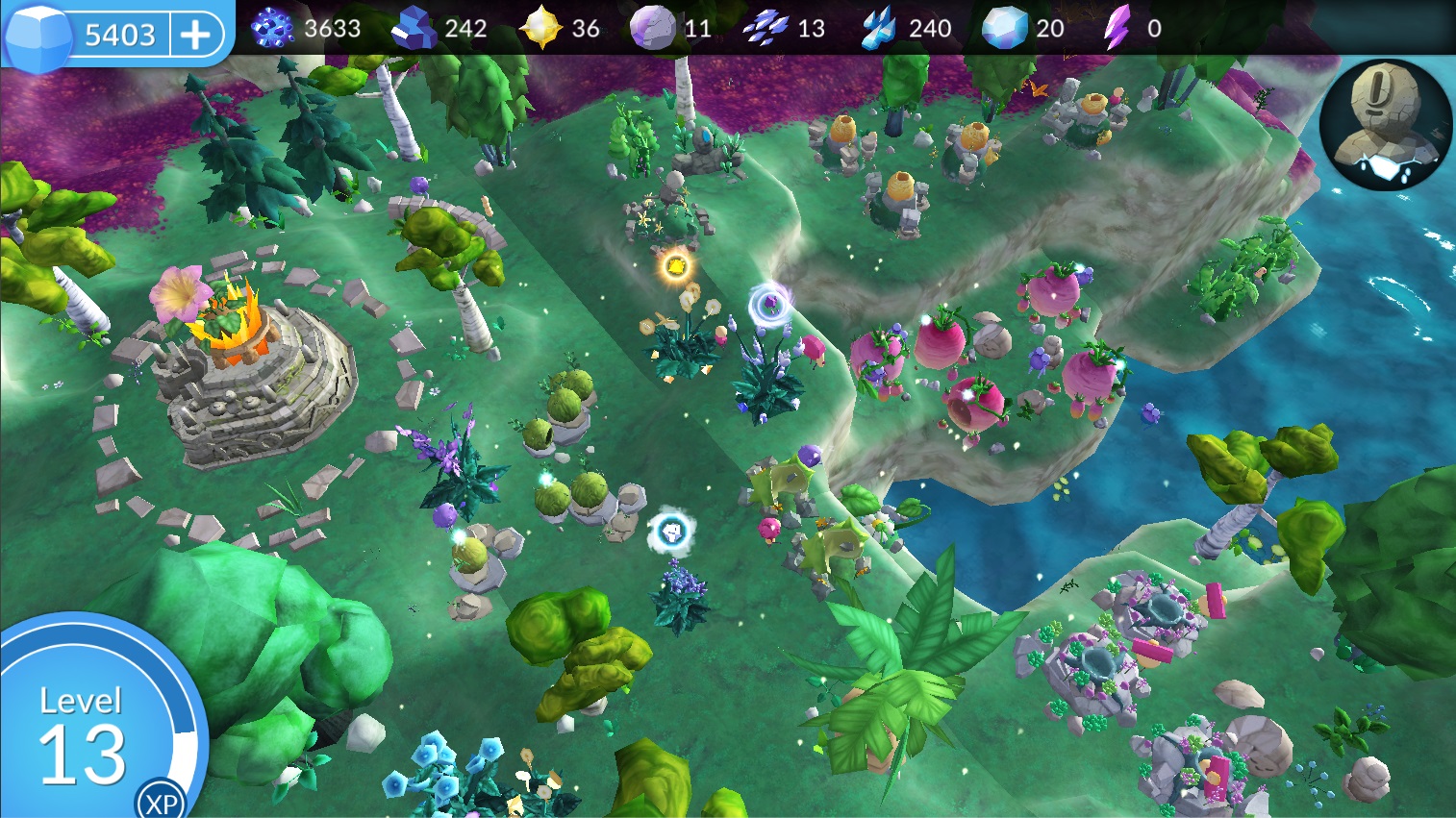
Connected reality is a term that developer, icejam is using to describe how Qurius connects with real world data and social connections to create a dynamic game experience. The game collects local weather information from all its players and turns them into gems, which can be cultivated and spent on constructing different buildings. These buildings vary according to the weather, which adds to the sense of discovery as players grow and explore the 3D world and help the indigenous life flourish.

The game reflects the player’s celestial events (such as moon phases) and local weather, no matter where they are, to influence the game, but additional gems from around the world can be acquired by growing special trees that come from meteors that intermittently rain down on players’ lands. The trick is, they have no control over what kinds of weather tree gems will arrive. So, while building a snow town in the middle of summer is possible, it depends on a lot of luck. Players can purchase additional meteors, trees or special decorations, but they too are random.

Stuart Duncan, CEO and founder of icejam, is the former director of EA Mobile Studios and founder of Bight Games, one of the first free-to-play mobile game studios. He helped conceive, develop and produce The Simpsons: Tapped Out, which has over $130 million in life-to-date digital net revenue, and has been in the top-20-grossing iPhone games in the US for all except 12 days since its launch in 2012.

Duncan explains that the company’s goal is to create mobile games driven by real world data because it’s more fun for players, and it increases engagement by providing a constantly changing environment in which to play. He recently spoke with [a]listdaily about connected reality and how it could be the next big innovation in mobile gaming.

stu-duncan-icejam
Stuart Duncan, icejam CEO and founder

Qurius seems to employ a very high-concept kind of gameplay. How do you think mobile gamers will take to it?

It’s high-concept, but honestly, it’s a mass market-wide proposition in what we think is a friendly and unique IP. We turned on globally on Android and got 62,000 installs, and that’s all organic. We think the appeal is there, and even if half of those people uninstall, just the idea of it can capture the imagination.

What inspired the creation of a weather-based mobile game?

I’ve been in the games business since 1996, and I came from a conceptual art background, dealing with how audiences related to interactive art installations. So, some of my early work was on data-driven art. Twenty years later, we have supercomputers in our pocket, and users understand real-time data in a way that they never have before. In fact, not only do we understand it, the regular Joe on the street has an expectation of real-time information now. This was never the case before.

So, we have an educated audience, we have a technical capability, and we have a wide availability of cloud-based data. For us, it’s a confluence of these things that makes it the right time to do this kind of work. We think the interesting thing in the success of Pokémon GO is not augmented reality—that’s a red herring—it was a mass market acceptance of a data-driven experience. An experience related to one’s location.

Platforms have been predicting the success of location-based gaming for the last ten years, and it never happened, and there are lots of potential reasons for that. But we think it’s because it required users to be in a certain place in order to play, and what Pokémon GO understood is that a user needs to be able to be anywhere and still have the benefit of that enhanced play. It’s the perception that their environment is making a difference. That kind of gameplay is a very good illustration of why our company exists.

In the future, we’ll be using pollution and tidal information, all of which is available.

Could a game like Qurius eventually include augmented reality features?

I guess it comes down to how we define augmented reality. If we use the definition of augmented reality as injecting the real world into the game experience, then it’s already augmented reality—just not visual. We call that tight integration connected reality to differentiate from augmented reality.

Augmented reality feels like a solution built by engineers to solve a problem that doesn’t exist. I think this is the nature of how many game studios are engineering driven, whereas we’re entertainment driven. We have some of the best engineers in the business working for us, but the drive is to create the experience and bring entertainment to the customers, not to do a technical puzzle. We’re not trying to unravel something that’s just cool, technically.

How does collecting weather foster deep engagement?

In my view, engagement follows re-engagement. What our game can do is give you a real world reason to take your phone out of your pocket. In effect, the world becomes your push notification system. If it’s getting dark, you play; if it’s dawn, you play; and if it’s getting cold, you play. We want these events to be cues to get back into the experience. The gameplay changes at night—the creatures go to sleep—so the rhythms of your life and environment will keep you playing, and we don’t want to be pushing bullshit notifications at our users.

https://www.youtube.com/watch?v=3lB7T9qrJno

How do the social features work? Can you only collect weather gems from friends or is there a public area?

It’s only public. You can’t collect from your friends. All the trees, which are portals to other players, come in a gacha (collection and growth gameplay). They come from the sky in a giant, fiery meteor strike, and when you crack them open, there’s a tree seed inside. That tree seed can come from anywhere in the world, so it could be completely useless to you. But if it is, you have the choice to grow it and increase its yield. Trees also naturally grow over time. So, you don’t connect with your friends on purpose, but you connect with people that you don’t know who have the weather you require.

Are there going to be more direct and deeper social aspects?

Yes. We deeply understand that this is a service we’re providing, and the service needs to evolve and grow, so we have features planned out for next two years. We’ll implement those features depending on who our players end up being. Right now, it’s too early to say who they are and what they want. So, we have ideas for everything from very deep social play to roguelike dungeon crawler features. We are ready to do what our players want, but always based on the concept that the world outside is the world inside.

More games are being treated as a service now. How do you compete in an environment where companies are trying to keep players engaged for years on end?

Well, it’s expensive to compete, but just like anything else, better products win. It comes down to the differentiation of your audience, who your customer is, and how well you serve them. We just have to do better than our competitors. Better means having a differentiator, and we obviously have that. And we have a wealth of experience from one of the top-ten-grossing games of all time on iOS, so we know how to keep delivering that content year-over-year, and that experiential base is a competitive advantage for us.

qurius-7

How have you been getting the word out about Qurius and spreading awareness of the game?

It doesn’t seem like we need to, with 62,000 installs. We’re trying to be stealth—we’re just in the beta program. I guess there’s a high latent demand, but I can’t explain it yet. We plan to launch worldwide in a couple of weeks, but we haven’t been doing much [marketing] at all—we’re just rushing to get the game finished.

What is the incentive for collecting sad, cold and rainy weather?

It rains in-game, and it’s a really weird but cool phenomenon to look at your game to see what the weather is like. But “sad” weather isn’t sad in the game. Rain creates a beautiful gem, just like any other kind of weather, and a rain town can only be completed with rain gems. If you’re the kind of person who wants to completely decorate and customize a rain village, then you need that weather. And if you live in LA, then you might need to get it through other people’s trees.

Michael Fassbender Shares Thoughts On ‘Assassin’s Creed’ Movie And Games

If all goes according to plan, Michael Fassbender will be back for more Assassin’s Creed films. The producer and star of the new movie, which opens on December 21, said he worked with Ubisoft Motion Pictures and the creative team at New Regency to map out a story that spans a trilogy. Of course, the standalone first film, which 20th Century Fox is distributing, needs to succeed at the box office against fierce competition from movies like Rogue One: A Star Wars Story, Passengers and Sing.

Fassbender stars as Callum Lynch in the film’s present-day story and uses a brand new Animus to explore the Spanish Inquisition as his ancestor, Aguilar de Nerha. The film introduces a new protagonist and an original time period to explore, while retaining key elements from the bestselling game franchise. [a]listdaily caught up with Fassbender both on the London Pinewood Studios set of the film and the New York City press junket, where he talked about the Assassin’s Creed game and new film franchise.

Have you ever been a gamer?

A little bit. When I start playing video games, I find myself at 8:30 in the morning still playing.

Which is your favorite game?

I always liked racing games. I would sit there and try and perfect the track or get the fastest I could around the track, trying to get the times down. But since joining this (Assassin’s Creed movie), I’ve started to play the game and it’s amazing to see how things have come on since I was last playing. It’s extraordinary—I mean the detail—and I know what a lot of gamers really are fanatical about is the detail, and the great educational benefits of it, the historical elements of it.

I was talking to a friend of mine who said to his son, who is like 15 or 16, “Let’s go away on a trip together. You can pick wherever you want to go.” His son picked Florence because he played it in the (Assassin’s Creed) game and he wanted to see if all the elements of the city were as they were in the game. So that’s been a real education for me, sitting down playing the game. You can just see a 360-degree view of the city of that time period. It’s pretty exceptional.

What are your thoughts on how far storytelling has come in video games compared to when you were a kid?

It’s a lot more sophisticated in terms of getting a prologue now, which is very advanced graphically, and gives you a proper introduction to the universe you’re going to enter into. Video games didn’t really have that when I was growing up. I’m showing my age, but it was pretty basic stuff. The graphics, of course, have come a long way and the detail and precision of the execution of these worlds—that was something. That really blew me away with Assassin’s Creed.

What do you feel separates this franchise from other games?

What fans find interesting about this is fascinating. What draws them to the game is that thing about going into these different regressions—visiting America during the War of Independence, or more recently The Industrial Revolution in England (Assassin’s Creed Syndicate). I think fans get a big kick out of that in terms of the educational experience more than anything else.

The concept of the Assassin’s Creed film sounds fairly close to the first game. Would you consider this to be part of the same universe?

It’s all part of the same universe. We really want to respect the game and the elements in it, but we also wanted to come up with our own thing. One thing that I’ve learned from doing other franchises like X-Men is that audiences want to be surprised and see new elements of what they already know, and different takes on it. We’re really respecting the very core elements of the game, but then we wanted to bring something new to it as well. That’s why we have these new central characters.

Could you talk a little bit about the redesigned Animus, which is very action-oriented in the new film?

We just didn’t want to have something where I sit in a seat. Number one, we’ve seen it before in The Matrix. Two, it’s just not a very dramatic experience when we’re doing the modern day version of the regression. We wanted to have something where the character is physically involved in it.

They’ve come up with something very interesting. Talking to Ubisoft, they are thinking perhaps of adopting some of these ideas [for future games]. But definitely not having it so much as Cal being a passenger in a chair. We wanted to have something more interactive for that character in the present-day stuff.

Supercell’s ‘Plan Of Attack’ Includes Merchandise And An Animated Series

Supercell is a global leader in mobile gaming with its hit titles, Clash of Clans and Clash Royalebut the publisher is celebrating its unique characters and in-game worlds with a brand-new animated show on YouTube, 360-degree experiences and a line of merchandise. As always, the brand doesn’t take itself too seriously—continuing a strategy of humor that audiences have come to enjoy from its various TV commercials, especially the Liam Neeson “Revenge” Super Bowl spot.

Available now on YouTube, Clash-A-Rama! is a series of shorts and full-length episodes featuring characters from both Clash of Clans and Clash Royale. If the animation style and a few of the voices seem familiar, it could be because Clash-A-Rama! was created and written by three writer/producers of The Simpsons and animated by Rough Draft Animation, the same studio that brought Futurama to life. It turns out that all three writers were already fans of Clash of Clans and became fascinated by the idea of what happens behind-the-scenes in that universe. While the characters don’t speak in-game, the animated series gives them both voices and personalities that anyone can enjoy, whether they’ve played the games or not. Supercell’s new show is proving to be a whos-who of vocal talent with the likes of Tress MacNielle (The Simpsons, Futurama) as well as Tom Kenny, the voice of Spongebob Squarepants.

This isn’t the first time Supercell has invited fans to experience the Clash world from a new perspective. Last year, a 360-degree video was released with VR-headset compatibility. Viewed over 10 million times, the experience allows fans to witness a raid from a first-person view. Three weeks ago, the world was treated to another 360/VR experience, this time as a Hog Rider from the game, which has already exceeded 37 million views.

Back in 2014, Supercell created a poll that asked its fans whether or not they wanted Clash of Clans merchandise. The answer was apparently a resounding “yes,” because that’s what the world is about to get. The Finnish company is rolling out a line of high-quality, detailed figurines sometime in early 2017. “We are not doing this to diversify our revenue base,” CEO and co-founder, Ilkka Paananen told VentureBeat. “This is our way to give back to our players. Everything we have achieved is thanks to our players.”

Clash Royale is all about competition, and with a thriving community, Supercell has conquered its own little piece of eSports land. The publisher is holding the Clash Royale North American Open—a series of duels between select players that culminates with a final on December 17. Touted as their biggest competition to date, the North American Open features over $100,000 USD in prize money, a free trip to Los Angeles to compete in the Crown Duel and even a trip to Supercell headquarters in Helsinki, Finland.

Despite the figurines, VR experiences and fancy cartoons, Superdata doesn’t want to lose focus on what they love most: making games. “We don’t want to be a media company,” said Paanenen. “We are a games company. And we will always be a games company.”

Wrangler Is Rockin’ Country Content With Its Digital Lifestyle Network

Wrangler is more than just an apparel brand, and Brett Favre’s favorite source for denim. In three years, the western lifestyle company has turned the Wrangler Network into a leading digital destination and content-creation machine that’s been expanding well beyond rodeo and bull riding.

After penning a content pact with Universal Music Group Nashville in November, the three-year old site is now serving as an online and mobile publisher, already scoring such hits as a free livestream concert with Country Music Hall of Fame singer George Straight at the historic Gruene Hall in San Antonio in front of an invitation-only crowd. The musician, owner of 60 number one hits, has been associated with Wrangler since the ‘80s and even has his own line of branded apparel.

Straight’s concert last month was received with much fanfare. The network scored viewers from 42 countries and generated more than 14 million media impressions. The Facebook Livestream has reeled in 1.1 million-plus views to date. It was the first in a series of concerts that will be livestreamed on the site. Wrangler, which is owned by VF Corporation, livestreams 120 events each year.

Based on the million-plus monthly visitors on the site and more than 27,000 app downloads, the content marketing ploy is forging connections among consumers. With six-figure ad deals, the full-on, standalone site’s ad revenue has jumped 100 percent from 2015 to 2016, per The Wall Street Journal. MGM Grand, Resistol, Pendleton Whisky and cooler brand Yeti are just some of the brands who are currently saddled to the site as sponsors.

Craig Errington, vice president of marketing at Wrangler, joined [a]listdaily to explain why they are champing at the bit to create more compelling content for their loyal consumer base.

Why is Wrangler aligning itself to content creation?

Our goal is to enhance our fans’ accessibility to the things they love and are most passionate about. We recognize that consumers are constantly on the move, and that we must meet them with entertaining and engaging content they want to identify with. The Wrangler Network generates content that is so unique and appropriate for our core audience, while also catering to an aspirational consumer that dreams of the Western way of life. Wrangler and the Wrangler Network understand the Western and country lifestyles—it is what our heritage was built on, and our content is created and served to evoke emotion and passion for rodeo, country music and all things outdoors. This was ultimately the motivation for instituting the Wrangler Network, and why millions of fans have elected to engage with our lifestyle content.

How does this partnership with Universal Music Group help you reach a target audience, and eventually to a sales increase for Wrangler apparel?

Wrangler has long been synonymous with the Western and country lifestyles. Our most recent agreement with the largest country music record label in the industry—Universal Music Group Nashville—allows the Wrangler brand to further align with our staunch country music audience. The agreement will bring new and exciting video content exclusively to the Wrangler Network, allowing us to connect to our fans natively and organically. Our main goal is to enhance our fans’ accessibility to the things they love. By connecting with consumers through relatable, relevant content, we hope current and potential Wrangler consumers will be inspired by what we are doing and purchase our products to show support for the brand they love.

What is the marketing strategy for the Wrangler Network?

The Wrangler Network marketing strategy utilizes multichannel content distribution through the Wrangler brand accounts, such as Facebook, Instagram and Twitter. The Wrangler Network is a leading content generation source for Wrangler, allowing us to distribute unique content gathered all over North America. For example, the Wrangler Network livestreamed a rodeo in Saint-Tite, Quebec, Canada, capturing content from the L’échange de Cavaliers (exchange of riders) Gymkhana competition. The video went viral on the Wrangler Facebook page, receiving 2.7 million-plus views to date. We offer quality content that relates to a wide variety of different audiences. The process of generating intriguing content through the Wrangler Network and distributing that across a Wrangler social media landscape that consists of upward to three million fans is something that is truly unique and special among consumer brands.

Why is digital music an increasingly key tactic for marketers looking to reach mobile users?

Regardless of the industry, all consumers enjoy streaming their favorite songs on their mobile devices. Music has the power to produce positive feelings and recreate memories. By syncing music with a brand, the two become interchangeable. Our consumers are particularly passionate about country music. It’s important that we offer an experience using music to connect with people who follow Wrangler where they are in the moment. As mobile usage continues to grow, we want to be there with our fans every step of the way and feel music is one of the best ways to connect with our audience.

Aside from music, what kind of branded content do you think best speaks with consumers?

In order for content to resonate with consumers, it should touch on more than one human sense. Since our branded content is available through a mobile device, the only two available are sight and sound. Being able to combine the two with the use of video allows the Wrangler consumer to be entertained in a way that makes them feel like they are part of the action. By offering unique access to rodeo events, never-before-seen interviews and country music performances, Wrangler is creating a unique experience in which fans can access the content that is most important to them at their convenience. We are investing heavily in video content because we recognize that video can extend our brand experience to users who would otherwise not have access to it.

The Wrangler Network is all about online streaming. Are there any new digital and social platforms you are experimenting with?

The Wrangler Network was a pioneer in branded content platforms, especially in the Western and country lifestyle space. We are constantly looking for ways to push the boundaries and bring our fans the latest content experiences, which was the inspiration for the UMG Nashville agreement. In addition to bringing fans the latest in country music the Wrangler Network has experienced great success utilizing Facebook Live, registering thousands of additional views for our content. As a media entertainment entity, we are also testing virtual reality. We cover some of the wildest and toughest sports in the world, so VR is a natural fit for our content.

Follow Manouk Akopyan on Twitter @Manouk_Akopyan

Amazon Imagines ‘The Man In The High Castle’ As Man Of The Year

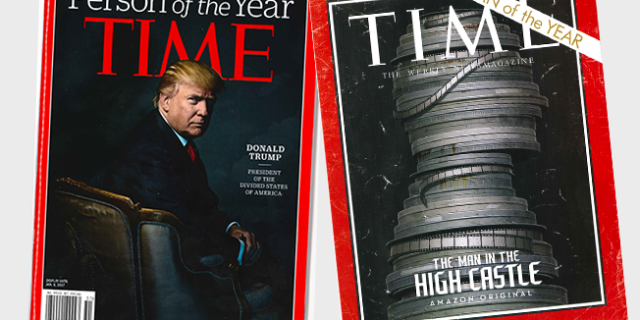
Last week, Time revealed president-elect Donald Trump as its Person of the Year with the caption, “President of the Divided States of America”—resulting in about as much controversy and online arguments as you’d imagine. But what if the US was literally divided? This is the concept behind Amazon’s original series, The Man In The High Castle—Philip K. Dick’s vision of America if the Nazis had won World War II and occupied the country.

Within each of Trump’s Person of the Year issue is another six-page issue of Time magazine dated 1963 (set during the events of the TV series) paying tribute to “The Man In The High Castle.” Inside is an article that outlines this mysterious figure and how his films cause a stir among American citizens by providing hope for a world other than the dystopian reality they currently endure.

“Since its defeat in 1947, the United States of America has been ruled by the victorious Axis powers; Germany in the east, Japan in the west,” the article reads. “But one man is shaking these foundations with his mysterious films. Who, we ask, is he?”

The Man In The High Castle Time magazine

The idea of America under Nazi rule is disturbing enough, but Amazon hasn’t been shy with its controversial marketing efforts. Last year, subway commuters in New York were surprised to find one car decked out with a Nazi version of the American flag, as well as a stylized flag inspired by imperial Japan. Residents were so disturbed by the imagery that Mayor Bill de Blasio requested they be removed and Amazon complied within hours.

For season two, Amazon has released a billboard in New York City showing the Statue of Liberty making a Nazi salute, which has been met with a similar amount of controversy and outrage—particularly during this time of political strife. The premise behind The Man In The High Castle is meant to disturb American viewers who might take their freedom for granted, while inspiring human resilience with the slogan, “The future belongs to those who change it.”

The show is, after all, about an underground resistance. For Holocaust survivors and their families, however, the Nazi imagery hits too close to home but when challenged about the show’s controversial advertisements, Amazon defends them based on the show’s narrative.

“Season two of The Man in the High Castle, based on Philip K. Dick’s acclaimed novel, continues the journey into an imaginary, fictional world that explores the ‘what ifs’ of an alternate history in which America lost World War II,” Amazon explained in a statement. “Season two debuts December 16 and if you’re interested to see what an alternate world could look like if history had gone another way, you should watch the show.”