Vertebrae Builds New Form Of Intensely Creative VR Advertising

The Vertebrae advertising platform bridges the gap between brands and creating fun and highly engaging virtual reality experiences. One of its most notable activations was done in partnership with Lionsgate to promote September’s supernatural horror movie, Blair Witch. Although the experience is primarily designed for mobile VR viewers such as Google Cardboard and Samsung Gear VR, there is an online version for web browsers. It places viewers in the middle of a darkened and spooky environment that changes as they look around.

Vertebrae founder and CEO, Vince Cacace, recently spoke with [a]listdaily about the challenges of creating a VR ad platform, and how experiences like Blair Witch will lead to even bigger ones down the road.

Vince Cacace, founder and CEO of Vertebrae

What is Vertebrae?

We’re a virtual reality advertising platform based in Santa Monica, California. We’re about 20 people, and our mission is to help creators monetize content in virtual reality and usher in a new form of intensely creative advertising. What we saw when we started the company was that, on the one side, creators and publishers need an effective monetization solution outside of a transactional model. On the other side, we realized that for some of the same reasons VR is transformative for storytelling, it has those same abilities for advertisers—in terms of creating ads that have a sense of depth, presence and emotional engagement—using them to monetize content in a fun way.

Vertebrae is the conduit and the pipeline. We’ve defined some of the first VR ad formats in concert with the IAB. We’re working with brands on the one side, and creators and publishers on the other, to help monetize the VR ecosystem as the audience grows and ad revenue becomes a meaningful income source.

With the rise of apps and 360-degree video ads, what direction do you think VR advertising will lean most heavily toward?

Some of the first ad formats that we defined with the IAB are 360 videos, [including] 3D objects, so that you can think of dynamic product placement into a virtual environment, then you can create little Easter eggs around those objects. Then they pop-out into a 360 video, and you can make those incentivized or rewarded. Then also there are branded rooms, which kind of look like a 360 image but with interactive things to do in the space.

From a scalable perspective—in terms of what people are starting to largely advertise—I think product placement will be a big one. 360 videos will be a big one, and I think some of the more bespoke campaigns we’ve worked on are going to be the future when the technology is better defined and worked through.

My thesis on what ads will work best in VR are ads that are an “on-rail” experience—meaning that you don’t want to have to teach users navigation or control within an ad because they’ll get frustrated. But you also want to make them interactive, so I think ads are going to a place where they’re gaze-based interactive on-rail experiences. Gaze-based interactive essentially means that the content is non-linear and that the user has to engage and interact with the environment for the story to continue to unfold. For instance, with what we did with Blair Witch, it’s interactive but a lot of times people don’t realize it, because the user looking one way will input some change to the scenery behind them. So, when they look back, things changed but they can’t see it. It worked really well for a horror concept. Then the jump scare at the end is triggered by you turning around for a final time. A more tangible example would be Taco Bell, where you’re on an alien planet, and you have to find a quesalupa before a monster attacks you. In that case, you have to look at the quesalupa for a mechanical arm to shoot out, pick it up, and bring it back to the spaceship.

How did you partner with Lionsgate to create the Blair Witch promotion?

They’re an advertiser that came to us and said, “We want to promote our new Blair Witch movie in the form of a VR ad. We’re looking for X most single digit million number of impressions on that campaign and a contextual core audience that can fit the bill.” So, we looked across our publisher network and worked with them to get the ad created. We did not produce the content, that was the Other World team, and they’re amazing on the production side. We try to be production agnostic when working with brands. Sometimes brands will be working with an agency, and the agency may want to do production, or (in the case of Lionsgate) they can say you can do the production yourself or work with an external partner. Our goal is to be a technology platform. Although we occasionally take on production projects, we try not to because they take away from platform resources.

Which has a greater influence on VR ad creation, video games or traditional ads?

I would say games. The reason being that games are naturally interactive, and there’s a whole industry that’s been going on for 200 years around ad units and formats in the 2D world. When you think about an immersive world, going beyond the 2D window of content, and being inside the content, you need to be able to interact with that environment. I think gaming lends nicer to that than some of the traditional ad world. We’re focused on creating ad units and formats that are true to the medium of VR versus regurgitating things from the past and plastering them into VR.

The Vertebrae platform is focused on mobile VR. Do you think it’s worthwhile to expand it to premium headsets?

In my opinion, not right now. Maybe with the emergence of PlayStation VR, we’ll see something different, but we’re focused on mobile for three reasons:

  1. There’s a much larger user base at this point in time.
  2. That user base is a wider demographic, whereas it’s hardcore gamers and early adopters, 18-34-year-old males, in the premium market. Mobile VR can have female, head of household, decision makers who got a Cardboard with their New York Times subscriptions.
  3. The nature of the content is more casual and therefore more conducive to advertising. If you think about buying an Xbox and then paying $50 per game, you don’t expect to see ads within them. Likewise, the same is largely true with Oculus and Vive, where you pay a lot of money for the console, then a lot of money for the individual experience.

How do you generate awareness for VR activations like Blair Witch?

I think what we’re seeing is that these advertisements are maximizing the distribution within themselves. It’s brands approaching us and saying, “Hey we’re looking for X number of impressions across these types of environments. What do you have in your network that fits the bill?”

From a brand justifying an ad spend in VR, where it gets really interesting, is that you don’t have to spend $3 million to build The Martian VR and spend almost a year building that out. People who are doing ads in VR can experiment with shorter forms of content to see what works and what doesn’t. Then we’re maximizing the distribution on the other end.

How have you seen mobile VR adoption grow over the past year?

It’s huge. The Gear VR has just grown in waves and waves, especially since they gave away with S7 purchases, and I’m hoping the same will be true with the new Pixel Phone [and Daydream Viewer]. Then, of course, Cardboard is free at every conference. So, it seems like you’re seeing the download rates, particularly for Cardboard apps, picking up in waves. I hope that Daydream sees the same kind of exponential growth that Gear VR has so that it becomes a meaningful platform in a short amount of time.

What is the most important factor in continuing to grow VR as an advertising platform?

It all comes down to the users. If the users aren’t there, the advertisers don’t really care. We’ve seen a tremendous amount of growth and investment this year, and we’re starting to have that moment where there’s so much investment and momentum that it’s starting to feel real. But the users need to catch up to that. I saw a statistic showing that six percent of people in the US have had a VR experience. For that to grow into a regular user base that’s coming back and engaging with the content is going to be crucial. We’re bullish on how soon that will happen, but it is a big open question. There’s a lot of investment and hype in the space right now, but we haven’t seen the consumer demand match up with that yet, and that’s partly because the technology is still coming out.


Baobab Studios CEO On Building The Pixar Of VR

Baobab Studios has been dubbed the “Pixar of VR,” which is quite a feat given the studio was just founded in 2015. But the startup already has a pair of VR animated shorts to its name, Invasion! and Asteroids! (which launches early next year) following the humorous relationship between a cute and fuzzy bunny and a pair of aliens. Those shorts, written and directed by ex-DreamWorks Animation writer/director Eric Darnell, have attracted the attention of both Hollywood and venture capitalists.

Baobab recently added $25 million from Twentieth Century Fox, Evolution Media Partners and Shanghai Media Group to its coffers. CEO of Baobab Studios, Maureen Fan, said this will allow the company to both expand its original IP and pull the trigger on some of the dozen new ideas co-founder Darnell is already developing. The studio raised $6 million last year from Comcast Ventures, HTC and Samsung to create its first two VR shorts using Epic Games’ Unreal Engine 4 technology.

Fan recently spoke at the VIEW Conference in Turin, Italy, where she revealed one of the new original VR projects in the works focuses on a germ’s journey through the human body. She talks about the creative freedom virtual reality is opening up and how video games and Hollywood creatives at Baobab are working together to define storytelling in this new medium in this exclusive interview.

Maureen Fan, Baobab Studios CEO

What has virtual reality opened up creatively for your studio?

It’s a completely different medium from traditional 2D film, so we have to think about it completely differently. But at the same time, there are some things that are similar, which is that a great story is still at the heart of everything. I’d rather a great story be told with stick figures than a poor story told with beautiful graphics and photorealism. VR lets you put the viewer in that space and make them feel like they’re part of that story.

VR is very much in the early days, so everyone is experimenting. It’s too early to say what you can and can’t do. But the two parts of our first VR experience that audiences liked the most was when the bunny comes and sniffs you in the face and then starts playing with you. At first, Eric (Darnell) didn’t believe in the empathy thing because he thought it was a buzz word, but after that experience of people saying that they loved when the bunny came up and sniffed them, he changed his mind. People would start trying to pet the bunny, coo at the bunny and start playing on the ground with the bunny as though it were actually reacting to them. Just think about Mickey Mouse. If he’s actually in that room with you interacting with you, how much more real does that character become, how much more do you care about that character? So, the ability to make you care more about the character means that you care more about the story and what happens to that character.

How did you set up your studio to draw from both video games and traditional Hollywood entertainment?

My background is mostly in games. I did do film as well, working on The Dam Keeper and Toy Story 3, but the majority of my career was at Zynga focusing on casual gaming. So, I very much come from that mindset of slightly less production value, but it’s about the interactivity on the screen and the story of you as a character. Both Larry Cutler and Eric Darnell, my two co-founders, came from the film side, which is a very different way of thinking. Even from a project management style, film uses more of a waterfalls process and product management versus games, which are more agile and a daily scrub. So converging those two has been interesting because our team also reflects that split between people from the game industry and from the film industry. And in some cases, we have unicorns—people who are from the film industry and then moved to the game industry. Having both really helps because VR is a medium that’s not necessary only film or games, but oftentimes it can be both. At least that’s what we are trying to do. It’s a narrative experience like film, but it’s in a real-time game engine. You are a character inside our first two VR experiences, to it’s also somewhat the story of you. But we want you to care about the other characters more than in a game. It blurs the lines, so we needed talent from both sides.

What do you feel separates your interactive films from video games?

Eric feels that the majority of games are about you and your ego. When you perform actions in games you often think about what the game maker wants me to do. There’s a bit of self-consciousness in there and there’s always a goal. Eric wants you to act because you care about these characters. You want to make the character happy or you want to help the character, but it feels slightly different than the majority of the games because you’re not acting in self-interest. Instead, you’re acting out of compassion and care for this other character. With the game controller, it always feels like there’s an interface between you and this world, but now in VR, you just act like a normal human being using your normal gestures and you feel like it’s real life. Just think about how amazing it will be when you don’t have to push a button or do anything, you could just be yourself. At that point, you are a character in the experience rather than an actor or an avatar inside that experience.

How much interactivity do viewers want in a narrative experience that’s not a game?

I think the jury is still out because it’s mostly early adopters who are using VR, especially with the high-end headsets. They’re gamers who are used to interactivity and love it, but I’m not convinced that everybody wants [entertainment] to be interactive when they come home from a long day at work. Many people just want to sit on their couch and be able to experience things passively. So, there’s a balance to be had between those, which is why I think 360 video is actually the most popular form on mobile headsets rather than a lot of the games and interactive experiences. That being said, I do believe that interactivity does take you there even more. VR is about putting you in that space and giving you some agency and control in that space. Interactivity adds even more to that sense of presence.

What do the Oculus Touch and the HTC Vive controllers open up for storytelling?

In Invasion!, you have your little bunny body, so you realize that you are a character in there and people were delighted by that. Many people spent the first session of the experience, especially kids, of just looking at their bunny bodies and squatting up and down and hopping around the room like a bunny. And then they would want to watch the experience again because they just love the story. People absolutely loved it, and it does add some depth to the experience and explains why these other characters interact with you.

What did you learn even going from Invasion! to Asteroids! in terms of what people were looking for?

They loved being the character and being able to interact with other characters. Even when the other characters aren’t actually running in the real-time game engine and interacting with you, they still had that emotional response. On the high-end headsets they’re fully interactive, but our mobile version is pre-rendered 360 all around. And even these people still believed that the bunny was interacting with them. Those are the most powerful moments—when they bond with the other characters.

What potential do you see for video games with Invasion!?

Our IP can go everywhere because it’s a great story. I know a lot of Hollywood companies actually wanted to turn Farmville into a TV show and a movie. At DreamWorks, where Eric is from, they’ve now turned a lot of their movies into TV shows and video games like How to Train Your Dragon and Minions. So, I definitely see that as a possibility for the future. If people love those characters, the story and that world, that’s when it opens up a ton of possibilities.

How Skillz Levels The Playing Field For Mobile ESports

Skillz is out to redefine what people imagine when they think of eSports on mobile devices. The platform is basically a tournament system that provides fair, carefully matched, multiplayer experiences for single-player mobile games. Additionally, players can compete for either virtual currency or cash.

The company also recently revealed that as of last June, its annual run rate was $50 million and its annual growth for the previous fiscal year (2015 vs. 2014) was 5.1x. As a result, the mobile game tournament platform accounted for a large portion of the predicted revenues for the industry as a whole. Skillz also announced that awarded over $50 million in prizes since being founded in 2012, and accounted for more than 30 percent of all eSports prizes in 2016, a significant increase from 21 percent in 2015 and 8.4 percent in 2014.

Skillz product manager, Bill Mooney, spoke with [a]listdaily about how Skillz ups helps create engaging competitive experiences with mobile games, and how brands can take advantage of this growing sector.

William Mooney, Skillz chief product officer

With the main focus being on PCs and consoles right now, how do you see eSports growing on mobile devices?

If you look at Hearthstone and Clash Royale, there’s a growing scene around them. Tencent is also investing in its games in China. But more broadly, I think the media is a couple years late to the story. The hypothesis of Skillz is that you can bring eSports to everybody. Only a tiny fraction of people can play basketball professionally, but a lot of people like to play basketball. With us, we basically plug into 1,600+ games and take a game that’s single-player and give it multiplayer.

So, a single-player game can be an eSport?

Yes, because what happens is that we give you asynchronous play, and we’re just building up our functionality for synchronous play for some cases. There’s some stuff around it to make sure it’s fair because of the cash component. We take the example of how we have a bowling game that people love playing. They create a Skillz account and can play for either virtual currency or paid currency. Then we match them into various tournaments with different brackets. Really what we do is provide the framework for the game while taking care of player matching, fairness, customer service and basically make sure that the stuff runs.

It’s a good deal for little devs, and interesting for big devs—because we have cash, we have a much higher level of security. Even the virtual stuff is much more secure.

How does Skillz work with streaming platforms like Twitch and Mobcrush?

We appear on those platforms as content. The key difference is that we’re a tournament management system. In some ways, we’re making sure there’s a fair playing field and we take care of the cash payments, customer support and legalities. We also make sure to match you with someone who is at an appropriate level, because one of the keys is to find you someone who is fun to play with and will have a good match with. Some people win, some lose, but we really want you to have a good match.

We have steady streamers who use us on their shows as a way to engage with their audience. What’s nice is we’re not paying for it and they’re not paying for it. In fact, they’re making money from it.

person-playing-skillz-mobile-pool-gameWith Skillz, what differentiates eSports from traditional competitive multiplayer?
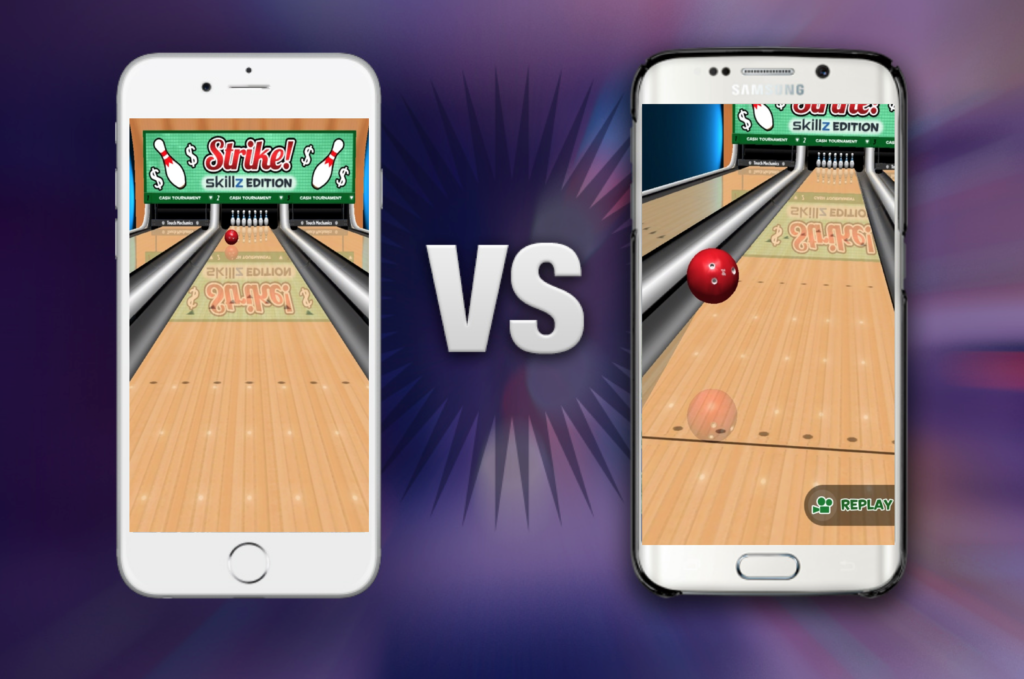

In my opinion, free-to-play sort of busted multiplayer, because the expectation is that the stuff I buy will help me dominate multiplayer. What Skillz fundamentally does to multiplayer—and it can be for casual or serious players—give them the exact same stuff. You play on the exact same board and play the same pieces against each other. It’s a perfectly fair match, and we go to great lengths to make sure it is. We even give you replays so you can see what’s going on.

So, a game like Bejeweled could potentially become an eSport?

Right, and I would argue that when people talk about eSports, there’s that vision of a bunch of guys playing Counter-strike. But when you think about sports more broadly, I think of it as the level playing field. With basketball, we’re on the same court with the same ball. I don’t get a +7 basketball. We don’t run out of basketballs or are limited to five shots before we’re out. That’s the big difference.

People tend to think of League of Legends for strategy, but I would argue that Clash Royale is a very good eSport, and Hearthstone is even more complex. Historically, 20 percent of everybody wants to play competitively, but mobile has its limitations that are akin to social games that almost make it need to be turn based in many cases. At core, we want to provide fair multiplayer, and the cash is an appeal to smaller devs because we’re another revenue source for them compared to ads. We split any money we get in 50/50.

How can a single-player game capture the same kind of excitement of one that’s designed from the ground up for multiplayer?

Some of the games that are working have direct, real-life analogies, like bowling. But what I think it comes down to is—Clash Royale, which I use as the best mobile experience so far, is three minutes. It’s three, very meaningful, action-packed minutes. It’s wonderful to see people who are excellent at anything. It’s a very different skillset to be awesome at Counter-strike compared to StarCraft or Hearthstone. The reality is, people watch more than one thing. They’ll like the NFL, but they’ll watch other sports.

I think one of the key things about games, you want to play it. Whereas I love playing Counter-strike, but I would never play it online because I’d get smoked. It might seem funny to think this about a bowling game, a match-3 puzzle game or a bubble shooter, but those are accessible and you can go play. Another good thing is that you get good matches, especially if you’re playing for money, because people care and will try. It’s like playing poker with your buddies. It’s more fun with money because people pay attention, and it doesn’t have to be a lot. And it’s more fun to play a bubble shooter for money because you know the other person is trying hard.

skillz-cross-platform-image1

Do players place bets?

It’s an entry fee, it’s not a bet. It’s very clearly not gambling because it’s skill. For example, if you and I play a bubble shooter, we both put in 60 cents. If you win, you get a dollar, and Skillz gets 10 cents and the dev gets 10 cents. It’s a little more complicated than that, but that’s the essence of it. The other important thing to note is that a solid majority of games on the platform are virtual currency only. Something like 92 or 95 percent of our players never play for cash.

How can brands take advantage of this platform?

There are a couple of ways. One thing that we’ve just started to do is sponsored tournaments. So if a brand like Mountain Dew wants to run a tournament over the weekend, they could sponsor something. We’ve talked to people with games that incorporate brands as well. The brand aspect plugs in very naturally; things like skinning and [branded] boards would be easy to do.

Does Skillz plan to expand to other gaming platforms?

It makes sense, especially on the PC where there’s some precedent for it. I think we’ll do it, but it just takes focus. We’re 60 people and 3-years-old. In fact, I’m dying to do it for a variety of reasons, but it’s just a question of focus. We’ll probably do it when there’s somebody worth doing it with. But there are 2 billion phones, and that’s why we’re focused on that right now.

Do you see Skillz as a discovery platform for mobile games?

Yes. It’s one of the things that drew me personally to come to Skillz. One of the keys to success was that we tapped into a player motivation that hadn’t been easily served and was accessible. Mobile games are exceptionally accessible, they’re just hard to discover.


Learn everything you need to know to invest in today’s fastest-growing media channel—Competitive Gaming and eSports on 2.16.17 in Los Angeles. Go to alistsummit.com for more info.

YouTube VR And Daydream Open Up New Opportunities For Creators

With Google launching its $80 Daydream View virtual reality headset today, November 10, the tech giant has developed an exclusive YouTube VR app that Erin Teague, product manager of YouTube VR, said was built from the ground up and optimized for Daydream and VR.

“YouTube VR puts virtual reality content front and center, is built for comfort and longer sessions, and brings the best of YouTube VR to you,” Teague told [a]listdaily. “Building for VR is new for everyone, so we spent a lot of time experimenting on how we could make this experience as easy, comfortable and amazing as possible. For example, we designed the interface in front of you, so you don’t need to move your head around a lot. You can also choose how far you want the screen and how big the screen is.”

Teague said the new app allows users to easily browse, search and watch their favorite YouTube videos at any time. Users can sign into your existing YouTube account to view their subscriptions and playlists or discover new content with voice and keyboard search in a wide variety of video formats: rectangular, 360 and VR. “Daydream View allowed us to build a much more immersive experience,” Teague said. “The YouTube VR app is built for comfort and longer sessions—you don’t need to take off your headset to navigate like you do on Cardboard—and it has all the functionality you would expect on YouTube, such as searching, watching and sharing, so you can just sit back and enjoy.”

Director of YouTube creators, Jamie Byrne, said that it’s more than just an amazing new technology—VR allows users to make deep, human connections with people, places and stories. From music to cooking to fitness, creators have done some incredible things with this technology. Beauty vlogger Meredith Foster created an 11-minute 360-degree tour of her apartment. Tastemade created a series of cooking videos. Rooster Teeth reimagined their gaming comedy series, Red vs. Blue, for some fresh laughs. And breaking news in 360-degrees is available from HuffPost RYOT.

Byrne said YouTube VR allows users to have experiences or visit places they might not be able to in real life. They can swim with sharks thanks to Curiscope, get a first-hand look at a living, breathing dinosaur at the Natural History Museum in London, travel to Belize with StyleHaul or hike a trail a thousand miles away with Daniel and Kelly at Fitness Blender.

“YouTube creators are well positioned to innovate storytelling and create new formats that will drive VR watch time for years to come,” Byrne said. “Just like over the past 10 years, the YouTube community embraced and innovated video formats, from ‘Let’s Plays’ to beauty tutorials to unboxing videos. We are working with media companies and creators to experiment and learn what works best in VR and try to uncover exciting new ways for our creators to tell stories and engage audiences.”

Byrne said since this is an experimentation period, there’s a wide range of VR content available from unboxing to travel, gaming to music videos, live events to beauty and fashion. “We’ve tried to cover as much as possible to learn what works and what doesn’t work in VR,” Byrne said. “All YouTube content is available on the app. We’ll display VR videos front and center, but you can watch every single YouTube video in VR-mode on a VR headset.”

Byrne said VR expands the original mission statement of YouTube. “We want to democratize the VR experience, enabling any creator to tell stories with VR, but also so that anyone can have a front row experience,” Byrne said.

How Mandt VR Is Pioneering Serialized Content

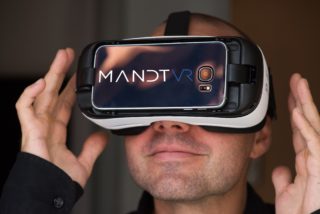
Mandt VR is a new production company with the ambitious goal of creating high-quality, volume, serialized, virtual reality 360 content. Its 360-degree video shows cover a variety of topics, including a romantic drama called Single in the Cityabout a woman dating in the digital age—and a series featuring Pokémon GO.

The company’s founder and CEO is the Emmy-award winning TV and film producer, Neil Mandt, who speaks to [a]listdaily about creating and promoting serialized VR content and what challenges are still ahead.

Neil Mandt, founder and CEO of Mandt VR

What platforms can Mandt VR content be found on?

Right now, we’re publishing on YouTube 360, Facebook 360 and Littlstar—we entered into a partnership with Littlstar to distribute all of our content. Down the line, who knows whether or not we may have a platform of our own in some capacity? But for right now, our mission is to create content and push it out on other platforms.

What differentiates Mandt VR content from what’s available now?

There are actually two divisions of our company. One of the divisions is a pretty straightforward work-for-hire agency, where people come and ask us to make content for them. That’s pretty simple business.

On the other side of the company, we’re leading the path to serialized content. At this point, there’s very little serialized content that exists anywhere in VR. It’s a lot of tech demos and brand experiences, but there aren’t ten episodes of a series. Mandt VR saw that opportunity, and this last August, we began creating serialized shows. We’re currently in production on over twenty different shows, and each show has a minimum of ten episodes. That’s 200 episodes of serialized content, which—to my knowledge—doesn’t exist anywhere.

What are some of these projects?

Our content is broad. We have a news division that is creating multiple videos per week. That’s led by George Sells, who is a 25-year veteran of local news reporting. Then we are creating dating shows, food shows, travel shows and sports shows. There are also gaming shows—we did a whole series on Pokémon GO. Several of our shows are available on our YouTube channel right now.

One of our bigger projects, which is a massive undertaking, is the partnership we just engaged with PodcastOne. Norm Pattiz created Westwood One and developed that into a massive radio network. He went around to individual podcasters, the top of the top. He collected 200 podcasters, who range from Adam Carolla (who has the most downloaded podcast in the Guinness Book of World Records) to Shaquille O’Neal, to The Housewives—a wide variety of talent. They produce 200 podcasts per week, which equals 450 hours of content. Last year, PodcastOne content had 1.5 billion audio downloads. They don’t have a video presence, and Mandt VR has signed an exclusive contract with them to produce all their podcasts in virtual reality.

For perspective, a cable network like History Channel, A&E or Discovery Network will produce 450 hours of original content in one year. We will be producing 450 hours of content in VR per week. That’s 23,000 hours of VR content per year, and that’s just one channel of our vertical.

About how long are these shows?

The shows we’re doing right now are short form; they’re about 12 minutes. Our other shows are between three and seven minutes. It’s primarily short form content, but in less than a year’s time, we will be moving to streaming all the podcasts live in their full run. So, they’ll be hour or two-hour long shows.

What are the challenges of creating this volume of content in such short time?

The first challenge is quality, and that is the most important thing. I was reading that a lot of the quality in VR right now stinks, and I agree with that. I think there is a serious lacking in quality. There’s a reason for that, and I really understand it, and I think this is where we’re separated from a lot of the people who are just getting into the space. Mandt VR is comprised of a group of award-winning producers and directors who have a long history in creating content.

Personally, I have a background, having produced over 3,000 hours of television, produced or directed over half a dozen movies, and countless digital projects. I come from the storytelling medium, and my entire staff is the same. Where a lot of people who are dipping their toe in the VR world tend to be from a tech background and not necessarily storytellers. No matter what their product is, there’s a lot that’s lacking because they don’t come from a storytelling experience.

How are you promoting these shows, and how does it differ from promoting a traditional digital program?

We’re really in the infancy of that right now. What we’re doing today, and what we’ll be doing in the next couple of years will be changing. Right now, our focus is on promotion through partnerships. For example, there’s the PodcastOne partnership. They will be promoting it across their platform. So, as we’re creating content with partners, we’re looking for promotion with someone that we can work with to put the message out.

Our show, Don’t Eat This—one of the stars of the show is one of the top 100 Instagramers, according to Rolling Stone magazine. So, he’s pushing out. We push out through social media and traditional media, but we look to have partners who have a voice that are going to be heard.

What do you think is the adoption rate for VR, for both premium and mobile headsets?

I would say that the adoption rate is just above zero percent. It’s very low right now. The majority of the people I encounter when I’m talking about VR, outside of VR enthusiasts, have heard of it but haven’t touch a pair of goggles and have not had an experience. I see this next year as the beginning of that shift. I think PlayStation VR was a seminal moment, getting VR into homes with families, where kids can then educate their parents and older siblings and friends on the VR experience. I think we’re going to see a ramp up in the adoption rate in 2017, but we won’t see mass adoption until 2018.

Mandt VR is playing for the long haul. We’re creating content now that has limited monetizational abilities—and will have a limited reach—but knowing that as the adoption rate grows that there will be a lack of content and Mandt VR can fill that hole by having volume serialized content for people to watch.

What differentiates Mandt VR from companies like Jaunt VR?

I’m incredibly excited about other companies who are in this space in a meaningful way, and Jaunt is a company like that. I’m a fan of their work. What differentiates us from them is that the content we’re creating has been mostly created internally by our staff of professional storytellers. Where Jaunts seems to have a broader mission of not only creating content, but having a platform on day one, as well as creating tech and camera equipment. Mandt VR is only focused on one thing, which is creating high volume, very good quality serialized content.

Mandt VR is additionally looking to move beyond PodcastOne to create other live content in the music, sports and news space. So, we are moving towards a livestreaming network very soon.

Mandt VR is currently focused on short form content, but do you think that audiences will be able to engage with longer experiences in the near future?

Yes, I do. In fact, Mandt VR has already begun the early production of a talk show with a marquee host. That show will be 30 minutes long, it will have a live studio audience, it will be produced in the Mandt VR studio here in Hollywood and it will also be cut down by segments for more consumable viewership. However, there will be a 30-minute version of the show that will be distributed, and we’re in talks with Google about potentially launching that with Daydream.

mandt-vr-image-2

With both PlayStation VR and the Pixel Phone (Daydream) out now, what challenges remain for the mass adoption of VR?

The challenges are having people who have real production background getting into the space and creating quality content. The biggest problem that VR faces right now is bad content—that is something that can turn people off. So, right now, I think we need to have more companies creating content that is serialized and professionally produced.

That will happen over time. If you think about the growth of the internet, or the growth of the mobile phone and mobile content, we went through this all before. We have websites from the ‘90s that are terrible, and the reason was because the person who was making the website had a tech background and was able to make the tech exist, but they didn’t have the story. Over time, we got more people involved in the creation of creative content who had a storytelling background and things got a little smoother. That is what is going to happen with VR.

In the short term, I think the leading players are going to be in the gaming space because they have developed storytelling that works well with these devices. They just have to enhance it into a 360 sphere. Adoption will happen first and foremost with gaming, and it will grow over time, as goggles become less bulky. It’s going to be a combination of storytelling experiences and changes in hardware that make it more comfortable. All of this will happen between now and 2018.

It’s been argued that the only way to appreciate good content is to have bad content. What are your thoughts on that?

I would agree with that. I do think that bad content helps you appreciate good content. But my observation right now is that there is very little good content and virtually no good serialized content. That’s where we are trying to make our mark. It’s a wide-open space. If you see a show, like it, and want to watch more, you can’t because everyone is doing these one-off demos. That’s in large part because of costs. It takes time and it’s laborious to stitch these products. At Mandt VR, we have 40 people who are only doing virtual reality. We have made a significant investment to produce this content, and as a result of having this team, we were able to create an assembly line setup to bring the costs down and create more content.

If you look at it from a business perspective, many people ask if it’s too soon to do that because you cannot monetize at this point. I say, I’d rather be a leader than be last. That is our play.

YouTube Hosts King’s Cup And Expands Mobile ESports Opportunities

YouTube Gaming officially entered into mobile eSports on November 4-6 with King’s Cup Live on YouTube Gaming, a $100,000 Clash Royale major tournament that was held live in Los Angeles at YouTube Space. The event opened the door for competitors on iOS and Android devices from around the globe to compete against eight of the top Clash Royale YouTubers.

While mobile games like Super Evil Megacorp’s Vainglory and Blizzard Entertainment’s Hearthstone are forging new paths to success in mobile eSports, Supercell’s Clash Royale has exploded as one of the most popular games on YouTube Gaming. According to SuperData Research, Clash Royale was the third highest grossing mobile game for the month of September.

YouTube Gaming worked with Supercell and Google Play to unlock a special in-game King’s Cup Special Event Challenge, which offered players free access to play with cards they hadn’t yet unlocked. Global head of gaming content at YouTube, Ryan Wyatt, explains to [a]listdaily why he’s expanding into mobile eSports in this exclusive interview.

Why did you decide to focus on mobile competitive gaming?

We’ve hosted broadcasts from several other big eSports events but we wanted to do something to represent mobile gaming on YouTube since it’s such a big category for us. This allowed for an event that was entertaining, but also lent itself to competition. Outside of King’s Cup, we’ve had all of the Dota 2 Majors and International, League of Legends Championship Series, ESL Pro League, Call of Duty World League and others. We’ve helped organize many shoots and live broadcasts also from the YouTube Space like Guitar Hero, Super Mario Maker, Call of Duty Infinity Warfare, Battleborn and the Heroes of the Storm launch.

What do you feel is the appeal of Clash Royale with your YouTube audience?

As one of our top 15 games on the platform, it speaks to a broad audience. It’s easy to understand but has a deeper meta for those that want to pursue the game more deeply.

How are you collaborating with Supercell on this activation?

We partnered with Supercell and Google Play to bring this tournament together and make it available to all players to participate in.

How are you supplementing this King’s Cup event with additional content for fans from YouTubers?

The whole name of this event has been content. Knowing how popular unboxing videos are across YouTube, we customized this idea by sending our invited creators fabricated chests which contained handwritten invites to the event. Each creator did an “unchesting” video which drove over 2 million views over eight creator channels. We also worked with Google Play to design a first-of-kind in-app Kings Cup Challenge, which was a special game mode you could play within Clash Royale. Hundreds of thousands of players participated in this event, including our creators, who made videos like Road to the King’s Cup, which drove additional awareness. Even more, all the creators posted the event trailer to the event on their own channel. Lastly, we made sure entertainment was the main product of the livestream: YouTube creators shot shoulder content (interviews, quick facts, fun facts, etc.) that they also posted on their channels to supplement the livestream.

What potential do you see for Clash Royale when it comes to eSports moving forward?

The game has tons of potential—the game designers are focusing a lot on the game balance and mechanics and are thinking very critically about how the game will be played and consumed for the next year. Clash Royale has a very strong user base and right now and the metagame is being tweaked so that very high-level play and dense strategy can be made. These are key ingredients for an eSport and I believe that once there are more events that can better expose the game as a serious mobile eSport, the overall ecosystem (teams, players, tournament organizations) will grow.

What type of correlation have you seen between mobile consumption of eSports or Clash Royale YouTube content and the rise of mobile eSports like Vainglory and Hearthstone?

Clash Royale is one of our top 15 games on YouTube, so it’s commanded a massive audience. The gameplay is dynamic and short form with consistent updates and tweaks from Supercell, which makes it unique. With the large user base, users have used YouTube as a primary source for their information and entertainment needs. The game is updating constantly and the meta of the game is ever-changing. YouTube has become the home to several creators who have garnered audiences in the millions of subscribers.

How does your own eSports background help with creating competitions like this?

Some people on our team, including myself, have been involved in competitions across the world for the past decade and it has allowed us to have a good idea of what to do and not do in these events. From the flow of the tournament broadcast (less downtime, high production value), to the competitive integrity (the rules and format), viewers need to have a reason to watch. Crafting this event, we knew that we needed players who audiences needed to root for, but we also wanted to root out the best underdog story. We also wanted to dangle a large cash prize in order to truly bring out some of the best players (we had high attendance from Korea and out-of-state participants). Although Clash Royale isn’t revered as one of the top eSport games in the scene, it has a lot of the personalities, hardcore fans and accessibility that can make it a strong contender.

Is this an experiment or potential beginning of a bigger push into organized eSports or competitive gaming events?

We love being able to offer our gaming community a place to watch all kinds of content. From VoD, 360, live, mobile and more. We’ll continue to make sure gamers come to the platform and are welcomed to experience some of the best eSports competitions in the world.


Learn everything you need to know to invest in today’s fastest-growing media channel—Competitive Gaming and eSports on 2.16.17 in Los Angeles. Go to alistsummit.com for more info.

Tribeca Virtual Reality Arcade Opens, Featuring OneRepublic’s Immersive Music Video

Earlier this year, the Tribeca Enterprises helped grow the field of virtual reality entertainment by introducing a VR Arcade at the Tribeca Film Festival, showcasing a multitude of experiences, in addition to premiering the acclaimed VR animated short, Invasion! The humorous film, featuring a bunny that repels an alien attack, became an instant hit and the creators at Baobab Studios are already working on a sequel while the VR short is being adapted to a 2D feature film.

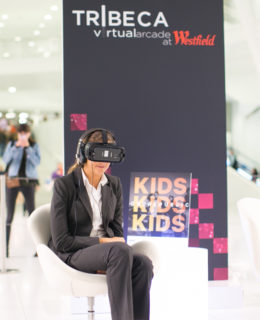
Now Tribeca is taking VR entertainment to the next level by going beyond the confines of the festival and opening the free-to-use Tribeca Virtual Reality Arcade last weekend at the Westfield World Trade Center in lower Manhattan. The arcade, which uses Samsung Gear VR viewers, will be open for two more weekends from 12-8pm on November 11-13 and November 18-20, giving shoppers and tourists a chance to experience virtual reality, perhaps for the first time.

Featured experiences include Invasion!, which provides even more people a chance to experience life from an animated bunny’s point-of-view. It is accompanied by the first episode of Invisible, a supernatural serial drama created by famed director Doug Liman (The Bourne Identity, Edge of Tomorrow), 30 Ninjas, Jaunt VR, Samsung VR, and Condé Nast Entertainment. Cirque Du Soleil’s VR experience, KÀ: The Battle Within is also being showcased, taking viewers on an acrobatic dance journey. Lastly, there’s OneRepublic’s VR music video for “Kids.”

Kids,” OneRepublic’s newest hit single from the album Oh My My, has both a 360-degree video and a traditional 2D music video. However, what makes the VR version particularly impressive, in addition to the technology, is that it’s shot in one take using over 100 performers including the band. Director, Hal Kirkland, spoke with [a]listdaily from the Tribeca Virtual Reality Arcade debut about putting together the VR music video for “Kids” and discusses how he thinks the technology helps the music industry and bands engage with their audiences.

Hal Kirkland, director for "Kids" music video
Hal Kirkland, director for “Kids” music video

How did you come to work with OneRepublic to create a VR music video?

Originally, Universal Music and Interscope, who work with those artists directly, wanted to get into VR. Also, Nokia Ozo, the camera that we filmed it with, wanted to push their technology. So, a partnership was formed between those companies. They put the brief out there for people to present ideas, and luckily this was that idea that moved forward.

Working with VR technology must be challenging by itself. What inspired you to do a one-take video?

What inspired me was that it hadn’t really been done in this way before. I think that the idea came about after listening to the song and picking a really simple story about a girl and a guy and their relationship developing. I tried to imagine different ways to do this that hadn’t been attempted before and I think that because I was planning for a VR piece and a 2D piece that needed to happen in the same location, I wanted the VR piece to really push the viewer in a way that pushed the medium as well.

How did OneRepublic take to making the video?

OneRepublic were amazing. They were instrumental in this happening because of the complexity of the shoot. The fact that that we were trying to get a one-take, it relied on the precise choreography of over one hundred people. They were so into it and so supportive of the technology in general, and they turned up on time and got all the choreography immediately. Without their help, showmanship and professionalism, the entire piece wouldn’t have been possible.

Do you think VR will usher in a new wave of popularity for music videos?

Yeah, I think VR technology will definitely be used more and more in a music video context. Due to the complexity and expense of creating in this medium in a high-quality way, I think there will be a necessity for a certain level of dedication from the partners funding those kinds of creations. Music video-land tends to be low budget, “let’s do it in two weeks’ time,” [production]. A song will release and a label will say, “we need to get this song out immediately, where’s our film?”

In this instance, you need time to plan it out properly. You need the technical expertise and the planning from that side of things. For the quality to be created, you need a certain amount of budget as well. Every VR project is ultimately a VFX job, because you’re stitching together everything that you’ve filmed. It’s such a huge process that it can’t be done instantly.

What do you think will be the challenge in making VR content moving forward?

A challenge that a lot of people are facing right now is integrating narrative. I think it’s more than possible and it will be continually refined. The challenge is that VR, because it’s so new, is so immersive that it can also become distracting. It gives you that freedom to look in any direction, and the challenge is in using directorial techniques that allow you to feel that freedom and immersion while being directed toward the action you’re meant to be watching. Going forward in the industry will be about refining those two worlds, and I think that will be helped along by VR spreading even further and people’s perception of it getting more advanced.

Photo credit: Sam Deitch for BFA.com

How do you balance between focusing on the story and the band itself?

You’ve got to use almost old-school techniques. You’ve got to make what the key characters are doing compelling, and you’ve got to choreograph them with interesting enough action to hold viewing. I feel like you’ve got to plan your direction, almost like you’re choreographing stage action. You’ve also got to think about your world and construct it so you’re blocking what you don’t want people to see, but it doesn’t look as though you are. Or you’re creating a stage where you want the actor to move around and doesn’t seem limited. It’s a matter of planning that choreography ahead of time.

How does an experience like the “Kids” music video help bands like OneRepublic engage with fans?

I think it helps OneRepublic engage with fans by inviting them into a world. Music videos have traditionally been great for us to get a sense of the characters and people inside them and whether or not it’s a persona or the real them. VR actually invites people into their world, temporarily. That’s a really interesting step for a band to do, because you can see the band members in front of you, and they appear to be physically next to you, wherever they are in that scene or story. That gives you a certain level of intimacy or closeness that establishes a stronger connection between the band and the audience.

Sony’s PlayStation 4 Pro Launches 4K Gaming Era

Sony Interactive Entertainment has the clear lead in this generation of console wars with over 46 million PlayStation 4s in homes around the world. On the heels of launching a new platform with PlayStation VR, Sony is entering the mid-generation battleground first with PlayStation 4 Pro. The PS4 Pro, available November 10 for $400, beats Microsoft’s mid-generation Xbox One (dubbed Project Scorpio) to retail shelves by a full year. With it, Sony is targeting its core gamers, as well as early adopters who have upgraded to 4K HDR TVs.

Inside the console, the PS4 Pro has more than double the GPU power of the standard PS4 and boosted the clock-rate of the CPU. In addition to supporting 4K gaming and high dynamic range (HDR), PS4 Pro will also make some older games look better. Over 50 games will have PS4 Pro enhancements, including Activision’s Call of Duty: Infinite Warfare and Modern Warfare 4 Remastered, Electronic Arts’ Battlefield 1 and FIFA 17 and Square Enix’ Rise of the Tomb Raider and Deus Ex: Mankind Divided. Michael Pachter, video game analyst at Wedbush Securities, believes Sony will sell 2.5 million PS4 Pros this year, which is roughly 30 percent of its overall PS4 sales for the quarter.

Chairman of Sony Interactive Entertainment Worldwide Studios, Shawn Layden, talks to [a]listdaily about the company’s upgrade to 4K gaming in this exclusive interview.

What does PlayStation 4 Pro open up for PSVR games?

It’s important to say that PSVR is fully compatible and playable with every PlayStation 4 that’s out there on the market today, and being sold through the holidays into next year. PS4 Pro will also support PSVR, but the experience you’re going to have is going to be virtually identical to that you have on a regular PS4. There’s an advantage you get with draw distance and being able to populate the far end of the screen [on PS4 Pro], but your up-close gameplay will be identical.

The video game industry was one reason that high definition TV became mainstream. What role do you see the video game industry playing in getting 4K to become mainstream?

It’s very flattering for you to say that we had such a nice role to play in getting HDTV adoption. I’m not exactly sure if that’s true, [but] I’d love to embrace that if it were. 4K is just an expression of the constant climb of the marketplace for owners to have a greater visual experience, higher fidelity, and higher resolution as the march of time continues on. We want to be able, in the gaming sector, to support those [early adopter] fans as well as those who wish to go to 4K.

Sony also helped usher in the age of the Blu-ray. Why did you leave a 4K Ultra HD player out of the PS4 Pro?

We looked at all the technologies around 4K. We looked at what the current behaviors and uses by PS4 owners in the market are and they got some interesting data back which shows that greater than 90 percent of video viewed on the current PlayStation 4 is streamed. So users are watching Netflix, Hulu, our own PlayStation Vue service and YouTube here in America. We decided that we’re looking at a streaming generation and we made our choices about design to optimize for the best 4K streaming experience.

What synergy opportunities does 4K open up between your interactive division and the consumer electronics division that are trying to sell Bravia 4K TVs?

Here in the Sony family, we do a lot of cooperative activities with our companies in and out of consumer electronics at retail and in the big box stores. That’s where we’ll be together all the time. PS4 Pro’s 4K support will be part of the marketing for both us and the consumer electronics side. We work together with Sony Electronics to help us determine what our mission goals are and how we go to market.

Given the current lead Sony has in the current console space, what drives your direction?

It goes back to our banner headline: a place to play. We want to continue to deliver on that promise. We want to continue where we have the technology available and we can bring out something like PS4 Pro. We want to get it out there into the hands of developers so they can develop content for that technology and bring that to customers worldwide.

Our fan base continues to grow. They keep wanting greater gaming experiences from us. That’s what drives them. It drives me, certainly, at the Worldwide Studios. We’ve got to keep the great games coming to make good on that promise, so that’s what drives us.

Astro Gaming Delivers An ESports-Grade Audio Experience

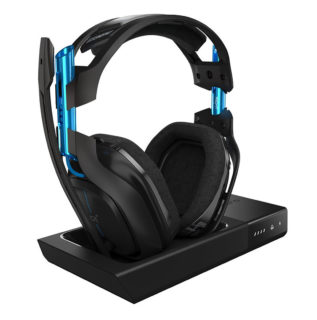
Astro Gaming recently launched the newest version of the A50 wireless gaming headset, and it promises to deliver the best audio experience a gamer can get.

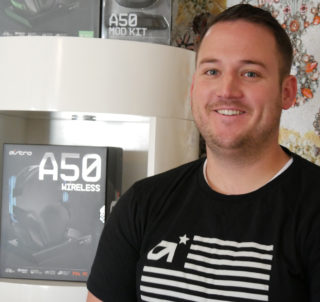
Technical product manager at Astro Gaming, James Lang, explains that there are two new versions of the A50: one for the PlayStation 4/PC and the other for Xbox One/PC. Both include a base station for charging, and the A50 itself has about 15 hours of battery life. The included base station (which can be purchased separately) has battery status and headset mode indicators, and complements the Astro Command software suite, which lets users customize their presets and equalizer settings.

Additionally, the base station accepts multiple audio inputs and combines it into one stream, which helps console gamers put their content onto video services such as YouTube or Twitch without needing additional audio equipment. Other features include microphone settings to optimize for home gaming tournaments or streaming, but the A50 cannot be used at eSports tournaments because rules prohibit wireless headsets.

james-lang-astro-gaming
James Lang, Astro Gaming

The A50 also includes one of Astro’s signature features: support for mod kits. The headset has a removable headband and ear cups, which can be switched out for customized versions. But unlike models such as the A40 TR, the A50 does not support customizable headphone tags to show off support for artists or brands. The A50 currently has one mod kit at launch—black leather ear cups for improved noise isolation—but more are expected to release sometime in the future. Astro Gaming has worked with publishers to create game-branded mods for its headsets before, so it wouldn’t be surprising if the company were to do it again with the A50.

Although the A50 and Astro Command software has many tools for streamers to use, Lang explains that the headset is still targeted for the broad gaming audience.

“I think there’s a lot of crossover now,” Lang said. “A lot of people who are streaming are also just hardcore gamers. Anyone who has the desire for the best audio experience in their homes is our target user.”

With developers such as EA putting increased emphasis on home tournaments, we asked Lang whether this approach was impacting the way Astro approached headset design and promotion. “We’ve always had a focus on eSports and pro gaming,” Lang replied. He discussed how the company got its start ten years ago in the Halo pits by offering efficient communications solutions so that players wouldn’t have to wear a hodgepodge of different devices.

“We’re one of the first companies to take eSports and pro gaming seriously, so that’s always been in our DNA. Everything we do is focused at that consumer, the aspiring home pro, or streamer,” he said.

Since pro-teams can’t use the A50 in tournaments, we asked if that posed additional challenges to promoting it compared to Astro’s other headsets. Lang said, “I don’t think so. We’re a pro gaming company through-and-through.” The A50 uses much of the same technology as last year’s A40 TR, but wireless. “It takes all of those pro elements and puts it in a more user-friendly, wireless environment.”

astro-gaming-a50

Lang also discussed how Astro engaged with current fans by taking their needs into consideration when designing the new headset. Astro took all feedback it received over the past five years to help design a headset from the ground up. While the iconic design of the Astro headset remains relatively unchanged, the internal technology was rebuilt for a truly superior audio experience.

Astro continues to stand out from the competition using a “laser-focus on who our consumer is,” Lang explained. “We have a lot of respect for pro gaming, and we have a lot of pro gamers in the office. So, we pay lot of attention to what their needs are and we deliver on it without a lot of gimmicks. That’s always been our ethos; solve the problems that pro gamers have, then those solutions tend to work for lots of different people.”

Lang compared Astro’s pedigree in pro gaming to how Porsche and Ferrari have pedigrees in pro racing.

A significant percentage of Astro’s audience is comprised of aspiring pro gamers. When asked what he thought the difference was between a pro gamer and gaming enthusiast, Lang replied “Dedication. People in all walks of life may have the talent, but not the drive. Or they don’t have or want to spend ten hours a day [practicing].” Lang added that most of what it boils down to is the question: “Are you going to put in the practice necessary to make it?”

12915_10153166069703468_7249127675690623970_n

Promotional videos and streams can only go so far when conveying an audio experience. So how does Astro get gamers to try on its headsets to fully understand the experience? “That’s a big challenge for us,” Lang said. “That’s why we go to so many events. We’re always at PAX and we were at Rooster Teeth this year, and we will be in the future.”

Astro Gaming has been the official headset at PAX events for the past few years. At events, the company partners with a variety of game developers and studios to showcase their games at their booths because “they understand that their game shows better when it’s using good audio.” Astro has also worked with developers to create custom presets for their games.

“Once you get them on someone’s head, 90 percent of the time, people get it,” Lang added. “It clicks immediately, and I honestly think using a headset is better than using a surround sound system, especially with first-person shooters and games that have audio cues. You’re much more in tune with the positional cues than you are with a surround sound system.”

When asked how Astro approached audio design for uses outside of gaming, such as movies and music, Lang said, “As long as you create a good audio experience, it should be compatible across whatever media you’re listening to.”

So, what are the critical elements to a high-end audio experience? “Comfort,” said Lang. “It starts with comfort. If it’s not comfortable, it doesn’t really matter how good it sounds, because you’re not going to want to wear it. Then it’s just tuning the audio to get it just right.”


Learn everything you need to know to invest in today’s fastest-growing media channel—Competitive Gaming and eSports on 2.16.17 in Los Angeles. Go to alistsummit.com for more info.

Carl’s Jr. Sponsored A Livestream With Twitch’s First Live Ads

News and lifestyle publisher Vice has just unveiled Waypoint, a dedicated site to the world of gaming. To celebrate, Vice hosted a “72 games in 72 hours” marathon over Twitch, during which it tried something a bit unorthodox courtesy of Carl’s Jr.—live advertising.

Rather than use traditional pre-, mid- or post-roll advertising, Waypoint’s “big hello to the world” acted out skits live on the air featuring “Happy Star,” the mascot for Hardy’s and Carl’s Jr. restaurants. This was the first time live ads have been produced in a Twitch stream. Happy Star was seen doing odd things around the Vice offices, much to the delight of viewers who even shared on-the-spot fan art during the event.

“Everyone was truly surprised at how positive the instant feedback was,” Brandon LaChance, director of advertising for CKE Restaurants, told Adweek after the stream.

Although this is the first time the fast food restaurant chain has featured live advertisements, it is no stranger to the appeal of gaming livestreams. Last October, Carl’s Jr. hosted a two-hour event on Twitch as part of its #UltimateCarePackage campaign, where guests played Call of Duty Black Ops III and ate Carl’s Jr. burgers.

With ad-blocking on the rise, Twitch and other outlets are forced to get creative for the millennial audience—a high-spending, enthusiastic and story-driven demographic that is rather short on attention span.

To combat this, Twitch is rolling out a native ad platform that ignores automatic ad-skipping software. CKE Restaurants, who owns Carl’s Jr. and Hardy’s, calls their demographic “young, hungry guys,” so partnering with the brand that appeals to this audience is organic.

Live advertising offered the brand real-time interaction and metrics associated with the livestream—something fast food chains have been playing with on Facebook Live.

Now that the livestream is over, Carl’s Jr. and Hardy’s will take the popular Happy Star segments and edit them into short-form content for further distribution on other platforms.