Storm8 Turns Up The Competition With Its Casual Games

Competitive mobile games are steadily making names for themselves on the eSports scene, but it can be difficult to imagine match-3 puzzle games (one of the most popular genres on mobile) as a competitive experience. Storm8 is out to change that perception by bringing some friendly competition to its casual games. In May, the developer updated its match-3 game, Candy Blast Mania with a feature called Puzzle Tournaments. And more recently, Hungry Babies Mania, a puzzle game that features cute little animals, was enhanced with Global Events, which allows players to compete and collaborate for rewards.
norbert-kalman-storm8
Norbert Kalman, senior product manager for Hungry Babies Mania, Storm8

Storm8’s senior product manager for Hungry Babies Mania, Norbert Kalman, explained to [a]listdaily that in each Global Event, “players are tasked to collect a specific item to earn event points, such as a puzzle piece or a power up. In particular, Team-vs.-Team introduces players to a team-based competition not before seen in a casual puzzle game.”

The four Global Events are:

  • Solo: players collect points and win prizes by completing each of the event’s five goals.
  • Leaderboard: same mechanics as the Solo event but players can win additional prizes by ranking highest on the event leaderboard.
  • Community: players are randomly placed into a Community, and each Community must complete the same five event goals to win rewards. Bonus prizes are given to players who make it to the Community Leaderboard.
  • Team-vs.-Team: players are randomly placed into one of four teams and collaborate to compete against other teams to win prizes. Prizes are awarded based on both team rank and an internal team leaderboard.

“At Storm8, we’re always looking for new ways to entertain our players,” said Kalman. “Our live operations team did an amazing job of bringing both a collaborative and competitive spirit into a casual game—offering our gamers something fresh. Even for older titles, there’s always new ways of bringing a new element of excitement to players’ day-to-day gaming.” Kalman noted that Storm8 was working to bring more limited time events to its casual games to keep players engaged for years.

With the emphasis on competition, we asked Kalman if eSports were starting to impact the development and promotion of casual games. “I wouldn’t say that it’s impacting our development per se,” he responded. “Most of our games will remain casual given our audience. However, we’re certainly taking some competitive elements, like what you see in Global Events and titles like Candy Blast Mania or Frozen Frenzy Mania, where we have team-based competition and tournaments to enhance gameplay. A little friendly competition never hurt anyone and keeps players entertained.”

When asked about how fans have taken to the competitive features, Kalman said that “the response has been tremendous. Players love it! In response to the great feedback and engagement we’ve seen from players, we’re actually enhancing that feature with more tournament types, which should go live in the next few weeks.”
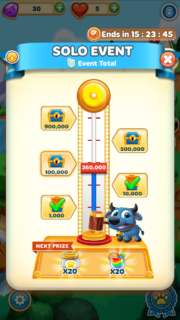
hb_globalevent_goal_personalFurthermore, Kalman discussed featuring a competitive tournament in Hungry Babies Mania called Hungry Games. “When Hungry Games launched, about 70 percent of the game’s players participated and we’ve seen the game’s all-time revenue high, which is incredible.”

As to whether Storm8 had to do a lot of promotion for its competitive features, he said that “Since it’s not a core part of the game loop, we have to (in a way) educate our players and let them know that they have new ways to earn rewards.” New features are usually announced on the company’s forums, on its blog, its social media channels and through traditional media. Games are also updated with an icon that appears on the main screen, and users are given daily pop-up notifications that inform them of when new events start and end, along with what rewards they can earn. Players who opt-in may also receive push notifications about events.

It turns out, friendly competition is a great way to engage with audiences, compared to games that don’t have competitive elements. “We have seen about a 25 percent increase in daily games played in titles where we added these competitive elements,” said Kalman. “It has definitely enhanced overall engagement without cannibalizing the core game play, which is important. We’re also mindful of the fact that there may be some players who like to stick to the core game loop, so there’s always that option for them.”

However, given the cute art styles of Candy Blast Mania and Hungry Babies Mania, how competitive can these puzzles games get? Kalman said, “To our surprise, casual players can get pretty competitive! I think that when features are the designed the right way, people are encouraged to play and compete. In Hungry Games and Tournaments, it almost feels like a party, with so many people participating and playing in real-time. At the end of the day, the ‘fun’ aspect and the right execution is what drives the engagement.”

Kalman also explained how Storm8 was doubling down on cooperative gameplay. “Team-vs.-Team has both a collaborative and competitive aspect in that players work together to drive to a common goal and earn rewards,” he said. “At the same time, they also need to be strategic with their matches so they can make it to the top of the leaderboard. It’s that combination that really brings it home.”

So, how did Storm8 bring a sense of competition to its casual games without upsetting the core experience? “Global Events is an added element outside of the core game loop,” Kalman said. “Essentially players can play their regular level progression and collect points. The points feed into a meta layer where we add up all the team members’ points to calculate the overall team’s points. The teams then compete against each other for the top spot based on team points. Players can monitor the real-time status. We’ve built in elements within the user interface, such as leaderboard animations and a team member contribution ticker, to help make players feel invested in their team’s progress.”

But if casual gamers find themselves competing against each other at a high level, can they still be considered casual players? “I think that casual games like ours will remain casual unless the core loop of the game changes completely,” said Kalman. “In Hungry Babies or Candy Blast, these are sub games that provide players with an additional layer of entertainment within the game, but the core loop of the games remains casual; it’s a puzzle mechanic.

“I think that if there’s a real-time PvP match-3 game, where there’s one game board and two players take turns making matches, that’s when I’d say the game could cross over into mid-core—games like Hearthstone or Clash Royale. For our games, we’re building structures and adding that competitive layer on top of our core loop to add a fresh level of experience for players. It’s a casual game meets mid-core feature, but still a casual game at heart.”
CastAR CEO Explains How ‘Pokémon GO’ Will Help Market AR Games

With Microsoft currently focusing on enterprise customers with its HoloLens Development Edition augmented reality headset, startup castAR will have a relatively open playing field to launch its AR gaming platform in 2017.

The company has been beefing up its development team by enlisting Eat Sleep Play (makers of WarHawk and Twisted Metal) to help create games. CastAR previously hired top talent from the Avalanche development team, which had worked with Disney Interactive to create the bestselling Disney Infinity franchise. Eat Sleep Play will collaborate with Avalanche at the Salt Lake City studio.

CastAR was founded in 2013 as Technical Illusions after Jeri Ellsworth and Rick Johnson left Valve Software’s augmented and virtual reality team. Funded by Playground Global, the company is developing an augmented reality entertainment platform that blends digital characters with the real world.

The company recently hired gaming and technology industry veterans Peter Dille as CMO, Mel Heydari as head of talent and Arnie Sen as vice president of engineering. They join Steve Parkis, COO and president, and CEO Darrell Rodriguez (former president at LucasArts). Rodriguez talks to [a]listdaily about the startup and how marketing an augmented reality platform may be a little bit easier thanks to Pokémon GO‘s success in this exclusive interview.

Darrell Rodriguez, castAR CEO

What are the advantages of marketing augmented reality gaming compared to virtual reality?

It’s our view that augmented reality is more accessible, which also makes it a bigger opportunity. Rather than shut you off from the world, AR takes the world around you and brings your imagination to life right on top of it. There’s no doubt you can create some cool experiences with VR, but it’s not for everybody. We think AR experiences will have mass market appeal.

How has the success of Pokémon GO and its mainstream exposure helped lay the groundwork for castAR’s launch next year?

The Pokémon GO phenomenon will be tremendously beneficial in helping to articulate what’s possible with AR gaming. It’s a terrific example of bringing the real world together with a fantastical world. To date, consumers have been exposed to a lot of VR marketing but not a lot of AR. We see that changing next year and by then, consumers will have been well conditioned to new gaming experiences.

While there’s a lot of activity in VR, AR has been mostly left to enterprise and business. Why did you decide to explore AR gaming?

Our team’s background is in gaming. Our founders, Jeri Ellsworth and Rick Johnson, have long and distinguished careers in game development. I’ve run gaming companies. Steve Parkis, our COO, has run gaming companies. It’s our view that gaming technology drives tech adoption. So we’ll build an installed base via gaming and expand out from there.

What does the Eat Sleep Play team bring to the table when it comes to AR gaming?

The team from Eat Sleep Play has a 20-year track record of building critically acclaimed and commercially successful games. They’ve worked with world class IP and have built launch titles for every Sony gaming platform (PlayStation 1, 2, 3 and PSP) and they’ve recently added mobile to their resume. They know how to deliver.

How has Avalanche’s background in working with Disney Infinity helped with exploring augmented reality?

Steve and I both have backgrounds at Disney, where we learned that story and character transcend the medium. We think characters will play a big role in the success of our offering. The Avalanche team, having worked with Disney and on Infinity, honed the ability to create amazing characters that come to life in AR and drive amazing engagement.

How will the reputations these two developers have with mainstream gamers help you deliver and market quality games?

You have to have great content to compete in this space and the teams from Eat Sleep Play and Avalanche have first-rate reputations among gamers. We’re exceptionally proud they’ve decided to join the team here at castAR to bring our system to market.

What does bringing gaming into the real world open up creatively?

One of AR’s greatest strengths is the ability to interact with other players—not just virtually, but face-to-face. Social gameplay has been missing from modern gaming—really since the Wii. We will fully leverage this in the games we make available to our customers

VR is targeting more hardcore PC gamers and now console gamers. Who are you targeting with castAR?

We’re not going into too much detail with our marketing plans at this time. But we can confidently say that we think anyone who likes gaming will want to keep an eye on castAR next year.

Earned Media Value Index Update Reflects Rapid Changes In Social

(Editor’s note: [a]listdaily is the publishing arm of the Ayzenberg Group. To read the updated Q4 EMVI report reflecting the rapid changes in social, click here.)

Written by: Robin Boytos

Earlier this year, at Ayzenberg, we created our first iteration of the Ayzenberg Earned Media Value Index (AEMVI) to help marketers better justify the value of content marketing. Since then, we’ve been regularly watching and evaluating market trends and decided enough fluctuation in earned media values warranted a formal Q4 update. (For a refresher on EMV, read our original article here. We’re committed to regularly monitoring these trends to ensure values are up to date.)

Part of the reason we created our own EMVI is because the social landscape changes so quickly that all publications we’ve found with EMVs were quickly outdated. Often, we also found that their methodologies are not thoroughly defined, or they were making use of indexes that were difficult to present as justification for value with executives at Fortune 1000 companies.

Since our last update, we’ve seen Snapchat soar in popularity, Instagram continuing to see exponential growth and making up for Facebook algorithm changes that throttle brand reach. We also witnessed the launch of Facebook reactions, the shutdown of Vine, and so much more.

To truly understand the effects of these changes, we take a holistic comparison-based approach that involves reviews of auction-based pricing on social networks, paid social and media campaign data, organic social data, and third-party publications across several key verticals—auto, beauty/fashion, consumer electronics, gaming, entertainment, and our newly added verticals, finance and healthcare. For more thorough details on our methodology, you can watch our video here.

What’s New?

As mentioned above, we added in finance and healthcare as verticals to our comparisons due to popular demand and customer feedback from the first AEMVI report. Financial industry pricing tends to skew much higher, and therefore we recommend applying a 2x multiplier to our baseline values if using these values for financial content marketing.

We added LinkedIn as a platform. LinkedIn is a valuable network especially for consumer electronics and healthcare. AEMVI inquiries helped encourage more research and numbers of actions on this popular social business platform.

We added a value per post for some networks. If engagement metrics are absent from data provided to you as a marketer or provider, then cost-per-post can be applied to help prove the value of marketing initiatives. Our goal is to aggregate as much information as possible to help show the value of earned media.

Most importantly, we switched our labels to “value per” as opposed to “cost per.” This was done to be clearer about what the Index communicates. Both actual prices and other research about the value of social endorsements and actions are included so the term “Value” is more appropriate. Some cost-based prices are included for reference with the values.

Biggest Shifts In Values

The largest and most surprising shift in value is Facebook’s value per click. Facebook recently launched major changes to their programmatic buying platform, allowing marketers to reach more people with better targeting, and making clicks much more competitive. These trends make sense to us at Ayzenberg, since we know from eMarketer that 74 percent of sales from social channels come from Facebook. Additionally, the launch of the Buy Now button has helped click-through conversions across all verticals. Simply put, clicks are valuable on Facebook.

Another big shift in value is Facebook’s value per page likeSince network pricing is more competitive in January and June, there was an increase in value during those months. There is a lot more content published by brands during these months, making it harder to stand out from the crowd. If you are evaluating a campaign for January or June, we recommend bumping up a multiplier from our baseline value in these months.

Instagram is the fastest growing social network, which makes obtaining a new fan a bit easier; this drove down the value per page like. However, engagement is strong. Instagram is where millennials and Gen Z are actively spending their time, making these engagement metrics that much more important.

LinkedIn has a very deliberate audience, driving rich value per click. Click throughs on this platform mean the person wants to learn more with a solid expectation of what they’ll be consuming beyond the gate of the social platform.

On Snapchat, not only did we add value per engagement (screenshots), we also adjusted down the value per view on this platform after learning this platform uses a less precise page load view methodology.

What’s To Come?

As mentioned above, social media platforms change quickly. We’re excited to see the effects of Facebook Live and 360-degree video on engagement metrics. On Instagram, we can look out for the addition of Instagram Stories. The network also recently announced they’re rolling out Facebook’s programmatic buying platform, which will surely cause rifts in values. As for our favorite update, Snapchat is coming out with a reporting API which will give us a wealth of knowledge and insight into the value of our engagement on this platform.

With the holidays around the corner, marketing behavior and consumption habits change dramatically, and it will be interesting to see how this activity drives values both up, and down.

As always, we’ll be monitoring and be excited to share a post-holiday release. Stay tuned to hear more about these updates by subscribing to alistdaily.com and be sure to download our most recent Q4 report here. To contribute rate cards to our study, or to provide feedback, please email emv@ayzenberg.com.

Twitch SureStream Improves Ad Quality And Deters Blockers

Today, Twitch introduced SureStream, a first-party product that delivers optimized ads throughout the platform. As a popular destination for gamers, musicians and artists that reaches 50 percent of US millennial males, Twitch has a good reason for attracting a wide range of advertisers from diverse industries. But until now, many advertisers have experienced technical issues that arise from inserting videos from an external source. SureStream will ensure that more advertisements are viewed, which benefits both brands and streamers alike. SureStream will gradually be rolled out across the platform beginning Wednesday, reaching all viewers over the coming months.

“Since the video ads played by our streamers during their broadcasts are an important source of revenue for them, it’s our responsibility to constantly improve the advertising experience for all parties in the Twitch ecosystem,” said Twitch’s chief revenue officer, Jonathan Simpson-Bint, in a statement. “SureStream helps ensure they can keep doing what they love, while providing a more seamless experience for viewers. It also helps attract and retain advertisers who are now able to effectively reach an elusive audience.”

Twitch claims that 75 percent of its users are male, with 73 percent of them between the ages of 18 to 49. Studies show that gamers are more interactive and loyal when it comes to brands—so being able to reach this audience more efficiently is good news all around.

The video streaming platform hopes that by hosting ads natively, Twitch will have greater control over the types of advertisements it delivers and “can ensure viewers see the highest quality version of the advertisement, better representing the brand’s message.”

Once SureStream is enabled, more viewers will see video advertisements—including those who use third-party software designed to bypass ads (ad blockers), thus encouraging subscriptions or joining Twitch Prime if they want to enjoy ad-free streaming. Twitch viewers will also see a significant improvement on existing ad issues, the company stated, including volume improvements that adhere to a viewer’s settings, less freezing and pausing, and faster removal of problematic advertising.

The Rise Of Double Take Comics

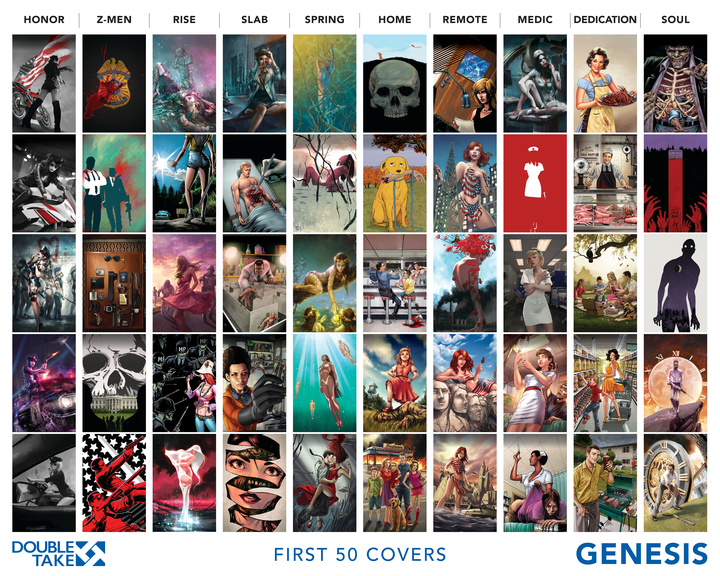
Double Take Comics, owned by Grand Theft Auto publisher Take-Two Interactive, is out to add a new twist to age-old zombie stories. The comic book publisher made the ambitious move of launching ten books simultaneously last year, all based in the same world inspired by the 1968 George Romero movie Night of the Living Dead.

The comic book publisher is looking to further shake up the comic book industry by developing its books with an emphasis on digital reading on mobile devices before bringing them to printed pages—in that every panel is animated with each tap or click. The first few issues of each comic can be read for free on Double Take’s official website.

Bill Jemas, general manager at Double Take (and former VP at Marvel Comics) and story editor, Mike Coast talk to [a]listdaily about Take-Two’s interest in the comic book industry. The two also discuss the challenges of breaking out as an increasing number of comics books are adapted for movies and television, along with the unstoppable power of zombies.

How did the idea to create Double Take Comics come together?

[Jemas]: I wanted to get back into creative development work, and Take-Two wanted to start a comic book division. So in 2013, Take-Two hired me to start Double Take. Our story editor, Mike Coast, was our first employee. We spent a year making mistakes, if you will: trying things and developing things that Mike and I didn’t think were good enough to see the light of day. It’s not unlike what we did at Marvel—throwing 5,000 characters against the wall and Spider-Man stuck.

Take-Two Interactive is mainly known as a video game publisher and developer. What is its interest in comic books?

[Jemas]: Comics are an excellent way to conduct R&D on new creative—especially with our method of storytelling. We have excellent in-house storyboard artists, Stan Chou and Jon Ashley, who can turn a rough concept into a visual story in a day. So, it’s very easy for us to test what works and doesn’t work, which in turn, fosters wide-open creativity.

Why isn’t Double Take publishing comics based on popular Take-Two properties such as Grand Theft Auto, Borderlands, BioShock or Red Dead Redemption?

[Jemas]: All of those games are wonderful and wildly successful in their own right, and the Double Take team would love to work on them, but Take-Two wants to expand its portfolio of entertainment properties.

Double Take’s stated goal is to be different and change the status quo. What distinguishes its comics from others, including Marvel, DC Comics and Skybound Entertainment?

[Coast]: One of the ways that we’re different is that we’re actively trying to reach people who don’t normally read comic books. Maybe they’re fans of comic book movies, maybe they’re science fiction fans, or maybe they’re not normally into geek culture at all. So, we wanted to have a very low barrier for entry—affordable comic books, first issues that weren’t loaded with backstory, and dialogue that is interesting, informative and funny. One of the other ways that we’re different is that we’ve focused on digital from the very beginning. Our production process builds panel-by-panel rather than page-by-page.

What led to basing the Double Take universe on Night of the Living Dead?

[Jemas]: After a year of trying new ideas that didn’t stick, Mike had an idea that we start stories set in the universe established by Night of the Living Dead. He knew the film was in the public domain and it had a decent cult following. So, we had a blast; we let our imaginations and our zombies run wild for the first few months, and over a year, refined that into the stories you see today.

How do you keep zombies, based on one of the most well-known zombie movies in history, fresh and original?

[Coast]: I think that’s a two-part answer. The first part is that we don’t focus on the zombie aspects all that much. Almost all of these books focus on central characters with lives and goals that center on things other than zombies. Yes, there are zombies, and it’s a big part of some of the stories. But we didn’t want this to feel like the only goal of each comic was “survive the zombies.” Not to completely spoil everything, but there are politics, super powers, aliens and all sorts of other things happening in the pages of these issues; not just zombies.

The second part is that we did something different with the zombies. They’ve come back from the dead, sure. But that doesn’t mean that they’re brainless, witless or speechless. Most of them start out that way. But we’re treating them in many cases as real, rounded characters who can learn and grow over the course of a story arc.

coverposter_2-11-16_720x576_72_rgb

Launching ten books simultaneously sounds like quite an undertaking. What convinced Double Take to use this approach?

[Jemas]: It was a trip to Midtown Comics. We saw the shelves stocked full with thousands of comics. We realized then that releasing one or even three titles would be a drop in the ocean. So, we decided to release all ten in one big bang.

How do you make readers aware of ten simultaneous, connected books?

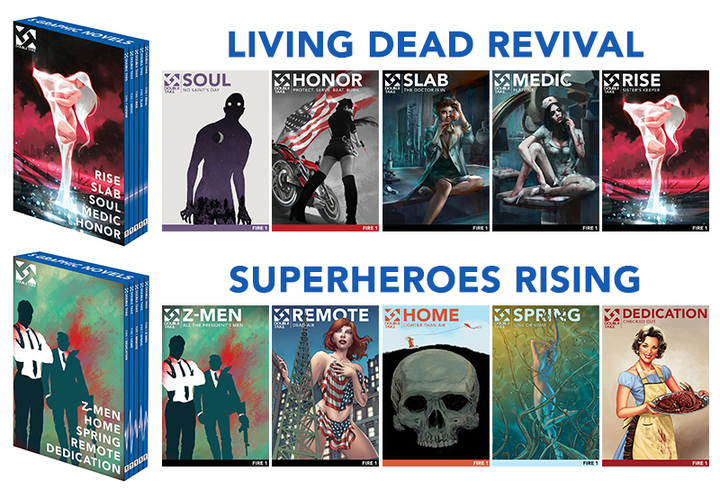
[Coast]: We tried to make it so that a reader could read just one series and have a full experience. We didn’t want to require readers to have to buy ten comics at once to understand a given story. At the same time, we wanted each series to have connections to other titles so that the more someone reads, the richer the experience would be. One way that we drove awareness of the crossover was packaging the individual issues in Super Packs—that is, all ten first issues, all ten second issues, etc. Similarly, we packaged the graphic novels into two Binge Boxes, each containing five graphic novels.

covergraphic_720x499_72_rgb

Is it challenging to create comic books that present well in both physical and digital formats?

[Coast]: We were lucky in that we realized early on that it was easier to build for digital and then convert to print than it was to build for print and then convert to digital. We found that in panel-by-panel, we were able to create a digital storyboard that animated as a reader flipped through. This provides a unique reading experience on desktop as well as, more importantly, mobile. Our comics read better on cell phones than any other experience I’ve had. So, while it’s challenging training traditional comic writers and artists (as well as ourselves) to think in terms of panel-by-panel rather than page-by-page, we think that it’s worth the effort.

img_8384_540x720_72_rgbHow do you handle discoverability, both through digital comics and physical?
[Jemas]: Since issue one, we’ve been offering our content to readers for free. Our first issue was made available for free on ComiXology and on our website. New readers can still read issues 1-3 of all ten series for free on doubletakeuniverse.com.

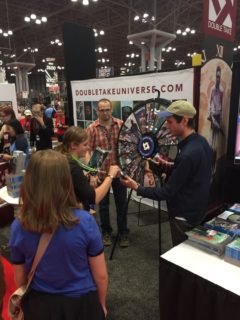
Most recently, we gave away 15,000 graphic novels at NYCC (New York Comic Con) as prizes. Con-goers could spin the wheel, play blackjack, or draw a random card to win a book. If people like the content, they’ll come back for more—and they certainly did at NYCC.

Are you seeing a strong move to digital comics instead of physical comics?

[Jemas]: I don’t think the comic industry is taking advantage of the potential online audience. Outside of traditional readership, the industry hasn’t tapped into digital books in any meaningful way. I think one reason is because the digital books are overpriced. Another is because the tools—like Guided View on ComiXology and the PDF scroll on MadeFire—aren’t good ways to read graphic fiction. As Mike’s described already, we spent a lot of time developing our storyboard format to optimize our stories for digital reading: you can read panel-by-panel on your phone clearly.

With so many zombie-themed comics, books, TV shows and movies out now, what do you think is the enduring attraction of the undead?

[Coast]: For creators, they make for an easy enemy most of the time. It’s sort of a shortcut. Almost like a natural disaster. They’re something that has to be survived. That seems to be the case most of the time. Some zombie stories are more nuanced than that—we like to think ours are. And, of course, zombies provide plenty of opportunities for violence and gore. From an audience perspective, it’s a glimpse into a world where there are no rules, which could be fun, or terrifying, or a mix of both. I don’t think many people would want to live in the world of a zombie story, but it can be fun to visit for a few hours at a time.

Alienware Celebrates 20 Years With Actress Chloë Grace Moretz

Alienware is celebrating its 20th anniversary by partnering with actress Chloë Grace Moretz (Kick-Ass; The 5th Wave) for a video series where she plays both with and against some of gaming’s top personalities, including Angry Joe (Joe Vargas) and Rooster Teeth’s Achievement Hunter team. The goal is to both celebrate gaming and help overcome the stereotype that girls don’t play games, even though statistics show that females make up about 48 percent of the video game community.

The first in the 3-part video series released on October 17 and features the game Rocket League with Achievement Hunter, while the next one comes out next week on November 1, where Moretz will play Broforce with Angry Joe. The final video releases on November 14, and Moretz will challenge Alienware’s own in-house pro-gamer, Anna Maree (aka rxysurfchic) to a friendly 1v1 game of Overwatch.

Chris Sutphen, global marketing director at Alienware, spoke with [a]listdaily about working with Moretz to break down stereotypes and how the PC gaming landscape has changed in two decades.

Chris Sutphen, Alienware global marketing director

How did the partnership with Moretz and streaming personalities to create a video series come together?

Chloë’s very active on social media and is often featured in the press. And through her posts and articles, we noticed that she is very passionate about video games. With four older brothers, she grew up gaming, often playing first-person shooters and constantly being challenged to improve her individual and team play. It was a natural fit for Alienware to partner with Chloë and to communicate that gaming is a great equalizer. Big, small, male, female, young, old—it doesn’t matter. If you’re in it to win it, then game on.

What made Moretz the ideal person to be featured in the series?

A perception exists that females are not avid gamers, even though 48 percent of active gamers are women. Chloë certainly dispels that notion and wants to speak up about gender stereotypes and be a role model to females by stating, “Gaming is not a male sport or female sport. Gaming is for anyone who wants to challenge themselves, escape, have fun and create comradery with other gamers.”

How did you choose which games they’d play in the videos?

The three-part video series features Chloë playing against Rooster Teeth (Achievement Hunter), Joe Vargas (Angry Joe Show) and Alienware’s resident gamer and host Anna Maree (@rxysurfchic). Against Rooster Teeth, Chloë speaks on team dynamics. Counting on your team member for their unique strengths, all for the win. Achievement Hunter helps amplify this point and how gamers can play online with virtually anyone in the world.

Joe and Chloë discuss how gamers build connections, and Angry Joe takes it a step further by showing his Broforce game character costume and his enjoyment creating it. Playing against Anna Maree in Overwatch provided an opportunity to speak to the rise of female gamers, how/why they’re both part of the movement and the expansion of gaming to a much broader, more inclusive audience.

What systems are they using to play Rocket League in the first video?

Rocket League gameplay was shot at Rooster Teeth Studios, powered by our latest Alienware Aurora desktop. Our mid-size form factor is designed to deliver experiences extending to Oculus VR or HTC Vive solutions, 4K gaming and even up to 12K gaming with our highest graphics options. It offers an ultra-wide variety of upgradeability options and spans many performance and budgetary considerations gamers consider.

What do the videos say about the Alienware brand?

Alienware is thrilled to partner with Chloë to bring the message that gaming is a great equalizer. The videos demonstrate the power of Alienware that offers the most immersive gaming experience on the planet while creating communities that get players closer and deeper into the games they love. And females and people of all ages, sizes and races make up that community. Gaming is for everyone who wants to experience the rush and fun of individual and team competition within a PC gaming environment and experience new cutting edge technologies like VR. We’ve led the industry for 20 years in innovation while helping communities grow and will continue to do so.

How has the PC gaming audience changed in the 20 years since Alienware was founded?

Twenty years ago, Alienware spent its early years building credibility among die-hard gamers as PC gaming started to gain mass market appeal. Through the years, the PC gaming audience demanded innovation, and Alienware delivered many firsts: custom colored desktops, gaming laptops, liquid-cooled desktops, the graphics amplifier and the list goes on.

How PC games were delivered into the home and types of games changed significantly as influential PC games steadily mutated the player experience—from the complex scripting and immersion of Half-Life to the generation-defining MMO of World of Warcraft; from the globally dominant multiplayer online battle arena of League of Legends to the revolutionary online game delivery system of Steam. A main goal of ours at Alienware will be to continue to innovate and adapt to the PC gamers needs.

How Roker Media Invites Twitch Viewers To Dine In

Twitch launched its food channel earlier this year with a marathon of Julia Child’s The French Chef, and now the Amazon-owned streaming platform is partnering with Al Roker’s Roker Media to take things a step further. A new two-hour cooking show called ChefShock will debut on Twitch starting Monday, October 31, 5 pm Pacific time. The live show features former Food Network Star winner, Justin Warner as the host.

Viewers will be able to purchase ingredients before each daily episode airs, either by looking at the meal schedule or by choosing one of the show’s home delivery partners, so that they can cook along with the host.

Ronald Pruett, co-founder of Roker Media with Al Roker, and Tracie Brennan, executive vice president at Al Roker Entertainment and Roker Media, spoke with [a]listdaily from The LiveFronts in New York City—an event that focuses the growing trend of live content—about ChefShock and how livestreaming platforms could become media networks in the future.

Ronald Pruett Jr., co-founder of Roker Media
Ronald C. Pruett, Jr., co-founder of Roker Media

What inspired the creation of ChefShock?

[Pruett]: We’ve wanted to do something on Twitch for a long time because we love their platform and the community they’ve built. We approached a partner of ours, SXM—a gentleman named Tom Bannister—who was also very keen on Twitch. He had been working with different partners to develop a slate of shows that might fit that platform. One of them was in cooking, and we at Roker Media have a deep background in the food space, and he had a perfect show in development that we wanted to partner on.

It all came together very quickly because we all wanted to work with Twitch, Twitch wanted more shows on their Creative channel, and we put all together in about two or three weeks.

ChefShock will be geared towards millennials. How do you plan on targeting that audience, specifically?

[Pruett]: I’ll leave it to the chef to ultimately decide, but I think it’s in Justin Warner, an award-winning chef. Cutting-edge, very in-tune with the gaming community and the millennial marketplace. So, we asked him, “What do you think would work?”

It turns out, he’s a collector of all artifacts gaming. So, he’s going back into the ‘70s with crazy gaming stuff around his house. So, we decided to shoot it out of his kitchen. The set will be his kitchen in Brooklyn. It’s authentic, if nothing else.

How did you come to work with Justin Warner?

[Pruett]: We got to know him through Tom Bannister, who was talking about different show ideas. Justin is just a natural. He’s someone who can take food and make it simple for just about anyone to understand. We met and we all liked each other immediately, and that’s how it evolved.

Do you think it’s funny or ironic that Chef Warner was a winner on Food Network Star?

[Pruett]: You know, it’s both, but it is more ironic. When we started down the path of livestreaming, we started in the food category because we think that the next Food Network is going to be on a livestream. In fact, one of our early advisors was the creator of the Food Network.

So, we’ve had our eye on this space for a very long time. There’s irony to it, but it’s also somewhat by design.

How will ChefShock stand out from cooking shows on TV or YouTube?

[Pruett]: First of all, it’s live. When anything is live, anything goes. Justin is a terrific chef, but he’s also a little bit crazy too. So, I think he’s going to make it an interesting event every day. The food will be different, but it’ll also be food that anyone can prepare. He’s really tuned in to his audience.

With livestreaming, it’s interactive. If the audience doesn’t like what you’re doing, they’re going to let you know. So, it’s a show that might even change midstream based on the reaction we’re getting from the viewers.

[Brennan]: The call to action is to have the audience cook along. As part of our channel page on Twitch, we’ll have shopping lists days before [the livestream] for each day so our audience can cook along with Justin during our two-hour long live show—which is daily from 5-7 pm Pacific and 8-10 pm Eastern.

Tracie Brennan, executive vice president at Al Roker Entertainment and Roker Media

Two hours is a lot of time to fill. How did you come up with that format?

[Brennan]: Because he (Warner) literally wants to go from taking the ingredients out of the bag and starting from there. A lot of his audience probably aren’t chefs or even home cooks. The goal is to take them from A to Z. Whereas on most cooking shows, you’ll see everything pre-measured in glass bowls that are poured into a larger bowl, that won’t be the case here. We’re going to measure everything, pull them out of their packaging, and go from beginning to end with the audience following along.

Plus, Justin is really fun. He’s going to be taking questions, he’s going to be demoing, and it’s going to be a big interactive experience for the audience. Believe me, that two hours is going to fly by.

[Pruett]: You were asking about how it was an authentic show, and Tracie helped design it. It’s like a real cooking experience. It’s what everyone goes to every night at home, and they’re going to walk through it with Justin. It’s totally novel.

[Brennan]: He’s also going to eat it. He’s going to invite the audience, once they’re done, to eat with him. They’re cooking a meal at home, then all sitting down to meal together on a livestream.

How will you work with the inevitable downtime while cooking?

[Brennan]: Well, you’ll have to tune in to see. Justin has a great personality and he’ll be taking questions. Maybe they’ll be talking about games that have come out or what games he’s hot on right now. I don’t think there will be that much downtime to fill.

[Pruett]: That is why it’s so important, when you’re doing a livestreaming, to find the right personalities that can keep people interested. It’s not like YouTube or some of the more edited platforms. It’s live, like a talk show or radio show. You really need someone who can, while something is cooking, get them interested in something else.

Will ChefShock have a theme for the food?

[Brennan]: That comes from Justin’s personality and the type of food he likes to cook, but each day will have a theme, and it’ll be the same theme each week. [For example] Monday is Meaty Monday, where a lot of times you’d find Meatless Monday. They’re all Justin’s ideas.

Will there be cross-promotional plans for some of the ingredients Chef Warner will be using?

[Pruett]: Yes, one reason we’re interested in Twitch is because of their parent company, Amazon. We have been looking at coupling content with commerce, and we think Twitch has got a lot of it figured out. We have interest from various e-commerce platforms to work with us, but we don’t have anything to announce yet.

We’ve been thinking from the beginning: why aren’t platforms doing more with commerce tied to content? There are new ones like Busker that are starting to do that, but we’ve all along thought this way.

How do you think livestreaming has impacted the way people consume media?

[Pruett]: We all believe that we’re at the early stages of this—we’re at the first base of many. We think that probably the biggest component of it is [how] not only are people consuming it, they’re participating in it. You’ve seen that on Twitch—the ability to interact with the host is something that’s very novel, at least in the platforms we’ve been working with.

I think that the next so-called networks are these online platforms we’re seeing evolve in front of us—YouTube, Facebook, Twitch and more—because they not only provide transactional capability, but content distribution.

What convinced you to choose Twitch, as opposed to YouTube of Facebook Live?

[Pruett]: We’ve worked on a multitude of platforms, from YouNow to Periscope and Facebook Live. We haven’t done as much with YouTube, but we’ve always had our eye on Twitch because we really respect the incredibly strong community that has built up on that platform. For us, this show is just a natural for Twitch.

What are the benefits of being able to broadcast live to the world in real-time?

[Pruett]: [You can do it] at the press of a button with no carrying costs that a traditional television network has. I spent a lot of my life abroad, so we always approach these things with a global view. We saw the potential of how you and I, at the press of a button, could build a global audience using Periscope, YouNow and Facebook.

We know from looking at the analytics that when we launched a show like Camilla Alvez on Facebook, her biggest audience is in Brazil because she’s Brazilian. We could create these crazy global shows instantly. Never before have you been able to do that.

What are the challenges of creating a live show for a global audience?

[Pruett]: We’re wrestling with a couple of things, but first is language. The types of technology different countries use could be an issue. Commerce platforms and time of day are a challenge, but also the brands. If you want to get your show sponsored, if you’re predominantly an American brand or known primarily in the US, you may have a different brand name in France. So, do you want to be on a global platform?

We haven’t figured all these things out, but I feel like the economics of livestreaming are so compelling, and the communities being built are so passionate, that you’re going to see a whole new wave of programming and shows being developed.

What is Roker Media’s long-term goal and how does a show like ChefShock fit in?

[Pruett]: When we started out, we wanted to learn and work with as many platforms as possible. We are agnostic when it comes to the platforms we partner with. As we evolve, we want to continually provide good programming that the viewers want to watch.

Our goal is to create interactive, optimized shows for the audience. In the long-term, we want to create the next network with programming on a cell phone. We’re going to create an LSN—a Livestreaming Network. LiveFronts is our step in that direction, to couple advertisers with programming.

At this time, what is your measurement for success with ChefShock?

[Pruett]: With ChefShock, it’s getting out of the gate and doing something new. The second phase will be getting brand interest. ChefShock is the next type of show in the cooking genre. There are a lot of great cooking sites out there, from Food Network to Tasty, but this is different because it’s live and interactive.

So, our goals are getting viewership, getting brand interest and then getting the numbers up to where we have a big interactive opportunity with the audience.

What do you think will matter more, live viewership or on-demand views of archived shows?

[Pruett]: We’ve done a lot of shows that have smaller live audiences but have really long tails on the archive piece of it. We’ve always looked at live as being hybrid, so we’re as interested in the longer tail syndication of the show as we are the live piece. Honestly, we’d love to have a big of a live audience as possible. I think that’s the main driver of success, but we’ll see how this new space plays out.

DreamHack Continues US Expansion And ESports Growth

DreamHack expanded to the US for the first time this year with its inaugural Austin eSports event. The Swedish company is also doubling down on America for 2017 to take advantage of the fastest-growing eSports audience in the world.

In 2017, DreamHack will bring its eSports festival to convention centers in Austin (April 28-30), Atlanta (July 21-23) and Denver (October 20-22). In addition, the company will host its first US DreamHack Masters event in Las Vegas February 15-19 at the MGM Grand. Sixteen of the world’s best Counter-Strike: Global Offensive (CS:GO) teams will compete for a $450,000 prize pool.

The inaugural DreamHack Masters in Malmö, Sweden this year had over 12,000 attendees from around the world. The tournament garnered over 32 million stream views, making it the most viewed CS:GO event in 2016 outside of the Valve Majors. DreamHack Masters is a touring eSports championship that will visit different cities and venues with different game titles, depending on market and timing. In 2017, DreamHack will produce two DreamHack Masters events—both featuring CS:GO.

Michael Van Driel, business developer at DreamHack, talks to [a]listdaily about what’s in store for the company’s US expansion in this exclusive interview.

What do you feel defines the DreamHack brand in eSports?

DreamHack is one of the pioneers in the eSports space and has been doing it from the very beginning. One of the keys to success is that we have always worked extremely close with the community, teams and players by being transparent. Our main focus is to maintain authenticity and see what our audience wants, and then do that.

DreamHack is one of the pioneers in the eSports space. How are you drawing from your extensive experience in European eSports for your US eSports initiatives?

We are drawing in a great number of ways from our experiences in Europe. When looking at our DreamHack festival events, our goal is to bring something for everyone, rather than strictly focus on one area. We like to have DreamHack as a smorgasbord of different eSports activities and be a platform for the community that is attending the events. In that way, we look to create a different experience, still focusing on our core pillars of BYOC (bring your own computer) LAN, eSports and gaming exhibition, but augment it by focusing more on popular activities in the US such as tabletop gaming, and this year we are eyeing console eSports.

What did you learn from DreamHack Austin that you’re applying to Las Vegas and other US eSports initiatives?

We are overwhelmed by the welcome we received from the American audience in Austin and the feedback we got when announcing our 2017 events. We will continue to offer the unique DreamHack experience and push the boundaries for gaming and eSport entertainment on our events. Overall, the US is a very different market when it comes to hosting events, and we’re keen to continue to learn and optimize to make our events the best possible for all visitors, sponsors, competitors and partners.

What role do you see the US playing for the future of the DreamHack brand?

The US is the largest market we have entered, and with the success of DreamHack Austin in 2016, it will (for the coming years) be one of our core markets. The US viewership has always been a significant part, but it’s important for us that our European presence and core market in the Nordics continues to develop and expand. Our overall thinking is that where there is a community and DreamHack fans, there should be a DreamHack event. The key challenge for us is to maintain a high quality of events, and that each visitor will get that unique DreamHack experience that we were able to create originally in Sweden in Jönköping.

What do you feel separates DreamHack eSports from what ESL has done on its own?

Typically, we focus mostly on DreamHack and don’t look at much as what other companies do, since DreamHack is very uniquely positioned in the eSports space. In general, DreamHack is an events company first and an eSports company second. ESports is just a part of what we do and our foundation will always be our festival events, which stretch far beyond just the eSports component, and are more about the social experience visitors have. ESports is simply a platform for bringing people together.

How do ESL and DreamHack work together?

DreamHack and ESL have been working together long before we shared MTG as a parent company. DreamHack operates entirely as an independent company and works together with ESL in the same manner. We have worked with all sorts of different eSports companies, such as FACEIT, PGL and others. Our ambition is always to work with as many other companies as possible. At the same time, it’s important for DreamHack to continue breaking new ground on the eSports side of things. ESL continues to be our main competitor where we want to deliver the best events, broadcasts and experience to our ability.

How are you choosing which US markets to focus on?

Overall, we want to reach as many Americans as possible and make it as easy as possible for any American to visit a DreamHack event. This means considering a great number of different cities and dates. DreamHack events are very special, such as our ambition to always offer a BYOC LAN party open for 24 hours a day during the event, the rigorous demands on internet and more, we need to make sure we can find a city and venue that is capable of hosting us.

What role do US sports stadiums like the Las Vegas MGM Grand Garden Arena play for DreamHack eSports events?

Arena venues play a key role. We created the DreamHack Masters event brand because convention centers simply didn’t fit the bill for building big enough stages and fitting the number of spectators with an appetite to watch the biggest tournaments. Therefore, arenas are crucial for success. MGM has been a great partner to work with, and the format of eSports events requiring visitors to be at a venue for 8-to-10 hours a day over multiple days is something that venues need to plan and consider for, which is very different from a standard concert or sports match. We don’t have any intention to focus more on DreamHack Masters events than DreamHack festivals, so convention centers will always be the location of most DreamHack events, but we do see that as long as eSports continues to be as popular as it is, US sports stadiums will be a key part.

What will differentiate the DreamHack Masters Las Vegas CS:GO event from other CS:GO eSports?

We believe we created the best standalone CS:GO event with the first DreamHack Masters event we hosted in Malmö. We will look to create this again and do it bigger and better. This will mean that we will have a variety of ticket types to cater to all visitors, we want to create an atmosphere in which visitors will have the best possible access to players, while still respecting the needs of the players as world-class competitors. Furthermore, DreamHack Masters Las Vegas will feature 16 teams competing live to ensure that the arena show has the opportunity for the best possible teams, as well as a record-breaking prize pool for a non-Valve event held in the United States.

We have been paying lots of attention to the community, and as arena events become more common, we have been visiting them ourselves and evaluating to offer the best possible experience. One big factor that will create a very different experience for visitors is that we will—instead of having a flat facing stage—build a stage in the center of the floor, to much more mimic a traditional sporting event.

How do you decide which games to focus on for DreamHack US events in Las Vegas, Austin, Atlanta and Denver?

Game selection is a complicated process in which we weigh a lot of variables. Of course, the number one criteria is community interest, both onsite and online. If a game is popular, we will want to host tournaments in it. Alongside this, we always also take into consideration a variety of factors like other eSports events happening and the general calendar, as well as more common publishers. In general, we always want to host as many titles as possible at our festival events. At DreamHack Austin, we hosted major international tournaments in CS:GO, StarCraft II, Heroes of the Storm, Super Smash Bros. Melee, Street Fighter V, Pokken and Hearthstone. We will aim to continue to always host as many titles as possible.

3 Marketing Takeaways From The LiveFronts

The LiveFronts, an event that discussed the ins-and-outs of the livestreaming content, took place yesterday in New York City. With a keynote from TV personality Al Roker and MC’d by Emmy-award-winning host Mario Armstrong, who is hosting a livestreaming talk show called Never Settle on Facebook Live, the first Livefronts conference broke down the science of creating live content on platforms such as Facebook Live, YouTube, and Twitch and how brands can benefit from using the format.

Brand And Content Strength

In the first segment, Jim Bell, executive producer for NBC Olympics, spoke about how Rio was the most dominant Olympics NBC has ever hosted across broadcast, cable and digital. It was also the most profitable, bringing in $250 million to the network. For comparison, the 1996 Olympics in Atlanta, Georgia had about 170 hours of coverage over broadcast television. Twenty years later, that number jumped to nearly 7,000 hours of content, making it the most consumed Olympics ever.

“It speaks to the power of the brand and our company’s ability to pump it out. And hopefully while doing so, maintain the polish and prestige the Olympics have,” said Bell.

He then presented the audience with a question: “There were 200 billion minutes of Olympic content that was consumed on our linear and digital platforms. How much do people think digital represented in that?” Although many guessed that it was anywhere from 60-80 percent, the answer is a mere 3 percent, meaning that the overwhelming 97 percent of Olympic content was still being consumed on linear TV despite NBCUniversal’s partnerships with Buzzfeed, Snapchat Facebook and other social media platforms on the digital side.

Even the hard-to-reach millennial audience, which statistics show prefers shorter content—clips versus long-form—tuned in on large screen televisions, where it is best enjoyed. According to Bell, of the 3 billion minutes of livestreamed content consumed, roughly 70 percent was watched on smart TVs. “It’s not that younger viewers aren’t interested in it (video content), they’re just touching and consuming it differently. We were willing to engage them and get them involved.” Bell then discussed NBCUniversal’s Olympic content on social media. On Facebook, people 18-34 were “engaged at a very high rate, with nearly 50 percent of that group liking, sharing or commenting on posts.” Meanwhile, the Snapchat campaign (which was mainly handled by Buzzfeed) reached 33 million users, and 95 percent of them were under the age of 35.

Monetizing Live Content

A later panel discussed monetization models for live video content. The moderator, media and tech analyst Rich Greenfield (from the financial services firm, BTIG) began by asking the panel, “What is working?”

Allison Stern, CMO and co-founder of Tubular Labs said that, “Facebook Live is extremely engaging,” and get twice the number likes, comments and shares as regular Facebook videos. Chewbacca Mom is still the number one Facebook Live video of all time with 150 million views, up there with news, music and celebrities.”

Eric Korsh, president of Mashable Studios, admitted that learning to monetization live video is still in its nascent stages. Videos such as climbing Trump Tower and having celebrities such as Jon Hamm in the office do well, along with the occasional video that has a sense of anticipation built-in, particularly Buzzfeed’s rubber band watermelon explosion. However, everything is still “super experimental,” but they’re still light on the data side for now. David Wong, senior vice president of product leadership at Nielsen, explained that (unsurprisingly) the most popular live videos tend to be sports, serial dramas and any type of content that makes sense to watch live. Meanwhile, sitcoms and cartoons are more popular in stronger on-demand platforms such as YouTube. Stern followed up by saying that live content eventually becomes on-demand as viewers watch it after the fact. Chewbacca Mom grew from 25 million views to 150 million after it was broadcast live.

So, the big question is how to monetize the live viewing audience without turning them off. Considering how much of the digital audience doesn’t typically watch television, livestreaming is becoming an increasingly important avenue for sponsors and advertisers. When asked about what the least intrusive way for a brand to reach an audience through a livestream, Stern told [a]listdaily that: “The least intrusive way probably product placement, but now there are FCC guidelines in terms of making sure that you let people know that it’s an ad. The most intrusive way is a midstream ad or a pre-roll ad. Skippable ads are great because those are less intrusive. Sponsored buys are also a powerful way. For example, Papa John’s sponsors MLB home runs. So, on Facebook, MLB will upload a home run clip and say ‘with Papa John’s.’”

When Livestreaming Is Right

As for the actual livestream content and growing a brand, authenticity and engagement was the going theme. It’s important to engage viewers “in the moment,” as Vincenzo Landino, creative director at Aftermarq, explained when he talked about working with Applebee’s to create Taste the Change—an experience in Times Square built around its menu using R&B and pop performers. About 2,000 people were able to try the new menu, and their reactions were broadcast live. The experience generated over one billion impressions.

Live video works best for marketers looking to build anticipation or increase awareness of an event or product launch. However, the format may not be appropriate for every brand and occasion. It all depends on what the brand want to get out of the campaign. Live video has a great deal in common with live events such as sports and concerts. One of the most engaging activities being eSports, which enjoys one of the longest viewer engagement times of any type of event.

‘The Walking Dead’ Pairs Mobile Game And TV For A Deadly Combo

Fans of The Walking Dead who also play the official mobile game, No Man’s Land, can now unlock weekly content that directly ties into the already shocking seventh season. In a real-time partnership between developer, Next Games and AMC, fans will be able to unlock exclusive weekly content in the game that features new playable characters as they appear on the show bonus themes, special cuts and behind-the-scenes videos.

The Walking Dead: No Man’s Land launched last year and has since been downloaded nearly 15 million times. Players are challenged to survive the zombie apocalypse by maintaining a camp, gathering supplies and battling both “walkers” and other people what want what you have. The game ties directly into the show with official characters like Michonne, Daryl, Rick, Carol and more and features touchscreen, turn-based combat.

“A game and a TV show have never been integrated in quite this way before, and we owe it to all the incredible support The Walking Dead: No Man’s Land received during its first year,” said Teemu Huuhtanen, CEO of Next Games in a statement.

The first unlockable content was made available on Monday following the horrifying season seven premiere of The Walking Dead, taking advantage of the social media storm that followed. The bloody season opener was seen by 17 million viewers—16 percent more than last year’s debut (14.6 million) and on par with the Season 5 premiere (17.3 million). Aftershow The Talking Dead, broadcast live in the famous Hollywood Forever cemetery, scored its largest audience ever at 7.6 million viewers. A sponsored Twitter hashtag featuring Negan’s baseball bat named Lucille, also served to keep the conversation going through the week.

negan

The Walking Dead: No Man’s Land stays true to the nature of the TV show through hard decisions and even tougher situations, but now fans can play as Negan, a bit of therapy may be in order. “The great thing about Negan is we’ve seen bad guys at Terminus and we’ve seen The Governor,” David Alpert, CEO and co-founder of Skybound Entertainment told [a]listdaily. “They’ve been seriously bad and they’ve done horrible things, but they’ve always been on a size of scale that you can wrap your heads around.”

One thing fans have learned about Robert Kirkman’s franchise—no character is safe, a fact literally beat into viewer’s brains on Sunday by the brutal execution of a couple fan favorites. “The truth is, when we start the year nobody has to survive,” explained Alpert. “Everybody is on the table. If somebody was to come in the room with a pitch that was incredibly compelling as to why we write-off one of the leads, we’d take it on.”