‘John Wick’ VR Game Is The Perfect Movie Promotion

The original John Wick movie, starring Keanu Reeves, is about an elite hitman who comes out of retirement to take revenge against the mob for killing his beloved dog. It developed quite a following, with Starbreeze Studios (makers of the heist game, Payday 2) counting itself among one of its biggest fans. The video game developer has already included the John Wick into Payday 2 by offering him as a playable character, and now it is working in partnership with Lionsgate to create an original virtual reality game called John Wick Chronicles for the HTC Vive and immerse players in the movie’s action-packed underworld while promoting the next film, John Wick: Chapter 2.
almir-listo
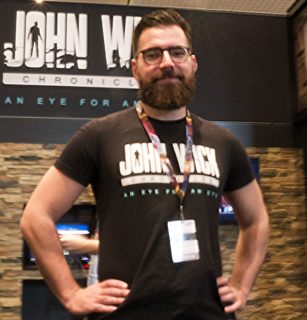
Almir Listo, global brand manager, Starbreeze Studios

Almir Listo, global brand manager at Starbreeze Studios, spoke to [a]listdaily from the New York Comic-Con show floor where it was demonstrating the first chapter of John Wick Chronicles, called An Eye For An Eye.

Listo describes John Wick Chronicles as a virtual reality game for the HTC Vive, and it’s a Starbreeze Studios production made in partnership with Lionsgate Entertainment. “You play as John Wick, the legendary assassin, in the John Wick universe, known from the movies,” said Listo. Players get to visit iconic locations, including the Continental Hotel, known from the first movie. They’ll also get to meet recognizable characters, try out weapons and start doing missions. In the 7-minute show floor demo, players were challenged to defend a rooftop location as waves of attackers come from all around or try to snipe from neighboring buildings.

“The cool thing is,” Listo continued “[is that] we’re releasing the game at roughly the same time as the movie, on February 17.” Players can already pre-order the VR game on SteamVR for $20, and buying early gets them a free copy of Payday 2 along with the John Wick Weapon Pack content. There’s also a deluxe edition for US residents, where players will get all of the previously mentioned content and the original John Wick movie for $30.

When asked about how many John Wick Chronicles chapters there would be, Listo said that it still to be determined. “We will create as few or as many [chapters] depending on what the community wants.” As for whether or not the John Wick Chronicles would be released as an episodic VR game, Listo stated: “I think it depends. We’re still so early on in virtual reality game development—the industry as a whole—so the best practice for releasing new content is yet to be decided. We will listen very closely to what the VR community has to say when they try the experience and we’ll definitely take their voices into consideration when moving forward with additional content.”

Listo also talked about the reactions he’s seen to the John Wick Chronicles demo at convention show floors like New York Comic-Con. “I think they’ve been fantastic so far,” he said “and we haven’t showed it at that many places thus far. So the reactions we get here at Comic-Con mean a lot to us.”

In discussing how the partnership with Lionsgate came together, Listo said “We’ve always had a great relationship with Lionsgate. We’ve worked on Payday 2 together, introducing John Wick as a playable character. Since then, we’ve always stayed in touch and tried to collaborate wherever possible. I think John Wick Chronicles is the peak of that collaboration. It’s best we’ve put together so far, and we’re very excited to see it go live in February.”

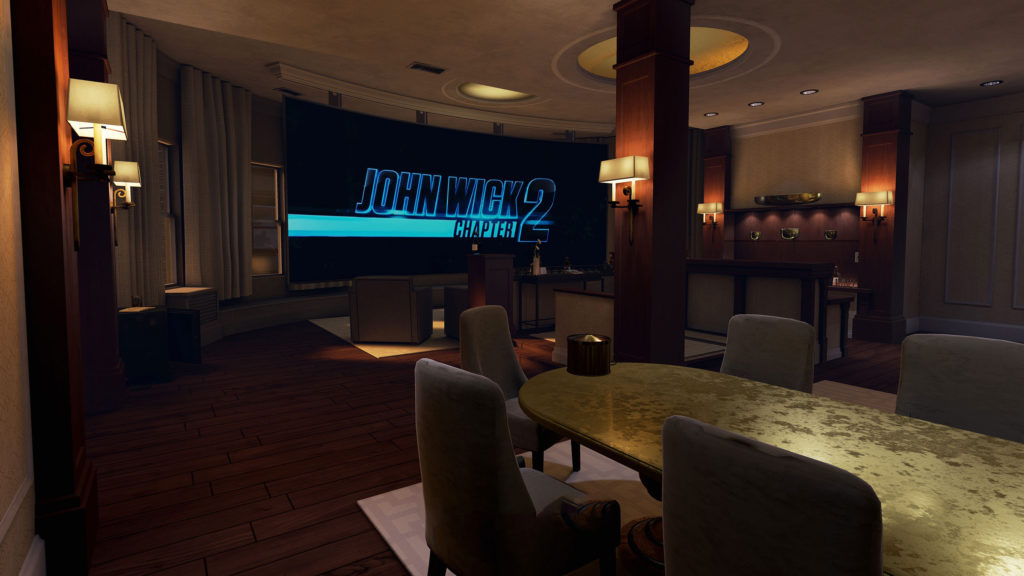
Although the VR experience promotes the upcoming film and debuted a new in-game trailer for John Wick: Chapter 2 played on a giant virtual screen, Listo explains that “The VR experience has a separate plot line, so it’s not necessarily tied to the movie. However, it’s played out in the same universe, so you will meet with characters from the movies.”

Lionsgate has also been helping to develop the game, and practically everyone that is involved with the movie has had an opportunity to provide feedback. “We had one session where the director (Chad Stahelski) and Keanu Reeves played the game and gave us their feedback, which was very meaningful. It’s important for us, because not only do we make video games at Starbreeze, we also love movies. We would never have done this collaboration if we didn’t like the original movie. It’s important for us that the movie and video game stay true to each other. We don’t want to shy away from the message of the movie, and want to make sure John Wick Chronicles builds on it and empowers the movie.”
john-wick-chronicles-2

Listo further explained what he thought about VR gaming and using it as a movie promotion. “I think VR has the possibility to become the biggest thing in gaming history,” he said. “The reason being: just look at what you get to experience. The action, the thrill of it.

“It’s a great way to unite different kinds of IPs. The John Wick IP is a very cool one because the original movie was an original script and idea. It’s great to see that it was so successful, because it shows that there’s still room for original IPs to be created. We’re very excited and proud to be partner with Lionsgate on creating a John Wick VR game.”

Listo further explained that “this is a unique collaboration between a video game developer and publisher, Starbreeze Studios, and Lionsgate—an established film studio—where we’re building up the hype for the upcoming movie together with a VR game. And not only with the VR game, but with Payday 2, where John Wick is also a playable character. It all ties together in a beautiful way for anyone who is interested in the John Wick universe.”

When asked if he believed that VR entertainment would remain limited to 7-10-minute experiences for the foreseeable future, or if there was any hope for full-length VR games, Listo said “I think everything is possible. At Starbreeze Studios, not only are we working with HTC and Valve on the Vive to create content, we also have our own platform called StarVR. We have a joint venture with IMAX to create VR centers. So I think there’s definitely a place for shorter experiences, and I there’s room for experiences that are much longer.

“It all depends on what the market wants and what people are willing to do. Seven minutes [of playing] was kind of tough. Imagine doing that for two hours. You’d die. I know I would. So I think it depends on what kind of experience it is. The great thing is that it doesn’t have to do with motion sickness anymore. It only has to do with the quality of content and how long you are physically able to be in it.”

When asked about what he imagined these VR theaters would be like, Listo said “I think there are many things that we could do. It remains to be seen exactly what we put together, because we’re still working on all of that, but I think the future is super bright when it comes to VR, especially VR in public places.”

john-wick-chronicles-and-eye-for-an-eyeAs far as content, Listo explained that we’re still at the early phase of VR gaming, and how there were vast opportunities for video game developers to create unique content that can’t be experienced the same way without a headset. John Wick Chronicles is unlike any traditional first-person shooter. “That’s an unbelievable thing,” said Listo “and we’re just at the beginning of it. Give us another ten or twenty shots at making a game like this, and it’s going to be unbelievable—not saying that this game isn’t great already, but we’re just beginning, and that’s the cool thing about VR.”

We asked Listo about what challenges VR faced right now, after being on the market for almost a year. He said: “I think the challenge right now isn’t necessarily a technical one, but more of a marketing one—making sure to get the word out there [and] making sure that people get excited about VR. The only way to really enjoy VR and get the hang of it is to experience it yourself. That’s when you truly realize how good it is. You have to see it to believe it.”
Op-Ed: PlayStation VR’s Challenge Ahead

For many, this is the week that will fully define virtual reality’s first year as a major trend. Although premium headsets such as the Oculus Rift and the HTC Vive launched earlier this year, their high price points (not including the cost of powerful PCs and video cards need to operate them), a general shortage of compelling content, and other issues have significantly slowed sales. On the other end of the affordability scale are mobile VR viewers, including the Samsung Gear VR, Google Cardboard and the upcoming Daydream View headsets. Although many agree that mobile viewers are entertaining and offer a strong sense of presence, they pale in comparison to the premium experience.

Therefore, Sony’s PlayStation VR seems like the ideal compromise. Although the headset isn’t cheap at $400, it’s the least expensive of the premium headsets, and it will work on any PlayStation 4 system, which currently has an install base of over 45 million. Furthermore, Sony has worked closely with developers to make sure that there will be over 30 games launching for the headset, including Rise of the Tomb Raider: Blood Ties, Battlezone, and Batman: Arkham VR, with plenty more to come. In total, there are almost 100 games confirmed so far, and many are expected to release before the year’s end.

With accessibility and content both taken care of, and critics giving positive early reviews, the only thing that’s left to do is make sure everyone that owns or is thinking of getting a PlayStation 4 console is aware of the headset and its experience. Unfortunately, one of the biggest challenges VR faces is that the experience can’t be adequately described in a trailer. People need to experience it to understand it.

Retail stores including GameStop and Best Buy have eagerly set aside space to provide customers with a hands-on experience. Sony has brought the device to major video game conventions such as E3 and Gamescom. In one instance, Sony partnered with Taco Bell create a two-day pop-up VR arcade in New York City, where customers had a chance to win a PlayStation VR. Awareness efforts appear to be paying off, considering how GameStop stated that the device was the “quickest sellout in GameStop’s history,” during the company’s second-quarter financial earnings call for the fiscal year 2016. In fact, the headset has been sold out across all major retailers since it first when up for pre-order last March.

However, this success could lead to other problems down the road. Both the Oculus Rift and HTC Vive suffered shipping problems after launching, resulting in many pre-order customers not getting their headsets for weeks or months past their expected delivery date. Clearly, Sony can take steps to avoid delivery problems, but the company’s main issue is that it hasn’t announced when the device will be restocked.

The best way to promote a new console or platform is through word-of-mouth and playing it at a friend’s house, which is hard to do if your friends don’t have it. Demand for the PlayStation VR could turn out one of two ways: it could mirror that of the Nintendo Wii, where low stock created a fervor for the console. However, that would require a kind of “killer app” to help sell the system to a large audience the way Wii Sports did. The other, more likely, scenario is that Sony will have to maintain a strong post-launch promotion throughout the holiday season so that customers remain aware of the device until more PSVRs are made available. It will also be important to keep promoting the PSVR past the new year, when both game and hardware sales traditionally see a post-holiday dip. Otherwise, it could risk losing the launch period momentum.

Sony is in the unique position of capping an end to “the first year of VR,” and the success of the PSVR will be seen by many as a sign of whether VR technology will truly take off or be seen as a passing fad. Unfortunately, the company also has a reputation for not giving peripherals such as the PlayStation Vita, PlayStation Move and PlayStation Eye the marketing attention they needed to take off. The measurement of success can’t be taken until sometime next year, when more games and headsets are available. Until then Sony will have to commit to promoting the PlayStation VR almost much as it does the PlayStation 4 console itself to stay at the top of shopping lists next holiday season.

Sony Pictures’ GSN Games Launches ‘Sparcade’ Amidst ESports Craze

GSN Games, which is owned by Sony Pictures Entertainment, has launched the free-to-play Sparcade app on the iOS App Store for iPhone, iPad and iPod touch devices. The app features custom versions of classic games like Pac-Man, Scrabble, Tetris Burst, Solitaire TriPeaks and Wheel of Fortune designed for competitive play. While all of the games are free-to-play against friends and families using tokens, Sparcade has been designed to allow anyone of legal age to bet real money on any competitive match.

Greg Canessa, senior vice president of GSN Games, told [a]listdaily all of these classic games have been designed as “games of skill” so that there’s an even playing field for competition. For example, Tetris Burst offers an asynchronous three-minute tournament where everyone gets the same blocks in same order, whether in a head-to-head match or in a tournament of up to five players.

Maya Rogers, president and CEO of Blue Planet Software, said making Tetris a part of Sparcade, where players can use their skills to compete for cash prizes, really ups the stakes and adds a new level of competition among the Tetris community.

Bandai Namco Entertainment America worked on this version of Pac-Man, which offers a classic mode with four ghosts and a Challenge mode where there are hundreds of map formats, and each tournament gets the same maps in the same order so players can’t them. Players spin the big wheel and compete to solve the same puzzles faster than their opponents for real money in Wheel of Fortune. Scrabble offers a quick session competition where players are given identical boards and letters to work with.

“By launching with games that people already know and love, Sparcade is tapping into the popularity and ubiquity of casual games on mobile as a platform, at the same time the rise of eSports and competition has moved into the zeitgeist of gaming,” Canessa said.

Canessa noted that eSports began with hardcore multiplayer online battle arena (MOBA) games such as Dota 2 and League of Legends and has moved to mid-core titles like Clash Royale, Hearthstone and Vainglory in mobile.

“If you look at mobile games today that are beginning to take a foothold in the world of eSports, the apps serve as the ‘proving ground’ where both casual and competitive players enjoy the games, and from there sprouts organized events and challenges,” Canessa said. “Over time, it is our intention to grow Sparcade in a similar way. We’re laser-focused on building Sparcade as an app with the best names in gaming and a rich meta-game to fuel the community. Once we accomplish this, we know that brands and sponsors will take notice and reach these consumers.”

Canessa believes the initial slate of games have the potential to unlock competitive communities for these franchises that have been passively building up over decades. “In many ways, these games represent the earliest forms of what we consider eSports today,” Canessa said. “Scrabble has a substantial community that plays the physical board game competitively, with leagues, professionals and the North American Scrabble Championship. Tetris has been hosting world championships for years, and Pac-Man has a long history of competitive play and world champions, dating back to the coin-op arcades. So, in many ways, the essence of competition that modern eSports deliver, have been around in some form or fashion for these games for a long time.”

Canessa said partners like Bandai Namco, Hasbro, Tetris Company and others see the long-term potential that Sparcade represents to coalesce competitive communities around their games. To qualify as an eSport, you really need three things: 1) a great game, built for competition from the ground-up, 2) an audience and community willing to watch, and 3) pro players that represent the “best of the best” at what they play.

“We know if we nail the first one, and focus our efforts there, the rest will follow,” Canessa said. “We absolutely see the opportunity here, but we want to take a smart and thoughtful approach to creating an eSports market derived from Sparcade and focus on features that will delight our users and the community, and not spout out buzzwords prematurely and let the cart get ahead of the horse on this.”

Canessa said for a brand or a sponsor, the opportunity is to tap into a community of mainstream players in Sparcade that already have a known frame of reference for competing in these games. “Sparcade broadens the opportunity significantly by enabling players to compete in these games with the mass market, wherever and whenever they’d like,” he said.

The Sparcade app can be played without using real money, including Friend Challenges that offer head-to-head competition. Sparcade offers a metagame that mixes goals and unlockables with social interaction. Completing objectives, like eating 250 ghosts in Pac-Man, will earn players Fame Points, which will unlock special powers to help them earn additional tokens. The tournament gameplay won’t be impacted by power-ups, in order to keep an even playing field.

“With the metagame and social layer offering collectibles, a progression system with achievements earned per game and loot boxes that you open up with different cosmetic and utility value, there’s a lot for fans to engage with,” Canessa said.

Canessa was the creator of Microsoft’s Xbox Live Arcade. Prior to spending the last two years creating Sparcade, he had helped PopCap launch its first mobile games and worked at Blizzard to reboot Battle.net. He also Activision’s mobile division for three years, launching Call of Duty and Skylanders games on iOS and Android.

Canessa said with the launch of Sparcade, GSN is offering players a chance to compete and build their skills in the first wave of games they develop additional more iconic franchises for skill-based play and roll out new features in the future.

How Square Enix Is Celebrating 20 Years of ‘Tomb Raider’

The Rise of the Tomb Raider: 20 Year Celebration edition launches next week on PlayStation 4. Not only does it include new adventures, it has all the downloadable content, and it is enhanced to take advantage of the PlayStation Pro’s advanced features, including HDR (high dynamic range) graphics.

Furthermore, the 20 Year Celebration includes standalone adventures called Lara’s Nightmare and Blood Ties, the latter of which has been adapted into a virtual reality experience using PlayStation VR (PSVR).

In Blood Ties, Lara is in danger of losing possession of her ancestral home and must search through its secrets and history in order to keep it. However, exploring the forgotten parts of Croft Manor is no easy task, as much of it is in serious disrepair. It may not be a tomb, but it can feel like one at times. Still, it is a critical part of Lara’s life, and it represents her legacy, her fortune and her childhood. Although the experience doesn’t involve shooting or acrobatics, fans will get a more intimate look at the legendary tomb raider’s history.

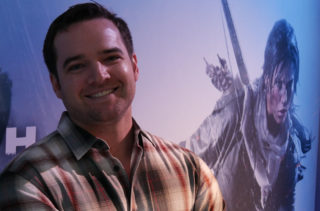
Chris Johnson, associate brand manager at Crystal Dynamics

Chris Johnson, associate brand manager at Crystal Dynamics, spoke with [a]listdaily at a New York Comic-Con event about the new features found in the Rise of the Tomb Raider: 20 Year Celebration and how the character of Lara Croft has evolved over the two decades. He said that “With the 20 Year Celebration, we wanted to bring Lara’s Manor into the modern timeline. When players first got the cinematic experience of Lara in her childhood home, fans went totally nuts. Now is the perfect time to bring this to life.”

When asked what inspired the creation of a Tomb Raider VR experience, Johnson replied: “We knew there was going to be some new tech coming out and we were really excited to see how that could fit into our world. As we were building on the content of Lara’s manor, we felt that this would be a great experience that could also be in VR.”

Rise of the Tomb Raider can also be played in its entirety using the PSVR’s theater mode, which creates a giant virtual 2D screen. When asked about how an action game like Tomb Raider translated to virtual reality, Johnson said “all of our DLC offers something a little bit different. This particular part of content is more of the exploration side of things. As you play through the game, you’ll pick up different objects that are meaningful—more backstory, deeper narrative.”

“You can’t just go back and add VR to this. That doesn’t really work. So, as we were building this space out and adding all this adventure, we got inspiration from games like Gone Home. That’s what led us to say, ‘this would work really well in VR, let’s give it a shot.’ So, our team has been busy making that feel immersive. As you’re going through the manor, we felt really excited by it, because for the very first time, players could actually experience the world through Lara’s eyes.”

The VR experience is markedly different from the main game, starting with how players teleport Lara around the environment to move, since climbing and acrobatics don’t work well in VR. There’s more reliance on observation and Lara’s wits as an archeologist to solve puzzles. Johnson describes it as the “same flavor, different experience.”

The VR content is tied into the main Rise of the Tomb Raider story. “You’ll see lots of things from the main story that are brought into this. So, they complement each other.” For example, Lara finds a wearable flashlight while exploring the manor, which happens to be the same one she uses in the Cold Darkness Awakened DLC. As an added touch, players can rotate objects by turning the DualShock 4 wireless controller in their hands for a more tactile experience, and at one point, the controller can be used to direct the flashlight.

When asked about the challenges of keeping up with the latest technological developments, such as VR or the PlayStation Pro’s enhanced features, Johnson said “whenever there’s new technology, it presents a new set of challenges. The team is just really excited about the opportunity to try something new on a brand new platform.” Johnson then elaborated on the importance of adopting new technology by saying, “I think as a studio, at Crystal, we just love to be first. We want to be the first leading the market and pushing new technology. We want to be innovators, and that pushes us to get new ideas and find and create beautiful things.”

So, how does Crystal Dynamics keep a 20-year-old character relevant? “I think that’s what we did when we did Tomb Raider 2013,” said Johnson. “We wanted to create a character that has a very strong legacy, but keep to the core tenants of the franchise: action, adventure, exploration and puzzle solving. But bringing in a modern and fresh take where we grounded it in realism. We also took this fact-based fiction and pushed that into this realistic reboot.”

Lara Croft has gone through a great many changes over the past two decades. “As a character, she’s evolved incredibly,” Johnson said “and now we want to create this more relatable character. I think that’s what we deliver now with Rise of the Tomb Raider. Lara is going on her first tomb raiding expedition and searching for this hidden truth.”

Johnson added that “it’s exciting. As we’re celebrating 20 years of Tomb Raider, it’s a great time for us, because we’re able to celebrate the franchise as a whole. While celebrating, there’s all this new content and the launch of it on the PlayStation 4.”

Disruptor Beam Discusses ‘The Walking Dead: March to War’ Game

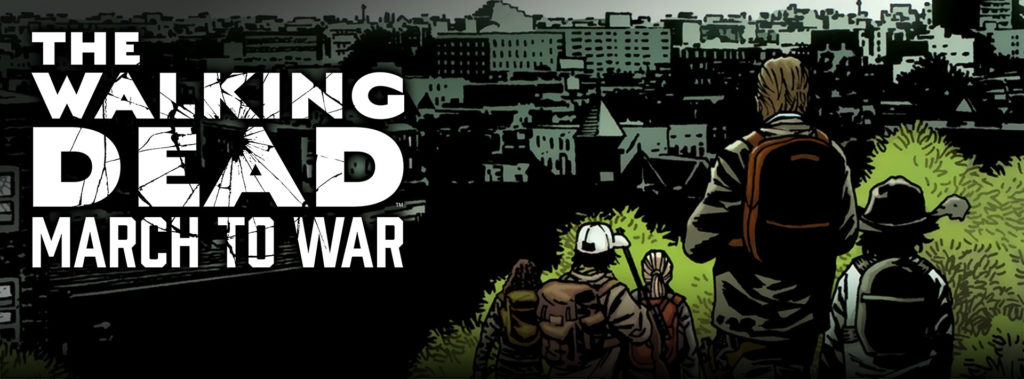
Video game studio Disruptor Beam has already had success translating two global franchises into free-to-play video games with Game of Thrones Ascent and Star Trek Timelines. Now the independent developer has partnered with Skybound Entertainment to tell a brand new story set in Robert Kirkman’s The Walking Dead comic book universe. The announcement is being made at the New York Comic-Con today.

The multiplayer, real-time strategy game, The Walking Dead: March, is set in Washington, DC and will launch on the App Store and Google Play next year. What’s different about Disruptor Beam’s games is that they allow fans to tell their own stories through the gameplay and make connections with the other players.

Joey Lapegna, director of product and design for Disruptor Beam, said that as the team started creating The Walking Dead: March to War, they knew characters had to be a primary pillar. This drove a lot of the decisions around the type of game they would create and the areas of innovation they would focus on in order to bring characters to the forefront of the game.

March to War features immersive 3D graphics and focuses on true multiplayer competitive gameplay, where survivors must actively work with and against others to gain control and progress,” Lapegna said. “Unlike some other The Walking Dead games, players actually have to work with each other in order to succeed (or fail). We are creating a massive world for players to engage with each other and tell their stories on how they survived in the world of The Walking Dead.”

Lapegna said a talented team of artists is working on the game with the goal of pushing the boundaries of what people see in mobile games today, similar to how the studio approached the graphics in Star Trek Timelines. He said March to War will look like no other mobile competitive strategy or Walking Dead mobile game seen before.

In March to War, the player is the leader of their own group of survivors in the DC area and runs into members from a few of the fictional The Walking Dead communities, including Alexandria and The Hilltop. They work together with these groups to learn what it takes to survive in this world and can call on them for help to grow their own community.

“The game’s story is based around Robert Kirkman’s acclaimed comic book series; however, we are creating a gameplay environment that allows rich stories to emerge as players interact with each other in the world,” Lapegna said. “Alliances and friends will form and enemies will be made. There is a deep human drama that comes out of the game systems we’re creating—drama that’s also evident in all of Kirkman’s material.”

The Walking Dead March to War

The game has been in development since early this year. Lapegna said his team has worked closely with Skybound in expanding this universe, which has already been the subject of multiple critically-acclaimed Skybound games, novels and the AMC TV series.

“In regard to working with Skybound, they really look to our expertise and experience to design the right game systems and player experience that will build a fun and successful game for their fans,” Lapegna said. “They are very involved in the process and provide great feedback, but give us the creative freedom to do what we do best: make games!”

Players will get to recruit some of the famous characters from the comics to become a part of their advisory council. The game will launch with well-known characters such as Michonne, Rick and Negan.

“Our gameplay is centered around controlling scarce resources on a shared multiplayer map,” Lapegna said. “So, the location we chose plays an important role in setting the mood and experience for players. We wanted a location that would allow us to create a beautiful 3D world, show a place that was once living and fit it in well with where the story is now. We’ve built some really incredible technology to recreate the look and feel of the area and are really excited to start sharing some images of it with the world.”

Just as Disruptor Beam did with Game of Thrones and Star Trek, this Walking Dead game has been designed for multiplayer.

“We made a decision within the team early on to create a game that was multiplayer at its core,” Lapegna said. “We believe it is important to both stay authentic to The Walking Dead, as well as create a game that can support and engage players for years. The game is built around the control of scarce resources, and as time goes by, players will become more and more dependent on each other to have access to those resources. Players will need to initiate trades or attacks on each other to maintain each of their communities.”

Disruptor Beam has been able to apply lessons learned from its previous two licensed IPs in developing this new comic book-based game. From a gameplay perspective, Lapegna said a key lesson learned was the value and connection players feel to the characters.

“When we created Game of Thrones Ascent, we added the idea of Sworn Swords, minor non-canonical characters that players could send into battle or as spies against the enemy,” Lapegna said. “Based on their popularity, we doubled-down on characters with Star Trek Timelines and built a game where players could collect their favorite Star Trek personalities and put them in situations together to solve in-game conflicts. The success of Star Trek Timelines can be attributed to these characters.”

While many readers and viewers become interested in The Walking Dead for the zombies, Lapegna said they soon learn that the walkers are not the true source of drama; it’s the human drama that is created as well as the relationships that form through the stresses of trying to rebuild society. Disruptor Beam takes that element, as well as the notion of rebuilding society, and builds that into the gameplay experience.

“It’s a fascinating world with rich characters that can tell such meaningful stories,” Lapegna said. “We all have a fantasy of what we would do if we were in that situation, and the ability to play out that fantasy in a video game or a television series touches on something truly human.”

How SiriusXM Is Using Satellite Radio To Jump Into The ESports Ecosystem

With Newzoo forecasting eSports revenues for 2016 exceeding $493 million, which is up over 51 percent from 2015, there’s more activity than ever in competitive gaming. The latest company to get into the eSports scene is SiriusXM.

Steve Cohen, senior vice president of sports programming at SiriusXM, said radio is a unique platform in that it connects experts with fans in a way that no other medium can for real-time advice and discussion.

“We’ve seen fans drawn to that kind of connection on our channels that cover more traditional sports, and we are seeing it with eSports as well,” Cohen told [a]listdaily. “Fans of anything want to get closer to the thing they love. Radio—if it is well-produced and entertaining—will do that for a listening audience. Our goal is to make gamers better, more engaged and more knowledgeable through shows like Machinima’s Inside eSports Radio.”

Hosting the new show on Bleacher Report blends well with the sheer amount of activity in the traditional sports business. The Philadelphia Sixers recently acquired Team Dignitas and Team Apex; Magic Johnson was part of a sports group that acquired Team Liquid; Los Angeles Rams lineman Rodger Saffold owns Rise Nation and Shaquille O’Neal and Alex Rodriguez are co-owners of Team NRG.

“We love the crossover,” Cohen said. “We’ve been covering teams and athletes in-depth for quite some time, not only on SiriusXM Bleacher Report Radio, but on our dedicated 24/7 channels—like SiriusXM NBA Radio and others. So these athletes and executives know our platform well and are often on as guests. ESports is another topic we can engage some of them on, and they enjoy the topic. Jeremy Lin or Rick Fox, for example, can come on SiriusXM and talk about their passion for both basketball and eSports. They are reaching fans of both, and making more fans as they do so.”

Cohen said SiriusXM is always on the lookout for what’s growing and what’s next, and they want to serve that audience that’s interested in games like League of Legends, Dota 2, Overwatch, Call of Duty and Counter-Strike: Global Offensive (CS:GO).

siriusxm-in-dash-radio

“ESports is great content that appeals to a nationwide audience,” Cohen said. “There are a tremendous number of interested listeners we can reach, and we can devote ourselves to producing the kind of expert, in-depth programming that we expect they’ll be drawn to.”

Given that eSports fans typically consume content digitally and on mobile devices, SiriusXM can cater to this audience.

“Our subscribers can tune in through the app, through the radio in their car or home, or through the computer,” Cohen said. “We are easy to use and can reach you wherever you are. That, along with our broad spectrum of programming, makes SiriusXM appealing to people of many ages and with many tastes, no matter where they live.”

Cohen said with 150 channels, SiriusXM appeals to many demographics.

“ESports fans are dedicated and loyal, and delivering them great programming every day is an important endeavor for us,” Cohen said. “We are not Arbitron-rated and we don’t track listenership for individual shows. Our spectrum of content is designed to appeal to as many listeners as we can and keep our subscribers engaged and happy throughout the year. Simply put, if you produce great content you will find an audience and it will grow.”

Jason Dimberg, senior vice president of programming at Machinima, said the eSports show covers eSports for existing fans.

“We’ll continue to report on, analyze and discuss the topics on the minds of the fans and players around the globe,” Dimberg said. “We also want to provide elements that can make the eSports world more accessible to people who may not be as familiar with the subject matter at the center. We’ll tell the human side of the players’ stories and provide insight to the lifestyles that surround the eSports world.”

As for SiriusXM, this initial Machinima and Bleacher Report partnership is just the beginning. “We are always on the lookout for more great content, and we are constantly building and improving, so stay tuned,” Cohen said.

Sonos CMO Talks About Connecting With People Through Listening

Sonos wants to make every house feel like a home using the power of listening to music out loud. To promote its wireless speakers, Sonos has created listening out loud experiences by opening a flagship store in New York City and building a listening room at the Rough Trade record store in New York that’s designed in partnership with Airbnb to be like a one bedroom apartment. In fact, the Rough Trade listening room is so comfortable that Airbnb held a contest to rent out for one night. Sonos also recently announced that its products were coming to Apple Stores, complementing Apple’s emphasis on wireless audio technology and its AirPods.

Joy Howard, CMO at Sonos, recently spoke at the New York Media Festival alongside Absolut Vodka’s Afdhel Aziz about creating deep and memorable promotional experiences. For Sonos, it’s about finding spaces “where music is important and listening matters” and using music to elevate the experience.

Howard sat down with [a]listdaily to discuss creating listening out loud experiences that truly speak to audiences.

Joy Howard, Sonos CMO

What is Sonos’ approach toward creating ideal music experiences to promote its products?

The experience that we want to create is one that’s first and foremost in the home. So what we’re trying to do outside of the home is to give people a sense of what it’s like to experience the product in their home.

In the home, we’re trying to create an experience where music is restored to the center of the home life—and a way of experiencing music that fits the way that you live: simple, seamless. One which, first and foremost, technology disappears. I think most people’s experience with music is complicated by technology, and what we want to do is create an experience where that technology disappears, and you just connect with the music.

Your co-panelist talked about using technology such as VR to create engaging experiences. Do you think Sonos would consider creating a high-tech experience to promote its products?

Not in the near term, because what we’re looking to do is get people to connect more with listening. So, I think we’re more likely to create experiences that are less mediated by technology than more mediated by it. What we found to be very powerful is just to bring people together around music, period—without a lot of other distractions.

It seems as though a lot of people see music as a personal, solitary experience. How is Sonos changing this perception?

This is a huge preoccupation of ours. Because there has been so much innovation in the way music is experienced on devices, we’re really focused on innovating on the shared experience out loud. We’re spending a lot of time thinking about how we help people almost navigate the tension between my personal experience and my shared experience with you.

What is your approach toward reaching the millennial and Gen Z demographic?

The first thing that we do is make sure that what we do is relevant. So when we’re putting paid communication in the way of a millennial or someone even younger, we’re thinking about having it be very relevant. So it needs to be based on some sort of insight that is meaningful to you, and we need to be providing some sort of information that is useful to you. And I think doing it in a way that is as relevant and least interruptive as it can be. So, [we’re] really thinking about the spaces people are moving through, where they are more receptive to a media message, and then delivering it in that space that’s really relevant.

It’s honestly the old-fashioned, tried and true way of connecting to people. Don’t be annoying, don’t be an asshole, try to be interesting, try to be relevant.

In your panel, you talked about learning to spot bad ideas early on. What are the signs of a bad idea?

Some signs of a bad idea: first it depends on a celebrity to deliver it. Second, you could swap any brand out for your own brand in that idea. Third, it’s outrageously expensive. Four, it’s really annoying (laughs).

sonos-rough-trade

How did the promotion with Airbnb and Rough Trade to have a rentable listening room in a record store come together?

This is how the Airbnb partnership came along, and now we’re finding all kinds of ways to activate it. So, we’re in an exploratory phase with them around the best way to activate. We’ve done three things with them already. Rough Trade is one aspect of the partnership, and we’re still exploring what most productive way to partner is.

It (the partnership) came about because the guy that leads product marketing at Airbnb used to work on Google Play Music. So he’s pretty familiar with Sonos, and that’s how I knew him. I was talking to him recently about what we could do together, and I just happened to call him right after Airbnb held its annual festival for hosts, which is called Airbnb Open. Every year, they bring hosts together and have a festival for their host community. This year, they held that festival in Paris, and they were there during the Paris attacks.

After the attacks, everyone was locked in their apartments under martial law while they were trying to find the suspects. The leadership team at Airbnb were locked in an apartment in Paris that had a Sonos system for two days, and one of the ways they passed the time was sharing music with each other—listening to each other’s playlists, talking about the different music that they had in common or they didn’t. He said that was really one of the ways that their time together became more bearable. So it just seemed natural that we would do something together after that.

The big idea for Airbnb is to make anywhere feel like home. For us, one of the things that we do is make a house feel like a home. So the idea of the partnership is: use the power of music to make anywhere feel like home.

Are you working with Apple to create listening experiences now that Sonos products are sold in Apple Stores? Are you taking advantage of Apple’s emphasis on wireless audio technology?

It sort of has been picked up naturally in the press already as a result of our announcement that we’re going to be distributed in the Apple Stores. We’re still in the early phase of that partnership. We’re really excited about the work that we’ve done already together, but I can’t comment too much about what we’re going to do in the future.

What is the most important thing to keep in mind when conveying the Sonos experience?

The most important thing is to [let people] experience it firsthand. By far, the most effective and impactful way that we can wake people wake up to the pleasure of sharing music out loud together by actually having them do it. That’s why we opened a store; that’s why we’re doing these partnerships with Airbnb where people can experience the product in their home environment.

I think most people don’t understand what the product is. So, rather than get into a big explanation of how we use your Wi-Fi to send music throughout your home, we just want people to understand that it’s very simple to use, it’s very easy to setup, and with it, you can fill your whole home with music.

https://www.youtube.com/watch?v=QkjVYaBDS-c

So, what is your favorite song to share with others?

Right now, I’m really getting into Sam Cooke’s version of “A Change is Gonna Come.”

Why Good Content Is The Key To Growing VR

Virtual reality is having an impact on almost all facets of entertainment, whether it’s music, video games, or television. That was fully exemplified at the New York Media Festival last week, where there were multiple panels discussing how VR could enhance different the different entertainment industries.

Industry leaders talked about what VR needs to succeed, and whether the technology might supplant live experiences. Key themes arose throughout the panels, and it’s clear that good content is the key to mass adoption. And instead of sticking to old techniques used in 2D games or television, content creators need to find ways to make the best use of VR as its own medium.

Music

Virtual reality experienced both through expensive high-end headsets or using mobile devices through viewers like the Samsung Gear VR or Google Cardboard, is giving audiences a whole new way to engage with their favorite artists. Afdhel Aziz, director of Absolut Labs, spoke about working with the music artist deadmau5 to create a virtual reality video game to promote both the musician and the vodka brand in a way that goes beyond tour integration.

A separate panel discussed the use of VR for music entertainment, there was some concern about how a writer described the technology as “the Napster for live music,” where audiences would be able to download concerts and other live events instead of paying to attend them. Additionally, VR lets audiences relive events as often as they like, whenever they want. However, the concept was largely dismissed by speakers such as Facundo Diaz, CEO of VRTIFY—a startup that combines VR with music events to create a unique kind of social network.

Diaz explained that it wouldn’t be an “or” situation, it would be an “and” one. Fans will be attracted to the communal aspect and excitement of attending a live concert, while those that can’t attend can still get a front row seat experience in VR. Instead of being an impediment, the panel seemed to view VR as a big opportunity for live events, including giving viewers an inside look at places like the backstage area and the tour bus. Also, considering how every venue has a limited capacity, which can be overcome with the use of virtual reality.

It seems one of the biggest challenges for virtual reality right now is content. Some felt that users had a difficult time discovering VR experiences. Brad Spahr, VP for product development and global digital business at Sony Music Entertainment, felt that finding content wasn’t a problem. Digital storefronts and channels such as Steam (for the HTC Vive) and the Oculus Store do an excellent job of presenting content to users. “I think the biggest worry that I have is that there’s too much bad content,” Spahr said. “There are some lazy ways to do VR, which a lot of people do, but that’s not going to help anyone grow this market.”

Although platforms such as YouTube were marked with low-quality content when it first started and its content creators were experimenting, Spahr stated that users didn’t have to commit to the platform by wearing an oftentimes expensive HMD (head mounted display) to engage in the experience.

When [a]listdaily asked Spahr if VR was caught in a catch-22, in that quality VR experiences require a lot of money, but every media platform needs to experiment with low cost (and possibly low quality) experiences to grow, he replied: “I think building great experiences is what’s important. The sacrifice that you’re asking the customer to make is to put an HMD on. I can have bad content on my phone and throw it off to get back to what I’m doing, or bad content on TV, I can just change the channel. But bad content for VR—you just asked me to put an HMD on and make a big sacrifice—and the investment it takes to get all of the equipment. So if the content I’m experiencing after making that investment is poor, it’s not going to make me want to continue to do it. There are quality bars people should be hitting on VR.”

Spahr stated that platforms such as PlayStation work to curate all of its content. “You’re going to have bad content, just like any other medium, but I think we need to find a good way to guide people to the premium experiences that make them feel like they’re getting the value of VR.”

Video Games

Perhaps one of the most obvious uses of virtual reality technology is in playing video games, which is why it is at the forefront of pioneering the technology. Brad Spahr also noted that Sony Music was looking to video game experiences as a guide when developing its VR content, and the Absolut deadmau5 promotion is a prime example of how the technology can be put to use.

Chris Donahue, senior director of alliances at AMD, also stated that content is the key to driving users from the 2D experience to virtual reality. “Content is the thing that really makes things happen. It makes things appear, and makes them live, vibrant and profitable,” said Donahue. Although the medium still has some challenges to overcome, Donahue is confident in the technology.

“There’s always the chicken or egg issue with platforms, where you have to get an install base before people are interested in developing content for it,” Donahue said, elaborating on the matter. “Fortunately, there are a lot of crazy people who are willing to go and experiment and try new things.” Donahue also stated that VR is at the start of a typical technology adoption curve, but the amount of excitement, focus and attention being paid to VR and AR is significant enough to grow the platform.

Television

With television, there is still the issue of discerning the difference between good and bad VR. Rich Flier, managing director of business development at the visual effects studio Digital Doman described good VR was quite simply, “it’s something that you want to buy or keep on playing.” He went on to express that “there isn’t that killer app. There isn’t that Pokémon GO right now for the VR space.”

Jeff Marsilio, NBA VP for global media, disagreed and felt that the VR documentary detailing the 2016 NBA “was among the first complete VR experiences in the video space.” However, the challenge that the platform faces is having its users overcome the sense of newness and discern good content from bad.

“Good is something that’s worth watching,” Flier said. He cited works created by Chris Milk, with experiences that are like short form documentaries. A lot of filmmakers are entering the VR space and experimenting with it to create content.

When it comes to overcoming the hurdle of putting on a headset to experience VR, some panelists were confident that that the technology will evolve. The key is in giving audiences a compelling reason to put on the headset and convincing them that it’s a more immersive form of entertainment. Again, virtual reality could be a major benefit to live events, since a large majority of fans never attend a live game. With VR, audiences can get a courtside seat.

However, Marsilio echoed an earlier sentiment by stating that VR isn’t a perfect analog to attending the game. “The hardware is not nearly as clear as the real world, and you also can’t smell the popcorn and see your friends.” But he stated that taking what good about television— specifically contextual cues such as replays, scores, shot clocks and all the elements that go into a game broadcast—and combine them with VR in a new way, you may end up with the best of both worlds.

7 Virtual Reality Promotions Taking Over New York Comic Con 2016

Virtual reality-styled promotions are taking off in a big way this year as a deep and memorable way to engage with audiences. The technology made prominent appearances at this year’s New York Comic-Con, where fans lined up to take experience their favorite games, shows and movies like never before.

These are the experiences that are leaving a lasting impression at the comic book convention.

Westworld: A Delos Destination

westworld-host-nycc
Westworld host

HBO’s Westworld takes place in a kind of theme park where robotic hosts pose as human characters, and guests are allowed to do anything they desire without fear of harm, judgment or consequences. The show, which premiered on Sunday, has already been compared to video games, so it’s no surprise that there would be an actual video game to help promote it. Actors that are dressed all in white with robotic speech and mannerisms welcome guests to the VR experience, Westworld: A Delos Destination.

The experience itself, which uses the HTC Vive, puts players in the role of a new guest into the world of Westworld. Players are given a short orientation by a virtual host before the experience transforms into a brutal behind-the-scenes look at what makes the theme park tick. Westworld is also hosting a screening of its second episode on Sunday.

John Wick Chronicles: An Eye For An Eye

A virtual reality-based video game based in the John Wick movie universe has been in the works for quite some time, and New York Comic-Con attendees are among the first to check out the first chapter of the John Wick Chronicles, titled An Eye For An Eye, before it officially releases. The experience is based in the movie world, and players take the role of John Wick, who must survive against waves of attackers. Players don an HTC Vive and are given ten minutes to survive as long as possible without taking too much damage.

Developed in cooperation with Lionsgate Entertainment, the VR game helps to build up hype for the next film. The game’s developers, Starbreeze Studios, also has John Wick crossover content in its hit heist game, Payday 2, in the form of a John Wick mask and special weapons.

Resident Evil 7: Lantern

October is the time for big scares, and Resident Evil is one of the most recognizable survival horror franchises around. The developer, Capcom, first showed its prototype VR horror experience, Kitchen earlier this year, and now it’s following up with Lantern at the New York Comic-Con. The PlayStation VR experience is tied with the Resident Evil 7 Beginning Hour demo that is out now, and players are challenged to make their way through a decrepit house with while a crazed character pursues them.

Since Resident Evil 7 will be completely playable in VR when it releases next year, the showcase provides a significant look at what players can expect from the game. Furthermore, the demo will be included with the PlayStation VR when launches next week.

Rise of the Tomb Raider: 20 Year Celebration

Tomb Raider fans will have a chance to get an intimate look at Lara Croft’s past when Rise of the Tomb Raider: 20 Year Celebration releases for the PlayStation 4 next week. For the first time, the series will be brought to virtual reality in a short experience called Blood Ties, where the iconic character must find her way through forgotten parts of Croft Manor to uncover its secrets. Although it isn’t as action-oriented as the main game, the VR experience provides fans with a new way to appreciate the series.

The game marks the 20-year anniversary of one of the most iconic characters in video games, and takes advantage of the PlayStation VR, which also launches next week.

Rick and Morty Simulator: Virtual Rick-ality

Adult Swim does not shy away from experimenting with creative and innovative ways to engage with its audience. The Rick and Morty virtual reality experience, Virtual Rick-ality, is an open world experience where players get to mess around with objects and environments from the show. Attendees get to experience the game at the convention using the HTC Vive before it officially releases for PC.

Legends of the Hidden Temple

Attendees were able to face-to-face Olmec, the statuesque character from Nickelodeon’s popular game show, Legends of the Hidden Temple at New York Comic-Con. However, instead of having to complete a series of obstacles, they are challenged to complete a discovery game using the Samsung Gear VR. The experience was developed to promote the upcoming Legends movie to gain fans that might not have watched the 1990s kids’ game show.

Jaunt VR

Virtual reality film company, Jaunt VR, decided to focus on horror experiences at the New York Comic-Con this year. The variety of 360-degree videos showcased at the convention include The Black Mass Experience and Zombie Purge, a short film where viewers watch the action from the bed of a pickup truck as survivors battle their way through a zombie apocalypse. One of the more esoteric films include The Game, where a woman must make find her way through a deadly underground maze while a director monitors events from a control room. Attendees experienced these films using the Samsung Gear VR, and almost all of them are available now on the Jaunt VR app.

‘Warcraft’ Movie Actor Rob Kazinsky Discusses Home Video Release, ESports

Universal Studios Home Entertainment launched Legendary Entertainment’s movie, Warcraft onto 4K Ultra HD, Blu-ray and DVD on September 27. The reported $160 million production was an international success at the box office, raking in over $433 million with $47 million earned domestically. Many have yet to see Duncan Jones’ adaptation of Blizzard Entertainment’s PC game franchise, and Blizzard has partnered with Universal and Legendary to offer a digital copy of the game in select Blu-ray and DVD boxes. Actor Rob Kazinsky (Pacific Rim, True Blood) believes this is just one example of how the game developer and Hollywood studios can work together on this franchise.

Kazinsky is a life-long gamer and a dedicated World of Warcraft player. In fact, when he heard about this video game adaptation, he fought to get a role in the project. The role he landed was of Orgrim Doomhammer, one of the film’s central characters, and he was so excited to be part of this film that he showed up early just to meet the developers behind the game on set. The actor talks to [a]listdaily about the film and offers his thoughts on why eSports are so popular in this exclusive interview.

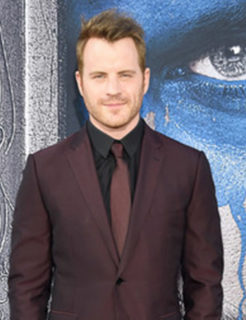
rob-kazinsky-warcraft-premiere
Rob Kazinsky, actor—Orgrim Doomhammer in Warcraft movie

How did your background in gaming help bring Orgrim Doomhammer to the big screen?

It helped me understand the world in which we were living in. I didn’t need anything explained to me. I knew everything before we even started. There were a few times when people would pull me aside and ask who is this guy is or why is this important, and I would know those things. But we were making a film that did deviate from the game lore. When it was written, the game lore began to contradict itself and didn’t lend itself particularly to a great movie story. So we had to adapt a few things. We changed some of the origin [story] of Orgrim, and there’s no Mannoroth or Sedaris yet. So there were slight changes that came about making this film the best film it could possibly be without someone like me standing there going, “Yes, but Orgrim was from the Blackrock Clan, and he should be wearing his armor.” It just became about having a good story in the form of a film.

What are your thoughts on the Warcraft Blu-ray including digital copies of World of Warcraft and a Medivh hero in Hearthstone and Gul’dan hero in Heroes of the Storm?

It’s nice to have an infrastructure that can pull this type of thing together. There was an original idea of giving the base game away up to the last expansion with actual tickets if you bought an IMAX ticket, but they weren’t able to pull that off. The beautiful thing about having an infrastructure that works together with Blizzard, Legendary and Universal is that we can put packages together to reward people that love the game. The thing we struggled with [in] making the movie was getting people who haven’t played the game to come watch it. So it’s only fair that we reward those people that do love the game and did love the movie and do buy the Blu-ray or the DVD, because they’ll get the next movie made.

What are your thoughts about eSports, and how people are competing for real money in games like Hearthstone, Heroes of the Storm and Overwatch?

I don’t know if eSports will ever have the same kind of mainstream appeal as actual sports and betting per se, but you also have to look at the personalities involved—whether it’s Jesse Cox, TotalBiscuit or any of these satirical gamers who create an environment that’s really fun to watch these things in. Gaming is very much a large part of everybody’s life now. The generation above me and beforehand grew up playing games. It’s not like something that the kids do these days. It’s going to be a part of everybody’s life forever. My girlfriend is as good a gamer as I am, and since when has that been a common thread? Gaming has been a part of the vernacular now for everybody who grows up, so it’s inevitable that there’s going to become and eSport element of it.

What role has Twitch and YouTube played in connecting you with other gamers?

People are really interested in watching people achieve things that we are unable to achieve ourselves. Ensidia used to make these fantastic videos—that they put up on YouTube—of their first kills that were really well structured and well made. Their first Algernon 25 kill is one of my favorite videos on YouTube that I will watch occasionally to remind myself how great this game is.

ESports encourages multiplayer gaming together, which is something World of Warcraft was built on. What do you think of that connection?

Yeah, I’ve been playing (WoW) with the same thirteen-ish people for a decade. And it’s even [in] things like Overwatch, where you’re on a team of six. When you see these teams come together and play in really smart moves, it’s really cool because you very rarely get coordinated teams on Overwatch. You have to have to set up and play with people that you know.

If eSports was as big back when you were starting, would that have impacted your career trajectory?

No. I don’t think it would have mainly because I’m not good at that kind of thing. These kinds of guys that make a career out of eSports, their personalities are what sells them. And I’m not that guy that can be nice when he’s in a bad mood or be funny when he’s feeling angry. If eSports had been around when I was a kid, I’d just have watched them play like everybody else.