Actor Nathan Fillion is known to mainstream fans for his portrayal of Rick Castle in over eight seasons of the ABC series, Castle. But sci-fi fans will forever remember him as Captain Mal Reynolds from Joss Whedon’s short-lived Fox series, Firefly and its big-screen follow-up, Serenity. To date, fans continue to flock to meet Fillion and the cast of the shows.
That inspired Fillion and Firefly co-star Alan Tudyk to create Con Man, a digital series that follows the lives of a pair of actors who starred in a fictional sci-fi TV show, Spectrum, that was canceled too early. The comedy raised over $3 million on Indiegogo and has spawned both a comic book and Con Man: The Game from Monkey Strength Productions.With new content expanding the mobile game world, Fillion talks to [a]listdaily about the power of crowdfunding and the importance of social media and community interaction in building an IP in this exclusive interview.
What did the Con Man video game open up for you guys creatively as an expansion of the series?
When we started this whole thing, we were really hoping we could do three episodes of Con Man and just show people this great idea Alan (Tudyk) had. We had no idea how the crowdfunding was going to go. Imagine three guys sitting in a room and starting to dream: We could do the whole series and at the end of it, we can build a spaceship; we can do a comic book. A game was brought up and we thought that was a great idea, never really considering what if it happens. The following day, it became apparent that it was going to happen. So that’s the order it happened in, and then we had to sit down and think what would be a great way to honor this Con Man world in a game.
How has all of the work you’ve personally done in games like Jade Empire, Destiny, Saints Row and the Halo franchise over the years impacted you in helping to bring ideas to this Con Man game?
As a game creator, I wouldn’t hire Nathan Fillion. I really wouldn’t. My strength lies in playing the game and saying, “You know what would be great is if this cut scene was a little shorter because it pops up and it’s right in the middle of when I’m actually doing something important, so if I could fast forward through that cut scene, I’d be a lot happier as a gamer.” That’s where my two cents comes in. And that’s actually my asking price for my opinion: two cents.
The great thing about mobile games is that they’re constantly evolving as a platform. How is the real world inspiring new content like the nerdy collectibles and Jack Moore’s Bottled Sweat that you guys have just added to the game?
What’s wonderful about mobile app gaming is you create a game and then you can monitor exactly how people play. What parts of the games are moving fast, whats parts are moving slow. Tons and tons of data come in and you can glean an understanding of where your game could improve. We also have the added benefit of it’s our fans. The people we built it for are actually the people playing. They’re on social media and they comment and they talk about it and they have excellent ideas. So we have so much information coming in, it’s kind of down to what’s the best of all these wonderful and amazing ideas.
It’s pretty amazing to be able to update a game. This is all very new territory for me. I’ve played games, but I’ve just never thought of anything other than the user perspective.
How did you get the idea to include Nolan North in his mo-cap suit in the game as a character?
Yeah, Nolan North really comes alive when you put a suit on him. It’s such a dichotomy and Nolan North is really wonderful at this. He puts on that suit and you can’t help but laugh looking at him. I mean it’s a ridiculous suit, but he becomes empowered. This is his tool. This is how he communicates, this is his work. He makes it so majestic that it really juxtaposes quite nicely the idiot suit he’s wearing. He’s really proud of that suit. We’re all very, very proud of it. We couldn’t not have it in the game. It’s kind of a no-brainer.
Do you see bigger potential in the gaming space for Con Man as a franchise when you look at consoles or the virtual reality systems that are out there today?
That’s something that really interests me—the virtual reality aspect. I would love to be able to bring a portion of Con Man into the virtual reality world. That would be quite interesting. And this is just me talking, but it’s probably not that hard to do. I’m sure there’s some programmer somewhere going, “That son of a bitch!”
What about the wave of new 360-degree storytelling in both virtual and live-action formats being explored in VR?
Yes, I read an article about that. There are startup companies where their entire purpose is trying to make sure people are looking at the right place at the right time to continue the story. We can continue the story without the missing part because they’re paying attention to something in the corner. That’s the danger of 360 movie telling. You can’t direct someone’s attention.
Do you think it increases the importance of audio, so you have 360 audio in VR and they are using that to guide people in certain ways?
Seriously has had success with its initial Best Fiends mobile game, attracting over 50 million installs since the October 2014 launch across iOS and Android devices. The free-to-download game has over 2 million daily active users, and has generated over $50 million in revenue to date.
“We’re building brands,” Andrew Stalbow, co-founder and CEO of Seriously, told [a]listdaily. “Best Fiends is a universe with over 200 characters and we felt with the big audience shift away from traditional platforms to mobile platforms, mobile is the best place to build an IP.” Now the second game in a planned trilogy, Best Fiends Forever, is available across mobile devices. Stalbow said while most mobile game companies would create a game in the same genre, Seriously wanted to find another genre to show off the world, the characters and continue the story.
“We decided to make a clicker game because we felt like we could redefine what a clicker adventure could feel like. My prediction is in 2017 some of the biggest Hollywood’s IPs will make clicker games.” Stalbow said the connective tissue between Seriously’s games is the casual, approachable nature of these titles, which are designed for the whole family. The game features music by Hollywood composer Heitor Pereira (Despicable Me) and the story was written by Emmy-award-winning producer Stewart Burns (The Simpsons).
“We have over 5 million social media followers to promote the game to,” Stalbow said. “We have our own mini-network. It’s an interesting time for brands because we’re connected to our audience.”
The mobile game company is using the original game as a platform to launch this sequel. “In traditional media when I was at Fox, our content wasn’t connected to our audience,” Stalbow said. “But as a mobile developer, we’re directly connected to our audience of 2 million daily players. We’re using our first app as a platform to launch the second game and communicate to our fans that we have a new game out.”
Seriously is promoting the game with its biggest influencer marketing push to date, which will kick off on October 22. “We will have the world’s biggest YouTubers with over 100 million subscribers, including Pewdiepie, Markiplier, Joey Graceffa, Dan TDM, Jack Septiceye, LD Shadow Lady, Wayne Goss, Cinnamon Toast Ken and many more,” Stalbow said. “In addition to these high-profile videos, we will have over 200 original video integrations across Gamers, DIY, Fashion and LGBT YouTube channels.”
Seriously has created an experiential slug slapping video and a gameplay launch trailer. In November, they’ll release gameplay pro tips from YouTube stars. And they’re also working on a stop-motion video for the new game.
“We try to be as creative with our marketing as we are in developing our products,” Stalbow said. “We’ve focused on YouTube as a platform for a couple years now. Before we launched Best Fiends 1, we asked mobile CMOs what was working and they said FaceBook and Twitter were working well, but they couldn’t connect with and YouTube couldn’t connect. So we decided to focus on YouTube. We’ll mix in some nice creative videos.”
Seriously recently partnered with actress Kate Walsh and YouTubers Rossana Pansino and Joey Graceffa to create the “Don’t Download Best Fiends” viral video. Stalbow said the video ranks in the Top 10 of all video ads on YouTube alongside some other big brands. The first few weeks the video had over 3 million YouTube views and over 8 million Facebook views.
“The video made people laugh, and that’s what we’re in the business of doing,” Stalbow said.
Stalbow said the plan is that that video might turn into a mini-series. It’s something Seriously is working on quietly in the background now. “I want to marry working with social influencers with creating our own brand videos,” Stalbow said. “We started with influencers and it’s a natural evolution to create our own videos.”
The company added a “video” button to Best Fiends so they can promote other videos they’re creating directly from YouTube. Stalbow said a video button will also launch on the second game.
“The app is a great platform to promote a lot of things,” Stalbow said. “What’s interesting about the mobile opportunity is that we can take the audience on a bit of journey between games. We believe it’s the right way to build a franchise.”
Stalbow said the real opportunity for a brand like Best Fiends is that if you have an audience in your hand, give them experiences that are only one click away. “We’re developing high-quality animated shorts,” Stalbow said. “We’re building out our video proposition over the next 12 months.”
Seriously is also stepping into consumer products, although Stalbow said the company is taking a “less is more” approach for merchandise. The company has some limited edition Best Fiends vinyls and plush toys available through KidRobot, as well as t-shirts on Amazon.com.
“Later next year you’ll see some more interesting news from us on the licensing front,” Stalbow said.
With a mix of incredible graphics, stand-out characters and hard-hitting combo moves, Tekken stands as one of the most recognizable fighting games around. The newest addition to the series, Tekken 7 releases in 2017 and its developer and publisher Bandai Namco is giving it a strong push.
One of the most unique promotions is a limited edition sukajan jacket—a souvenir jacket, inspired by the character Heihachi Mishima, who has been the main antagonist of the series since the first game. The reversible satin bomber jacket features two distinct designs: One is a fierce tiger as seen on Heihachi’s gi, and the reverse side has Fujin, the Japanese God of Wind, as seen on an alternate costume. Bomber-style jackets are said to be inspired by Japanese culture and popularized by American GIs.
Designed by Carrie Sleutskaya of Project Runway fame, the numbered premium sukajan jacket features 440,000 stitches in its embroidery and retails for $449 on the Bandai Namco store. The jacket made its debut at this year’s San Diego Comic-Con when Katsuhiro Harada, the famed director on Tekken 7 who has been part of the franchise since the beginning, wore it at the Tekken 7 panel. Pre-orders are available now, and the jackets are expected to ship in December.
https://www.youtube.com/watch?v=qR3nX76TXZw
Abelina Villegas, e-commerce specialist at Bandai Namco, talks to [a]listdaily about how the fighting game became involved with premium fashion and expanding the Tekken lifestyle brand.
Abelina Villegas, e-commerce specialist at Bandai Namco
What inspired the creation of Tekken 7 Heihachi Sukajan Jacket?
Our goal for the official Bandai Namco store is to develop exclusive merchandise and promotions for the most passionate fans of our products. Being a Tekken fan myself, I understood that apparel was one of the most important categories for us to explore and that we needed designs that really spoke to this audience. Alongside our Team Mishima jersey and Crying Heihachi hats, we wanted to push the envelope and create something that really stood out.
Tekken 7 branded apparel currently includes a sports jersey and ball cap. What made you decide on a high-end, limited edition, bomber jacket?
Traditional sukajan and sukajan-inspired jackets have been experiencing a resurgence in popularity recently, and we saw a great opportunity to take some of the amazing graphics and iconography from Tekken and create this unique piece of wearable art.
How did you decide on using Heihachi as the inspiration for the jacket?
As the patriarch of the Mishima clan, Heihachi has always been synonymous with the Tekken brand. His gi and the tiger on the back are iconic and is such an amazing visual to work within this medium and his new alternate costume in Tekken 7 provided the inspiration for the more colorful “statement” reverse side with Fujin, the Japanese God of Wind. The level of detail in the embroidery is spectacular. While we explored designs for a number of Tekken characters, after some pretty lively debate internally, we felt Heihachi enabled us to showcase this contrast in a reversible jacket.
Is there any consideration being given to making jackets (or other apparel) based on other characters from the Tekken 7 roster?
Absolutely, we already have some designs!
How did Bandai Namco come to work with Carrie Sleutkaya to design the jacket?
Carrie was introduced to us, and from day one, we knew she was a great fit for the project. She brings expertise from the fashion world but also understands the culture of the audience we’re appealing to. She worked closely with our team, including Harada-san himself to ensure the designs were authentic to Tekken lore, but also pushed the envelope with the design and quality of the final piece. The stitching on the “Tekken” kanji even follows the direction of the correct brush strokes!
How have fans reacted to the bomber jacket?
Tekken fan reaction has been really great, but what’s also been fun to see is the reaction outside of the Tekken community. This is certainly an investment piece and when we’ve showcased the jacket at events like PAX or New York Comic-Con we’ve received great feedback from everyone that sees it.
How would you say the Heihachi Sukajan Jacket increases awareness of Tekken 7 or the Tekken brand in general?
Our goal on the Bandai Namco Official Store is to develop merchandise for our most passionate fans, so the creation of this kind of high fashion piece was also an opportunity for us to expand the messaging around our Tekken 7 campaign to acknowledge that Tekken is a lifestyle brand.
Tyler Bushnell has spent his entire life surrounded by games. Such can often be the case when your father, Nolan Bushnell, is the founder of Atari and Chuck E. Cheese.
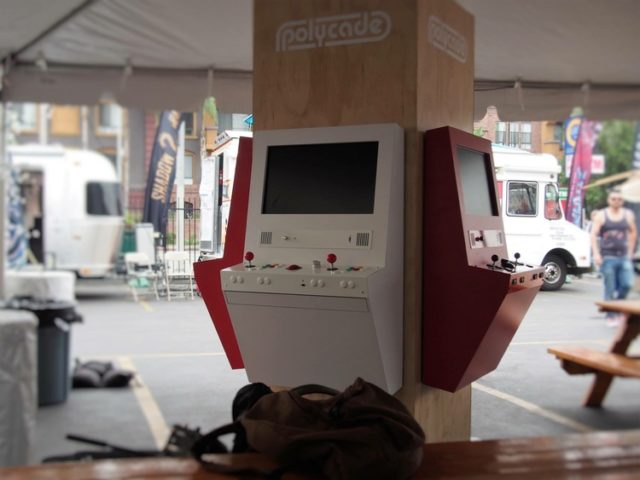
And just like the aphorism of apples not falling far from trees, Tyler is planning to pioneer on the past promise of classic arcades with Polycade, the plug-and-play, super-sleek arcade cabinet of the 21st century capable of playing thousands of both old and new games.
The initial idea was such a hit that it raised $125,276 for its original Kickstarter campaign goal of $20,000.
Polycade is compatible with Steam, providing owners with a seemingly endless galaxy of their favorite games, past or present. Polycade is pre-configured with open source emulator software for systems such as Arcades (MAME), NES, SNES, Sega Master System, Sega Genesis, Turbografx-16 and Atari 2600.
Equipped with a 27-inch 1080p monitor, two-player controls using Sanwa joysticks and buttons, and a trackball that doubles as a mouse for navigation for desktop applications, Polycade weighs 80 pounds and protrudes off the wall by 17 inches. It is 48 inches tall and 30 inches wide.
Taking up only one third of the space of a traditional machine, each unit is complemented with two full-range speakers that are powered by an amplifier. The speakers serve well for those who want to enable Apple’s Airplay and have Polycade double as a jukebox.
Tyler Bushnell, the mastermind behind Polycade, joined [a]listdaily to dive into the promise of his creation.
What sparked the idea for Polycade?
When I was growing up we had a small arcade in the house. Most of the games were in some state of disrepair, or broken, but a few that we spent a lot of time on were Pengo, Donkey Kong Jr., and Super Breakout. If you’ve ever moved an arcade machine, you know that it’s a truly hateful experience. They don’t fit easily through doors, are difficult to get around corners and are extremely heavy. As our family moved from house-to-house, the machines either didn’t make the cut for space or simply broke down with no one willing to fix them. So we got rid of them. I never stopped missing these machines—except for moving them—and dreamed of an all-in-one machine that would also make sense in an apartment. So I set out drafting designs for my own arcade machine.
How many titles come equipped with Polycade?
Our primary version of the Polycade runs on Steam and is shipped with 15 awesome games installed in addition to a $100 gift card for Steam. We’ve found that it’s better to allow customers to choose their own games from the Steam app store, so a list of recommended games along with the $100 gift card works great.
How are you leveraging the power of the Steam app store?
Steam is a great universe for gaming. It has a built-in app store—sort of like iTunes, but for video games—that allows users to purchase games that they want and then browse their personal library. Additionally, Steam features not only modern hits like Street Fighter V and Mortal Kombat X, but also numerous retro titles such as Pac-Man, Dig-Dug, Centipede, Missile Command, Tempest and other classic titles. The Steam Link is an awesome tool when paired with a Polycade. At home, I use my Polycade for arcade-style games, and then for long-form, sit-down games, I use the Steam Link with my TV to stream games from my Polycade. It’s a ridiculously awesome setup.
How can brands utilize Polycade with experiential marketing activations?
Polycade machines are ideal for in-person activations. They can be skinned with a vinyl wrap to add any graphics. They’re easy to move around and they provide a great interactive experience for people of all ages and genders.
What are the social elements to Polycade?
Arcade machines are social by nature. The barrier to entry is extremely low, the controls are intuitive and the focus is either high scores or versus play. This translates to a wider range of players, as well as natural shoulder-rubbing competition over high scores or versus. I can’t stress the importance of ‘barrier to entry’ enough. Imagine you’re at a party, and there’s a console-and-couch setup in the corner as well as an arcade machine. You’re probably going to avoid sinking into the couch and getting lost in a never-ending game, but you won’t think twice about taking a couple turns on the arcade.
What did you learn most through Polycade’s Kickstarter campaign?
When I launched the campaign, I wasn’t sure of the demand for this type of product. The greatest takeaway from the campaign was validation.
What would you advise to those who take the crowdfunding path to a project?
Whatever you think your ship date will be—add an additional six months.
What kind of an influence has your father Nolan had on your life and creative career?
My dad has always encouraged us to build, hack and iterate on various projects. He also pushed us to sell things. At ages 8 and 10, my brother Brent and I were harvesting mistletoe in the woods behind our house, wrapping a red bow around little bunches, and hawking them at the local grocery store. I feel like I had a reasonable grasp on the differences between good and bad business models from a pretty early age. It’s been really useful bouncing business ideas off him for the past 30 years.
A collection of heavyweight creatives from some of the biggest entertainment companies in the world, including Marvel, Lucasfilm, Disney, Pixar, DreamWorks, Warner Bros. and Sony Pictures Animation, is congregating in Turin, Italy from October 24-28. They’re joined by leaders in the virtual and augmented reality fields, including speakers from Google, Baobab Studios and Microsoft. The gaming world will be represented by speakers such as Adam Volker, creative director of Moonbot Studios; Siobhan Reddy, studio director of Media Molecule; Adam Orth, CEO and creative director of Three One Zero; and Daryl Anselmo, art and creative director at Zynga.
The occasion is the VIEW (Virtual Interactive Emerging World) Conference, which celebrates computer graphics, interactive techniques, digital cinema, computer animation, gaming and visual effects. The conference will feature a new exploration of virtual reality and augmented reality, as well as lectures, meetings, exhibits, screenings and demo presentations.
Some of the big names flying in from Hollywood include Zootopia director Byron Howard, Storks producer Brad Lewis, Trolls directors Mike Mitchell and Walt Dorhn, and Sausage Party co-director Conrad Vernon. They are joined by Lucasfilm’s CTO, Rob Bredow.
Maria Elena Gutierrez, director of the VIEW Conference, explains to [a]listdaily how the event has grown over the past 16 years in this exclusive interview.
Maria Elena Gutierrez, director of the VIEW Conference
Can you talk about the genesis of the VIEW Conference?
It was founded in 2000 by a group of academics and practitioners in the field of computer graphics and initially known as Virtuality Conference. Soon after, it was re-branded as VIEW Conference. VIEW is an acronym, which means Virtual Interactive Emerging World. It underlines a larger thematic perimeter, open to all the facets of digital technology applied to images.
What is your audience for this conference?
Professionals, researchers, students and innovators who use and develop computer graphics and digital media applications and technology from not only Italy and Europe, but audiences from around the world.
How have you seen the size and attendance of this conference grow since inception?
We’re proud that it has grown steadily through the years into an internationally recognized conference. Our share of international participants has regularly been growing over the years.
How does the global nature of game development and filmmaking influence the types of speakers you attract to this event?
We invite speakers from around the world. Because so many of the major motion pictures and the new technologies originate in the US, many of our speakers come from there. But the overall idea is to establish a truly global meeting place to share different experiences.
How has the reality of virtual reality being in homes now impacted the scope of VIEW?
Except for Google Cardboard and 360-degree experiences, virtual reality is more of a promise than a reality in homes, at least as of right now. At VIEW, we have speakers who are working on a wide range of VR applications—VR films, games and medical applications—and those taking a broad overview to help people understand where VR is now, how it might evolve and how it might impact them professionally and personally.
Turin, Italy isn’t top of mind when you think of virtual reality. What type of VR industry and VFX infrastructure is there?
There are some, but not many, VR developers in Turin. We have a slightly larger visual effects scene in Turin, and a much larger computer graphics industry, given the important presence of design firms in the area. Turin, in fact, has been and still is an important information and communications technology center. A number of relevant innovations were born here in the last few years, including the MP3 standard and the Arduino platform. So, it would make sense for Turin to be a more important center for VR and digital media. We have excellent universities—including the best technology university, the Politecnico—and technical schools. Italian artists and designers are lauded throughout the world. And, we have VIEW, the largest computer graphics conference in Italy, and one of the best in Europe.
How have you been able to attract so many Hollywood creatives to Italy?
My guess is that they want to introduce their work to European audiences, and that they have heard from their colleagues that the VIEW Conference is amazing, inspiring, and well worth their time.
One of the things that makes the VIEW Conference unique is the participation throughout the week by the speakers, whether keynote speakers or those giving talks. The conference is organized so that the speakers can attend most of the talks as an audience member, and they do, which provides a depth of interaction among speakers and audience members that’s unique.
Also, it isn’t difficult to convince people to come to Italy.
How are the VFX and VR industries learning from each other?
To me, VR has grown from visual effects, but this is more of a question for people in those industries than for me to answer. You might find the talk by Lucasfilm’s CTO Rob Bredow on the work being done at ILMxLabs particularly interesting. He would be an especially good person to answer that question.
How are you integrating game developers into this conference?
We have game developers giving talks and offering workshops, as well as joining a bootcamp with investors. There is clearly a growing interaction between the VR and the gaming scene.
How is game engine technology like Unreal Engine 4 and Unity 5 impacting VR beyond even games and entertainment?
Obviously, developers use game engines for VR applications and some studios use game engines for pre-visualization. We have two speakers coming from Epic Games, Luis Cataldi and Sjoerd De Jong, who will address this question in two workshops and one talk.
How are you seeing traditional entertainment learn from game design in VR?
It’s a big question that should begin with, “Are traditional entertainment studios considering game design for VR, or are they finding other ways to move traditional forms of storytelling into VR?” It’s a provocative question that many of our speakers will be considering in various ways and I hope we can all find some answers during the conference.
Can you talk about the scope of your gaming talks beyond traditional “entertainment” games?
We have speakers offering applications in neuroscience and medicine, where gaming is becoming one of the emerging therapies for behavioral and cognitive problems.
How have you seen storytelling evolve in virtual reality even at this early stage?
I agree that VR storytelling is in its infancy. We have several speakers addressing this question and bringing examples: Maureen Fan of Baobab will look at storytelling in VR and show that studio’s short film, Rob Bredow will show ILMxLab’s experiments with cinematic VR, Luke Youngman and Felix Massie will show Google Spotlight Stories, Tuna Bora will talk about the short film, Pearl. Each of these speakers will offer different types of VR storytelling from those that involve the viewer in some interactive way to those that are more narrative.
How do you see VR evolving over the next five years?
My job is not to be an expert in virtual reality, but to have an open mind, to keep my eyes open, and then to bring experts to VIEW for everyone to learn from, including me. Please come to Dr. Greenberg’s keynote talk. He will be addressing what it takes to make VR real.
What role does mixed reality/augmented reality play in your conference?
Other speakers might address this, but I would recommend Rob Bredow’s talk about the work going on at Lucasfilm’s ILMxLab in particular.
How do you see lessons learned in VR applying to AR?
Again, I’d like to suggest that you come to Dr. Greenberg’s keynote talk. If there are lessons from VR to be applied to AR, he will most likely address them. I believe he considers VR to be part of a larger whole that includes AR.
This week, we learned that people are willing to pay more for live experiences, but not news. As always, we take a peek at what millennials are up to as well as the future of technology.
Look, Internet, No Hands!
Garner Analysts predict that by 2020, 30 percent of web browsing sessions will be conducted without a screen. With the rise of voice-activated technology like Google Home and Amazon Echo, consumers will not be limited to traditional screen-based browsing, Gartner predicts, especially since web browsing will be extended to other areas of daily activities such as driving and exercising. The company also believes that by 2020, 100 million consumers will shop in augmented reality, and that the Internet of Things (IoT) will save consumers and businesses $1 trillion a year in maintenance, services and consumables.
What Is A VIP Experience Worth?
A lot, according to a survey by StubHub. When asked what they would sacrifice to watch their favorite band/musician/sports team/athlete perform live, the results are rather interesting. Not surprisingly, 42 percent would work on a major holiday but other results border on the disturbing—11 percent would go without toilet paper for a week, for example. “Sorry, babe, I’m leaving you for the band,” may be heard more often than you think—seven percent of those surveyed said they would break up with his/her partner for a VIP experience.
That’s A Whole Lot Of Games
Video games aren’t going anywhere soon, and analyst firm DFC Intelligence has released a new report predicting software sales to reach $98 billion by 2020. For the current year, DFC expects game sales to be up 8 percent to $79 billion.
“A major area of growth is occurring as digital products are able to embrace a more premium business model where consumers are willing to pay top dollar upfront for digital content,” DFC analyst David Cole noted in a press release. “This is a major change in the recent mindset where games are given away for free and forced to rely on a freemium business model that simply does not work for many games.”
African American Millennials Love Their Tech
Nielsen’s latest report entitled, Young, Connected and Black: African-American Millennials Are Driving Social Change and Leading Digital Advancementreveals a strong and growing demographic. Second only to Asian Americans, 91 percent of African Americans own a smart phone and 91 percent say they access the Internet on a mobile device, an increase from 86 percent in 2015. Not only that, but more than half (55 percent) of African American millennials report spending at least one hour a day on social media, which is six percent more than all millennials, and 29 percent say they spend at least three hours a day on social media—nine percent more than all millennials.
Get With the Program
Amazon and Netflix have officially invested more in programming—$7.5 billion last year—outspending giants like CBS, HBO and Turner. The World TV Production Report 2016by IHS Technologyexplores how TV producers are adapting to the era of internet TV. “The levels of investment we are seeing from Netflix and Amazon are only topped by Disney ($11.84 billion) and NBC ($10.27 billion),” said Tim Westcott, senior principal analyst at IHS Technology. Programming is big business, one that is currently led by the United States. IHS estimates that in 2015, the US represented 33 percent of worldwide expenditure on TV programming, with $43 billion invested across free-to-air, pay TV and online.
Millennials Love TV . . . But With A Catch
When it comes to watching TV, the coveted millennial demographic consumes the most content at an average of six hours per day. However, millennials don’t have time for nonsense. Fifty four percent report to have “show dumped,” that is, given up on a show they previously enjoyed, because it became too difficult to access the content. A report by TiVo reveals that 91 percent of millennials pay for at least one subscription streaming service, 73 percent have streaming devices at home and 55 percent would pay to simplify search across platforms.
Extra! Extra! Millennials Aren’t Buying It
With the decreased popularity of print media, news outlets that have moved online are attempting to recoup losses through paid content. While 55 percent of US millennials pay for digital entertainment, only 25 percent are willing to pay for some kind of digital news service. A new report by Business Insider notes that publications are questioning their pay-for-content models in order to reach this demographic. “Most legacy publishers have already adopted digital paywalls, but few digital natives have them in place,” Business Insider reports. “In 2015, 77 out of 98 US newspapers tracked by the American Press Association have implemented digital paywalls. However, none of the top digital native publishers have yet to ask readers to pay for content.”
I’ve Got A Twitter Hashtag THIS BIG
Pain relief brand Excedrin cashed in on election year madness by purchasing a promoted trend ad with the hashtag, #DebateHeadache. The campaign resulted in 46,000 Twitter mentions on Wednesday during the presidential debate between Donald Trump and Hillary Clinton, according to social analytics firm Talkwalker. That number represents a 3,100 percent increase compared to the prior day.
Red Bull Music Academy (RBMA) Radio is launching a new radio series called Diggin’ In The Carts, which explores the history of video game music. Similar to the digital video documentary series with the same title RBMA released in 2014, the series discusses the impact and influence of video game soundtracks. The first season of the new radio show will focus on classic Japanese video game soundtracks from the 8-bit, 16-bit and arcade eras. Music and composers from well-known publishers such as Nintendo, Sega, Capcom, Konami, Namco, Sunsoft and others will be featured in the series.
To promote the new Diggin’ In The Carts series, RBMA will be hosting a live AMA on Twitch on November 10, where they will discuss the show, classic video game music and more. Nick Dwyer, host and producer of the series, recently talked with [a]listdaily to discuss celebrating the music that made classic video games so memorable.
Nick Dwyer, host and producer for Diggin’ In The Carts
What inspired Red Bull Music Academy Radio to create a video series in 2014 that explores video game music?
Like most young kids around the world who grew up in that era, video game music was a massive part of what soundtracked my youth. That music played more in our households than any other music when you think about it, and those melodies stayed with me through to later life. I had a background in making documentaries, and I had also been involved with the Red Bull Music Academy for more than a decade. So, when it was time for the Academy to be hosted in Tokyo in 2014, I suggested we produce a series shining the light on the composers of that era. I’m thankful they agreed! The world needed to know who those legends are!
How critical was the music to making classic games memorable?
Maybe I’m a little biased, but I think it really was the most important element [laughs]. Okay yes, the gameplay has to be good, but you think about the classics like Mario and Sonic—the soundtracks were incredible, and you didn’t mind being stuck on levels with those tracks playing on loop because Koji Kondo and Masato Nakamura had nailed the art of making looped music so damn good. But if a soundtrack was poor, you’d give up on those games pretty quickly, right?
When you think about it, if you’re listing off the most memorable games of that era, chances are that—first and foremost—those games had a killer soundtrack.
What kind of audience are you reaching out to with the radio series?
What’s been super important for me with the radio series—and what was super important to Tu (my co-director on the video series) and I when we made the documentary—is we wanted to present the music of that era not as just “music made for a video game,” but as this unique period of pioneering Japanese electronic music.
We specifically shot sequences that were detached from game graphics so that the audience would just listen and be like “damn, in its own right it’s incredible music.” So, with the radio series, I’ve expanded on that. The series isn’t necessarily about the most famous tracks from the biggest titles. I’ve been digging deep through the history and selecting tracks that I feel stand on their own as unique electronic music, irrespective of the fact that they were created initially to serve a purpose in the context of a video game.
So, this is very much aimed at not just fans of that era of music, but also electronic music fans the world over who can appreciate this music without having played the games or even being fans of classic video games. We’ve been lucky as well, in that we’ve got some of the world’s most respected contemporary artists who have been involved in the project—artists like Just Blaze, Flying Lotus, Mumdance, Thundercat, Ryan Hemsworth and a whole lot more just to show how much the music itself has influenced the world and its appeal is more than just nostalgia for video game fans.
How did you get publishers and composers on board?
I’m based in Tokyo now and have relationships with the game companies. It was a lot of work, a lot of meetings, and a lot of meishi (Japanese business etiquette) when we made the video series, but it was worth it. Also, a lot of the composers have now become friends of mine, and I catch up with them regularly. We’re currently working on a couple of other projects that I can’t talk about just yet, but they’re pretty exciting, and we’re working super close with the publishers and composers on those projects.
What convinced you to host an AMA on Twitch?
I jumped at the chance! It’s the biggest and best platform for video game culture in the world, right? So, it’s an honor to be able to get the opportunity to tell the Twitch audience what we’re doing with the series. One thing for sure is that gaming audiences know their stuff and their history, but I’m hoping there will be a few things that even the deepest fans of that era didn’t know about. Also, if anyone missed it the first time around, hopefully it will lead an all new audience back to the video series which Tu and I are still super proud of.
I’ll be in New York Thursday, November 10 to do the AMA, which I’m pretty damned excited about!
What would you say are some of the most influential game soundtracks around?
In terms of global influence, then definitely the work that Yuzo Koshiro did for the Streets of Rage series; Yoko Shimomura’s work for Street Fighter II; and I also have to give Square a mention for what Nobuo Uematsu did for the Final Fantasy series. Also, Yasunori Mitsuda’s soundtrack for Chrono Trigger still stands as one of the greatest soundtracks in the history of video game music.
What is your favorite classic video game soundtrack?
Oh man, it’s hard, and it’s changing all the time. When I was researching for the video series, I’d gone pretty deep, but for the radio series, I pretty much listened through the entire history of Japanese video game music including all of the Japanese-only platforms like PC8801 and MSX (although the MSX was big in places like Brazil and available in Russia).
At the moment, I’ve got to make mention of a Japanese company called Masaya—all of their soundtracks for the PC Engine are incredible. Also pretty much everything that was produced by Konami with the SCC sound expansion chip for MSX titles. But if I were to pick one soundtrack above all that everyone should check out, it would this super obscure mahjong game called The Mahjong Touhaiden; it’s this minimalist masterpiece and features in an upcoming episode of the series.
On this episode of [a]live, we’re joined by Will Maurer, VP of VR and VFX for Legend 3D—the studio behind some of the hottest VR, 3D and visual effects in entertainment today. Maurer and his company made waves at San Diego Comic Con 2016 with The Cosmic Crusaders by Stan Lee, a VR experience that brings a comic to life.
Maurer explained how quick turnaround and budget restraints forced creativity for the project. “Stan [Lee] hadn’t done VR yet, so his team was basically open to whatever we could put together in the time frame,” Maurer related. Since they weren’t able to recreate the entire comic in VR from the ground up, Legend decided to take the 2D motion comic and build a 360 environment from the series. Stan Lee “morphs in like only Stan Lee can” and provides an intro and outro to each motion comic. The story then plays on a big screen within the VR, 360 experience.
Behind the scenes of Stan Lee’s Cosmic Crusaders VR experience
San Diego Comic Con has provided opportunities for Maurer and his team to create unique—and wildly popular—attractions in collaboration with brands. While the obvious choice for VR is entertainment, Maurer shared some insight into how his company has expanded into other industries.
“Entertainment, marketing and brands have driven content for the most part—the good quality content where there are real budgets behind them to produce,” said Maurer. “We had an opportunity to work on the Suicide Squad piece for Comic Con, we launched the Stan Lee piece for Comic Con, we worked on the Crimson Peak piece for last year’s Comic Con and a lot of marketing-driven, scripted content. [We also] worked with brands like Master Card and Patrón so that’s where the money’s been funneling in. We’re developing a real estate VR platform as well . . . so we’re working with a company called Rex on that technology and bringing the VR marketplace to the real estate sector.”
When it comes to adding VR to other areas of entertainment, Maurer found that many brands don’t know what they want, exactly—only that they want in on the action. As more people understand the process, it will help them to plan better VR stories from the ground up.
“We found an opening working with studios and filmmakers to educate them on what happens in post for VR,” Maurer said. “As that happens more often, you’re going to see stories being created in a way that look better or are shot better or directed better—camera choices and movements that are more thought out.”
Basketball was not a part of Kobe Bryant’s life—it was life.
From being drafted as a flamboyant 17-year-old kid from high school to retiring as a 38-year-old man and sports icon, a ball and a court is all he’s ever known.
The words that were the embodiment of his being—transcendent, clutch, disciplined, killer, winner, G.O.A.T.—were on full display the last time we saw Bryant in the public eye. On April 13, one of the greatest champions of his generation said farewell in what arguably was the most exhilarating retirement performance of all time.
Bryant’s broken down and brittle body battled its way to 60 points in a game that had no implications other than placing a period in his illustrious basketball book. But Bryant does not conform to the uniformity of a script. He did exactly what a writer is mostly advised against doing—he punctuated his career with an exclamation mark for an ending!
His last game was a mirage featuring a sequence of one miraculous shot dropping in after another. He single-handedly willed his team to a come-from-behind win before dropping the mic and exiting stage right with the now-famous phrase “Mamba Out.”
It was a great story.
***
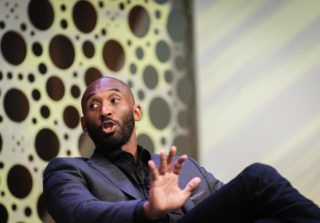
Six months later, Kobe Bryant is seated on stage in a ballroom mere steps away from the Staples Center to a packed house of marketing executives at the &THEN Conference. It’s one of his first post-retirement speaking engagements, and he’s talking about how much he enjoys the process of storytelling.
A year ago this time, he was in preseason mode prepping for the final chapter of his Los Angeles Lakers career. Now he’s dressed in a designer suit and full beard, dropping knowledge about investments, marketing and branding as if it were uncontested jump shots.
The second act of Bryant’s career officially started a day before his 38th birthday in August when he rang the opening bell on the New York Stock Exchange and announced a $100 million fund to drive media, technology and data companies.
Meet Kobe Bryant, the Hall of Fame-bound basketball player who is recreating himself as a venture capitalist businessman.
“I want to try and help put entrepreneurs in the best possible situation to be successful,” he says. “That’s all it is—and it starts with the entrepreneur, and them having a vision on how to make the world a better place.”
As part of Kobe Inc., Bryant’s current investments include sports media website The Players Tribune, video game designer Scopely, legal-services company LegalZoom, telemarketing-software firm RingDNA, home-juicing company Juicero, T-shirt company Represent, Chinese e-commerce company Alibaba, and VIPKid, a company that provides a North American school experience to children in China. Bryant officially made his first ever investment in the sports drink BodyArmor when he was recovering from a torn Achilles tendon in 2014.
The NBA’s third all-time leading scorer is trying to become the second coming of Magic Johnson and Michael Jordan—two hoops predecessors who’ve made more money off the court as savvy businessman than they ever did on it. If Kobe plays the startup scene to precision, he could join their ranks, too.
Bryant spoke on stage about how he’s tackling his newfound passion for business, storytelling and creativity with the same intensity that he did as a five-time NBA champion. Here are the highlights of the conversation, as told by Kobe himself.
***
Kobe Bryant speaking at the 2016 &THEN Conference in Los Angeles.
On finding his post-basketball identity …
“At around the age of 20, I understood that basketball is not going to be here forever, so it was about figuring out what was going to happen when the [retirement] time comes. The hardest part is figuring out what the passion is going to be. I thought it was important to start at an early age to try and figure out what I’m passionate about and a chance to try things out. It took me about 15 years to finally figure it out. I didn’t know how long I was going to play for. You have to challenge yourself to grow and evolve—with athletes in particular. It’s easy for us athletes to lose our identity. It’s a dangerous zone to be in. It’s common sense for me to go with the same intensity, attention to detail and curiosity. I want to be better now than I was in my previous career.”
On what he wants to accomplish with his $100 million investment fund …
“The entrepreneurs need to have the passion first, and if the product they are creating has a true purpose for existing in the world, you have to start there. We just want to help them be successful.”
On what the Kobe Inc. brand narrative will be …
“We try and help people reach their maximum level of potential. ‘Storytelling,’ along with ‘big data’ are extremely overused words. What we want to do with our stories is have the viewer internalize it. Can we bring out compelling content that moves you in a certain way, where you see yourself through the lens of the story we are creating? If we can do that at Kobe Inc., we’ll be very, very happy.”
Bryant officially made his first ever investment in the sports drink BodyArmor when he was recovering from a torn Achilles tendon in 2014.
On investment strategy …
“We’re flooded with requests every single day, and a lot of the times, it’s relationships. There are certain things that we want to get to. We have to pace those out. We have to have absolute focus. There are other things that are going to come, but that’s way down the road. We have to have a very sharp lens, because we can’t do so many things. That’s the hardest part when we first started. We had so many people coming from different angles with lucrative offers but they were small-window opportunities. The hardest part has been pushing those to the side and going for things that have a much longer tail, which is risky. But it’s the best way to go about it.”
On his relationship with business partner Jeff Stibel …
“I’m the creative side of the brain. He’s the execution side of the brain. When we look at deals, I’ll start by formulating my mind on where the story of the company can go, and what’s the trajectory of this company from a public standpoint. What could it communicate? What services are they providing that connect to the human nature of us all? How can you connect those dots? That’s what I really love doing.”
On failure …
“I don’t think about it, honestly. I’m aware of [other athletes’ business failures.] I pay attention and try to learn from them. But I could really care less of what others think of my businesses. The focus must be on the work, on the craft, and what it is I’m doing on a daily basis. It’s not about a conversation of trying to convince people that ‘this is going to be a success.’ . . . As an athlete, the most important thing is staying away from things I don’t understand. I’m not going to sit here and say ‘I read balance sheets all day.’ I don’t have the mental stamina to do that. You have people that you trust, and you need to build those relationships. If you invest in the people, it tends to pay off.”
On Los Angeles opening access to creative opportunities …
“I literally was never around it. It’s really weird. I didn’t go to awards show or anything. It was 100 percent basketball. I was completely focused on the game. It just so happened that my passion is what this city is known for. I just kind of fell into it. Is that strange?”
On how he communicates with business leaders and builds relationships …
“I just pick up the phone out of the blue and cold call people, like there’s nothing in particular, I just want to talk. I’ll get a lot of ‘what the hell are you calling me for?’ [I’ll ask them to] explain to me ‘how you see your business. How you operate? How does it connect to basketball? Is there something there that I could learn that can be used when I step out on the court?’ If a question comes up, I have to know the answer. There are lessons that surround us. All we need to do is open our eyes and look. Curiosity is the most important thing. It sounds really weird to say, but I learn leadership lessons just from walking in the park and observing nature, and the sun’s relationship with nature, the sun’s relationship with the moon, and the sun understanding when to be present and when to go away. . . . I like talking. I like getting to know the process and the journey. It is more so learning by sitting down and having an open conversation. Just talk. Ideas tend to emerge naturally. But you start with the truth, and the idea comes from that, and that’s when you have an idea that lasts forever.”
Bryant’s current investments include sports media website The Players Tribune, the site of which he penned his exclusive “Dear Basketball” retirement letter last November.
On having access to anyone he’d like …
“The stories have to be good. You can have access and get on the phone with anybody but if the idea isn’t there, if the core of the story isn’t there, if the characters aren’t there, nobody is going to do business with you. You’ll wind up having a lot of meetings and nothing gets executed. So it all comes back to the truth of the story. Is it good? If it is, I’m sure we’ll be doing business.”
On working on Nike’s marketing and advertising campaigns …
“Nike is such a great company. The truth of their company, as told by Phil Knight, is ‘listen to the voice of the athlete.’ It just so happened that I had an itch for marketing a story as it related to advertising the products and innovation. I was able to start the storytelling process, and building out campaigns. I started writing quite a few of them and just started building them year-by-year. That’s where the itch came from. I never thought that I’d actually be doing this, but life will surprise you sometimes.”
“We are talking about eSports virtually every single day. I’m sure there is a move to be made there. We’re just being very patient right now for the dust to settle to figure out the best move. . . . ESports is entertainment. You’re still watching a competitive thing.”
On investing into virtual reality …
“The VR space is a very interesting one in terms of where it could go, and the potential that it has, and the tool that it could be used for, particularly as it relates to sports. It has compelling educational components, and simulating certain schemes and strategies. It can also be used for storytelling to explain different points of view, with one narrative thread, taking place at the same time. There’s a big runway there, and I’m very curious about where it goes. The sound is really the biggest factor of VR, because sound is so impactful. When you’re watching a movie, the sound is what’s drawing you in. Right now, VR is not there yet. I feel like if we can add that, it has a potential to be something special.”
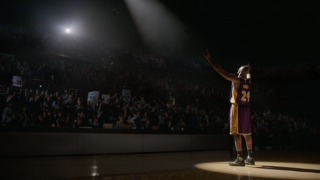
Nike’s ad “The Conductor” honored Kobe hitting one last buzzer beater on the road, and orchestrating the banter from his foes before he walks off the floor.
On being known as a basketball player versus a businessman …
“It’s fine with me. Certain people identify with me from that lens, and always will. I’m totally cool with that. I invested a lot of time to make sure the first career was a successful one. At the same time, it’s part of the challenge. The focus is not to one-up what I did before. It’s simply to continue to scratch that daily itch that I have every day and see where that leads. That’s what I’m focused on.”
On the day of his final game …
“Not too many people know this, but I was at the office editing stories from some very talented writers. I wanted to see them finished. I was at the office until about 4-to-4:15 p.m., and I lost track of time and I’m like ‘I have to go home’ as I am sitting there. I went home, showered, changed, and flew down to the game. I played the game, came home, hung out with family, woke up the next morning, worked out, went back to the office, and finished editing the stories. I really love the process of storytelling.”
On still being a fan of the NBA …
“I get in trouble for saying this all the time but we need to figure out a way with our broadcast partners to make sure a game is not five hours long. I can’t do it. I’ll sleep like an hour into it. We need to make it a little bit more efficient, and maybe I’ll watch a little bit more. But I like watching the playoffs. It’s better now because I don’t have to watch from a studying and dissecting point of view. I’m not filing anything away to use later. I just simply watch it, and enjoy it.”
On having the itch to play this season …
“It’s weird, but not even anything at all. It’s really strange. It’s bizarre. I never would have thought that would have even been possible years ago. But there’s no desire to play. Not even a little bit. . . . It’s still kind of weird to sit here today and realize that I played for 20 years. It’s kind of crazy. I get asked all the time now, ‘do I miss it?’ I’m like, ‘dude, I played for 20 years. There’s no more juice left in that orange to squeeze. I’m done.’”
Turner Broadcasting and WME/IMG kick off the second season of ELeague featuring Valve’s Counter-Strike: Global Offensive (CS:GO) on October 21 with 16 teams vying for the championship. After Virtus.pro defeated Fnatic at the Cobb Energy Performing Arts Centre in Atlanta to complete the inaugural $1.4 million season, Turner decided to make some changes.
ESports fans consumed over 800 million gross minutes of video on TBS and Twitch during the inaugural season. Eleague also attracted more than 3.4 million new viewers to TBS during its 10-week season, with the audience composition consisting heavily of millennial viewers falling in the coveted male 18-34 demographic.
Christina Alejandre, ELeague general manager, VP of eSports at Turner Sports
Christina Alejandre, general manager of ELeague and vice president of eSports at Turner Sports, told [a]listdaily that the new shortened season will help offset the fatigue from the inaugural season.
“By shortening the season, we make every match matter as we head into group stages,” Alejandre said. “We saw fatigue from the players, the teams and the community by the end of season 1. CS:GO is a crowded space and we want to make sure we program things strategically to maximize viewership and engagement.”
Last season ELeague had six weeks of group play, a last chance qualifier and quarterfinals, semifinals and a championship that stretched out over nine weeks. This year had preliminaries online and will have four weeks of group stages, which will occur twice weekly instead of four days a week, and then one week of playoffs.
“You can see fatigue in the community with so much CS:GO content out there and with players having to decide which tournament to participate in,” Alejandre said. “We have active relationships with other tournament organizers to try to make sure our schedules align, or if they overlap we give a heads-up. There’s a whole group of us discussing scheduling. We maintain an open and honest conversation that puts the least amount of strain as possible on the teams, players and community.”
In its second season, Eleague will continue to feature a limited commercial break format, including advertising, branding and content from official marketing partners Domino’s, Credit Karma, Arby’s, Buffalo Wild Wings and HyperX.
Alejandre said Arby’s came into the ELeague relationship saying they didn’t want to be the guys who weren’t invited to the party and just showed up.
“We collaborated with them to ensure their integration into ELeague was natural and authentic to the space,” Alejandre said. “You can see that the commercials they ran on TV were all about CS:GO and ELeague. They nailed the tone, as well. One of the great things we saw was people tweeting about Arby’s commercials during ELeague. How often does that happen other than for Super Bowl commercials?”
https://www.youtube.com/watch?v=Zz6Ekzv_MDA
Alejandre said Buffalo Wild Wings did a phenomenal job of showing the game in their restaurants during the first season—something that will continue into season 2. “People have been doing viewing parties in restaurants, which adds some validity to the space and the community,” Alejandre said. “They can go to a restaurant with beer and wings and watch ELeague. You never had that before. They’re also working with us on their creative, so eSports is treated like it should be.”
Alejandre said the key sponsors aren’t changing things up for season 2. “Their learnings were positive,” Alejandre said. “They saw a lot of good feedback on it. There wasn’t much to tweak or change.”
Turner partnered with Asus to sponsor the recent Overwatch Open they organized in conjunction with FaceIt. Alejandre said CS:GO and Overwatch complement each other. “It’s a different type of game and experience, but it still has the undertones of a first-person shooter,” Alejandre said. “We’re seeing a lot of crossover with casters, players and fans.”
Moving forward, there could be potential for more Overwatch. “We are constantly looking at ways to expand our eSports portfolio,” Alejandre said. “We’re trying to align ourselves with the right brands and partners. Overwatch provided a good opportunity to work with a different IP. They’re a new game, so maybe they’re not ready to do an entire season. We worked with FaceIt and we’re happy with the results.”
Alejandre said additional one-off open events will be decided on a case-by-case basis with new games and experiments. “We have to develop the right product for the right brand and the right game,” Alejandre said. “It depends on the situation and where the game is.”
To date, ELeague has focused on PC games, but Alejandre said it’s looking at console and mobile games. “We’re evaluating every platform,” Alejandre said. “We’re looking at everything.”