Wargaming Celebrates 100 Years Of Tanks Using Virtual Reality

Game publisher Wargaming continues to explore new ways to connect with its 140 million World of Tanks fans through history-themed virtual reality experiences. The company is celebrating the 100th anniversary of the first real-life tank with an event showcasing the Mark IV replica created for Steven Spielberg’s War Horse film in London’s Trafalgar Square on September 15. The Mark I, the first tank, debuted 100 years ago at that same location.

For those who aren’t in the UK, Wargaming is launching the latest installment in its historical “Virtually Inside” 360-degree video series. “Virtually Inside the First Tanks” combines a 360-degree video walkthrough of the Bovington Tank Museum’s collection of early tanks. But Wargaming has enhanced this experience by adding in-game 360-degree scenes of the Mark I from its World of Tanks game, which Matt Daly, Wargaming special projects lead told [a]listdaily, allows anyone to jump into observer mode on any modern device without needing to download the client.

“Our hardware, software, production competency and methodologies have all drastically improved, and it shows, but I would say the biggest and subtlest innovation with this newest Mark I episode is the integration for the first time of World of Tanks in-game VR video,” Daly said. “Almost nobody is doing this right now, certainly not in this context, and the ability to provide something increasingly close to an in-game observer mode without the need for the viewer to download anything at all is a very big deal. This will become much more obvious by the end of 2017.”

Daly, who has been on all 10 of the historical 360-degree shoots, said he’s watched as the whole VR video space continues to evolve and grow. He said Wargaming’s 360-degree video view counts are currently among the highest in the medium.

“We’ve seen an overwhelmingly positive response from our community and the general public,” Daly said. “When people marvel at what they’re seeing, we know that we’ve brought them at least one of the first experiences of this kind, and that’s quite a powerful thing. We also see that people are ‘getting it.’ They’re expressing a deeper understanding of the history because they’ve just experienced it in a more immersive way, and ultimately drawing an even more meaningful connection between World of Tanks and the absolute ocean of heritage that it is built on. Creating those deeper experiences is what drives us.”

Daly said the platforms and tools for virtual reality are maturing very quickly. Since the creative community that is doing meaningful work in this medium is still small, they’re all engaging in regular dialogue with Google, Littlstar, Facebook and other toolmakers and infrastructure providers to help communally determine how the medium shapes out. “We’re seeing fewer to no immersion breakers like stitch lines or low framerates; we have better methodologies for dealing with all stages of production; and in general we have a better understanding of who is viewing these videos on which devices and what it is they’re interested in,” Daly said.

This library of videos is also working on a marketing level. Daly said if someone Googles “Mark I Tank Video” or “USS Alabama,” there’s a very good chance a top result will be one of Wargaming’s text articles, videos or VR videos. “We’re leveraging probably the biggest, highest-quality repository of combat vehicle 3D models, along with deep relationships with museums and heritage organizations around the world, to produce some of the most compelling heritage storytelling on the internet,” Daly said. “Our community, as well as anyone who might become a member of our community, tend to deeply respect that. VR video is an obvious extension of that storytelling we’ve been doing for years, and is just perfect for our online game audience because they already have the vocabulary to engage in dialogue with us about it.”

That audience is about to grow with the introduction of PlayStation VR on October 15. Littlstar has partnered with Sony as the official VR video platform for PlayStation VR, and Daly said the World of Tanks channel will be front and center on launch day. “That will increase our reach and help us stay platform agnostic,” Daly said. “Most importantly, it will allow more people to engage with these VR experiences in the most optimal way: with an actual VR headset. We also hope that the intrinsically communal nature of the PS4 living room situation will pull the medium, and our content, away from fears of isolationism.”

Wargaming isn’t just focusing on virtual reality, as the company has been at the forefront of augmented reality as well. Wargaming has just launched its fourth AR product, Tank 100, which is available on iOS and Android devices. It developed this AR experience with Ballista Digital, co-owned by historian Tom Clifford and BBC presenter Dan Snow. The app allows anyone to place 3D models of the Mark I tank onto the world, providing a sense of the scale and presence of the vehicle. That acts as a natural segue into the expanded information and storytelling about the vehicle’s history that’s offered in the app. The Tank 100 app also directly connects to Littlstar, which means users can experience any of the 10 VR experiences the company has filmed.

Daly said some of the types of data and community feedback they’ve been able to gather from their VR projects helped inform them about audience interests, population concentration, experience level, immersion threshold, etc. This inevitably feeds into the design of Wargaming’s AR experiences and vice versa. “We feel that if we keep pace with both VR and AR technologies, we’ll be best equipped to continue doing truly unique and awesome things with them at every step of the way, particularly once AR and VR inevitably integrate into an entirely new medium,” Daly said.

Wargaming is also celebrating the 100th anniversary of tanks in its games. Starting September 15, World of Tanks on PC introduces Convoy mode. Players can drive an entirely new vehicle type: the four-wheeled Lanchester armored cars, armed with fast-firing machine guns, which are quick and mobile. Players will be divided into two teams of seven with one team protecting and repairing the Mark I as it moves across a World War I battlefield, while the other team tries to use explosives to stop it in its tracks.

There’s also a special event in Wargaming’s mobile game, World of Tanks Blitz, which begins September 19. Players can take control of a modified Mark I in a 7-vs-7 battle. A special medal is earned once ten battles are completed in the Mark I during the week.


Time Inc. Has A New CEO; IBM Names Their First-Ever CMO

Here are some of the top personnel moves in marketing over the last week. Our congratulations to these people taking on new challenges!

NBCUniversal Brand Development Appoints New EVP

NBCUniversal Brand Development named Chris Heatherly as executive vice president of worldwide games and digital platforms. Starting on September 30, Heatherly will head up the unit that creates interactive gaming experiences and digital content for consoles, mobile and PC platforms with the goal of broadening game development and growing NBCUniversal’s properties across digital platforms and emerging technologies. Heatherly has over 20 years of experience in the games and technology industry, and was most recently the VP and GM of Disney’s games and apps division.

IBM Names First Chief Marketing Officer

Michelle Peluso has been named as IBM’s VP and chief marketing officer—a new position at the company. Peluso will begin her position on October 3, as the importance of marketing is continuing to grow at the technology company,  and will lead the way toward accelerating its marketing efforts. Peluso also currently serves on the board of directors for Nike, Technoserve and Tech:NYC.

Time Inc. Names New CEO

Rich Battista has been named the president and CEO of Time Inc., replacing Joe Ripp. The company stated that Ripp will continue to lead the Time Inc. board as its executive chairman. Battista has 25 years of experience in the media industry and joined Time Inc. last year from Mandalay Sports Media, where he was CEO.

World of Warcraft Creator Begins New Adventure

Formerly Blizzard Entertainment’s chief creative officer, game designer Rob Pardo announced the launch of Bonfire Studios, based in Irvine. The company includes a handful of games industry veterans and is backed by Silicon Valley venture capital firm Andreesen Horowitz and Riot Games. Pardo details the inspiration behind the company in a blog post, and the studios purpose will be to “build friendships by creating legendary game experiences that bring players closer together, united in a sense of adventure, exploration and fellowship.”

More Adventures Beyond Blizzard

Chris Metzen, SVP of story and franchise development at Blizzard Entertainment, longtime industry veteran, and creator hit franchises such as Diablo, Warcraft and StarCraft is leaving the video game industry and going into retirement so that he can focus his attention on his family. Metzen wrote a post on the World of Warcraft forums announcing his retirement and detailing his time at Blizzard, which spans 22 years.

A+E Networks Appoints Chief Marketing Coordinator

A+E Networks has promoted Amanda Hill to the newly created position of chief marketing coordinator. Previously, she had been the chief creative officer who oversaw A+E Networks’ international marketing, communications and programming teams. In her new role, Hill will manage marketing for A+E portfolio of brands in the US and abroad, across all platforms.

From Angry Birds To Brand Breaker

Peter Vesterbacka, once listed as one of Time’s most influential people, has been named “brand breaker” and company evangelist for the learning game studio Lightneer Inc. Formerly known as Mighty Eagle, Vesterbacka was the brand ambassador for Rovio’s Angry Birds franchise. He is also a founding member of Lightneer and served as a board member and investor until now. Lightneer is currently working on its debut puzzle role-playing game, Big Bang Legends, which launches in 2017 for mobile devices and is being designed to help teach physics and chemistry to players.

Crossing From Sports to ESports

Veteran Fox Sports executive, Pete Vlastelica, was named CEO and president of Major League Gaming (MLG), which is owned by Activision Blizzard. Vlastelica joins industry veterans Steve Bornstein and Mike Sepso as part of the company’s eSports leadership team and “will expand and enhance the company’s broadcast, content and distribution leadership across the global eSports ecosystem,” according to a press release.

Have a new hire tip? Let us know at editorial@alistdaily.com.

Zaxby’s Scores With Virtual Reality Tailgate Experience

Quick service chicken restaurant Zaxby’s, which has over 700 locations across 17 states, has kicked off a season-long college football virtual reality tailgate road show. The “Zaxby’s Fanz of Flavor” activation features a full-sized wooden barn that houses four HTC Vive VR systems for tailgaters to play a custom interactive experience with.

A custom mobile barn was built to mirror both the finish and look of the new Zaxby’s store environment. The VR experience starts with a waiting screen with a floating, rotating 3D Zaxby’s logo, and then users are transported to a new flagship Zaxby’s restaurant. A holographic Big Z mascot comes out of the floor and is ready for his close-up. This Unity-based experience challenges users to dip into Zaxby’s sauces as paints to create their own Big Z in VR. There’s a wireframe outline of Big Z to follow, or they can just do their own thing within the three-minute time limit. Once complete, an email with a digital photo of the experience is instantly sent, featuring an in-game video of their custom creation that can be shared via Facebook. Each VR bay is connected to a network that sends all the user-generated content in real-time.

While it’s similar in concept to the HTC Vive pack-in application, Tilt Brush, the Zaxby’s version has been built from the ground up for this activation. Everything has been done in a style and tone that matches the Zaxby’s environment.

Will Riley, vice president of brand management and marketing at Zaxby’s franchising, said virtual reality is a component of integrating the different marketing touch points around the love for fans, love of flavor and love for college football to show the community how important they are to the brand. “VR was a way we could immerse all of the sports fans and tailgaters to show them what Zaxby’s is all about,” Riley said. “If you don’t have a Zaxby’s near you, you can still get a feel for it.”

The activation opens four hours before kickoff. Riley said the first event in Austin on September 3 had over 100 people play the full experience, which led to over seven hours of user-generated content.

Zaxby’s has been a sponsor of college football since 2013 through a partnership with IMG. The restaurant worked with IMG to bring this experience to 12 college football games throughout the 2016 NCAA season. The tour kicked off with the September 4 University of Texas vs. Notre Dame game and on September 10 was at TCU vs. Arkansas.

“We’ve looked everywhere from national to local universities, as well as high schools to reach sports fans in communities,” Riley said. “VR was a great way to resonate with sports fans and college students that are up-to-speed with technology.”

Since the virtual reality experience uses cutting-edge video game technology at its core, and college students are the primary target, not only do they understand VR, but some of them have been waiting or a chance to experience it. In addition to the VR experience, there are Flavorize Your Fandom stations for fans to deck themselves out in body paint with help from two master body painters. Food samples or coupons to local restaurants are also handed out to attendees.

Zaxby’s currently operates in 17 states: Alabama, Arkansas, Florida, Georgia, Indiana, Kansas, Kentucky, Louisiana, Mississippi, Missouri, North Carolina, Oklahoma, South Carolina, Tennessee, Texas, Utah and Virginia.

Geico Promotes ESports Sponsorship With New Comedy Series

Insurance company, Geico has a history of creative marketing, and its latest efforts take audiences behind the scenes of professional eSports team, SoloMid. Team SoloMid (TSM), known for competing in League of Legends, all live and practice in the same house, as is common in the industry during competition season. Geico created a scenario in which Russell, an obnoxious neighbor, barges his way into their home and comedy ensues. Russell suspects that the boys are hackers because of their high-tech equipment, but makes himself right at home when he learns their true identities and it seems they will never be rid of him.

The first two episodes of TSM’s New Neighbor are live on YouTube and shot in a low-budget, reality TV style—cutting between various scenes and interviews with team members. The low-key, “obviously not an actor” nature of each team member makes the branded content seem natural, and their reactions could be described as “subtly amused.” Aside from receiving a shipment of Geico swag in the first episode, the company doesn’t shove its branding down the viewers’ throat. Rather, the adventures of TSM and Russell are stories as presented by the team, and we learn through the rather desperate eyes of Russell as he explores this new world of competitive gamers and becomes the butt of practical jokes.

TSM uploads a lot of behind-the-scenes content on their own, making them the ideal candidate for Geico’s campaign. The team also filmed a number of short commercials telling viewers about different Geico offerings, all while Russell interrupts in some way. The commercials then encourage viewers to check out the TSM’s New Neighbor series.

https://youtu.be/G5lYor2oYFU

Thus far, the content doesn’t show actual gameplay or techniques (for obvious copyright purposes) but instead creates an inside look at what it might be like to live in a house with professional gamers. This creates an accessible entry for non-gamers to learn a bit about eSports and TSM, themselves. The guys are great sports and seem to have fun with the promotion, which has garnered over half a million views on the team’s channel alone. With this series, Geico illustrates how storytelling can transcend industries and demographics, making viewers feel at home inside TSM’s home.

How ‘Batman: Arkham VR’ Will Turn PlayStation VR Players Into Crime Fighters

The Batman: Arkham trilogy is one of the most revered series in modern video games. Developed by Rocksteady Studios, the games put players into the role of the Dark Knight as he fights crime and combats supervillains using a variety of skills and gadgets. Last year, the trilogy game to its conclusion with the critically acclaimed Batman: Arkham Knight, but fans were treated to a big surprise last June when Batman: Arkham VR was announced.

Developed for the PlayStation VR, which launches in October, the new game will let fans become Batman and put on his costume in virtual reality and experience what it’s like to be the world’s most famous crime fighter. A short demonstration was shown at conventions such as E3 and Gamescom for attendees to try out, and the response has been phenomenal.

Dax Ginn, brand marketing producer at Rocksteady Studios explained to [a]listdaily why Batman was the ideal character to feature in a VR experience. He said, “Batman has a wide range of elements to his personality and it is this breadth of abilities that makes him so well suited to so many different forms of interactive entertainment.

Dax Ginn
Dax Ginn, brand marketing producer at Rocksteady Studios

“The core experience of Batman: Arkham VR centers around Batman’s abilities as ‘The World’s Greatest Detective.’ Players will solve a brutal murder using all of Batman’s detective and forensic skills, and it is this aspect of Batman’s personality that fits VR so perfectly as a technology. Using gadgetry to search for clues at a crime scene and reconstruct critical moments of the story feels like a very ‘Batman’ thing to do, and it also feels incredibly satisfying to do it in VR.”

Key components of the game involve identifying a killer in a classic detective story style from the first Batman comics. “Gamers will have the opportunity to travel to a range of iconic locations throughout Gotham City in order to pursue the killer and engage in interactions with some of Batman’s best-known villains from the Arkham-verse,” said Ginn. “The Batcave is just one of these locations and the player will be able to utilize the full power of the Batcomputer across a number of consoles within the Batcave.”

Although players will not have the open world exploration from traditional Arkham games, they’ll still get to visit a number of legendary locations throughout Gotham City. Ginn explains that “the way that we have developed Batman: Arkham VR is quite different to the way that we have built our previous Arkham games. Players will not have the freedom of navigation that they will have seen in the other games in the Arkham trilogy, but what they will have is a very intensive experience in each of the locations to which they travel. The process of crime scene investigation is very intensive and requires a lot of analysis of the environment, so players will really get a very deep understanding of the locations within the game.”

Batman is almost certain to encounter recognizable supervillains while investigating a case, but Ginn is keeping quiet about which ones are making a VR debut. “The story is very involved, and we are looking forward to allowing players to unravel the plot of the story as they play, so I don’t want to name any names when it comes to supervillains, as that would be a pretty significant spoiler.” Ginn also said that “the impact of a face-to-face encounter with a well-known enemy is that much more powerful when done in VR.”

Given how the game was demonstrated live at conventions such as Gamescom and E3 this year, we asked Ginn what his favorite reaction from an attendee was. He replied, “the most common reaction has been the way that Batman: Arkham VR makes players genuinely believe that they are Batman, and the thing that gives me the most enjoyment to watch is the way in which players relate to Alfred, Bruce Wayne’s butler. There is such a long history between the two characters that this lifelong relationship plays out very easily when talking to Alfred. Some players are respectful, some are dismissive, but everyone acknowledges his presence and his importance in the life of the Wayne family.”

With the positive reaction Batman: Arkham VR has gotten so far, the natural question is whether or not Rocksteady is interested in developing a longer—perhaps even full-length—VR experience in the future. “Our primary focus at the moment is on the release of Batman: Arkham VR,” Ginn said. “It has been a challenging and incredibly enjoyable game to create, but at the moment we have not made any plans for future VR titles.”

According to Ginn, Rocksteady began experimenting with VR development after shipping Batman: Arkham Knight in June of last year. The company chose PlayStation VR as its launch platform because “the technology of PlayStation VR was something that the team felt very comfortable with, and we were able to build compelling gameplay very quickly, so it was a natural fit for us to continue that development through to launch.”

Ginn also discussed how, as a technology at the start of its lifecycle, VR faces many of the same challenges as any other new technology. “Without exception, everyone who tries VR for the first time is immediately impressed by the sense of immersion and believability that it offers—but the number of people who have access to VR is still relatively small. It is a technology that has to be seen to be believed, but it is only a matter of time before a critical mass of gamers have had the opportunity to experience VR for themselves.”

That being said, Ginn also discussed how Rocksteady had to adopt a whole new approach when developing a VR experience. “The lesson that we learned very early was that a lot of the systems and preconceptions that we held as a team did not translate to developing for VR. All of our navigation and UI systems needed to be redesigned from the ground up. Additionally, we needed to reset our heads to develop a first-person game rather than third-person. So perhaps the most important thing to keep in mind is that you have to develop for VR and make decisions that are right for a VR game, rather than a traditional console game.”

How Rukkus Uses Virtual Reality To Market Ticket Sales

New York-based startup Rukkus was early to the virtual reality game—and according to CEO Joe Messineo, the secondary ticket seller for entertainment and sporting events has already seen the technology boost profits. Messineo said the overall ticket market is a $30 billion business, but it’s a complex and fragmented space. Outside of Ticketmaster’s huge hold in the primary ticketing business, the secondary market has companies such as StubHub and TicketNetwork.

“There’s a lot of wiggle room in this space, where there are only three or four companies making above the $50 to $100 million mark,” Messineo told [a]listdaily. “We’re doing about $100 million this year, which is up from $20 million last year.”

In 2014, Rukkus launched with an iPhone app and then moved quickly to Web and Android. This past May, the company entered the virtual reality space. Messineo said the idea to explore VR came about when there were just a handful of employees (there are now over 23) talking about what was wrong with the current offerings in the secondary ticket market.

Joe Messineo, Rukkus CEO

“Companies weren’t even showing an image of what your seat view looked like,” Messineo said. “StubHub provided a virtual rendering of what they thought the seat might look like. We thought 360-degree photography was advanced and no one was using it at the time.”

YouTube had just launched its 360-degree video channel, so Rukkus took that technology and integrated it with its iOS app. Customers can pan their phone around using the gyroscope and look any direction and see exactly what their seat looks like in 80-90 percent of pro sports arenas out there today. Over the next few months, Rukkus will have 100 percent of the arenas incorporated, as well as some concert-only venues.

“We had to create our own camera and software to get the images from each stadium,” Messineo said. “We had to build the custom camera rigs and the software, which took about a year. We started by capturing each section of an arena and we use tricky coding that is able to offset the images a little bit for each seat in that section, row by row. We’d move the rig around and capture the entire stadium.”

For now, only Apple users can view 360-degree seats on mobile devices, but Rukkus will be launching an Android version in the future. The technology also currently works on PC. “We’ve seen a big conversion rate lift on both iOS and PC since launching into VR,” Messineo said. “We’ve seen a couple million dollars of tickets sold through the VR platform in the first couple of weeks.”

Since venturing into VR, Rukkus has seen rival StubHub launch a VR app as well.

“We’re a tech company first,” Messineo said. “We don’t come from the same background as our competition. For us, it’s about creating a great product. A lot of companies have invested in VR, but we feel like we’re one of the first companies to use it for everyday use—not for video games or viewing entertainment, but for e-commerce.”

Messineo believes VR will open up e-commerce for big ticket items out of the gate. “You’re not going to buy expensive seats that are on the 50 yard line or behind home plate without being able to see that view,” Messineo said. “It makes a big difference when people can experience something first-hand. VR gives a brick and mortar feel with instant gratification. You can transform e-commerce if you do it right.”

Since it sells everything from sports to concert tickets, Rukkus works with a large demographic of consumers. Messineo said the overall platform is approximately 50/50 male to female, although certain sports skew higher and younger with males—just as certain concerts like Taylor Swift attract a younger female audience.

Rukkus doesn’t allow fans to resell their tickets. The company only works with ticket brokers, which Messineo said allows the company to sell tickets for less than the competition. “The exact same tickets are sometimes 30-40 percent cheaper than on StubHub or TicketMaster,” Messineo said. “We want to be fairly priced. And as a brand, we want people to see the difference in price and say ‘wow.’”

‘Blair Witch’ Scares Up Conspiracy Marketing Akin To The Original

In May, a movie trailer appeared for The Woods, a horror film set in, you guessed it, the woods. The video did a good job of establishing that something goes horribly wrong when a group of people head into the forest, but not much else. Horror fans were intrigued, seeing director Adam Wingard and screenwriter Simon Barrett attached, who’d previously worked together on You’re Next and The Guest. During San Diego Comic-Con, however, Lionsgate dropped a bomb—The Woods was the working title for Blair Witch, a sequel to the original 1999 classic. Teasing the real identity of its film was to be the first in a string of brilliant marketing strategies for the studio.

Found Footage That “Authorities Don’t Want You To See”

I remember when The Blair Witch Project was a real topic of debate—before the film was released. My friends and I scoured websites that detailed the mysterious circumstances in which this footage was found. The hikers were never seen again, their backpacks found buried . . . and like staring at a horrific train wreck, we just couldn’t look away. In keeping with the spirit of that incredibly effective campaign, Lionsgate is at it again with a conspiracy theorist who uploaded more found footage on August 31 to YouTube. The video doesn’t contain any watermarks or studio credits, but watchful eyes will notice those trademark hand prints on the Blair Witch house walls.

According to the video description:

Now that people are starting to wake up and join the search for truth, we felt it time to share one of our darkest secrets. Our friends and fellow hactivists, known as darknet666 (https://darknet666blog.wordpress.com), originally posted this in April 2014 when they found an old dv tape in the Black Hills Forest (Frederick Watershed), Maryland. Within a month, they’d gone missing in those same woods and the video was mysteriously DELETED as part of a COVER-UP. We recently “acquired” the file from our friend’s computer. THIS IS WHAT THE AUTHORITIES DON’T WANT YOU TO SEE.

The linked blog is a simple site that doesn’t appear to have been updated since 2014 (either true or intentional to appear authentic, since this project began in 2013). The site’s “author” is obsessed with hiker disappearances in the area, often referring to a mythological creature called “Snallygaster.”

A Missing Filmmaker

blair-witch-lisa
Source: Facebook

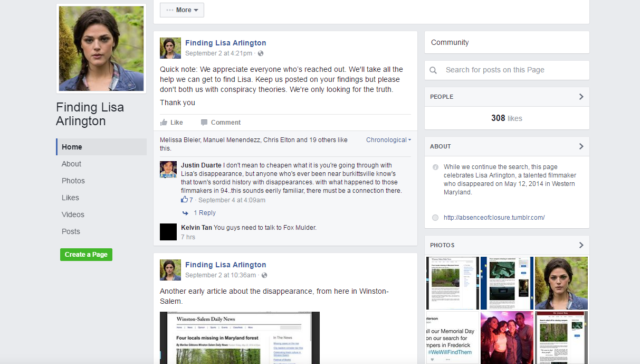
Further adding to the idea that this, in fact, really happened, a Kickstarter campaign appeared that links a funded documentary from 2014. The Absence of Closure is the name of a college thesis by Lisa Arlington who planned to explore the psychological effect of disappearances on their friends and family. One of those to be interviewed was the brother of a woman who went missing in the same manner as those in The Blair Witch Project. (Although they never explicitly say this.) Ironically, the most recent post says that Lisa has been missing since May 2014. Lisa’s last post said that she was meeting none other than darknet666, the one who found and posted the aforementioned creepy footage on his site. Lisa’s profile even links to a corresponding Tumblr page, complete with realistic entries and the absence, thereof.

Lisa’s best friend posted an update in August that authorities have given up on Lisa and her family needs help. They even set up a Facebook page which asks for leads, but request that commenters refrain from conspiracy theories. The photo of Lisa looks an awful lot like actress Callie Hernandez, who plays a filmmaker named Lisa in the Blair Witch. The Facebook page even links to several “news stories” about Lisa’s disappearance.

The marketing team behind Blair Witch is doing a fantastic job leaving bread crumbs for the curious to follow. If “viral marketing” actually existed, this would be it. The found footage, the missing filmmaker—it all appears so real—I only wish I didn’t know the truth, heading to the theater once again to find out that it’s actually a sequel.

Blair Witch haunts theaters beginning September 16.

Follow H.B. Duran on Twitter

‘Pure Chess’ Grandmaster Takes On Twitch

Chess has long been considered the ultimate game of logic and strategy, but the game is so ubiquitous launching a new version of it may become a video game publisher’s biggest challenge. That’s when Ripstone Games, makers of Stick it to the Man, Ironcast and Pure Hold’em, came up with a brilliant move of its own. To mark the launch of Pure Chess Grandmaster Edition today on Steam and Xbox One, the publisher decided to pit the collective mind of the Twitch audience against chess grandmaster Simon Williams (pictured above) in the first livestreaming experiment of its kind.

In many ways, the match is similar to the 1999 “Kasparov versus the World” game, where famous grandmaster Garry Kasparov took on a collective of minds that made moves using a messaging board. Users would vote on moves, and those with the most votes were executed.

michelleturner
Michelle Turner, Ripstone Games head of marketing and PR

Michelle Turner, head of marketing and PR at Ripstone, told [a]listdaily about how Pure Chess challenged Twitch to a grandmaster game. She explained that Ripstone’s PR manager, Mike Rose, initially came up with the idea, given his experience with Twitch. They didn’t know about the Kasparov game at the time, so the similarities were coincidental. After playing a number of games against the Twitch community themselves, they felt that introducing a grandmaster into the mix would up the ante.

“Chess in itself is quite a straightforward game to talk about, most people know what chess is even if they don’t know how to play it,” said Turner. “With the launch of Pure Chess, we had to think of something interesting that would appeal to a broad audience, and that would also showcase the stunning visuals of the game. Twitch is a great place for that, and its users are really engaged.”

Turner also described how the voting system works. “We have a Twitch bot, which was developed by Alex Rose Games (brother of our PR manager, Mike), that pulls together all the moves suggested by the chat. The Twitch chat will suggest their moves, the move with the highest number of votes will be selected by our bot; we’ll then make that move on behalf of the chat.”

Chess grandmaster Simon Williams has worked with Ripstone in testing the artificial intelligence since Pure Chess released years ago for the PlayStation 3 and Vita. So, it was only natural for Ripstone to turn to him for this promotional experiment. “He was the first person we thought of when it came to finding a grandmaster for this challenge,” Turner said. “He regularly streams on Twitch and YouTube, so we knew he’d be comfortable interacting with the Twitch audience. Luckily, he was as excited about the idea as we were and thought it would be an interesting challenge.

“He’s watched a few of our previous streams where we occasionally play forfeit chess—some of the Ripstone team have ended up with pies in their faces or underwear on their head, and he was totally up for that too! But we thought we’d go for something a little more serious this time. He’s pretty confident he can beat the chat, and has even offered to play blindfolded if he’s finding it too easy.”

When asked how Ripstone expected the Twitch game to compare with Kasparov’s, given the vast changes in technology, Turner responded: “It certainly going to be much quicker—we aren’t expecting this match to take four months! After the event, Kasparov admitted that he’d been reading the messaging board where the World were discussing their strategy on, so he knew their game plan, which they weren’t aware of. We’re planning to avoid any cheating in this game.

However, what will be really exciting is that Simon will be able to see the chat in real-time, while the people watching and playing against him will be able to hear his thoughts on the moves he’s making and how he feels like the chat is doing. We’re hoping there’s going to be plenty of trash talk from both sides.”

Having already played a few matches against Twitch without the benefit of being a chess grandmaster, Turner describes the collective gameplay style. “There is a core group of people that always tune in. They aren’t necessarily experts at playing chess, but then neither are we. Their play style usually starts off messy, and then becomes a hive-mind when the chat realizes who is actually good at chess. With that, we do see that a lot of people will wait for one or two particular people to make a move, and the others will copy their suggestion. However, recently we’ve been getting more traction with new people joining who are really good at chess. The Twitch chat now openly talks about strategy, which we ignore so we can’t take advantage of the situation—but they’re becoming more confident against us, which is making our task harder to try and beat them.”

However, Ripstone’s skill at chess isn’t necessarily the challenge it needs to overcome. The real issue is that there are a tremendous number of chess games on the market, with a wide variety of challenge and graphics, for every platform. We asked Turner how Pure Chess Grandmaster Edition would stand out from the crowd.

The visuals in Pure Chess are absolutely beautiful—it’s definitely the best-looking chess I’ve ever seen,” Turner replied. “Aside from that, the game offers the complete package for any ability of chess player. It has comprehensive tutorials teaching basic and advanced chess techniques, an in-depth ELO ranking system for online play as well as 100 chess puzzles. People can play online against up to eight friends at any one time, set up an auto matchmaking game with the existing Pure Chess community of over 2.5 million players, or go head-to-head against the custom built AI; so they’ll always be able to play.

The Grandmaster Edition includes nine different chess sets, such as the traditional Staunton and Williams set as well as exclusive sets like Easter Island and Halloween—and 6 locations ranging from a luxury penthouse to a park.”

No matter how today’s match turns out, Williams is already excited for a rematch. “Simon already said he wants to do blindfolded chess against Twitch, the thought of which just blows my mind,” said Turner. “And the Ripstone team are up for some more forfeit chess on stream.”

PlayStation 4 Adopts 4K Entertainment, Developers Jump Aboard

New York—Sony Interactive Entertainment introduced two new consoles (PlayStation 4 Pro and PlayStation 4 slim) at its PlayStation Meeting event at the PlayStation Theater in Times Square. While most of the console information had been leaked early, one surprise was the decision to not include a 4K Ultra HD player in the new PlayStation 4 Pro. Instead, the new $500 console (available November 10) will offer 4K streaming entertainment content through YouTube and Netflix apps, but gamers who have begun collecting the 4K Ultra HD Blu-ray movies will either have to buy a separate player or the new $300 Xbox One S from Microsoft. The Xbox One S also supports High Dynamic Range (HDR), which replicates the colors and lighting that the human eye can see within virtual worlds, television shows and film.

4K And HDR Are Transforming Entertainment

Mark Cerny, the PlayStation 4 architect, said Sony has doubled the power of the GPU and boosted the clock rate of the CPU in the PS4 Pro, allowing additional hardware rendering for enhanced resolutions on screen, as 4K supports 8 million pixels of resolution for gaming and entertainment. Sony had a dozen playable games in 4K at its event, and the company is encouraging first-party and third-party developers to adapt both existing and new titles to 4K, as well as HDR when possible. There was much more support for 4K by developers than HDR, which is a much newer addition to the Pro.

Cerny said HDR is the most exciting advance in TV technology in the last decade because current HDTVs only offer a fraction of the colors the human eye can see. “HDR is a new technology and the standards are still in flux, so game creators are still figuring out how to take advantage of it,” Cerny said. “Not everyone will support HDR out of the gate.” But there’s also more of an incentive for developers to support HDR moving forward, as the original PS4 consoles will get a patch next week that will enable HDR capabilities. That means an audience of over 40 million gamers may experience HDR if they have compatible televisions.

Andrew House, CEO at Sony, said the upgrade to 4K will transform entertainment like we haven’t seen since transition from standard definition to high definition. “Our vision is to present clear choice to the gamer,” House said. “We want to offer an option for those who want to heighten the game experience. We’re asking developers how they can support HDR and 4K in each title.” At the same time, House said the goal is for PS4 to remain a single unified community, which means the same discs and downloads will work across all consoles.

“PlayStation 4 Pro sits alongside the standard PS4 and is part of this generation of consoles, House said. “It’s targeted toward the hardcore gamer or those who have invested in 4K TVs.” Sony has the current lead in the console wars, but it will face competition in 2017 from the Nintendo NX, which is currently slated to launch in spring, and Microsoft’s Scorpio, which has not received a launch window yet.

According to IHS Markit analyst Piers Harding-Rolls, Sony’s PS4 Pro console strategy reflects the nature of the consumer electronics market today. “Consumers are looking for updates to hardware more regularly and consumer electronics companies are looking to sell more devices,” Harding-Rolls said.

At the same time, today’s consoles use less proprietary technology compared to older generations and are more like PCs. AMD powers Sony’s PlayStation consoles. Harding-Rolls said this makes it easier and quick to develop and build improved versions. IHS forecasts PS4 Pro worldwide sales of 1.5 million in 2016. The overall installed base of PS4 is forecast to reach 53.5 million by the end of 2016.

Mike Goodman, Strategy Analytics’ director of digital media strategies, forecasts that game console sales globally will fall slightly, to around 34 million units this year, mainly due to Nintendo’s Wii U being discontinued. Sony will account for 60 percent of game console shipments, while Microsoft will represent 36 percent. “We estimate that Sony has shipped around 46 million PS4s—compared to 27 million for Microsoft’s Xbox One/One S,” Goodman said.

According to IHS, 4K TV shipments are expected to grow from 55 million units in 2016 to more than 112 million units by 2020. Hardcore gamers are traditionally early adopters of new technology, and 4K TV prices are dropping. Goodman said that while HDR may be the future of television, it has a long way to go. As of year-end 2016, the global installed base of HDR compatible televisions will only be between 3 and 3.5 million.

The Games

Some big publishers were on hand to reveal what titles will be receiving 4K support this fall and next year. It’s not yet clear how Sony or its third-party partners will market 4K and HDR capabilities, but there will clearly be messaging for gamers. For example, Bend Studios was on hand to demonstrate its 2017 Sony exclusive Days Gone featuring both 4K and HDR. The developer said this technology brings all of the brightness of the sun and the colors of the clothing and environments to life with photorealism, but it also accentuates the nighttime scenes. The playable demo included the ability to throw Molotov cocktails into the crowds of “freakers” in the shadows of the night.

Activision CTO Andy Hendrickson was on hand to announce that Call of Duty: Infinite Warfare will support both 4K and HDR. An “Operation Dark Quarry” mission was played live on a PS4 Pro to showcase the added visual clarity, and the game was playable at the arcade following the press conference. Activision is also supporting 4K with Call of Duty: Modern Warfare Remastered and will provide an online title update for Call of Duty: Black Ops 3.

Aaryn Flynn, vice president of Electronic Arts-owned Bioware, said FIFA 17 and Battlefield 1 will support 4K this fall, while Mass Effect Andromeda will support 4K and HDR next year. Andromeda was playable in the arcade with a dark alien world showcasing the lighting effects and visuals that HDR opens up on a 4K display.

Insomniac Games’ Spider-Man was shown in 4K during the presentation to illustrate the level of depth and detail in the distance as tiny pedestrians were crisp and clear as Spidey sat perched high atop a building, every crevice and fiber in his suit crystal clear. Meanwhile, Naughty Dog said it was “fairly easy” to go back and add 4K and HDR support to Uncharted 4 and The Last of Us. Both games were playable, and a chase sequence in Uncharted 4 featured explosions that are dozens of times brighter than what a conventional TV can display. Additionally, an underwater sequence showcased HDR as the sunlight came down through the water and highlighted the coral reef.

Ubisoft’s For Honor was featured during the press conference and playable at the arcade. Cerny pointed out that 4K opens up the intensity of the combat and the authenticity of the experience through more detailed models and textures for both the environment and the warriors battling within them. Meanwhile, Tripwire Interactive’s Killing Floor 2, which GameStop will publish for PS4 Pro and PS4, was featured as an example of what smaller teams can bring to titles using 4K. Tripwire said this technology not only adds more lighting to the darker environments, but brings the blood-soaked snowscape to life in a way that allows the player to traverse the environment more safely.

Rise of the Tomb Raider was shown in the press conference and playable afterward. Square Enix said 4K unlocks new details like the work that went into Lara Croft’s hair, as well as the clothes she wears, and the huge environments, including more realistic waterfalls and full realized backdrops. Meanwhile, Square Enix’s other hit game, Deus Ex Mankind Divided was also shown with a playable demo afterward. Although already launched, a patch will add 4K and HDR support to the game. Cerny said this technology brings to life the extreme level of detail in both environment and characters that the developers created, but previously weren’t able to be seen on console systems.

Guerrilla Games was on hand to show a new level of Horizon: Zero Dawn featuring 4K and HDR support. The developer said this technology ultimately brings thier vision to life more accurately, since everything from the worlds to the characters are more visually stunning and more immersive. Similarly, developer Impulse Gear showed the leap 4K provides for PlayStation VR with its first-person shooter, Farpoint. The developer said the Unreal Engine 4 game features four times the visual clarity on PS4 Pro, which makes the immersion within the virtual world much more realistic.

Twitch: ‘Streamline’ Brings Gamers, Viewers And Brands Together

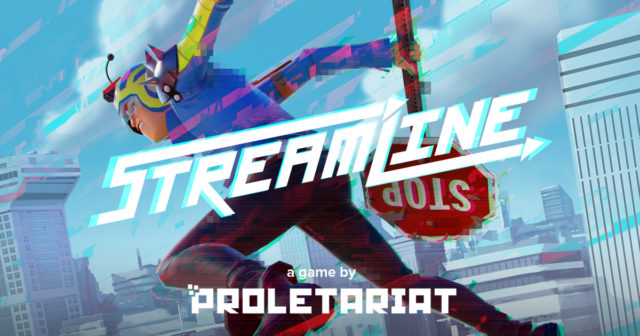
Twitch is all about the relationship between gamers and their viewers, so the social video platform has come up with an even more interactive way to bring players and audiences together. Streamline is the first in a series of Stream First games—which are specifically designed to be played by Twitch streamers with their fans. Developed by Proletariat, Streamline is a third-person multiplayer action game that pits player against player, viewer against player and viewer against viewer. Game rules and stage conditions are ever-changing, as voted on by the spectators, from making players move slowly to turning the ground into lava. Spectators can also place bets on which runner will emerge victorious against the lone hunter and even play bingo against other viewers based on in-game events.

“Stream First games evolved out of streamers wanting to involve their viewers in the games they were playing and developers recognizing this desire,” said Brooke Van Dusen, director of game developer success at Twitch in a statement. “Streamline is the perfect example of the pieces coming together just right with the Streamline Road to TwitchCon Tournament illustrating the potential for this new genre in the competitive gaming space.” Streamline tournament hopefuls will compete from September 12 to 16, with the top players winning a trip to TwitchCon 2016 to battle it out on October 1.

streamline-image

Currently in alpha stage and “active development,” Streamline is headed for an official tournament at TwitchCon 2016 with a whopping $10,000 prize pool and naturally, viewer participation. Other titles will also be on display at the event, including H1Z1, a zombie survival game. Building on the success of Twitch Plays events, each Stream First game was created from the ground up to be played by both gamers and audiences together. Streamline, however was the top choice as TwitchCon’s featured game, thanks to being developed specifically for the streaming platform. “We’ve been working with [Proletariat] closely for the past year on making an experience that is fun and unique to Twitch,” Van Dusen told [a]listdaily. “For example, the game uses TwitchID as its primary identification system.”

“Developers of Stream First games focus on the unique ways broadcasters engage their audiences on Twitch and then create features to enhance those experiences,” Van Dusen further explained. “In Streamline‘s case, one of the many things they focused on was how broadcasters enjoy playing games with their viewers. However, the process of setting up matches with one’s Twitch community is extremely difficult. Streamline built a system so that not only is that process automated and simple, but the game itself does a great job of ensuring lots of folks can participate and share the spotlight among a broadcaster’s entire community. ”

Audience participation strengthens the power of influencer marketing, so it’s no wonder that brands will be able to benefit from Stream First titles. “We’ve seen lots of Twitch Plays activations from brands this year,” Van Dusen said, “Such as Totino’s Bucking Couch Bowl, [where the] game is controlled by chat commands. Stream First games take Twitch Plays a step further by involving the audience in a metagame where they not only interact, but compete and win. This definitely opens up the opportunity for brands to do even more fun and creative campaigns on Twitch.”

https://youtu.be/cQPmAeL8Ymk