Why Traditional Media Has Entered The Arena Of ESports

The International Dota 2 Championships are underway, with a staggering prize pool of over $20 million. In 2014, Riot Games’ League of Legends World Championship had roughly 27 million streaming views, more than the average viewership of individual games of the World Series and roughly the same as the number of people who tuned in for this year’s NCAA basketball final. Awareness of the eSports phenomenon has grown significantly in the last year alone (36 percent), reaching a billion consumers in 2016.

Traditional media has taken notice of a demand for eSports content by fans and, of course, the estimated $1 billion market revenue. By featuring eSports content on television, networks not only increase their own audiences, but help ensure the success of eSports, itself.

TBS

ELeague

ELeague is a professional Counter-Strike: Global Offensive (CS:GO) league that broadcasts across TBS and Twitch. The league features 24 teams from across the world to compete in two 10-week league seasons annually, which includes a regular season, playoffs and a championship tournament for $1.4 million in prize money. Premiering in May, ELeague videos were streamed on Twitch 4.3 million times from its debut on Tuesday through Friday night and attracted more than 3.4 million new viewers to TBS during its 10-week season. ELeague telecasts airing in the Friday night window throughout the first season led to TBS’ audience composition growing 97 percent in men ages 18-to-34 and 51 percent in men ages 18-to-49 when compared with the same telecast window over the previous month. The second season begins October 7.

ESPN

Sports giant ESPN, which is owned by Disney, took the plunge with a dedicated vertical earlier this year. “We did [an eSports] issue in the spring of 2015, and the response was phenomenal,” ESPN The Magazine and ESPN.com editor-in-chief Chad Millman told TIME. “And from there, we said, ‘We need to do an eSports vertical.’ So we spent the next several months thinking about how do we want to cover it, who do we want to cover it, and can we do it with credibility and authenticity so that it serves the audience appropriately. And that’s how we ended up launching the site in January.”
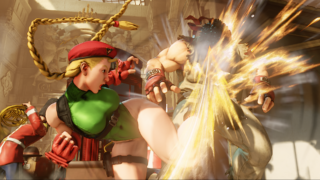
sfv

ESPN continued to up its eSports coverage last month when it televised the Street Fighter V World Championship on ESPN 2. In an interview with [a]listdaily John Lasker, vice president of programming and acquisitions at ESPN Digital Media, said that since mid-2014, ESPN has distributed about 300 hours of live eSports content, covering Halo, Madden, and Heroes of the Storm. “We’ve been exploring incremental TV distribution,” he said. “We appreciate and understand the existing digital distribution of eSports and where the fan base is and where they’re used to consuming this content. TV provides incremental distribution.”

BBC

For the first time, the BBC will stream highlights from an eSports competition this fall. BBC Three will collaborate with BBC Sport on a broadcast of the League of Legends World Championships in October, using the platform previously used for live sporting events and the Glastonbury festival. Live and pre-recorded video would “sit side by side” with text, audio and social-network commentary, said the channel.

CW

Earlier this January, CW partnered with Machinima for Mortal Kombat: Chasing the Cup, a docuseries that follows competitive gamers as they vie for an eSports championship. “We’re testing to see if this could be ‘sports for CW,’” Rick Haskins, executive vice president of marketing and digital programs for the CW, told Variety at the time. The third season focused on Mortal Kombat X players attempting to win the ESL Mortal Kombat X Pro League Finals.

mortal-kombat-x

The Future Of ESports On TV

Does this mean video games are considered a sport? The debate still remains among athletes and pundits alike. In 2014, ESPN head John Skipper said that eSports are “competitions,” not sports. Former NBA star Rick Fox, who won three championships with the Lakers, firmly believes it’s a sport. Tim Warwood, a former snowboarding champion turned commentator, also told the BBC in 2014 that eSports should stay out of the Winter X games.

“To have kids sitting there looking at computer screens indoors, alongside snowboarding and freestyle skiing and all the rest, it just doesn’t seem right,” Warwood said. “When I was a kid, sport was all about getting outside, getting wet, muddy, out of breath—you’re not going to get out of breath smashing your thumbs on a controller. I just think it’s a bit weird really—but maybe I’m just getting old.”

With the focus of the world on Rio 2016 and the Olympic Committee adding new sports like skateboarding to the Tokyo 2020 games, Dennis Fong, eSports Hall of Fame inductee and founder of Raptr, believes that eSports will inevitably become an Olympic sport.

“It’s going to happen,” Fong told [a]listdaily. “The question is just when, and how long is it going to take? Is it a legitimate sport? Curling is an Olympic sport. Why in the world should a virtual sport that fills stadiums, and has tens of millions of viewers watching the finals, not be in the Olympics? The Olympics is also about money and prestige, not just about sport. When you look at the young global fan base eSports has today, they’re going to find a way to make it happen at some point.”

Tim Willits Explains How ‘Quake Champions’ Was Built For ESports

ZeniMax Media-owned id Software celebrated 20 years of QuakeCon in Dallas, TX last week. The original QuakeCon was held in 1996, when a number of gamers decided to get together in Mesquite, TX just down the street from id Software. Tim Willits, studio director at id Software, remembers getting an email from the group inviting anyone from the development studio over to the hotel for the first QuakeCon Convention.

“We came to visit and thought it was cool, and then as the years progressed it became bigger and bigger, and then eventually we started helping to manage it, and we started to take overbut it’s still volunteer-driven and volunteer-managed,” Willits said. “And that’s what makes this convention very unique from any other convention in the world.”

The convention remains focused on competition. The bring-your-own-PC LAN party has remained an important part of the convention with over 3,000 custom computers on display. And the eSports tournaments have grown with cash prizes of $50,000.

“The great thing about QuakeCon is it allows developers to talk directly to our fans,” Willits said. “One of the things for Quake Champions is that we held private playtests with the people that are competing in the Quake Live Duel Masters Tournament. They had a chance to beta test the next Quake game before anyone else in the world.”

Willits said that feedback will be important for the development team, as will having a long enough beta period.

“We want to start off small and start adding people to the closed beta because we’re going to have to change something along the way,” Willits said. “It always works like that. It’s in our DNA, and because we have QuakeCon—which is the competitive gaming Mecca—we’re in a good position.”

Willits said Quake Champions will have around a dozen champions in closed beta. “If the game is successful and people enjoy it, we’ll keep adding champions for as long as we can,” Willits said. Additionally, the team is focusing on balance with its characters. “Our philosophy with Champions is that we want to have this rock, paper, scissors concept where there’s always a counter to some ability.”

QuakeCon has always had a long history of being an eSports event even before the word eSports was invented.

“It was always about the competitions, and the sponsors, and getting on stage and being the best in front of the crowd, and winning real prize money from playing video games,” Willits said. “That’s really what eSports is, and Quake was the first, really. That will continue with Quake Champions, which we are steering directly into the eSports market. We want to be the best competitive multiplayer game out there, and we want to use QuakeCon as a launching pad for a bigger tournament. Next year, when we know more about our eSports plans and how we’re going to support tournaments and leagues, we’ll talk about that.”

Willits said id Software is looking at current eSports games such as Counter-Strike: Global Offensive and Call of Duty, but they’re not interested in following the paths of other companies.

“We are going to make the best darn Quake possible, but we are paying attention,” Willits said. “We’ve looked at the other games. There are lots of successes out there. There are lots of great things to look at, but we pioneer, and we’ve always done that. We’re going to continue that spirit, and we’re going to move forward.”

Willits said since they’re still working on publishing the eSports plan, he can’t talk specifics quite yet. But the company is exploring partnerships with established eSports leagues. One thing that bodes well for Quake Champions as an eSport is id’s focus on the PC gaming community, which honors the long tradition for the franchise.

Quake Champions is PC-only now,” Willits said. “The speed at which we want to play and the precision level that we want to compete with the best Quake players in the world—that is the platform that we need to do. The PC platform is huge. Our focus is on making a tightly controlled and the best competitive multiplayer game we possibly can. We feel that that’s the platform to do it on, and then we’ll continue to grow and push the bounds until we need to do something else.”

It’s been 20 years since the original Quake launched, and while gamers will have to wait until 2017 for Quake Champions, the original first-person shooter has left its mark on the entire industry.

Quake was probably one of the most influential games to what multiplayer gaming is today,” Willits said. “Most multiplayer games can trace their roots all the way back to Quake, and it’s always been that foundation of fair gameplay and fast responsive experiences. Even the client-server architecture was first developed with Quake in a multiplayer setting, so it’s those roots that run deep and it’s that spirit of the game that has really fueled the industry.”

‘Angry Birds Movie’ Producer Discusses DVD And Sequel

For those who didn’t catch The Angry Birds Movie in theaters, Sony Pictures Home Entertainment and Rovio Animation are releasing the film on Blu-ray/DVD Combo Pack, 4K Ultra HD/Blu-ray 3D combo pack and DVD on August 16. The digital version is already available.

The $73 million computer-animated movie raked in over $345.6 million worldwide, including over $107 million domestically. John Cohen, the producer on the film who previously worked on Hollywood hits such as Despicable Me and Ice Age, believes Rovio controlling the film allowed the video game adaptation to succeed where so many others have failed.

John Cohen
John Cohen, producer of The Angry Birds Movie – Rovio/Sony Pictures

“Rovio is an entertainment company beyond just the development of all of these great games,” Cohen said. “They made a decision to finance the movie itself and stay involved in every part of the filmmaking process. Our executive producer Mikael Hed is also one of the original creators of the Angry Birds games. He was involved in every single step creatively and has a very similar comedic sensibility. It was a pleasure to be able to work with him and the team at Rovio. It’s a contrast to what other game companies have done with movie adaptations, which is option or license their property to a Hollywood studio.”

The Angry Birds games have been downloaded over 3.5 billion times, and that number includes the new Angry Birds Action! game that launched ahead of the theatrical release and unlocked exclusive in-theater content like the alternate ending of the film through an audio code. That ending is now on the Blu-ray. Cohen said the game and the millions of augmented reality Bird Codes will continue through the home entertainment window through products from Lego and at Walmart stores.

“We had great partners on board for the theatrical release, including McDonald’s, Lego, Walmart and Pez with some cool ways to use Bird Codes to unlock cool features in the game,” Cohen said. “It’s amazing to see how that type of interactivity is taking off.”

Fans can unlock more content by syncing Angry Birds Action! with the audio on the Blu-ray or digital version of the movie. The Angry Birds Action! movie integration will also extend to retail where fans can unlock an augmented reality “Hatchlings” selfie feature by scanning Bird Codes on in-store signage.

National promotional partners, including top retail and grocery brands, are teaming up with Sony to offer consumers deals through a variety of brand integrations, including Sonic Drive-Ins, Furniture of America, Mrs. Thinster’s Cookie Thins and Post Malt-O-Meal Cereals.

When developing the film, Cohen said the team wasn’t looking at this as a franchise.

“We looked at it as if it was an original animated movie,” Cohen said. “We had all the great opportunity that comes with awareness of a property of this size. Normally, when you have this type of pre-awareness property, they tend to be a Harry Potter or a comic book series, where every detail is laid out for you. With Angry Birds, there are some key things people knew about the games, but beyond that, it was more or less a blank slate. It was an exciting opportunity to tell an original story that had all of the great awareness and branding that gave us a nice head start.”

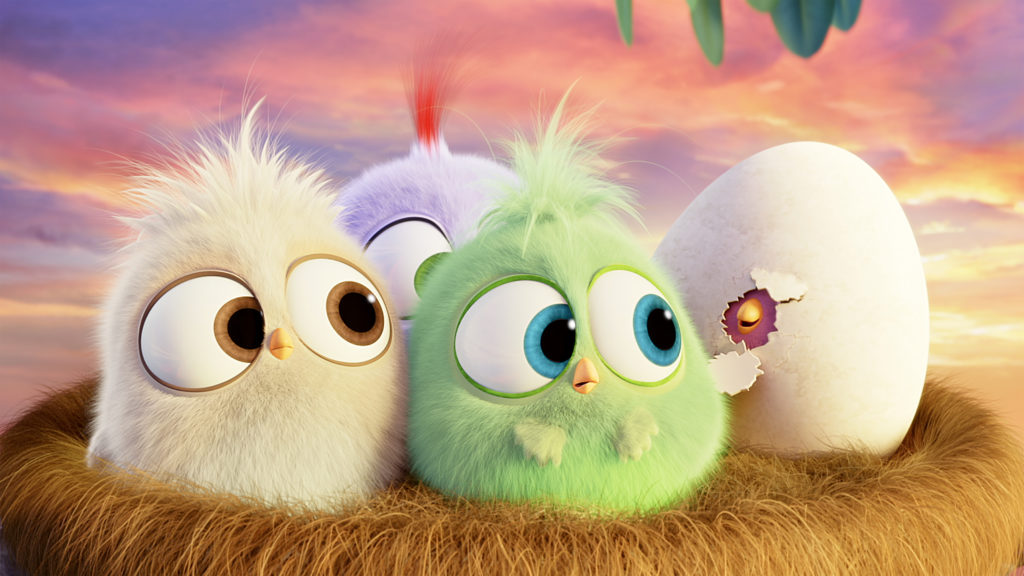
Boasting an “A” CinemaScore with viewers under age 25, the Blu-ray features more of the breakout fan-favorite, Hatchlings. Much like the Minions of Cohen’s Despicable Me, these baby birds have taken on a life of their own.

The Blu-ray has a new short film starring Hatchlings characters—The Early Hatchling Gets the Worm—about a baby bird who befriends a worm. The team created a number of short films that are also included. The birds were voiced by the kids of people on the crew, including Cohen’s 2-year-old daughter.

“The concept was to let the kids talk because they really do say the darnedest things,” Cohen said. “We did a Christmas greeting last November and asked them to sing deck the halls. None of these kids knew the words, and as they started to sing it went into this strange direction—and that was all gold for us. We animated this Christmas video and did another fun video for Easter and Mother’s Day that made it on the disc.”

There’s no word on a video game featuring these characters yet, but there will be new merchandise.

“We have discovered that since the release of the movie, Rovio has been approached by many different partners about Hatchling merchandise after the audiences saw the movie,” Cohen said. “A line of Hatchlings stuffed animals and toys and fun things is coming soon.”

The Hatchlings in Columbia Pictures and Rovio Animation's ANGRY BIRDS.

While not coming soon (the first film was in development for over four years), there is an Angry Birds 2 coming to theaters.

“We’ve started to develop the sequel,” Cohen said. “As the movie was screening in the final months, we saw it play with audiences of kids and adults in theaters before we were done with it, and people found the movie emotional. We started to think what would the next step of these characters be, and the mythology. What I learned from working on Ice Age and Despicable Me is that when you have characters that have been fleshed out with comedic personalities, you can’t stop yourself from thinking: ‘What would happen if these characters were in this situation or did that?’ That happened with Angry Birds.”

Cohen considers himself a casual game player, although he became addicted to Angry Birds long before the movie project.

“It was the game that I got hooked on and played for hours at a time,” Cohen said. “I couldn’t stop myself from thinking about what would it be like if we brought these characters to life. Now I look back at all those hours as research for this.”

Cohen said Sony and Rovio are tapping into the Angry Birds gaming fan base to market the Blu-ray.

“There’s a staggering amount of people who have played the games, or at least have heard of the game,” Cohen said. “There’s such a loyal and dedicated fan community through ToonsTV, which is the No. 1 branded YouTube channel in the world, even ahead of Lego. And of course, there’s the fan community on Facebook with 26 million followers. It’s a passionate community that creates fan fiction and shares content.”

In addition to the movie, Angry Birds Toons: Season 3 Volume 1 will ship on DVD August 16. The set features 13 mini episodes of avian adventures that the whole family can enjoy. Bonus materials include three behind-the-scenes videos and character reels featuring the characters Chuck, King Pig and Matilda.

2K Partners With Sean ‘Diddy’ Combs For WWE 2K17 Soundtrack

As they mature in graphics, storytelling and artistic expression, video games attract the attention of A-list actors and top industry musicians. The latest such music star to delve into the world of video games is Sean “Diddy” Combs, partnering with 2K for the WWE 2K17 soundtrack.

“I am a huge WWE fan,” Combs said in an official press release. “I love the intensity and the competition and I wanted fans to feel that energy in the soundtrack for WWE 2K17. While prepping for the upcoming Bad Boy 20-Year Family Reunion Tour, I’ve been thinking a lot about the past and the artists that inspired me. I mixed some of my favorites with some of the best new acts in the game today to create something really special.”

The game’s soundtrack will feature 13 songs from a variety of musical genres, including hip-hop, indie and alternative rock, heavy metal and electronic dance. One such track is Bad Boy For Life by Combs himself as a nice tie-in to the upcoming tour. The album will be published by his music cable network, Revolt Media & TV, and the tracks include:

  • Action Bronson & Joey Bada$$ (feat. Rico Love): “What About The Rest Of Us”
  • Anderson .Paak: “Come Down”
  • Andy Black: “We Don’t Have To Dance”
  • Axwell Λ Ingrosso: “This Time”
  • Black Sabbath: “Paranoid”
  • Bring Me The Horizon: “Run”
  • FIDLAR: “Drone”
  • French Montana (feat. Kojak Black): “Lockjaw”
  • iSHi (feat. French Montana, Wale, & Raekwon): “We Run”
  • P. Diddy, Black Rob & Mark Curry: “Bad Boy For Life”
  • Travis Barker & Yelawolf: “Out of Control”
  • Twenty One Pilots: “Ride”
  • Yellow Claw (feat. Lil Eddie): “We Made It”

WWEWWE 2K17 will be the fourth in a series of licensed video games as part of a multi-year exclusive partnership with publisher, 2K. The company is well-known to video game sports fans, developing similar titles for MLB and the NBA—the latter of which serving as 2K Sport’s debut into eSports.

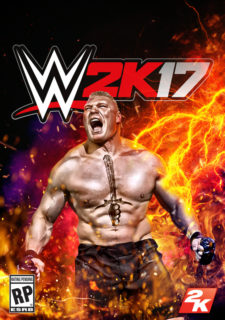
Sports games such as WWE naturally lend themselves to cross-promotion with the industries they depict—encouraging fans to play the game and selecting popular sports stars to grace the games’ cover. Each year, the cover star is presented to gaming and wrestling audiences with fanfare, giving the athletes opportunities to cross-promote with their followers. This year it’s Brock Lesnar.

Having Lesnar on the cover is sure to be a popular choice with wrestling fans, but it’s not the only promotion that 2K Sports is putting behind the game. In May, it revealed that Bill Goldberg, a popular face from the old World Championship Wrestling days, would be making his debut in the game as a pre-order bonus. Both 2K Sports and the WWE are expected to promote WWE 2K17 leading up to its release, including activities that tie in with SummerSlam on August 21.

As for the game’s soundtrack, 2K’s partnership with the Grammy-award-winning hip-hop artist, producer and entrepreneur offers some valuable cross-promotional opportunities for both sides.  While 2K attracts music fans to its game franchise (or at a minimum, to the soundtrack), “Diddy” is free to promote his Bad Boy 20-Year Family Reunion Tour to WWE fans. The music tour begins August 25 in Columbus, OH, while WWE 2K17 hits shelves on October 11.

‘Nerve’ VR App Dares You To Play

In the movie Nerve, which stars Emma Roberts and Dave Franco, participants are put into one of two categories: Watchers or Players. Players participate in a series of ever more daring and stunts while the growing audience of Watchers follow along. While Nerve is great as a summer movie thriller, it also happens to be perfect for a VR app experience.

Lionsgate Entertainment partnered with SilVR Thread to develop Nerve – Do You Dare, a promotional virtual reality app that can be experienced on mobile platforms such as Google Cardboard and the Samsung Gear VR. Similar to the film, users can choose to be either Watchers or Players. Watchers are offered a collection of videos where characters perform dares such as eating crickets. However, the app’s biggest draw is in its virtual reality scenarios available to Players. These experiences, recreated using scenes from the movie, range from walking across an aluminum ladder bridge across two buildings or riding a skateboard while hanging on to a rope tied to a police car. In short, the app provides all the thrills of being in Nerve without the risks to life or limb.

Nerve Front Screen

David Edwards, vice president of digital marketing at Lionsgate Entertainment, and Tai Crosby, founder and CEO of SilVR Thread, talk to [a]listdaily about putting together the promotion and how VR gets audiences to theaters.

How did the partnership to create virtual reality experience featuring Nerve come together, and how did Lionsgate work with SilVR to create the app?

Crosby: When we first met with Lionsgate, it was immediately evident that this was the perfect technology for this project. SilVR Thread could deliver for Lionsgate a true first-person POV (point-of-view) immersion to align with a film that has you on the edge of your seat. Lionsgate drove app development while SilVR Thread focused on creating VR experiences that made users feel they were part of the film.

What made Nerve the ideal movie for this kind of project?

Edwards: Nerve is about how social media and mobile tech impacts our world, as “Players” and “Watchers” engage in a high-stakes online game of truth or dare. The immersive environment you get with VR provides an incredible opportunity for us to let the audience actually experience for themselves the thrill of the high-risk dares from the movie. Plus, the filmmakers were enthusiastic about using VR for promotion and offered extensive production support.

Crosby: Nerve features spine-chilling action dares, and the best way to highlight them is to allow fans to experience the dares not only as they were presented in the scene, but more specifically through the shoes of the action star. SilVR Thread POV VR lets users live out the scene within the body of the star, creating a deeper connection so it that feels very real, and it doesn’t get much more adrenaline pumping than Nerve.  We love the concept of the film and had a blast working with the Lionsgate team.

What are some of the dares audiences can look forward to?

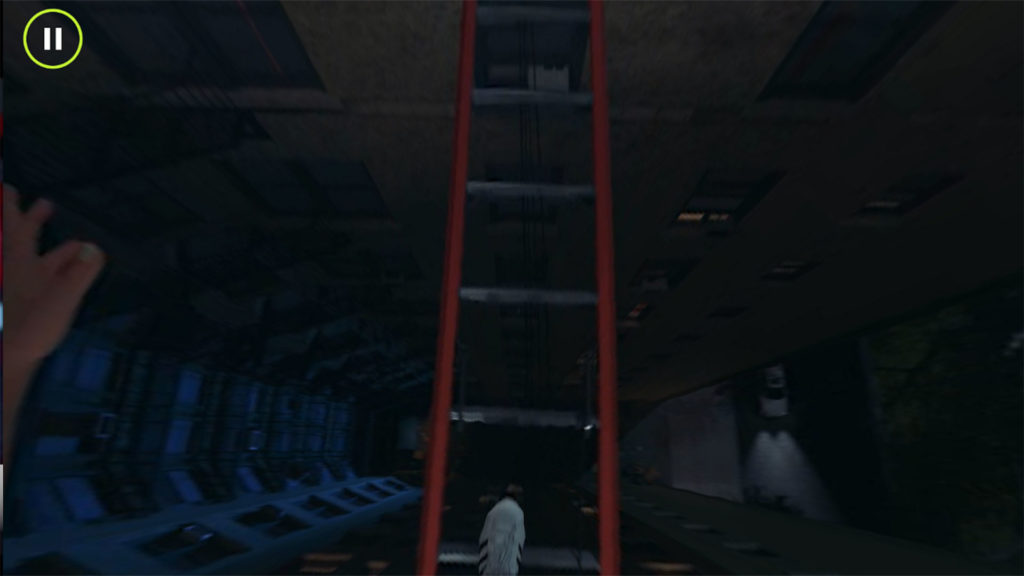
Crosby: Our most popular dare has been skateboarding while roped to the back of a moving cop car. The other two thrilling dares are ones where the characters cross a ladder suspended between two windows sills of high-rise NYC apartment buildings—in one of the dares, the character succeeds, and in the other, the character fails. It’s pretty intense and fun to experience with a full 360 perspective.

Nerve App Ladder

How do you feel VR helps get audiences to theaters?

Edwards: Ultimately, the Nerve VR experience drives awareness and interest in the film.

Crosby: As VR gradually enters the mainstream, it is proving itself to be a tremendous compliment to traditional film. No other medium allows fans to experience fictional worlds in the same way.  Fans are getting immersed as if they were there—and in this particular case, getting to experience moments from the film through the shoes of their favorite star.

Will Lionsgate develop VR experiences to promote all its movies in the future?

Edwards: This is our fourth promotional VR experience for a film release. We find them to be very effective when there is a strong thematic alliance that lends itself organically to VR, which is the case with Nerve.

With both mobile VR and premium headsets out, what do you see as the future of VR technology?

Crosby: VR headsets are bound to become significantly sleeker, less bulky, and more naturally fit for our faces. But just as hardware advancements will play a significant role in encouraging participation in the medium, fantastic content is critical in facilitating that push.

Do you think that, with Google Daydream coming out this year, an experience like this could become even more interactive?

Crosby: It certainly offers to bring some new features and opportunities to this space once it’s available. But right now, we’re focused on working with our content partners to bring our work to Gear VR, Oculus Rift and HTC Vive.

What is the most challenging part of putting together a VR promotion such as this one?

Edwards: While VR is still in nascent stages, it’s becoming more accessible every day. We worked closely with our VR developer and our filmmakers to produce high-quality, stereoscopic 360 content. Headsets are also becoming more prevalent, so to ensure that we could provide the Nerve VR experience to as many people as possible, we turned to Google Cardboard and we utilized 360-degree video playback on Facebook and YouTube.

Crosby: When you are working alongside a blockbuster film production like this, there are so many pieces that are coming together at the same time, so that kept us on our toes. And we wanted the VR experience to be really seamless with just the right imagery from the film.

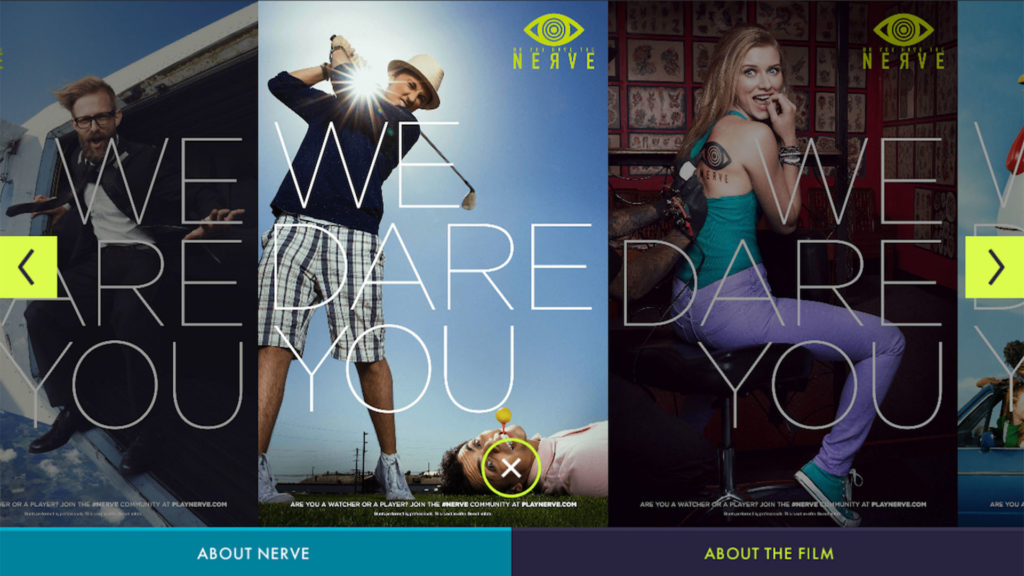
Nerve We Dare You

How Netflix’s ‘Stranger Things’ Turned Marketing On Its Head

It’s been nearly a month since Stranger Things debuted on Netflix—more than ample time for the curious to binge watch and demand a Season Two. In just the first week after its release in the US, Stranger Things leaped over Orange is the New Black as the most popular digital original series with over three times the audience demand of the former top digital original. In the arts and entertainment category, Stranger Things is the most searched not only in the US, but globally as well.

Unlike many shows or blockbuster films, the hype leading up to Stranger Things was small, but effective. The lack of hype, but quality of content, created an “upside down” marketing phenomenon in which consumers sold the show to other consumers. Even horror author Stephen King is singing the show’s praises, and not just because he’s an obvious influence.

stranger things

Set in the 1980’s, the supernatural thriller pays homage to popular media from the same era, with government conspiracies, missing children and the creepy unexplained. It has been compared to the works of Stephen King, John Carpenter and Steven Spielberg, shows like Twin Peaks and The X-Files and even the video game Silent Hill.

Although consumer-to-consumer marketing had a huge role in the success of the new franchise, a large part of the show’s success can be attributed to creative marketing efforts by Netflix, as well. One such activation included a successful partnership with the livestreaming site Twitch on July 14. The activation consisted of a four-hour live broadcast ending with eight minutes of the first Stranger Things episode. “Twitch Plays Haunted Basement,” which took place in the now-infamous basement from the show, offered an interactive experience in which fans in the Twitch chat voted on what happened next.

“As our team of Influencers played various games . . . in our 80’s-themed basement set, Twitch chat voted on creepy things to befall our unwitting victims—flying books, flickering lights, doors that would creak open to reveal sinister, singing, dead-eyed dolls only to slam shut at random, ringing phones that would jump off their cradles when you tried to touch them, and more,” Twitch representatives said in a statement.

Speaking of creepy, fans can explore the first floor of the infamous house in either virtual reality or 360-degree video. (Although viewers should be warned of spoilers, if you haven’t watched the show yet.)

stranger-things-review-ew

Stranger Things creators Matt and Ross Duffer have even considered an 8-bit video game version of the show, inspired by a plethora of fan art surfacing across the internet. During an interview with IGN, the brothers stated that they had been talking to Netflix about merchandising as well. While the show’s sudden popularity was a welcome surprise, the opportunity for additional marketing isn’t lost on the writers.

“We turned in the last visual effects shot, walked away and then reviews and then a week later, it was all on [Netflix] and everybody was watching it,” Ross Duffer said in the interview. “I remember waking up Friday morning to all these tweets of people that had finished the show already. It’s been a whirlwind for sure and I think it’s bizarre, but in the best way.”

Although Netflix has not officially renewed Stranger Things for a second season, a panel dedicated to the show was presented during TCA (Television Critics Association) press tour day during the last week of July, indicating that we haven’t seen the last of that little town in Indiana.


Hall Of Famer Dennis ‘Thresh’ Fong Believes ESports In Olympics Are Inevitable

Dennis “Thresh” Fong was inducted into the eSports Hall of Fame during a ceremony at QuakeCon 2016 in Dallas on Saturday, August 6. Thresh is considered the first pro gamer, having risen to the top of the competition in Doom and Quake in the ‘90s long before Twitch and livestreaming were invented. He earned over $100,000 a year playing games through endorsements during the days of LAN tournaments in hotel ball rooms.

“It’s an honor to be selected,” Fong said. “For the guys that were early in eSports like Heaton and myself and others to come, the question is: how will we be remembered? League of Legends has a champion named Thresh named after me, but 99 percent of people I run into online playing Overwatch ask if I play League; they think I named myself after the champion and not the other way around. It’s cool to have others have pay tribute to the fact I made a tiny mark in the gaming world. And my contributions will be remembered.”

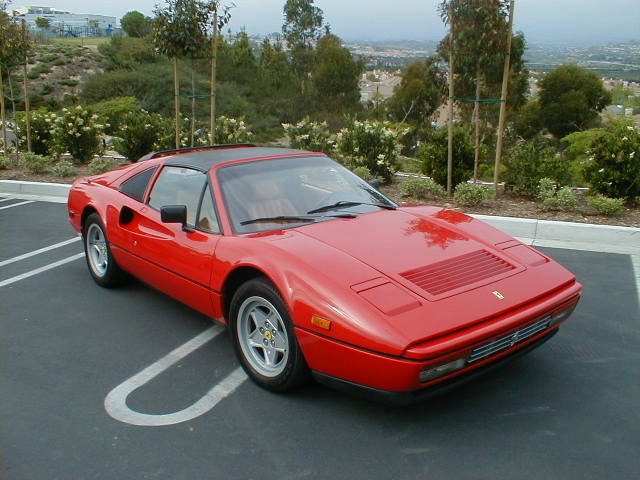
Thresh is known for his deliberate, control-based play style, where he would typically starve opponents of resources rather than rely on pure aim. His style of play led him to numerous victories, none more famous than the Red Annihilation Quake tournament in Dallas, where his first place prize was John Carmack’s custom modified Ferrari 328 GTS.

Fong's Ferrari

“The new generation who plays Dota, Dota 2, League, Overwatch or CS:GO aren’t familiar with history,” Fong said. “Even CS:GO players may not be familiar with Headon if he didn’t own and manage a team. I won the Ferrari in the late ‘90s and the vast majority of people today don’t know it.”

One reason is because there’s not much video that exists of Fong in his prime. Fong said one regret he has from competing in the early days was there aren’t a lot of recordings of the thousands of matches and tournaments he competed in.

“There are probably 5 or 10 demo recordings of me floating out there,” Fong said. “I have regrets that I didn’t record and share because I’d have an archive of how I played. That’s one of the biggest reasons I started Plays.tv—a service that makes it easy for people to record. People ask me what gaming was like, what the skills were like back then, and there’s not a whole lot to look back to. If Plays.tv existed back then, I would definitely have used it.”

The eSports Hall of Fame was founded by ESL and is dedicated to preserving the rich history of competitive video games. Inductees are selected through a nomination and voting process overseen by experts within each game community.

“History, in general, is interesting, whether learning from past mistakes or where things came from,” Fong said. “What is accepted as standard today like the WASD key configuration or rocket jumping or bunny hopping or resource control in an FPS and not being reliant solely on aim, has history. When you understand the back story of champion names in League it adds context to the world and makes you appreciate more. History does the same thing. ESports has blown up in the past few years, but it’s been around forever.”

After retiring from competitive Quake, Thresh founded GX Media, which built the popular web portal, gamers.com, and co-founded Xfire, an online gaming instant message client that was acquired by Viacom in 2006 for $102 million. He is currently the CEO of the gameplay sharing service Plays.tv and Raptr, Inc., a gaming-focused software development company.

“ESports is what got me interested in technology, computers and the internet, which all were pretty new in those days,” Fong said. “Gaming is the top reason why I’m still involved in internet-related tech and businesses today. Most of the products and technology I started was for me to solve my own frustrations. As most people know, I was making six figures when I was 17 years old as a pro gamer. I used a lot of that money to start my first company. That gave me freedom to pursue my own passion. And it happened to be a space that I loved.”

Fong also believes the mental and emotional part of gaming, which is required when you practice as much as pro gamers do, also helped him transition to business.

“You need to compartmentalize emotions so you can perform,” Fong said. “Part of my skill was being able to put myself in the other person’s shoes and see the game through their eyes in real-time, which is why they called me ‘Thresh ESP.’ I could predict what other people were going to do. That skill translates well to most people’s lives, and certainly mine. In a social setting to have emotional intelligence, and in business for partnership or marketing to users, it naturally applies to business.”

It’s fitting that Fong was inducted into the eSports Hall of Fame the same weekend that id Software revealed additional details about Quake Champions, the modern day incarnation of the game he played so well.

Quake Champions looks fantastic, but I haven’t played it yet,” Fong said. “Folks who are into arena style duel games could care less about graphics. The game is going to be determined by how crisp it is and how it feels. The original Quake games has that crisp feeling, which is important. I’m excited to see another duel eSport emerge. We’ll see if the fans flock to it.”

Fong believes Quake Champions could be just what eSports needs.

“Some people tell me they’re getting a little fatigued with MOBA-style games,” Fong said. “And a lot of people pinged me after Quake Champions was announced. Most of the eSports games today are team-based, which is fine and great, but for first-person shooters, typically it’s a bit harder to follow as a spectator if it’s a team-based game. It’s harder to cast and to give context on what everyone is doing. Pure 1-on-1-style eSports in a game like Quake is easy to understand. It could be a really good change of pace, and a good thing for eSports.”

With the focus of the world on Rio 2016 today, and the Olympic Committee adding new sports like skateboarding to the Tokyo 2020 games, Fong believes that eSports becoming an Olympic sport is inevitable.

“It’s going to happen,” Fong said. “The question is just when, and how long is it going to take? Is it a legitimate sport? Curling is an Olympic sport. Why in the world should a virtual sport that fills stadiums, and has tens of millions of viewers watching the finals, not be in the Olympics? The Olympics is also about money and prestige, not just about sport. When you look at the young global fan base eSports has today, they’re going to find a way to make it happen at some point.”
The ‘Deus Ex’ Franchise Opens A Window To The Future

Many regard Deus Ex as a window into the future, but that window became a door this week with the Human by Design conference, hosted by Square Enix and CNN’s Courageous Studio at the Paley Center for Media in New York City. Inspired by the Deus Ex video game franchise, the convention featured panelists who spoke about futuristic themes that include cybernetics and the ethics of human augmentation. Not coincidentally, these are themes that are addressed in the Deus Ex series, with the highly anticipated Mankind Divided (the sequel to Human Revolution) releasing later this month.

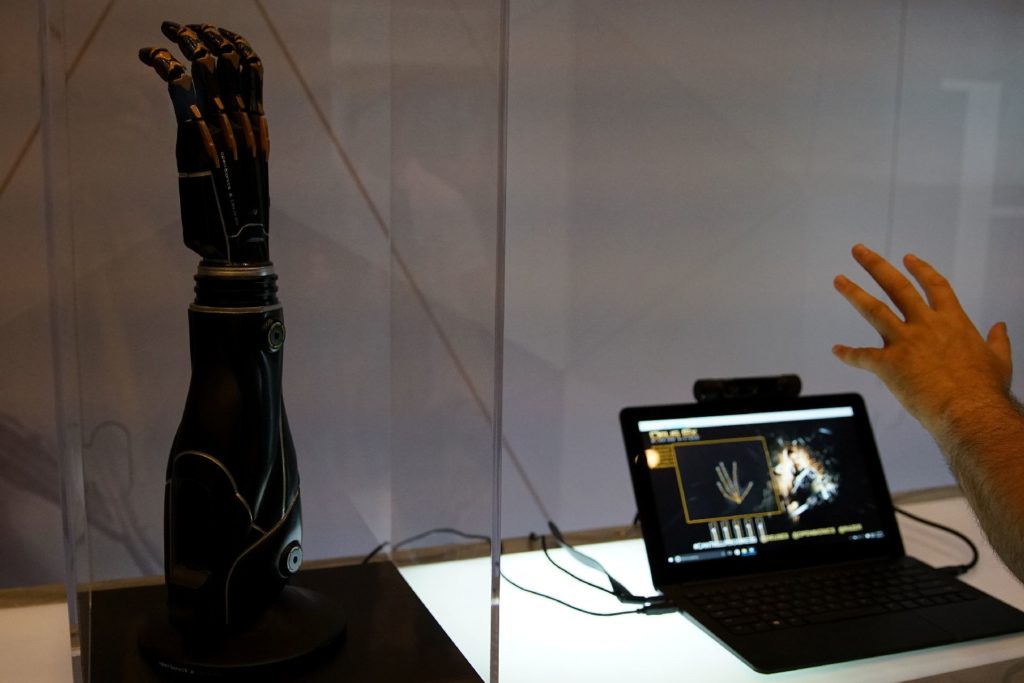
The Deus Ex designers pride themselves on creating a science fiction world that is fantastic yet seemingly plausible. There’s no greater evidence of this than with some of the promotional trailers for Human Revolution, which showcased cybernetic limbs from a fictional company. The ads were so convincing that people began calling Eidos Montreal to ask about purchasing the prosthetics. That’s what led to a partnership between Square Enix and Open Bionics to develop a prosthetic arm inspired by the game’s main character, Adam Jensen. A prototype of the arm, controlled using the Razer Stargazer camera, was on display at this year’s Electronic Entertainment Expo (E3), the San Diego Comic Con and at Human by Design to promote the game. Additionally, the co-founders of Open Bionics (Joel Gibbard and  Samantha Payne) presented at the convention with Cathrine Disney (pictured above), who wore a working model of the prosthetic.

Human by Design was livestreamed on Twitch, and the convention inspired an Amazon Prime documentary that discusses the themes of cybernetics and human augmentation. Combined with other cross branding, such as the Deus Ex clothing line from Musterbrand, books and other media, and the franchise could go from providing a glimpse of the future to helping to shape it.

Jon Grant, senior manager of product marketing at Square Enix, and Jonathan Jacques-Belletête, executive art director on Deus Ex franchise and presenter at Human by Design, spoke to [a]listdaily from the convention about bridging the gap between video games and reality. Jacques-Belletête worked with Open Bionics to design the real life arm, and both he and Grant enthusiastically look forward to our Deus Ex-inspired transhuman future.

What led to the partnership to host Human by Design?

Grant: Everyone who is working on Deus Ex at Eidos Montreal and Square Enix—we’ve always been trying to bring the themes of the game to live in the most unique ways possible. Keeping that in mind, we had an opportunity to work with CNN [Courageous Studio] to bring together this conference and talk about things in a way we knew our fans would love. For people who weren’t aware of the game, we knew that they would also find it interesting.

How important is it for the Deus Ex franchise to be translated from video games to the real-world?

Grant: I don’t know how important it is for video games as a whole, but for Deus Ex, it certainly is. We have a game that many have credited for predicting the future. Although that may not be entirely the case, we certainly have a game that touches on real life technology and asks real life ethical questions. For us, it was critical, when putting together a marketing plan, to make sure we tapped into the conversation of what’s happening now in the area of technology, augmentation and bionics, and we’re happy we did.

Jacques-Belletête: Funnily enough, I don’t think it’s important for the game. We never thought this would happen. It’s amazing that it has happened, and as I said on stage, this is surreal. For games, it rationally isn’t important. Creating video games that have real meaning and deal with real issues [that] start bleeding off into reality—I think this could be very important and it could move certain things forward, like what we’re doing with Open Bionics.

Many regard Deus Ex as a window to the future. How will Mankind Divided continue to push that perception forward?

Grant: Human Revolution is about the golden era of augmentation, and Mankind Divided picks up the pieces from where Human Revolution ends. If you look at what we’re doing here with this conference, we’re here to say, “Hey, this technology exists. It’s time that we come together and bring it to the mainstream conversation because there will come a point when we do need to discuss the ethics of bionics and human augmentation.” That’s what Deus Ex: Mankind Divided is about.

How does it feel, with the partnership with Open Bionics, to have Deus Ex be part of the first video game-inspired prosthetic device?

Grant: It feels incredibly rewarding to see our platform, our game, in the real-world and to see how much the people who have had the opportunity to wear these arms benefit from it and how it makes them feel.

Do you think future Deus Ex games will be designed with elements that translate more easily into real life?

Grant: I don’t know that we’d go out of our way, when designing the game, to do that. But I do believe that as long as Deus Ex exists, we will always bring the key themes to life in any way we can. We strongly feel that people who play our game and people that play video games as a whole are opening their imaginations, and they’re seeing things that maybe can’t be done in the real-world. But as a result, they’re becoming the future innovators and thinkers. They’re getting their ideas from popular culture, superheroes and video games, and they’re becoming many of the people we’re seeing here today at the Human by Design conference.

How would you describe the aesthetics of Deus Ex?

Jacques-Belletête: I like to say that it’s like a graphic novel, in terms of its overall signature. It doesn’t look like photorealism, and we never aim for that. It was to create a highly credible world that looks like there’s something artificial about it.

I think that in sci-fi, especially in Hollywood, you watch movies like Star Trek and look at how they’re showing a sci-fi city—and it looks like sci-fi from the ’80s or early ’90s. Current day contemporary architecture are already way beyond that. I think sometimes we’re not informed by the proper stuff. You don’t need to imagine what the future of architecture is going to be. The craziest projects of today already look like unbelievable science fiction stuff.

The cybernetics are inspired by a lot of real life stuff. We get informed by how things are manufactured in real life and how industrial design functions.

Human X Design Conference, August 3, 2016.
Photo credit: Courageous

Deus Ex has a number of different real-world brands, including clothing, books and now a prosthetic arm. Do you expect this kind of cross branding to grow?

Grant: Because of our relationship with Open Bionics, we’ve done the designs for these arms, but they’re open source. Anyone with a 3D printer can download those files and print an arm. So, yes. Not only do I expect it to continue to grow, it’s already out there.

How does it feel to see the Deus Ex world come to life with the clothing line and prosthetic arm?

Jacques-Belletête: It’s pretty surreal. The clothing line is a little more run-of-the-mill, and I don’t mean that what Musterbrand (the company that made the clothes) did is run-of-the-mill. What I mean is that we’re used to making developer team t-shirts, sweatshirts, hoodies and stuff like that. Even though what we did with Musterbrand is eons ahead of doing dev t-shirts, it was not a huge stretch of the imagination that some the garments that we had in the game could be made quite closely in real life.

The real prosthetics that work and function—to be in cooperation with a company that does these things and see them for real for Adam’s arm—it’s crazy to be part of that. To work with them, and understand their process, is already crazy. Add the fact that they’re making them based on our creations—that’s when it starts being very surreal, and something I never thought would happen.

Any thoughts on making Deus Ex into a VR game?

Jacques-Belletête: Sure, I think about it all the time, but that doesn’t mean anything. Any AAA development studio that tells you that they don’t have VR dev kits is blatantly lying to you. Yes, we have them, and we’ve played with them and tried a few things. We already announced that we’re providing—with the benchmark tool for the PC version of Mankind Divided—a little VR museum. You’re going to be able to walk into some of the environments of Mankind Divided. There’s no gameplay; it’s going to be a view mode with walking and looking.

Deus Ex may end up shaping the future of cybernetic augmentation. What are your thoughts on that?

Grant: Just sitting here today and listening to all these experts at Human by Design, and working with Deus Ex as long as I have, I can imagine that future. Especially with prosthetics and the work the Open Bionics is doing. That future is closer than we think, and it might actually be here. If Deus Ex has a role in inspiring it, then I guess what they say about the franchise is true. We do have a way of predicting the future.

What do you think it is about the Deus Ex franchise that wins over so many fans around the world?

Jacques-Belletête: I think that good science fiction is a tool to speak about human subjects and themes that are happening now or in the past. They [fans] relate to this. You’re in an artificial world, but you’re experiencing something that you kind of know is plausible or is true, and there’s something attractive about that. I also think that the visuals help, and so does the character. I think the team has developed, in Adam Jensen, an iconic character, which is a hard thing to do. There’s no magic recipe for that.

It’s a game with a great story, and it’s one where you can experiment, try different things, and get different outcomes. You can play a scene, and I can play the same scene, and we’ll have two different experiences. That when you start realizing, when you play, that it’s pretty powerful.

Toyota Rocks Lollapalooza With Snapchat Activation

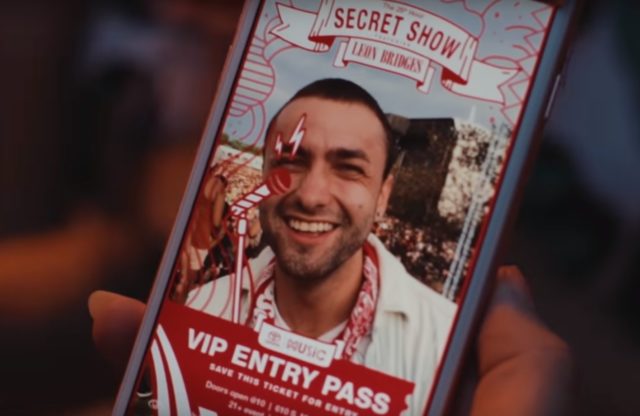
The 25th annual Lallapalooza music festival rocked Chicago last weekend, and Toyota treated music fans to a special treat. An exclusive, pop-up concert was accessible only to Lollapalooza festival-goers who used Toyota’s limited-time “golden ticket” Snapchat geo-filter. Toyota’s “25th Hour” surprise concert featured performances by Grammy-nominated recording artist, Leon Bridges and Outkast rapper, Big Boi.

“What better way to celebrate Lollapalooza’s 25th year than by adding an extra hour of music with an amazing talent like Leon Bridges,” said Florence Drakton, social media marketing manager for Toyota. “We used Snapchat filters in a unique way to invite guests to our pop-up concert—ones who share Toyota’s same passion for music.”

Toyota’s interactive on-site activation marks the first instance of a Snapchat geo-filter being used to qualify entrance for an event. The private concert, hosted at Venue SIX10 and featuring a fleet of Toyotas for safe rides home was all part of The Toyota Music experience—an interactive engagement featuring an array of vehicles, activities and a music stage for live performances.

Toyota Snapchat

Toyota also featured an interactive installation as part of an ongoing partnership with VH1 Save the Music. The art piece invites festival-goers and artists to write what music means to them. Those who participated during the festival were able to share via social media using #ToyotaGiving to show their support. At the end of the festival run, grants were presented to three schools in the Chicago area.

Lollapalooza is the fifth installment of the 2016 Toyota Music experience. The interactive on-site activation first launched at the Stagecoach festival in April and continued at the Country 500, Sasquatch and Firefly Music festivals, leading up to Lollapalooza this past weekend. It will culminate at the Voodoo Music + Arts Experience in New Orleans in October.

Nintendo And Sega: Relevance Through Nostalgia

If you can sing the Nintendo cereal jingle or can’t say “Sega” without yelling it, chances are you grew up in the ’80s and ’90s. Few video game publishers have stood the test of time like these two, and there’s good reason for it. Many of those with fond memories of crushing blocks with Mario or collecting rings with Sonic now have children of their own, and want to share those experiences with the next generation. While both companies have seen their ups and downs, it doesn’t appear that Nintendo or Sega will be disappearing any time soon, thanks in part to feelings of consumer nostalgia.

Nintendo has continued to innovate since the golden days of Super Mario Brothers, introducing new games, new consoles and expanding into the lucrative mobile gaming market. However, the main driver for its most successful franchises is nostalgia for brands like Super Mario Brothers, The Legend of Zelda and Pokémon. Case in point—the infamous moment when Nintendo announced The Legend of Zelda: Twilight Princess during its E3 2004 press conference: a standing ovation, thunderous applause and rumors of grown men bursting into tears. During E3 2016, Nintendo devoted its entire 30,000 square foot booth to The Legend of Zelda: Breath of the Wild—a fully-immersive experience that allowed fans to explore the world of Hyrule. By stirring nostalgia in the press, Nintendo knew that positive messages would be relayed to fans abroad.

Nintendo nostalgia

Pokémon GO combined powerful nostalgia, brand recognition and accessibility to create a worldwide phenomenon—fulfilling the childhood wishes of those who wanted to go out and catch ’em all. The craze has resulted in a surge of demand for Pokémon toys, so Nintendo plans to explore merchandising as a focused revenue stream.

“We are now expanding how we leverage Nintendo IP in various ways beyond our traditional use of them predominantly within the dedicated video game platform business,” Tatsumi Kimishima, the company’s president, wrote in a message to investors.

Nintendo also unveiled the mini NES, a contained unit pre-packaged with 30 classic titles. The unit looks exactly like the Nintendo from childhood, which in itself could result in a nostalgia-driven buy.

“We wanted to give fans of all ages the opportunity to revisit Nintendo’s original system and rediscover why they fell in love with Nintendo in the first place,” said Nintendo of America president and COO, Reggie Fils-Aimé. “The Nintendo Entertainment System: NES Classic Edition is ideal for anyone who remembers playing the NES, or who wants to pass on those nostalgic memories to the next generation of gamers.”

sonic-25th

Sega, although no longer in the console business, is still very active in the world of video games. Celebrating 25 years of Sonic the Hedgehog, Sega hosted a party at the San Diego Comic-Con, during which two new Sonic games were announced. Ivo Gerscovich, chief brand officer for Sonic the Hedgehog and senior vice president for Sega of America told [a]listdaily that they brought some extra nostalgia to the event, recreating a classic TV commercial moment. “[We surprised] the over 1,500 people at the [SDCC] party and spontaneously recorded the “SEEEGGAAAAA!!!!” audio cue using their voices,” Gerscovich said.

In April, Sega launched Genesis & Mega Drive Classics Hub, a community where people can find and share user-generated content, on Steam. Sega fans can upload ROM hacks of classic Sega games that come with custom, modded features. In its first month, Sega sold over 350,000 copies of classic Sega Mega Drive and Sega Genesis games on Steam worldwide.

“350,000 sales is a phenomenal achievement for content which is over 20 years old,” said James Schall, Sega Europe’s director of digital distribution. “It shows that there’s still a huge following out for the Sega Mega Drive and Genesis, reinvigorated by the fantastic community of modders out there uploading great content.”

Although not released by Sega, three classic Disney Sega Genesis titles—AlladinThe Lion King and The Jungle Book are now available on GOG.com, a 16-bit blast from the past that capitalizes on those Sega Genesis platformer marathons.

Consumers trust what they know, and research shows that emotional connections result in stronger brand loyalty. Analytics firm, Gallup, reports that economic decision making is 70 percent emotional and 30 percent rational. Consumers with strong emotional connections to retailers will visit their stores 32 percent more often and spend 46 percent more money than those without emotional bonds.

A brand doesn’t have to be from your childhood to get you “right in the feels,” but as these two brands show, it certainly doesn’t hurt.