Via Facebook Live, Ayzenberg’s Lindsey Buchanan sat down with VP of communications at YouNow, Paula Batson, to discuss the platform’s features and the implications of livestreaming for media and especially music.
“YouNow is part of this trend toward participatory media,” said Batson. “This generation demands to be a part of the media.”
What makes YouNow unique is that you don’t have to necessarily be a broadcaster in order to create content. With the Moments feature, a viewer can capture live content and share it on Twitter and Facebook.
“If you are not a broadcaster, you can still be a creator.”
The platform has seen the rise of music influencers like Hailey Knox, who has since secured a record deal. For a new generation of musicians, livestreaming platforms like YouNow provide an immediate connection to their audience to hone their craft and get instant feedback.
“It’s unique to YouNow that Hailey Knox was able to develop her career in this way.”
Paula refers to YouNow’s influencers who have come to prominence on the platform as “homegrowns,” but YouTube influencers also utilize YouNow as a space to connect more directly with their audience.
“Influencers today want to use all the platforms in an integrated way,” said Batson. “The audience today is really voracious. You’re always feeding the beast with content.”
When asked what Batson would recommend to brands who are interested in leveraging livestreaming Batson emphasized the interactive element.
“Think about a campaign where the viewers can participate with the influencers.”
Brands are exploring mobile 360-degree video experiences, allowing users to immerse themselves into an environment without the need for virtual reality headgear. YouTube now supports 360-degree video on mobile devices, as does Facebook, which opens opportunities to reach a global market of smart phone users.
While the age of new VR smart phones may be on the horizon, the rest of the world can enjoy VR-like experiences conveniently on the devices they already have, which is important to reach the largest market possible.
The applications for this technology are limited only to the imagination of the brand it represents. EPIX has released their first interactive 360-degree experience for the network’s espionage drama Berlin Station, which is set to launch this fall. The experience, accessible at BerlinStation.com, drops you into a VR-like experience that doesn’t require headgear to use and navigate, and thus, making it accessible for anyone.
“EPIX has a massive promotional plan surrounding [Berlin Station]. It is a major priority for the company,” said Shane Lindley, senior director of digital programming and product at EPIX. “It’s the first time we’ve done anything like this—across multiple touch points, really, like any other new major original series that’s being launched—from on-air promotion, in-theater promotion, magazines, television and definitely online and across all of our digital platforms.”
In April, Hilton Hotels and Resorts launched a 360 experience called “Our Stage, Your Story” that takes users on a virtual vacation to inspire future destinations. The New York Times has been providing 360-degree versions of their virtual reality films, such as 2016 election rallies, a virtual journey to Pluto and joining Cirque du Soleil on stage as they practice for a new Broadway show.
YouTube Gaming is taking advantage of 360-degree video capabilities to build their eSports viewership. “Can you imagine being at the League of Legends World Championship and having a 360 junk cam in the middle of the audience and feel like you’re right there watching?” Ryan Wyatt, director of content and partnerships at YouTube Gaming, told [a]listdaily.
Until the world’s population is walking around with VR like something out of a cyberpunk novel, creating an immersive experience for users without the need to purchase new equipment is a powerful way to reach a wider audience. In this way, 360 mobile video reaches the billions of viewers who can watch conveniently from the comfort of wherever they happen to be.
Telltale Games has a long reputation for making high-quality episodic adventure games based on popular television shows such as The Walking Dead and Game of Thrones, but the company isn’t afraid to go beyond that. In 2013, it began a series called The Wolf Among Us, based on the award-winning Fables comic book. Telltale has even made games based on other games, including Tales from the Borderlands and Minecraft: Story Mode. Each series uses Telltale’s signature decision system, where the player’s choices shape events in subsequent episodes.
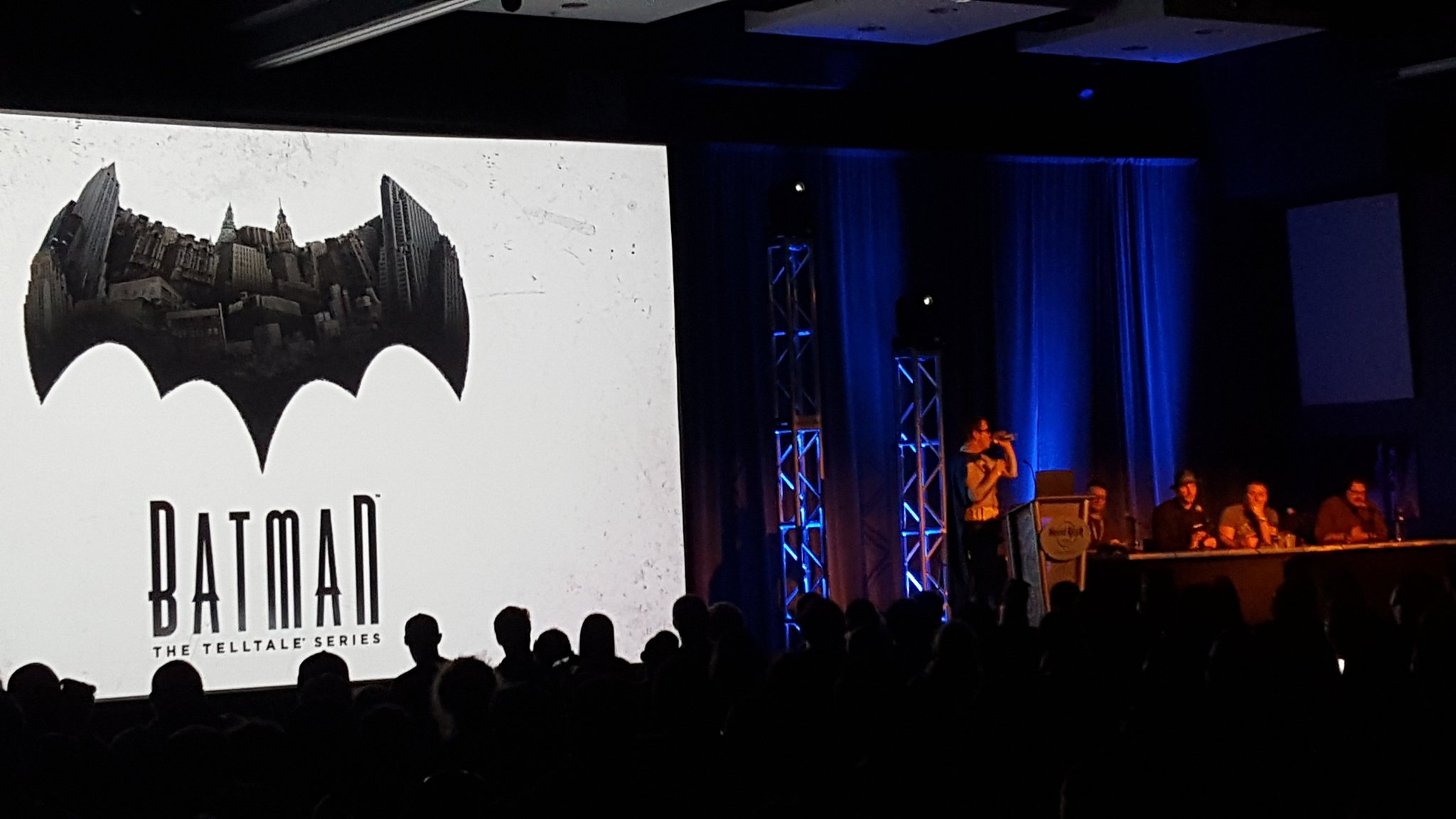
Given its history, it should be little surprise that Telltale was ready to launch a new series featuring one of the most iconic comic book characters in the world: Batman. The first episode Batman: The Telltale Series released earlier this week, and it gives players a chance to play to choose between being a brutal vigilante or a symbol of justice. Players must also balance between being The Dark Knight and his billionaire alter ego, Bruce Wayne.
Additionally, Telltale revealed a new feature called Crowd Play at the San Diego Comic-Con. With it, 2-24 players at home, or potentially thousands of people at events, can help make or take over game decisions by voting from mobile devices and web browsers. Although the feature is not yet ready for livestreaming due to the latency issues services like Twitch have, it has the potential to become an excellent live promotional tool by adding a social sense of multiplayer to these otherwise single-player adventure games. Telltale will include Crowd Play in all of its games going forward, including with the third season of The Walking Dead.
Job J. Stauffer, head of creative communications at Telltale Games, talks to [a]listdaily about releasing an all-new Batman game (especially in the wake of the acclaimed Arkham series) and why fans everywhere are in love with adventure games.
Job J. Stauffer, Telltale Games head of creative communications
What do you think makes Batman such an enduring character, and what are some of the unique challenges with working with such a well-known character?
Batman has been a pop-culture icon for over 75 years. With so many different iterations of the character across so many mediums: comics, film, television, games and more—there’s definitely been a constant reinvention in place. When different writers, directors, artists and storytellers are fortunate enough to take the reins and tell their own Batman stories, we often see familiar Batman themes, but always very different shades of those themes interpreted by each different artists’ take on the icon. From the darker, grittier vision of the character from writers like Frank Miller, to the more all-ages portrayal we’ve seen in projects like Batman: The Animated Series—there are just so many different versions of the character, and fans all seem to have their favorite iterations. Working with DC and Warner Bros., we’ve been thrilled to be able to create our own entirely original take on the universe as well, and that really gives us the creative space to make the project work as a Telltale game.
For us, allowing the player to role play as Bruce, giving them the chance to lean into a behavior that might reflect several different shades of the character they prefer, that’s key to this series. It’s about role-playing. It’s about giving the player the opportunity to think about the kind of Batman they want to be. Are they the type to find a wounded suspect in a warehouse and immediately beat them in the face them for answers? Or are they the Batman who will instead take a less violent approach, intimidating criminals psychologically to get the answers they need. The space for reinvention has really been at the heart of the character’s endurance over the years, and the chance to be the Batman the player wants to be is at the heart of our series.
Do you think movies such as Batman v Superman: Dawn of Justice or Suicide Squad help bring attention to Batman games?
We’re huge fans ourselves, and as an enduring pop-culture icon, we’re always thrilled to see the character and the universe on the big screen. We aren’t based on the current theatrical portrayals—or any others, for that matter—but certainly, when fans are excited in the theatrical space, there’s excitement in the interactive space and vice versa. While the groundswell of enthusiasm coming from all different angles is good for both sides of the business, the real winners here are the fans, and there’s no shortage of incredible content to consume on every screen.
Some would argue that the real stars of any Batman story are the villains, but it seems like Telltale has been slow to reveal them. What is the reasoning behind this?
Before premiering this week, you’d be correct in pointing out that we had yet to really see a lot of whom players may be facing off against in this series. We had seen characters like Harvey Dent, Selina Kyle, Carmine Falcone, and a very brief glimpse of Oswald Cobblepot in our launch trailer. Characters like Harvey and Oswald are perhaps better known by other names, Two-Face and Penguin respectively, but as this is a series, there’s still much to be discovered on if they’ll even move in that direction in the story. As a five-episode series, there’s space for character evolution into those roles, but there’s also an opportunity for players to potentially shape their paths to becoming their more villainous selves down the line—assuming they do at all.
Beyond that, there are still so many secrets we have around the corner that we wouldn’t dare spoil ahead of time. What we can say is that the door is open for more familiar names to show up, though they may not always be familiar faces. This is an interpretation that’s much more grounded in reality than fantasy, and we expect that players will see the more human side of our villains before they may see them taking to any extremes. A big part of the mystery of this story surrounds Bruce’s commitment to taking down Gotham’s most untouchable criminals, but it may also question everything he’s ever known about himself and the criminals at large.
Is there a different approach to promoting a Batman adventure game compared to The Walking Dead, Game of Thrones or Minecraft: Story Mode?
Diversifying our lineup of projects and creating for all different age groups across multiple story genres has definitely given us a wide variety of audiences to engage. That said, the approach is always the same message: We want to give fans the chance to role-play in the worlds that they love the most, with a rich story that’s completely tailored to them by the decisions they make in the shoes of complex and interesting characters. In the case of The Walking Dead, that message is conveyed to a mature audience, and for Minecraft: Story Mode, it’s the same message for all ages and families. These are worlds that we love ourselves, and when we open the door each time with a new series like Batman, we find that we’re also growing a core audience of new Telltale fans at the same time.
Players have seen Batman portrayed as an action game for years. Quite frankly, we’ve had some of the best action games ever made with the Arkham series, but we’re not an action game, we’re an interactive story that’s also full of action. For many Batman fans who’ve yet to experience a Telltale series, it’s a whole new way to play in the world that they love, and the door remains open for them to try hopping into another universe and experiencing an entirely different story genre with familiar mechanics. Games are, and always have been, defined into genres by their mechanics: shooters, racing games, puzzle, fighting etc. With film, television, comics and literature, story defines the genre. At Telltale, we see it the same way. The easiest definition of our games mechanically might be “adventure,” but in truth, our genres range from apocalyptic drama (The Walking Dead), to epic fantasy (Game of Thrones), neon-noir thriller (The Wolf Among Us), to sci-fi action/comedy (Tales from the Borderlands) and beyond.
In this way, as we continue to blur the line between games and interactive narrative. We see more of an approach that’s similar to a TV network, creating a destination for quality storytelling across a limitless variety of genres that’s available on every device. Console, PC/Mac, mobile, tablet and set-top boxes like Apple TV and Amazon Fire TV—the same places people can consume services like Netflix and HBO, we’re also able to reach the Batman audience with very little platform restriction for an experience that’s the same on every device.
Telltale recently revealed the Crowd Play feature, which will be included in Batman and all future Telltale Games. How have you seen social interaction impact Telltale Games’ experiences in the past?
The adventure genre was, for many years, a functionally single-player experience. Loving it so much, we all grew up playing with friends and family for fun, huddled around the same tiny computer screens, pointing and clicking together by deciding what to say and do as a group. By 2012 with The Walking Dead, we were delighted to hear from so many fans who discovered they liked to play our games at home with friends and family, watching the same screen and debating on decisions with the lead player. We even did this ourselves as a studio, playing with the cast and crew at launch parties and enjoying the social experience.
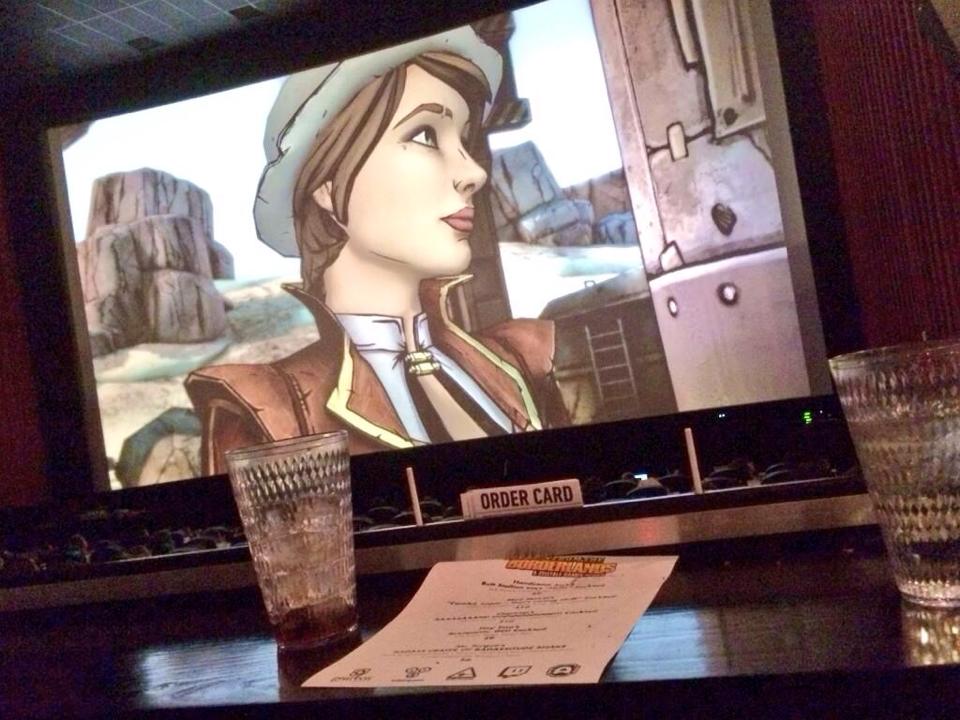
By 2014, we took things to a grand scale, premiering Tales from the Borderlands at the Alamo Drafthouse in Texas, not far from the home office of our partners at Gearbox. With some food and drinks in hand, the audience shouted, applauded, and debated decisions on the big screen while the game’s director was at the controls. The experience was unforgettable, and not the last time we’d do it. We hit the road and continued with more episode premieres at places like PAX in Seattle, with fans crying in the audience as they witnessed the story on screen.
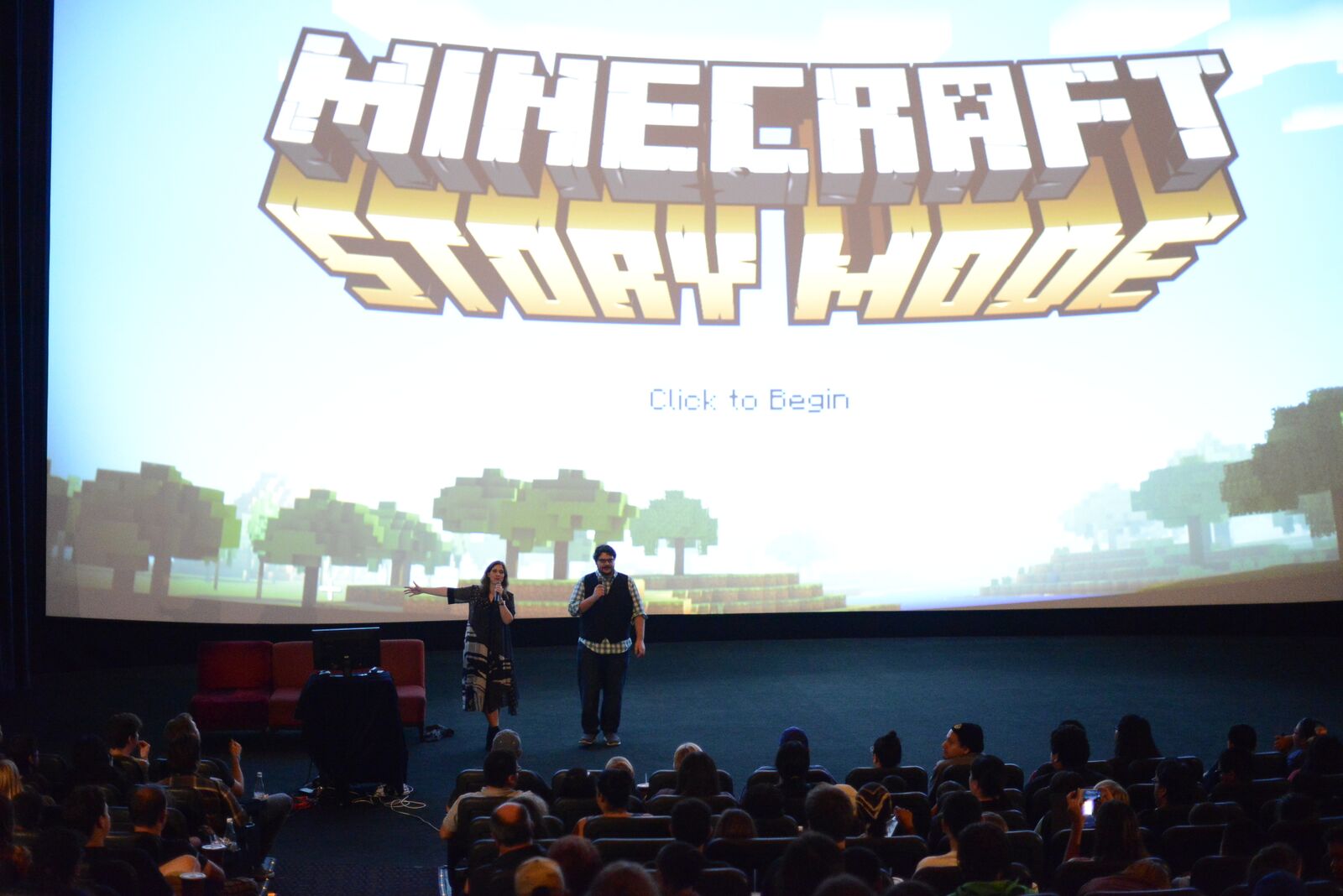
In 2015, we premiered Minecraft: Story Mode at the legendary Cinerama Dome in Hollywood with a full red carpet procession of cast and YouTube stars in the audience for the ‘World’s Largest Let’s Play,’ as families, parents and kids cheered on the action. The experience was even streamed live on YouTube Gaming during its inaugural kick-off phase, and the series remains a huge hit on YouTube even as recently as this past June during E3 as the number one game on the network.
That passion and that energy that happens when people experience Telltale’s games together, that’s something we want to encourage as an option. Our stories can be deeply personal, but enabling players with the ability to share such a personal experience with friends and family is something we knew would work.
So beyond just sitting together and passionately shouting at a screen, we’ve just kicked off the new Crowd Play feature with Batman. We unveiled it after another session last month at San Diego Comic-Con where we played with host Greg Miller in front of hundreds of fans.
The feature allows for local groups of 2-to-24 or more to play at home by having their friends vote on story decisions and give feedback from their mobile devices using any web browser connected online as they follow the lead player on the main screen. We’re already seeing fans playing Batman together with friends and family, and we’re gearing up to take our games on tour for special events and engagements worldwide where we plan to service a live audience of 1,000 players or more. Formally taking Telltale’s stories into the multiplayer space is definitely exciting, but this is just the tip of the iceberg. Right now, this is a local and social experience, and we love that. The live experience of playing with a huge audience in the same room is unforgettable. Beyond that, we are also working with networking partners to find solutions for making this viable to play across streaming services. Right now, the latency on streaming services means we’d have to slow down the drama and tension for remote viewing audiences to catch up on decisions, and we certainly don’t want to break the Telltale experience that way. But in the future, we expect to find solutions with our partners that would open the door for viewing audiences to play along live with their favorite streamers.
Has it been a challenge staying with the episodic format? Why do you think it continues to work for Telltale?
We think it’s a challenge each and every day we come into the studio and work our hardest to make it happen. Being up for that challenge—that’s just who we are. It continues to work for Telltale because it’s been in our DNA since the beginning in 2004, and we’ve don’t see ourselves stopping anytime soon. Audience participation in the development process is key here, and as we push forward episode-to-episode in live development, having an ear to the ground on what fans are thinking keeps us on our toes, and keeps our stories unpredictable.
What do you think of the growth of comic book characters across TV and movies?
We think there’s never been a better time to be a fan. This year in particular, working with DC/WB on Batman as well as with our partners at Skybound on our third season of The Walking Dead, there can be no denying that comics are at the backbone of popular arts and entertainment. We all grew up playing games, reading comics, and geeking out watching them come to life on screens big and small. For Telltale, being at the crossroads of all of those mediums, telling interactive stories based on comics played on game systems, tablets, TVs and even on the big screen at special events with huge audiences controlling the story—this is definitely our golden era, and we couldn’t be happier to be a part of it.
With tabletop games experiencing a major surge in popularity, the world is in what you might call a “cardboard revolution.” Made further popular by brands like The Big Bang Theory and Geek and Sundry, the market is ripe for new and classic ways to gather around the dining room table.
In fact, Amazon says board game sales increased by a double-digit percentage from 2012 to 2013. Video game publishers are tapping into this newfound resurgence by trading in a controller for dice, cards and figurines.
Most recently, Bethesda and iD Software announced DOOM: The Board Game, currently in development by tabletop publisher Fantasy Flight Games. The new game, which will cost $79.99, will have up to five players embarking on missions across an asymmetrical board. Using cards, dice and figurines, players will either assume the side of Marines or hellish demons, each battling the other.
Gears of War, Uncharted, The Witcher, X-COM andStarcraft are just some of the other recent board game cross-promotions. These screen-to-table adaptations accomplish a few things—they increase brand awareness across multiple demographics, encourage personal experiences within those franchises, which helps create brand loyalty, and they tap into a thriving market.
While the video game industry is in no immediate danger of being outsold by their cardboard cousins, sales of tabletop games have continued to grow. Sales at hobby stores in the United States rose 15 to 20 percent in each of the last three years, according to ICv2, a trade publication that tracks the business.
ICv2 estimates that hobby board games in 2014 were around $160 million, and that card and dice games were around $60 million. When you include board game sales from KickStarter, a popular source for new tabletop franchises, the total market size estimate for 2015 ballooned to $1.2 billion.
To put that into perspective, the eSports market has reached nearly $1 billion in 2016 thus far, making cross-promotion between video games and tabletop games a very lucrative endeavor.
Turner Broadcasting is seeing great success when it comes to eSports. Its ELeague initiative, which hosts tournaments that are broadcast online and followed by televised programs Friday nights during prime time, has pulled in both existing and new fans to eSports. In the days leading up to last weekend’s Counter-Strike: Global Offensive (CS:GO) finals, ELeague boasted 800 million gross minutes of video consumption across digital and linear platforms, 18 million video streams, 16 million viewers on TBS, and over 45 million social impressions.
Now it has begun hosting a new tournament called the Overwatch Open in partnership with FaceIt. In it, teams from across the US and Europe compete in the hit shooter, Overwatch, for a $300,000 prize pool and a shot at the Regional and Grand Finals, which will take place at Turner Studios’ ELeague Arena in Atlanta. The Grand Finals will be broadcast live on TBS and Twitch.
“We understand that the native platform for eSports is digital,” said Craig Barry, executive vice president and chief content officer for Turner Sports, during a media call. He explained that television was an important point-of-entry for casual eSports fans, and that, “understanding that the majority of our audience lives and breathes in the digital space creates a great opportunity.”
“This is not different from five years ago,” Barry said, “when we were in the more traditional sports space and everyone was asking: what’s the digital extension? What’s the companion app? How do we get the millennials? Flip that model 180-degrees, and we have the core native audience on the digital, and we have this support system that we can use as a portal for new fans and a new audience.”
When asked about how ELeague balanced between online and televised content, and whether he expected the television content to expand next season, Barry told [a]listdaily: “We have to manage to the strengths of the platforms.”
“In this particular case, all platforms aren’t created equal,” he continued. ELeague played to the strength a linear format by using television big events showcased storylines, teams and important tent pole moments throughout the season while creating a new portal for new or curious fans. “I don’t think there will ever be a time when it’ll be on five days a week on television instead of five days a week on Twitch,” said Barry. “I think it’s important to strategically use the platforms that creates the best user experience.”
Christina Alejandre, general manager of ELeague and VP of eSports at Turner Sports, spoke highly of the production values Turner put into it eSports initiative during the call.
“Turner puts just as much effort and resources into ELeague as they do for any of the verticals under the Turner Sports umbrella—whether that’s NBA, NCAA or PGA,” said Alejandre. “The thing that wowed me is that we would have Emmy Award-winning personnel working on ELeague, and it’s incredible to see eSports getting that attention and devotion.”
Alejandre also discussed how eSports benefitted network by drawing in new audiences.
“One of our main philosophies, outside of being authentic, is: what’s good for eSports is what’s good for us. We did a great job of bringing newer audiences in and leveraging the addition platform of television to bring those in. I think television lends itself almost being a sacred space for someone to watch eSports. If you go into Twitch chat right now and know nothing about eSports, it can be a bit intimidating—if not overwhelming—to watch. Providing an episodic structure and a safer, more familiar space to watch, we’ve been able to open it up to newer audiences that generally wouldn’t watch or be interested in eSports.
“I also think that the television aspect has enabled us to bring on a lot of non-endemic sponsors to the space. We’ve had great partners like Arby’s, Buffalo Wild Wings, Credit Karma and Domino’s. That additionally helps us to open it [eSports] up to new audiences, because those are brands they’re familiar with. If those brands are getting behind eSports, why not tune in? We’re seeing a lot of posts on Reddit about how kids, for the first time, can sit down with their parents and watch eSports. It Friday night—Family Fun Night—and they’re all watching eSports together.”
Alejandre continued to discuss audience growth, particularly with millennials. “It has not only been successful for us; it has also been successful to TBS,” said Alejandre. “We’ve seen millions of new viewers coming to TBS, and those are viewers that have not watched TBS over the prior months. Those are viewers that are specifically tuning in to watch eSports. TBS is attracting a younger audience to the network. Its audience composition is up 70 percent in the male 18-34, 38 percent in men 18-49.”
With ELeague’s first season now concluded, attention now turns to the Overwatch Open, which fills in the period before Season 2 begins. Alejandre spoke with [a]listdaily about the Overwatch Open and how it will help continue the audience growth that eSports brings to TBS.
Christina Alejandre, VP/GM eSports at Turner Sports
What do you think makes Overwatch the ideal game to bring to broadcast TV?
For starters, it has the power of Blizzard behind it, and they have earned a reputation for delivering some of the most popular eSports titles in the world. Since its launch, the entire community has been buzzing about Overwatch, and we think its popularity will continue to grow. It’s a beautiful game to watch, with great gameplay, and we believe it will translate well across all screens.
In what ways do you think Overwatch will help towards the mainstream adoption of eSports?
The visuals for the game are amazing, as are the characters and storylines. We think those elements will lend well to television, as a natural extension to the digital experience.
Does showing an eSport on television have different challenges compared to online streaming?
We approach both similarly from a general production standpoint, but we also understand there may be a new viewer coming to TBS that hasn’t previously been exposed to eSports. First and foremost, we want to cater to the hardcore fan, but we also realize we have an obligation to explain certain aspects of the gameplay and strategy to the more casual fan.
How do you think audiences will respond to a new game, compared to eSports classics such as CS:GO, League of Legends and Call of Duty?
It’s a relatively new game, but Overwatch is already among the most popular eSports titles right now, and we anticipate that interest is only growing.
What lessons were learned from the ELeague’s first season, featuring CS:GO, that will be applied to the Overwatch Open?
At our core, Turner is a content creation company, and we’ve focused on producing these events with the highest of production values. Ultimately, content is king, and we’ve concentrated on telling richer narratives surrounding the players and teams. That same approach will carry over to Overwatch, whether it is character development or other key aspects of the game. That is the type of content our fans have come to expect, and we are committed to producing the absolute best experience for them across everything we touch.
What has been the response so far to ELeague and broadcasting eSports on TBS?
The response has been overwhelmingly positive. We’re thrilled with the sentiment from the community and engagement with our content has been consistently strong across all platforms throughout the first season of ELeague.
These are exciting times for Sega, celebrating the 25th anniversary of Sonic the Hedgehog and looking ahead with a renewed sense of purpose for the famous blue speedster. With the induction of Sonic into the Video Game Hall of Fame, Sega’s legacy is ensured—but how do you keep an iconic franchise relevant to new generations? Sega has been keeping it fresh on social media with Twitter takeovers and comedic content, but at the end of the day, it’s all about the video games.
During this year’s San Diego Comic-Con (SDCC), Sega announced two games that cater to fans both new: Project Sonic 2017 and the old-school-styled Sonic Mania. This was no coincidence. “As fans saw at the SDCC party, we are focusing on various styles of games to ensure that all of our fans enjoy the same feelings they had when they started playing Sonic games no matter how long ago this may have been,” Ivo Gerscovich, chief brand officer for Sonic the Hedgehog and senior vice president for Sega of America, told [a]listdaily.
Sonic Boom, meanwhile, an animated show on Cartoon Network, has introduced the franchise to new generations. For a real nostalgia bomb, SDCC party-goers were invited to recreate a classic TV commercial moment. “[We surprised] the over 1,500 people at the [SDCC] party and spontaneously recorded the “SEEEGGAAAAA!!!!” audio cue using their voices,” Gerscovich added slyly. “Maybe there are interesting ways it can be used. Fans will have to stay tuned!”
Although Sonic has found a loving home on mobile with Sonic Dash, Sega’s latest projects are focused on Xbox One and PlayStation 4.
“At this time,” Gerscovich explained, “our primary focus is delivering great experiences across those two console products. Seeing fans light up worldwide at our announcement has been a nice reward for the team’s hard work on Sonic Mania and the untitled project [Project Sonic 2017]. Yet we know we still have a lot of work ahead of us to deliver these exciting products. As for mobile, we always evaluate all platforms and mobile has been very successful for Sonic.”
Next-gen consoles aren’t the only place Sonic will be featured. Gerscovich added that the Sonicfilm development is going well, but they haven’t made any announcements regarding games based on the film or cross-promotional efforts. “Sega and the Sonic brand are on a good trajectory, and the steps the team has been taking are being well received by the fans.”
Sega’s fans are, in fact, at the heart of every Sega promotion, and the company is devoted to keeping them happy. “This 25th anniversary year is a very special one,” Gerscovich said. “The team has loved working on Sonic over the years and to be doing so 25 years later is a huge testament to the devotion of all the people who have worked on the games as well as the loyal fans.”
Once a meetup of fewer than 100 virtual reality enthusiasts, VRLA has quickly grown out from borrowed spaces into a hotbed that is now billed as the world’s largest virtual and augmented reality expo. On Friday and Saturday, it will return for the eighth time in two years in Los Angeles to showcase the latest in cutting-edge VR and AR technologies.
The floors of the Los Angeles Convention Center (West Hall B) will be lined with an all-star list of over 130 exhibitors like Google VR, GoPro and Dolby as well as demos for the Oculus Rift, HTC Vive, PlayStation VR, Google Cardboard and Samsung GearVR. There will also be over 30 panels and presentations.
The two-day expo will kick off Friday with a keynote from the expo’s sponsor in Radeon Technologies Group to discuss lessons and opportunities for VR content. Comedian Reggie Watts, who earlier this year put on a show in VR, will be giving a keynote speech on Saturday.
John Root, co-founder of VRLA, joined [a]listdaily to talk about how the expo has vastly evolved from an initial meetup to one that now hosts communities of AR/VR professionals and enthusiasts from across the world.
John Root, co-founder of VRLA
What is the impetus for VRLA? Why was it started, and what is it designed to accomplish for the VR industry?
VRLA started as a meet-up between friends who just wanted to get together and talk about VR. At the time I was working as a motion capture supervisor at Digital Domain and I was able to convince managing director Rich Flier to hold the event on our virtual production stage.
How would you assess the earlier installment of VRLA that took place this January? Why was it critical to have another one in the summer?
We’ve just about doubled in size at every VRLA. Also, we’ve sold out every event. So, we don’t really know how big the VR scene is in Los Angeles, which we consider a problem. We want everyone to have a chance to try VR and to be able to experience the energy of a VRLA event. It really bums us out when we have to turn people away. So with each event, we book more and more space. Each time we think to ourselves ‘this is going to be way more space than we need!’ and ‘this is going to be way more people than we can find’ but we build it, and they come (smiles). The frequency of the events is another thing. We hold them as often as we can. If you were to only sample VR once a year, you would not be getting the real story of what’s happening in the space.
Are consumers ready for VR today?
Absolutely they are. It’s the big companies that aren’t. I believe VR came from the consumers. It’s not like 3D TV or something that, where the giant mega corporations were trying to ram down our throats. It was the Oculus Rift Kickstarter that was voted on by the consumers. Now you’ve got all these big companies taking a wait and see attitude, holding back until there’s a market. I think a lot of them have an old mindset and they underestimate and disrespect consumers.
What is it going to take for VR to turn from one-to-one to a social experience?
I like AltspaceVR. At VRLA, we’re working with some major brands to spool up a VR eSports league. Probably not the kind of social you were thinking, but if you look at what VReal is doing and what’s happening in the eSports space, I think you’ll see what I mean.
How do you share a VR story in a non-VR format? How do you overcome that challenge of someone having to actually experience it?
I see that as a temporary problem. In the not-so-distant future, lightweight, low-profile, head-mounted (HMD) displays will be completely ubiquitous with our everyday lives. Like how today, if you don’t have a smart phone in your pocket, you’re at a huge disadvantage. Soon, if you’re not ‘wearing’ an HMD you won’t know what’s going on. We’ll live most of our days in AR, and with a single command we can switch to VR. Lightfields, scent collars, high-dynamic range—the works. Our children will wonder how we ever got by looking at still images.
What is the best way brands can use 360-degree video and VR for their integrated marketing strategies?
Early on I was admittedly down on video-based VR. I couldn’t see how it could be made to work. The math doesn’t add up. And yet, it’s totally happening, and it’s really good. We see a lot of it, due to being in the heart of Hollywood. It seems like you have all these storytellers, custumers, cinematographers and actors, and they’re all looking at VR saying, ‘that’s cool—how do I do that?’ But they’re not about to learn Unity or Unreal to create some hyper-optimized, real-time thing with a $60,000 budget. 360-degree video is how they use VR. So it’s not about how people use it—it’s about that they can use it.
One of the main problems currently plaguing VR is that people don’t have access to headsets. What is the workaround for people who don’t own the gear?
Give it time. We’re only a few months into consumers even being able to have headsets. They can’t make the things fast enough.
What needs to happen so that the industry can continue to grow? Who will help drive the growth of VR?
We need more high-quality content. That’s actually a hard problem, because most of the people making VR are not super-funded mega corporations. They’re people who love it and want to see their dreams come true. One thing that’s happening that I don’t think anyone could have predicted is the number of people teaching themselves to code and create art assets so they can see their VR visions come to life. This is a really good thing for the world.
Narcos, a Netflix exclusive show, tells the story of the notorious drug kingpin, Pablo Escobar, as he rose to power in Colombia. Soon, the show will be the inspiration for a new mobile game from FTX Games, which in developing games based on hit television shows and movies such as The Hunger Games.
FTX partnered with Gaumont Television, which produces Narcos and has worked on shows that include Hannibal and Hemlock Grove. The free-to-play mobile game, titled Narcos: Cartel Wars, launches in September to coincide with the show’s second season premiere. Cartel Wars puts players in the role of an up-and-coming cartel lieutenant, with characters from the show providing guidance. In building the organization, players must balance between gaining respect through loyalty or making shows of power to instill fear as they align with other cartels to battle over territory, profit and respect.
“Narcos is about a lot more than violence, money and power,” said Aaron Berndtson, head of business development for FTX Games, in a press release. “We really wanted to explore the moral ambiguity from the show, where right and wrong are subjective. We’re very excited to put these choices into the player’s hands.”
Casey Dickinson, VP of publishing and general manager at FTX Games talked to [a]listdaily about the partnership to create Narcos: Cartel Wars and its connection to the show as we fast approach the start of season two.
Casey Dickinson, vice president of publishing at FTX Games
“Everyone on the team is a big fan of the show,” Dickinson said, discussing how FTX was inspired to create a Narcos game. “We separately binged on Narcos season one when it released last year and immediately began circulating ideas on a game treatment for the show.”
As for what about it was about Narcos in particular that stood out, Dickinson stated that “we’re always on the lookout for shows and movies that tell unique, inspiring and powerful stories. Generally, these storytelling components translate into great games.
“We love those TV shows and films that are windows into a much bigger world because games present an opportunity to explore those stories, characters and places that can’t fit neatly inside the format for the show. Not only are games another medium to tell stories, but they are a unique way to interact and explore the theme or world. With our Hunger Games title, we gave fans the ability to explore Panem. With Narcos: Cartel Wars the game is more about exploring the theme: what would it be like to run a cartel?”
We asked how a show like Narcos, which deals with explicit themes that include drugs and violence, fit with the FTX Games brand. “We’re not afraid to embrace controversial themes, but we want to do it in a context that makes sense inside a game and results in an experience that’s fun,” Dickinson replied. “One of the things that we love about the show is how it explores the moral ambiguity of the decisions that the characters have to make. Boyd and Pedro are willing to do things that are bad for the greater good. Pablo is willing to do things that are good for his greater gain. That’s very interesting in a gameplay dynamic, and we wanted to explore that in the context of a strategy game.”
So how will a mobile game help further engagement with a Netflix show? “We’ve done games based on TV shows with standard weekly formats, where we can feed content from the show into the game and drive interest between the two mediums,” said Dickinson. “Because Narcos is released in a non-linear format, it has more similarities to a movie release with September 2 as the premiere. In that sense, many fans will binge and devour the show content quickly. Narcos: Cartel Wars will give fans a way to keep enjoying the Narcos world after they’ve finished watching the second season. In the other direction, the game will introduce the large audience of strategy game players to the show, so they can then go binge through two seasons of the show on Netflix.”
https://www.youtube.com/watch?v=nkOKkS7mKfY
With that said, we asked if there were any challenges in working with a Netflix show compared to broadcast or cable television shows. “The VOD format has far more in common with a theatrical release than traditional, linear TV,” said Dickinson. “The premiere on September 2 of season two is a major event. With this format, there are no on-air promotion opportunities, but we gain others that focus the excitement to hit a crescendo around a specific event, which is why we are launching alongside the season two premiere. This is really brand new territory. We’ve always been very adept at looking for opportunities as they arise and being quick to work with our partners to create successful integrated promotions.”
In addition to capturing existing fans of the show, Dickinson also detailed FTX’s plan to reach those that might not yet be familiar with the series. “In the case of Narcos, there are the specific elements particular to the story that fans will love, but there are also the general elements of the overall theme. Organized crime is a well-established setting for games with dozens of well-known, successful titles. It’s an appealing theme that allows for the escapist pleasures of being the ‘bad guy.'” Furthermore, Dickinson detailed how the Narcos: Cartel Wars gameplay system, developed by an internal team called Plamee, will keep users engaged with multi-day campaigns that will challenge players to strategize and compete.
Dickinson also discussed potential cross-promotional events between the show and the game. “We’re working very closely with the team at Gaumont Television on exciting ways to collaborate and promote the Narcos brand. Live online games offer a unique, real-time interaction with fans. Our ability to message players about news from the show team is great for the show and great for the fans. We relish the opportunity to bring fans closer to the show and vice versa. We will be announcing a closed beta program for fans very soon and look forward to creating a hub for fans for years to come.”
Lastly, with the mobile gaming space becoming increasingly crowded, how does a Netflix exclusive show such as Narcos help the game to stand out?
“First and foremost, Narcos is a fantastic show with a great established base of fans,” said Dickinson. “Being able to kickstart momentum at launch is incredibly valuable. One of the things we look for in a great property is if it has a true fandom. Real fans feel compelled to share their love with their friends and with the world through social media. Narcos exploded last season as one of the most talked-about shows when it launched last summer. The anticipation leading into season two is building, and we’re thrilled to be along for the ride when it premieres on Netflix on September 2.”
Crytek, known for its powerful game engine (CryEngine) and award-winning Crysis franchise, has officially entered the world of eSports in a recent partnership with ESL. Crytek’s free-to-play first-person shooter, Warface will be the focus of the Go4Warface tournament beginning August 7—featuring weekly competitions and a cash prize. The top eight teams will then be invited to a monthly final, with even more money and prestige on the line (it’s currently at £500). Over the last 12 years, over 225,000 unique players and 54,000 unique teams have competed in Go4 cups, according to ESL, earning more than $1 million US in prize money. Many of these players moved on to compete in the WCS, LCS, Intel Extreme Masters and ESL One.
Entering the nearly $1 billion eSports industry is an important move for the company, and Warface was an ideal starting point to test the waters. Ilya Mamontov, Crytek’s director of game operations explains:
What makes Warface ideal for eSports?
There are three main aspects that make Warface ideal for eSports. Firstly, its competitive gameplay. You need to be better than your opponents, both as a team and as an individual, which means you really need to sharpen your skills in multiple game modes. Secondly, Warface is a highly cooperative game. You could be better than any of the gamers on the opposing team, but if you don’t work with your teammates, you’re likely to lose. This aspect of the gameplay is deeply ingrained in Warface—we have four classes of fighters, and some class-specific equipment is used only to help teammates, like the medic’s defibrillator. And thirdly, our gameplay is tactical and fast-paced. You always need to consider your next move, and you need to do it quickly. So it’s always interesting to watch battles play out in Warface, and that’s an important part of eSports too. So these three things—fast-paced tactical gameplay, and the strong cooperative and competitive aspects—make Warface a perfect fit for eSports.
Why did Crytek choose the European fan base in particular for the competition?
We felt it made sense to start close to home from a logistical point-of-view, and with the ESL being based in Cologne and our HQ in Frankfurt, it seemed like a good fit to focus on Europe first.
Are there plans to expand the Go4Warface Series to the US or other territories?
Yes! This is the first time Crytek has been involved in eSports and we’re very excited to see how these upcoming tournaments play out. Ultimately, how things evolve will depend on the Warface community, and we’ll only expand to other territories if we see a growing number of teams taking part.
How will Crytek leverage popular online streamers or other existing communities to promote the Go4Warface Series?
Community is at the heart of Warface, so these outlets are an essential part of getting the word out there. We’re definitely happy to work with streamers who are passionate about first-person shooters and interested in Warface, but forming lasting relationships with popular online personalities is only one aspect of what’s possible in this area.
One thing that we’re really excited about is a YouTube program our Live Operations and Community team put together called the “Warface Operative Network.” The program looks to create YouTubers, and even streamers, directly from the community. So if someone is creating Warface videos that really stand out, we will give them media training and mentorship and visibility within the game’s community to promote them within our ecosystem and grow their channels. We believe in the passion of our own community and want to foster a fun, encouraging environment for them to be creative in.
Will Crytek implement cross-promotion for the tournaments across its other brands, such as Arena of Fate?
At the moment we don’t have such solid plans; we want to focus on Go4Warface as a standalone project and attempt to make it huge! But in the future, we’ll consider possible cross-marketing ideas.
Should these tournaments become popular, do you think Warface will once again become available for console play?
Different platforms, and specifically different controllers, turn any shooter into an entirely different game. The mechanics might seem similar, but a controller changes the game’s dynamic. At this point, we’re focused on PC and the growing Warface community we have on the platform. We will consider an expansion when we feel other platforms can support our vision.
Where do you see the future of Warface in the world of eSports?
I think the first step is to make sure the game fits the criteria needed for success in eSports. Firstly, you should get rid of cheaters and hackers—and we’ve done that, thanks to our partners and their systems, EasyAntiCheat and FairFight. So Warface is free of unfair players now. Secondly, you should be in good shape from a technological point of view. Our Kiev development studio has invested a huge amount of effort over the last and this year to resolve tech issues impacting the gameplay, and they’re one step away from finalizing their work. And thirdly, you should have an audience that’s interested in eSports, and we definitely have that, as some time ago our community even started to run ESL-rule-based tournaments themselves.
So basically, Warface has never been more ready to become a part of the eSports landscape than it is now. Our community has made their demand for eSports clear, and that’s why we believe we can compete even with biggest eSports shooters out there. Our players will make it huge, and our job is to support them as much as possible.
Steve Bowler and Jeremy Chapman are the minds behind The Brookhaven Experiment, which has left a considerable impression on the VR community since launching earlier this month. The two have since moved on from Phosphor Games to found their own game company called CloudGate Studio, in conjunction with Mike Fischer (former CEO of Square Enix).
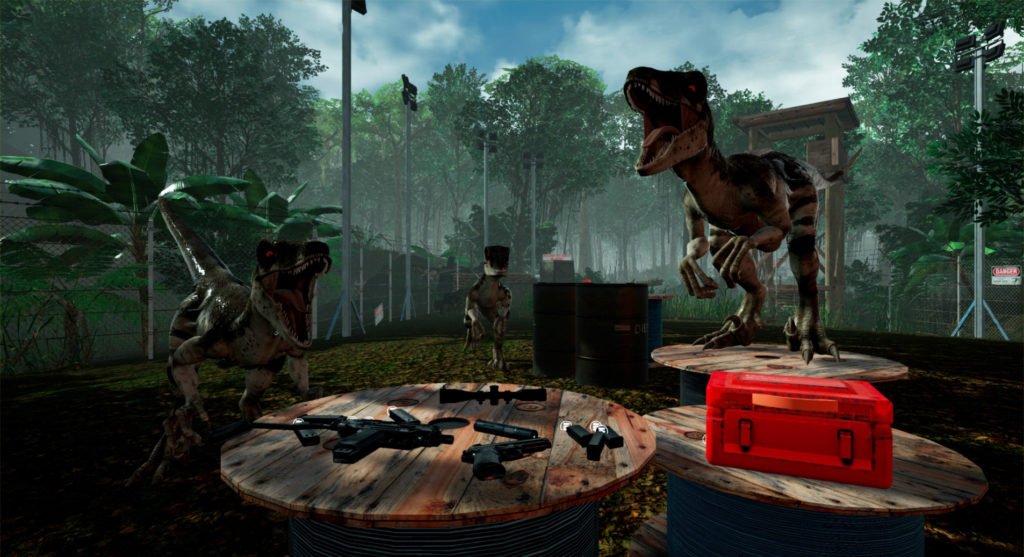
Steve Bowler [left], Jeremy Chapman [right]; Founders of CloudGate StudioBowler and Chapman spoke with [a]listdaily about their newest project, Island 359—a virtual reality game where players are challenged to survive on a jungle island that happens to be populated by vicious dinosaurs.
As Chapman describes it, “Island 359 puts you into the shoes of a mercenary who has been sent to a remote island where dinosaurs have suddenly appeared and started attacking the residents. Governments of the world are aware, but don’t want anyone else to know about the situation, so they are contracting Black Ops teams to remedy the situation and eliminate the dinosaur threat.”
When asked what inspired the creation of a virtual reality dinosaur survival game, Chapman responded, “I’ve always been obsessed with dinosaurs, and have wanted to make a dinosaur game that brings them to life in a believable way for a long time now. VR opened up the door to do just that on a scale we didn’t originally think was possible.” Chapman also stated that the story would be periodically updated during its Steam Early Access period, which is expected to launch later this summer.
In discussing how they planned to promote the game while it was in Early Access, Bowler stated that “we’re planning to do developer livestreams showing our process of working on the features, along with playing those features on the livestream before they’re released. We also have a lot of other (hopefully) fun surprises in store, like sharing GIFs or short videos via our social channels of new dinosaurs, weapons, modes, funny moments and other features as they’re completed or being worked on. We also hope the Island 359 community and the VR community gets excited and shares their experiences!”
“We feel that Early Access allows us to share what we’re making with the VR community while it’s hungry for new content,” Bowler continued. “This is the launch year for consumer VR, and we formed CloudGate because we felt like we had something to add to the community and to be a part of this exciting, historic launch. So to help facilitate that, we’ll be offering a big discount at Island 359’s Early Access launch, in order to thank our fans and community for joining us during this first phase. As we release more features, areas, modes, dinos, weapons and updates, we’ll be gradually reducing that discount as the product gets closer to a final retail product. Fans who join us early will only have to pay the heavily discounted price, and they’ll keep getting the updates for free!”
Chapman also commented on why CloudGate chose to develop Island 359 using the HTC Vive as its launch platform. “The Vive is currently the only way to experience full body, room scale, immersive VR,” he said. “Using your hands to interact with your environment and allowing the player the freedom to move around, duck and dodge are all elements we felt were necessary to the experience of Island 359. We want you to sweat a little bit and get you out of your comfort zone. You can’t fear for your life if you know you’re sitting in a chair in your living room holding a game controller. The Vive lets us play with your natural human ‘fight or flight’ instincts in ways other game platforms can’t.”
Bowler discussed the challenges of promoting a game that uses technology that’s still very new. “The issue isn’t that the technology is new—consumer VR is incredibly robust and a very finished and polished kit,” he said. “The biggest issue is that ‘seeing is believing,’ except when it comes to VR, even seeing isn’t enough. You have to be in VR before you believe it. Both of us had our doubts as to how good consumer VR was before we tried the Vive dev kits. All it took was one demo, and we were hooked. We had to go back. We had Matrix withdrawal. So the challenge to the entire VR industry is getting faces in HMDs. Once there, people want it. It’s very real.”
Bowler continued by discussing some of the challenges VR technology continues to face. “The only way to understand VR is to actually be in VR. Seeing a trailer, or even watching a ‘Let’s Play’ video of someone playing a VR game on YouTube, isn’t the same as actually being in it. Currently, we’re working with our strong industry partners to try and get Island 359 at more shows and in more places for folks to demo it and try it out—as we feel that it can be a powerful ambassador to VR adoption. We’ve really nailed that feeling of ‘I’m in a hot jungle’ to the point where we see people playing it have instinctive lizard brain reactions. They try and hide in the bushes or behind rocks or trees. So we’d love to get as many people on the Island as possible so they can experience the exhilaration for themselves!”
Given the challenges CloudGate and other developers face with promoting virtual reality games, we asked if any consideration was given to creating a non-VR version of the game. “Not at this time,” said Chapman. “The magic of Island 359 comes largely from the presence of being in VR that you can only get with the HMD on your face and seeing your hands interacting with the objects and dinosaurs in the world—believing that you exist in that jungle with those dinosaurs. We formed CloudGate to make premium VR experiences like Island 359, and we’re committed to that vision.”







![Steve Bowler [left], Jeremy Chapman [right]; Founders of CloudGate Studio](https://www.alistdaily.com/wp-content/uploads/2016/07/Jeremy-Chapman-and-Steve-Bowler.jpg)