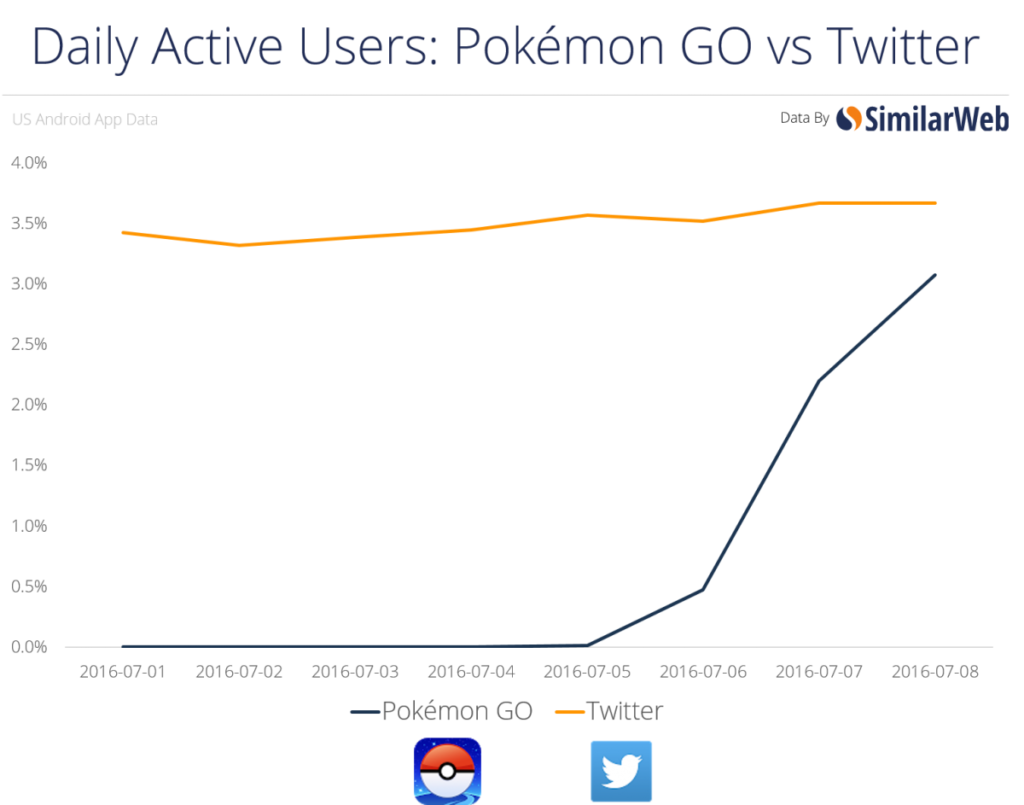
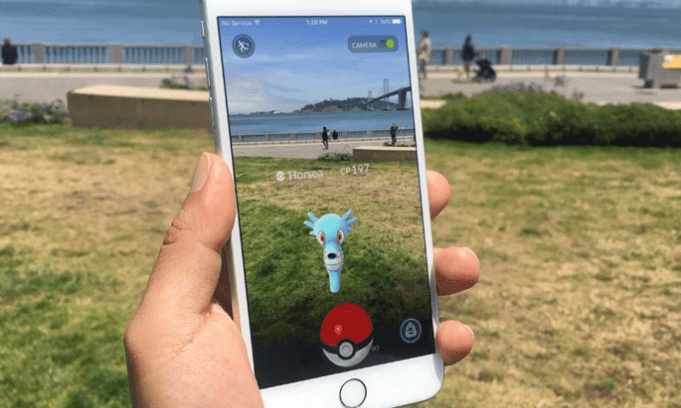
Pokémon GO has become a mobile juggernaut this past week, attracting over 7.5 million players and gaining higher in daily active users than Twitter—and closing in on other social apps such as Facebook, Tinder and Snapchat.
With that, brands are taking advantage of the Pokémon hoopla in their own ways, with supportive tweets to attract fans to their products, as well as special promotions to get them on board. Here’s a round-up of how some companies are taking advantage of the Pokémon craze:
Snapchat
In an effort to engage players with stories about their Pokémon GO experiences, Snapchat has introduced a new live story called “Catch Those Pokémon!,” in which players can share their captures and the locations of gyms to fellow players within their guilds.
Spotify
Long before Pokémon GO was released, Spotify already had a number of soundtracks from the series making the rounds. But the company recently put out a press release, explaining that global streaming of the Pokémon theme, “Gotta Catch ‘Em All,” has increased by more than 360 percent since the mobile game’s release. In addition, streaming of these soundtracks, in general, has tripled and custom playlists have increased immensely. There are currently over 190,000 using the keyword “Pokémon” and 53,000 featuring “Pikachu,” one of the most popular creatures in the game, with more likely to come.
The top five songs on Pokémon playlists are as follows:
This company, known for its cinnamon bun-related delectable goodies, hopped onto Twitter for Pokémon GO this week, offering to retweet pictures of players who caught creatures at one of its locations. So far, it’s trending pretty well, with dozens of consumers showcasing their recent snares.
This fast-food chain has been on a major social kick lately, picking up on popular trends like Overwatch and Star Wars with food-related tweets. Pokémon GO is no exception, as the company tweeted out the below image of a Team Valor emblem (cut from cardboard) from the game—although some fans from other guilds may be less than pleased with its decision, and gave humorous jabs over the team.
World Wrestling Entertainment has hopped on board the Pokémon GO train with a recent video post featuring wrestler Sasha Banks excitedly pointing out that there was a Jigglypuff in the ring to be captured. The company also made note that its Stamford headquarters was doubling as a gym within the game.
The national museum group, also known as “the nation’s attic,” got on on the fun by making a joke about how the game quickly consumes batteries. It posted a humorous tweet that links to a showcase of historic batteries that can be found at the National Museum of American History. However, there’s probably little chance they’ll power an iPhone.
Other business opportunities have also emerged. Gizmodo recently reported that some drivers are offering an Uber-style ride to Pokémon GO players so they can capture creatures without the risk of driving on their own while playing the game—something a number of states have discouraged with signs such as, “Get your head out of your App.”
Niantic, the developer behind Pokémon GO, is certainly aware of these opportunities and is looking into offering “sponsored locations” using restaurants and other commercial establishments, which will be announced in the future.
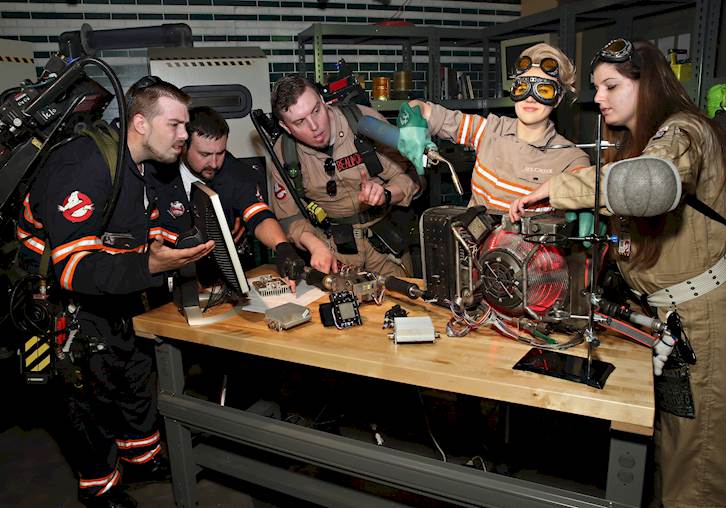
Unity is one of the most widely used development tool for a multitude of platforms that include PC, consoles and mobile. With the launch of head-mounted displays such as the Oculus Rift, HTC Vive and PlayStation VR this year, Unity has become the top choice for developers looking to create incredible virtual reality experiences. This has led to some high-profile projects, with one of the most recent being The Void’s Ghostbusters: Dimension hyper-reality experience. In it, attendees put on custom designed VR gear and walk through an attraction at Madame Tussauds New York to experience what it’s like to be a Ghostbuster.
At this early stage of the technology, it’s difficult to tell what direction virtual reality will go. Will consumers take to home experiences—especially when the PlayStation VR releases in the fall—or is the future in location-based VR arcades such as the one at Madame Tussauds and special IMAX theaters developed in partnership with Starbreeze? Or, with Google’s Android-based Daydream platform launching this fall, VR could find its wings with mobile devices.
Marcos Sanchez, head of global communications at Unity Technologies, talks to [a]listdaily about location-based experiences compared the adoption of at-home ones, and what might be in store for virtual reality entertainment.
Marcos Sanchez, Unity Technologies head of global communications
What would do you think makes Unity the ideal platform for a location-based experience like Ghostbusters: Dimension?
Ghostbusters: Dimension is a truly unique “hyper-reality” experience, and we were impressed by what The Void has accomplished. Combining an untethered VR experience with multisensory sensations—smells, temperature changes, haptic vests—is incredible and wholly immersive. What Unity brings to the table is a 3D engine and development platform that allows creators to focus on bringing their vision to life without lots of coding. Any VR experience requires a great 3D engine, and development environment, and with our extensive experience in gaming, we have many of the features from lighting to physics that are critical to a great experience.
It’s worth noting too that The Void layered a VR experience over physical space where virtual walls map to real walls and players can touch everything—it’s actually there. This presents a really complex scenario where movements and visual prompts and physical sensations must align, and The Void had to test and tweak constantly. Unity’s ability to quickly iterate on builds let them develop and deploy really fast, which is a huge advantage.
How does developing a location-based experience differ from some of the experiences that can be had with the HTC Vive or Oculus Rift?
The Void experience had to deliver the best immersion possible, meaning syncing the real and virtual worlds. It’s essential that a player forgets they have a headset on, a computer on their back, a controller in hand. If you are going to be a Ghostbuster, that proton pack and gun need to feel “real.” Everything else has to fall away and become an extension of the person.
Current VR setups are limited to a small room or your chair, with a PC tower never too far away. The Void set out to tackle a big space with physical attributes they wanted to incorporate, so naturally, their workflow will be much more complex. Using a proprietary solution, they’ve been able to put the power of a VR PC on your back, without it being uncomfortable or too heavy, and that accomplishment alone can’t be ignored.
The logistics involved in getting players through a 30×30 foot space while engaged in multiplayer dynamics required intricate programming. Unity’s editor helped by allowing fast and multiple iterations, which is particularly important when you have to take the experience out of the editor and into this massive room, with multiple people to optimize and fine tune. That’s where Unity’s ability to get builds out quickly really makes a difference.
How integral do you think VR will become to promoting movies such as Ghostbusters?
Ghostbusters really lends itself perfectly to a full hyper-real experience. It’s a much-loved brand that feels out of this world with a heavy dose of the fantastical. Though The Void runs on its own hardware and software, Ghostbusters: Dimension emulates game shooting mechanics. In other words, the proton pack fires how you’d expect. So, there were a lot of elements that made this a good first-of-its-kind demonstration. And, if the early reception is any indication, it’s something audiences are excited to experience.
Of course, we expect other brands and franchises will want to jump at the chance to bring their worlds to life in a totally immersive way. It won’t be just movies, but you could see how comic books, novels and TV shows could all try to emulate an experience like this—the sky’s really the limit. And, brands can scale differently; not everything will need to take place in a massive, developed physical environment. You could see how stepping into the seat of a car, plane or space shuttle, for example, would make sense in a contained space. It’s always about creating wow moments for consumers, and VR certainly does that.
Do you think audiences will prefer location-based experiences to adopting home ones? Or do you believe that location experiences will help home VR grow?
I think that they will feed each other, though I believe that mobile will be a huge driver of mass consumer adoption. It’s a numbers game really, with 3 billion mobile devices in 2016, many of which are VR capable or will be soon, the volume is there. It’s largely a content game, and location-based experiences present some amazing content. To me, it will be symbiotic with both feeding into each other. Marry content with price drops in headsets with smaller CPU/GPU (to the point of being housed in the headset), and adoption of VR and mixed reality (MR) will go through the roof, but that will take some time.
Will Unity work to bridge location-based and home experiences?
Our goal is to maintain a flexible, accessible platform to make sure developers can create amazing games and experiences, whether it be stationary VR, location-based VR or AR or MR. We’ll continue investing in platform support for a variety of hardware, whether they’re in a huge warehouse or your living room.
How do you think Google’s Daydream VR initiative will impact the adoption of VR, and how close do you think we are to having high-quality VR experiences on mobile?
As I mentioned before, with an installed base of around 3 billion in 2016, mobile devices are already dwarfing the 1.5 billion PCs (of which only a small portion are VR capable). That makes Daydream interesting from a mass market perspective, and we will continue to be the platform that allows any developer to create once and publish everywhere, mobile included. We’ve announced Daydream support.
It’s true; we’ve seen a slower than expected start to VR adoption/content this year—it’s duct tape and twine, and we’re just figuring things out. That said, Daydream, as well as other platforms like Samsung’s Gear VR, are going to help drive what we ultimately think will be the massive global adoption of VR on the scale of billions of people 10-13 years out. That’s no small number, and we believe it will be that big.
In terms of mobile having high-quality experiences, for now, that’s likely several years away. That’s not to say there aren’t high-quality 360-degree videos or great experiences and games that will come soon, but to drive life-like game experiences requires CPU/GPU not available today on mobile, and while I think it will come, it will take some time.
If you could choose, what movie world would you want to visit in VR?
Hands-down, Crouching Tiger, Hidden Dragon. It’s stunning and beautifully shot. Imagine being able to feel like you’re leaping from rooftop to rooftop while pursuing someone who stole the Green Destiny sword!
Movies and video games have had close ties for a long time, despite how audiences often criticize how some properties have a hard time crossing over into different media, such as with the Warcraft movie that released last month. However, there will always be an allure associated with popular franchises crossing into different media. Deep down, video game fans would love to see quality movies made from beloved franchises, as demonstrated by The Angry Birds Movie. At the same time, moviegoers want a chance to delve deeper into the worlds they enjoy on the big screen.
But it looks like both movie studios and game developers have learned from the past and are on the right path. Instead of developing games that are entirely based on movies, as has been done so often in the past, studios are increasingly moving toward creating distinct experiences that complement each other instead of repeating them, which grows the franchise as a whole.
One major example of this direction is how Sony surprised Spider-Man fans last month by announcing that a new exclusive PlayStation 4 game featuring the web-slinging wall-crawler would be developed by Ratchet & Clank creator Insomniac Games instead of relying on its longtime game development partner Activision. Moreover, even though the game will feature an original story, it’s almost bound to promote the movie Spider-Man: Homecoming, which is expected to release next year.
In a recent interview, Marvel Games head Jay Ong spoke about how Spider-Man was only the beginning of a new brand strategy, stating “I think it’s part of our strategy to have a relatively diversified portfolio that meets different kinds of audience and gamers’ tastes.”
The Actions Of Angry Birds
Rovio has practically turned using a video game movie promotions into an art form with the incredible release of the Angry Birds Action! mobile game. Action turns out to be both an Angry Birds-themed pinball game and augmented reality experience. Audiences were encouraged to go to theaters and watch the movies to catch a special audio watermark during the credits to unlock extra content. That’s in addition to how Rovio partnered with a long list of companies, which include McDonald’s, Walmart and Toy R’ Us, to support BirdCodes—product codes that can be scanned by the mobile game to unlock special power-ups and mini-games. That way, the Angry Birds brand continues to be popular even after the movie leaves theaters.
It seems other studios had similar ideas when it came to movie and game crossovers. Zynga’s new match-3 mobile game, Ice Age: Arctic Blast was developed in partnership with 20th Century Fox and Regal Entertainment to promote the movie Ice Age: Collision Course with two exclusive movie clips. Furthermore, players will be able to purchase tickets to see the film at Regal Cinemas theaters. Similarly, Regal Theaters partnered with Storm8 for a special promotion where Dream City: Metropolis players can not only build an authentic Regal Cinema in their virtual town, but gain bonuses when watching branded movie content such as trailers.
The Next Level Of Experience
Tying a mobile game experience with upcoming movies is an ingenious move, but it’s not the only one 20th Century Fox is experimenting with. We’re slowly entering into an era where video games may act as a bridge between movie releases. Kabam, the studio behind super powered mobile games such as Marvel Contest of Champions recently announced that it is working on an epic-sized multiplayer mobile game based on James Cameron’s Avatar movie universe. With four sequels in the works, the mobile game will act as a bridge to maintain audience interest between films, and it may continue to be active after the final movie comes out in 2023.
Starbreeze is also at work on John Wick: The Impossible Task, which releases later this year for VR platforms. The game will immerse players in the world of assassins, and while bridging events between the original 2014 movie and the sequel that’s expected to hit theaters next year. This is quite a step up from how different movie studios used mobile VR apps last year to bring viewers a 360-degree view of the fictional movie worlds, and is an evolution of how the Paranormal Activity VR demo scared horror fans at select AMC Theaters last fall and at both GDC and SXSW in March. It will be exciting to see what promotions are in store for the Assassin’s Creed movie, which is also expected to have a VR experience.
Of course, the biggest step toward creating a cross-media promotion comes from the Ghostbusters: Dimension hyper-reality experience, developed by The Void in partnership with Sony Pictures and Madame Tussauds, where attendees have a chance to become Ghostbusters and become excited for the new movie. When asked about what the location-based hyper-reality experience meant for future movie promotions, Jake Zim, senior vice president of virtual reality for Sony Pictures, told [a]listdaily “yes, we are thinking about what the VR thing is from the inception of any production moment or even the concept. A filmmaker comes to us and pitches an idea, and we’re thinking at the beginning of the process about the VR component of it. But generally speaking, we’re trying to build on and extend the world, instead of overlap or layer into the world too much.”
Taking To The Small Screen
Last fall, when Activision Blizzard Studios was announced, the studio’s co-president Nick Van Dyk stated that the goal was to bring popular franchises to new mediums. Activision Blizzard has fan bases that rival or surpass many movie IPs, and Van Dyk underscored this by stating, “Our library spans more than 30 years of global entertainment culture and, in the last 12 months alone, fans of Activision Blizzard properties have played and watched our games online for more than 13 billion hours. This gives us a huge, passionate and deeply engaged audience that is hungry for more great content built from the universes they already know and love—and which are extremely broad in their appeal.”
Skylanders Academy, a TV show based on the popular toys-to-life franchise, is the first project to come from Activision Blizzard Studios, and it will be broadcast on Netflix. The games and the show will work to promote each other. Meanwhile, a Call of Duty movie is in the works and is expected to release in 2018 or 2019.
Electronic Arts also recently announced that it was following a similar path by adapting the incredibly popular Battlefield franchise into a television show. Although there aren’t many details about the show, it’s likely to have a unique plot inspired by the game series instead of copying it.
When all taken together, it’s clear that having a variety of experiences available to audiences helps to promote the brand. Instead of trying to copy each other, the video game, movie and television mediums have learned to focus on what they’re best at so that audiences are happy now matter how they experience a franchise. The best partnerships bring fans together so that they can enjoy IPs across all different media with experience that extend past the movie or television screen.
As brands in the digitoral era, social media influencers drive audience interaction like never before. There is no better place to connect with these influencers than VidCon, an annual gathering of internet celebrities and those aspiring for influencer greatness. Hasbro, the company responsible for brands like Transformers and My Little Pony, understands the importance of these internet superstars.
“What we’re seeing in marketing in general right now is, brands used to tell consumers what brands are—now consumers are telling consumers,” Victor Lee, Hasbro’s senior vice president of digital marketing, told [a]listdaily in an interview. “Influencers have such an incredible relationship with their fan base and that’s important. We’d like to have and we do have that authentic relationship with our fan base.
“When you take a look at all of our gaming brands, some [of which] span 80 years, that’s the relationship that we’ve had with our product and our fans. The relationship that influencers have with their fans . . . we’re on the same side. So that’s how we kind of measure we who and how and what we do with influencers.”
Like a story told around the campfire, products can become modern-day legends if the right influencer shares the tale. The story itself, Lee explains, is not up to the brand, but the consumers themselves and it’s important to listen. “Consumers will use or play your brand in a way that naturally gives the story,” said Lee.
The company’s Hasbro Gaming initiative introduces brands that parents grew up on to a new generation, from board games to hit TV shows. From deciding who gets to be the hat in Monopoly to which Autobot is their favorite, families and friends are able to share memories and create new ones together with the same brands, generation after generation.
“A lot of people would think of us as a manufacturer,” Lee says. “We’re not—we’re storytellers.”
The publisher, alongside the development team at DICE, has optioned the rights for the hit series to be made into a television show, with Paramount Television and Anonymous Content heading up production, according to The Hollywood Reporter. Michael Sugar and Ashley Zalta will serve as executive producers on the show.
Although details haven’t been provided as to what the focus of Battlefield will be, considering how each release in the long-standing game series is set in a different time period ranging from historic settings to the near future. In fact, the upcoming Battlefield 1 takes place in World War I. However, the show is expected to be action-packed on the same visceral level as the games.
“Paramount TV actively seeks smart content from all sectors that will resonate with audiences and translate to compelling programming,” Paramount TV president Amy Powell said. “EA’s Battlefield has an incredibly dynamic narrative, coupled with a loyal fan base, which will allow us to bring this exciting and unique property to the small screen. We look forward to working with EA and Anonymous Content and thank Michael Sugar for his tenacity in bringing us this exciting project.”
As a result of the deal, Paramount will extend its relationship with Anonymous Content, and options such as broadcast, premium cable and streaming are being shopped around regarding interest in the Battlefield franchise.
“Battlefield has a tremendous built-in, engaged fan base, making it a highly coveted piece of IP primed for long-form adaptation,” Anonymous Content partner Michael Sugar said. “Together with EA and Paramount TV, we’ll develop the Battlefield TV series with the same commitment to robust storytelling that has made the game such a runaway success for nearly 15 years.”
Battlefield is the latest video game series to be adapted for television, as Activision announced last month that it would bring Skylanders Academy, based on its best-selling toys-to-life franchise, to Netflix this fall.
While some industry critics may be skeptical of the success of a video game property in another medium, Battlefield is thriving on its popularity. The Battlefield 1 trailer that premiered back in May has become YouTube’s most popular video game trailer to date, with nearly two million likes. And the game got huge reception last month at EA’s Play event in Los Angeles, with its 64-player multiplayer feature on full display.
There’s no premiere date for the series yet, but Battlefield fans will be able to fill the time by playing Battlefield 1 when it releases Xbox One, PlayStation 4 and PC in October.
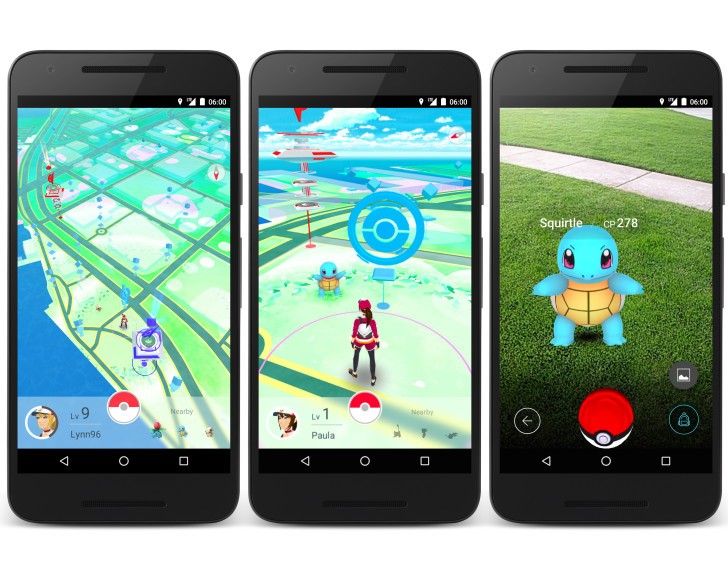
Since its release on mobile last week, Pokémon GO, the new free-to-play augmented reality game featuring the best-selling creature-capturing franchise, has taken over the market. So far, over 7.5 million people have downloaded the game across both iOS and Android, and the AR-enabled game is ready to surpass Twitter in daily active users on Android, reaching 3 percent and coming incredibly close to Twitter’s steady 3.5 percent.
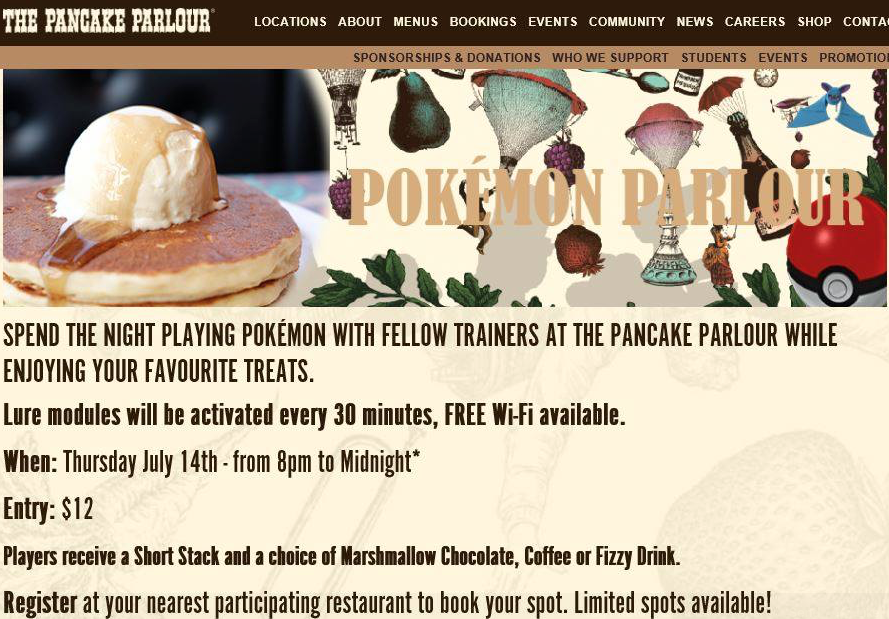
Local businesses have also thrived thanks to Pokémon GO, advertising special discounts and meet-ups for groups looking to find more Pokémon characters. Local businesses showcase playing the game while enjoying food with others.
We’re a Pokéstop in the new Pokémon GO app! Tomorrow we’ll provide non-stop lures during our Monday Mash-In hours… https://t.co/eAAFaCGM3i
As the game continues to overtake social media and prepares to launch in other regions, including Europe and Japan, [a]listdaily spoke with SuperData CEO Joost van Dreunen about the game’s success, along with how Nintendo and Niantic might continue its momentum.
First, he explained why Pokémon GO’s tremendous success shouldn’t really be a surprise, considering how much the franchise has thrived over the past few years. “Pokémon GO doing so well initially should not be a surprise: it is one of the most enduring and widely popular game franchises in the world,” he explained. “It has produced no fewer than 18 full feature films, a cartoon series, trading card games, and a slew of swag.
“With an existing fan base like this, the game has managed to quickly become a favorite among mobile gamers, and looks like it’s gone viral. Among livestreaming channels, Pokémon GO is now among the top 35 titles, with almost 200,000 hours of content streamed since launch, placing it well above other Nintendo franchises like The Legend of Zelda: Majora’s Mask and Mario Kart 7. More broadly, the mobile games market, which is starting to show declining revenue growth and is currently in a seasonal lull, is going to rely increasingly on franchises and brands to reach audiences.”
The game’s biggest appealing factor, van Dreunen pointed out, is its ease of use with augmented reality. “The mechanic of looking for and catching Pokémon is traditionally integral to the game, and the use of AR takes that to the next level,” he said. “It shows the power of the device that many of us have in our pockets already, and in many ways is one of the first great adaptations of augmented reality technology. Earlier efforts to integrate AR into mobile gameplay, like with Ingress, initially met a large appetite from users, but quickly dropped in rankings and revenue. What set Pokémon GO apart is the strength of the license.”
While initial microtransaction sales of the game have been very good, van Dreunen noted that the development team at Niantic needs to find new content to keep players from waning. “Initial gross revenue is not necessarily an indicator of sustained financial success. If you recall a game like Fallout Shelter, which had a huge launch week in terms of reach and revenue, it quickly dropped to bottom of the top 50. For Pokémon GO to break the bank, it will have to continue to offer its audience new content, like tournaments, and keep people excited.
“Pokémon has a long history of organizing activities around its game, so I have no doubt there will be more coming. Mobile gamer audiences have gotten to expect a prolonged effort from publishers, with regular special events and other incentives to log back on. This is an area where Pokémon can do really well for itself.”
These events and activities are sure to be vital when it comes to Pokémon GO’s future success. “The game has clearly tapped into something and has managed to bypass the usual suspects when it comes to earnings on mobile. But remember that games like Mobile Strike, Candy Crush Saga and Clash of Clans have literally been making millions of dollars a day for years. Certainly Pokémon GO has a the pedigree in terms of license and offers novel game play, but its quest for dominance of the mobile games market has only just begun.”
Van Dreunen then added even more details, discussing Pokemon GO‘s success. “Early estimates indicate that Pokémon GO has so far managed to generate $14.04 million across mobile platforms since its release, putting it ahead of other titles using the franchise, including Pokémon Shuffle Mobile which has earned an estimated $14.03 million since its release in August, 2015.” That makes GO the highest ranked Pokémon mobile release to date.
He also made note of the impact of the game on the VR/AR market. “As the games industry continues to ramp up its efforts behind both AR and VR, the consumer market ultimately requires a ‘killer app’ that will allow mainstream audiences to familiarize themselves with new technology and its applications,” said van Dreunen. “When the iPhone was first introduced, it was games like Angry Birds that taught consumer audiences how to swipe and use a touch screen, which was a novelty at the time. Augmented has been available for some years, and with the popularity of the new Pokémon game seems to have found a suitable application with the ability to both motivate and educate audiences on its uses. Mobile devices are the first point of contact for mainstream consumer audiences with augmented reality, but in the long term companies like Microsoft have devices like the Hololens in development. For 2020E we forecast the total AR market (hardware and software) to reach $4.3 billion in worldwide revenues.”
De La Soul has a brand new album—the group’s first in 11 years—dropping August 26. But one song that won’t be found on And the Anonymous Nobody is “Action,” which will be available exclusively in Angry Birds Action! and was composed especially for the pinball puzzle game.
The new track is part of The Big Pig Update, which unlocks 90 new levels as well as the Piggy Island area that was originally exclusive available to movie theater patrons who went to see The Angry Birds Movie. The update also brings a one-week event hosted by the hip-hop pioneers in their birdified form, granting all players unlimited energy as a special power. “Action” marks the first time De La Soul has created music specifically for a game.
Miika Tams, vice president of games at Rovio, explains why artists from Shakira to De La Soul are flocking to Angry Birds games in this exclusive interview with [a]listdaily.
How did this De La Soul opportunity come up?
The team behind the Angry Birds Action! game have been big fans of De La Soul. We were looking for a partner to fit the style of the game, and De La Soul felt like a perfect option. We reached out to them, they loved the idea and this is where the partnership started.
What type of crossover do you see between De La Soul fans and your Angry Birds Action gamers?
Both brands have gained a big loyal fan base. Also, the style of our games and the style of De La Soul’s music are a natural fit. There is the same energy and the same tongue-in-cheek attitude that makes this cooperation feel like a very natural fit.
What have you learned from music collaborations with artists like Shakira?
We find that many artists are very interested in an alternative means of distribution and promotion, and there are all kinds of possibilities within the framework of a mobile game. We try to do music collaborations that make sense for our fans and the fans of the artists, and enrich the experiences of both.
How will De La Soul be cross-promoting your game with their new album debut?
The “Action” track has been written exclusively for Angry Birds Action! and its fans. The track is not going to be featured in De La Soul’s new album, And the Anonymous Nobody
How will you be promoting their new song, “Action”?
De La Soul’s new “Action” track can be listened to in the Angry Birds Action! game and through our active channels too—Rovio’s blog and rovio.com.
What does this and the Shakira partnership open up in terms of your games as a viable platform to debut music?
We have done partnerships before De La Soul and Shakira, for example with Apocalyptica and Slash, etc. We tend to proceed on a case-by-case basis, doing things that make natural sense for fans. But game music has come a long way, especially in the mobile era when people use the same device for listening to music as for playing games. Games and music crossovers will probably become more common as long as that is the case.
What role does music play in your games?
Music plays a big role in Rovio games, and can help bring emotional depth to the story world. We have an amazing audio team who is composing fantastic music for our games. For example, Nibblers just won the Best Game Music award at the 2016 Game Music Awards.
What’s can fans look forward to in the first Angry Birds Action! update?
The Big Pig Update adds 90 completely new levels and unlocks Piggy Island for all players. Previously, the Piggy Island area in the game could only be unlocked by going to see The Angry Birds Movie in theaters. The update also brings a one-week event hosted by hip-hop pioneers De La Soul in their “birdified” form, granting all players unlimited energy as a special power.
How have you seen the success of The Angry Birds Movie impact Action! and the other Angry Birds games?
The Angry Birds Movie reached No. 1 at the box office in 52 countries and we are very happy about that. We’ve seen a very positive impact on our games, too. The Angry Birds brand is now even stronger.
How does having all of The Angry Birds and Movie licensed products help the brand connect with mainstream consumers?
Consumers love collecting the plush toys, for example, and we are also very strong in a variety of toy and clothing categories for kids. The aim of our licensing program is always to strengthen the brand with high quality products and great storytelling. Partnerships with world-class companies like Lego and H&M are part of our strategy to develop Angry Birds as an evergreen brand that can help sustain all our businesses, from games to animation.
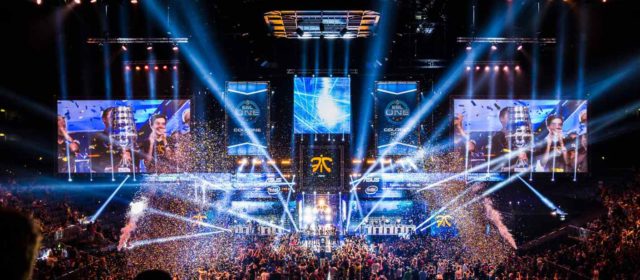
ESL One Cologne is underway, hosting sixteen of the best Counter-Strike: Global Offensive (CS: GO) teams, competing for the top honor and a $1 million prize pool. The eSports competition, hosted inside Germany’s largest indoor arena broke audience and viewership records last year, and ESL hopes to break them again by broadcasting over numerous online and offline platforms.
Global television broadcasts include those in Brazil (Globo), Bulgaria (Novo Sport), the Czech Republic (PrimaCool), Finland (YLE), Germany (ProSieben Maxx) and numerous Nordic/Baltic countries (eSports TV). Various online livestreams are being hosted on Twitch, HitBox, Azubu and Yahoo with second screen content available on Snapchat, Facebook Live, Twitter and Instagram. Naturally, fans can also watch directly on ESL’s live platform, which offers highlights, in-game statistics, match schedules and more.
“The way people consume media is constantly evolving. Some are fans of more traditional broadcasts on television, others follow solely on their preferred streaming site whilst a growing number immerse themselves in an array of social media,” said Chris Müller, managing director at ESL TV in a press release. “We try to ensure that our events cater to all types of eSports fans, and so are always working to expand our broadcast horizons. Viewership is on the rise—and that is in part thanks to the evolution of the viewing experience.”
Fnatic celebrates their victory at the 2015 ESL Cologne competition. Source: ESL
ESL is already the biggest organizer when it comes to supplying CS:GO eSports content on Twitch, with almost 85 million hours in the past 10 months (as of May 2016). ESL’s sister company, Dreamhack, is number two. Combined, they broadcast over half of all CS:GO eSports viewing hours on Twitch, according to Peter Warman, CEO of Newzoo.
The eSports giant recently launched eSports TV, a 24/7 network in Nordic and Baltic countries that will likely spread into the West. “This is something we’re very enthusiastic about,” Nik Adams, senior vice president of sales for ESL told [a]listdaily in an April interview. “We’re working on several ideas that will enable an easy, more natural viewer interaction. Things like second screen applications, for example, could be put into a great use at eSports TV. ESL is a company that’s constantly looking for new ways to connect with its core audience, so things like that are definitely on our radar.”
Video game-themed concerts, including Video Games Live, The Legend of Zelda: Symphony of theGoddesses andPokémon Symphonic Evolution celebrates the music and legacy of their respective games while keeping the franchises relevant. That said, Square Enix has its own special showcase, paying tribute to its ongoing Final Fantasy series.
The publisher recently announced the return of the Final Symphony, a show that has been a success with sell-out shows across both Europe and Japan, and also led to the release of a best-selling album that has become a downloadable hit across the globe. And there’s no better place for the tour to make its return than at the San Diego Comic-Con, which kicks off in a few weeks.
The show, which features music from a number of Final Fantasy games, will begin its tour on July 21 at the Copley Symphony Hall at the Jacobs Music Center. Fans won’t just hear melodies from the main games from the franchise, but also “Symphonic Fantasies” selections from other Square Enix titles, such as Kingdom Hearts, Secret of Mana and Chrono Cross/Trigger.
In addition, to help further promote the legacy of Final Fantasy, Square has brought back producer Hironobu Sakaguchi, the man responsible for many of the earlier titles in the series. He will serve as a host for a special pre-concert presentation that’s free for all those that attend the show.
“Final Symphony doesn’t just indulge fans by evoking memories of the game world and the accompanying excitement. Instead, we created a concert to celebrate the sounds of the Final Fantasy series by delivering a definitive piece of pure orchestral music—a true Final Symphony,” said Final Fantasy composer Masashi Hamauzu about the tour.
The Final Symphony tour is expected to make several stops this year, including Baltimore, Auckland, San Francisco and London. This, coinciding with the forthcoming A New World: Final Fantasy tour, should assure that the series’ legacy will continue to be celebrated in all the right way.
The tour comes at the right point in time when it comes to promotion, as Square Enix will give the Final Fantasy series a huge push leading up to this fall’s release of Final Fantasy XV, which is expected to arrive on September 30th for Xbox One and PlayStation 4. The company promoted the game heavily at E3, and hosted a special 3-hour Uncovered event a few months ago, with a number of reveals for the game.
With the new movie starring Melissa McCarthy, Kristen Wiig, Kate McKinnon and Leslie Jones hitting theaters next week, this is the opportune time to head over to Madame Tussauds New York and check out the new Ghostbusters-themed exhibit that opened last week. As the first cross-promotion of its kind, the wax museum is currently featuring two attractions. The first, called The Ghostbusters Experience, takes attendees through different sets inspired by the new movie and features holographic ghosts and wax statues of the characters. Those who want to take their experience to the next level can check out the Ghostbusters: Dimension hyper-reality experience, developed by The Void, where attendees can put on headsets and proton packs to bust ghosts in virtual reality. Both attractions are built in partnership with Sony Pictures Entertainment to ensure authenticity.
Eric Fluet, head of marketing and sales at Madame Tussauds New York, talks to [a]listdaily about this incredible partnership with Sony Pictures and The Void to create a location-based attraction that also promotes the upcoming movie. The new Ghostbusters movie releases on July 15, but fans can get an early, immersive, preview by visiting Madame Tussauds New York now.
How did the Ghostbusters Experience come to Madame Tussauds?
We had been working with Sony Pictures and the Ghost Corps to create the all-new Ghostbusters Experience. And the Sony execs said, “Hey, we’re working with this company on a virtual reality project. Why don’t you talk to this company called The Void?” So we sat down with The Void, and they started talking us through their concept. We thought it was amazing technology that ties very well back to the Ghostbusters project we were already working on. It has created this perfect environment where you have three really strong parties coming together at Madame Tussauds, which has been operating attractions for over 200 years with a prime location in the heart of Times Square.
Sony Pictures and Ghost Corps, with this iconic brand—Ghostbusters—has been an American pop culture staple for 30 years. And The Void, with this brand new technology, to bring it to life. When guests come to Madame Tussauds this summer, they’re going to get to walk into the movie. [After] You see the movie (or getting ready for the movie), you come to Madame Tussauds, and you’ll actually step into multiple sets from the movie in the Ghostbusters Experience, which is included in your admission. Then you can upgrade to the Ghostbusters: Dimension hyper-reality experience and actually be a Ghostbuster.
How meaningful is it that Madame Tussauds is offering this experience at the launch of the new Ghostbusters movie?
We’re thrilled to be doing it. For us, Madame Tussauds is a brand we’re trying to evolve and become more immersive. Virtual reality is going to be hot this summer—we’re seeing it pop up all over the place. Hyper-reality is the next evolution of virtual reality and is taking it that step further. To be able to offer the world’s first look at it is an incredible opportunity and we’re thrilled to be part of the project, and we’re thrilled to offer it to our guests at our Times Square location.
Will there be any cross-promotion between Sony Pictures and Madame Tussauds to get the word out about the experience?
Sure, there are all sorts of things going on. As a matter of fact, it started back in May, when we announced our partnership with Sony and The Void. We’ve been working in lockstep from a PR perspective. We’ve been synced up with the announcement, the hard hat tour, and the full press event. We have Sony execs here who are participating in it, we’ve got Sony’s publicity team, Madame Tussauds’ publicity team, and The Void’s owners and founders here—all available so we can show our products and share our message together.
As we move forward, working together with our marketing pieces to make sure we’re promoting this event in its totality, we’ve got other things in the works. Whether it’s bringing our figures out to other locations, where the actors may be, for stunts the Sony PR team is looking to do; or TV commercials that we’re putting together where we work with Sony to get some footage from the movie to include in it. I could go on for days about all the different things we’re doing together, but it’s really important—with the popularity of the new Ghostbusters movie this summer, what’s going to be the popularity of the Ghostbusters Experience at Madame Tussauds, and the world’s first hyper-reality experience—that all of those things dovetail together.
The Ghostbusters brand goes back 30 years, but the Ghostbusters Experience only features the new movie. Has there been any thought given to including the classic movies?
We had a lot of thought and dialogue about it when we first started this project. It was really important to be aligned with Sony in bringing this new movie to life. This is what’s going to be top-of-mind this summer. The Sony team is really pushing the new Ghostbusters, and we wanted to make sure we were supporting that as best we could. Rather than trying to mix the two together, I think it was best to stick with the one. The new 2016 film is the right way to go for us to make sure we could bring it to life in the truest, most authentic way possible.
How has it been to partner with The Void for a location-based VR experience?
I think one of the beauties of partnering with The Void is that Madame Tussauds brings operation—high volume, consumer-facing operation. The Void is a company that’s great at technology, but hasn’t done any consumer-facing mass market type of operation. By partnering, we can help each other through that. They can learn the operation from us. As a matter of fact, Madame Tussauds is operating it [Ghostbusters: Dimension] here at the attraction, so it’s a great thing for us to work together as this comes to market for the first time.
What were some of your first thoughts when you tried out Ghostbusters: Dimension?
I’ve been involved with the project for months, and I’ve been out to The Void’s studio in Salt Lake City, and I did some of their other versions from the TED conference and some of the stuff they had on the floor. The technology The Void brings is cool—it’s hyper-reality—but when I did the Ghostbusters: Dimension, it really blew my mind. I was familiar with the story, script, stage and flow, but actually being in it… it’s hard to articulate how amazing it was. I can’t wait for not only gamers and VR enthusiasts to come check this out, because this is going to blow their minds, but then you have the mass market. It’s a great opportunity to bring to live, general market consumers—who may not have been involved or interested in virtual reality—a chance to do this. It’s going to blow people’s minds. It’s amazing.