Visa Is Supporting Olympians With 360-Degrees Of Acceptance

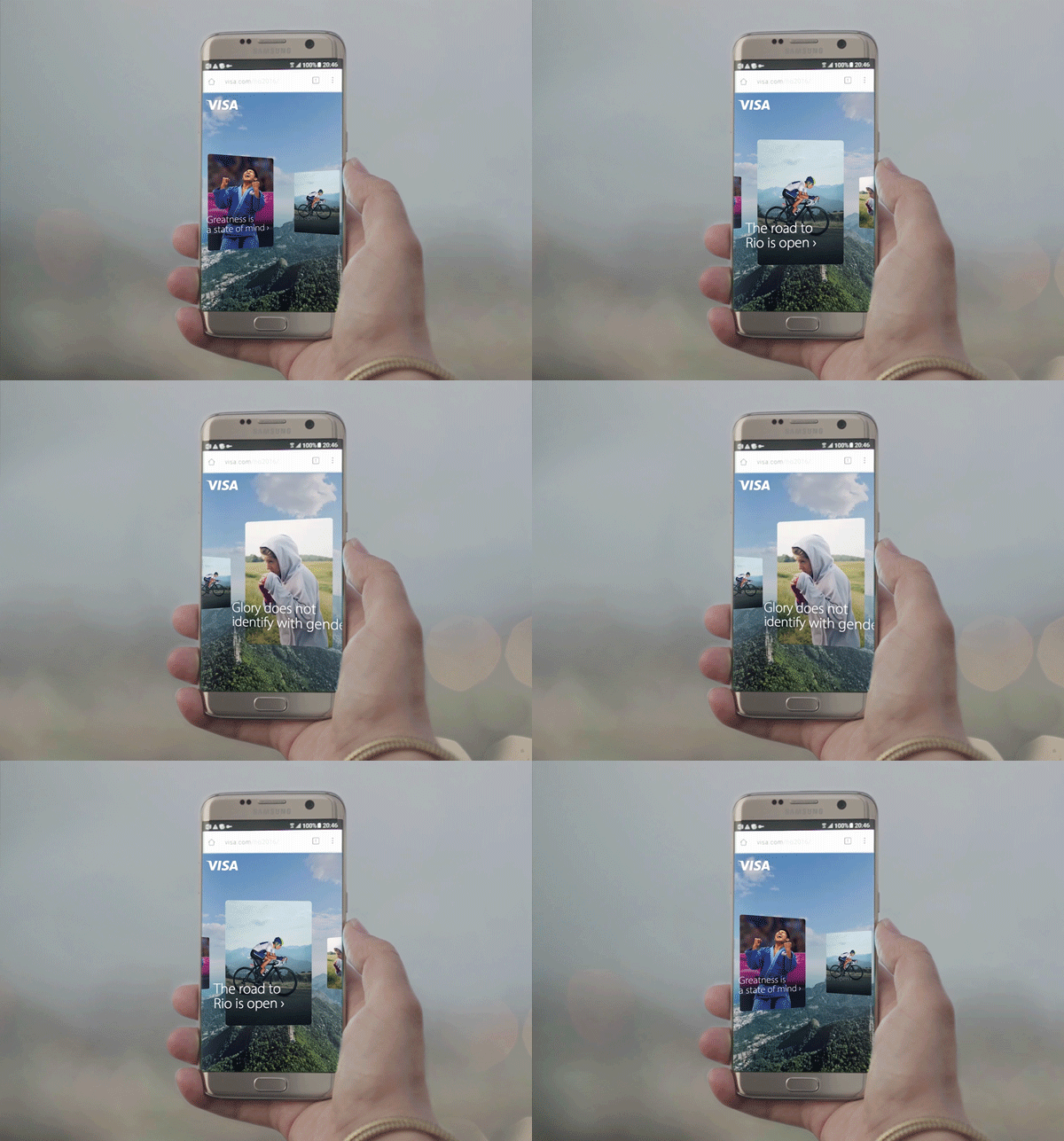
Visa, a major sponsor of the 2016 Olympic Games, has launched a 360-degree story experience featuring 12 inspirational vignettes. “Celebrating the acceptance of everyone, everywhere,” Visa’s slogan for its campaign applies to both the diverse athletes under sponsorship, as well as the claim that Visa cards are accepted in more places than anywhere else.

Viewable on desktop yet designed for mobile, the Rio 2016 campaign offers a 360-degree experience allowing users to rotate the menu, set against a panoramic view of Rio. Each of the 12 stories feature an idea, such as diversity in religion or gender. Once a story has been selected, users must simulate one of three methods of paying with Visa—waving, swiping or dipping an interactive image of a credit card, where users are briefly educated on how to use the card without being overly intrusive to the stories. The site is also designed to be viewed in portrait mode, so users don’t have to tilt their phones while navigating stories.

The stories themselves are each about 15 seconds long and vary from slide shows to video, each with its own message. “Diversity fuels competition, raises bars and shatters records. It goes beyond race, gender, age or ability,” one slide show reads.

Every story ends with a variation of Visa’s message of diversity, such as “all genders accepted here,” or “all ideas accepted here.” Users can then share the experience with others via Facebook and Twitter.

Visa 360 website

With 60 athletes, 2016 Team Visa is the most expansive group of Olympic and Paralympic athletes that the financial company has supported to date. The team has grown by 62 percent since the last Olympic Games, with athletes representing a range of 26 sports, from diving and dressage to taekwondo and table tennis. This year’s Team Visa includes the 10 competitors on the International Olympic Committee’s first-ever team of Refugee Olympic athletes.

“The refugee Olympic athletes are inspiring the world with their incredible stories of perseverance and bravery, overcoming great odds to get to the top of their respective sports and compete on the world’s stage,” Chris Curtin, Visa’s chief marketing innovation and brand officer, said in a press release. “These athletes, who will march with the Olympic flag at the Opening Ceremony in Rio, are a powerful addition to the Team Visa family, each embodying Visa’s belief in acceptance for everyone, everywhere.”

The “360-degrees of Acceptance” experience has been released in 81 markets in seven different languages. The site launched last week, but Visa declined to comment on traffic or sharing activity so far. Visa is no stranger to 360-degree experiences, having launched an interactive app for the 2014 Winter Olympics, allowing viewers to “train” alongside athletes from their mobile device.

Visa also used 360-degree videos earlier this year to profile NFL rookies Paxton Lynch, Braxton Miller, Shaq Lawson and Jaylon Smith ahead of the NFL Draft.

International EGames Group CEO Discusses ESports Showcase During Rio Olympics

There is eSports competition happening in Brazil August 15 and 16, but it’s not officially part of the Olympic Games. The Rio 2016 eGames Showcase takes place at British House in the historic Parque Lage in Rio De Janeiro. It’s part of a new push by the International eGames Committee (IEGC) to award medals to the best eSports players and teams across multiple eSports games. The competition will be livestreamed on Twitch and ESL helped set up the matches.

The competition this year will include some of the top SMITE teams from Brazil through partnerships with Hi-Rez Studios and Level Up. Nintendo is also on board with some of the top Super Smash Bros. players from around the world, including reigning EVO Champion Ally (from Canada), the winner of Smash Factor 5, Leo (from Mexico), and Larry Lurr (from the US) and J. Miller (from Great Britain). Casters Keitaro and juiceDoom will call the action.

Chester King, CEO of the IEGC, has watched his two teenage boys live and breathe eSports since 2005. He’s seen first-hand that eSports, in moderation and as part of a balanced life, can deliver great benefits. But with recent tournaments like The International awarding over $20 million in prizes, he didn’t want eSports to become all about the money. So IEGC was born. King explains his vision for the eGames in this exclusive interview.

eGames Rio 2016


Can you explain how the eGames came about and what role the British government has in this organization?

With over 20 years working in “traditional” sports, I realized that a medal-only competition was missing, so approached the British Government and the International Olympic Committee (IOC) about my plans to create a new international eSports competition—The eGames.

My uncle represented Great Britain in two Olympics and he always talked about the magic of them—as all the superstars from the various sports were in the same place at the same time. What we want to do is recreate that magic with the eGames, bringing together the best players from across to the globe to participate in a minimum of 20 titles across PC, console and mobile.

Originally, we wanted to call it the “elympics,” but the IOC suggested the eGames instead (please note, we are fully independent have no association with the IOC). I then contacted a group of like-minded people in the eSports industry to support the eGames vision who created the International eGames Committee, a not-for-profit organization. The British Government was supportive of our aims and have helped with the launch in April and also with the Rio eGames showcase. They are not involved financially.

Who is involved when it comes to advisors and members of the IEGC?

We have had a lot of help from most of the eSports industry, but in particular, World Gaming from Canada. The members of International eGames Committee’s International Advisory Board are all non-paid and their role is to advise the eGames in various aspects, but not with the title selection or team selection. They sit on the Advisory Board for 12 months, and the current members are Dr. Jo Twist (CEO of Ukie, the UK’s largest trade body), Jude Ower (experienced in global charities in gaming), Andrew Smith (Pinewood Studios), Andy Payne (20 year gaming veteran), Daniel Cossi (Brazilian representative for IESF who has helped the eGames in Rio) and Veronique Lallier (VP European Publishing at Hi-Rez).

How did you choose which eSports titles to focus on for this event?

We had a few restrictions. The British Government was sensitive about first-person shooter titles, and due to the physical space with British House, we were limited on the number of people we could have gaming. But we wanted to show a couple of titles to give a real flavor of what competitive video gaming is about.

How have you worked with Hi-Rez and Nintendo on this event?

Hi-Rez helped source some of the best players in Brazil and Nintendo UK helped us contact a few of the players who are participating, but there is no financial arrangement with either.

https://youtu.be/5mVYnfJS73U?list=PLqMnSYeIWk0bEU-maL8nC5iX_XFzxuAUz

Was there interest from larger eSports companies such as Riot, Valve or Blizzard for this type of competition?

Yes, in particular, Activision Blizzard, but due to the size of the room we were limited on the titles we could have.

How are you tapping into the global media presence in Rio for the Olympics to connect them with the eSports phenomenon?

The team at British House have helped us in this regard, but we already had great interest from mainstream media such as ESPN, CNBC, Sky Broadcasting and The LA Times, among others.

What does livestreaming open up to this type of competition in reaching gamers?

The current gaming audience does not watch TV, so working with Twitch is the best way to do so.

Are there any sponsors or brands involved in this Rio showcase?

No, we wanted it to be as “pure” as possible—we like the Wimbledon look of presenting tennis, and so wanted something similar.

In general, how does your organization work with sponsors and brands around eSports?

We are in discussions with various brands about being an eTeam sponsor per country for the national qualifiers 2017 and the inaugural eGames in 2018.

Do you see this competition becoming a regular eGames event at both future Summer and Winter Games?

No. Our showcase in Rio happens to be the same time, but in 2018 and 2020, it will be after their games. The IOC is aware of our aims, but there is no association.

What potential do you see for the IOC adding eSports to the Olympics in the future?

 While we share the premise of competing for medals and national pride as opposed to prize money, we didn’t establish the eGames with future inclusion in mind. I think it would be logistically difficult to have the number of arenas required and eSports athletes housed at the same time.

The International eSports Federation (Ie-SF) from South Korea is trying to push for IOC recognition, but they are a separate organization.

How Cedar Point Became An Augmented Reality Theme Park

As the tremendous success of Pokémon GO demonstrates, augmented reality can turn the real world into an incredibly engaging game that challenges players to head out and explore. Cedar Point, located in Sandusky, Ohio and known as “The Roller Coaster Capital of the World,” recognized the tremendous potential of AR technology and updated its app with The Battle for Cedar Point experience. With it, attendees can join different roller coaster-themed clans to compete with each other by scanning different areas of the park with their smartphones, such as signs and special t-shirts, for an augmented reality experience. The technology essentially turns the theme park into one gigantic video game. At the end of the day, members of the winning clan can purchase a special pin to commemorate their victory.

https://www.youtube.com/watch?v=QmzjmOP__Ss

Tony Clark, director of communications at Cedar Point talked to [a]listdaily about using augmented reality to enhance the roller coaster park’s experience.

When asked about how the AR game worked, Clark replied, “When guests arrive at the park, they’ll access the game through our new mobile app. They then join one of five ‘clans’ that represent our roller coasters. Throughout the day, they’ll point their phone at ‘targets’ in the park (ride ID signs, park maps, etc.) and most of those targets will come to life on their phone. They receive points by scanning those targets and by answering trivia within the game. At the end of each day, the winning clan is announced at our Luminosity nighttime show. Also, anyone who achieves a certain point level in the game can purchase a pin in our merchandise locations that represents their clan. And if they’re a part of the winning clan of the day, they can also purchase a victory pin, highlighting that they were the winner for the day.”

“We’ve been keeping an eye on emerging technologies and how they may enhance the guest experience in the park,” said Clark, describing how Cedar Point came up with the AR experience. “With augmented reality becoming so popular in gaming apps, and with the built-in environment to play a fun, competitive game, it made sense for us to dive into it with the debut of our world-record-breaking dive coaster, Valravn.”

With the AR experience, Cedar Point essentially becomes “gamified,” which encourages attendees to engage with the theme park like never before. “We’re able to transform many locations into targets,” said Clark, “so we’re exposing guests to attractions or areas of the park that they maybe haven’t experienced before or haven’t visited recently. There are also targets placed inside Valravn’s queue, so that’s a great way to boost engagement in an area where guests are likely already on their phones.”

Clark also went into detail about how Cedar Point got the word out about its unique experience. “We’ve promoted The Battle for Cedar Point through our traditional news releases, in-park audio announcements, pushes through our mobile app, e-newsletters, our website, in-park TV network (FUN TV) and social media. We’re encouraging the use of hashtag #BattleforCP when playing the game.”

According to Clark, attendees have been “overwhelmingly positive” about the experience, with Millennium Force being the most popular clan with the most victories this season. “Guest are having a great time playing it,” said Clark, “and it gives them an additional fun thing to do in the park. The best part is, you can choose to have a normal park experience, or you can enhance your experience by playing the game. Our guests are in control of the kind of visit they’d like to have when they’re with us.”

https://www.youtube.com/watch?v=VsX9PL6CEqk

Cedar Point is one of the first theme parks to include an augmented reality experience, but we asked Clark for his thoughts about competing attractions such as the Six Flags virtual reality roller coasterwhich was developed in partnership with Samsung using the Gear VR viewer to put users into different environments as they rode a roller coaster. “While we can’t speak to what they are doing, I can say that we’ve been beta testing virtual reality headset technology on our Iron Dragon roller coaster at limited times,” Clark responded. “We’re looking at how the tech performs and holds up, what our loading and unloading times are, and most importantly, what our guests think of it. So far, that response has been completely positive.”

“Cedar Point will always remain a quintessential amusement park experience,” Clark said, when asked about how AR and VR technology might impact future promotions. “However, with the advancement of these technologies, it could change the way we talk about the park, share our news and give our guests more reasons to come back. It’s critical that we dip our toes in. These experiences are new, different and fun. If they can enhance our guests’ visit to the park, we’re definitely going to try to make them work.”

Playable Mobile Ads Get Winning Results

As mobile ads continue to grow in importance as solutions to the app discovery problem, advertisers are constantly looking for ways to improve the performance of mobile ads. One such method is the playable, interactive mobile ad, which mobile advertising DSP CrossInstall has been creating and deploying with great success.

Founded in 2012 by several advertising and gaming executives, CrossInstall is a bootstrapped company created to support mobile user acquisition on both the iOS and Android platforms through programmatic bidding. As their website notes, “CrossInstall offers a unique approach to mobile game advertising as it combines custom-built playable mobile gaming ads with a programmatic, performance based bidder ensuring the ads hit the right audience.”

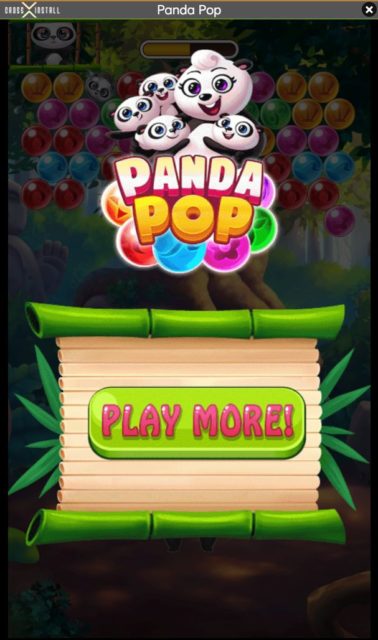
Panda PopCrossInstall creates its playable ads using a combination of HTML 5 and JavaScript, and uses a customized bidder with proprietary algorithms to deliver those ads. “The performance-based bidder drives app installs for advertisers at scale on various mobile ad exchanges including DoubleClick, MoPub and others,” notes CrossInstall on their website. CrossInstall’s clients among mobile game publishers includes Game Show Network, Machine Zone, SGN, PuzzleSocial, Pocket Gems, NaturalMotion and Big Fish Games among others.

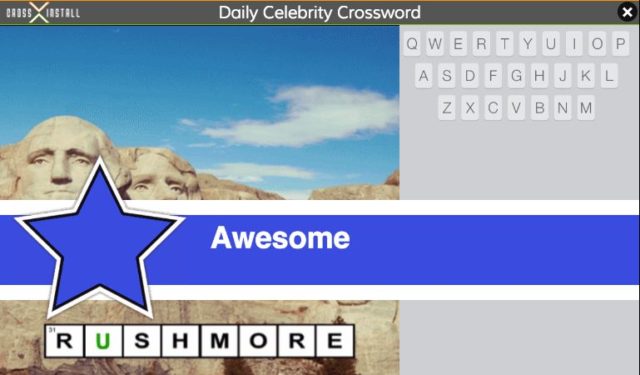
Two notable case studies shown on CrossInstall’s website are with PuzzleSocial (and their game Daily Celebrity Crossword) and with SGN (and their game Panda Pop). CrossInstall found with Daily Celebrity Crossword that new user growth was 20 percent higher, and the campaign resulted in about 50 percent of programmatic traffic and 20 percent of overall traffic. “Since we started working with CrossInstall we have experienced impressive new user growth,” said Shamanth Rao, director of acquisition at PuzzleSocial. “Because of the highly engaging nature of playable ads, our conversion rates on playables from CrossInstall are about 20 to 25 percent higher, allowing us to scale aggressively.”

With SGN, CrossInstall produced double-digit increases in both LTV and revenue for Panda Pop. “With one of the highest ARPI, player/user percentage, day one retention rate, and LTVs we have seen to date, CrossInstall has proven to be a top, consistent install provider for Panda Pop and other key titles,” said Sumee Oh, director of marketing and user acquisition at SGN.

Jeff Marshall
Jeff Marshall, CrossInstall CEO

Jeff Marshall, CEO of CrossInstall, spoke with [a]listdaily recently about their playable, programmatic mobile ads and how they are performing for mobile games.

How did CrossInstall get into playable ads?

We started CrossInstall started about four years ago, focused as a mobile DSP [demand-side platform] working in the programmatic space. I did game development for a number of years along with some of the other co-founders, so we knew that space well. We worked mostly with gaming clients. They’re sophisticated buyers on mobile, focused on their return on ad spending and how to measure that well. About a year ago we started getting into the interactive ads. The years before that we would just work with whatever ad creatives the advertisers would send us—their videos, their image ads—but then we decided to take on doing the creatives ourselves. We found that interactive is really the way to go. It gives so much more power to both the process of creating the ads and iterating on the campaigns. In the end it’s just higher quality traffic for the advertiser. Giving users a preview of what the app is like is a powerful concept.

How effective are your playable ads compared to ordinary mobile advertising?

We’ve done some benchmarks, and we’ll see about a 3x conversion difference between a standard full screen image ad versus a playable ad. Right off the bat, it’s more engaging and it gets a higher conversion rate than your traditional ads.

How difficult is it to create these playable ads? They must be more difficult to create than ordinary ads. What’s the process like?

It’s a fairly difficult process. What’s appropriate for a 20-or 30-second ad experience? That’s one of the challenges. It’s not just about ‘you have a crossword game, I’m going to pop a crossword in front of you.’ You really have to take some care and thought into how you are going to present that in a short ad experience, while still focusing on what the core mechanic of this app is that we’re trying to advertise.

It usually kicks off with a brainstorming process with our creative team in-house. We’ll try a bunch of concepts, we’ll storyboard those, go back to the advertisers and go through the storyboards and see how they feel. It’s all HTML 5/JavaScript. The design and development process takes place here, and we’ll review that with the client. Typically the clients care about how their brand is presented—they’re the experts in what their app is like and they want to make sure the experience reflects that well.Celebrity Crossword

Now we start running this creative. Since we’re doing a programmatic buy, we’ve got our algorithms in the background that are trying to model what users are going to take action, convert, and become good quality, post-install users. So it’s out there doing the buying and trying to price these impressions. The creatives themselves, we’ll change that and iterate over time. We’re capturing data on what people are doing. If you start interacting, how long does it take before you interact, how many times do you interact with the ad, what elements are people reacting to? All those stats are collected and those ads are dynamically changed on the fly. It’s an ongoing process; the campaigns definitely iterate over time.

Do playable ads work better for certain types of games more than others?

We’re seeing them working pretty much across the board. You’ve got very casual titles, there’s also non-gaming social applications and things like that, then you have your hardcore RPG games—it works well there, too. The thing that changes is what you want to do in the creative itself. If you have a very casual title—a match-3 game—you’re going to probably end up being true to the application. If you have a hardcore RPG it’s hard to make a twenty second experience that really shows you what that roleplaying game is like. So you capture a couple of mechanics of it, or you just play off of the theme. You have to get more creative the more hardcore the game gets, and with the lighter games or applications you can be more true to the experience.

What kind of reach do you have with these ads, and what kind of scale are you seeing?

That’s what’s been really fun about the programmatic part. We’re buying in all the real-time ad exchanges, so the reach touches about every mobile user out there. We’re working with Google, Twitter, Rubicon and a number of these other companies. We’re seeing up to a billion unique device IDs in a week. We can reach globally. The challenge in the programmatic space is it’s a competitive bidding environment, so you have to have the algorithms to back it up and buy intelligently.

What’s ahead for CrossInstall in the next year?

We’re a small company—24 people now—we’ve been a bootstrap company to this point and we’re capturing a lot of success now. We want to be the top mobile DSP out there, and be the clear choice if you want to do performance buying. If you want to do interesting things with creatives, we want people to think of CrossInstall. We’re already one of the top DSPs out there in terms of what the ad exchanges tell us, but we’d like to be the clear winner on that. Gaming is our background and it’s been our focus, but we want to spread outside of gaming as well and grow that side of the business next year.

ESL Bringing Influencers And Huge Prize Pools To Gamescom

ESports League (ESL) is headed to Gamescom, reinforcing its eSports brand through strategic partnerships and community engagement. Setting up shop in Hall 9, the ESL Arena will host a number of video game tournaments throughout Gamescom including Counter-Strike: Global Offensive (CS:GO), Elsword, Hearthstone, Heroes of the Storm, Lawbreakers, League of Legends, Overwatch and more. These tournaments are far more than demonstrations—the Heroes of the Storm Fall Regional and Overwatch Atlantic Showdowns each feature a $100,000 prize pool.

Influencers will play a major role in experiential marketing for ESL, pitting Boss Key’s Cliff Bleszinski and his squad against a team of influencers within his upcoming first person shooter game Lawbreakers. The eSports giant has created a number of strategic partnerships for the events, including HP, Intel, Logitech, Nexon and Samsung. These tech companies will in turn have access to ESL’s eSports fans with exclusive activities in their booths. Scheduled events range from YouTuber appearances to VR experiences, as well as cosplay and gaming competitions among a showing of the latest gaming technology. Official partners of the Arena include Kinguin, Lioncast, One.de, Plantronics, Red Bull, Twitch, Wüstenrot Bausparkasse and Zowie.

Not usually associated with eSports, Nintendo is joining the fun as well, hosting a live Splatoon Showdown on the Beta Stage of the ESL Arena on Aug. 17, which will be livestreamed across Twitch and ESL, with Gamescom attendees able to watch the finals live on stage. Splatoon is Nintendo’s family-friendly take on the shooter genre that utilizes teamwork and shoots ink rather than bullets. Perhaps this is a sign that Nintendo wants a piece of that $1 billion eSports revenue.

ESports fans will be able to keep up with the latest goings-on through the official ESL Event App for iOS and Android. The app, designed to keep users engaged for ESL One Frankfurt and ESL One Cologne, includes schedules for all stage and booth activities. Of course, the ESL shop will also be on hand for fans to pick up souvenirs and gear to support their favorite clans.

Being only two months after E3, video game publishers face the challenge of when and where to invest in a large expo presence throughout the year. ESL has an advantage, in that eSports is relevant year-round—unlike E3, Gamescom is open to the pubic and also happens to be the largest video game event in the world, making it the ideal place to build hype around its culture of eSports.

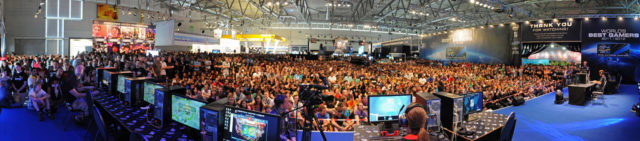
esl_gamescom_2012

Spotify Steps Up Its Game With New Music Channel

Spotify has created an all-new gaming channel, where fans can enjoy a variety of original soundtracks or explore curated and community-made playlists.

As the official music streaming service for PlayStation 3 and 4, it comes as no surprise that the company would create this channel—just that it took so long. The gaming channel is most likely a response to the sudden demand for Pokémon music to listen to while users are out playing Pokémon GO. Over the weekend, following the game’s release in July, Spotify reported a 362 percent jump in streams for the original television theme song Gotta Catch ‘Em All.

The new gaming channel features over 100 original video game soundtracks ranging from classics like Mega Man and Grim Fandango to new releases such as No Man’s SkyHalo 5 and Uncharted 4. Playlists range from “Power Gaming,” a collection of tracks designed to get you pumped up, to “Retrowave,” filled with 1980’s-inspired synth and electronica.

Spotify has partnered with popular gaming sites to create their own “guest lists,” a chance for brands like Polygon, Gamesbeat and Mashable to cross-promote the gaming channel to their fans.

This new feature also adds opportunities for gamer-focused marketing. With over 100 million users (30 percent being paid subscribers), the streaming service can now offer the channel to prospective advertisers. In March, the company introduced Billboard (popular among desktop users) to its mobile app, which presents display ads across both iOS and Android devices with a system called Overlay Mobile. The feature uses pop-up ads as a large screensaver when users return to Spotify after long periods of inactivity, providing a whopping 100 percent viewability.

Gaming isn’t the only way Spotify is diversifying. The streaming giant is also producing 12 original shows for the video and podcast format. The most recent announcement is Deconstructed, an animated video debuting on YouTube. The first episode, a collaboration with short-form animation studio ATTN, tells the story of Electronic Dance Music (EDM) from its roots in the 1970s to the raves of today.

Although music remains the main focus for Spotify, offering a variety of content for users casts a wider net for brand discovery—and digital ad revenue.

Nvidia Explains The Power Of The International At KeyArena Through VR

Nvidia is on the ground in Seattle for the second year in a row, collaborating with Valve for the $20 million Dota 2 championship as the official graphics card of the tournament. In addition to featuring the largest prize pool in the history of eSports, The International (TI6) is also the first major tournament played using GeForce GTX 1080 GPUs—which James Grunke, head of global eSports at Nvidia, said is the fastest GPU on earth—on 180Hz G-Sync Asus HD monitors.

“The International keeps growing in excitement,” Grunke said. “We expect the audience to set records again this year. It’s amazing in digital media, the way eSports has exploded, and Dota 2 is truly a global phenomenon, bringing kids together from around the world.”

Another first for the tournament is the launch of Valve’s Dota 2 VR Hub, which allows HTC Vive owners to experience the eSports action with up to 15 friends in a public lobby or an invite-only private viewing party. The Hub features both live and recorded matches in a virtual theater.

Mark Smith, worldwide manager of developer relations for games at Nvidia, said that Valve set up Vive demo stations at KeyArena to showcase various VR games, including AudioShieldProject Arena, Space Pilot Simulator, Hover Junkers and the Dota 2 VR Hub.

“All of these demos are running on the GeForce GTX 1080,” Smith said. “You can check out the mixed reality stream to get a peek at the VR games being shown live on Twitch.”

TI6-announcement_image

Smith said virtual reality opens up exciting opportunities for new ways to view and engage with eSports content.

“The Dota 2 VR Hub is a great example of this,” Smith said. “It allows players to experience the Dota 2 matches in VR, allowing users to watch games either in a virtual theater or by diving into the game to get an eye-level view of the action. It enables fans who can’t make the trip to the TI6 a way to have a similar social experience as watching the matches live at KeyArena.”

Grunke said a five-man video crew has been on the ground this week to capture exclusive content for the Nvidia Gaming Network.

“Our philosophy for providing content for our viewers is behind-the-scenes and human stories for fans that don’t have the opportunity to talk to players themselves,” Grunke said. “We’re not a play-by-play highlight film outlet; we’re a human story outlet. We also focus on performance for our audience, helping them become better gamers.”

Nvidia is actively engaging with this audience via social media. Its Twitter channel has over one million followers.

“Our Twitter feed has a ton of content with pro players and fans,” Grunke said. “We do short behind-the-scenes content that helps the fans to understand what it’s like to be a player in this league.”

Nvidia is currently running a TI6 Game Ready promotion where fans can vote for their favorite teams to win. For each vote received, the contest raises the bar for GPU prizes that range from GTX 1060s all the way to GTX 1080s with G-Sync monitors.

Grunke said having Dota 2 showcased at TI6 running on the latest Nvidia hardware is a great way to market this technology directly to the global eSports fan base. “G-Sync technology removes all of the visual noise to allow players to have a better view of the action, which enables higher performance for the pro players themselves,” Grunke said.

Valve isn’t doing a sponsor village at The International this year. The software and technology giant also doesn’t officially work with sponsors or play commercials during livestreams. “We’re there in force as a partner,” Grunke said. “Our branding is on the floor and around the VR activities. It’s our responsibility to make the news known.”

Grunke said the International is the highlight of an increasingly frenetic eSports season that is driving not only the PC industry, but new kinds of entertainment. “This isn’t a regional phenomenon,” Grunke said. “People all over the world play the same games, and follow the same teams.”

Nvidia also works with ESL and has run two CS:GO majors with GeForce GTX and G-Sync technology in addition to three ESL One Dota 2 tournaments. When a character runs past a crack in the door, a normal monitor shows just a blur, but Grunke said that with GeForce GTX and G-Sync, you can see details like their shoelaces.

GEM Box Enters Android Console Market To Capture Game Streaming Boom

With devices such as the Nvidia Shield Android TV, the Amazon Fire TV, Apple TV and the recently launched Razer Forge TV, the set-top gaming box market is looking increasingly crowded. However, French technology company, EMTEC, believes that there’s room for one more, and it’s taking on some of the biggest names in games and retail with a small device called the GEM Box.

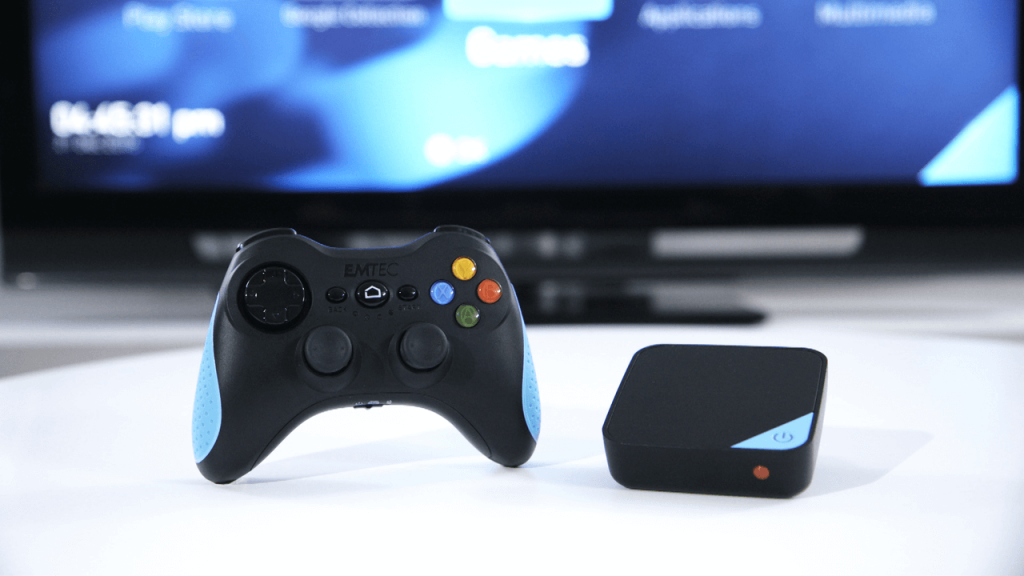
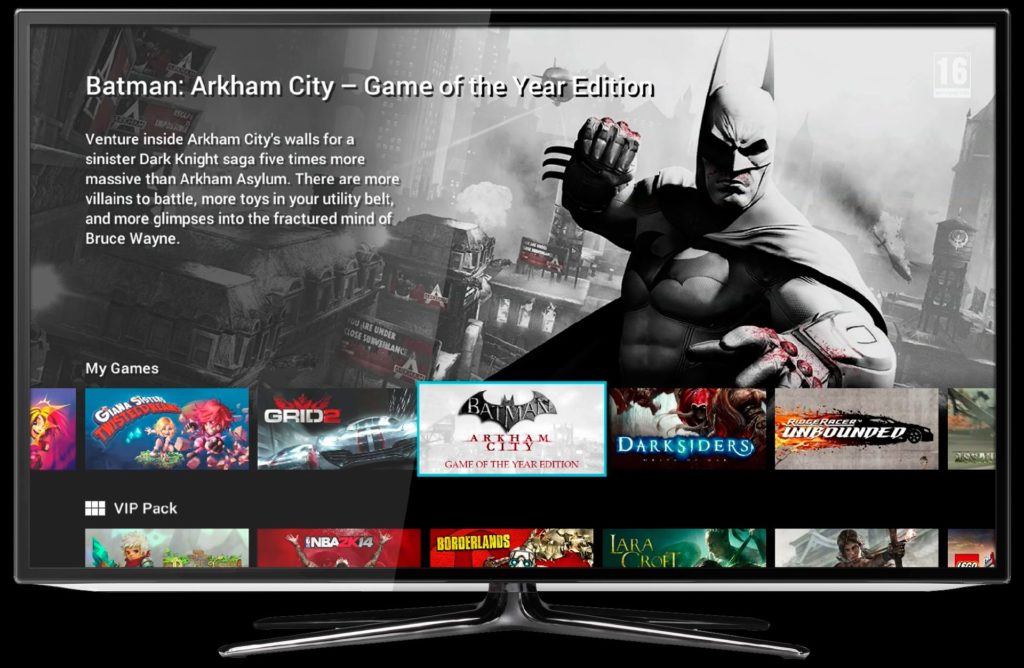
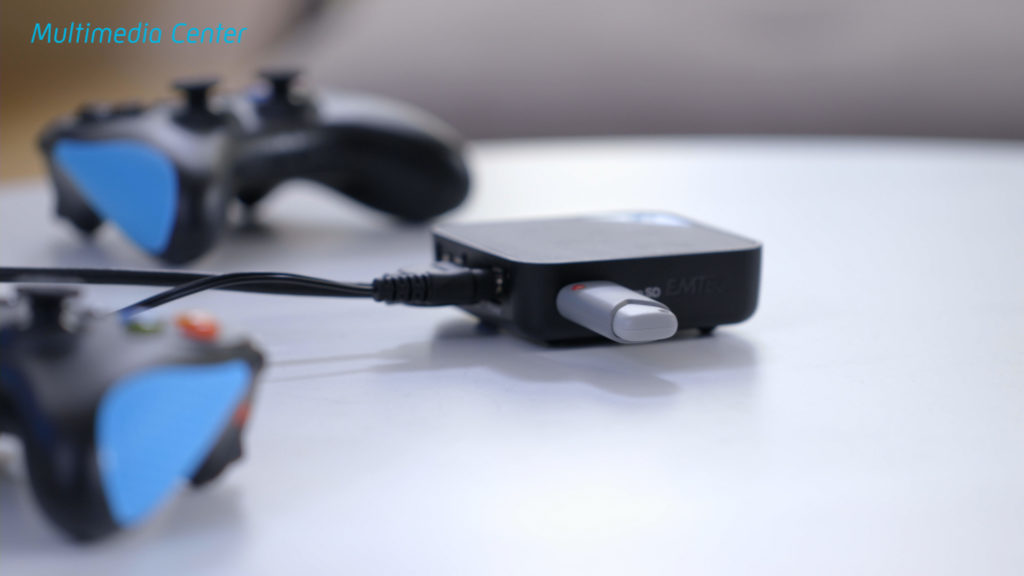
Retailing for $99, the GEM Box comes with a GEM Pad controller and connects to televisions to play Android games on the big screen. It is also one of the only set-top boxes that supports the GameFly Streaming service in addition to streaming games from PCs over an in-home network if the computer has a Nvidia graphics card. Furthermore, users can mirror content from their mobile devices, including iPhones.
GEMBox-capture_02_1280_720-1024x576

Brent Kovalsky, director of sales at EMTEC and Nathalie Lamri, the company’s marketing and communication director, spoke with [a]listdaily about entering into the growing market of gaming set-top boxes and video game streaming.

Three years ago, before Lamri joined the company and took charge of product development, EMTEC was only involved in storage products such as flash drives, hard drives and SSDs. As storage evolved, EMTEC realized that it needed to branch out into new categories, and it found a niche in developing 3D rubber USB drives that come in different shapes, such as animals. This amplified EMTEC’s presence in the retail market and helped form key relationships with retail partners, which opened the door for new creative products such as the GEM Box.

The GEM Box is EMTEC’s most distinctive product, and it’s a key part of the company’s push into becoming a better-known brand in the US. Another key component is video game streaming, which the company believes is the next streaming service to explode, the way Netflix, Pandora and Spotify did in the past.

“The set-top box and smart TVs market is booming,” Lamri said. “If you look at all the smart TVs and set-top boxes, whether it’s Amazon, Apple TV, or the Google Chromecast—and now the GEM Box, which focuses on games—we believe that the market is going to boom on the Android side, along with game streaming.”

“If we look at the millions of Roku and Amazon TV boxes that have sold, we know there’s a huge market for it. But there’s not one that’s focused on gaming,” Kovalsky added.
screen-gembox-2bis

Lamri initially partnered with a company called PlayCast, which was subsequently purchased by GameFly, which is why EMTEC enjoys a close relationship with the service. The GEM Box was developed with the realization that the future of gaming is digital, and what makes the console unique is its specific focus on gaming. The console launches later this month, and it won’t natively support apps such as Netflix or Hulu, although it may be possible through a third party app store. Kovalsky states that the company recognized that there was a niche in the market and that the GameFly streaming service would give the GEM Box the edge it needed to stand out.

Although there are a number of game streaming services available now, including Nvidia’s GeForce Now for Shield devices and Sony’s PlayStation Now, Kovalsky explains that “there are no big players out there that have been able to secure any service that has hit the mass market yet.”

When asked about competing set-top boxes such as the Nvidia Shield and its GeForce Now service, Kovalsky responded: “The Nvidia Shield is not a mass market product. It’s really targeting PC and Xbox users. It’s a premium product, it has a high price point, and it needs very high internet bandwidth—a minimum of 50 Mbps. For us, we’re targeting the mass market with the $99 price point and all the different ways to game on the box. The GameFly service only needs a minimum of 5 Mbps, but we suggest 8 Mbps.” He also stated that the average bandwidth in the US is around 11 Mbps, so the GEM Box can be used without any additional upgrades.

According to Kovalsky, GameFly is the ideal partner because it has the best global coverage and a recognizable brand name in gaming from its physical business. GameFly Streaming currently sports 72 games, and about 3-5 will be added each month. The service will also be helping to promote the GEM Box console.

https://www.youtube.com/watch?v=VlzyCJiDF0M

“I understand that we’re not the biggest gaming name out there,” Kovalsky continued, “but there are so many different ways to game on the box. It comes with four free pre-loaded Android games, which gives you something to play right out of the box without having to download anything.” The GEM Box also includes three emulators to appeal to more tech-oriented gamers that want to play vintage games.

Additionally, EMTEC will continue to add Android games to its GEM Store, which features titles that are tested by the company so that they are guaranteed to work with the console and its gaming controller or a wired Xbox One gamepad. At launch, there were roughly 160 games available.

“On the GEM Store, we have found about 160 games on Android that are super good to play on TV,” explained Lamri. “That means you can play it on the big screen with a gamepad. This was not the case one year ago.”

Although there are no exclusive games for the GEM Box at this time, Kovalsky reveals that EMTEC is working to create a selection of games that may be specific to retail partners. Perhaps in the future, a retailer like GameStop could offer an exclusive GEM Box game. Although Kovalsky admits that some partners are still feeling a little burned after products like Ouya, they all recognize and accept the GEM Box as a great product. That’s why the biggest push will be to promote the GEM Box online and encourage customers to pick it up at Target or Walmart through their respective websites.

EMTEC has a marketing relationship with Gameloft. “As you’re playing their games [on the GEM Box], you’ll see our logo—or something of that nature,” said Kovalsky. Additionally, when users are searching for Gameloft games, they’ll find marketing campaigns mentioning GEM Box.
GEMBox-capture_09

Kovalsky also states that the GEM Box is a very attractive alternative or addition to traditional consoles such as the Xbox One or PlayStation 4 because it is such an inexpensive introduction to video games. “I’d say the best reason to pick up the box is the affordability, all the features, and all the ways to game,” he said. “If you’re looking for an inexpensive way to get into gaming, this is it. You get a great value for what you’re buying. It’s a very inexpensive way for a family to game. A lot of the games on the GEM Store and GameFly Streaming can be played in multiplayer split-screen.”

Given its cute USB memory cards, EMTEC is a family-friendly brand, and the GEM Box is designed to fit into that. “The target audience for us, with all that we’ve put into the box, is family,” Kovalsky explained. “But I also think it hits that techie side because Android is an open platform. It’s a family price point, but it also appeals to that core gamer who wants to stream from the PC or play with the emulators. Plus, the GameFly service is very well received, and it has some pretty good games on it. The value is extraordinary.”
‘Endless Space’ Developer Discusses Sega Acquisition

Sonic the Hedgehog may be Sega’s iconic mascot, but the publisher has recently revealed that it’s seeing tremendous success with PC strategy game releases such as Total War: Warhammer, developed by The Creative Assembly. That success is bound to grow even further, given the enthusiastic response to Relic Entertainment’s Dawn of War III, an upcoming strategy game that takes place in the Warhammer 40,000 universe. Both developers of these critically acclaimed strategy games are owned by Sega, and the investment is paying off.

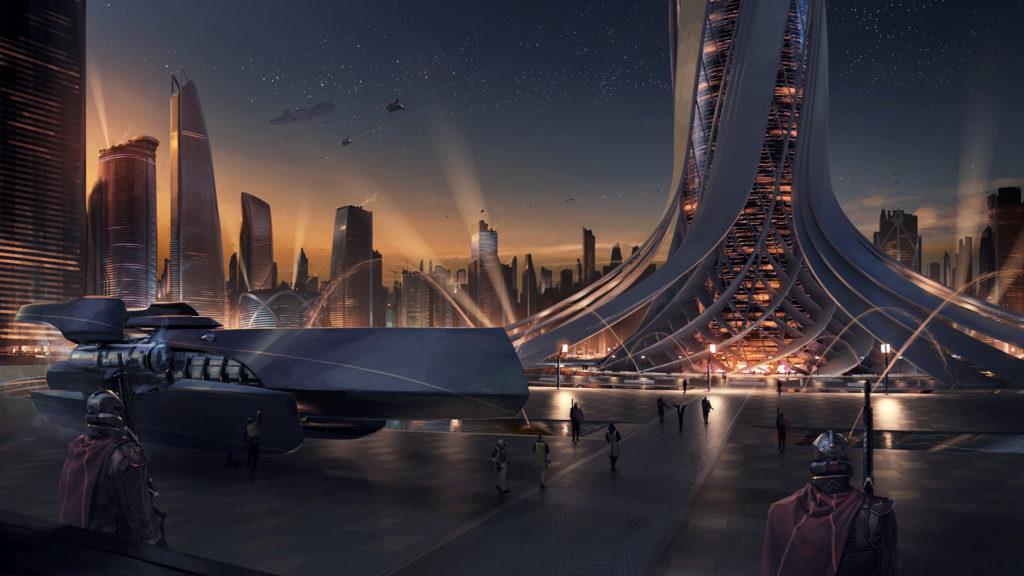
Sega expanded its roster of strategy game developers with the recent acquisition of Amplitude Studios, based in Paris, France. The developer is known and respected for its breakout science fiction strategy game, Endless Space, which launched in 2012. Since then, the Endless franchise has grown to include the fantasy-inspired Endless Legend and the roguelike defense game Dungeon of the Endless. The developers are currently hard at work on Endless Space 2 using its Games2Gether platform to engage with players during the development process by allowing fans to make design suggestions and vote on features. The sequel, which is expected to release next year, is being promoted with an “Amplified Reality” experience, where pressing the keyboard’s space bar flips the game trailer to an alternate video that runs concurrently and shows everything through a computerized sensor.

Romain de Waubert de Genlis, creative director and COO of Amplitude Studios, spoke with [a]listdaily about becoming part of the Sega family, how the publisher fits with growing the Endless franchise, and how the relationship could lead to endless opportunity.

Romain de WaubertHow did the deal with Sega come together?

It all started when some very big companies started contacting us about a year ago, very bluntly talking about acquisition. To be honest, it was not something we were considering at the time. But after the third company approached us with very convincing arguments, we decided to sit down and think about it seriously. That’s when we had some very interesting first conversations with Sega.

As our games were getting more and more expensive to create, due to increased production values, we obviously needed to generate more sales to cover the cost. So we decided we had to get more people to know about us, to increase our player base, and therefore our revenue.

But we came to the realization that this was not who we were. First and foremost, we are game creators—a creativity-driven, and not a business-driven, company. So we needed to find a company that would let us focus on game creation.

We looked a bit at publishing deals and realized that at best, we would have found a partner who would have created an economic dependence between us, taken full control of marketing and our community, and potentially killed us a few years down the road. We decided to pass on such opportunities.

If we wanted to keep growing our ambitions, we figured that joining forces with a bigger company was, therefore, the only way to go, and Sega was by far the most attractive company to join. It has a great history, brands we are immensely fond of, and a development vision very much in line with our own.

What impressed you most about Sega’s marketing approach?

The most interesting thing about them is how the studios lead not just their production, but also their marketing and PR worldwide, with the headquarters organized as a support company. Therefore, we were allowed to keep working with the same level of agility and control as before, but with the muscle of an international publisher behind us.

What does the deal with Sega enable Amplitude to do that it couldn’t before?

Play Dawn of War III and all Total War games before everyone else! Just for that, it was worth it!

More seriously, we now have the right partnership to expand in some territories where we had a lot of potential but lacked reach. We can also look at safely growing our team, as we had always wanted, to reach around a hundred developers three years from now while attracting top talent who would be reassured by Sega’s solid reputation.

In term of PR, we can already see quite a difference, where being part of the Sega family definitely opens many new doors!

Endless Space 2 - Battle - Sophon vs Cravers

How do the Amplitude and Sega brands complement each other?

Looking at Sega’s already strong position in the strategy segment, with quite a few amazing brands like Dawn of War, Company of Heroes and Total War, it is flattering to believe we could reinforce their lineup.

Yet it looks like with our turn-based 4X games, Endless Legend and Endless Space, and our roguelike Dungeon of the Endless, we’ll bring a new set of game development experiences backed by a strong community. I hope that the Endless Universe will find a great new home within Sega to thrive and explore new possibilities!

How have fans responded to the news so far?

Globally, it has been very positive, as many understand that having Sega backing us means a bright future for our games. They bought Creative Assembly twelve years ago—and it is thriving—Relic four years ago, and now we are all drooling in front of Dawn of War III. I can’t wait to see what Amplitude will become in 10 years thanks to them.

Some fans were concerned by what people assume is Sega’s DLC policy. We are still trying to understand what it means for our players. Overall, as we are very pro-DLC, we want to make sure it is seen as added value to our games.

Endless Space 2 - Academy

Does this deal impact the development and release of Endless Space 2?

Sega has been great. All we have been told so far was: “Guys, there is no rush, quality first, ship it when you feel it is ready, and definitely not earlier to please us.” We were surprised, but that felt good to hear. So we could say that we took a bit more time, for some extra polish.

Amplitude has stated that the PC strategy game market has become a very crowded place. What do you think it is about the Endless franchise that helps it stand out from the rest?

The Endless series shows that you can make a game in what is believed to be a very niche, yet respected, genre, and bring it to a bigger audience.

Our recipe? Attention to details: visuals by Corinne Billon (art director at Amplitude) and our amazing artists; music by FlybyNo; interface worked on by Mathieu Girard (CEO of Amplitude) and his team from the first day to the last day; story written and polished by Jeff Spock (narrative director at Amplitude) and his team of writers, and finally a game design improved, tweaked, tuned and balanced in collaboration with our amazing community through the Games2Gether platform.

There is never an area of the game [development] where we believe we can rest on our laurels, or that it’s already good enough. We polish it, and then polish it some more until we love it. Only then do we move on.

Gamescom 2016: Fewer Press Conferences, More VR And Mobile Games

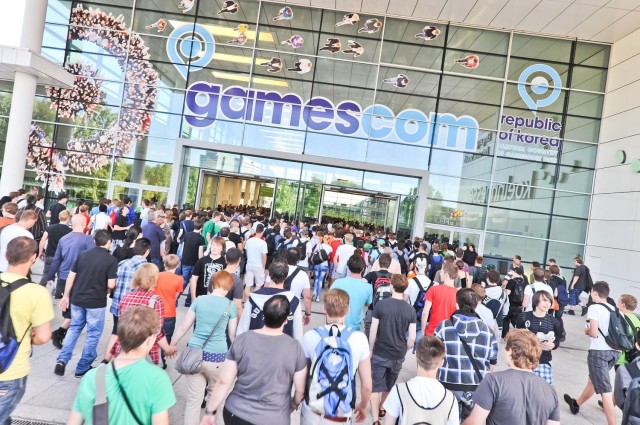
Game Developers Conference Europe (Gamescom) is just a week away, running August 17 – 21 in Cologne, Germany. It is the world’s largest gaming event, (measured by exhibition space and number of visitors) with 345,000 visitors, more than 6,000 journalists and 700 exhibitors from 88 countries attending the show in 2015. Unlike E3, Gamescom is open to the public, making it the premiere destination for developers and consumers alike.

Current Trends

As with E3, game announcements and demos are expected to include more virtual reality and mobile titles than in previous years. Over 100 (that’s roughly 1/8) exhibitors will present mobile games and tech, rising 20 percent from 2015. Amazon is planning its biggest presence to date, looking to woo Android developers to its app marketplace by hosting the Big Indie Pitch event August 16, Developer Day on August 17 and featuring its very first booth at Gamescom.

Ubisoft will be on hand with VR demos for Eagle Flight and Star Trek Bridge Crew, along with exclusive behind-the-scenes footage from the upcoming Assassin’s Creed movie. Two of Crytek’s upcoming projects—Robinson: The Journey (for PlayStation VR) and The Climb (for Oculus Rift with Oculus Touch) will be playable in the public portion of the expo. Hewlett-Packard will show its all-new gaming portfolio at this year’s Gamescom, including the Omen X VR PC that comes in a backpack.

Announcements

While most new game and console announcements traditionally occur during E3, Bandai Namco will be announcing a brand-new IP during Gamescom, which has fans speculating. The company also confirmed via press release that attendees will be able to check out an early build of Tekken 7 along with Dragon Ball Xenoverse 2, a fighting game coming out in October set in the Dragon Ball universe.

GamesCom

While Microsoft made strong announcements during E3, the company has opted not to hold press conferences at Gamescom 2016. It will instead host a “new and more intimate Xbox FanFest experience” to accompany its show floor presence according to general manager for Xbox marketing, Aaron Greenberg. Details of the experience haven’t been revealed yet, but fans attending the show will be able to try out Gears of War 4, Forza Horizon 3, Halo Wars 2, ReCore, Sea of ThievesWe Happy Few, Everspace and Cuphead, among others. Last year, Microsoft used its press briefing to announce Halo Wars 2 and show off trailers for Scalebound, Quantum Break and Crackdown.

Sony will show off its wares, but don’t expect to see the new PlayStation Neo console. Also, for the second year in a row, the company will not be hosting a press conference. It will most likely save new announcements for Paris Games Week in October, as it did in 2015, but Gamescom attendees will still be able to play game demos and try out PlayStation VR.

Rather than hold a press conference, EA will host a “Grand Opening” the day before Gamescom, where it plans to reveal a “trainload” of information about Battlefield 1, while offering hands-on demos for Titanfall 2 and FIFA 17. 

Gamescom combines the fan-focused events of San Diego Comic-Con with the demos of E3 and networking of the Game Developers Conference (GDC) to create the ultimate destination to get fans excited for holiday releases.