‘Call Of Duty: Infinite Warfare’ Zombies Hassles The Hoff And Rocks Snapchat

Trapped in a zombie-infested theme park? Frankie says “relax.” Activision’s first look at Call of Duty: Infinite Warfare‘s zombie mode takes players back in time to a 1980s-style playground full of Day-Glo, big hair and a whole lot of tributes to the era like Michael Jackson’s ThrillerRevenge of the Nerds, parachute pants and track suit-wearing rap stars.

To promote the new game, Activision is taking advantage of Snapchat’s zombie filter with “zombie karaoke.” The new sponsored lens morphs users into zombies wearing a headband and holding a microphone. Fans were able to record a video of themselves singing “Relax” by Frankie Goes to Hollywood with the undead overlay and share it with their friends. Available initially in the US, the lens went live internationally on Friday—marking the first time a gaming company has purchased an international lens.

Zombies in Spaceland is a separate storyline in the usual Call of Duty: Zombies series, and follows four aspiring actors who come upon a mysterious movie theater for an audition. They’ve been invited by director Willard Wyler, portrayed with voice and likeness by Paul Reubens (Pee-wee Herman), who was once the shining star of the horror genre. Unbeknownst to the actors, they will be transformed into characters and transported straight into Wyler’s film to fight against waves of zombies in a space-themed amusement park set in the 1980s.

The four actors will meet none other than David Hasselhoff (Knight Rider, Baywatch), who plays a DJ in the theme park in voice and in likeness. Players will get to choose from a cast of four 1980s archetypes—the Valley girl, the jock, the rapper or the nerd.

Zombies in Spaceland aims to attract both hardcore and new Call of Duty zombie slayers, while creating nostalgia with pop culture references. “It’s accessible for new players,” explained Brian Bright, project director at Infinity Ward in a press release. “But [it] also has a deep layer of progression, brimming with easter eggs and various game features that will be a blast for hardcore zombies fans. We can’t wait for fans to go hands-on this fall.”

Nostalgia plays a large part in marketing, and studies show economic decision to be 70 percent emotional and 30 percent rational. Netflix’s break-out hit, Stranger Things pays tribute to the 80s, and movie-goers are experiencing reboots at a staggering rate. At the end of the day (or video game session), however, success comes down to quality content to match said nostalgia. Time will tell if crimping irons and Valley girl speak will be enough to bring back memories for players as they slay zombies in the new Call of Duty game, but the undead wearing parachute pants is sure to induce a few chuckles.

Call of Duty: Infinite Warfare launches November 4 for PlayStation 4, Xbox One and PC. Those who pre-order any version of the game will receive bonus in-game digital items.

Amazon Job Posting Hints At Original VR Content

According to a job posting on LinkedIn, Amazon is seeking a “virtual reality experience development executive” to produce “innovative mixed reality experiences for distribution on Amazon Video.” Amazon Studios has seen success for original content such as The Man In the High Castle and Transparent, but the studio is obviously planning something a bit more interactive. Applicants are expected to have experience with the development of TV shows, movies or video games, but also VR technology and content production.

Mixed reality implies the use of augmented reality (AR), perhaps direct tie-ins to Amazon programming. Netflix saw great success with virtual reality and 360-degree video tie-ins to Stranger Things, and Berlin Station, a thriller coming to EPIX this fall, received a fully interactive, 360-degree video experience. Considering Amazon’s successful partnerships with networks like HBO, mixed reality could very well extend to other IP beyond their own original content.

“The ideal candidate will be interested in telling stories uniquely, bringing people together and expanding the definition of entertainment,” the posting reads. “They will have brilliant artistic taste, a hunger for calculated risks and they will live slightly in the future already.”

Amazon has been planning a move into virtual reality as soon as this past March, when the company posted a job opening for a virtual reality software developer. A source told Variety that the company is developing an app or service similar to the one launched by Hulu earlier this year, with plans to license content from third-party producers.

Reaching $1 billion in revenue this year, virtual reality is here to stay and no longer science fiction—so Amazon is wise to explore the new medium. As the technology becomes more affordable, and streaming entertainment even more popular, consumers are more likely to invest in “innovative mixed reality experiences” for many years to come.

Scott McNealy Explains Why Cloud Gaming Is The Future

LiquidSky is a new cloud-based gaming platform that allows Steam, Uplay and Battle.net users to play virtually any PC video game on Android, Windows, Mac or Linux devices. The company recruited Silicon Valley legend, Scott McNealy, to be on the company’s advisory board. McNealy saw the future of the cloud decades ago.

“I’ve been a believer in thin client computing since the ‘80s,” McNealy told [a]listdaily. “We said ‘the network is the computer,’ which became one of the more famous slogans in the world. Today it’s been co-opted by one word: cloud. We were a verbose way of saying what cloud computing was before the cloud.”

McNealy said the cloud has always been a personal passion of his. When Larry Ellison, founder of Oracle, bought Sun Microsystems for $7.4 billion in 2009, McNealy said Ellison killed the company’s thin client product called Sun Ray.

“Larry’s now on the cloud bandwagon, but he hasn’t really been building the client environment,” McNealy said. “I’ve always felt this [cloud technology] is something I’d like to see happen. My goal is to keep driving [the notion] that the network is the computer.”

While still in stealth mode, LiquidSky was able to attract 400,000 gamers to its cross-platform, cloud-based service.

“Look how many sign-ups they’ve gotten and they haven’t even launched,” McNealy said. “This is what a lot of VCs call ‘going viral.’”

Ian McLoughlin, founder and CEO of LiquidSky, said the company went viral on reddit over a year ago through a small promotion on the PCMasterRace subreddit.

“People loved our product because we solve a major pain point for PC gamers,” McLoughlin said. “Before LiquidSky, gamers needed expensive hardware that had to be upgraded on a regular basis to keep up with the ever ­more ­demanding game requirements. With LiquidSky, users don’t have to keep upgrading their hardware, yet they can still play their favorite PC games on low-­spec and mobile devices. Early adopters embraced this and spread the word, often through our referral program. No formal marketing or PR has been done until now.”

While past cloud-based gaming ventures like OnLive have failed, the key to success in this industry is all about timing.

“We were early at Sun with a lot of things,” McNealy said. “We did Google Glasses a long time ago, wearable computing, cloud computing, and an enormous number of Internet of Things. Our future vision was spot-on. What’s different here with LiquidSky is Ian [McLoughlin] and the team have done very good technology engineering in the network and dealing with latency and cloud architecture that is very special.”

McNealy said the focus of the team has been making sure the experience is PC game machine caliber.

“Gamers are very particular about their experience,” McNealy said. “If it doesn’t feel like you have your own game machine, it’s not going to work. You also need a pricing model that works. It’s hard, or else everybody would do it. It takes a lot of engineering to give you a personal console experience and provide a pricing model that pays for the cloud and is palatable to the gamer.”

LiquidSky is employing multiple business models, allowing gamers to pay as they play through SkyCredits (about an hour for $0.50) or commit to Gamer ($14.99 per month with 500GB of storage) or Unlimited ($39.99 with 1TB of storage) subscription packages.

Scott Johnston, co-founder and board member of LiquidSky, said the company plans to use many different channels to increase its touch­point frequency, targeting PC gamers across North America and Europe.

“Some channels include influencer marketing campaigns, affiliate marketing, developer partnerships, social outreach to different forums and groups targeting PC gamers, and traditional social ad buys on Facebook and YouTube,” Jason Kirby, head of marketing, said. “We also plan to use engaging remarketing ads, automated marketing and social campaigns to convert existing traffic/users into paying customers. We’re also attending events like PAX West and TwitchCon to explore partnerships with content creators, streamers and video game developers and publishers.”

McNealy believes there’s a lot of innovation that can be done in this space. The company is rolling out internationally in a capital-efficient way. And the product opens up the entire world to gaming.

“We’re a thin client, so our cloud can project to a fat, thin or absolutely stateless dataless environment with no change,” McNealy said. “The client can be a set top box or a super thin tablet with a radio. TCP/IP is available to everybody, whether it’s a mainframe, a security camera or a JumboTron. It doesn’t matter to us. Everything is happening in the cloud and we’re delivering the display bits down to whoever and wherever.”

Although LiquidSky is taking small steps, McNealy said longer-term after the company has established volume through gamers, it will have consumer-grade scale.

“What LiquidSky is doing has longer-term far-reaching tentacles into everyday life beyond gaming,” McNealy said. “My interest is more on the architectural and tech component side, and the future enterprise and commercial aspects of what this can do.”

Gamescom: ESports And Virtual Reality Reign

Gamescom, the world’s largest video game convention, concludes this weekend, but it has already left its mark with some incredible reveals and announcements. This year, one of the prominent themes includes virtual reality technology, especially given how Sony’s PlayStation VR will launch in October. Instead of giving a press conference, Sony relied on eye-catching show floor demonstrations that included Batman VR among other big-name titles.

Industry observers believe that this year is a mark-or-break time for virtual reality. However, consumers have been reluctant to adopt the hardware. According to SuperData Research, 30 percent of US consumers stated that they’d pick up a PlayStation VR when it releases. In comparison, 13 percent will get an Oculus Rift, 10 percent the Samsung Gear, 7 percent Google Cardboard, and 5 percent the HTC Vive.

The convention expects a record turnout this year, and a large part of that has to do with the immense popularity of eSports in Germany. BIU, an important digital entertainment interest group in Germany, recently announced the formation of eSports.BIU and the organization has been establishing partnerships with developers in an effort to grow eSports in the country.

Joost van Dreunen, CEO of SuperData, spoke with [a]listdaily about the growing presence of VR and eSports at Gamescom and how the two impact the show.

How important is Gamescom to promoting PlayStation VR? How does it compare with Paris Games Week, which will take place after the product’s launch?

Because of its size and timing in August, Gamescom has traditionally been critical in building up the momentum toward the holidays. Other European conferences like Paris Games Week fall in October, leaving publishers and platforms with considerably less time to get consumers excited.

Both the Oculus Rift and HTC Vive have been on the market for months, but the PlayStation VR is getting much of the attention this holiday. Do you think a showing at Gamescom may help close the gap between these devices and the PSVR?

Oculus Rift and HTC Vive’s presence at Gamescom this year will certainly help strengthen their awareness among consumers. But any successful platform introduction requires a strong content line-up, which is what Sony has managed to do more convincingly. Our expectation is that this holiday season will go to Sony and that Facebook and Valve/HTC will ramp up more momentum in 2017.

Statistics show relatively low interest in mobile VR viewers such as the Samsung Gear VR or Google Cardboard. Do you think mobile still has a chance to break out as VR devices?

Because of its widespread presence, mobile VR will continue to be of value to content providers. However, as a platform, it is more limited in terms of interaction, and the audience for it are less likely to shell out hundreds of dollars. This presents a different design agenda, especially from a content perspective, but that is not unlike the differences we see between mobile, console and PC gaming elsewhere.

What do you think is needed to generate more consumer interest in VR?

Good content. An overwhelming share of the consumer audience today has no sense of the exact hardware specs or frame rate when it comes to their devices. But they do know when something sucks. So, in order for gaming VR to prosper, the industry has to emphasize a clear vision and level of quality in the content it plans to offer on its various platforms.

What kind of impact has eSports had on Gamescom?

Competitive gaming is wildly popular in Germany: it is the second largest eSports market in Europe with an audience of 2.8 million. So its presence at Gamescom makes sense because attendees love it, and it strengthens the love affair between competitive gaming and gaming culture at large now that it has managed to rise to a more mainstream form of entertainment.

What does the BIU’s strong interest in eSports indicate for the growth of the industry?

BIU has traditionally kept a relatively open mind to gaming culture, and its interest in eSports should be no surprise. For a key market like Germany, it really helps to have a large industry association with strong government ties as a partner.

Gamescom 2016 Pushes New Tech And Favors Influencers Over Press

Gamescom 2016 is underway in Cologne, Germany, and video game fans have gathered for the latest announcements, hand-on demos and more. The world’s largest video game convention of its kind, Gamescom kicked off its eighth year with a mixture of new games and additional details for those games announced during E3.

Takeaways thus far from Gamescom 2016 include: publishers favor influencers over press, VR and mobile are making a big push and this is going to be one heck of a holiday shopping season for the video game industry.

What’s New

Microsoft took a new approach to Gamescom this year, skipping the press conference and opting for XBox Fanfest, a community event running throughout the show that offers hands-on demos of upcoming games. Microsoft isn’t alone in this idea—Sony, too decided not to hold a press conference for the second year in a row. Peter Moore, EA’s chief competition officer, told Eurogamer that publishers like themselves are moving toward influencers rather than press coverage. “I’m not too sure that press conferences have a future,” he said. “The medium is changing. Influencers, celebrities who aren’t the classic journalists are finding their own way. Our job is to put the games in their hands.”

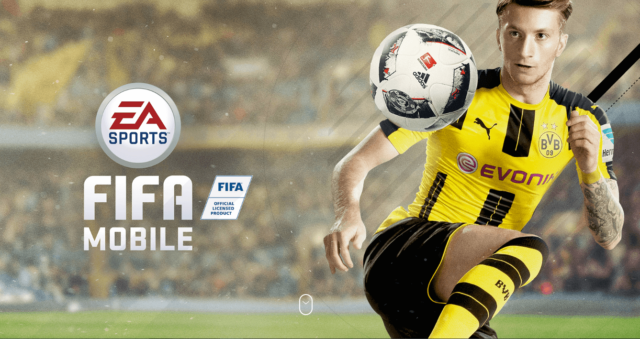
FIFA-Mobile

Microsoft announced FIFA 17 during Gamescom, as well as two forthcoming Xbox One S bundles that include the game. There will be versions of the 500 GB and 1 TB console available. Konami unleashed a look at Metal Gear: Survive, a zombie take on the classic franchise and the first MGS game since the exit of Hideo Kojima. Blizzard unveiled its fifth Overwatch animated short entitled The Last Bastion, a story that ties into a new map coming in September.

What’s More

Traditionally, the largest game announcements occur during E3, but Gamescom is the ideal follow-up with trailers, DLC and additional features to explore. Although this is far from an inclusive list, here are some highlights from the show:

The latest creature was unveiled for Pokémon Sun/MoonTurtonator, a fire/dragon-type. Additional footage and details were also released for Battlefield 1, featuring desert combat on horseback. Call of Duty: Infinite Warfare will soon get a zombie DLC entitled Zombies in Spaceland, starring Pee Wee Herman and a 1980’s-style theme park. South Park: The Fractured But Whole shows off the new battle system and Bandai Namco announced that Lee Chaolan and his alter-ego Violet are joining as playable characters in Tekken 7.

What’s Next

Ubisoft and Sony are both on hand to show off their virtual reality wares, including Eagle Flight and Star Trek: Bridge Crew. EA has announced FIFA Mobile, feauring an “Attack Mode” that implements turned-based gameplay. In addition, FIFA Mobile will benefit from live content updates, inviting players to play a variety of mini-games created in accordance with real-world events.

Playing The Game: How Much ESports Players Really Make

When you hear about multimillion dollar prize pools, one might imagine a young video game star driving around in a sports car, living it up in his/her mansion. The truth is, professional eSports players can earn a comfortable living with their gaming skills, but it depends on several factors. Hall-of-Famer Dennis Fong won a Ferrari playing Quake in the ’90s, but fancy cars and a life of luxury are anything but the norm. We know eSports players make money, so where does it all come from?

Sponsorships

A large part of supporting an eSports lifestyle (that is, not having to get a day job), comes from sponsors. SteelSeries, which manufactures competitive video game peripherals such as headphones and mice, sponsors a number of professional teams. According to Travis Hezel (SteelSeries’ global director of sponsorships), the exact details of such a partnership vary according to the players themselves.

“Depending on the account, it can result in varying items,” Hezel told [a]listdaily. “Ultimately, we take the stance that the players need to be taken care of financially, but that also comes with making sure they’re happy utilizing our equipment when competing. Their interests always come first when we’re working with management on negotiating an agreement. A great case would be the guys from Evil Geniuses—the management approached us based on feedback from their Dota 2 Team already using our peripherals.”

SteelSeries esports
eSports players, Fear and SumaiL of team Evil Geniuses “earned hella dough” according to their sponsor, SteelSeries

Salaries

Salaries vary by team, player and another mitigating factors that are anything but easy to calculate. There is a significant lack of transparency in the world of eSports, which makes it difficult for players to determine what constitutes fair compensation.

“Teams are much more focused on the big picture—namely, that all this growth is actually sustainable,” said eSports attorney, Bryce Blum, writing about the need for transparency. “While there are certainly exceptions, the overwhelming majority of team owners want to compensate their players fairly. But how do we determine what is ‘fair’? In most industries, that can be easily dictated by the market. But the market can be misleading when it is in a state of flux, and nowhere is that more true than for eSports heading into 2016.”

For the League of Legends Championship Series, Riot gives each team a set amount of money to provide salaries and help with operating expenses. According to the 2014 handbook, players must be paid a minimum of $12,500—which, for 28 match season equals around $450 each match. However, many players are compensated much higher. The North American League of Legends team, Ember, became the first organization to publicly reveal player salaries in December.

As part of a statement by Ember CEO Jonathan Pan, the team disclosed how much their new lineup would be banking. At the top of the list is Greyson “Goldenglue” Gilmer who will earn $65,000 in salary with a further $27,000 in performance and signing bonuses. Colin “Solo” Earnest is also clearing $65,000 in salary with $21,000 in added bonuses. Benjamin DeMunck is earning $75,000, Nicolar “GleebGlarbu” Haddad earns $72,500 and $70,000 for Jaun “Contractz” Garcia. Although the exact calculations were not revealed, there is a general understanding in the industry that salaries will be based on factors like reputation, skill and social following. Ember has their players on payroll as employees rather than contractors, and even offers health insurance.

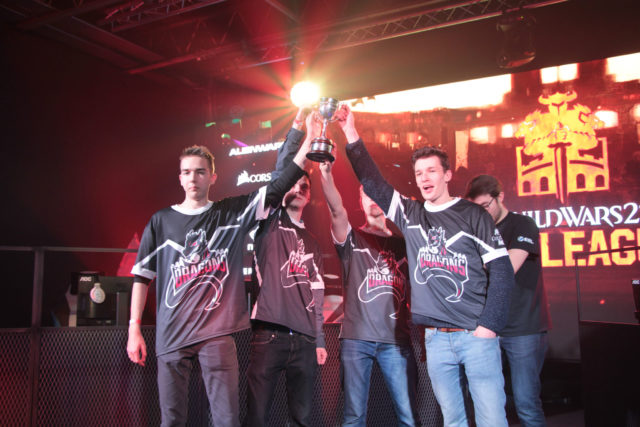
Guild Wars 2 eSports players

Winnings

In addition to basic compensation, teams and players can earn additional money by the obvious means of winning or placing in competitions. For a five-person team, this could range from $2,000 to $10,000 per player in the playoffs alone. Dota 2 is a wildy-popular title for eSports, and the 2016 Dota 2 International is hosting a whopping $20 million prize pool.

Streaming

Professional video game players hone their skills through grueling practice sessions and create a brand for themselves by nurturing online communities. When they’re not playing in front of millions of viewers, many eSports pros have taken to online streaming as a way to supplement their income. Subscribing to a Twitch stream costs $4.99 a month, with half that money going to the streamer. For top streamers like The Oddone with thousands of subscribers, this can be a huge boon to their income. A streamer with 2,000 subscriptions (at $2.50 in revenue per sub) gets an additional $5,000 a month. League of Legends streamer, Imaqtpie is said to have earned $9,000 in one month. Another way to earn income while streaming is monetizing with ads and taking donations from viewers, and players use the donation feature to raise funds for their favorite charities.

In short, eSports players can earn a LOT, but it depends on their skill, influence over buyers, reputation and willingness to diversify their revenue stream. With the eSports industry reaching $1 billion this year, salaries will no doubt rise over the coming years, and we can all hold on to those dreams of swapping a briefcase for a controller.

5 Branded Chatbots Worth Talking To

There is no denying the growing power of messenger apps, particularly Facebook Messenger. Pew Research reported that 49 percent of smartphone owners age 18 to 29 use messenger apps, and the number of users is expected to reach 2.19 billion by 2019. There are currently over 11,000 chatbots on Facebook Messenger alone, and messenger bots from brands such as Expedia, HP and Victoria’s Secret can help customers make purchases.

A recent Facebook Messenger policy change allows these chatbots to send subscription messages to its users with advertisements, promotions or services such as makeup consultations. However, “All conversations between businesses and people must be initiated by the person receiving the messages, who can then mute or block the business at any time,” wrote Facebook product manager Seth Rosenberg. Subscription messaging is still in its testing phase, but it could become a powerful tool for different brands.

The use of chatbots to promote and support different brands has become a fast-growing trend. Alexander Krug, CEO and founder of Softgames, said that “2016 is the year of messaging,” while speaking with [a]listdaily.

“Messaging apps are showing explosive growth now,” Krug continued. “Now almost 2 billion people use messaging services. There’s a massive opportunity out there. Messaging is the top app type in terms of usage. This is where chatbots come into play, as messaging apps become the new platform, subsuming the role of the mobile operating system. Instead of having an app for shipping, game, or whatever’s out there, you just have a messaging app and within it is a bot for a service or a game.”

Here are some best brand-supported chatbots around right now.

Call of Duty

One of the most impressive uses of a chatbot was used to promote the upcoming game Call of Duty: Infinite Warfare. Last May, fans took to Facebook Messenger to chat with a bot playing the role of Lt. Reyes, a character from the game. Users could unlock exclusive Infinite Warfare content, and the chatbot even played being annoyed when asked too many questions. The campaign was a huge success, exchanging over 6 million chats within its first 24 hours online—a sign that chatbots will be used in future promotions.

“We wanted to give our fans playing Call of Duty the first peek at the next game and a unique way to interact with one of the characters from the upcoming Call of Duty: Infinite Warfare,” said Tim Ellis, the chief marketing officer of Activision Publishing, in a press release. “Messenger gives us the opportunity to engage directly with our fans in an interactive adventure that has never been done before—in Call of Duty or on Messenger. It’s been a lot of fun to see the community rally to work with each other and with Lt. Reyes on Messenger.”

https://twitter.com/CallofDuty/status/726829864213352448

Kayak

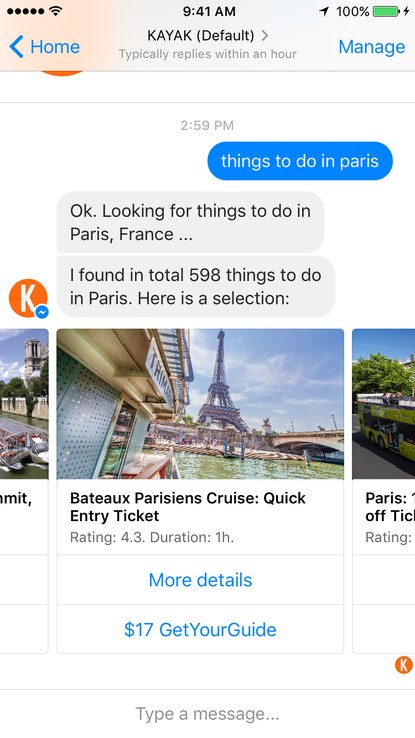
Although you can perform straightforward tasks such as linking the messaging app to your Kayak Trips account for up-to-date itinerary changes, the travel search service has its sights set on putting “a transport representative in your pocket.” This includes finding and booking flights, hotels and rental cars using Facebook Messenger, but more engaging features include asking Kayak about things to do at a particular destination, or where you can go for $500.

707cc_kayak-chatbot-cr-courtesy

CNN

The news organization delivers daily headlines, complete with images, to its readers through its bot. However, the messaging app can also customize content to the reader’s tastes. Users can type in topics such as “politics,” “science,” or “Pokémon” for related results. Additionally, the bot keeps track of what you’ve read and can recommend additional stories based on your history.

Now You See Me 2

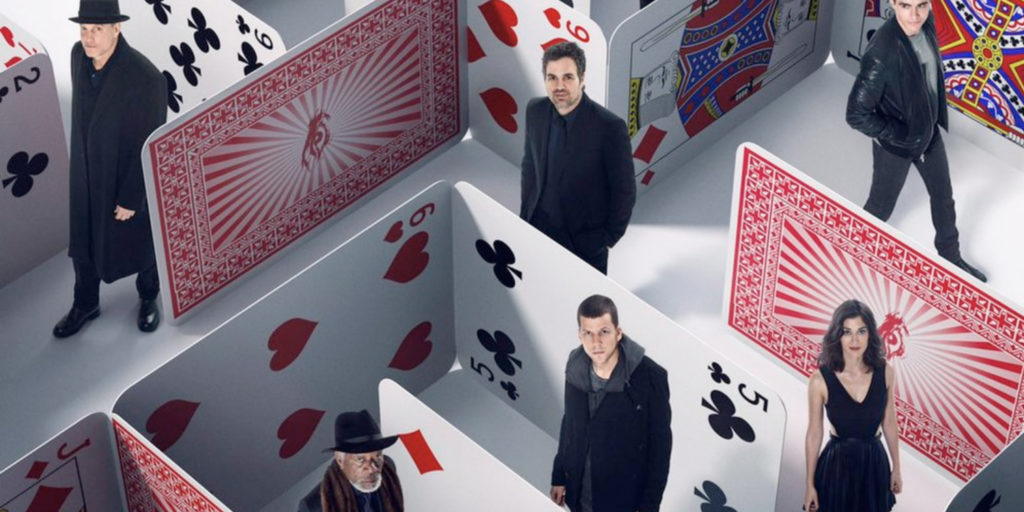
Given the virtual reality experiences Lionsgate used to promote movies such as Nerve, The Hunger Games series and others, it’s clear that the movie company isn’t afraid to experiment with new forms of promotion. However, it seemed to go the extra mile with  Now You See Me 2, the movie sequel about a group of magicians performing Robin Hood-style heists in front of a live audience. In addition to a real-world augmented reality game and magic trick app, the studio produced a chatbot for Facebook Messenger and Kik. With it, users can interact with characters from the movie, solve puzzles, and overcome challenges in the hopes of gaining recognition from The Eye, a secret magical organization from the movie. It became an engaging way to tell a story and for audiences to delve deeper into the movie’s world.

The chatbot promotion was developed by Sequel. When asked whether chatbots are bound to be used in future promotions, the company’s CEO, Omar Siddiqui, told [a]listdaily: “Absolutely. Given the audience size and the possibilities available to connect with games in a more emotional and intimate character-centric way, we expect much more experimentation and development of ‘bot games’ in the future.”

Now You See Me 2

Pizza Hut and Domino’s Pizza

The two food delivery giants, Pizza Hut and Domino’s, are currently in a war over customer engagement. In the past, Domino’s has usually been in the lead when it comes to experimenting with new technology, including ordering pizza with emoji, from a smart TV, or using Amazon’s Echo device. Domino’s launched a Facebook Messenger bot named “DOM The Pizza Bot” in the UK and Ireland earlier this month. Users simply need to register for the Easy Order service and type “pizza” to initiate an order.

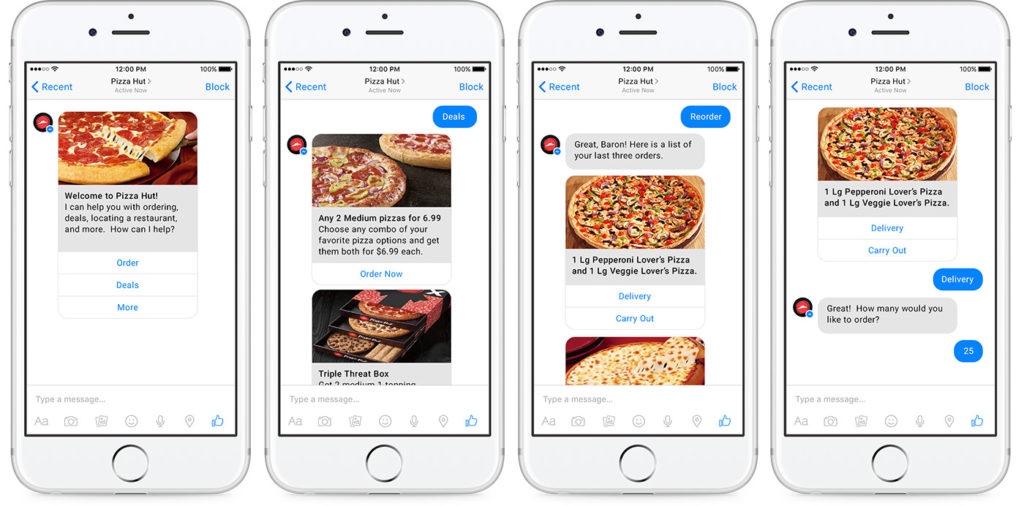
Not to be outdone, Pizza Hut is also expected to launch a social ordering platform on Facebook Messenger and Twitter, and it promises to let users find deals and order food in a conversational style. Additionally, the Messenger service can link your Facebook and Pizza Hut accounts together so that it can list your past orders, which should make reordering a breeze.

Baron Concors, the chief digital officer for Pizza Hut, told [a]listdaily in an interview that “we want to make it easy for customers to order or get whatever information they are looking for—this could be customer service, nutritional information or deals and offers.”

pizza-hut-bot

Virtual Reality Is No Longer Science Fiction And More Than A Trend

Virtual Reality may be all the rage, but you might be asking yourself, “is it more than just a trend?” As you stare mournfully at your 3D TV. The answer appears to be a resounding “yes,” and the VR industry could see its first $1 billion year in 2016. According to a new study by International Data Corporation (IDC), Virtual Reality (VR) and Augmented Reality (AR) revenues are predicted to increase by more than 30 times from $5 billion in 2016 to $162 billion by 2020, with half of said revenue arising from hardware alone.

As with any new technology, the initial price tag limits consumer purchases, but IDC’s Worldwide Semiannual Augmented and Virtual Reality Spending Guide claims this is about to change. “The rise of new, less expensive hardware will put virtual and augmented reality technology within the grasp of a growing number of companies and individuals,” said Tom Mainelli, VP of devices and AR/VR at IDC in a statement.virtual reality vr

Another potential reason for VR/AR staying power could be attributed to how the technology is integrated into our everyday lives. If you remember how luxurious (and huge) cellular phones were in the 1980s, you understand why a majority of consumers lived just fine without them until mobile became the norm. Someday, a life without AR/VR could be a distant memory as well, but for now, 360-degree video is an affordable substitute.

“For many years, augmented and virtual reality were the stuff of science fiction,” said Chris Chute, VP of IDC customer insights and analysis, in a press release. “Now with powerful smartphones powering inexpensive VR headsets, the consumer market is primed for new paid and user generated content-driven experiences. Recent developments in healthcare demonstrated the powerful impact augmented reality headsets can have at the industry level, and over the next five years we expect to see that promise become realized in other fields like education, logistics and manufacturing.”

IDC’s spending guide predicts that the majority (75 percent) of global AR/VR revenue will come from Asia/Pacific (excluding Japan), the US and Western Europe this year, but the US will lead by 2020. Investors are confident in the future of AR/VR as well, pouring money into the technology like never before. According to research from venture capital database, CB Insights, the amount of investor dollars earmarked for virtual and augmented reality (VR/AR) has increased about 7.5 times in the last year. In fact, investment in those technologies reached $1 billion in the first quarter of 2016, eMarketer reports, compared to $144 million in the same quarter of 2015.

“The big buzz around VR started with the Oculus Rift announcement, and when it started shipping we saw a 548 percent increase since January 2015,” Tamara Gaffney, principal analyst and director for Adobe Digital Insights (ADI) told [a]listdaily. “And we’re not seeing much decline. VR is holding that excitement, especially the HTC Vive, which has seen an over 2,000 percent increase since January 2015.”

Gaffney said the sustained excitement is because different devices are coming out. But that’s not translating to a lot of sales. “Right now the market is early adopters who want to try all the new stuff, while others are waiting.”

Epic Games Discusses ‘Paragon’ ESports Plans

Epic Games has launched the free open beta for its new third-person perspective PC and PlayStation 4 multiplayer online battle arena (MOBA) game, Paragon. While the game has no official release date, it’s the first big step towards building a large player base and community for the 5v5 MOBA. If successful, that will essentially lay the potential eSports groundwork for this cross-platform action strategy game.

“We’re making a very competitive game,” said Steve Superville, creative director on Paragon at Epic Games. “We’ve seen a lot of companies come out and say, ‘Hey guys, here’s the next great eSport.’ And the community is like, ‘Hang on a second. We’ll tell you when it’s a good enough game.’ So our focus from the beginning has been making a highly competitive game, engaging with our community because they’re going to tell us what works and what doesn’t, and eventually—if they ever bring us to eSports status—we’ll be thrilled to support them.”

The community has already begun running Paragon tournaments without Epic’s help. “We’ve seen a couple of tournaments that run for the EU and North America,” Superville said. “Germany just ran their first tournament a few weeks ago and Russia has run a couple since then. The community is really enjoying it, but [they’re] also being very communicative and vocal about where we’re falling short, and we are working really hard to fix those things.”

One area where having a dedicated and vocal Paragon community has helped Epic is hero balance. The internal team does a lot of quality assurance gameplay testing, but that pales in comparison to gamers getting their hands on all of the game’s heroes.

“The community will find a broken thing and let us know about it and we try to fix it within the next week or two as we go through our patch cycles,” Superville said. “We patch every week, and the community is often playing about three or four days past what the developers are playing. So they’re right on our heels, and that gives us the most actionable and real-time feedback.”

Epic Games has also designed Paragon for a broader gaming audience. MOBAs are known for being a bit harder for a television audience to follow compared to Call of Duty or Counter-Strike: Global Offensive.

“One of our goals was to make the game feel physical,” Superville said. “In a lot of other games, there are a lot of particle effects that explain what’s going on, and unless you know exactly what’s happening you are lost. For Paragon, we wanted to allow people to just look at the game and enjoy it. My wife is not a gamer and she can see one of our characters, Rampage—who rips a giant rock out of the ground and throws it across the level to hit somebody—and she doesn’t have to know about cooldowns and mana costs and positioning. She just knows that getting hit in the face with a rock hurts and that makes it much more approachable. All of our characters are built with this idea of being physical rather than just purely energy- and magic-based.”

Superville said that in keeping with the entry level theme, Paragon will have far fewer heroes to choose from than other MOBAs. The game has 18 heroes and a new one will be added every three weeks. “It’s a lot more inviting because people aren’t immediately overwhelmed by heroes,” Superville said. “And again, the card system allows players to come in, be given a deck of cards that are applicable and relevant to the character that they pick, and then they learn the game. And as they play, they get card packs and their burden of knowledge grows with their experience of the game.”

From a business model perspective, Epic Games is following the free-to-play route. All of the game’s heroes are free all the time. Superville said the studio made that commitment early on because they wanted the game to be competitive.

“Nothing that provides advantage in gameplay is purchasable with real money,” Superville said. “Cards and stuff like that all come from the time currency, which we call reputation. You play the game, you get card packs and you get more powerful options. Then we sell the cosmetic things. We sell skins and boosts and traditional things. We also have some more new cosmetic things that are coming out that we’ll be sharing in the future.”

Epic Games is also reaching a much larger audience with its MOBA by tapping into the 40 million PlayStation 4 consoles in homes, as well as billions of PCs, and Paragon allows for cross-platform play.

Twitch Acquires Curse Network Of Gaming Websites

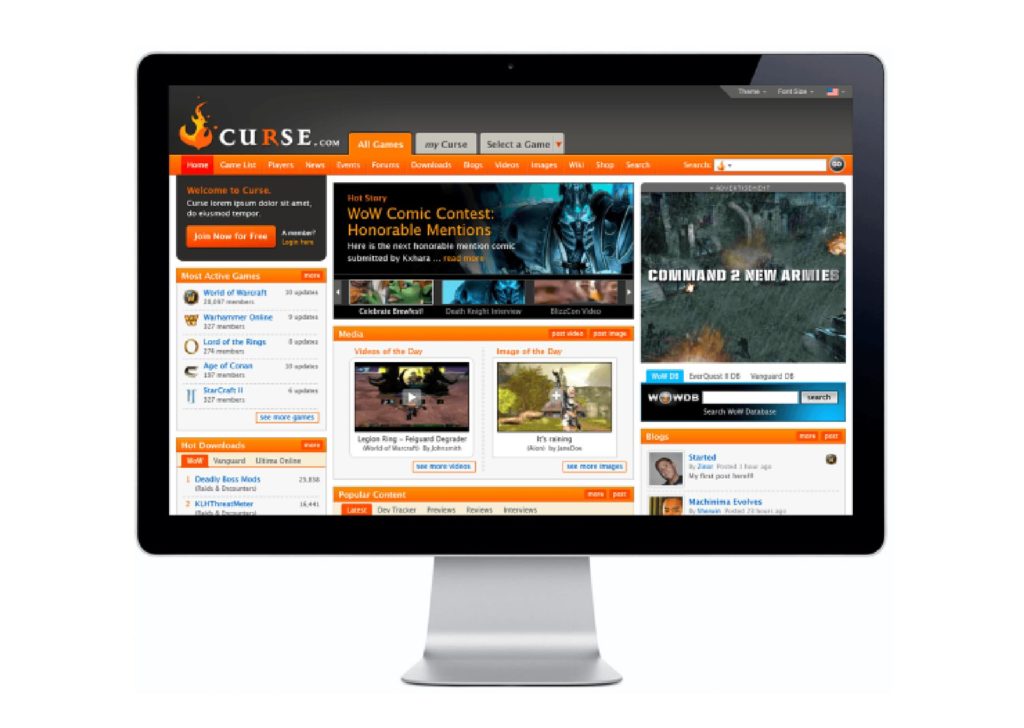
Livestreaming giant, Twitch, has announced the acquisition of Curse, a global multimedia and tech company focused on video games.

“We’ve long been fans of Curse, which is an innovator in the games industry with a strong culture built around its offerings—from Curse Voice and Curse Client to Gamepedia,” said Emmett Shear, CEO of Twitch in the press release. “While it’s still early days for Twitch and Curse, we’re kindred spirits in many ways and are looking forward to working together to enhance our users’ gaming experience.”

The kindred spirits declined to comment on what this acquisition means for the two companies, although creating a community around eSports and influencers would be an obvious choice. Game publishers already look to Twitch stars to livestream game play prior to a title’s release. Twitch plays a huge part with players and retention, according to a recent study, with 82 percent of viewers indicating that they watched player channels to some extent to keep interest in the game, compared to the 77 percent that didn’t with certain games.

Twitch is a major source for eSports coverage, as well—an industry that reached $1 billion this year. NewZoo reports that fans have watched a total of 803.7 million hours of league and tournament-related events on Twitch channels between August 2015 and May 2016. ESports content in general has accounted for 14 to 31 percent of total hours watched on Twitch, with event organizers getting the most viewability with 71.3 percent to total eSports hours watched. This includes bigger partners, such as Riot (the publishers of League of Legends) and the ESL.
branding_curse_website-740x526

The acquisition of this network of popular gaming websites will allow Twitch to share its content across even more channels and access the communities that already exist there. Founded in 2006, Curse offers wikis, news, guides and databases—according to the acquisition press release, more than 30 million people visit these web properties, video channels, social media channels and desktop application each month.

“We here at Curse have been avid gamers and Twitch users for quite a long time, so we’re thrilled to be joining the Twitch family,” said Hubert Thieblot, CEO of Curse. “I’m really excited to see how we can bring Curse services into the Twitch network, and provide an unparalleled experience to both Curse and Twitch users. This is going to be terrific for the millions of players who use Curse, and for the larger gaming community.”