Baobab Studios Expands VR Entertainment With Bunny Power

It’s almost hard to believe that Baobab Studios debuted its first animated VR short, Invasion! last April. Since then, the experience has made its way onto just about every VR platform, including the recently launched PlayStation VR, and a sequel was announced at Oculus Connect. Invasion!—created by Eric Darnell, who directed the Madagascar movies and is currently Baobab’s chief creative officer—is making its way to traditional movie theaters as a full-length feature film created in partnership with Roth Kirschenbaum Films, a movie studio founded by Hollywood veterans Joe Roth and Jeffrey Kirschenbaum.

Today, the studio announced that it has just raised $25 million in Series B funding, with Horizon Ventures as the lead investor. Horizon’s investment in Baobab is led by Phil Chen, founder and former content officer for HTC Vive, stands among several other companies that are returning for a second round of funding. New investors include Twentieth Century Fox, Evolution Media Partners, China’s Shanghai Media Group, Youku Global Media Fund and LDV Partners. The investments bring the studio’s total funding to $31 million, making it one of the top funding rounds for a content studio to date.

With the new investment, Baobab brought on Larry Cutler as its new CTO. Cutler was formerly Pixar’s technical director for Toy Story 2 and Monsters Inc., and then became global head of character technology for DreamWorks Animation. Additionally, Baobab has also appointed Chris Milk, founder and CEO of Within (a story-based VR content portal), to its advisory board. Milk has been a longtime proponent and pioneer of VR content.

Baobab CEO (and former VP at Zynga) Maureen Fan and Kane Lee, the studio’s head of content, spoke with [a]listdaily about the funding announcement along with the success of Invasion! and how it’s being made into a movie.

What do you think led to such a significant funding success?

maureen-fan-baobab-studios
Maureen Fan, Baobab Studios CEO

[Fan]: We think the reason why we were able to raise such a round in such a short amount of time is given to the traction that we’ve had from the Series A through now. We only founded about a year ago, so traction means introducing Invasion! Consumer adoption-wise, Invasion! is one of the most popular—if not the most popular—pieces of content out there in VR. We are on just about every single platform: the HTC Vive, we launched day one on the PSVR (PlayStation VR), we’re on Oculus Rift, on [Samsung] Gear VR, and on Within, Hulu, Jaunt, etc.

So besides having great consumer adoption and validation, we also had great traction with the HMDs (head mounted displays) and distributors. The Oculus Connect keynote featured our next VR short, Asteroids! Besides consumers and distributors, there’s also Hollywood. We just announced a partnership between Baobab Studios and Roth Kirschenbaum Films. [Joe] Roth was the former chairman of Disney, and his production company was behind Maleficent, The Huntsman, and the entire Alice in Wonderland series. They partnered with us to take Invasion! to the big screen, turning it into a full-length animated feature film for the rectangular screen. This is great validation from Hollywood because they care about IP. This the first time that IP was sourced from VR going to Hollywood rather than the other way around.

With the funding and partnership, do you feel that Hollywood is regarding VR in a very serious way?

[Fan]: I do. Our lead investor isn’t Hollywood. Horizon Ventures is stationed in Hong Kong, and they’re traditionally a technology investing firm. They invest in us not only because of our technology, but on the strength of the team. Phil Chen, being a VR expert, in seeing what was happening internally within our team, had the confidence and excitement to lead our Series B.

But the reason why we had all these great media companies also invest in us is because they see VR as not only potential for IP, but as something that’s going to revolutionize their business, and they want to partner with teams that know how to do storytelling in a different way. What these media companies care about, first and foremost, is storytelling. That was great validation for us from Twentieth Century Fox.

A lot of VR right now is targeted towards early adopters. They’re more niche, so you have hardcore games and documentaries, but not a lot of the universally appealing stuff that’s in between. I think one of the reasons Invasion! has been so successful is because it is broadly appealing to just about every single demographic group. But also because we care about story first. I know a lot of people talk about story, but we feel that a lot of VR creators are focused on technology first and the story is in service of the technology. We take the opposite approach.

Eric (Darnell) oftentimes says he’d prefer a good story animated with stick figures than a beautifully drawn film with a crappy story. It’s always story first, and I think that’s what Hollywood recognized in what we’re doing.

How does Baobab plan to use the additional funding?

[Fan]: We’re using it in three main ways. One is to create additional experiences that bring characters that people love to life in VR. People really loved Invasion!, so that’s why we announced Asteroids!, our follow-up. It’s featuring the same characters but in a different setting and different type of animation and focus. So, creating new experiences, but also experimenting even more.

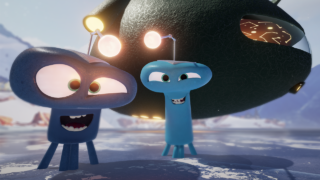
VR is a new industry and a new cinematic language, which means we’re always testing out how we define this language. In Invasion!, we learned that the most powerful parts of our story were when the bunny comes to sniff you and play with you. We had audiences try to pet the bunny, and when it started dancing, they got down and danced too. Sometimes in a feature film like Deadpool, you can beak the fourth wall, but you never truly believe that Deadpool is speaking to you. But something in your animal brain in VR believes that the character is truly real.

That is something we found really exciting because, for Eric, it’s all about the audience care about the character. That’s the heart of filmmaking for him. If we can get the audience to care even more about the characters than they would normally, that’s winning. We want to experiment with even more ways to make you care about these characters so that the audience acts on behalf of the characters, not because they have to get to the next level like in a game, but because they truly care about the characters and want them to succeed.

We also want to use the funding to further develop the technology we created as a base through Series A to make it even better. I think it will allow us to make our VR experiences unique and differentiated even more so than they already are.

Was it challenging to get Invasion! picked up by almost every major VR content distributor?

[Fan]: It’s interesting, because a lot of the industry is focused on games, and it makes sense that early adopters would be gamers. But it’s funny, because we didn’t know how to categorize ourselves in the beginning. Are we a film or are we a game? We realized that we fit into both categories, but honestly, we believe that we transcend both categories. You’re in a narrative, but you are a character in a real-time game engine, and what you do actually has impact on what is happening. So you can’t say that it’s just a game nor is it just a film. This new category hadn’t been defined yet, so I think the VR industry didn’t necessarily know what to do with that. But after we put it up there and it became incredibly popular, I think that’s when distributors took even more notice. I’m sure part of the reason we were featured in the Oculus keynote is because of how well Invasion! is performing.

What are your thoughts about the premium headsets versus mobile VR?

[Fan]: We believe in both. Invasion! is available on high-end headsets, where it’s interactive and you have the bunny body—when you squat, it gets fatter. With the Vive, you can jump around and the other characters follow you. We also have eye tracking and all that activity on the high-end headsets. But we also have a ton of people who enjoy our experience on the Gear VR, and that’s a 360-degree video.

We think that both are completely viable. Of course, I do think the high-end headsets add a layer of interactivity that is amazing and makes VR even more powerful. But people still love the 360 version, and if that’s what mobile is able to get you, then it’s not for us to be snobs and say those people are wrong. I’m really excited about mobile because it allows VR to get to the masses, rather than just the high-end headsets, which are not as accessible. We believe in both approaches and in creating experiences that can work on all the different devices, because again, what we believe in is the story. If you have a good story, it should be able to translate across the different platforms.

How did the partnership with Roth Kirschenbaum Films turn Invasion! into a movie come together?

[Lee]: Basically we were showing our friends at Roth Kirschenbaum Films the experience because they were interested in VR and wanted to meet with us. Unexpectedly, after the meeting, they gave me a call and said, “Hey, what about doing this as a feature film?” Joe is extremely picky about doing animation, after having worked on the Toy Story franchise while chairman at Disney, but we saw this IP as being special. I think the idea of them putting on the headset and getting to know the characters in six minutes in a way that they couldn’t have in any other medium sold them on the strength of the storytelling and this particular universe. We are producing partners on the feature film and we’re moving forward very quickly.
screencaps_1280x720_05Is there a concern that Invasion! will lose its intensity when translated from VR to film?

[Lee]: No, we think of the mediums as apples and oranges. There are obviously things that you can learn from each. Typically in Hollywood, a lot of VR content will be created on pre-existing franchises or film properties. So it has been on the shoulders of the VR filmmakers to take that and translate it into VR. In this case, they didn’t look at this any differently than they would look at an amazing book, a classic fairy tale, or a true life story you read about in The New York Times.

As leaders in traditional cinema, we think they’re going to make movie magic while we try to make VR magic.

Do you think the success of the movie will translate into increased VR technology adoption?

[Lee]: I think that the success of our characters and this universe on any platform would. As long as whatever we do has integrity and builds upon our characters and worlds in a way that we all believe in, we think it’s win-win.

‘The Walking Dead’ Producer Talks Season 7, Virtual Reality And Video Games

David Alpert, CEO and co-founder of Skybound Entertainment, has helped Robert Kirkman steer the business side of the company beyond comic books and television shows. He’s focused on digital media, video games and virtual reality across existing properties like The Walking Dead and brand new IP like the first narrative 360-degree series, Gone, for Samsung Milk VR. He also produced the YouTube Red’s Scare PewDiePie series.

With PlayStation VR now globally available and The Walking Dead returning to AMC on October 23, [a]listdaily caught up with Alpert to discuss how video games, VR and digital are helping Skybound expand its many comic book franchises in this exclusive interview.

What has virtual reality opened up for Skybound Entertainment?

The great things about VR are the possibilities and the challenges, in equal measure. The cool thing about comics and linear media when you tell stories is you really control the POV, so we have this natural inclination to show the audience where to look. The initial challenge of VR is if you can’t control where they look, how do you make sure that they’re seeing what you want them to see? And so the answer that we found, and the thing that’s been mind-opening for us, has been the idea of how we make a 360-degree environment equally compelling in all directions at all times. Or how do you deal with the fact that people might be missing critical components of the narrative?

Is that something you explored with Gone on Samsung Milk VR?

In Gone, we actually embraced that as part of our storytelling device, where we acknowledged you’re going to miss things and now that’s actually part of the story. There were plenty of people at Dealy Plaza when JFK was shot, but they didn’t know where they were supposed to be looking. They heard something happened. Even when you go back and watch the Zapruder film frame by frame knowing what happened, they still can’t tell exactly what happened. So if you embrace that ambiguity, it actually makes things—in a weird way—feel more lifelike. It’s a little more challenging from a storytelling perspective, but it actually makes it more interesting to us.

Open world video games have had the same problem long before VR and audio has always played an important role. What can you learn from gaming and how important is sound in a VR experience?

Sound is hugely important not just in VR, but in linear too. Horror is 60 or 70 percent sound. If you look at the season opener of The Walking Dead season 2, we had some famous production problems in that season, and if you play that scene without the sound it is one of the most boring scenes you’ll ever see on TV. You watch that scene with sound and it has you on the edge of your seat. The score that’s going on tells your mind that this is something that’s tense, as opposed to seeing a bunch of feet walking by and you’re stuck under a truck. Sound is critical in video games, and we believe that the value of sound in a 3D or 360-degree environment is only going to be heightened.

For The Walking Dead season 7, what does Negan open up as a new villain ripped from the comic book?

The great thing about Negan is we’ve seen bad guys at Terminus and we’ve seen The Governor. They’ve been seriously bad and they’ve done horrible things, but they’ve always been on a size of scale that you can wrap your heads around. When you get to Negan, and you see the size and scope of the Saviors, and you see the degree of savagery that this guy is willing to engage in not only physically but psychologically with Rick and our gang survivors—and how he’s imposed himself as a bit of a demigod on these people—it’s really on scale we haven’t seen before. He’s bigger, badder and meaner than anything we’ve seen in this world yet, which is a big thing to say considering we’re in season 7.

Actor Jeffrey Dean Anderson is such a nice guy normally that it takes a minute to realize he’s a bad guy if you haven’t read the comics.

Here’s the thing: if you ask Negan if he’s a good guy or a bad guy, he would tell you he’s a good guy. He would acknowledge that he’s doing horrible things, but he’s a “the ends justify the means” type guy. He sees this as what this world calls for. There’s the argument that Rick tried to kill him.

And Rick has been doing some nasty shit too. Rick doesn’t bash people’s homes in and beat them to death with baseball bats, but Rick has shot people. Rick has not been afraid to put people down. He does it with a semblance of decency, but Negan would argue that they’re the same—that Negan just happens to be more effective and more efficient than Rick, and is less hung up on old world niceties. When it comes to “the ends justify the means,” they both embrace the same philosophy. Negan’s just less tortured about it.

Is there a short list of characters that are “safe” from dying in The Walking Dead TV show?

No. The truth is, when we start the year nobody has to survive. Everybody is on the table. If somebody was to come in the room with a pitch that was incredibly compelling as to why we write-off one of the leads, we’d take it on. We’ve killed major characters on the show, and we’ve killed them before and after they’ve been killed in the comics. Andrea is still alive in the comic, but she was written off in the show a few years ago just because the storyline really seemed to demand it. We really try to cue very closely to what the story demands.

With The Walking Dead: March to War heading to mobile devices in 2017 from Disruptor Beam, what role do video games play for Skybound Entertainment?

The thing we want to do with our games and with our platforms is build out the universe of The Walking Dead such that people love the story of Rick Grimes and know his search for his family and putting it back together and trying to save his group. But beyond that, there’s a lot of stories that demand to be told. We’ve had successful games that have really broadened that universe for us. That’s what we hope to accomplish with Disrupter Beam; another expansion of the world so that people understand that it’s just not Rick Grimes. It’s not just Atlanta. It’s not just the Southeast. It’s the world. We want to explore all those nooks and crannies. We’ve had a great partnership with Telltale doing that. We’ve had a great partnership with Scopely doing that, and we hope that Disruptor Beam follows suit.

And you get to explore Mexico with Fear the Walking Dead?

Yeah, we explore Mexico. We’ve had a novel series, which explores some of the characters in The Walking Dead from a different angle, really giving the Governor’s backstory. We don’t want to tell the same story again and again in different mediums. We want the story to be expanded across all of these different mediums.

Razer CEO Explains How THX Acquisition Will Help ESports, VR

Video game hardware and lifestyle brand Razer continues to expand its portfolio. The company, which has a valuation of $1.5 billion, just acquired THX, the sound performance company founded by George Lucas in 1983. Financial details of the transaction, which closed earlier this month, were not disclosed.

THX will operate as an independent startup under its own management and apart from the ongoing business of Razer. While the audio technology business will work with Razer, THX will have the freedom to work with other product makers, service providers and financial partners.

While THX originated as a certification program for entertainment experiences in the cinema, it has expanded to the home and mobile. Most recently, the company has added automotive systems and THX Live!, a live-entertainment certification program that premiered at Beyoncé’s 2016 Formation World Tour.

On the heels of its acquisition of the assets from OUYA, Razer has expanded its business over the past few years beyond gaming headphones into Razer Music. Audio plays an increasing role across multiple Razer projects, which opens new opportunities for THX.

Min-Liang Tan, co-founder and CEO of Razer, talks to [a]listdaily about this latest acquisition in this exclusive interview.

razer-ceo-min-liang-tan
Min-Liang Tan, Razer co-founder and CEO

What has your experience been like with THX?

The THX audiovisual designers and engineers are the most talented of their kind in the world. I can suggest this with some authority, having personally worked with Laurie Fincham and his team when we embarked on the Razer THX Mako project, which was released in 2008.

What does THX open up for OSVR and Razer’s virtual reality investments, given how important sound is in VR?

THX and OSVR are not specifically associated with each other, even while we are committed to the furtherance of both as long-term interests. Even so, both organizations are fundamentally concerned with enhancing sensory experience, so the proposition of their meeting at some intersection of technology in the future is absolutely possible. We will leave it up to their respective management to decide if and when that make sense.

VR as a practicable matter of business and product implementation is still in the formative stages. As such, OSVR will continue to serve its purpose as an incubator and aggregator of technology interests that will inform a truly consumer ready solution set.

THX, on the other hand, is a mature business with immediate relevance in the way of certification and the development of IP. There’s a lot more to do in this space to ensure that we bring the best audiovisual experiences to enthusiasts all over the world.

How do you see THX helping Razer’s eSports business, especially given how important surround sound is for competitive gaming?

Razer engineers, our eSports managers, athletes and fans can look forward to THX being an increasingly powerful resource for co-developing headsets and other audio products that give gamers the “unfair advantage” and the phenomenal experience for which Razer products are famous. But remember, THX will remain standalone from Razer. As such, Razer will work with THX as it has enjoyed in the past—with THX serving as a separate but psychically vested partner in innovation.

What does allowing THX to operate independently open up for Hollywood opportunities and movie theaters?

The field is wide open for THX to work in any and every area of Hollywood that makes sense. There are no encumbrances whatsoever. This should be very exciting for theaters and moviegoers alike.

What do you feel separates THX technology from competition such as IMAX, DTS and Dolby?

The massive breadth of application of the THX IP and the relevance of its certification to every audio technologist and auditorium in the world leaves it in a class by itself. It is not bounded to product types or venues. Comparing THX to other audio technology brands is tantamount to comparing Alphabet Inc. to a Samsung phone.

How can Razer help THX grow across gaming, music and entertainment given the direct audience reach it has through social and web channels?

The best thing we can do is share our expertise with the good people at THX. They have built an incredible brand, with a fervent following not unlike our own. Everything is there for THX to be socially connected: great partners, great user base [and] great content will bring it all together for this quite worthy brand.

How have things been progressing with your last acquisition, OUYA?

Amazingly, we recently published our fifth multiplatform game under OUYA Publishing. The dream of an open Android platform is alive and well.

What freedoms does Razer have as a company by not being acquired by a larger company?

We can do anything and everything that needs to be done to meet the needs of gamers worldwide in any category of interest—and we usually do. Other companies (big or small) wouldn’t possess the expertise required to do what we do correctly, regardless of financial resources or the positive disposition of fiduciaries. For those few gamer-focused businesses that might have a shot at copying us, their corporate governance and/or financial constraints wouldn’t likely allow for it.

Do you have any desire to one day be acquired, or would you rather continue to build out Razer larger through M&A?

We have always maintained that any opportunity that better allows us to improve our products and services for the benefit of gamers is worth exploring. To date, we’ve done well with exploiting the talent within our ranks and onboarding great talent from other businesses that share our passion for technological innovation, design and experience.

Littlstar Exec Explains PlayStation VR Non-Gaming Opportunities For Brands

Gamers powered up Sony Interactive Entertainment’s PlayStation VR on October 13, and one of the primary apps they found on the device was Littlstar VR. PSVR is the latest platform for the Disney-backed company, which is also available across Oculus Rift, HTC Vive, Samsung Gear VR, Apple and Android devices. And it also aligns perfectly with the app’s users. “Sony sees Lilltstar as a global launch partner, and we’re one of a handful of companies that has that honor,” Tony Mugavero, founder and CEO of Littlstar, told [a]listdaily. “Our core demographic naturally gravitates towards gaming anyway. With the PSVR app, we’ve reworked the interface to have top-level channels that are branded mini experiences.”

Mugavero points to the Wargaming VR Room as a great example of content designed for gamers. While a lot of game companies have been focused on making games in VR, Wargaming is one that has leaned in on 360-degree video and used that as a great tool for marketing and doing mini-documentaries involving World War II history. “We’re highlighting Wargaming as a top-level channel so that viewers will see something that’s familiar to them in the gaming world, but is also great content,” Mugavero said. “We’ve tried to curate VR content toward the gaming demographic, but we’re also starting to show a broader range of content.”

Mugavero said there will be additional 360-degree content around at least one big game franchise launching this year on Littlstar, but he can’t reveal the game yet. “Not everyone will have a high-end PC, so game companies are figuring out 360-degree content for games through in-game footage, trailers and live action content,” Mugavero said. “There are a number of things coming.”

Having the app on every PS VR will guarantee eyeballs for marketers. “We’re having conversations with game companies about content and we’ll start to see more game marketing coming from 360-degree video, particularly now that Nvidia has opened up its graphics cards to import 360 video,” Mugavero said.

Mugavero believes Sony will see similar patterns that have emerged on PlayStation 4, where more people are using the console to consume non-gaming entertainment across streaming services like Hulu and Netflix, as well as Twitch and YouTube. “We have (VR) content from Showtime with boxing and sports-related stuff, Discovery has some great content from Shark Week and ABC is another top-level channel with interesting content,” Mugavero said. “There’s a new company, Mandt VR, that has some incredible stuff that’s really funny and edgier. It’s like what you’d see on TruTV and it’s faster-paced and great for a younger audience.”

Bento Box is a featured channel, although right now it just has a Bob’s Burger VR experience. “They’re working on a bunch of things and they’re leaning in heavily on the VR side of things,” Mugavero said. “We’re also working with them on a broader animation vertical. They have a bunch of things coming down the pipe. The animation side of things is a huge opportunity in VR. Bento Box is just a little behind because they had to modify the pipeline to work in VR because it’s hand-drawn.”

Littlstar recently worked with Universal Music on a One Republic virtual reality music video. And the company also inked a deal with Sony Music Japan to explore virtual reality opportunities involving artists. “Music content is heating up pretty quickly,” Mugavero said. “We’ve seen some pretty impressive music videos in VR. We’re also working on behind-the-scenes content to get up close and personal with the artist. We helped Warner Music with the production of a 30-minute concert film/documentary from Disturbed, which was shot at Red Rock in 360-degree video.”

There’s also a lot of interest from brands and sponsors that want to get involved in 360-degree content, according to Mugavero. “A lot of early content around 360-degree video has been brand-sponsored,” Mugavero said. “We’ve been approached by a number of brands interested in boosting their content to the top of our premium placement across all of the apps. We have a number of pieces coming in from outlets like the Discovery Channel where the brands are baked right into the content. There are revenue shares created around that type of content. It’s more like a traditional manual ad sales approach because the space is so new. There’s no VR ad network, really. And it’s difficult to run programmatic VR advertising to a couple million headsets. So a lot of opportunities are around branded content and having Littlstar provide a boost to watch that 360-degree content across multiple devices.”

How ‘Hitman’ Won Over Gamers With Its First Season

Hitman, the game where players take the role of a master assassin named Agent 47 to eliminate targets however they can, saw some stunning promotions leading up to its launch as an episodic game series. Since then, the game has been challenging players with new locations and elusive targets—characters that players have only one chance and a limited window of opportunity to take out.

The first season, which is comprised of six episodes and a prologue, will release its finale on October 31, which takes place in Japan. Then the game will release on disc in January before developer Io-Interactive begins work on the second season. In a sense, the approach of the season finale brings a sense of freedom to the developers. Up until the release of the penultimate episode, Colorado, the studio had to downplay the story, which had to remain as a great mystery. This made promoting the game all that much more difficult.

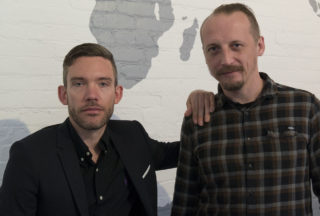
(Left) Michael Vogt, Hitman lead writer. (Right) Sven Liebold, global brand PR manager
(Left) Michael Vogt, Hitman lead writer. (Right) Sven Liebold,

Hitman’s lead writer Michael Vogt, and Sven Liebold, the global brand PR manager recently talked with [a]listdaily about bringing the first season of its episodic game to its conclusion, the power of its main character, and what might be in store for the future.

Vogt, in describing the new Hitman game said, “we set out to reimagine the Hitman franchise as a cool, contemporary spy thriller set in a believable universe with characters you actually care about in a mature, intelligent, way.”

Part of that plan was to create an ambitious episodic storyline that covered multiple seasons. Hitman is a unique game on multiple levels, starting with how the main characters of story usually end up being the targets. The episodes are also unlike most other AAA games, with its sandbox gameplay, where players are free to do anything they please, and elusive target challenges. However, keeping the plot that tied all the episodes together under wraps proved to be a challenge.

“We decided to just launch the storyline. We didn’t make a big fuss about it.” Io let people pick up the essence of the story, and the World of Assassination, as they played. As an episodic game, Io wanted to give players a chance to be Agent 47 and conduct business as usual, taking out targets, before realizing that they were all connected to a larger plot. Players experienced what it was like to be Agent 47 and travel the world. They went to Paris to become a superspy, but it wasn’t until recently that the plot became clear enough for many players to discern what was going on.

Vogt noted that Hitman has a fan base that’s very loyal, and when they first saw that the prologue delved into the Agent 47’s past, and then played the Paris mission, they were probably confused about the plot but remained engaged with the game. “There was enthusiasm, then confusion, then enthusiasm again,” said Vogt.

Vogt also stated that with episodic games, he could spend more time developing characters, while with a traditional game, the story had to move at the same pace as the action. “As a writer, I can plan storylines for multiple seasons, but I don’t know how it will actually turn out,” he said and discussed how the main beats of the storyline are filled out, but each mission is its own self-contained universe with “a buffet of different approaches” to solve them.

Liebold talked about pleasing the fan base. They didn’t plan out episodes saying to themselves that they were destined to become fan favorites. Incidentally, the most popular level is the villa of Sapienza. “At least from a holistic perspective, that’s a fan favorite,” said Liebold. Other favorites include the Bangkok mission because of its storyline. All of it builds to the penultimate episode in Colorado, where stealth plays a considerably greater role than in previous missions.

“It’s interesting to see things unfold from the player’s side,” said Vogt. “When we first started in March, there were a lot of concerns.” He said that there were some supportive fans, but others that claimed that the episodic format wouldn’t work. “In the end, that really shifted around a bit—when players realized they have this one level and they can spend extra time there. One thing we’re really proud of is making replay fun.”

The two compared rushing through and playing Hitman like a traditional game to going into a bar and taking one sip of a beer before moving to the next one. “The replay value is huge,” said Liebold. “It’s not just that it’s fun to replay, it’s that it’s necessary if you want to discover the stuff that’s in there.”

“The interesting thing for me is that the game now is sort of different from what we started out with in March,” said Vogt. “The episodic nature of the game truly gives us an opportunity to react to community feedback very quickly, and also gives a lot of freedom to put stuff into episodes that we missed out on [in previous episodes].” For example, in the Paris mission, fans found a vampire magician costume and had lots of fun with it. Those antics inspired a Vampire Magician Challenge Pack, which turned out to be a great success. “We really embrace the freedom the episodic model gives us.”

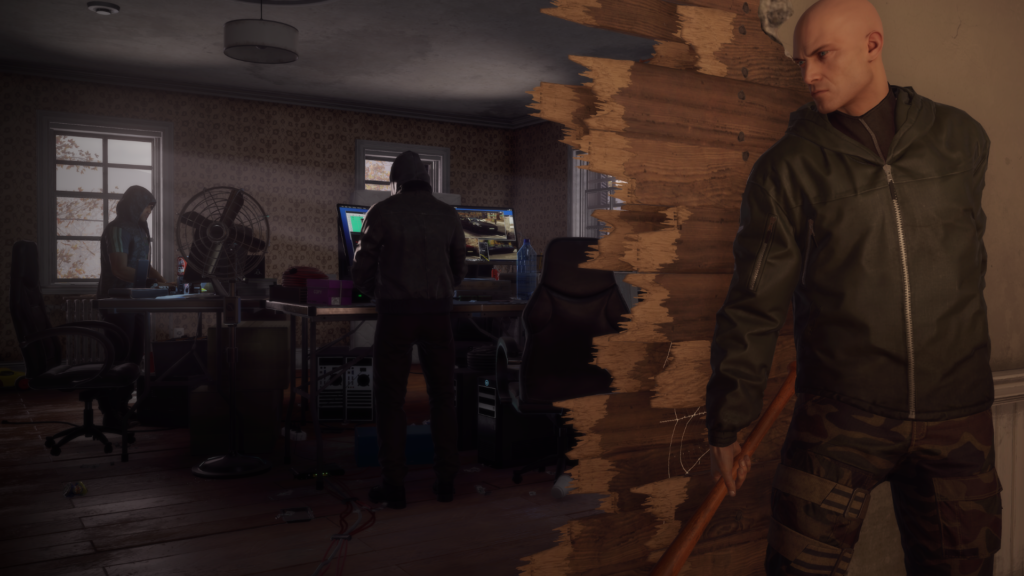
hitman_-_episode_5_-_colorado_c

Vogt also discussed the success of the live content, particularly the elusive targets. “It’s a very bold move to set up the elusive targets, where you have one shot and one target in a certain amount of time. The question was: how much time is good? Forty hours? Twenty-four hours? Do we have to set up for three days? Four days?”

Liebold also talked about the elusive targets. “We made it clear from the beginning that the best experience is if you join right from the beginning,” he said. Elusive target content to helped to fill in the time between the episodes. Liebold also said that the team understands that there will be frustration from players, having missed out on these timed events, but “that doesn’t mean that we don’t have something in store for when the discs release.”

When asked about the difficulty of promoting the Hitman episodes, given its unique gameplay and complex plot, Vogt spoke about how “vulnerable” the game was. Players can’t just play it for five minutes to truly understand it. They have to fully commit to playing it. “Unless you take the time to not only play the training, but walk around listen to the characters and what they’re saying, they (the episodes) could come across as thin because they’re only experiencing two percent of the actual game.”

Liebold added that talking about Hitman can be difficult because it’s such unique game. “There’s nothing out there like this,” he said. “It’s really hard to bring across this sort of gameplay, because it’s attached to so much creative freedom. You can do whatever you want. . . It’s difficult to bring across what Hitman actually is unless you take the control pad and take the time to embrace it and rub it in. Then you start to realize what Hitman actually is.”

hitman-sapienza_4

When asked about what made Agent 47, a cold killer, such an enduring character after so many games, Vogt responded by saying “he has been many different things.” In the past, he has been the master assassin, and the latest game portrays him more as a spy. Liebold characterized Agent 47 as a “master strategist who is always two steps ahead.” He also added that, “many of our fans don’t like the idea of him changing.” That doesn’t mean that the developers can’t add personality, but the evolution of his character needs to be subtle. Vogt also stated that everybody in the audience has a different idea of what Agent 47 should be, and striking the right balance is the challenge.

From Android To AdWords: 9 Stats You Shouldn’t Miss This Week

What’s the next hottest place to buy ads, and what makes consumers even look at them? This week we explore budget trends, a surprising turn in mobile dominance and why less people are turning to hotels for their next vacation.

Renting Socially

Monthly visits to residential rental sites including Airbnb, VRBO and HomeAway are up 70.3 percent over the last three years, according to data by Hitwise, a division of Connexity. The report predicts that residential rental sites will surpass hotel direct sites in traffic within the next 12 months. These rental options are widely shared via social media, and receive more traffic (7.3 percent) from social sites over hotel aggregators like Booking.com (3.9 percent) or hotels directly.

Android Uprising

Mobile advertisers are spending more money on Android, according to September data on mobile ad spending from a report by mobile marketing firm Fiksu DSP. The data shows that Android is catching up to iOS with CPP rising 59 percent since September 2015.

“It’s clear looking at these metrics that among advertisers, Android is no longer an afterthought. Marketers know what to expect from iOS, including what they’ll earn and what they have to pay per user, so costs have settled into a more stable range,” said Micah Adler, CEO and founder of Fiksu DSP, in a statement. “Now, monetization levels on Android are proving that it can be as effective as iOS in terms of bottom line dollars, which is sending a signal to developers, publishers, and marketers that they should be putting more effort and money into their Android apps.”

VR_Web_Experiences_RoomScale-compressor

To VR Or Not VR?

According to a poll taken by ClickZ Intelligence, 37 percent of US consumers have tried out a virtual reality headset versus 19 percent in the UK. The study consisted of 1,000 people in the US and 1,000 in the UK. Despite the increased awareness and hands-on experience, only six percent of Americans will own a VR headset this year, according to a forecast report by market researcher Strategy Analytics. Of those who own a headset, the report predicts, 93 percent will have basic smartphone models, while only one percent will buy the most expensive headsets, such as the Oculus Rift and the HTC Vive.

While consumers might hesitate to invest right away, businesses are definitely on board—DeLoitte published a survey in August that found 88 percent of mid-market companies (firms with annual revenue of between $100 million and $1 billion) were using some form of virtual or augmented reality as part of their business, such as tourism or health care. Citi predicts hardware sales, specifically of headsets, will be the primary driver of the industry’s growth and the VR and AR market will be worth $692 billion by 2025, rising to more than a trillion by the following decade.

Gunning For The Holidays

First-person-shooters are at the top of the holiday wish list, with two titles in particular. According to Nielsen Game Rank, 96 percent of gamers are excited for Call of Duty: Infinite Warfare and the same amount are just as excited about EA’s Battlefield 1Final Fantasy XV comes in third at 95 percent anticipation, followed by Mafia III at 83 percent. The number one most-anticipated title for Xbox One is Gears of War 4 at a whopping 99 percent.

Brands And Agencies Disagree On Marketing Budgets

What is the most important type of marketing to invest in? According to a survey from Hanapin Marketing, 75 percent of US marketing professionals said that they plan to increase their AdWords budget in the next 12 months (as of August 2016), more than any other option. Following at 73 percent is mobile advertising and Facebook at 69 percent. Brands and marketing agencies have slightly different priorities, the study showed. Over 50 percent of brands cited social advertising as most important over the prior 12 months and 46 percent of agencies agreed. When it comes to social commerce, however, 38 percent of agencies called it the most important compared to only 26 percent of brands.

Feeling Free (With Ad Support)

Seventy-nine percent of consumers prefer to access free-or-ad-supported content, according to an online survey by CodeFuel and Nielsen. The data shows when and why participants interact with an ad. Forty-three percent will watch an entire video ad if it has interesting content, 39 percent click on an ad if it has an interesting offer and 28 percent will click if it’s an ad by a preferred brand. There’s still quite a bit of resistance to advertising, however, with 25 percent claiming that nothing would make them click on any ad.

The Sweet Sound Of Marketing

More brands are investing in digital audio, according to a recent study. Advertising Age and The Trade Desk, along with Advantage Business Research, surveyed 532 marketing and media professionals about the future of digital audio ads, and the potential impact of programmatic buying. In June, respondents said seven percent of their ad budgets were set aside for digital audio. but in the next 12 months, their investment in the format would likely grow to 11.6 percent. 67.5 percent of respondents in the US said that streaming music services are of interest when considering buying programmatically. Podcasts were the next choice at 41.7 percent and formatted music channels at 37.4 percent.

Pampering Pays Off

Diaper manufacturer Pampers ranks number one when it comes to brand experience, according to the latest Group XP’s The Experience Index. The study considered revenue, branding, store design, content, online presence and data from Millward Brown and BrandZ to measure customer satisfaction. Following Pampers on the list are Disney, Paypal, DHL and Facebook.

More People Watch Live TV On Cable

Can’t wait to watch your favorite shows? It turns out that when it comes to tuning in to live TV, more people do so on cable than on broadcast networks. TiVo Research’s Q2 State of TV report tracks time-shifting—watching at times other than when a show was broadcast—pulling data from more than 2.3 million households including TiVo owners and other cable providers. For cable prime-time viewing during the quarter, 88 percent was viewed live, with total day viewing even higher at 91 percent. Broadcast networks, however, saw only 74 percent viewed live, with 80 percent watching the same day as the original broadcast. In case you’re wondering who gets the most live views, it’s ESPN at 92 percent. The CW, meanwhile, is only watched live 56 percent of the time.

‘Final Fantasy Brave Exvius’ Uses Nostalgia Level Up On Mobile

Final Fantasy is perhaps Square Enix’s most beloved role-playing game franchise. The first game released in 1987 for the Nintendo Entertainment System, and the popularity of series has only grown over the past 29 years. A great deal of attention is on the newest chapter, Final Fantasy XV, which launches this fall, but fans were able to enjoy an all-new experience last summer when Final Fantasy Brave Exvius launched for mobile devices.

The free-to-play Final Fantasy Brave Exvius stands out as the first game in the franchise to be built from the ground up for mobile devices. Although the latest Final Fantasy games for console systems sport cutting-edge 3D graphics, Brave Exvius uses 2D graphics that are reminiscent of the first six games of the series, giving it a classic feel. In fact, as the game’s producer explains, one of the original designers from the first game supervised the artwork Brave Exvius.

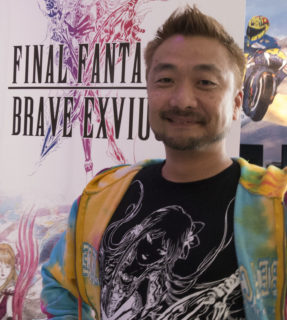
hiroki-fujimotojpg
Hiroki Fujimoto, producer for Final Fantasy Brave Exvius

Hiroki Fujimoto, producer for Final Fantasy Brave Exvius, spoke to [a]listdaily through a translator to talk about bringing the popular franchise to smartphones.

When asked about how a mobile game captured the feel of the Final Fantasy experience, Fujimoto explained how even though this was a free-to-play game, all the elements of the main role-playing (RPG) game—their essence—can be found in it. There’s an original story and a world with dungeons and towns to explore, so it has the full feel of an RPG.

One of the big challenges in developing a Final Fantasy mobile game, compared to a console game, were in the controls. In Brave Exvius, players tap the screen to control their characters’ actions. The developers had to think about the ease of moving characters around and engaging in battles by tapping on the screen, but the game also had to feature strategic and tactical gameplay.

In talking about how fans of the franchise took to the new mobile game, Fujimoto stated that longtime Final Fantasy fans will probably feel a sense of nostalgia, thanks to the 2D graphics. New fans are used to 3D graphics, but this game has artwork that’s fused with 3D, so that attracts them too. Furthermore, those that aren’t familiar with the original Final Fantasy games can play Brave Exvius and get a sense of what it was like before 3D.

The game can be targeted to many different audiences, who will be very satisfied playing. Since this is a free game, and everyone has smartphone these days, there aren’t any barriers holding players back from trying it out.

When discussing how Brave Exvius managed to stand out in an ever-crowded mobile game market, Fujimoto explained how Final Fantasy being a well-known IP helped. A lot of people who love the franchise will readily recognize this game, and Fujimoto wanted players to feel the same enjoyment with the mobile game as they had with the console games.

final_fantasy_brave_exvius_ss04Even though Brave Exvius is an original game, elements and characters from the earlier titles appear in it, which attracts hardcore fans. Brave Exvius has also done crossover collaborations with other games in Japan to bring in more players. There are other surprises and promotional activities in preparation for the future, but Fujimoto could not reveal them yet.



 

With Final Fantasy XV launching in November, we asked Fujimoto whether there would be any tie-ins with the console game. To which, he discussed how Brave Exvius features characters from Final Fantasy 1-6, 9, 11, 13 and 14. Although he couldn’t say when and which characters will be brought over from Final Fantasy XV, there was a good chance that some will make an appearance in the future. He just hasn’t decided yet.

Fujimoto also discussed the differences between the Japanese mobile gaming audience and the US one. He said that Japanese audiences tend to play the same games everyone else is playing, so the top ranks don’t really change. In contrast, US players will play what they want to play. As for spending on free-to-play games, he confirmed that Japanese gamers tend to play way more than the rest of the world, and therefore spend more.

When asked why he thought the Final Fantasy franchise was loved by millions of fans worldwide, Fujimoto said that one of the reasons is because the stories are very deep and dramatic. Also, there are many memorable and unique characters that players love. Fujimoto talked about how each entry in the franchise uses the latest technology for its time, so players are always in for a surprise when they play a new Final Fantasy game.

Why UK Media Giant Sky Is Investing In Virtual Reality

Ahead of the launch of Google Daydream, European entertainment company Sky has launched the Sky VR app. The media giant, which serves 22 million customers across the UK, Ireland, Germany, Austria and Italy, is investing in the production of original 360-degree video content.

Sky partnered with im360 to produce Sky Sports: Closer featuring David Beckham, and will launch the first of a series of Sky exclusive commissions—a performance from English National Ballet’s production of Giselle ahead of its forthcoming UK tour. The company is also producing Sky News: US Elections and Tutankhamun’s Tomb: The Search for Nefertiti.

“In order to coordinate all of the VR activity taking place across Sky, from news to live sports and entertainment, we felt it best to create a dedicated team,” John Jelley, vice president of business development at Sky, told [a]listdaily. “Sky VR Studio coordinates all VR activity across Sky, from the generation of content ideas to filming and post production. It’s a centralized resource, staffed by VR experts, that any of our teams can call on.”

By the end of the year, Sky will have shot more than 20 VR pieces, covering heavyweight boxing, Formula 1, Team Sky cycling and Premier League soccer.

David Beckham on set
David Beckham on Sky Sports: Closer set

“We are known to have unprecedented access to the world’s biggest and best sporting events, the making of some of the most popular entertainment shows, and to a range of significant cultural events,” Jelley said. “We can use that access to transport viewers to locations around the world, offering them a unique perspective on events.”

The Sky VR app includes 20 partner experiences, including previously released 360-degree content from Disney, Fox Innovation Lab, Warner Bros., Baobab Studios, Jaunt, Innerspace and Surround Vision. “Launching the Sky VR app will allow Sky to understand what works, what consumers like, and how we might develop the app further,” Jelley said. “We want to be at the forefront of the development of VR and help shape the industry. We’re really just at the beginning of what’s possible with VR.”

Jelley said that while there are a lot of VR headsets available across mobile, PC and now PS4 with PlayStation VR, there’s a lack of great content outside of gaming. At the same time, 360-degree cameras now have improved functionality, and are more readily available.

“For a content creator like Sky, it opens up exciting new opportunities to transport viewers to places they have never been before,” Jelley said. “We can offer them a truly unique perspective on major events.”

In addition to working across mobile VR headsets, the app allows non-VR owners to explore the content. When asked about PlayStation VR, Jelley said the app will expand to additional platforms in the future, and Google Daydream will also open up new opportunities for Sky and other VR apps.

“VR is at a really collaborative stage,” Jelley said. “Google’s expertise in software and hardware development is driving innovation with Daydream and creating an ecosystem allowing VR to go mainstream. Google, like Sky, wants to be at the forefront and set the agenda when it comes to the development of VR.”

Sky is also continuing its investment in gaming. Sky completed a $1 million investment in the GC VR Gaming Tracker fund, which is managed by entertainment and video game executive Jon Goldman. Jelley said this fund will invest in early-stage VR, augmented reality (AR), eSports and gaming start-ups.

“We are focused on developing what we are doing in VR films and exploring demand for eSports, with the recent launch of the Ginx eSports channel on Sky,” Jelley said. “We are monitoring developments in gaming and are always interested in exploring new ways of engaging with content. Although, we have no immediate plans to move in this area.”

‘Resident Evil 7’ Delivers Flavors Of Fear To Virtual Reality

Currently celebrating its 20th anniversary, Resident Evil remains one of the most recognizable horror game franchises in the world. Although few promotions can compete with 2012’s pop-up fake human meat butchery, which opened at London’s famed Smithfield Market for two days for the launch of Resident Evil 6, the newest sequel is no less successful in giving fans a taste of what’s to come.

The upcoming Resident Evil 7 will be the first game in the series that will be playable in virtual reality using the PlayStation VR in addition to traditional screens. It is also very likely to be the first full-length game to be released in VR. Capcom has been doing a great deal of promotion for the game, which includes a demo on the PlayStation Network called Resident Evil 7: Beginning Hour. In it, players must escape a dilapidated house and in doing so, find clues about the upcoming game. Then there’s the Lantern VR demo, which debuted at Gamescom earlier this year, where players are pursued through a darkened house by a woman carrying a lantern.

Mike Lunn, brand manager of Resident Evil at Capcom spoke with [a]listdaily from the New York Comic-Con show floor to talk about the franchise’s big move to VR, and how it was still delivering scares after twenty years.

mike-lunn
Mike Lunn, Resident Evil brand manager, Capcom

What Resident Evil demos are you showing at New York Comic-Con?

We’ve got a couple of VR demos here—a lot of love around VR for the past couple of months since we announce the title at E3. What’s cool with the New York Comic-Con is that this is the first time we’re showing our Lantern demo [at the convention], giving people a bunch of different experiences. So, not only do we have the demo on PlayStation Network, Beginning Hour, now we have a new VR experience for people to try that gives them a different gameplay style.

It’s one of the videotapes you find in the game—it’s a slice of the main game itself. You’re going to be pursued by one of the characters that we recently introduced named Marguerite Baker. You can’t let her find you. If you do, horrible things happen to you. But it is cool to put on the VR headset and go into a new space. It’s really cool, really immersive, and you’re really able to drink it all in when you’re in VR.

Will the Lantern demo be made available to everyone when PlayStation VR launches?

Not the Lantern demo, but every PlayStation VR unit in North America has a demo disc, [and] the Kitchen demo will be included with every headset.

Kitchen is a tech demo we started in 2015, but we’ve updated and optimized it as time has gone along. Before we announced RE7, it was our way to test bed VR. We hadn’t made any VR games, so we wanted to make sure that when we did it, we did it right. We showed it at E3 2015 under the moniker of Kitchen, not even Resident Evil, and the development team took feedback on how to make VR the best product possible. Kitchen is a seeded sequence, and it happens after our PlayStation Network demo, where it’s an intro to VR.

What would you say are the core elements of the Resident Evil franchise?

I would say atmosphere. We really want people sunk into that atmosphere, that world. Survival horror and different fears. The first game was the fear of what could be around the corner. A little bit later down the franchise, when you’re in Kijuju, Africa or Europe, where there are tons of different enemies, it’s the fear of being overwhelmed. We offer different flavors of fear.

re7-marguerite-baker

Resident Evil 7 integrates a lot of what of what we’ve learned over the years and goes back to the fear of the unknown. That’s really high-tension gameplay. Other than that, we have a lot of our keystone stuff. We’ve blown out our puzzle solving. Instead of just finding an item and putting it in a door, there’s going to be stuff to test your mettle. We’ve got combat in there, but it’s not the focus. You’re not going to be suplexing zombies like you were in RE6 or driving motorcycles off of buildings. It is slower paced, but we still do have combat and engagement.

What are the most crucial components for bringing Resident Evil to virtual reality?

Definitely, I think the immersion and horror. This is the first time we’re using the first-person perspective for a mainline Resident Evil title. What we wanted to do is, instead of being Chris, Leon or Ada (from previous games)—where a zombie comes around the corner, and you say, “cool, I have a grenade launcher. I can just blow it away.”—We wanted it to feel like it’s actually you. If it’s just you, then it’s like, “I’m not prepared for this!”

Not only will you be playing the character in first-person, but adding that VR element puts it over-the-top, because you’re literally looking around corners, checking for stuff, and it feels very natural.

Resident Evil 7 will be entirely playable in VR. How difficult is it to bring a full-length survival horror game into VR?

This isn’t just a demo experience, it’s not a side mission, this is the full tour de force gameplay. You can play with the VR headset, you can play without it, you can interchange. It’s totally up to you.

When we started development of the game, we wanted to do stuff with first-person. [We were] in early talks with Sony about what they were doing with their VR headset—it was something that was planned very early on. It wasn’t like we made the game and tacked on a VR mode. It was designed with that (VR) in mind.

There are a lot of survival horror games out right now. How does Resident Evil compete in a genre it helped create?

It’s our 20th anniversary, so we’ve been doing this for quite some time. I think that over the years, we’ve innovated in terms of what we’ve been doing. Back in the ‘90s, we were in Racoon City, and it was a slower-paced survival horror game. These past years, RE4, 5 and 6, were a little more action-y with an over-the-shoulder camera, but we’ve innovated and taken stuff from those games. We’ve brought back what make RE cool to begin with. You’re back in a traditional mansion setting, much like the first game.

This is actually what RE started as. These are the roots, but now with the power of the PlayStation 4 and PlayStation VR, we’re able to do a lot of new and cool things. For example, with the videotapes, instead of finding a note on the floor, it’s a full-on video sequence that gives you potentially different gameplay and new insight on the characters. We’ve got our first-person camera, and there’s a lot of new tech-side stuff on top of the gameplay features we’re pushing. It’s really exciting.

After six games, numerous spin-offs, and a seventh game coming, what makes Resident Evil the go-to series for survival horror?

I think that what we’ve done over the past 20 years in terms of trying new things—again, we haven’t been the same game for the past 20 years, and I’m most proud of that. We’ve had the courage new things and learned what works for what we’re trying to do. For RE7, we’re trying to do old-school survival horror, but in a 2016/2017-timeframe.

I keep saying it, but it’s the immersion and the tension of you being there—we want to make you feel like the character. With Resident Evil 7, we’re really excited about the product we’ve got, and with VR, it’s even better.

Are there any cross-promotional plans with the Resident Evil: The Final Chapter movie release?

Yes, we’re planning a number of things. Nothing finalized yet, but the game comes out on January 24, the movie comes out January 27. It’s definitely high time to have a little cross-promotional love there, but no specific things to announce just yet.

Sony Chairman Discusses PlayStation VR Launch

Sony Interactive Entertainment is launching PlayStation VR on October 13, a brand new platform that will give the 46 million PlayStation 4 owners worldwide an opportunity to explore virtual reality at a price well below high-end PC gaming systems like HTC Vive and Oculus Rift. Sony has 50 games lined up for launch through the end of the year, including 20 available this week.

Sony has been marketing PSVR through its own television ads as well as through a series of Taco Bell commercials as part of a co-marketing partnership. But hands-on trials will play a key role in getting consumers who have heard so much about virtual reality to invest the $400 to $500 in the headset bundles Sony is launching.

Shawn Layden, chairman of Sony Interactive Entertainment Worldwide Studios, explains to [a]listdaily what’s in store for gamers in the first wave of interactive offerings in this exclusive interview.

shawn-layden
Shawn Layden, chairman of Sony Interactive Entertainment Worldwide Studios

How has the investment in VR by companies like Google, Samsung, HTC and Facebook helped generate awareness for your product?

When you look at all the activity in the VR space, 2016 is the year of VR. It all came together at the same point in time, and that’s good. It’s raising awareness for VR.

What non-gaming opportunities is PlayStation VR opening up?

Virtual reality is allowing us to take the technology that we’ve developed to provide the best gaming experience in the home, and giving additional tools for non-gaming content developers to play with. There’s more crossover today than ever between the computer-generated graphics that we find in games and what we find in films. Those two entities are very closely aligned. Now, with the power of platforms like PS4, the importance of good narrative in games like The Last of Us show that people want more than the exhilarating adrenaline rush of the game. They want a good story.

People are also telling stories through 360-degree videos and sharing them on YouTube 360 and Facebook 360. What types of connectivity will PSVR have for people to experience homemade content?

We’re looking at supporting as many of those video formats as possible on our platform, but we’re coming at this first and foremost as a game platform. That’s our wheelhouse.

Can you talk a little bit about the advantage that Sony has over some of the PC competition, especially when it comes to pricing?

The answer was in your question. That’s certainly part of it. The fact that we already have over 40 million PlayStations worldwide that are capable of supporting PSVR is a huge advantage for us, as well.

How are you seeing game developers explore virtual reality game creation at this early stage?

We have a new platform and people are trying to find a way to interact with others and express themselves against that. They take formats and genres that we’re familiar with and try to bring it across this platform. So we’re seeing some racing games like DriveClube VR and Trackmania VR, some shooting games like RIGS and Until Dawn: Rush of Blood, some indie games like Battlezone and Thumper. We’re going to see a lot of different types of content in the first year of VR as people search to find out what is the quintessential VR experience. I don’t think anybody should show exactly what it is right now, but I just wanted to make sure we’re actually doing things that are novel, innovative and first-of-its-kind.

How are you seeing developers explore PSVR with original content versus ports of existing franchises and games?

You’re going to see both kinds of content. A lot of it is built from the ground up specifically for the VR experience, and other games will have levels and modes or sections of the game which are enhanced by having a PSVR to play with that, like the Batman: Arkham series or what the Battlefront guys are doing with Star Wars. It’s pretty exciting in that area. We’re going to see a lot of different ways people come at this content, and I’m just as excited to see we have a lot of support from the indie development community. They see this as an opportunity to break into another area of a beginning market. It’s a really wide selection here, and we’re going to see a lot of interesting activity between now and Christmas, certainly.

How are you supporting multiplayer experiences within PSVR?

With the power of the network, you just need to put VR players into the same environment with games like RIGS playing three-on-three competitive gaming, and lots of other games where you’ll be able to put the VR headset on and interact socially with other people who are in that VR space. There are other video games like The Playroom VR, where you put the VR headset on and you are the monster on the screen, and you interact with all the other players in your living room who also have controllers and are fighting against you as the monster on the TV. We’re leaving it as wide open as possible with all the social connections that we can to see what kind of multiplayer gaming really gets the most traction in VR.

What role will exclusive games play in the success of PSVR?

Having exclusive content is always very attractive to the PlayStation owner. Certainly, the content coming out of our own Worldwide Studios will be exclusive to the platform, and we have probably a good dozen titles coming out between now and the holiday in that regard. Exclusivity allows the developer to concentrate on one platform and to extract all the power and abilities they can without having to move to a common denominator. So that’s still important. I think the users still find attraction and value in that.