Collegiate StarLeague Launches EA Sports ‘Madden NFL’ Tournaments

Electronic Arts continues forward with its competitive gaming business, and the publisher has partnered with Collegiate StarLeague (CSL) to host and facilitate Challenger Events within the Madden Championship Series (MCS). The competition will give student gamers across North America the opportunity to represent their school and compete for two $5,000 scholarships. The event will be hosted on CStarleague.com and the winners will advance to the inaugural Midwest Campus Clash at Columbia College in Missouri on April 8, 2017.

Duran Parsi, CEO of the CSL, told [a]listdaily that this is entirely new ground for the company.

“CSL has traditionally hosted leagues for PC gamers, so console sports players are a new thing for us,” Parsi said. “We’re thrilled to open the CSL experience to a new set of gamers. We have gotten a fair bit of interest in Madden, so we’re excited to finally get started. We believe that Madden is going to be a huge staple for us in the future because of how popular the game is, especially amongst college students.”

Registration is currently open and league play will begin February 11, 2017. Madden NFL 17 will be played on Draft Champions mode on both Xbox One and PlayStation 4. After a three-to-four-week regular season, which will pit players divided into groups playing a round-robin format, the top players at the end of the regular season will advance to a single elimination playoff bracket. The championship will happen live in Columbia, Missouri on April 8 and the top four competitors per console will be flown out to the finals to compete live to crown a collegiate champion.

“Collegiate tournaments have been at the heart of the competitive Madden scene for over a decade,” Matt Marcou, Madden NFL competitive gaming commissioner said in a statement. “We’re proud to work with the Collegiate StarLeague in our ongoing effort to make stars of all of our players.”

As the official collegiate partner for Madden, CSL will award collegiate players points towards the Madden Championship.

“Our goal is to fit within the Madden eSports ecosystem, and we hope to grow that relationship over time,” Parsi said. “We’ll be awarding Challenger points to the top players, which can help players qualify for the MCS. It’s really important to build an integrated system that ties in all aspects of competitive play, so hopefully, we can continue doing this into the future. It would be great to see collegiate players on the MCS stage competing with other pros, and so on.”

Parsi believes this console gaming demographic is unique and will open the door for new sponsors and brand partners. He said, “Madden players are very different from PC gamers, so we’re opening the door to a whole new group of gamers who have different interests than our traditional audience.”

Parsi also hopes Madden turns into a year-long league to mirror a system like real athletics use within the NCAA.

“Having a longer structure allows for better competitive integrity and gives players a chance to play more games,” Parsi said. “We hope to move towards this type of system, but at the same time, we’re open to taking things as they come. Madden is going to be different than our other games, so we’re not married to any particular format moving forward. This first league will be a great learning experience for us, and our main goal is to do a great job, ensure players have fun, and then make adjustments and improvements to the structure next year—always striving to be better.”

Ultimately, the goal is to increase this over time and to make the league more prestigious as CSL builds the collegiate Madden brand. “It would be great to one day be able to offer full scholarships to the best collegiate Madden players,” Parsi said.

Theresa Gaffney, editor-in-chief of CStarleague.com, told [a]listdaily that during a campus tour last fall, one of the biggest notes they took away from eSports clubs was that CSL players really wanted a console title to compete in.

“This is going to be a great way for us to gauge the response and then create some ambitious plans to expand the Madden circuit and then branch off to other popular console eSports titles that are underserved in the collegiate circuit,” Gaffney said. “My personal hope would be a fighting game.”


Learn everything you need to know to invest in today’s fastest-growing media channel—Competitive Gaming and eSports on 2.16.17 in Los Angeles. Go to alistsummit.com for more info.

How Sony Pictures Is Using VR To Market ‘Resident Evil: The Final Chapter’

According to producer/writer/director Paul W.S. Anderson, Resident Evil: The Final Chapter is the last film in Sony Pictures’ lucrative franchise. Based on Capcom’s bestselling game franchise, the new film hits theaters January 27 in tandem with Capcom’s Resident Evil 7 across gaming platforms on January 24.

Sony Pictures enlisted special effects house, Mr. X to create a 360-degree virtual reality experience set on the killing floor of The Hive—a setting first introduced in the original film and revisited in this sixth installment. The free experience is available now as a way to market the film beyond the traditional linear advertising campaign.

According to Aaron Weintraub, senior visual effects supervisor and director of the VR experience, the company used the same computer-generated (CG) pipeline as traditional visual effects for the film to model and animate this VR experience. The end result is a pre-rendered spherical experience where the user can control the camera to take in the assorted undead dogs and horrific creatures that inhabit every nook and cranny of the killing floor.

Available on Facebook 360 and YouTube 360, the VR experience features an introduction by Milla Jovovich, who has played Alice in all six movies.

Weintraub told [a]listdaily that since the idea to do the VR piece came up well after the practical shoot was completed, since they didn’t have the option to go back and shoot live-action.

“We had most of the assets already created for the film, so this project became an opportunity for us to dream up our own story that used them in a way that nobody had ever seen before,” Weintraub said. “Being entirely virtual gave us the ability to really plan it out and do whatever we wanted, as well as tweak any aspect at any point without being locked into something that we photographed. Furthermore, we could focus on the animation and overall look without devoting too much time to the less creative aspects of live-action VR production like stitching plates and painting out artifacts.”

The hanging undead scare in the opening of the VR experience was a moment taken right from the film, using the identical CG assets and animation. All of the CG assets, including the dogs and Bloodshot (humanoid monsters), were also reused from the film’s visual effects with new animation created specifically for the piece.

“The only area requiring a significant new build was the actual killing floor environment itself,” Weintraub said. “We had built pieces of it for the film, and had a LIDAR scan of the full set from the shoot, but had to actually create the full space for the way that we used it in 360.”

Mr. X came up with the treatment and ran a short two-page script by Anderson just to get his blessing for us to go ahead and he loved it. While he wasn’t looking at progress every day, Weintraub said Anderson’s aesthetic hangs heavy over the entire piece—something the artists at Mr. X have become very familiar with over the years.

The fact that the films are based on the video game franchise and feature characters from that universe also impacted this CG VR experience.

“We’re definitely aware who the fans are and what they are expecting, so everything we do in these movies plays into that,” Weintraub said. “Being a game player and fan himself, Paul really caters to that and is always making these films explicitly for them. Now that VR is coming into the games as well, it’s just another area where we can overlap for the fans to give them a single seamless Resident Evil experience, no matter what the medium: film, games, VR or some hybrid.”

Like games, virtual reality opens up a replay value for users since it’s impossible to look at every angle on the first, or even second, viewing.

“While there’s definitely a ‘hero’ way to watch most of it, we added action around the entire set to keep things interesting if the viewer decides to look somewhere else,” Weintraub said. “One of our favorite gags is the blood/slime dripping from the ceiling, since not a lot of 360 experiences have you looking straight up—usually because of live-action stitching problems.”

In the experience, once a Bloodshot runs away from the user after falling from the ceiling, there’s an option to try to follow him around the set, or stop to look at the dogs coming towards you. And once the dogs have surrounded the user, Weintraub said all bets are off and you can look anywhere.

“If you happen to miss being eaten the first time around, you can certainly come back and watch it again,” Weintraub said.

With Google Daydream available with a controller and platforms like PlayStation VR at retail, Weintraub hopes that interactive VR projects like this one will reach a larger audience, and thereby increase the demand for this type of content.

“Pre-rendered 360 experiences like this one that are available on YouTube can reach a staggering amount of people, which is what makes it so attractive,” Weintraub said. “Anyone with a computer can participate, and anyone with a smartphone and a Google Cardboard can experience it immersively. It would be great to reach the same size audience with an interactive project.”

Why Nvidia Is Bringing Cloud Gaming To PCs And Macs

GeForce Now is a Netflix-style cloud gaming service that streams video games to systems with the highest possible quality graphics. It started as an exclusive service to the Nvidia Shield TV media streaming and gaming set-top-box, but it was recently announced that a version would be making its way to PCs and Macs. The key difference is that the PC/Mac version allows its users to install games purchased from digital storefronts such as Steam, Origin, Uplay, Battle.net and others on a virtual desktop with 1 TB of storage. Users can also choose which video card they would like to purchase time for—a mid-range GeForce GTX 1060 or the high-end GeForce GTX 1080.

With this service, PC gamers may no longer need to choose between upgrading their hardware or buying new games. Additionally, the service may potentially make games more portable by allowing gamers to log in from anywhere using almost any type of computer, including non-gaming notebooks, to play.

Phil Eisler, Nvidia
Phil Eisler, general manager for GeForce Now Cloud Gaming, Nvidia

Nvidia’s general manager for GeForce Now Cloud Gaming, Phil Eisler, recently spoke to [a]listdaily about the new service and what it could mean for the PC gaming audience.

When asked what convinced Nvidia to bring the GeForce Now service to PCs and Macs, Eisler said, “There are over 1 billion users in the world who are gamers with inadequate hardware to play the latest and greatest games. We want to turn any PC or Mac into a high-performance GeForce gaming machine. GeForce Now users can get a virtual GeForce GTX 1080 or 1060 gaming PC in the cloud.”

As for getting the word out about the service, Eisler explained that “we kicked it off at CES and will keep working from there. If you try it, you will love it. Gamers can try for themselves with the Early Access program beginning in Q2. You can visit the GeForce Now homepage to join the waitlist.”

The PC/Mac GeForce Now service was announced at the same time as a new version of the Nvidia Shield TV, which supports its own version of GeForce Now. When asked whether there would be overlap between the two, Eisler said: “If you want to use both services, then you will need to register for each separately.”

He then went into greater detail by stating, “GeForce Now for Shield provides a Netflix-style game streaming experience. Members get instant, and unlimited, access to a game library that includes more than 100 PC games from all genres, and premium titles can also be purchased in the GeForce Now store.”

For comparison, Eisler added, “GeForce Now for Mac and PC provides you with instant, on-demand access to your own virtual GeForce GTX gaming PC in the cloud. You can use this machine to play games you own, or purchase new ones, on popular digital game stores like Steam, Uplay, Origin and Battle.net. The service provides a simple way to enjoy the latest games, with amazing visual quality, on machines that otherwise would not be able to run them. You can purchase 20 hours of on-demand playtime on a GeForce GTX 1060-class PC, or ten hours of playtime on a GeForce GTX 1080-based PC, for $25. You will receive eight hours of free playtime on a GeForce GTX 1060 PC, or four hours on a GeForce GTX 1080 PC, when you register for service.”

Eisler said that the GeForce Now service won’t support GeForce Experience when it launches in Early Access later this year. The GeForce Experience software gives PC gamers a host of features, including easy livestreaming, in-game video capture, sharing moments on Facebook, and performance optimization. However, Eisler did state that players will be able to stream games played on GeForce Now using software locally installed on their computers.

Other features, like whether or not GeForce Now for PC and Mac supports 4K HDR game streaming, or if the service can stream virtual reality games, remain to be seen, and Nvidia has no comment at this time.

Early Access for the GeForce Now service begins later this year, and Nvidia has already begun taking sign-ups on its homepage on a first come, first served basis.

How Mid-roll Ads Are Changing Social Media Video Monetization

“And now, a word from our sponsor . . .” Consumers are used to commercial breaks on TV, but video interruption on other platforms may soon become the norm.

Facebook will begin testing mid-roll ads on Facebook Live, according to a source familiar with the company. As reported by Recode, Facebook will sell the ads and share 55 percent of revenue with video publishers, matching the current revenue split offered by YouTube. Until now, the social media giant—boasting 100 million hours of video views per day—allowed only sponsored video content to be uploaded, but no pre-roll advertising. This has made it difficult for brands to see an immediate return on investment for their video production efforts. If the tests are successful, mid-roll ads on Facebook will encourage creators to upload videos of at least a 90 second duration, and the ads only appear once a viewer has watched a clip for at least 20 seconds. Perhaps in light of recent video view controversy, Facebook is trying to prove that its video views are not only being accurately counted, but are potentially a steady revenue stream for brands.

The idea of video ad breaks was hinted at last fall when Facebook’s vice president of partnerships, Dan Rose, spoke of the potential.

“Next year, we’re going to be looking at ways to apply the ad break model to regular videos on Facebook, videos that are not live,” he told Poynter. “Videos that are producing and publishing. We’re not there yet. Over the next few months, we’re going to be expanding the ad break within live videos. But early next year, we hope to be able to talk more about how that same idea could apply to regular videos as well.”

Snapchat began utilizing mid-roll ads last October by displaying them when someone watches more than one Stories update in a row. Both Snapchat and Facebook are hoping to challenge YouTube for video ad supremacy, although they’ve got a long way to go before then. YouTube remains at the forefront of mid-roll usage, allowing users to insert ads mid-way through long-form videos lasting 10 minutes or more.

Why do mid-roll ads work? According to the Ooyala Video Index’s “The Rise Of The Mid-Roll,” mid-roll ads had a 90 percent average completion rate, compared to 78 percent for pre-roll and 65 percent for post-roll. The success of mid-roll completion rates may be attributed to the viewer already being invested in the video content they are watching, and therefore more willing to watch the entire ad. Another explanation offered by Ooyala is that mid-roll ads look and feel like watching TV where people are already accustomed to breaks in the video content they’re watching.

“Mid-roll ads are a powerful opportunity for brands to insert their message in a (seemingly) seamless way, without annoying the viewer from the get-go. People will likely be more tolerant of ads because when they’re already engaged in the content. Whereas, with pre-roll, the engagement has yet to begin, which gives viewers an immediate ‘out’,” said Lindsey Buchanan, director of content strategy for ION.

Mid-roll accounts for more than 33 percent of digital video ads in apps, online and through video-streaming boxes like Apple TV—up from 20 percent at the start of 2015, according to recent figures from Ooyala based on the ads sold through its platform. Pre-roll ads, meanwhile, have been on the decline, Ooyala reported.


‘Street Fighter’ Pro Alex Valle Discusses How Fighting Games Are Enabling ESports

Alex Valle is known to millions of fighting game fans as “CaliPower.” The pro gamer has been competing since the Street Fighter II days, long before Twitch and startups like Stream.Me even existed. These days Valle remains entrenched in the fighting eSports community and produces content and tournaments through his Level Up, LLC.

Valle has partnered with Stream.Me to launch the four-week Savage Series, which will send the champion all expenses paid to EVO 2017 at the Mandalay Bay Hotel in Las Vegas. Additionally, runner-up contestants, a circuit participant, and some lucky viewers at home will be awarded limited edition Street Fighter skateboard decks from Nsurgo.

Savage Series will be hosted and broadcast live via Stream.me, a video platform that gives viewers the ability to simultaneously view multiple players and casters in up to 4K HD video running at 60 frames-per-second. Competitors are invited to broadcast their matches exclusively via Stream.Me.

Valle, CEO and co-founder of Level Up Productions, discusses the opportunities the fighting game genre opens up for sponsors in this exclusive interview.

Savage Series

How have you seen the Capcom Cup impact the overall fighting eSports ecosystem?

The Capcom Cup has given the community a roadmap to becoming a world championship contender throughout the tour. Tournament organizers partnered with the tour have been given the opportunity to create higher quality events which attract new players and many fighting game fans watching on stream.

What role do you see this Savage Series playing in the fighting eSports genre?

These days, the first real opponent you play in fighting games is most likely from online matchmaking. We’re inviting North American players from the comfort of their own home to compete versus the best out there. Savage Series is a free online circuit which gives an opportunity to those players, which may not have the means to travel, compete at the largest fighting game event in the world, the EVO Championship Series in Las Vegas.

How are you working with Capcom on this new series?

Our friends at Capcom are currently in the offseason since Capcom Cup 2016 just ended in December. We are partnering with Stream.me to produce Savage Series as a community driven initiative which includes organizers and casters from globally recognized events such as Weds Night Fights and SoCal Regionals.

Will you be expanding beyond Street Fighter V in the future? What are your long-term plans for Savage Series?

There are plans to expand beyond Street Fighter V for sure. I’m a fan of various titles and have built relationships with publishers to bring even more opportunities for the players which love their games. With that said, timing has to be right such as release dates for upcoming titles, netcode testing, and trends in the community before announcing the next event. Savage Series is currently a one month circuit to kick off Street Fighter V Season 2 this year. We work with community feedback to determine our next move so hopefully everyone shares their thoughts after the series. This helps us figure out if a short circuit is best, a yearly, and/or what other game(s) they would like to see. I personally would love more travel opportunities for other major events.

What opportunities do you see the fighting eSports community opening up for sponsors and advertisers?

ESports events always have an opportunity to attract sponsors and advertisers through streaming and on the show floor. Events such as Savage Series highlights weekly competition where sponsors could utilize stream time to advertise their products and services to fighting game fans. The model has proven successful with certain events and partners—but it’s not easy.

How does this audience differ from the PC-centric MOBA and FPS eSports audience?

The fighting game community was born in the arcade era where players compete right next to each other on the same game cabinet. Rushing your opponent down in the fight in just a few minutes and witnessing their every emotion while doing it is the best feeling in the world. Having your friends watch the beatdown creates hype moments where everybody gets crazy-excited—like watching a knockout in boxing. Very easy to understand, right? Other eSports or PC-centric audiences have a certain build up which eventually turns into excitement. It’s more of the storytelling which leads to their hype moments and the casters being very informative to keep everyone aligned. These titles take anywhere from 20 minutes to an hour to finish a match or round. Whereas fighting games only take a few minutes.

Why did you partner with Stream.me over Twitch or other platforms?

Level Up is a neutral partner which works together with many platforms. Twitch is our 2016 partner for Weds Night Fights and SoCal Regionals for the Capcom Pro Tour. We are currently partnered with Stream.me to produce the Savage Series in 2017. We didn’t choose one platform over the other, but instead, decided to create as many avenues as possible for up-and-coming players, which is healthy for the scene. Stream.me has been amazing to work with on the Savage Series and we can’t wait to showcase the event in January to kick off the New Year.


Learn everything you need to know to invest in today’s fastest-growing media channel—Competitive Gaming and eSports on 2.16.17 in Los Angeles. Go to alistsummit.com for more info.

Red Bull Video Series Puts ESports Athletes To The Test

Red Bull sponsors a variety of high-speed sports that include global rallycross and air racing. However, the energy drink company is also a major eSports sponsor, which doesn’t even require its players to get up from their chairs. So, it was probably inevitable that Red Bull would seek to bridge the two worlds, which is what it did with an online video series called Away From Keyboard.

Created in partnership with Team SoloMid (TSM) and Cloud9, Away From Keyboard takes these eSports athletes and pushes them beyond their comfort zones. Athletes who are used to playing in front of computer and TV screens participate in activities that range from skydiving, to doing a few laps in a rally car with professional driver Mitchell Dejong, and using teamwork to escape from a locked room.

“We knew we wanted to collaborate with our partners TSM and Cloud9 and create a different show together,” said Carleton Curtis, Red Bull’s program director for eSports, telling [a]listdaily how the idea came together. “It grew into wanting to give these eSports athletes an experience outside their day-to-day; an experience they could learn from but also help make them better athletes. From there, Away From Keyboard was born.”

Curtis also explained how many of the physical challenges were inspired by the World of Red Bull. “We turned to our amazing high-performance team to develop many concepts and we also looked to Red Bull athletes for inspiration,” said Curtis. “It was great to see each athlete come together and gain a mutual respect as experts in their fields, while also gaining fresh perspective and knowledge they could take back to their respective sport.”

The challenge for the eSports athletes mainly involved facing their fears and helping them to overcome their “lone wolf” attitudes by sharpening their teamwork skills. “The biggest challenge with skydiving for the players was that they had never done it before,” said Parth Naidu from Team SoloMid. “They had all these fears and expectations that they just had to set aside and force themselves to do it.”

“The ropes course was challenging both mentally and physically. It required us to trust each other as well as ourselves,” said Michael “FlashX” Valore, also from Team SoloMid, recounting Away From Keyboard’s toughest challenges.

“The rock wall was the more physically demanding challenge and we had to be in constant communication in order to successfully scale the wall,” Valore continued. “Because we were tethered together, whoever was further up the wall had to look back and help our teammate find the correct path when navigating upwards. We had to trust each other’s guidance and decision making to complete the task at hand in the most optimal way possible just like we do in game.

“The leap of faith was the mentally demanding challenge as we had to overcome our fear of heights and jump out trying to grab onto the ring with complete trust in our teammates that we would not drop each other. We were definitely apprehensive about being able to complete both challenges but looking back we truly gained a lot from the experience. The toughest challenge was the rock wall. Not only was it very high and we had to combat our fear of heights similar to the leap of faith but it was also incredibly physically demanding. By the end of it, my arms were dead tired and I was definitely sore from it the next day.”


Learn everything you need to know to invest in today’s fastest-growing media channel—Competitive Gaming and eSports on 2.16.17 in Los Angeles. Go to alistsummit.com for more info.
NextVR On The Future Of Livestreaming ESports In VR

Virtual reality was once again the talk of Las Vegas during CES 2017. In addition to current VR headsets such as Sony’s PlayStation VR, Facebook’s Oculus Rift and the HTC Vive, new entries are coming to market from companies like Lenovo, Asus, HP, Dell, Acer and Vove.

“The difference between last year and this year was there more hype and not much was known about VR and this year it’s settled in a bit,” Brad Allen, executive chairman of NextVR (which livestreamed The Game Awards in VR last year), told [a]listdaily. The good news for content companies like NextVR, which streams sports and entertainment in VR and creates original 360-degree video packages, is that all of the major players that have headsets in the market, and the new ones that are coming all need content.

“Livestreaming is at the highest interest level, especially with sports and music, which are two things we’re focused on with NBA and Live Nation,” Allen said. “We’re expecting this year to be amazing with more live events livestreamed in real stereoscopic VR. Everything is about live video now.”

ESports has become a focal point for the livestreaming industry with companies like Sliver.tv, Jaunt and NextVR entering the game. NextVR is part of the Axiomatic group, which acquired Team Liquid last year. “We’re very focused on eSports for 2017,” Allen said. “We invested in Team Liquid. The eSports demographic is perfect for VR. There are 100 million MAUs on League of Legends and it’s global, which very much fits into our strategy. We’ll be creating the product around that—much the way we’ve created product around NBA games.”

NextVR has been livestreaming an NBA game in VR every week this season. “When we started out two years ago, it was more about displaying and showcasing our technology as opposed to building a product, but the NBA games are full-on production,” Allen said. “We have sideline reports and commentary and graphics to keep the audience engaged and keep the headset on.”

Even the current NBA season has evolved quickly with VR livestreaming, going from the beginning of the season with half court cameras and different angles like cameras on the backboards to adding all the storytelling elements they’ve incorporated today. “We’ve seen the average time people spend watching games in VR grow from the high single digits to now 35 minutes before someone takes off the headset,” Allen said. “Considering that the headsets are still not sleek and lightweight, that’s incredible.”

Allen said the same elements of building in storytelling and full production around a live VR sports event can be applied to eSports. “We’ve learned from the NBA production that the [eSports] audience wants to be entertained more so than just the initial wow factor of sitting courtside,” Allen said.

NextVR has relationships with Riot Games as well as MLB, which owns BamTech, the company that will be streaming League of Legends games. “We’ll be having discussions with those guys,” explained Allen. “We’re doing some testing. Sliver.tv has been doing some things in VR and we’re bringing in some gamers and seeing what they like.”

On the production side, Allen said that going to the arena is similar to doing an NBA game. “I went to the League of Legends Finals with Peter Guber and other (Axiomatic) guys at the Staples Center and it was amazing,” Allen said. “Everyone was dressed up as characters and cheering like Kobe was making a shot—except they’re watching a video game on a big jumbotron video board.”

Allen said the challenge of eSports is not just putting a camera courtside, it’s “How do you get into the game and be part of the game in a way that captures the energy of being there in the arena?”

NextVR recently launched on Google Daydream, and Allen said his streaming service will expand to other VR platforms this Q1, including PlayStation VR. NextVR has also worked closely with Fox Sports over the past few years. At CES 2017, Fox Sports was featured in the augmented reality demo of the new R-8 and R-9 Osterhout Design Group (ODG) smartglasses.

“At some point, all those technologies will come together, and AR and VR will all become mixed reality,” Allen said. “And livestreaming is needed for all of them. We’re excited about all of these other form factors and different ways of adding livestreaming to the mix.”


Learn everything you need to know to invest in today’s fastest-growing media channel—Competitive Gaming and eSports on 2.16.17 in Los Angeles. Go to alistsummit.com for more info.
LOL Wut: 5 Incredibly Bizarre Video Game Promotions

Video game marketing can make you laugh, cry or in some cases, wonder what the heck just happened. Staying on top of the latest trends means that in addition to the really authentic, intuitive marketing campaigns out there, you also tend to encounter some really bizarre ones. Admittedly, being weird can be an effective tool for brand recognition and whether or not these ads inspire you to buy . . . they sure won’t be forgotten anytime soon.

Sugar Goggles

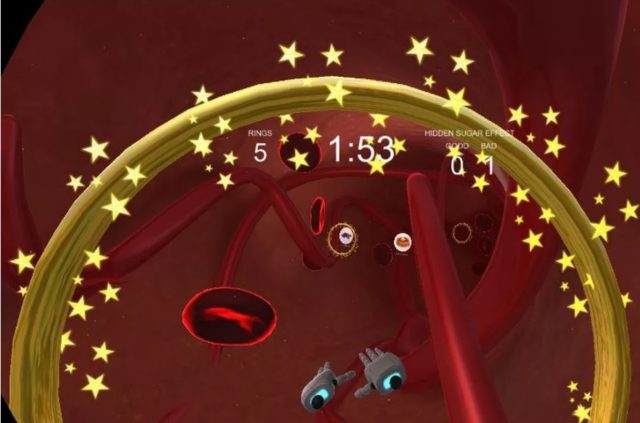
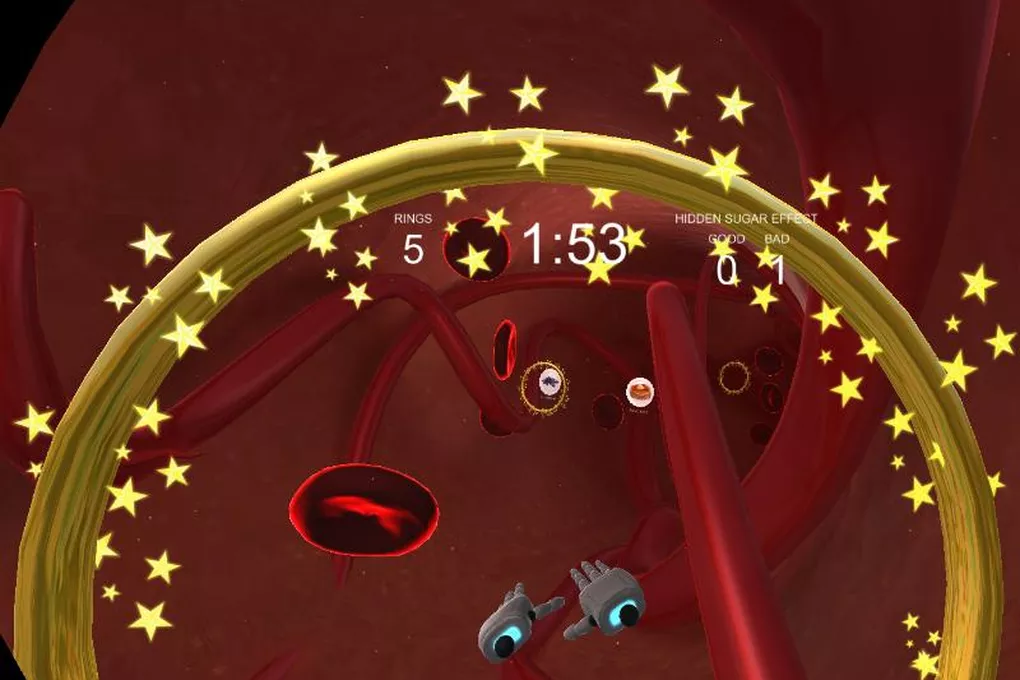
Making an appearance at the Consumer Electronics Show (CES) this past weekend, the diet brand, Atkins decided to make cutting out sugar a bit more high-tech. Enter Sugar Goggles, a virtual reality game aimed at teenagers. Atkins hopes to install its VR experience in high schools to “empower them” with knowledge about how much sugar is in food. Users are challenged with entering the human body and capturing foods while learning about their glycemic intake . . . we think. The point isn’t particularly clear but it has something to do with gold rings and blood cells. And don’t eat bread, I guess.

gold_ring sugar-goggles

gold_ring-0

4D Candle

Ahhh . . . that abandoned house smell. Capcom is about to immerse players into its horrifying world of Resident Evil like never before through virtual reality. Capcom decided that in order to further that immersion, the Resident Evil 7: Blood, Sweat And Fears candle will fill a room with the scents of terror. Burning for between eight and 20 hours, the candle may also evoke visions of “old timber and leather,” according to Merchoid, which sells the officially licensed product. Ya know, just in case you want to know what death smells like. Capcom has a history of macabre activations for its world-famous zombie brand, from serving brains to opening a human meat market in London.

vrcandle-510x340recandle_main-0

Cup Noodle XV

Oh, Japan. You have gifted the world with some of the best, weirdest things ever. Final Fantasy XV features a side quest called “Perfect Cup” in which players can craft their very own Nissin Cup Noodle with their best buds. Afterwards, the game’s characters seriously discuss how great the ramen is and how they’ve come to appreciate the snack even more. Wildy popular in Japan, Cup Noodle even got its own version of the Final Fantasy XV trailer.

https://youtu.be/bvaTAgkWy6c

Nosulus Rift

Visitors to Gamescom were uh . . . treated . . . to a very smelly addition to their demo for South Park: The Fractured But Whole. Ubisoft’s latest tale of kids getting into all sorts of mayhem features a unique game mechanic in which farting is used to do just about anything. From fighting to moving around, cutting the cheese is an important aspect of gameplay. To “complement” the demo experience, players were fitted with the Nosulus Rift—a device that blows fart smells into your nose. Try not to cry (with joy, unless you have a little brother to torment) because this little gem is not available for sale and was produced only for convention use.

Start Me

Racking up over 1.8 million views is this bizarre but memorable ad for Madden NFL 17. Denver Broncos’ linebacker, Von Miller is delightfully goofy in this musical plea to have players build their in-game defense around his character.

The Turbulent State (And Future) Of Native Advertising

Native advertising, although not a new concept, is struggling to find its place in a time of fake news, distrust of the media and strict FTC regulations. As consumers crave authentic information on the internet, brands are investing in native ads with mixed results.

Native: The Ninjas Of Advertising

There seems to be a fine line between informative sponsored content and being so legit that no knows it’s sponsored. While FTC regulations for digital advertising may be daunting to understand much less implement, the reason for these strict guidelines is simple—consumers have a hard time knowing an ad from an article, especially youngsters. Eighty-two percent of middle-schoolers couldn’t distinguish between an ad labeled “sponsored content” and a real news story on a website, according to a Stanford University study.

A separate study by Contently and the Tow-Knight Center for Entrepreneurial Journalism found that the vast majority (77 percent) of respondents did not interpret native ads as advertising. Meanwhile, 44 percent were not able to correctly identify the sponsor of the native ad they read, 54 percent have felt deceived by native advertising in the past and 43 percent lose trust in a publisher when it features native advertising from an untrustworthy brand.

Not everyone hates the idea of advertising in this way, however. A recent study by IAB asked 5,000 consumers to view a number of websites with sponsored content in a desktop format. Nearly nine out of ten (86 percent) of respondents feel that free content is made possible by sponsors. Although consumers understand and accept the need for sponsored content, that doesn’t mean they have to like it, as 60 percent said that they were more open to content that tells a story rather than reads like an infomercial. IAB’s study revealed that while consumers are willing to entertain the idea of native advertising, relevant information, authority and brand trust were the top factors listed for drawing interest.

iab-study-1

Investing In The Future

Despite transparency challenges, brands are still placing their trust—and money—in native advertising and are expected to keep investing for years to come. Business Insider predicts that US native display ad revenue will rise at a five-year compound annual growth rate (CAGR) of 17 percent between 2016 and 2021, reaching $36 billion. According to the report, media buyers will spend $84.5 billion on mobile advertising by 2020, with mobile accounting for 75.9 percent of all digital ad spend globally. The company predicts that native, in particular, will be a significant driver of mobile ad growth.

According to IHS and Facebook, native in-stream ads will drive 63.2 percent of all mobile display advertising at $53 billion by 2020. Third-party in-app native advertising (ads not running on Facebook) will be the fastest-growing ad format in digital advertising, Facebook predicts, and will grow at a 70.7 percent compound annual growth rate between 2015 and 2020 accounting for 10.6 percent of mobile display ad spend.

native-in-app-ad-sahre-third-party-apps-by-region

“Advertisers will start thinking more about engagement with the content rather than impressions,” predicted Arvind Jayaram, director of ad product for IGN. “We will see a shift in pricing models from CPM to CPV.” Jayaram and several other marketers offered their native advertising expectations for the coming year in a feature by IAB. The 2017 forecast further suggests that focus will shift to a mobile-first and visual content, notably video, will rise in relative importance.

“Prospective publishers will have to figure out better ways to drive traffic to content in order to show high engagement while keeping the amplification costs down,” Jayaram continued. “In order to mitigate ad blocking and low viewability rates premium publishers will host their native products on their own CMS rather than relying on third party platforms.”

While many brands continue to invest in native advertising, MediaRadar reports that native ad renewal rates from 2016 reached only 33 percent, with 20 percent of advertisers experiencing renewal rates below 20 percent.

A Look Ahead: What’s In Store For Mobile Games In 2017

Mobile gaming had a spectacular year in 2016 with the release of Pokémon GO, Clash Royale and others that brought the industry to a new level. Now the industry is poised to have another amazing year, with Apple’s subscription policies and technologies such as mobile VR poised to make big impacts. [a]listdaily speaks to a panel of industry insiders and experts to find out what big changes might be ahead for mobile in 2017.


“With ever increasing smartphone penetration of the nearly 7.5 billion global population, mobile gaming will only continue to grow in 2017. Much of the growth will continue to be fundamentally driven by the launch of the next set of megahits (likely to reflect some innovation in the thousands of mobile game apps launched every week) and incredible mobile game growth across APAC and emerging markets. Further revenue gains will be driven by big brands recognizing the need to reach consumers on mobile more than ever. Wild cards for 2017 include breakouts in mobile eSports equivalent to League of Legends and/or a mobile game phenomenon on Facebook Messenger.” – Terence Fung, chief strategy officer, Storm8


“I expect to see more exploration of real-time PvP, eSports, and location-based gameplay in mobile. As an extension to the potential emergence of a location-based trend in gaming, I expect to see more mobile game design built around the natural use patterns on mobile phones and tablets. The industry has already honed in on short session, one-handed gameplay, and other form-factor customization to better serve the mobile audience, but there’s still a lot of exploration left to better build gaming experiences that are truly tailored to consumers’ use patterns on a mobile device.

“I also have to call out mobile VR as an emerging platform that will continue to build momentum and possibly change the landscape in 2017. This is likely to be a year when at least a few studios start generating noteworthy revenue from mobile VR titles. I expect to see Google’s Daydream mobile VR platform continue to build momentum, and also expect to see mobile VR innovation from Facebook’s Oculus, which recently re-organized around separate divisions for mobile VR and PC VR.

“This continued platform investment in mobile VR is likely to yield a larger addressable market and commercial opportunity for game developers as the year progresses. To be clear, it’ll still be early days and I expect very small revenue compared to the overall mobile market, but I do expect to see the industry make major strides here in 2017.” – Chris Akhavan, chief revenue officer, Glu Mobile.


“Based on how mobile gaming evolved last year, I’m expecting a lot more niche games to be more successful. A large part of the last two years was dominated by Supercell, Machine Zone and King—games that could attract a large audience through brute marketing force and great products. But I see that base becoming a lot more homogeneous, so I think we’ll see a large number of subgenre games to appear in 2017 to cater to the tastes of advanced mobile gamers. It’s very similar to how music and movies evolved in the past. It’s not happening as much on console because it’s so difficult to distribute in that world, but it will definitely happen on mobile gaming.

“My second prognosis is that user acquisition the customer life cycle management will become a lot more complicated and challenging. In my opinion, retention is the new goal, not so much user acquisition. That’s what these folks (publishers) will focus on—retaining loyal customers and not relying on random downloads and installs which will never translate into real business opportunities.” – Piyush Shah, chief product officer, InMobi


“One of the most interesting and impactful developments that we see is alternative distribution. Mobile games will increasingly be distributed outside of the traditional app stores, as a download or played directly in the cloud. Netease in China is famous for this, but we also see a similar trend in Southeast Asia and the integration of games in messenger apps in the West could start to play a significant role in 2017.

“Mobile games may be well placed to become the soccer of eSports. One major reason soccer has become a global sport is that it is simple to play, cheap to get started in, and can be practiced nearly everywhere. So, while console and PC are the equivalent of an expensive elitist sport like fencing, which requires the player to spend heavily on equipment before they can even play, the low barrier of entry for mobile games may prove ideal when it comes to democratizing and opening up eSports to a mass market. Crucially, however, the speed with which mobile eSports become mass market depends on the region. China and Southeast Asia will likely have the early adopters in this regard. Already, around one-quarter of the top 100 grossing Android games in China have organized events or tournaments in the region, showing how mobile-first countries will take to the idea quickly. Countries like Germany (where PC is relatively dominant) and the UK (where the console rules) will be slower to embrace mobile eSports. In this context, mobile will drive viewers to eSports through the mobile web or apps such as YouTube, Kamcord, Mobcrush or Twitch, meaning that business opportunities for game companies lie in partnerships, sponsorships and advertising.” – Peter Warman, CEO, Newzoo


“Companies will refocus on factors outside of branding that are critical to the long-term success in mobile. Pokémon GO monthly revenue is declining rapidly because of problems with long-term player retention. I predict similar challenges for Super Mario Run after a first month of high revenue and downloads. The game’s premium business model will limit the per-player and long-term revenue. This year was the year major companies like Nintendo learned how to bring their brands to mobile and make a big splash. Next year will bring a refocus on the pillars of mobile success, long-term retention and monetization. I think we will see more games released with big branding, but more thought and development will have been put into the deeper metagame.” – Patrick Walker, VP of insights and analytics, EEDAR