Why Dos Equis Doubled Down On A Rebrand With The ‘Most Interesting Man’ Numero Dos

Dos Equis has arguably had one of the most iconic marketing campaigns of this millennium with the “Most Interesting Man in the World.”

It starred Jonathan Goldsmith, a man whose blood smelled like cologne, and a winner of the lifetime achievement award—twice. But in March, the Mexican beer brand said no mas to the actor who lived vicariously through himself and decided it was time to move in a new direction, and skew toward a younger demographic.

If Dos Equis wanted to have an awkward moment just to see how it feels, this might be it, because they introduced the second-coming of the retired Goldsmith by way of Augustin Legrand, an actor over 30 years his junior.

cantina-2

Legrand is not reinventing the prodigious characteristics of “the most interesting man”—he’s just adding a contemporary twist of masculinity paired with an edgier and dangerous exuberance in order to appeal to more millennials. So, in case he needs to complete a cross fit or a color run in world record time for the future of the campaign—it actually seems conceivable.

In the feature-film style trailer “Cantina,” the bilingual-bearded Legrand can be seen chopping open a coconut with his bare hand, carrying a piglet through tight quarters and diving into a well to retrieve a soccer ball.

In October, Dos Equis will release a full-length commercial that will illustrate how interesting has changed, and how Legrand will continue to embody the legendary status. It will be coincide with social integrations on Snapchat, including a national lens that will be available on October 22 for College Football Game Day to celebrate Dos Equis’ College Football Playoff sponsorship.

Andrew Katz, the vice president of marketing for Dos Equis, joined [a]listdaily to discuss why Dos Equis decided it was time to drive the brand into a new direction.

Why was it crucial to re-brand the “Most Interesting Man in the World” campaign? What were the deciding factors to going in a different direction?

The ‘Most Interesting Man’ campaign has been incredibly successful and made Dos Equis one of the fastest-growing beer brands in the US. Since its inception, Dos Equis has been planning for this transition, and no matter the consumer, their attitudes and behaviors shift and change. In 2016, character and substance are what make a man interesting. Our research shows that more than three times as many men say it’s their sense of humor (59 percent) that makes them more interesting than their athleticism (17 percent). And nearly twice as many men use the word creative (51 percent) rather than accomplished (30 percent) to define a man who’s interesting. With these new defining characteristics of interesting in mind, Dos Equis evolved the ‘Most Interesting Man’ campaign and a character to reflect the characteristics and values of our target today and to ensure the brand is interesting for today’s drinker. The search for the new character spanned multiple continents and included thousands of auditions. We discovered Augustin Legrand and knew right away he was the one. He’s led an interesting life in his own right and was perfect to portray this iconic, legendary character.
cantina-5

What is the biggest challenge of an undertaking like this and making sure the sequel still reaches viral success?

The ‘Most Interesting Man in the World’ has been a cultural icon for the past nine years, but regardless of the actor, the character has always been greater than the actor who portrays him. The content, substance and strategy behind the campaign are all factors in how Dos Equis is evolving the ‘Most Interesting Man’ and, hopefully, continuing its viral momentum. Part of our strategy is also accompanied by our new visual identity and logo refresh on our packaging, bottles and cans, our first-ever Snapchat campaign and our multi-year sponsorship of the College Football Playoff.

Is Dos Equis considering a “Most Interesting Woman”?

Right now there is not a plan for a Most Interesting Woman. However, there will be an interesting cast of new characters whom the Most Interesting Man will encounter along his journeys.

Drinkers are multicultural and diverse than ever. As a Mexican beer brand, what is the strategy to targeting and reaching consumers? What marketing strategies do you use?

The reality of the drinker base is more multicultural than ever and Spanish-dominant consumers are increasingly important, which is extremely relevant for Dos Equis as Mexican beer. Through the evolution of the ‘Most Interesting Man’ campaign, we’re leaning into our authenticity and embracing our Mexican heritage more than ever. You can see glimpses of how we’re targeting the multicultural consumer in the new trailer. The spot is also narrated in Spanish with English subtitles and takes place in a cantina south of the border.

cantina-3

Augustin Legrand is over 30 years younger than Jonathan Goldsmith, and Dos Equis also has a College Football Playoff sponsorship, with Snapchat plans in store, too. Why are you trying to reach a new, more contemporary audience?

There have been a number of key shifts in the marketplace in the past nine years since the campaign debuted. Everyone is consuming media and culture differently, and the beer category has exploded with new choices. The evolution of the ‘Most Interesting Man’ campaign and a new character is our response to the changing world, ensuring that the brand remains relevant for our consumers. The Dos Equis drinker has many interests, pursuits and tastes in life. As these tastes change, the campaign must evolve to fit the aspirations of a new generation. 

How will Augustin continue to embody the legendary status of Jonathan? What can we expect from his character?

The Most Interesting Man in the World is a legendary character. There will certainly be components of the campaign that remain consistent, such as continuing on with the Most Interesting Man’s ‘legend lines.’ The new Most Interesting Man is more active and adventurous, and we see glimpses of this in the trailer. He will be doing less reminiscing about past glories, and more hands-on adventure seeking.

Why is Snapchat the best social channel to launch this campaign? What does the platform offer that others don’t, and how will you measure the success of the national lens?

Snapchat is the best social channel to launch the campaign because over 45 million consumers 21 and over use it daily to snap with family and friends, watch their Stories, see events from around the world and explore content from top publishers. In terms of measuring success of the national lens, Snapchat partnered with Millward Brown to prove that their Sponsored Filters and Lenses drive more brand awareness, favorability and purchase intent versus mobile norms. Our partners at MediaVest are working with Millward Brown to measure success of these metrics for the campaign, as well as Datalogix to determine direct effect of SnapAds on Dos Equis sales.
cantina-4

What kind of experiential marketing activations can consumers expect in the coming months?

Dos Equis recently announced a historic, multi-year agreement to become the official beer sponsor of the College Football Playoff (CFP). The sponsorship further establishes Dos Equis’ standing in sports, giving the brand a strong platform to drive fan engagement with one of the country’s most exciting and growing franchises. Dos Equis will leverage the CFP to bring unparalleled and interesting experiences to help fans go for ‘Game Day Greatness’ throughout the regular season and Playoff, both at games and at viewing occasions.

There surely will be fans who are not thrilled that Augustin is the new face. How do you monitor the temperature on social channels, and how do you engage with consumers who are not happy about the re-brand?

We’re excited for fans to see Mr. Legrand’s new take on the character. After all, the Most Interesting Man has always represented an ethos more than any one individual person. The actor is obviously important, but at the end of the day, we think that the campaign itself is the thing that people love. We deeply value the opinions of our consumers and we have great resources that monitor the temperature on our social channels and engage with our consumers directly. Our fans can rest assured that any concerns communicated on our social platforms will certainly be heard.

Follow Manouk Akopyan on Twitter @Manouk_Akopyan

https://www.youtube.com/watch?v=8KqjvM7r2xY
 

Why Dolby Is Diving Deep Into Virtual Reality

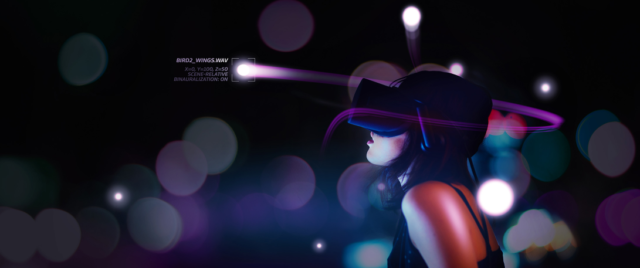
Dolby unlocked a new dimension of immersive audio with Atmos surround sound early last year by allowing content creators to design and deliver cutting-edge linear VR experiences through using spatial audio in a 3D space.

The emotive experience is designed to captivate consumers with pin-point precision so that they can feel they’re inside the compelling stories they’re placed in.

Doing so requires the right mix of both realism and hyper-realism, which is why the traditional movie company is dedicated to dispense object-based architecture that will provide creators storytelling freedom and flexibility—with a focus on accentuating audio.

One such way was by partnering with Littlstar in August, a network dedicated to VR and 360-degree video, where users simply install the Littlstar app and run it on supported playback devices with a VR head-mounted display to view such content as Paranormal Activity: The Ghost Dimension 360, Rapid Fire: A Brief History of Flight and Bob’s Burgers 360—Dancin’.

“By being among the first to incorporate Dolby Atmos into a global VR content network for distribution, consumers, as well as studios, brands and content owners using Littlstar will have access to the best VR-optimized spatial audio in the industry,” said Tony Mugavero, founder and CEO of Littlstar.

paulmcc

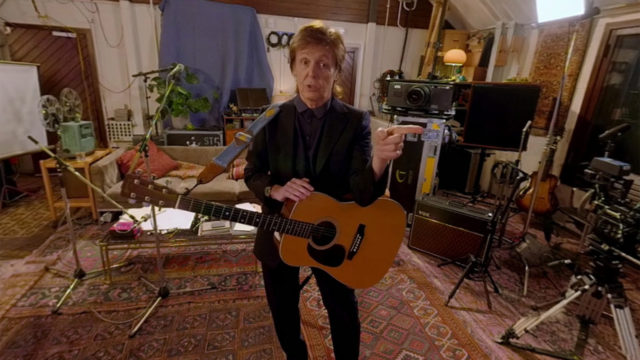
Dolby Atmos also partnered with Jaunt in July, the Palo Alto-based movie studio that produces short cinematics VR pieces, with a portal that houses experiences like a private home recording studio session with Paul McCartney and performances by musician Jack White.

Joel Susal, Dolby’s director of virtual and augmented reality, who’s responsible for the company’s entry into and ongoing business within the space, joined [a]listdaily to discuss how sound is critical to guiding users through VR stories.

What is Dolby Atmos’ mission, and what is it set out to accomplish?

We’re focused on enhancing the science of sight and sound. VR is the perfect example of how our technology comes together to make meaningful experiences for consumers. One way that happens is that you have to have great artists that really understand the medium, and that have the right set of tools in front of them to create compelling experiences. If you think about cinema or TV, like baseball, when you see and hear the crack of the bat hitting the ball, I’d say 100 percent of the time, that sound is actually accentuated. That’s what enables someone to tell a better story. So one of the ideas behind VR, kind of the first cut, is people think ‘I want to feel like I’m there.’ All of that comes with having the right set of technologies in the hands of the right people. For us, it’s the Dolby Atmos, which debuted in 2012 in cinema, and is now used in over two-thirds of the world’s top-grossing films and is embraced by Hollywood as the best storytelling technology.

How are you using Dolby Atmos to deliver cutting-edge linear VR experiences?

We’ve taken these tools and technologies and applied it to use in VR. Here’s why it’s important: Dolby Atmos is object-based, which means you can place sounds anywhere around you with pin-point precision. That’s important in VR because if the sounds aren’t where you expect them to be, the whole illusion falls apart. Beyond just precision, content creators want flexibility. They want to define how far away an audio source should be. Because Atmos is object-based, we can define on a per-object basis, whether a sound is head-relative, or scene-relative. Dolby Atmos is also massively scalable, and it can be streamed over normal networks to a playback device. In addition to the stream, our playback solution provides the same experience across all devices we support. This way content creators know exactly what the consumer is going to hear. So, they have that level of assurance that what they’re creating is what people are going to experience.

How important is sound to VR?

Often times the discussion is trying to convince people that they need immersive audio. In VR, I’d say that’s actually a pretty easy step to take because anyone who has watched a VR video, they just can’t tell. They might be hearing something, but if they don’t know where, or if they have to search for where every sound is coming from, that’s just distracting. They’ve lost the story. I think there’s a lot of exploration. We have taken our content creation tools, and they’re in beta now with over 40 partners, and from what we’re seeing and hearing form those partners, we’re starting to see the beginnings of what really the audio experience needs to be in VR. The importance of that is as we continue to uncover the needs of VR audio, we’re able to introduce those features in our creation suite. It’s commonplace knowledge now that having immersive audio in VR is not a luxury, it’s a necessity.

screen-shot-2016-09-14-at-1-12-24-pm

How realistic is it for us to be having VR experiences in theaters?

It’s not tomorrow—just because I still think there’s a lot of exploration happening in VR. Certainly from a tech perspective, we’re there, and ready to provide what we would call ‘a true cinematic VR experience.’ What’s interesting about watching a movie in a shared space like a theater is if it’s a linear piece of content like a movie, concert or sporting event, you can have multiple people wearing goggles in the same space, as long as their video is synchronized. You can surround all of those people with the same set of speakers and wherever one person decides to look, the audio is going to be exactly as it should be. If someone decides to look elsewhere, the audio is going to be exactly as it should be because they’re all surrounded by the same sound source because they can choose where to look. The idea of surrounding a community with synchronized video, but one set of immersive speakers, really paves the way for these communal viewing experiences. This enables a local and social VR experience where you can actually get excited together.

How is Dolby’s VR division leveraging the overall brand equity?

Our brand is really a pillar of strength. I’ll give an example with music experiences in VR. Musicians know that their product is an audio one. While a lot of them are excited about VR and experimenting in this new medium, they’re clearly not very interested in experimenting in how their product sounds. They’re willing to take the leap into VR, but they don’t want to risk degrading what their product sounds like. So, not only having a brand, but the quality and technology that Dolby brings, has been resonating strongly with musicians. What we’ve seen from the community, the content creation community and the VR distribution community is a real affinity and preference for our experience. The best thing we can do is leverage the brand but also deposit brand equity into Dolby brand, and I think we’re doing that.

How are you utilizing your partnerships with Jaunt and Littlstar?  

Jaunt is one of our key partners, as they have plenty of content available in Dolby Atmos. Littlstar will be supporting Dolby Atmos. What we’re trying to emphasize right now is that because we have this end-to-end solution, when someone starts using our production tools and utilizes these new features, when that piece of content is played back on a partner’s service, those features are utilized from day one—compared to having to wait for the content distributor to implement these advanced features. What we provide is much faster time-to-market as these new features become uncovered and we introduce them in our end-to-end solution. Our content creation tools for post-produced linear VR are in beta right now. We’re looking for the best content creators to join that beta program. We’ll be rolling that out soon to the public. When using those tools, if you distribute your piece of art to one of our partners like Jaunt or Littlstar, and there are more on the way, that full Atmos experience immediately gets conveyed to consumers and that’s really when the best experiences are rendered. We’re excited about being on the cusp of this new technology and we’re really excited to be leading and listening to what the people want so that we can help drive it even further forward.

Follow Manouk Akopyan on Twitter @Manouk_Akopyan

THQ Nordic Explains The Significance Of Its Rebranding

THQ, one of the most prominent publishers of its time, filed for bankruptcy in December 2012 and liquidated its assets the following month. Its most high-profile franchises were auctioned off, including Darksiders, Red Faction, Titan Quest, MX vs. ATV and a host of others that were picked up at auction by the relatively unknown Austrian publisher, Nordic Games. The company also acquired the THQ trademark in 2014.

After spending $4.9 million to acquire THQ’s back catalog, the company knew that the biggest question in on many people’s minds (and headlines) was “who the f*ck is Nordic?” The company has worked to answer that question by growing significantly. It will release a remastered edition of the Darksiders collection (called the Warmastered Edition) for Xbox One, PlayStation 4 and PC this holiday season, and it is publishing the PC retail release of the hit game, Quantum Break later this month.

thqnoridic-logo-black

Last August at Gamescom, the company revived the THQ brand by incorporating it. The publisher, now called THQ Nordic, recognizes the significance of having those properties while keeping its roots. It celebrated the occasion by releasing Titan Quest Anniversary Edition, a remastered version of the 2006 PC action role-playing game. Bringing back the 10-year-old game was a major event for fans because owners of the original game on Steam, which numbered at over one million, got the Anniversary Edition added to their accounts for free. Furthermore, those that didn’t own it could pick it up at a deep discount ($5) for a limited time.

Philipp Brock, THQ Nordic
Philipp Brock, THQ Nordic PR and marketing director

Philipp Brock, PR and marketing director at THQ Nordic, talked to [a]listdaily about why the company decided to rebrand itself after so many years.

“Now that we have lived with the THQ catalogue for a few years, we truly feel the significance of IPs like Darksiders, MX vs. ATV and Titan Quest,” Brock said. “Our team felt it was important to elevate that part of our portfolio. THQ Nordic is meant to quite literally remind people that: 1. We are home to many coveted THQ IPs that we plan to expand upon and 2. Our roots as a Swedish company are strong—we have a robust portfolio of IP separate from the THQ catalogue such as Elex, The Guild III and Battle Chasers: Nightwar that demonstrates that.”

Brock went into further detail about how acquiring the THQ properties changed the company. “The acquisition has already had a lasting impact on us—hell, we even changed our name! I’m happy to say that the core THQ Nordic team remains intact, but we’re now working with some amazing developers that we haven’t worked with before. We’re also expanding our publishing efforts to ensure every campaign receives the support it requires. We also have some really pretty Darksiders banners and giant figures adorning our office in Vienna.”

When asked about what led to the decision to develop Titan Quest Anniversary, then give it away for free or at a very steep discount, Brock responded, “We love Titan Quest, and we are stoked to introduce the experience to more gamers, first and foremost. We also think it’s important to reward the fans. Players will see more and more of that across all of our franchises.”

As to why Titan Quest was chosen specifically to coincide with the company’s rebranding, Brock stated that “all of these rich franchises with large and vibrant fan communities lend themselves to Anniversary and Remastered Editions or Compilations. We’re not picking and choosing, though. The Darksiders Warmastered Edition will be available for the holiday!”

Additionally, Brock explained that the main reason IPs such as Darksiders, Red Faction and Titan Quest continue to engage fans after so many years is because they present gamers with something unique and memorable.

“That may sound generic, but we believe that’s what it comes down to in entertainment,” Brock said. “Whether it’s a character or an environment or a vehicle or a weapon or a combat system, each of those games had their own way of pulling players in and not letting them go. Story obviously plays a huge role, especially in Darksiders. It’s fun to see fans of the franchises at shows and hear them describe specific moments from the games—they’re excited and sentimental reminiscing about their experiences.”

So the big question is: do people now know “who the F” THQ Nordic is?

“We sure hope so,” Brock said. “We are so grateful for the reception we had to our rebrand announcement at Gamescom. It really underscored why the catalogue acquisition was the right one for our company’s future. Whatever the antithesis of the apocalypse is, that’s what THQ Nordic’s future looks like right now.”

Op-Ed: Sony’s PS4 Pro Marketing Challenges

This holiday season will be a milestone in the history of video game consoles as we see the first mid-generation upgrades appear. Not only that, but we have a new console appearing from Nintendo in March 2017, as well as VR hardware on sale for the first time during a holiday selling season. We could be seeing a significant new model emerging for how consoles are sold, or the market could be cool to the idea—but either way, as consoles enter a period of uncertainty, marketers should pay careful attention.

Sony announced last week that the PlayStation 4 lineup will consist of two consoles: the PlayStation 4 Slim at $299 (essentially the original PS4 in a smaller size and lower price) and the PS4 Pro, a PlayStation 4 with substantially improved graphics and CPU, capable of displaying 4K/UHD (Ultra High Definition) and HDR (High Dynamic Range) games, for $399. Sony said that all PS4 games will be playable on all PS4 models (original, Slim, and Pro), and a patch will update all existing consoles with HDR capabilities for supported games.

While this type of mid-generation upgrade hasn’t been seen before with home consoles, it’s been the go-to strategy for Nintendo with its handheld consoles. We’ve had the 3DS, the 3DS XL, the New 3DS and the 2DS, just to cover a lower price point. The New 3DS came with a significant horsepower upgrade and is apparently doing well, which may be indicative of PS4 Pro’s success.

Marketing Challenges For Sony

There are several marketing challenges ahead for Sony, and there are no easy answers. The features of the PS4 Pro and the benefits are confusing at best, even to savvy consumers. Not all games will benefit from the PS4 Pro, and those that will benefit will not do so in a consistent way. Some games played on PS4 Pro will have higher resolution, requiring a 4K/UHD TV to display. Some games will have HDR color, requiring a different 4K TV that supports the capability. Some games played on a PS4 Pro will look better on a standard HDTV than with a regular PS4, but not always.

Therefore, the first marketing challenge for Sony is this: Why should someone spend $100 more for a PS4 Pro? Sony no doubt has answers lined up, which we shall see when their marketing appears. The deeper question behind this one is that of the target audience. Will there be a large number of the existing PS4 owners who will upgrade to the PS4 Pro? That seems likely, given the number of hardcore gamers who were early adopters of the PS4. Still, those PS4 owners will have to sell their existing console and put the money towards a PS4 Pro.

The upgrade issue is complicated by the need for a 4K/UHD TV with HDR to get the full PS4 Pro benefits. Those TVs are still uncommon, but with falling prices, it’s reasonable to expect the install base to grow. PS4 owners with a perfectly good HDTV may not be eager to spend $600 or more for a new TV, but Sony would probably love the use the PS4 Pro to help sell new 4K/UHD TVs, though. Might we see some marketing from Sony to help make this cross-sell happen?

Long Term Challenges

Looking out beyond this holiday, the picture gets more complicated for Sony when Microsoft ships the Xbox One Scorpio, which will be significantly more powerful than the PS4 Pro. But that competition won’t appear until holiday 2017, giving Sony plenty of time to tune its marketing strategy. Of course, that also gives Microsoft plenty of time to observe how the PS4 Pro is doing in the marketplace, and how Sony’s marketing efforts are working.

The more interesting question for Sony is how to split the marketing budget between PS4, PS4 Pro, and PSVR. We’ll probably see bundles of a PS4 and PSVR, but which model PS4? How important is the pricing versus the increased power of the PS4 Pro when it comes to PSVR? In the long term, does Sony hope to move the bulk of new PS4 buyers to the PS4 Pro? Watching the marketing strategy unfold over the next year will give you some clues as to Sony’s long-term intent.

Right now, Sony has said that all PS4 games must play on all models of the PS4 with no PS4 Pro exclusives. That makes sense, since the changes needed for a game to play on all PS4s are minor, akin to the graphics options we commonly see on PC games. That might change at some point in the future, perhaps if PS4 Pro sales become the vast majority of PS4 sales.

Key Points For Marketers

The console market is getting more complex, as we now have Sony with two models of its best-selling console, and Microsoft will follow next year with a third (counting the Xbox One S) model of the Xbox One. Not only will both console makers have two console models to sell, they will need to explain to users the differences and why both are good buys. Moreover, this is made much more complicated because much of the benefits require a user to have a new TV to realize those benefits. More challenging still is the fact that you won’t be able to see those benefits by looking at a video on your current monitor or TV screen—you’ll have to see them in person.

Thus we can expect more in-person efforts by Sony (and eventually Microsoft) to show users the differences between consoles and why they are important. Retail kiosks, traveling demos, displays at conventions are all likely to be used. This may be good for game titles that get showcased, but it may also make it tougher to get retail space for other types of displays such as software or for VR hardware.

Marketers should look to take advantage of the effort that will be put into marketing games that show off the differences for advanced consoles. Sony will have a “PS4 Pro Enhanced” icon on its PS4 Pro page and all related software packaging, signifying that the software takes advantage of the PS4 Pro’s added features. Of course, the caveat immediately follows: “Features vary from title to title. Select features depend on the type of display connected to PS4 Pro.” It’s going to be up to each game’s marketers to figure out how best to take advantage of this.

Marketers should be looking to development teams to get the very best images from games that take advantage of new features, then work to get the public informed of those advantages. The advent of 4K and HDR console gaming is going to be another differentiating point for marketers, and those that are able to leap on it first will have an advantage.

Professional ESports Association Commissioner Discusses ‘CS:GO’ Plans

There’s yet another new eSports league focusing on Valve’s Counter-Strike: Global Offensive (CS:GO). This one, the Professional ESports Association (PEA), is the only one completely owned and operated by CS:GO teams and players, according to PEA commissioner Jason Katz. The founding PEA team franchises include Team Solomid (TSM), Cloud9, Team Liquid, Counter Logic Gaming (CLG), Immortals, NRG eSports and compLexity Gaming.

“This represents an evolution of eSports to the major traditional sports league model like the NBA and NHL use,” Katz told [a]listdaily. “Historically, only third-party independent organizers or publishers have run leagues. This will allow us to finally build a stable, healthy, long-term environment for the players, the community, the media and the sponsors.”

The PEA will kick off its inaugural CS:GO season in early January 2017. Twice-weekly matches will be streamed live during the first 10-week season. Teams will compete for a prize pool of at least $1 million for the first year and $500,000 for Season 1. Furthermore, the league is completely funded by the team owners. Players and owners will receive an equal 50 percent share of profits and each caster will receive a share equal to a player. The PEA will also provide a suite of financial benefits and services to the players, including retirement and investment planning, health insurance and more.

Katz believes that the players, because they are also in a position to benefit from profits, will be more motivated to produce content and drive audiences to digital and television broadcasts to support the league. That’s good news for sponsors of all kinds. “We’ll continue to see non-endemic sponsors move aggressively into this space,” Katz said. “There’s no reason for eSports to be dominated by endemics. Just as in days past of traditional sports, manufactures of sporting equipment were the first sponsors. But today, mainstream sports are a very broad marketing channel to reach males in general. And today, eSports is a broad marketing channel to reach young adult males with disposable income.”

ESports are an important way for companies to market messages, Katz explained, since there are so few marketing platforms that hold the attention of young males in a place where they’re willing to be exposed to and receive marketing messages. “ESports is pure and simply the best individual platform for any marketing service,” he said.

Katz came on board six months ago, long after the conversations for the league first began, and said that a lot of key things are still being worked out. Scheduling will happen in collaboration with the players, and the league will come up with a schedule where their total work commitment is comfortable. The goal is to have events around the other established league schedules, so teams can compete across multiple leagues.

And the PEA will also discuss where events will take place, especially as more CS:GO competitions are held in traditional sports arenas. “Arenas play a growing role and that type of live engagement with live audiences is something that makes the experience communal and special in a way that can’t be easily replaced,” Katz said.

The PEA has also started broadcast conversations. Katz said since eSports lives online for the most part, the league’s broadcast arrangements will reflect that. With ESL already doing random drug tests for CS:GO, Katz said drug testing will be addressed and resolved through discussions with players and team owners. The sale of in-game stickers, another staple for other CS:GO leagues and events, will also be discussed.

“We’re committed to giving players 50 percent of all profits and involve them as closely as they want to be involved in the operational decision-making,” Katz said. “That’s in the best interest of the teams, the players and the community as a whole.”

Katz also explained eSports leagues are a combination of operational activities and a web of legal relationships. His background as an entertainment lawyer and a game marketing professional led him to work with DirecTV on the Championship Gaming Series and later with Riot Games in building the architecture of the League of Legends Championship Series (LCS). “I have experience on the legal side, the marketing side and the operational side of eSports and those are the fundamental cornerstones for a league,” he said.

When it comes to his role as the commissioner, he said his goal is to be an impartial arbiter of any conflicts that need to be resolved and a clear-eyed strategist in terms of making sure that the team organizations and players are in a position to take advantage of opportunities. “ESports is a highly fragmented and quite volatile landscape with a lot of tectonic shifts happening at the same time,” Katz said. “It’s a complicated ecosystem, and half of my time and energy I expect to spend navigating through that ecosystem and making sure we’re protected against risks and taking advantage of opportunities.”

Op-Ed: It’s The Perfect Time For Nintendo And Apple To Be Friends

Dear Readers,

After covering the video game industry for over a decade and being a contributing writer for [a]listdaily for almost a year, it is a privilege to officially become the senior games editor. In this role, I will continue to follow and report on entertainment marketing trends, particularly as they apply to video games and technology. As interactive entertainment continues to evolve and grow, I look forward to all the innovative campaigns and partnerships that will come in the future.

Steven Wong

Senior games editor, [a]listdaily


Few companies have been quite as resistant to jumping into mobile gaming as Nintendo. In the past, the company has often cited quality control issues regarding its highly recognizable game brands such as Super Mario, The Legend of Zelda, Donkey Kong and many others. It was clear that, according to Nintendo, quality could only be assured when a game was played on its hardware, whether it be a Wii U console or a portable 3DS handheld system.

However, these past few months have brought overwhelming evidence that fans are more than ready for Nintendo to make the big leap onto mobile devices. That includes the successful launch of Miitomo, Nintendo’s first official mobile game, designed as a social experience. But far more notable is the spectacular Pokémon GO phenomenon, which is based on a widely recognized property and boasts over 500 million downloads worldwide. SuperData Research characterized the game as having the most successful launch in mobile history, leading to skyrocketing sales of Pokémon 3DS games.

What makes the success of Pokémon GO even more impressive is the fact that it required very little marketing. Nielsen observed that there was exceptionally high awareness of the game, with about 52 percent of US gamers ready to download the game during its launch week. Nicole Pike, director of games at Nielsen, stated that: “We saw that even before it released—especially in the weeks prior to release—there was really high awareness for the game, not only in terms of a new game, but any game new or established.” Whether Pokémon GO’s success has more to do with the popularity of its brand or its novel use of augmented reality (AR) is up for discussion, but there is no question that the game has left a deep impression the mobile game market—and its popularity is expected to grow when its wireless accessory, Pokémon GO Plus, launches on Friday, September 16.

The success of Nintendo’s mobile endeavors so far no doubt led to last week’s surprise—and long overdue—announcement that the company would be working with Apple to bring its most iconic character, Mario, to the iPhone with the game Super Mario Run, which launched in December. Although the game appears to lack the depth of a traditional Super Mario game—the character runs endlessly, players tap the screen to jump and hold down to go higher—it was designed for one-handed mobile play, which the legendary (and the world’s most beloved) game designer Shigeru Miyamoto demonstrated during the game’s announcement.

Miyamoto later stated in an interview that Pokémon GO proved that it was time to reach out to a much larger audience. There was once a time when Nintendo consoles were the first gaming systems kids engaged with, but that changed long ago. These days, children’s first gaming devices tend to be their parents’ smartphones. While the game has a free trial period, but it is a premium title that has a one-time purchase and no microtransactions as you would find with free-to-play games, which parents might find appealing.

Although Super Mario Run will eventually release on Android, it’s clear that Nintendo considers the brand recognition and install base of Apple’s iPhone as the ideal starting point, which is amusing in a way, considering how gaming was barely recognized as a major iPhone feature. However, Tim Cook made gaming a major point during last week’s Apple Event by stating that gaming is the most popular category on the App Store, with over 500,000 titles to choose from. So, two companies that were originally resistant to each other have finally decided that the two can greatly help each other. Topping it all off is the fact that Pokémon GO will also be coming to the Apple Watch.

The timing couldn’t be more perfect for the two companies to put aside their reservations, as Apple is launching both the iPhone 7 and Apple Watch Series 2 this week. Meanwhile, Nintendo is winding down its Wii U console in preparation of the NX’s launch in the spring while preparing to launch Pokémon Sun and Moon in November.

More to the point, prior reservations are helping to hype the upcoming games. Fans will be eager to check out Mario’s debut on Apple’s mobile platforms, perhaps with almost the same anticipation as Pokémon GO. That anticipation may be what Apple needs to boost sales of its new devices.

“It’s a really exciting moment when industry giants like Apple and Nintendo play nice together,” SuperData CEO Joost van Dreunen told [a]listdaily. “After initially saying they would never release their games on someone’s hardware (because of their emphasis on quality control), Nintendo changed its position slightly and instead argued it would do so to bring consumers to their own platforms. We’ve seen this with DeNA with a focus on the Japanese market, and now with Apple. Obviously, the recent excitement around Pokémon GO further accelerated this agenda, and having Mario featured during an Apple event suggests that Nintendo has become more accepting of other dominant market participants. Apple, on the other, has come to the realization over the last few years that content may, after all, be an important driver behind hardware adoption and revenue generation. They’ve featured deals with major music labels, video producers, and now also with game publishers.”

Succeeding In China’s Soaring Mobile Game Market Grows More Challenging

The growth of the Chinese market for games has been impressive over the past decade, and it doesn’t appear to be slowing down anytime soon, largely spurred by the ever-growing mobile game market. Market research firm Niko Partners released its latest report recently, 2016 Chinese Mobile Gaming Report and 5-Year Forecast, showing that Chinese mobile game revenue will reach $8.3 billion in 2017 after growing 28 percent in 2016. Game publishers cannot afford to overlook such a huge potential market, but there are many obstacles to success in the China mobile game market.

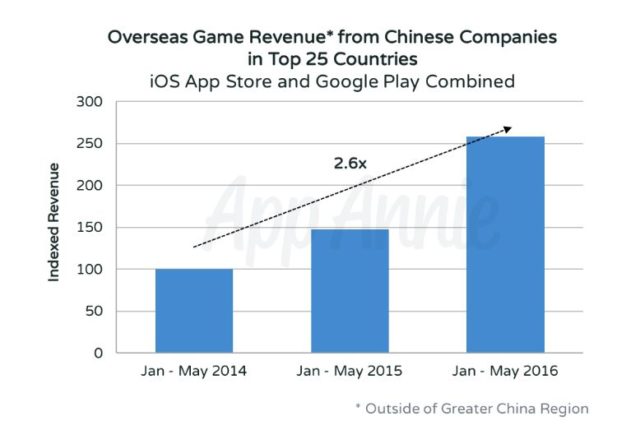
That $8.3 billion in revenue represents a full 31 percent of all digital game revenues in China for 2017, according to Niko Partners’ estimate. That’s up from 11 percent of digital games revenue in 2013. China has surpassed the United States to become the biggest market for mobile games (particularly iOS) in terms of revenue, according to market intelligence firm App Annie. China’s revenue from iOS games nearly doubled in one year.

App Annie found that locally developed games were dominant in China, and the main reason for the strong growth. “Specifically, massively multiplayer online role-playing games (MMORPG) like Fantasy Westward Journey, Westward Journey Online and multiplayer online battle arena (MOBA) games like Hero Moba were main drivers of China’s growth in iOS Games revenue. China will continue to present huge opportunities in mobile gaming. While foreign publishers have seen success in the the country—as evidenced by Clash Royale ranking at number 10 by iOS revenue in Q2 2016—local publishers dominate the top iOS revenue chart,” App Annie stated in the report.china-revenue-app-annie

Mobile games in China have made great strides in recent years as part of the total gaming scene in China, but all is not clear sailing for mobile game publishers.

Government Restrictions on Mobile Gaming in China

Back in June of this year, a Chinese government agency in charge of censorship issued a notice that mobile game makers must submit their content for approval with the agency 20 days prior to launch. Those games that are already on the market will have to be submitted for approval by October. The regulations appear “very comprehensive” according to Niko Partners’ manager and co-founder Lisa Cosmas Hanson. “It will insure that all mobile games get approval by 20 days prior to launch, and retroactively for those games already in the market,” said Hanson. “The games already in the market have until October to get their approval, and any major changes or updates to existing games must also be approved in the same manner.”

The effect of these regulations is mixed, according to Niko Partners. “The regulations that began in July 2016 will curb supply by slowing the new games into the market and speeding up market consolidation of smaller studios. But the regulations will not curb demand, which is still voracious, for the tens of thousands of games that are currently available to Chinese gamers.”

Opportunities for Mobile Games in China

Despite these new regulations, strong growth is forecast for mobile games, but it’s going to require more effort. “The new regulations are daunting, but by understanding the Chinese gaming audience, the rules and the process game developers can still release games into the market, albeit at a slower rate,” said Hanson. “Now more than ever it is crucial to study Chinese gamer behavior, build relationships with publishing partners, and invest in localization that reflects cultural understanding beyond the requirements for all games to include only Chinese text.”

The market size for mobile games in China is impressive, with Niko Partners projecting some 465 million Chinese mobile gamers by the end of 2016. That’s up by 100 million players in only two years, and the growth is likely to continue. The increasing market share of lower-priced Chinese-made smartphones is helping to spread the audience further, as these powerful devices reach an eager new audience.

The market for mobile games in China is increasingly dominated by two players, according to Niko Partners. Tencent and NetEase together command over 70 percent of the market share. Tencent alone has 53 percent of the domestically derived mobile games revenue. Both Tencent and NetEase showed significant growth in their recent second quarter results; Tencent’s revenue increased by 52 percent year over year to $5.3 billion, while NetEase’s revenue shot up 96 percent year over year to $1.3 billion. Those two companies continue to pull ahead of others in the Chinese market.

As well as improving revenue from China’s market, Chinese game publishers are doing well by exporting mobile games to other markets. Niko Partners reports that Chinese mobile game developers will generate an additional $1.3 billion in 2016 from mobile game exports to other markets, and nearly double that to $2.1 billion by 2020. While there are certainly cultural differences between some games popular in China and elsewhere, the leaders in the market are figuring out what works in other markets and how to adjust titles to succeed.

The opportunity for Western publishers in China is large, but not easy to seize. It’s no surprise to learn that many of the biggest game companies have deals with either NetEase or Tencent to help bring their games to market in China. That sort of partnership is beneficial on many levels, from providing help with localization to help with navigating government requirements. “Foreign publishers may see more success in the market by partnering with Chinese publishers to cater to local demand, secure distribution and generate awareness. Together, China, the US and Japan are responsible for approximately 75 percent of gaming revenue on iOS,” App Annie said. “Since Games is the single largest revenue driver on iOS, we predict that China has the potential to become the #1 market for overall iOS revenue in the coming quarters.”

“Content Marketing Is The Only Marketing Left” And Other Things You May Have Missed At Content Marketing World

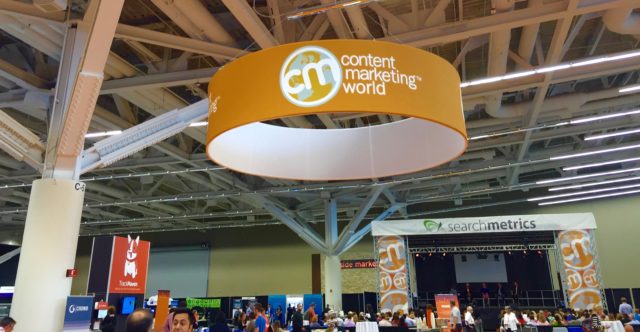
The biggest event in content marketing rolled into Cleveland this week and it was out of this world. That’s not just because Content Marketing World 2016 had Star Wars’ own Luke Skywalker (okay, Mark Hamill) as its keynote speaker. The four-day event, which wraps today, brought together over 3,500 content marketers to talk about best practices for creating effective content.

Why Cleveland? It’s the hometown of the Content Marketing Institute, which was established back in 2007 by founder Joe Pulizzi, to educate the industry and advance the idea that marketing should provide value to customers before attempting a sales pitch. Not longer after, marketing guru Seth Godin would declare that “content marketing is the only marketing left” in a modern era when interruptive advertising is easy for consumers to avoid and known to be ineffective.

Content Marketing World began not long afterward to bring the brightest minds in content strategy and custom publishing together. This year was no exception. The halls were filled with distinguished and influential voices in content marketing filling the halls. Just about every aspect of a branded content strategy, implementation and distribution was discussed.

While many top industry consultants and analysts peopled the stages, leading brands like Microsoft, Wells Fargo, LEGO, Kellogg’s, Dell and dozens more showed others how they have built effective content strategies, teams and measurements of their success.

Content Marketing World: Research Informs The Show

The conference always begins with a release of research conducted by the CMI in collaboration with MarketingProfs, influential content expert Ann Handley’s consulting firm. This year, the evidence suggested that content marketers still struggle to get full support within their organizations. Only 20 percent said their organization is fully committed to content marketing. That means there is budget, appropriate hires and executive commitment to sustain a content strategy. Pulizzi called from the main stage for content marketers to work hard to get buy-in because without a full commitment to regular content, brands will not gain the benefits of the strategy. “Mediocre content will hurt your brand more than doing nothing at all,” he declared.

Content Marketing World

A common theme throughout the conference was not just what to do but also what to stop doing. CMI’s strategy director, Robert Rose, repeatedly told marketers to stop building massive PDFs and start finding more effective content formats to engage their prospects. Michael Brenner, former VP of SAP and current CEO of the Marketing Insider Group, put it simply, “Research shows that 74 percent of CEOs are unhappy with their CMOs. Stop doing stuff that doesn’t make an impact.”

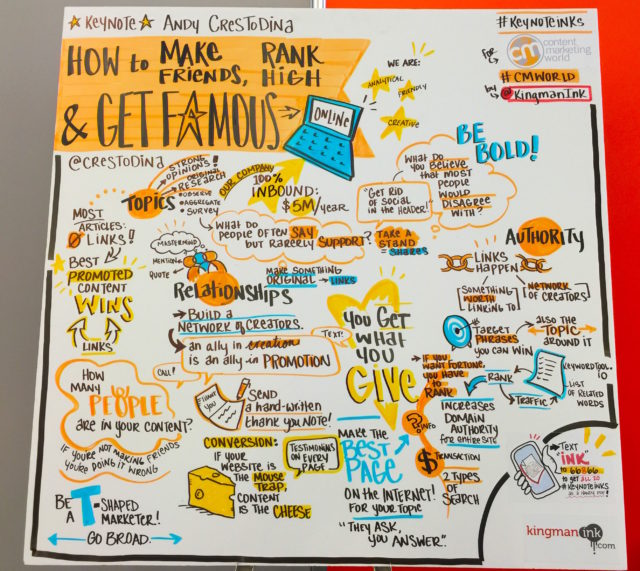
Keynote speaker Andy Crestodina offered marketers good advice on building effective content. He advised marketers to understand the purpose of content before creating it. Some content is for informational purposes, while other content is for transactional experiences. He offered many keys to content success, including working with influencers that can help spread your message because he noted that, “it’s not the best content that wins—it’s the best-promoted content that wins.”

Content Marketing World
Most Presentations At Content Marketing World Are Captured In Ink

Many Fortune 5,000 brands showcased their content success on stage and in panels throughout the week. LEGO, whose passionate commitment to content spans many decades, highlighted how they inspired user-generated content on social channels with a $100 campaign that generated millions in earned media value. Their innovative approach tapped into the creativity they knew their fans would express when challenged to build a simple character and take him to iconic places around the world. Marriott’s award-winning content studio set out a mission to “become the Red Bull of hospitality” and has done so with innovative original, influencer and real-time content that has tapped into the zeitgeist effectively. REI’s Eric Hess made a pitch for long-form content instead of the snackable, short-form content bites that won’t deliver the same kind of SEO and educational benefits their brand is enjoying. Wells Fargo showed that an innovative and nimble approach to content is helping them win over the hard-to-reach Millennial audiences that represent an increasingly large portion of their customer base.

With workshop days before and after the main event, Content Marketing World is an ideal forum for learning the craft or just getting much better at creating valuable content for your customers. Attendees learned everything from the right technology to support a content team, to creating compelling social content, to building global marketing teams and planning for multi-channel content production.

What about Mark Hamill? Why was he the closing keynote speaker for a content marketing event? As the actor took the stage, he admitted that an article written by the aforementioned Michael Brenner last week shook his confidence that he belonged on the stage. But Hamill need not have been worried. The article’s excellent analysis explained it all in the context of storytelling. Content marketing is about sorting out the right way to tell a story. It’s about redemption. As Brenner put it, “If marketing has a marketing problem, then content marketing is the solution. If banner ads are evil (and you know they are), then content marketing is the hero.”

Bethesda Exec Discusses ‘The Elder Scrolls: Legends’ ESports Plans

At PAX West, Bethesda Softworks held the first official public eSports competitions for its new strategy card game, The Elder Scrolls: Legends. But it wasn’t the first time the public had played the game in organized tournaments. That happened as soon as Bethesda unleashed the open beta for the game, and that fan interaction is what opened the door to another eSport for the game publisher—which is also mapping out a strategy for its 2017 game, Quake Champions.

Pete Hines, vice president of marketing at Bethesda Softworks, talks to [a]listdaily about the opportunities Legends and Champions open up for the game company in this exclusive interview.

pete-hines
Pete Hines, Bethesda Softworks vice president of marketing

Why did you decide to jump into eSports with The Elder Scrolls: Legends?

We felt like Legends was a game that was a good fit for eSports. Most importantly, what we care about is making a game that’s not only fun to play, but fun to watch. Both of those things also make it a good candidate for being an eSport title.

What do you feel are the key ingredients needed for a game to succeed in eSports?

The biggest thing is: it’s got to be a good game that’s fun to play and that’s fun to watch. If you don’t do those two things, then eSports is never going to happen. We tried to focus on aspects that make it really fun and engaging to play and offer a lot of variety and make it a really competitive title.

What does PAX open up as a proving ground for introducing eSport titles to gamers?

One of the things we’ve been able to do here at PAX is not only have competitions and do some streaming with influencers and devs, but also start to have tournaments where fans who have had a chance to play the game in the open beta can come in and try their hand with some of the decks that they’ve created. We’re starting to embrace that idea of it’s a competitive game. It’s about trying to figure out how to make the best decks, how to figure out the meta game, and what everybody else is doing. PAX is a great way to open up that to fans.

What role do influencers play in helping grow a new eSport?

For a title to be successful, it has to have a whole bunch of different elements working. It’s not just one thing. In the case of influencers and streamers, the more people that are exposed to the game and the more they understand how fun it is to play—how fun it is to watch—that only helps. So working with the streamers like TrumpSC, Kolento and Kenji only helps because they’re really into it. Those guys were beating the devs (the guys who designed the game) in matches, so it shows that it’s not just that you can reach an audience, but that those folks are really passionate about games like The Elder Scrolls: Legends.

What can you learn from what Blizzard has done with Hearthstone in eSports?

My approach to Bethesda since I’ve been there is to focus on us and what we’re doing, so a game like Hearthstone is going to do whatever it thinks is best for itself. Same with a game like Magic: The Gathering. We’re going to take our own approach and find our own way to go in terms of the kind of game that it is and the audience that we reach and how we approach eSports.

Outside of PAX, do you see bigger eSports potential for The Elder Scrolls: Legends?

Absolutely. What we did here at PAX is really a case of time and where we were as a game. We have our own QuakeCon, which was one of the very first eSports cons. It’s not just about celebrating gaming but it’s also where we started doing Quake tournaments well before Bethesda was involved with it. I definitely think you’re going to see tournaments and competitions in eSports happening at a variety of shows like PAX, but also in a bunch of other places.

What do you hope to learn from these initial PAX eSports competitions?

Like with anything, you try something, you see what works, and figure out the things that resonate and try to do more of those—and try and figure out the things you didn’t do well, or could have done better, and try and improve. I’m a big believer in that, whether it’s going from one game to the next or one eSports event to the next. So at PAX, we tried some things and hopefully we’ll take those learnings to whatever we do next.

Looking ahead, are there marketing initiatives that Bethesda can use across eSports titles from Legends to Quake Champions?

Yes, one of the things that we believe is that the game has to come first and the eSports will roll out of that. We do have a legacy in eSports with titles like Quake that have been part of the eSports scene for many, many years. And we want to try and take all the things that we’ve learned from running competitions at QuakeCon and outside of QuakeCon with Quake, not only with Quake Champions, but to apply those learnings to Legends, and honestly anything else we do where we think there’s a good fit—or that people are interested in competing and using that game to express themselves in competition.

Do you envision any crossover fan bases across these two eSports games moving forward as they’re rolled out?

Sure. If you’re interested in really fast first-person shooters and you’re also interested in strategy card games, then obviously there’s going to be some crossover. But our mantra has always been: we make the kind of games that we get excited about, and we make them for whoever is interested in those games. So if you’re only interested in strategy card games, then you’re probably not interested in Quake and vice versa. But certainly, exposing all of those to an audience allows you to hit folks who do have an interest and do focus on a lot of different kinds of games, or different genres, and might be interested in competing. Maybe they’re competitive in Quake, but maybe they only play Legends casually or for fun. We want to make sure people are aware. It’s free to play. It doesn’t cost you a thing. Give it a try.

What role does eSports play today in marketing and fan engagement?

Like a lot of things, eSports is just a component. It’s not the defining component. We don’t center everything around eSports. It’s simply one part of the puzzle, and there are a lot of things that have to go into promoting a title, marketing it, and making it a success. ESports is part of that, but it’s just a part. It’s about reaching out to fans, finding out the kinds of things that they’re interested in; the kinds of things that they want to do. In the case of Legends, as soon as we went into open beta, we saw that fans were creating their own tournaments and competitions, which said to us: “ESports should be a part of this because even without us being involved, they’re going out and starting their own tournaments and competitions themselves.” Clearly, it’s something fans are interested in and we simply want to foster that and grow it.

How Skullcandy Wants To Pioneer Audio For Virtual Reality

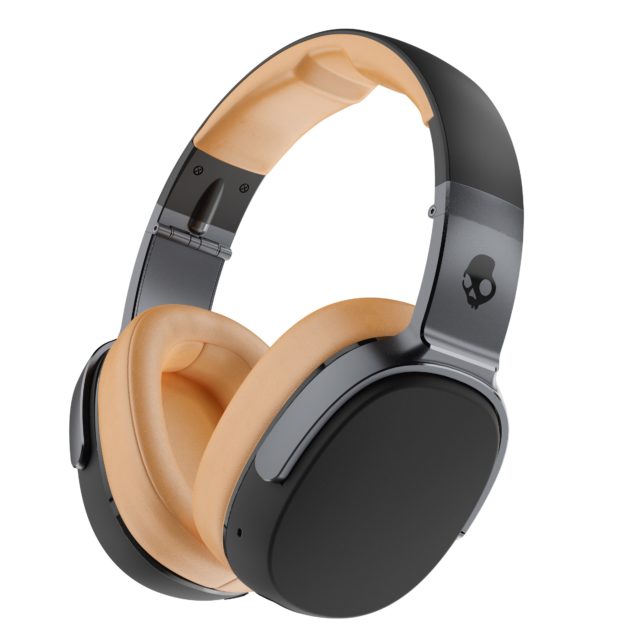
The influx of virtual reality advancements over the last handful of years—and over time, for that matter—have been focused on elevating the visual experience. Headphone and audio lifestyle brand Skullcandy wants to dramatically change that and be the catalysts for progressing audio in the VR space by releasing the Crusher VRA headphones.

Slated to hit store shelves early next year, it features stereo-haptic bass drivers that deliver directional bass that you can feel, ferrofluid integration for broader, cleaner bass response, and refined digital-signal processing.

They also introduced Audioscape VR, and audio-first, Hitchcock-like, VR thinking app. The music-generator app accentuates directionality, spatial sound and responsive visuals that reinforce what you’re hearing creates a rich audio-visual experience.

“The content demonstrates the power of designing a VR experience around audio,” Sam Paschel, Skullcandy’s chief commercial officer, told [a]listdaily. “The idea is that we take the visuals and strip them down. The visuals are there only to demonstrate and reinforce what is being created in the audio space. This is game changing. It’s really great and helps us understand how audio can become a bigger part of the VR environment.”

Skullcandy is using the app as an experience and tool to help people understand—and plant the seed—that audio is going to be a huge component in this space and technology. At VRLA in August, Skullcandy further drove that point home by collaborating for the world’s first silent VR rave experience that included 11 artists mixing live music inside VR.

Sam Paschel joined [a]listdaily to talk about how they plan on pioneering audio for virtual reality.

aaeaaqaaaaaaaabsaaaajduxymvhotaxltu0mmmtndq1zs1inja4lwu2mme5n2fjodk3oa
Sam Paschel, chief commercial officer for Skullcandy

How did Skullcandy decide that VR would be the next great vertical for the company?

VR is aiming to create these incredible, immersive experiences and really transport you with all the upside of having experiences complemented with empathy and entertainment. When you’re only tapping into one sense, it’s different stories. Storytelling is evolving, but no one is introducing additional senses. When you think back to the best memories you’ve had, like your favorite concert, you have an audio experience, a visual experience and you have a psycho-acoustic experience of feeling the vibration of the music on your skin. It’s multisensory. The combination of our technologies make the Crusher VRA headphones the most immersive, and the first true VR audio headphones in the world. We are just trying to put audio at the forefront and be the champions of audio in the VR space. That’s what this is all about.

Why was it so critical for Skullcandy to have ownership in this kind of space? Why was it important for Skullcandy to reach consumers via virtual reality?

This isn’t a critical business unit for us, but it’s incredible trending technology that we see a ton of opportunity in. We see a lot of momentum coming in from the high-end, and the tail-end. I believe in it, we believe in it as an organization, but today this isn’t something that’s driving our business. It’s a passion project. We saw the income from the VR technology wave, and we already had an earlier version of the Crusher that was meant to be about immersion. We wanted to be the most immersive audio company. I don’t want to just recreate sounds that were in a studio in a very antiseptic. I want to put you back in the middle of that concert. I want it to be a little bit grittier, and provocative. As soon as VR started coming in, we saw that this is another massive technology in an area that we know we want to be an innovation leader in—which is immersion and putting you in experiences. It was a natural for us—like no one else is paying any attention to this: how do we create the most immersive audio headphone experience in the world that can be part of the VR revolution?

Is it fair to say you will separate yourself from other industry leaders in audio via VR technology?

That’s the hope. If that’s the outcome, then that’s awesome. I think we’re doing it mostly because we want to help create those experiences that help separate us. We’re early in the game, and that’s great. We’re really here because we want to show the content creators. In the long run, as the Crusher VRA headphones become a wildly successful and commercial product in the VR space, there’s an opportunity for sure. It’s more about showing consumers of what we’re capable of doing technologically as a brand. I think that’s surprising for some people, based on the picture they have of Skullcandy. They don’t know of the capabilities that we have.

crusher-vra_black-tan-black_3-4_s6mbw-j373_rev-1

What are some of the ways that you’re trying to reach consumers with this Crusher VRA headphones?

This product changed perception and showed people what Skullcandy is capable of—that’s a huge win for us. As far as the market for it—we’re early. I think it’s going to come. I think it also lets us begin to evolve alongside content creators, and even with some of the headset manufacturers as to ‘how do we become a part of this ecosystem, and this family.’ This commercial success of this version of the Crusher VRA headphones isn’t the first key thing. Getting it into a ton of consumers’ hands and attach rates with every time someone buys an Oculus—that’s not how we’re really thinking. It’s about flexing our technological muscle, moving it forward at the cutting edge and really trying to pioneer immersion.

How does VR open the doors for brands to be leaders in the space in their respective businesses?

You look at some of the projections, and how so many headsets could be sold in the next two years, and that’s possible. Not betting the farm on that, though. We have a core business that’s driven off of a lot of other things around music consumption, and regular media. In house, both from the stories we have to tell, how we have to frame it, and the expertise in our engineering teams—mechanical, electrical, acoustics, signal processing—having built this, we’re a fundamentally different organization as well, based on what we learned. All of the learning is going to make our other headphones and audio products much better because we went through a process, and did a real deep-dive. The passion from the product team to create this have been amazing.

How do you think the live music and concert realm while watching in VR is going to grow in the near future?

I see it as an opportunity. The audio, with us in the lead, will get stronger and better. For people who can’t attend, I think it is by far the best and highest fidelity, in every way, proxy for actually going to an event. If you look at, this there’s an entertainment side to what’s coming in VR for sure—to be able to transport you and give you these immersive experiences that you couldn’t get before. There’s also just a massive opportunity in education. It’s an empathy machine that helps you see the world and life through someone else’s eyes. All of that is incredible opportunities. Music is a passion point for us. We’re doing some things with YouTube where we’re going to YouTube studios and recording some music, and have plans to do our own VR or 360-degree content capture as to see how well can you transport people there, and what that’s like.

How do you see the space developing?

I think there’s going to be a lot of evolution in these platforms. This isn’t something we drop in and say ‘we did this VR headphone’ and walk away. It’s something you have to nurture and keep up with the pace of evolution inside of this space. Our goal is to shine a light that multi-sensory is better than just visual. Getting people to start thinking about longer term and the future of the ecosystem. We want to take a leadership position on the audio side. It’s very much a brand way. We think we can sell these and it can very much be a commercial product, but we’re not betting the farm on that.

What are some of the audio challenges VR has to overcome for it to hold its own on that front?

There’s so many. It’s a really complex problem to solve when you talk about recreating real-world audio. If I were going to recreate this conversation perfectly, I’d need to know everything about the size of the room, and the materials in it. Left and right directionality, or 360-degree directionalities. We need to know not just the sound and the room and what was created there and its space, because the visuals need to match the audio. There’s been a ton of investment from large companies in this space, but if you really want to create immersion, what about the other sense in sound? That’s when it is really going to start to take off and that is where we’re going to pioneer.

Follow Manouk Akopyan on Twitter @Manouk_Akopyan