It’s that time of year again when the leaves begin to turn, and when grocery store aisles are lined with candy and everything gets a pumpkin spice makeover.
Starbucks, the most notorious of all pumpkin spice peddlers, is going all out for this year’s fall promotion—going so far as to create a dedicated Instagram profile, verified Twitter account and its very own sponsored hashtag emoji.
Fans of the sugary-sweet fall tradition can even use a dedicated Facebook Messenger Bot, where users can ask the pumpkin spice latte (PSL) character questions, access animated gifs and photos. The spicy cup of autumn warmth is also creating buzz on Tumblr, with a collection of themed photos, gifs and the ability to share your every own PSL pics with the hashtag #ShowMeYourSpice.
Just as the McDonald’s Shamrock Shake used to appear in the spring, the PSL has become an official herald of the autumn season—and comes with its own dedicated fan base.
To see just how much hype is generated by the annual launch of the PSL, social media analytics company Spredfast collected some interesting statistics in the week leading up to the Tuesday’s menu re-launch.
In the week leading up to the re-launch, tweets about the drink reached a maximum of 2,855 per minute. However, once the drink launched, that number leaped to 5,076 tweets per minute. In total, the phrase “pumpkin spice latte” and the abbreviated hashtag #PSL have racked up over 56.8 million tweets.
According to the report, there have been more than 731,000 posts tagged with #pumpkin on Instagram related to the drink and another 468,000 labeled with #PSL. Moreover, Starbucks’ PSLs receive 493 percent more likes per photo than shots tagged with #Starbucks.
Starbucks’ PSL is back for its 13th year and remains the coffee king’s most popular menu item. Since 2015, the PCL contains real pumpkin and no caramel color, although its nutritional value and addictive properties are another topic altogether.
Whether or not the drink itself will kill you, Starbucks is totally killing it on social media.
Marketing is often focused on acquiring new customers, but keeping existing customers through good customer support is much more cost-effective. In fact, existing customers are your best targets for new sales—one study shows that you have a 60-70 percent chance of getting new business from existing customers versus only a 5 to 20 percent chance of selling to new prospects. So it makes sense to make good customer support part of your marketing strategy, and make sure you’re doing a great job.
Customer support has changed with the vast array of technologies available. Some of those technologies have been used badly, as anyone who gets stuck in a seemingly endless series of phone menus can attest. There are those companies that have used the latest technology to make customer support a far better experience, and even contribute substantially to larger marketing goals. One of those companies is Helpshift, which is providing a mobile solution for customer support.
Helpshift CEO Abinash Tripathy
Helpshift customer support software is installed on some 1.3 billion devices, helping on average 130 million people per month. Recently, [a]listdaily spoke with Helpshift CEO and co-founder Abinash Tripathy about the importance of customer support to marketing, and how Helpshift contributes to marketing goals.
What does Helpshift provide that’s different from other support platforms?
Helpshift is the world’s first customer support platform for mobile. My co-founder, Baishampayan Ghose, and I discovered that no other CRM solution focused on mobile-first, so we created it. Our company provides an enterprise-class experience inside mobile, and that’s what sets us apart. There are other companies with large products and services that would love to say they’ve done this, but it’s a complicated space and we’re the first to master it.
What’s the importance of good customer support to marketing?
Great customer support and marketing go hand-in-hand, especially in the mobile economy. For example, Pokémon GO’s lack of a clear path to service—when users come across server issues or item issues—they take to social media and other mediums to vent. If the problem can be resolved at the time of the issue, a bad image would be prevented from forming. Also, with great customer support, you’re more likely to keep customers engaged, creating retention marketing: increasing the likelihood of repeated purchases. Like Jason Wesbecher, Contributor to Entrepreneur.com, said, “customer care is your best marketing strategy.”
Over the past five years, there’s been an interesting shift in CRM where it has moved from being a pure revenue-tracking tool to a “front office platform,” which allows a company to service their customers and drive more deals into the funnel. It has expanded from being a system of record for sales teams to a suite that has capability to service or support your customers and the ability to drive more leads via marketing automation. CRM was largely built for for B2B companies. Helpshift entered the industry as the first B2C mobile CRM and other companies started to follow suit.
What is proactive support, and how is that important?
Proactive support is engaging with customers before an issue arises. Apps need proactive customer support and qualitative feedback to grow fast. In the mobile economy, it’s imperative for businesses, large and small, to proactively support and engage with their customers on devices they’re intimately attached to. With in-app support, apps are able to turn positive feedback into higher app store rating. Customer support helps build five star apps.
Can you share with us some examples of how Helpshift has made a difference in customer support?
Helpshift’s data scientists polled the company’s entire install base of 1.3 billion devices. The result revealed that of the 1.3 billion devices polled, 20 percent actively sought help. Of that 20 percent (284 million users) only seven percent proceeded to file a support ticket after utilizing a specific self-service FAQ provided in-app. That’s because of Helpshift.
Also, one of our clients, Shyp, was able to reduce customer support tickets by 25 percent after just one month of incorporating our SDK into their app. You can find the case study here.
Do you think that this sort of support is helpful in creating, building, and maintaining a community around a game? Can Helpshift be used to not only connect people with customer support, but with a community as well?
Definitely! Our client Zynga is a great example of that. Helpshift’s solutions allowed Zynga to create a quality VIP experience for their best users through retention and activation. Zynga has a sophisticated, data-driven, VIP program that helps them keep loyal gamers they care about, engaged and happy.
With the massive success of Pokémon GO, there were many issues and problems in the first few weeks. Niantic seemed to be taken by surprise at the level of success. How could Helpshift be of assistance to companies who may not have the staff to handle a huge surge in customers right away?
Helpshift serves small to large companies. Our client, Flipboard, is a great example of handling customer surges. Flipboard has an 80 million user base with a team of three. With Helpshift’s in-app FAQs and messaging, they were able to cut their interactions down by half. You can read the full case study here.
How do you see chatbots evolving in the future, and what will they do to help marketing? What does Helpshift plan for the future of its product?
I believe A.I. needs to mature before chatbots can see a stronger future. They present unique opportunities for marketing in terms of personalized content, calls-to-action, and a wealth of data about the customer. They automate many of the processes behind customer service—not replacing humans, but driving efficiency in the customer support workflow. You’ll have to follow our company news to see what we’re planning for the future.
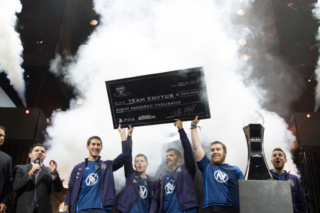
INGLEWOOD, California—Activision wrapped up an epic four-day Call of Duty fan celebration on Sunday by crowning Team EnVyUs as Call of Duty World League champions.
Team EnVyUs overcame top European team Splyce in front of a sold-out crowd at The Forum to take home a cool $800,000 prize. The purse was part of a winning share that totaled a whopping $2 million, the biggest in the game franchise’s history.
Rob Kostich, executive vice president of Activision and general manager of the Call of Duty franchise, told [a]listdaily that COD XP was the biggest event in the game’s history and that it was the most fan support they’d ever seen.
“This whole event is a massive undertaking constructed for our community, and is a celebration around the entire world,” said Kostich. “COD XP is like a theme park that leapt out of a video game and into the real world. It was built really for two purposes—to celebrate our eSports season with COD World League and multiplayer for Infinite Warfare and Modern Warfare: Remastered. The really important thing for us was to make sure that we not only have a great experience for the people who are here, but for those around the world who’re not.”
Fans in attendance, among them athletes like Michael Phelps, Richard Sherman, Marshawn Lynch, Derrick Rose and Karl-Anthony Towns, were the first to play Infinite Warfare’s multiplayer mode, out November 4. COD carried the conversation on social by allowing fans to directly broadcast their gameplay live on Facebook with their custom capture RFID set-up.
In addition to revealing new Black Ops III downloadable content and other game reveals, Kostich and the Activision crew had an arsenal of activities for fans at The Forum to engage with, including zombie laser tag, paintballing in a life-sized Call of Duty: Black Ops Nuketown multiplayer map (broadcast on Twitch), zip lining across the parking lot, and of course, tents featuring several hundred gaming stations.
Fans on-site were also able to play the first Call of Duty PlayStation VR experience to feel what it’s like to pilot and dogfight a Jackal, the personal fighter jet in Call of Duty: Infinite Warfare.
COD competitive fans viewed more than 1.1 billion minutes of content across 100 million tune-ins going into the weekend, so for those who were not there in the flesh, Kostich said that the conversation was carried through a litany of trailers and downloadable content reveals on social and digital channels.
Hip hop artists Snoop Dogg and Wiz Khalifa took a break from their High Road Tour and wrapped up COD XP on Sunday with an hour-long concert crooning to crowd favorites like “Nuthin But A G Thang” and “Black And Yellow.”
There was a time when the only link between traditional sports and video games came from titles like Madden,FIFA and NBA 2K. As the eSports industry nears $1 billion and viewership grows into the millions, traditional sports news outlets and athletes alike have taken notice because a bevy of pro ballers are entering the lucrative world of eSports. It’s not just about the money, although that certainly doesn’t hurt—after all, these athletes are in it to win it. Here are some key players in the traditional sports realm who aren’t afraid to embrace a new age of competition.
Rodger Saffold
The Los Angeles Rams offensive lineman and entrepreneur is the proud owner of the team Rise Nation. Rise Nation has competed in global Call of Duty competitions against major contenders OpTic and Evil Geniusesand are branching out into other games like Overwatch as well. “I put myself out there, too, to use me and my following to help raise awareness of what eSports is, to try to get the NFL kind of involved, you can use me . . . you get eSports, you get the NFL and now we’re taking over,” Saffold told [a]listdaily. “That’s the whole part of this; we’re taking over. We’re literally growing at an alarming rate—almost too hard to handle.”
Rick Fox
In December, the three-time NBA champion bought an eSports team previously known as Gravity Gaming and renamed it Echo Fox. The team focuses on League of Legends, among other titles. “The deciding factor [to invest into eSports] was cellular,” Fox told [a]listdaily in an exclusive interview. “Once I walked into a sold out crowd at Madison Square Garden, everything in those two days spoke to me as a professional athlete. I knew it was the next generation.”
Mark Cuban
The Dallas Mavericks owner is literally betting on eSports through the startup Unikrn in which he invested in. The billionaire, who also appears on Shark Tank, has invested in a platform focused on betting in the growing competitive gaming industry wherever it’s legal. “There is no reason to try to legitimize eSports to anyone,” Cuban told [a]listdaily. “ESports is a real industry. People can choose whether to connect to it themselves. The participation numbers and the online viewership numbers speak for themselves. What matters is that people who love eSports really get into it. They watch clips and matches. They play the game. There is no need to try to convince those on the outside.”
Gordon Hayward
The Utah Jazz star, another current NBA player and avid League of Legends gamer, recently told Forbes that he’s also looking into the eSports business. “I’m looking into partnering with some people in the business side of eSports. I think there’s all kinds of money to be made in the industry.” He even penned a column on The Players Tribune to make a case for gaming. HyperX, a division of Kingston Technology Company, added Hayward to its roster of champion athletes in May to promote their headphones.
Andy Miller and Mark Mastrov
The co-owners of the Sacramento Kings invested in the new eSports franchise NRG ESports, which specializes in League of Legends. Miller, who previously served as vice president of mobile advertising for Apple, has gone all-in with eSports—the Kings’ new arena was designed for eSports.” He told [a]listdaily: “We wanted League of Legends right off the bat. I researched it and loved the energy. And you can’t deny the size of the audience. It’s massive. We play in front of so many people every week, whether on our own streaming with our guys or on the weekend at Twitch. And then you stack those numbers up against the NBA and NHL and other sports and it’s worth it. So that was a no-brainer for us.”
Shaquille O’Neal
The retired NBA superstar invested in Miller and Mastrov’s NRG ESports along with baseball players Alex Rodriguez and Jimmy Rollins. The team participates in League of Legends and CS:GO video game competitions. “It is a result of multiple years of education on our part and other publishers’ parts to let people know that this is not a fad, this is not something that’s going away,” Whalen Rozelle, director of eSports at Riot Games, told [a]listdaily. “There is a large generation of sports fans, a new breed of sports fans whose ‘sports’ are the games that they love to play. While there are some potential pitfalls of having so much mainstream media attention at once, in general, it’s a positive thing and will be good for the ecosystem that we’ve built.” Shaq, now an analyst for Turner Sports, home to televised ELEAGUE competitions, has already filmed eSports promos.
The Brooklyn Nets guard was one of the thousands of fans who packed the KeyArena for five days leading into the Dota 2 tournament final this summer. Lin has been playing Dota since he was 16 years old with his brothers Josh and Joseph. He says he still plays three to four times a week, even during the NBA season, especially on the road, when he’s in his hotel room.
“There’s no ceiling in terms of how big it can get,” Lin told ESPN. “I think e-gaming is going to follow the trends of society, when you look at Pokémon GO and how accessible iPhones and iPads are. Now everyone has access to iPhones and iPads around the world, and that’s going to make e-gaming grow even more. Everyone is investing a lot of money in tech. I have no idea how big it’s going to get, but I do know this is only the beginning.”
Kobe Bryant
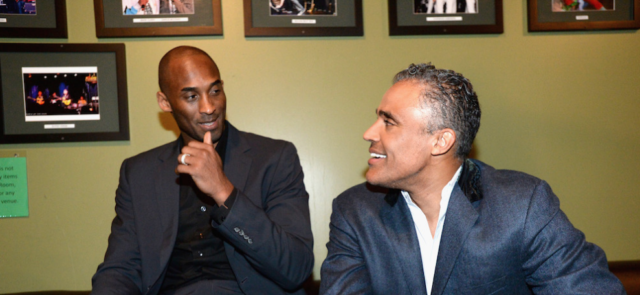
The Black Mamba is an integral part of 2K Sports’ promotion with NBA 2K17, which also recently announced that it would be hosting a new service called 2K Streamcast, where players compete in a Pro-Am for a $250,000 cash prize. When asked if he would consider investing in eSports like many of his industry colleagues, he replied, “It depends, depends if the right opportunity comes along, and I feel like it’s something that we should invest in, and if it’s something we feel like we could add value to, then yeah, that’d be something that we’d consider.”
Fox, Bryant’s former-Lakers teammate, wants to recruit the future Hall of Famer into the business, telling [a]listdaily, “Kobe has an interest [in eSports]. He and I have scheduled a sit down and talk about it. I’d love to get him involved. I’d love to pull him into Echo Fox. That’d be quite the coup because I know the value of his competitive fire, his expertise in terms of just leadership, and understanding how to tackle business. He’s got the time now, so he has an open door with us, for sure.”
Jonas Jerebko
The Boston Celtics forward and seven-year NBA veteran purchased the eSports franchise Renegades—a growing brand that competes in Counter-Strike: Global Offensive (CS:GO) and Call of Duty. The Renegades CS:GO team participated in the inaugural year of ELeauge, a show broadcast through Turner and Twitch.
Wendell Lira
The Brazilian pro soccer player traded his cleats for a controller, making the move from real-life soccer star to FIFA eSports hopeful. Lira cited mounting injuries as his reason for retirement, but also announced plans to pursue a career in eSports. After winning the Puskas Award in 2015, Lira was challenged by 2015 FIFA Interactive World Cup winner Abdulaziz Alshehri to a game of FIFA. Lira destroyed the champ, 6-1. “I had pleasant moments I’ll never forget,” Lira told Brazilian site, Globoesporte.com following the announcement. “I played alongside big stars, too. I had pleasure being a guy who was actually accomplished at football. And I had the dream of being a gamer, I always had this desire to live it. It is almost impossible to stop playing football to live as a gamer, but God gave me this opportunity. It is not the end of a dream. In fact, God has given me the opportunity to have this job as a follow-up in my life, being happy and continuing with that smile.”
Marshawn Lynch
The former-Seattle Seahawks superstar has the distinct honor of being the first professional athlete to appear in a Call of Duty game. Lynch plays a villainous gun-for-hire who shoots up a Singapore tavern with his gang. The football star is a big fan of video games and had a lot of fun acting out the motion capture scenes for Call of Duty: Black Ops III. “You’re shooting up everything but always fighting for a bigger picture,” he said while ESPN was on scene at Activision. “The whole game is Beast Mode.” In June 2015, ESPN put Lynch on the cover of a special eSports issue, detailing the rise of video games into the world of competitive sport.
Russell Okung
ESports startup company Matcherino found an enthusiastic investor in the Denver Broncos offensive tackle. “I had some interest in the eSports industry for a while now,” Okung told The Seattle Times. “It’s just like people coming to watch us.”
Demetrious “Mighty Mouse” Johnson
This UFC star loves to play video games and hosts live Twitch streams for a variety of games, but the pasttime is becoming more than a hobby. “Since I’ve started streaming I spend at least 15 hours a week playing games, maybe more,” he said on an episode of The Three Amigos podcast. “My brain needs to be stimulated. I look at streaming like a side project, and I take my side projects and my jobs very seriously.”
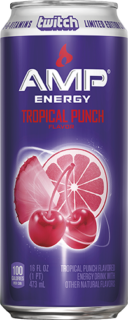
AMP Energy has launched a brand new Tropical Punch flavored drink at 7-Eleven stores nationwide as part of its marketing partnership with the social video platform Twitch. Although it’s the third time the Twitch brand has appeared on a limited edition can, it’s the first co-branded marketing play to feature the iconic bright purple Twitch hue and the first new flavor to be developed by the two companies.
“The Twitch community has never seen our brand on this type of consumer packaging or in retail stores in this fashion before,” Anthony Danzi, senior vice president of client strategy at Twitch, told [a]listdaily. “It’s a fun step for us to partner with a cool brand like AMP and to have our own brand-inspired flavor on the market.”
To promote the new drink, AMP Energy made 50 giant-sized replica “Sidekick” AMP Energy drinking devices, which include a straw for hands-free drinking. Sonika Patel, senior manager of marketing at AMP Energy, said these Sidekicks were sent to top Twitch streaming and gaming influencers, including Swiftor, Serious Gaming and NobodyEpic.
“We wanted to celebrate the excitement of the new flavor launch by offering something unique and of value to key gaming influencers and streamers,” Patel said. “We have seen cross-promotions from the influencers who received the Sidekick packages, as well as by our partners at Twitch and 7-Eleven.”
Danzi said Twitch created some quick, fun video advertisements featuring some of the top Twitch hosts, including Anna Prosser, Jordan “Soma” Tayor and Mike Ross. The videos appear throughout the Twitch platform and on the AMP and Twitch microsite, AMPEnergy.com.
Danzi said the microsite recently served as the sweepstakes homepage for the TwitchCon 2016 promotion—an idea that came from brainstorming sessions between the two companies. It now showcases the new flavor. He said fans can expect the microsite to change periodically as the partnership evolves.
“It began as a program encouraging fans and Twitch broadcasters to ‘level up’ their gaming experience with AMP Energy drinks and included a sweepstakes element for a chance to win a trip to TwitchCon 2016,” Danzi said. “We gave away co-branded gear and put our logo on the AMP Energy cans, which was the first time our logo was featured on any non-gaming retail product. After such a positive response, we’ve now helped AMP develop a new flavor, Tropical Punch, and covered the limited-edition can in bright Twitch purple.”
AMP Energy was late to the eSports game, following brands such as Red Bull and Rockstar. But Patel said the company has benefited from connecting directly with the Twitch community. It’s also now in the game for the long haul.
“AMP’s partnership with Twitch demonstrates our commitment to gamers who are seeking out better-tasting beverages that deliver on their energy needs,” Patel said. “We felt [that] the Twitch logo and iconic purple color on the AMP can would help build a stronger connection to the gaming community.”
TwitchCon 2016, which kicks off September 30 in San Diego, provides another opportunity for AMP Energy and Twitch to work together. That convention is a celebration of gaming featuring the top streamers and the biggest games of the year.
When you want to find out what’s going on with mobile advertising, there’s no better place to get that information than with a company that deals with a wide variety of mobile advertisers on a daily basis. That describes Tapjoy perfectly. The company has an enormous network, as befits a firm that calls itself “the leading Marketing Automation Platform to monetize mobile freemium apps.” Tapjoy has 10,000+ active apps, a 520 million global monthly reach, 4.23 million daily ad conversions, and over 1 billion total app downloads.
Paul Longhenry, SVP of strategy, corporate and business development for Tapjoy, spoke recently with [a]listdaily about the current and future state of the mobile games and mobile advertising industries.
Paul Longhenry, Tapjoy SVP of strategy, corporate and business development
What’s the state of the mobile advertising market today, and where is it heading? “It’s probably getting less crowded, with larger players duking it out with one another, but less startups and new entrants,” Longhenry said. “The table stakes for providing a meaningful solution are too high for new entrants.”
The mobile ad marketplace is changing as well, and Longhenry sees brand advertising playing a bigger role in the future. “In terms of how it’s evolving, mobile advertising has been dominated by app distribution for the last five or six years,” Longhenry recalled. “Early on it was banner ads, which tended to be remnant direct-response type demand, but then app developers took the mobile advertising ecosystem up an order of magnitude in size. That market is probably growing at a slower rate than it would have two years ago. Part of that is the app market is maturing—what genres are more powerful, who are the established players? They don’t need to continue to pour 75 percent of their opex [operating expenses] into marketing. You’ve got large players like Facebook and Google that provide a lot of app distribution and user acquisition for those places. There’s not as much opportunity there.”
“What’s starting to happen is [that] brand advertisers are coming, and they’re coming in a variety of ways,” Longhenry continued. “They are certainly investing in content-du-jour experiences like Snapchat. They’re starting to flow in through programmatic channels as well, where they’re buying cross-platform audiences. It’s still really early days, though. If you look at mobile brand advertising as a percentage of digital, it’s still really tiny. That’s what most of us are solving for now. We know that brand advertising eventually flows to where consumers are spending their time, and we know that we can deliver a great user experience and brand impact that’s putting all the pipes and measurement systems in place that brand advertisers can get measure everything they’re used to on web. Over the course of the next year, year-and-a-half, I fully expect that brand advertising will become the largest percentage of mobile ad spend. Those of us that cater to that and do it well will do very well.”
There’s been plenty of competition in mobile marketing, and Tapjoy has managed to prevail despite that. Longhenry sees that Tapjoy’s advantage is taking the long view, and he describes the environment in stark terms. “Our approach is to look at how this ecosystem is going to play out over time,” Longhenry said. “Adtech is a very competitive, innovative space, so where do you build long-term value? Our strong perspective on it has been that simply focusing on delivering demand tends to be a short-lived opportunity. It all comes down to who’s got the best data. As inventory channels become more open to different demand sources, it’s really hard to be just focused on the demand side unless you’re deeply embedded with the advertisers themselves. Folks like Oracle, SAP, Salesforce—that’s really what they’ve focused on. They’ve used all their enterprise systems to deeply embed themselves into making client data actionable from both a marketing and an advertising perspective. That’s a sustainable position. But if you don’t have control of the proprietary data of the advertiser, playing a middleman on the demand side is really tough.”
“We focused on the publisher community, the content developers,” Longhenry continued. “Where we knew the space the best was in freemium apps, where it’s an order of magnitude more complicated than traditional apps. You have 2 or 3 percent paying users who generate 50 percent of revenue, and then 97 percent non-paying users who need to be monetized with advertising. We’ve been solving for that use case. How do you have a single application experience that is tailored to this type of person? Are they going to buy content or are they not? How do leverage a big data platform and predictive analytics to quickly figure that out and deliver the experience that people really want without having to perpetually hit them over the head with marketing messages trying to get them to buy content? Where we differentiated ourselves is to solve for that publisher use case, to make sure our SDK is embedded with larger studios, and then monetize through the ad solution. We are the only players in the space that have taken that approach. We’ve got a strong adtech stack, and we’ve got the combination of adtech and martech, and we’ve got a strong publisher footprint that gets stickier every month as more and more publishers use our services to run their app.”
That perspective led to Tapjoy creating its unified system. “Rather than competing with every other adtech player with a CPM that’s 10 percent higher, why don’t we try to change our value proposition fundamentally?” said Longhenry. “We’re not just changing your eCPM, we’re helping you monetize everybody. You’re using our platform to drive spending behavior as you would with a marketing automation system that you pay for on a SaaS basis to someone else. When you combine marketing automation with adtech, then an ad strategy can be informed innately, on our system, by whether or not someone has been engaged with the marketing message. Similarly, the marketing messages or push notifications that you deliver can be signaled with an ad placement that you put in front of them. These systems, when you get them from multiple parties, they just don’t talk to one another. We saw there’s lots of differentiation out of the box, and you have an ability to innovate faster. That’s proven out pretty well so far.”
Turning to the hottest new game in mobile, Pokémon GO, Longhenry sees that it offers some lessons for the industry. “Answering a little superficially, I think the biggest takeaway that folks should view as really positive is that this industry is far from being done,” Longhenry noted. “It’s not that every genre of consumer experience has already been explored and replicated many times over. We’re all just starting to figure out how we use our mobile devices and what entertainment looks like. Ingress was around for a long time, and no one thought it could be a mass market. To see Pokémon GO be so successful, for those of us who have worked a long time in gaming, is fantastic. It’s not all about match-3 games or city builders; there are other things that a mass market of consumers will find entertaining.”
With Matt Wolf getting a promotion to vice president of entertainment, ventures and strategic alliances at Coca-Cola, his colleague Alban Dechelotte has been named head of global eSports for the soft drink company. Dechelotte told [a]listdaily that he’s been working behind-the-scenes at Coke for the past four years, after identifying gaming as a key growth potential for the company.
Dechelotte’s background is in traditional sports, having worked as a Western European sponsorship manager for Coke across sports like tennis and cycling. He explains: “There are a lot of similarities between traditional sports and eSports: from a competition point-of-view, from the stage, to the coaches, players, fans, the broadcast booth, the training, the pressure and the competitive ecosystem.”
Dechelotte said that, from a brand perspective, there’s a greater ability for brands to be on stage in eSports than anywhere else in gaming in the past. “Fans love that Coke is engaged with them and recognizes the popularity of eSports,” Dechelotte said. “They love being invited to live events, whether it’s through an activation in movie theaters for League of Legends or connecting with fans live at the League of Legends world championship—which we see as the Super Bowl of eSports.”
Coke will be at the Staples Center this October for the League of Legends world championship, and the company is also increasing its movie theater livestreaming activation. “We’ll be in cinemas like never before in both the number of cinemas and the number of countries, including Canada and Eastern countries,” Dechelotte said. “We’ll also be working with additional partners in cinemas.”
Dechelotte said Coke is actively looking beyond League of Legends to expand its eSports presence and that the company engaged in a huge international activation around the recent launch of Blizzard’s Overwatch. “We saw big eSports potential with Overwatch early on, and the recent success of the game has proven that out,” Dechelotte said. “Overwatch gives us a more diverse portfolio. It’s a nice complement to what we’ve done in the past with League of Legends.”
Dechelotte also sees a huge eSports growth opportunity for the soccer game, FIFA in the US. FIFA and Electronic Arts have been collaborating on the FIFA Interactive World Cup for years, and the Grand Final was held this past March in New York City. Additionally, the Final Showdown was broadcast live on Fox 1, as well as Twitch and YouTube. Coke is a long-time sponsor of both FIFA and the World Cup. “EA’s FIFA soccer franchise has been growing as an eSport, especially in the US,” Dechelotte said.
Next week, Coke is partnering with EA to celebrate the upcoming launch of FIFA 17 through a collectible Slurpee cup activation at 7-Eleven stores across the US. There will be a FIFA 17 contest featuring over 10,000 prizes. Dechelotte said there will be five layers of prizes that include codes that can be redeemed for in-game items like special jerseys; points that can be used for FIFA Ultimate Team; copies of the game; or a trip to Vancouver to meet the EA development team behind the game.
Later in September, Coke, FIFA and EA will launch a nationwide FIFA 17 collegiate eSports competition with students from 80 colleges participating. It’s a pilot program for the companies that will debut in the US and not in Europe, which Dechelotte said shows the power of soccer in this country.
The FIFA 17 competition will run for two to three months and feature a local round where students will compete to become college champions. The second round will award a winner for each of the four conferences, which sets up a Final Four showdown and championship round with the top universities competing for college tuition money. The competition will be livestreamed. Dechelotte said all of the details are still being worked out.
“We see 150 million players per year playing FIFA and we’re excited to be part of this franchise and help EA take this game further into eSports,” Dechelotte said. “Our belief in the potential for eSports aligns consistently with EA and what they’re building on their side for competitive play.”
The key with both traditional sports and eSports is to find the right balance between the sport and the brand, according to Dechelotte. However, two eSports games Coke won’t be getting involved with are Valve’s Counter-Strike: Global Offensive and Activision’s Call of Duty. Dechelotte said the violence in these games and their Mature ratings will keep Coke on the sidelines from any marketing or sponsorship endeavors.
Under Armour’s ambitious efforts in providing meaningful data-backed health and fitness tracking insights has the Baltimore-bred company on the cusp of reaching Fortune 500 glory.
Their cosmic expansion within key connected fitness sectors in the last three years, further evidenced by big bets on acquiring fitness tracking technology companies like MapMyFitness, Endomondo and MyFitnessPal for a total of $715 million, has them on the fast track to building the biggest connected fitness platform in the world.
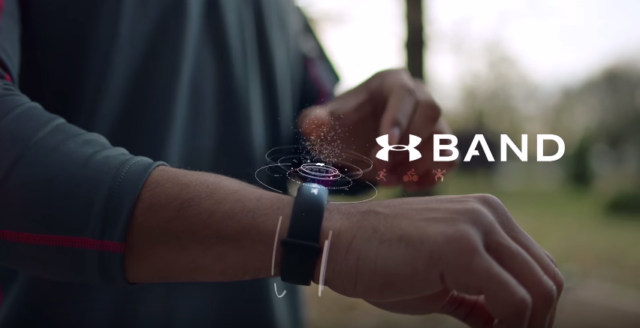
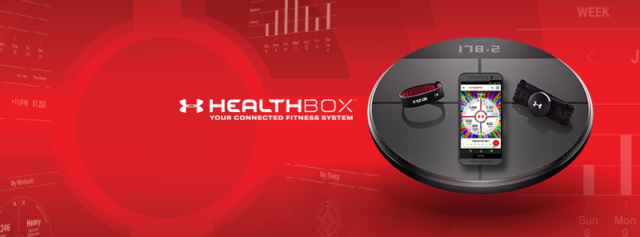
In January, the sports apparel maker launched a suite of connected fitness products in the HealthBox Fitness Platform, a kit equipped with an activity-tracking wristband, a chest-based heart rate strap and a scale. Designed to “change the way athletes live,” all of the health data saves in the UA app.
CEO Kevin Plank, who previously has stated that “data is the new oil” and has plans of growing the company from roughly $4 billion today to $7 billion by 2018, made the clothes-to-technology philosophy change official in January with the launch of the connected fitness platform. It’s a far cry for the once-fledgling T-shirt startup, who’s now the second-largest sportswear brand only behind Nike.
How is Under Armour growing its connected fitness platform, which according to the company’s annual report in 2015 represented just 1.3 percent of its total revenue? Chris Glodé, vice president of Under Armour Digital, joined [a]listdaily to discuss how UA will be at the forefront of the data deluge.
Chris Glodé, VP of Under Armour Digital
Why is the company structured to ambitiously pursue new verticals in data and fitness tracking? What is it designed to accomplish?
Under Armour has a unique opportunity to advance our mission of “Making All Athletes Better,” through Connected Fitness. Helping athletes of all levels, all around the world, measure, train and improve is a foundational component of not only our footwear and apparel businesses, but also guides our work in Connected Fitness. While the tools and gear might be a bit different between the core business and the digital business, the end goal is the same: to help people improve. The true opportunity for innovation at UA emerges when we collaborate closely between the various areas of our business. The Speedform Gemini II is a great example. We mined our database to understand runner habits all around the world and designed a shoe specifically around those consumer needs. The shoe offered the perfect platform for us to integrate sensor technology, and the resulting product is the world’s smartest running shoe that delivers both an amazing ride, plus all the data a runner needs to get better. Those are the kinds of projects that give a glimpse into the potential of UA Connected Fitness—but we’re just getting started.
What are you currently doing to move the digital strategy forward for better consumer engagement?
We are employing a number of strategies on this front: One is to reduce friction. We need to make it easier and more convenient to engage in our digital experience at every turn. This means everything from a world-class user experience design, to building rock-solid wearables and apps that can be relied on by athletes of all levels. The second is to provide guidance. The obligation is on us, as the stewards of highly valuable and personal health data from our consumers, to reciprocate that trust by providing insights, guidance and motivation that they simply cannot get anywhere else. This is a lofty ambition and we’re actively tapping both our stable of professional athletes and trainers to build this, as well as leading experts in fields like exercise physiology, behavioral science and sports medicine. The third is to inspire the athlete. Our aspiration is that when someone engages with UA via digital, the experience is beyond what the consumer could possibly have expected. It’s easy to overlook the idea that a user in our app is giving the same level of attention as a one-to-one conversation—we need to approach every interaction with the same level of attention and service as though they were an individual customer asking us a question in a UA store. We impart expertise and motivation—at scale, to an audience of over 175 million users.
CEO Kevin Plank has hinted that the company can grow to $7 billion by 2018. How are you leveraging your suite of apps and products to attract investments from other brands to further create audience ownership in the space?
We have some of the most unique brand partnership strategies in the health and fitness category. Our fitness challenges are a great example. We partner with world-class brands to activate them on our platform—giving them the ability to reach consumers in the ‘moment of sweat’—when their endorphins are surging and they’re working hard to get better. These are truly win/win/win partnerships: our community wins because UA and partner brands provide motivation, prizes and competition to help them reach their goals. Our partner brands earn the opportunity to encourage and engage our loyal users. And UA wins by being able to play host to the contest and serve the needs of the athlete.
How does UA differentiate digitally from the likes of Nike, Reebok and Adidas and other competitors?
Under Armour is uniquely positioned to continue to lead in the Connected Fitness category for a few reasons. First, the scale of our global community is unparalleled and we continue to grow at over 100,000 new users per day—this is organic, word of mouth, happy customers. Next, Under Armour is first and foremost an innovation company. The coming quarters will show what happens when you combine world-class app developers, exercise scientists, materials specialists and the most innovative footwear and apparel designers. We often say at Under Armour ‘we have not yet built our defining product’ and increasingly, we think that product just might be combining the best of Under Armour footwear and apparel, and reimagining how it should work in a truly connected world.
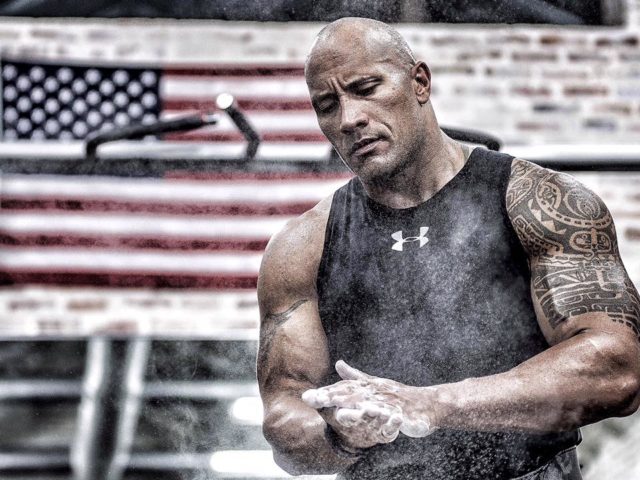
The Rock has unparalleled loyalty among his hard-won fan base. At the core of The Rock, you’ll find a lifetime of hard work—he knows of no shortcuts. This is similar to how Under Armour approaches training. UA Connected Fitness doesn’t promise any shortcuts, but we can help you train smarter and get the best results from your hard work. The Rock has a life-long track record of delivering amazing results from his hard work. We’re extraordinarily lucky to have him as a strategic partner.
How have consumers responded?
The response from The Rock’s 90-plus million followers on social media has been outstanding; we’ve been selling his branded lineup of gear which he personally helped design. He and his fans have provided amazing feedback on our Connected Fitness products that will help shape future generations of gear that we’re actively designing.
How is UA marketing its mobile platforms? Which ones are consumers responding to the most?
What we’ve learned more than anything is that building amazing products and offering outstanding customer experiences is the best form of marketing. We’ve spent very little on directly marketing our digital products; by far our best weapon is word-of-mouth, and to earn that, we have to deliver excellent products.
What does UA have to accomplish to be the unequivocal standard for health and fitness technology?
Our opportunity is to build on our core mission of making all athletes better through passion, design and relentless pursuit of innovation. If our products can make you better and healthier, physically, emotionally and mentally—we will have achieved our goal and we know that athletes will choose the Under Armour experience. This lofty ambition is what drives us day and night, and given our unique resources—brand, technology, expertise, championship athletes and global focus—we have a special obligation to bring this vision to life.
How do you see the future of connect technology developing?
At Under Armour, we’re always looking to reinvent ourselves, and our products, and help our athletes do the same. As an innovation company, we also realize that the best ideas won’t necessarily come from inside our walls. We have a long track record of finding great innovations and entrepreneurs, and using our brand and our ecosystem as a platform to deliver these innovations to the consumer. We’re working on a number of innovations, spanning new apparel technologies as well as digital tools to make tracking more effective and frictionless. We envision a world where data collection and the resulting insights and guidance are simply something athletes expect from any piece of connected Under Armour gear. It’s a bold vision, but we have the team to pull it off.
As one of the first non-endemic brands to recognize the potential for eSports, Red Bull has full engrained their brand into the community—not just with events, but with content as well. Most recently, Red Bull has partnered with Capcom for Red Bull Proving Grounds, which is a monthly event that gives Steet Fighter V players the chance to compete in regional events across the country, culminating in a Proving Grounds finals event that will be livestreamed from Red Bull’s offices in Santa Monica, California on October 21-to-23.
Red Bull’s approach for Proving Grounds has been to work directly with existing tournament organizers who are themselves influencers in the fighting game community, or FGC, for short. [a]listdaily sat down with Carleton Curtis, the eSports program director at Red Bull, at a recent Proving Grounds event at the eSports Arena in Santa Ana, California to discuss how Red Bull is supporting the culture of eSports, and why it’s so important to them.
Can you tell me about Red Bull Proving grounds, and how it come about?
For Proving Grounds specifically, we happen to be huge fans of all the games within the FGC, first of all. It is sort of near and dear to our hearts as a team. Right now, we see a lot of building from the top when it comes to eSports. Essentially everybody is interested in the next million concurrencies on Twitch or the next $20 million prize pool, or the next stadium that was sold out with tens of thousands of people in it. Now that’s all really great stuff and is an important layer of eSports in our opinion, but we also believe there’s a lot of important layers beneath that and help support it even existing.
You can’t really have any of those spectacles without the community level and that’s really what events like Vanguard and Proving Grounds are supposed to represent and support. We’re entering different markets around the country—we started with six cities in North America in June and we’re reaching out within those cities to create something new that is Red Bull and trying to build a new Red Bull project. We’re identifying existing communities and existing tournament organizers and supporting them so they can level up because there’s really rich histories over decades when it comes to the FGC.
Larry Dixon in Atlanta, Big E in Philadelphia and Alex Valle here in LA at Vanguard—they all have really rich histories so why screw that up? Why start something else? Why not join forces with them and make what they do better? So what we’re trying to do is, not just giving them monetary support, but giving them boots on the ground, like the team you see here today even though it’s just a number of us. We have a ton of best practices being a massive events business at Red Bull and we have all the tools to provide them to do a better job with what they’re already working with because the thing is, these guys aren’t typically full-time. They’re not at that level yet in their business where they can quit their jobs and do this full-time. So we’re trying to eventually give them the means, so to speak. That’s the phrasing—Red Bull is trying to give people wings. We’re trying to give these guys wings to really follow their passions and make real businesses out of their local tournaments and also help them build the communities that are already there into bigger and bigger things.
How did the partnership with Capcom come about?
They’re a great partner of ours. We’ve worked with them for years now. This year we’re starting to see a lot more involvement from Red Bull. In April we had an event in Paris, called Kumite, which was an invitational. We invited the best Street Fighter pros from around the world to converge in a really unique event format in Paris. For us, Proving Grounds is basically a qualifying series across the year that ultimately will help bring the best players in each region, and surface them where they can compete in a finals format in the Red Bull studio in September. The top players from the regions all get flown to Santa Monica to compete for the title of Proving Grounds champion. We give them an all-expenses paid trip to the Capcom Pro Tour North American finals at Battlegrounds, which we’re hosting in Seattle in September, so all those things are interconnected.
Again, we’re just big fans of the game and also it was really good timing for support around Street Fighter this year. Street Fighter V finally launched after an eight-year hiatus from IV and it’s just a really good year to work with Capcom on this game, specifically. It has a big resurgence in popularity, the game itself is incredible—we all play it—and it made a lot of sense to work with them and connect—not just Kumite, but Proving Grounds with this Battlegrounds format. So now we’re a premier stop—basically the final stop—in Capcom’s tour when it comes to premier stops. Then everybody heads over to the Capcom Cup afterward.
What is the significance of having a dedicated eSports space?
We see the future of eSports, but we also really romanticize the past of gaming culture and eSports. One of the things I think is great for gaming and eSports is that online gaming became a thing a decade ago. Streaming became a massive thing in 2011 with Twitch. What that was able to do was to connect the world in a really meaningful and profound way, but one of the negative byproducts of that is you lost a lot of the local culture that makes eSports really cool and really great. Particularly with the FGC, which is based on arcade culture for decades and it is people getting together in close proximity and playing face-to-face like you and I are talking right now and that’s a really special thing.
You kind of lost the sort of NorCal vs. SoCal thing and the East vs. West, where those rivalries existed in really meaningful ways. With streaming and online play, it became like Korea versus the rest of the world, or Japan versus the other better players out in the world. Again that’s a really awesome thing for the growth of eSports, but I think one of the things we lost was that community and physical proximity with your friends and rivals in gaming. So the FGC specifically really represents that. That’s a big reason why we were attracted to it and frankly wanted to launch Proving Grounds with Street Fighter because of all those reasons.
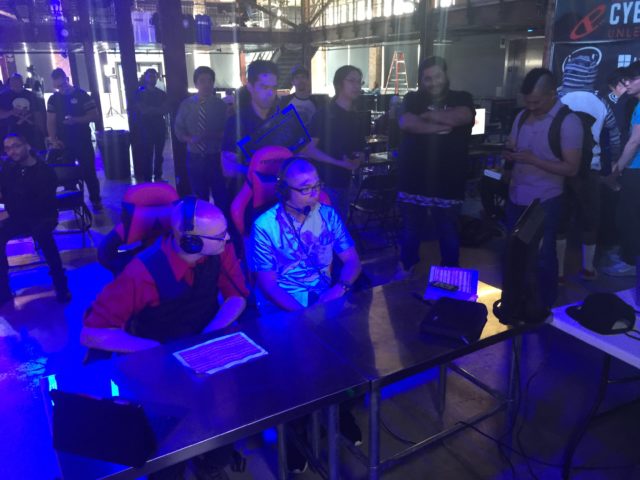
Red Bull Proving Grounds event at the eSports Arena in Santa Ana, California.
What are your thoughts on eSports coming into more mainstream recognition?
I love it. It’s what I do for a living and I’m very excited and blessed to do this and have conversations like this with you. It’s a really amazing time for eSports right now. It’s also a very chaotic and sort of frantic time for eSports right now. I think if you ask anybody, whether they’re new to eSports or whether they’ve been in it for decades, how the landscape is going to look just three years from now or even three months from now, it is a very difficult prediction to make.
It’s just amazing to see the kinds of investments coming from all over the place: from celebrities like Mark Cuban, Shaq and Manchester City investing in FIFA players. We’re talking right now in eSports arena, a physical place that’s dedicated eSports. It’s an enormous space right now and it’s really great that it’s getting its attention now. It is sort of like a rising tide than a floats-all-boats thing, but at the same time you really want to be careful that you’re not blowing up a bubble and it’s kind of like, going back to what I was saying, these really glamorous glitzy prize pools and stadium-class events. That’s all great and it’s an important part of eSports—that’s what’s frankly bringing a lot of attention to the space.
Advertisers love the demos, advertisers love the numbers—but at the same time, if that bubble bursts, what’s left? It’s that community that helped build all of this and that’s why we’re here at Vanguard tonight. The community within any major game genre or game title will never go away. Those people will always come back to the Vanguards and the Proving Ground stops and even the tournaments that exist outside of Proving Grounds. That’s why we’re trying to invest in all levels of eSports at Red Bull. We just fundamentally believe that the right thing to do is build eSports from the bottom up versus the top down.
How do you feel an event like this supports Red Bull product marketing-wise?
There’s clearly a great fit for Red Bull as a product in eSports. It vitalizes mind and body and there’s various need states for it and the product functionality that Red Bull offers. You need sustained energy and sustained focus to compete across many hours of an event. We believe that it really services gamers in that way. As a program—our eSports Red Bull team—we’ve been around for five years and we’ve sponsored athletes for 10 [years] at this point, so our roots are really deep in the scene and the space.
We’re committed for the next 10 years and the next 10 years after that. We’re not going anywhere and that’s why we like to be a part of community-level events like this because everything grows from the community. A building like this grows from the community. The next player who becomes the next Nadeshot starts in the community, the next caster, the next tournament organizer—it all starts in places like this. That’s a huge reason why we’re here supporting that.
The [Red Bull] can is certainly a part of that experience, but not the only part of that experience. We’re not going to force anyone to drink a RedBull, we believe everything should come naturally and that includes drinking our product and receiving the benefits of that product.
What is your ultimate goal for these events? What do you hope people take away from them?
Whether it is a Proving Grounds event or a Battlegrounds event, or frankly, an event that Red Bull produces outside of eSports, our number one goal is to create the best experience that the audience can partake in and the athletes themselves. We want both of those parties to have a once-in-a-lifetime experience that they’ll always remember. That’s really what we believe the point should be when putting on an event.
It’s not, again, just to get a million viewers watching or 10 viewers watching. That doesn’t really matter. If those people in the audience and those players that are engaging in the games they’re playing—are having the times of their life—that’s most important to Red Bull. That’s frankly our number one goal. Then of course outside of that, we would love to see all of our tournament organizer partners do this for a living full-time and scale what they do, not just in their local communities and cities, but mushrooming across the country and the world. Ultimately that’s what we want to support these tournament organizers with.
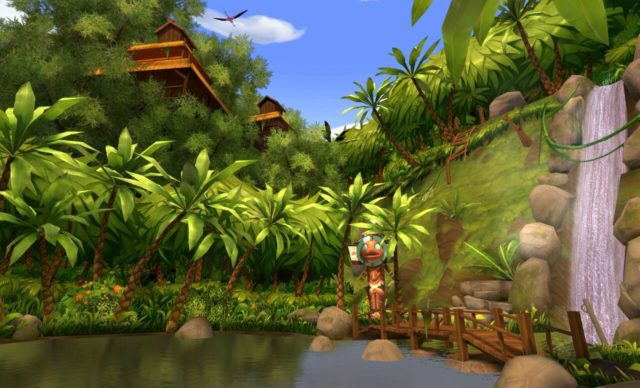
One of the questions often asked about the VR games market is “when will we see a hit VR title?” That may have been answered recently, as Resolution Games announced that its Bait! game for the Samsung Gear VR has been downloaded over 700,000 times. That’s even more impressive when you realize that Samsung’s Gear VR currently has an install base in the neighborhood of one million units. And now, Resolution Games is announcing its first additional content for the game.
“We’re very excited about the interest in Bait! from the VR and games communities, and even the general public,” said Tommy Palm, CEO and co-founder of Resolution Games. “We’ve had lots of requests for more content and we’re hoping Treehouse River is just the beginning as we expand the game and explore new destinations and fish species to add. We think the virtual anglers in Bait! will find Treehouse River just as serene and yet exciting of an environment as they pursue all the new fish we’ve added.”
Tommy Palm
Palm joined [a]listdaily to further talk about Bait! and the growing market for VR games.
Congratulations on reaching 700,000 downloads. Did this level of response to Bait! surprise you?
We knew we had a pretty high quality VR gameplay and visual experience with Bait! at launch. But, I don’t think we could have anticipated garnering this large of the market share in such an early day in the market. Even though Bait! has been a relative success, we still have a lot more work to do to bring more users on to VR, keep them engaged in content and create experiences that will truly capitalize on the amazing benefits to come as VR matures. We have learned so much in creating Bait!, listening to users along the way, and adapting to changes in the market and across platforms. Right now we’re focused on taking these lessons learned and molding them into best practices that will help define the industry and hopefully bring that maturation to market sooner than later.
Bait!‘s number of downloads represents a significant share of the total install base of Samsung Gear VR. What marketing did you do for the game?
We haven’t done any marketing, really. We’ve had some great press at the launch of Bait! and saw the game get featured shortly after, which of course gave a pretty good boost. However, we’ve seen a steady flow of new installs and healthy player retention along the whole life of the game since its launch in March.
What part of your marketing efforts has been most successful, and why?
At this stage it’s really all about putting any and all efforts into making the best possible gameplay experience so that when users play Bait! they want to share that experience with their friends and family. And, that’s really what Resolution Games is all about. We want to make the content that people think of when introducing VR to others for the first time. We make our games so someone new to VR, or even games for that matter, could put the game on, have fun and get it within minutes, while also creating the quality gameplay and visuals to challenge and engage even the most avid gamers or VR enthusiasts for hours.
What do you think the VR market will look like for the rest of 2016? Will we see significant growth in the install base for any particular hardware?
Absolutely. It may not be significant in 2016, but within this year most of the anticipated large players will have devices in the market. And, this is just the first iteration of those devices and manufacturers. New ones are emerging on the market and challenging the standard. The VR industry is growing at a faster rate than almost any other we’ve seen. Much of that is due to the impressive state we’re at with processing power, which just keeps getting better. But, on the content side of things, we have the luxury of having had battled it out on mobile and other platforms and now can take the relevant lessons learned from there and apply where it makes sense for VR. This has created a compass that has enabled us to move at a much faster pace. Although, I must note that VR content must be dreamed up and created for VR from the ground up.
Are you looking forward to the launch of Google Daydream devices, and do you plan to support it? What sort of response do you expect to Daydream over the next year?
Very much so! We were actually one of the first game developers to commit to creating content for Daydream when it was announced earlier this year. We’re actually full throttle into creating an amazing game, Wonderglade, that will be live when Daydream is publicly available later this year. The game invites players to explore a whole world of carnival-themed gameplay and will be accessible so everyone can get in on the fun and revisit the wonders of new and familiar carnival games. We think Daydream will play a big role in taking VR mainstream, which is a big part of our vision and mission for VR as well. It also shows that mobile VR is taking the lead in the VR headset space—something we have always felt was important for making VR accessible to not only early adopters and hardcore gamers, but the whole family. And, Resolution Games makes perfect content to introduce new users to VR, something we think Wonderglade will be ideal for.
You’ve just launched your first add-on content. What are your plans for marketing that, and for future add-on content?
We’re mostly focused on ensuring the game is so exceptional that players are compelled to share their experience and have it spread organically. However, we do have some fun ideas that may come to life around integrating virtual fishing tournaments with real-world tournaments, and things like that. We’ll see. For now, the most important thing for us is to focus on creating great content and experiences to make initial VR users’ first impressions exceptional in an effort to help grow the market as a whole.
Do you think your marketing strategy for Bait! and other VR titles will be changing over the next year? How will it change, and why?
Yes. We’ll likely switch our thought process a bit as VR is more proven, more devices are in the market and more eyes are open to experiencing new VR content. We see it maturing from an educational and first impressions tone to one more similar to what you see with mobile eventually. However, unlike the luxury mobile games have in users being able to link to content and experience marketing through their mobile platforms, VR will be very different. Although it’s yet to be seen how open to marketing VR users will actually be over time, there is the inherent challenge with interrupting such an immersive experience for marketing purposes, while also not being able to link through across VR, web and mobile. Needless to say, there are still many challenges to face in this rather young market.
What’s your prediction for the growth of the VR market in 2017?
Next year will likely be the year that we see a good portion of the market shaken out with those content creators and hardware manufacturers who have truly innovated rising to the top. This will only make the ongoing VR experiences better, which in turn will grow the market of users more substantially. I think we’ll also see that many of these initial unknowns will be answered as so many entrepreneurs and innovators are drawn to the platform like we are and really want to see it take off.


 The Black Mamba is an integral part of 2K Sports’ promotion with NBA 2K17, which also recently announced that it would be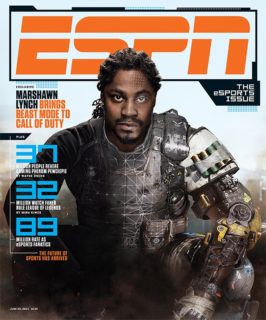
 “The Twitch community has never seen our brand on this type of consumer packaging or in retail stores in this fashion before,” Anthony Danzi, senior vice president of client strategy at Twitch, told [a]listdaily. “It’s a fun step for us to partner with a cool brand like AMP and to have our own brand-inspired flavor on the market.”
 Dechelotte’s background is in traditional sports, having worked as a Western European sponsorship manager for Coke across sports like tennis and cycling. He explains: “There are a lot of similarities between traditional sports and eSports: from a competition point-of-view, from the stage, to the coaches, players, fans, the broadcast booth, the training, the pressure and the competitive ecosystem.”
 Next week, Coke is partnering with EA to celebrate the upcoming launch of FIFA 17 through a collectible Slurpee cup activation at 7-Eleven stores across the US. There will be a FIFA 17 contest featuring over 10,000 prizes. Dechelotte said there will be five layers of prizes that include codes that can be redeemed for in-game items like special jerseys; points that can be used for FIFA Ultimate Team; copies of the game; or a trip to Vancouver to meet the EA development team behind the game.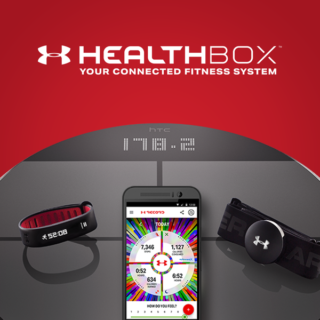
![Glode Head Shot 1[2]](https://www.alistdaily.com/wp-content/uploads/2016/08/Glode-Head-Shot-12-320x213.jpg)