US Olympians Star In Kellogg’s Campaign And VR Showcase

A crowning moment for any athlete can range from the moment they’re coronated as champions, or the second they sign a multi-million dollar contract. One accolade that few ever get to achieve though is the hallowed grounds of cardboard courtship by way of a cereal box sponsorship. Kellogg’s is taking a unique approach with their new “What Gets You Started?” campaign by showcasing a team of first-time US Olympians and Paralympians both on their brand of limited-edition boxes and across digital and social platforms as well to share the stories of what gets them started each day as they train toward the Summer Games.

KMFR_063531-Kell_Team_2_IP.eps

“Everyone has something that drives them to succeed, and I am thrilled to be able to help people explore their motivations and find common ground in what gets us all started, fans and athletes alike,” said Olympic swimming legend and Team Kellog’s captain Dara Torres.

With Samsung and NBC partnering to broadcast over 85 hours of virtual reality programming over the course of the 2016 Rio Olympics, Kellogg’s is capitalizing on the fast-moving VR content train too with a 360-degree experience featuring decorated swimmer Tom Shields. In the video, viewers are transported with Shields from the starting platform, into the pool and all the way to the final touch of the wall.

Athletes being depicted on the front flap of cereal boxes dates back to the 1950s when General Mills started their popular Wheaties marketing ploy with Bob Richards, a two-time Olympic pole vaulting champion who was the first athlete to be featured on the front of the cereal.

Kellogg’s has a history of donning US Olympians, too. Their stable in recent years include Michael Phelps, Summer Sanders, Kerri Walsh, the gold medal winning 2012 US Women’s Gymnastics Team, among countless others.

Now the cereal maker is the latest brand vaulting from two-dimensional marketing to 360-degree videos—even competitor Post recently unveiled a VR activation via Fruity Pebbles. And consumers are eating up everything VR-related.

According to a study released by Greenlight VR on Monday, 52 percent of respondents would like to be associated with a brand that sponsors VR, while 71 percent of them consider a brand forward-thinking and modern for such an activation.

Andy Shripka, assistant marketing director for Kellogg’s, joined [a]listdaily to discuss the company’s latest integrated marketing campaign.

Tom Shields_Cereal Box

What is the “What Gets You Started?” campaign designed to accomplish?

This year we’re working with swimmer Tom Shields and four other first-time US Olympian and Paralympians, including Simone Biles, Julie Johnston, Ajee’ Wilson and Natalie Bieule, to make the unprecedented connection between the starts of everyday people and Olympic athletes. Whether you’re a mom getting her kids ready for school, or an elite athlete preparing for competition, we understand that everyone awakes in the morning with a personal motivation to get them started. We started 100 days out from the Games with a launch event in New York, and have since been working with each of these Olympians to showcase their stories.

How will the 2016 Rio Olympics and this specific campaign help elevate the Kellogg’s brand profile?

Kellogg’s has a long history of helping athletes get a great start to their day, at home or while on the road competing. In 2016, Kellogg’s is making unprecedented connections between the starts of everyday Americans and those of first-time Olympic hopefuls—athletes whose stories are untold and potential yet to be defined. We focused on selecting first-time Olympic athletes for our team who were getting the start on their Olympic journey and toward achieving their dreams in Rio.

Ajee Simpson_Cereal Box

What kind of marketing activations can customers expect with the physical boxes?

All of our athletes will be featured on the front of their favorite Kellogg’s cereal boxes from now through the Olympics, including Simone and Natalie on Kellogg’s Special K Red Berries, Julie on Kellogg’s Special K Original, Tom on Kellogg’s Corn Flakes and Ajee’ on Kellogg’s Frosted Flakes, all in stores now. On-pack art continues the conversation on social media, as fans are encouraged by prompts on the cereal box to post photos about what gets them started each day using #GetsMeStarted on their social channels.

How is Kellogg’s using social media, content and other storytelling tools to engage in new ways with consumers? What’s the strategy behind the #GetsMeStarted campaign? What kind of social rollouts can followers expect?

To get the #GetsMeStarted message out there we created unique digital content to bring their stories to life. Throughout the run-up to the Olympics, each athlete will engage with fans on social media, showing their daily motivations with posts using #GetsMeStarted. We’re seeing great engagement with fans and expect things to really ramp up the closer we get to the opening ceremony. In the instance of Tom, we went a step further and brought people a unique perspective of what motivates him as he shares his thoughts and a morning swim through a fully immersive virtual reality experience.

Julie Johnston_Cereal Box

A bevy of brands are frequently using emerging technology such as 360-degree video almost daily. Why is VR critical to a present-day marketing campaign?

This is a new space for a lot of brands, including Kellogg’s, and presents a unique opportunity to share our stories in a fully immersive way. In the example of Tom, we already had a lot of great content about how he starts each day, but wanted to bring fans closer. Tom allowed us to bring fans to the pool with him each morning, even underwater, and listen to him share what gets him started. Because of that, we feel the VR experience makes the connection between Kellogg’s, Tom and fans that much stronger.

How does using VR and other immersive experiences best position Kellogg’s marketing efforts moving forward?

We’re excited about the engagement our VR video has seen to date. The spirit of the Olympics presented a great opportunity for us to tell the #GetsMeStarted story via VR. It’s still too soon to tell where we’ll go from here, but we’ll continue to look for more opportunities to engage our consumers in interactive ways.

Kellogg’s also has previously partnered with Marvel to present a VR game and a separate viewer for the release of Captain America: Civil War. What was your integrated marketing strategy for that specific brand implementation? What were the results?

Captain 4

Kellogg gave fans a unique way to experience the excitement of this epic showdown with an immersive VR app and free VR viewers. The app and viewers let you choose a side and do battle as either Captain America or Iron Man. Turn, spin and fight in any direction—fans are put in the center of the action. The app can be downloaded for free from the Apple App Store or at Google Play. The viewers could be ordered by redeeming proof of purchase codes from specially marked products. We also celebrated the arrival of this newest Avengers movie with limited edition products, including Captain America: Civil War cereal and fruit snacks.

Other cereal makers like Post are using technology and innovation to create brand awareness. Why do you think immersive experiences are conducive to positive results for cereal brands?

This is a big time for all brands to experiment with VR and for consumers to engage. At Kellogg’s, we’ve used it to present fun games and to tell inspirational stories in a truly immersive way. There’s a lot of competition out there for the attention of potential fans, and we’re always looking for the best way to connect.

How will Kellogg’s continue to leverage interactive promotions in the future?

We’re always looking into the best ways to share our cherished heritage and promote our brands. As interactive technology continues to grow, we’ll look at which technologies and stories fit together and leverage them accordingly.

Follow Manouk Akopyan on Twitter @Manouk_Akopyan
EA’s Peter Moore Discusses Relationship Between Traditional Sports And ESports

Electronic Arts used its EA Play event during E3 to host a Madden Championship, which aired on ESPN2, and is part of the four-tournament $1 million Madden NFL Championship Series. That live event at E3 was part of a multi-eSports offering that also included UFC 2, Need for Speed and FIFA. And EA is just beginning to explore the opportunities of competitive gaming in this golden age of eSports.

EA was early into the eSports game, thanks to its NFL license that made Madden Nation an annual reality eSports show on ESPN2 long before Twitch was launched. With a strong line-up of sports and original games, EA has placed its future of eSports under the guidance of Peter Moore, executive vice president and chief competition officer for Electronic Arts. Moore talks about the role EA’s mainstream sports brands open up for eSports in this exclusive interview from E3.

What are your goals in “officially” stepping into the eSports realm?

We’ve been in eSports and competitive gaming for the best part of 12 to 14 years now, with both the Madden Challenge and the Madden Bowl, and of course the FIFA Interactive World Cup, and in most recent years with our Battlefield games. So we’re not noobs to this whole thing, but it’s time now to really step it up. Forming the competitive gaming division with EA, which I head up, really puts a focus on building it out to scale, taking care of our players, and putting up big prize money so we take care of their commitment to it. And making sure we’re creating formats in which we can really do this 12 months of the year now.

Can you talk about the pyramid and its three tiers?

At the base of the pyramid, there may be as many as 60 or 70 million people who love to play online, love to go to the dorm room in their college and play with their buddies—maybe on weekends, maybe Saturday mornings go to a bigger event. But these people—let’s call them at the amateur level—they’re a part of our Challenger Series. Our goal at EA is to provide tools to these people to have fun web tools so you can do your brackets or your league tournaments.

As we move on up to the middle of the pyramid, it gets a little bit more organized and we’ve got the premier events in which we’ll work with our partners around the world like the ESL and Gfinity and help support them with FIFA, Madden, Battlefield, Need for Speed and UFC, and then build towards the top, which are the EA Majors.

That’s where we will invest heavily, building out major events. That’s where the prize money will be. So you build this aspirational pyramid, but you don’t make it just about the top of the pyramid. You make it all the way up, so you’re building a feeder system, and you’re just providing fun for what is now hundreds of millions of people.

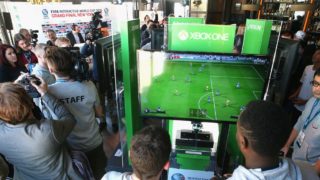
FIFA Interactive Cup

We’ve seen competitive games that have nothing to do with traditional sports explode on PC. What advantage do sports have when you look at the mainstream audience?

It has advantages and it has disadvantages. We have to be able to optimize our games for eSports. We’re not in denial that there’s a lot of work to do. To your point, it’s a PC free-to-play MOBA-dominated environment, and we’re bringing console games that are one-versus-one, for the most part, that are true sports. The plus side of them being true sports is everybody understands the rules of soccer, everybody understands (for the most part) American football, and you can sit and watch it as a spectator event. The flip side is that we’re competing with “the real thing,” and so our goal is to build it out to make real stars of all of the players no matter the skill ability. We used E3 to focus on the top players, people like Serious Moe, Skimbo and Problem, and show how the game is played at the highest level and provide a showcase for people.

ESports has exploded over the last five years thanks to livestreaming, and EA was on ESPN with the Madden Challenge early on and now again with the Madden Championship. What role will traditional television play verses livestreaming?

Livestreaming is where it’s at. Traditional television is coming into ESPN. We’re seeing what TBS is doing with ELeague. There’s not a network that isn’t watching this space very carefully, and here’s why: their demographic, their consumer has retreated to the bedroom. They’re watching the livestreams. They’re then looking at their heroes on YouTube Gaming and video on demand. And “traditional media companies” are looking at this to figure out how they play in this because they need this millennial male and female.

Certainly, ESPN has been a great partner here. They recognize the power of what we’re doing. They recognize the power of our licenses with the NFL in particular, and they want a piece of it, and rightly so. They want a younger demographic. They want to seem to be having their fingers on the pulse of what’s new and exciting, and they want to make sure that they’re preparing themselves for a future where eSports could be on a parallel path with regular sports in regard to the viewership numbers.

EA has done the Madden Bowl at the Super Bowl for many years and this year held a Madden Bowl at the Rookie Challenge. How do those traditional players help spread the word about eSports?

There’s not a player in the NFL that hasn’t played Madden. Many of them will tell you that their goal was to be on the Madden cover as well as playing in the NFL, but the power that Madden has as both a franchise and as a part of mass market culture—27 years of delivering a Madden game—is very important. Our research tells us that if you play Madden you’re smarter, you’re more informed, you’ve got a better grip on strategy, often more than players who actually play the game itself. So it’s a very important part of the culture of the National Football League, the culture of young males and what it teaches them about the game.

The Madden Bowl is a celebration of that, and NFL players want to play in the Madden Bowl. They want to hold up that trophy and say “I’m the best Madden player in the NFL.” And we’ve seen it with Maurice Jones Drew over the years, Marshawn Lynch has given it a go, and Eric Berry of the Kansas City Chiefs was a great story last year. So having these players play it validates it to our fan base. It also shows that this is bigger than just a video game. It really is part of football culture.

When it comes to professional athletes, Rodger Saffold of the LA Rams owns a professional Call of Duty and Overwatch team. We have Shaquille O’Neal, Alex Rodriguez, and Rick Fox who all own League of Legends and CS:GO teams. How do you see that mixture of real sports getting involved in eSports outside of traditional sports like Madden and FIFA bringing validity to video games?

They’ve got a common thread, and that’s competition, teamwork and building together. You can throw Mark Cuban and David Stern in with that list to see the power of what this is. It’s this next generation coming through, looking at “sports” through a different lens than you and I did growing up. They all are intrigued. They’re dipping their toes in the water. They like the idea of ownership. We love the idea that high profile celebrities and athletes are getting involved. I think it’s great for the space.

We’re seeing clubs like West Ham, FC Schalke and Valencia CF invest in eSports. And now we hear that Manchester United is bidding for an Overwatch team as well, so all of this validates the power of what eSports is and gives it some real momentum in the broader space that it’s not just “boys in their bedrooms.” This is big business.

Op-Ed: Boom Or Bust? Burst Marketing For Mobile Games

One of the earliest successful marketing strategies for mobile games was burst marketing—using tactics to get your app installed by a huge number of people in a short amount of time. The advantage is that you get a big boost in viral uptake because, hopefully, your app showed up higher on the charts, much more often in searches, and got more buzz on social media.

Once can easily refer to Pokémon GO for a high-end example of what a huge audience gained in short order can do for visibility. However, the Pokémon GO craze was entirely viral, with no marketing effort to speak of involved in its success.

Yet burst marketing isn’t the compelling proposition it once was. Back in the halcyon days (only a few years ago), the cost-per-install (CPI) was low and a mere $20,000 or $30,000 spend was enough to get you a good position on the top downloads chart. Now, we’re in the land of $4 or $5 CPIs, with many more apps vying for visibility and a great deal of different ways to spend your marketing dollars. Is burst marketing still viable?

Yes, say experts in the practice—if you are careful, burst marketing can still deliver good results. First, though, let’s be clear about how burst campaigns are typically put together. A typical burst campaign is designed for a two-to-three day period to achieve maximum awareness, visibility, store ranking and organic installs in the long run. These are composed of either incentivized or non-incentivized campaigns that are either paying users to install your app or not. Of course, there’s really no choice on iOS since Apple banned incentivized installs. For the most part, though, there are some ways around the issue.

User Quality

One thing that’s going to be true of a burst marketing campaign is that you’ll probably not be getting the very best group of players, the kind that stays engaged with the game for a long time and spends a lot of money. In fact, just a small percentage of those players will go on to make in-app purchases—and that would be considered a good amount. That’s an inevitable byproduct of the goal of a burst campaign, which is to get the largest possible number of users in a short time.

Still, you should try to find ways to make your audience as profitable as possible. Look for demographics that match your prospective paying players when you’re searching for ad inventory to buy for the burst campaign. Make sure the ads you create are aimed at getting the right kind of players, choosing among the audience you’re reaching to find those that are most likely to get engaged with your game.

When Should You Run A Burst Campaign?

The obvious time to run a burst campaign is at product launch, when you’re trying to get a large number of users as quickly as possible in order to generate some organic installs. Some research shows that paid installs drive three organic installs, so running a campaign can generate long-term benefits.

Besides the initial lift for a game, though, burst campaigns can be useful at a particular time of the year—the holiday season, when gift-giving and app installation is a popular activity. With new mobile devices and gift cards for app stores, finding and installing apps gets a boost. So that’s a prime time to try a burst campaign to see if you can inject some new life into sales. It would probably be best to pair this with a significant new content release, and/or a holiday-themed content release. Your burst campaign advertising, if properly constructed, may help reactivate some lapsed players by highlighting what’s new and exciting in the game.

When your game’s installs plateau, it’s also a good time to consider a burst campaign to drive numbers back up. Again, pairing this with new content, particularly new game modes, is important to make the most of your expenditure.

Best Practices For Burst Campaigns

Certainly a burst campaign has its downsides, perhaps now more than ever. You’ll get mixed results even in the best cases, with many low-quality players. That’s going to affect your rankings and reviews, and if you get too many players who are a poor match for your game, you may find your review scores dropping. That’s why it’s important to find the right target audience by selecting the right ad networks—and the right ad inventory.

It’s very important to realize that a proper burst campaign is expensive—or it should be. Underspending on your burst campaign is throwing money away. Take a look at your goals for the campaign and the costs you’re likely to see, and budget to make it possible to meet your goals. That means careful planning and selection of ad networks is a must, and there are so many to choose from it’s going to take some work to select the right ones for you.

Plan the burst campaign carefully, with an eye toward finding audiences that you haven’t reached before. This may be in a different geographic area or a different demographic area. Work with new ad networks and inventories to see if they can reach an audience that’s new to you.

One of the interesting ways to succeed with a burst campaign on a smaller budget is to try to make a run at the top downloads chart in a smaller country, where your ad spend won’t need to be as high. What good will it do you to chart high in a place like Denmark, or New Zealand? There are several reasons. First, it may help you gain a significant audience in that country, which—and you’ll spend less money doing that.

One thing that you should realize is that the App Store and Google Play aren’t going to give you the same results with any kind of burst campaign. Google’s rankings use a large number of factors, unlike Apple, and in general the top ranks are just more static on Google. Besides, you’re probably going to want to tailor your campaigns somewhat for the nature of the iOS and Android audiences and introduce even more reasons for the campaigns to perform differently. Expect that difference and work it into your strategy.

Before A Burst Campaign, Polish Everything

It’s important to make sure that your app is ready for the burst campaign in every way you can. You’re going to spend a significant amount of money, and it doesn’t make sense to do that when your app page isn’t in great shape. You should make sure you’ve got the right icon, the right videos, the perfect screen shots. Everything. Your game needs to be in the best possible shape, too—major bugs should already have been squashed, the game play and game balance have been refined and tested—and especially your monetization is working well. Ultimately, your burst campaign has to be about making a profit, so you need to keep that goal firmly in mind.

What The LINE IPO Means For The Messaging Landscape

Japanese social networking firm LINE Corp. made its debut on the Tokyo and New York markets last Thursday at a $1.5 billion valuation. It’s the largest tech IPO to date this year and is the first Japanese company to list its IPO in the US since 2000. LINE is owned by South Korean internet company Naver Corporation. Over the last 12 months, LINE generated $1.1 billion in revenue. LINE’s IPO raised $1.26 billion for the company, and its share price jumped 27 percent from the opening, an impressive beginning.

What This Has To Do With The Games Market

LINE claims 218 million monthly active users across 230 countries and generates about 35 percent of its annual revenue from what it calls “games and music.” LINE’s strength appears to be its ability to engage its audience. While there are many other messaging apps that offer communication functionality, few can match LINE’s success in providing entertainment and games.

13662068_1079271008834242_1517721872382449296_o

Is This A Competitor To Tencent?

Yes . . . and no. Despite having a monthly active user base that’s roughly a third of Tencent’s, LINE holds a dominant stake in the most valuable mobile games market in the world. In 2015, spending on mobile games in Japan totaled $7.48 billion, compared to $5.77 billion in China, where Tencent dominates. The average monthly spending per paying user in Japan was $62.74 (over the whole of 2015), compared to $20.15 in China.

With a solid grip on such a valuable audience, LINE presents a small but formidable competitor to China’s titan Tencent. What LINE currently lacks, however, is a more pronounced content strategy to further drive monetization and engagement. It remains to be seen if the two firms will truly be head-on competitors, as neither firm is strongly incentivized or capable to penetrate the other’s market. Tencent’s WeChat has 762 million users compared to LINE’s 218 million. It’s more likely that both will seek to appeal to western audiences in the future to expand their addressable markets, once they’ve reached a natural limit on their own. The recent acquisition of Supercell is evidence of the move of Tencent in that direction.

What Does This Mean For The Market At Large?

There is an increasing emphasis on capturing and engaging audiences. Both Tencent and LINE both directly monetize their audience with micro-transactions, and earn revenue from advertisers. As interactive entertainment becomes increasingly mainstream, the ability to operate a dual-product strategy becomes more sustainable. As Asia tends to be several years ahead of western markets in terms of technological innovation and business models, we anticipate similar strategies to become more prevalent in North America and Europe in the coming years. The implications for marketers are great, because messaging has become important in app discovery overseas—but not in the US. This could potentially open up some critical new marketing strategies if LINE chooses to use some its newfound cash to boost its presence in other countries.

Joost van Dreunen, the CEO and co-founder at SuperData Research, joined [a]listdaily to further discuss the matter.

3e5fe33

Tencent, with WeChat, LINE, and Kakao, have been hugely important in their respective markets through the use of messaging apps to spur game discovery and installation. That never seems to have taken hold elsewhere in the world. Why is that?

In markets like China, Korea and Japan, gamer audiences show a stronger affinity with mobile, among other things, due to the relative price point of PC and console hardware.

Now that Facebook Messenger allows apps, and the new iMessage in iOS 10 allows apps, could we see more game companies using messaging as a means of game discovery?

Entertainment companies, especially on mobile, will start integrating messenger app functionality to build their user base. Discovery continues to be a challenge for companies in the space. It also opens the market up to new revenue models, allowing game companies to rely more on ad revenue, provided they can build a large enough, and relevant, user base that is of interest to brands and advertisers.

Both LINE and WeChat have limited presence outside of their home markets. With LINE’s big cash infusion, do you expect that they’ll seek to expand their messaging presence to other countries? Which ones seem like good targets for them?

International expansion is certainly on the roadmap for all of the messenger app companies. What has made LINE successful is allowing each country’s team to localize the offering. Rather than rolling out a single, uniform mobile chat application, each country’s version differs, which has benefitted retention and monetization.

Tencent’s purchase of Supercell gives them a huge presence in the gaming market: Riot Games, Epic Games, a big chunk of Activision Blizzard as well. Do you see Tencent trying to use this broad array of gaming properties to help move their messaging app WeChat into other countries?

It’s an obvious move for Tencent to leverage their access to all this great content to expand their footprint and increase average spending. What’s less obvious is whether they consider themselves a Chinese monopolist that owns assets beyond its borders, or a global entertainment firm.

Tencent is also making deals in advertising and luxury goods, as well as in gaming. Do you see gaming remaining the company’s biggest source of revenue, or do you think they are trying to grow other parts of the business faster? Will Tencent be looking for connections between games and its many other interests?

In principle, Tencent is content-agnostic. If fashion or business news were a better driver of success they’d pursue that instead of games. But there’s currently no reason to assume they’d abandon gaming and, instead, Tencent is more likely to build on its existing success.

Vantage Sports Enters ESports Scene With ‘League Of Legends’

Vantage Sports is the latest traditional sports statistics company to enter the eSports industry. The company has launched a new subscription service designed to help amateur League of Legends players improve their game. The company is also working with professional eSports teams to provide detailed analysis of amateur players through statistics tracking.

Chase Exon, president of Vantage Sports, explains why the company is venturing into League of Legends and what other games are on the horizon in this exclusive interview with [a]listdaily.

What’s your background in traditional sports?

We address the data problem and the analytics problem in sports. The data problem is that there aren’t enough events tracked in most traditional sports. We have the box score stuff. That’s fine for newspapers and understanding the results of what happened, but it’s not very good for understanding how things happened and how to improve and make better decisions as far as player acquisition, trading players and things like that. So we created new data sets. We expanded what is being tracked, so that we’re tracking absolutely everything in a sport. And then we take that data and we can run better analytics on it, we can do deep machine learning.

How does that translate to eSports?

The process in eSports is the exact same. There’s the data problem, which is what events are you actually tracking, what events matter, and it’s actually a lot harder than a lot of people think. It’s not just a matter of, “did something happen at this time?” because you need to know the context. You need to know why it happened, where were the other players, what is the team comp, and all these other contextual elements that actually make that data important and actionable so you can do something about it. What we did in traditional sports is the exact same thing we’re doing in eSports. It’s just a different venue.

What challenges has eSports opened up specifically, since it is a video game sport?

The biggest challenge really is that none of this work has ever been done before. At least in traditional sports—we started in basketball—and we could look at baseball, which was so much more sophisticated analytically. And we looked at what worked in baseball and how that translates into basketball.

With eSports, we’re starting from scratch. And that’s why we have partnered with LCS teams and worked with them on developing this data set. Another big problem in eSports is there’s this big divide between professional eSports and amateur. In League of Legends you get to the pros and it’s an entirely different game. So the challenge for us and for aspiring professional players, or players of any level that want to play organized eSports, is—how do you learn that game, how do you teach that game and what are the data points that you need to track in order to help people get better and to measure how they’re getting better in playing a pro style, or an organized style, of eSports?

What are some of the pro teams you’ve worked with in developing League of Legends?

We’ve worked with Team Liquid a lot. One of the first products we’re launching is called Vantage League and the idea is to do a training league and to base it on how the pros play the game. Mark Zimmerman and Team Liquid have developed a curriculum for our players to learn and to develop. They have been instrumental in developing this data set to analyze players on how well they execute the strategy, the maneuvers and all the rest of it.

Then we take that and apply it to the amateur game and run custom games and put together a four-week round-robin-style league. We put you on the team. You have pre-game meetings and post-game meetings. You use our stats that we run on your game to develop, and you get immersed in the professional style of playing the eSport, which you can’t get anywhere else because it’s not organized and you don’t have the coaches. You don’t have the institutional knowledge that helps you get better and play that way.

Are you working with Riot Games on this?

No, we’re not working with Riot yet. We’re consultants for teams. We’re trying to help them be better. We started to do this organized league based on what we were hearing from teams because they have a huge recruiting problem. How do they analyze who is a really good player that they might want to bring on their Challenger team? Analyzing their solo queue data doesn’t help that much because it’s a totally different style of game, and without watching tons and tons of video, they can’t necessarily make the right determination on this player. We’re trying to get these players to play like the pros so that their stats are actually relevant to what the pros are looking at.

Outside of the Challenger series, is this program designed for a gamer who just wants to get better at League of Legends?

Absolutely. We are initially targeting aspiring pros, but at some level this is for everybody. Everybody wants organized competition in any sport, right? You can go play a basketball game or you can join a rec league. A lot of times people do both because those things are very different. I’m currently a Silver. I would love a bunch of other Silvers in my level to join the league because it’s a much richer experience when you’re developing communication and plays with a team. There are all sorts of things that this organized system builds up and makes possible that wouldn’t be possible in a pick-up game or solo or dynamic queue.

Will there be any prize pools?

No, we’re not doing a prize pool, initially. That might be something we consider down the road, but really this is a training league. Our goal is to make players better. And the way we do that is through our coaching, our curriculum and the stats that we track on each one of these games.

What are some of the specific stats you track in League of Legends?

Some of the interesting stuff we’re doing a lot of is around team comp analysis before and after every single game. We then do a whole tilt analysis, which is one of the more complicated things. We show you how your play style is changing based on deaths and forced recalls. Are you becoming more aggressive, and how can we pinpoint that and make you a little bit better there? We’re tracking everything like ganks, roaming, time management, how many times you’re landing your skilled shots, how you’re using flash or other spells. If you do have a flash engage, are you already getting kills and assists and you’re dying? If you’re flash retreating, are you escaping with your life or are you getting killed most of the time?

From individual champions, we can identify how many times you landed this combo and whether it was effective. Did you get the results that you wanted? When you use your ult, were you able to get some kills? It’s all a little bit contextual champion by champion, but we’re actually able to do that. The idea is to keep iterating and growing each one of these stats so that you can actually play as a team.

What are the costs involved for the consumer?

The membership fee is $15 per month and includes: a competitive experience, pro tools, coaching (from an LCS coach), and if a player is looking to go pro, we can provide and share that data with our LCS partners for recruitment.

Will this type of stat analysis cross over to CS:GO, Dota 2 and the other eSports games?

Absolutely. There are opportunities for organized eSports in every game. League of Legends is obviously one of the more popular ones, and it makes sense for us to start there. But the exact same principle applies to any professional eSport.

Will this work across PC and console games?

Yes. Initially, we’re starting on the PC, but there’s really no reason that we couldn’t do console games as well.

Roundtable: Experts Explain Marketing Kids Games For Mobile

Educational software—kids games—was once a billion-dollar market on the PC back in the 1990s before it collapsed, wounded by a variety of factors. Now, mobile devices have charged up the learning market. SuperData estimates that kids games pulled in $1.9 billion in 2015, with about 7.8 percent of the total worldwide mobile game market. Growth is expected to continue, with the total market exceeding $2 billion this year.

Not surprisingly, premium games rule in the kids market, with the obvious reason being that parents are reluctant to have their kids making in-app purchases without supervision. SuperData’s figures show that premium titles bring in more than twice as much as free-to-play titles that monetize with in-app purchases. While premium games tend to be more popular for parents, the revenue stream can be limited, and it’s difficult to fund ongoing development and support unless you can find a way to sell more content to your audience.

Free-to-play mobile kids games are more popular among older kids, with 75 percent of the revenue coming from kids aged 10-13. Subscriptions have potential, but so far they are only pulling in about $37 million per year, a small share of the total market.

Recently, [a]listdaily spoke with several experts in the kids game market to get a sense of where things are headed. Jen Helms, co-founder of Playmation Studios, and David Kleeman, senior VP of global trends for Dubit, talked about marketing kids games. They are joined by Terry Schussler, Corona Ambassador for Big Bad Wolf Enterprises, which focuses on bringing traditional comic book industry products into digital.

What are some of the things that guide you when creating successful kids games?

Kleeman: Kids go straight to YouTube to learn things. Education and entertainment can’t be separated. Marshall McLuhan said anyone who says they can doesn’t know the first thing about either one. So when you make a kids game, you are competing with every other game on the market, not just the educational games.

Helms: We believe in creating games where the subject is immersed in what you want them to learn about or to explore. We believe that in doing that you can create something that is engaging and entertaining. You can have an experience that has learning elements without feeling like you’re being hit over the head with learning. A big problem in the industry is that a lot of games have been created where the learning element and the game element are out of sync. You have gameplay that is really disconnected from what you’re trying to teach. The better we get at creating a seamless learning experience, the less you’ll feel like you’re playing a game.

What issues arise when designing software for different ages?

Kleeman: The American Academy of Pediatrics states that no software should be used by children under two, but most parents don’t follow that at all. You can really understand how their brains are developing by what they are able to do. You do want to respect their play patterns.

With games for children, you often have to market to the parents as well. What are the dos and don’ts of marketing educational games?

Helms: That is where having the educational element is really important. We found parents are happier to purchase such a game for their kids, and happier with their child playing such a game if they can see there is an educational component. Of course, a child isn’t going to want to play a game if it’s too explicitly educational.

Another thing we’ve found valuable from a marketing perspective is to try to get that validation from various organizations—to say that this is a game that has some value. By doing that we see a lot of success.

Schussler: I would argue that if you go back to when we were selling shrink-wrapped software, the parent was the purchaser. But really you have two separate audiences. You have the consumer, the user who is the child, who really is making the purchasing decision. You should be talking to that target user just as much as you are talking to the parent. At the end of the day, you’ve got to speak to the child and make sure you’re messaging to that child what your product is about. You have to remember that these are young children that won’t understand long words. Some app developers forget that, and they’re always talking to the parents all the time, and I think that’s a mistake.

Kleeman: Of course, the elephant in the room is how you can not only make this a sustainable business, but also make it fair to kids. Nothing makes parents more angry than finding out their kid was making in-app purchases that they didn’t expect. Although I’ll qualify that; if a parent feels it’s a lasting purchase—like buying more books in an e-book library—if it’s buying new levels in a game that they like for their kid, then they are more willing to accept it. But right now the industry’s struggling to find a sustainable way to get discovered and have a sustainable business.

How is app discovery the same or different for kids games? What can marketers do to find an audience for their games that are aimed at kids?

Kleeman: One thing I’d say for children is we know that innovators and early adopters among kids share their favorite games nearly twice as often as the majority would. So anything you can do to help the early adopters of a game tell their friends, give them the resources to do what they want to do and tell people, “hey I just discovered this game and it’s really cool” is going to help you out enormously. The other thing I would mention is YouTube. We have seen in our quarterly trends survey in the past year the number of kids who say they find new content via YouTube has doubled.

Helms: One thing that helps is if you’re designing something really new, that can really help with discoverability. That can really help with generating press.

Schussler: Differentiation is key. Building another “Crappy Bird” isn’t going to make you a million dollars. You need to think really fundamentally what makes what you’re doing different and unique, and then really talk to that, more than anything else. You can have beautiful eye candy, wonderful musical scores, and all these other things, but if you don’t have that freshness—that uniqueness—it’s going to be really hard for you to make yourself rise above all the other players in that field. You really have to think carefully about that differentiating factor and push it.

Skillz CEO Explains Why ‘Doodle Jump’ Could Be The Next Big ESport

Developer Lima Sky has done an excellent job of building a global audience for its Android and iOS single-player game, Doodle Jump. The game has been downloaded over 200 million times since it launched in 2009, it currently has 10 million monthly players, and it has its own merchandise line. Now Lima Sky has partnered with Skillz to develop a multiplayer version of the game, which will launch this fall in tandem with a competitive mobile eSports league.

To give a sense of the game’s size, Skillz has 7 million players engaged in games from 1,600 studio partners. In 2015, the company reportedly awarded $16 million in earnings to its players. The company has raised over $28 million to date.

Andrew Paradise, CEO of Skillz, explains why this is the game his company has been waiting for to make a legitimate push into eSports in this exclusive interview with [a]listdaily.

Why is Doodle Jump important for your company?

When you look at the size of Doodle Jump, it was the biggest game of the year in 2009. And even today, it has over 10 million active users, which puts it in the same category as CS:GO. It has that critical mass. For example, Dota 2 has 550,000 reviews on Steam, while Doodle Jump has 950,000 reviews on Google Play alone.

Doodle Jump has also been featured prominently in pop culture, appearing in episodes of award-winning television shows like The Big Bang Theory, Parks and Recreation, and Late Night with Jimmy Fallon.

What does the single-player nature of the current game open up for multiplayer?

People are already competitive with the line in the game to challenge and beat their friends. People are competing asynchronously. Having a direct competition and multiplayer system will only further enhance that system.

What will the multiplayer experience be?

We’re working on conceptualizing the exact multiplayer format. But if you think about games like a Mario Kart, where we might be inspired by that type of racing format with power-ups, the game could be a race to scale the platforms with players competing against each other. And we may have levels instead of an endless format in the single-player game.

What does this game mean for mobile eSports?

When Riot Games announced Season One of League of Legends in 2010, it was a seminal moment for eSports. It was the moment when a hugely popular game crossed over into being a sport. That’s what we believe we can create here.

How is Skillz working with Lima Sky?

Lima Sky is working with Skillz to build the multiplayer component of the game, which we’ll launch this fall.

We do all of the live opportunities for tournaments. Part of the value proposition of working with us is that we organize, officiate and broadcast the tournaments on Twitch, YouTube and Facebook Live. Tournaments are either paid through entry fees, are brand sponsored or [using] freedancer (virtual-currency-only prizing).

How many players does Skillz currently support with multiplayer mobile games?

We’re powering multiplayer from two players to the largest tournament we’ve held so far: 7,500 people. Normally our system runs with two to ten player multiplayer.

What does Doodle Jump open up for the future of Skillz and mobile eSports?

It’s important because it already has a mass market following. You know instantly when you add in elements of competitive leagues and spectatorship, there’s already an engaged fan base. These are all very important elements to build an eSport.

What does this audience open up for physical eSports events?

We’ve done about 70 events so far in 180 countries. We’re backed by owners of the New England Patriots, Milwaukee Bucks and New York Mets that are all stadium owners, so we intend to work with our investors in terms of physical events. We’ve been waiting to have a mass market IP.

We haven’t used stadiums before because the smallest is a 20,000-seat NBA stadium and we haven’t had an IP that we thought would have the mass appeal to fill that volume. This is a seminal moment for our company.

Do you envision a league or seasons structure as we’ve seen with Hearthstone and Vainglory?

A league with structure is definitely something you’ll see for this game. It’s our first big mega game. It’s a top 100 game of all time.

The benefit of Lima Sky working with us is that they don’t have to refocus their entire business on multiplayer and eSports like Super Evil Megacorp and Riot Games have done. They can still continue to build games because we’re building out an entire eSports infrastructure.

Is this part of a push for bigger game partnerships for Skillz?

We expect to add other big IPs. We’re in talks with a lot of other top 100 games. Developers are interested in working with us because it’s a giant rat hole to build your own eSports infrastructure—which is an entire business by itself—and we can take care of that.

How are Hearthstone and Vainglory helping Skillz in mobile eSports?

I would argue that Clash Royale is the most successful of the mobile games involved in eSports. Supercell’s most recent feature was a high-end tournament where you pay money to run tournaments starting at $1,800. That’s way more expensive than anything Skillz does, which ranges from 50 cents to $20.

Clash Royale is top 10 grossing game. Many say it has over 10 million daily active users. That makes it a bigger eSport than any computer or console game.

How much can players win in Skillz tournaments?

Anywhere from $1 up to over $10,000 in single tournament. We’re more about people paying small amounts of money to compete against lots of people. Our average players are spending small amounts of money, but we have lots of people playing.

We founded our company on the premise of making mobile games meaningful. The best way to get excited about getting three gold stars in Angry Birds is by beating someone else.

How is the explosive success of Pokémon GO impacting mobile eSports?

Although the game isn’t an eSport, the primary mechanic of Pokémon GO is player-versus-player (PVP). You go to a gym and compete against other players with your Pokémon. Mobile gaming is becoming about PVP today, just like you saw with computer and console gaming. It started with the arcade single-player experience and moved to PVP. All eSports are PVP. We’re seeing the same thing happen in real-time in mobile.

White Paper: 5 Key Influencer Marketing Insights

Influencer marketing finally went mainstream in 2016. As the year progressed, many developments have had an impact on the strategy. Huge platform changes presented new opportunities for brands. A viral live stream broadened the consumer targets for influencers. Some marketers even prompted a false-alarm identity crisis for influencer marketing. Through it all, more brands realized the effectiveness of influencer marketing. Per Social Times, 84 percent of brands are now using influencer marketing to drive their business goals. To respond, the Influencer Orchestration Network  (ION) has updated their influencer marketing white paper and the new version is available now.

Influencer Marketing White PaperAfter another year of successful campaigns partnering with companies like Marriott, Microsoft and TinyCo, ION has folded more real-world experience and knowledge into the updated white paper. While the white paper’s research shows that influencer marketing was always more than a social media paid placement option, it also discusses how the strategy has evolved. Brands are no longer focused on working with creators with the largest subscriber base. Instead, marketers are looking for trackable engagement, working with the right influencers and the best platforms to help them reach their target audiences.

Vincent Juarez, principal at ION and an Ayzenberg EMV Index contributor, suggests the way forward for a more effective influencer strategy. “Brands that closely work with and facilitate real connections with the right influencers yield high ROI on collaborative campaigns,” says Juarez. The influencer marketing white paper is designed to help marketers make the case for building real relationships with cross-platform, middle-tier influencers that are uniquely aligned to a company’s brand.

5 Key Influencer Marketing Insights is now available for download from ION.co. Details about ION’s Brand Soulmates technology, which uses data and social sciences to identify the ideal influencers for your brand, can be found here.

Exclusive: Nintendo President Reggie Fils-Aimé Discusses Company Strategy

The old adage, “never count Nintendo out,” couldn’t be more true today. Who would have thought a game for a console (the Wii U) that’s in a distant third in the current video game battle would be the talk of E3 2016? Yes, it’s an amazing new Zelda game, but it’s one that’s been delayed numerous times for a platform that many people have written off, especially with the NX on the horizon for a March 2017 launch. Yet Nintendo has proven once again that the power of its core franchises still entice fans and influencers to stand in line for hours to play for 30 minutes.

And those E3 accolades came before the company announced that it will be launching a mini collector’s edition NES, based on its original Nintendo Entertainment System console from 1985, this holiday season, and the Pokémon GO phenomenon that catapulted Nintendo’s stock and instantly turned augmented reality into a mainstream sensation.

Nintendo’s long-delayed entry into the mobile gaming space has seen two hits out of the gate, with more lined up and waiting in the wings. The company has also generated excitement about the NX, even with no real information about it revealed yet.

Nintendo of America president, Reggie Fils-Aimé, talks to [a]listdaily about the power of Zelda, the evolving E3 trade show, and why Nintendo has always done things its own way in this exclusive interview from the Nintendo E3 booth on the last day of the trade show.

Screen Shot 2016-07-14 at 12.00.02 PM

What are your thoughts about the evolution of E3 into a trade show that’s partially now open to the public?

This is my 13th E3 and each one is different. There’s always an evolution. From that standpoint, the evolution to have more influencers participate is wonderful. The evolution that we’ve gone through with doing much more broadcast activity has been a tremendous evolution for us. We essentially were streaming constantly from E3. Our average viewership was very strong—double the Twitch stream—which was great to see. For us, E3 is going to continue to evolve. And as a member of the ESA, I’ll be helping to push for continued evolutions that work for this event and to keep it as the premier gaming event in the world.

Gamescom in Germany has a separate business area and public area that overlap. Do you see that as a model for E3?

It could be. The Gamescom happens in a huge facility, much bigger than what we have here in LA. So the facility is one aspect that needs to be taken into mind. The other piece that needs to be considered is timing because Gamescom happens typically in that late August time frame when the content is largely done. With Zelda, we’ve brought a game to E3 that’s not launching until 2017. It’s playing on development equipment. There are a lot of complexities when you’re dealing with that type of situation, so all of these things are what will need to be considered as we think about where this event goes. Certainly, from a Nintendo perspective, we love for fans—for average consumers, if you will—to be able to get their hands on our content. That’s why we do tours; that’s why we take our content on the road all the time. So from our standpoint, we’d love to see that type of evolution.

Can you talk about Nintendo’s early adoption of livestreaming through Nintendo Direct, done long before any other company used the format?

It’s Nintendo’s mentality to always push the envelopes to do things that others aren’t, but more importantly, we do things to best show off our content and to best communicate what’s unique about our content. We moved to the Nintendo Direct-type of program because we wanted to go in deep on our games, and share what we felt was the backstory and the compelling nature of the game. This year, we wanted to focus on hands-on through our Treehouse experts communicating the gameplay experience. Based on the numbers, I see that’s worked well. So we’re going to continue to push that envelope and look to bring new and different types of experiences. Sony had an orchestra at their E3 event this year. We had an orchestra when we were celebrating Zelda’s 25th Anniversary [in 2011]. So a lot of these ideas come around and then circulate within the industry. We take pride in often being the first to try some of them.

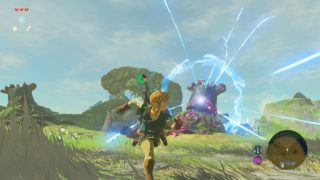
Legend of Zelda Breath of the Wild

The Legend of Zelda: Breath of the Wild consistently had the longest lines at E3. Were you expecting this kind of outpouring from fans?

We certainly knew we had a fabulous game. We hoped that the show attendee would appreciate it. We did not anticipate four-hour lines, and we worked hard to do some things to try and improve the pace of the experience and get as many people through the experience as possible. But still, the reaction has been overwhelmingly positive and we appreciate the love that the attendees are showing for the game.

Can you talk about the cross-platform strategy for the new Zelda game?

This game has been in development for a number of years. As Mr. Miyamoto indicated, he wanted to change the Zelda conventions and to create something that would not only satisfy the historical fan of the series, but be compelling enough to bring new fans into the series. So that’s why you see this open air gameplay. This is why you see the crafting elements within the game in terms of cooking and making your own elixirs. You see over 100 shrines in the game, and in these shrines you’re rewarded, once you solve a puzzle, with items that can help you in your quest. These are all things that we believe are going to appeal to that consumer who’s maybe heard a little bit about Zelda but never jumped in. This will be their opportunity to get into the franchise.

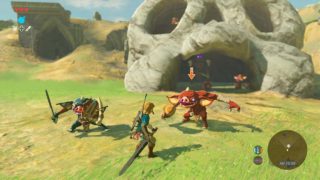
Legend of Zelda Breath of the Wild

What role do you feel Zelda will play in launching the new NX hardware?

We think it’s going to be a very effective way for us to reward the buyer—many of which have been waiting for this game—but [it’s] also the critical component of helping drive the NX. We’ve said that it will launch simultaneously on the two platforms. We haven’t said whether Zelda’s going to be a launch title or not for NX. So there’s some speculation there, but over the next number of months, we’ll be sharing more and more information specifically about the NX.

Why was E3 not the right place to showcase NX?

Once we made the decision to launch NX in March, we then thought through the beats of information. The first beat has to be the positioning and helping people understand the core concept. Doing that here at E3, we thought would be a little complicated, especially when the game we have for showing here at this event actually plays on the Wii U. Yes, it also plays on the NX, but we’re not prepared to show that on the NX. So all of these elements were taken into consideration to first say, “Okay, we’re going to make this largely about Zelda: Breath of the Wild, we’re going to showcase it on the Wii U. Let’s make that decision.” And then over the next number of months, we’ll decide the right times to share the proposition, give a sense of the launch titles, share the specifics of launch date, launch price, etc. There’s a lot of time between now and March 2017 to communicate that information.

Does that connect back to the Nintendo Direct option of being able to communicate to fans any time?

I would say yes and no. We do believe in communicating direct to the consumer. We’ve been doing that for years, but the decision around this E3 was much more about making sure we did a first-rate job of communicating how this Zelda has the potential to be another in a line of momentous events for the industry that Nintendo has brought forward. We needed to do that first before talking about NX.

We’ve seen Activision and Warner Bros. continue with toys-to-life, while Disney has left the business completely. How has amiibo been progressing?

We’re fortunate that our amiibo business continues to be quite strong. What we have found is that our strategy in having amiibo play across a variety of games and across both our handheld (with the new 3DS) and home console business has been very effective. In addition, we’ve been fortunate that our amiibo is motivating both a more casual type of consumer as well as the collector—someone who feels that they have to have every one. So that certainly also is something that’s helped our business. Our focus continues to be bringing new and unique amiibo, and we have three that are compatible with The Legend of Zelda: Breath of the Wild. We’ve also shown exactly how the Wolf Link amiibo that’s being sold right now with Twilight Princess works in the new Zelda game. We’re going to continue to bring these types of innovations, but the core element of gameplay across multiple platforms and across multiple titles is a differentiator versus what others are doing in the space.

How Augmented Reality Shifts Car Marketing Into New Gears

The phenomenon of Pokémon GO has catapulted augmented reality into the mainstream conversation over the last week, but—news flash—the proliferation of AR applications across a wide spectrum of industries has been on a progressive path for quite some time.

The auto industry is just one specific sector that’s been successfully using AR in its favor. Brands like Hyundai, Volvo and Jaguar, among a slew of others, have proved that marketing in AR is not just a flavor of the week, but a consistent strategy worth investing and establishing. It’s all part of an immersive plan that mirrors what most manufactures are doing with virtual reality—which has also had a sizable uptick in activations thanks to forward-thinking manufacturers.

“As a marketing tool, VR and AR have potential to give people an experience without physically having to be in the vehicle. It will give an opportunity to take your product and make it accessible to more people in their own environment and own time,” Eric Watson, Mazda’s marketing director, told [a]listdaily. “You’re able to change the color of car, go into the interior and really get an immersive experience. Eventually, someone will want to go to the showroom to have a one-on-one experience with the car.”

1-AA-21208

In an interview with [a]listdaily, Juergen Lumera, Bosch Automotive’s director of global product management and innovation, said that applying AR to simple components like the owner’s manual is a popular marketing tactic, too.

“It explains the car more, and all of the accessories. If I have a complex vehicle, I need to know how to operate it,” Lumera said. “The application can show what each feature is capable of. It will enrich an experience and make the complex situations easier to understand. People will use it, but not day-in, and day-out.”

Hyundai, for one, built an owner’s manual app in AR called the Virtual Guide to make the lives of their owners simpler earlier this year.

AR is also one of the rare technologies that can really make a change in the way service technicians receive information, Lumera noted. Last year, Bosch Automotive officially authored a system to ease the creation of AR solutions with a large volume of data and deliver information after the sale. The frameworks of the application allows the production of content, and the publishing of it thereafter for service technicians.

“So far, it’s separated between training and the information in the workshop. We believe those two things will grow together to train on-demand,” says the Germany-based Lumera, noting that that Europe was the place where AR was mostly born and cultured over the years. “European car brands really invested a lot of time and money to develop the technology.”

Bosch Automotive applies AR with almost every carmaker across the continent, and they are slowly seeing stateside adoption, too.

Can Cars And AR Be Marketing Magic?

Fiat_Graphic_2

AR can also help you buy your next car, as evidenced by Volvo’s partnership with Microsoft HoloLens. Their union adds another immersive wrinkle in the changing world of customized commerce and showrooming, specifically leading to new sales opportunities for car makers to maximize.

According to Bloomberg, U.S. dealers spend $2.75 billion annually on interest to keep new vehicles on their lots. To make showrooms look less like a bag of Skittles, dealerships are introducing VR and AR for consumers to reimagine the car-buying experience—and for them to save on some overhead.

Fiat Chrysler followed in Volvo’s footsteps in a similar fashion earlier this year at Mobile World Congress by showcasing a new car sales app that uses AR and allows customers to modify features in a car before they buy it.

Ditto for Ford. In January, they debuted a customer-focused experiment involving AR optics and the dealership experience where customers could wear smart glasses as they guide themselves through a showroom.

Meanwhile, MINI’s AR glasses allow drivers to see through the body of their car.

And as if the likes of Porsche, Ferrari, Land Rover and Mercedes-Benz had a hard time unloading their line of supercars, they too have joined long list of brands using AR tech sorcery to modify their respective models in recent years.

Though, the AR sensation is not limited to global powerhouses. It’s also made its way to startups, as evidenced by Swiss company WayRay’s product “Navion,” which is designed to improve driver safety and adaptability by using holographics to project GPS imagery and driver notifications onto the windshield of a car.

Screen Shot 2016-07-13 at 1.39.10 PM

Jaguar made it to the windshield by way of an AR concept that provides drivers with an interactive “virtual windscreen concept” display.

On last week’s episode of [a]live, Noah Eichen and Matt Bretz, both of whom are creative directors at the Ayzenberg Group, discussed the potential behind virtual, augmented and mixed realities in a wide ranging conversation.

“It will take time for all these technologies to sort themselves out, and figure out which brand and device rises to fore,” Bretz said. “And there will be ones that we don’t even envision now that come forward to be the successful iteration of it.” 

Follow Manouk Akopyan on Twitter @Manouk_Akopyan