Gamescom Exec Discusses Growth Of ESports And VR At Annual Convention

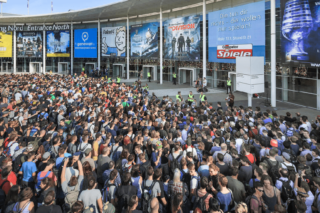
While E3 continues to get most of the press—even if lately much of the focus has been on the expansion of the industry trade show into a public hybrid event—Gamescom remains the largest video game show in the world today. Last year, over 345,000 people made the trek to Cologne, Germany. While most of those attendees were gamers attending the public show, the trade show visitors continue to grow.

Gamescom is unique in the video game market, as it kicks off Aug. 15 with GDC Europe and then transitions into a trade-only event Aug. 17 (with the trade portion continuing through Aug. 19 in a special closed-off area not accessible by the public). From Aug. 18-to-21, the rest of the massive Koelnmesse convention center.

“The unique concept of the show from the very beginning is that we cover trade, consumer, developers and publishers, and that’s only possible because of our dedicated specific platforms—GDC Europe at start, developers, publishers and press in the business area, which is the leading B2B platform in Europe, and the entertainment area, where they can get hands-on with the newest games and innovations for the first time,” Tim Endres, project manager for Gamescom, told [a]listdaily. “We get attendees from nearly 1,000 countries. We’re able to address all target groups in one date at one fair.”

Although he didn’t have specific numbers, Endres said there’s been high interest from US attendees in the past, and again this year.

“Gamescom is the only fair that has a very high diversity of platforms with console, mobile and PC gaming, hardware, virtual reality and eSports,” Endres said. “It makes Gamescom interesting for everyone because the focus is on the whole world of gaming.”

Endres said back when the show moved from Leipzig to Cologne in 2009, it started with 458 exhibitors, 17,000 trade visitors and 120,000 square meters of floor space. Last year, those numbers had increased to 806 exhibitors, 33,000 trade visitors and 193,000 square meters of floor space.
Gamescom

“We’ve seen a high growth rate across all three of these areas,” Endres said. “In 2016, we will follow these increases with 850 exhibitors from 53 countries, which is up from 45 countries last year. The international scope also increases with 26 country pavilions, including new countries like Indonesia, the Philippines and Columbia. This underlines the international scope of Gamescom as the leading trade fair.”

Following in the footsteps of France, the Nordic countries and the United Kingdom the past three years, Turkey is the official partner country of Gamescom 2016. Endres said this decision was made by the advisory board last October.

“Turkey is interesting for our exhibitors because it’s a big market that’s growing,” Endres said. “There are also governmental supporting programs coming up that will help bring new game developers on the market. We expect 30 exhibitors from Turkey in Hall 3.2.”

Endres said two key focuses again at Gamescom this year will be eSports and virtual reality.

“Our main theme this year is Heroes in New Dimensions, which means virtual reality with hardware like PlayStation VR, HTC Vive, Oculus Rift and many others on the show floor,” Endres said. “That also applies to eSports, which has massive global attention and is opening up  many new opportunities.”

ESL will be in Hall 9 hosting eSports competitions throughout the show. Blizzard will have Hall 7 eSports competitions. And China’s World Cyber Arena will be in Hall 5 hosting eSports matches. The size of all three company spaces has increased for 2016.

There’s also a “big increase” in virtual reality games and event space for both the trade and public side of the show, although Endres didn’t have a breakdown with numbers to compare 2015 to 2016.

The public tickets for Gamescom were completely sold out at the end of July, which Endres said is the earliest the show has ever sold out. (Selling out Gamescom is an annual tradition.) When you add the attending journalists, developers, publishers and public for the entire Gamescom week, which includes GDC Europe and the City Festival in downtown Cologne, Endres expects over 500,000 visitors this year.

This huge audience has opened up new sponsorship opportunities for companies interested in reaching a wide European audience, since attendees fly in or take trains from around the European Union.

Endres notes that while sponsorships aren’t as popular at European shows as they are in the US, Red Bull has stepped in as the exclusive energy drink partner for Gamescom 2016. In addition to having an outdoor area next to Hall 8 for events like motorcycle jumping, Red Bull will also have a booth inside Hall 8 featuring its new Red Bull Air Race game from publisher Wing Racer. Red Bull drinks have always been sold at Gamescom.

German mineral water company Gerolsteiner is also an official sponsor of Gamescom and will provide free drinks to visitors as they wait in line to get in.

Those traditionally long public lines will be even slower this year as a result of new safety and prevention measures that have been adapted. New control measures include bag checks, which will be carried out at the entrances before entering the fair grounds. These measures were put in place after a series of terrorist attacks that have occurred throughout Germany this year, dating back to 1,200 alleged sexual assaults (including 600 in Cologne) on New Year’s Eve 2015.
Livestream Marketing: From Conversation To Conversion

From movie trailers to 360-degree videos and virtual reality, video is an effective tool for building excitement about a brand. Now, thanks to platforms like Twitch, YouTube and Facebook Live, livestream video marketing is making its way into the mainstream.

According to research by eMarketer, almost one-fifth of US media decision-makers plan to invest in live stream video ads over the next six months. Livestreaming requires little more than an HD video camera and strong internet connection, allowing brands to explore this new medium with minimal upfront investment. Measuring return on investment depends on the campaign, but can be as simple as gauging the amount of viewers, comments, or using a vanity link to track site visits and purchases.

Starting A Conversation

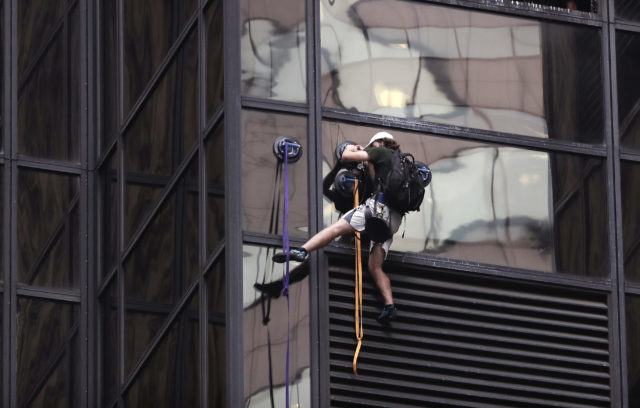
Anyone who saw the man climbing Trump Tower on Wednesday witnessed first-hand the power of livestream video. WABC-TV’s page reached 4 million views. New York’s ABC 7 provided livestream coverage over Facebook, garnering nearly 6 million views and over 240,000 comments. While comments don’t necessarily equal sales, a conversation helps ensure that consumers remember your brand. While the Trump Tower climber isn’t a brand, necessarily, he wanted the attention of Presidential candidate Donald Trump and livestream footage of his actions made sure he got a lot of attention.

Livestream content also capitalizes on the “fear of missing out” phenomenon often attributed to Snapchat. Live video can create the same level of excitement of “seeing it first” or “being there,” that static videos cannot provide.

Trump Tower Climber

How Brands Use Livestream Content

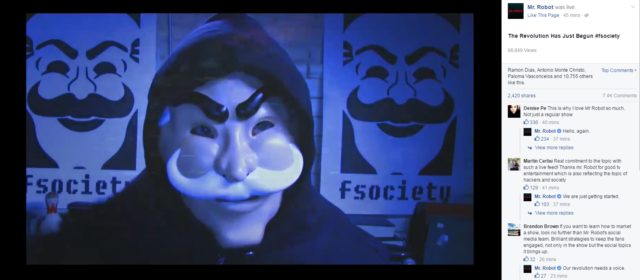
USA Network got fans excited for Season 2 of Mr. Robot last month with a cryptic livestream on its Facebook page—resulting in 2.2 million views and over 250,000 comments. In celebration of National Fried Chicken Day, Popeyes took to Facebook Live in July with a virtual drive-thru window and jazz musician. Fans were encouraged to interact with the stream through trivia, music and games. Participants in the US who commented also had the chance to win a delivery of Popeyes’ limited-time offer of their $5 Boneless Wing Bash. McDonald’s hosted a similar event for National Hamburger Day, in which viewers could watch a Bob Ross-type artist unveil burger-inspired works of art.

Epic Games has created an impressive community of over 20,000 followers around its weekly Twitch livestreams for Unreal Engine. Developers and video game fans alike tune in on a regular basis to watch tutorials, ask questions and interact with users to share interests. Netflix promoted its break-out hit show Stranger Things with a Twitch livestream that allowed users to vote on what scary event would happen to the unlucky hosts on screen.

Mr Robot Facebook Live

Some Brands Are Still Hesitant

While a number of marketers have jumped on the livestream bandwagon, others aren’t so sure. In June, Trusted Media Brands, previously The Reader’s Digest Association, polled 305 US media decision-makers, including both agency and client-side marketers, about future investment in livestream video advertising. According to the data, 60 percent of in-house and 71 percent of agency marketers said they “might” invest in livestream format, compared to 17 percent of agency and 19 percent of in-house marketers who “definitely plan” on allocating budget to live stream video ads in the second half of 2016.

From exclusive footage to behind the scenes looks, breaking news or just silly fun, how brands use livestream is limited only to the imagination.

Matthew McConaughey Wants You To Know That Bourbon is Booming

Academy Award-winning actor Matthew McConaughey is a poster child for all-American masculinity. The aura of the bongo-playing Texas native oozes authenticity, and his intense and passionate portrayals mysteriously translate into truth and sincerity.

In a time when the social universe smells like solicitation at every click, as celebrity spokesmen slap a message with a “sponsored” label and call it a day, legacy brands are looking to reintroduce themselves to millennials with candor.

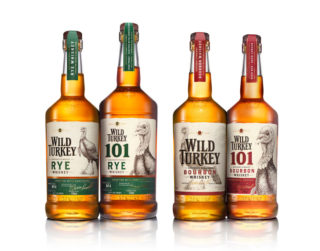
Enter Wild Turkey, who’s turning McConaughey into the face of their bourbon brand by signing the 46-year-old actor to a multi-year deal as creative director and chief storyteller of their forthcoming global campaign “It’ll Find You.”

1ADCO-master768

“Wild Turkey has the history and qualities of a brand that depicts the dedication of someone to do something their own way—even if that way isn’t always the most popular,” McConaughey said. “I want to help share their unique story, starting with a new ad campaign that I feel really captures the special essence of this brand while introducing itself like never before . . . When making a movie, you have two hours to tell a story. Here I have 30 seconds to reintroduce the world to this authentic American brand that has helped shape an entire US industry. It will be a very interesting and fun challenge.”

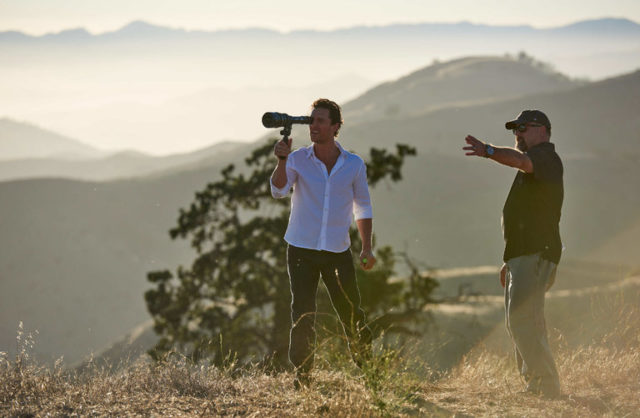
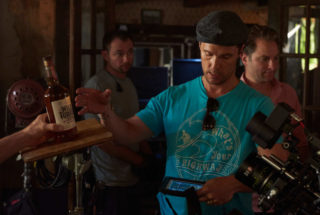
McConaughey has always been interested in the art of the sell. This will be the first time that the sought-after actor, who previously has bared it for brands like Dolce & Gabbana and made driving Lincolns cool again, will write, direct and star in the Wild Turkey ads. As a college student, the Dallas Buyers Club star even interned at an advertising agency.

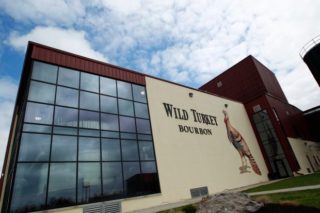
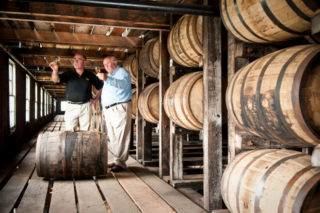
McConaughey can already be seen in a six-minute documentary chronicling the history of the 161-year-old brand during a visit to the Lawrenceburg, Kentucky-based Wild Turkey Distillery. The first television commercial (below) and McConaughey’s directorial debut was unveiled, too.

“So many times people choose their drinks to fit in and join the crowd,” said McConaughey. “Wild Turkey is about something different. The tagline ‘It’ll Find You’ is at the heart of what Wild Turkey is all about. If you are being yourself, unapologetically doing things your own way, then you are at home wherever you are, and Wild Turkey, well, it’ll find you.”

Melanie Batchelor, vice president for global premium spirits company Gruppo Campari, the parent company for Wild Turkey, joined [a]listdaily to share how McConaughey will usher in a new era of bourbon.

https://www.youtube.com/watch?v=qf7JUaYAHE8

How did Wild Turkey go about identifying Matthew McConaughey as creative director? What was the selection process like?

01ADCO-master675

We’ve set out an organic process to find someone who could become a spokesperson since 2014, and that’s when we first met with Matthew. We rebuilt the distillery, we built a number of warehouses to lay down more barrels, as well as a new state-of-the-art bottling facility. We’ve made a lot of investments in the brand, and when this opportunity came to us, given Matthew is such an authentic guy and someone who makes his own individual choices, he was a really perfect fit for our brand and the values that we have. We got really excited about the idea which went way beyond him being a celebrity spokesperson. Since then he’s been out to the distillery several times and built a really good connection with [father-son distiller duo] Jimmy and Eddie Russell. It’s just one of those things that evolved out of this period of time and we’ve gotten to a place now that we’re really excited with the collaboration.

What’s the message Wild Turkey wants to get convey? Who’s the audience you’re trying to reach with this reintroduction?

What we want Matthew to do is really help convey what the brand is all about, and what he saw when he came out and spent time with the Russells. Wild Turkey is a very authentic product—it has a very bold taste. It’s not the obvious choice; we’re quite a small brand. Over the years, the brand has had a revival. But for those people who know it, they really appreciate that Jimmy, who is our master distiller, has always made Wild Turkey exactly the same way. No matter what trends have come and gone, he’s always stuck with what he thinks is the right thing to do and the right way to make bourbon. We’ve set ourselves to celebrate people who also have that conviction to make their own individual choices, and not just follow trends. Matthew seemed to be the perfect fit to help us tell that story and for that real hint of what we’re going to be communicating during that campaign. He’s been absolutely engaged. We’ve had lots of discussions and debate over the last 18 months, talking about the campaign and how we needed to modernize the brand. He’s really processed a lot of things differently and been a great listener when we explain the brand’s background. It’s actually been a really great process, and I couldn’t be happier with the outcome.

MTQwNDkzMjQ1Mzc2MzczOTky

What is the integrated marketing campaign with McConaughey designed to accomplish for the Wild Turkey brand?

We want to reintroduce the brand, especially to younger consumers. We’ve been a fairly quiet brand. A lot of people don’t really know what the brand is about. It’s really about how can we tell the story of the brand to more people, quickly. That’s why we’re entering this new long-term partnership and evolving through the campaign.

Can we expect a Matthew McConaughey-branded bourbon in the near future?

We’ve been talking about all sorts of interesting opportunities. I don’t have any more news to share, but as he came in to this partnership, he was primarily interested in the creative process. He’s a storyteller by trade, and he’s a master of his craft, and he respects that Jimmy and Eddie are masters of their craft as well. So the process for us has been, how can we connect and tell that story and that primary objective as we entered this relationship. We’re really excited about his involvement in all aspects of the creative process over the next few years.

Why is conceding creative control to celebrity storytellers a good fit for alcohol brands?

MTQwNDkzMjIzMDk2MjMxMTQ1

What’s been really great for us is to see how passionate Matthew is around the brand. He knows a lot about the brand history, he’s researched a lot about the people behind it. He got very involved as a creative director and really understands our beliefs, and what we were trying to accomplish, and how we were trying to tell this story about our brand to consumers. I wouldn’t say so much about conceding control but rather having a true collaborative partnership and that’s what’s really exciting for us because I can tell you, unlike many celebrity endorsement deals, he’s been intimately involved in every part of the process from writing the ads to working with artists and selecting music to directing and being in front of the camera.

Brands are also heavily leaning on influencers and social media stars. How is Wild Turkey positioning its influencer marketing campaigns to better connect with millennials?

That’s always been an important part of our marketing strategy, and we’re very lucky with Wild Turkey because while a lot of people don’t understand our brand, a lot of influencers, bloggers and mixologists really understand the quality and our story. We have great relationships with a lot of influencers but I think that Matthew is, for us, the influencer that can give us that draw on a global scale. We believe the influencer marketing strategy is going to be really powerful for the Wild Turkey story for people all over the world.

MTQwNDk2MjY2MzQ4OTk1ODE3

What are some other storytelling formats and social platforms you’ll be testing with this campaign?

This will be a fully integrated campaign. We’ve been working with Matthew in terms of how we can connect with consumers through all aspects of our media strategy, which a large part will include be social media.

How are you going to judge the outcome of the campaign? 

It’s a great time to have a leading bourbon brand in the industry because bourbon is booming in the US and around the world, specifically in markets like Germany and the UK. At the end of the day, as Matthew says at the end of the documentary, ‘if it doesn’t work, we’re gonna be stuck with a whole lot of bourbon.’

Follow Manouk Akopyan on Twitter @Manouk_Akopyan

How Post Proved It Can Push A Pre-Roll Virtual Reality Ad With Fruity Pebbles

Cereal maker Post is the latest brand vaulting from two-dimensional marketing to 360-degree videos by launching their first virtual reality video as part of the “Yabba Dabba Do” campaign for Fruity Pebbles.

The marketing push—Post produced a 30-second pre-roll ad that runs on cross-platform apps VirtualSky and StartApp—mostly differentiates itself from the branded-VR ether because the cereal brand produced a deliberately guided immersive experience rather than the exploratory ones other companies have often pursued during the recent VR revolution. The video is also equipped with heat-tracking technology that indicates exactly which part of the experience consumers are focusing on the most.

Consumers are eating up everything VR-related. Earlier this year, Kellogg’s also capitalized on the fast-moving VR content train by unveiling a 360-degree experience featuring decorated swimmer Tom Shields ahead of the Rio Olympics.

[a]listdaily caught up with three of the creative forces for Post’s first foray into VR—Oliver Perez, senior brand manager for Pebbles Cereal, Brian Hurley, creative lead at Public Works and Andrew Klein, social experience and custom product innovation at MediaVest | Spark—to discuss its deliberately guided immersive experience.

Why was it critical for Post to begin marketing via virtual reality with Fruity Pebbles?

Oliver Perez, senior brand manager for Pebbles Cereal: We recently launched our “Yabba Dabba Do” campaign, which aims to ignite creativity and fosters the joy of childhood for kids and kids at heart. A bowl of Fruity Pebbles awakens the senses and provides a burst of energy in the morning, and we thought a VR execution would be a great way to bring that sensory overload experience to life. 

Brian Hurley, creative lead at Public Works: “Yabba Dabba Do” is all about tapping into the creativity and passion that surrounds Pebbles cereal. It’s an idea that constantly invites active participation with the brand. The 360-degree video is a fun, forward-thinking way to inspire fans and invite them to participate along with us.

What was the toughest challenge in the VR content creation and production process? What did you learn about VR along the way while putting the piece together? 

BH: First and foremost, there are very few established standards in the VR space. Unlike a typical broadcast production, where the steps to create a piece of content have been well established for years, shooting, editing and finishing a spot in 360-degree requires the team to invent new ways of working. Since the shot is being captured in the round, we can’t use any rigging or lighting the camera can see. Furthermore, we can’t be anywhere near camera, which creates an interesting dynamic between a director and our talent. And you can forget about seeing video playback on set, since it takes hours to stitch the footage together to review. Offline editorial also requires a new approach, since we’re making decisions in the round. What’s great about shooting 360-degree is we can splice different takes together into one scene, since so many cameras are involved. But that adds a lot more complexity to finding the right shots and pacing the cut. Much like an animation workflow, it usually takes many hours to render these decisions into a piece you can preview, which again adds more time to the process. All said, there are challenges, but it’s so much fun to explore this new format for creativity. These are the things that keep us up late at night and motivate us to come to work early—it’s the best part of working in this business.

Pebbles created an edited 30-second pre-roll spot featuring 360 visuals. Why does this work better than the longer storytelling format?

Andrew Klein, social experience and custom product innovation at MediaVest | Spark: A 30-second pre-roll allows us to tell an impactful brand message and be respectful to the audience who is initially planning to view another piece of VR content. The reasoning for the 30-second limit is due to the file size of the content that needs to be loaded into the experience. Anything over 30 seconds in high definition would require additional load time and that could potentially create a less than optimal experience because the viewer would need to wait for the content to download or buffer. That said, vendors such as VirtualSky and StartApp do offer 30-second pre-roll spots with the option to leave the current content and view longer form experiences.

BH: I’m not sure I’d say that pre-roll is generally more effective than creating a long-format experience, but for what we’re trying to accomplish, it’s the right decision. As we launch “Yabba Dabba Do” we need to be in the places where kids and kids at heart are exploring their own creativity. One of those places is definitely VR gaming. Simply put, we wanted to create content that can live in those experiences, instead of trying to compete with them. What’s been so crazy to our team has been how no other brands have tried this already. There was no inventory available for this approach from a media perspective earlier this year.

Why do you think brands are cautious to limiting themselves to shorter VR ads? Is your approach to the format a trend you see more marketers experimenting with?

OP: VR is still an emerging platform and as marketers, we’re still trying to understand the roll VR will play within our broader campaign. One challenge we faced as we were trafficking the spot is how much more difficult targeting is due to how early we are in the adoption cycle of the technology. I think as with any new technology, as this gains wider adoption, we as marketers need to be mindful of how this channel fits within our overall media mix.

How will you be using the data obtained from VirtualSky and StartApp to measure success and engagement? Can you explain the process?

AK: We are looking to see completed view rates and to utilize VR content heatmapping to understand where audiences are looking during the experience. As they see our content, is there a moment or action that draws the most attention during the experience? This data will help us optimize VR creative for future immersive campaigns.

Why is VR turning into such a powerful force in marketing? And do you plan on experimenting with augmented reality? 

AK: VR is currently the only medium that provides full audio and visual immersion, zero distraction and true viewability. Unless the viewer removes the headset, they are fully immersed in the brand experience and story. To-date, Mediavest|Spark is seeing significant increases in brand awareness, brand favorability and even purchase intent from audiences engaging with our client’s VR experiences.

BH: It’s the most immersive creative platform available to connect with consumers, and they already own the technology to bring it to life. It’s not a fad. We are excited to see where it takes us in the future.

OP: The days of VR are still early, especially as a marketing platform. The ability to transport consumers to any kind of experience is what makes this medium so attractive. We are excited to see how this technology continues to evolve.

How will Post continue to leverage interactive promotions in the future?

OP: VR is just one component of bringing our campaign to life. Pebbles is currently on tour with the Pebbles Play tour. We’re teaming up with environmentally sustainable toy company YOXO to inspire young inventors and encourage creativity using recycled materials at several creation stations at each tour stop. We have a replica of a Flintstones Flintmobile where fans can jump in and take a picture, as well as a VR station where they can experience our commercial. We are also sampling Pebbles marshmallow treats.

How is Post using social media, content and other storytelling tools to engage in new ways with consumers? What’s the strategy behind the “Yabba Dabba Do” campaign?

OP: Kids are still our primary target so we want to make sure we are developing fun and inspiring content for them. “Yabba Dabba” Do is all about capturing the spirit of fun and endless possibilities that exists in kids and kids at heart. Through our social channels we strive to reach new audiences and bring that same attitude, whether it’s a quick and simple Fruity Pebbles treat recipe mom can make at home, or giving dads ideas for projects they can make with their kids on a rainy day. We hope to inspire everyone to push the limits of their imagination.

Follow Manouk Akopyan on Twitter @Manouk_Akopyan

Daybreak Games Exec Explains ‘H1Z1: King of the Kill’; Transformation Of Organization

Survival simulation zombie game H1Z1: King of the Kill has been a big boon for video game developer and publisher Daybreak Games.

So much so that at E3 this year, former Lakers star and three-time NBA champion Rick Fox announced that Echo Fox is creating the first-ever professionally created eSport for H1Z1: King of the Kill.

“Beyond my own enjoyment watching H1Z1, which I believe is a tenant of an eSport, because it is viewable and enjoyable to watch, I enjoy playing it, too,” Fox, owner of eSports organization Echo Fox, told [a]listdaily. “We’ve spent a lot of hours talking about where it’s headed as an eSport.”

Fox and company, who have teams competing in Counter-Strike: Global Offensive and League of Legends, are currently in the vetting process to create a team that will debut at TwitchCon at the H1Z1 Invitational this September.

Originally a Sony Online Entertainment gaming company, Daybreak Games has done a commendable job carrying their own weight largely because of their player-versus-player, high-intensity shooter that pits multiple teams against one another at the same time in a battle royale mode.

Candace Brenner, senior director of global marketing for Daybreak Games, joined [a]listdaily (video below) to detail how they’re reaching today’s consumers.

Follow Manouk Akopyan on Twitter @Manouk_Akopyan

Op-Ed: How To Market VR Games

Marketing VR games is about to become a necessary discipline, and it’s not going to be quite the same as marketing games for other platforms. The starting guns have sounded, and we’re off to the races with virtual reality (VR) hardware is shipping for mobile devices, PCs, and soon for consoles. There are already millions of Google Cardboard VR viewers available and more than a million Samsung Gear VR headsets out there. Both Oculus Rift and HTC Vive are available, and both of them are likely to sell more than a million units before the end of this year. Sony’s PlayStation VR will hit the console market this October, and will likely sell a million units or more in short order as early adopters flock to get one.

The competition is already in place, and growing every day. Marketing is going to be important to help get attention, especially when discovery mechanisms for VR games are still being built. Certainly, some of the traditional marketing efforts aren’t going to work the same for VR games, so it’s time for some serious strategizing about how to market VR games.

The classic YouTube video in 2D is still useful for VR games, but it’s not going to be giving an accurate picture. You’ll have to step up to 360-degree video in order to give people a better idea of what they will see in a VR game. Advertising across large audiences probably isn’t very useful for VR games, especially when VR hardware is still relatively uncommon. You may try to persuade people to buy VR hardware alongside your game, but that’s a pretty heavy lift when you’re talking about hundreds to thousand dollars.

If you can’t share the experience directly, then you have to share the feelings people will get from the VR game. The issue is similar to how you sell some a trip to an exotic location they haven’t visited before. People will have to go on the trip to realize what special about the experience, but you can share the emotions. Try creating videos of people playing the VR game alongside 2D versions of what they are seeing in the game and include some reaction shots. Include interviews and testimonials from players. Remember that this is cutting edge technology, and people are going to be interested not just in the game itself, but how it was created. A behind-the-scenes documentary about how you made the game will probably get you a lot of attention.

One marketing method that’s finding increasing power with games is the use of social media, and in particular streamers, YouTubers and Facebook video creators. Finding independent voices to talk about the VR game, and show themselves having fun with it, is certainly going to help your marketing efforts. Yes, a 2D video isn’t as engaging as being in VR, but there’s still plenty of excitement to be generated.

Another important consideration for marketing a VR game is its length, because that affects how you market the game. Is this a VR “experience,” as some are being characterized (notably the Final Fantasy XV VR experience) that lasts for about ten minutes? Or is it a relatively long one, like Resident Evil 7 proposes to be? The distinction becomes critical when you describe it to potential customers.

Setting realistic expectations is crucial if you expect a positive response. Failing to adequately prepare that audience for what they get, the negative reaction could be intense. If you are trying to market a VR game that’s hours in length, it’s important to realize that the game will be played in short sessions—perhaps measured in minutes, rather than hours as it might be in a typical console environment. The VR experience is intense, and long play sessions are not recommended. This is not the way many PC and console fans are accustomed to playing games. Marketers will have to make it clear that this sort of play pattern is not what you should expect.

Connections to existing brands are useful, as demonstrated by the intense interest in Batman: Arkham VR. That brand connection has its challenges because the VR game has to support the brand, or at least the expectations the players will have coming to the VR game with the brand attached. Savvy marketers will probably want to conduct some focus groups and substantial feedback from fans about what the expectations are.

In addition to connections to existing brands, social features are very important for giving marketing efforts a boost, whether the game is designed for a single player or multiple players. Being able to share significant images, 360-degree videos, or even 2D videos, is a way for players to become part of your marketing efforts.

The road ahead for marketing VR games isn’t clear at all, but it’s going to be interesting as marketers forge new strategies for this new gaming platform.

GamesBeat 2016: Everything We Learned

Miss GamesBeat? We’ve got the low-down.

 AR/VR Is Officially “A Thing” . . . Once You Get A Taste Of It

An entire day of GamesBeat was devoted to the realm of augmented and virtual reality—from the implications of virtual reality in entertainment to early discussions about monetization in the space, the excitement and curiosity surrounding it was tangible.

Kicking off the event with a keynote from Oculus’ Jason Rubin, who discussed the company’s role in the second wave of VR.

“There was always this distance with a TV that was a little bit frustrating,” said Rubin when talking about his initial interest in VR. Since then, it’s come a long way, becoming a more robust technology delivering on the immersive experience it promised.

“This is the time where filmmakers, game-makers, experience-makers and whatnot will be able to take people and transport them into other places,” he said, emphasizing the usefulness of the medium across every point in the entertainment industry. What’s more—when developers have had a taste of what VR has to offer, according to Rubin, they stay dedicated to creating these experiences.

“Literally every single [developer] we’ve worked with is coming back to VR,” he said. “After they finish a title, they’re not leaving VR.”

While major game developers have been relatively tepid about going all-in with VR, the same cannot be said for Hollywood, which has been actively exploring the medium.

“It’s cliché at this point, but the minute you strap [a device] on, you realize that this is a thing. It is a medium that is here to stay,” said Lionsgate’s Peter Levin. The company has been exploring exploring virtual reality, both by adapting existing IPs like John Wick and building from the ground up for the medium with “12 to 15” total projects. Of course, this experimentation with VR also extends to how Lionsgate approaches marketing.

“We have a big initiative based with our marketing and promotional vehicles with some of our biggest IPs,” said Levin. “What a great way to bring attention to a nascent market like VR.”

Pokémon GO Is Just The Beginning—There’s More To Finesse With AR

The sensation of Pokémon GO was not lost on the attendees at GamesBeat this year and inevitably if the conversation veered into augmented reality, you can be sure it also involved Niantic Labs’ runaway hit as well.

“I think that it’s not the be-all and end-all of augmented reality yet. There’s a lot more you can do on that front,” said Dean Takahashi, lead writer at GamesBeat to [a]listdaily. “If they could improve the gameplay to make it a little more interesting to hardcore gamers and casual gamers alike, then it could be one of the games that could be closer to being something like the Citizen Kane of augmented reality.”

While the game has certainly reached phenomenon-status, for many, the critiques of the game experience shows just how much work there is still to be done with the medium.

Pokémon GO shows us that if the experience is magical and worthwhile, people go through a lot of hassles,“ said Tom Sanocki, CEO of Limitless VR, to [a]listdaily.

John Hanke, CEO of Niantic Labs, talked about how the game is going to continue the march forward with making it less oriented around your phone, getting users to interact more naturally with their environment.

“I’m looking forward to the launch of the Pokémon Go Plus,” said Hanke. “That will give players the chance to play the game without looking at their phone all the time. They’ll get to look at the world around them.”

As time goes on, Hanke sees wearables and augmented reality becoming more seamless experience.

“I see a progression of wearables that get more sleek and sexy over time. It’s not binary where you don’t have AR one day and then do have it the next.”

Storytelling Can Help Push ESports Into The Mainstream

ESports is on track to becoming a $1 billion dollar industry this year. With that kind of money and the audience numbers it touts, the level of interest in eSports is a bit feverish from the outside looking in.

“It’s really been kind of this thing that grew on its own very organically, and therefore very tough from a discovery point of view for people who are not seeking out the content,” said Activision Media Networks VP, Mike Sepso at the event. “So it’s a huge audience, but it’s a very tapped in audience. It’s a very big niche.”

From those who are actively working to put eSports in front of the mainstream audience and change the public perception of the industry, there is loads more to be done. The next step? Storytelling.

For Peter Moore, EA’s chief of competitive gaming, what traditional TV does particularly well is telling the stories behind the athlete, whether they are competing in the Olympics or in the NBA. They make us care about who we are watching by using the powerful device of storytelling.

“We’ve got to make people care about competitive gamers,” he said. “They can’t be seen as nerdy, Doritos-chomping, Mountain Dew-guzzling recluses in their mom’s basement.”

Arby’s Execs Explain How ELeague ESports Delivers The Meats

The first season of Turner and WME/IMG’s Counter-Strike: Global Offensive (CS:GO) was a success across digital and broadcast platforms with over 897 million gross minutes of video consumption. While the bulk of viewership was online, the weekly Friday night television component brought in 3.4 million new viewers to TBS.

Arby’s signed on as the official quick service restaurant of ELeague. Founded in 1964, the franchised sandwich restaurant brand has more than 3,300 restaurants worldwide. The company is based in Atlanta, GA, which also happens to be the hometown of Turner.

Jeff Baker, vice president of brand experience at Arby’s, said all of Arby’s ELeague content and activation was developed in partnership with Turner and WME/IMG. “It would not have been possible otherwise,” Baker said.

Throughout its first season, ELeague generated more than 25 million live video streams on Twitch for live event coverage. Arby’s uses television advertising to connect with consumers on a daily basis, but ELeague opened the brand up to a global online audience.

Mary Ellen Barto, vice president of brand media at Arby’s, said that the television component was important, but it was just one piece of the broader distribution of the competition. “The fact that fans had the option to experience the competition in the way that was most desirable to them—television, Twitch, or in-person—was compelling to us,” Barto said.

Arby’s jumped into the eSports fray because both its team members and guests are fans of gaming and eSports, according to Baker.

“The ELeague partnership offered us a unique opportunity to be a part of building a program for eSports and CS:GO fans that would be truly integrated and engaging rather than a boiler plate ‘sponsored by’ program,” Baker said. “We’re very proud of how we were able to bring it to life. The fan response has been overwhelmingly appreciative of our authenticity and respect for the game, teams and players. We have absolutely loved reading the fan comments on Facebook, Twitter, Reddit etc.”

https://www.youtube.com/watch?v=EFA-cLWW-50

As an official marketing partner, Arby’s—along with Credit Karma and Buffalo Wild Wings—receive customized, contextual brand exposure spanning ELeague multi-screen coverage across TBS and digital platforms. Personalized brand campaigns include sponsor integration within the AdTrack feature, which facilitates uninterrupted game coverage; custom, contextual brand integrations and ad space within limited commercial time.

“Gaming is the heart of eSports and the fans don’t spend a lot of time with other formats, traditional or otherwise,” Baker said. “The challenge in connecting is the same in or outside of gaming: you have to be as much of a fan as they are and truly appreciate the experience.”

Although ELeague marks Arby’s first foray into eSports, the company has been doing its research.

“We certainly have explored and are exploring leagues, teams, players and more,” Barto said, addressing eSports sponsorship opportunities. “Of course there are differences—teams don’t have broadcast TV channels, but partnerships with leagues, teams and players are all viable for brands. It’s dependent on ideas and content that are valuable to the fans and a distribution platform that can reach them.”

Barto said Arby’s is currently evaluating its ROI on ELeague, as the first season recently wrapped up. But from the outset, the company was less concerned with a traditional ROI number and more concerned with a genuine engagement with the fans in a fan-to-fan way. When it comes to the second season of ELeague CS:GO, Baker said the approach will continue to be based around providing valuable content and experiences for fans.

Unlike Buffalo Wild Wings, which is already committed to the September Overwatch Open, Barto said a new game like Overwatch adds a broader fan base to ELeague and Arby’s is currently considering if their involvement would make sense. On the other hand, Baker said the overlap between the ELeague CS:GO demographic and Arby’s customer base is very strong. Currently, Arby’s is more focused on delivering video content around CS:GO eSports, but elements such as coupons and in-game skins are considerations for the future.

One thing’s for sure, Arby’s is sold on eSports. “The growth of livestreaming and eSports are as correlated as any content and distribution that I’m aware of,” Baker said.

ELeague Season 2 kicks off in October, opening the door for more eSports engagement with a young male audience that Arby’s and other brands are very interested in reaching.

Zombie Apps: How We Can Solve The Discovery Problem

There’s a new report from adjust, a leading app analytics and attribution company, presents some intriguing facts and figures about apps in Apple’s App Store, and an idea of how to solve the ever-growing discovery problem. The issue is indeed a serious one—adjust’s study shows that what they term “Zombie Apps” constitute more than 90 percent of the apps in the App Store. In 2012, adjust coined the term “Zombie Apps” to describe “an app that doesn’t attract enough attention to rank on iOS App Store top lists and can’t be found organically—you’d need to search for the name in order to discover it.”

The Zombie App Problem

The problem has been serious for years, as anyone in the mobile app business can tell you, and adjust’s latest analysis concludes that the Zombie rate has reached a new peak. In other words, it’s getting worse. Fortunately, there are things that marketers can do to help the situation.

Before looking at solutions, it’s important to examine the data to understand the scope and nature of the problem. While app lists have varied in size over time, the rate of Zombie Apps has always risen. There are now more than two million apps available to download for iOS devices (this combines smartphone and tablet apps). From January 2014 to January 2016, the App Store grew 83 percent, from 890,000 apps to 1.63 million apps. June 2016 saw over 2 million apps, which means the number of apps grew 26 percent in the first six months of the year. Along with that increase in apps, the rate of Zombie Apps has increased from 72 percent in January 2014 to 90 percent in May of 2016.

So what’s causing apps to become Zombies, hidden away out of sight in the App Store? Essentially, it’s that many of the visible slots are being taken up by extremely popular apps. This can happen across different lists, and among different countries or categories.

“Multiple lists feature some of the best performing apps for extended periods of time, rather than being a true reflection of a single category,” adjust’s report noted. “This has the effect of potentially creating more Zombies, as while there are a fixed amount of ranks, there is an ever increasing number of apps available in the App Store.”

Major companies like Facebook are owning a number of spots in App Store lists. “Facebook owns four of the five most popular apps on smartphones accounting for 62 percent of all downloads on both stores in May, which shows how much list real estate a single brand can hold. Further down the lists, the problem is much more widespread than a single publisher, especially in far flung marketplaces,” the report stated.

Other Key Stats From The adjust Report

  • The App Store has grown 130 percent from 890,000 apps on January 1, 2014 to over 2.1 million available apps as of July 1, 2016.
  • The global Zombie rate increased from 72 percent percent in January 2014 to more than 87 percent in December, and reached 90 percent of all apps in May 2016.
  • The highest Zombie rate is the US English App Store at 90.9 percent, and lowest are the French markets with 85.2 percent being Zombie Apps.

What Can Be Done

The outlook for improvement isn’t good, unless Apple makes some changes to the App Store. We know change is coming to the App Store, with the promise of paid searches. That’s going to shake things up, for sure, and there will be many marketers who see that as a grand opportunity. Eventually, though, the prices of the best paid search terms will probably rise to approach the value, and that will leave the paid searches to accrue to the benefit of the companies with the biggest bankrolls.

The other possibility is a change in the way the App Store is curated. “With the sheer number of apps, and the dubious quality of some calling the rest into question, it’s a hard sell to get more people to try apps without a significant amount of word of mouth, and advertising spend too. By creating more ways to showcase the best Zombie Apps, the App Store could boost user exploration,” the report suggested.

Perhaps the implementation of New and Recommended lists could help, but there are curation possibilities that go well beyond this. One example is to see what Apple is already doing with its Beats 1 station. Here’s what Apple says about it: “Tune in to Beats 1. It’s free for everyone—even if you’re not an Apple Music member. Broadcasting live from cities around the globe, Zane Lowe and his handpicked team of renowned DJs create an eclectic mix of the latest and best in music.”

In other words, it’s offering you a curated list of music which helps in discovery. Why can’t this concept be extended to other categories like games? Imagine, if you will, experts in different genres of games who made sure to see every new game in that genre, and post regular updates about their favorite new titles.

Those game genre experts could create several different lists, included Recommended and What’s New, and possibly sub-genre lists (for instance, under the Sports genre the expert could list Football games). Short videos and/or articles could discuss new or interesting games, or perhaps why the expert chose the ones in the list. You’d think this would also be an excellent place for advertising, and perhaps for paid searches as well.

Apple, though, doesn’t seem to be all that interested in making things better for shoppers, at least if past experience with the App Store is any guide. Still, under Phil Schiller, senior vice president of worldwide marketing, we may see more marketing-oriented improvements in the App Store.

There’s nothing that prevents some enterprising third party from creating and maintaining such a curated list of game apps, of course. Still, even if that third party already had a large audience, being located elsewhere than the App Store would mean those lists would not be seen by most of the App Store visitors. It could take months or years for such a site, (if ever!) to develop an audience even a reasonable fraction of the size of Apple’s App Store visitors.

Whether or not more curation comes to the App Store, it’s clear the discovery problem isn’t getting any better. Still, the runaway success of Pokémon GO shows that it’s still possible to find players, even without huge spending on marketing. All it takes is powerful brand combined with innovative game play that perfectly matches the IP, and perhaps some luck.

Drone Racing Takes Flight Into New York And ESPN

The fast-growing extreme sport of drone racing will be zooming into New York and onto ESPN3 this weekend when the U.S. National Drone Racing Championships fly into Governors Island.

ESPN’s first-ever drone racing event will be streamed live on ESPN3 and, following each event, will be televised as a one hour special on an ESPN network. The Drone Racing Association signed a multi-year, international media distribution deal with ESPN in April. DRA will be producing the content for ESPN.

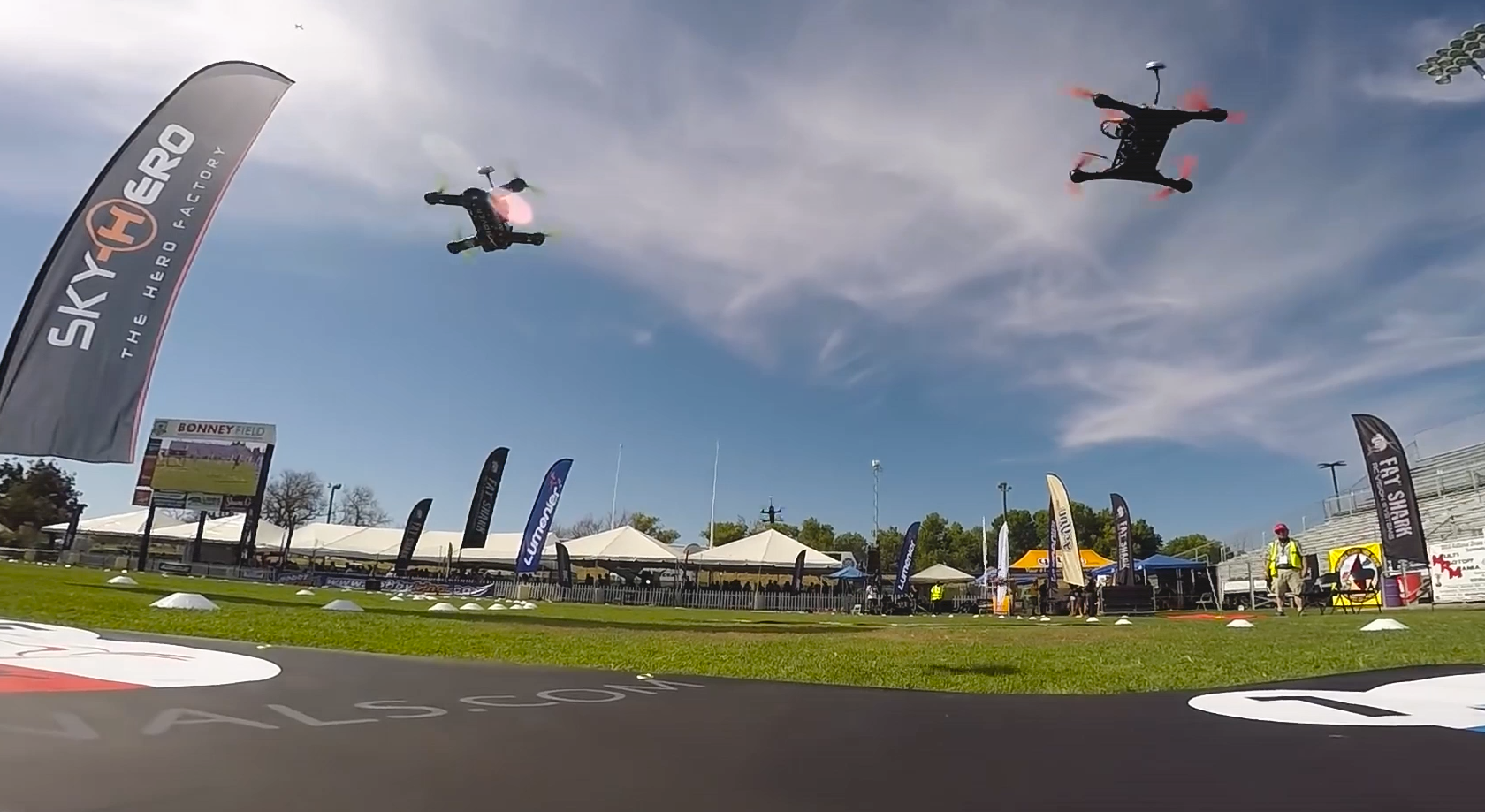
The mixed, multi-reality practice known as drone racing is a made-for-TV spectacle that combines pilots competing head-to-head with small flying drones while wearing first-person-view goggles. The sport is currently experiencing an unprecedented rise in popularity thanks to backing from the likes of Miami Dolphins owner Stephen Ross and his $1 million investment and brands like Mountain Dew, who dove deep into drone racing this summer through a sponsorship with DR1 Racing. Thanks to already having a 24/7 channel dedicated to the sport, drone racing is beckoning to become the next big racing sport alongside NASCAR and Formula 1. Friday will serve as its first serious measuring stick.

Dr. Scot Refsland, the chairman of the DRA responsible for the U.S. National Drone Racing Championships coming to fruition, joined [a]listdaily to talk about sport’s landmark day under the sun.

2015DroneNationals1

What’s the most important thing you’ve learned throughout the months leading up to U.S. National Drone Racing Championships?

Creating any new industry, sport or innovation is more work than you could possibly imagine. But I’m extremely lucky to be surrounded by some very talented big thinkers who’re brilliant in highly ambiguous situations. And because of that, and the spirit of the drone sporting community, I’m honored to play a part in this big historical moment. 

How do you sell fans on the idea of this new culture and sport of drone racing?

Currently the wow factor of this sport is when you put on the first-person-view goggles and you experience flying in the drone as if you were in the cockpit. The attraction is the basic human dream of being able to fly freely, and this is probably the closest thing to doing that without really doing it. The real challenge is to translate that into a fan experience, and that’s what Drone Nationals is focused on—creating an engaging experience for fans that involves both the thrill of racing and the sensation of being in the aircraft. The drone racing and drone sports culture is still unfolding, so by next year I’d imagine there’s going to be a whole new set of clothing, style and TV shows all catering to the drone sports culture.

What kind of an experience can attendees expect at the U.S. National Drone Racing Championships? How about viewers watching at home on ESPN?

We’re going to start with something familiar—like the feel and tempo of any traditional broadcast sport—but then add the element of live onboard camera views of the racers. By using leaderboards and onboard cameras on the drones, spectators will be able to not only follow the race like any other racing event, but also see the race from the racers’ perspectives. For attendees, we have several fun things we’re featuring. One is the ‘Aquarium,’ or a plexiglass structure in the middle of the track where people can watch the drones coming at them, and over them.

What needs to happen for drone racing to turn into the next big eSport? 

Besides all the standard ecosystem and grassroots support for the sport, there will need to be big brands, and broadcast demand. Drone Nationals is the first experiment into whether non-endemic sponsors have an appetite, and whether there is engaging content for spectators. We’re not expecting to hit it out of the park. Even though drone racing has been growing at an astronomical rate, there are some fundamental performance indicators that need to be met. Having said that, the larger indicators have all been successfully met much faster than any other sport at this point.

How can sponsors like AIG and GoPro further grow the sport of drone racing?

Both AIG and GoPro see that drone sports are definitely here to stay and both partners see that their products and services go hand in hand with us. Both GoPro and AIG are very high visibility brands that touch a much larger synergistic audience. Between the two of them alone, drone sports can be accelerated almost one hundred times overnight to what it currently is.

Mountain Dew recently dived into drone racing, too. How is drone racing a good fit for a brand’s integrated marketing strategy? 

Mountain Dew has targeted their brand to the more extreme and active lifestyle, and drone racing fits in well with their brand. It’s really great to see them jumping into the sport, and that means we’ll see more big beverage sponsors very soon.

7-Eleven recently introduced a fully autonomous delivery service. How can drones transform the way industries operate and serve their clients?

The potential for autonomous delivery that we see right now is merely the spear tip. We’re kind of at that point of when the first fax machine was invented, and realized a little later that once we introduced two fax machines working together, we couldn’t live without it.

Companies like Epson are making augmented reality eyewear specifically for pilots. How are other brands getting involved with drone racing? What are the best entry points? 

This is probably the most interesting space in drone sports for a number of reasons. I did a talk recently titled, ‘It took me 30 years and 1 drone race to experience true virtual reality.’ I’m a 30-year veteran in the VR space, have a PhD in it, and within the last two years, there have been some massive steps forward. Next year is going to be the transformative year, where new forms of entertainment and technology will explode. Drone racing is set up specifically to benefit from this wave from both a pilot and spectator experience.

How will you measure success of the entire show?

Success has several yard sticks for this event, but our goal is to have all our partners, pilots and fans want more and continue onward with us to the World Championships in Hawaii in October.

What are you looking forward to the most come August 5?

Taking a benchmark of how fast the sport, pilots, fans, brands and the community have grown since the first one only a year ago. I remember saying, ‘Drone Nationals 2015 is like a neutron bomb. It just went off, now we have to wait and see what effect its waves will create.’

Follow Manouk Akopyan on Twitter @Manouk_Akopyan