Op-Ed: 3 Key Lessons From Nintendo’s Mobile Strategy

The most surprising announcement at the recent Apple Event wasn’t the new iPhones or the new Apple Watch, it was the fact that Nintendo is producing Super Mario Run for iPhones. The news boosted Nintendo’s stock and generated much speculation about Nintendo’s future plans. Taking a closer look at Nintendo’s present situation and likely future, there are three important lessons for marketers.

Use Brand Power Effectively

Nintendo creating a mobile game for Apple’s iPhone is certainly a great move that was very well received by Nintendo fans, Nintendo investors and media observers. Not much was shown of the actual gameplay of Super Mario Run, but we were told the game can be played with one hand and that it will not be ‘free-to-play’ in the usual sense. Nintendo later clarified that the game will be “free-to-start,” but that at some point, you will be asked to pay a one-time fee to unlock the remainder of the content. The positive response to Super Mario Run should be attributed mostly to the power of Nintendo’s Mario brand, rather than any detailed look at the game’s design or its value.

This is a prime example of what the power of a great brand can bring you when wielded in the proper way. Nintendo gained billions of dollars in market value and has perhaps tens of millions of downloads waiting to happen when Super Mario Run becomes available, all from the right announcement in the right time and place. Marketers should note well just how much impact the Mario brand has—it’s something to strive for with any game brand.

But important questions remain before we judge this game to be a winner before it arrives. What will the actual pricing be, and how will that compare to the play value of the game? The game’s success in terms of revenue will depend on this choice. Digital pricing can be changed if it’s not performing well, and Nintendo could test out different price points with short-term sales.

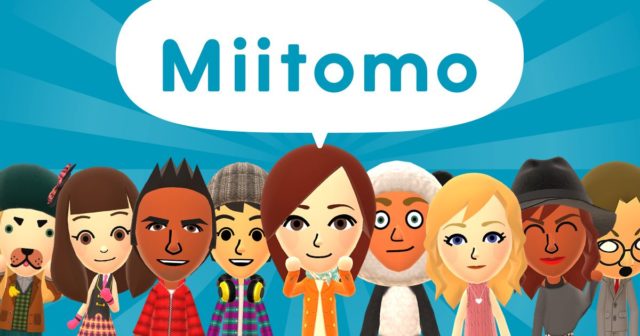
Nintendo’s first attempt at a mobile product, Miitomo, is less of a game than it is a social network, and it had strong initial success, but quickly declined. Currently, it’s somewhere around rank 1000 in terms of downloads according to App Annie. SurveyMonkey looked at the game after its first month and saw a high churn and low return engagement. “While we suspect that the Nintendo brand earned Miitomo many downloads, the game struggled to keep users interested,” SurveyMonkey noted. Super Mario Run will certainly earn plenty of downloads based on Nintendo’s brand, but the success of the game will depend on the quality of the game itself. Brand power alone cannot keep gamers engaged or get them to spend money.
miitomo

Leverage Market Success When It Happens

The greatest success story for Nintendo this year has been a game it had no hand in designing or bringing to market: Pokémon GO. This game, created by Niantic Labs under license from The Pokémon Company (which is partly owned by Nintendo), had no input from Nintendo at all, and Nintendo gets no direct financial benefit from it. Niantic’s Pokémon GO has been a fantastic success, becoming the fastest mobile game ever to hit $500 million in revenue, taking just over 60 days. The fascinating thing about this success is the way it’s affected Nintendo products. Nintendo’s sales of the 3DS line and its latest Pokémon games shot up the month after the release of Pokémon GO.

Nintendo’s 3DS line saw an 83 percent increase in sales for August, with the Nintendo 2DS clocking an astounding 500 percent jump in sales. Nintendo also reported an increase of 57 percent for the sales of 3DS first-party games for August, including both physical and digital copies. It shouldn’t be a surprise that Pokémon Omega Ruby and Alpha Sapphire reached the ninth and eleventh spots, respectively, on the retail sales chart last month.

This would seem to validate the feasibility of Nintendo’s prime desire for mobile games: To use mobile games to increase sales of Nintendo’s console hardware and software. This occurred without any marketing effort on Nintendo’s part. It was just the enormous success of Pokémon GO that caused the rise in associated hardware and software. Imagine if Nintendo was really trying, perhaps by putting in ads for Super Mario console games inside of Super Mario Run? Nintendo is already selling the Pokémon GO Plus accessory very briskly, showing how the company can capitalize on the success of a mobile game. It’s very interesting to note that a $35 peripheral is selling very well for a free-to-play game.

The Biggest Risk Is To Take No Risks

The ultimate question is Nintendo’s strategy going forward. The launch of its new console system, codenamed NX, is slated for March 2017. We know that mobile games based on Animal Crossing and Fire Emblem are in the works. What shape will those take in terms of design and monetization? Animal Crossing by its very nature would seem to lend itself to in-app purchases over time. Yet it could still be sold as a premium, all-inclusive title. If Minecraft on mobile can sell over 20 million copies at $6.99, why can’t Nintendo’s games?

Nintendo is probably hoping to leverage its mobile titles into increased sales of the NX. If, as is rumored, the NX has a portable component, it seems logical that perhaps the very best way to ensure good NX sales would be to create a version of Pokémon GO for the NX console.

The long-term question is whether or not Nintendo stubbornly retains its loyalty to proprietary hardware. The incredible success of Pokémon GO makes you wonder why Nintendo wants to maintain a low-margin hardware business. Pokémon GO alone will likely generate somewhere around $2 billion in revenue for Niantic, with a net profit of perhaps $1.3 billion before royalties. That’s roughly ten years of profits for Nintendo based on last year’s numbers. Isn’t that a business to strive for?

Nintendo has been very conservative while the mobile games business has been rapidly growing. The company’s risks have all been within familiar boundaries, with the Wii U taking some chances but still being very recognizable to Wii fans.

The company has shied away from mobile until recently, and still doesn’t show any interest in dabbling with VR or AR. Mobile finally seems to have broken through Nintendo’s conservative bent. The stage appearance with Apple may mark the beginning of Nintendo’s full embrace of the mobile platform. Marketers should be watching carefully as Nintendo pursues its new direction.

How Xyience Is Using Zero-Calorie Energy Drinks To Market Millennials

College-aged students oftentimes chug enough energy drinks over the course of a school semester to sink the Titanic. They are the prototypical demographic sugary goodness drink manufacturers are desperately trying to reach.

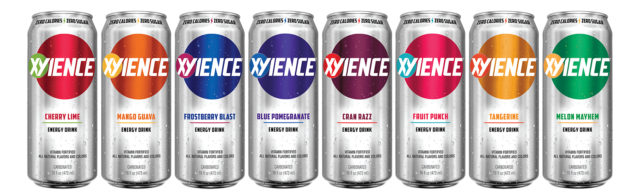
Xyience, the zero-calorie, zero-sugar energy drink owned by soft drink company Big Red, is doing things a tad differently by chasing the ever elusive “older” millennial with a new college football integrated marketing campaign headlined with ESPN reporter and brand spokesperson Samantha Ponder.

ponders-pond

Cheeky TV commercials starring the journalist entitled “Pond Pondering with Sam Ponder” have already hit airwaves and will continue throughout the year. The campaign is combined with a social media contest inviting fans to submit their own “Pond Pondering” video script. Fans can also enter for a chance to win a trip to a college bowl game of their choice.

Xyience’s partnership with Ponder will be paired with the Campus Insiders original series “Inside the College Football Rankings” where it will serve as a digital destination for Xyience-sponsored programming and creating and delivering exclusive content across the Campus Insiders Network, CampusInsiders.com and the Campus Insiders’ Facebook page

Thomas Oh, senior vice president of marketing at Big Red, joined [a]listdaily to pass over some details around their new college sports marketing platform.

Why is the new integrated marketing campaign featuring Samantha Ponder the best move for the brand?

Xyience is a zero-calorie, great-tasting, broadly appealing energy drink that was previously aligned with a somewhat polarizing platform in UFC and mixed martial arts. We decided to reposition the brand using a platform that is also broadly appealing—college sports. ‘ESPN’s College GameDay’ is the premier college football show and we thought that Samantha would be a fantastic ambassador for the brand because she’s a part of the demographic (older millennial, ages 27-to-37) that we’re targeting. We’re also extremely pleased that she’s a genuine fan of our product.

What kind of experiential marketing activations can college-aged consumers expect in the coming months?

At key campuses around the country, Xyience will be sampling at tailgates throughout the season. We’d like as many consumers as possible to try our great-tasting product, and tying into football tailgates is a natural extension of our college sports platform.

What is the marketing and social media strategy you plan to execute with the campaign?

With Samantha, we have created custom content that we will be delivering through our social media channels as well as hers. We will also conduct a user-generated contest in which consumers can submit their own “Pond Ponderings.” We’ll select the best lines and Samantha will recreate the commercial, and then we’ll publish those via social media. We think it’ll be a fun prize for consumers to hear their ponderings as voiced by Samantha.

xyience_fullline

How did you identify college sports and older millennials as the consumer base Xyience needed to reach? 

Research showed that older millennials ages 27-to-37 was the demo that was increasing their consumption of energy drinks, which makes sense because they grew up with energy drinks and are now becoming parents and realizing more keenly their need for energy.

Aside from Samantha Ponder, who are some of the other influencers and athletes you’re currently working with?

Through our partnership with Campus Insiders, we have worked with Seth Davis, their college basketball expert. We’re also working closely this fall with their college football personalities—Shae Peppler, Jordan Cornette, Pete Fiutak and Bonnie Bernstein.

What is the best way to reach CrossFit athletes, color run participants and marathoners—a group of which is a big sample of your consumer base? 

Most of these consumers are also fans of college sports. These ‘active participants’ certainly appreciate the attributes that Xyience offers.

How do you separate yourselves from the likes of Monster, Rockstar or Red Bull, who all have loyal fan bases? What’s different?

The top-three brands have certainly done a fantastic job using action sports, motorsports and extreme imagery to market their products. If we followed suit, Xyience would not break through. That’s why we selected a platform like mainstream college sports that was untapped by those brands, and would appeal to a much broader audience.

Xyience was one of the UFC’s major sponsors until 2014. What did being the “official energy drink of the UFC” do in growing the brand, and how has the “less hardcore image” been received over the years?

The association with UFC definitely created awareness among fans of that sport. But we believed that we had an opportunity to broaden and ‘soften’ the message. So far, feedback from our distributor and retailer partners about our college sports marketing platform has been extremely positive. And more consumers are learning about our product with our broad messaging.

How would you describe the post-UFC state of Xyience?

We’re excited about the opportunity with Xyience. It’s definitely on trend—zero-calorie products are driving the growth in the energy drink category, and Xyience is not only the original zero-calorie energy drink, but all our stock-keeping units (SKU) are zero calorie. I believe our re-brand has been successful because we replaced a well-known platform with one that was even more well-known. It made perfect sense to our partners and now consumers are discovering how great our product is.

Follow Manouk Akopyan on Twitter @Manouk_Akopyan


From 360 To Spam: 5 Stats You Shouldn’t Miss This Week

360 Degrees Of Brand Recall

Are 360-degree video ads mere novelty? Nielson says no. Research in the company’s Media Lab found that people recalled brands in 360-degree video content up to 28 times more than brands in 30-second midroll ads. 360-degree content was on average eight times more effective for recall than traditional ad units, although there was some variance across brands. The Media Lab study also found that, compared to traditional ads, 360-degree video content positively affected purchase intent for up to three times as many consumers.

Phone Searches Lead To Sales

Google recently asked 1,000 users to take a survey several times a day for a week to help the company better understand how using a smartphone throughout the day meets various needs. The survey received more than 14,000 responses that painted a picture about how, when and why people pick up their phones. 92 percent of respondents who did research on their phone made a purchase within a day and 76 percent of those searching for something nearby visited a related business within a day.

Shop ‘Til You Drop This Holiday Season

Economists at Deloitte predict total 2016 holiday sales to exceed $1 trillion a 3.6 to 4 percent increase in November through January holiday sales (excluding motor vehicles and gasoline) over last year’s shopping season. The company also forecasts a 17-to-19 percent increase in e-commerce sales, reaching $96 to $98 billion during the 2016 holiday season. The emergence of e-commerce will not only be a major factor in online sales, but also those made offline. Deloitte predicts that digital interactions will influence two-thirds of every dollar spent in-store this season.

montypython_spam2

When It Comes To Marketing, Netflix Doesn’t Mess Around

Streaming video is rising in popularity, but when it comes to getting the word out, Netflix is serious about its marketing campaigns. For the end of August, Netflix was by far the number one marketer with their new show, The Get Down, according to data by Media Radar. Netflix marketed 21 programs the week of August 21 across 75 websites, created 23 unique video ads across 14 TV networks and aired eight unique TV spots while they were at it.

Spam, Spam, Spam, SMS Messaging And Spam

For SMS users, spam is on the menu whether you like it or not. Recent findings from the Mobile Messaging Fraud Report 2016 have revealed that 26 percent of chat app users receive an unwanted message every day and 49 percent receive a minimum of one a week. Chat apps are also getting bombarded with unwanted messages, according to the report. 28 percent of consumers receive an unsolicited SMS message every day, with 58 percent reporting one every week. 33 percent of those surveyed said these messages were attempts to get them to disclose personal data like bank details or online passwords.

SGN Games Rebrands As Jam City, Acquires ‘Peanuts’ License

SGN Games is gone and Jam City is here, as the mobile game company rebrands itself. The 500-person company with games include Cookie Jam, Panda Pop, Family Guy: The Quest for Stuff and Marvel Avengers Academy also announced that it has acquired rights to comic strip Peanuts, which will be released as a mobile game later this year.

josh-yguado
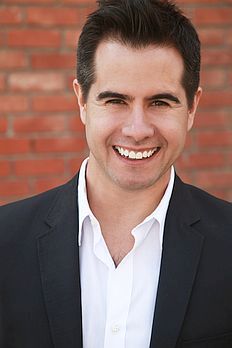
Josh Yguado, Jam City COO and president

Explaining his company’s rebrand on the company blog, Jam City co-founder and CEO Chris DeWolfe said that the new name, combined with its recently licensed Hollywood franchises, will help power his mobile gaming company to its next phase of growth. “It’s time to bring our brand in line with our games,” said DeWolfe. “We’re in the business of fun, and yet our old name was a corporate acronym that lacked the spirit of our products. With Jam City, we’re harnessing the success of our games—particularly, our Jam game franchise—to animate our studio’s identity.”

Co-founder, COO and president of Jam City Josh Yguado spoke exclusively with [a]listdaily about the rebranding, the Peanuts license, and the company’s plans for the future.

Why rebrand the company, and why now?

We’ve been talking about it for years, and we’re finally pulling the trigger and making it happen. We never loved the SGN name. I think we owe our success to the popularity of our games, not the three-letter corporate acronym that represented our company for so long. We’re certainly grateful for how far our name got us until now. We’re trying to harness the popularity of our core, most successful product, particularly the Jam game franchise, to power our corporate identity. Plus, we like to think of ourselves as a fun company. We thrive by bringing fun into people’s day, and we wanted our company name to reflect that and be memorable.

Was it difficult to choose the right name for the company?

It’s actually funny because we went through an informal process of talking about the idea of changing our name, and one of the very first names we came up with was Jam City. It just felt right. But then we thought, in order to be responsible we should go through a full process with consultants, an analysis of the market, and everything else. After about a year of deep diving and analysis we ultimately said forget it, let’s go with our gut and go with what feels authentic and right to us—and for us that was Jam City.

What impact does this rebrand have on your marketing efforts?

Honestly, I don’t think the brand change is going to change much at all. I think the brand itself reflects basically what we’ve already been doing. We’re going to be doubling down on our current strategy, which is carefully developing more games in-house, strategically partnering with entertainment franchises—like Peanuts that we just signed—that resonate worldwide. Really, there’s going to be no change in marketing. For us, it’s all about the games, not the corporate brand.

Will all new games, including ones by TinyCo, come out under the Jam City label, or do you envision having more than one label depending on the type of game?

That’s something we’re still working out. What’s most likely is that TinyCo games will be a combination brand that includes both Jam City and TinyCo. We’re proud of the brand and the reputation TinyCo has, and we don’t want to lose that. We’re also proud of Jam City and what that family of studios represents, so it’s important to us that’s also represented.

There are great data points in the market, like Activision Blizzard, where you can have a subsidiary that still has its own identity but is clearly part of the larger family.

jamcity_final-stacked

Why did you acquire the Peanuts license? Are your rights limited to the comic strip?

We specifically licensed the comic strip and the music. For us, Peanuts and Snoopy are on a remarkably short list of globally recognized and beloved brand characters. It’s a timeless brand [that] appeals across all ages, [and] anyone from 6-to-60 can whistle the theme. We really think that having a brand that’s so beloved and so accessible, that weaving those characters into the experience will bring a whole new audience to the game.

What sort of games do you plan to build around the Peanuts license?

I think long term, this could be a set of games or a franchise for us. We are going to start with a puzzle style game. We think the accessibility, fun and playfulness of puzzles match well with the IP, but there could also be great builder, storyteller and arcade style games with the license as well.

Do you see Peanuts games bringing in a substantial new audience for Jam City?

Honestly, I think there’s such a huge fan base for Peanuts. I think our existing users will love it, but I think it’s going to introduce our games to a lot of people who maybe hadn’t had the opportunity to pick them up before. Maybe it’s an excuse to get acquainted with what we’re doing. There are so many fans of the Peanuts IP through the generations that this is a huge opportunity for us to expose our mechanics and gameplay to a much broader base of users.

The nice thing about this IP is it’s not the flavor of the month. Your grandmother, your father, your brother, your child and every generation enjoys Peanuts. They’ve done an amazing job building and protecting the IP over the years.

Jam City has had over 100 percent growth every year for the last five years. How long can you keep that up?

(Laughs) Honestly, we feel like it’s still early days for our company, and we’re thinking big. I think we’re a fraction of what we expect to be in the next three or four years. This is a long-term play for us. This is our first foray into big IPs, and you’re going to be hearing about some other great franchises over the next twelve months. This is just the start for Jam City.

Procter & Gamble Hire Global Media Director And Other Industry Moves

Here are some of the top personnel moves in marketing over the last week. Our congratulations to these people taking on new challenges!

Procter & Gamble Hire Gerry D’Angelo As Global Media Director

Gerry D’Angelo (pictured above, credit: Proctor & Gamble), who is currently Mondelez International’s top European executive, will soon be taking up the newly created role of global media director at Procter & Gamble. In this role, D’Angelo will oversee the world’s biggest media budget, as the multinational consumer goods company reported in the fiscal year ending June 2015 that it spent $7.2 billion on advertising.

“I look forward to partnering with world-class marketing professionals and agency partners to harness data and technology into game,” said D’Angelo in a statement.

Discovery Communications Names Kelly Kane As SVP

Discovery Communications named Kelly Kane senior vice president of partner marketing and national accounts. Kane is a 17-year veteran at Discovery Communications, and in her new role “will be responsible for the strategic oversight and distribution of the company’s portfolio of 13 US networks including flagship cand more,” according to the press release.

Green Man Gaming Appoints Murray Beckett As New EVP Of Marketing

Global video game e-commerce technology company, Green Man Gaming, announced the appointment of Murray Beckett as the company’s new executive vice president of marketing. Before joining Green Man Gaming, Murray held senior online marketing positions at companies such as Spencers, Marks, British Airways and Nike. “Murray’s global online e-commerce expertise with some of the most forward-thinking customer facing brands will allow us to accelerate Green Man Gaming’s Award-winning growth as a technology company, said Green Man Gaming CEO and founder, Paul Sulyok in the press release. “Murray is going to push Green Man Gaming’s marketing into overdrive for our publishing partners and global gamers.”

Bloomberg Promotes Michael Shane To Global Head Of Digital Innovation

Michael Shane, the former managing editor of Bloomberg Digital, will become of the global head of digital innovation at Bloomberg Digital. In this positon, Shane will collaborate with global teams, which cover editorial, product, engineering and sales, and strategize on opportunities to grow Bloomberg’s audience, engagement and revenue. Shane joined Bloomberg in 2014, and previously worked at Vox Media as director of operations for The Verge.

Pizza Hut Appoints Helen Vaid As Chief Customer Officer

Fast food chain Pizza Hut appointed Helen Vaid as the company’s first-ever chief customer officer, a newly created executive position that’s part of the company’s leadership team. Vaid will “oversee the transformation of the Pizza Hut in-restaurant and digital customer experience. Around the world, digital ordering represents the greatest growth opportunity for Pizza Hut, and the customer journey is paramount to that experience,” according to the press release. Additionally, Vaid will lead Pizza Hut’s international e-Commerce, technology and operations business.

Prior to Pizza Hut, Vaid served as vice president of digital store operations and experience at Wal-Mart. There, she was responsible for the growth, profitability and traffic growth for the retail giant’s online site.

Have a new hire tip? Let us know at editorial@alistdaily.com.

Op-Ed: 5 Reasons Why iOS 10 Is Great For Game Marketers

Apple launched iOS 10 this month along with the new iPhone 7 models, and iOS 10 is arguably the more important of the two launches. If past experience is any guide, hundreds of millions of people will install iOS 10 on their Apple devices over the next few months. At best, the iPhone 7 will only sell perhaps 50 or 60 million between now and the end of the year. So iOS 10 will have a much greater impact on the market than the iPhone 7—and the impact of this new operating system on marketers will also be huge.

Overall, perhaps the most important change for iOS 10 is in the way that notifications will be front-and-center for users. When you pick up your device running iOS 10, you’ll see the notifications on the screen without having to unlock your device or even swipe. Notifications are therefore going to be far more apparent to users that ever before—and that’s a very important tool for marketing that just became many times more powerful.

Here are five reasons that iOS 10 is going to be a big boon to marketers.

Rich Push Notifications

Push notifications are a mainstay for mobile marketers, particularly for mobile games. There’s nothing like letting someone know their opponent is waiting for a move, when there’s a big sale going on, or when your virtual town has been sacked and burnt to the ground. Those notices that show up on your screen are a potent call to action. Now, iOS 10 is making them even better by adding rich push notifications and a whole array of features that marketers should be ecstatic to see.

Marketers will now be able to use rich media in push notifications, which means images, GIFs, audio or even video files can be added. These notifications will appear with a thumbnail preview, not just as a text list. Marketers will have an array of powerful choices to make—should you use a video or a GIF instead of text to make a notification? There will be plenty of experimenting ahead for marketers. It’s an area where no one has much data, and the audience for one game may be very different from the audience for another game in how they respond to rich media notifications. Experiment, get feedback and be careful not to offend with rich media—but track the performance carefully, and you may just find that rich media can substantially outperform plain old notifications. Seeing a town explode may motivate a player much more than simple text that says “your town was attacked!”

Siri, What Do You Think Of Marketing?

The answer, with iOS 10, should be that Siri is going to get to know a lot of marketers. Why? Because iOS 10 opens up Siri to developers with SiriKit, meaning you can build voice controls into your own apps. SiriKit will be available initially for six types of apps: Ride Booking, Photo Search, Payments, VoIP Calling and Workouts. Apple hasn’t said whether SiriKit will be expanded to other app types, but you can bet that’s going to be a much-requested feature. Will we ever see Siri in games? Someday, perhaps—and that has tremendous possibilities for game designers.

Meanwhile, it’s important to keep an eye on how Siri evolves and is being utilized by marketers for those apps allowed to work with SiriKit. That way you’ll be ready when Apple lets you into the fold. It seems likely that Siri will lead to plenty more business for those apps that take advantage of the interface. Marketers should be watching closely.

Messaging Gets Supercharged

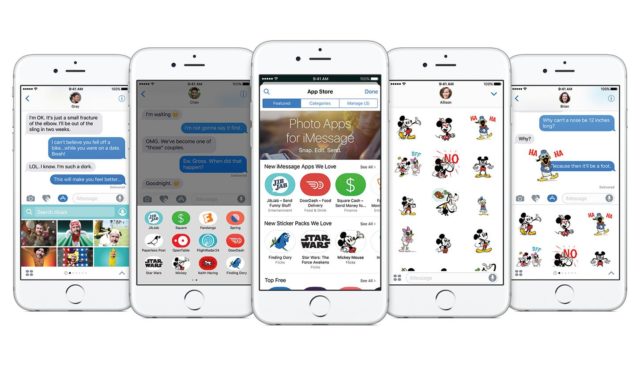
After years of unchanging complacency, Apple’s iMessage is becoming a full-fledged platform in iOS 10. There’s a broad array of new features, from full-screen animations, to allowing you to draw, to being able to post handwritten notes, secret messages that are only revealed when you swipe, calendar scheduling and mobile payments . . . and an iMessage App Store. Developers can build applications right into iMessage, giving it third-party functionality like the best Asian messaging platforms and Facebook Messenger, too.

This means SMS marketing is going to be supercharged with iOS 10, and marketers should take full advantage of this—after all, it’s where mobile phone users spend an amazing amount of their time. If you are wondering whether this is a good idea, here’s a hint: Coca-Cola is going to be spending 70 percent of its mobile budget on SMS in the next fiscal year. They know a thing or two about marketing, and it sure seems like they see mobile messaging as a powerful tool.ios-10-imessage

Subscriptions

There’s a new monetization method coming with iOS 10—or, rather, an old monetization method that has never been built into iOS before: subscriptions. Apps can let you buy a subscription, with an interesting twist: Apple will take its normal 30 percent revenue share of the subscription price, but only for the first year. After that, Apple’s share is reduced to 15 percent. And subscriptions will now be available across all app categories—meaning subscription-based games are possible.

Yes, magazine publishers love this idea. It certainly makes sense—Apple seems to be figuring that their platform helps you acquire a subscriber initially, but if you hold onto them for a year that’s become your product’s power holding the subscriber, so you should get more of the revenue. This has the potential to become a serious revenue source for mobile games that can take advantage of it.

Game marketers and game designers will have to put their heads together to see if this makes sense for their game. Regular content updates would probably be expected under this scenario, so if your game isn’t capable of cranking out good content on a reliable schedule this probably isn’t a good idea.

Paid App Search

Apple will now be allowing paid app searches. Unlike Google AdWords, only one ad result will show at the top of the keyword searches in the App Store. However, this is going to be an enormously powerful way to showcase your app if you can find the right keywords. The first companies to leap into this will probably reap outsize benefits. Marketers should expect this to evolve quickly, and it’s anybody’s guess as to how paid app search in the Apple App Store will settle out in the long run. Marketers should be quick to try it out, though, and test how well it works before everyone piles in.

EA Sports Takes ‘FIFA 17’ To The Streets With Limited Edition Cleats

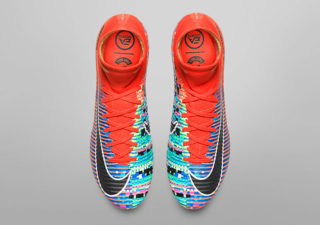
EA Sports continues to ramp up promotion for FIFA 17 ahead of its September 27 launch, this time with a pair of gloriously colorful, limited edition cleats. Limited to only 1,500 pairs, the EA Sports x Nike Mercurial SuperFly shoes celebrate the legacy of the FIFA franchise from its humble beginnings in 1994 to its innovative, HD gameplay of the present. This is visually represented a 16-bit print on the medial side that transitions to the high-definition look of today on the lateral—all backed with a vibrant orange hue. More special details include the EA Sports logo on the heel, an iridescent plate, and metallic gold threading through the laces. Each pair is individually numbered on the heel.

“This collaboration came together rather organically,” Nathan Van Hook, senior design director for Nike Football told The Mirror“Our design team spends a lot of our free time playing football—both on the pitch and via video game—we’re pretty obsessed with both. We wanted to create something memorable that brings together the physical and virtual worlds.”

The EA Sports x Nike Mercurial SuperFly will be available for sale via the Nike Football App and Nike’s website on September 26. For video game players, the shoes will also be available in virtual form through the EA Sports Football Club catalog beginning September 22, so your soccer star can play in style.

ea sports nike

EA’s partnership with Nike is just one of several promotions for its latest game. Coke has also partnered with EA by offering a collectible Slurpee cup activation at 7-Eleven stores across the US along with a FIFA 17 contest featuring over 10,000 prizes. During E3, EA Sports placed major emphasis on the players themselves and each individual’s journey to greatness—inviting gamers to interact with the title on an emotional level. Additionally, fans were invited to vote on the cover star, further creating a sense of personal investment in the game’s success. FIFA 17 is a major eSports contender—so much, in fact, that pro-Brazillian soccer player, Wendall Lira retired from real-life games to pursue a career in FIFA.

How The Rams Are Reintegrating Their Franchise And Brand Into Los Angeles

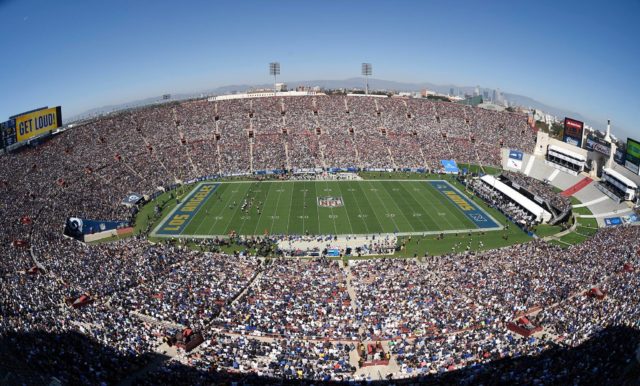
Sequels are all the rage in Hollywood, and on Sunday, after a 22-year sidetrack in St. Louis, the Rams charged back into the script of LA’s sports scene with a resounding victory against the Seattle Seahawks.

Like a long-lost friend, Los Angeles’ latest franchise played to 91,046 loud and proud fans like they had never left in the first place.

It was the perfect re-acquaintance for what was once an estranged relationship.

The Rams officially returned to the nation’s second-largest market in January and have since been positioning the team in an all-out rebrand to repair the franchise’s fractured fan base by honoring its past—all while attracting a new generation of fans for the long run.

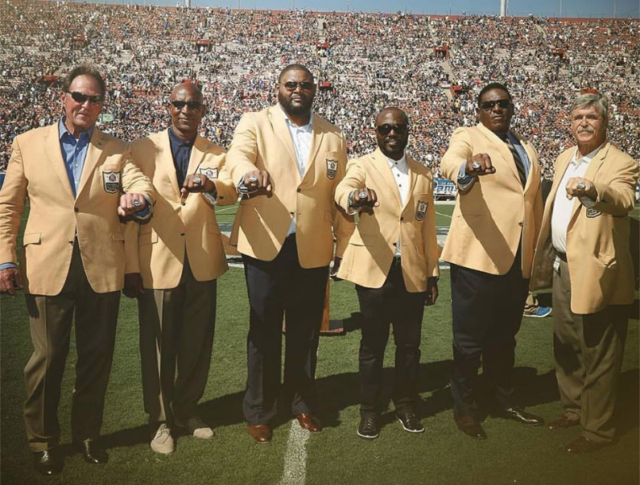
As an homage to their history, the Rams’ regalia on Sunday consisted of the original royal blue and yellow hues Hall of Fame players like Eric Dickerson, Jack Youngblood and Tom Mack donned decades earlier. The team made a strong statement to show they’re uniformly prepared to forever remain in the fabric of the city.

14362685_10155115374148484_810328658790854421_o

“It’s a two-fold process,” Kevin Demoff, the Rams’ executive vice president of football operations and chief operating officer, told [a]listdaily.The first is activating the core fans we’ve had forever from our forty-nine years in LA. The second is putting a modern twist on the logo, the colors and the uniforms, and trying to create new fans for those who have lived in the city for the last 22 years without NFL football. We’re trying to make our traditions more modern by blending those two together.”

If there were ever a person who understood the sensitivity and severity of the arduous task at hand, it’s probably Demoff, a native Angelino and “40 under 40” exec who lived in the city through high school and went to Rams games as a kid. But he doesn’t want to be perpetually stuck in the past and lose sight of the future either.

“The biggest pain point we currently have is transitioning people to understand that while we respect our tradition and heritage, we’re moving into a modern, world-class stadium, and we want our brand to reflect that—what LA will be in three years, and not what it was decades ago. It’s telling our fans ‘we’re going to be very respectful with the past’ but also making sure that we adapt to a new generation. Our focus is on really growing the younger fan base that didn’t grow up with the Rams.”

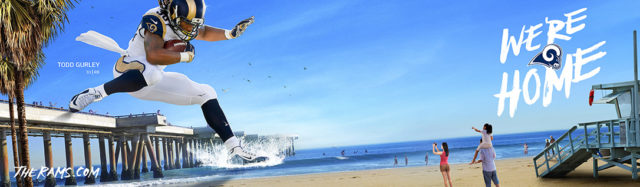
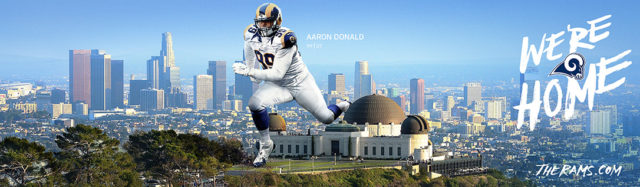
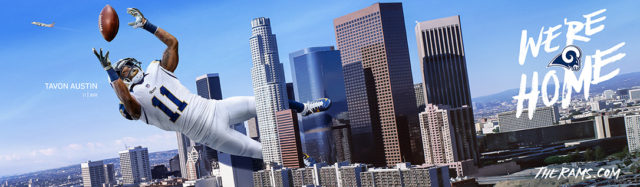
A quick drive around the city’s busiest intersections further reflects they’re amplifying excitement by way of a billboard campaign that features iconic LA settings as the landscape for their current stars. The “We’re Home” series is the team’s most visible branding and features larger-than-life Rams like Todd Gurley hurdling over a beachfront pier, Tavon Austin catching balls between downtown buildings and Aaron Donald running over the Griffith Observatory.

rams_14x48_todd_fin

However, a quick survey of the crowd at the Los Angeles Memorial Coliseum on Sunday yielded a sea of Dickerson jerseys, which mostly says fans are still very much stuck in a state of nostalgia from the “Ram It” days until the current roster fosters new fandom.

“I’m really excited—they never should have left in the first place.” Dickerson, the NFL’s all-time single-season rushing leader, told [a]listdaily. “It’s great for Los Angeles to have football back in the city, especially with the Rams, and not the Raiders or Chargers. It will bring in a lot of jobs and revenue. The most important thing though is they have to win. Forget all of the other stuff. If they go 4-12, people will be going to the beach instead. You have to win in this city.”

Prior to the Rams and Raiders jointly jettisoning Los Angeles and relocating for greener pastures in 1994, they were two teams toiling in the bottom of the standings and playing to half-empty stadiums.

There is no magic marketing spray on Earth that will alleviate the stench of a losing team and excite a fan base to care about them—just ask the pre-Steve Ballmer-led Clippers.

Jack Youngblood, one of the Rams’ most revered players and a member of the NFL 1970s All-Decade Team, is happy the only team he ever played for is back in the city’s fold.

rams_14x48_jm_003e_w1-6

“With the tradition we established, the Rams belong here,” Youngblood, the owner of 151.5 career sacks, told [a]listdaily. “There’s obstacles, and there’s opportunity, and both of them will make you better—not only as an individual, but as an operating franchise. Having a new stadium makes life a heck of a lot easier when the environment is a whole lot nicer. The boss [Stan Kroenke] understands that. He has the big picture.”

With a net worth of $7.4 billion, Kroenke is as shrewd an owner as they come in sports. After orchestrating the relocation by pulling every imaginable string, his vision now solely centers around ushering in the next wave of football-starved fans in a $2.6-billion palace.

Located in Inglewood, just four miles from Los Angeles International Airport, the new 80,000-seat stadium is slated to be the world’s most expensive complex once it opens its doors in 2019. The 300-acre development will be dressed with more than 1.5 million square feet of retail and office space, 2,500 homes, a 300-room hotel, 25 acres of parks and a 6,000-seat venue, making it a prime location to host future Super Bowls, which already includes the big game in 2021. They’ll also be bidding to host Final Fours, the 2024 Olympics, College Football Playoff Games, and a potential World Cup.

rams_14x48_tavon_fin

When Forbes released its annual list of the NFL’s most valuable teams last week, they estimated the Rams at $2.9 billion, an increase of 100% from one year ago. They jumped from the 28th most valuable franchise in 2015 to number six this year. With the NFL generating close to $10 billion in revenue per year, the Rams are now in prime position to build off their buzz and add a boatload more to their bottom line.

“People are excited about the opportunities and the transformative power the stadium will create from a retail and entertainment perspective,” Demoff explains. “We also then have to get them excited about the team. We have to play entertaining football and win games. The goal is to have people equally excited about the Rams and the entertainment complex it will eventually become.”

Tom Mack, an 11-time Pro Bowl offensive lineman who enjoyed a .720 winning percentage over 13 seasons for the LA Rams, says being a marketable brand all comes down to winning on the field and not on social media.

“The Dodgers have always pulled the city together, so the Rams need to be that rallying point, too,” Mack told [a]listdaily. “We always had a winning team when I played. It’s an interesting town, because if you’re a winner, they love you. If you’re a loser, they have other things they can do. Most places are not like that. Back East, all you have in the fall is football. Here, you can go to the mountains, the deserts or beaches all year long. The demand is to have a good football product.”

14_001_n20_medium

The fans have already spoken—even if it’s mixed. For their Monday Night Football season opener last week, the TV ratings in LA were lower than the ones from St. Louis for their opening game from 2015. Then again, the LA Rams sold out their allotment of 70,000 season tickets in just six hours earlier this summer and fans are already paying upward of $200 for parking.

The Rams brand is steadfastly evolving in the marketplace and demand will grow in due time. The HBO series Hard Knocks introduced the team to a national audience and further helped on that front.

Companies like Hyundai, Wells Fargo, Banc of California, Uber/Fanatics, Wingstop, Corona and Cornerstone, among others, have all lined up to procure partnerships with the team in recent weeks, too.

“We’ll be in a different place next year this time. As we roll out our marketing campaigns for 2017 and 2018 and into the new stadium, we’re going to tap into our fans by listening and hearing what they have to say,” says Demoff, who compares the franchise as a year-round content production company that blends sports and entertainment into one.

Those opportunities naturally extend to their current crop of players, who are already in prime position to capitalize on endorsements.

Todd Gurley is by far the team’s most marketable star and commands corporate courtship from the likes of Nike, Gatorade, Carl’s Jr., Bose and Campbell’s Chunky Soup. Jared Goff, the team’s No. 1 overall pick in this year’s draft, is next in line as soon as he takes his first NFL snap. We can already envision fans sporting “Gurleywood” and “Goffham City” shirts whenever an apparel brand is inclined to make them.

screen-shot-2016-09-19-at-4-08-04-pm
Hall of Famers Jack Youngblood, Eric Dickerson, Orlando Pace, Marshall Faulk, Jackie Slater and Tom Mack will play a prevalent role in reaching the Rams’ previous and future fan base.

If you want your portfolio to expand, Los Angeles is where it’s at. Just ask Dickerson, who’s still in serious demand despite retiring in 1993. “Man, are you kidding me. You want to play in LA,” Dickerson says while hosting a Citibank-sponsored Rams watch party organized by ProCamps. “I used to tease the guys when I was playing them like, ‘you want to play in Green Bay or LA?’ It’s great for the players’ star-power, which LA is great for feeding into.”

Even largely overlooked offensive linemen are in the limelight now. Starting left guard Rodger Saffold is one of the stars on Hollywood and Football, the E! reality docu-series which shows him and his Rams teammates adjusting to playing football in LA.

“There’s definitely a bunch of opportunities, to branch out and show myself a little bit more, which we really didn’t get to do in St. Louis.” Saffold told [a]listdaily. “They’re all great, but I just want to make sure I don’t change and become too Hollywood, and keep my family grounded, too. It’s a give-and-take battle, and it’s a constant one . . . It’s extremely tricky. When I’m doing stuff off the field, you don’t want to do too much. You want to have that balance. You always have to remember that the check to do a commercial is good, but you’re not making anywhere near what you are as an athlete.”

With their recent history of losing, the Rams can’t be in full-blown “Hollywood” mode until they start winning meaningful games. The team has been a dud in standings and has not made the playoffs since 2004.

The Rams don’t have the current makeup to be an immediate winner—they still haven’t scored a touchdown in the season’s first two games—but the foundation is surely in place, and the bond between the team and greater Los Angeles is evident and growing each day. The best part? They’re not going to say goodbye this time.

The big-budget blockbuster the Rams plan on being one day is still in production. Whether or not displaced fans stick around to make it the box office boon they’re envisioning will be the narrative of the sequel.

Follow Manouk Akopyan on Twitter @Manouk_Akopyan

Op-Ed: How ‘NBA 2K17’ Epitomizes Pre-Launch Engagement

NBA 2K17 already has quite a legacy to live up to. The basketball game’s predecessor was the top-selling game in September of last year, contending against heavy-hitters such as FIFA 17, Madden NFL 16, and the critically acclaimed action game Metal Gear Solid V: The Phantom Pain. Additionally, NBA 2K16 became 2K Sports’ first entry into eSports with the Road to the Finals competition where players competed for a $250,000 grand prize. The game has also been used to promote Kyrie Irving-branded Nike sneakers, “Kyrie 2” kicks.

So the newest addition to the basketball series took full advantage of the brand’s momentum by starting early and building anticipation for the game’s launch. In June, NBA 2K16 was offered as one of the PlayStation 4 free games of the month for PlayStation Plus subscribers, which gave a potentially new audience a chance to own and experience the record-breaking game for themselves.

Then the free My NBA 2K17 mobile companion app launched for both iOS and Android devices on September 8. With it, players could start earning in-game currency for the console releases of NBA 2K17 by completing challenges. Additionally, there is the incredibly popular MyTEAM Mobile collectible card game, which has been a longstanding feature of the series and allows player to collect NBA player cards and use them to challenge competing players around the world. Although neither feature is new to the app series, which is on its fourth installment, they give something for longtime fans to look forward to. The biggest new feature is the new face scanning technology, which lets users scan their faces onto custom NBA 2K17 characters with their mobile devices. While both NBA 2K15 and 2K16 used the Xbox One Kinect and PlayStation 4 Camera for face scanning, the results were often hit-or-miss. Now players can create custom characters with more reliable technology.

Furthermore, the game engaged with players 11 days before its official September 20 release by using a demo called The Prelude. Although game demos are nothing new, they remain one of the best ways to engage with audiences by giving them a quick preview of what’s to come. However, NBA 2K17 pushes things up a notch by letting players get a head start on the MyCareer mode using authentic Division I collegiate programs, and players can continue raising their draft profile in the full game when it launches. The aim is to engage new players by letting them continue their MyCareer journey with the full game. At the same time, existing fans are assured that the new game will be the same or better quality as its predecessor. As added incentive, 2K Sports recently announced that Michael Jordan would appear in the MyCareer story mode, giving players a chance to play alongside the legendary figure.

The basketball game takes pre-release engagement a step further with the Early Tip-Off Weekend, which is a longstanding tradition for the sports game. Pre-order customers were automatically upgraded to the Early Tip-Off Edition, which let them start on September 16—four days before the official launch of the game.

But perhaps the prominent way the game reaches out to NBA fans is how it manages to include no less than three major basketball stars for its covers. The My NBA 2K17 app has Rookie of the Year Karl-Anthony Towns of the Minnesota Timberwolves on its cover. Meanwhile, Indiana Pacers All-Star shooting guard Paul George, who was the cover athlete for last year’s companion app, makes his first solo appearance on the cover of the main NBA 2K game. However, more dedicated fans will likely look to Legend Edition, which features the recently retired Lakers legend Kobe Bryant in a number of uniforms, including a Kobe USA Basketball Jersey, a Kobe hoodie and a 2K Kobe XI shoe. Then there’s the Legend Gold Edition, which includes 300,000 in virtual currency and the entire Nike Kobe shoe collection (24 in all) included in the game for $99.99. For comparison, the game’s predecessor included Anthony Davis, Stephen Curry and James Harden on three unique game covers, making for a total of four athletes when the companion app is included. It only had one special edition, which included Michael Jordan branded apparel.

Although it hasn’t officially launched yet, NBA 2K17 is looking to be another successful game for the franchise. Much of that has to do with the tremendous success of last year’s game, followed by an eSports competition that let console players compete for a $250,000 grand prize—a competition that is almost certain to return. But one of the most important aspects of the franchise’s ongoing success is engagement with fans of both the sport and the video game long before the new title releases. In fact, George’s cover appearance was announced by Bryant and Rick Fox at the Road to the Finals championship finale.

As games, particularly sports games, continue to evolve into ongoing services, it becomes vital for franchises to keep their audiences engaged throughout the year. That means paving the way for the next release by showing how it will take things to the next level just as the life cycle for the previous game reaches its conclusion.

About last night… #NBA2K17 #eSports #legends

A photo posted by @2k on

From Pumpkins To Xbox: 5 Stats You Shouldn’t Miss This Week

Xbox One S Dominates August Sales

It’s safe to say that Microsoft’s launch of the Xbox One S console was a success, accounting for nearly a third of total hardware sales in August, according to the latest NPD report. That shiny, white console earned a whopping 37 percent growth in unit sales and a 25 percent growth in dollar revenue for the Xbox One brand. The white Xbox One S gamepad followed in kind, selling over 79,000 units and topping the PlayStation 4 black controller, which has long been the number one selling game peripheral.

Facebook Messenger Is Kind of a Big Deal

Facebook Messenger has become a valuable resource for marketers, reaching one billion users in July, up from 700 million users in July 2015. According to David Marcus, Facebook’s vice president of messaging, 300 million people use audio and video calling features on Messenger every month. The social media giant now offers native payments, pushing Facebook into a full-fledged eCommerce contender.

starbucks-psl-0-0

Pumpkin Spice Errthang

It’s that time of the year again when everything from coffee to hummus (I wish I was kidding) is given an autumn makeover with pumpkin spice. The most notorious of pumpkinators is Starbucks, of course, whose Pumpkin Spice Latte has become a holiday tradition along with its own fan base. According to a study by social media analytics company Spredfast, tweets about the sugary drink jumped to 5,076 tweets per minute as soon as it became available. In total, the phrase “pumpkin spice latte” and the abbreviated hashtag #PSL have racked up over 56.8 million tweets.

Digital Ad Spending Has Finally Surpassed Traditional TV

According to a recent CMO survey by Duke University’s Fuqua School of Business, social media accounts for 11.7 percent of marketing budgets, up from 3.5 percent in 2009. In fact, US digital ad spending will hit $72.09 billion, about 37 percent of total ad spend according to eMarketer.

Insta-interaction

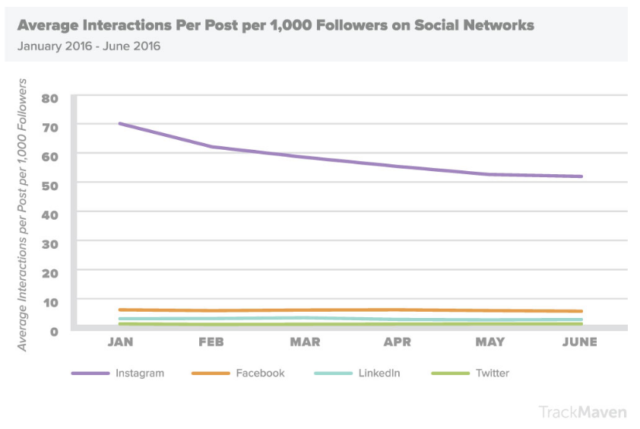
According to a recent study by Trackmaven, brands see the highest average engagement ratio on Instagram. However, the introduction of new monetization features caused a fall for engagement of nearly 26 percent. Instagram users may love to interact, but not with just anything—so don’t forget that frontline marketing!

track-maven-engagment